Top picks at a glance
Top picks at a glance
If you want one clear winner for a balcony where squirrels are the problem, the Brome Squirrel Buster Plus is the best choice. It uses a weight-activated shroud that closes feeding ports for heavier animals, holds about 5.1 pounds of seed, and comes apart for cleaning. Hang it with at least 18 inches of clearance from any foothold for the squirrel protection to work; expect to pay around $129 for that reliability.
If squirrels are relentless despite passive defenses, the Droll Yankees Flipper is the better alternative. Its motorized spinning perch actively ejects squirrels without harm, and the build favors durable polycarbonate plus replaceable parts. The tradeoff is higher upfront cost and occasional motor or mechanism maintenance compared with passive feeders.
For renters or tiny balconies, Perky-Pet window feeders and small clamp-on or hook-mounted options are the smart, budget choice. Perky-Pet’s clear window model holds roughly 1 pound and costs about $22. They give superb close-up viewing and require no drilling, but suction cups and small capacity can be finicky and messy. For truly apartment-friendly setups use apartment-friendly mounts or a clamp-on to avoid relying solely on suction.
Quick troubleshooting: clean glass with alcohol and press firmly to revive failing suction; raise or move the Brome feeder if squirrels still reach it; for a noisy or stuck Flipper check the motor housing and contact the manufacturer for replacement parts. Pick Brome for long-term, low-fuss squirrel-proofing, Droll Flipper if active eviction is needed, and Perky-Pet/clamps when you must avoid permanent mounts.
Comparison snapshot: price, capacity, and pest resistance
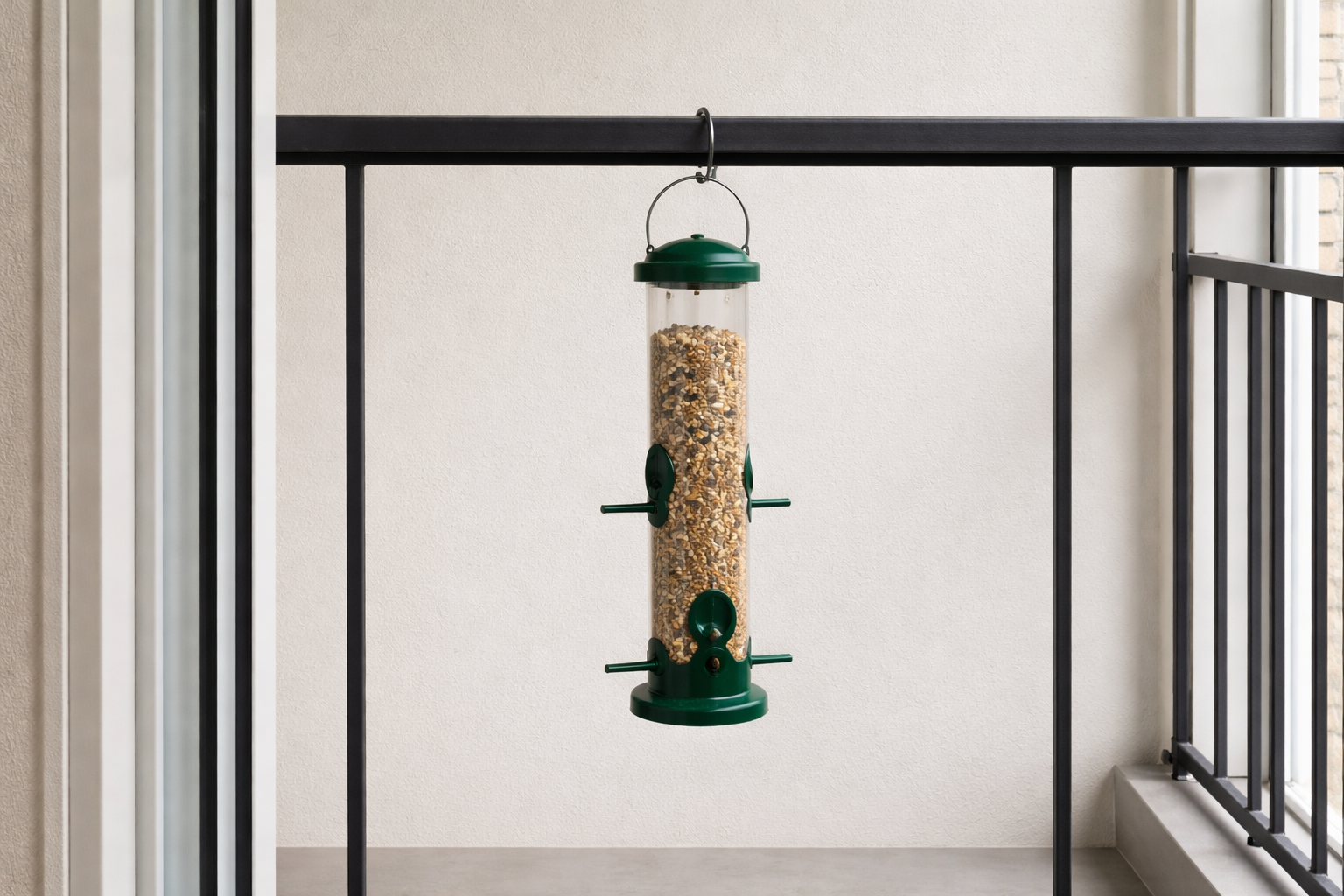
For most balcony setups, the Squirrel Buster Mini is the best choice: compact, passive weight-activated squirrel protection, no power required, and wallet-friendly for regular refills. If you want close-up viewing from inside, choose a Perky-Pet window feeder. If squirrels are relentless and you can manage charging, the Droll Flipper outperforms others at stopping them but adds complexity.
Choose by constraint: if you rent or want inside views, buy Perky-Pet and accept refills. If you have small space and want a low-hassle, squirrel-resistant solution, buy the Squirrel Buster Mini. If squirrels are a constant problem and you can supply power, buy the Droll Flipper.
How to choose: the four criteria that matter
Pick the feeder that fits your balcony first. If space or viewing distance is the main constraint, choose compact tube or window feeders for tight balconies, or a clamp-on tray for a small railing. These are the best compromise between bird visibility and footprint; many guides call these urban-friendly feeders. Avoid heavy platform feeders on flimsy railings to prevent damage or accidents.
Decide the birds you want and match seed to species and mess tolerance. If you want finches and minimal drop, pick nyjer or hulled sunflower. For mixed backyard flocks that tolerate more mess, choose whole sunflower or mixed seed. For dense urban areas, follow city-specific seed choices and drainage-friendly feeders to limit complaints and pests.
Factor pest pressure and how much maintenance you’ll do. If squirrels are persistent, spend on a mechanical squirrel-proof feeder like the Squirrel Buster Mini; retailer listings show these around $30, $40, which is a good mid-range buy. If you cannot clean often, favor simple feeders with easy disassembly and drainage. Quick troubleshooting: if seed molds or insects appear, empty, scrub with a diluted vinegar solution, dry, and refill with fresh hulled seed.
Concrete next step: take a tape measure and pick one of three combos. Small balcony + low maintenance = window tube + nyjer. Moderate space + mixed birds = clamp-on tray + hulled sunflower. High squirrel pressure = invest in a Squirrel Buster Mini and plan a monthly clean.
Mounting and placement: fit, clearance, and window safety
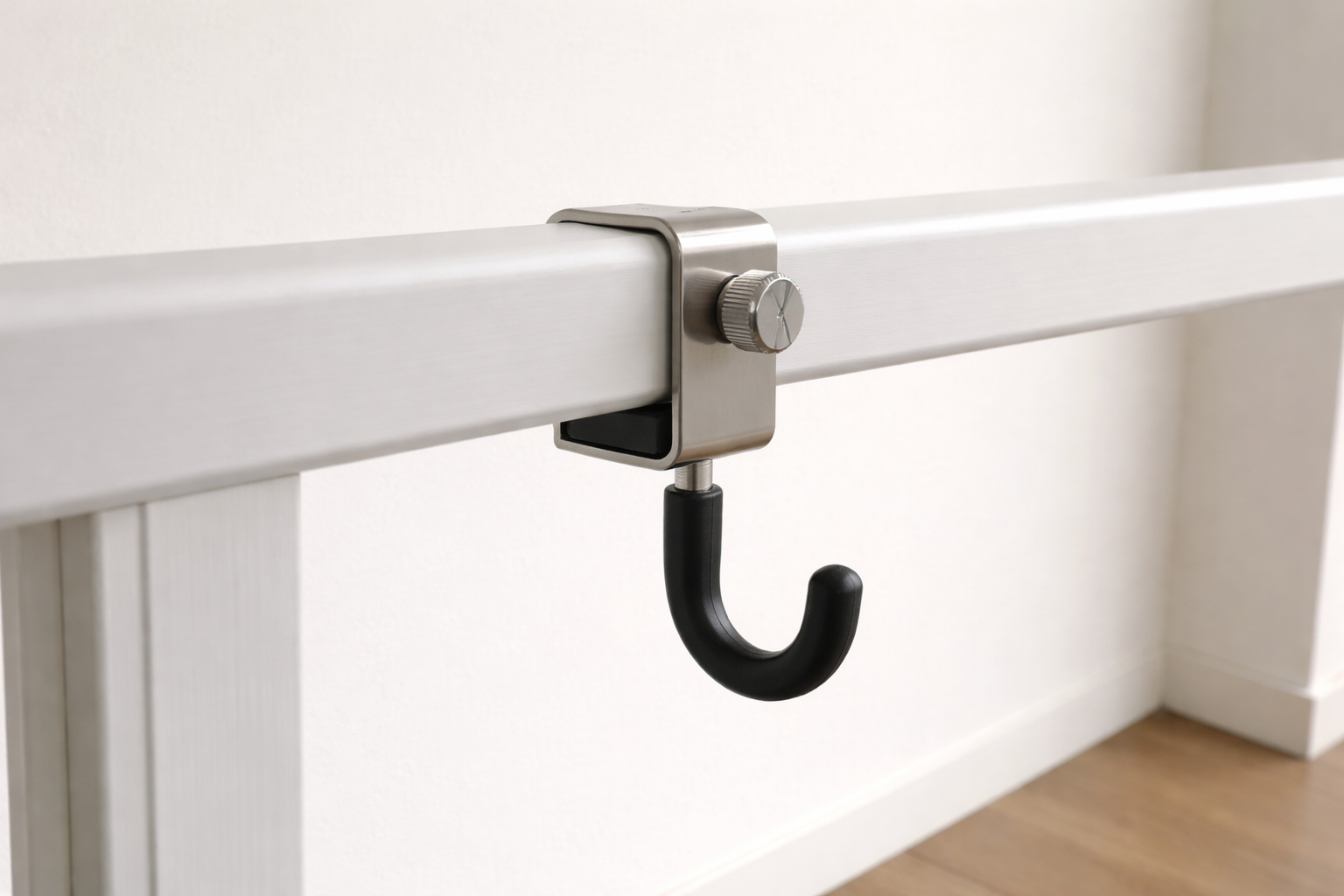
For most balcony birders, clamp-on rail hooks or secure window mounts are the best choice, they avoid drilling, protect rental agreements, and give the most reliable viewing. If you rent, prioritize clamp and suction solutions over permanent hardware; look into apartment-friendly mounting options and pick the one that matches your rail or glass type. Always prefer clamps with rubber pads so paint and metal won’t get gouged when tightened.
Measure before you buy. Standard clamp kits typically fit rails up to about 2.0, 2.5 inches thick, while heavy-duty clamps can handle roughly 3.5 inches. Bring a tape measure or calipers and compare to the product’s maximum throat depth. For a one-stop solution that combines a tray and deck hook, consider prebuilt options described under apartment balcony kits; they simplify alignment and usually include rubber pads and hardware for narrow and wide rails.
Placement rules matter more than you think. Mount feeders 6 to 12 inches out from the rail to cut down on seed scatter below. If you use a weight-activated or cage-style squirrel-proof feeder, leave about 18 inches of clear space from any footholds so the mechanism can work. Motorized anti-squirrel devices work well but need reachable power or frequent recharging; if you pick a Flipper-style unit, plan where you’ll plug or charge it before installing.
Window safety: place window feeders either within about 3 feet of the glass or farther than roughly 30 feet. That single rule cuts collision risk sharply, so follow it when you choose between rail and window mounting.
Action: measure your rail, pick a rubber-padded clamp or a strong suction window mount, and install the feeder 6, 12 inches from the rail with at least 18 inches of squirrel-free clearance. If you want a motorized unit, confirm a charging solution first and then mount.
Cleaning and maintenance that prevents disease
Clean feeders at least every 1, 2 weeks using hot, soapy water or a 9:1 water-to-bleach solution, then rinse and let every part air-dry completely before refilling. Clean more often when many birds visit or if you spot sick birds. Cornell Lab and Audubon both list that schedule and those cleaners as the simplest, most effective way to reduce disease spread.
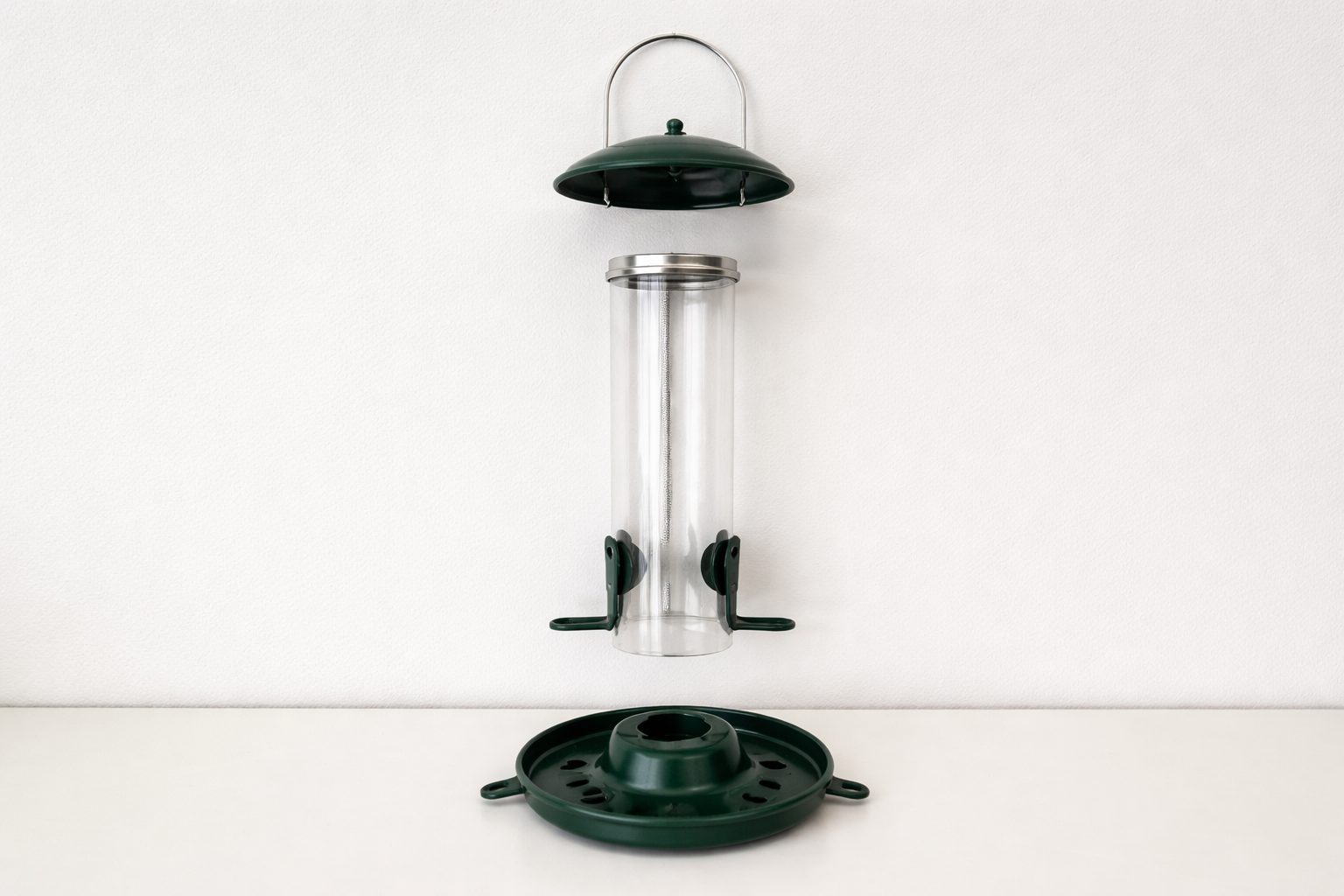
Buy feeders that come apart by hand and have wide openings. Designs that disassemble without tools save time and reduce missed nooks where mold hides. Brome’s detachable-component approach is exactly what to look for: removable seed trays, snap-off ports, and smooth plastics or stainless-steel surfaces that wipe clean. Where the manufacturer allows it, choose dishwasher-safe parts to cut cleaning time.
Fast, reliable cleaning: empty the feeder, shake out debris, scrub all surfaces with a bottle brush or old toothbrush, soak briefly in hot soapy water or the 9:1 bleach solution, then rinse well. One safety note: avoid tray-style or poorly drained feeders. Pooled moisture in trays and enclosed pockets encourages mold and disease, according to reporting in the Washington Post.
Action: pick a hand-disassembling, dishwasher-safe feeder and set a recurring biweekly cleaning on your calendar. Follow the soap-or-9:1-bleach routine and only refill once all parts are bone-dry.
Seed and species: nyjer, sunflower, and mess control
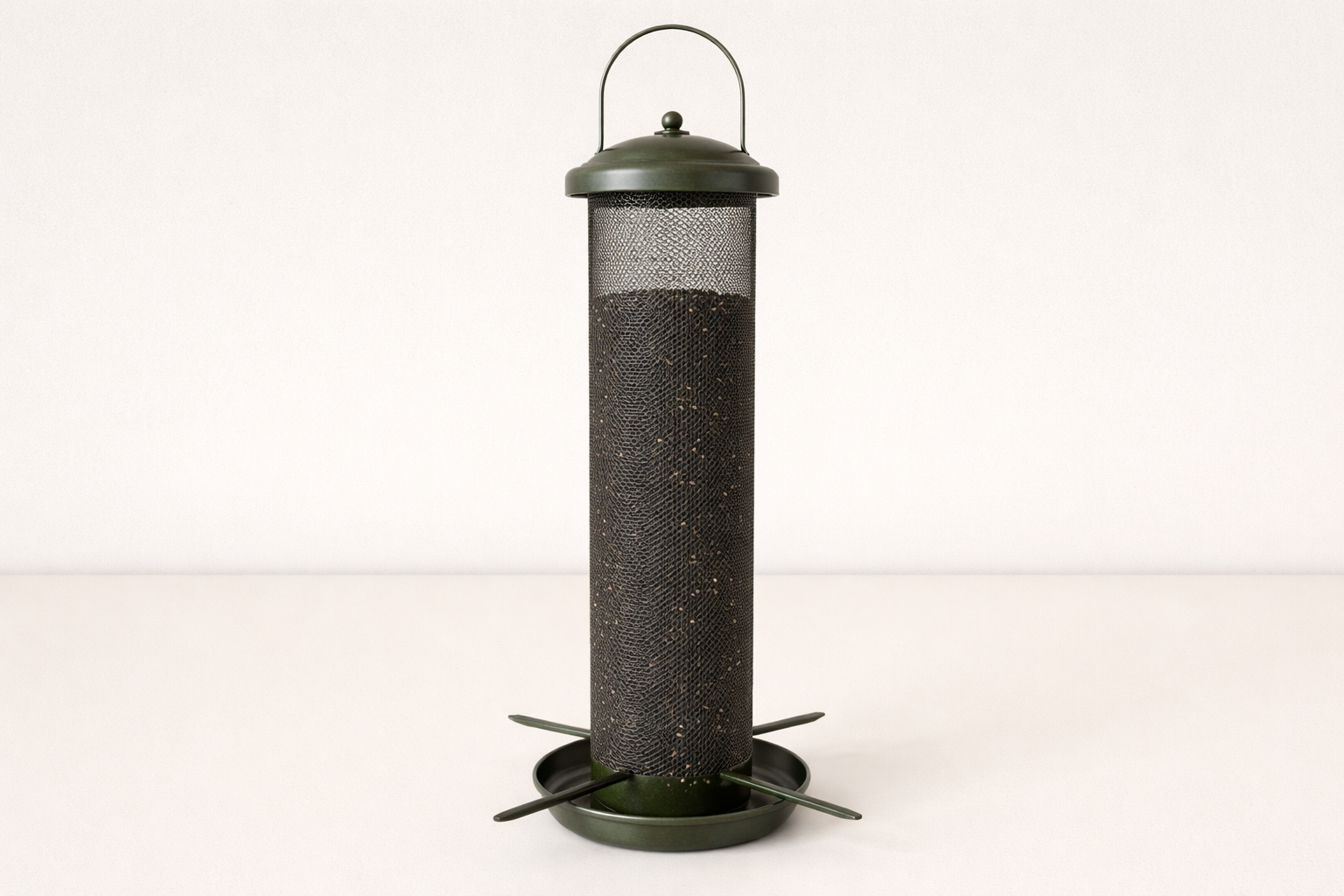
Nyjer seed is the best single choice for balconies when you want goldfinches, siskins, and similar tiny finches and want to cut down on hull litter. Use nyjer in a purpose-built finch or mesh sock feeder. Mesh feeders let birds cling and pull seed out cleanly, and hulled nyjer produces almost no hull mess, so your balcony floor stays tidy.
Use nyjer for finches in a mesh or finch-style feeder and replace it every 3, 4 weeks if birds aren’t clearing the seed. When you switch seed types, put the new seed in a second feeder or mix small amounts first to keep regular visitors coming. Also choose feeders with drainage holes so rain won’t soak seed and cause spoilage.
If you want low mess but more species variety, hulled sunflower or sunflower chips are the better alternative. They feed a wider range of birds and drop fewer shells than unhulled sunflower or cheap mixed blends. Avoid inexpensive mixed millet or cracked-corn mixes because they attract ground-feeders and pests on tight urban balconies.
Action: pick nyjer in a mesh finch feeder as your primary feeder and schedule a seed check every three weeks. If you prefer variety or see pest activity, swap to hulled sunflower chips in a separate, drained feeder. Replace any damp or stale seed immediately to prevent mold.
FAQ: quick answers to common follow-ups
FAQ: quick answers to common follow-ups
For small balconies the best choice is a compact tube feeder or a window feeder; clamp-on trays are the better pick when your rail is deep enough. Perky-Pet Clear Window Bird Feeder (model 347) is best for direct viewing on a tight balcony, cheap, easy to fill, and no drilling, tradeoff: suction-cup reliability and extra mess on the glass.
To stop squirrels, a weight-activated shroud like the Squirrel Buster Plus is the better choice. It blocks heavier animals mechanically and you can adjust sensitivity. If you prefer an active deterrent, the Droll Yankees Flipper is best for spin-off protection; tradeoff: moving parts and occasional maintenance. Both need at least 18 inches of clear space so squirrels can’t leap from nearby structures.
Window feeders are safe when placed correctly: put them within 3 feet of the glass or more than 30 feet away to avoid deadly strikes. Clean feeders every 1, 2 weeks with hot soapy water or a 9:1 water-to-bleach soak, rinse, and dry before refilling to reduce disease.
Finches want nyjer seed in a mesh finch-style feeder; replace nyjer often to keep oils fresh. Renters: skip drilling. Measure your rail thickness and use clamp kits rated to that depth or a suction-window model like the Perky-Pet.
Action: measure your rail depth and distance to glass now, then choose clamp-tray if rail ≥2 inches, Perky-Pet if you need no drilling, or Squirrel Buster Plus if squirrels are the problem.
Final recommendation and author note
For most balcony birders who want low-maintenance, passive squirrel protection, the Brome Squirrel Buster Plus is the best choice: weight-activated shroud, ~5.1 lb seed capacity, easy disassembly for cleaning, and a manufacturer-recommended 18 inch clearance from footholds; tradeoff is cost and a bit of space for placement.
If you accept an active solution, the Droll Flipper is better: motorized spinning perch ejects squirrels without harm, durable polycarbonate build, and replaceable parts; tradeoff is occasional charging and moving parts to maintain.
Renters and tiny balconies should pick a Perky-Pet Window Bird Feeder or a clamp-on deck hook (Kingsyard/More Birds style); these cost less and avoid drilling, but suction mounts have limited capacity. Use low-mess seed (safflower or nyjer) in city settings to reduce complaints and pests.
Final action: if you can give 18 inches of clearance and want minimal fuss, buy the Squirrel Buster Plus; if you prefer an active deterrent, choose the Droll Flipper; if you rent, go window or clamp-on and switch to low-mess seed. I test and maintain feeders on my own and friends' porches, so those are my hands-on picks.