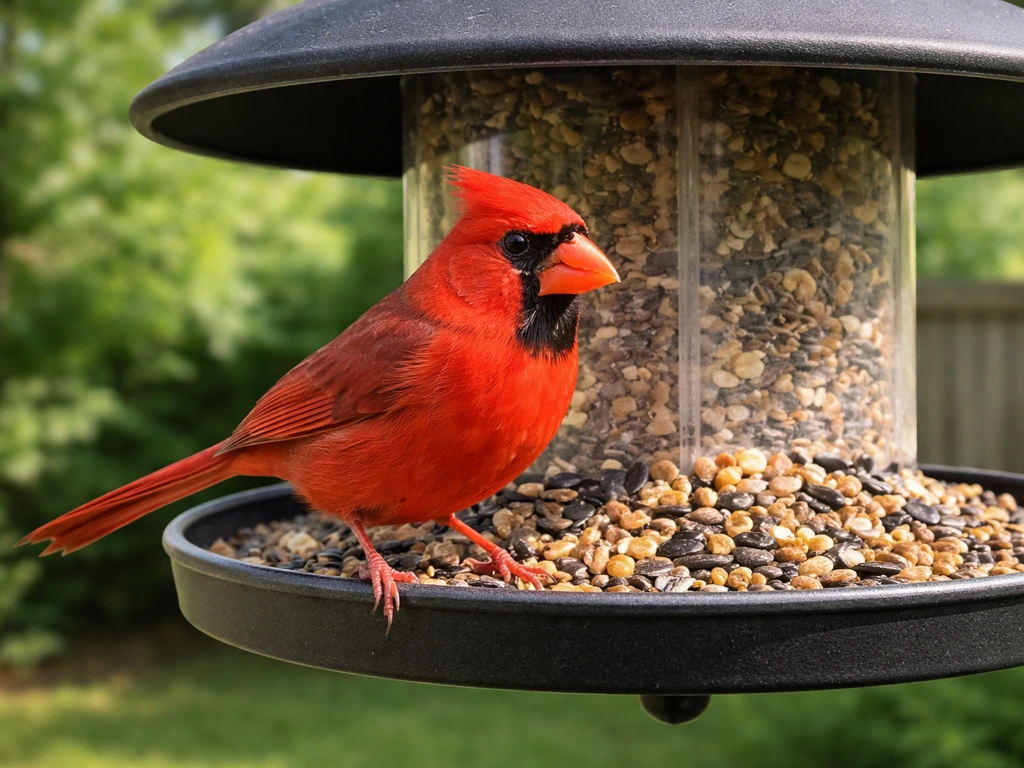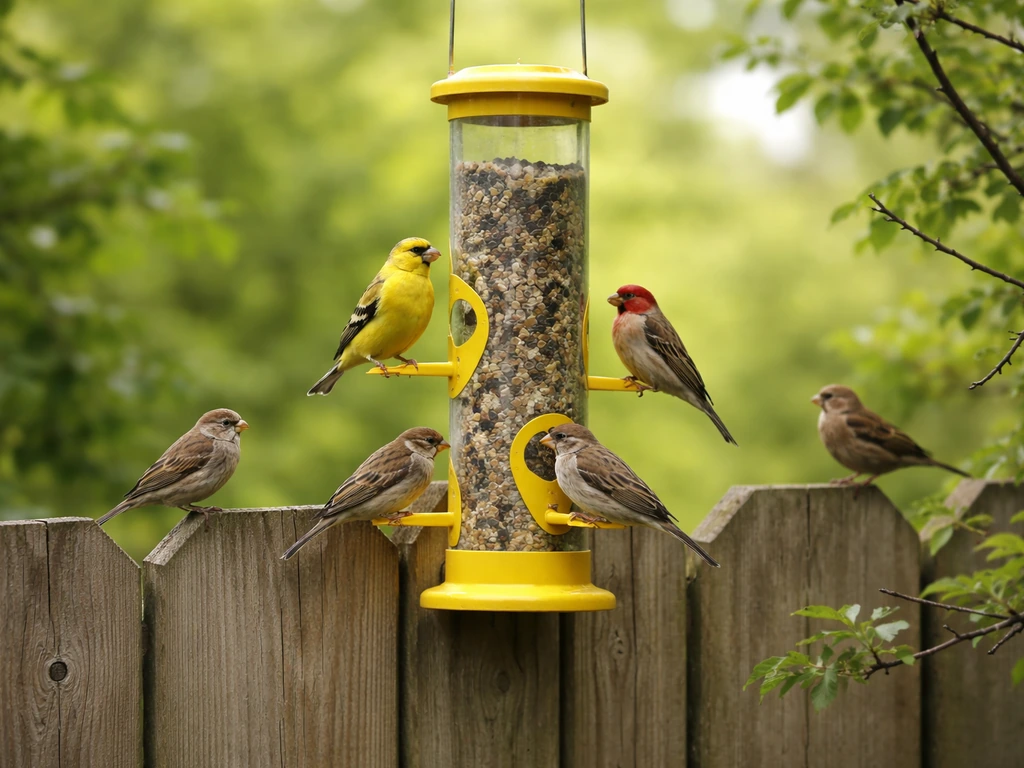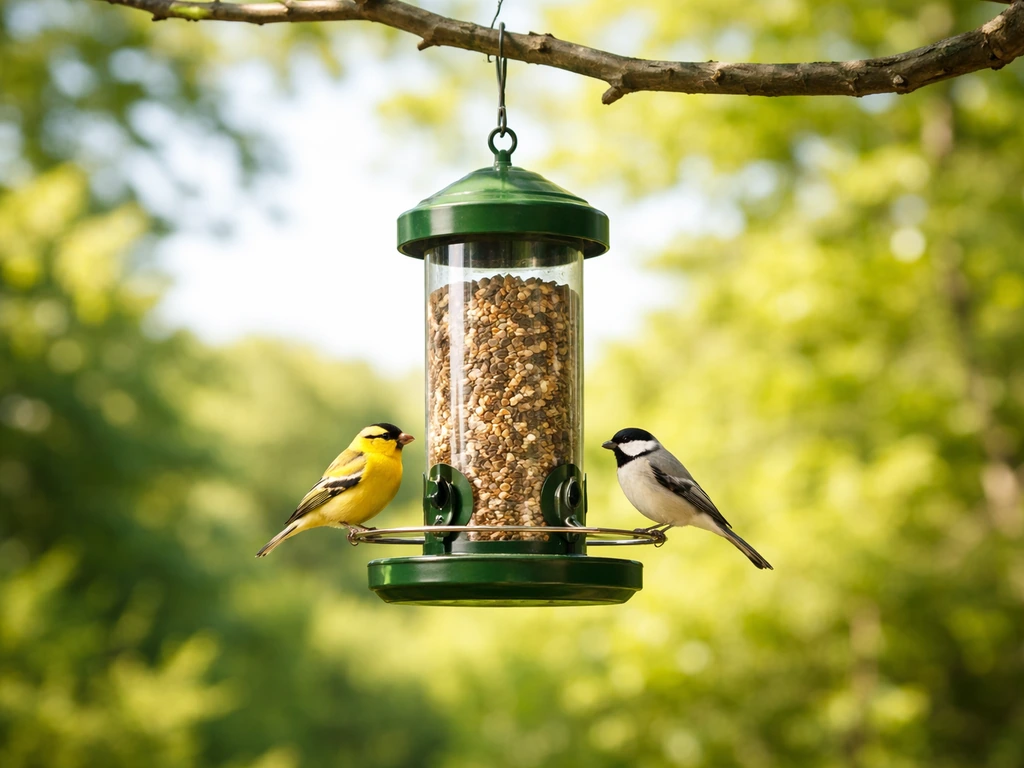
If you only buy one bird feeder, make it a hopper feeder. To find what bird feeders birds like best, match the style and seed to the species you’re trying to attract hopper feeder. It attracts the widest range of birds, from small finches and chickadees all the way up to cardinals, jays, and red-winged blackbirds, and it handles most seed types without fuss. That said, the best bird feeder for your yard specifically depends on which birds you want to see, how much squirrel pressure you're dealing with, what the weather is like, and whether you want a traditional setup or something smarter like a camera-equipped AI feeder that identifies species automatically. Choosing between hopper, tube, platform, and suet will help you figure out which bird feeders are best for the birds you want to see.
What Is the Best Bird Feeder? Buyer Guide for Any Yard
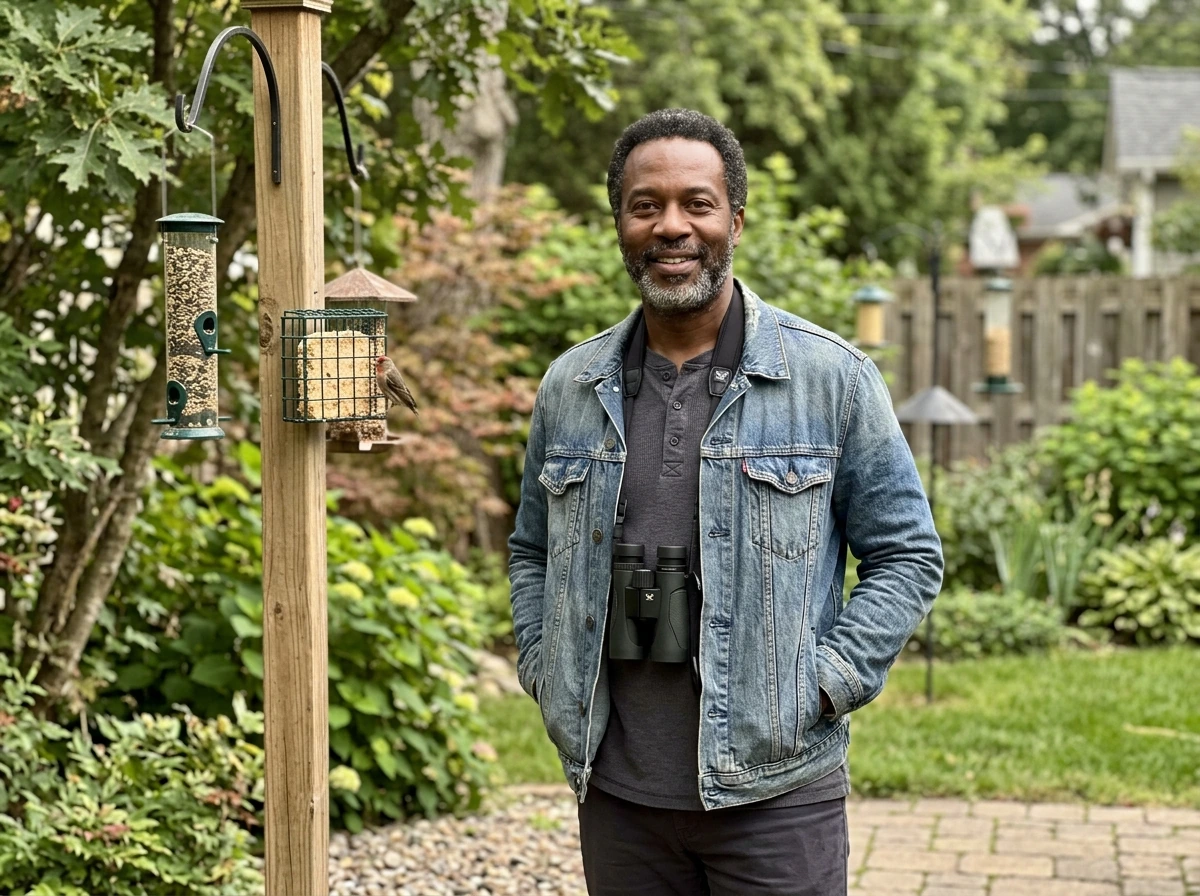
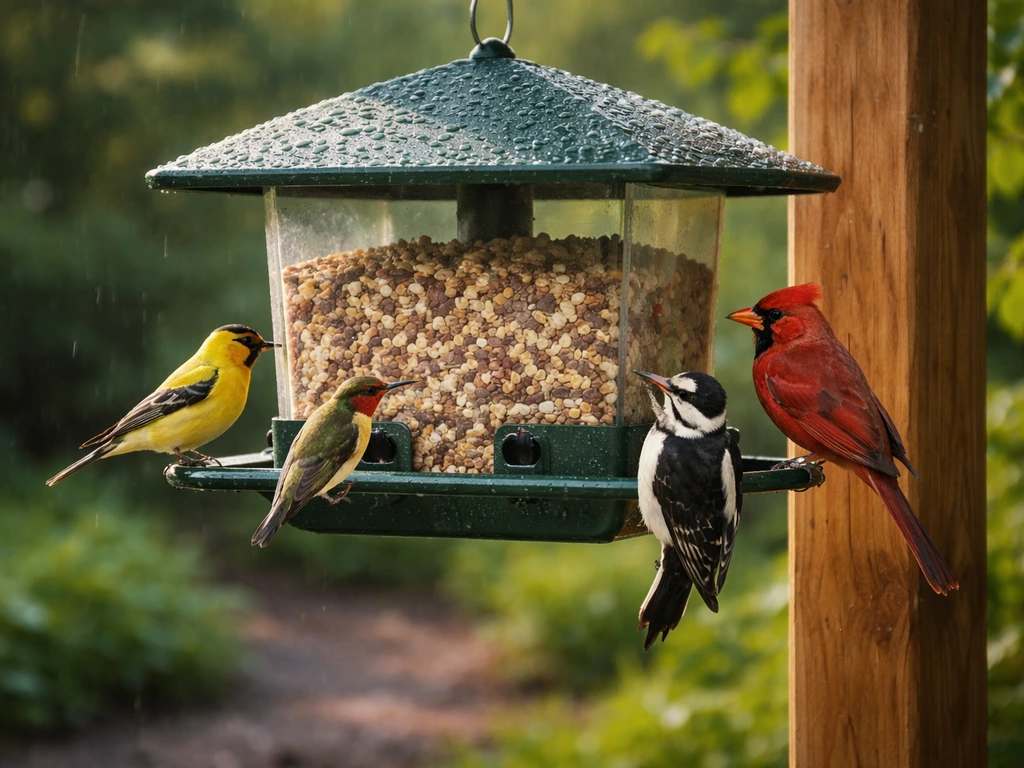
Best bird feeder overall and best for different needs
The hopper feeder is the strongest all-around pick. It holds a large volume of seed, shelters it from rain, and brings in the most species diversity of any single feeder style. If you want to attract more birds overall, a hopper is the place to start. But a single feeder type rarely covers every situation, so here's how to think about it by use case.
| Need | Best Feeder Type | Why |
|---|---|---|
| Best overall / one feeder | Hopper feeder | Attracts the widest species mix including cardinals, jays, and all tube-feeder birds |
| Best for finches | Tube feeder with small ports (nyjer/thistle) | Designed for clinging finches like goldfinches and siskins; keeps larger birds out |
| Best for cardinals | Platform or large hopper feeder | Cardinals need a wide perch and prefer open feeding surfaces |
| Best for woodpeckers | Suet cage feeder | Holds suet cakes; gives woodpeckers a surface to cling and peck |
| Best for hummingbirds | Nectar/hummingbird feeder | Delivers sugar-water solution; red color attracts birds without food dye |
| Best for tech enthusiasts | Smart camera / AI feeder | Identifies visiting species automatically via app; doubles as wildlife cam |
| Best for squirrel problems | Weight-activated squirrel-proof feeder | Closes seed ports when a squirrel's weight is detected |
Match your feeder to the birds you actually want
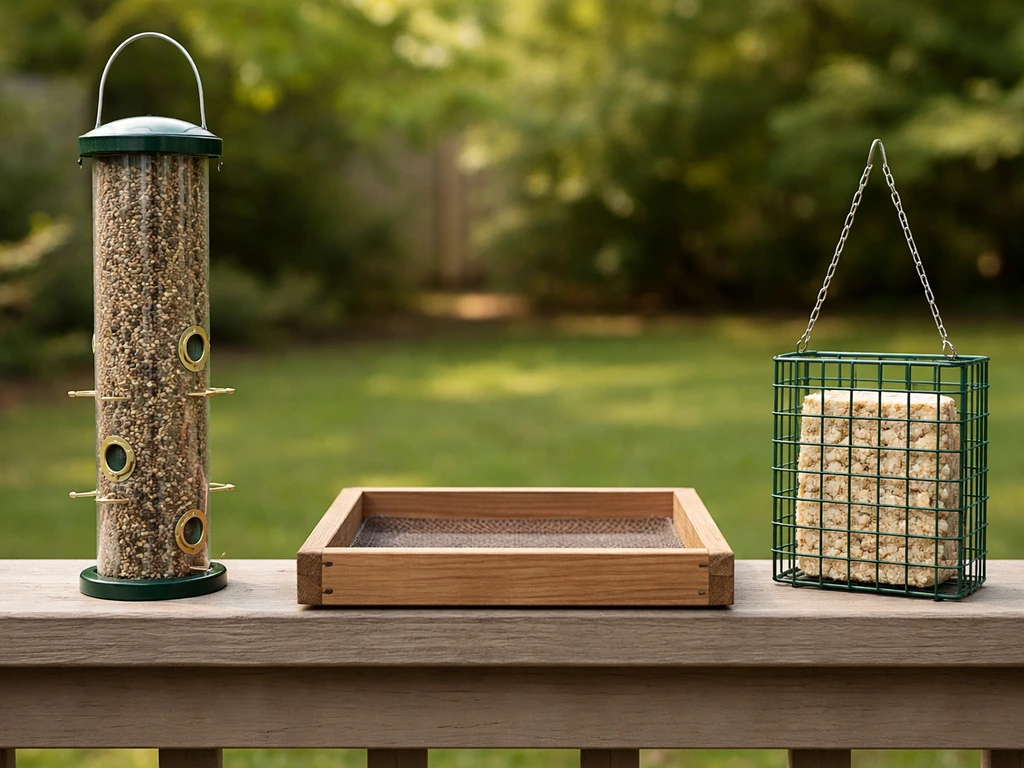
This is where most people go wrong. They buy whatever looks nice and then wonder why they're only getting house sparrows. The feeder type, seed type, and port design all filter which birds show up. Get those three things aligned and you'll see a noticeable difference within a week. If you are still unsure what bird feeders attract what birds, use the feeder type and seed guidance above as a starting comparison point.
Finches
Goldfinches, house finches, purple finches, and pine siskins all prefer nyjer (thistle) seed dispensed through a tube feeder with small ports. These feeders are designed specifically so smaller birds can cling and access seed while larger, less agile species mostly give up and move on. A sock-style nyjer feeder is even more restrictive and works great if you want a pure goldfinch setup. Standard sunflower seed in a tube feeder also draws finches, but nyjer is the magnet.
Cardinals
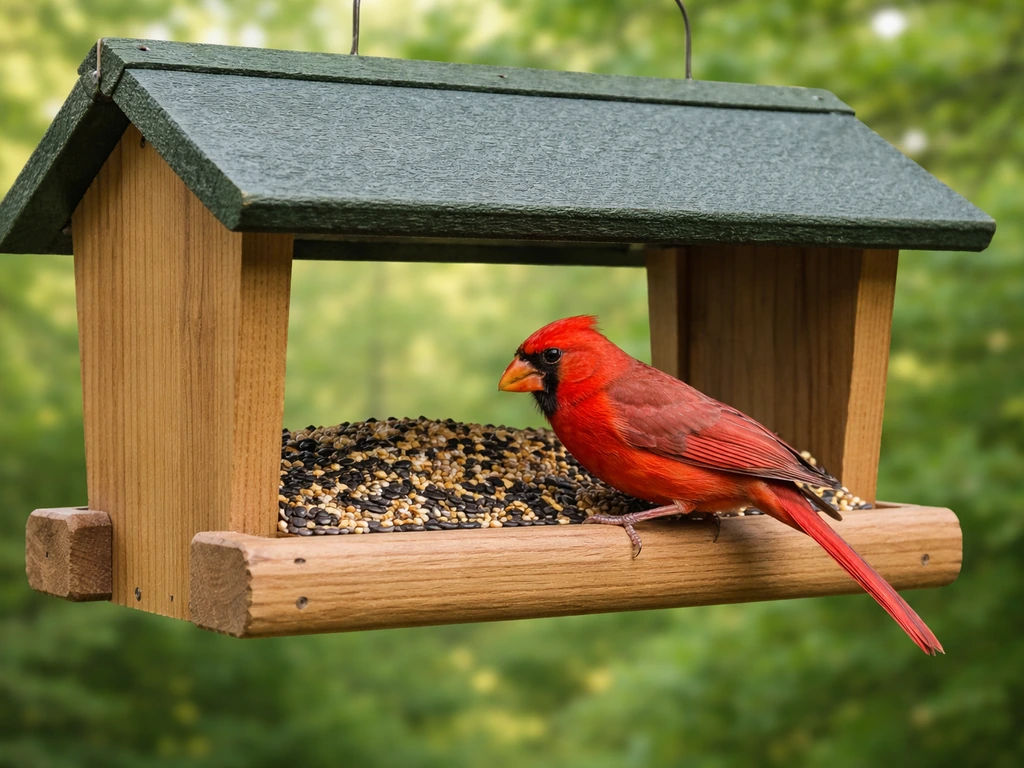
Cardinals are big, heavy birds that need a solid perch and open feeding area. They struggle with small tube feeder ports and tend to avoid nyjer feeders entirely. A platform feeder or a hopper with a wide tray catches them reliably. Sunflower seeds (black oil sunflower especially) are their preferred food. If cardinals are your target, a platform feeder set at a comfortable height with a generous supply of black oil sunflower seed is the most direct route.
Woodpeckers
Downy woodpeckers, hairy woodpeckers, and flickers all go straight for suet. A basic wire suet cage costs a few dollars and is one of the highest-return investments in backyard birding. Hang it on a tree trunk or a pole-mounted arm so woodpeckers can use the cage's surface to brace themselves the way they would on bark. Pileated woodpeckers, which are larger, often do better with a log-style feeder or a larger hanging suet block rather than a standard cage. European starlings, which will raid suet feeders aggressively, can be discouraged with an upside-down suet feeder design where the access hole faces the ground (starlings hate hanging upside down; woodpeckers don't mind).
Hummingbirds
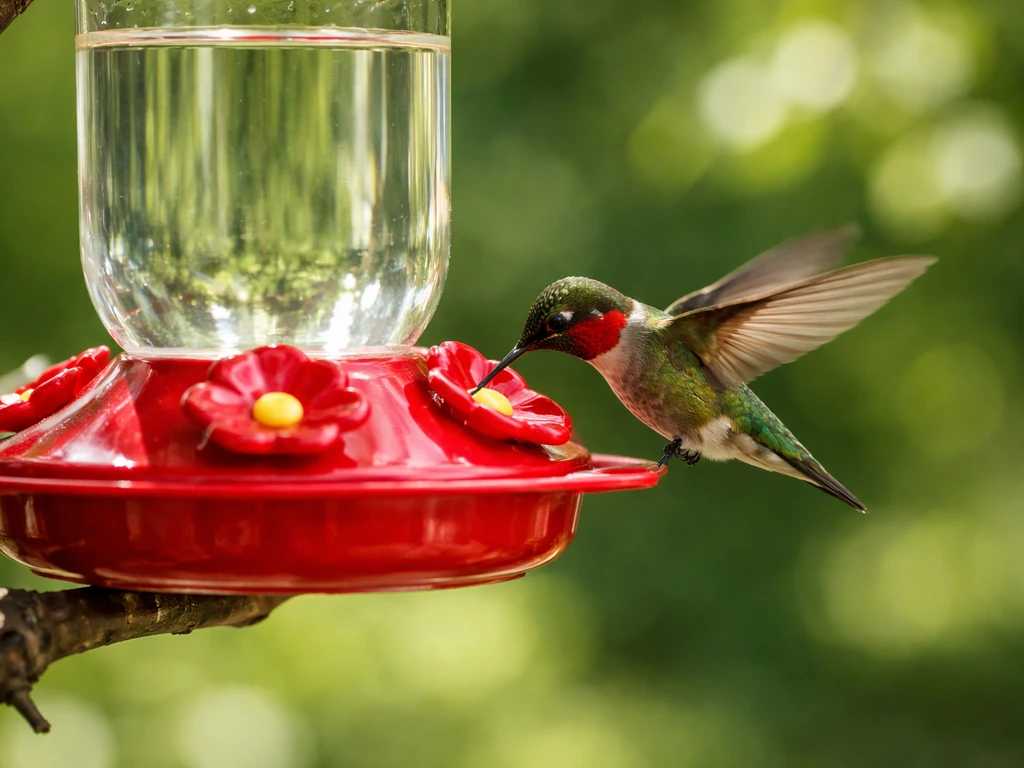
Hummingbird feeders are a category unto themselves. They hold a sugar-water nectar solution (1 part plain white sugar to 4 parts water, boiled and cooled) and come in glass or plastic designs with red flowers or ports to attract birds. One thing worth knowing: do not add red food coloring to the nectar. Both Audubon and the Cornell Lab have flagged it as potentially harmful, and it simply isn't necessary. The red feeder itself does the attracting. Clean hummingbird feeders every few days in warm weather since nectar ferments quickly and can make birds sick.
Blue jays, grackles, and larger birds
These birds are drawn to platform feeders and large hoppers. If you want them, that's good news. If you don't, a tube feeder with small ports or a weight-activated squirrel-proof feeder set to a lower exclusion weight will mostly keep them off. Grackles in particular are persistent, and the most effective control is a cage-style feeder where the outer wire cage allows small birds to pass through but blocks larger bodies.
Feeder types explained: traditional, smart, and specialty
Traditional feeders
Traditional feeders cover hoppers, tubes, platforms, suet cages, and nyjer socks. These are the workhorses. They're widely available, easy to find replacement parts for, and most birds are already conditioned to recognize them. Hopper feeders are the best single-feeder choice for variety. Tube feeders are best for finches and chickadees. Platform feeders are the most open and attract the broadest size range of birds but offer no weather protection for seed. Suet cages are inexpensive and extremely effective for woodpeckers and nuthatches.
Smart camera and AI-powered feeders
Smart feeders have grown into a legitimate category in the last few years. Models like the Bird Buddy and Birdfy (among others) embed a camera and on-device or cloud AI that identifies each bird by species when it lands and sends a photo or short video to your phone. They're genuinely fun, especially if you're learning bird identification or want to share sightings. The trade-offs are real though: they cost significantly more than a standard feeder, they require Wi-Fi and ongoing app support, the battery or power cable adds a maintenance step, and some AI models struggle with less common species. But if you're interested in tracking which birds visit and when, a smart feeder gives you data a traditional feeder never will.
Specialty feeders
Specialty feeders include hummingbird nectar feeders, oriole jelly feeders, peanut feeders, thistle socks, mealworm trays for bluebirds, and log-style feeders for clinging birds. Each one solves a specific attraction problem. You don't need all of them, but if you have a target species like orioles or bluebirds that your main feeder isn't pulling in, a specialty feeder is usually the answer.
Durability and weather resistance: what actually holds up outside
Outdoor feeders take a beating from UV exposure, rain, freezing temperatures, and the general chaos of wildlife. The material your feeder is made of matters more than most product descriptions let on.
| Material | Weather Resistance | Durability | Maintenance | Best For |
|---|---|---|---|---|
| Metal (steel/copper) | Excellent | Very high; resists squirrel chewing | Wipe clean; may rust if coating chips | Squirrel-heavy yards, long-term use |
| Thick UV-stabilized polycarbonate | Good to excellent | High; won't crack in cold | Easy to clean; dishwasher-safe models exist | Tube and hopper feeders in most climates |
| Recycled plastic (poly lumber) | Excellent | Very high; won't rot or fade quickly | Low; rinse and scrub periodically | Hopper and platform feeders in wet climates |
| Standard acrylic/thin plastic | Fair | Low; cracks in cold, fades in UV | Easy but short product lifespan | Budget feeders, mild climates only |
| Untreated wood | Poor without maintenance | Moderate; rots if not sealed | High; needs periodic sealing and scrubbing | Decorative hoppers where appearance matters |
| Glass (nectar feeders) | Good | High if borosilicate; fragile if thin | Easy; dishwasher-safe | Hummingbird feeders; cleaner than plastic nectar containers |
My general rule: if it's going to be outside year-round, avoid thin plastic and untreated wood. Recycled poly lumber hoppers and powder-coated steel feeders are the best long-term investments. For tube feeders, look for UV-stabilized polycarbonate tubes rather than standard acrylic, which yellows and cracks within a season or two in direct sun.
Cleaning is non-negotiable
Dirty feeders spread disease. The U.S. Fish and Wildlife Service and Cornell Lab both flag this as a real concern, not just a theoretical one. House finch conjunctivitis is one well-documented example of a disease that spreads through contaminated feeders. The recommendation from Cornell and Audubon is to clean seed feeders at least every two weeks, more often in wet weather when mold forms faster. Use a dilute bleach solution: no more than 1 part bleach to 9 parts water (Cornell's recommendation), or roughly two ounces of bleach per gallon of water (Minnesota DNR's guidance). Flathead Audubon’s feeder-cleaning guidance also recommends cleaning seed and nectar feeders about every two weeks and using a dilute bleach mix of 1 part bleach to 9 parts water dilute bleach solution: no more than 1 part bleach to 9 parts water. Scrub all surfaces, rinse thoroughly, and let the feeder dry completely before refilling. Hummingbird feeders need cleaning every few days in summer. Feeders that come apart easily or are dishwasher-safe make this much less of a chore, and that's a real factor worth prioritizing when buying.
Squirrel-proofing and keeping grackles in check
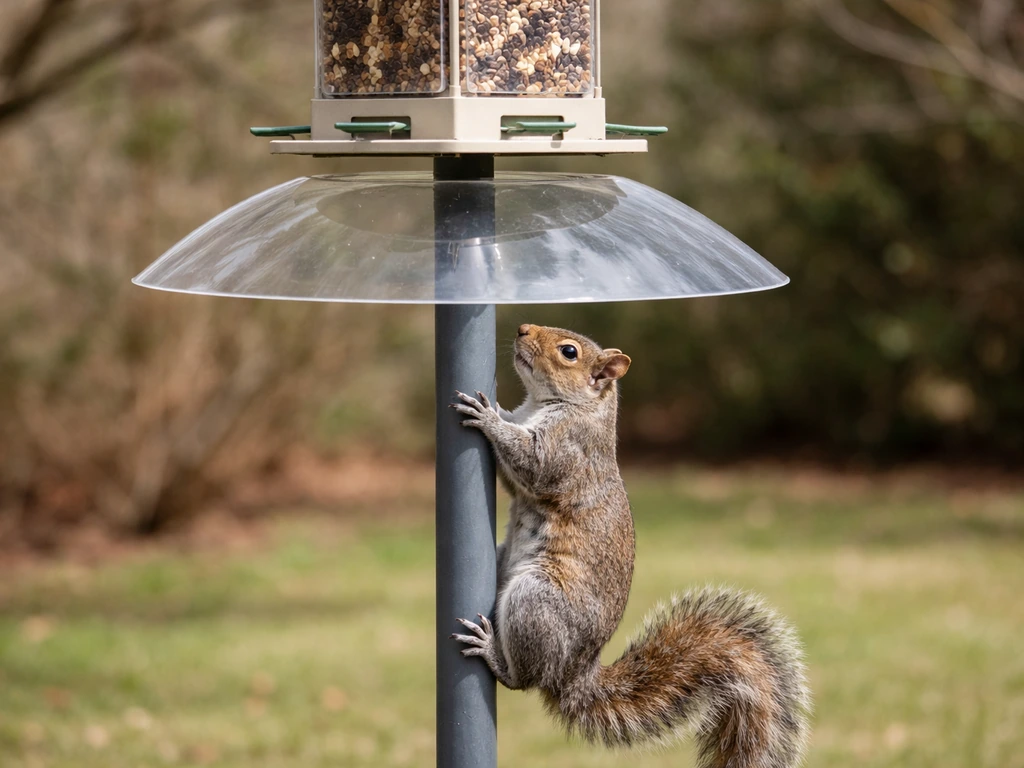
Squirrels will eat your seed, destroy your feeder, and outlast almost any half-measure you try. I've had squirrels chew through plastic hoppers, bend wire cages, and leap distances that seemed physically impossible. There are three approaches that actually work, and they work best in combination.
Weight-activated feeders
These feeders close their seed ports when a weight above a set threshold lands on the perch ring. Squirrels are heavier than birds, so they trigger the closure while chickadees and finches feed freely. Some models let you adjust the sensitivity to exclude heavier birds like grackles and doves. This is probably the most hassle-free squirrel solution because it requires no special mounting setup. The downside is cost: quality weight-activated feeders typically run $50 to $150.
Baffles and pole placement
A dome or cylindrical baffle mounted on the pole below the feeder physically blocks squirrels from climbing up. For this to work, the pole needs to be positioned correctly. Audubon Shop recommends placing pole-mounted feeders 8 to 10 feet away from railings, roofs, or tree branches so squirrels can't get a running jump to bypass the baffle entirely. Perky-Pet's guidance puts the minimum clearance from any launch point at 15 feet. The dome baffle itself needs to be mounted high enough on the pole that a squirrel reaching up from the ground can't get above it. When the placement is right, a good baffle stops the vast majority of squirrel access.
Cage-style feeders for grackles
A cage-style feeder (a tube or hopper surrounded by an outer wire cage with openings sized for small birds) keeps out grackles, starlings, and large blackbirds effectively. Small birds fly through the gaps; big birds don't fit. It's not perfect for every yard because it also excludes larger desirable birds like cardinals unless you use a cage with wider spacing. But if grackle invasions are your main problem, a cage feeder is among the most reliable fixes.
Mounting and placement: get this right and everything else works better
Where you put your feeder matters as much as which feeder you buy. Placement affects which birds find it, how safe those birds are from window collisions and predators, and how easy the feeder is for you to fill and clean.
Height
Audubon recommends hanging feeders at least 5 feet off the ground. This gets seed out of easy reach of ground-level predators and keeps it elevated enough for good bird visibility. Most pole-mounted setups with a baffle land naturally in the 5 to 6 foot range, which works well. Very high placement (above 10 feet) can make filling and cleaning inconvenient, which leads to neglected feeders, so practical access matters.
Window collision safety
Window collisions kill a massive number of birds every year, and feeder placement plays a direct role. The rule from Audubon is: place feeders either within 3 feet of a window or more than 30 feet away. The logic is that a bird launching from within 3 feet doesn't build enough speed to injure itself on impact, while beyond 30 feet birds have enough room to safely redirect. Cornell Lab calls roughly 10 feet a reasonable compromise position for most yards. The dangerous middle ground is 5 to 15 feet away, where birds flush at full speed directly toward glass. If your only placement option is in that range, window decals or screens on the glass are worth adding.
Spacing and visibility
If you're running multiple feeders, spread them out rather than clustering them. Clustering creates competition and can stress subordinate birds out of feeding. A general guideline is to give each feeding station enough space that birds at one feeder aren't constantly startled by activity at another, roughly 10 to 15 feet apart at minimum. For visibility, position feeders somewhere you can actually see them from inside, ideally from a window you look at frequently. The whole point of a bird feeder is to watch birds, and a feeder stuck in the back corner of the yard where you never notice it tends to go unmaintained.
Mounting options
- Freestanding pole: most flexible, works anywhere, pairs well with baffles, easiest to move if you change your mind about placement
- Shepherd's hook: inexpensive and easy to install, good for lighter feeders; can be unstable in soft soil or wind
- Tree-hung: natural setting, but harder to add a baffle and easier for squirrels to access from above via branches
- Deck-mounted clamp or railing bracket: convenient for filling and viewing but typically too close to structures for effective squirrel-proofing without a baffle
- Window-mounted (suction cup feeders): great for close-up views and very close to the window (within 3 feet), which actually reduces collision risk
How to pick the right feeder today
Run through this checklist before you buy. It takes about two minutes and will save you from a feeder that sits unused or gets destroyed in a month.
- Identify the birds you most want to attract. Cardinals and jays: get a hopper or platform feeder with black oil sunflower seed. Finches: get a nyjer tube feeder. Woodpeckers: get a suet cage. Hummingbirds: get a nectar feeder with no artificial coloring in the nectar. Mixed variety: hopper feeder first, then add specialty feeders as budget allows.
- Assess your squirrel situation honestly. Light squirrel pressure: a baffle on a properly placed pole is usually enough. Heavy squirrel pressure: go straight to a weight-activated feeder or invest in both a baffle and a metal feeder body that can't be chewed through.
- Check your yard for window proximity. If the only good spot is 5 to 15 feet from a window, add decals or screens to that window before hanging the feeder.
- Pick a material that suits your climate. Wet or snowy winters: avoid untreated wood and thin plastic. Hot, sunny yards: UV-stabilized polycarbonate or metal. Year-round simplicity: recycled poly lumber or powder-coated steel.
- Think about how often you'll realistically clean it. If you want low maintenance, choose a feeder with removable parts that either disassemble easily or are dishwasher-safe. Every seed feeder needs cleaning at least every two weeks.
- Decide whether a smart feeder adds real value for you. If you want to identify species, track visits, or share wildlife content, a camera-equipped AI feeder is worth the extra cost. If you just want birds in your yard, a traditional feeder works better and costs less.
- Start with one feeder, not five. A single well-placed, well-maintained hopper feeder will outperform five cheap feeders in random spots. Add specialty feeders one at a time as you see what birds are visiting your yard.
The bottom line: the best bird feeder is the one that matches your target birds, survives your climate and squirrel situation, and is realistic for you to maintain. A hopper feeder hits the most of those boxes for the most people, which is why it's the standard recommendation for anyone starting from scratch. From there, a nyjer tube for finches, a suet cage for woodpeckers, and a nectar feeder for hummingbirds round out a yard setup that will draw an impressive variety of species without overwhelming complexity. And if you want to dig further into questions like which feeder attracts the most birds overall, which specific models perform best by category, or how to match feeder type to specific birds, those are each worth exploring in their own right as you build out your setup. If you're comparing styles, focus on a hopper feeder first, since it's the most reliable option for bringing in the widest range of birds which feeder attracts the most birds overall.
FAQ
What should I buy if I want the best bird feeder overall, but I do not know which birds visit my yard?
If you want the best single feeder for most yards, choose a hopper with a wide tray and pair it with black oil sunflower seed. This combination broadens the species you’ll see and reduces “seed mismatch” issues that happen when people buy the right feeder shape but the wrong seed for local birds.
Can I use one feeder and one seed type to attract the widest range of birds?
Yes. Even great feeders fail if the seed does not match the birds. Start with black oil sunflower for general variety, then adjust after 7 to 10 days based on what actually shows up, rather than what you expect to see. Also note that finches often respond faster to nyjer changes than cardinals do to small port changes.
Are weight-activated squirrel-proof feeders reliable, or do squirrels eventually beat them?
A weight-activated feeder can reduce squirrel trouble, but many squirrels still learn placement and tactics. If you use a weight-activated model, verify you can adjust sensitivity for your local “squirrel size” and that the perch ring closing mechanism cannot be triggered by tail scraping or climbing from the side.
What makes a baffle placement fail, even with a good-quality feeder?
For squirrels, a baffle works best when pole mounting is done correctly and there is no nearby launch route. Confirm there are no gutters, railings, or tree branches within easy reach, then mount the baffle high enough that a squirrel cannot reach over it from the ground.
How can I attract both finches and cardinals without one feeder type blocking the other?
Tube feeders for finches often do not suit larger birds, so if you want cardinals and finches together, use separate feeders. Put a finch tube feeder slightly away from a hopper or platform feeder loaded with black oil sunflower, and consider using different heights to prevent aggressive birds from dominating the feeding area.
How often should I clean my bird feeder if the weather is humid or rainy?
Cleaning frequency should increase when it is wet, warm, or you notice clumping. A key missed step is letting the feeder dry completely before refilling, since leftover moisture accelerates mold and increases disease risk.
What is the safest way to disinfect a feeder without harming birds?
Do not use vinegar or detergent as your primary disinfectant, especially if you are trying to control disease risks. Use the dilute bleach solution approach described in the guide, scrub thoroughly, then rinse well so birds do not encounter residue when they feed.
Why are my finches ignoring a nyjer feeder that should attract them?
Nyjer (thistle) is the big finch magnet, but birds may still ignore it if ports are too large for small birds or if the feeder is placed in a high-risk area. For finches, prefer small-port tubes, hang near safe cover, and use fresh seed because nyjer can go stale faster than many people expect.
Can the seed mix I use make certain birds “unwelcome” at the feeder?
Food choice can unintentionally exclude target birds. If you fill a hopper with mixed seed that contains lots of small offcuts or filler, it can attract aggressive species like grackles in some areas. For predictable results, use a simpler seed strategy such as black oil sunflower for general attraction, then add specialty seed only for targeted feeders.
Will a cage-style feeder stop grackles without preventing all my backyard birds?
If grackles are the problem, a cage-style feeder often helps, but you must use the right opening size. Too large and grackles get in, too small and you also block desirable birds. The practical next step is to start with a cage sized for small birds you want (like finches) and evaluate what you sacrifice over a week.
Is an AI camera feeder worth it compared to a regular hopper?
Yes, but manage expectations. Smart feeders can misidentify uncommon species, and they often require stable power, consistent Wi-Fi, and regular app updates. If you buy one, also keep traditional feeders running so you do not end up with “data loss” when connectivity or battery fails.
What are common hummingbird feeder mistakes that lead to sick or absent birds?
Hummingbird nectar ferments quickly in heat, so plan on shorter cleaning intervals during hot spells rather than relying on a fixed schedule. Also, check that nectar levels and feeder design allow easy draining and refilling, since residue in narrow ports can lead to repeated contamination.
If I cannot place feeders at the recommended distances from windows, what is the best compromise safety approach?
Yes, especially if you only have one spot to hang feeders. In the 5 to 15 foot “risky middle,” use window decals or screens on the glass, and position feeders so birds have a clear takeoff and redirect path. If possible, adjust location to be either within 3 feet or beyond 30 feet from the window.