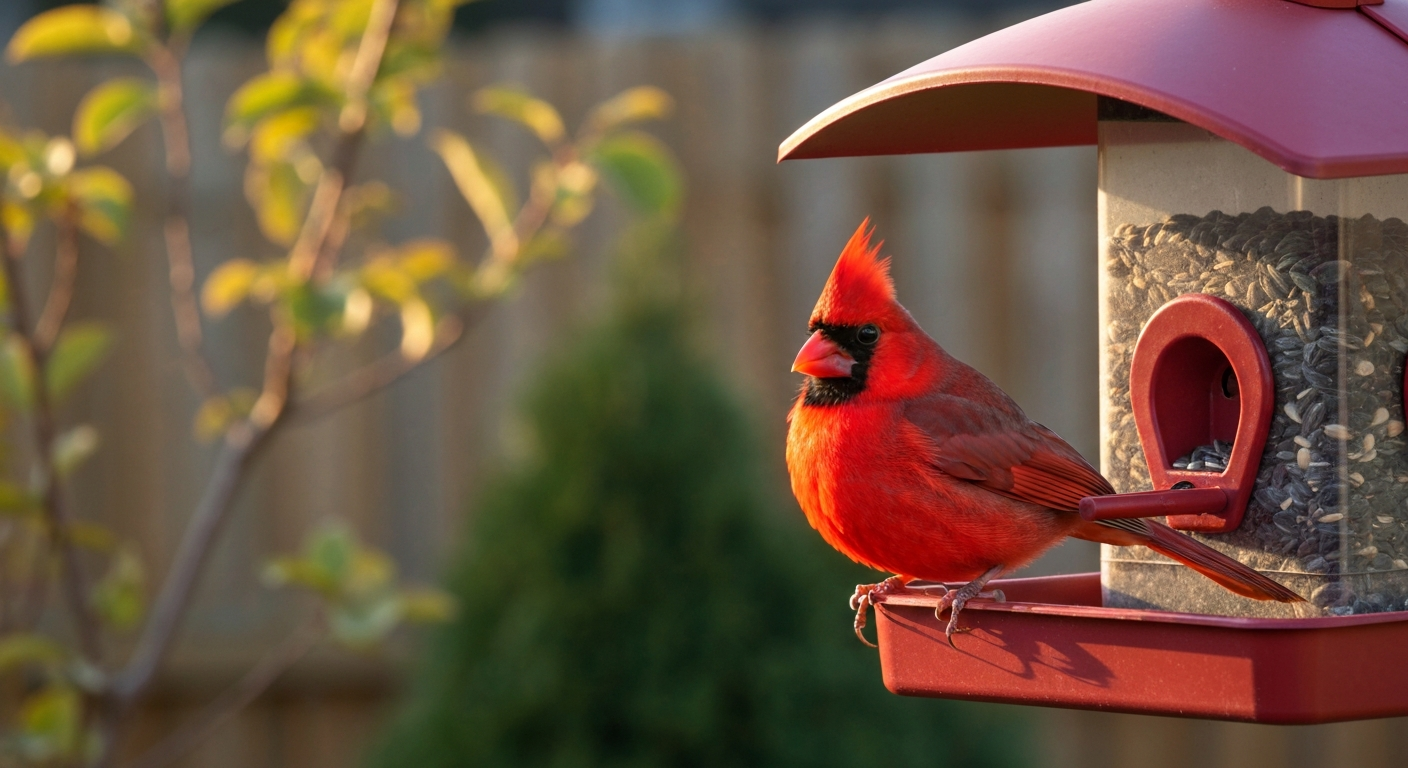
A good bird feeder is one that consistently attracts the birds you want, holds up through rain, heat, and freezing temps, keeps squirrels out, and doesn't become a biohazard between cleanings. That's a lot to ask, but plenty of feeders actually deliver. The trick is matching the right feeder to your birds, your yard setup, and your tolerance for maintenance. This guide walks through exactly how to do that.
Good Bird Feeders: How to Choose the Best Options
Marcus Holloway
9 Apr 2026
How to choose the right bird feeder for your yard
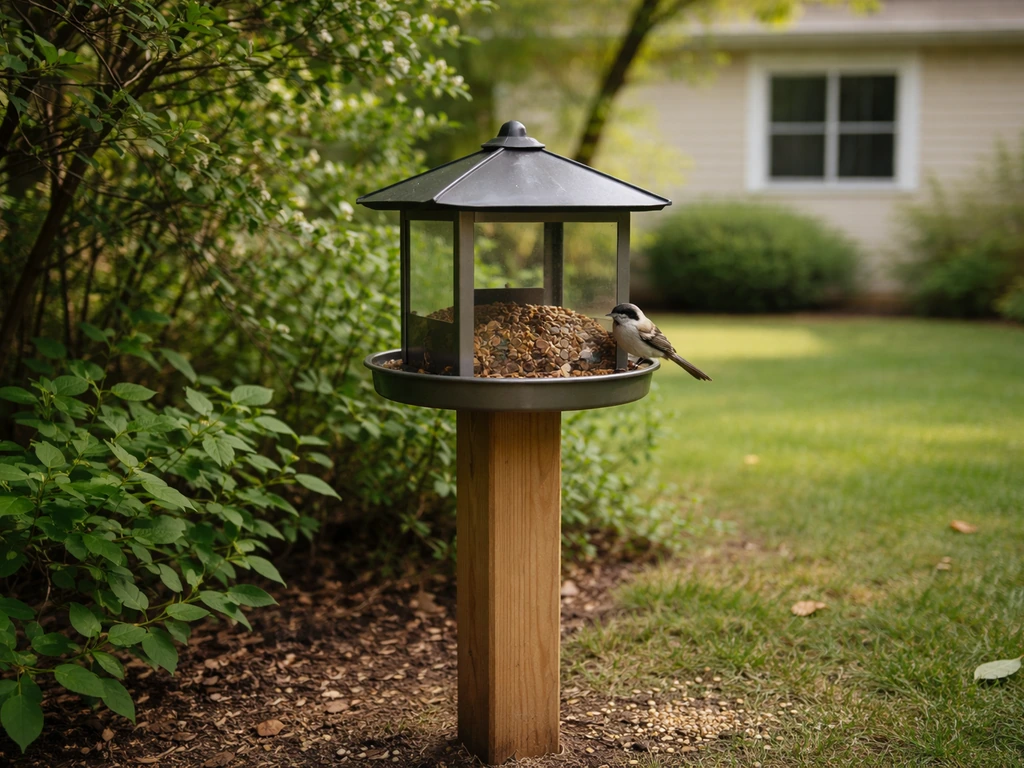
Before you buy anything, answer three questions: What birds do you want to attract? Where will the feeder go? And how much maintenance are you realistically willing to do? The answers narrow your options fast. If you're in a suburban yard with a pole mount and you want cardinals and chickadees, that's a different feeder than if you're hanging something off a city balcony to catch finches.
Feeder quality comes down to a short list of factors: seed capacity, port or tray design, material durability, ease of cleaning, and how well it handles pest pressure. A feeder with a tiny seed reservoir is a chore to refill. One with ports too small for sunflower seeds is useless for most backyard birds. And a feeder that's impossible to take apart for cleaning is going to grow mold, which is genuinely dangerous to birds. When you're evaluating options, check whether the feeder disassembles in under a minute and whether all the parts can go in a dishwasher or at least be scrubbed with a bottle brush.
It also helps to think about what makes certain bird feeder designs work better than others before you commit. A well-designed feeder manages seed flow, sheds water from the seed ports, and doesn't trap wet seed at the bottom where bacteria develop. These aren't luxury features. They're basic engineering that separates a feeder you'll use for years from one you'll replace next season.
Feeder types and which birds they actually attract
There's no single best feeder type because different birds have very different feeding habits. Tube feeders, hopper feeders, platform feeders, suet cages, nyjer sock feeders, and hummingbird nectar feeders all serve different purposes. Knowing what the two main categories of bird feeders are is a useful starting point, but in practice most backyard setups benefit from running two or three feeder types simultaneously.
| Feeder Type | Best For (Birds) | Seed/Food Used | Key Trade-off |
|---|---|---|---|
| Tube feeder | Chickadees, finches, nuthatches, titmice | Black oil sunflower, safflower, nyjer | Small capacity; needs frequent refilling in busy yards |
| Hopper/house feeder | Cardinals, jays, grosbeaks, sparrows | Mixed seed, sunflower | Seed can get damp inside if roof doesn't seal well |
| Platform/tray feeder | Ground-feeding species: doves, juncos, sparrows, towhees | Mixed seed, millet, peanuts | Exposed to rain and squirrels; needs daily or near-daily checks |
| Suet cage | Woodpeckers, nuthatches, wrens, starlings | Suet cakes | Starlings can monopolize; tail-prop designs deter them |
| Nyjer/thistle tube or sock | Goldfinches, house finches, pine siskins | Nyjer (thistle) seed | Seed goes stale fast; must be replaced frequently |
| Hummingbird nectar feeder | Ruby-throated, rufous, and other hummingbirds | 1:4 sugar-water solution | Needs cleaning every 3-5 days in heat; mold risk is real |
| Peanut feeder (mesh tube) | Blue jays, woodpeckers, nuthatches, chickadees | Whole or shelled peanuts | Attracts squirrels aggressively; needs squirrel protection |
If you want to cover the widest range of backyard songbirds with a single starting point, a hopper feeder filled with black oil sunflower seed is hard to beat. It attracts more species than almost any other combination. Once you have that running, adding a nyjer tube and a suet cage covers finches, woodpeckers, and nuthatches without a lot of extra effort. If you want to go deeper on attracting the most species, it's worth looking at which feeders work best for songbirds specifically, since some designs consistently outperform others for that category.
Build materials and weather durability
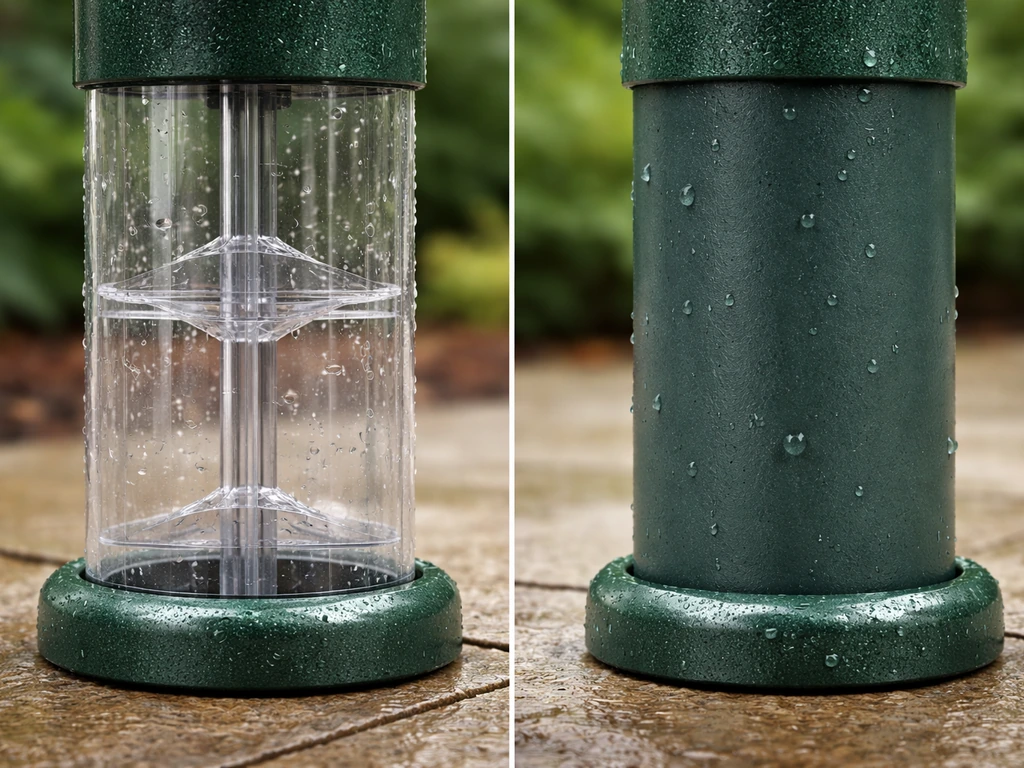
The feeder materials you choose determine how long the thing lasts and how safe it stays for birds. In general, you're choosing between polycarbonate plastic, powder-coated steel or aluminum, recycled plastic (HDPE), and wood. Each has real trade-offs.
Polycarbonate is the most common material for tube and hopper feeders. It's lightweight, reasonably UV-resistant, and transparent so you can see seed levels at a glance. The downside is it can crack in hard freezes or fade badly in sustained sun after two or three years. High-quality polycarbonate (sometimes marketed as "shatterproof") holds up much longer. Avoid cheap, thin plastic feeders entirely. They crack at the ports where birds grip, seed gets stuck in the splits, and the whole thing becomes a bacterial trap.
Powder-coated steel frames and wire suet cages are extremely durable. Squirrels can't chew through them, they don't crack in cold, and they don't warp in heat. The coating can chip over time, but quality powder-coating lasts years of outdoor exposure without rusting. If longevity is your top priority, look for feeders with metal components wherever birds perch or where seed flows.
Recycled HDPE plastic (the dense, matte material often used in higher-end feeders and outdoor furniture) is probably the most weather-resistant option available today. It doesn't rot, crack, warp, or fade in UV. It's heavier than standard plastic, but a well-made HDPE hopper feeder can realistically last a decade or more. The cost is higher upfront, but the per-year cost often beats cheaper feeders you replace annually.
Cedar and redwood feeders are attractive and naturally rot-resistant, but they require more care than plastic or metal. The wood expands and contracts with humidity cycles, joints loosen over years, and any unfinished surfaces will need occasional sealing. If you want a feeder that looks great on a patio or deck and you're willing to do a little seasonal maintenance, wood is a solid choice. If you want set-it-and-mostly-forget-it, recycled plastic or coated metal wins.
Dealing with squirrels, grackles, and other pests
Squirrels destroyed my first three feeders before I got serious about this. They chewed through polycarbonate ports, bent wire cages open, and learned to hang upside-down from shepherd's hooks to reach the seed. The solution isn't a single product. It's a combination of feeder design, mounting strategy, and sometimes food choice.
Squirrel-proofing that actually works
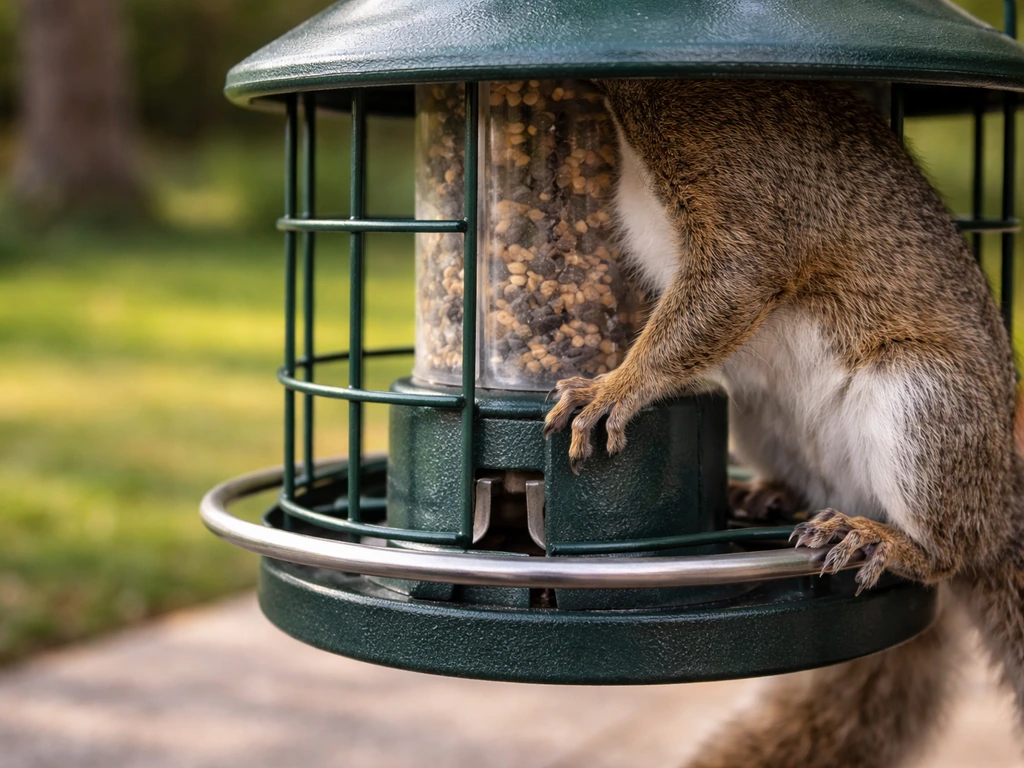
Weight-sensitive feeders are the most reliable active deterrent. These close the seed ports when anything heavier than a small songbird lands on the perch ring. Squirrels hop on, ports snap shut, squirrel gives up. They work. The limitation is cost (quality weight-sensitive feeders run $50-$100+) and they require calibration if you want to let larger birds like cardinals feed while still blocking squirrels. Most good models let you adjust the weight threshold.
Baffles are the passive option. A dome or cylinder baffle mounted above or below the feeder on a pole blocks climbing access. The key specs: a baffle needs to be at least 17 inches in diameter and positioned so the feeder hangs more than 5 feet off the ground and at least 10 feet from any surface a squirrel can jump from (tree, fence, roof edge). Get those measurements wrong and the baffle doesn't help.
Safflower seed is worth knowing about as a food-based deterrent. Most squirrels dislike the bitter taste of safflower and will leave it alone, while cardinals, chickadees, and house finches eat it readily. It's not perfect (some squirrels do eat it), but switching from mixed seed or sunflower to safflower dramatically reduces squirrel visits at many feeders without any hardware changes.
Grackles, starlings, and bully birds
Grackles and European starlings are smart, aggressive, and travel in flocks, which means they can empty a hopper feeder in an hour and drive off every other bird in your yard. The most effective deterrent for suet is an upside-down suet cage, which requires birds to cling from below to reach the suet. Woodpeckers and nuthatches can do this easily. Grackles and starlings generally won't bother. For seed feeders, tube feeders with short perches (or no perches, for clinging species like finches) are much harder for large bully birds to use comfortably. Caged feeders with wire mesh surrounds physically exclude larger birds while letting smaller species pass through to the ports inside.
Mounting, placement, and keeping things clean
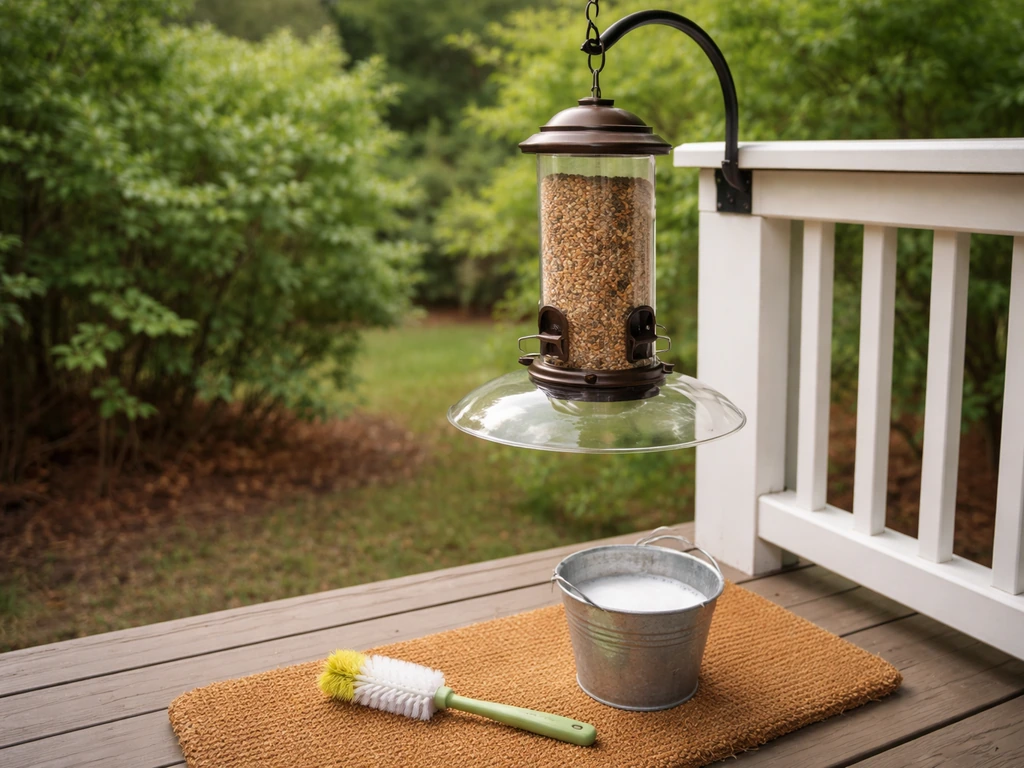
Where you place a feeder matters almost as much as what feeder you buy. Birds need nearby cover (shrubs or trees within about 10 feet) so they can retreat quickly if a hawk shows up, but the feeder itself should be positioned away from dense brush where cats can hide. A good rule: 3-5 feet from low cover, 10+ feet from buildings or fences if you're trying to limit squirrel jumps.
For window collision risk, position feeders either within 3 feet of a window (so birds can't build up fatal speed) or more than 30 feet away. The U.S. Fish & Wildlife Service guidance recommends keeping feeders 3 feet or less from a window to help prevent collisions by not giving birds enough space to gain fatal momentum. The 3-to-30 foot zone is the danger zone for strikes. This is one placement decision that genuinely saves bird lives.
Mounting options include shepherd's hooks, deck-mount pole systems, hanging brackets, and tree hangers. A shepherd's hook with a good squirrel baffle is the most versatile setup for most yards. If you're mounting multiple feeders, a multi-arm pole system keeps everything centralized and easier to manage. Deck-rail clamp mounts work well for apartment balconies and patios where you can't drive stakes into the ground.
Cleaning is non-negotiable. Project FeederWatch recommends cleaning seed feeders about every two weeks with a diluted bleach solution (one part bleach to nine parts water) or in a dishwasher with hot water. Audubon Connecticut also recommends disinfecting feeders by soaking them in a 1 part bleach to 9 parts water solution for about 15 minutes, then rinsing thoroughly a diluted bleach solution (one part bleach to nine parts water). During wet or warm weather, do it more often. Mold and bacteria develop on damp seed faster than most people realize, and a contaminated feeder can spread disease through an entire local bird population. Hummingbird feeders need more attention: in summer heat, rinse and refill every three to five days minimum. In peak heat, some feeders need attention every two days. Also make a habit of raking up seed hulls and droppings under feeders. That ground debris is a disease vector that's easy to overlook but genuinely matters for bird health.
Smart feeders and AI bird cameras: worth it or not?
Smart bird feeders with built-in cameras and AI species identification have become genuinely useful in the last couple of years. The basic concept: a camera watches the feeder, the onboard or cloud-based AI identifies the bird that lands, and you get a notification on your phone with a photo and species name. Some models log visit history, track which species appear at what times of day, and let you review footage remotely.
The best current models identify birds accurately in good lighting. Identification accuracy drops in low light, backlit conditions, or with juvenile birds and species that look similar. They're not perfect, but they're genuinely fun and useful for learning your local species. If you're new to birding and want to build your knowledge without investing in binoculars and field guides right away, a smart feeder is a reasonable starting point.
That said, smart feeders cost significantly more than traditional feeders, typically $100-$250 depending on camera quality and AI subscription. Most require Wi-Fi and some require ongoing subscription fees for full AI features. They also tend to have smaller seed capacities than dedicated traditional feeders because the housing has to accommodate electronics. If your main goal is attracting birds rather than photographing and identifying them, a traditional feeder with a separate clip-on camera is often a better value. But if you're genuinely excited about tracking bird visits and sharing photos, a smart feeder delivers something no traditional feeder can.
Who should buy one: birders who want identification help, households where kids are involved and engagement is part of the point, and anyone who travels and wants to monitor their yard remotely. Who can skip it: experienced birders who already know their local species, anyone primarily focused on maximizing bird diversity and seed volume, and budget-conscious buyers.
Species-specific recommendations
Different birds have different needs, and getting specific about your target species makes the buying decision much cleaner. Here's how to approach the most common backyard species.
Finches (goldfinches, house finches, purple finches)
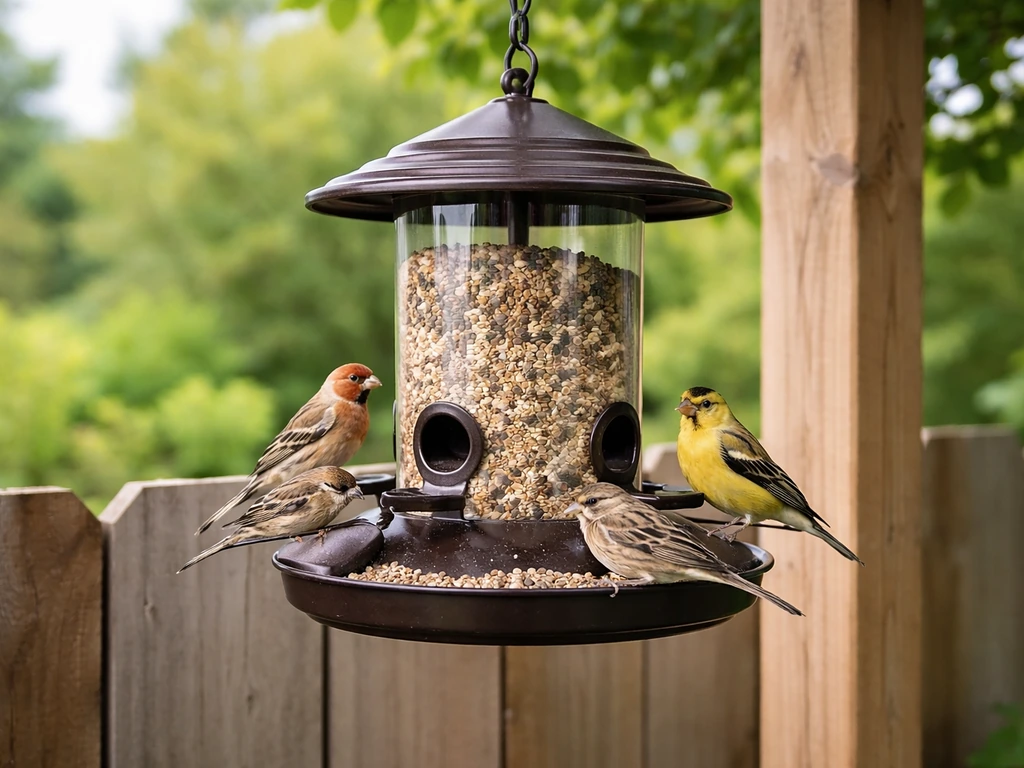
Nyjer (thistle) tube feeders or nyjer sock feeders are the standard choice. Goldfinches especially prefer to cling and feed from small ports, and nyjer's tiny seed size means you need a feeder specifically designed for it (regular tube ports are too large). Look for a feeder with multiple ports and a bottom cap that's easy to remove for cleaning. Nyjer goes stale quickly because of its oil content, so buy in smaller quantities and refresh the seed every two to three weeks even if the feeder isn't empty. House finches will also take black oil sunflower from standard tube feeders, which gives you flexibility.
Hummingbirds
A good hummingbird feeder has ports that don't drip (look for "leak-proof" designs with gaskets), a basin that's easy to fully disassemble and scrub, and red coloring to attract birds (though research suggests the color of the feeder matters less than having red flowers or visual cues nearby). The 1:4 ratio of plain white sugar to water is the correct nectar formula. Do not use red dye, honey, or artificial sweeteners. In summer, plan to rinse and refill every three to five days. The Minnesota DNR recommends cleaning hummingbird feeders every week to ten days in summer, and even more often in peak heat. A feeder you can run under hot water and brush out in two minutes is far more likely to actually stay clean.
Cardinals
Cardinals are large birds and prefer a sturdy perch with room to turn around. Tube feeders with short perches frustrate them. A hopper feeder or a wide platform tray feeder with sunflower or safflower seed is ideal. Cardinals also tend to feed in low-light conditions (early morning and dusk), so placing a feeder near cover where they feel safe matters more for this species than for others. If you're having trouble attracting cardinals, safflower is often more effective than sunflower because it draws less competition from house sparrows, which cardinals tend to avoid.
Woodpeckers
Suet cages are the primary woodpecker feeder. Downy and hairy woodpeckers will readily use a standard suet cage; larger species like red-bellied and pileated woodpeckers need a longer tail-prop section below the cage so they can brace their tail while feeding. Look for "clinging-style" or "tail-prop" suet feeders for larger species. Peanut feeders (mesh tubes or cage-style) are also excellent for attracting woodpeckers and give them something to work at, which keeps them busy longer. Mount suet feeders on a tree trunk or post rather than hanging them free-swinging, since woodpeckers prefer a stable surface.
Sparrows, juncos, doves, and ground feeders
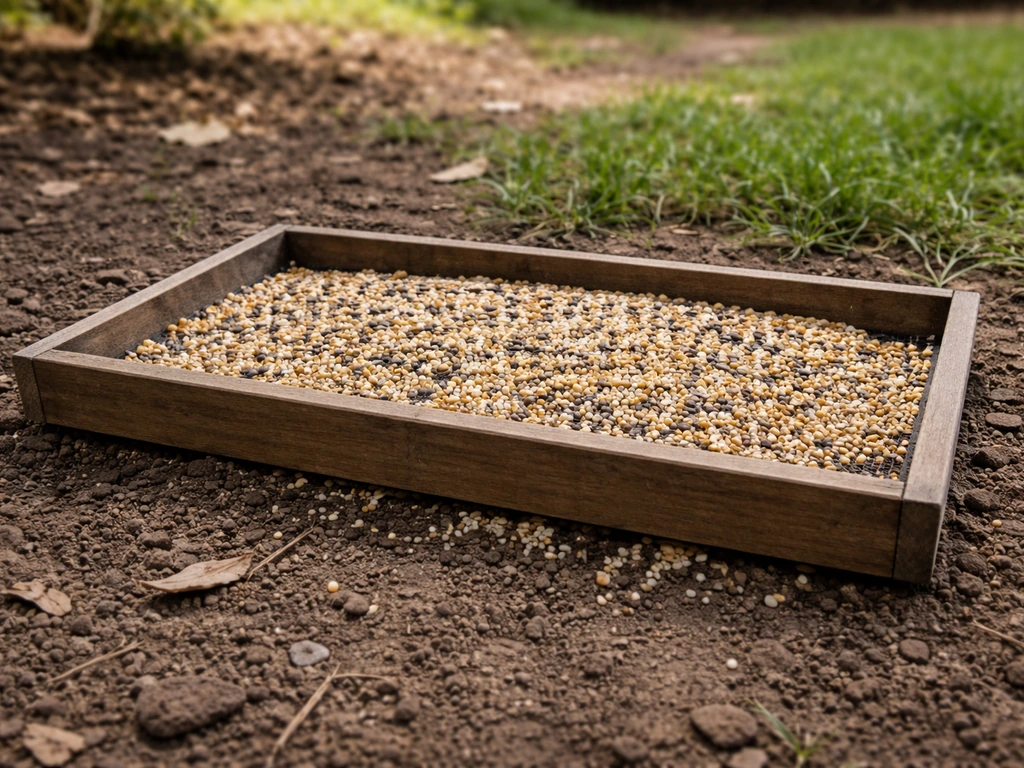
These species prefer feeding at or near ground level. A low platform tray feeder or a ground tray with white millet and mixed seed works best. If you have cats or other ground-level predators, elevate a platform feeder to about 3-4 feet. Juncos specifically love millet, and you can attract them without a feeder at all by simply scattering millet on a clean patio surface during winter months.
Chickadees, nuthatches, and titmice
These are your "core" backyard birds in most of North America and the easiest to attract. They'll use tube feeders, hopper feeders, peanut feeders, suet cages, and even small platform feeders. Black oil sunflower seed is universally preferred. If you want to attract this group, any well-made tube or hopper feeder with black oil sunflower is a reliable first step. They're also the species most likely to use a feeder year-round, so these are the birds that reward having a durable, weather-resistant feeder that doesn't need to be taken down in winter.
Picking the right feeder quickly: a practical comparison
If you're trying to shortlist options and you've read through the feeder types and species sections above, here's how to stack the most common choices head-to-head for someone setting up a new backyard station. For a deeper look at how the options rank across different criteria, checking a detailed bird feeder comparison can help you narrow the field further.
| Feeder Style | Best Material | Squirrel Resistance | Ease of Cleaning | Bird Diversity | Estimated Cost Range |
|---|---|---|---|---|---|
| Tube feeder (standard) | Polycarbonate + metal ports | Low (add baffle) | High | Medium | $15-$60 |
| Weight-sensitive tube feeder | Polycarbonate + metal | Very High | Medium | Medium | $50-$120 |
| Hopper feeder | HDPE recycled plastic or cedar | Low (add baffle) | Medium | High | $25-$90 |
| Platform/tray feeder | Recycled plastic or cedar | Low (very exposed) | High | Very High | $15-$50 |
| Suet cage (standard) | Powder-coated steel | Low | Very High | Medium | $5-$20 |
| Suet cage (upside-down) | Powder-coated steel | Low-Medium | Very High | Medium-low (woodpecker-focused) | $10-$30 |
| Nyjer tube feeder | Polycarbonate or metal | Low-Medium | Medium | Low (finch-specific) | $15-$50 |
| Hummingbird nectar feeder | Glass or BPA-free plastic | N/A | Medium (must be thorough) | Very Low (hummingbirds only) | $10-$40 |
| Smart camera feeder | Varies | Varies | Medium | Medium | $100-$250+ |
For most people starting out, the best combination is a weight-sensitive hopper or tube feeder with black oil sunflower seed (your workhorse feeder), a nyjer tube for finches, and a suet cage for woodpeckers and nuthatches. That three-feeder setup covers more species than almost anything else you could do, and all three can be mounted on a single multi-arm pole with a baffle for squirrel protection.
What to do after you install your feeder
Don't expect instant results. Most feeders take one to three weeks before birds discover them, especially in yards without an existing feeding station. You can speed this up by placing a small amount of seed on a nearby flat surface where birds can spot it easily, and by positioning the feeder where it's visible from nearby trees or shrubs. Be patient.
Once birds are using the feeder regularly, set a cleaning reminder. Every two weeks for seed feeders, every week for hummingbird feeders in warm weather, and after any heavy rain event. Also do a monthly check of the mounting hardware: poles can shift, hooks can loosen, and baffles can slip out of position. A feeder that's tipping to one side or swinging too freely discourages some species.
As you learn which birds visit your yard, you'll likely want to expand or specialize. Someone who starts with a basic hopper feeder almost always ends up adding a hummingbird feeder in spring, or a nyjer tube once they spot their first goldfinch. That's actually the most natural progression in backyard birding. Understanding the full range of feeder types available makes it easier to decide what to add next. And if you want your setup to look as good as it performs, there's a lot of overlap between functional feeders and feeders that are genuinely attractive in a yard or garden setting, so you don't have to choose between the two.
Start simple. Get one good feeder matched to your most common local birds, put it in the right spot, and keep it clean. Add from there. A single well-chosen, well-maintained feeder beats three cheap ones every time, and once you see the birds that show up consistently, you'll have a much clearer sense of what to add next. Thinking about which feeder style fits your specific situation before buying is the step most people skip, and it's the one that saves the most money and frustration in the long run.
FAQ
How do I know whether my good bird feeders are attracting the right species or just the same bully birds?
Watch visit patterns for a week before changing anything. If one species dominates quickly, switch seed type (for example, safflower for less competition) and use feeder designs that match feeding behavior, such as short-perch tube feeders for small birds or caged/multi-port feeders that limit access for larger birds.
What’s the safest way to handle a feeder when I notice mold or wet seed?
Remove the feeder immediately, discard wet or clumped seed, and clean the feeder thoroughly before refilling. If you reuse seed from the same container, rinse it (or replace it) because moisture can leave residue that re-contaminates the ports.
Can I use the same good bird feeders year-round, or should I store them in winter?
Most seed feeders can stay out year-round if the material and design tolerate freezing, but hummingbird feeders usually need winter storage. In very cold climates, check for cracked plastic and clogged ports, and shake out any stuck seed after thawing to prevent rot.
Do I need to change feeding strategies in summer heat versus winter conditions?
Yes. In summer, prioritize leak-proof hummingbird designs and faster cleaning cycles (often every 3 to 5 days, sometimes sooner in extreme heat). In winter, ensure ports do not ice up and consider adding shelter nearby (cover within about 10 feet) so birds feel safe while feeding.
Why do birds stop visiting after an initial burst, even if the feeder is still full?
Common causes are contamination (wet seed, dirty ports), deterrent changes (baffle or weight mechanism moved), or unsafe placement (cats access, hawks perching nearby, or feeder too close to dense cover). Recheck mounting stability and cleaning, then confirm the feeder is within the right distance from cover and hazards.
What’s a good way to prevent seed from getting wet and turning into a biohazard?
Use designs that shed water from ports (good seed-flow engineering) and place the feeder where it is protected from direct rain splash. After heavy rain, dump damp seed from the tray or hopper section, clean the ports, and refill with fresh, dry seed.
How often should I refill seed for good bird feeders, especially if squirrels keep taking it?
Refill based on consumption and the amount of spoiled seed, not just the hopper level. If squirrels are stealing heavily, reduce waste by using smaller, more frequent refills and switch to a deterrent strategy (baffle, weight-sensitive feeder, or safflower) so you do not keep feeding contamination along with theft.
Are smart bird feeders worth it if I care mainly about getting more birds, not identifying them?
Usually not as the primary purchase. If attracting birds is your main goal, a traditional feeder with reliable ports and squirrel control will generally hold more seed and be easier to maintain, while a smart feeder can be added later if you want remote viewing or learning support.
What should I do if my weight-sensitive or baffle setup blocks desirable birds?
For weight-sensitive feeders, adjust the threshold so the smaller birds can trigger feeding while larger squirrels cannot. For baffles, confirm measurements are correct and the feeder is high enough and far enough from jump points, because an incorrectly positioned baffle can reduce access for everyone or fail to deter squirrels.
How can I keep under-feeder cleanup from becoming a neglected mess?
Use a consistent routine. Rake or scoop hulls and droppings at the same interval as feeder cleaning (seed every two weeks, hummingbird more often in warm weather). If buildup is heavy, do a quick cleanup mid-cycle, since debris increases disease risk and attracts unwanted pests.
What feeder should I choose first if I’m not sure what birds are in my area yet?
Start with a hopper or tube feeder stocked with black oil sunflower and place it near nearby cover (about 10 feet) but away from dense hiding spots for cats. This gives you broad initial coverage while you learn which species show up, then specialize with nyjer, suet, or hummingbird nectar.
Next Article
Best Red Cardinal Bird Feeder: Top Picks & Buying Guide
Best red cardinal bird feeder guide: top picks, painting tips, seed & placement advice to attract Northern Cardinals.