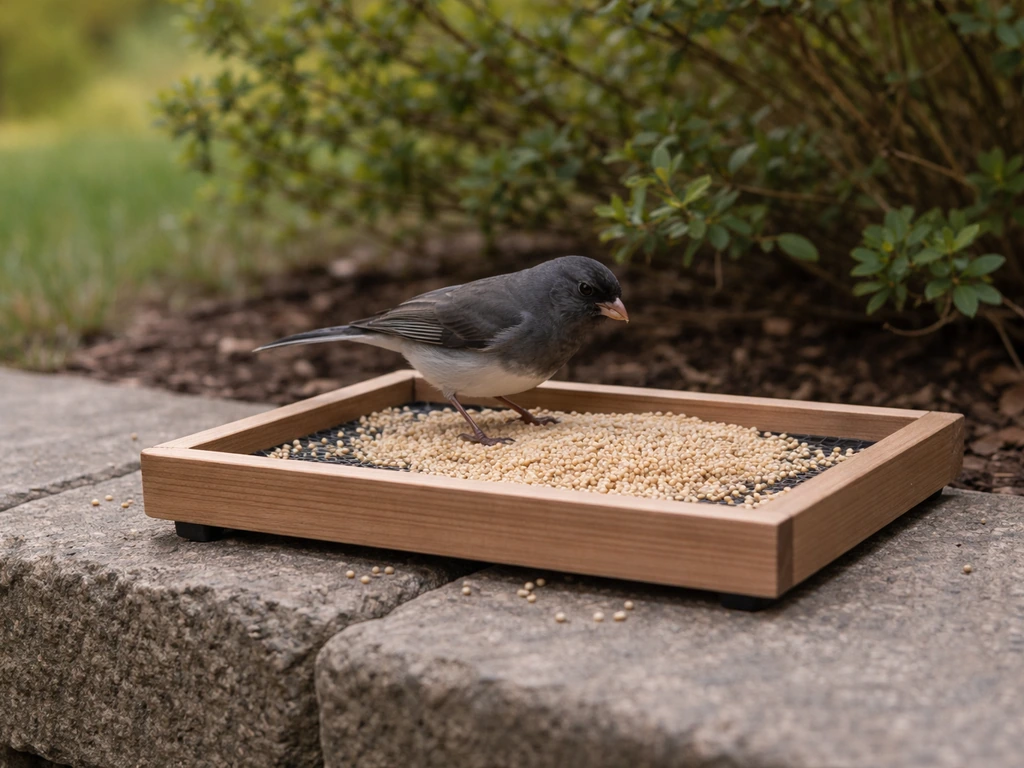
The best feeder for juncos is a low tray or ground-level platform feeder loaded with white proso millet or sunflower chips. Juncos are ground foragers by nature, so they almost always skip the ports on a tube feeder and work the seed that falls underneath it instead. If you want to actually attract them to a feeder rather than just the ground beneath one, go low and go open.
Best Bird Feeder for Juncos: Buying Guide and Setup

Marcus Holloway
29 May 2026
Quick ID: juncos vs. sparrows (and how to tell them apart)
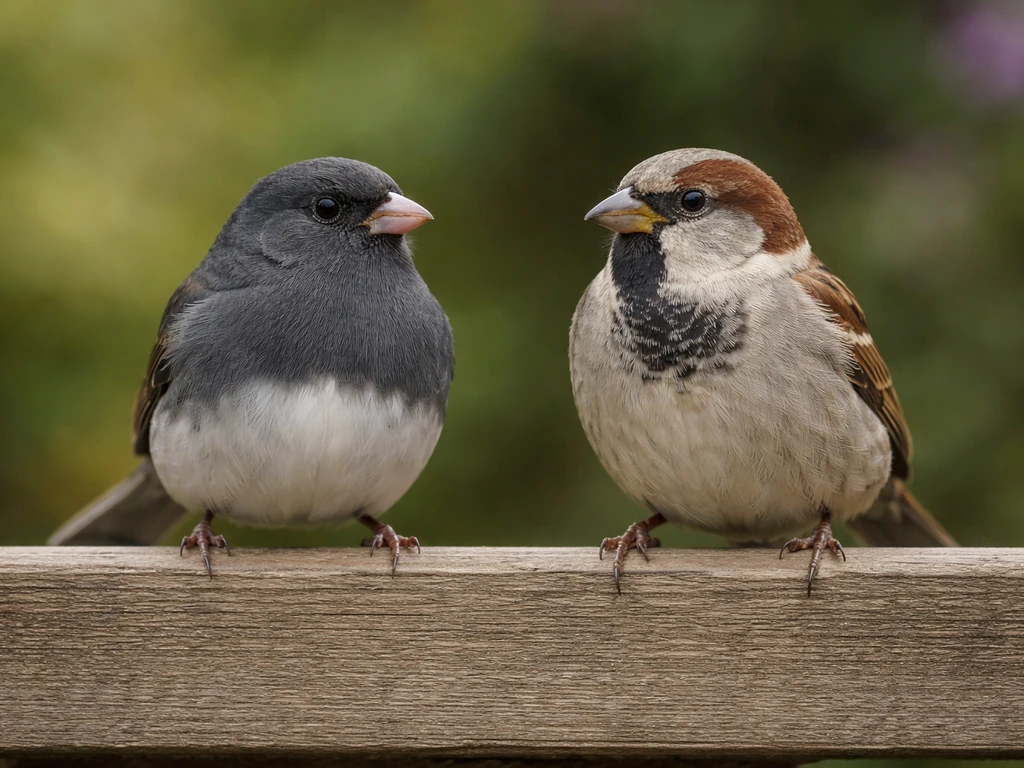
Before you optimize a feeder for juncos, it helps to confirm you're actually watching juncos. I've had people set up elaborate setups for 'juncos' that turned out to be house sparrows the whole time. The differences are easy once you know what to look for.
Dark-eyed juncos are small, sparrow-sized birds with a clean pinkish bill, a dark gray or brownish body (the exact shade varies by region), and bright white outer tail feathers that flash like a signal every time they fly off. That tail flash is the easiest field mark. blank" rel="noopener noreferrer">House sparrows, by contrast, are stockier with a thick conical bill, and breeding males have a gray head with a distinctive black bib on the throat. Sparrows also tend to flutter down from eaves and fencerows and hop around pecking at crumbs. Juncos move a bit more deliberately on the ground, often scratching and kicking at leaf litter to expose seeds, and they tend to arrive in small loose flocks rather than the dense, chaotic groups sparrows form.
What seed and feeder style actually attracts juncos
White proso millet is the single best seed choice for juncos. They'll also take sunflower chips (hulled sunflower pieces), cracked corn, and safflower, but millet is what reliably draws them in and keeps them coming back. Avoid whole sunflower seeds in the shell if juncos are your main target. The shells are hard to crack for a small bill, and juncos will often ignore them entirely in favor of something easier.
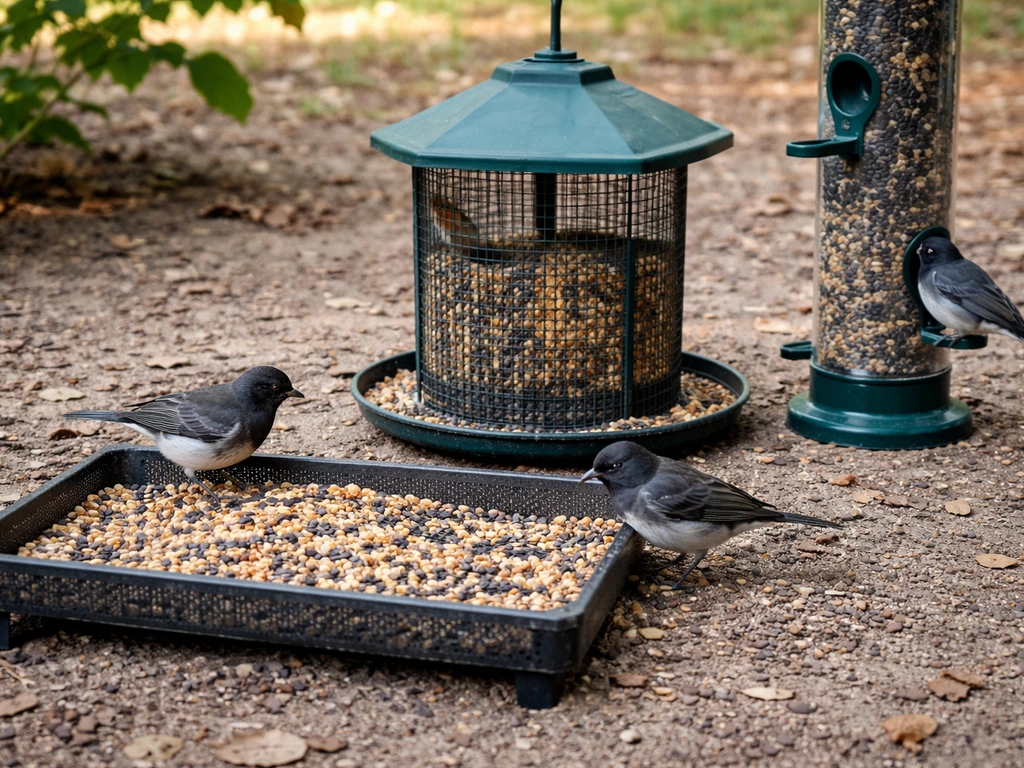
On feeder style: juncos are ground foragers first. In the wild, they scratch through leaf litter and soil for seeds. At feeders, they nearly always skip the perch ports on a tube feeder and work the spillage on the ground below. That's not a problem if you're happy with ground feeding, but if you want a dedicated feeder that keeps seed off the dirt (important for hygiene and reducing rat and mouse attraction), a low platform tray or a ground-level feeder is the right tool. A tray feeder sitting 6 to 12 inches off the ground is the sweet spot. It mimics ground feeding closely enough that juncos are completely comfortable with it.
Feeder features that actually matter for juncos
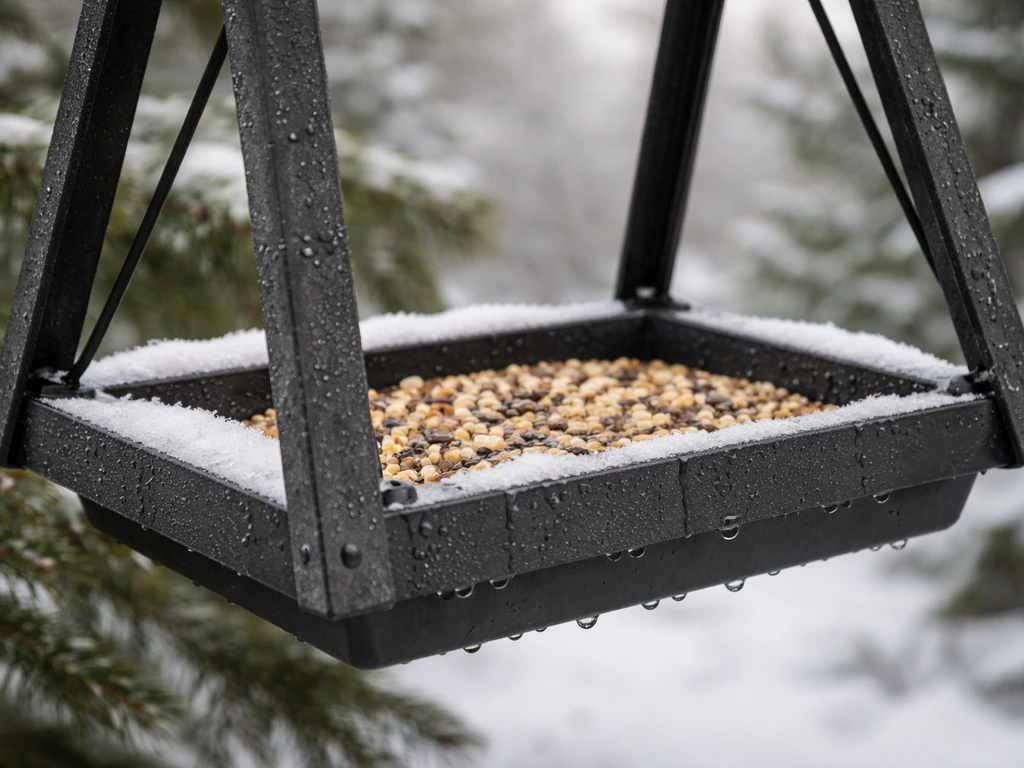
Weather resistance for winter use
Juncos are winter birds across most of the US. They migrate south from Canada and the northern states when temperatures drop, which means your feeder needs to perform in cold, wet, and snowy conditions. Open tray feeders are great for juncos but terrible in rain and snow if they don't have drainage. Look for a tray feeder with mesh or perforated bottom panels so water drains immediately rather than pooling around the seed. A small roof or hood is helpful for keeping direct precipitation off, but it's not strictly required if the drainage is good and you're refilling frequently.
Powder-coated steel and recycled plastic (sometimes sold as polycarbonate or poly-lumber) both hold up well through freezing and thawing cycles better than raw wood. Raw wood feeders look great but they crack and split over multiple winters unless you reseal them every season, which most people don't.
Easy cleaning to prevent mold
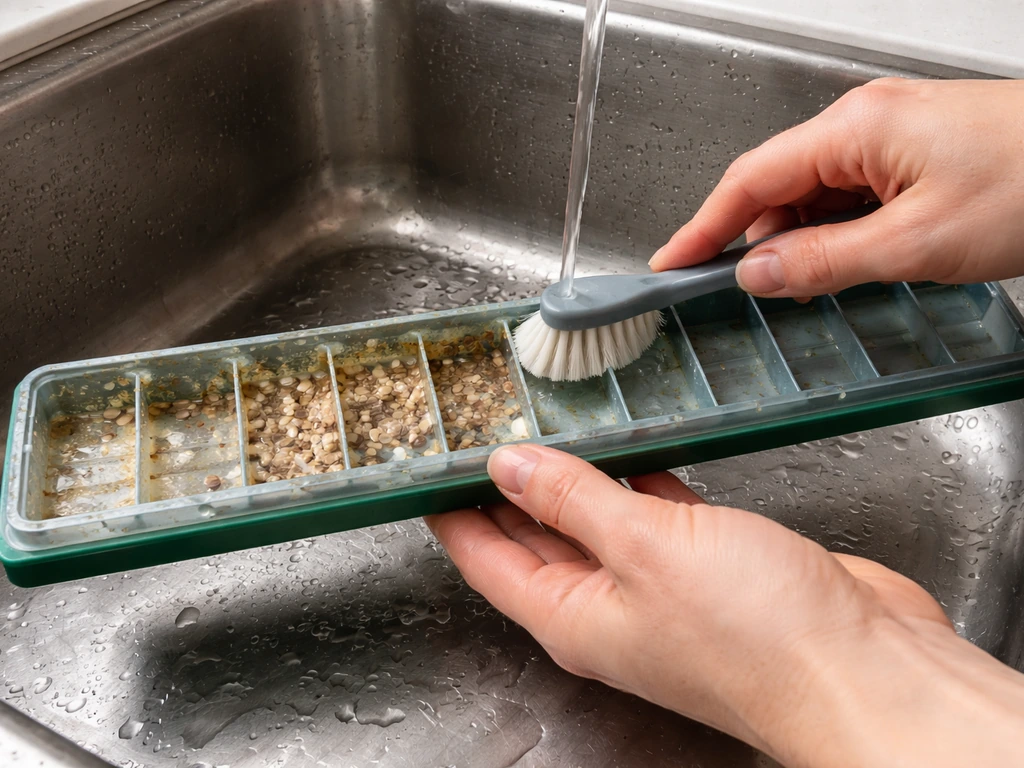
This matters more with tray feeders than any other style because the open design collects moisture and wet seeds decompose fast, especially millet. A feeder you can rinse and scrub in under two minutes is one you'll actually clean. Look for smooth interior surfaces without a lot of crevices, and avoid wooden trays with deep grooves or ornate corners where mold hides. I clean my tray feeders with a 10% bleach solution every two weeks in winter and let them dry completely before refilling. If that sounds like a hassle, go with a smooth plastic or metal tray rather than wood.
Durability
Low-cost open tray feeders often use thin plastic that cracks in the first hard freeze or warps by spring. Spend a little more on a feeder with UV-stabilized plastic or powder-coated steel hardware, and it'll last five or more seasons rather than one. The mounting hardware matters too. Thin wire hooks and plastic clips are the first things to fail on cheap feeders.
Ground tray vs. hopper vs. tube: which works best for juncos
| Feeder Type | Junco Appeal | Seed Access | Weather Protection | Cleaning Ease | Best For |
|---|---|---|---|---|---|
| Ground tray / platform | Excellent | Open, easy for small bills | Poor without drainage or roof | Easy if smooth-bottomed | Dedicated junco setup, winter feeding |
| Low mounted tray (6-12 in.) | Excellent | Open, comfortable height | Moderate with mesh drain | Easy | Most yards, keeps seed off dirt |
| Hopper feeder | Fair | Side ports can work; spillage is key draw | Good (roof design) | Moderate | Mixed-species yards with larger birds |
| Tube feeder | Poor to fair | Ports too high; juncos prefer ground spillage | Good | Easy | Finches and chickadees, not juncos |
| Covered ground feeder | Excellent | Open at low height, roofed | Good | Moderate | Rainy climates, winter snow cover |
If juncos are your primary target, a low platform or ground tray is the clear winner. Hopper feeders can supplement because they generate spillage that juncos will work beneath them, but if you're buying one feeder specifically for juncos, a tray-style feeder placed near the ground is the move. Tube feeders are better suited for finches and chickadees (which is a common topic on this site), not ground foragers like juncos.
One option worth mentioning is a covered ground feeder with a mesh bottom and a low-profile roof. When choosing the mesh, aim for small openings that let juncos access the seed while keeping waste and pests down, which is the key factor in what size mesh for a bird feeder mesh bottom. It keeps seed accessible to juncos while limiting direct rain and snow exposure. Some models are barely 4 to 6 inches off the ground, which juncos absolutely love. The trade-off is that the low height also makes them extremely accessible to cats, squirrels, and other ground-level predators, which I'll cover in the pest section.
Setup tips that make a real difference for juncos
Placement and distance to cover
Juncos are skittish compared to chickadees or nuthatches. They want cover nearby so they can dart into it if a hawk shows up. The ideal placement is 5 to 10 feet from a shrub, brush pile, or dense evergreen. Close enough that juncos feel safe making the trip, but not so close that a cat can crouch behind the cover and ambush them. I've found that placing a low tray right at the edge of a shrub border pulls in juncos faster than anything else, especially in the first few weeks of winter when they're still scoping out reliable food sources.
Height from the ground
For a tray or platform feeder, keep it between 4 and 12 inches off the ground. This is low enough to feel comfortable for juncos but high enough to give you some separation from ground-level moisture and reduce rat access. If you go any higher (say, 3 feet), juncos will still visit but less reliably, and you'll be competing with sparrows and other species for their attention.
Winter considerations
Juncos are most present at feeders from roughly October through March across most of the US, peaking in the coldest months. After a snowfall, brush the seed off your tray and replace it. Wet, clumped millet sitting under snow is a hygiene problem and juncos won't touch it. Keeping the feeder stocked and clean during cold snaps is when it matters most because natural food is buried and juncos are burning extra calories to stay warm. If you're in a mild-winter region and don't see juncos in summer, that's normal: they've migrated back north to breed.
Keeping squirrels, rats, and bully birds away
The squirrel problem with low feeders
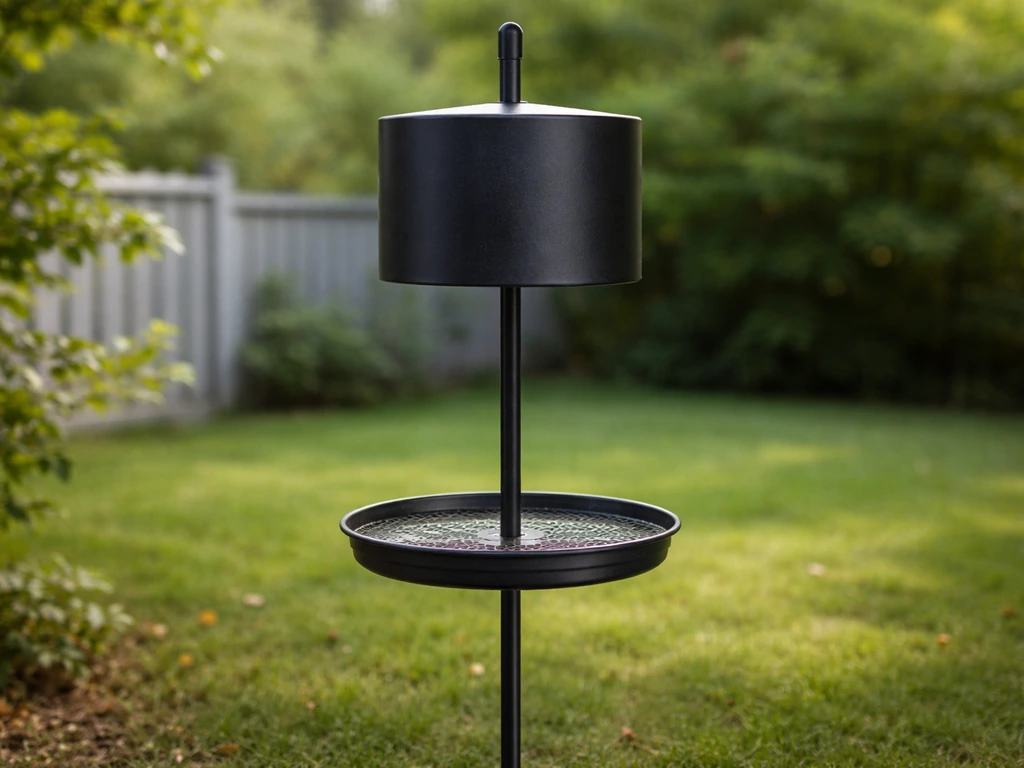
Here's the honest trade-off with ground and low tray feeders: they're basically impossible to make squirrel-proof in the traditional sense. A squirrel baffle on a pole works great for a tube or hopper feeder mounted 5 feet up, but a tray sitting 6 inches off the ground is just an open buffet. Your options are to either accept squirrel visits and buy millet in bulk, or use a physical deterrent. A wire cage or hardware cloth enclosure around the tray with openings large enough for juncos (roughly 2-inch spacing) but tight enough to slow squirrels can help. Squirrel-proof mechanisms like weight-sensitive closing ports are designed for elevated feeders and don't translate to open trays.
The more practical approach most people land on: use a low tray specifically for juncos, but place it where squirrels are less likely to linger, like in an open area away from trees and fences they launch from. Pair it with a squirrel-resistant hopper or tube feeder on a baffled pole for other species. That way the squirrels hit the tray, sure, but the main feeder stays protected.
Rats and mice
Millet on or near the ground is a rat magnet. I've dealt with this personally, and it's not fun. A few habits help a lot: only put out as much seed as juncos can eat in a day, rake up any spilled seed at dusk before nocturnal rodents start foraging, and keep the area under the feeder clean. Some people switch to a low tray with a catch tray underneath rather than letting seed fall to the bare ground. It's more work, but it significantly reduces rodent activity.
Grackles and other bully birds
Grackles, European starlings, and even house sparrows will dominate an open tray and push juncos out. The cage enclosure approach (hardware cloth with 2-inch openings) is actually useful here too: juncos fit through easily, but grackles and starlings are too big to access the seed. It won't stop sparrows entirely, but it helps. You can also try offering millet specifically at the low tray, since grackles generally prefer cracked corn and sunflower. Feeding species-specific seed reduces the bully-bird attraction without sacrificing junco interest.
How to pick the right feeder for your specific yard
The 'best' feeder for juncos depends less on any single product and more on your yard's constraints. Here's a simple way to think through it:
- If you have squirrel pressure and rats nearby: opt for a low mounted tray (6-12 inches) on a smooth pole with a wide baffle, rather than a ground-level feeder. You won't eliminate the problem, but you'll reduce it. Budget around $25 to $50 for a decent weather-resistant tray with hardware.
- If your yard has good shrub cover and low predator pressure: a ground-level covered feeder or even a simple open tray directly on the ground works well and costs under $20. Just commit to daily maintenance and nightly cleanup.
- If you're in a region with heavy winter rain or snow: prioritize a tray with a mesh or perforated bottom and either a roof or a very high refill frequency. Covered platform feeders in the $30 to $60 range handle this well.
- If you want to attract a mix of species alongside juncos: pair a low tray (for juncos and other ground feeders) with a baffled pole-mounted hopper or tube feeder for chickadees, finches, and similar birds. The site's guides on feeders for grosbeaks and indigo buntings are worth checking if you're targeting other ground-level or open-feeder species alongside juncos.
- If budget is tight: a $10 to $15 recycled plastic tray feeder and a bag of white proso millet is genuinely all you need to start attracting juncos. Skip the fancy mechanism and spend the money on good seed instead.
One thing worth noting: white millet is the common thread connecting feeders designed for juncos with feeders designed for a broader range of small ground-feeding birds. If you are shopping specifically for the best bird feeder for white millet, use the same low-tray style and focus on good drainage and easy cleaning. If you're also exploring the best bird feeder for white millet as a general seed choice, the same low-tray feeder style applies across many of those target species, which makes one setup pull double duty. If you're specifically hunting for the best bird feeder for indigo bunting, look for a style that matches their feeding habits and use the right seed to attract them. For grosbeaks, you can use a similar low-tray idea, but pick the feeder and seed that match their bigger bills best bird feeder for white millet.
The bottom line: buy a low tray or platform feeder with good drainage, fill it with white proso millet, place it 5 to 10 feet from shrub cover, and keep it clean and stocked through the winter. That setup, more than any specific brand or high-tech feature, is what actually brings juncos in and keeps them coming back.
FAQ
Why do juncos keep ignoring my feeder, even though I’m using the right seed?
If juncos are your target, choose white proso millet and a tray or ground-level platform, then expect them to mostly feed from seed that falls underneath rather than from tube ports. If you see only seed crumbs and no tail flashes, check that you are not accidentally feeding sparrows, and consider moving the tray closer to cover (about 5 to 10 feet from a shrub line).
Can I use a covered feeder for juncos in snowy or rainy weather?
Yes, but only if you prevent the seed from becoming wet and moldy. A mesh-bottom, covered ground feeder can work well in rain if it drains quickly and you refill often enough to avoid clumps freezing and rotting. If drainage is poor, open trays will underperform in snow and rain.
How often should I clean a low tray feeder in winter, and what’s the fastest way?
The cleanest way is to use a tray feeder you can access easily. In practice, rinse and scrub in small sections, then fully dry before refilling, because trapped moisture accelerates millet spoilage. If you see black spots or a sour smell, replace the seed and switch to a smoother feeder surface with fewer crevices.
How much millet should I put out so I attract juncos without inviting rodents?
Start with the smallest amount that gets eaten within a day or two, then adjust. Overfilling increases waste, spilled millet attracts rodents, and wet seed under snow turns into a hygiene problem that juncos avoid. A good rule is to top up after cleaning, then only add when levels drop.
What should I change first if only a few juncos show up?
If you see juncos only occasionally, it’s usually a placement or competition issue, not the feeder itself. Try placing the tray at the shrub edge rather than in open lawn, and keep it low (roughly 4 to 12 inches). Also avoid locations where grackles or starlings can easily patrol the area.
Is there a “right” height for tray feeders for juncos, especially with cats around?
A tray that’s too low can increase cat access, a tray that’s too high increases sparrow competition. Aim for 4 to 12 inches off the ground, and place it 5 to 10 feet from dense cover. If you have ground predators, consider a nearby cover line that offers quick escape for birds but limited approach angles for cats.
What’s the best seed mix if I want juncos but also keep other birds around?
Whole sunflower in the shell often slows juncos down because their bills struggle with cracking. If you want sunflower, use hulled sunflower chips or sunflower pieces instead, and keep millet as the main offering. Mixing can work, but millet should be the majority if you’re specifically optimizing for juncos.
Why don’t I see juncos at my feeder in summer?
It’s common for juncos to disappear in summer in most of the US because they migrate north to breed. If you’re not seeing them in warm months, that’s often normal rather than a setup failure. When winter returns, restock and re-evaluate feeder cleanliness after the first snowfall.
Will an enclosure or cage around the tray still let juncos feed?
Yes, but the design matters. If the enclosure has openings that are large enough for juncos but too small for grackles and starlings (often around 2-inch spacing), it can reduce bully pressure while still letting juncos feed. Don’t block airflow or drainage, since wet seed undermines the whole point of a tray.
What’s the most effective way to deal with squirrels at a low tray feeder?
Use baffles designed for elevated feeders only when you’re using a pole-mounted tube or hopper. For true ground trays, squirrel-proofing is limited, so the practical approach is location plus physical barriers. Place the tray away from squirrel launch points and consider an outer hardware cloth enclosure around the tray to slow access.
What should I do after a heavy snow when using a tray feeder?
After a snowfall, remove seed and debris that have trapped moisture under the snow. Clumped wet millet will often be ignored, so brushing it off and refilling with dry seed helps juncos resume feeding quickly. Keep up this reset during cold snaps when natural food is buried.
Next Article
Best Red Cardinal Bird Feeder: Top Picks & Buying Guide
Best red cardinal bird feeder guide: top picks, painting tips, seed & placement advice to attract Northern Cardinals.