The best bird feeder for a Florida backyard is one built to survive heat, humidity, and heavy afternoon rain without rotting, rusting, or growing a science experiment inside the seed tube. If I had to pick one feeder to hand someone right now, it would be a UV-resistant, weight-activated squirrel-proof tube feeder like the Brome Squirrel Buster Standard. It handles Florida's brutal sun without fading, its ventilation system keeps seed drier than most competitors, and the weight-sensitive port closure stops squirrels without a second thought. But Florida birding is not one-size-fits-all. Where you are in the state, which birds you want, and how your yard is set up all change the answer. This guide walks through all of it.
Best Bird Feeder for Florida: Top Picks by Bird Type
Marcus Holloway
22 Apr 2026
Why Florida is hard on bird feeders
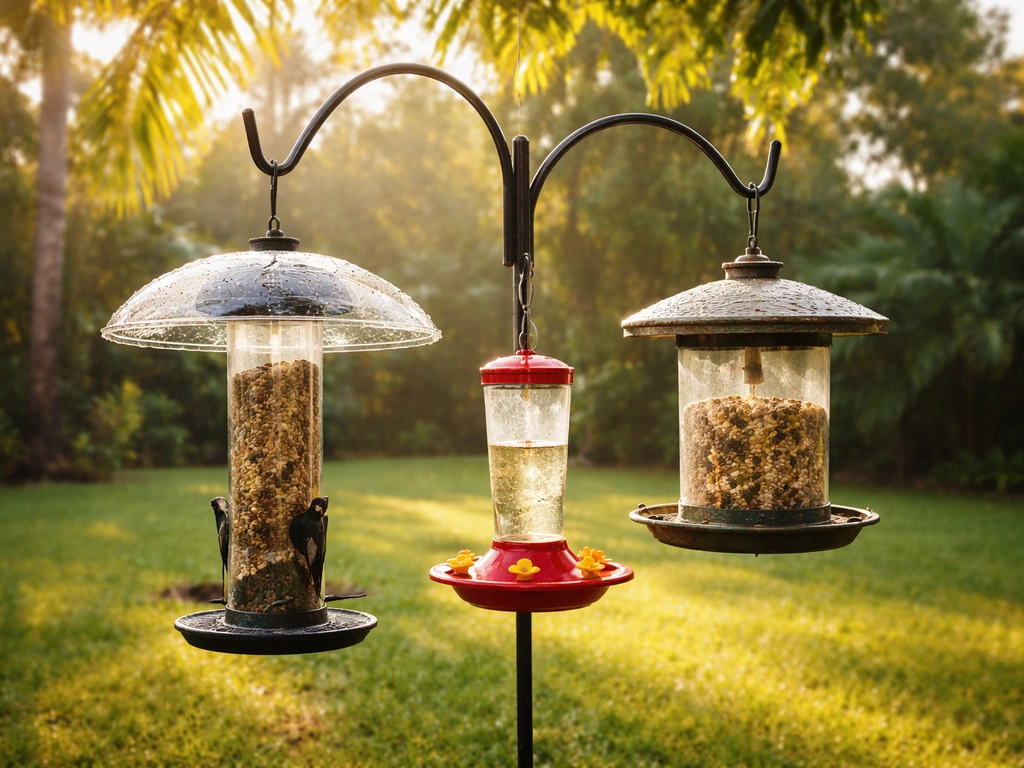
Florida throws a combination of conditions at bird feeders that most products are simply not designed for. Intense UV radiation from a near-vertical sun fades plastic, degrades rubber gaskets, and makes cheap acrylic brittle within a season. Humidity and frequent rain push moisture into seed tubes and hoppers, turning sunflower seeds into a moldy brick faster than anywhere in the country. Metal parts that are not properly coated rust visibly within months. And because Florida's weather stays warm nearly year-round, there is no winter reset where cold slows down mold, bacteria, or insect activity.
On top of the weather, Florida yards deal with aggressive squirrel pressure, large grackle flocks that bully smaller birds away from feeders, and ant columns that can raid nectar feeders overnight. If you are in south Florida, the species mix skews tropical and the humidity is even more intense. North Florida has more in common with Georgia and the Carolinas, with a broader seed-eating bird population and slightly cooler winters. Central Florida sits in between. The buying decision really does differ by region, which is worth keeping in mind as you read.
The single best pick and a shortlist worth considering
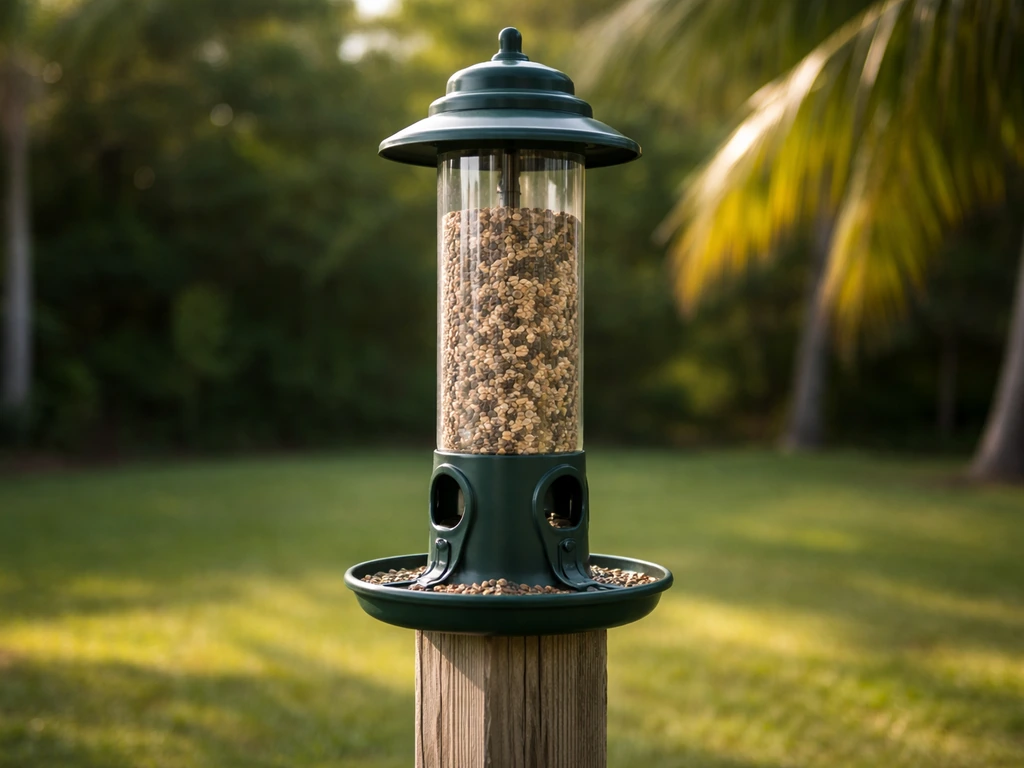
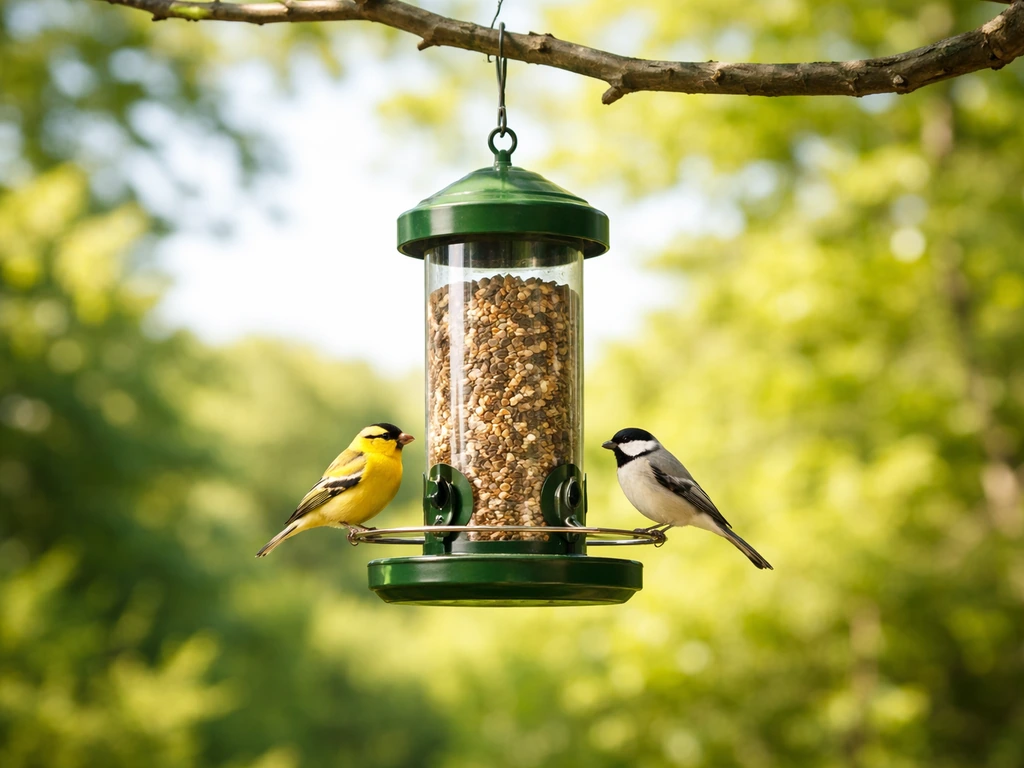
For most Florida backyards, the Brome Squirrel Buster Standard is the top all-around choice. Its UV-resistant components are specifically marketed as such, it uses a patented Seed Tube Ventilation system that circulates air inside the tube to reduce heat and moisture buildup, and the weight-activated closure shuts feeding ports the moment a squirrel grabs on. Brome’s Squirrel Buster Standard is marketed with UV resistance for all components UV-resistance for all components. It attracts chickadees, nuthatches, finches, titmice, and cardinals depending on your seed choice, and it cleans up easily, which matters because you will be cleaning it often in the Florida heat.
That said, one feeder rarely covers everything. Here is a practical shortlist for different priorities:
- Best overall squirrel-proof tube feeder: Brome Squirrel Buster Standard (UV-resistant, ventilated seed tube, weight-activated ports)
- Best for a budget-conscious setup: Perky-Pet Green Metal Tube Feeder with powder-coated finish for rust resistance
- Best weight-activated alternative: Wild Birds Unlimited Fundamentals Squirrel Proof Bird Feeder (ports close under heavier animal weight)
- Best for hummingbirds: A saucer-style nectar feeder with a built-in ant moat, easy to disassemble and clean daily
- Best for woodpeckers and suet: A caged suet feeder with a tail-prop design and a powder-coated or vinyl-coated wire cage
- Best for finches: A nyjer/thistle sock or a fine-port tube feeder with multiple feeding stations
- Best smart feeder upgrade: An AI-powered camera feeder like the Bird Buddy for anyone who wants species ID and a photo log without going outside
What to feed which birds: species-by-species breakdown
Florida has a genuinely diverse backyard bird population, and matching the feeder type to the bird you actually want is the fastest way to get results. Here is how I think about it species by species.
Seed feeders (chickadees, titmice, nuthatches, cardinals)
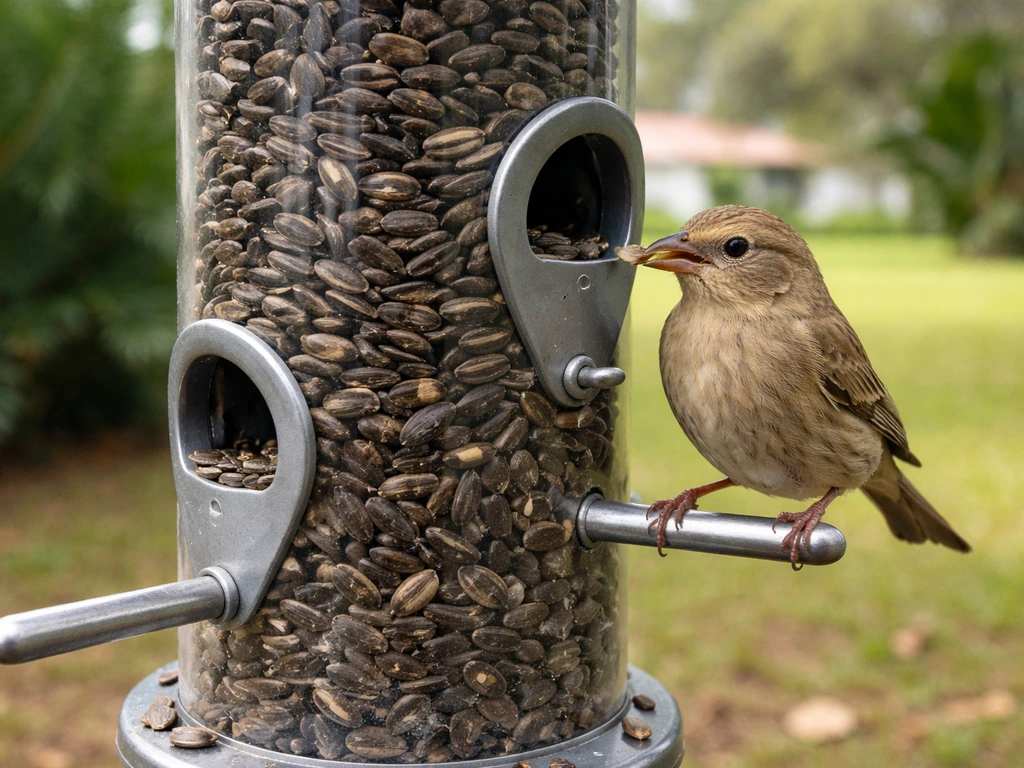
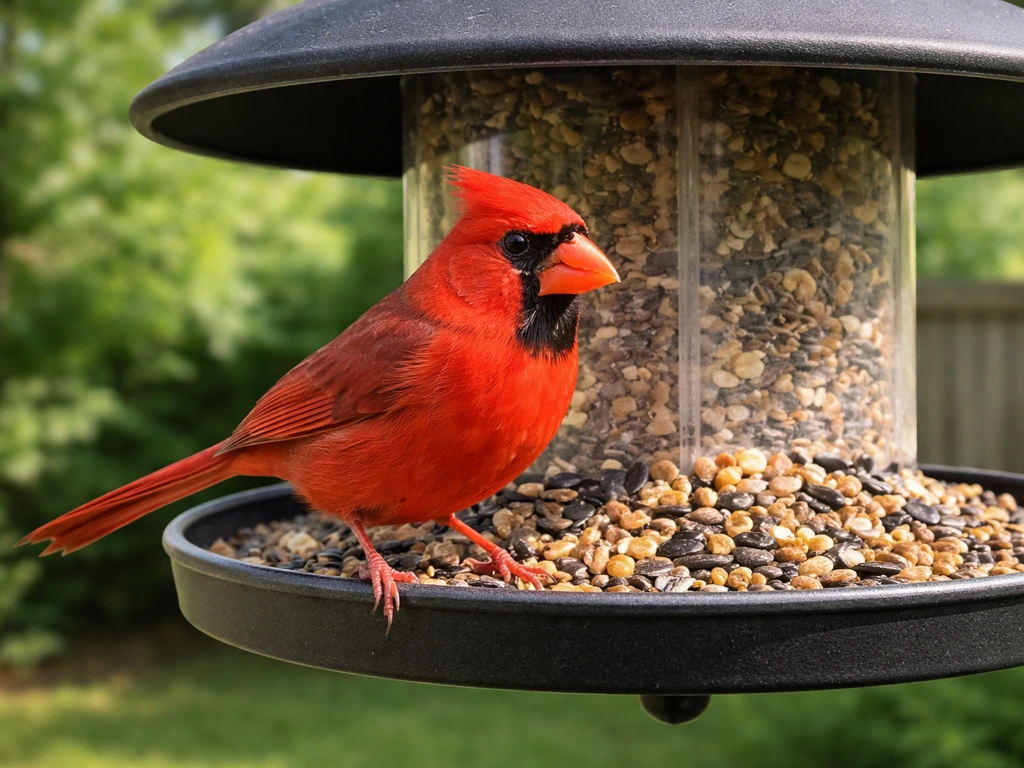
Tube feeders with black-oil sunflower seed cover the widest range of Florida seed-eaters. Cardinals prefer a perch or tray with a little elbow room, so a tube feeder with a larger catch tray or a hopper feeder works better for them than a standard small-port tube. Be aware that hopper feeders also attract jays and grackles, so placement and possibly a cage surround matter more with hoppers. Black-oil sunflower is your workhorse seed in Florida. Safflower is worth mixing in or switching to if grackles or squirrels are a problem, since both tend to leave it alone while cardinals and chickadees eat it readily.
Suet feeders (woodpeckers, brown creepers, wrens)
Suet is the one category where Florida's heat creates a real problem. Standard suet cakes melt and go rancid in summer heat, so you need no-melt or high-melt suet formulas if you are feeding year-round. A caged suet feeder with a tail-prop extension board makes it easier for larger woodpeckers like the Pileated or Red-bellied to brace and feed comfortably. The cage also limits starling access. Look for a vinyl or powder-coated wire cage rather than bare metal, which rusts fast in Florida humidity.
Finch feeders (American Goldfinch, Pine Siskin)
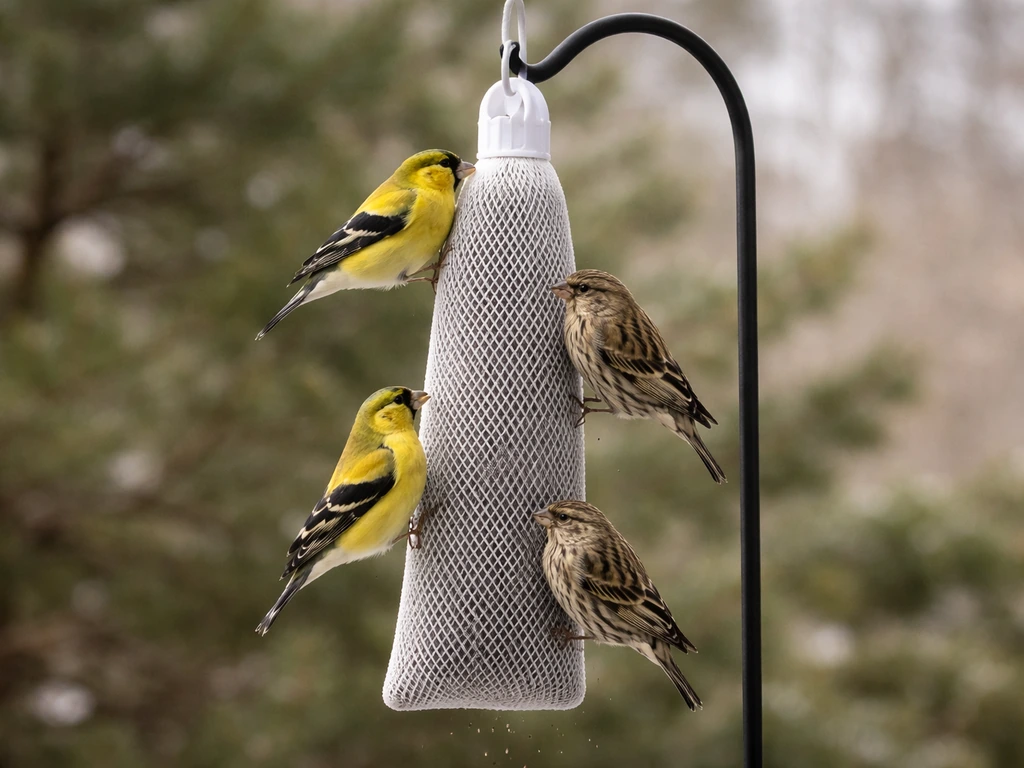
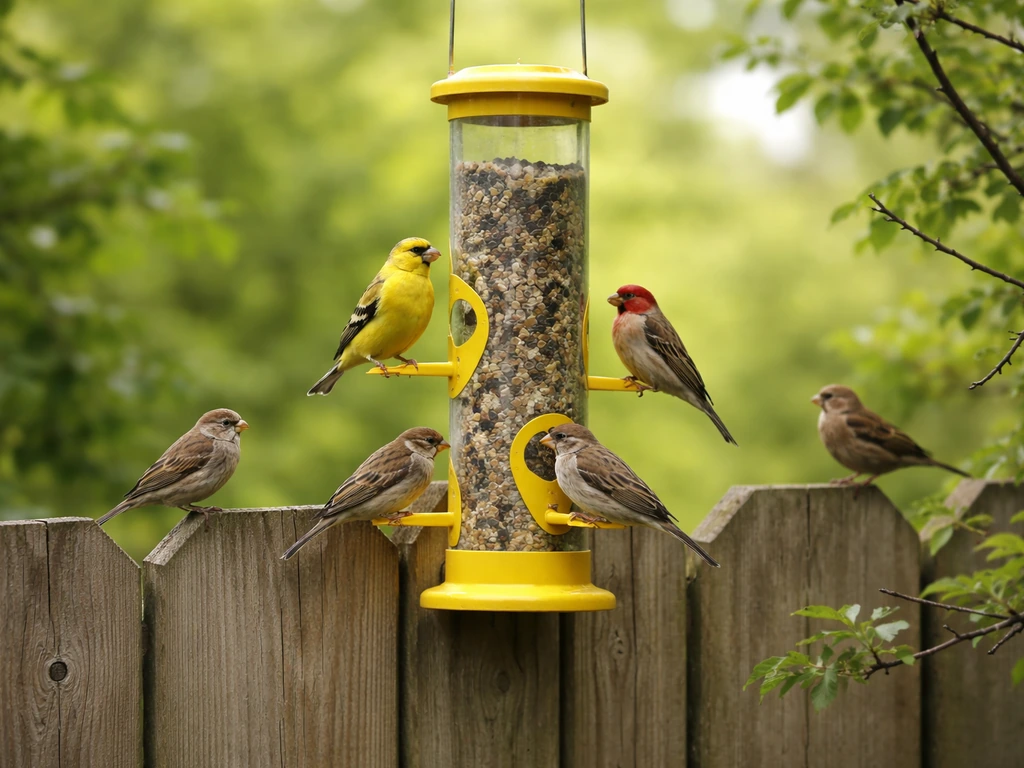
Florida goldfinches and siskins are winter visitors rather than year-round residents, typically arriving from October through April. A nyjer (thistle) sock or a dedicated fine-port tube feeder filled with nyjer seed is what you want. These feeders are simple, lightweight, and inexpensive. Keep the ports small enough that sparrows cannot access the seed as easily. Nyjer seed does go stale, especially in heat and humidity, so buy smaller quantities and refresh it regularly.
Hummingbird feeders (Ruby-throated, Rufous)
This is where Florida's heat demands the most attention. Ruby-throated hummingbirds pass through Florida during migration and some winter in the southern part of the state, but the maintenance rules are the same regardless of season. In Florida's warm months, nectar ferments and mold grows fast enough that you need to empty and clean the feeder every day or every other day.
Both Audubon and the National Wildlife Federation are direct about this: hot weather means daily or every-other-day cleaning, not the 3 to 5 day schedule that works in cooler climates. Make a batch of fresh nectar using the standard 4:1 ratio (4 parts water to 1 part sugar, plain white sugar, no dye or honey), and do not make more than you will use in two days.
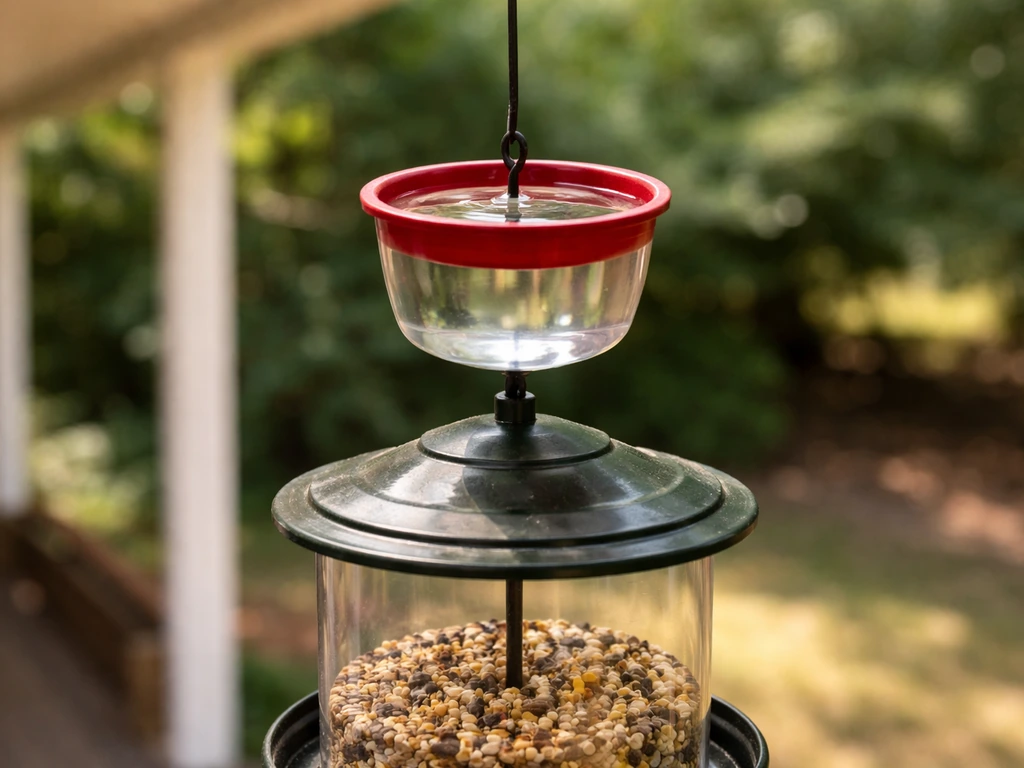
A saucer-style feeder with a wide shallow reservoir is easier to clean thoroughly than a bottle-style feeder. Whatever style you choose, an ant moat above the feeder is non-negotiable in Florida. Ant columns will find nectar feeders overnight, and the moat is the simplest physical barrier to stop them.
Cardinal feeders
Northern Cardinals are year-round Florida residents and one of the most reliably attracted backyard birds. They are ground-and-platform feeders by nature, so a hopper feeder with a wide tray or a dedicated platform feeder works better than a narrow tube. Safflower seed is an excellent choice for cardinals specifically because it attracts them while discouraging grackles and squirrels. If you are running a tube feeder, adding a large catch tray to collect spilled seed gives cardinals a comfortable place to feed below the main ports.
Dealing with squirrels, grackles, and ants
Squirrels
No feeder setup is truly 100% squirrel-proof, but you can get very close.
Audubon's approach, and the one I have found most effective, is a combination strategy: mount the feeder on a dedicated pole at least 5 feet high, add an inverted cone baffle of at least 13 inches in diameter below the feeder (or a squirrel-deterring dish of about 15 inches), and keep the feeder positioned at least 10 feet away from any tree branch, fence, or roof edge that a squirrel can launch from.
If you also want a self-defending feeder, a weight-activated model like the Brome Squirrel Buster or the WBU Fundamentals feeder closes its feeding ports when something heavier than a songbird lands on it. The combination of pole, baffle, and weight-sensitive feeder is as close to squirrel-proof as backyard birding gets. Switching to safflower seed adds another layer of deterrence since squirrels strongly prefer sunflower and corn.
Grackles
Common Grackles are a real problem in Florida, showing up in large, noisy flocks that empty a feeder fast and drive smaller birds away. The most practical defenses are: switching to safflower seed (grackles dislike it), using a caged feeder that physically bars larger birds while letting smaller ones through, or switching to a weight-sensitive feeder that closes under a grackle's heavier body weight. Tube feeders with small ports are also less appealing to grackles than open platform or hopper feeders. If the problem is severe, temporarily taking down seed feeders for a week or two is sometimes the most effective reset.
Ants and mold prevention
Ants target nectar feeders specifically. An ant moat, which is a small water-filled cup that sits above the feeder on the hanging wire, is the simplest and most reliable solution. Products like the SkinnyAnt moat are purpose-built for this. For seed feeders, mold prevention is about airflow, seed volume, and cleaning schedule.
Do not overfill feeders: put in only as much seed as birds will eat in two to three days. A feeder with a ventilated seed tube (like Brome's design) helps reduce internal heat and moisture. Clean seed feeders about every two weeks with warm water and a stiff brush.
If you see mold, discard all remaining seed and clean with a diluted bleach solution (10 parts water to 1 part bleach), rinse thoroughly, and let the feeder dry completely before refilling. Never put fresh seed on top of old or suspect seed.
Materials and durability: what actually holds up in Florida
Florida exposes feeders to a combination of conditions that expose cheap materials quickly. Here is a practical checklist for evaluating any feeder before you buy it:
| Feature | What to Look For | What to Avoid |
|---|---|---|
| UV resistance | Explicitly UV-rated plastics and components (like Brome's stated UV resistance) | Clear or lightly tinted acrylic that yellows and cracks within a season |
| Rust resistance | Powder-coated metal frames, vinyl-coated wire cages, stainless steel hardware | Bare steel or zinc screws, bare wire cages, thin chrome plating |
| Moisture/mold control | Drainage holes in trays, ventilated seed tubes, tight-fitting lids | Deep seed reservoirs with no drainage, wooden hoppers without treated surfaces |
| Suet in heat | No-melt or high-melt formula suet, shaded placement | Standard suet cakes in direct sun above 80°F |
| Hummingbird nectar | Saucer feeders that fully disassemble for daily cleaning | Complex bottle feeders with hard-to-reach crevices |
| Hardware | Stainless steel or coated screws and hooks | Standard zinc or bare steel screws that seize up with rust |
Wood feeders can work in Florida, but only if they are made from cedar or another rot-resistant wood and treated with an exterior finish. Even then, plan to repaint or reseal every couple of seasons. Recycled plastic lumber feeders handle humidity well but can warp if the material quality is low. For most people, a well-made metal and UV-resistant plastic combination feeder is the most practical long-term choice.
Mounting and placement in Florida yards
Placement in Florida is not just about attracting birds; it is also about reducing the problems that make feeding frustrating. A few concrete rules that have made a real difference in my experience: The U.S. Fish & Wildlife Service recommends keeping bird feeders and water sources within 3 feet of glass to help prevent fatal bird window collisions.
- Mount feeders on a dedicated pole at least 5 feet off the ground, positioned at least 10 feet from any tree, fence, or structure a squirrel can use as a launch point. This is the foundation of squirrel management.
- Keep feeders either very close to windows (within 3 feet, or directly on glass with suction cups) or far away (more than 30 feet). The dangerous zone is 5 to 30 feet, where birds build up enough speed to cause fatal collisions. This is standard guidance from both Audubon and the U.S. Fish and Wildlife Service.
- Place feeders in partial shade where possible, especially in south and central Florida. Direct afternoon sun accelerates nectar fermentation and seed spoilage, and it shortens the life of plastic components.
- Space multiple feeders at least 6 to 10 feet apart to reduce crowding, fighting, and disease transmission between birds.
- Put a tray or catch basin under seed feeders to reduce ground spillage, then clean or empty that tray every few days to prevent mold and discourage rats and raccoons.
- For porch setups, a hook screwed into a porch beam with a baffle above the feeder works reasonably well, but check that the feeder is still far enough from the porch railing that squirrels cannot jump directly to it.
Cleaning fallen seed from the ground below feeders is as important as cleaning the feeder itself. Wet, decomposing seed under a feeder is a mold and disease risk, and Penn State Extension guidance is clear: remove and dispose of any moldy seed and clean up debris regularly. In Florida's humidity, this means checking the ground below your feeder every few days, not just every couple of weeks.
How to pick the right feeder fast
If you are in a hurry and just want to know what to buy based on your specific situation, here is the shortest path to the right decision:
| Your situation | Best feeder type | Key seed or food |
|---|---|---|
| You want the most birds for the least effort | Weight-activated tube feeder (Brome Squirrel Buster Standard) | Black-oil sunflower seed |
| Cardinals are your main target | Hopper feeder or tube with wide tray, platform feeder | Safflower or black-oil sunflower |
| Squirrels destroy everything | Weight-activated feeder + pole + 13"+ inverted cone baffle | Safflower seed (squirrels dislike it) |
| Grackles are emptying your feeder | Caged tube feeder or weight-sensitive feeder | Safflower seed |
| You want hummingbirds | Saucer-style nectar feeder with ant moat above it | 4:1 water-to-sugar nectar, no dye, cleaned daily in heat |
| Woodpeckers are your focus | Caged suet feeder with tail-prop extension, shaded placement | No-melt suet, suet dough cakes |
| Finches in winter | Nyjer sock or fine-port tube feeder | Nyjer (thistle) seed, small quantities refreshed often |
| You want species ID and photos | AI-powered smart feeder camera (e.g., Bird Buddy) | Black-oil sunflower or a mixed seed blend |
One practical note on seed volume: in Florida's climate, it is almost always better to buy smaller quantities of seed more frequently than to stockpile a large bag. Seed stored in a hot garage or shed degrades quickly, and moldy seed is a disease risk. Store seed in an airtight container in a cool, shaded spot, and only fill feeders with what birds will eat in two to three days.
If you are in the southern part of the state, the bird species mix and the intensity of heat and humidity both shift noticeably compared to the panhandle or north Florida. If you are shopping for North Texas, the same goal applies: match the feeder type and placement to the birds you want and the local heat and pest pressure best bird feeder for north texas.
The core feeder principles stay the same, but you may find yourself cleaning more often and sticking more strictly to shade placement. For the best results in South Carolina, match the feeder style and placement to local heat, humidity, and pest pressure best bird feeder for south carolina. Readers focused specifically on south Florida or central Florida setups will find more region-specific guidance worth exploring for those areas.
If you are specifically shopping for the best bird feeders for south florida, the extra regional tips on feeder type, placement, and cleaning schedules will help you choose faster. For a North Carolina-specific shortlist, use the best bird feeders for north carolina guide to match feeder type and placement to your backyard birds. For specific picks, use this list of the best bird feeders for central Florida to match the right style to the birds you want.
The quick version for anyone ready to buy
Buy a UV-resistant, weight-activated squirrel-proof tube feeder, mount it on a pole with a baffled cone underneath, fill it with black-oil sunflower or safflower seed, and clean it every two weeks (or more often if you see mold or notice sick birds). If you want hummingbirds, add a saucer-style nectar feeder with an ant moat, make fresh 4:1 nectar every one to two days during warm months, and clean the feeder every single day when it is hot. If woodpeckers are your goal, add a caged no-melt suet feeder in a shaded spot. That combination covers the majority of Florida backyard birds and handles the state's toughest conditions better than anything else I have tested.
FAQ
What is the best bird feeder for Florida if I can only buy one feeder?
Choose a UV-resistant, weight-activated squirrel-proof tube feeder and pair it with black-oil sunflower seed. This single setup is the most flexible for Florida songbirds, and the seed tube ventilation helps slow mold when rain and humidity spike. If you also get a lot of grackles, switch the seed to safflower to reduce bully behavior.
How do I place my feeder to prevent squirrels, especially if I have trees or eaves nearby?
Mount the feeder on a dedicated pole at least 5 feet high, keep it 10 feet away from any launch point (tree branches, fences, roof edges), and use a cone baffle sized to the feeder. If squirrels still patrol, add a second barrier like a standoff section on the pole, or shorten the viewing gap so they cannot jump and grab from the side.
Do I need to use safflower seed in Florida even if I do not have a grackle problem?
Not always, but it is a smart default for mixed backyards. Safflower is less attractive to squirrels and often reduces takeovers by large birds, which can help smaller species use the feeder longer. If your main visitors are chickadees and cardinals, safflower tends to be a good compromise seed in humid areas.
How often should I clean seed feeders in Florida if it rains a lot?
Do not rely only on a calendar. In heavy rain periods, check the feeder body and seed level every few days, and clean sooner if you see dampness, clumping, or a musty smell. Also vacuum or sweep up fallen seed more frequently, since wet ground seed below the feeder is a common source of mold and pests.
Is it safe to top off bird seed when the feeder already looks a little old or damp?
No. Avoid adding fresh seed on top of seed that may be damp, clumped, or suspect, because you can spread mold and attract insects. Empty the feeder, discard questionable seed, rinse and scrub, let everything dry fully, then refill with a fresh portion.
What is the easiest way to stop ants from reaching hummingbird nectar without ruining the feeder setup?
Use an ant moat on the hanging line and keep it filled, then inspect the moat area after storms or heavy wind. If ants are still getting through, check for bridge routes like vines, nearby shrubs touching the feeder, or sticky residue on the wire, and clean the hanger hardware so ants do not “walk” across residue.
How much nectar should I make for hummingbirds in Florida?
Make only what you expect to be consumed within about 24 to 48 hours in warm weather. If nectar starts to look cloudy, smells fermented, or has visible bubbles, discard it immediately and clean the feeder before refilling. This reduces the chance of mold buildup and keeps hummingbirds from repeatedly visiting a contaminated reservoir.
If I am using a nyjer sock feeder, why do birds stop visiting even though the feeder is still full?
Nyjer can stale faster in heat and humidity, and stale seed often loses attractiveness. Try replacing with a smaller batch more frequently, and keep the sock out of direct afternoon sun if possible. Also clean the sock regularly, since fine residue can hold moisture even when it looks dry.
What feeder type works best for northern cardinals in Florida if they refuse tube feeders?
Use a hopper or platform feeder with a wider tray and consider safflower. Cardinials prefer open access and room to position, so narrow small-port tubes can limit feeding comfort. If you use a tube feeder anyway, adding a larger catch tray below the ports can give them an alternative landing and feeding area.
How can I protect seed feeders from grackles without giving up all my smaller birds?
Try safflower first, then consider a feeder design that limits access, such as a caged feeder or a weight-activated model that closes under heavier birds. Also reposition the feeder so smaller birds have quick cover and avoid wide-open lines of sight where grackles dominate. If grackles are extreme, a short, deliberate shutdown period can reset the behavior.
Do I need a special suet feeder for Florida heat, or will any suet work?
Florida heat usually requires no-melt or high-melt suet, especially if you feed year-round. A caged suet feeder also helps reduce starling access and gives larger woodpeckers a stable bracing surface. Place it in shade to extend freshness and reduce rancidity even with a proper suet formula.