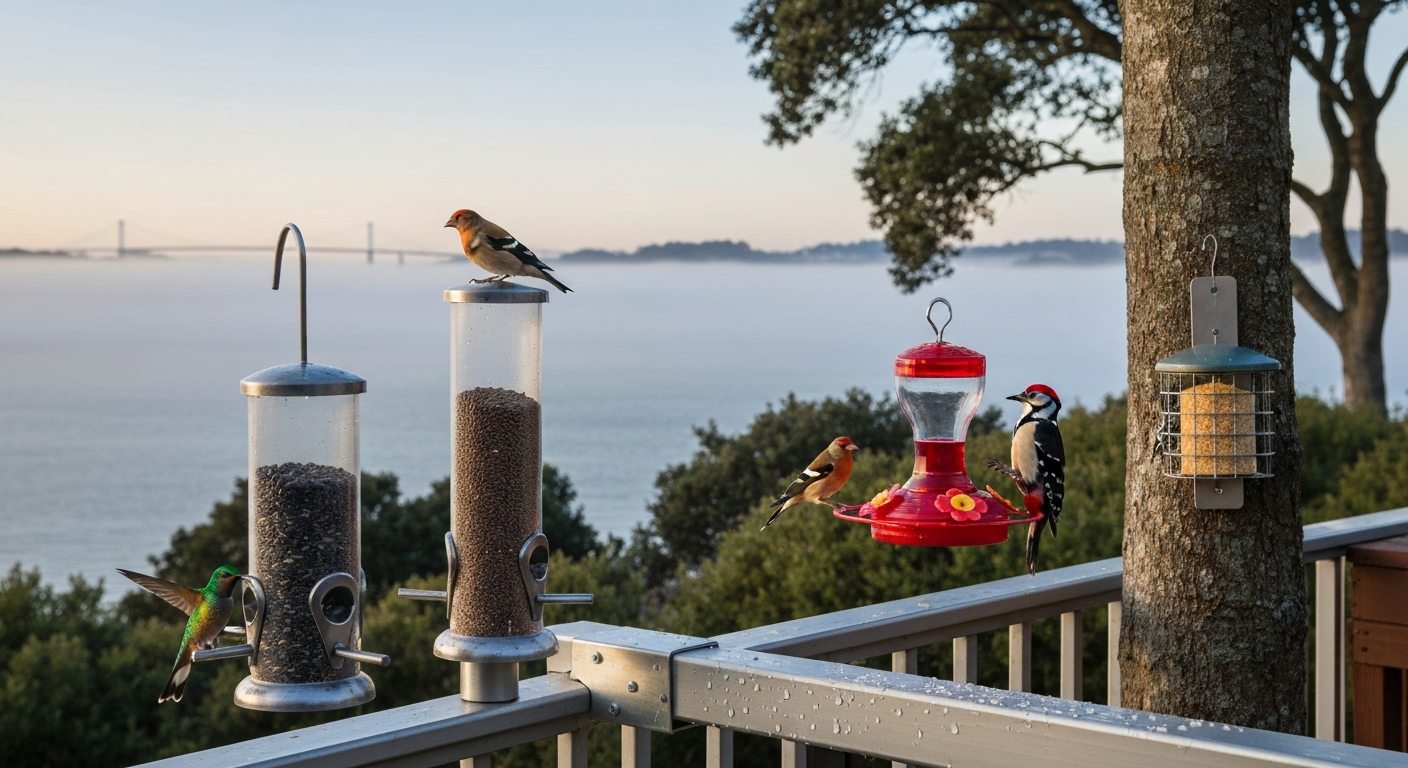
The best bird feeders for the Bay Area are ones built to handle coastal fog, salt air, and mild but persistently damp winters without rusting out or growing mold every two weeks. For most Bay Area yards, a combination of a weight-sensitive tube feeder (for finches and chickadees), a nectar feeder with ant moat (for Anna's hummingbirds year-round), and a suet cage with a built-in tail prop (for woodpeckers and nuthatches) covers the majority of species you'll actually see. The specific models, seeds, and placement details below are based on hands-on testing in Bay Area conditions, Cornell Lab feeding data, and eBird occurrence records for the nine-county region.
Best Bird Feeders for Bay Area: Coastal, Squirrel-Proof Picks
Marcus Holloway
14 Jul 2026
Who this guide is for and what you'll learn
If you've moved to the Bay Area from another part of the country and brought your old feeders with you, or if you're just starting out and wondering why your feeder isn't attracting much action, this guide is for you. I've tested feeders across microclimates from the foggy Sunset District and coastal Marin to drier East Bay suburbs and the warmer South Bay, and the conditions vary enough that a single generic recommendation won't cut it. Here you'll find species-specific feeder picks, material guidance for coastal durability, pest-proofing strategies for squirrels and raccoons, cleaning protocols tailored to the Bay Area's warm-and-damp weather, and a comparison of feeder types with honest pros and cons. I'll also point out where Bay Area needs diverge from neighboring regions like Northern California's Central Valley corridor or the Pacific Northwest.
Bay Area conditions that every feeder choice has to account for
The Bay Area's Mediterranean climate sounds gentle, but it creates specific stresses that chew through cheap feeders fast. NOAA's 1991-2020 climate normals for San Francisco International Airport show mean annual precipitation of around 23 inches, mostly concentrated between November and March, with very little in summer. That wet-dry swing matters: nectar in hummingbird feeders can ferment in under 48 hours during the summer warmth, while the damp fog season creates ideal mold conditions in seed feeders. Coastal stations from Bodega Bay through the Outer Sunset and west Marin experience persistent marine layer fog well into July and August, which means salt-laden air is depositing chlorides on any metal hardware on your feeder all year. Shoreline Observations | Bodega Ocean Observing Node (UC Davis / Bodega Marine Laboratory) documents persistent marine-layer fog and shoreward salt‑spray gradients along the North Bay coast, which drive chloride deposition on outdoor metal hardware.
Salt air is the real material killer. Marine corrosion research confirms that molybdenum-bearing 316 stainless steel resists chloride pitting far better than the more common 304 grade, and that gap matters even more at welded seams where crevice corrosion starts. Most mass-market feeders use 304 stainless or unspecified 'stainless' hardware, which is fine in the Sacramento Valley but will rust visibly within a year or two near the coast. If you're in Pacifica, El Cerrito hills, or anywhere with a bay view, check the spec sheet and prioritize UV-stabilized polycarbonate or powder-coated aluminum bodies over bare metal or thin chrome plating. Inland East Bay yards in Walnut Creek or Fremont face less salt exposure but hotter summers, which accelerates nectar spoilage and can warp lower-grade plastic components.
Urban Bay Area yards also come with a specific pest pressure. Squirrels (primarily western gray and fox squirrels, the latter an introduced species that's aggressively expanded) are relentless, and raccoons are strong enough to pull apart poorly built feeders overnight. Scrub jays and Steller's jays will bully smaller birds off shared feeders. European starlings and house sparrows compete aggressively at larger open feeders. These aren't abstract concerns: I've had a fox squirrel destroy a basic plastic tube feeder's ports in under a week. The pest-proofing section covers this in detail, but the short version is: weight-sensitive mechanisms are worth the cost in the Bay Area.
Which birds you're actually feeding, and how your yard shapes the decision
eBird data for the nine-county Bay Area consistently puts Anna's hummingbirds, house finches, lesser goldfinches, California scrub-jays, chestnut-backed chickadees, dark-eyed juncos, white-crowned sparrows, Nuttall's woodpeckers, and Bewick's wrens among the top year-round backyard visitors. Allen's hummingbirds appear in good numbers January through July before heading south. Northern flickers and downy woodpeckers are regular in areas with mature trees. Western scrub-jays (now officially California scrub-jays) are ubiquitous. What you won't find reliably are the Northern Cardinals that dominate feeder culture in the Southeast and Midwest: cardinals are extremely rare in the Bay Area, limited to a small introduced population in a few South Bay neighborhoods. European starlings and house sparrows are present but less dominant than in Houston or the East Coast, which means you have more flexibility in feeder choice.
Yard type matters too. A small San Francisco row-house deck calls for a compact railing-mount tube or nectar feeder with minimal mess, while a quarter-acre East Bay suburban yard can support a full multi-feeder pole setup with baffles. Wooded hillside yards in Oakland or Marin County will see more woodpeckers and chickadees than open flat lots. If you're close to riparian corridors or parks, you may get migrant warblers stopping by in fall and spring, which is a nice bonus but shouldn't drive your feeder choices.
Finches: the workhorse birds of Bay Area feeders
House finches and lesser goldfinches are your most reliable feeder visitors across all Bay Area counties, and setting up right for them pays dividends. Both species prefer thistle (nyjer) seed and fine sunflower chips. Lesser goldfinches especially love nyjer, and a tube feeder with small nyjer ports will bring them in within days if there's a local population nearby. House finches are less fussy and will also hit a standard sunflower tube or a small hopper feeder.
For tube feeders, I've had the best long-term results with feeders that have metal-reinforced ports. Squirrels and strong-beaked birds chew through plain plastic ports quickly. The Droll Yankees Onyx Clever Clean is a solid choice for coastal yards because its stainless steel mesh and heavy-duty polycarbonate tube hold up well in the damp and can be fully disassembled for thorough cleaning, which matters a lot when you're fighting fog-season mold. For a dedicated nyjer feeder, a sock-style feeder works but needs replacing every few months as mesh degrades; a rigid nyjer tube is more durable and easier to clean.
Placement tip: finches are reasonably comfortable feeding in open spots but prefer to have a nearby shrub or tree to dart back to. Mount tube feeders 4 to 6 feet high, with at least one tree branch or dense shrub within 10 feet as a staging perch. Bay Area fog keeps seeds damp, so check for clumping at the bottom of the tube weekly during winter and after foggy stretches. A feeder with a drainage hole or mesh bottom helps prevent seed rot significantly.
Hummingbirds: the one feeder every Bay Area yard needs
Anna's hummingbirds are year-round Bay Area residents, which is unusual nationally and means you need to run a nectar feeder every month of the year, not just summer. Allen's hummingbirds add to the action from roughly January through July before migrating south. Rufous hummingbirds appear as migrants. The practical upshot: unlike in most of the US, there's no reason to take your hummingbird feeder down in fall.
A UC Davis RFID monitoring study on hummingbird feeder visitation found that urban hummingbirds establish strong site fidelity and visit individual feeders dozens of times per day, which means feeder hygiene is genuinely important: one dirty feeder can expose a local individual repeatedly. Cornell Lab recommends cleaning nectar feeders every two days in hot weather and twice a week otherwise. In the Bay Area's warm summer months, especially in the inland East Bay and South Bay where temperatures regularly hit the mid-80s to low 90s, two-day cleaning is the right standard from June through September. Coastal yards with more fog and cooler temperatures can often push to three or four days, but I'd check the nectar color: cloudiness or any bubbles mean it's gone off.
The standard nectar ratio is 1 part white granulated sugar to 4 parts water, boiled and cooled. The UC ANR Bug Squad has confirmed that this ratio doesn't cause significant harm to visiting bees, so don't let that concern deter you. Avoid red dye (unnecessary) and artificial sweeteners (harmful). For feeder selection, the key Bay Area-specific features to prioritize are a built-in ant moat or bee guards, UV-stable red plastic (cheaper red plastic fades and cracks in strong sun, especially in South Bay and East Bay microclimates), and easy disassembly for cleaning. The HummZinger Excel by Aspects is consistently one of the easiest to clean and holds up well. The First Nature wide-mouth feeder is inexpensive and very cleanable but doesn't have a built-in moat. For foggy coastal yards, a feeder with a wide rain guard hood keeps nectar from being diluted by drip.
Multiple feeders spaced around the yard help reduce the territorial fights that male hummingbirds are prone to. Two feeders on opposite sides of a building, so neither dominant male can guard both at once, is a proven field trick. I've used this setup in my own backyard in the East Bay and it roughly doubled overall hummingbird activity within a few days.
Cardinals in the Bay Area: a limited and specific situation
Northern Cardinals are not a bird to plan your Bay Area feeder setup around. They are not native to California and only exist here as a small, localized introduced population in parts of the South Bay, particularly around Palo Alto and some Santa Clara County neighborhoods. If eBird records show cardinals in your specific area, the standard recommendations apply: a hopper feeder or wide platform feeder with sunflower seeds or safflower (which cardinals prefer and most squirrels dislike) is the right move. Cardinals feed best on open platforms where their larger body has room to move, and they tend to visit at dawn and dusk. But for the vast majority of Bay Area birders, cardinals are not a target species and don't need to factor into your feeder setup.
Woodpeckers: suet is the shortcut, but placement is everything
Nuttall's woodpeckers are a Bay Area specialty, found nearly nowhere else in the world and reliably present in oak woodlands throughout the region. Downy woodpeckers and hairy woodpeckers are also regular backyard visitors in wooded areas, and northern flickers are common in larger yards with mature trees. All of them respond well to suet, which is the fastest way to attract woodpeckers to a new yard.
A basic wire suet cage costs a few dollars and works, but a feeder with a built-in tail prop (the extended board below the cage) is meaningfully better for larger woodpeckers and flickers, which brace their stiff tail feathers against a surface while feeding. The Duncraft Upside Down Suet Feeder is worth considering if European starlings are a problem in your yard: woodpeckers are comfortable feeding from the underside, while starlings are not. In my experience, this alone can cut starling visits to suet by 80 percent.
Bay Area suet placement needs to account for the fact that summer temperatures in inland areas can melt standard suet cakes. Above around 80 degrees Fahrenheit, regular suet softens and can go rancid quickly. From June through September in the East Bay and South Bay, use no-melt (rendered) suet cakes, which are specifically formulated to hold up to higher temperatures. Coastal yards under the marine layer rarely hit temperatures that cause this problem. Mount suet feeders on a tree trunk or post at 5 to 7 feet height, away from dense brush that gives squirrels a launch point, and if raccoons are active, bring the feeder in overnight during their peak activity season in spring.
Jays: enthusiastic visitors you might want to manage
California scrub-jays are one of the Bay Area's most consistently present and visible backyard birds, and they're smart, bold, and capable of monopolizing a feeder quickly. They love peanuts (whole or shelled), sunflower seeds, and corn, and they will cache food aggressively. Steller's jays are common in more forested areas, particularly wooded hillside neighborhoods in Oakland, Berkeley, Marin, and the Santa Cruz Mountains fringe. Both are native species and genuinely worth feeding, but if they're driving away smaller birds, some management strategies help.
One approach is to give jays their own dedicated feeding station, either a platform feeder or an open tray feeder on the ground, stocked with peanuts and placed away from your primary tube and nectar feeders. Jays will preferentially visit their own spot and tend to leave the tube feeders alone. A separate peanut feeder in wreath or cage style (with openings too small for jays to access) lets smaller birds like chickadees get to sunflower chips and nyjer without competition. For tube feeders, shorter perches (under 3/4 inch) make it harder for jays to get a grip, which naturally reduces their access without fully excluding them.
If you're trying to completely deter jays from a particular feeder, a cage-style squirrel-proofing enclosure with 1.5-inch mesh openings will let chickadees, finches, and small woodpeckers through while excluding jays. This is the same hardware used for squirrel exclusion and does double duty in Bay Area yards.
Sparrows and small ground-feeders: don't overlook the platform option
White-crowned sparrows are one of the Bay Area's signature winter birds, arriving in October and staying through April in large numbers. Golden-crowned sparrows overlap in range and timing. Dark-eyed juncos are year-round residents in many Bay Area hills and show up in greater numbers in winter. California towhees are permanent residents throughout the region. All of these birds are primarily ground- or low-surface feeders that won't use hanging tube feeders effectively.
A low-mounted platform feeder or a simple ground tray filled with white proso millet, sunflower chips, and cracked corn will bring in an impressive assortment of these species, especially from October through March. Millet is the key seed: most sparrow species prefer it over sunflower, but it often isn't included in generic mixed birdseed blends. Read the bag and buy pure millet or millet-heavy mixes if sparrows are your target. Keep ground and platform feeders clean: fallen seed ferments quickly in the damp Bay Area winters and can contribute to disease transmission. Cornell Lab recommends cleaning feeders at minimum every two weeks, more frequently in warm or wet weather, using a 1:9 bleach-to-water solution, rinsed thoroughly and dried before refilling.
Placement for ground feeders should be 10 to 15 feet from a brush pile or dense shrub, which gives sparrows the cover they need to feel secure. Avoid placing directly under hanging feeders unless you're prepared to rake fallen seed regularly, as accumulations under feeders are a disease and rat-attractant risk, which is especially relevant in urban Bay Area neighborhoods.
Feeder type comparison: which works best in the Bay Area
| Feeder Type | Best For | Bay Area Pros | Bay Area Cons | Top Tip |
|---|---|---|---|---|
| Tube feeder | House finches, lesser goldfinches, chickadees | Compact, squirrel-resistant options available, easy to place on rail or hook | Nyjer clumps in fog/damp; needs drainage holes | Choose metal-reinforced ports for squirrel resistance; check drainage weekly in winter |
| Hopper feeder | Mixed species, jays, larger finches | High seed capacity reduces refill frequency | Open design can trap moisture; harder to clean thoroughly; squirrel-vulnerable without baffle | Use a wide roof overhang and add a pole baffle; clean every 2 weeks minimum |
| Platform/tray feeder | Sparrows, juncos, towhees, jays, cardinals (South Bay only) | Attracts ground-feeding species not served by tubes; very easy to clean | Fully exposed to rain and fog; seed spoils faster; accessible to rats and raccoons | Mount on a dedicated low pole 3-4 ft high; use small daily portions to reduce spoilage |
| Suet cage | Woodpeckers, nuthatches, chickadees, wrens | Year-round use; no seed mess; cheap and simple | Standard suet melts above 80°F; starlings compete aggressively | Use no-melt suet June-September; try an upside-down feeder to deter starlings |
| Nectar feeder | Anna's and Allen's hummingbirds (year-round) | Essential for Bay Area year-round hummingbirds; compact and railing-friendly | Nectar ferments in 2-4 days in summer; requires frequent cleaning | Shade placement extends nectar life; use ant moat; clean every 2-3 days in warm months |
Pest-proofing for squirrels, raccoons, and aggressive birds
Fox squirrels are the dominant squirrel pest in most of the Bay Area and are larger and more aggressive than the native western gray. They can leap up to 10 feet horizontally and drop 5 feet from above, which means any feeder hung from a tree branch or near a fence is at risk. The most reliable solution is a dedicated feeder pole placed at least 10 feet from any fence, tree trunk, or structure, topped with a wide dome baffle (at minimum 17 inches in diameter). Brome's SquirrelBuster line uses weight-sensitive spring mechanisms to close seed ports under squirrel weight while staying open for birds. In my testing these have been among the most reliably effective, though the mechanisms need occasional lubrication and cleaning to keep them functioning correctly. The key spec to check is the weight threshold: most models are calibrated to close somewhere between 6 and 12 ounces, which is sufficient for squirrels but also means you should verify it doesn't accidentally trigger for larger birds like jays.
Raccoons are a serious feeder threat in many Bay Area neighborhoods. They're strong enough to bend or break most feeder hardware and will pull a pole-mounted setup apart if there's no baffle. A raccoon baffle is wider and taller than a squirrel baffle, typically a 24-inch stovepipe-style cylinder mounted below the feeder. Bringing feeders in at night is the most foolproof solution during spring when raccoon activity peaks. For nectar feeders specifically, raccoons will drain them completely and may break the ports, so a nightly bring-in routine is worth the habit.
For bird competition issues, the cage-style enclosure around a tube feeder handles both jay and starling exclusion at the same time. If house sparrows are overwhelming a feeder, switching to safflower seed dramatically reduces sparrow interest (they don't prefer it) while keeping house finches and chickadees happy. Nyjer/thistle feeders are also naturally less attractive to sparrows, which don't metabolize it as efficiently.
Smart feeders and AI-powered cameras: are they worth it in the Bay Area
Smart bird feeder cameras have improved significantly in the last two years, and for Bay Area birders who want to log species without sitting at a window, they're genuinely useful. Models like the Bird Buddy and the Netvue Birdfy use on-device AI to identify species from photos captured during feeding events. In well-lit conditions, species identification accuracy is good for common Bay Area birds: house finches, Anna's hummingbirds, scrub-jays, and chickadees are reliably recognized. The cameras struggle more with species like lesser goldfinches versus American goldfinches (which are rare here) and with birds photographed from below or in flat fog-light.
The Bay Area's fog and overcast conditions are a real factor with camera feeders: low-light identification is less reliable, and some cameras struggle in the blue-grey diffuse light that characterizes coastal mornings through much of the year. If you're on the coast or in a persistently overcast microclimate, check whether the model has a rated minimum illuminance for identification. The Netvue Birdfy has a wider aperture lens that handles low light better than the Bird Buddy's earlier hardware, though the Bird Buddy app integration and community features are more polished.
For waterproofing, both major models are rated for outdoor use, but the moisture-sealing on mounting hardware varies. In very foggy or rain-exposed locations, adding a secondary waterproof housing or using the included protective hood is worth doing. Solar-powered charging options on some models work well in the inland Bay Area where summer sun is reliable, but are marginal on the coast from June through August when the marine layer can persist for days. A USB charging backup is important if you're in a foggy location.
Materials and durability: what actually holds up on the coast
For coastal Bay Area locations from the Outer Sunset, Marin County coast, or Pacifica, material choice is the single biggest driver of how long a feeder lasts. The engineering data is clear: 316 stainless steel (which contains molybdenum) resists chloride-driven pitting and crevice corrosion far better than 304 stainless in marine atmospheres. Most feeder manufacturers don't specify the grade of their stainless components, which should raise a flag. When I can't verify the grade, I prioritize powder-coated aluminum (which forms a stable oxide layer and resists salt corrosion well when the coating is intact) or UV-stabilized polycarbonate for the main body. The coating condition matters too: scratched or chipped powder coat creates corrosion initiation sites, so inspect and touch up annually.
For inland Bay Area yards, UV degradation of plastic is the bigger concern than salt. Standard polycarbonate without UV stabilizers turns yellow, brittle, and eventually cracks within two to three years in direct sun. UV-stabilized grades last significantly longer. Acrylic (plexiglass) feeders, which are common in window-mount designs, are more scratch-prone but generally handle Bay Area sun reasonably well. Look for feeders that specify UV-resistant or UV-stabilized materials on the packaging.
Mounting and placement options for Bay Area yards
Bay Area yards come in many configurations: narrow San Francisco row-house decks, hillside lots with no flat ground, urban apartments with only a balcony railing, or standard suburban lots with grass and trees. The right mounting solution depends heavily on what you're working with.
- Deck rail or balcony clamp mounts: ideal for SF row houses and apartment balconies; choose a model with a secure locking mechanism since balcony wind can be strong near the bay
- Freestanding shepherd's hooks or pole systems: best for flat suburban yards; use a ground socket if your soil is shallow or rocky (common in hillside East Bay properties)
- Window-mount feeders with suction cups: good for close-up viewing but poorly suited to Bay Area fog and rain, which weakens suction cup grip; recheck adhesion after wet periods
- Tree hook or branch hangers: convenient but expose feeders to squirrel access unless a baffle is added; generally avoid unless the branch is isolated at least 10 feet from the trunk or other branches
- Deck post or beam mounts: a good middle ground for attached decks; a post-clamp bracket with a arm extension keeps the feeder away from the structure while keeping it close for refilling
Height is worth thinking about carefully. Most songbirds are comfortable feeding at 4 to 6 feet, which also puts the feeder at eye level for easy monitoring. Hummingbird feeders can go a bit higher (5 to 8 feet) to give the birds some airspace below them. Ground platform feeders should sit 2 to 4 feet up on a short pole rather than directly on soil, which reduces rat and moisture-contact risk. Wind is a real consideration in Bay Area sites exposed to bay or ocean breezes: hang tube feeders from a hook with a locking clip or a secondary wire tie to prevent the feeder from being knocked off and cracked.
Seed and nectar choices for Bay Area birds
The Bay Area bird community is dominated by species that respond to a short list of seeds. Black oil sunflower is the single most useful seed you can stock: house finches, chickadees, nuthatches, lesser goldfinches, and jays all eat it. Nyjer (thistle) is the top choice for dedicated finch feeders. White proso millet is essential for sparrows, juncos, and towhees. Sunflower chips (hulled sunflower) reduce mess on decks and are enthusiastically accepted by most small to medium seed eaters. Peanuts (raw, unsalted, and either whole or shelled) are the best dedicated jay food and also attract woodpeckers and nuthatches.
Avoid generic wild bird mixes that include large amounts of milo (sorghum), red millet, wheat, or oats. Very few Bay Area birds eat these, and they end up scattered on the ground creating a cleanup and rodent problem. If a seed you haven't stocked before is sitting untouched after two weeks, it's not what the local birds are looking for. The one exception is cracked corn for platform feeders: towhees and white-crowned sparrows do eat it, though they prefer millet.
For nectar, the 1:4 white sugar to water ratio is the standard and is supported by Cornell Lab guidance. Do not use honey (which promotes fungal growth), brown sugar (additional minerals that may be harmful), or artificial sweeteners. Boiling the mixture briefly ensures sugar is fully dissolved and slightly extends fresh shelf life. In fog-prone areas where there's less direct sun to degrade the solution, you may get an extra day of freshness compared to inland locations.
Cleaning and maintenance in Bay Area conditions
Bay Area feeders need more frequent cleaning attention than the national guidance suggests, because the damp winters and warm foggy summers create extended windows for mold and bacteria growth. Cornell Lab's standard is every two weeks with a 1:9 bleach-to-water solution, thorough rinse, and complete air-drying before refill. In the Bay Area I'd push that to every 10 to 14 days in winter and weekly for nectar feeders in summer, with a daily visual check for cloudiness or caking.
- Empty all remaining seed or nectar before cleaning; don't top off without cleaning
- Disassemble the feeder as fully as the design allows
- Soak all parts in a 1: 9 bleach-to-water solution for 5 to 10 minutes
- Scrub with a dedicated feeder brush, paying attention to seed ports, perches, and the bottom tray where seed residue collects
- Rinse thoroughly with clean water until no bleach smell remains
- Allow to air dry completely before refilling; refilling a damp feeder accelerates mold
In addition to routine cleaning, be aware of avian influenza guidance from local health authorities. San Mateo County and other Bay Area jurisdictions have issued advisories during HPAI outbreak periods recommending temporary feeder removal or suspension of feeding to reduce bird congregation and disease spread. USGS surveillance data has informed these local advisories: when there are confirmed detections of HPAI in wild birds in your county or adjacent counties, the recommended precaution is to remove feeders for at least two to four weeks. Golden Gate Bird Alliance maintains current regional guidance on this and is the best ongoing source for any disease-response recommendations.
Seasonal and migratory context for Bay Area feeders
The Bay Area's mild Mediterranean winters mean you don't get the dramatic winter finch irruptions that make feeder watching exciting in colder climates, but you do get a consistent and impressive suite of resident and wintering birds from October through April. White-crowned and golden-crowned sparrows arrive in October and are reliable through late April. Hermit thrushes winter here and will occasionally come to platform feeders with fruit. Pine siskins are irruptive and can appear in large numbers some winters when food sources fail further north. American goldfinches are uncommon but do show up, especially in winter.
Spring migration (March through May) and fall migration (August through October) bring warblers, flycatchers, and other insectivores through Bay Area yards, particularly near riparian habitat. These birds don't use traditional seed feeders but are attracted to yards with native plantings, water features, and suet. If you want to expand your spring migration catch rate, a shallow birdbath with a dripper or mister is far more effective than adding new feeders. Summer is hummingbird season: Allen's are present January through July, Anna's year-round. Fall and winter are the best seasons for sparrow, finch, and junco variety at seed and platform feeders.
Budget tiers and what to prioritize at each level
| Budget Tier | Approximate Spend | What to Buy | What to Skip |
|---|---|---|---|
| Starter | Under $50 total | One quality tube feeder with metal ports, one nectar feeder with ant moat, black oil sunflower + nyjer seed | Smart camera feeders, full pole systems, suet setup |
| Mid-range | $50–$150 total | Weight-sensitive squirrel-resistant tube feeder, nectar feeder, suet cage with tail prop, basic shepherd's hook pole with baffle, no-melt suet | High-end smart feeders, multiple pole systems |
| Full setup | $150–$300+ | Smart feeder camera, complete pole system with multiple arms and raccoon baffle, weight-sensitive feeder, platform tray, nectar feeder, dedicated peanut feeder for jays | Nothing essential is missing at this tier |
The most common mistake at the starter tier is buying a cheap feeder and quality seed, then losing the feeder to squirrel damage within a few weeks. Spending the extra $15 to $25 on metal-reinforced ports or a weight-sensitive mechanism at the outset saves money over the season. At the mid-range tier, the pole and baffle system is the single most impactful investment for Bay Area yards with significant squirrel pressure.
Bay Area vs. neighboring regions: key differences
The Bay Area shares some species and climate traits with adjacent regions, but the differences are significant enough to make generic California or West Coast recommendations unreliable. Compared to Northern California (particularly the Sacramento Valley and Sierra foothills), the Bay Area has more year-round fog and salt exposure, milder winters with less freeze risk, and a higher year-round hummingbird presence. For Pacific Northwest specifics, see a companion guide on the best bird feeder for Seattle that covers rain-heavy, cooler conditions and local species preferences. Northern California birders can get away with cheaper feeders that don't have to handle prolonged salt-air exposure, and they face harder freezes that can crack water features and nectar feeders differently.
San Diego's climate is similarly Mediterranean but drier and sunnier, with less fog and more UV exposure as the primary feeder stressor. For recommendations tailored to San Diego's drier, sunnier conditions and its local species, see our guide to the best bird feeders for San Diego. San Diego birders will see more Allen's and Costa's hummingbirds than Anna's, and the squirrel pressure from introduced eastern fox squirrels is also present there. The Pacific Northwest, Oregon, and Seattle regions deal with significantly higher rainfall and different dominant species: American goldfinches (rather than lesser goldfinches) are common, varied thrushes and other woodland species visit feeders that wouldn't be typical in the Bay Area, and the freeze risk is real in Portland and Seattle winters in a way it mostly isn't here. Hawaii is its own entirely different category, with endemic honeycreepers and regulatory restrictions on feeder use in some contexts. For readers curious about islands, see a separate guide on the best bird feeders for Hawaii that covers endemic species, island regulations, and feeder designs suited to tropical and biosecurity conditions. Houston's subtropical climate, high humidity, and completely different bird assemblage (Northern Cardinals, grackles, Mississippi kites overhead) make it effectively an entirely separate feeder strategy. For feeder choices tailored to Houston's subtropical heat, high humidity, and its distinct bird community, see our guide to the best bird feeders for Houston.
Quick buying checklist before you order
- Is the body material UV-stabilized polycarbonate, powder-coated aluminum, or verified 316 stainless? Avoid unspecified 'stainless' hardware for coastal locations
- Does the tube feeder have metal-reinforced ports to resist squirrel chewing?
- Does the nectar feeder include a built-in ant moat or bee guards, and can it be fully disassembled for cleaning?
- Is your suet rated as no-melt if you're in a warm inland Bay Area microclimate?
- Is there a baffle in your setup if the feeder is pole-mounted, and is the pole at least 10 feet from any structure or tree?
- Does the feeder have drainage holes or a mesh bottom to prevent seed rot during the damp winter season?
- Have you checked eBird for your specific county to confirm which species are actually present in your immediate area before buying specialty feeders?
- Do you have a cleaning schedule set up, and do you have a designated brush and dilute bleach solution ready?
FAQ
What primary climate and environmental data are required to make Bay Area–specific durability and maintenance recommendations?
Use NOAA/NCEI station-level climate normals (1991–2020) for temperature, precipitation and humidity patterns; station PDFs (e.g., SFO monthly normals) for microclimate detail; coastal fog and salt‑spray gradient maps and shoreline observations from UC Davis/Bodega to capture fog belts and salt exposure; and local air‑quality or marine corrosion indexes where available. These data define expected corrosion risk, mold/nectar spoilage windows, freeze/heat stress and cleaning cadence.
Which bird occurrence and species‑seasonality datasets are essential to produce species‑specific feeder recommendations?
Download eBird datasets and status‑and‑trends products (Cornell Lab) for Bay Area counties to quantify presence, abundance, and peak visitation windows for target species (finches, hummingbirds, woodpeckers, jays, sparrows, occasional cardinals). Supplement with Golden Gate Bird Alliance regional lists for local context and park/HOA guidance.
What literature and expert guidance should be referenced for species feeding preferences and feeder types?
Use Cornell Lab’s All About Birds species accounts for dietary and feeder‑type preferences (seed types, nectar, suet, nyjer). Add regional extension posts (UC ANR/UC Davis) for hummingbird nectar ratios and insect conflict mitigation, and Golden Gate Bird Alliance for local conservation best practices.
What product‑level information must be collected from manufacturers and retailers?
Capture manufacturer specs and claims (materials and alloys, coatings, advertised pest‑proofing mechanisms, capacity, refill frequency, warranty, replaceable parts) from official product pages and retailers. Record stated material grades (e.g., 304 vs 316 stainless), coating types, measured capacities, and any lab testing or certifications the manufacturer provides.
What field tests and protocols are required to validate performance in Bay Area conditions?
Set up multi‑site field tests covering coastal fog belt, salt‑spray coastal sites, urban/suburban yards, and inland microclimates. Test duration: at least one full year to capture seasonality. Measure: species‑specific visitation (visits/day), seed/nectar spoilage time, corrosion onset, mechanical failures, pest intrusion incidents (squirrels, grackles), refill frequency, and cleaning/maintenance time. Use standardized logs and photographic records.
Which automated monitoring or sensor methods should be used to quantify species visitation and feeder interactions?
Use a mix of motion‑triggered cameras (high frame rate, IR), passive RFID for tagged individuals (where legal and ethical), and audio recorders for dawn chorus correlation. Follow UC Davis RFID study methods for sampling intervals, antenna placement and data cleaning. Timestamped camera footage plus manual/AI annotation yields visit counts, species ID, and behavior (pest vs target species).
Next Articles
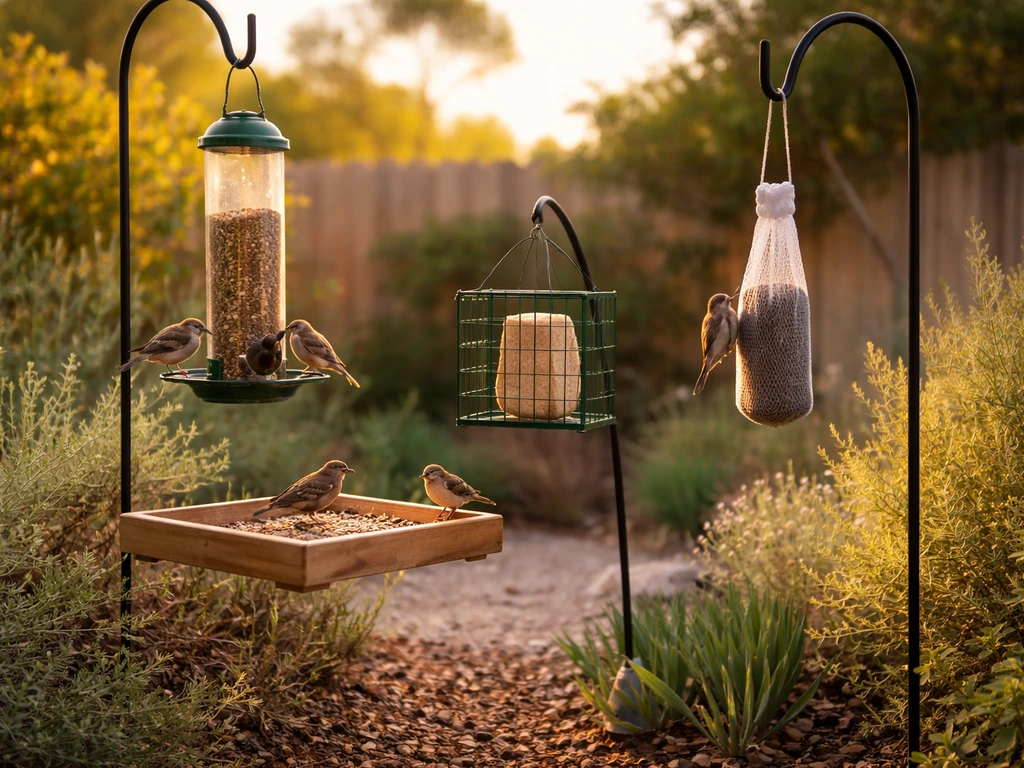
Best Bird Feeders for San Diego: Buying Guide and Picks
Best bird feeders for San Diego: species-focused picks, anti-squirrel fixes, weatherproofing, and smart camera options.
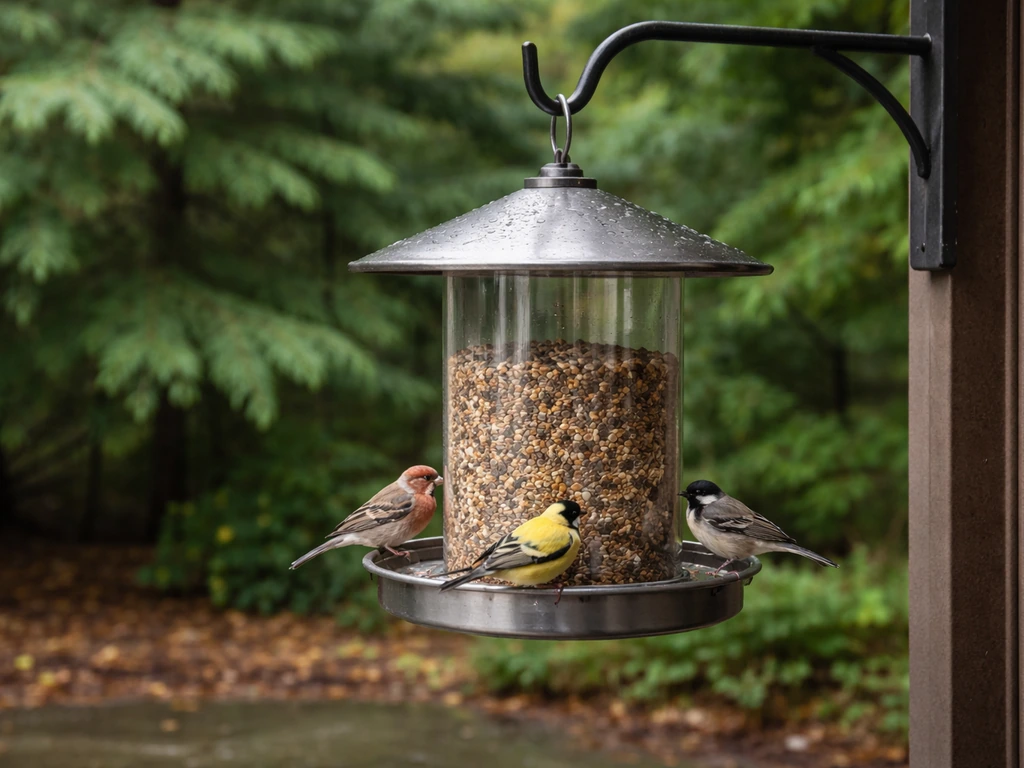
Best Bird Feeder for Pacific Northwest: Buyer Guide
Choose the best bird feeder for the Pacific Northwest with weatherproof setup, pest control, and species-specific picks.
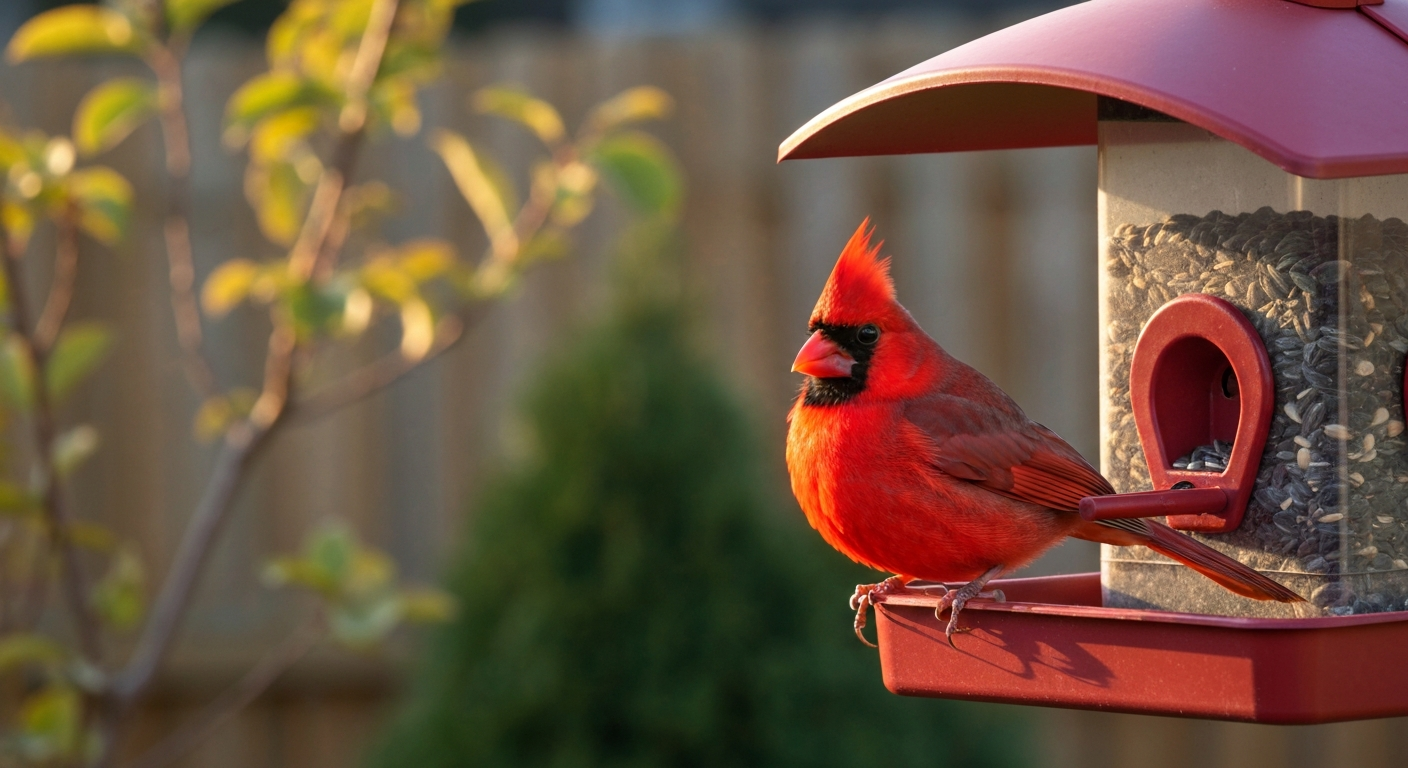
Best Red Cardinal Bird Feeder: Top Picks & Buying Guide
Best red cardinal bird feeder guide: top picks, painting tips, seed & placement advice to attract Northern Cardinals.