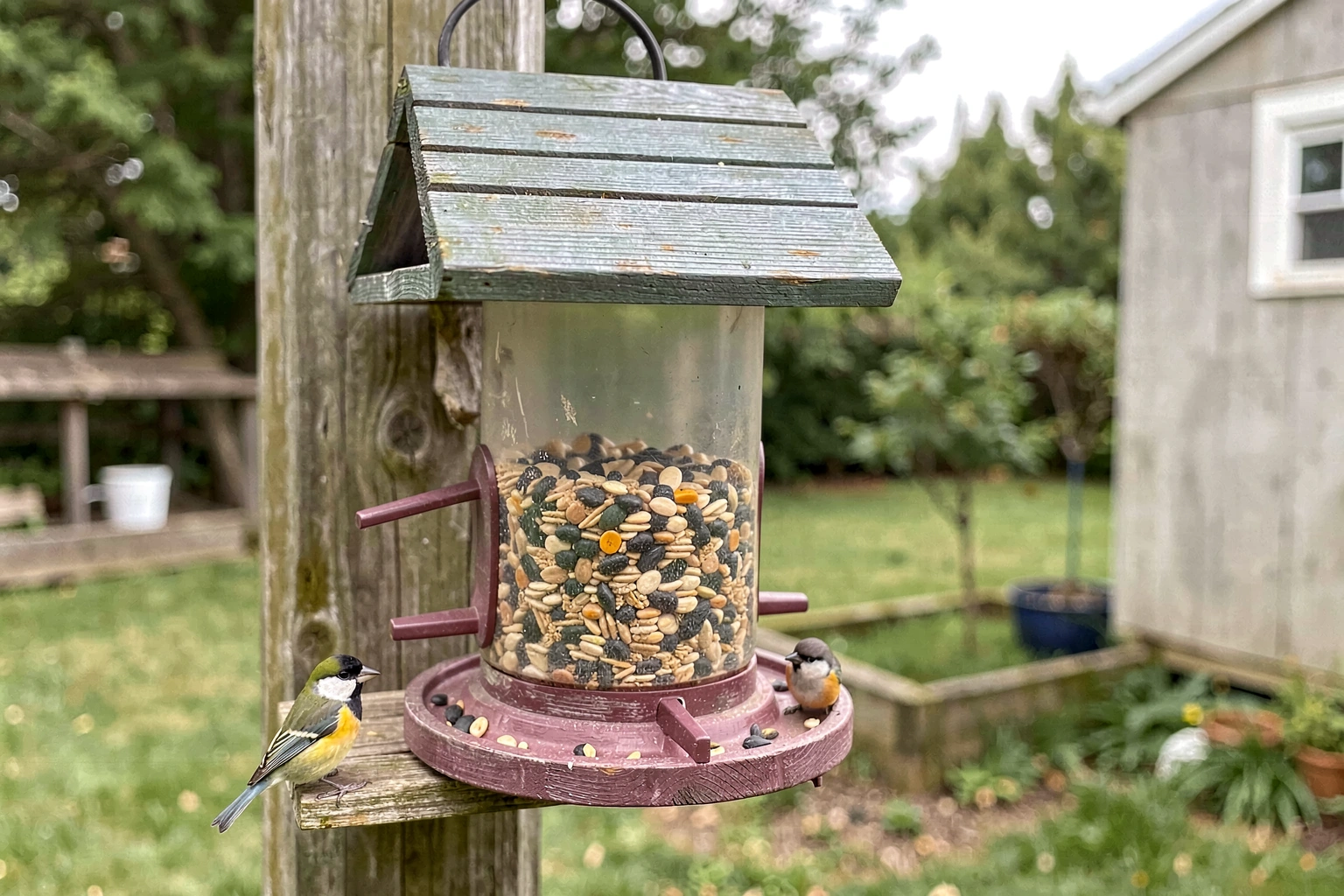
The best bird feeder for beginners is a simple, weatherproof hopper feeder. It holds a decent amount of seed, works with the most common seed types, attracts the widest variety of backyard birds, and is easy enough to fill and clean that you'll actually keep up with it. If you want to get started today, grab a mid-size hopper feeder, a bag of black oil sunflower seed, and a pole or hanging hook. That's genuinely all you need.
Best Bird Feeder for Beginners: A Practical Setup Guide
Why a hopper feeder is the right starting point
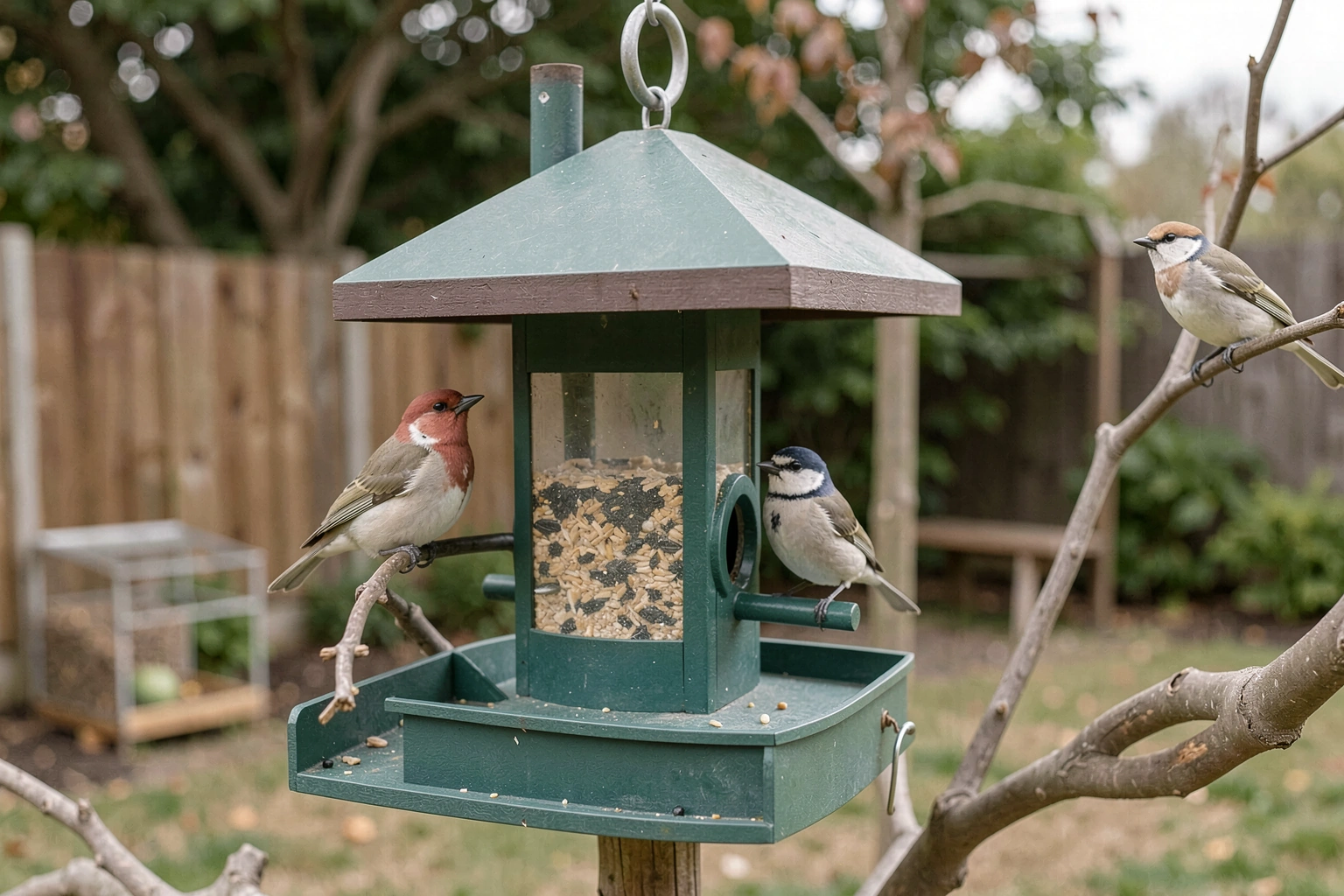
A hopper feeder is basically a seed reservoir with a roof and a tray or ledge where birds land and eat. The roof keeps rain off the seed, the tray catches spillage, and the open design lets multiple birds feed at once. Cardinals, chickadees, nuthatches, sparrows, finches, and juncos all use them comfortably. That broad appeal is the main reason hoppers are the go-to recommendation for anyone just starting out.
The other reason hoppers work well for beginners is that they're forgiving. You don't need to match a specific seed to a narrow port size the way you do with tube feeders. You don't need to worry about seed getting waterlogged the way you do with open platform feeders. A decent hopper with a sloped roof and drainage holes in the tray handles most weather conditions without you having to think about it much.
How the main feeder types actually compare
Before you commit, it helps to know what you're choosing between. There are four feeder types you'll run into most often, and each has a real personality.
| Feeder Type | Bird Appeal | Maintenance | Best Seed | Capacity | Best For | Main Downside |
|---|---|---|---|---|---|---|
| Hopper | Broadest (cardinals, chickadees, finches, nuthatches, sparrows) | Low to moderate | Sunflower, mixed, safflower | 2 to 8 lbs | Most beginners | Squirrels love them |
| Tube | Moderate (finches, chickadees, nuthatches) | Moderate (narrow interior) | Nyjer or small sunflower chips | 1 to 3 lbs | Second feeder for finches | Port size limits seed options |
| Platform | Highest variety (doves, towhees, ground sparrows) | High (needs cleaning every few days in wet weather) | Mixed seed, sunflower | Varies | Supplemental feeder | Exposed to rain and droppings |
| Window | Moderate (close-up species) | Low to moderate | Sunflower chips, mixed | Under 1 lb | Apartments, balconies, limited space | Frequent refills needed |
| Squirrel-resistant | Broad (same as hopper) | Low | Sunflower, mixed | 2 to 5 lbs | High-squirrel areas | Higher upfront cost ($40 to $80) |
Hopper feeders
Hopper feeders are the most versatile option for beginners. They hold anywhere from 2 to 8 pounds of seed depending on the model, work with sunflower, mixed seed, and safflower, and attract the broadest range of species. Cleaning is straightforward: most hoppers open at the top or have removable trays. The main downside is that squirrels love them, so placement matters. A good baffle on the pole or a squirrel-resistant model solves most of that.
Tube feeders
Tube feeders are narrow cylinders with small ports and perches. They're great for finches, chickadees, and nuthatches, and they do a decent job of limiting access for larger, more aggressive birds. The catch is that the ports are sized for specific seeds. A tube feeder with small ports works beautifully with nyjer (thistle) for goldfinches, but it won't dispense a chunky mixed seed blend. They're also a bit harder to clean thoroughly because of the narrow interior. Tube feeders are a solid second feeder once you've got a hopper going, not the best first choice.
Platform feeders
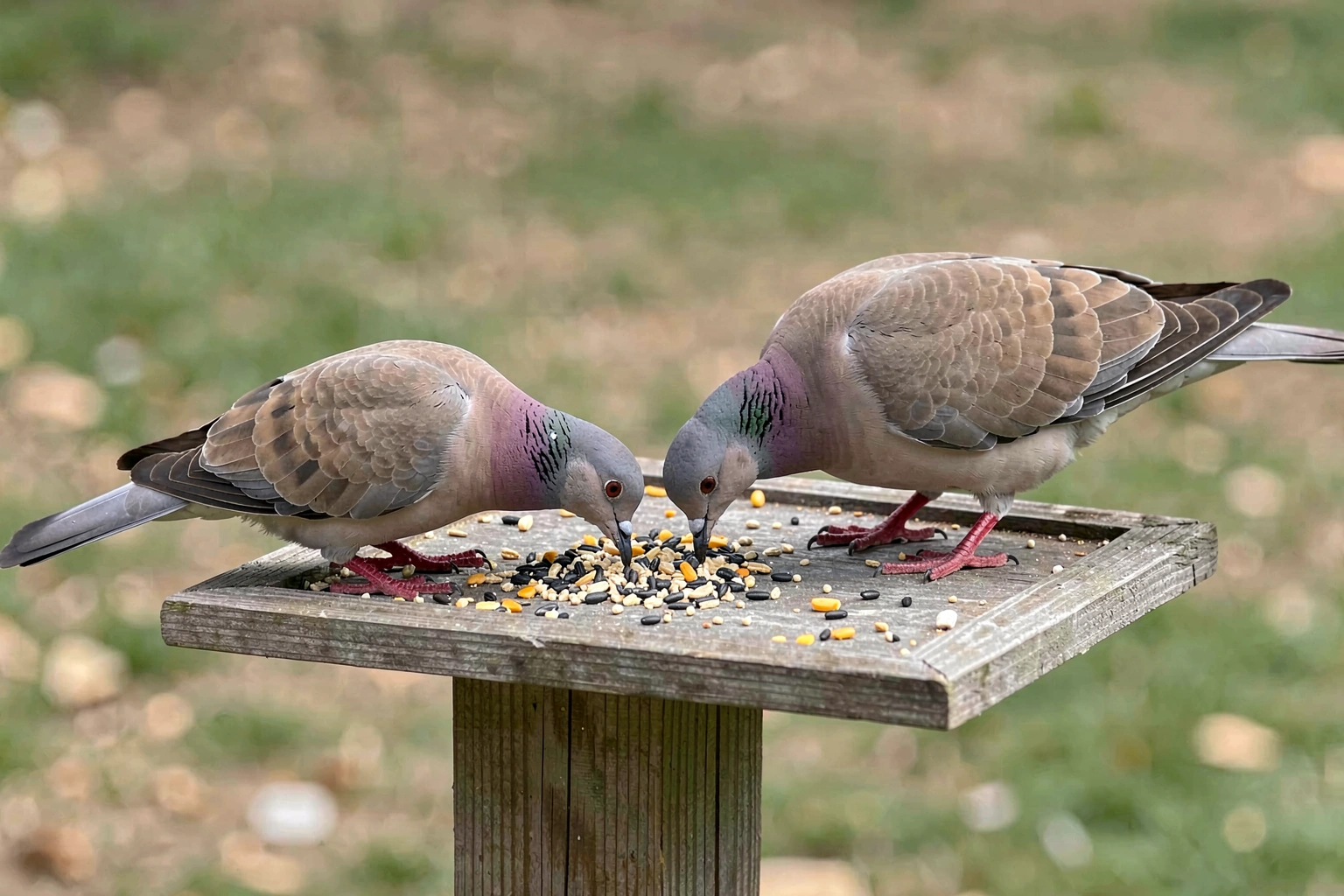
Platform feeders are open trays, sometimes with a roof, sometimes without. They attract the most species of any feeder type because there's no barrier to entry. Mourning doves, towhees, and ground-feeding sparrows that won't touch a hopper will happily visit a platform. The problem is that open platforms expose seed to rain and bird droppings quickly, which means you need to clean them every few days in wet weather or risk mold. They're a great supplemental feeder but a high-maintenance first choice.
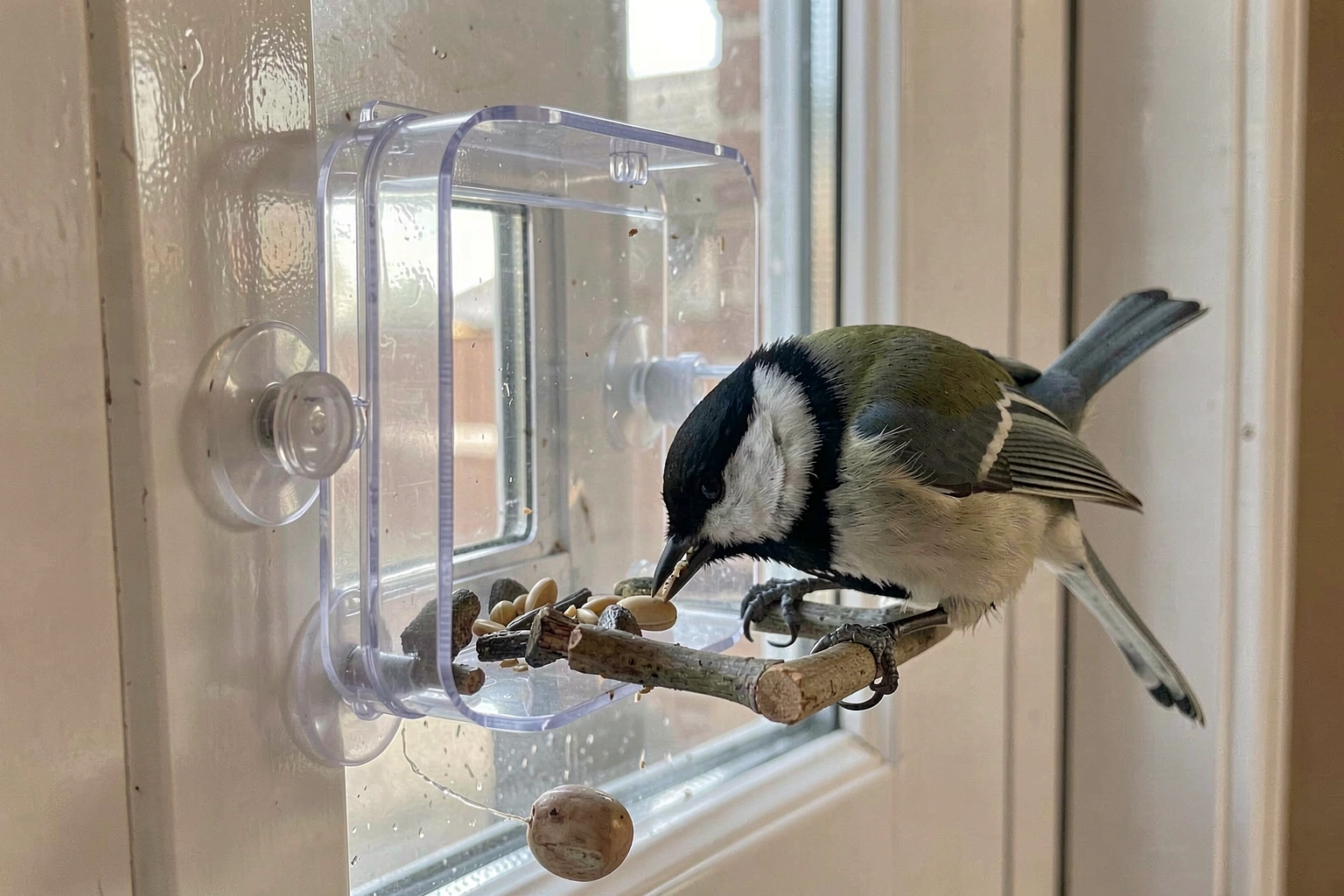
Window feeders
Window feeders attach directly to glass with suction cups. They're perfect for apartments, balconies, or anyone who wants a close-up view without a yard. Capacity is small, usually under a pound of seed, so you'll refill them more often. They work best as a supplemental feeder paired with a hopper in the yard, or as your only option if outdoor space is limited. Look for models with drainage holes and a removable tray for easy cleaning.
Squirrel-resistant feeders
If squirrels are a serious problem in your yard, weight-activated feeders are worth considering. These have perches that close off seed access when something heavier than a bird lands on them. They work well and last a long time, but they cost more upfront, typically $40 to $80 for a quality model. For most beginners, starting with a standard hopper on a pole with a baffle is cheaper and nearly as effective. You can always upgrade later.
What actually matters when you're picking a feeder
There are a few things worth checking before you buy, and a lot of things that sound important but aren't.
| Criteria | What to Look For | Why It Matters |
|---|---|---|
| Capacity | 3 to 5 lbs | Reduces refill frequency without letting seed go stale |
| Material | UV-stabilized polycarbonate or powder-coated metal | Resists cracking, warping, and rust over time |
| Drainage | Drainage holes in seed tray | Prevents wet seed from turning moldy |
| Cleaning access | Fully opens, removable tray, no fixed interior corners | Makes the 10-minute clean actually doable |
| Seed compatibility | Works with black oil sunflower or standard mixed blend | Broadest bird appeal, widest availability |
| Mounting options | Supports hanging and pole mounting | Flexibility for different yard setups |
| Price | $20 to $45 for entry-level | Below $20 risks thin plastic; above $50 adds squirrel resistance or premium materials |
Three questions to pick the right feeder for your situation
You don't need to overthink this. Answer these three questions and you'll know exactly what to buy.
- Do you have outdoor yard space, or are you working with a balcony or window? If you have a yard or porch with a railing or post, go with a hopper feeder on a pole or hanging hook. If you're in an apartment or have only a window, start with a window feeder and add a small hopper on a balcony railing mount if space allows.
- How much time do you want to spend on maintenance? If you want minimal fuss, stick with a hopper and black oil sunflower seed. If you don't mind checking the feeder every couple of days, a platform feeder gives you more species variety. If you want something in between, a hopper with a seed tray covers both.
- Are squirrels a major problem in your area? If yes, either buy a weight-activated feeder or plan to mount your hopper on a smooth metal pole with a baffle at least 4 to 5 feet off the ground and at least 10 feet from any tree or fence. If squirrels aren't a big issue yet, a standard hopper is fine to start.
The seed question is simpler than it looks
Black oil sunflower seed is the single best seed to start with. It attracts more species than any other seed type, including cardinals, chickadees, nuthatches, finches, sparrows, and woodpeckers. The shells are thin enough for small birds to crack, and the seed is high in fat and protein, which birds need year-round. It's also widely available at hardware stores, garden centers, and big-box stores for roughly $15 to $25 for a 20-pound bag.
Sunflower chips (hulled sunflower) are worth considering if you want to reduce shell mess under the feeder. They cost a bit more but eliminate the pile of hulls that builds up over time. A standard mixed seed blend works fine too, though cheaper mixes often include filler seeds like milo or wheat that most birds ignore and that can go bad faster. If you buy a mix, look for one that's mostly sunflower, safflower, and peanut pieces.
Nyjer (thistle) seed is excellent for goldfinches and pine siskins, but it requires a tube feeder with small ports and it's more expensive per pound. Save it for when you want to add a second feeder specifically for finches. For your first feeder, sunflower is the right call.
| Seed Type | Best Feeder | Birds Attracted | Approx. Cost | Notes |
|---|---|---|---|---|
| Black oil sunflower | Hopper, platform | Cardinals, chickadees, nuthatches, finches, sparrows, woodpeckers | $15 to $25 / 20 lbs | Best all-around starter seed |
| Sunflower chips (hulled) | Hopper, platform, tube | Same as above, plus smaller birds | Slightly more than whole | No shell mess; turns over faster |
| Mixed seed (quality) | Hopper, platform | Broad variety | Varies | Look for sunflower, safflower, peanut pieces; avoid milo-heavy mixes |
| Nyjer (thistle) | Tube (small ports) | Goldfinches, pine siskins | Higher per pound | Add as a second feeder for finches |
| Safflower | Hopper | Cardinals, chickadees, doves | Similar to sunflower | Squirrels and starlings tend to avoid it |
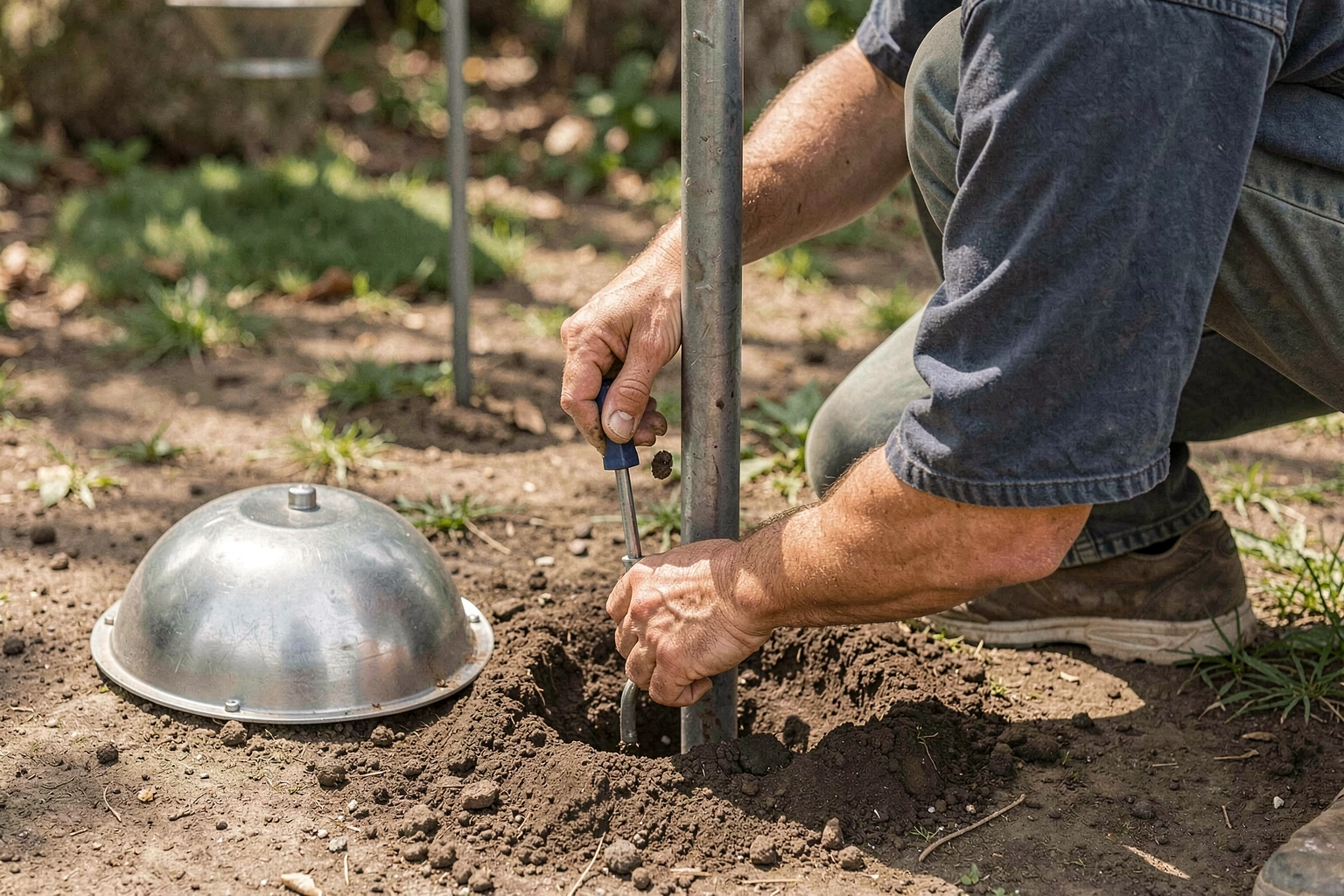
Getting your feeder up in about 15 minutes
Setup really is quick once you have everything in hand. Here's the order that works best.
- Choose your spot. Place the feeder at least 10 feet from dense shrubs or trees where predators can hide, but within 10 to 15 feet of some cover (a bush, hedge, or tree) so birds feel safe flying in. Height should be 5 to 6 feet off the ground for a pole-mounted feeder.
- Install your mounting hardware. If you're using a shepherd's hook or pole, push it firmly into the ground so it doesn't wobble. If you're hanging from a branch or overhang, use a sturdy S-hook rated for at least a few pounds. For window feeders, clean the glass with rubbing alcohol first so the suction cups grip properly.
- Add a baffle if you have one. Slide a dome or cylinder baffle onto the pole below the feeder before hanging it. This is the single most effective squirrel deterrent you can add.
- Fill the feeder about two-thirds full. Don't pack it to the brim on the first fill. You want to see how fast birds go through it before committing to a full load. Fresh seed is more attractive than seed that's been sitting.
- Step back and give it time. Birds need a few days to a week or two to discover a new feeder, especially if it's in a new location. Be patient. Once one bird finds it, others follow quickly.
A note on window placement and bird safety
Window strikes are a real concern. Birds can't always see glass and will fly into it at speed. The safest placement is either very close to the window (within 3 feet, so birds don't build up speed before impact) or far enough away (more than 30 feet) that they have time to see the glass. Window feeders attached directly to the glass are actually one of the safer options because birds approach slowly and at close range. If you hang a feeder in the middle distance from a window, consider adding window decals or tape strips to break up the reflection.
What to expect in the first two to four weeks
| Week | What to Expect | Action |
|---|---|---|
| Week 1 | Little to no activity; birds are cautious about new objects | Leave feeder alone, keep it filled, sprinkle a handful of seed on the ground below |
| Week 2 | First regular visitors appear (chickadees, house sparrows typically first) | Note arrival times; check tray after rain |
| Week 3 to 4 | Cardinals, nuthatches, and additional species follow | Expect 5 to 8 species if placement and seed are good; watch for squirrel or nocturnal pest activity if seed disappears fast |
Success at this stage looks like: birds visiting at predictable times (usually morning and late afternoon), seed being consumed at a steady rate, and no seed sitting wet or clumped in the tray.
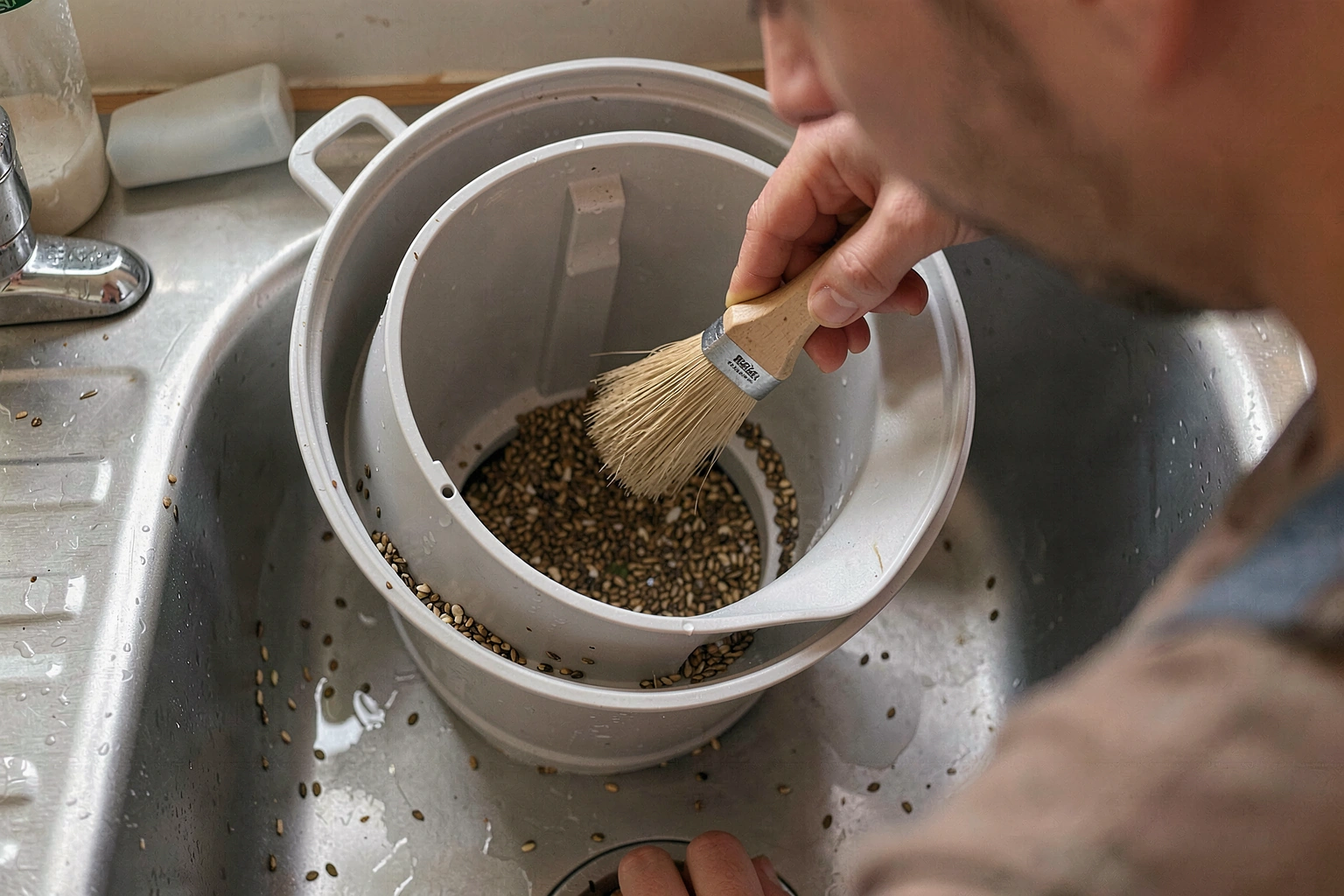
Keeping it clean without making it a chore
Cleaning is the part most beginners skip, and it's the part that matters most for bird health. Wet seed and bird droppings create conditions for mold, bacteria, and disease that can harm the birds you're trying to help. The good news is that a basic cleaning routine takes about 10 minutes and only needs to happen every one to two weeks under normal conditions, or more often in hot, humid weather.
The standard cleaning method is to empty the feeder completely, scrub all surfaces with a stiff brush and a diluted bleach solution (roughly one part bleach to nine parts water), rinse thoroughly, and let it air dry completely before refilling. This is important: putting seed into a damp feeder is one of the fastest ways to grow mold. If your feeder has dishwasher-safe components, that's even easier. Just run them through on a hot cycle.
| Condition | Tray Check Frequency | Full Clean Frequency |
|---|---|---|
| Normal weather | After each rain | Every 1 to 2 weeks |
| Hot and humid climate | Every 2 to 3 days | Weekly |
| Rainy stretches | Every 2 to 3 days | Every 1 to 2 weeks or sooner if mold appears |
When to repair versus when to just replace it
A good hopper feeder should last three to five years with regular cleaning. Signs it's time to replace rather than repair: cracks in the seed reservoir that let moisture in, a roof that no longer sheds water properly, ports or perches that have broken off, or any surface that you can't get fully clean anymore. Mold that's worked into porous wood or cracked plastic is very hard to eliminate and can keep reinfecting seed. At that point, a new $25 feeder is the right call.
A few mistakes that are easy to avoid
| Mistake | Why It's a Problem | Quick Fix |
|---|---|---|
| Overfilling the feeder | Traps moisture; fresh seed buried under stale seed | Fill two-thirds full; top up only after birds work through it |
| Wrong seed for feeder type | Chunky mix jams tube ports; nyjer falls through hopper trays | Match seed to feeder design before buying |
| Feeder placed in the open with no nearby cover | Birds feel exposed and won't land | Position 10 to 15 feet from a bush, hedge, or tree |
| Skipping cleaning | Wet, moldy seed harms birds and drives them away | Quick tray check after rain; full clean every 1 to 2 weeks |
| Moving the feeder too soon | Resets the discovery clock every time | Wait at least 2 full weeks before changing location |
| Cheap seed with lots of filler | Milo, oats, and wheat pile up, attract pests, and go bad | Buy a sunflower-heavy mix or straight black oil sunflower |
Your starter shopping list
Here's everything you need to get started, split into what to buy now and what to add later once you know what birds are visiting and what you enjoy about the hobby.
| Item | Details | Approx. Cost | Priority |
|---|---|---|---|
| Mid-size hopper feeder | UV-stabilized polycarbonate or powder-coated metal, roof, drainage tray, easy-open top | $20 to $45 | Buy now |
| Black oil sunflower seed | 20-pound bag | $15 to $25 | Buy now |
| Shepherd's hook or pole mount with squirrel baffle | Basic setup | $15 to $30 | Buy now |
| Stiff cleaning brush | Sized for feeder interior | $5 to $10 | Buy now |
| Window feeder | For close-up views; especially useful in winter | Varies | Add later |
| Tube feeder with nyjer seed | For goldfinches or pine siskins | Varies | Add later |
| Suet cage | For woodpeckers in fall and winter | Varies | Add later |
| Small platform feeder or ground tray | For mourning doves and towhees | Varies | Add later |
| Weight-activated squirrel-resistant feeder | If squirrels become a persistent problem | $40 to $80 | Add later |
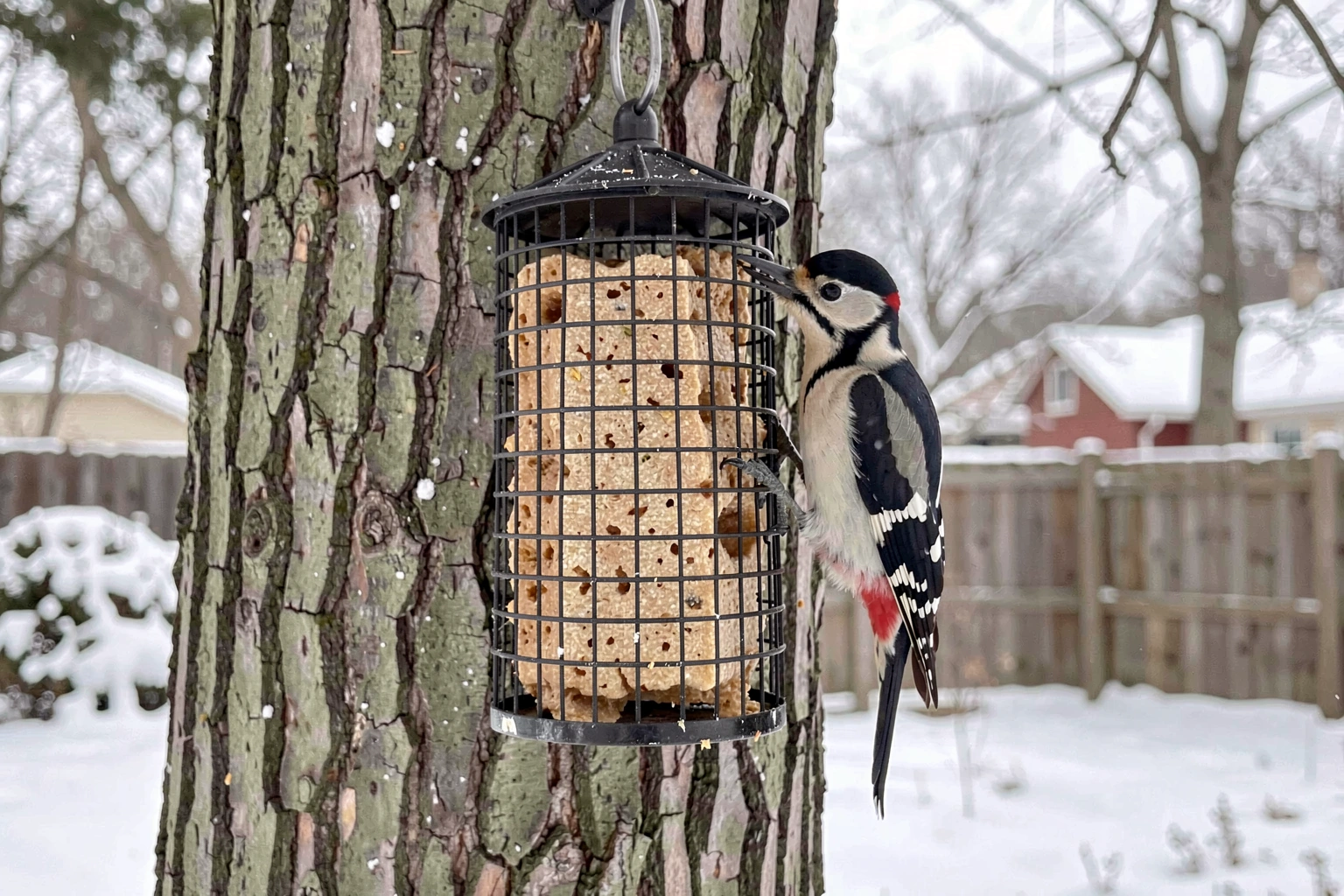
Adjusting for seasons and your region
Black oil sunflower works year-round in most of North America, so you don't need to overthink seasonal seed changes as a beginner. That said, a few adjustments are worth knowing. In winter, birds need more fat to stay warm, so adding a suet cake to a simple suet cage is one of the easiest upgrades you can make. In spring and summer, seed can go bad faster in heat and humidity, so check the tray more often and consider smaller fills so seed turns over quickly.
Regional differences matter more for which species you'll see than for which feeder to buy. In the Pacific Northwest, you might get Steller's jays and varied thrushes. In the Southeast, you'll likely see Carolina wrens and tufted titmice. In the Midwest and East, cardinals and blue jays are common visitors. The hopper feeder with sunflower seed works across all of these regions, which is exactly why it's the universal starting point.
Where to go from here
Once your feeder is up and birds are visiting regularly, the hobby tends to grow naturally. You'll notice which species show up most often and start wondering how to attract more of them. That's when adding a second feeder type, experimenting with different seeds, or setting up a birdbath makes sense. A birdbath, by the way, is often more effective at attracting new species than adding a second feeder. Birds need water year-round, and a clean, shallow bath with moving water is irresistible to species that might never touch a seed feeder.
Keep a simple log of what you see and when. Even a notes app on your phone works fine. After a month, you'll have a clear picture of your local bird community and a much better sense of what to add next. The Cornell Lab of Ornithology's Merlin app is worth downloading for bird ID help, and their eBird platform lets you log sightings and see what other birders in your area are spotting. Both are free and genuinely useful once you're past the first few weeks.
The bottom line is this: don't wait until you've researched every feeder on the market. A simple hopper feeder, a bag of sunflower seed, and a decent pole is enough to get started today. The birds will show you what to do next.
FAQ
What is the best beginner-friendly feeder to buy today and why?
Choose a mid-size, weatherproof hopper with a simple design that protects seed from rain and spills. It supports multiple seed types, is easy to fill and clean, and suits a wide range of backyard birds. Start with a bag of black oil sunflower seed and mount the feeder on a sturdy pole or hook for reliable, low-maintenance use.
If I have a small space (balcony or apartment), what is the minimal starter kit I should consider?
Opt for a compact window feeder for close-up viewing and, if space allows, add a small hopper on a balcony railing. Prioritize models with a drainage tray and easy cleaning. Keep seed types simple at first to limit mess, and position the window feeder where birds can see it from inside.
How should I set up and place the feeder so I’m ready in about 15 minutes?
Choose a spot about 10–15 feet from dense vegetation and 5–6 feet high for a pole-mounted feeder. Install the mounting hardware securely, optionally add a simple baffle below the feeder, fill to a comfortable level, and step back to observe. Give birds a few days to discover it before making changes.
How often and how should I clean the feeder to keep birds healthy?
In normal conditions, clean the feeder every 1–2 weeks; in hot, humid weather, aim for once a week. Empty the feeder, scrub with a stiff brush, use a mild bleach solution (about 1 part bleach to 9 parts water) if needed, rinse thoroughly, and let it dry completely before refilling. If the feeder has dishwasher-safe parts, you can run those on a hot cycle.
How do I choose seed to maximize variety and minimize waste?
Start with black oil sunflower seed for broad appeal. If shell mess is a concern, consider hulled sunflower. Avoid low-cost mixes with filler seeds like milo or wheat. For finches later on, plan a second feeder that can use nyjer seed. Choose seeds that are readily available in your area to simplify purchases.
What practical steps can I take to deter squirrels without complicating things?
Mount the feeder on a sturdy pole and use a baffle placed 4–5 feet below the feeder, with the top well clear of branches. Keep the feeder at least 10 feet from trees or structures that squirrels can jump from, and consider a weight-activated perch or a purpose-built squirrel-resistant model if problems persist.
What signs indicate I should repair or replace the feeder?
Look for cracks in the seed reservoir, a roof that no longer sheds water, broken ports or perches, or mold that can’t be cleaned out. If any of these occur, especially persistent mold, budgeting for a replacement (roughly in the ballpark of a typical entry-level model) is sensible to protect bird health.
What does a successful first 2–4 weeks look like, and how should I measure progress?
Bird visits should become regular within a week, with multiple species showing up by week four. Track which species visit, approximate feeding times, and how quickly seed disappears. A simple log on your phone or a small notebook helps you spot patterns and decide what to add next, such as a second feeder type or a different seed.
Next Article
How to Start Bird Feeding: A Beginner's Practical Guide
Learn exactly what feeder, seed, and placement setup attracts backyard birds fast, plus maintenance tips and easy ways