Introduction
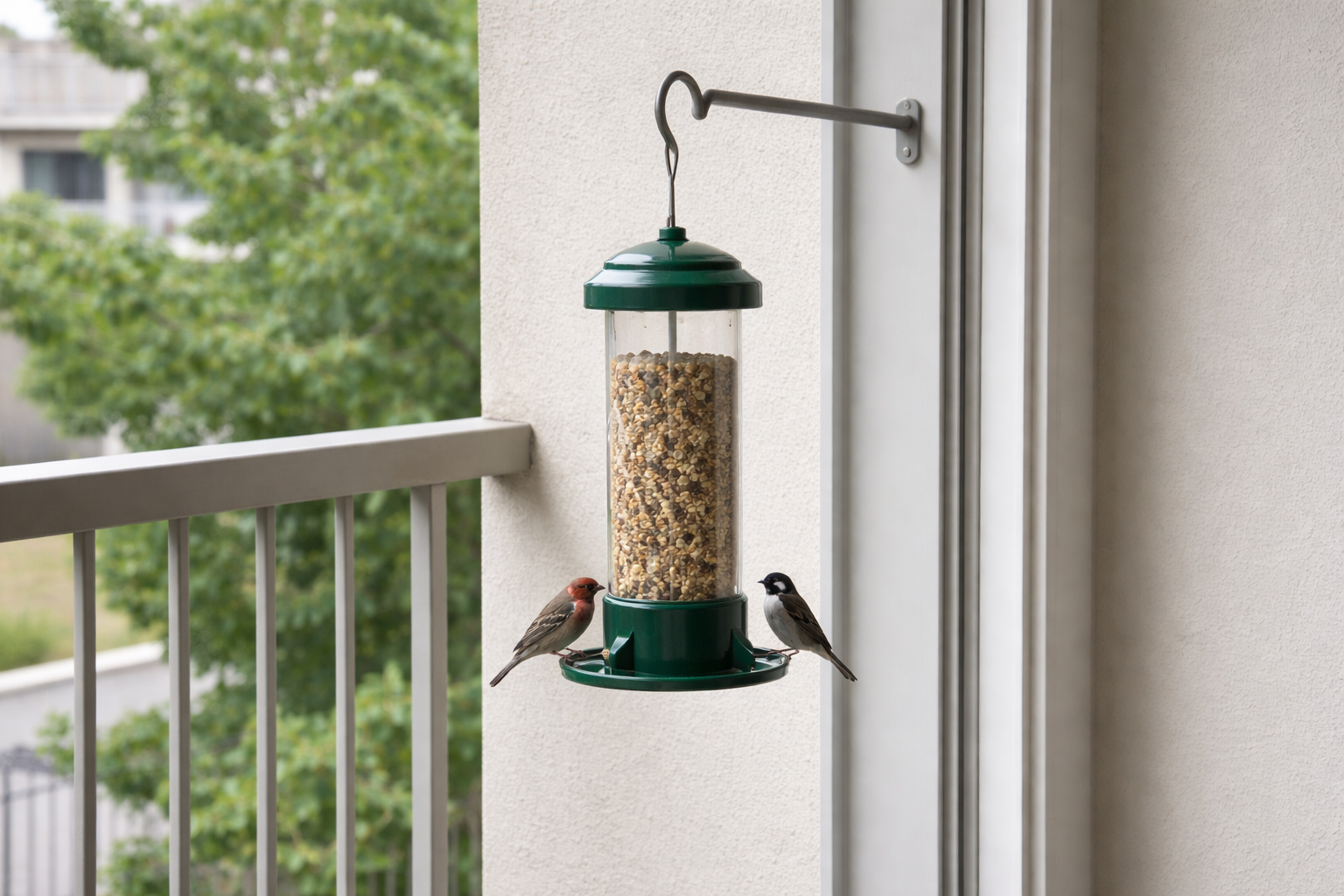
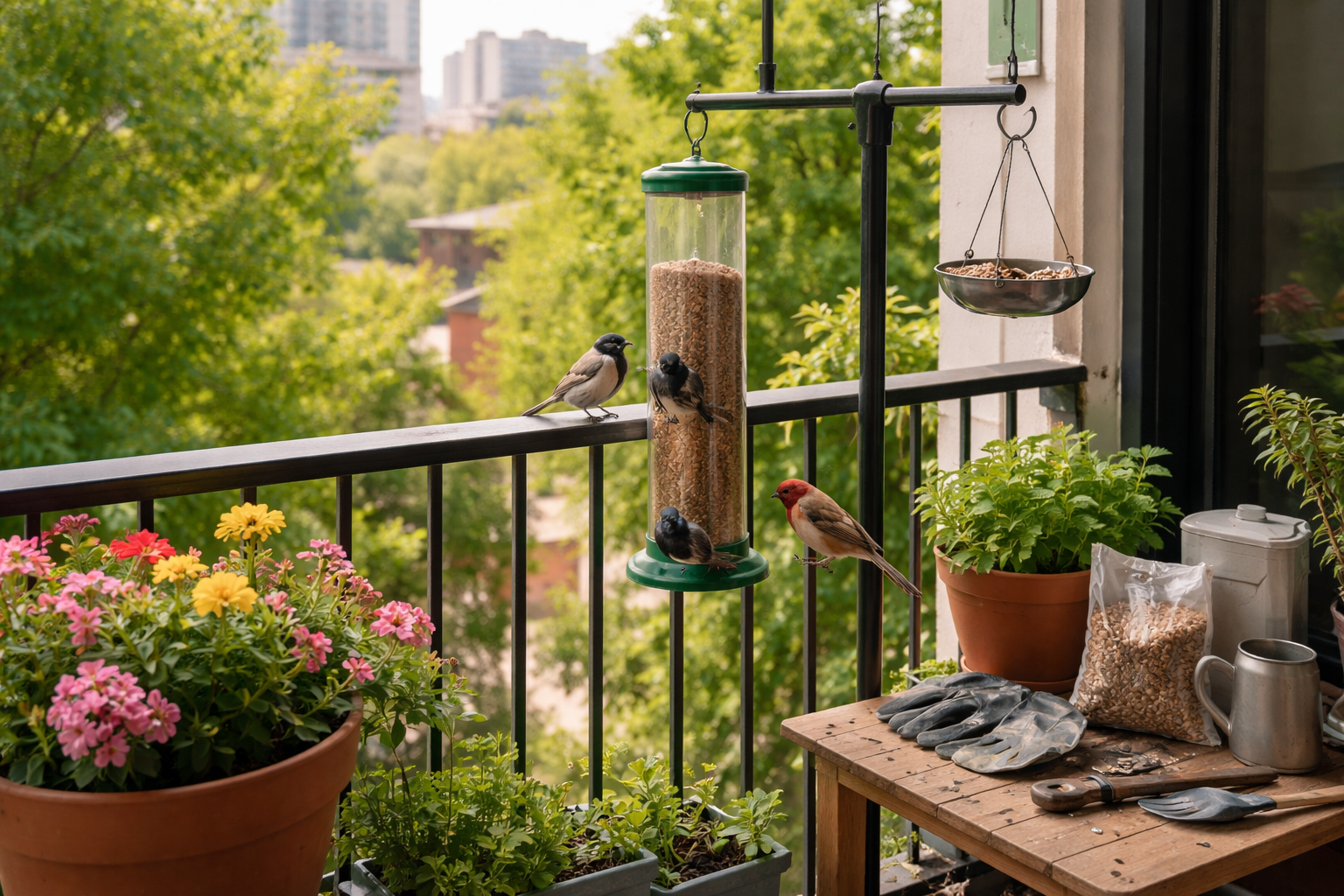
Urban balconies offer a surprisingly active window into natural life, but they come with constraints. Space is limited, weather exposure is real, and neighbor considerations matter. The goal of balcony feeding is not to overwhelm a tiny outdoor space with equipment, but to create reliable, clean, and safe opportunities for small to medium birds to visit. This guide translates general feeding wisdom into balcony specific decisions, covering feeder types, mounting methods, seed choices, maintenance routines, and a practical shortlist of options that balance cost, durability, and ease of use. The result is a practical playbook you can follow from day one to attract birds without turning your balcony into a mess or a pest trap.
Balcony feeder buying guide
Choosing the right feeder for a balcony means balancing space, safety, and reliability. The following components matter most when evaluating options: feeder design, mounting compatibility, weather resistance, ease of cleaning, drainage features, and pest deterrence.
Feeder types suited to balcony space
Different feeder types bring different advantages in compact outdoor areas. The table below summarizes where each design shines and where it can present challenges.
| Feeder type | What it is | Ideal balcony fit | Pros | Cons |
|---|---|---|---|---|
| Hopper | A sealed seed reservoir with a seed outlet and perch | Medium to large balconies with railing or wall space | Low waste due to gravity feeding, less frequent refills, protective cover | Heavier when full, may require more robust mounting; some models are bulky |
| Tube | Cylindrical seed tubes with perches along the length | Narrow balconies or rail corners | Squirrels deterred by design, compact and modular | Seed cookies can spill from perches, cleaning can be fiddly |
| Tray | Open, shallow bowl with a seed surface | Small balconies or window nooks | Easy to refill, exposes seeds for quick bird recognition | More seed scatter, less weather protection, higher maintenance |
| Platform | Flat feeding surface, often with a roof | Very small balconies or windows | Simple, accessible for birds, good for mixed seed types | Higher wind exposure, more mess |
| Window-mounted | Attaches directly to glass using suction cups or frames | Very small spaces, collectors who want a close view | Direct visibility, easy access for birds, minimal footprint | Vibration from window cleaners or wind; may attract more risk of damage to window area |
| Rail-mounted | Attaches to railings with clamps or adapters | Most common balcony setup | Stable when mounted correctly, easy to install | Rail gaps must align, may limit railing use for other purposes |
Mounting methods and why they matter
Stability is the backbone of a safe balcony feeder. Consider these mounting options in relation to wind exposure, balcony width, and neighbor considerations:
- Rail adapters: Quietly clamp to a railing without drilling. Ensure the adapter has a wide grip and a non-slip pad to protect the railing and reduce wobble.
- Wall brackets: Provide a sturdy anchor point for heavier feeders. Best in sheltered corners away from high wind streams.
- Window suction mounts: Ideal for city-facing windows with minimal footprint, but check window movement and avoid direct contact with bird lanes.
- Freestanding stands: Useful when railing space is already used for seating or planters. Ensure a heavy base and a wind-stable pin or stake.
Whichever mounting method you choose, ensure the feeder is level, securely fastened, and positioned at a height that minimizes accidental contact with hands and feet from neighbors and passersby. A well-mounted feeder reduces noise, movement, and seed waste that can irritate neighbors and invite pests.
Materials, weight, and weather resilience
Urban balconies face sun, rain, wind, and temperature swings. Look for feeders that offer:
- Weatherproof materials: UV-resistant plastics or powder-coated metal to reduce fading and rust.
- Easy cleaning: Detachable reservoirs and removable perches simplify routine sanitation.
- Drainage: Built-in drainage holes or a catch tray to prevent pooling water and mold.
- Anti-corrosion features: Stainless steel or coated metals to withstand humidity.
Weight capacity matters if your balcony has wind exposure or if you need to fill a feeder on a light stand. Check the full-fill weight and the mass of the feeder when loaded, then compare it to the strength of your mounting system. A heavier feeder on a light railing is a recipe for wobble and spills.
Safety, cleaning, and neighbor considerations
A balcony feeder should support safe bird visits, minimize mess, and respect shared spaces. Key features to look for:
- Anti-tip design: A feeder that resists tipping when birds land reduces seed scatter and ensures birds stay on the perch.
- Quiet operation: Smooth hinges and quiet latches reduce noise that could disturb neighbors.
- Cleanability: Detachable reservoirs, accessible seed paths, and built-in drainage minimize mold risk and maintenance time.
- Pest deterrence: Perch and seed presentation that reduces seed spillage helps deter squirrels and other pests. Fail-safe features like weight-sensitive perches can prevent overflow.
- Neighbor etiquette: Choose modest, well-finished designs with neutral colors that blend into balcony décor and avoid noisy, clattering parts during wind.
How to choose seeds and attractants
Seed selection and attractants influence who visits your balcony and how often. The aim is to provide reliable calories with minimal waste while avoiding pest issues and nuisance behavior.
Seed options for urban birds
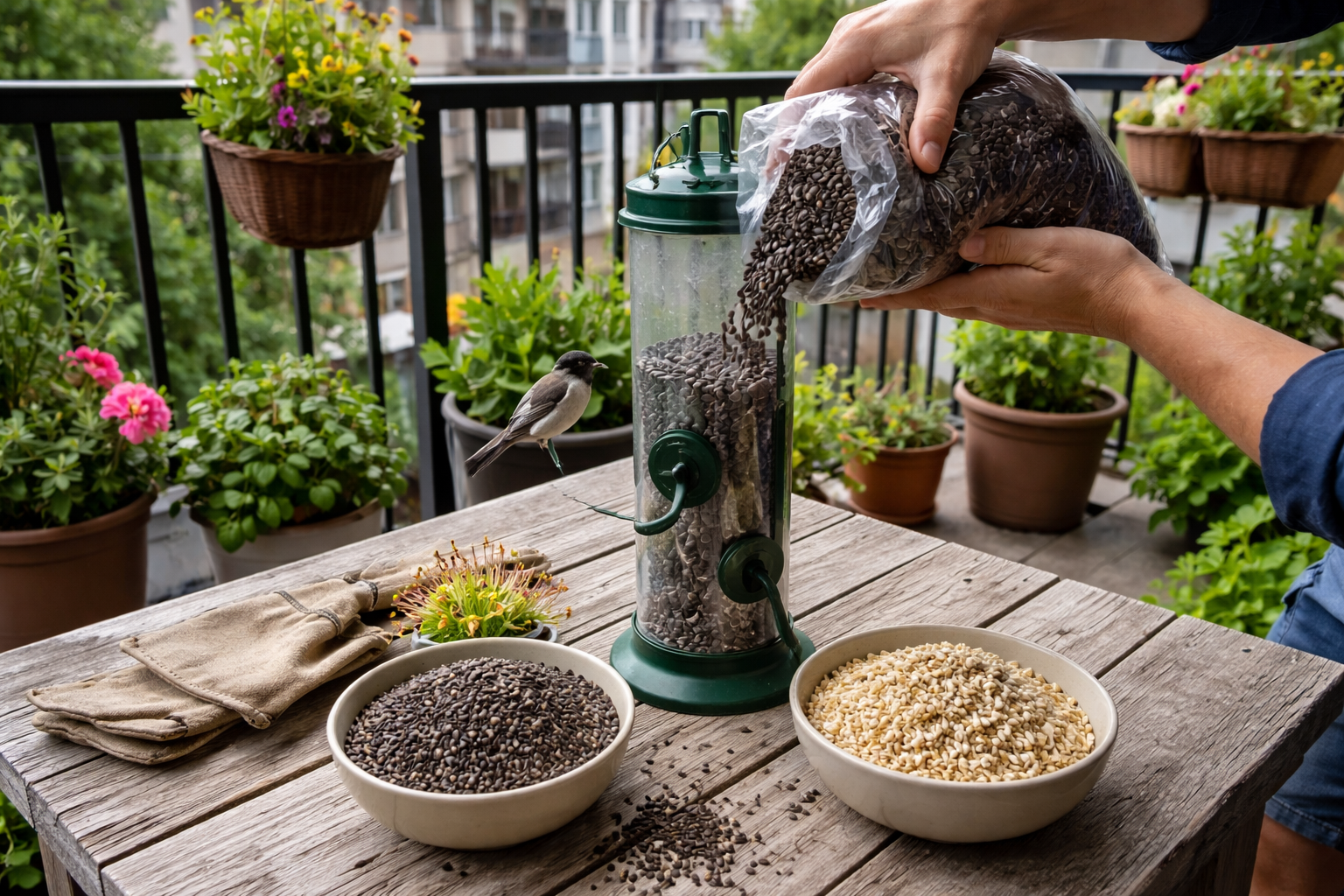
Urban birds respond to a mix of seed types, with certain varieties appealing to a broad range of species:
- Nyjer (thistle seed): Very small, high-energy, favored by finches. Use in specialized thistle socks or small-mouthed feeders to prevent waste.
- Black oil sunflower: A versatile, widely loved seed that fits many feeder designs and attracts a variety of small to mid-sized birds. It has a higher fat content and is more forgiving for beginners.
- Safflower: Less attractive to many pests like house sparrows and squirrels, making it a good option for pest control, though some birds may pass it up.
Nectar feeders can attract hummingbirds and other nectar-loving species in appropriate climates. If nectar is used, ensure bottles are cleaned regularly and replaced with proper sugar-water ratios to prevent fermentation and mold.
Nectar versus seed feeders and seasonal shifts
Nectar feeders are best in regions and seasons where hummingbirds are common. Seed feeders support a broad spectrum of urban birds year-round. In winter, choose mixes that provide fat-rich energy reserves, such as black oil sunflower, coupled with safflower to reduce pest pressure. Summer mixes can tolerate Nyjer and mixed seeds better if drainage is adequate and the feeder is kept clean.
Seasonal adjustments and attractants
Rotate materials to align with bird presence and seasonal foraging patterns. For example:
- Spring: Finches and chickadees are active; Nyjer and sunflower blends work well.
- Summer: A mixed seed approach with safflower for pest control helps maintain interest while reducing waste in the heat.
- Fall and winter: Higher calorie seeds, larger seed capacity for longer intervals, and robust cleaning routines become crucial when birds rely on feeders more heavily.
Pest deterrence and hygiene strategies
Deterrence hinges on preventing seed spillage and making feeders less appealing to non-targets.
- Perches with narrow rims limit seed scattering while still allowing small birds comfortable access.
- Tray designs with built-in drainage prevent pooling water that can attract insects.
- Regular cleaning reduces mold and bacterial growth and improves bird health.
- Periodic seed rotation and the use of safflower or safflower-rich blends helps curb unwanted pests without compromising bird visits.
Safety, hygiene, and neighbor considerations
Balcony feeding should be a joy, not a source of conflict. Emphasize safety for birds and people, while keeping the space clean and respectful of neighbors.
Bird safety near windows and feeders
Position feeders close enough for birds to see and reach, but far enough from windows to reduce collision risk. A distance of about 3 to 10 feet from windows minimizes window strikes while still providing birds a good view. If a window is a constant perch, window-mounted feeders with protective guards can reduce impact.
Anti-squirrel and predator deterrence
Squirrels and predators are common on urban balconies. Consider features such as:
- Squirrel-resistant designs: Weight-activated perches readable by claws that deter the heavier pests.
- Protected seed pathways: Seals and caps that limit access to seeds, reducing waste.
- Perch design: Perches placed away from the feeder body to discourage perched pests from feeding directly on the reservoir.
Cleaning and upkeep for hygiene
A simple cleaning cadence keeps birds healthy and your balcony tidy. Suggested frequency:
- Weekly: Quick wipe of the feeding surface, check for moisture buildup in the reservoir.
- Biweekly: Full disassembly and thorough cleaning with mild detergent, rinse until no residue remains, and air dry completely before refilling.
- Seasonally: Deep cleaning at the start of each season, focusing on seal integrity, drainage paths, and hinge operation.
Balcony cleanliness and city considerations
Seed scatter can attract pests and create neighborhood issues. Use feeding trays, seed guards, and drainage features to minimize waste. Keep seed spills contained with a catch tray and position feeders so that any residue is directed away from walls and other fixtures. Always check local building rules or HOA guidelines, as many apartments have rules about bird feeding or balcony use.
Product shortlist and evaluation framework
A practical buying guide uses a clear framework to compare options. The following is a representative shortlist by category, focusing on suitability for balconies, ease of use, and maintenance. Each entry includes a concise rationale and ideal balcony scenario. The table below presents key attributes to help you compare at a glance.
| Category | Representative design | Seed capacity and fill | Mounting compatibility | Weather resilience | Cleaning ease | Ideal balcony scenario | Pros | Cons |
|---|---|---|---|---|---|---|---|---|
| Budget | Rail-mounted hopper with protective hood | 0.5–1.5 kg per fill | Railing clamps, small footprint | Moderate; plastic body with UV protection | Easy to disassemble, lower cost | Small balconies with rail space | Low cost, straightforward to use | Limited durability in strong wind, modest capacity |
| Mid-range | Tube feeder with integrated seed tray | 1.0–2.0 kg per fill | Wall brackets or rail adapters | Good; metal components, weather-coated | Moderate; some disassembly needed | Medium balconies with mixed bird visits | Better pest deterrence, versatile mounting | Slightly higher maintenance and price |
| Premium | Gravity-fed hopper with window/railing hybrid | 1.5–3.0 kg per fill | Window mounts and rail adapters | Excellent: UV, rust-resistant | Easy; designed for frequent cleaning | High-traffic urban balconies near windows | Low waste, premium aesthetics, durability | Higher upfront cost, heavier to install |
Shortlist evaluation framework and scoring criteria
To decide how well a feeder fits a balcony, use the following criteria and a simple scoring system on a 1, 5 scale:
- Space efficiency: how it fits the balcony footprint and available railing or wall space.
- Stability: resistance to wind and vibration in your locale.
- Fill capacity: how long between refills without overfilling waste.
- Cleaning and maintenance: ease and frequency of cleaning tasks.
- Pest deterrence: effectiveness at reducing seed scatter and squirrel access.
- Visibility and bird accessibility: how easy it is for birds to see and access the feeder, while keeping it away from windows where feasible.
- Cost and warranty: total cost of ownership including parts and replacement parts, plus warranty coverage.
Each category can be scored, then weights can be applied to reflect personal priorities, such as prioritizing least maintenance or best pest deterrence for an urban setting.
Setup and maintenance checklists
A practical balcony feeding routine combines simple steps with a predictable cadence. The steps below are designed to be easy to follow and adaptable to different balcony sizes and climates.
Installation steps
- Inspect the mounting surface: ensure the railing or wall is clean, undamaged, and capable of supporting the feeder.
- Choose a mounting option that provides stability against gusts and does not compromise the railing or wall integrity.
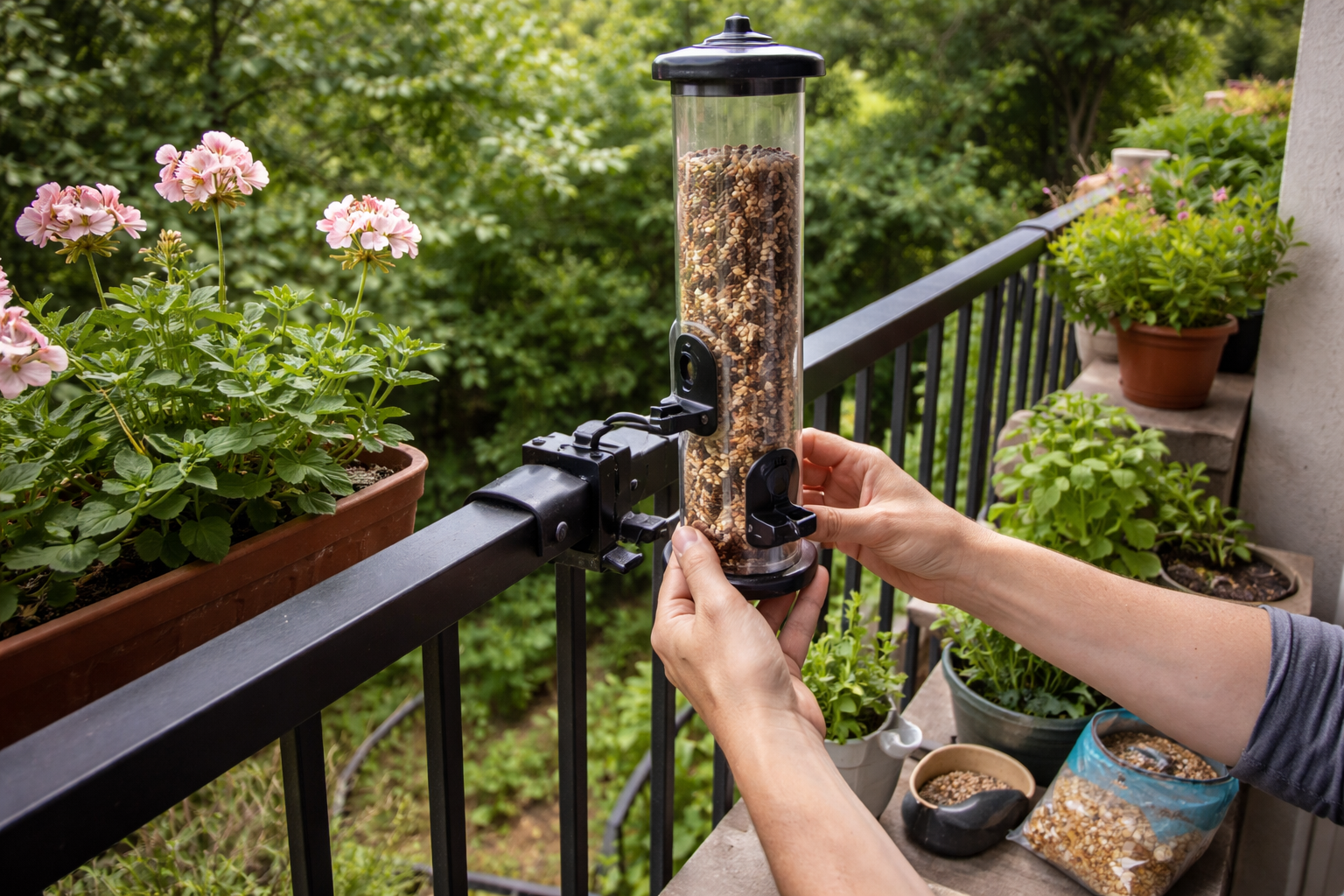
- Attach the feeder using manufacturer instructions, ensuring all clamps or brackets are snug without overtightening.
- Fill with the appropriate seed mix and verify that seeds flow freely through the feeder mechanism with a gentle shake.
- Position the feeder at an accessible height for refilling and cleaning, with perches placed to attract desired bird species and minimize window collisions.
- Observe birds for a few days to confirm visibility and access, adjusting as needed for optimal use.
Cleaning cadence
- Weekly quick-clean: remove any leftover seed, wipe surfaces with a mild soap solution, rinse, and dry before refilling.
- Biweekly thorough cleaning: take the feeder apart as allowed by design, wash components with warm water and a soft brush, ensure no soap residue remains, dry fully, and reassemble.
- Seasonal deep-clean: inspect seals, gaskets, and drainage paths; replace worn parts; update seed blends in line with seasonal needs.
Mess-minimization tricks
- Use a seed tray or guard to catch spillage and direct it into a catchment that you can empty regularly.
- Place feeders away from walls to reduce seed buildup on surfaces and minimize moisture.
- Keep seed blends consistent and avoid overly crumbly seeds that scatter easily.
- Regularly prune nearby plants or prune branches that could drop debris onto the feeder to reduce ongoing mess.
Special scenarios and climate considerations
Urban balconies experience varied light, wind, and heat. Tailor your setup to climate and season to keep visits steady and waste low.
Year-round feeders for small spaces
Even in restricted spaces, a balanced approach works year-round. Combine a seed-focused feeder with a nectar option in warmer months if appropriate for your region. Ensure nectar feeders are cleaned frequently to prevent mold growth.
Window-mounted and anti-fall features
Window-mounted designs offer close views and compact footprints but require careful placement to avoid collisions. Look for anti-tip hardware and secure mounting systems, especially on higher floors where wind can be stronger.
Climate-specific considerations
- Hot, sunny climates: choose UV-resistant plastics and reflective surfaces to limit heat buildup inside seed housings; provide drainage to prevent spoilage.
- Wet climates: ensure good drainage and water-resistant seals; consider feeders with sheltered housings for rain exposure.
- Windy environments: prefer rounder feeders with a lower profile and heavier bases; verify stability with robust mounting.
Climate and seasonal guidance at a glance
Seasonal changes affect what birds will visit and how often a feeder needs refilling. In spring and summer, a mixed seed approach supports a diverse urban foraging population. In fall and winter, higher-fat seeds and more robust capacity become critical. The choice of feeder design should reflect wind exposure and maintenance capacity to keep seed dry, mold-free, and attractive to birds through changing weather.
FAQs, troubleshooting, and myth busting
- Do balcony feeders attract pests or cause more mess than they’re worth? With careful design, maintenance, and seed choice, mess and pest pressure can be minimized rather than maximized.
- Will birds still visit if the feeder is small? Yes, small feeders placed in view and within reach of birds often attract consistent visits, especially when placed near natural cover and water sources.
- Can I use the same feeder year-round? In many climates, yes, with seasonal seed adjustments and routine cleaning.
- Are there legal restrictions on feeding birds in apartments? Some buildings require adherence to rules about balcony usage. Always check with building management to ensure compliance and safety.
Conclusion and next steps
Balcony bird feeding is a practical, low-maintenance way to enjoy urban wildlife without sacrificing space or neighbor harmony. By selecting the right feeder type, mounting method, and seed strategy, and by keeping up with a simple maintenance routine, most urban balconies can host a lively chorus of visiting birds all year long. Start with a compact, stable feeder, pair it with a seed mix tailored to your local birds, and implement a predictable cleaning and refilling cadence. Track which species visit, adjust placement and seed choices, and gradually refine your setup to maximize visits while minimizing waste and neighbor concerns.