Choosing feeders for city life
If you live in a dense neighborhood, city feeder picks start with three practical priorities. Low‑mess designs keep seed and hulls off railings and sidewalks. Squirrel resistance matters when feeders sit near ground or nearby trees. Easy cleaning cuts disease risk and lowers pest attraction.
Choose by ranking those priorities for your spot. First, pick a low‑mess model if neighbors or building managers watch shared spaces. Next, add squirrel‑resistant features when trees or accessible ledges are nearby. Finally, favor feeders that come apart or have wide openings for routine washing.
In practice, follow these three simple steps when you shop: inspect the seed containment, check for anti‑squirrel mechanisms, and make sure disassembly is straightforward. This section sets the urban frame for the rest of the article, where we test specific feeder styles and give installation, cleaning, and troubleshooting checklists.
What matters when choosing an urban feeder
When you narrow choices for the best urban bird feeders, focus on three practical decision points that change which model will work for your space and neighbors.
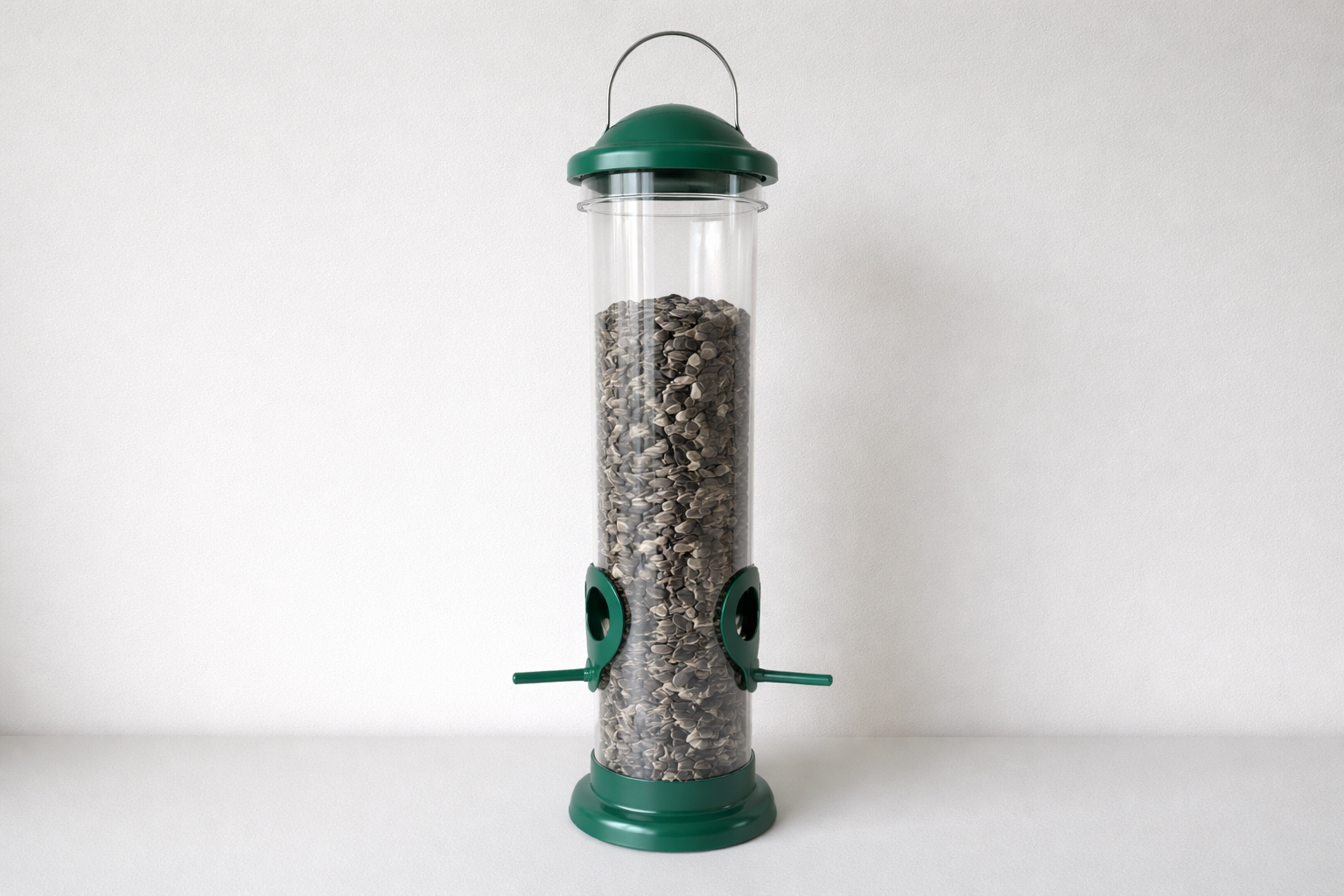
- Mess and seed waste. Choose feeders with built‑in seed catchers or no‑mess designs to cut hull and spill. Pairing those feeders with hulled seed, such as sunflower hearts, keeps seed off the ground and reduces rodent and pigeon attraction.
- Pest resistance and placement. For yards with persistent squirrels or aggressive birds, favor weight‑sensitive or caged feeders. Add hardware like pole baffles and mount feeders on long poles set away from jump points. These combined tactics make it harder for squirrels to reach food.
- Rules and neighbor concerns. Many HOAs, condos, and municipal rules limit where feeders can go or require owners to prevent seed and droppings from building up. Confirm local rules before installing and choose designs that minimize ground mess.
In practice, pick a feeder that matches the worst problem you face. If ground seed is the issue, start with a no‑mess feeder and hulled seed. If squirrels dominate, switch to weight‑sensitive models and fit a baffle. If management or neighbors object, move the feeder or select a low‑spill option to stay compliant.
Feeder types compared: pros, cons, and species fit
Different feeder designs change which birds visit, how much maintenance you do, and how well a feeder fits a tight urban yard. Below is a compact comparison that highlights species attracted, typical capacity, contamination risk, and where each format works best in a city setting.
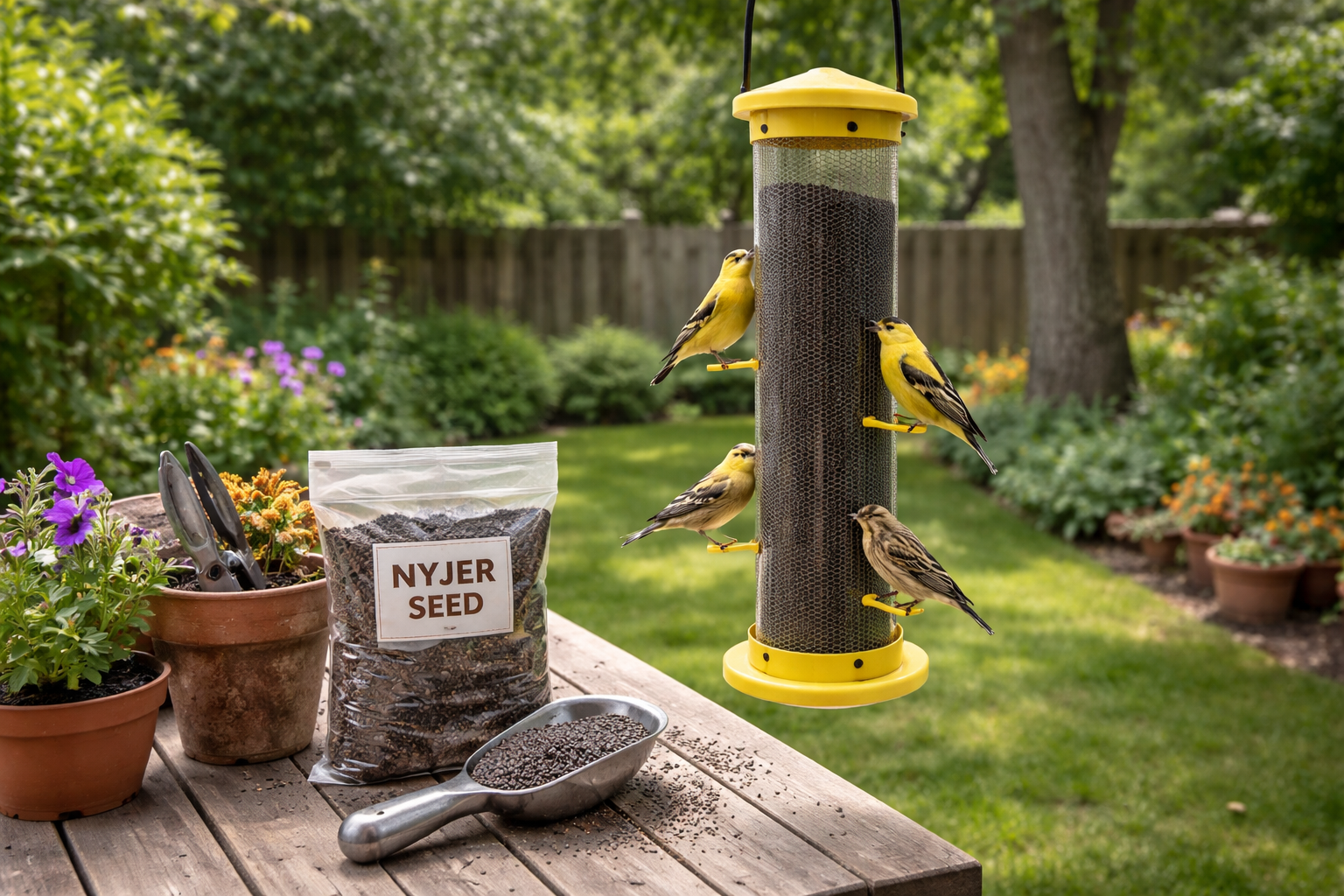
Practical takeaways: pair a tube or hopper filled with black oil sunflower to attract the broadest mix. Use a mesh nyjer feeder if finches are your priority. Offer suet in a shaded cage to bring woodpeckers, and switch to hulled sunflower hearts if shells under the feeder are attracting pests.
Maintenance checklist and quick fixes:
- Keep feeders accessible for cleaning; hopper designs need clear access or swap for an easier model.
- Clean spoiled suet or moldy seed immediately and replace the food.
- If ground waste attracts rodents, use hulled seeds or move to enclosed feeders.
- For smart feeders, protect electronics from weather and expect more frequent refills because capacity is smaller.
These distinctions should help you choose the best urban bird feeders for the species you want, and plan simple upkeep so your feeder stays productive and sanitary.
Top picks for windows, rails, and small balconies
For small units, the smartest picks are clear window models, clamp‑on railing trays, and compact tube or nyjer feeders. These designs cut mess and fit narrow spaces, so they work well when you want close views without a full pole setup. If you need options tailored to tight layouts, look at apartment feeders that list suction mounts, clamp ranges, and removable trays as key features.
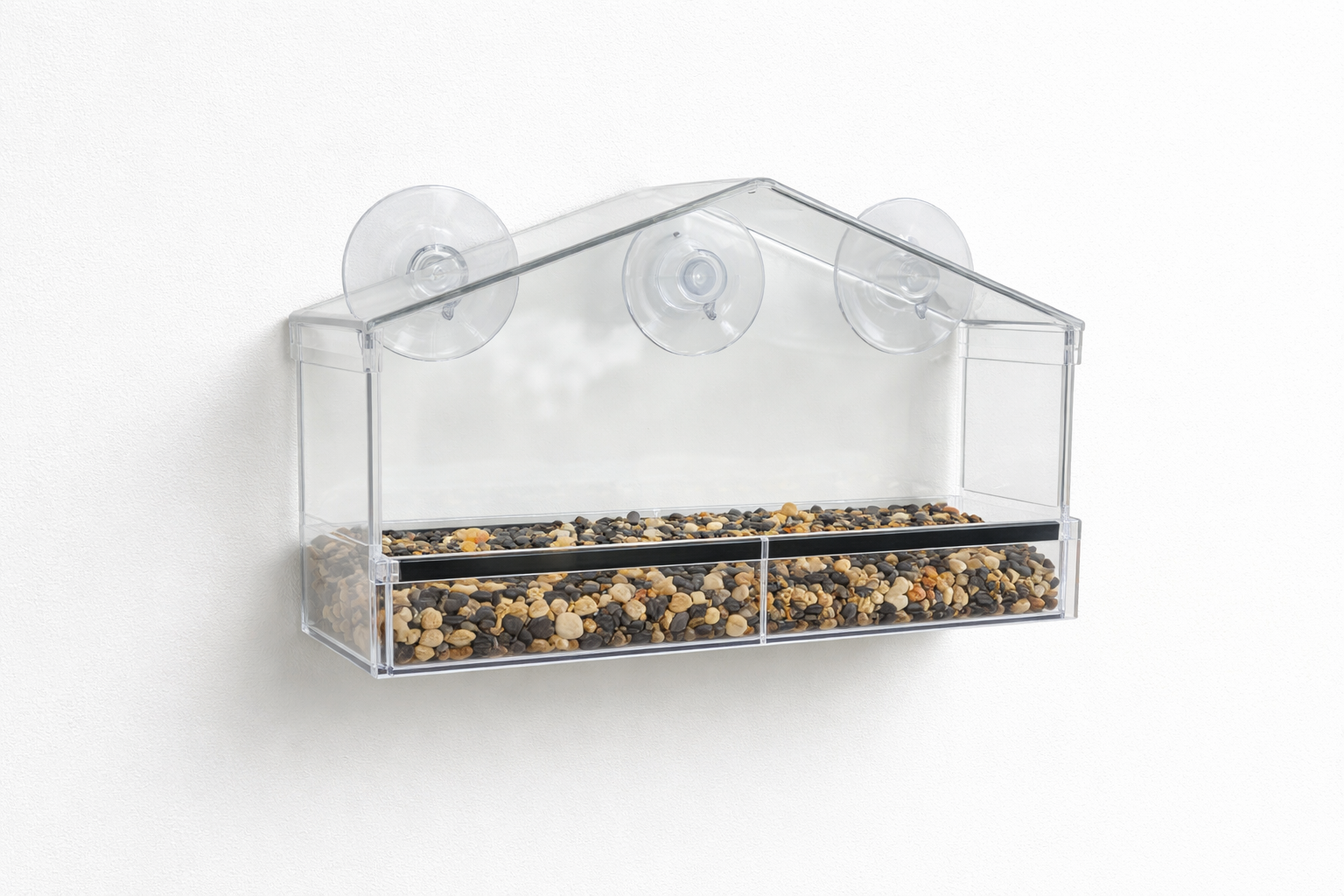
Suction‑cup window feeders give the best close-up viewing. Choose models with four or more strong suction cups, a drainage or slide‑out tray for cleaning, and UV‑stable polycarbonate for long life. Install by pressing firmly against clean glass and testing the hold before adding seed. When cleaning, slide out the tray and rinse; the removable tray cuts downtime and prevents mold in small spaces.
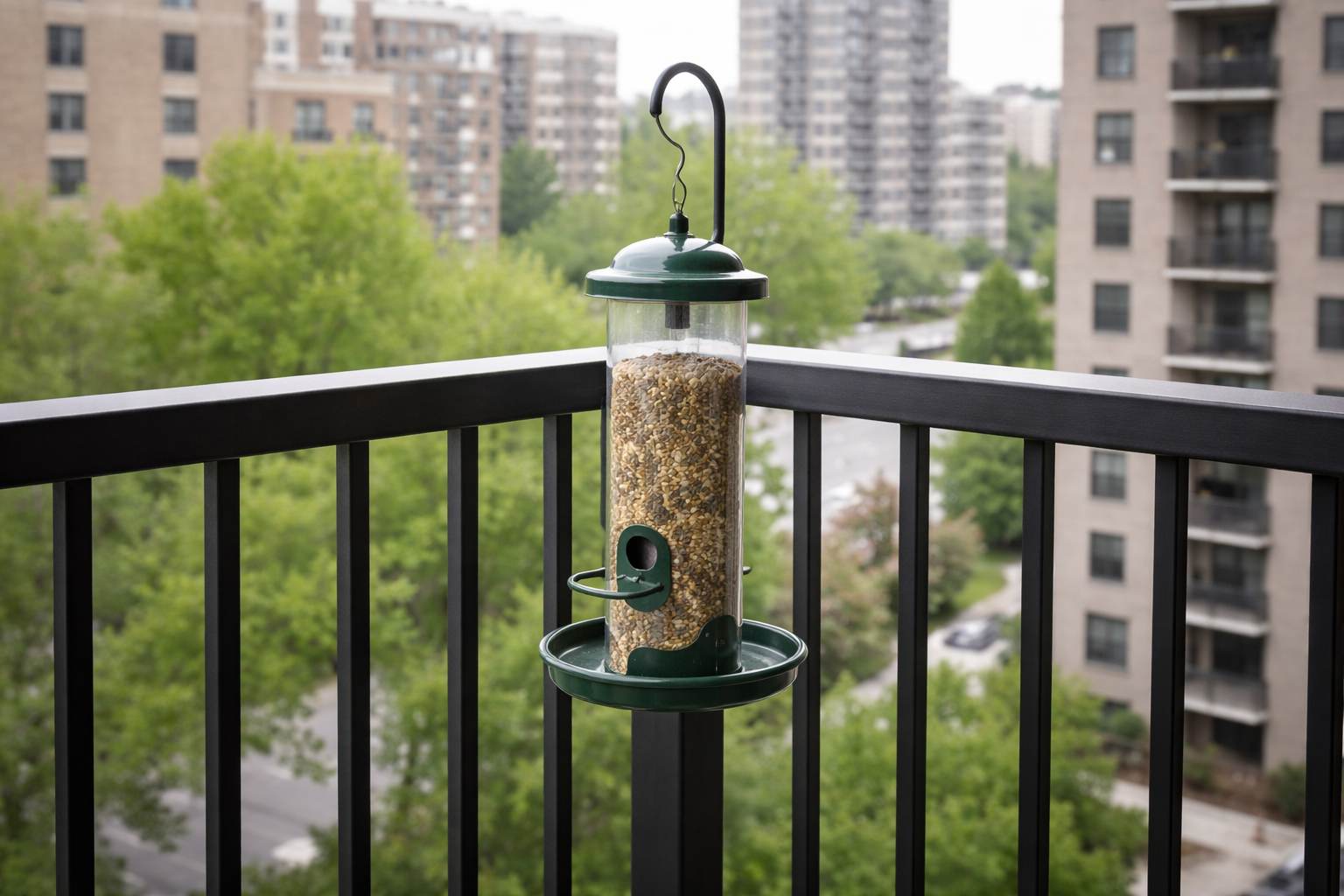
For railings, use adjustable clamp brackets, over‑the‑rail hooks, or deck‑rail pole systems that do not require drilling. Confirm clamp range and a clear weight rating for your railing profile before you buy. Compact trays and multi‑tray stations keep droppings contained and make maintenance easier; read the specs for balcony tray options and fit the clamp to your rail. These same clamp choices work on narrow apartment balconies when you want a no‑drill setup.
Pick seed to match space limits. Nyjer in a small mesh tube attracts finches and sheds minimal shells. Hulled sunflower hearts lower spillage in crowded urban settings. In very dense cities, like typical New York apartment setups, these no‑mess seeds help keep neighbors happy. Before you install, check building, HOA, or lease rules.
Maintenance checklist:
- Verify suction or clamp hold before filling.
- Choose removable trays for fast cleaning.
- Match clamp range and weight rating to your railing.
- Use nyjer or hulled seeds to reduce mess.
- Review building or HOA rules before mounting.
Pest and squirrel control for city feeders
Start by picking a feeder that already makes squirrel access difficult. Tests and reviews name weight‑sensitive tube feeders and caged designs as the most effective. Specific top performers include the Brome Squirrel Buster and Droll Yankees spin models, which add ventilation and adjustable weight triggers to limit squirrel feeding and slow mold growth.
Next, pair your feeder with hardware and placement that remove jump paths. Mount the feeder on a pole with a sturdy baffle and keep that pole well away from branches, fences, and balcony rails so squirrels cannot leap onto it. For balconies, small changes matter: move the feeder farther from the ledge, use a short baffle or a caged feeder, and avoid mounting near climbable surfaces.
Installation and upkeep checklist
- Install a pole with a baffle before hanging the feeder to block climbing squirrels.
- Set the weight trigger to the lightest setting that still lets songbirds in, then test and fine tune.
- Rinse and air dry feeders with good ventilation to reduce mold and extend life.
Troubleshooting tips: if squirrels persist, combine solutions rather than swapping one for another. Try a caged feeder plus a pole baffle, or tighten the trigger and move the mounting point farther from possible jump points. Regularly inspect for chew damage and adjust or replace worn parts to keep the system working.
Cleaning, disease prevention, and hummingbird care
Urban yards and balcony clusters raise the chance that a single contaminated feeder will affect many birds. Clean feeders on a set schedule and whenever contamination appears. Use a household bleach solution of about 10 percent (one part bleach to nine parts water), rinse and allow feeders to dry completely before refilling. Remove spilled seed and hulls beneath feeders and keep multiple feeders spaced apart to reduce crowding.
Hummingbird feeders need extra care on warm, sunny balconies. Change nectar about once a week in hot weather and more often if it looks cloudy or smells fermented. Hang feeders in partial shade to slow spoilage. Add a water-filled ant moat above the feeder or use a feeder with a built-in moat to block ants without pesticides. Retail ant-moat accessories are a simple, non-toxic add-on for balcony setups.
If you see sick or dead birds near feeders, pause feeding and disinfect all stations. Community coordination in dense neighborhoods helps reduce repeated exposure. Quick troubleshooting: if ants reach the ports, top up or add a moat; if nectar clouds, empty and scrub with the bleach mix. Follow these steps and you greatly lower disease risk for urban and balcony bird visitors.
Recommendations and a short shopping checklist
Start by pairing the feeder style with what your space and neighbors allow. For small balconies or rail systems, clamp‑on solutions give capacity without ground mess and work well on larger balcony areas as noted for patios and deck feeders. No‑mess feeders with built‑in catch trays cut hull scatter. For finches, use dedicated nyjer mesh feeders; nyjer clogs and spills unless on a fine mesh tube or sock. Hulled sunflower hearts are the best low‑mess seed choice. They limit hulls, reduce sprouting and mold, and lower pest attraction. Practical shortlist when shopping:
- Clamp or rail feeders for compact outdoor spaces
- No‑mess or seed‑catch hopper feeders with hulled sunflower hearts
- Fine mesh nyjer feeders for finches
Final checklist before buying: confirm any clamp or pole meets load specs, prefer hulled/no‑husk seed to cut waste, choose a no‑mess model with a tray, and buy a dedicated mesh feeder for nyjer. These choices balance space, species, and cleanup needs.