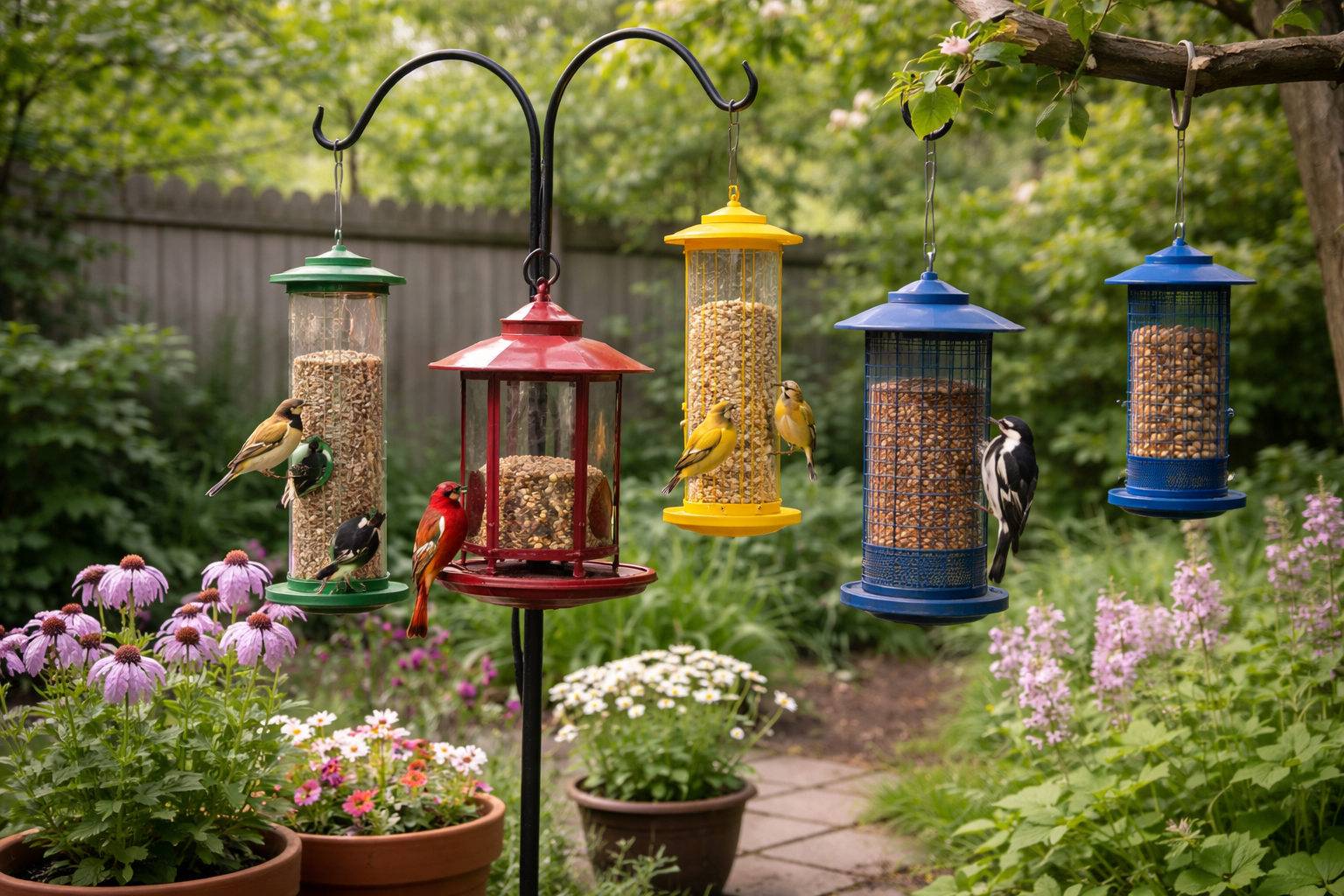
Start Here: The Fastest Way to Get Birds Visiting
If you want birds at your feeder within 24 to 48 hours, start with two feeders: a tube or nyjer feeder for small finches and a platform or hopper feeder for mixed species. Add a quality black-oil sunflower seed mix, hang or mount them in a spot with nearby cover, and you are done. That combination covers the widest range of common backyard birds with the least fuss, and it works whether you have a balcony, a deck, or a full yard.
Everything below builds on that foundation. You will find a breakdown of six practical feeder types, a simple way to decide which ones fit your situation, a two-week maintenance calendar, and a troubleshooting section for the most common problems. If you want to skip straight to shopping, the starter kit and upgrade plan sections near the end have price ranges and product types to look for today.
---
The 6 Best Bird Feeder Examples (and When to Use Each)
These six feeder types cover nearly every backyard scenario. Each one has a clear use case, a preferred seed, and honest tradeoffs so you can decide quickly.
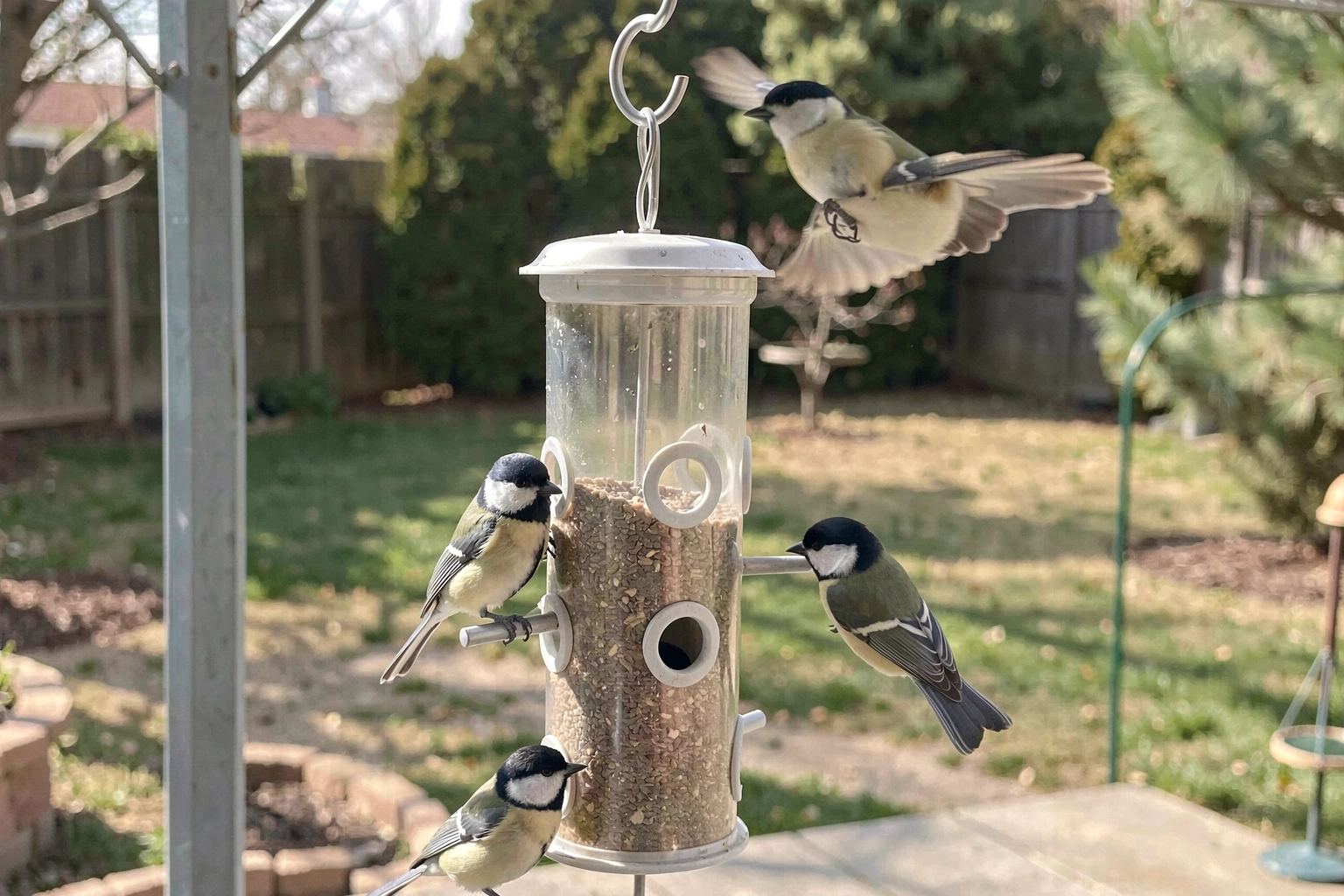
1. Tube Feeder (Best All-Around Starter)
A tube feeder is a clear or opaque cylinder with multiple small ports and perches. It is the most versatile option for most people and the one I recommend first to anyone starting out. You can fill it with black-oil sunflower seeds to attract chickadees, nuthatches, house finches, and sparrows, or switch to nyjer (thistle) seed with a fine-port tube to target goldfinches and pine siskins specifically.
Capacity typically runs from about 1 to 3 pounds of seed depending on the model. Most hang from a hook or shepherd's crook at 5 to 6 feet off the ground, ideally within 10 to 15 feet of a shrub or tree for birds to stage before approaching. The ports keep seed relatively contained, which means less mess on the ground compared to a platform feeder. The main downside is that wet seed can clump inside if the tube lacks drainage holes, so look for models with drainage at the base. Clean every 1 to 2 weeks with a bottle brush and mild soap.
Best for: Decks, balconies, small yards. Works in almost any space. Seed: Black-oil sunflower, nyjer/thistle, safflower Price range: $15 to $45 for a solid starter model
---
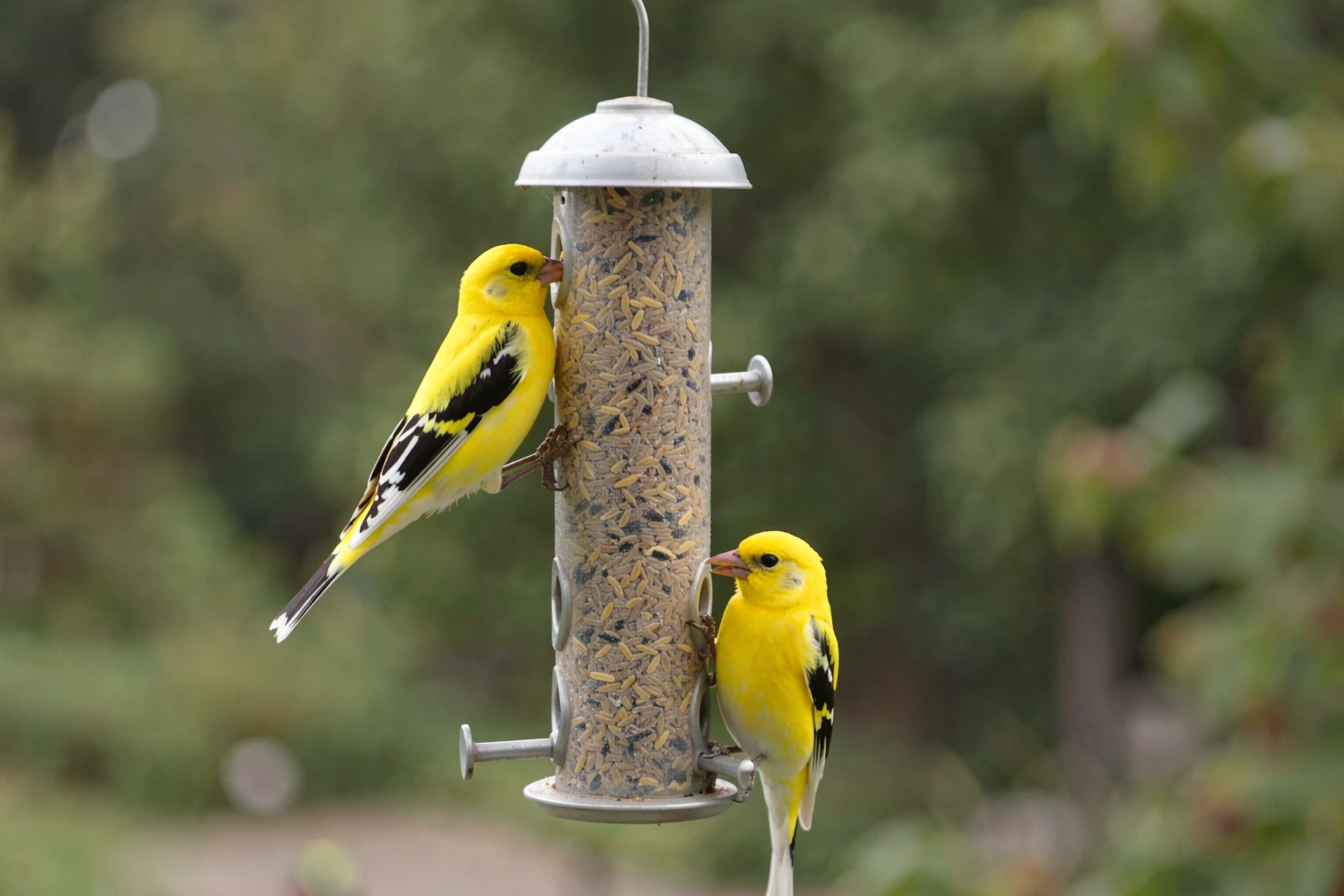
2. Nyjer (Thistle) Feeder (Best for Finches)
A nyjer feeder looks like a tube feeder but has very small ports designed specifically for tiny nyjer seeds. American goldfinches, house finches, and pine siskins will flock to these, especially during migration. If attracting colorful finches is your main goal, this is the feeder to prioritize.
Capacity is usually 1 to 2 pounds. Because nyjer seed is expensive (roughly $1 to $2 per pound), you want a feeder that keeps it dry. Look for a weather cap or dome cover. Nyjer seed goes stale faster than sunflower seed, so if you are not seeing activity within a week or two, replace the seed entirely rather than topping it off. Hang at 4 to 6 feet, ideally near open areas where finches feel comfortable hovering.
Best for: Anyone who specifically wants goldfinches. Great on balconies because the small ports reduce spillage. Seed: Nyjer/thistle only Price range: $12 to $35
---
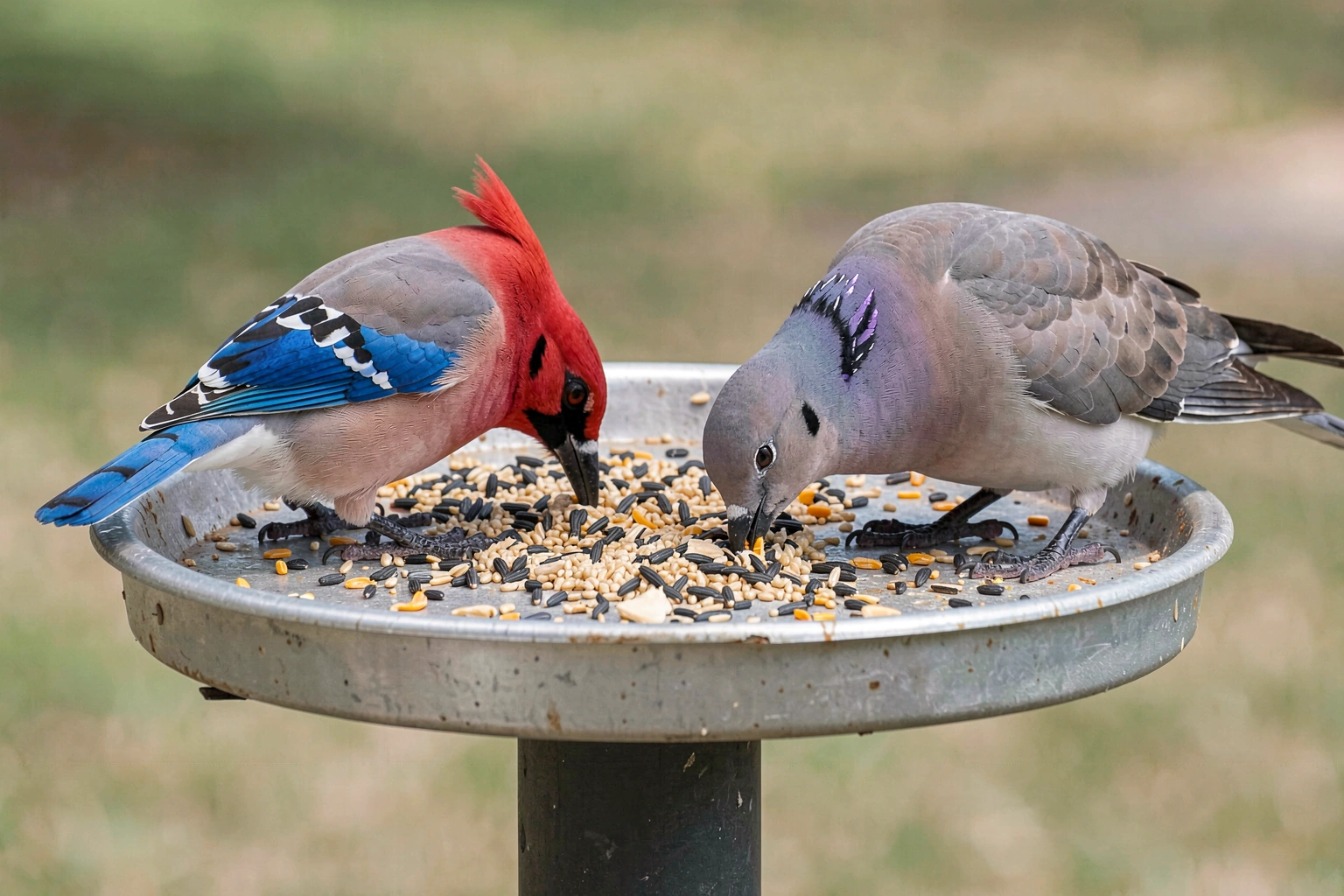
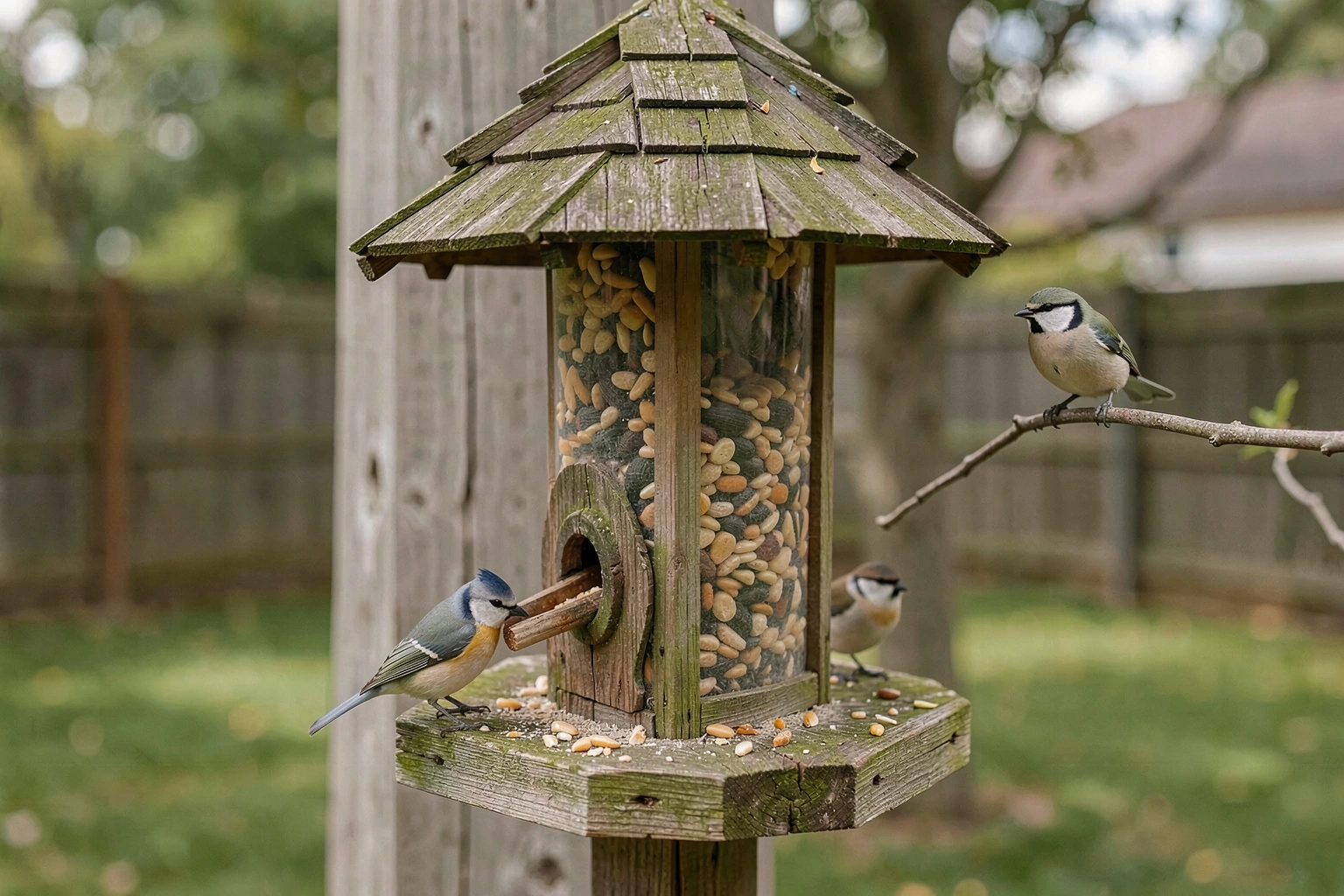
3. Platform or Tray Feeder (Best for Variety)
A platform feeder is exactly what it sounds like: a flat, open tray, sometimes with a low rim or screen bottom. It attracts the widest variety of birds because almost any species will land on an open surface. Cardinals, blue jays, mourning doves, sparrows, juncos, and even ground-feeding birds like towhees will visit. I keep one in my yard year-round and it consistently draws the most species of any feeder I own.
The tradeoff is exposure. Seed gets wet in rain, and wet seed molds fast. A screened or slatted bottom helps drainage, and a roof or dome cover helps a lot in rainy climates. Capacity varies widely, from a small 1-pound hanging tray to a large mounted platform holding 5 or more pounds. Mount or hang at 4 to 6 feet, or place on a post at ground level for doves and juncos. Check and refresh seed every 2 to 3 days in wet weather.
Best for: Larger yards, covered decks, anyone who wants maximum species variety. Seed: Black-oil sunflower, mixed seed, safflower, peanut pieces, millet Price range: $10 to $50 depending on size and material
---
4. Hopper Feeder (Best for Low Maintenance)
A hopper feeder has a seed reservoir that dispenses seed by gravity into a tray at the bottom. Birds eat from the tray, and more seed drops down as it is consumed. This design keeps seed drier than an open platform and holds more seed than a tube, which means less frequent refilling. If you travel or just want to check in every few days rather than daily, a hopper is your best friend.
Capacity typically ranges from 2 to 8 pounds. Most mount on a post or hang from a bracket. They attract the same broad mix as a platform feeder: cardinals, chickadees, finches, nuthatches, and sparrows. The main maintenance issue is that seed can get damp inside the reservoir if the roof is not well-sealed, leading to mold at the bottom. Inspect the base weekly and clean the whole unit every 2 weeks. Look for models with a removable base for easy cleaning.
Best for: Suburban yards, anyone who wants a set-it-and-check-it-every-few-days routine. Seed: Black-oil sunflower, safflower, mixed seed Price range: $20 to $60
---
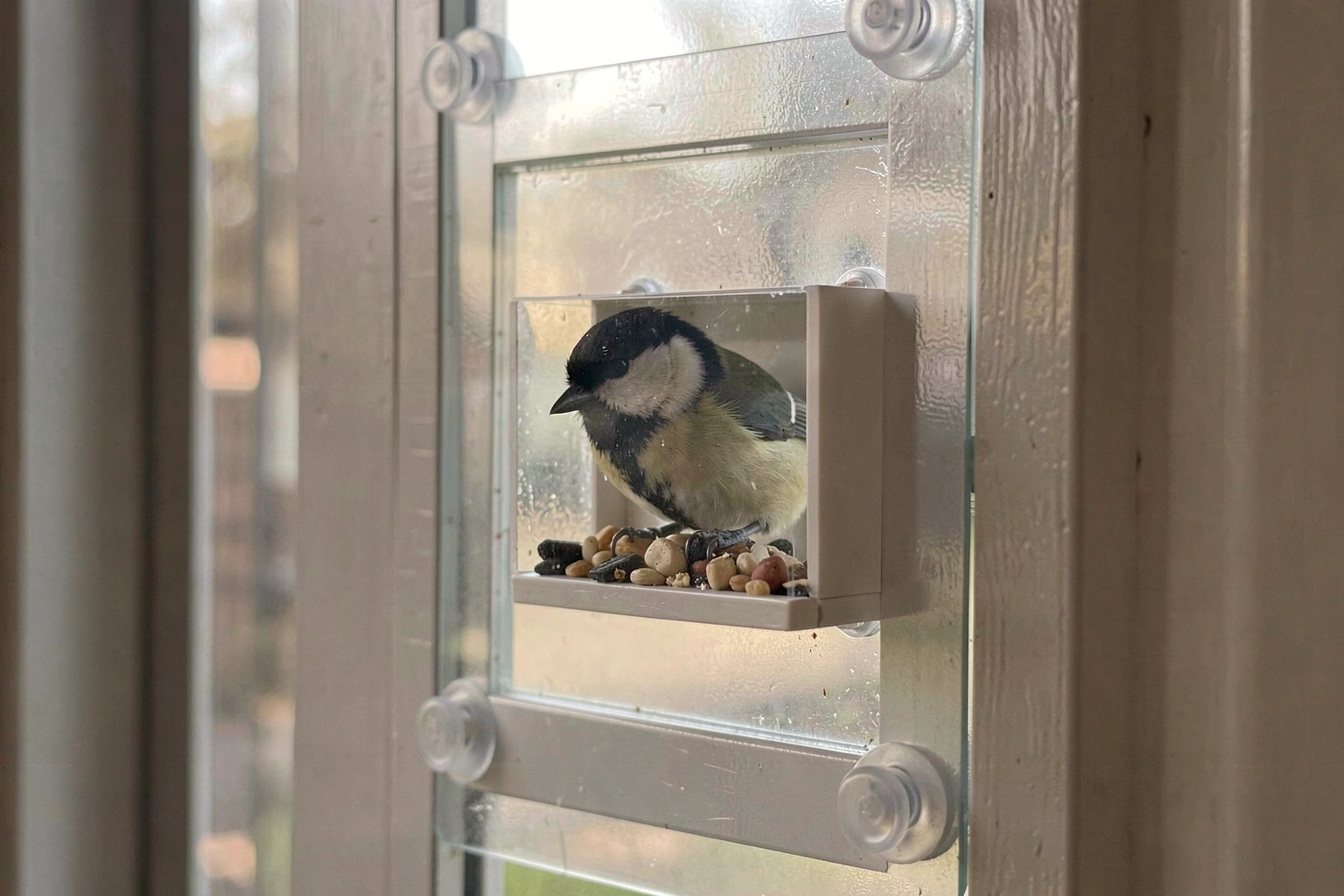
5. Window Feeder (Best for Apartments and Close-Up Views)
A window feeder mounts directly to a glass pane with suction cups. It is the only practical option for apartment dwellers without a balcony railing or outdoor space, and it gives you an incredibly close view of visiting birds. Chickadees, house finches, and nuthatches adapt to window feeders surprisingly quickly, often within a few days.
Capacity is small, usually under 1 pound, so you will refill it more often. The suction cups need to be pressed firmly onto clean glass and checked periodically, especially after temperature swings. Place it on a window that gets morning light if possible, and ideally one that faces a tree or shrub within 15 to 20 feet. One important note: a feeder mounted very close to the glass (within 3 feet) actually reduces window strike risk because birds do not build up enough speed to injure themselves if they do fly into the glass.
Best for: Apartments, renters, anyone who wants a close-up view without outdoor space. Seed: Black-oil sunflower, safflower, nyjer (with the right model) Price range: $10 to $30
---
6. Suet Cage Feeder (Best for Woodpeckers and Winter Feeding)
A suet cage is a simple wire mesh cage that holds a suet cake, which is rendered fat mixed with seeds, nuts, or insects. It is the go-to feeder for woodpeckers, nuthatches, brown creepers, and Carolina wrens, especially in fall and winter when high-fat food is most valuable. I add one to my setup every October and it immediately draws downy and hairy woodpeckers that ignore my other feeders.
Suet cakes are inexpensive (usually $1 to $3 each) and last 1 to 2 weeks in cool weather. In summer, suet can melt and go rancid quickly, so either switch to no-melt suet formulas or take the feeder down from May through August. Hang the cage on a tree trunk or post at 4 to 6 feet. Cages with a tail-prop extension below the cake attract larger woodpeckers that prefer to feed in a vertical, clinging posture.
Best for: Anyone who wants woodpeckers, fall and winter feeding, adding variety to an existing setup. Seed/Food: Suet cakes (plain, peanut, berry, insect varieties) Price range: $5 to $20 for the cage; $1 to $3 per suet cake
---
How to Choose the Right Feeder for Your Space
The honest answer is that your space and how much time you want to spend on maintenance matter more than any other factor. Here is a quick way to think through it.
| Your situation | Best starting feeder | Add next |
|---|---|---|
| Apartment, no balcony | Window feeder | Nyjer tube if you have a hook |
| Balcony or small deck | Tube feeder (hang from hook) | Nyjer feeder for finches |
| Small yard, low maintenance | Hopper on a post | Suet cage on nearby tree |
| Small yard, want variety | Platform tray + tube feeder | Suet cage in fall/winter |
| Larger yard, all species | Hopper + platform + suet cage | Nyjer feeder for finches |
| Mainly want goldfinches | Nyjer feeder first | Tube feeder with sunflower second |
If you are deciding between a tube and a hopper as your first feeder, go with the tube if you have limited space or want to hang it from a hook. Go with the hopper if you have a post or bracket and want to refill less often. Either way, black-oil sunflower seed is the right starting seed for both.
Placement: The Details That Actually Matter
Height matters less than most people think. Anywhere from 4 to 6 feet off the ground works for most feeders. What matters more is proximity to cover. Place feeders within 10 to 15 feet of a shrub, hedge, or tree so birds have a staging spot to watch from before they commit to feeding. Too far from cover and birds feel exposed. Too close (under 3 feet) and predators like cats can ambush from the brush.
For window feeders, the 3-foot rule works in reverse: mounting within 3 feet of the glass reduces window strike injuries because birds cannot accelerate to dangerous speeds in that short distance. If your feeder is farther than 3 feet from a window, try to position it so the flight path does not aim directly at the glass.
Keep feeders at least 10 feet from your neighbor's fence or property line if you are in a dense urban area, and check local ordinances if you are in an HOA community. Some areas have rules about attracting wildlife.
---
Your Two-Feeder Starter Kit (Shop Today)
If you want to get started today without overthinking it, here is the setup I would recommend to a neighbor:
Feeder 1: A tube feeder with multiple ports, capacity around 1.5 to 2 pounds, with drainage holes at the base. Look for brands like Droll Yankees, Perky-Pet, or Woodlink. Budget around $20 to $35.
Feeder 2: A basic platform or hopper feeder, capacity 2 to 4 pounds, with a weather-resistant roof. Brands like Stokes Select, Woodlink, or Nature's Way make solid options in the $25 to $45 range.
Seed: A 5 to 10 pound bag of black-oil sunflower seed. Avoid cheap mixed seed bags with lots of milo or red millet, which most songbirds ignore and which just ends up on the ground. Wagner's, Kaytee, and Cole's are reliable brands available at most hardware and garden stores.
Hardware: A shepherd's crook or deck hook for hanging. A basic steel shepherd's crook runs $10 to $20 and works for most setups.
Total starter kit cost: roughly $55 to $100, depending on what you already have.
The Mid-Range Upgrade (When You're Ready)
Once you have the basics running and birds are visiting regularly, the most useful upgrades are a squirrel baffle (a dome or cylinder that mounts on the pole below the feeder, around $15 to $30), a nyjer feeder to add finch variety ($15 to $35), and a suet cage for fall and winter ($8 to $20). That full setup runs roughly $100 to $175 and covers nearly every common backyard species in North America.
---
A Simple Two-Week Maintenance Calendar
Maintenance is where most people fall short, and it is the main reason feeders stop getting visits. Moldy or spoiled seed repels birds fast. Here is a realistic schedule that does not take much time.
Days 1 to 3: Check seed levels and look for clumping or wet seed. Remove any damp seed immediately. Confirm feeders are stable and not swinging excessively in wind.
Days 4 to 7: Refill as needed. Wipe down perches and ports with a dry cloth. Check suet cake if you have one.
Days 8 to 10: Do a quick visual inspection of the seed inside tube and hopper feeders. If you see dark or clumped seed at the bottom, empty and discard it.
Days 11 to 14: Full cleaning. Remove all seed, disassemble the feeder as much as possible, and scrub with a 10% bleach solution (1 part bleach to 9 parts water) or hot soapy water. Rinse thoroughly and let dry completely before refilling. This is the step most people skip, and it is the most important one for bird health.
Repeat this cycle every two weeks through the active feeding season. In hot, humid summer months, shorten the cleaning interval to once a week.
---
When Things Go Wrong: Common Problems and Fixes
No birds showing up after a few days
This is the most common complaint, and it is almost always a placement or seed issue. First, check that your feeder is within 10 to 15 feet of cover. If it is in the middle of an open yard with no nearby trees or shrubs, birds may not feel safe approaching. Second, confirm you are using black-oil sunflower seed or nyjer, not a cheap mixed seed with lots of filler. Third, be patient: in areas with low bird density or during non-migration periods, it can take up to a week or two for birds to discover a new feeder. Sprinkling a small amount of seed on the ground directly below the feeder can help birds notice it faster.
Seed spoiling or molding quickly
This usually means the feeder is in a spot that gets rained on directly, or the seed is sitting too long between refills. Move the feeder to a more sheltered spot if possible, add a dome weather guard above it, and reduce the amount you fill it so seed turns over faster. In humid climates, filling the feeder only halfway and refilling every 3 to 4 days is better than filling it to the top once a week.
Seed overflowing or spilling on the ground
Overflow attracts rodents and can create a mess on decks and balconies. Use a seed tray or catcher that clips below the feeder to catch fallen seed. Fill tube and hopper feeders only to about 80% capacity so birds can access lower ports without pushing seed out. If you are using a platform feeder, a smaller capacity model with a rim helps contain seed better.
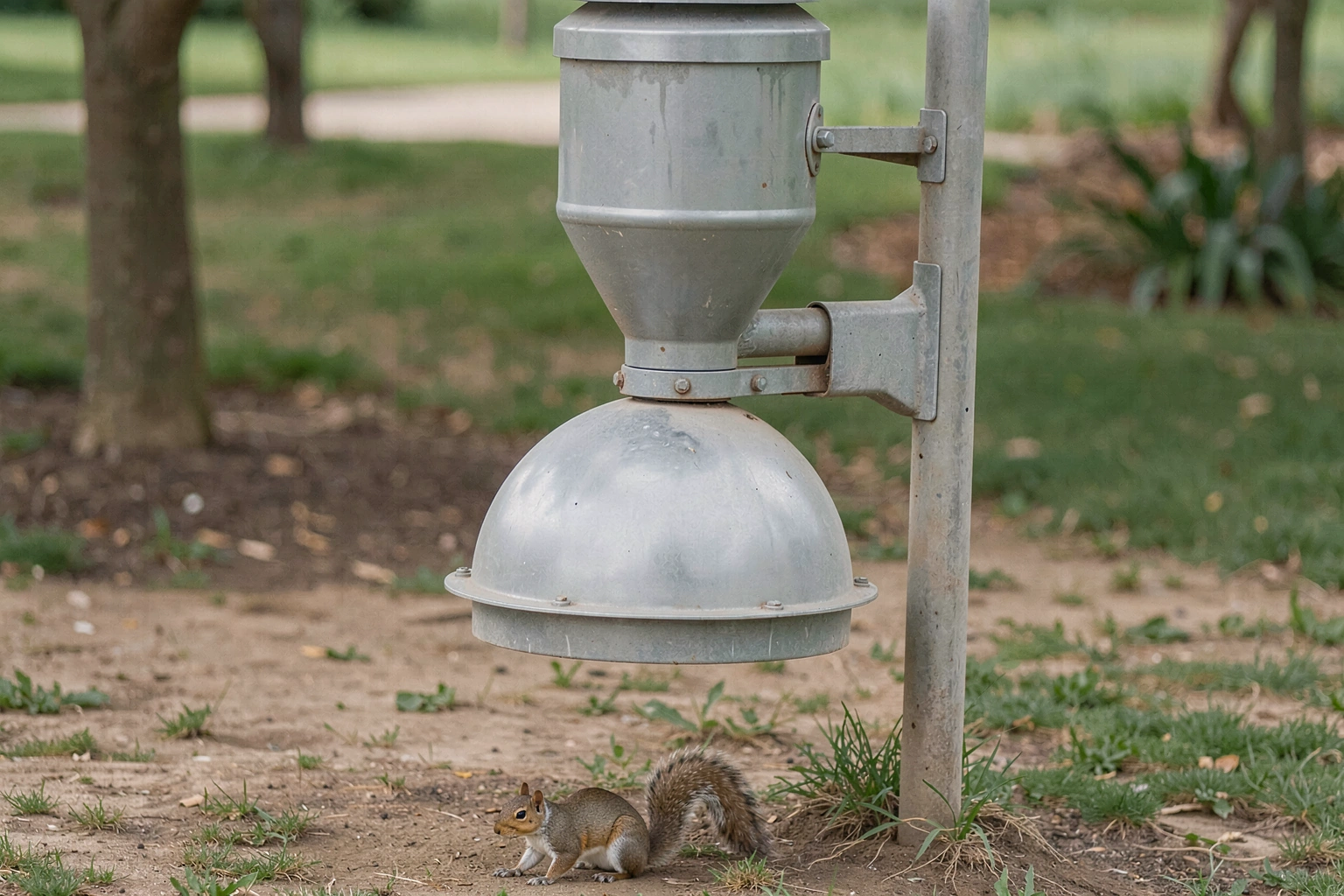
Squirrels raiding the feeder
This is the classic problem. The most effective solution is a baffle: a dome or cylinder mounted on the pole below the feeder, at least 4 to 5 feet off the ground, and positioned at least 10 feet away from any surface a squirrel can jump from (fence, tree, roof overhang). Switching to safflower seed in your tube or hopper feeder also helps because squirrels generally dislike safflower, while most songbirds accept it readily. Cayenne pepper additives work for some people but are inconsistent.
Hawks or cats near the feeder
A Cooper's hawk or sharp-shinned hawk visiting your feeder is actually a sign of a healthy backyard ecosystem, but it will temporarily scatter your other birds. If visits drop off, give it a day or two and activity usually resumes. For cats, the best solution is a tall pole with a baffle and keeping feeders away from low shrubs where cats can hide. A feeder height of at least 5 feet on a smooth pole with a baffle is the most reliable deterrent.
---
A Quick Comparison Before You Buy
| Feeder type | Best space | Seed | Capacity | Maintenance | Approx. cost |
|---|---|---|---|---|---|
| Tube feeder | Any | Sunflower, safflower | 1 to 3 lbs | Every 2 weeks | $15 to $45 |
| Nyjer feeder | Balcony, small yard | Nyjer only | 1 to 2 lbs | Every 2 weeks | $12 to $35 |
| Platform/tray | Yard, covered deck | Mixed, sunflower | 1 to 5+ lbs | Every 2 to 3 days in rain | $10 to $50 |
| Hopper feeder | Suburban yard | Sunflower, mixed | 2 to 8 lbs | Every 2 weeks | $20 to $60 |
| Window feeder | Apartment, any | Sunflower, safflower | Under 1 lb | Every 1 to 2 weeks | $10 to $30 |
| Suet cage | Any (fall/winter) | Suet cakes | 1 cake | Replace every 1 to 2 weeks | $5 to $20 |
If you can only buy one feeder today, make it a tube feeder with black-oil sunflower seed. If you can buy two, add a platform or hopper. That combination will attract more species than any other pairing at this price point, and it works in almost every backyard setting from a third-floor balcony to a half-acre suburban lot.