Introduction
Color is a common question for backyard bird feeding, but it is only one piece of a larger picture. The best success comes from a combination of feeder type, placement, cleanliness, seed type, and predator safety. This guide provides an evidence-informed framework for choosing feeder colours that suit different feeder types, garden contexts, and regional conditions, while also addressing safety, maintenance, and aesthetics. It aims to help home gardeners, wildlife enthusiasts, and retailers select colors that are practical, attractive, and bird-friendly. In particular, it addresses the question what colour bird feeders are best by outlining a practical color framework.
How birds perceive color
Birds see color differently from humans. Many species possess UV sensitivity and can distinguish shades and contrasts the human eye cannot. Avian color vision varies by species, and hummingbirds, in particular, respond to color cues with high sensitivity and distinct signaling advantages. Yet color alone rarely guarantees increased visits; birds weigh multiple cues, including feeder shape, placement, scent of seeds, and perceived safety from predators. The evidence suggests color acts mainly as a signal to humans and as one of several cues birds use to locate feeding sites. Understanding this helps readers balance aesthetics with function when selecting feeder colours.
What color influences (and what it doesn’t)
Color can influence visits in context but is not the primary driver for most species. The strongest factors remain feeder type, placement, cleanliness, seed quality, and predator protection. For hummingbirds, red accents are a well-established marketing cue and may attract attention, but this does not guarantee more visits if other needs are not met. For seed and suet feeders, color is less predictive of visit rates than reliability of food, ease of access, and low perceived danger. Overall, color matters most for human usability, visibility to the gardener and aesthetic integration into the garden, while continuing to be a supportive cue that can aid or hinder visits depending on background and contrast.
Color recommendations by feeder type
Seed feeders
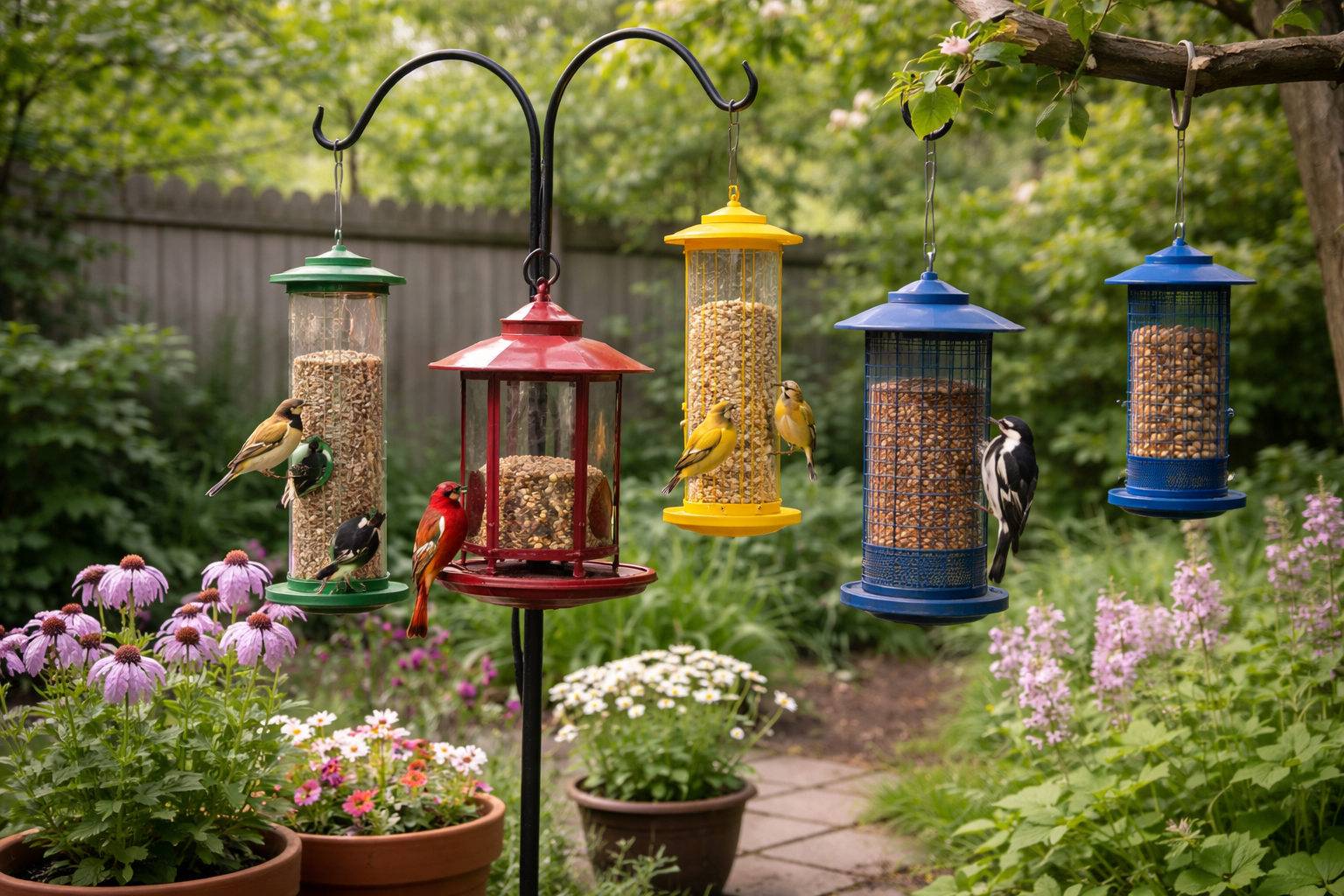
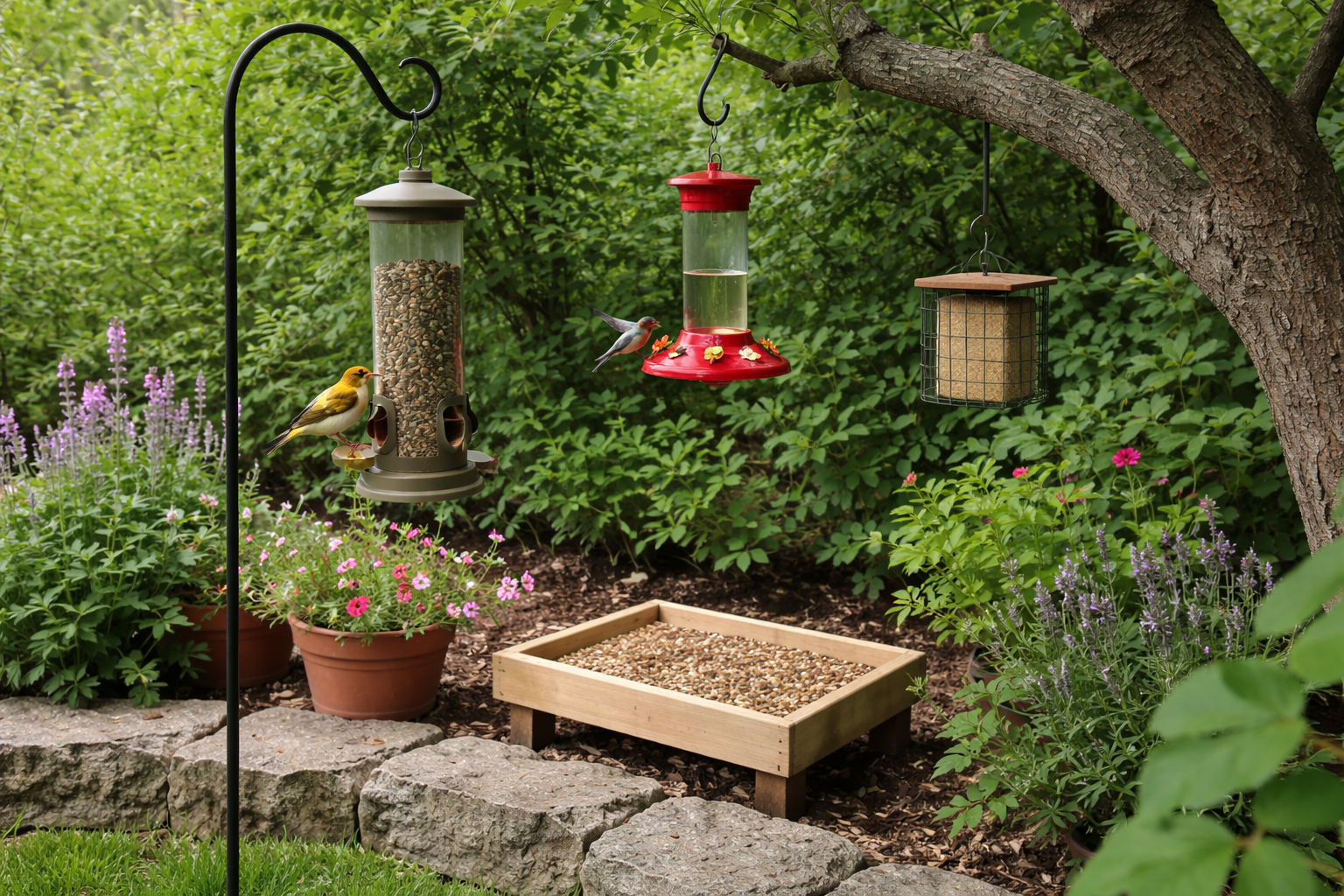
Seed feeders benefit from a design that balances visibility with camouflage against predators. A base of matte, neutral tones such as olive, taupe, gray, or brown blends with most garden backgrounds and reduces glare that might startle birds. For visibility, apply bright, non-reflective accents on feeding ports or perches. Avoid high-gloss finishes or loud patterns that can confuse birds or fade quickly in sun. A practical approach is a neutral body with a single bright accent color that is easy to spot from indoors, aiding monitoring without overly drawing attention to the feeder itself.
Nectar/hummingbird feeders
Red cues are particularly salient for hummingbirds, so red accents and components can help attract attention. The nectar itself remains colorless, so do not rely on the liquid color to cue feeding. Choose feeder bodies that are durable and non-toxic, with red ports or decorative red features that resist fading. Ensure the red components are weather resistant and easy to clean, since nectar feeders require frequent maintenance to prevent mold and fermentation.
Suet feeders
Natural, neutral tones that harmonize with wood or stone garden features are typically best for suet feeders. These feeders often blend with natural landscapes and are less visually disruptive in the garden. Protect wooden finishes with non-toxic sealants that are safe for birds and maintain color longevity. Avoid overly glossy finishes that can glare in sunlight and deter close inspection by birds.
Platform and ground feeders
Platform and ground feeders benefit from colors that provide good contrast against the surrounding ground and vegetation, improving detectability without increasing predation risk. Lightly contrasted hues that are not highly reflective work well, especially in shady or densely planted areas. In very bright sun, subtler tones reduce glare; in low light or dappled shade, slightly higher-contrast colours can help birds find scattered seed across the surface.
Materials, finishes, and safety
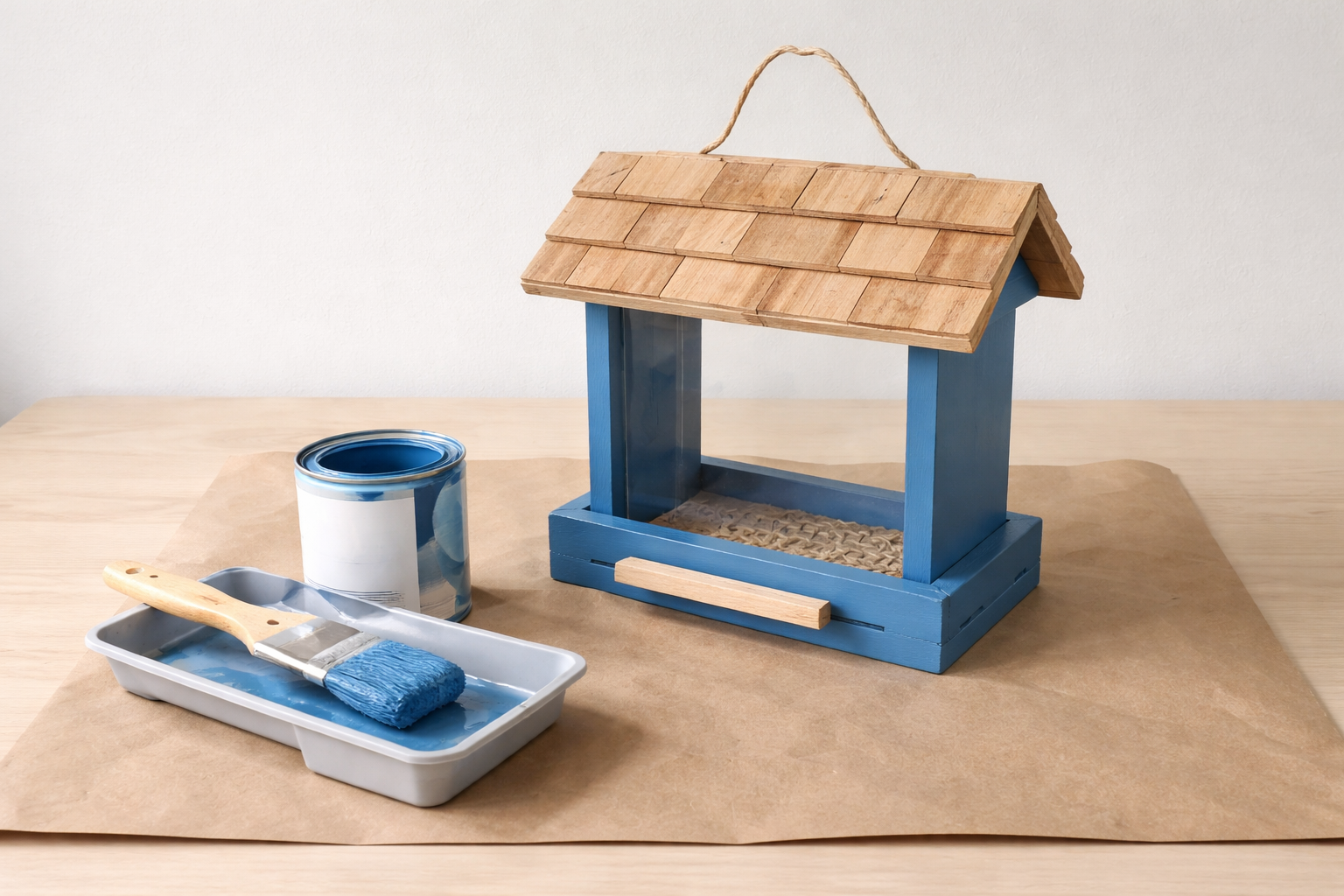
Paints and finishes must be non-toxic, weather resistant, and safe for birds, with low chipping and minimal UV degradation. Look for finishes that are certified non-toxic and free of heavy metals or lead-based pigments. UV fade can affect color perception over time, so choose durable, UV-resistant coatings. Regular cleaning is essential to remove seed debris that can degrade coatings and create hazards if coatings begin to chip. If repainting or resealing is needed, use non-toxic paints or sealants and allow full curing before reintroducing birds.
Quick-reference color and finish decisions (by feeder type)
| Feeder Type | Base Color Guidance | Accent/Highlight Guidance | Notes |
|---|---|---|---|
| Seed feeders | Matte neutral tones (olive, taupe, gray, brown) | Bright, non-reflective accents on ports/perches | Balances camouflage with visibility |
| Nectar/hummingbird feeders | Durable, non-toxic body; colorless nectar | Red ports or red features; fade-resistant accents | Do not rely on nectar color for feeding cues |
| Suet feeders | Natural neutral tones | Non-toxic sealants; low-gloss finishes | Tends to blend with landscape |
| Platform/ground feeders | Good contrast against ground; non-reflective | Subtler tones with enough contrast for detection | Background-aware placement |
Aesthetics and garden integration
Color should complement the garden design while maintaining bird safety. Earthy, natural tones usually blend well and reduce predation risk, making feeders less conspicuous when birds are not feeding. Bright accents can highlight feeding stations for quick monitoring and can anchor a color scheme in a garden design. The key is balance: choose colours that fit the landscape and keep coatings durable and non-toxic. A cohesive palette that mixes matte neutrals with restrained bright accents often yields both aesthetic appeal and reliable functionality.
Maintenance, fade, and replacement strategy
Regular inspection is essential to maintain safety and performance. Check feeders for paint chipping, UV fade, or corrosion, and repaint or reseal as needed with non-toxic products. Replacement should be considered when coatings begin to crack or peel, when plastic components become brittle, or when fading reduces visibility to the point where safety or usability is compromised. A simple yearly check aligns with routine garden maintenance and helps ensure long-term bird safety and ease of use.
Quick-start guide to color decisions
| Step | Action | Outcome |
|---|---|---|
| 1 | Identify feeder type and typical birds in the area | Tailor cues to species and feeder function |
| 2 | Choose a durable base color | Matte neutrals for seed and platform feeders; natural tones for suet |
| 3 | Add one or two small bright accents | Aid human visibility without creating glare |
| 4 | Verify coatings are non-toxic, UV-stable, and easy to clean | Safety and durability |
| 5 | Place feeders where birds can see them from indoors and away from predators | Improve detection and reduce predation |
| 6 | Schedule a maintenance check (seasonally/yearly) | Refresh coatings and reseal to prevent hazards |
Buying guide and color-cheat sheet
For seed feeders, look for matte neutral bodies with a single bright accent on ports or perches. For hummingbird feeders, prioritize red accents along with clear or light bodies and ensure easy cleaning. Suet feeders should favor natural wood tones or neutral finishes with non-toxic sealants. Platform feeders benefit from moderate contrasts against the surrounding ground or planting, with safety-focused, durable coatings. Regardless of color, always verify non-toxic materials, UV resistance, and ease of cleaning before purchase.
Comparison: colors and finishes worth considering
| Criterion | Matte neutrals | Gloss finishes | Natural wood | Painted plastics |
|---|---|---|---|---|
| Pros | Reduce glare; blend with garden | Easy to wipe; bright accents visible against color | Classic aesthetics; can be sealed | Weather resistance; durable, bright colors |
| Cons | May appear dull to some observers | Reflective; can startle birds or reveal wear | Requires maintenance to prevent weathering | Risk of chipping or lead-containing pigments |
| Best use | Primary body color for seed/platform | Accents or trims; not primary color | Traditional style; long-term look | When seeking vivid color or year-to-year swaps |
Conclusion: a practical color strategy that works
Color matters, but as a secondary factor behind feeder type, placement, and maintenance. For most gardens, a strategy that uses durable, non-toxic finishes in matte, neutral tones with selective bright accents provides strong reliability for a wide range of species while staying aesthetically compatible with the landscape. This approach supports hummingbird attraction through red cues while ensuring safety and durability, and it keeps seed, nectar, and suet feeders easy to monitor and maintain over time.
Frequently Asked Questions
Final takeaway
A practical, evidence-informed color approach keeps feeders safe, durable, and visually integrated in the garden while supporting reliable bird visitation through the better choice of feeder type and maintenance routines.