The best starter feeder, answered right up front
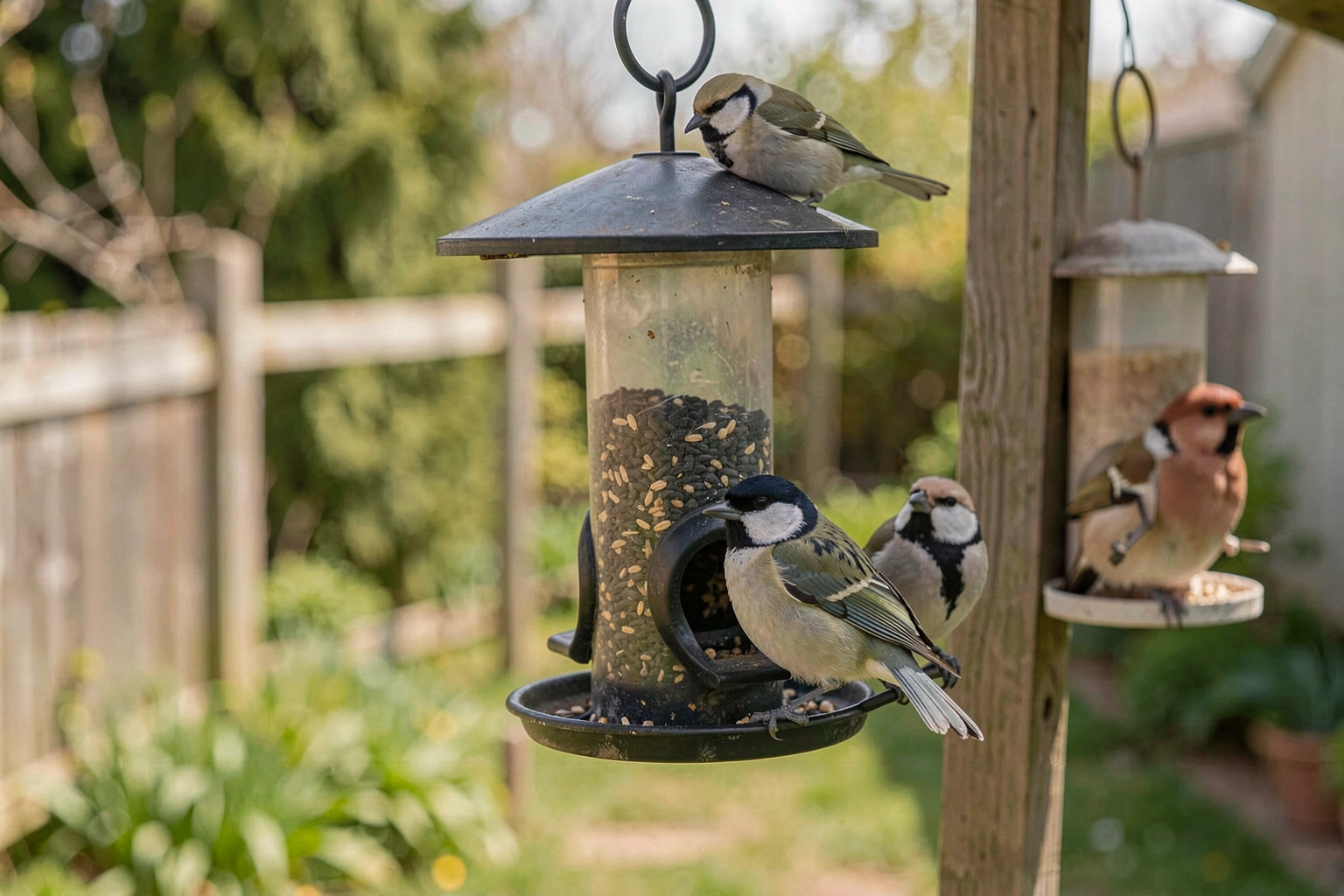
If you want one feeder to buy today that will reliably attract the widest mix of common backyard birds with the least fuss, get a tube feeder filled with black-oil sunflower seeds. It works for chickadees, nuthatches, finches, titmice, and cardinals. It keeps seed dry, discourages large pest birds, and costs between $15 and $35 for a solid beginner model. Hang it about 5 feet off the ground, at least 10 feet from your nearest window, and within sight of a shrub or tree. That is genuinely all you need to get started.
Everything else in this guide builds on that foundation. Once you have birds coming regularly, you can add a suet cage for woodpeckers, a nectar feeder for hummingbirds, or a platform tray for ground-feeding species. But start simple, and start today.
---
Quick-start setup in five steps
You do not need a complicated plan. Here is what to do this week.
Step 1: Buy a basic tube feeder. Look for one with metal ports (not plastic, which cracks and harbors bacteria), a removable base for cleaning, and at least four feeding ports. Brands like Droll Yankees, Perky-Pet, and Aspects make reliable beginner models in the $15 to $40 range.
Step 2: Fill it with black-oil sunflower seeds. Not a mixed blend to start. Black-oil sunflower has a thin shell, high fat content, and is eaten by more North American backyard species than any other single seed. A 10-pound bag runs about $8 to $12 and lasts a couple of weeks depending on traffic.
Step 3: Hang it in the right spot. About 5 feet high is ideal for most tube feeders. Place it within 10 to 15 feet of a tree or dense shrub so birds have a safe perch to wait their turn, but keep it at least 10 feet from your windows to reduce collision risk. If you are on a balcony, a deck railing mount or a tension-pole bracket works well.
Step 4: Be patient for the first two weeks. Birds need time to discover a new feeder. Do not move it around during this period. Keep the seed fresh (replace it every 5 to 7 days even if it has not been eaten), and resist the urge to stand right next to it while waiting. Give it space.
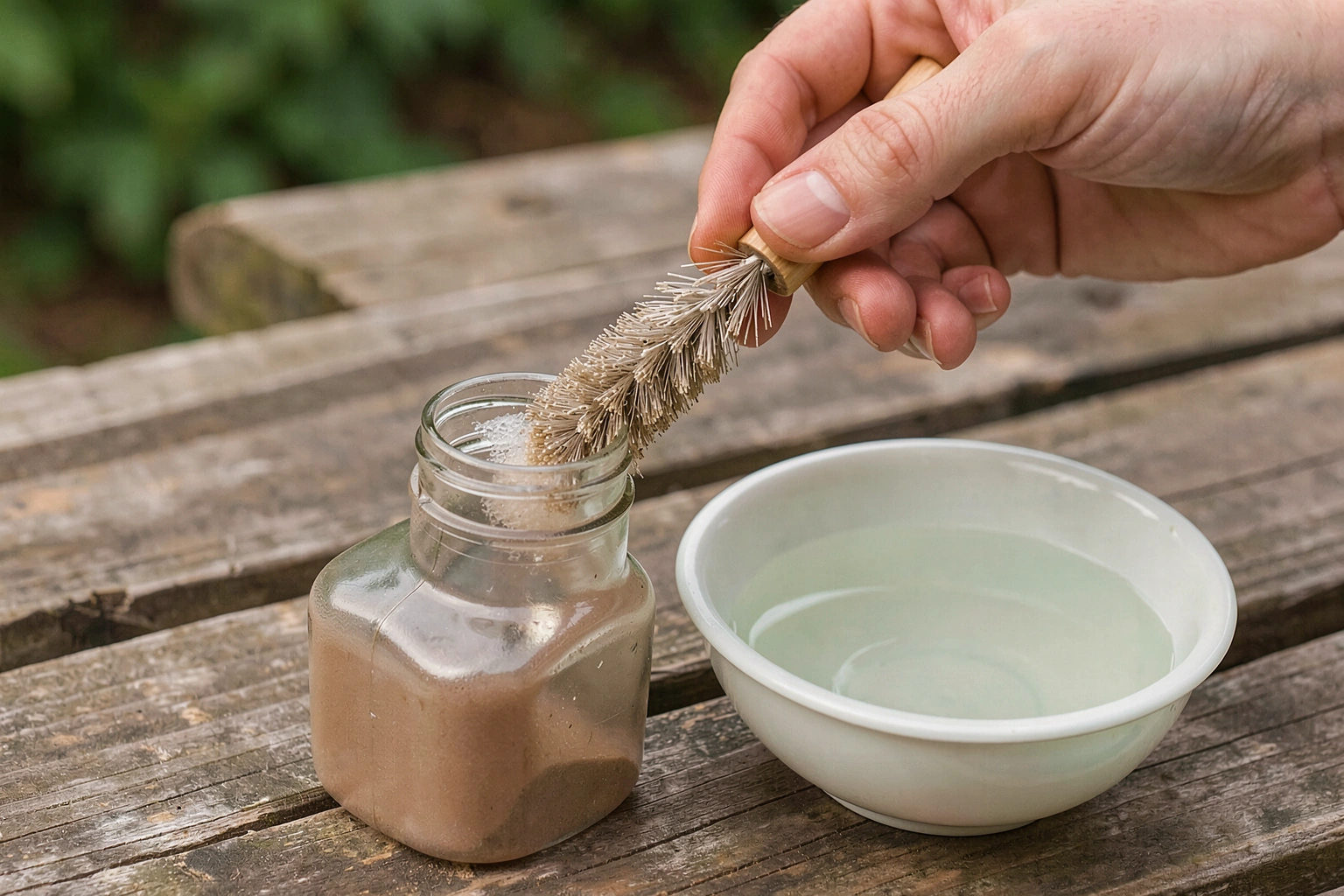
Step 5: Clean it every two weeks minimum. Take the feeder apart, rinse it with a 9:1 water-to-bleach solution, scrub the ports and base with a bottle brush, rinse thoroughly, and let it air dry completely before refilling. Wet, moldy seed is one of the fastest ways to harm the birds you are trying to help.
---
The 6 main feeder types, compared honestly
Once you know what each feeder does well, picking the right one for your space becomes straightforward. Here is a side-by-side look at the most common types.
| Feeder Type | Birds Attracted | Best Seed | Typical Price | Maintenance Level | Best For |
|---|---|---|---|---|---|
| Tube feeder | Chickadees, finches, nuthatches, titmice, cardinals | Black-oil sunflower, Nyjer | $15–$40 | Low–Medium | Most yards and balconies |
| Hopper feeder | Cardinals, jays, sparrows, doves, woodpeckers | Sunflower, mixed blends | $25–$60 | Medium | Yards with diverse species |
| Platform/tray feeder | Doves, sparrows, juncos, towhees, jays | Mixed seed, millet, peanuts | $10–$35 | High | Ground-feeding species |
| Suet feeder | Woodpeckers, nuthatches, wrens, starlings | Suet cakes | $5–$20 | Low | Winter feeding, wooded yards |
| Nectar feeder | Hummingbirds (and orioles with the right feeder) | 4:1 water-to-sugar solution | $10–$30 | High | Spring through fall |
| Window feeder | Chickadees, finches, nuthatches | Sunflower chips, Nyjer | $10–$25 | Medium | Apartments, close-up viewing |
Tube feeders
This is the workhorse of backyard feeding. A tube feeder is a clear or opaque cylinder with multiple feeding ports and perches. Fill it with black-oil sunflower seeds for the broadest appeal, or switch to Nyjer (thistle) seed if you want to specifically attract goldfinches and pine siskins. Nyjer requires a feeder with smaller ports so the tiny seeds do not spill out.
The main maintenance issue is clumping. Seed at the bottom of the tube can get wet and pack together, especially in humid climates. Check the base weekly and shake the feeder to keep seed moving. A feeder with a removable base makes cleaning much easier. Avoid tube feeders with wooden perches, which absorb moisture and grow mold faster than metal or plastic.
Hopper feeders
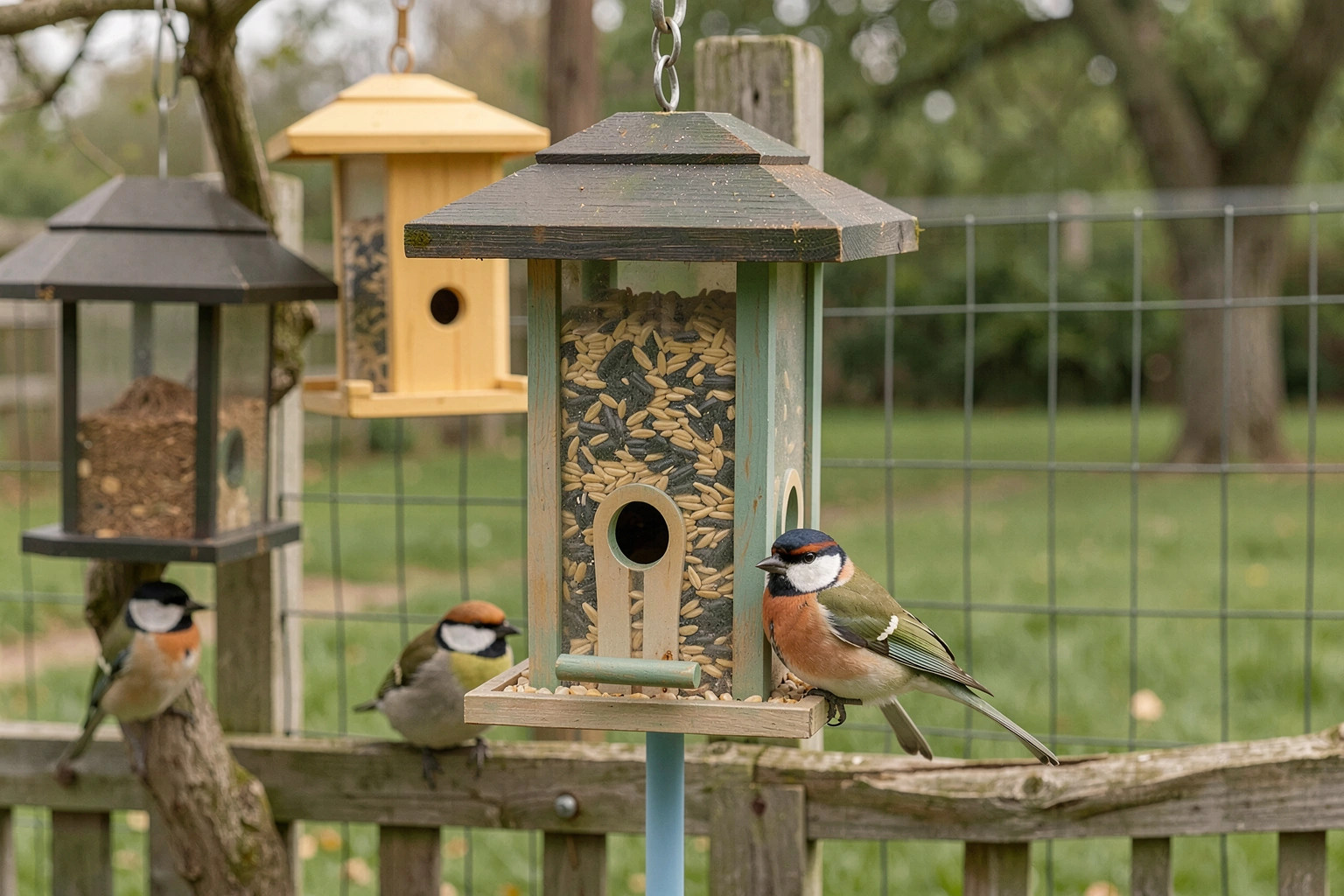
A hopper feeder looks like a little house with a seed reservoir in the middle and a tray around the base where birds land and feed. It holds more seed than a tube feeder (often 2 to 4 pounds), which means less frequent refilling. Cardinals love them because the wide tray gives them room to perch comfortably.
The tradeoff is that the enclosed seed reservoir can trap moisture if the roof is not well-sealed. After rain, check that seed near the bottom has not clumped or gone moldy. Hopper feeders are also more attractive to squirrels because of the wide landing platform. If squirrels are a problem in your yard, pair a hopper feeder with a baffle on the pole.
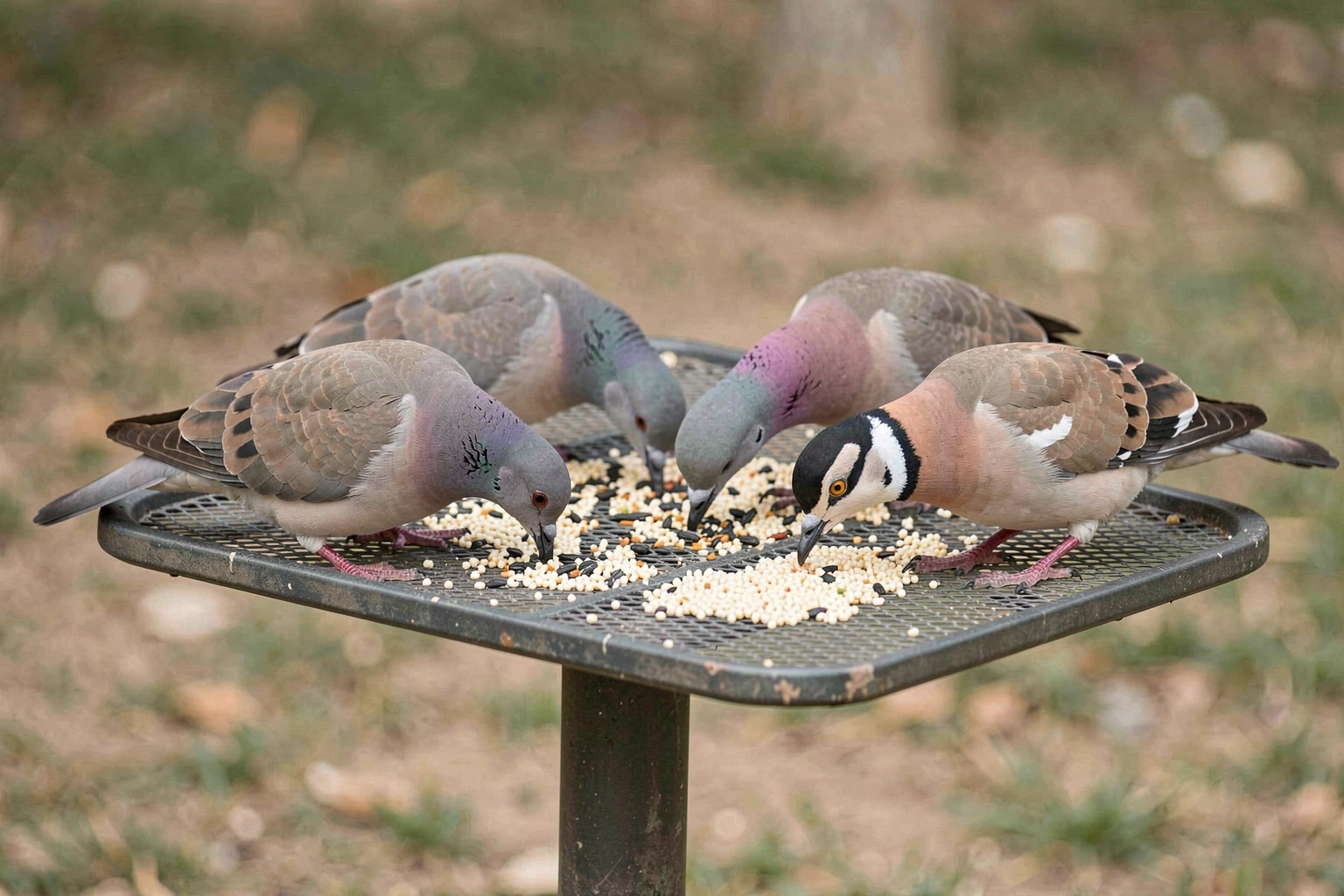
Platform and tray feeders
A platform feeder is essentially a flat tray, sometimes with a low rim and a mesh or screen bottom for drainage. It is the most accessible feeder style because birds can land from any direction and there are no ports to navigate. Ground-feeding species like mourning doves, dark-eyed juncos, white-throated sparrows, and towhees prefer this style.
The downside is exposure. Seed on an open tray gets wet fast, and wet seed molds within 24 to 48 hours in warm weather. Use a platform feeder with a mesh or screen bottom so water drains through, and only fill it with as much seed as birds will eat in a day or two. In rainy seasons, switch to a covered platform or move it under an eave.
Suet feeders
A suet feeder is a simple wire cage that holds a suet cake, which is rendered animal fat mixed with seeds, nuts, or fruit. It is the easiest feeder to set up (literally hang it from a branch or hook) and one of the cheapest to buy. Woodpeckers, nuthatches, brown creepers, and Carolina wrens are regulars.
Suet is primarily a winter food. In temperatures above 90°F, suet melts and goes rancid quickly. If you want to use suet in summer, look for "no-melt" or "summer blend" suet cakes, which are formulated to hold up in heat. Hang suet feeders on the shaded side of a tree or structure during warm months. Replace cakes every 1 to 2 weeks regardless of season.
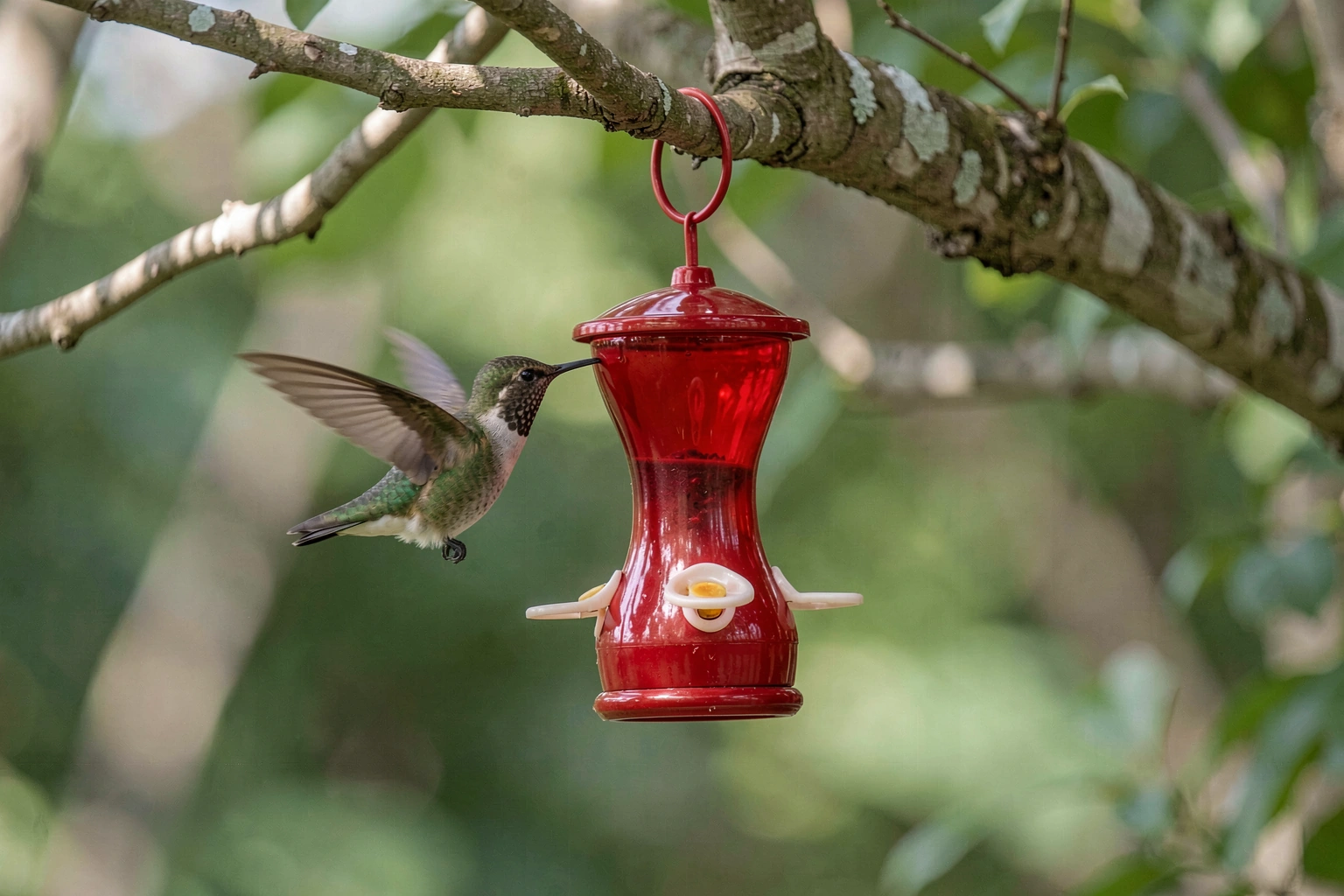
Nectar feeders
Nectar feeders are designed for hummingbirds and, with a wider port version, orioles. The standard hummingbird solution is 4 parts water to 1 part plain white granulated sugar, boiled briefly to dissolve and then cooled before filling. Do not use honey, brown sugar, or red dye. None of those are necessary or safe.
The biggest maintenance issue is fermentation. In warm weather, nectar can ferment or grow mold in as little as 2 to 3 days. Clean and refill nectar feeders every 2 to 3 days in summer, and every 4 to 5 days in cooler weather. Use a small bottle brush to scrub the ports and reservoir. Nectar feeders are seasonal in most of North America, typically April through September depending on your region.
Window feeders
A window feeder mounts directly to your window glass with suction cups. It is the best option for apartment dwellers, renters, or anyone who wants a close-up view of birds from inside. Chickadees and nuthatches adapt to them quickly.
The suction cups are the weak point. Check them monthly and replace them if they lose grip. Use sunflower chips (hulled sunflower seeds) instead of whole seeds to reduce shell debris on your windowsill. One important safety note: a feeder mounted within 3 feet of a window actually reduces collision risk because birds approaching from that close cannot build up enough speed to injure themselves on the glass. Feeders placed 10 to 30 feet away are the danger zone.
---
Seed types and what they actually do
Seed choice matters more than most beginners realize. The wrong seed mix can attract pest species, go to waste, or mold faster than birds can eat it.
Black-oil sunflower seed is the single best all-purpose choice. It has a higher oil content than striped sunflower, a thinner shell that smaller birds can crack, and it attracts the widest range of species. If you only ever buy one seed, make it this one.
Nyjer (also called thistle) is a tiny black seed that goldfinches, pine siskins, and redpolls go crazy for. It requires a feeder with small ports and is more expensive per pound than sunflower, around $1.50 to $2.50 per pound. It also goes stale faster than sunflower, so buy it in smaller quantities and store it in a cool, dry place.
Peanuts (shelled or in-shell) attract blue jays, woodpeckers, titmice, and nuthatches. Shelled peanuts work in a tube feeder or platform; in-shell peanuts are best on a platform or in a mesh peanut feeder. Peanuts are high in fat and protein, making them especially valuable in cold weather.
Mixed seed blends are convenient but often wasteful. Many commercial blends contain milo, millet, and red millet that most desirable backyard birds ignore, leaving it to pile up on the ground and mold. If you use a blend, look for one that is primarily sunflower, safflower, and white proso millet. White millet is genuinely useful for sparrows, juncos, and doves.
Suet cakes are not technically seed, but they belong in this conversation. They are the highest-calorie option you can offer and are especially valuable from October through March when insect-eating birds need supplemental fat.
Storage tip: Keep seed in a sealed metal or hard plastic container, off the ground, in a cool dry location. Seed stored in a paper bag in a warm garage will attract mice and go stale within weeks. A galvanized metal trash can with a locking lid is the classic solution and costs about $20 to $30.
---
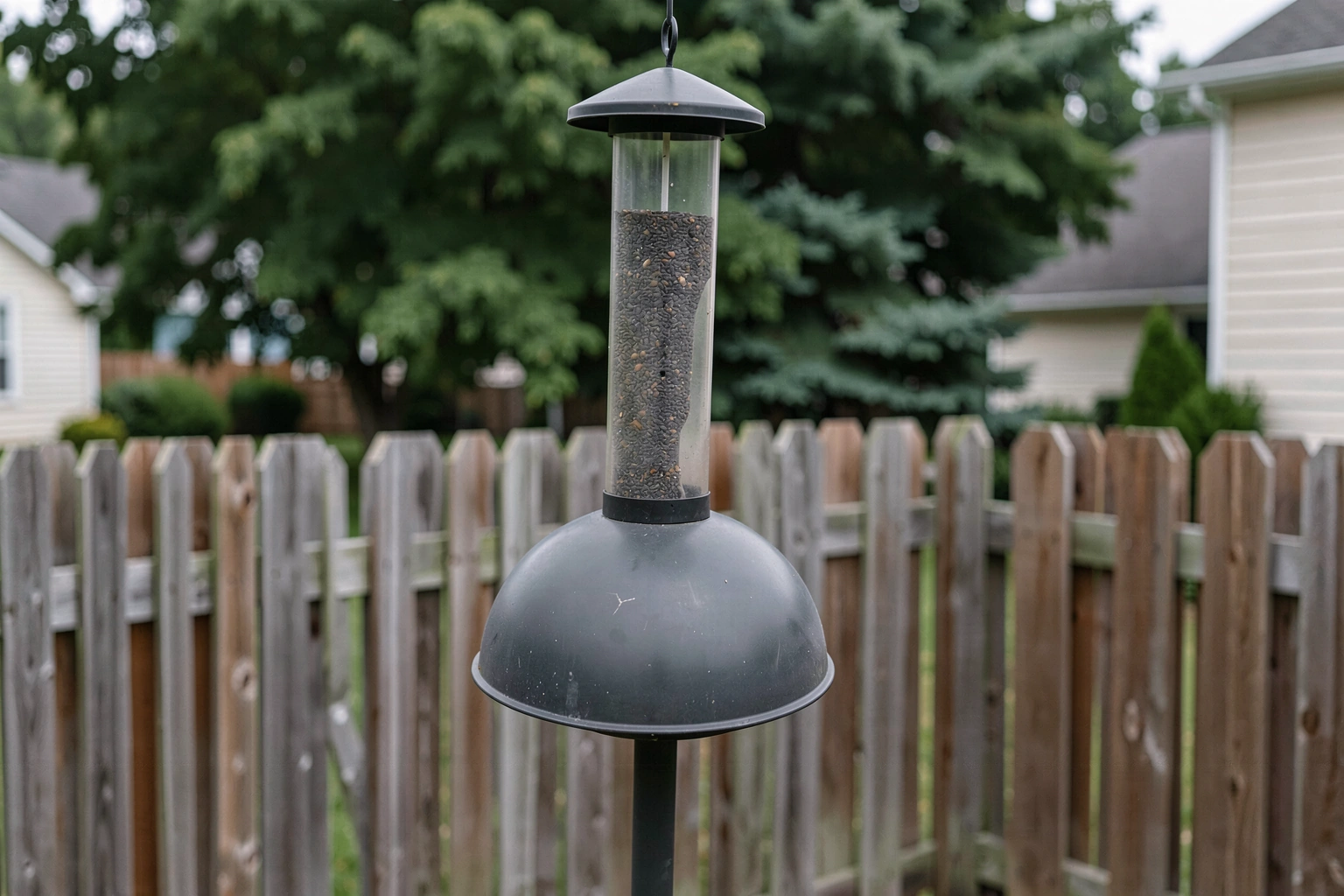
Placement, safety, and the squirrel problem
Where you put your feeder matters almost as much as what you put in it.
For most tube and hopper feeders, 5 to 6 feet off the ground is the sweet spot. High enough to give birds a sense of safety, low enough for you to refill and clean without a ladder. If you are mounting on a pole, use a baffle (a dome-shaped or cylindrical barrier) at least 4 feet off the ground to block squirrels from climbing up. Squirrels can jump about 5 feet horizontally, so keep feeders at least 8 to 10 feet away from any fence, tree trunk, or structure they could launch from.
Window collisions kill a significant number of birds every year. The safest placement is either within 3 feet of a window (too close to build up speed) or more than 30 feet away. The danger zone is 10 to 30 feet. If you cannot move your feeder, apply window collision deterrents like ABC BirdTape, Feather Friendly dots, or even strips of painter's tape on the outside of the glass. These break up the reflection that birds mistake for open sky.
Cats are a serious predator risk. If you have outdoor cats or neighborhood cats, keep feeders at least 10 feet from any low cover where a cat could hide and pounce. A pole-mounted feeder with a baffle is much safer than a feeder hanging from a low branch.
For balcony setups, a deck railing clamp mount or a tension-pole system works well. Keep the feeder on the side of the railing that faces away from foot traffic so birds are not constantly startled. A small tray or catch basin under the feeder reduces seed mess on the balcony floor.
---
How much to spend, and when to upgrade
You do not need to spend a lot to get started. Here is a realistic budget breakdown for a first setup.
| Item | Budget Option | Mid-Range Option |
|---|---|---|
| Tube feeder | $15–$20 (Perky-Pet, basic plastic) | $30–$40 (Aspects, metal ports) |
| Pole or hanger | $8–$15 (shepherd's hook) | $20–$35 (pole with baffle) |
| Black-oil sunflower seed (10 lbs) | $8–$12 | $10–$15 (premium, no filler) |
| Seed storage container | $5–$10 (plastic bin) | $20–$30 (galvanized metal can) |
| **Total** | **~$36–$57** | **~$80–$120** |
The budget option is genuinely fine to start. The main upgrade worth making early is the baffle, especially if squirrels are active in your yard. A good squirrel baffle ($15 to $25) pays for itself in saved seed within a few weeks.
When should you add a second feeder? Once you have consistent daily visitors to your first feeder, usually within 3 to 6 weeks of setup, that is a good sign to expand. A suet cage is the easiest and cheapest addition ($5 to $10 plus suet cakes). After that, a platform tray for ground feeders or a nectar feeder for hummingbirds are natural next steps depending on what species you are seeing.
---
What success looks like in the first two weeks
Do not expect birds on day one. Here is a realistic timeline.
Days 1 to 3: Nothing, probably. That is normal. Birds are cautious about new objects in their territory. Keep the feeder filled and leave it alone.
Days 4 to 7: You may notice a chickadee or two investigating. Chickadees are almost always the first to try a new feeder. If you see one, that is a very good sign.
Days 8 to 14: Regular visits from 2 to 5 species. Nuthatches, titmice, and house finches typically follow chickadees within a week or two. If you have not seen any activity by day 14, try moving the feeder 10 to 15 feet in a different direction, or check that the seed is fresh.
A simple way to track progress is to spend 10 minutes in the morning with a cup of coffee watching the feeder and jotting down what you see. You do not need a formal system. Even a sticky note on the fridge works. Over time, you will notice patterns: which species come first, which seeds disappear fastest, and which weather conditions bring the most activity.
If you want to go deeper, the Cornell Lab of Ornithology's eBird app lets you log sightings and see what other birders in your area are observing. It is free, and it turns casual feeder-watching into something genuinely interesting.
---
A few mistakes worth avoiding
These are the ones I see most often, and they are all easy to fix.
Letting seed sit too long. Seed that has been in a feeder for more than a week in warm weather is likely moldy or stale. Birds will avoid it, and moldy seed can make them sick. When in doubt, dump it and refill.
Placing the feeder in full sun. Direct afternoon sun heats seed and accelerates spoilage. A spot with morning sun and afternoon shade is ideal.
Using a cheap mixed blend with lots of filler. Milo and red millet are cheap fillers that most songbirds ignore. They pile up, get wet, and mold. Spend a little more on a quality seed or just use straight black-oil sunflower.
Giving up too soon. Two weeks feels like a long time when you are checking the feeder every day and seeing nothing. Stick with it. Once birds find your feeder and establish it as a reliable food source, they will return consistently for years.
Skipping the baffle. If squirrels are in your neighborhood, they will find your feeder. A baffle is not optional if you want to keep seed for birds. It is the single most effective squirrel deterrent, more effective than hot pepper additives or feeder design alone.
---
Adapting this for regions outside North America
The feeder types described here work globally, but seed preferences and species vary significantly by region. In the UK and Europe, sunflower hearts (hulled sunflower), peanuts, and fat balls (the European equivalent of suet cakes) are the most popular and effective options. In Australia, native nectar feeders attract honeyeaters, and seed feeders are generally discouraged for native species due to concerns about disease transmission and dietary disruption. Check with your local wildlife or birding organization before setting up feeders in Australia or New Zealand.
In most of Europe, the Royal Society for the Protection of Birds (RSPB) publishes excellent region-specific feeding guides. In Asia, local birding clubs and wildlife organizations are the best starting point for species-appropriate advice. The core principles of feeder hygiene, placement safety, and fresh seed apply everywhere.