The Simplest Setup That Actually Works
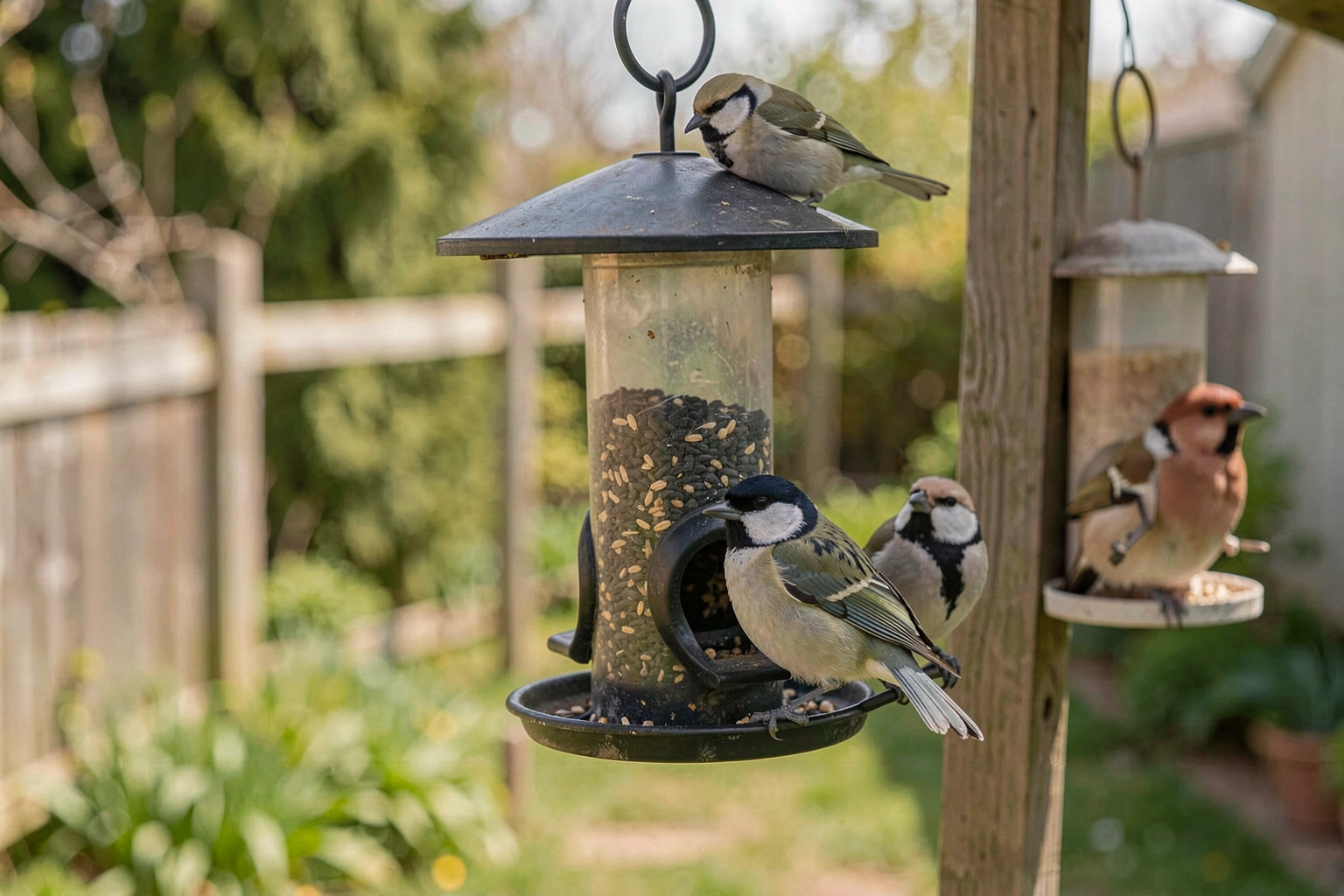
Start with one tube feeder (4 to 6 ports) or a small hopper feeder, fill it with black oil sunflower seed, mount it 5 to 6 feet off the ground on a sturdy pole or deck hook, and position it roughly 10 to 15 feet from your nearest window. That single setup will attract a reliable mix of common yard birds within one to two weeks, costs under $60 to get started, and takes about 15 minutes to install. Everything else in this guide builds on that foundation.
The reason this works so well for beginners is that black oil sunflower seed is accepted by more North American and European yard birds than any other single food. Chickadees, nuthatches, finches, cardinals, sparrows, and titmice all go for it. A tube or hopper feeder keeps the seed dry, is easy to refill, and is simple enough to clean without special tools. You are not overcomplicating things, and that is exactly the point.
---
Choosing Your First Feeder
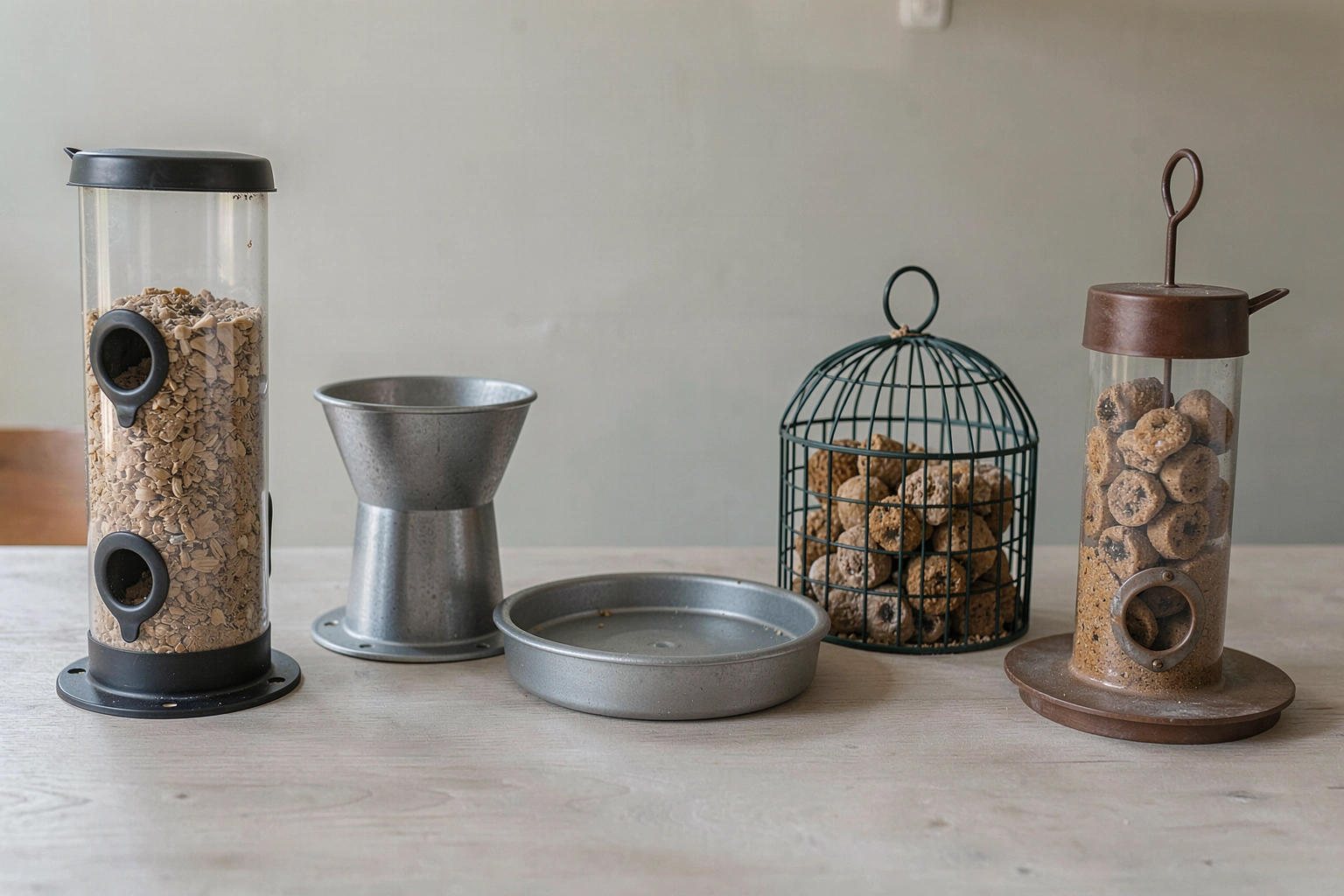
There are five main feeder types you will encounter, and they are not all equal for a beginner. Here is a quick comparison to help you decide.
| Feeder Type | Best For | Ease of Cleaning | Price Range | Main Drawback |
|---|---|---|---|---|
| Tube feeder (4–6 ports) | Small songbirds, versatile use | Easy | $10–$40 | Ports can clog with wet seed |
| Hopper feeder | Larger songbirds, higher capacity | Moderate | $25–$70 | Bulkier, heavier to hang |
| Platform feeder | Ground feeders, open variety | Very easy | $10–$40 | Exposed to squirrels and rain |
| Suet/basket feeder | Winter energy boost, woodpeckers | Easy | $8–$25 | Not for warm climates (suet melts) |
| Nyjer (thistle) feeder | Goldfinches, siskins, redpolls | Moderate | $10–$25 | Requires specialized Nyjer seed only |
For most beginners, a tube feeder is the better starting point. It holds enough seed for several days, keeps rain out reasonably well, and the port design limits waste. If you have a larger yard and want to attract bigger birds like blue jays or mourning doves right away, a small hopper feeder is a solid alternative. Either way, start with just one. Adding a second feeder in week two or three is easy once you know where birds are already visiting.
Platform feeders are tempting because they are cheap and simple, but they expose seed to rain and squirrels more than any other type. Save those for later once you have your main feeder dialed in.
---
What Seed to Buy (and What to Skip)
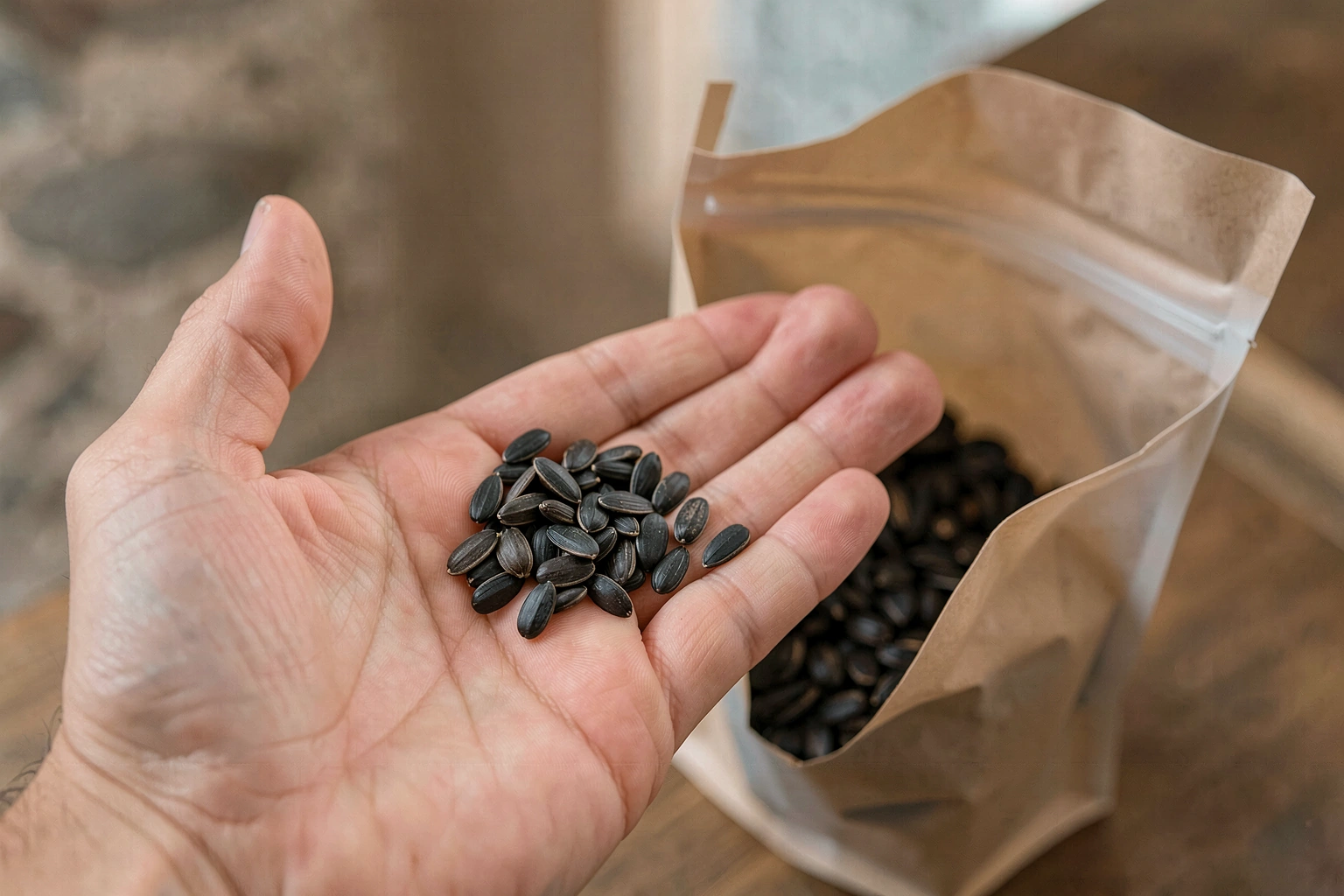
Black oil sunflower seed is the one bag you need. It has a thin shell that small birds can crack easily, a high fat content that gives birds real energy, and it attracts the widest variety of common yard species. You can buy it hulled (no shells, less mess under the feeder) or unhulled (cheaper, birds do the work). Either version works well.
Avoid the cheap mixed seed bags that are mostly millet, milo, and cracked corn. Birds pick through those mixes and toss the filler onto the ground, which creates a mess, attracts pests, and wastes your money. If the bag is mostly red or tan seeds with a few sunflower seeds mixed in, put it back.
If you specifically want to attract goldfinches, American goldfinches, pine siskins, or common redpolls (in Europe, siskins and goldfinches), Nyjer seed (also called thistle seed) is excellent. But it requires a dedicated Nyjer feeder with tiny ports, so treat it as an add-on once your main feeder is running.
For winter feeding, suet blocks are worth adding. They are high in fat and calories, woodpeckers love them, and they are inexpensive. Just avoid suet in hot weather (above 80°F / 27°C) because it goes rancid quickly and can harm birds.
One more thing: a shallow water source nearby makes a bigger difference than most beginners expect. A simple ceramic dish or a basic birdbath placed within 10 to 15 feet of your feeder will draw birds that might not visit the feeder at all. Change the water every two to three days to keep it fresh and mosquito-free.
---
Where to Put It
Placement is where a lot of beginners go wrong, and it is also one of the easiest things to fix.
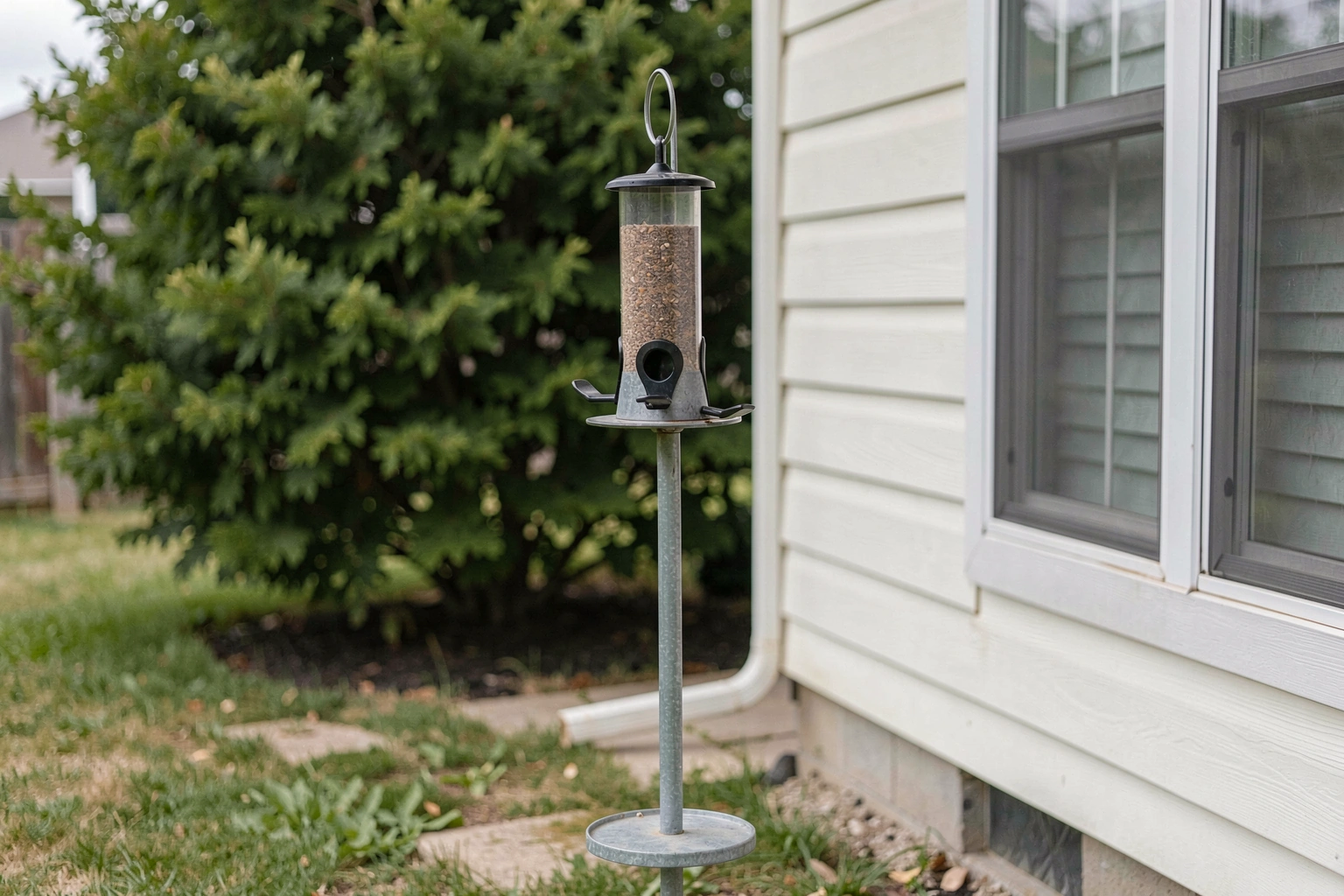
Height: Mount your feeder 5 to 6 feet (roughly 1.5 to 1.8 meters) off the ground. This puts it in the sweet spot where birds feel safe from ground predators but you can still see and refill it comfortably. A freestanding pole with a mounting bracket is the most flexible option. A deck hook or shepherd's hook works just as well if you have a porch or balcony.
Distance from windows: Keep the feeder at least 10 to 15 feet (3 to 4.5 meters) from any large window. Birds that startle and fly toward a window at that distance have enough time to veer off. If your space is tight and you cannot get that clearance, the other safe option is to mount the feeder within 3 feet (about 1 meter) of the window. At that close range, birds cannot build up enough speed to injure themselves if they do hit the glass. The dangerous middle zone is roughly 4 to 9 feet away, so avoid that if you can.
Distance from trees and fences: Keep the feeder at least 10 feet (3 meters) from branches, fences, or rooftops that squirrels can jump from. Squirrels can leap horizontally about 10 feet and drop from above, so a pole in an open area with a baffle is your best defense. More on that in a moment.
Cover nearby: Birds feel safer feeding when there is some shrub cover or a tree within 10 to 15 feet to retreat to if they get spooked. A completely open yard with no nearby cover will slow down early visits. If your yard is very open, even a potted shrub or a trellis nearby helps.
Cats: If outdoor cats are a problem in your area, a pole-mounted feeder with a smooth metal baffle below it is the safest setup. Cats are ambush hunters, so keeping the feeder away from low dense shrubs where a cat could hide is just as important as the height.
---
Squirrel-Proofing Without Losing Your Mind
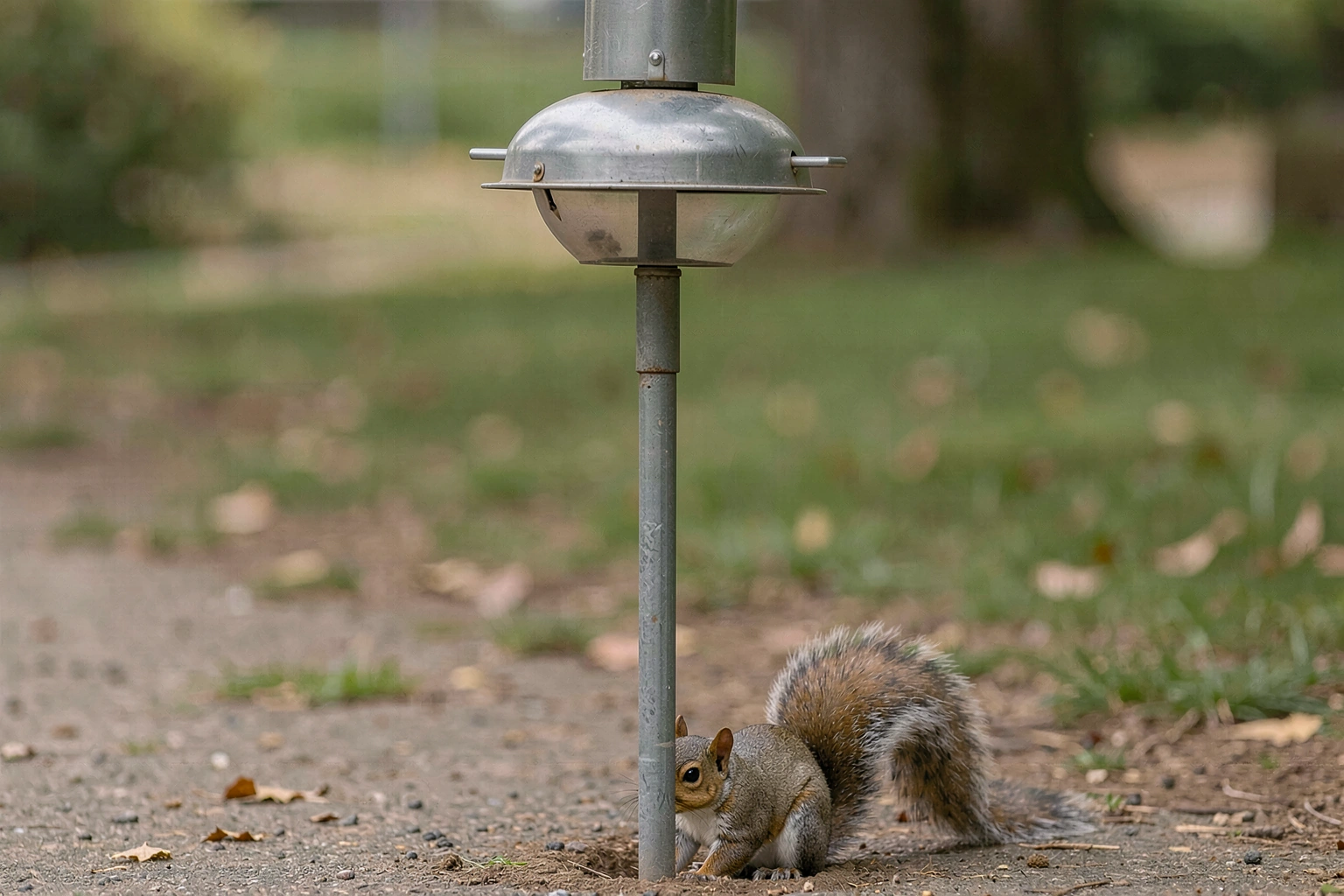
Squirrels will find your feeder. That is not a question of if, it is when. The good news is that a basic squirrel baffle (a dome or cylinder that mounts on the pole below the feeder) stops most squirrels reliably and costs $15 to $30. Mount the baffle at least 4 feet off the ground and make sure the pole is at least 10 feet from any jumping-off point.
If squirrels are still getting through, a cage-style feeder (a tube feeder surrounded by a wire cage with openings sized for small birds) is the most foolproof solution. Birds fly right through the cage; squirrels cannot get in. These run $25 to $50 and are worth it if you have persistent squirrel pressure.
Safflower seed is another option. Most squirrels dislike the bitter taste and will leave it alone, while cardinals, chickadees, and house finches eat it readily. It is not as universally attractive as sunflower seed, but it is a useful tool if squirrels are dominating your feeder.
---
Keeping It Clean (This Part Actually Matters)
A dirty feeder is one of the most common reasons birds stop visiting, and it can also spread disease among the birds that do come. The good news is that cleaning is simple and does not take long.
Every two weeks, take the feeder apart, wash it with hot soapy water, and rinse it well. Then soak or rinse it with a 10% bleach solution (one part bleach to nine parts water) for about five to ten minutes. Rinse thoroughly with clean water and let it air-dry completely before refilling. This kills mold and bacteria that build up in the seed residue.
In summer or humid climates, bump that up to weekly cleaning. Warm, damp conditions accelerate mold growth, and moldy seed can make birds sick. If you ever open the feeder and see clumped, discolored, or foul-smelling seed, dump it all out immediately, clean the feeder, and start fresh.
Store your seed in a sealed, dry container (a metal trash can with a lid works great) away from moisture and pests. Seed that gets damp in the bag will mold before it even goes into the feeder.
Also keep the ground under the feeder reasonably tidy. Spilled seed and hulls attract mice, rats, and other pests. A tray or catch-basin that attaches below the feeder helps contain the mess and makes cleanup easier.
---
What to Do If No Birds Show Up
Give it one to two weeks before worrying. Birds need time to discover a new food source, especially if feeders are not common in your neighborhood. That said, here are the most common reasons a new feeder sits empty and what to do about each.
If nothing visits after two weeks, first check your seed. Old or stale seed loses its scent and appeal. Buy a fresh bag and refill. Next, look at placement. Is the feeder too close to a window? Too far from any cover? Try moving it a few feet closer to a shrub or tree line. Sometimes a small adjustment makes a big difference.
If birds visit briefly but do not stay, a predator (hawk, cat, or even a neighborhood dog) may be patrolling the area. Watch for a few minutes at different times of day. If you see a hawk perching nearby, birds will avoid the feeder for a day or two after each visit. That is normal and will pass.
If seed is getting wet and clumping after rain, your feeder may not have adequate drainage. Check that the drainage holes at the bottom of the feeder are clear. A feeder with a roof or weather guard helps in rainy climates. You can also switch to hulled sunflower seed, which dries faster than unhulled.
If squirrels are emptying the feeder before birds get a chance, go back to the squirrel-proofing section above. A baffle or cage feeder solves this in most cases.
---
How the Seasons Change Things
Your feeder does not need a completely different setup each season, but a few adjustments help.
In winter, birds need more calories to stay warm. Suet blocks and peanut butter (plain, no salt or xylitol) are excellent additions from late fall through early spring. If you live somewhere with hard freezes, a heated birdbath or a water dish with a small immersion heater keeps liquid water available when everything else is frozen, and birds will flock to it. In cold climates, check that seed is not freezing solid in the feeder, which can happen with hulled seed in very wet, cold conditions.
In spring and summer, natural food sources (insects, berries, seeds) become abundant, so feeder traffic often drops. Do not take that as a sign something is wrong. Keep the feeder clean and stocked, but you may refill less often. If you live in a region with hummingbirds (most of North America, parts of southern Europe), late spring is a great time to add a nectar feeder. A simple 4:1 water-to-white-sugar solution (no red dye needed) is all you need.
In humid climates like the southeastern US or parts of the UK, prioritize feeders with good drainage and ventilation, and clean more frequently. In arid climates, the water source becomes even more important than the feeder itself during hot months.
---
Your Starter Shopping List
Here is everything you need to get started, with realistic price ranges so you know what to expect.
| Item | What to Look For | Estimated Cost |
|---|---|---|
| Tube or hopper feeder | Easy-open ports, durable plastic or metal, drainage holes | $15–$40 |
| Black oil sunflower seed | 5–10 lb bag to start; buy larger once you know your refill rate | $8–$18 |
| Mounting pole or deck hook | Sturdy, at least 5–6 ft tall; shepherd's hook works well | $10–$25 |
| Squirrel baffle (optional but recommended) | Dome or cylinder style, fits your pole diameter | $15–$30 |
| Cleaning brush | Bottle brush or feeder-specific brush kit | $5–$12 |
| Shallow water dish or birdbath | Ceramic or plastic, 1–2 inches deep | $10–$30 |
| Seed storage container | Sealed metal or hard plastic, rodent-resistant | $10–$20 |
A basic starter setup (feeder, seed, pole, and brush) runs about $40 to $70. Add a baffle and water dish and you are still well under $100. You do not need to spend more than that to get a setup that works reliably.
Look for feeders from brands like Droll Yankees, Woodlink, or Brome. They publish clear cleaning and maintenance guidance, use durable materials, and their feeders are designed to be taken apart easily for washing. That last point matters more than most people realize until they are trying to scrub a feeder that does not come apart.
---
Your First Week, Step by Step
Day 1: Buy your feeder, a bag of black oil sunflower seed, and a mounting pole or hook. Install the feeder in a sheltered spot 5 to 6 feet off the ground, at least 10 feet from windows and branches. Fill it up and add a water dish nearby.
Days 2 and 3: Check the feeder morning and evening. Do not be discouraged if nothing visits yet. Note whether seed looks dry and fresh. Adjust placement slightly if the feeder is in a very exposed or noisy spot.
Days 4 through 7: If birds have found the feeder, watch which species visit and when. Most activity happens in the early morning and late afternoon. Start your cleaning log so you remember when you last washed the feeder.
Week 2 and beyond: Once you have regular visitors, consider adding a suet cage in winter or a Nyjer feeder if you want to attract finches. A second feeder type placed a few feet away from the first can double the variety of species you see without much extra effort.
The whole thing really does come together faster than most beginners expect. A week from now you could be watching chickadees work through a fresh batch of sunflower seed from your kitchen window. That is a pretty good return on a $50 investment and an afternoon of setup.