Introduction
Backyard bird feeding can transform a ordinary outdoor space into a dynamic, seasonal wildlife habitat. The right mix of feeders, foods, and placement can attract a surprising diversity of birds while keeping the setup simple, clean, and sustainable. This guide uses practical, field-tested guidance to help homeowners understand common and specialty feeder types, what to feed, how to place and maintain setups, and how to tailor configurations to regional birds and seasonal changes. The aim is to provide a one-stop reference that translates research into actionable steps you can implement this weekend.
Readers seeking the best results will benefit from thinking about three core ideas at once: a thoughtful mix of feeder types, foods that match local bird populations, and regular maintenance that minimizes waste and disease risk. With these elements in balance, a backyard can host year-round activity while remaining easy to manage. The focus here is practical guidance backed by field experience and widely accepted best practices from authoritative sources in backyard bird care.
Feeder types
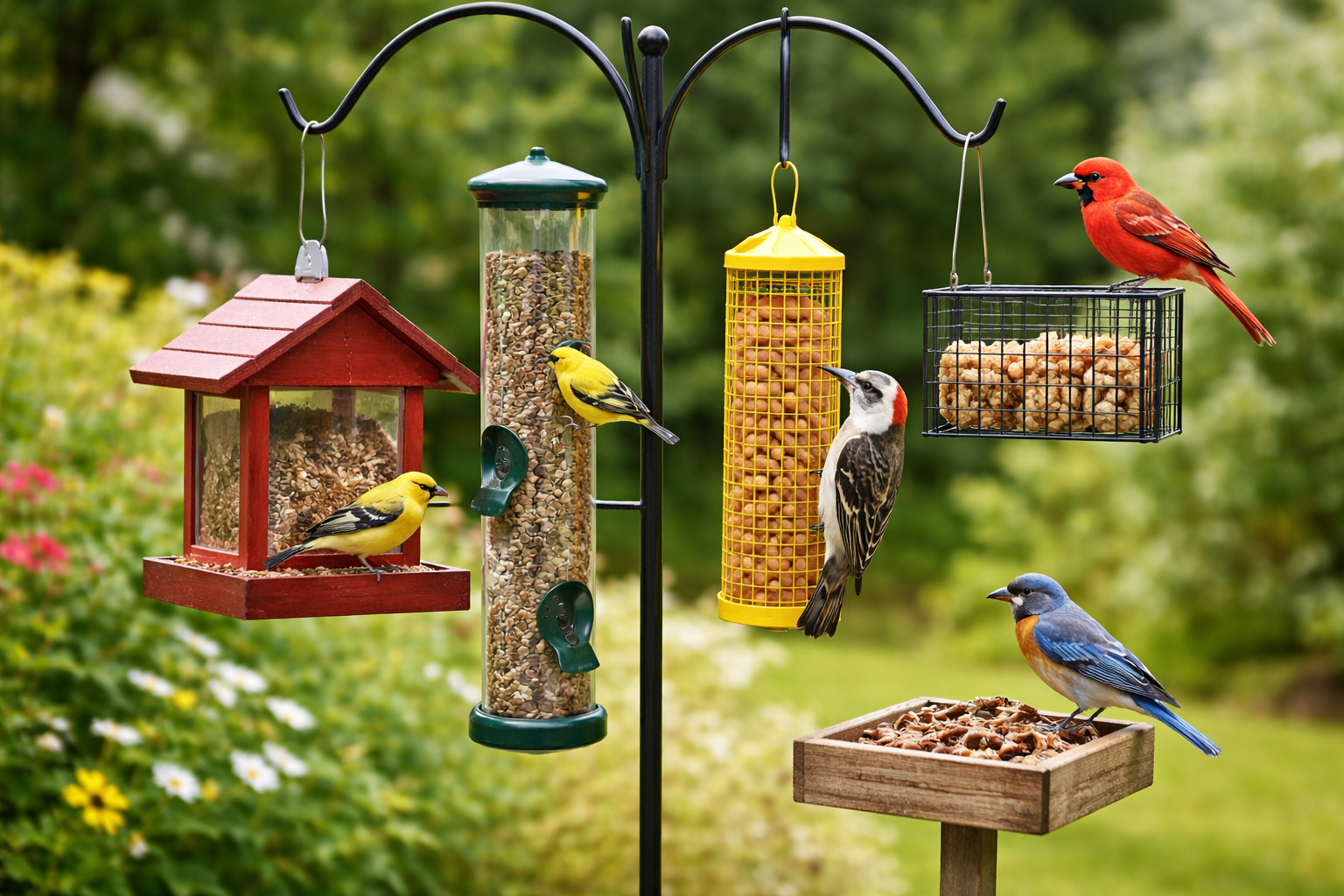
This section covers the major feeder categories you are most likely to encounter, with clear pros and cons, attractants that work best for common North American backyard birds, safety considerations, and how to adapt choices to urban versus rural settings and different yard sizes. For each type, you’ll find a concise field-tested setup example to help you start today.
Tube and nyjer seed feeders
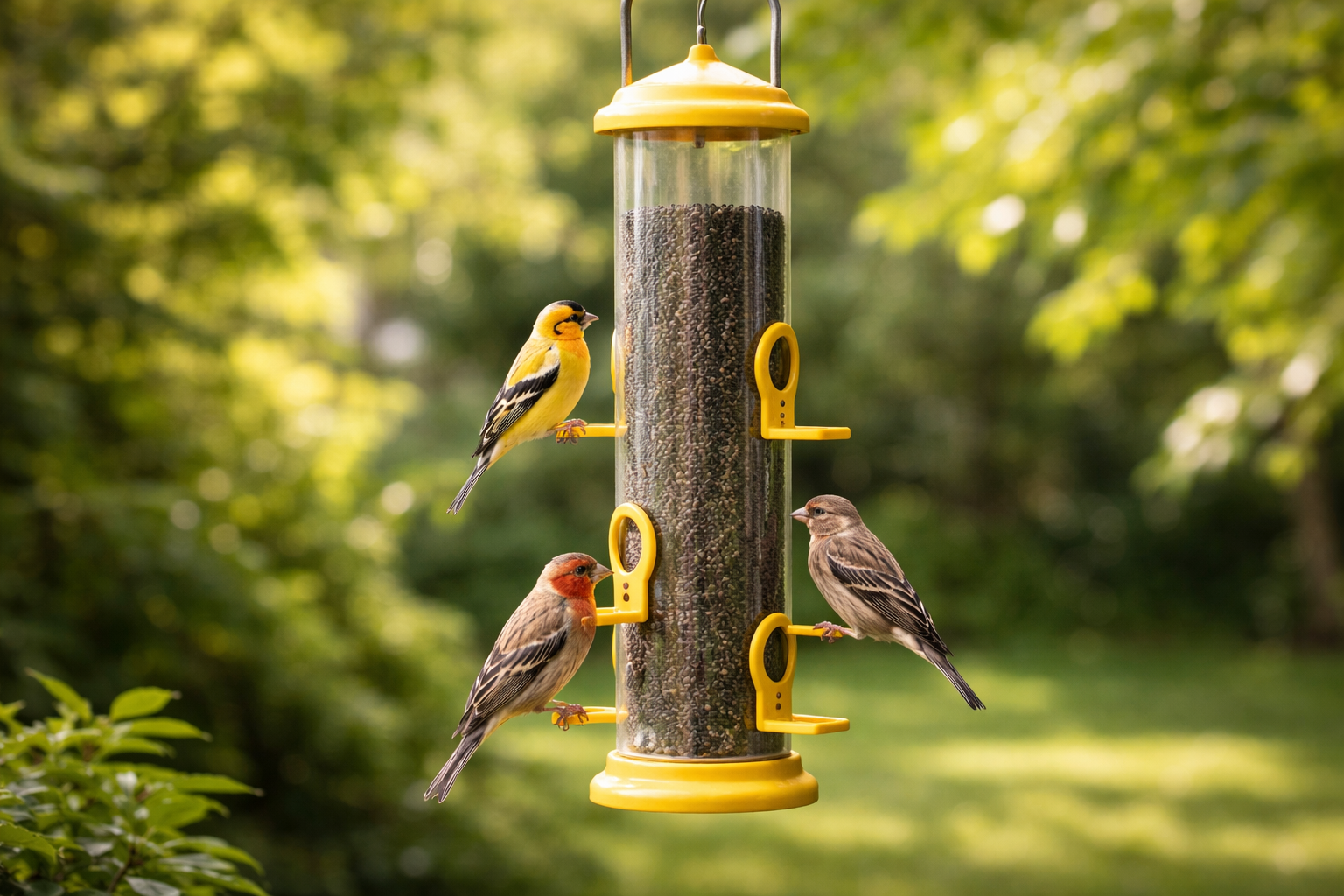
Tube feeders are tall, slender containers that dispense tiny nyjer or thistle seeds. They are excellent for small finches, goldfinches, pine siskins, and other small seed eaters. The small ports reduce seed waste but require regular maintenance to prevent mold and clogging.
Pros: Squirrels and larger birds often find these feeders less attractive due to small seed size and portability. Excellent for high-frequency feeding in limited spaces. Minimal ground spill when used with properly designed ports. Cons: Nyjer seed can be expensive per serving, and weather can cause seed to sift and clump if you don’t clean regularly. Some birds avoid crowded tube setups if perches are scarce. Best attractants and scenarios: Nyjer seed works best when you offer a steady supply and place the feeder where visibility is high for small finches. Pair with a second feeder type to broaden your resident assemblage. Safety considerations: Use non-toxic plastics or metal components and ensure the feeder can be disassembled for thorough cleaning. Regularly inspect ports for mold and replace weathered seals. Regional notes: In urban yards with heavy wind, place the tube in a sheltered spot to reduce seed loss. In colder climates, keep the feeder away from snow drifts to avoid seed clogging. Practical setup example: A small two-port nyjer feeder mounted about five to six feet above ground, near a shrub border for quick perching, fed with nyjer seed and a secondary seed mix to attract goldfinches and pine siskins. A low-surface-area dish below the feeder can catch the occasional spill without attracting larger pests.
Saucer and tray feeders
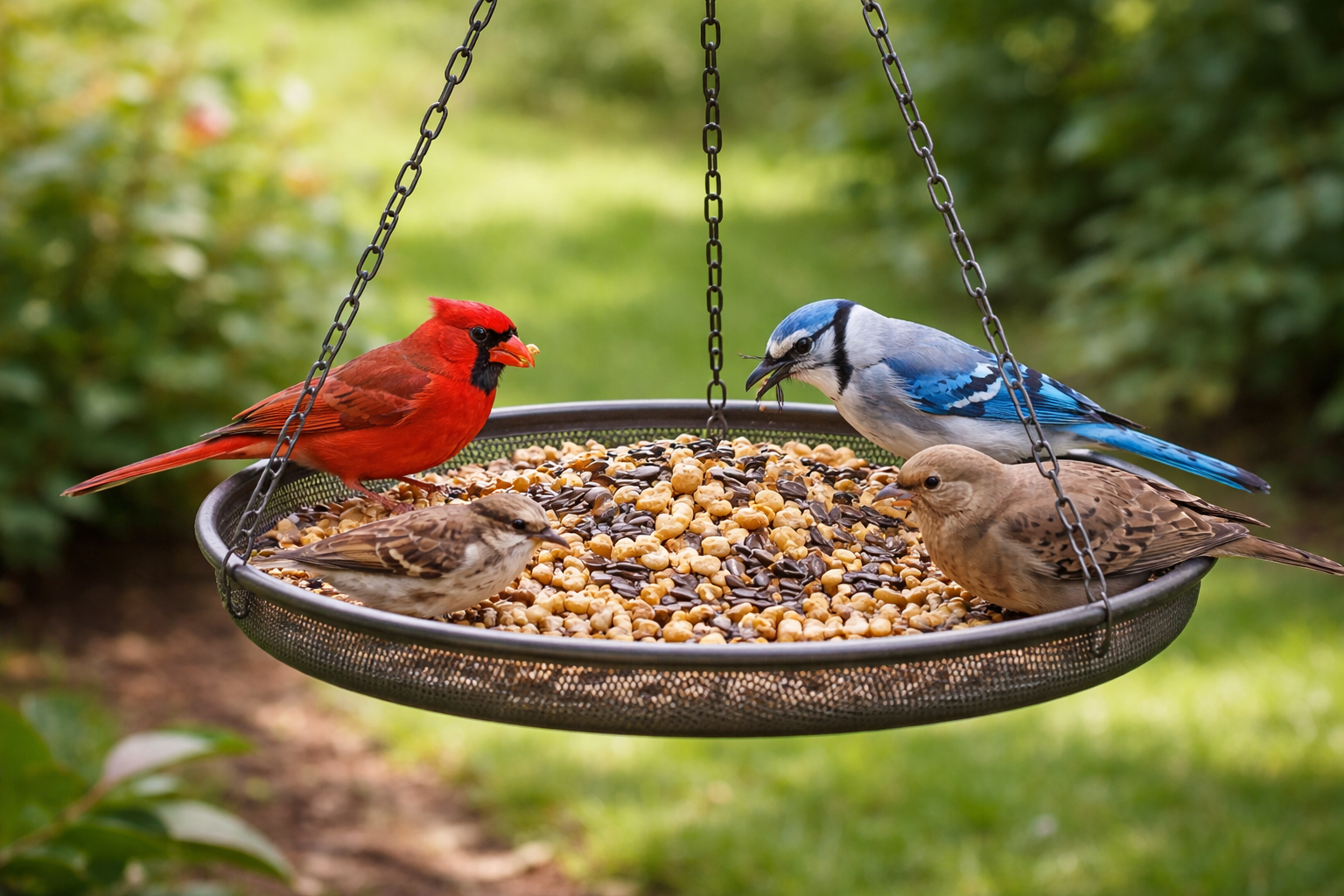
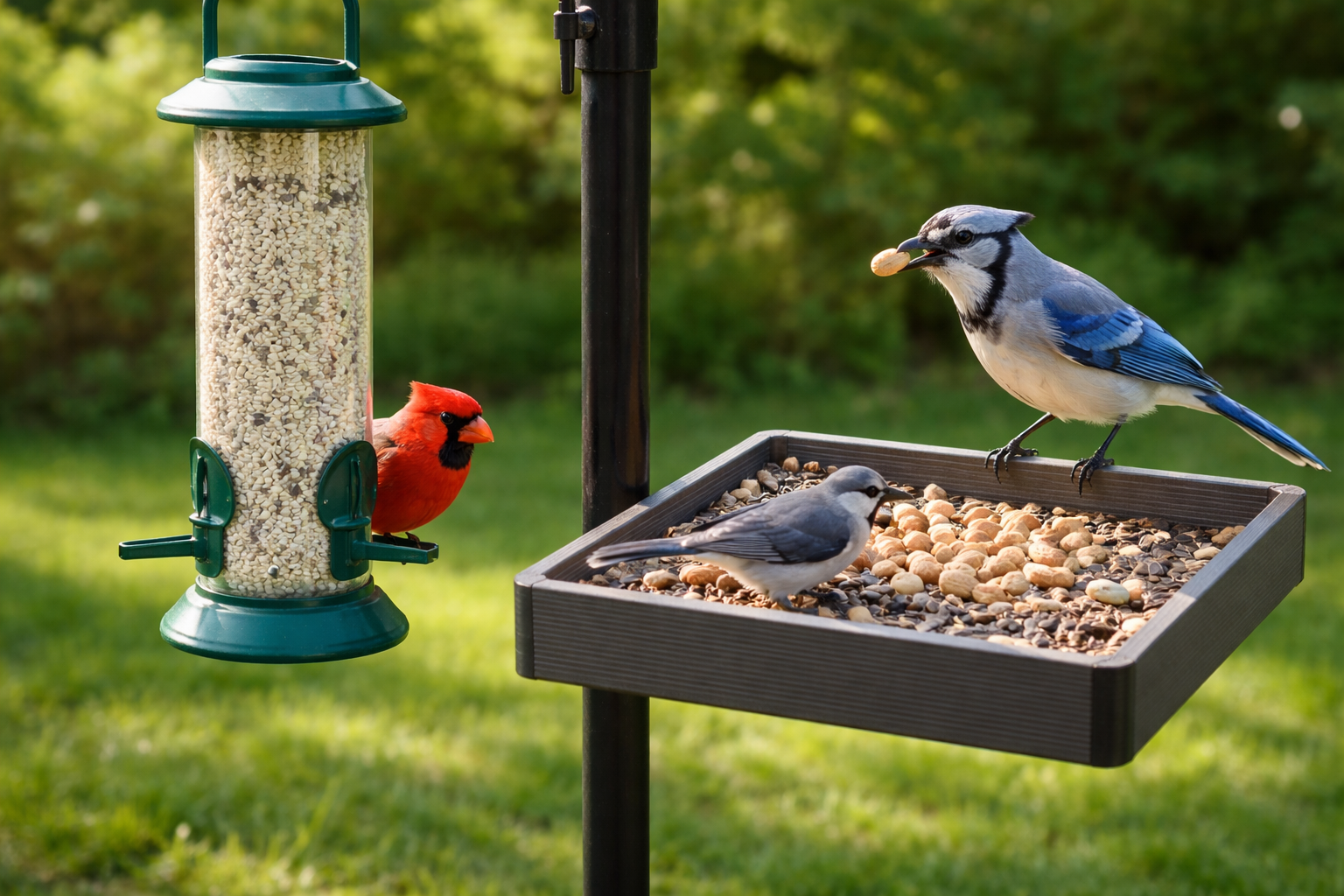
Saucer and tray feeders are flat or shallow dishes that sit on a tray or wire rack. They attract a broad spectrum of birds, from sparrows and cardinals to jays and doves.
Pros: Easy to clean, inexpensive, and versatile for larger seed blends or mixed fruit. They excel in yard spaces where birds hesitate to perch on narrow tubes. Cons: Open trays can attract more ground-feeding species and create more seed waste if not monitored. Ground maintenance may be more frequent in wet or snowy regions. Best attractants and scenarios: Cowbird or cardinal-friendly seed mixes, unshelled peanuts, chopped peanuts, or fruit pieces can be added to lure a wider set of species. Safety considerations: Use a tray with a raised rim to reduce ground spill and keep feed out of reach of ground pests. Rotate foods to minimize mold growth. Regional notes: In windy climates, hang or mount away from high-traffic areas to reduce seed scattering. In drought-prone areas, a tray feeder placed in a shaded, cooler corner helps maintain seed quality longer. Practical setup example: A weather-resistant saucer mounted on a sturdy hanger at three to four feet above the ground, loaded with a mix of black-oil sunflower and safflower for a broad audience including chickadees, cardinals, and sparrows.
Platform feeders
Platform feeders are open-topped or tray-like platforms that rest on a base or frame. They can accommodate a wide variety of foods and larger birds.
Pros: Very versatile and easy to fill with a wide range of foods, including sunflower seeds, fruit, mealworms, or suet bricks. Great for larger yards, families of birds, and species that prefer ground-level feeding. Cons: They can attract larger pests and require more frequent cleaning to control waste and mold buildup, especially in humid climates. Best attractants and scenarios: A mixed blend of seeds, chopped fruit, and occasional mealworms will attract a diverse mix of birds, including bluebirds, sparrows, and cardinals. Safety considerations: Use a sturdy, washable surface and a top cover or screen to reduce debris and water accumulation. Place away from fences where raccoons or squirrels can access the platform. Regional notes: In humid regions, keep the platform elevated and sheltered to reduce mold. In dry climates, ensure seeds stay dry to minimize clumping.
Practical setup example: A mid-sized wooden platform with a removable tray, placed five feet from tree cover and three feet from any window, offering sunflower seeds, safflower, and berries with a small elevated tray for water on hot days.
Hopper feeders
Hopper feeders are enclosed, gravity-fed containers that release seed into a seed tray as birds feed. They store more seed and appeal to a variety of species.
Pros: High capacity and weather resistance. They tolerate less frequent filling while still attracting a broad range of species, including nuthatches and grosbeaks. Cons: They can be more expensive and heavier, and the seed inside may spoil if kept in damp conditions. Best attractants and scenarios: Black-oil sunflower, safflower, or mixed seeds work well with this type. Hopper feeders pair nicely with mid-sized perches and nearby trees for security. Safety considerations: Ensure the seed portion is protected by a roof and a caged entry to deter larger birds and squirrels. Clean thoroughly on a regular schedule. Regional notes: In snowy climates, a sheltered hopper feeder can reduce seed loss to wind and snow. Practical setup example: A medium-height hopper feeder surrounded by evergreen cover to reduce exposure to winter winds, loaded with a sunflower-heavy seed blend and safflower to discourage squirrels.
Suet and mesh suet feeders
Suet feeders deliver high-energy fat-based foods that keep birds warm during cold months. Mesh sacks or rigid cages hold suet or suet cakes.
Pros: Exceptional energy density, attracting insect-eating birds such as woodpeckers, chickadees, and nuthatches. Works well in winter when natural food is scarce. Cons: Suet can melt or attract more pests if left unprotected in hot weather or during off-peak seasons. Mesh feeders can collect debris and harbor mold if not cleaned. Best attractants and scenarios: Suet cakes with insects or seeds, and fruit-based suet blends for variety. Pair with a feeder that offers a quick access cap to minimize waste. Safety considerations: Use a metal mesh or robust plastic cage that is easy to clean. Keep suet away from direct sun to avoid rapid spoilage. Regional notes: In northern regions, keep suet feeders in a shaded area or protected from afternoon sun to extend shelf life. Practical setup example: A compact suet cage mounted on a tree trunk at eye level, with a backup service of insect-enriched suet for woodpeckers and chickadees.
Hummingbird feeders
Hummingbird feeders dispense a sugar solution nectar that hummingbirds rely on, especially in late spring through early fall.
Pros: Quick, direct energy for energetic hummingbird flybys and territorial activity. Easy to monitor with visible nectar levels. Cons: Nectar can spoil quickly in warm weather and attract ants, bees, or wasps if not well guarded. Nectar safety and cleanliness are critical to prevent disease. Best attractants and scenarios: A simple sugar solution (4 parts water to 1 part sugar) refreshed regularly in seasonally appropriate weather. Use a feeder with ant guards and easy-to-clean ports. Safety considerations: Do not use artificial sweeteners or coloring. Clean feeders thoroughly between refills and ensure nectar is never left to ferment. Regional notes: In hot southern regions, more frequent feeding with fresh nectar reduces spoilage. In colder northern areas, keep feeders in partial shade to slow nectar spoilage. Practical setup example: A dedicated hummingbird setup with one or two slim port feeders placed near flowering shrubs, with a feeder brush for quick daily cleaning and a routine to replace nectar every two to three days during peak heat.
Peanut feeders and safflower-focused options
Peanut feeders and safflower-based foods offer alternatives to traditional sunflower blends and can attract unique birds while deterring some pests.
Pros: Safflower is generally less attractive to squirrels and many ground-feeders, providing a cleaner feeder experience. Peanuts are favored by jays, chickadees, and titmice. Cons: Peanuts can spoil if not stored properly and may attract larger birds that could overwhelm a feeder designed for smaller species. Best attractants and scenarios: A safflower-only or safflower-heavy blend, sometimes combined with black-oil sunflower to broaden appeal without increasing pest pressure. Safety considerations: Use shelled, unsalted peanuts or peanut blends free of molds. Keep peanuts dry to avoid mold growth. Regional notes: In areas with peanut-sensitive birds, observe local bird populations for negative reactions and adjust feed types accordingly. Practical setup example: A dedicated safflower feeder mounted at a height that avoids ground-dwelling pests, with a secondary tray feeder offering mixed seeds to attract a wider array of birds while minimizing waste.
Specialty and DIY options
Seed cylinders, glass feeders, and predator guards offer niche advantages or budget-friendly customization. DIY setups can work well for readers who enjoy a hands-on approach.
Pros: Customization options let you tailor feeding to local bird populations and garden layouts. Some DIY options can be cost-effective and visually appealing. Cons: May require more maintenance and careful validation of materials to ensure non-toxicity and durability. DIY options may lack manufacturer warranties. Best attractants and scenarios: Seed cylinders for limited balcony space, glass feeders for easy monitoring, and predator guards to protect feeders from larger wildlife. Safety considerations: Use food-grade materials and avoid toxic paints or coatings. Ensure any DIY feeder is stable, easy to disassemble, and thoroughly cleanable. Regional notes: In windy or exposed locations, a compact, wall-mounted DIY feeder can reduce seed loss while maintaining visibility for birds. Practical setup example: A sealed, glass-front feeder with a simple predator guard around the base, mounted toward the sunny, sheltered corner of a deck to maximize visibility and minimize mold risk.
What to feed and why
Food choices shape which birds visit and how often they return. The most common, practical options include seeds, suet, mealworms, fruit, and nectar, each with seasonal relevance and safety considerations.
Seeds. Black-oil sunflower seeds are a staple because their thin shell and high fat content appeal to many species. Nyjer seed targets smaller finches but needs careful storage to prevent mold and to keep it dry. Safflower is less attractive to several pests and some ground-feeders, but not universally favored by all birds. A mixed blend that includes at least two complementary seeds often yields the broadest appeal without over-reliance on a single species.
Suet. Fat-based suet delivers dense energy for winter months and insect-eating birds during shoulder seasons. Choose unsalted suet and consider blends with dried fruit or insects to broaden appeal. Remember to monitor for mold and pest access.
Mealworms. Dried or live mealworms boost protein intake for insectivores such as bluebirds and wrens, especially during migration periods or nesting seasons when protein demands rise.
Fruit and nectar. Fruit pieces like berries can attract thrushes and waxwings, while nectar appeals to hummingbirds. When feeding nectar, use clean sugar water in appropriate concentrations and sanitize feeders regularly to prevent fermentation and disease.
Safety and health. Bread should be avoided as a primary food source; it lacks nutrients and can swell and create digestive issues. Moldy seeds, spoiled nectar, and damp foods increase the risk of disease. Rotate foods to prevent contamination, and ensure all feeders are cleaned and dried thoroughly between feedings.
Seasonal considerations. In winter, high-fat foods and suet help birds weather cold snaps. In spring and early summer, offering mealworms or fruit can support insectivores as natural insect populations rise. In late summer and fall, a balanced mix that supports energy needs for migration can be particularly effective.
Placement, environment, and accessibility
Placement decisions influence a feeder’s success just as much as its contents. Visibility for birds, safety from predators, and ease of access for maintenance all matter.
Height and distance. A typical rule of thumb is to place feeders at least five feet from cover (shrubs, trees) to give birds a quick escape from ambush predators, but not so far that you lose sight lines for monitoring. For windows, place feeders at a distance that minimizes collisions, or use window-friendly guards if you want closer viewing. Altogether, a two- to six-foot range from a wall or fence can work well depending on yard layout.
Security from pests. Raccoons and squirrels can become major challenges. Using baffles, predator guards, and multi-feed barriers can reduce visits from non-target animals. Spacing feeders and rotating food types can also deter pests by keeping feeding opportunities varied.
Wind and weather. In exposed sites, use sheltered angles or locate feeders near a windbreak to protect seeds from rapid drying and spoilage. A small canopy or overhang can extend feeder life, particularly in wet or windy climates.
Regional considerations. Urban yards often benefit from higher placements and a focus on visibility to birds skipping dense cover. Rural yards may gain advantage from more ground-level options and longer sightlines for foraging. Climate affects seed quality and nectar shelf life, so adjust food choices and feeding frequency to local weather patterns.
Maintenance access. Place feeders where you can easily reach them for cleaning and refilling, ideally at chair height or higher. This reduces the temptation to trip or strain, and encourages consistent upkeep.
Maintenance and sanitation
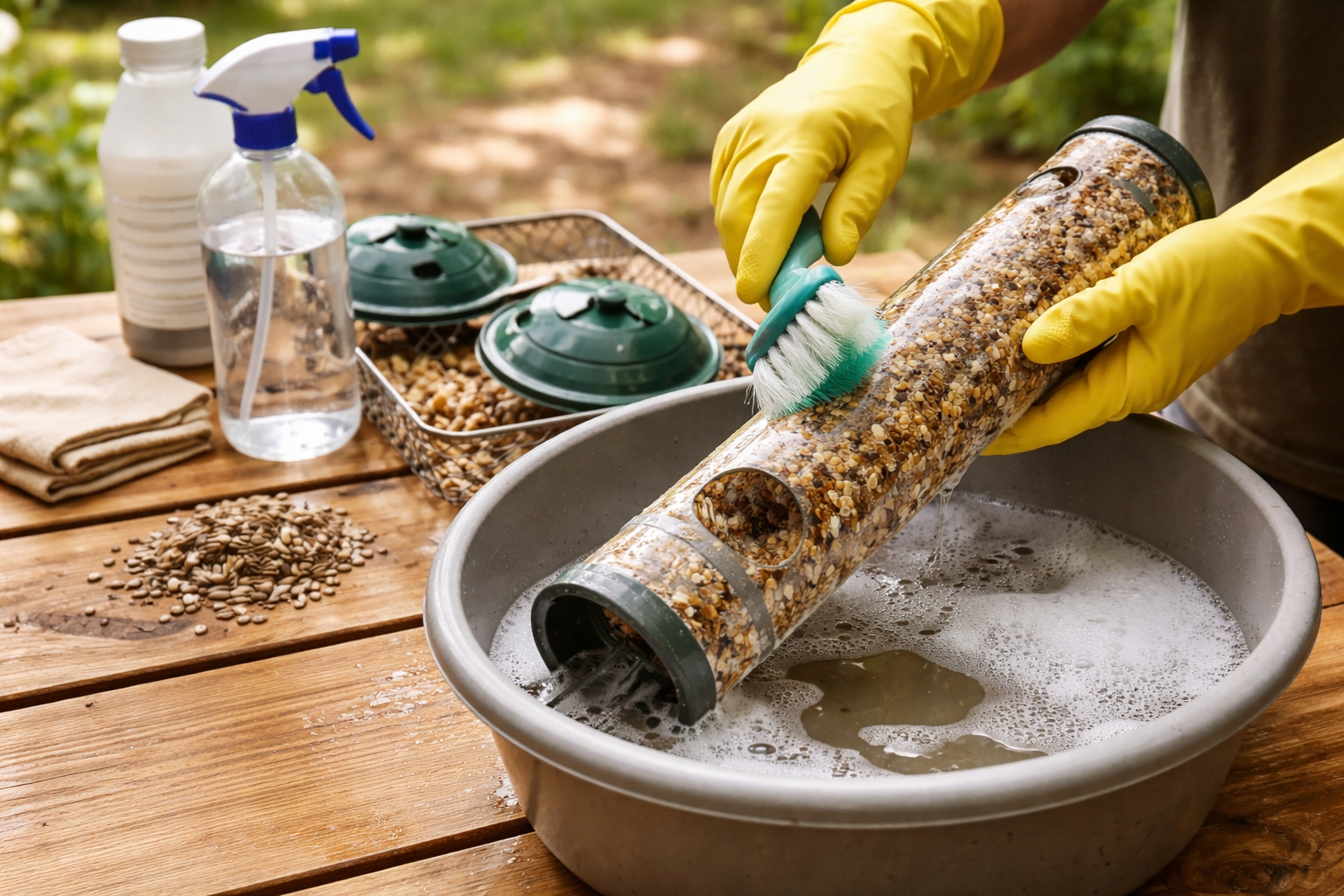
Keeping feeders clean reduces disease risk and mold growth while extending the life of your equipment. A simple, regular schedule keeps everything running smoothly.
Seasonal frequency. Clean feeders at least every two weeks during peak feeding times in spring and fall, and more often in hot, wet, or humid periods. In winter, quick checks and refills with dry, fresh foods help preserve seed quality and bird health.
Cleaning steps. Start with warm, soapy water and a soft brush to remove stuck seeds and grime. Rinse thoroughly and air dry completely before refilling. For a deeper sanitation, use a diluted bleach solution (one part household bleach to nine parts water) or a food-safe sanitizer, then rinse very well and dry.
Food rotation. Rotate foods to prevent mold growth and pest buildup. Don’t mix old, moldy seeds with fresh seed, and discard any feed that shows signs of spoilage.
Signs of trouble. Moldy feeders, coughing birds, or an uptick in pests can indicate poor sanitation, stale food, or contaminated water sources. If you notice prolonged coughing or wheezing in birds, remove the feeder temporarily and check for mold, pests, and moisture.
Seasonal feeding and migration rhythm
Bird feeding follows natural cycles tied to temperature, food availability, and migration patterns. Aligning feeders with these rhythms improves success and reduces waste.
Winter strategies. In cold months, high-fat foods and suet provide essential energy. Ensure a reliable water source if temperatures rise above freezing, since birds need water just as much as food. Keep nectar feeders in rotation with other high-energy foods to avoid over-dependence on a single species.
Summer maintenance. Heat and humidity accelerate food spoilage. Clean more frequently, use shade to protect nectar, and provide fresh water. Hummingbird feeders should be scrubbed and refilled every few days during peak heat.
Migration timing. During spring and fall migrations, offer a mix of high-fat seeds, insects, and fruit. This supports birds as they fuel long flights and re-establish territories in new territories.
Nectar and insect provisions. Hummingbird nectar should be prepared fresh daily during warm periods and kept out of direct sun. Insects and insect-rich foods inside suet and some feeders help sustain a diverse nectar-feeder community.
Building a practical feeding plan
A practical, scalable feeding plan starts simple and grows with your yard and the birds you observe.
Starter approach. Begin with two feeders and a small supply of two complementary foods. A compact tube feeder with nyjer and a saucer feeder with a mixed seed can cover finches and sparrows while offering a broader mix as your yard attracts more visitors.
Scaling up. As you observe which species frequent your yard, add one additional feeder type that fills a gap in your local birdscape. For example, add a suet feeder in winter for woodpeckers and chickadees or a hummingbird feeder in late spring for high-energy visits.
Starter kits by yard size. Small yards can start with a tube feeder and a saucer feeder, medium yards may include a hopper feeder and a suet feeder, while large yards can support several feeders including a platform feeder for ground feeders and a hummingbird setup near flowering shrubs.
Cost ranges and budgeting. A basic setup ranges from low to moderate investment, with higher costs for multi-port, glass, or specialty feeders. Plan for ongoing seed replacements and seasonal maintenance rather than a one-time purchase.
Long-term sustainability. Prioritize durable, easy-to-clean materials, and consider recyclable seed bags or bulk purchases to reduce waste. Rotating foods and regular cleaning reduce disease risk and ensure your feathered visitors stay healthy.
Common pitfalls and troubleshooting
Even well-planned setups face challenges. Here are common issues and practical fixes.
Disease risk. Regular cleaning and rotating foods reduce mold and disease. If you notice coughing birds, remove feeders temporarily and simplify the food mix to a single, fresh option. Window strikes. Place feeders away from windows or use protective screens. Keep bird-friendly landscapes near feeders to provide safe perches and hiding spots. Squirrel damage. Deterrents like baffles, squirrel guards, and feeder placement strategies can dramatically reduce losses. Rotate foods to discourage raiding from the same animals repeatedly. Mold and pests. Mold often signals damp seed or failure to dry feeders thoroughly. Clean and dry before refilling to prevent mold spread and pest attractions.
Visuals and quick references
To make quick decisions on the go, two quick reference aids can help:
- A feeder-attracts-bird chart that maps common birds to feeder types and foods.
- A foods-by-feeder guide that lists safe options for each feeder style and the expected bird families.
Maintenance calendar. A simple, repeatable calendar keeps you on track. Check and clean feeders weekly during warm months, biweekly in moderate weather, and adjust based on local conditions and observed bird activity.
Starter kit recommendations
Starter kits should be affordable, scalable, and tailored to yard size and goals. Suggested kits by goal:
- Basic beginner kit for a small yard: one tube feeder, one saucer feeder, nyjer seed and mixed seed, a hummingbird feeder, and a basic cleaning brush kit.
- Balanced starter kit for a medium yard: tube feeder, hopper feeder, platform feeder, safflower or mixed seeds, suet, mealworms, and a small hummingbird feeder alongside a simple water feature.
- Premium multi-species kit for a large yard: two tube feeders, a hopper feeder, a platform feeder, a suet feeder, a nectar feeder, a safflower-focused setup, a water source, predator guards, and a maintenance toolkit with sanitizers and a storage bin for seeds.
Sample items and approximate costs are typically available at reputable garden centers or online retailers. Start with a core set and adapt as you observe which birds visit your yard and which seasons demand more energy or variety.
What to verify in store
When shopping, look for durable, BPA-free plastics or metal components, easy disassembly for cleaning, rust resistance on metal parts, and good warranty coverage. Check for seed-dispensing efficiency, ease of cleaning, and the presence of weather protection such as a roof or overhang. If choosing a DIY approach, select food-grade materials and ensure the final assembly is stable and weatherproof.
Closing note
A thoughtful combination of feeder types, the right foods, and diligent maintenance yields a thriving, diverse, and healthy backyard bird experience. Use this guide to start with confidence, adapt to local birds and seasons, and grow a sustainable feeding plan that fits your yard and your life.