Introduction
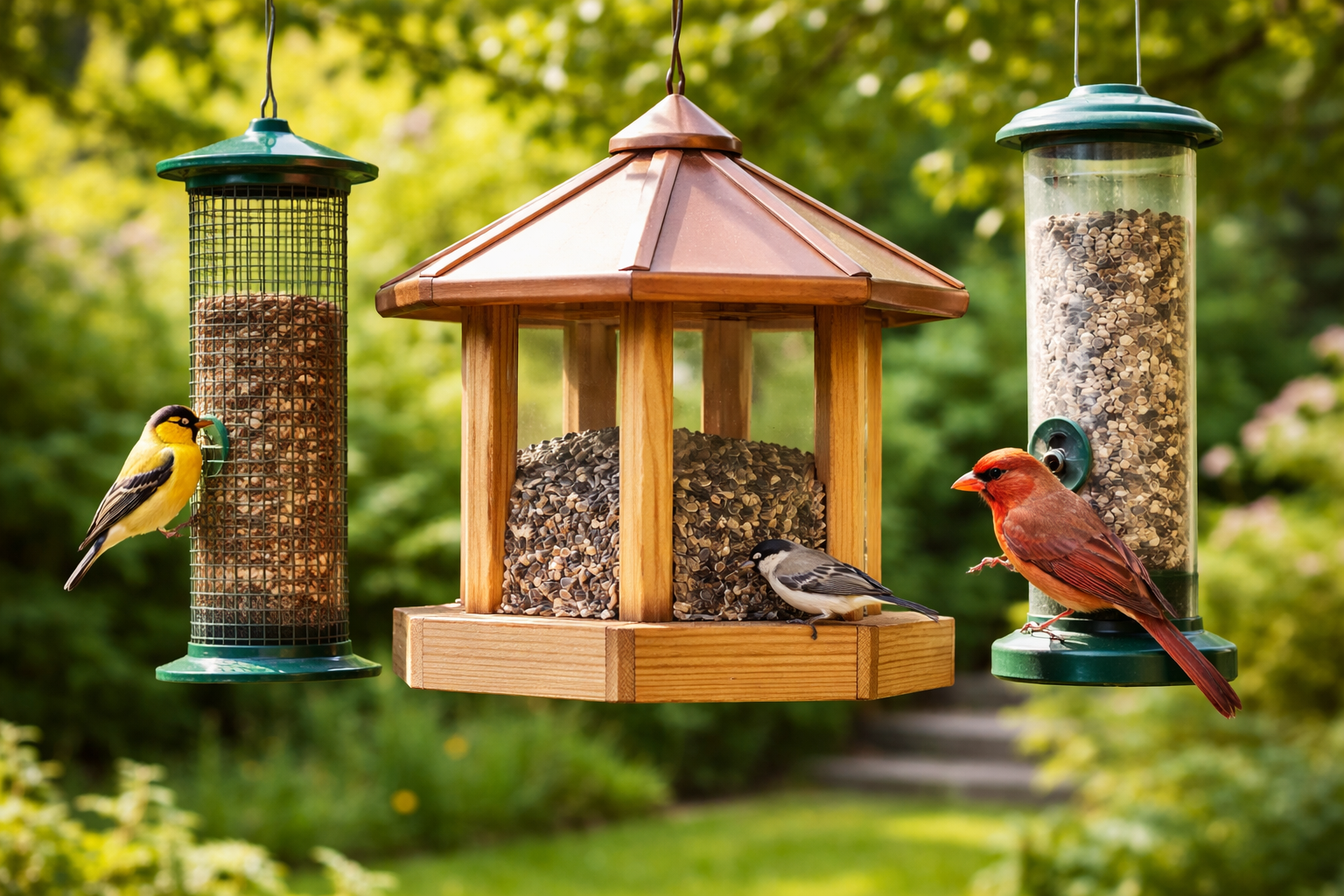
What does a finch bird feeder look like in practical terms? Beyond a pretty box or a shiny tube, a finch centered feeder is designed around small Nyjer or thistle seeds, compact perches, and easy refilling. Finch-friendly feeders emphasize access for small beaks, minimize waste, and keep seed dry and mold-free. This guide translates finch biology into clear buying and use decisions so backyard keepers can attract small finches reliably while keeping maintenance manageable.
What finches look for in a feeder
Finches feed primarily on tiny seeds and spend a lot of time perched rather than hovering at a feeder. The design cues that support this behavior are small seed access points, limited perching near the ports, and straightforward cleaning. Look for feeders that offer one or more of the following cues:
- Small ports that match nyjer or small seed sizes, generally in the range of 1/4 to 1/2 inch.
- Short, stable perches close to the ports to reduce seed loss and minimize spillage.
- Easy access to refilling and simple disassembly for cleaning to prevent mold and residue.
- Materials and coatings that resist weathering and are easy to dry after rain.
Feeder taxonomy: shapes and how they serve finches
Tubular nyjer feeders
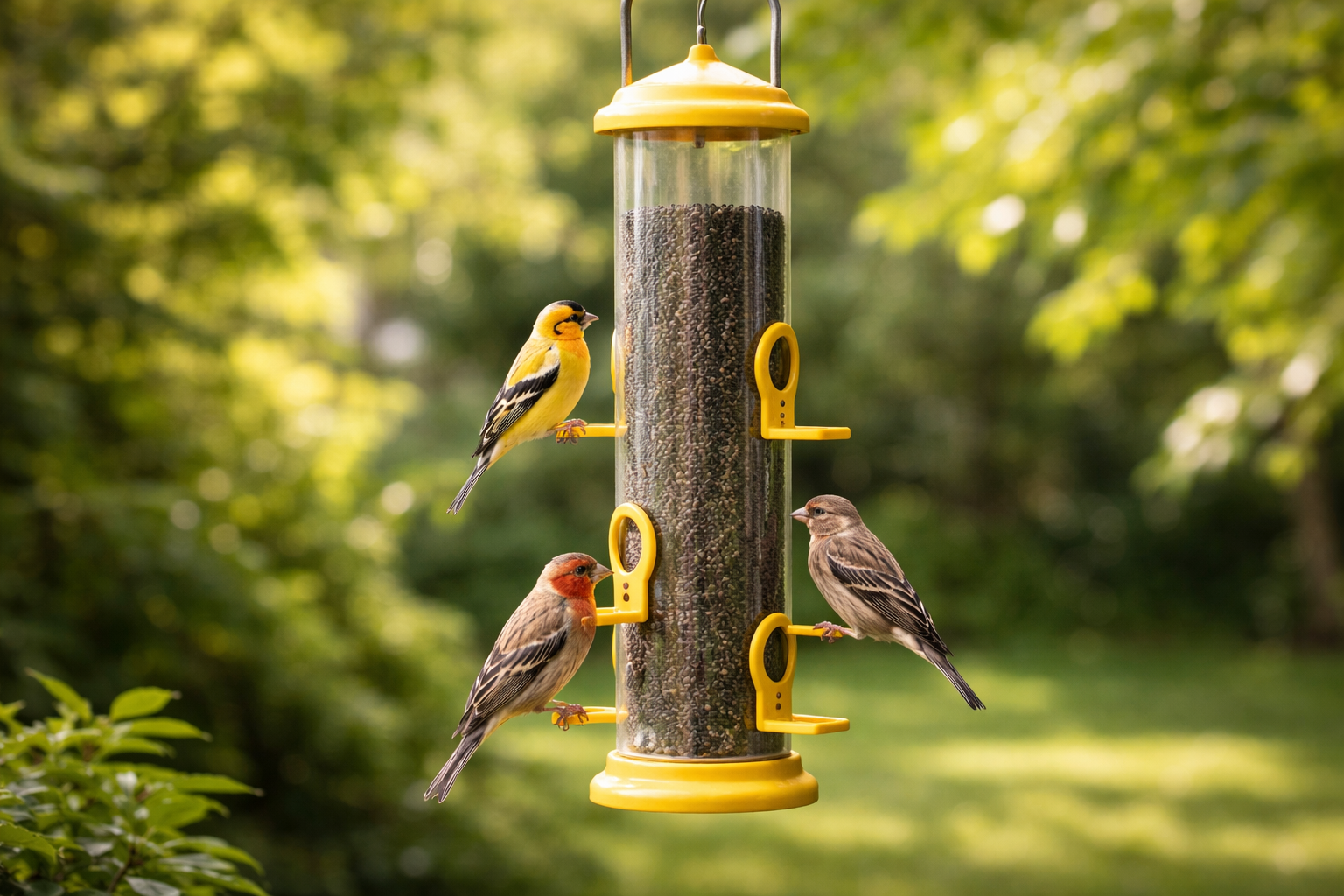
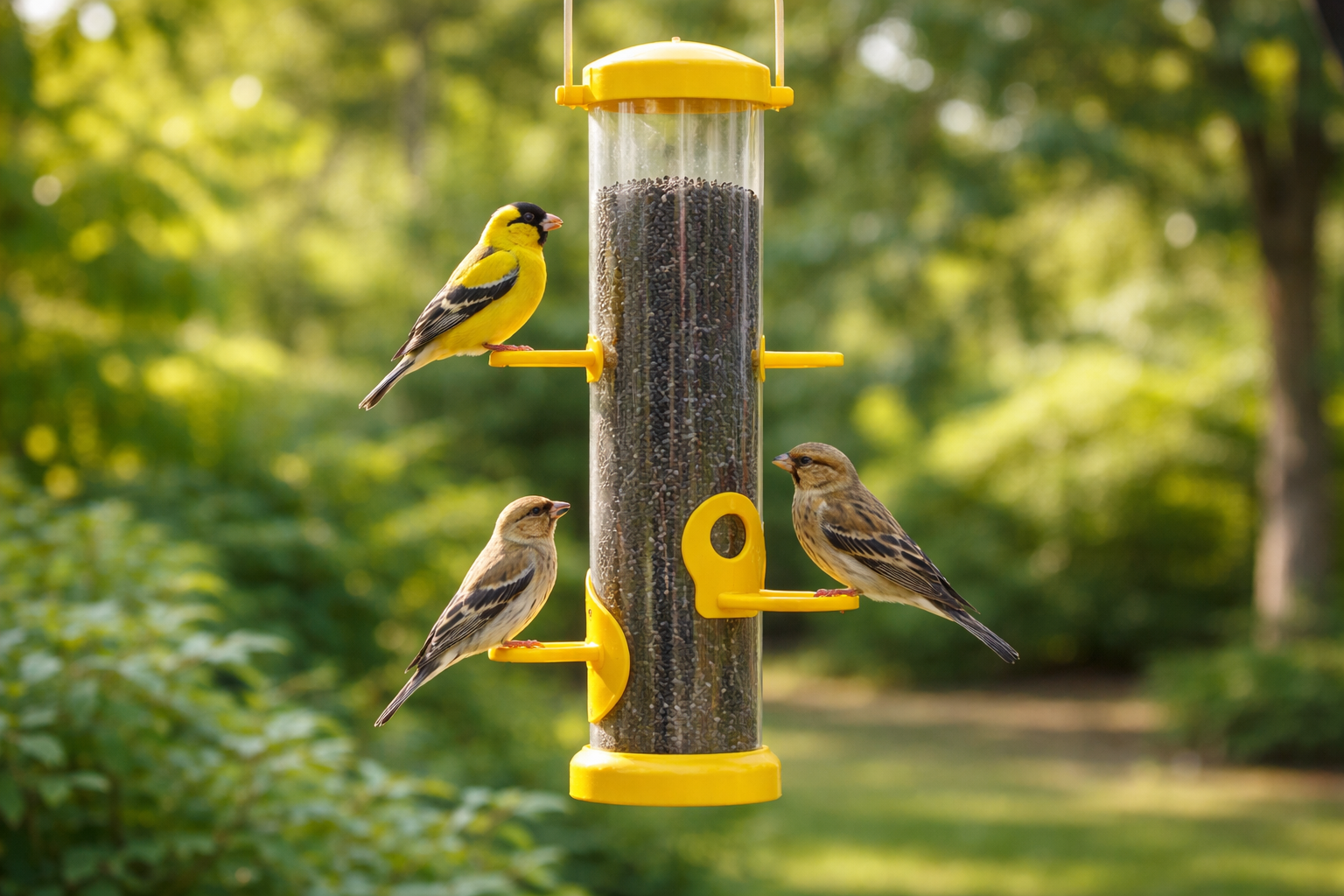
Tubular feeders are the classic choice for nyjer thistle. They are long, narrow, and often clear, with a row of small ports along the length. What makes them finch-friendly is the combination of small port openings and perches positioned near the ports. Pros include high seed capacity and minimal ground waste; cons can include mold if not kept dry and sometimes more complex cleaning. Typical price ranges vary widely by brand and features but are generally affordable for everyday backyard use. Port sizes commonly fall in the 1/4 to 1/2 inch range.
Saucer feeders
Saucer or tray-style feeders present a broad seed-dispensing surface with perches around the rim. They excel at offering visible seed access to perched finches and can accommodate Nyjer mixes that include small seeds. They tend to be easier to clean than multiple-port tubes but can produce more ground waste if not monitored. They are often a good second option for yards with open space and frequent finch activity.
Small-mesh or seed-tray feeders
These feeders use a mesh bottom or a shallow tray to contain seeds while allowing finches to pick through. They work well for nyjer and small seed blends and help reduce seed drop by keeping the seed contained. Maintenance is straightforward, though mesh or tray surfaces can become clogged if seed is not kept dry.
Hopper feeders with small ports
Hopper designs that include small ports balance seed capacity with restricted access. They can be effective for nyjer or small seed blends when the port size is tuned to 1/4, 1/2 inch and perches are appropriately spaced. They tend to require less frequent refilling but may be trickier to clean due to larger interior cavities.
Window feeders
Window-mounted feeders offer excellent observation opportunities and are convenient for close-up finch viewing. For small finches, the key is a compact footprint, small ports, and a secure mounting method. Window feeders can be highly effective when placed away from direct wind exposure and cat-access zones, but they may increase bird strikes if positioned too close to a strong glass surface.
Feeder shapes at a glance
| Shape | Best for | Typical port size | Key pros | Notable cons |
|---|---|---|---|---|
| Tubular nyjer feeders | Nyjer/thistle seekers | 1/4–1/2 in | High seed capacity; minimal ground waste | Can mold if not kept dry; cleaning can be more involved |
| Saucer feeders | Visible access for perched finches | 1/4–1/2 in (small seeds) | Easier to clean than tubes; good for open yards | Can produce ground waste; larger surface area |
| Small-mesh seed trays | Nyjer and small seeds | Not specified | Contained seeds; reduces drop | Mesh can clog; regular cleaning needed |
| Hopper with small ports | Mixed seed blends for finches | 1/4–1/2 in | Higher capacity; less frequent refilling | Interior cavities harder to clean |
| Window feeders | Close-up viewing | Not specified | Excellent observation; compact footprint | Higher risk of window collisions if near glass |
Seed strategy and compatibility
Nyjer or thistle is the backbone of finch feeding in most backyards. Other small seeds and sunflower hearts can be used in combination with nyjer, but seed quality and dryness are crucial to minimize mold. Practical guidance includes:
- Prioritize nyjer as the core seed for small finches; select feeders that accept Nyjer without requiring forced cracking or forced seed flow.
- Sunflower hearts are compatible with many finch feeders, especially saucer and mesh designs, but ensure the port and tray are sized to prevent clogging and seed waste.
- Use dry storage practices and avoid seed blends with large inclusions that finches cannot easily retrieve.
- Look for anti-mold features such as vented lids, moisture-absorbing components, and easy disassembly for drying after rain.
Seed compatibility quick guide
| Seed type | Finch suitability | Notes |
|---|---|---|
| Nyjer/thistle | Core seed | Ensure feeder accepts Nyjer without cracking/forcing flow |
| Sunflower hearts | Compatible with many designs | Check port/tray sizing to prevent clogging |
| Other small seeds | Use with appropriate feeder | Avoid inclusions that are hard for finches to retrieve |
| Dry storage | Important | Prevents mold and rancidity |
Setup and care
Placement and maintenance are the practical levers for consistent finch visits. Follow these guidelines:
- Placement distance from windows: position feeders a safe distance from glazing to minimize window collisions, typically several feet away, with a clear flight path.
- Sun and shade balance: in hot climates, provide partial shade to keep seeds drier; in cool climates, light morning sun helps reduce mold risk.
- Predator awareness: keep feeders out of reach of ground predators and avoid low, hanging setups near dense vegetation that can harbor pests.
- Cleaning cadence: disassemble feeders regularly and wash with mild soap and water. For mold prevention, use a vinegar solution or 70% ethanol for disinfection, then rinse thoroughly and dry completely before refilling.
- Seed quality management: rotate and refresh seed stocks, store seeds in a cool, dry place, and purge old seed to prevent mold or rancidity.
Maintenance and cleaning schedule
| Task | Guidance | Notes |
|---|---|---|
| Disassembly and wash | Regularly disassemble and wash with mild soap and water | Ensure all parts dry before refilling |
| Disinfection | Use vinegar solution or 70% ethanol | Rinse thoroughly after disinfection |
| Seed freshness | Rotate seed stocks; store in cool, dry place | Purge old seed to prevent mold |
Troubleshooting and practical fixes
Common issues and simple fixes include:
- Mold growth: ensure seeds are dry and that the feeder is cleaned promptly after rain or damp weather. Consider moving to a design with better ventilation and a more accessible cleaning process.
- Seed clogging: choose feeders with appropriately sized ports and smooth interior surfaces to reduce buildup; inspect ports and perches regularly.
- Squirrels: use weight-activated perches or baffles, and place feeders where squirrels have limited access, while still maintaining a safe distance from windows.
- Window collisions: add window-friendly decals or relocate the feeder to minimize reflective surfaces in the bird’s approach path.
Common issues at a glance
| Issue | Likely cause | Practical fix |
|---|---|---|
| Mold growth | Seeds damp or poor ventilation | Dry seeds; improve ventilation; clean more often |
| Seed clogging | Ports too large or interior roughness | Use ports within 1/4–1/2 in; smooth interiors |
| Squirrels | Weight or access not restricted | Add weight-activated perches or a baffle |
| Window collisions | Proximity to glass | Reposition away from strong reflections; add decals |
Buying guide and model types by yard size
A practical buying framework helps you identify which design best fits your space and goals. Consider these cues:
- If your yard is compact but you want high finch activity, start with tubular nyjer feeders to optimize small-seed access and refilling efficiency.
- If you value observation and quick, near-ground access, consider saucer or mesh tray feeders with small ports.
- For high capacity in a larger yard, a hopper feeder with small ports may reduce refill frequency while still prioritizing small-seed access.
- Window feeders are ideal for observation and for apartments or porches, but pick models with robust mounting and built-in seed containment to minimize debris on windowsills.
- Price bands vary by material and features. Look for UV-stable plastics or metal components, easy disassembly, and reliable replacement parts.
Before you buy, verify port size (1/4 to 1/2 inch is typical for finch access), port quantity (more ports can increase feeding opportunities but may complicate cleaning), and perching layout (short, compact perches near each port). Also check that the feeder can handle Nyjer seed without clogging and that the manufacturer provides clear assembly instructions for cleaning.
Quick-reference buying criteria
| Criterion | What to verify | Why it matters |
|---|---|---|
| Port size | 1/4–1/2 in | Ensures finch access without overfeeding or clogging |
| Port quantity | More ports increase feeding opportunities | May complicate cleaning |
| Perching layout | Short, compact perches near ports | Reduces waste; aids access |
| Materials | UV-stable plastics or metal; weatherproof coating | Durability and easy cleaning |
| Interior access | Easy disassembly for cleaning | Mold prevention and maintenance |
| Seed compatibility | Nyjer acceptance; sunflower-heart compatibility | Reduces waste and increases finch visits |
| Assembly instructions | Clear cleaning instructions | Facilitates upkeep |
| Replacement parts | Availability | Longevity of the feeder |
DIY options overview
For readers who enjoy hands-on projects, simple DIY concepts exist that can support finch-friendly feeding. A basic approach uses a small container with a secure lid, drilled small ports, and a shallow tray or mesh bottom to hold Nyjer seed. The key is to use non-toxic, weatherproof materials and to ensure easy disassembly for regular cleaning. Consider pre-drilled test ports first and use a simple perch system that can be attached near each port. DIY designs should prioritize seed dryness, easy refilling, and reliable anti-squirrel features when possible.
DIY considerations
| Item | Guidance | Notes |
|---|---|---|
| Port design | Small, accessible ports | Aimed at Nyjer access for finches |
| Sealing and weatherproofing | Use non-toxic, weatherproof fittings | Prevents moisture ingress |
| Cleaning ease | Favor simple disassembly | Critical for mold prevention |
What to verify in store: quick comparison notes
- Tubular nyjer feeder: Best for consistent Nyjer access, high capacity, multiple small ports, easy refilling. Verify port size and ease of cleaning.
- Saucer feeder: Great for visibility and ground-saver seed containment, but watch for seed spillage. Check tray depth and rim perches for stability.
- Small-mesh tray: Excellent seed containment and dryness, simple cleaning; confirm mesh size and connectivity to seed type.
- Hopper with small ports: Good capacity, but ensure ports do not clog with Nyjer and that the interior is accessible for cleaning.
- Window feeder: Best for observation, ensure secure mounting and anti-collision considerations.
What to verify in store means looking at the specific model’s port size, number of ports, perch type, ease of disassembly, materials, weight, and warranty. With Finch-friendly design in mind, prioritize models with 1/4 to 1/2 inch ports, short perches, and easy-to-clean interiors.
DIY option overview continued
If you prefer a hands-on path, a small, sealed container with a smooth interior and a shallow seed tray can be adapted for Nyjer seed. Use non-toxic sealant and weatherproof fittings. Ensure ports are accessible enough for small finches to feed comfortably and that the container can be cleaned fully without disassembly hazards.
Conclusion
Understanding what a finch feeder looks like means recognizing the design language that supports small seeds, careful perching, and easy maintenance. By focusing on port size, perching, seed compatibility, and cleaning practicality, backyard keepers can select a feeder that maximizes finch visits, reduces waste, and stays resilient through seasons. The best choice will depend on your yard’s size, climate, and how actively you want to observe the birds while maintaining simple upkeep. With the right design cues, the question What does a finch bird feeder look like becomes a straightforward shopping and care plan you can implement with confidence.