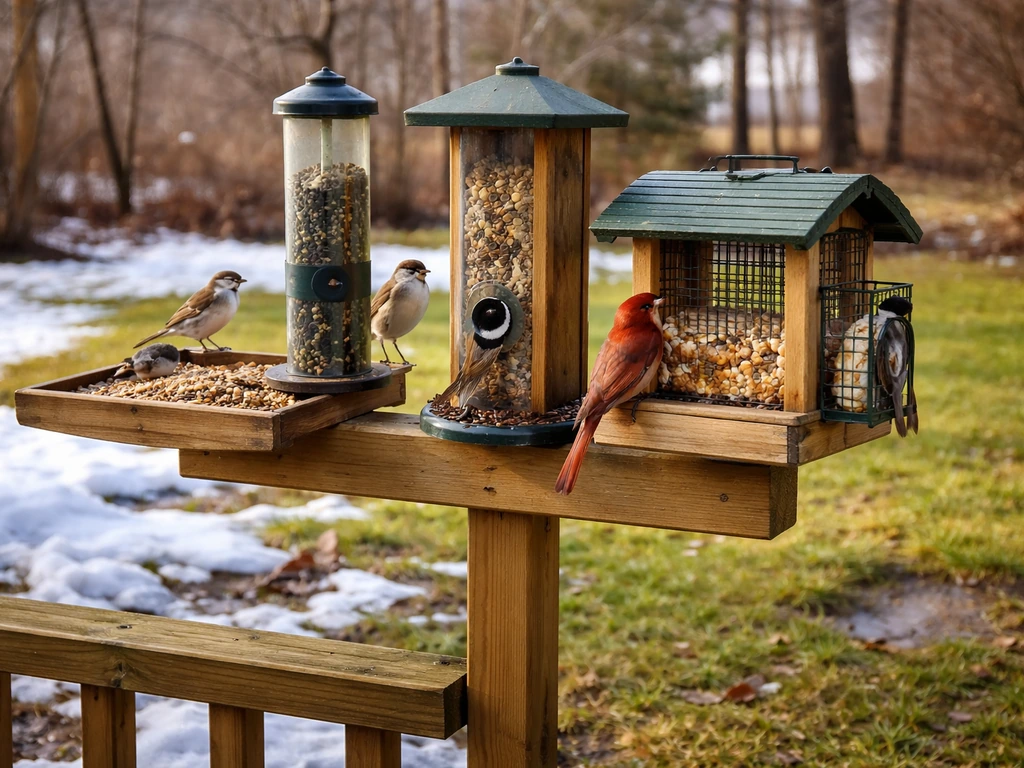
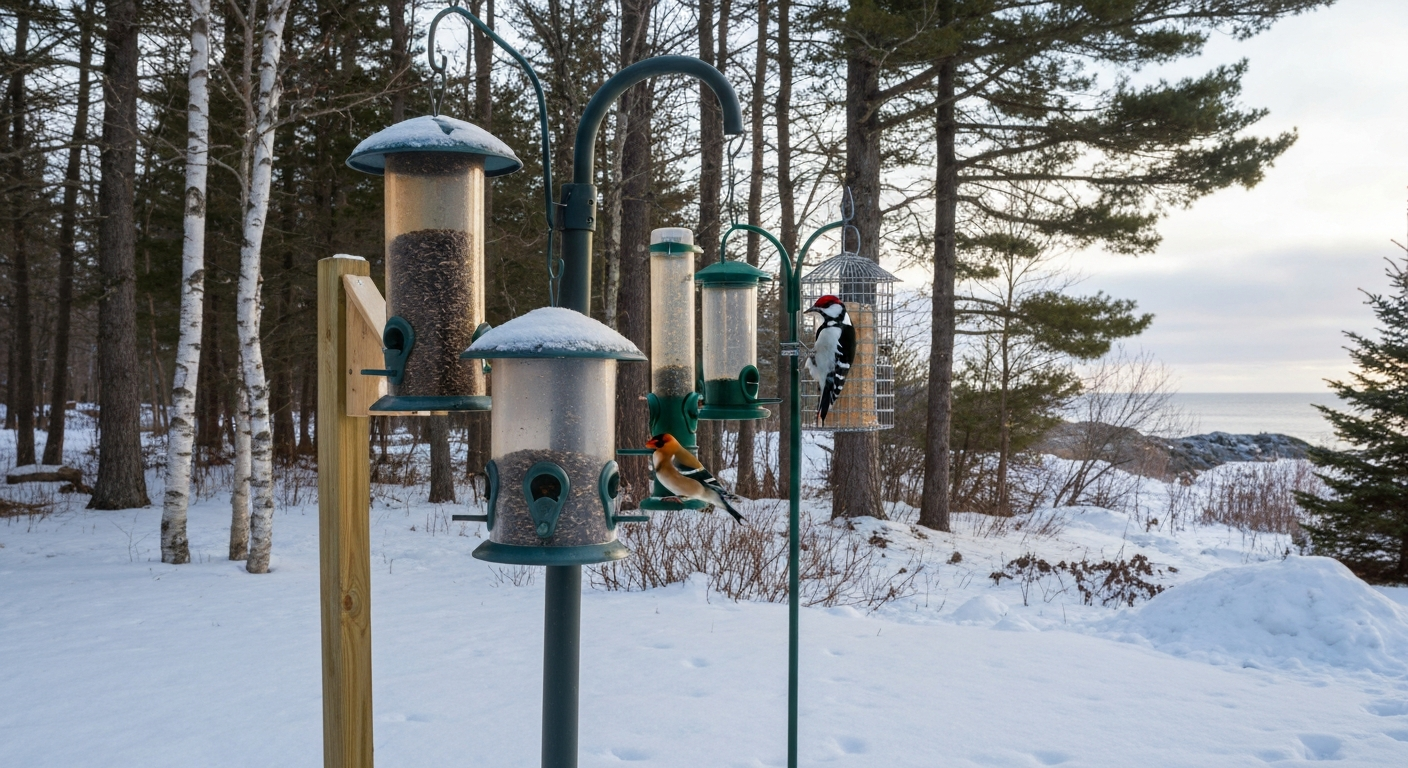
For Maine backyards, the best all-around bird feeder is a squirrel-resistant tube feeder filled with black-oil sunflower seed, paired with a nyjer tube for goldfinches and a wire suet cage for woodpeckers and chickadees. That three-feeder core setup will pull in the widest range of Maine's year-round and migratory species, hold up through 70-plus inches of annual snowfall, and give you a realistic shot at keeping squirrels and raccoons out. Everything else in this guide builds on or specializes from that foundation.
Best Bird Feeders for Maine: Top Picks & Coastal Tips

Marcus Holloway
17 Jul 2026
Who this guide is for and how to use it
This guide is written for backyard birdwatchers in Maine who want honest, species-matched recommendations rather than generic 'best feeder' lists that could apply anywhere. If you are setting up a new feeding station, replacing gear that didn't survive a Maine winter, or upgrading from a basic tube feeder to something squirrel-resistant or camera-equipped, you are in the right place. I've also included a regional adjustments section toward the end for readers in Massachusetts, New Hampshire, and other parts of New England, as well as Mid-Atlantic states like Maryland, New Jersey, Pennsylvania, and Virginia, where the bird lists and climate pressures are similar but not identical.
Maine presents a specific set of challenges: hard winters with heavy snowfall (Portland averages about 71 inches per year according to NOAA climate normals), a bear population that absolutely will raid feeders, coastal salt air along the shoreline, and persistent squirrel and raccoon pressure everywhere. The recommendations here are built around those realities. The guide is organized so you can jump directly to the feeder type you need, or read front-to-back to build a complete feeding station from scratch.
Quick-pick table: top feeders by budget and target species
| Feeder / Type | Best For | Budget Tier | Maine Weather Notes |
|---|---|---|---|
| Brome Squirrel Buster Plus (tube) | Chickadees, nuthatches, finches, cardinals | Mid ($50–$70) | UV-resistant, metal shroud, easy to clear snow from ports |
| Brome Squirrel Buster Nyjer (tube) | American Goldfinch, Pine Siskin | Mid ($45–$60) | UV-resistant, 1.4-qt capacity, nyjer stays dry in ventilated tube |
| Droll Yankees Yankee Flipper (motorized tube) | Squirrel-proof for all seed birds | Premium ($90–$110) | Lifetime warranty on body; rechargeable; bring in during ice storms |
| Woodlink Absolute II (hopper) | Cardinals, grosbeaks, jays, doves | Mid ($60–$80) | Heavy-gauge steel, weight-sensitive perch, high capacity for cold snaps |
| Erva Heavy-Duty Platform Tray | Juncos, sparrows, doves, towhees | Budget ($25–$40) | Mesh floor drains melt and rain; mount low or on post |
| Kettle Moraine Recycled Suet Cage | Woodpeckers, nuthatches, chickadees | Budget ($8–$15) | Powder-coated steel; double cage deters starlings |
| Aspects HummZinger HighView (dish) | Ruby-throated Hummingbird, Orioles | Mid ($25–$35) | Polycarbonate won't crack; bring in before first frost |
| Bird Buddy Pro (smart camera) | All feeder species with AI ID | Premium ($180–$230) | Solar panel option; weatherproof housing; subscription for HD video |
Buying checklist before you commit
- Weather resistance: look for UV-stabilized polycarbonate or powder-coated metal; avoid thin acrylic that cracks below freezing
- Squirrel and large-pest deterrence: weight-sensitive perches, metal cages, or motorized mechanisms are the only approaches that actually work consistently
- Cleaning access: ports, tubes, and dishes should fully disassemble; tight seams trap wet seed and breed bacteria
- Seed capacity vs. fill frequency: larger hoppers reduce winter fill trips but increase mold risk if seed sits too long in damp weather
- Port and perch size: match to target species (nyjer ports for finches, wide perches and large ports for cardinals and grosbeaks)
- Mounting compatibility: confirm the feeder works with your pole, shepherd's hook, or hanging hardware before buying
- Bear and raccoon context: in Maine, any feeder is at risk from April through October; lightweight plastic models will not survive a bear encounter
- Warranty and parts availability: feeders with lifetime warranties or replacement parts programs are worth the premium given Maine winters
Tube feeders: built for Maine weather
Tube feeders are the workhorse of any feeding station, and in Maine they need to handle heavy snow loading on the roof cap, moisture in the seed column, and freezing temperatures that can warp cheaper plastics. The Brome Squirrel Buster line earns its reputation here. The Squirrel Buster Plus uses a spring-loaded metal shroud that closes under the weight of a squirrel, cutting off access to the ports, while chickadees and finches land on the perches without triggering it. Brome's Seed Tube Ventilation system circulates air through the seed column, which genuinely helps reduce the soggy-seed problem that plagues standard tubes after a Maine rainstorm or snowmelt. The components detach for cleaning, which matters because blank" rel="noopener noreferrer">Cornell's wildlife health guidance recommends cleaning feeders at least monthly in winter and more frequently in warm, humid weather using a 1:9 bleach-to-water solution.
The Droll Yankees Yankee Flipper sits at the top of the tube feeder category for those willing to spend more. The motorized perch ring spins when a squirrel grabs on, dislodging them without harm. Droll Yankees backs the feeder body with a lifetime warranty and the motorized power stick with a one-year warranty. Their manual is explicit: clean monthly in winter using a 50/50 water and vinegar solution, and do not submerge the electronics. In practice, that means the battery pack needs to stay dry, which is achievable but requires attention during ice storms. I'd recommend bringing the Flipper inside during extended freezing rain events.
- Mount tube feeders on a smooth steel pole with a baffle 4–5 feet off the ground, not directly on a tree
- Position at least 10–15 feet from overhanging limbs (squirrels can leap roughly 10 feet horizontally per UF/IFAS extension guidance)
- Fill with black-oil sunflower for the widest species pull: Black-capped Chickadee, White-breasted Nuthatch, American Goldfinch, and Northern Cardinal in southern Maine all respond strongly
- In heavy snow, knock the cap clear after each storm to prevent the ports from being buried
Hopper (box) feeders: capacity and cold-weather durability
Hopper feeders hold the most seed and attract the largest spread of species in a single unit, which makes them useful for Maine winters when you'd rather not trudge out to refill every two days. The Woodlink Absolute II is the standard I compare others against in this category. It uses heavy-gauge powder-coated steel construction, a weight-sensitive perch that closes the seed ports under squirrel or raccoon weight, and a seed capacity large enough to carry a small flock through a long cold weekend. The downside of any hopper is that wet seed can clump at the bottom of the reservoir. The Absolute II has a sloped floor that helps, but you still need to inspect and stir the seed column after prolonged damp weather.
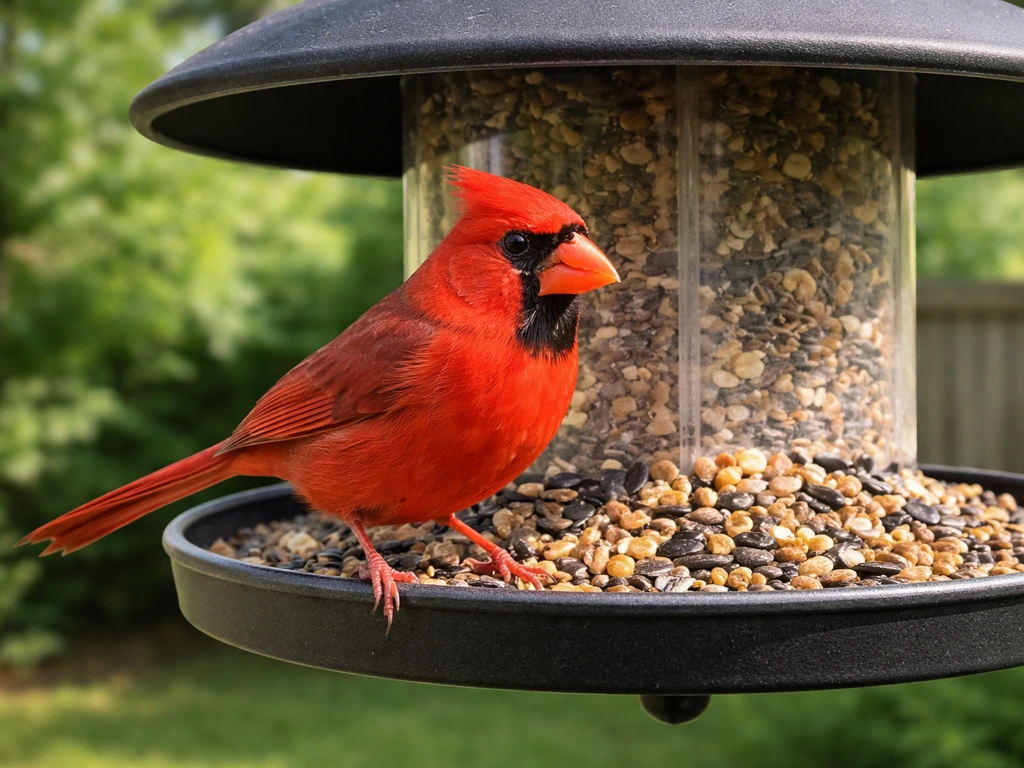
For cardinals specifically (more common in southern Maine and coastal areas), a hopper with a wide tray and perches on both sides is important. Northern Cardinals are shy about hovering and need a stable landing platform. The Absolute II's wide side perches handle that well. Grosbeaks, Blue Jays, and Mourning Doves also use hoppers readily, and all of those species show up in eBird records for Maine with enough frequency to be consistent feeder visitors.
Platform and tray feeders: ground-feeders done safely
Dark-eyed Juncos, White-throated Sparrows, American Tree Sparrows, and Eastern Towhees are all significant Maine feeder visitors that prefer feeding at or near ground level. A platform tray feeder handles these species better than any tube or hopper. The key is drainage: a mesh floor prevents wet seed from sitting and rotting, and on a Maine winter morning after an overnight freeze, you can often crack the thin ice layer off a mesh tray more easily than trying to clear a solid floor. The Erva Heavy-Duty steel mesh tray is simple, inexpensive, and genuinely durable. Mount it low on a post rather than on the ground to create at least some barrier to cats and reduce exposure to rodents attracted to spilled seed.
Platform feeders are not squirrel-resistant by nature. If squirrels are already dominating your yard, use the tray as a secondary feeder positioned away from your main pole setup, and accept some squirrel sharing or use a caged platform model. The safety consideration for a Maine backyard is also about cats: keep tray feeders high enough that ground-feeding birds have sightlines in multiple directions.
Suet feeders and logs: cold-weather fuel for cavity birds
Suet is the single most effective food for attracting Downy Woodpeckers, Hairy Woodpeckers, White-breasted and Red-breasted Nuthatches, Black-capped Chickadees, and Carolina Wrens in winter. Maine is woodpecker country, and once you have a suet feeder up, you will have downy woodpeckers at it within days if any are in your area. A basic wire cage feeder costs almost nothing and works fine. The upgrade worth considering is a double-cage design, where a larger outer cage prevents European Starlings from clinging and feeding. Starlings are a persistent problem at suet feeders in parts of Maine near developed areas.
For Pileated Woodpeckers and larger woodpecker species, a suet log or a feeder with a tail-prop extension gives the bird a natural clinging posture and makes the feeder more accessible for larger species. Mount suet cages directly on a tree trunk or a wooden post at roughly head height (5–6 feet) for the best woodpecker use. In summer, switch to no-melt suet dough formulations because standard suet cakes go rancid quickly in heat above 70°F and can coat feathers.
Nectar feeders: hummingbirds and orioles in Maine
Ruby-throated Hummingbirds arrive in Maine typically in mid-May and depart by mid-September, so the nectar feeding window is real but compressed. The Aspects HummZinger HighView is the feeder I consistently recommend first in this category. In a hands-on comparison test of 12 hummingbird feeders over six weeks, it ranked at the top for hummingbird attraction, ease of cleaning, and durability. The unbreakable polycarbonate dish design means it will not shatter if it falls from a hanger, the ant moat is built in rather than bolted on, and the wide-open dish shape makes cleaning genuinely fast. That last point matters: nectar needs to be changed every two to three days in warm weather, and feeders with narrow necks are the ones that get neglected.
For Baltimore Orioles, which are consistent Maine summer visitors, use an oriole-specific nectar feeder with larger ports and orange coloring, and add halved oranges on a nearby spike. The nectar formula is the same (4:1 water to plain white sugar, no dye, no honey), but orioles prefer a wider feeding platform. Neither hummingbird nor oriole feeders should be left out past the first hard frost. Frozen nectar expands and can crack even polycarbonate dishes, and there is no reason to maintain an empty feeder after your birds have departed.
Specialty feeders for finches (thistle/nyjer)
American Goldfinches, Pine Siskins, and Common Redpolls are the primary nyjer (thistle) feeder users in Maine, with redpolls appearing in irruption years when boreal food sources crash in Canada. The Brome Squirrel Buster Nyjer is purpose-built for these species: a 32-inch overall height with hanger, 5.3-inch tube footprint, and 1.4-quart capacity. The UV-resistant components hold up well outdoors, and the Seed Tube Ventilation keeps nyjer dry, which is important because wet nyjer compacts into an unusable mass. One honest caveat from Brome's own documentation: this feeder will not deter grackles, starlings, raccoons, bears, or deer. If those are your problem species, the squirrel mechanism won't help, and you need additional deterrents.
Nyjer seed can go stale faster than sunflower. If goldfinches are ignoring a full nyjer feeder, the seed is almost certainly old. Buy in smaller quantities and store it in a sealed container. Sock-style nyjer feeders are a budget alternative but they are harder to clean and tend to develop mold pockets in wet climates like Maine's coast. Stick with a tube-style feeder for easier maintenance.
Specialty feeders for hummingbirds: placement and freeze prevention
Beyond the HummZinger recommendation above, the placement decisions for hummingbird feeders in Maine matter as much as the feeder itself. Hang the feeder in partial shade to slow nectar fermentation: full sun in July will spoil nectar in a day or two. Position it near a shrub or flower bed with tubular blooms (salvia, bee balm, cardinal flower) to give hummingbirds a natural foraging context that draws them back reliably. Hang it where you can see it from a window, because Ruby-throated Hummingbirds are entertaining and you will want to watch.
At the end of the season, do not take the feeder down early thinking it will cause hummingbirds to linger past migration time. That is a persistent myth. Hummingbirds migrate on photoperiod cues, not food availability. Leaving a feeder up through late September actually helps late migrants that come through after your local breeders have already left.
Specialty feeders for cardinals and large-billed songbirds
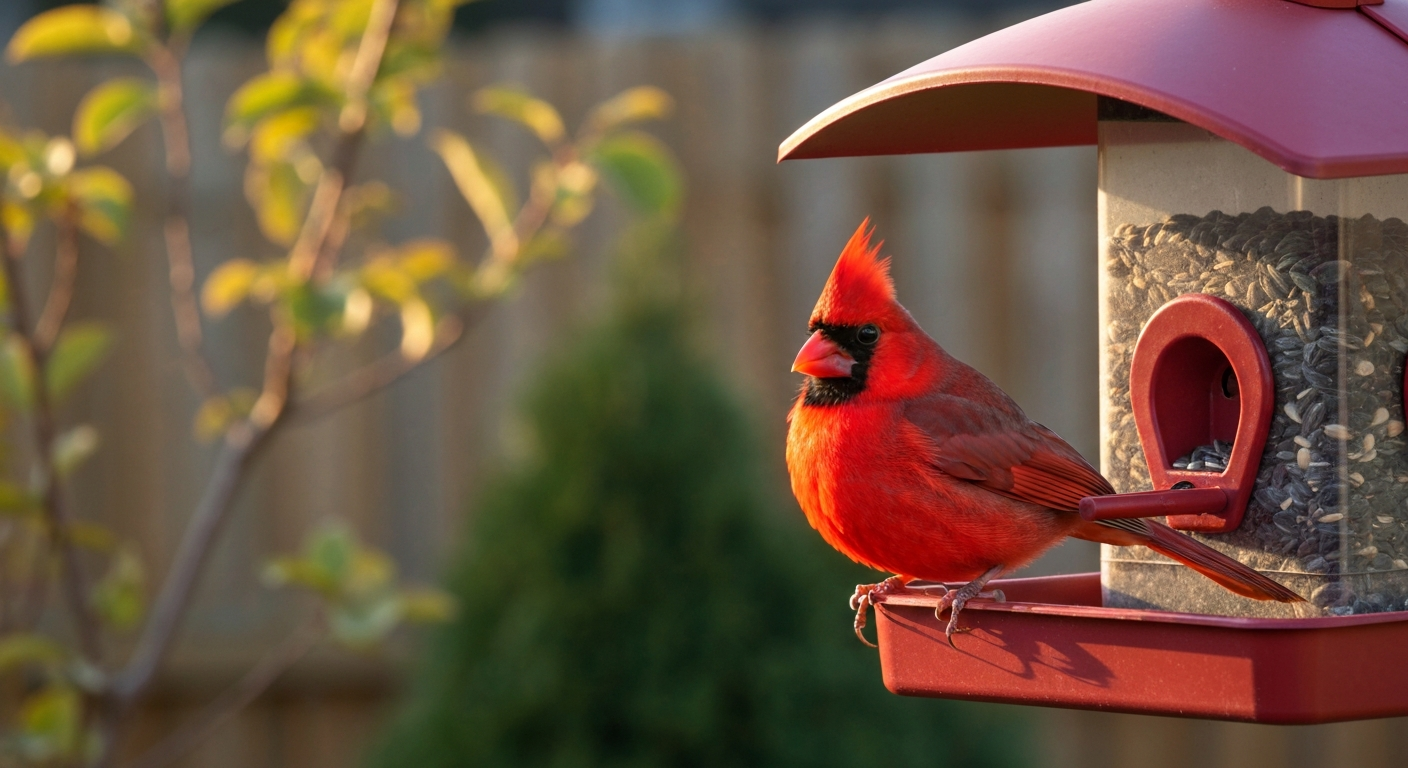
Northern Cardinals have expanded their year-round range into southern and coastal Maine over the past few decades, and they are now reliable feeder visitors rather than rare sightings. They need wide, stable perches and large seed ports: the thin wire perches on cheap tube feeders do not work well for a bird this size. Rose-breasted Grosbeaks, which pass through Maine during spring and fall migration, have similarly large bills and prefer the same feeder style.
The best setup for cardinals is a hopper feeder with a wide tray (the Absolute II fits this well) or a platform feeder mounted at mid-height. Fill with black-oil sunflower or safflower seed. Cardinals readily eat safflower while many squirrels and grackles ignore it, which makes safflower a useful deterrent strategy for hoppers and trays where you can't use a mechanical squirrel barrier.
Specialty feeders for woodpeckers and sapsuckers
Maine has a strong woodpecker lineup: Downy, Hairy, Pileated, Red-bellied (increasing in southern Maine), Northern Flicker, and Yellow-bellied Sapsucker as a migrant. The suet cage covers most of them, but peanut feeders are a meaningful upgrade. A cylinder-style peanut feeder with large mesh openings lets woodpeckers, nuthatches, and Blue Jays extract whole or halved peanuts. Woodpeckers in particular will work a peanut feeder for extended periods, which gives you excellent observation time.
For Pileated Woodpeckers, the largest and most impressive feeder visitor in Maine, you need a large suet log or a dedicated hanging feeder with a tail-prop support below the feeding surface. Pileateds are wary birds and prefer feeders mounted on or near tree trunks over pole-mounted options away from cover. A tail prop lets them brace naturally, as they would on a dead snag, and significantly increases the time they spend at the feeder.
Modern and smart feeders: cameras, AI, and Wi-Fi options
Camera-equipped smart feeders have improved considerably in the past two years, and Bird Buddy's Pro model (announced at CES 2026) is the most capable consumer option I've evaluated. The integrated camera and onboard AI species identification let you see which birds are visiting when you're not watching, and the species-ID accuracy on common backyard birds is genuinely useful for newer birdwatchers. The solar panel option is worth selecting for a Maine yard: you want to avoid running power cables outside through winter freeze-thaw cycles if you can. The housing is weatherproof, though I'd still bring any electronics-integrated feeder indoors during the worst ice storms.
There are real trade-offs worth knowing before spending $180 to $230 on a Bird Buddy Pro. Independent reviewers have noted that the AI doesn't send a notification for every visit, so actual visit counts are higher than what the app shows. The Bird‑Buddy Smart Bird feeder review, TechRadar noted that the AI species‑ID and notifications can be useful but that the app filters many visits (not every visit is sent), and reviewers reported variability in photo capture rates and occasional missed or blurry images Bird‑Buddy Smart Bird feeder review — TechRadar. Photo capture quality can vary, and occasional blurry or missed captures are documented in real-user reviews. If your primary goal is species identification and photo logging rather than just feeding birds, the smart feeder is worth it. If you mostly want to attract birds and keep squirrels out, the money is better spent on a Brome Squirrel Buster with a baffle setup.
Materials, construction, and corrosion resistance
Most feeder failures in Maine come down to two things: UV-degraded plastic that cracks in cold and shatters when dropped on frozen ground, and corroded metal hardware that seizes up or loses its protective coating. For feeders not on the coast, UV-stabilized polycarbonate (not standard acrylic) and powder-coated steel or aluminum are the appropriate material choices. Polycarbonate handles freeze-thaw cycles and UV exposure better than any other affordable plastic. Powder-coated steel works well away from salt air but will eventually rust at chips and scratches.
For coastal Maine properties, salt-air corrosion is a real accelerant of feeder hardware failure. Engineering data on Type 316 stainless steel documents that the 2-3% molybdenum addition significantly increases resistance to chloride and pitting corrosion compared to Type 304. For feeder poles, hanging hardware, and cage frames within a mile or two of the ocean, specifying 316 stainless steel or choosing full plastic/polycarbonate construction is a practical step that extends feeder life by years. Alternatively, rinse metal hardware with fresh water regularly during the coastal season to slow the process. The same guidance applies to readers in coastal New England and Mid-Atlantic locations.
Predator and pest protection
Squirrels and raccoons
The most effective squirrel-proofing is a combination of feeder mechanism and pole placement. A weight-sensitive feeder (like the Brome Squirrel Buster or Woodlink Absolute II) on a smooth metal pole with a wrap-around baffle positioned at roughly 4.5 feet will stop the vast majority of squirrel access attempts. The pole placement matters: UF/IFAS extension guidance documents that squirrels can leap approximately 10 feet horizontally, so the 10-15 foot rule from overhanging limbs and tree trunks is not conservative. If your yard is small and you can't achieve that clearance, the baffle becomes even more important.
Bears in Maine
Maine IFW guidance is direct on this: take feeders down by April 1 and do not put them back out until November. This is not a soft recommendation, it is the practical policy for avoiding bear habituation, which ends badly for the bear. When you pull feeders for the season, rake up spilled seed under the feeder area and store seed indoors. A bear that gets food from your feeder in May will be back, and successive visits can lead to property damage, livestock threats, and ultimately a bear being killed. The April 1 to November 1 window is the active bear period in Maine, and no feeder setup will survive a determined black bear.
Grackles and starlings
Common Grackles and European Starlings are the most frustrating feeder pests in much of Maine, particularly from April through early summer. Both are large, aggressive, and capable of emptying a hopper feeder in hours. Brome explicitly states that their squirrel-resistant mechanisms will not deter grackles or starlings because both birds are light enough not to trigger weight-sensitive perches. The most effective deterrents for grackles are: switching to safflower seed (grackles typically ignore it), using a tube feeder with small ports that grackles can't comfortably feed from, and removing tray feeders temporarily during grackle flocks. For starlings at suet feeders, a starling-resistant double cage or an upside-down suet feeder (which starlings won't use but woodpeckers handle well) is effective.
Mounting and placement solutions
A dedicated steel pole system is the most reliable mounting solution for Maine feeders. Shepherd's hooks work but tend to rust faster and are less stable under snow load. A 1-inch diameter smooth steel pole at least 6 feet tall, pushed 18-24 inches into the ground (or set in a ground socket for frozen-ground seasons), with a wrap-around or torpedo baffle gives you a stable, squirrel-resistant foundation. Multiple feeders can be hung on arm extensions from a single pole, which concentrates your setup and makes baffle protection more efficient.
- Window-mount feeders work well for close-up views; use a suction-cup model on a double-pane window and position it within 3 feet of the glass to reduce bird strike risk (birds don't build enough speed to injure themselves at very close range)
- Eave-mounted feeders under a roof overhang get natural snow and rain protection, which extends both seed freshness and feeder hardware life
- Hanging rigs from a clothesline-style wire strung between two poles can hold multiple feeders with a central baffle, effective for larger yards
- Keep ground clearance in mind: at least 3 feet from the ground to feeder ports deters cats and prevents the easiest raccoon access
- Place feeders near but not in dense shrubs: birds need escape cover nearby but should have open sightlines to the feeder itself to detect approaching predators
Seasonal setup and maintenance calendar
| Season / Month | Key Tasks |
|---|---|
| Early spring (March) | Clean all feeders with 1:9 bleach solution before migration arrives; inspect hardware for winter corrosion damage |
| April 1 (Maine-specific) | Take ALL feeders down per Maine IFW guidance to avoid bear conflicts; rake up spilled seed; store seed indoors |
| Late spring / Summer (May–Aug) | Set out hummingbird and oriole feeders mid-May; change nectar every 2–3 days; clean nectar feeders weekly in heat |
| Fall (Sept–Oct) | Resume seed feeders after hard frost has pushed bears into pre-den behavior (use judgment and IFW updates); pull hummingbird feeders by mid-September |
| November 1 (Maine-specific) | Safe to resume full feeder station per IFW guidance; install full winter setup with suet, sunflower, and nyjer |
| Winter (Dec–Mar) | Clean feeders at least monthly; knock snow off feeder caps and ports after storms; check baffle and pole hardware for ice damage; switch to no-melt suet in unexpected warm spells |
Seed, nectar, and feeding strategy by species
Cornell Lab guidance via All About Birds is consistent and reliable on this: black-oil sunflower is the single best all-around seed for attracting the widest variety of backyard species. It has a thinner shell than striped sunflower (easier for smaller birds to crack), high fat content, and broad species appeal. Nyjer (thistle) is the recommended specialized seed for goldfinches, siskins, and redpolls, and it should not be mixed with sunflower in the same feeder because the seeds need different port sizes. Safflower is the third most useful seed for a Maine feeding station: cardinals love it, squirrels and many pest species avoid it.
| Target Species | Recommended Seed / Food | Feeder Type |
|---|---|---|
| Black-capped Chickadee | Black-oil sunflower, suet | Tube, suet cage |
| American Goldfinch | Nyjer (thistle) | Nyjer tube |
| Pine Siskin / Common Redpoll | Nyjer, black-oil sunflower | Nyjer tube, tube feeder |
| Northern Cardinal | Black-oil sunflower, safflower | Hopper, platform tray |
| Downy / Hairy Woodpecker | Suet, peanuts | Suet cage, peanut feeder |
| Pileated Woodpecker | Suet (large block or log) | Suet log, trunk-mount feeder |
| Dark-eyed Junco | Millet, sunflower chips | Platform tray, ground scatter |
| White-throated Sparrow | Millet, sunflower chips | Platform tray |
| Ruby-throated Hummingbird | 4:1 sugar-water nectar | Dish nectar feeder |
| Baltimore Oriole | 4:1 nectar, orange halves, grape jelly | Oriole nectar feeder, fruit spike |
| Blue Jay | Whole peanuts, sunflower, corn | Hopper, peanut feeder, platform |
| Rose-breasted Grosbeak | Sunflower, safflower | Hopper with wide perch |
Regional adjustments: Maine, New England, and Mid-Atlantic
Maine is the coldest and snowiest state covered in this guide, with the strongest bear pressure and the most compressed hummingbird season. For readers in Massachusetts and broader New England, the core recommendations hold but the bear window is shorter and the northern finch irruption species (redpolls, siskins) may appear less predictably south of Maine. For a focused shopping list and product-specific picks tailored to New England conditions, see our best bird feeders for New England. For tailored recommendations on species and seasonality in that state, see our guide to the best bird feeders for Massachusetts. Massachusetts coastal yards deal with significant salt-air corrosion, so the 316 stainless steel guidance for hardware applies there as well. Readers in New England generally will find that the feeder species list overlaps heavily with Maine, though Northern Cardinals are more abundant year-round in Massachusetts and Connecticut than in northern Maine.
In Maryland, Virginia, New Jersey, and Pennsylvania, winters are milder and the feeding season is effectively year-round without the same bear-driven shutdown. For more localized recommendations, see the guide to the best bird feeders for New Jersey. For readers in Virginia, see our guide to the best bird feeders for Virginia for region-specific recommendations on year-round feeding and local pest pressures. For localized recommendations, see our guide to the best bird feeders for Maryland. The greater pest pressure in those states tends to be grackles and House Sparrows rather than bears. Coastal Maryland and Virginia properties face salt-air corrosion similar to coastal Maine, so material choices remain relevant. Carolina Wrens and Red-bellied Woodpeckers are year-round feeder regulars in the Mid-Atlantic that rarely appear in Maine, so suet and peanut feeders serve a slightly different species mix there. The core setup (squirrel-resistant tube, hopper, suet cage) works across all these states; the species-specific additions shift by region. If you're in Pennsylvania, see our guide to the best bird feeders for Pennsylvania for state-specific recommendations on species, materials, and seasonal timing.
What real-world testing shows about product specs and Maine conditions
Independent testers at platforms like BobVila have consistently rated Brome Squirrel Buster models and Droll Yankees feeders among the top performers for both squirrel resistance and durability in real-world yard conditions. The Aspects HummZinger HighView earned the top slot in a six-week, 12-feeder comparative test for hummingbird attraction and ease of cleaning. These aren't marketing claims: they reflect the same things I've observed in my own yard, which is that the feeders that simplify cleaning actually get cleaned on schedule, and the ones that are physically complex sit dirty longer than they should.
In Maine-specific conditions, the features that matter most are: ports that don't ice shut (wider ports clear more easily than narrow ones in freeze-thaw cycles), seed ventilation that reduces compaction from humidity, and metal components that don't crack at low temperatures. I've had standard acrylic tubes split at the seam after a hard freeze, which scatters seed and destroys the feeder. UV-stabilized polycarbonate on the Brome products and the HummZinger hasn't shown that failure mode in the same conditions. Check manufacturer spec sheets for the specific plastic type before buying a feeder you plan to leave out through a Maine winter.
Common backyard scenarios and recommended setups
Small urban or suburban lot
One pole with a Squirrel Buster Plus and a nyjer tube on arm extensions, a single suet cage wired to a nearby tree, and a window-mount feeder if you want close viewing. Keep it compact, prioritize cleaning, and accept that your bird list will be somewhat limited by the surrounding habitat.
Coastal yard (Maine shoreline)
Use polycarbonate-bodied feeders wherever possible and specify 316 stainless steel or plastic for all poles, hangers, and cage hardware. Rinse metal components with fresh water monthly during the salt-air season. Coastal yards in Maine often attract a different mix of species, including more sparrows, and the HummZinger on a sheltered eave mount works well for hummingbirds that follow coastal migrant corridors.
Rural property with mammals
Follow Maine IFW's April 1 to November 1 feeder removal window strictly. In the active season (November through March), use heavy-gauge feeders mounted on steel poles with large baffles. A Woodlink Absolute II on a 1-inch steel pole with a torpedo baffle is the most bear-resistant standard feeder setup, though it will not survive a direct bear encounter. Consider a pulley system that lets you raise and lower feeders from a deck or porch door so you can pull them in easily at dusk.
HOA-restricted property
Window-mount feeders require no pole and are nearly invisible from the street. A single compact tube feeder on a low shepherd's hook in a garden bed often meets visual restrictions. Bird Buddy's smart feeder is small, relatively unobtrusive in appearance, and can be positioned on a low post or railing without a large pole structure.
Troubleshooting common feeder problems
- Clogged ports: remove the tube, dump the seed column, rinse with warm water, and use a narrow bottle brush or pipe cleaner to clear each port; if seed has compacted and hardened, soak the tube in warm water for 20 minutes before brushing
- Frozen nectar: take the feeder inside or swap in a pre-filled backup feeder from a warm place; a cozy sleeve designed for nectar feeders can delay freezing on cool (not hard-freeze) nights but won't work below about 25°F
- Persistent grackles: switch to safflower in hoppers and trays; use a tube feeder with small ports for sunflower; remove platform trays temporarily during the peak spring grackle flock movement (April–May in Maine)
- Squirrels bypassing baffles: check that the baffle is at least 4.5 feet off the ground and that no surface within 10 feet horizontally is being used as a launch point; add a second torpedo baffle above the feeder if squirrels are dropping from above
- Feeder damage from storms: after any significant wind or ice storm, inspect all mounting hardware, hangers, and baffles before refilling; cracked plastic tubes should be replaced rather than repaired because they harbor bacteria in cracks
- Mold in seed: a feeder producing consistently moldy seed is being overfilled for consumption rate; reduce fill quantity so seed turns over within 3–5 days in cool weather, faster in warm weather
Final recommendations: quick reference by species, budget, and site
If you only buy one feeder, make it the Brome Squirrel Buster Plus filled with black-oil sunflower on a pole with a baffle. That single decision handles squirrel pressure, attracts the widest range of Maine species, and uses materials that will last through multiple Maine winters. From there, add a Brome Squirrel Buster Nyjer for goldfinches, a wire suet cage for woodpeckers and chickadees, and an Aspects HummZinger HighView for the summer hummingbird window. That four-feeder core covers the full Maine year-round species list. Step up to the Woodlink Absolute II hopper for cardinals and higher-capacity winter feeding, add a Bird Buddy Pro if you want species ID and camera features, and address your specific mounting situation with a smooth steel pole, 316 hardware on the coast, and Maine IFW's April 1 removal date in the back of your mind every spring.
| Priority | Best Pick | Budget Tier | Primary Species |
|---|---|---|---|
| Start here | Brome Squirrel Buster Plus (tube) | Mid | Chickadees, finches, nuthatches, cardinals |
| Add for finches | Brome Squirrel Buster Nyjer | Mid | American Goldfinch, Pine Siskin, Common Redpoll |
| Add for woodpeckers | Wire suet cage (double-cage style) | Budget | Downy/Hairy Woodpecker, nuthatches, chickadees |
| Add for summer | Aspects HummZinger HighView | Mid | Ruby-throated Hummingbird |
| Upgrade for capacity | Woodlink Absolute II (hopper) | Mid | Cardinals, grosbeaks, jays, doves |
| Upgrade for ground birds | Erva mesh platform tray | Budget | Juncos, sparrows, towhees |
| Upgrade for smart features | Bird Buddy Pro with solar | Premium | All species with AI identification |
| Best squirrel-proof premium | Droll Yankees Yankee Flipper | Premium | All seed species, maximum squirrel exclusion |
FAQ
What are the best overall bird feeder types for Maine backyards and which species do they attract?
Tube feeders (stainless/plastic) with black‑oil sunflower attract the widest range: chickadees, nuthatches, finches, sparrows and titmice (Cornell All About Birds). Nyjer/thistle tube feeders specifically target American Goldfinch and other clinging finches. Hopper/box feeders with larger seed or sunflower chips attract cardinals, grosbeaks and jays. Platform feeders are versatile for ground‑feeding sparrows, juncos and doves but need pest controls. Suet cages bring woodpeckers, nuthatches and wrens. Nectar feeders (dish or bottle) are best for hummingbirds; dish‑style (e.g., HummZinger‑type) do well in field tests for Maine’s hummingbird visitation.
Which specific feeder models are recommended (by type) for Maine, and why?
Tube (squirrel‑resistant): Brome Squirrel Buster Nyjer for finches — proven anti‑squirrel design, UV‑resistant parts and manufacturer support. Tube (general): Droll Yankees tube feeders — durable construction and lifetime body warranty in real‑world tests. Hopper/box: Droll Yankees or heavy‑duty powder‑coated steel hoppers for cardinals and grosbeaks. Suet: welded steel suet cages with rust‑resistant coating. Nectar: Aspects HummZinger HighView (dish style) — strong field test performance, easy cleaning and built‑in ant control. Smart/camera: Bird Buddy Pro (and successors) for onboard camera+AI ID — useful for automated species detection though reviewers note occasional missed/blurry captures. All model choices reflect manufacturer specs and independent hands‑on reviews.
How should I choose feeder materials for Maine’s cold winters, heavy snow and coastal salt‑air?
For inland Maine cold/snow: choose UV‑stabilized plastics, powder‑coated steel, or marine‑grade aluminum; ensure drain/vent features to prevent icing and clogging (NOAA winter norms justify winterized designs). For coastal areas (Maine coast, MA, MD, NJ, VA): prefer 316/316L stainless fasteners/components, fiberglass/FRP or high‑grade plastics to resist chloride pitting; avoid untreated steel in direct salt spray. Manufacturer specs and materials datasheets back these recommendations.
What practical squirrel, raccoon and grackle–proofing tactics work in the Northeast?
Use dedicated squirrel‑resistant feeders (weight‑activated baffle systems such as Brome Squirrel Buster), mount feeders on 5–8 ft poles with both below‑pole and above‑pole baffles, keep feeders 10–15 ft from launch points (trees/rooflines), use metal or coated pole sections and ground trays, and minimize spillage by using seed catchers. For grackles and starlings, use caged nyjer or small‑port tube feeders and switch to port‑size or baffled feeders; for raccoons/large mammals bring feeders in at night. Maine IFW recommends removing feeders April–November in bear country to reduce conflicts.
How should I mount and place feeders around a Maine property to balance bird access and predator safety?
Pole mounting with baffles and distance from trunks: place poles 10–15 ft from tree trunks/overhangs to limit squirrel access (extension of UF/IFAS & UMaine guidance). Use 5–8 ft height for poles to deter ground predators but within viewing range. Hang nectar feeders near sheltered areas (eaves/sheltered porches) to protect from wind/icing. Window feeders can reduce collisions if placed within 3 ft of glass or >30 ft away; use visible decal markers. In coastal yards, position feeders where salt spray is minimized or rinse frequently.
What seasonal setup and maintenance schedule should Maine feeders follow?
Winter (Nov–Mar): use feeders rated for cold, keep seed dry (vented covers), clean monthly (Cornell/WHL guidance) and monitor for ice/clogging; in bear areas stop feeding by April 1 per Maine IFW. Spring/Summer (Apr–Sep): clean feeders every 1–2 weeks in warm months, bring feeders inside during outbreaks of disease (Salmonella) and when bears are active. Fall (Sep–Nov): resume more frequent cleaning as migration and local influx occur. For electronics (smart feeders), follow manufacturer recommendations: avoid submerging electronics and winterize power/solar components per Droll/Bird Buddy manuals.