For most Ohio backyards, a weight-activated tube feeder or caged hopper filled with black-oil sunflower seed is the single best starting point. It handles squirrels, survives Ohio winters, and pulls in cardinals, chickadees, nuthatches, and finches without turning your yard into a grackle convention. From there, adding a suet cage in winter and a nyjer tube in spring rounds out the setup for most of the species Ohio birders actually want to see.
Best Bird Feeders for Ohio: Top Picks by Species and Season
Marcus Holloway
22 May 2026
What makes Ohio bird feeding different
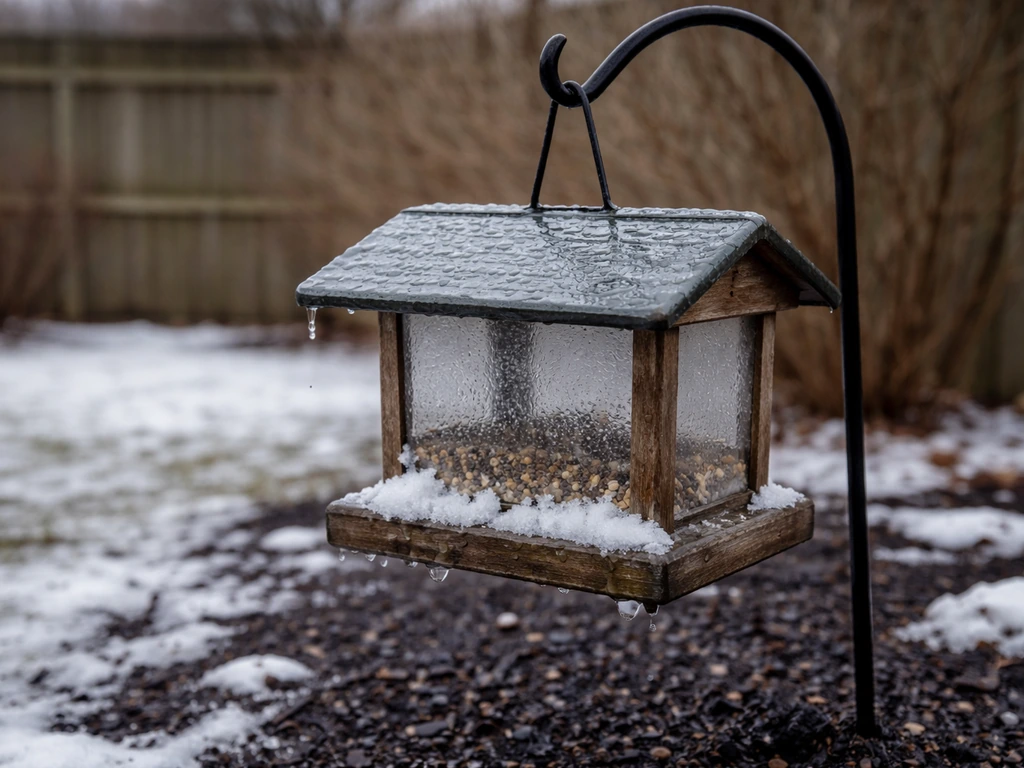
Ohio is not a one-season birding state, and the feeders that work here have to handle real weather stress. Northern Ohio, especially the Cleveland area, gets hammered by lake-effect snow off Lake Erie. Cleveland averages 12.2 inches of snow in December alone, with mean January highs only reaching about 35.8°F and lows dropping to 22.3°F. Those lake-effect events can dump snow continuously for up to 48 hours, which means seed gets buried, ports ice over, and lightweight plastic feeders crack from freeze-thaw cycling. If you're in northeastern Ohio, durability is not optional.
Southern Ohio is a different story in summer: high humidity, heat, and afternoon thunderstorms create the ideal conditions for mold and wet seed clumping inside feeders. A feeder that drains well and ventilates properly matters just as much in July as it does in January. Year-round feeding also keeps birds cycling through your yard continuously, which means you get the winter regulars (dark-eyed juncos, white-throated sparrows, cardinals) plus summer arrivals like hummingbirds, goldfinches in breeding color, and rose-breasted grosbeaks.
Ohio's bird activity is also genuinely seasonal in ways that affect which feeders you need when. Hummingbirds typically arrive in early May and leave by early October. Nyjer feeders get the heaviest use from American goldfinches in late summer and fall. Suet feeders are most critical October through March when woodpeckers, nuthatches, and chickadees need high-fat food to survive cold nights. Planning your feeder lineup around these rhythms means more birds, less wasted seed, and less maintenance headache.
Match the feeder type to the birds you actually want
The single biggest mistake new Ohio birders make is buying one big hopper feeder and expecting every bird to show up. Different species feed at different heights, from different types of perches, and on different foods. Matching feeder design to bird behavior is what actually fills your yard.
Hopper feeders: cardinals, jays, sparrows, and doves
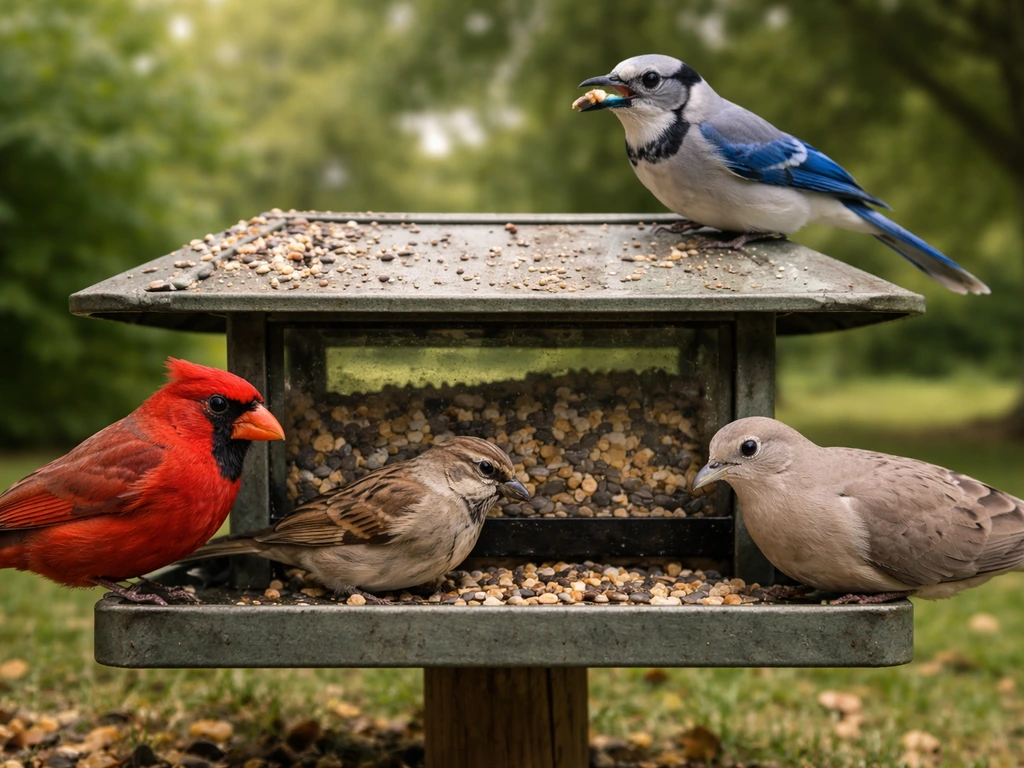
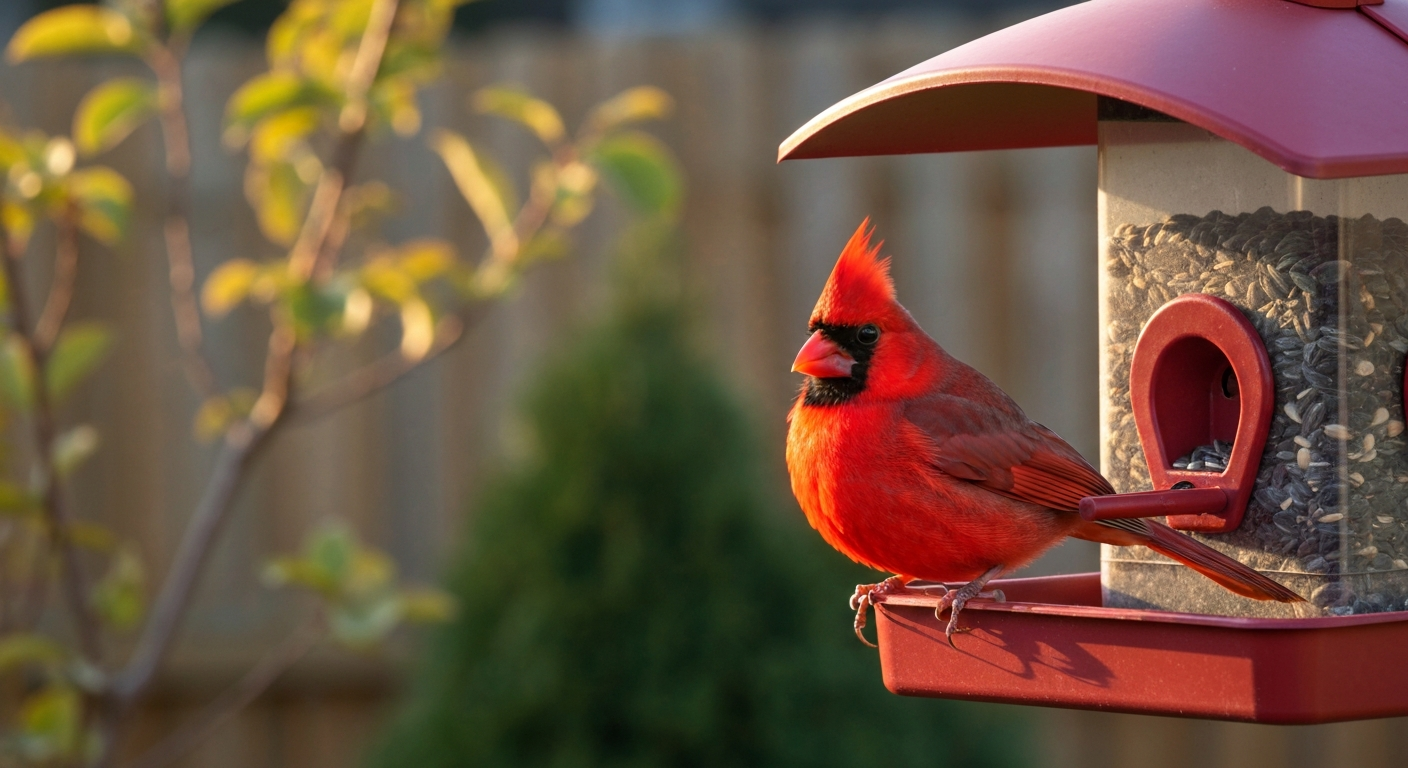
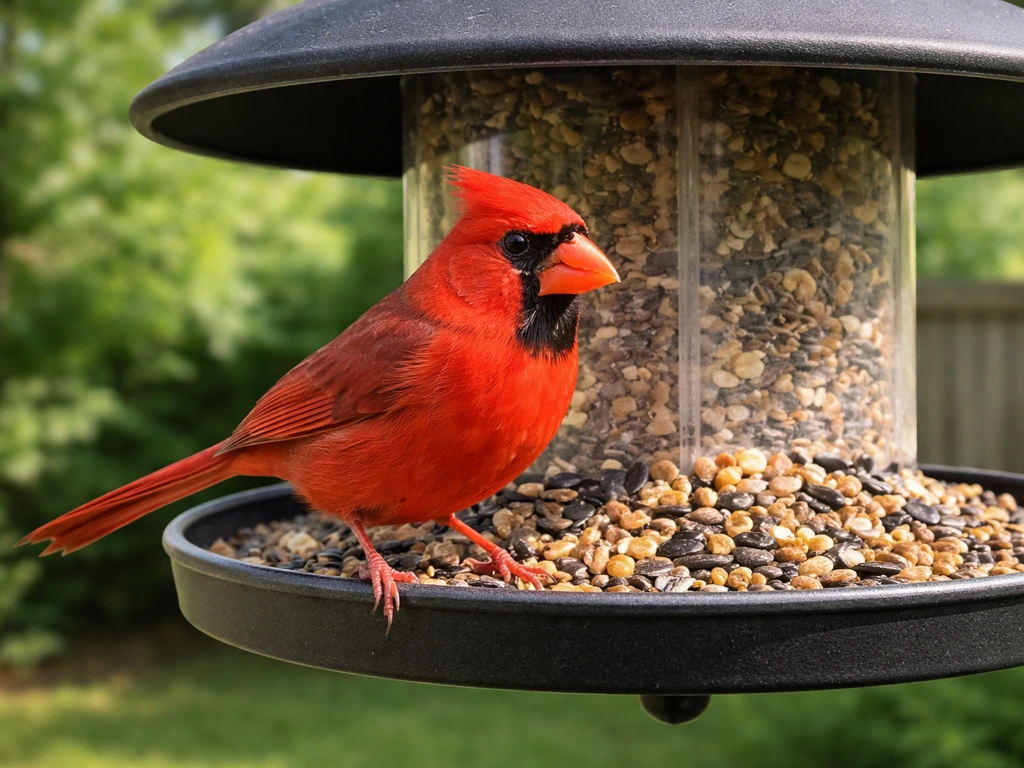
Hopper feeders are the workhorse of an Ohio setup. They hold a lot of seed, the roof protects it from rain and snow, and they attract the broadest range of species: northern cardinals, blue jays, house finches, song sparrows, and mourning doves. The downside is that the same design that cardinals love also invites common grackles, which can monopolize a feeder and chase off smaller birds. If grackles are a problem in your area, look for hoppers with smaller perches or weight-activated closures that shut off under the heavier weight of a grackle. Avoid cheap plastic hoppers if you're in the lake-effect snow belt. The freeze-thaw cycle cracks ports and warps lids within one or two winters.
Tube feeders: chickadees, nuthatches, finches, and titmice
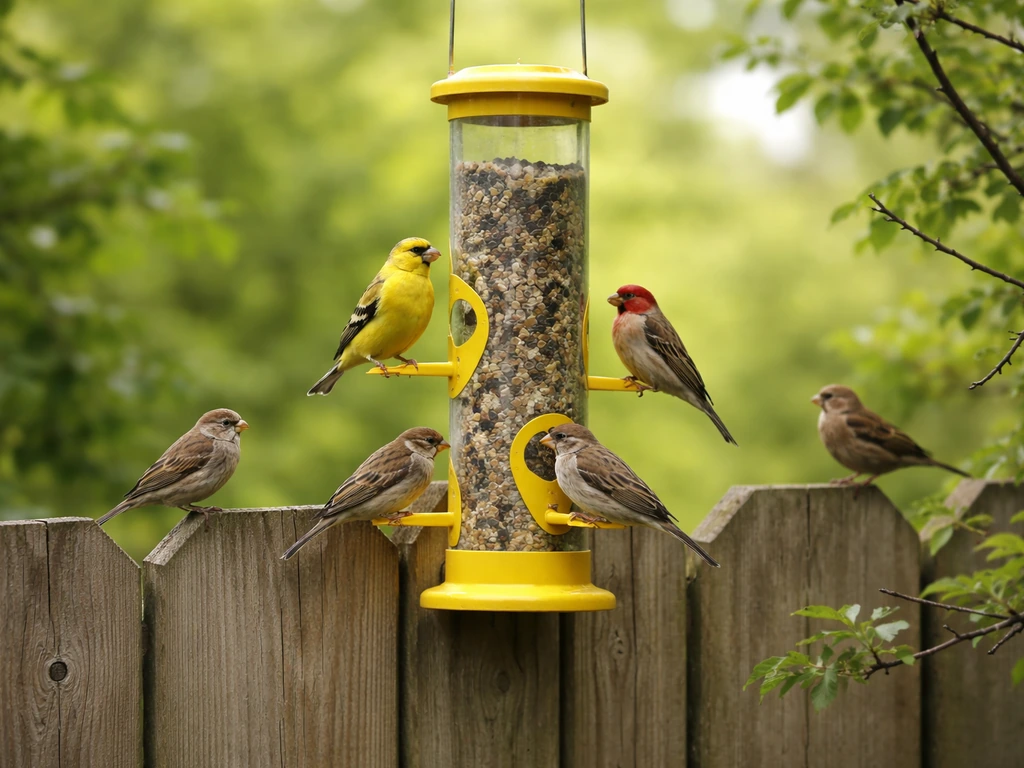
Tube feeders with multiple ports are excellent for smaller birds that cling to a perch and pick individual seeds. Chickadees, Carolina wrens, tufted titmice, white-breasted nuthatches, and house finches all use them comfortably. Tubes keep seed reasonably dry, which matters a lot in Ohio's wet springs and humid summers. For general seed use, fill them with black-oil sunflower. The Ohio DNR specifically calls black-oil sunflower "the favorite seed of most birds found in Ohio," and Project FeederWatch backs that up: cardinals, chickadees, finches, and sparrows all prefer it. If you want to pull in American goldfinches specifically, you need a dedicated nyjer tube with very small feeding ports. Standard ports are too wide for nyjer seed, which spills out and attracts nothing useful.
Suet feeders: woodpeckers, nuthatches, and chickadees
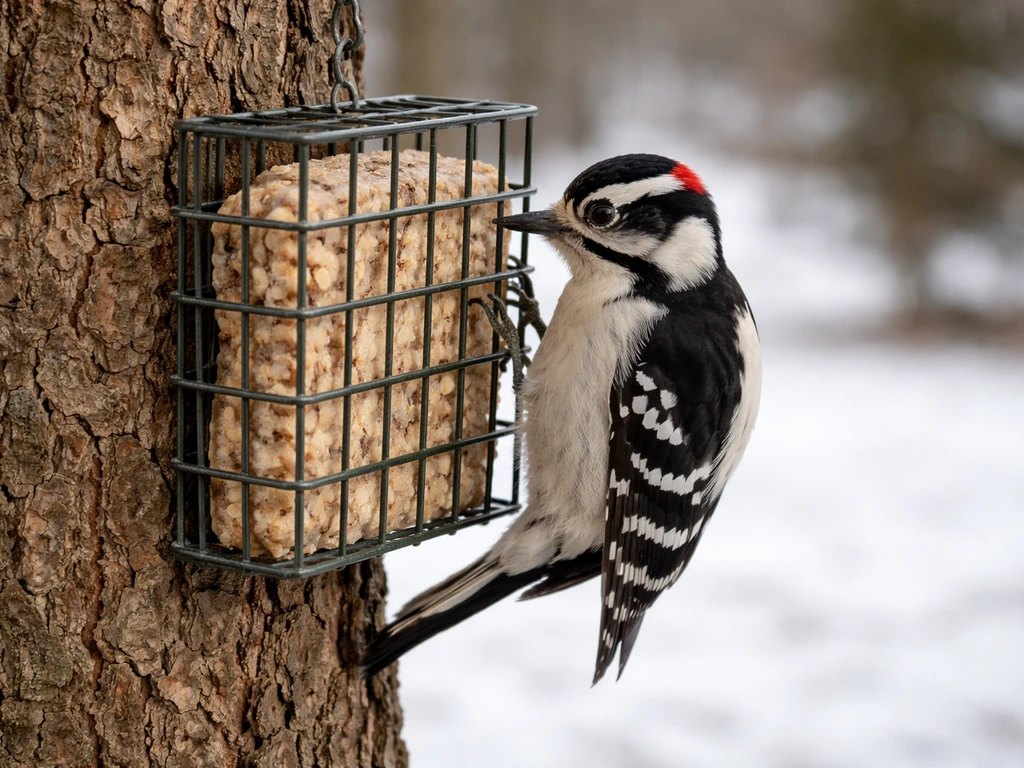
A simple wire suet cage is one of the highest-value additions you can make to an Ohio yard, especially October through March. Downy woodpeckers, hairy woodpeckers, red-bellied woodpeckers, white-breasted nuthatches, and black-capped chickadees all hit suet heavily in cold weather. Position suet cages several feet off the ground, ideally mounted on a tree trunk or post rather than hanging freely, because woodpeckers prefer a surface they can brace against. In summer, switch to no-melt suet formulas or skip suet entirely once temperatures regularly exceed 80°F, because standard suet goes rancid fast in Ohio summer heat.
Platform feeders: mourning doves, juncos, and ground feeders
Ground-feeding species like mourning doves, dark-eyed juncos, and white-throated sparrows prefer low or platform-style feeders. A tray feeder mounted 18 to 24 inches off the ground works well and keeps you from having to scatter seed directly on the ground (which gets muddy and moldy fast after Ohio rain). Keep platform feeders clean and avoid cheap seed mixes loaded with milo, which ground birds in Ohio largely ignore and which ends up sitting wet and rotting.
Hummingbird feeders: ruby-throated hummingbirds
Ohio's only regular hummingbird is the ruby-throated hummingbird. A simple glass or BPA-free plastic nectar feeder with red coloring works fine. What matters more than the feeder style is your maintenance schedule. In Ohio's summer heat and humidity, hummingbird feeders need to be emptied and cleaned every one to two days. Nectar ferments and grows mold quickly above 70°F, which can make birds sick. If you can't commit to that cleaning schedule in July and August, scale down to a smaller feeder that holds less nectar so you're not wasting a full feeder every other day.
Squirrels, grackles, and other backyard raiders
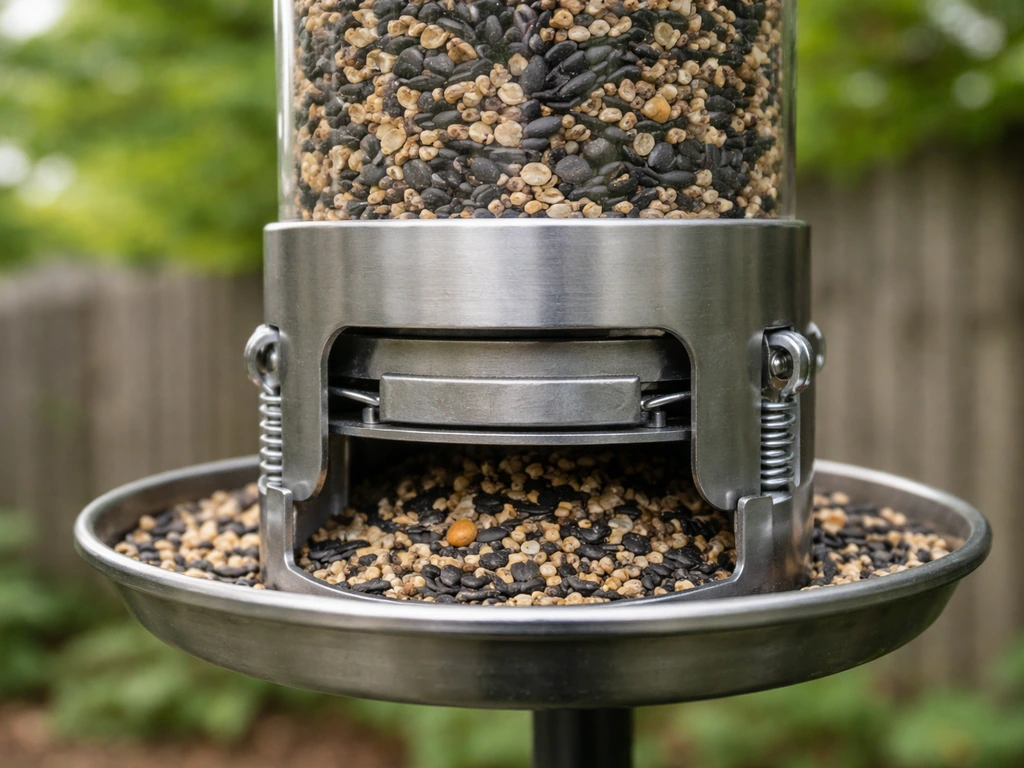
Squirrels are the number one feeder problem in Ohio, and I say that with full personal experience: I've had squirrels chew through plastic feeders, bend metal ports, and figure out hanging feeders within 20 minutes of installation. The honest truth, as Audubon acknowledges, is that no feeder is 100% squirrel-proof in every situation. But the right combination of feeder design and placement gets you close enough.
Weight-activated feeders are the most reliable mechanical solution. They work by closing seed ports when a squirrel's weight (typically 1.5 pounds or more) triggers a shroud or closure. The Brome Squirrel Buster Plus is one of the better-known examples: it holds 5.1 pounds of seed, uses a patented cardinal ring system so larger songbirds can still feed, and includes ventilation vents to let humidity escape from the seed tube. That ventilation detail matters in Ohio summers more than most people realize. It mounts on a standard 1-inch outside diameter pole.
Baffles are the other essential tool. Squirrels can jump six feet straight up from the ground and can launch horizontally from trees or structures to reach hanging feeders. A squirrel baffle mounted on a pole needs to be positioned so squirrels can't get a grip, climb past it, or gnaw through it. Metal baffles beat plastic ones for longevity. The standard rule: mount your pole baffle at least 4 to 5 feet off the ground and keep feeders at least 10 feet away from any tree, fence, or structure a squirrel could launch from.
Caged feeders are the third option, and they work by simply surrounding the feeder with a wire cage that birds can pass through but squirrels cannot. They're especially useful for suet cages, which squirrels target aggressively. For tube feeders, a cage enclosure lets small songbirds in while blocking squirrels and, as a bonus, keeps larger birds like grackles and European starlings out. If grackle pressure is heavy in your area, a caged tube feeder with nyjer or black-oil sunflower is one of the cleanest solutions.
| Strategy | Works Against | Best Used For | Main Limitation |
|---|---|---|---|
| Weight-activated feeder | Squirrels | Tube and hopper feeders | Cost; some larger birds also trigger closure |
| Pole baffle (metal) | Squirrels, raccoons | Any pole-mounted feeder | Requires correct placement distance from trees |
| Cage enclosure | Squirrels, grackles, starlings | Suet, tube feeders | Excludes larger desired birds like jays |
| Seed type adjustment (nyjer, safflower) | Grackles, house sparrows | Tube and hopper feeders | May reduce overall bird variety |
On the seed side: safflower seed is a useful grackle deterrent. Most grackles and starlings won't eat it, but cardinals, chickadees, and titmice will. Switching a hopper feeder from sunflower to safflower during heavy grackle season (spring and early summer in Ohio) can dramatically reduce congestion without sacrificing the birds you actually want.
Weather durability and keeping feeders clean
In Ohio, feeder material choice is a real durability decision. Powder-coated steel and UV-stabilized polycarbonate hold up to repeated freeze-thaw cycles and summer sun far better than basic plastic. Thin plastic hoppers that look fine at the store typically crack or warp within a year or two of Ohio winters. Metal feeding ports resist squirrel chewing and don't distort in cold. If you're investing more than about $30 in a feeder, it should be metal, recycled polycarbonate, or solid UV-resistant plastic with metal hardware.
Drainage and ventilation are often overlooked. A feeder that traps moisture turns seed into a moldy brick, which is both a health hazard for birds and a waste of money. Look for tube feeders with drainage holes at the bottom and hopper feeders with sloped floors that shed water. The Brome Squirrel Buster's seed tube ventilation is a real functional feature in Ohio's summer humidity, not just marketing language.
Cleaning schedule is non-negotiable. Project FeederWatch recommends cleaning seed feeders about once every two weeks under normal conditions, and more frequently in warm or wet weather. The method is straightforward: disassemble the feeder, soak it for 10 minutes in a diluted bleach solution (about 1 part bleach to 9 parts water), rinse thoroughly, and let it dry completely before refilling. If you see cloudy water in the base or black mold anywhere inside, clean it immediately regardless of schedule. Feeders that are hard to disassemble are feeders that don't get cleaned. Ease of disassembly should be on your checklist when buying.
Hummingbird feeders need the most frequent attention. In Ohio's peak summer heat, empty and clean them every one to two days. Glass feeders are easier to clean thoroughly than plastic ones and don't absorb staining from fermented nectar over time. A bottle brush and pipe cleaners for the feeding ports are worth having on hand.
Where to put your feeders for best results
Placement affects how many birds actually use your feeders, how safe those birds feel while feeding, and how effectively you're blocking squirrels. There's a real tension here: birds want feeders near cover for quick escape routes, but cover that's too close gives squirrels a launch point. Getting the balance right makes a noticeable difference.
The general target is placing feeders close enough to shrubs, hedgerows, or trees that birds have a 5 to 10 foot flight to safety, but far enough (at least 10 feet) that squirrels can't jump directly onto the feeder. In practice, that often means a freestanding pole in the yard rather than hanging feeders from tree branches. A shepherd's hook or dedicated bird feeder pole with a baffle gives you precise placement control and makes the 10-foot rule much easier to manage than fighting with tree branches.
Window strike prevention also matters for placement. Feeders placed either very close (within 3 feet) or farther than 30 feet from windows significantly reduce bird-window collisions. The 3-foot rule works because a bird that startles from a nearby feeder doesn't have enough speed to cause serious injury if it does hit the glass. The danger zone is the 5 to 30 foot range, where birds build up full flight speed before hitting.
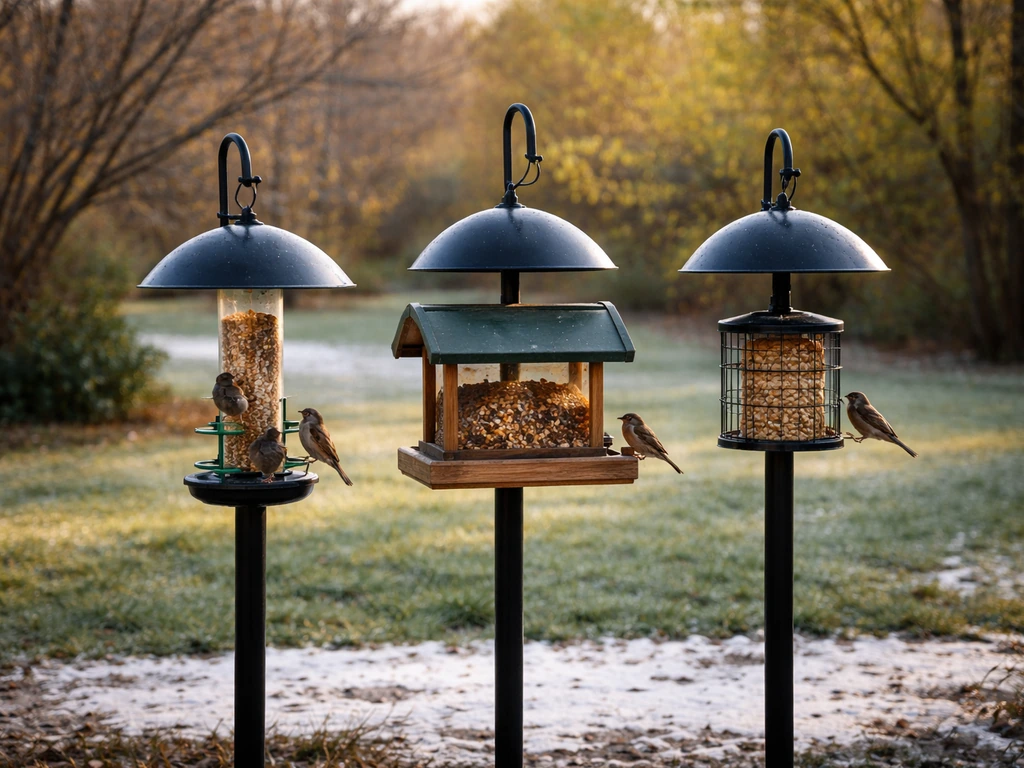
For multi-feeder setups, spread feeders out by at least 10 to 15 feet to reduce crowding and competition. Audubon’s general feeding guidance also emphasizes matching feeder design to the birds you want to reduce crowding and help prevent undesired species from taking over reduce crowding and undesired species overrun. Dominant birds like house finches and starlings will monopolize a single feeding station, but when there are multiple stations spread across the yard, subordinate birds like wrens, chickadees, and nuthatches have room to feed without constant displacement. Put the suet feeder on the opposite side of the yard from the seed feeders if you have space.
| Feeder Type | Ideal Height | Distance from Cover | Mounting Method |
|---|---|---|---|
| Tube feeder (seed) | 5–6 feet | 5–10 feet from shrubs/trees | Shepherd's hook or pole with baffle |
| Hopper feeder | 5–6 feet | 5–10 feet from shrubs/trees | Pole mount or hanging from post |
| Suet cage | 4–6 feet | On or near tree trunk | Tree trunk mount or hanging arm |
| Platform/tray feeder | 18–24 inches | Near ground cover or hedgerow | Low post or freestanding bracket |
| Nyjer tube feeder | 5–6 feet | 5–10 feet from shrubs/trees | Shepherd's hook or dedicated pole |
| Hummingbird feeder | 4–5 feet | Near flowering plants or red plantings | Hanging hook, bracket, or window mount |
Smart and AI bird feeder cameras: worth it in Ohio?
Smart bird feeder cameras have gotten genuinely interesting in the last few years. Models like the Netvue Birdfy use onboard AI to identify bird species in real time, claim to recognize over 6,000 species, and send alerts to your phone when a bird visits. The appeal for an Ohio birder is real: you can log which species are showing up, track seasonal arrivals, and get better photos than you'd manage with a manual camera.
That said, the limitations are worth knowing before you spend $100 to $200. AI identification can struggle with tricky lighting conditions, like direct afternoon sun angles, and misidentification happens in real-world testing more often than product pages suggest. The subscription model for some AI features (Netvue's AI recognition runs around $4.99 per month) adds ongoing cost. Battery-powered models like the FeatherSnap Scout also need more frequent maintenance in Ohio's rainy and humid conditions because the camera housing can trap moisture.
My honest take: a smart camera feeder makes the most sense if you're already engaged enough in birding to care about species logs and seasonal tracking, or if you have a yard that gets interesting migrants passing through during Ohio's spring migration (late April through May is spectacular for warblers and grosbeaks). If you're just starting out, spend the budget on a quality mechanical feeder with a good baffle first. Once the birds are actually coming reliably, adding a camera feeder to one station is a genuinely fun upgrade. Ohio birders in northern parts of the state, where bird diversity overlaps with Great Lakes migration corridors, tend to get more identification value from AI cameras than those in more suburban areas with predictable resident species.
How to pick your first feeder today
If you're buying your first Ohio feeder setup right now, don't overthink it. Start with two feeders: a weight-activated tube feeder filled with black-oil sunflower seed, and a wire suet cage. If you’re shopping specifically for Iowa, look for feeders built for cold winters and humidity swings, plus baffles or weight-activated ports to handle common backyard raiders weight-activated tube feeder. Minnesota birders often have similar winter and humidity challenges, so these durability and maintenance tips also help you choose the best bird feeders for Minnesota. Those two cover the most ground for the least money and maintenance effort. The tube feeder pulls in cardinals, chickadees, titmice, nuthatches, and finches. The suet cage brings in woodpeckers and more nuthatches and chickadees through fall and winter. If you add a nyjer tube feeder in late spring, you'll have goldfinches cycling through all summer.
For mounting, a freestanding steel pole with a torpedo or baffle-style squirrel guard is the most versatile setup. It doesn't require trees or structural attachments, you can move it if placement turns out to be off, and it works with most feeder hanging styles. If a shepherd's hook is what you have, that's fine, but make sure it's heavy gauge steel and add a baffle below the feeder.
Here's a quick setup checklist to go from purchase to birds in your yard:
- Buy a weight-activated tube feeder (look for metal ports and a seed ventilation system) and a basic wire suet cage
- Pick up black-oil sunflower seed as your main fill and one or two suet cakes for the cage
- Get a steel pole or heavy shepherd's hook with a metal baffle, positioned at least 10 feet from trees, fences, or structures
- Set feeder height at 5 to 6 feet, with shrubs or hedgerow within 10 feet for bird escape cover
- Fill the feeder no more than halfway to start, so seed turns over before it sits too long
- Commit to a cleaning schedule: every two weeks for seed feeders, every one to two days for hummingbird feeders in summer
- Add a nyjer tube feeder in May when goldfinches arrive; add a hummingbird feeder in early May filled with fresh 4:1 water-to-sugar nectar
- Swap suet for no-melt varieties in June and July, or remove the cage until fall
Ohio's bird diversity is genuinely excellent year-round, and setting up even a basic two-feeder station will produce results faster than most first-timers expect. Cardinals show up within days in most Ohio suburbs. Chickadees and titmice are almost immediate. Woodpeckers usually follow once the suet is up. Give it two to three weeks before second-guessing placement, and expect the full picture of seasonal visitors to develop over your first full year. Neighbors in neighboring states like Indiana and Wisconsin run into similar setup questions, especially around squirrel-proofing and winter durability, but Ohio's lake-effect snow factor in the north and its high summer humidity in the south make material and drainage choices especially important here.
FAQ
What’s the best starter feeder setup for the average Ohio backyard?
In Ohio, most people overpay for capacity and underpay for weather resilience. For a first station, prioritize metal or UV-stabilized housing plus a real squirrel solution (weight-activated or baffle), then choose seed type. If you are in the lake-effect snow belt, spend extra on freeze-thaw resistant ports and a feeder that can be fully disassembled for cleaning.
Can I run multiple feeders in one spot, or should I spread them out?
Yes, mixing can work, but avoid overcrowding one station. Put seed feeders (tube or hopper) at least 10 to 15 feet apart from each other, and keep the suet feeder on the opposite side of your yard when possible. This reduces bullying by dominant birds, and it also helps you spot which feeder design is actually attracting the species you want.
How often should I clean my Ohio feeders if it’s been rainy or humid?
If you notice seed clumps, cloudy water in the tray or base, or any black residue, clean immediately instead of waiting for the two-week interval. Warm and wet Ohio stretches accelerate mold, especially on feeders that don’t drain well. After cleaning, make sure the feeder is completely dry before refilling, otherwise mold rebounds quickly.
Do I need different seed for different feeder types, especially in Ohio?
Tube and hopper feeders often need different seed types to perform well. Tube feeders with standard-sized ports can waste nyjer because it’s too small and spills, so use a dedicated nyjer tube with very small ports. For most Ohio species, black-oil sunflower works across tube or hopper formats, and it’s the easiest seed to keep consistent through seasons.
What feeder should I use for birds that prefer the ground in Ohio?
It depends on the bird. For mourning doves, juncos, and sparrows, a low tray or platform feeder is more appropriate than a tube. Place it about 18 to 24 inches off the ground, and skip the heavier mixed-seed bags that include lots of milo. Milo tends to sit wet, rot, and attract little demand from Ohio ground-feeders.
What’s the best way to mount feeders so they’re both safe and easy to manage?
Start with safety and durability. A common option is a powder-coated steel pole with a baffle or torpedo guard, because it gives you exact placement without relying on tree branches. Then place feeders so birds have cover within a short flight to escape, but squirrels cannot reach the feeder directly from a launch point (trees, fences, or structures).
What should I do if squirrels are still getting to the feeders after I bought one squirrel guard?
Yes. If you have repeated squirrel attempts, switch to a feeder design that blocks access, not just deters it. Weight-activated closures plus a properly positioned pole baffle is the strongest combo, and caged tube or caged suet can further reduce pressure. Also check any small gaps around ports, since squirrels often exploit looseness or warped lids.
Where exactly should a baffle be placed in Ohio to stop jumping squirrels?
Baffles are most effective when they prevent squirrels from getting a grip. Mounting matters: keep the baffle at least 4 to 5 feet above the ground and keep the feeder at least 10 feet from trees, fences, or other launch surfaces. Metal baffles generally outlast plastic in Ohio because freeze-thaw and chewing degrade plastic over time.
How do I maintain a hummingbird feeder in Ohio without losing birds to fermented nectar?
For hummingbirds, many birders underestimate how fast nectar can ferment in Ohio’s summer. Plan on emptying and cleaning every one to two days once temperatures are consistently above about 70°F. If you cannot keep up with that schedule, use a smaller feeder that holds less nectar so you waste less and reduce the chance of harmful fermentation.
Where should I place feeders relative to windows to reduce bird collisions?
Window placement is about the risk zone. Feeders within about 3 feet of a window tend to reduce collision severity, while locations roughly 5 to 30 feet away are higher risk because birds build up flight speed. If you can, use window decals or move the feeder, but start by changing placement to avoid the danger band.
Are smart bird feeder cameras actually useful in Ohio, or just a gadget?
Smart feeder cameras can be worthwhile, but only if you will act on the data. AI identification can struggle with harsh angles, and some features require a subscription. Battery or humidity exposure can also shorten intervals between maintenance in rainy Ohio weather, so consider one camera only after your mechanical feeder setup is already reliably attracting the species you care about.
If I want more winter birds in Ohio, what should I prioritize first?
If you’re buying because you want winter birds, keep it simple: a quality suet setup and a reliable tube feeder with black-oil sunflower are usually enough. Suet becomes most important roughly October through March, and it specifically boosts activity from woodpeckers and nuthatches. If you also add nyjer, do it in late spring to target goldfinches later in summer and fall.