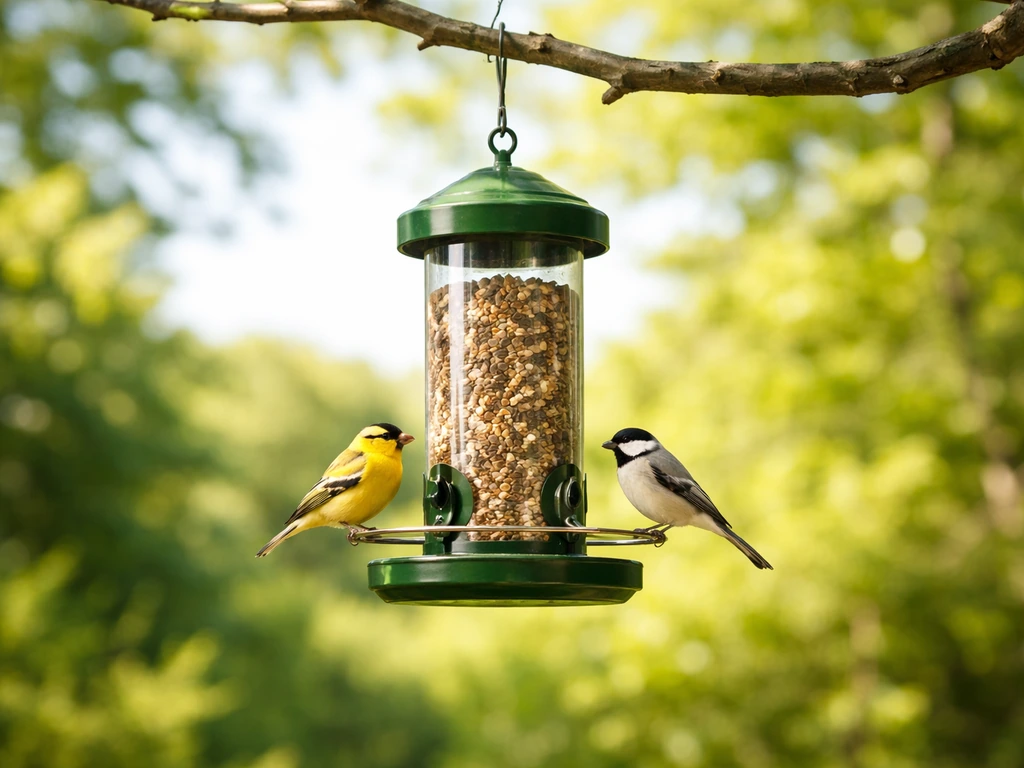
Red, yellow, and orange are the best colors for attracting the most birds to a feeder. These warm, high-contrast colors are easiest for birds to spot at a distance against typical yard and foliage backgrounds, and they align with the color associations many species have already built from foraging. That said, color is really just the first handshake, the food inside, the feeder's placement, and how clean you keep it do far more work than the paint job.
What Color Bird Feeder Attracts Birds Most: Quick Guide
Marcus Holloway
7 May 2026
How birds actually see color (it's not like human vision)
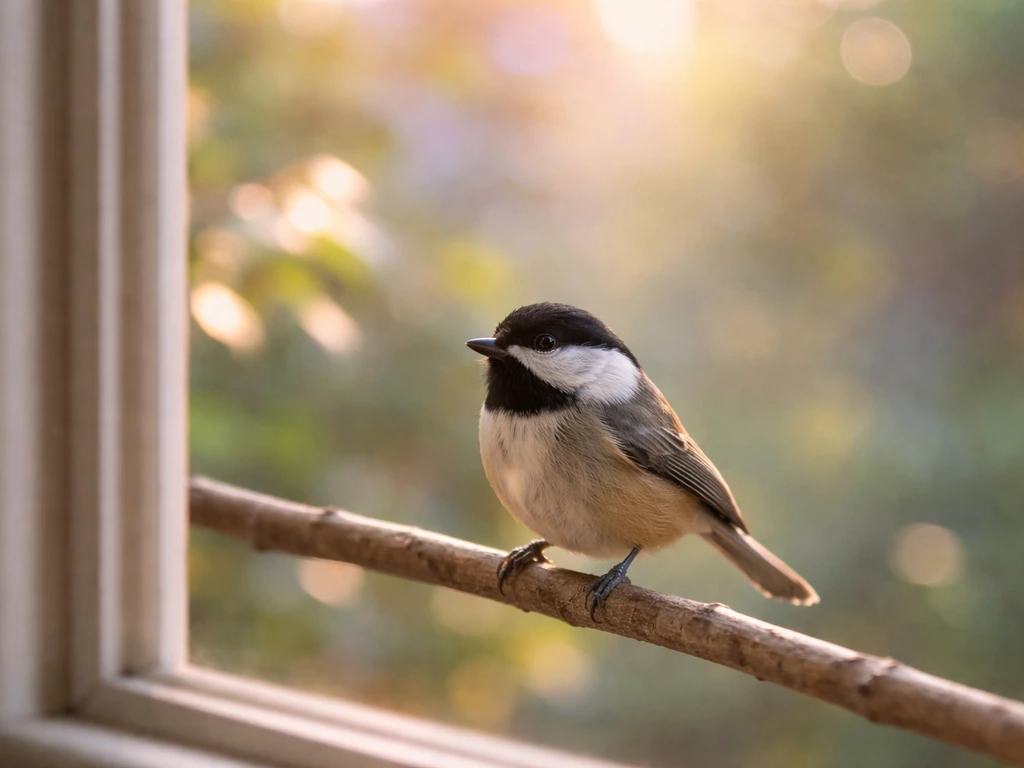
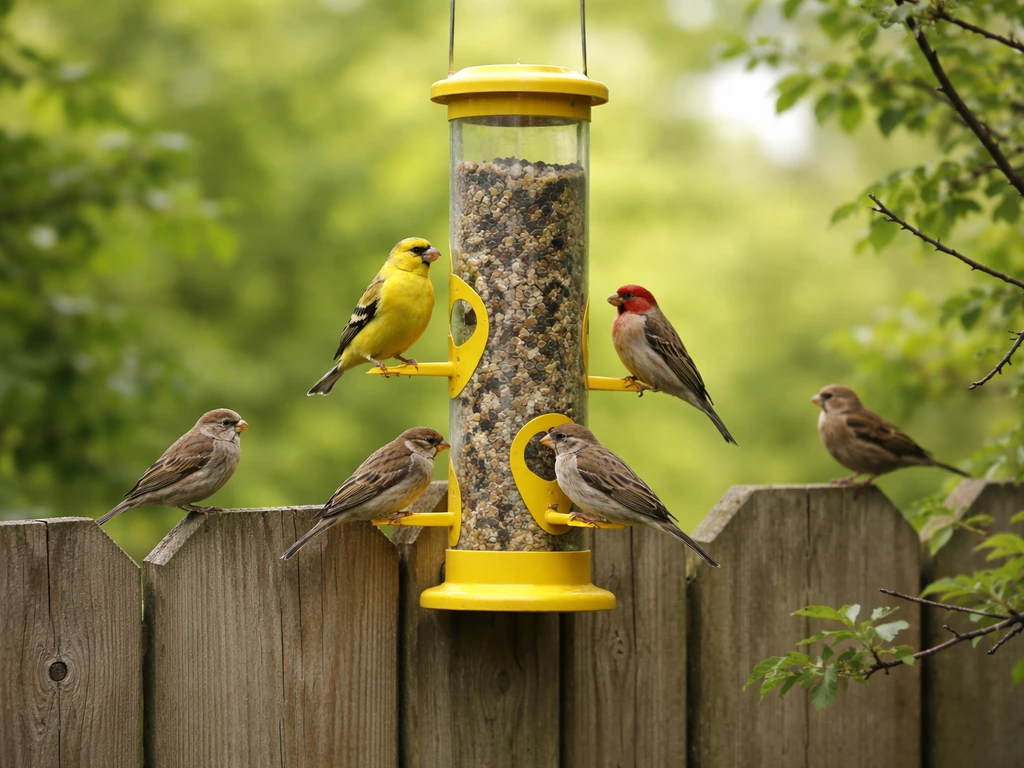
Most backyard birds are tetrachromatic, meaning they have four types of cone photoreceptors instead of the three humans use. That fourth cone gives them sensitivity into the ultraviolet range. What this means practically is that a feeder color you think looks vibrant might appear dull or oddly muted to a bird, while a subtle UV-reflective surface could pop in ways you'd never notice. Oil droplets in their cone cells also fine-tune how they perceive the spectrum, shifting the boundary between colors compared to what we see.
Research in Animal Cognition confirms that color biases are often context-dependent: naïve young birds may show a strong preference for red artificial fruits, but experienced wild adults don't always behave the same way. A PMC study did find birds consumed more red than orange when both options were nutritionally identical (statistically significant at p<0.01), which suggests red does have some built-in salience for many species. But hummingbird studies from Audubon's BirdNote program found that when nectar quality varied, hummingbirds switched feeder preference regardless of color, meaning a beautifully red feeder stocked with weak sugar water will lose to a plain feeder with a better mix.
The practical takeaway: color grabs attention and helps birds find and remember a feeder, but it doesn't override food quality or a bad location. Think of feeder color as visibility and branding, not a magic switch.
Best feeder colors by bird species
Different species do respond to different color cues, and a lot of this comes from their natural foraging associations. Here's what the research and real-world feeder experience suggest for the birds most backyard watchers are trying to attract.
Hummingbirds
Red is the classic choice, and it works, hummingbirds associate red with nectar-rich flowers and the preference is strongly learned through experience. Audubon notes this preference is acquired rather than purely hard-wired, which means red accents on a feeder (the ports, the base, a red cap) are often enough to grab attention on first discovery. You don't need the entire feeder to be red. Orange works nearly as well, and some hummingbirds are drawn to pink flourishes too. Avoid green as the primary color; it blends into foliage and makes initial discovery much harder.
Goldfinches and other finches
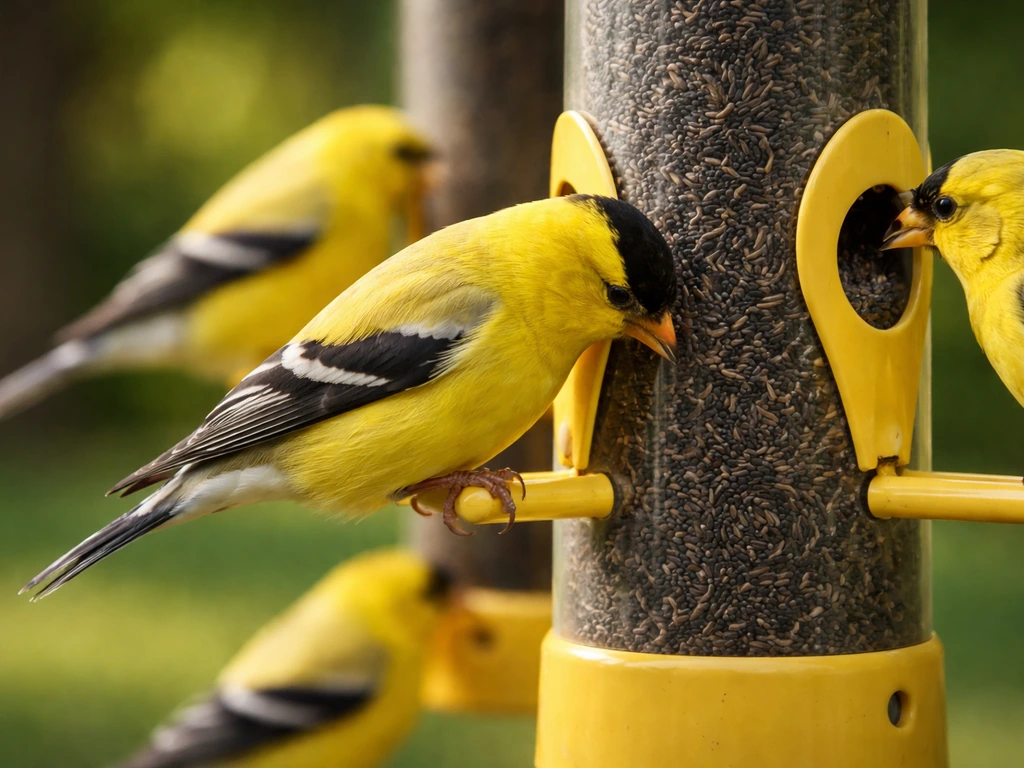
Yellow is the go-to for goldfinches, and there's a reason almost every nyjer/thistle feeder on the market leans yellow or bright lime green. Goldfinches are visually drawn to yellow sources because it mirrors the color of many of their natural food plants. Bright yellow or yellow-green feeders loaded with nyjer seed consistently outperform neutral or dark-colored options for this group. American goldfinches, house finches, and purple finches all respond well to warm, bright feeders.
Cardinals and red birds
Cardinals are less picky about feeder color than you might think, they're ground and shrub foragers and are more motivated by large, easy-access platforms and the right seed (sunflower and safflower) than by feeder color. That said, red and deep maroon feeders feel like a natural fit and are commonly marketed for cardinals. If you want the best bird feeder for red birds, focus on a red or deep maroon feeder that also provides easy access to the right seed. If you're specifically targeting cardinals, feeder design (wide tray, sturdy perches) matters more than whether the feeder is red. The best red cardinal bird feeder options typically emphasize platform size over paint color.
Woodpeckers
Woodpeckers are drawn to suet and peanut feeders. They aren't particularly color-driven in their foraging, but high-contrast feeders (dark cage against a light background, or a brightly colored suet holder) are easier to spot. Natural wood tones or green don't hurt, but bold red or orange suet cage frames have shown better initial discovery rates in my own yard. Whatever color you choose, the texture and structure of the feeder (vertical surface, clinging bars, tail-prop area) matters far more.
Bluebirds and robins
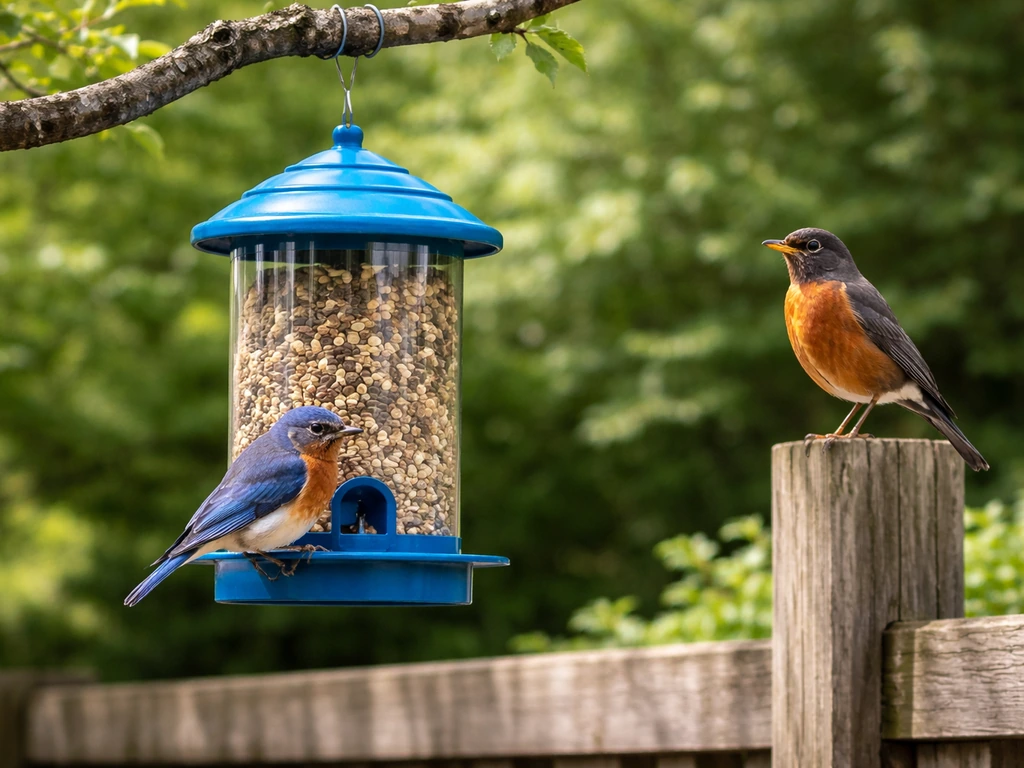
Bluebird feeders are commonly made in blue, which does help with species recognition and branding in terms of what's marketed. Some sources cite research suggesting robins show interest in black-colored feeders. These are edge cases for most backyard setups, but if you're targeting bluebirds with mealworm feeders, a blue or sky-blue feeder with open tray access is a sensible choice.
General songbirds and mixed flocks
For maximizing total variety, a warm-toned feeder in red, orange, or yellow stands out from distance against green foliage and neutral fences. Green and brown feeders aren't harmful to birds, but they do reduce discoverability, especially for new visitors who haven't learned where your feeders are yet. If you're setting up a feeder for the first time in a yard, brighter is better while birds learn the location.
| Bird Species | Best Feeder Color | Key Reason |
|---|---|---|
| Hummingbirds | Red or orange (accents sufficient) | Learned association with nectar-rich flowers |
| Goldfinches / Finches | Yellow or bright lime-green | Mirrors natural food plant colors |
| Cardinals | Red, but design matters more | Platform access and seed type drive visits |
| Woodpeckers | High-contrast any color; red/orange cage works | Structure and food type are primary drivers |
| Bluebirds | Blue | Species-recognition and marketing alignment |
| Mixed backyard birds | Red, yellow, or orange | Best visibility at distance against foliage |
What else to look for in a feeder beyond color
Color gets you noticed. Everything else determines whether birds come back. Here's what I look at when evaluating any feeder:
- UV and weather resistance: Paint and plastic degrade fast in direct sun. Look for UV-stabilized materials or powder-coated metal finishes. A feeder that fades to a dull grey in one season has lost most of its color advantage anyway.
- Contrast between feeder and ports: The feeding ports or perch areas should contrast with the feeder body so birds can find them quickly. A yellow feeder with black mesh ports is far easier for a goldfinch to navigate than an all-yellow tube.
- Material durability: Metal (powder-coated steel or aluminum) outlasts plastic in heat, cold, and squirrel encounters. Recycled poly lumber holds color better than painted wood and resists rot.
- Feeder type matched to species: Tube feeders for finches, platform/hopper for cardinals, suet cages for woodpeckers, wide-mouth tubes for hummingbirds. A beautiful red tube feeder won't help if it's the wrong style for the birds you're targeting.
- Ease of cleaning: Feeders with removable bases and wide openings get cleaned more regularly, which directly affects how many birds visit. A hard-to-clean feeder becomes a disease vector.
- Capacity vs. spoilage: Bigger isn't always better. If your traffic is low, large-capacity feeders leave seed sitting long enough to mold. Match capacity to your actual bird traffic.
If you're thinking about painting or repainting a feeder to change its color, make sure any paint used is non-toxic and fully cured before birds access it. The exterior only should be painted, seed contact surfaces should stay bare or use bird-safe finishes. This connects directly to what products qualify as the best paint for bird feeders, where the safety and durability specs narrow the field considerably. Choosing the best paint for bird feeders also means looking for non-toxic, fully cured, and durable finishes that hold up outdoors.
Practical setup tips to get birds visiting today
Placement and height
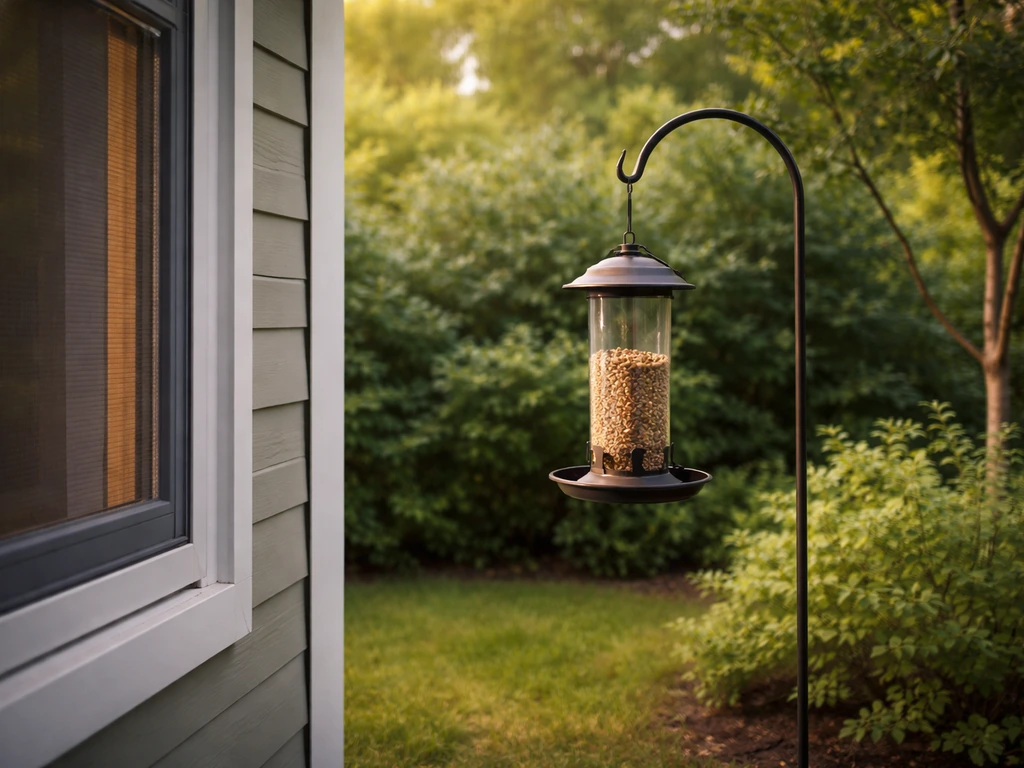
Position your feeder within 10 to 15 feet of natural cover (shrubs, hedges, or trees). Birds want a quick escape route if a hawk shows up, and they'll avoid feeders that feel exposed. At the same time, don't jam the feeder right into dense brush, that creates hiding spots for cats and other predators to ambush from.
For window safety, the rule from Wild Birds Unlimited and All About Birds is: either within 3 feet of the glass (so birds can't build up speed), or beyond 10 feet. The danger zone is the 3 to 10 foot range where birds can gain enough speed to cause real injury on a collision.
Reducing scare-off
Shiny or highly reflective feeders can spook birds on first approach. This is worth knowing if you've bought a metallic or mirror-finish feeder hoping it looks cool, the flash of light can read as a threat. Matte finishes in warm colors are safer for initial discovery. Similarly, placing feeders near windows that show strong sky reflections can confuse birds.
Cleaning schedule
Clean seed feeders about once a month using a 10% bleach solution (roughly 2 ounces of bleach per gallon of water), scrubbing all surfaces and rinsing thoroughly before refilling. Nectar feeders need more frequent attention: every 2 to 5 days depending on temperature, and more often in summer heat. Mold in a hummingbird feeder can be lethal. Also clean the area under feeders, droppings and wet hulls accumulate bacteria and can spread disease even if the feeder itself is spotless.
Dealing with squirrels and grackles without making things worse
Here's the part nobody loves talking about: a brightly colored, highly visible feeder does its job equally well for squirrels and grackles as it does for the birds you actually want. Visibility cuts both ways.
Squirrels
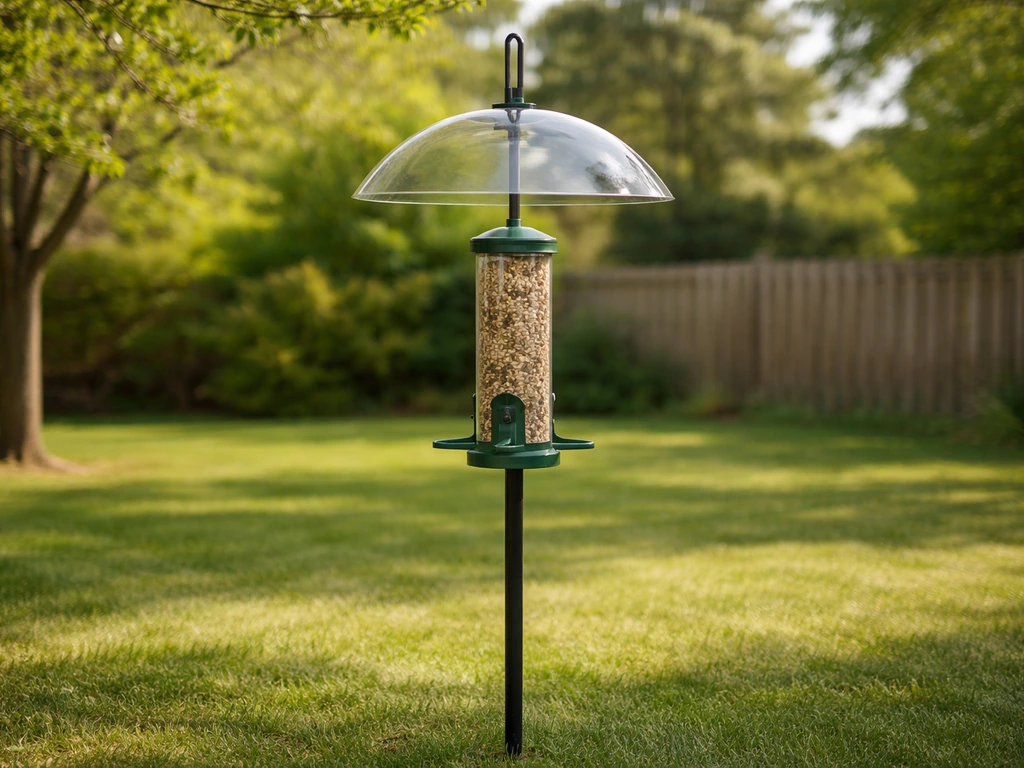
The best approach is structural, not cosmetic. A pole-mounted baffle placed at least 4 feet off the ground, with the feeder at least 8 to 10 feet away from trees, fences, roofs, or any launch point, stops the vast majority of squirrel access. Feeder color has zero effect on squirrel behavior, they're after the food and they're persistent problem-solvers. Don't let anyone tell you a green feeder will 'hide' from squirrels; it won't.
Grackles
Grackles are large, aggressive, and will dominate an open feeder in a flock. Dome-style baffles above hanging feeders make it physically awkward for them to land directly on the feeding mechanism. Weight-sensitive feeder mechanisms that close under heavy birds (designed for squirrel-proofing) also work on grackles for the same reason. Reflective Mylar tape or iridescent strips near feeders can disrupt grackle comfort and reduce loitering, the moving visual is enough to make them uneasy without bothering smaller songbirds as much. Avoid large open platform feeders if grackles are a persistent issue in your yard; switch to tube feeders with smaller ports and shorter perches that favor finch-sized birds.
Troubleshooting: is it actually the color, or something else?
If you've switched to a bright red or yellow feeder and still aren't getting birds, the color probably isn't the problem. Here's how to diagnose what's actually going on:
- Check the food first. Old, clumped, or moldy seed is the single biggest reason birds avoid a feeder. Dump and replace everything, even if it looks okay — seed goes rancid and birds can smell and taste the difference.
- Evaluate the location. Is the feeder too exposed with no nearby cover? Is it too close to a window with heavy reflection? Move it within 10 to 15 feet of shrubs or trees and wait a week.
- Consider predator pressure. If a hawk, outdoor cat, or persistent squirrel has been showing up regularly, birds may be avoiding the whole area temporarily. Give it a few days with the threat removed.
- Be patient with new feeders. Birds don't discover new feeders instantly. It can take one to three weeks, especially in summer when natural food is abundant. In spring and fall migration, turnover is faster.
- Match feeder type to local species. If you're in an area without goldfinches, a yellow nyjer tube feeder won't do much regardless of how bright it is. Check what birds are actually in your yard and match the feeder style and seed accordingly.
- If birds visit briefly and leave without feeding, the port size or perch configuration may be wrong for the species. Cardinals won't use tiny ports; large perches that accommodate grackles will push smaller birds away.
Color is a legitimate variable and worth getting right, but FeederWatch research makes it clear that feeder color is typically secondary to food type and overall setup quality. If everything else is dialed in and you're still not getting the traffic you want, then experimenting with color is a reasonable next step, but it's usually the last variable to test, not the first.
FAQ
If I buy the “best” color feeder, will I automatically attract birds?
Match the feeder color to the birds you want and the food you offer. For example, a bright red hummingbird feeder matters only if the nectar mix is correct and kept fresh, while yellow feeders help when you stock nyjer/thistle for goldfinches. If the food type is wrong, color changes usually won’t fix low traffic.
Do I need to paint the entire feeder red or is a red accent enough?
Yes, but use it strategically. Consider adding red or orange accents (a red cap, base, or port area) instead of repainting the whole feeder, since most species’ response is driven by the contrast pattern they can recognize quickly. Also ensure any modifications do not affect ventilation, drainage, or seed contact surfaces.
What color and feeder style works best for small birds like finches?
For finches and similar small birds, choose high-visibility, low-perch clutter designs: bright yellow or yellow-green, with shorter perches and ports sized for small feet. Avoid oversized openings and long landing bars, because larger birds can dominate, which makes even the best color look ineffective.
How long should I wait after changing feeder color before deciding it’s not working?
Start with one color change, then wait for feedback. Birds learn feeder location in days, not minutes, so give the new feeder setup at least 1 to 2 weeks (longer in seasonal moves). Use the same seed and placement during the test so you can tell whether color is actually helping.
Is bright feeder color more important when the feeder is new than after birds learn its location?
Avoid dark, heavily patterned, or camouflage-like colors when the feeder is new to your yard. For first-time setups, bright warm colors (red, orange, yellow) against neutral fences and green foliage improve discoverability. Once birds have learned the location, color matters less than maintenance and food quality.
Can reflective or metallic feeder colors actually scare birds away?
Yes. Window reflections can make birds approach from the wrong angle, and metallic or mirror finishes can create flashes that read as a threat. Use a matte finish in warm colors and keep feeders either very close to glass (under 3 feet) or far enough away (beyond 10 feet).
My feeder is bright, but birds still ignore it. What setup factors could be overriding color?
Often, yes indirectly. If the feeder looks “hidden” to you but is actually hard for birds to access safely, they won’t use it consistently. Make sure it’s within about 10 to 15 feet of natural cover for escape, but not tucked into dense brush where predators can ambush. Accessibility and perceived safety can outweigh color.
What should I do if squirrels or grackles keep taking the feeder, even though the color is right?
Grackles and squirrels can dominate the feeder, and their presence can make birds appear “not attracted” to the color. Use squirrel-proofing (baffles and proper feeder height) and consider tube or smaller-port feeders if grackles are taking over. Color won’t solve competition.
If I’m using the right color for hummingbirds, what else should I check besides color?
If hummingbirds come to the vicinity but don’t stay, suspect nectar handling first. Keep nectar fresh based on temperature (every 2 to 5 days, more often in heat) and clean thoroughly, because spoiled nectar and mold can repel them quickly. A correctly colored feeder with bad nectar often gets worse results than a plain feeder with clean, proper nectar.
Is it safe to repaint a feeder, and what precautions should I take?
Treat paint as the last step. Any paint or finish must be non-toxic and fully cured, and seed-contact surfaces should stay bare or use bird-safe finishes so birds aren’t exposed to fumes or residue. If you’re unsure, skip painting and instead choose a factory-finished bright warm color.
Next Article
Best Color for a Bird Feeder: What Birds Prefer
Find the best color for a bird feeder by species, bird vision tips, and setup guidance for shade, contrast, and access.