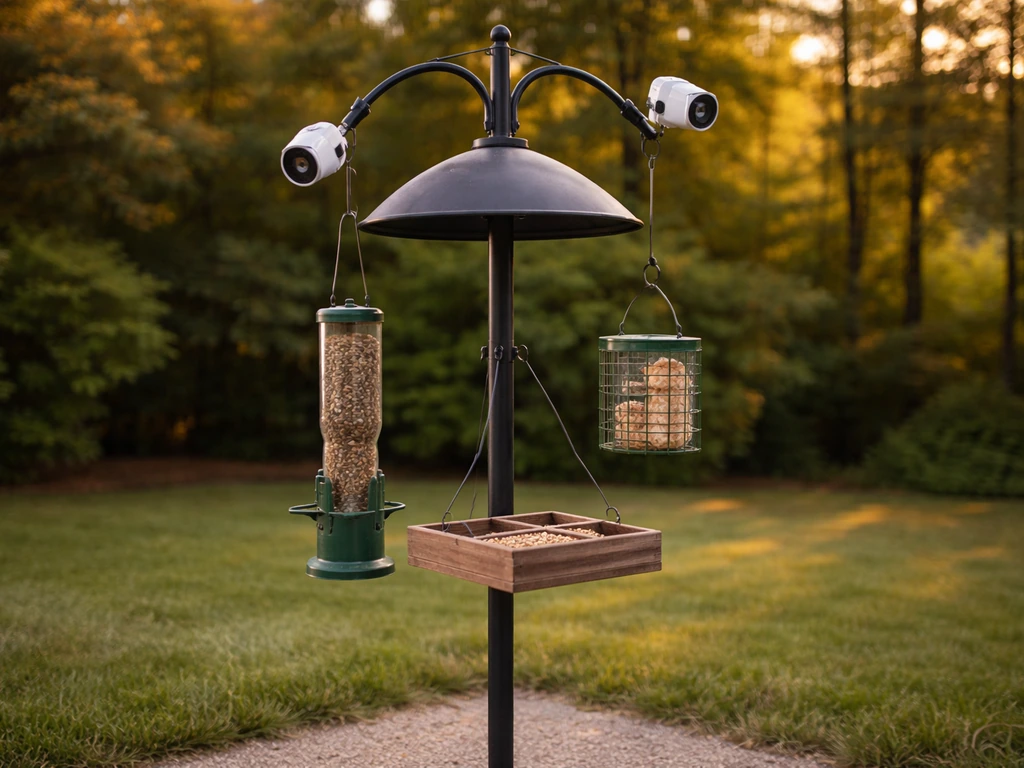
The best bird feeder station for most backyards right now is a pole-mounted multi-feeder setup built around the Brome Squirrel Buster Plus as the centerpiece, with a caged suet feeder and a nyjer tube added on satellite arms. That combination covers seeds, suet, and thistle in one footprint, handles squirrels without constant babysitting, and attracts a wide range of species from cardinals and chickadees to woodpeckers and finches. If you want to keep things even simpler and don't mind a more budget-conscious route, a Droll Yankees pole system with a weight-activated feeder does the heavy lifting almost as well. The right answer for you depends on which birds you're targeting, how hard your squirrel pressure is, and whether you want a camera watching the action.
Best Bird Feeder Station: Top Picks, Features, and Setup
What to look for in a bird feeder station
A feeder station is only as good as the sum of its parts, so before you buy, think through these factors in order of importance.
Feeder types and seed variety
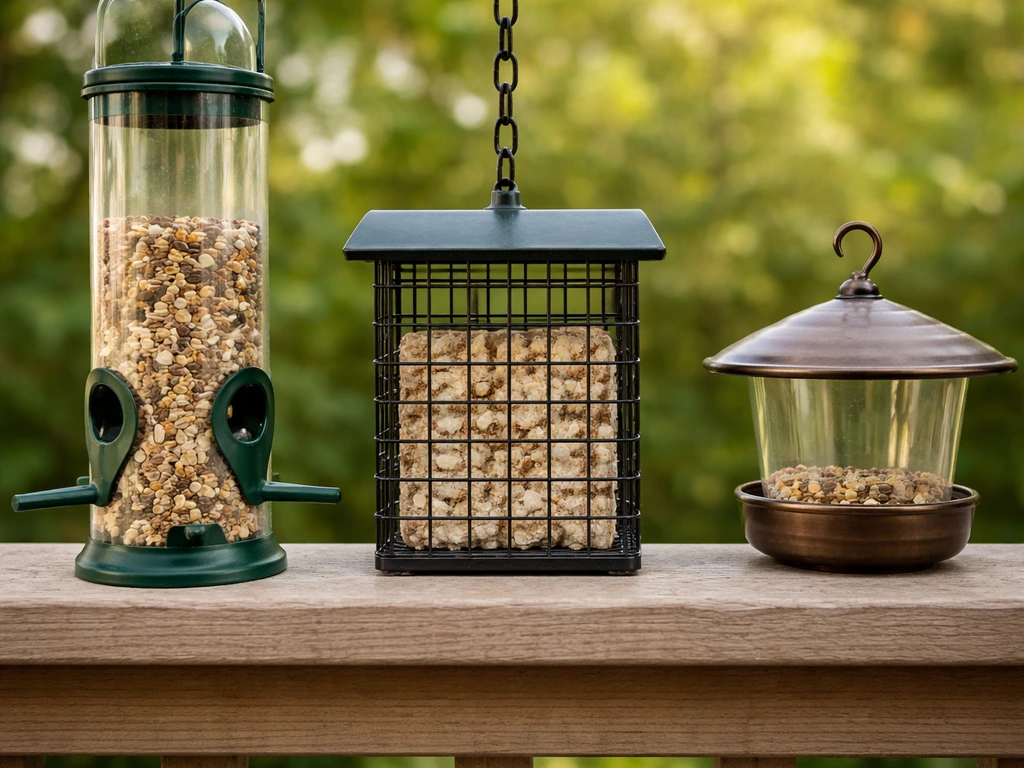
A good station covers at least three feeding styles: a tube or hopper feeder for sunflower and mixed seed, a suet cage for fat-loving birds like woodpeckers and nuthatches, and a small nyjer or thistle tube for finches. Platform feeders are great for ground-feeding species like juncos and sparrows but need a drainage system (look for powder-coated steel grating or a screened floor) and ideally a plastic dome overhead to keep seed dry. Miss one of these feeder types and you're limiting which birds show up.
Capacity and cleaning ease
Capacity matters more than people realize. A tube feeder holding around 5 lbs of seed (like the Brome Squirrel Buster Plus at 5.1 lbs) lets you go several days between fills during peak season without running dry at 7am. Equally important is how easy the feeder disassembles for cleaning. Moldy seed is a real health risk to birds, so any feeder you can't rinse and scrub every couple of weeks is a liability. Twist-off bases, removable ports, and wide-mouth tubes all make this less of a chore.
Durability and weather resistance
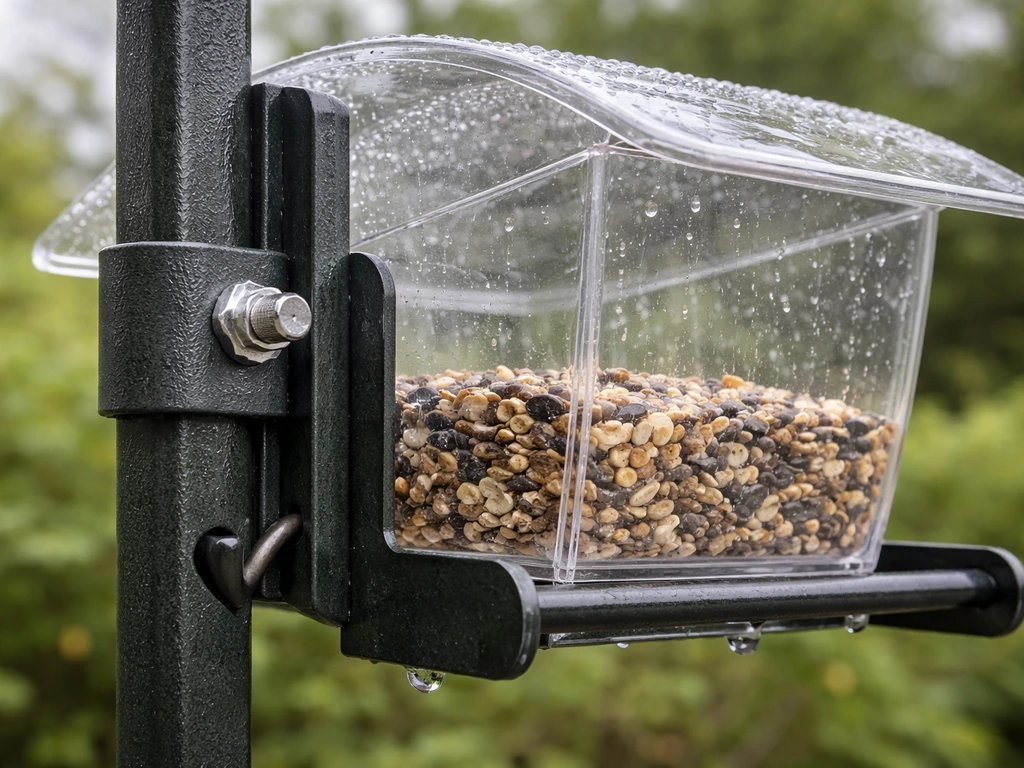
Cheap plastic cracks in UV light within a season or two. The feeders worth owning use UV-stabilized polycarbonate, powder-coated metal components, or stainless steel hardware. If you're in a wet climate, ventilation matters too. Brome's Seed Tube Ventilation system, which lets humidity and hot air escape through vents at the top and pulls in fresh air, is a smart design that keeps seed from clumping. Powder-coated steel grating on platform feeders handles drainage the same way.
Squirrel and predator resistance
This is the one that derails most setups. There are three practical approaches: weight-activated mechanisms that close off seed ports when something heavier than a songbird lands, caged feeders that physically block larger animals, and baffles mounted on the pole itself. The best stations use at least two of these layers. A pole with a good baffle plus a weight-activated feeder is very hard for squirrels to beat. Baffles on the pole should sit at least four feet off the ground and the station itself should be eight to ten feet from any tree, fence, or structure a squirrel could use as a launch point.
Portability and mounting options
Decide early whether you want a permanent ground-mounted pole, a deck-clamp mount, or a hanging setup from a shepherd's hook or tree branch. Ground poles offer the most flexibility for adding feeder arms and baffles. Deck mounts are convenient but limit feeder spacing. Hanging feeders from tree limbs is the squirrel equivalent of an open buffet invitation, so if squirrel control is a priority, a freestanding metal pole is the way to go.
Best overall bird feeding station for most backyards
For a complete, low-frustration setup, I keep coming back to a multi-arm metal pole system centered on the Brome Squirrel Buster Plus. The Squirrel Buster Plus holds 5.1 lbs of seed in a well-ventilated tube, closes off its ports under squirrel weight, and has a Cardinal Ring System that lets large birds like cardinals perch comfortably while smaller birds use the standard perches. It's been verified by multiple independent testers as the top squirrel-resistant tube feeder in 2026, and the seed ventilation design genuinely reduces waste from spoiled seed compared to basic plastic tubes.
Built around that centerpiece, add a caged suet feeder and a nyjer tube on satellite arms, and you've got a station that covers the widest possible range of backyard species without overcomplicating the setup. To build a quality bird feeding station, focus on combining the right feeder types, squirrel resistance, and easy cleaning so you can keep it consistent all season. Keep the whole assembly on a metal pole (not a tree limb) with a pole baffle mounted at least four feet off the ground, and you've addressed the squirrel problem structurally rather than just hoping for the best.
If budget is a real constraint and you want a simpler single-feeder approach, the Droll Yankees Squirrel-Proof Wild Bird Feeder is a legitimate alternative. It's been called the best overall bird feeder by multiple outlets including National Geographic, it's built with powder-coated heavy-duty metal components, and the brand's weight-sensitive perch designs have a long track record. It won't give you the multi-feeder variety of a full station, but as a primary feeder it's a solid choice.
Best predator-proofing and squirrel-control bird feeding stations
Squirrels are the most common problem, but they're not the only one. Hawks, raccoons, and in some areas bears all create different challenges, and the solutions aren't always the same.
Weight-activated feeders
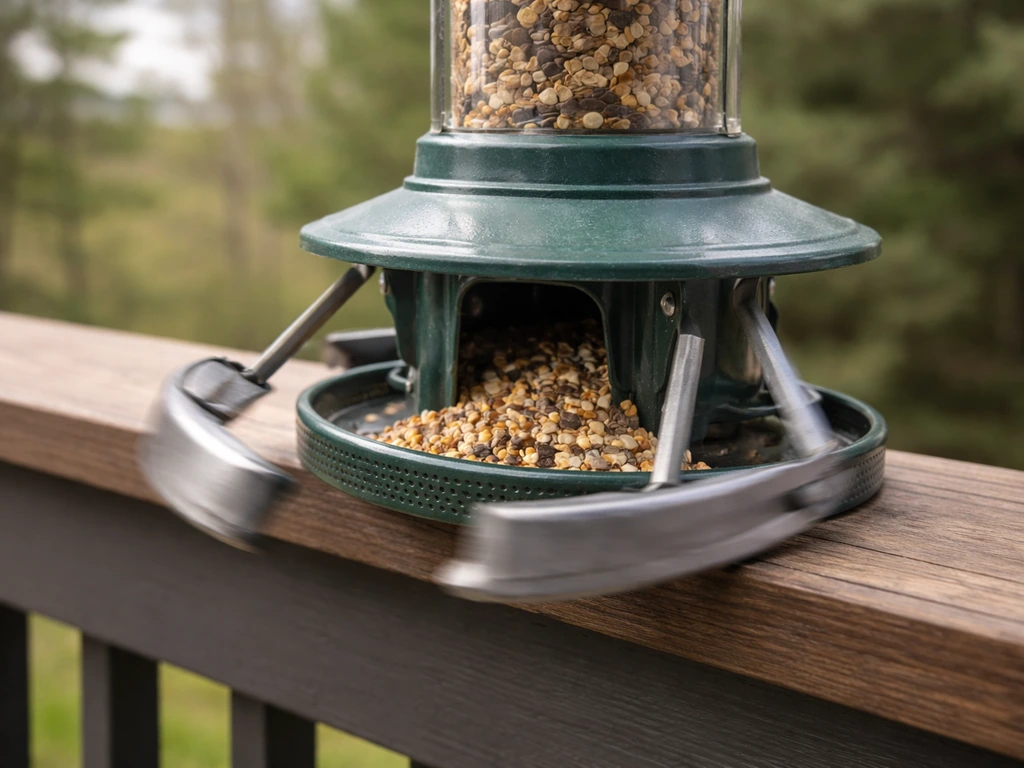
The Droll Yankees Yankee Flipper is the most entertaining squirrel deterrent I've seen work consistently. It has a motorized, weight-activated perch ring that spins when something heavier than a songbird lands on it. The feeder holds about 5 lbs of seed, uses powder-coated heavy-duty metal components, and the spinning mechanism runs off a battery in the base. The main trade-off is battery replacement and the fact that it costs more than a passive weight-activated tube. But it works, and watching a squirrel get launched off the perch ring never gets old.
For a passive (no battery) weight-activated option, the Brome Squirrel Buster Plus closes its seed ports under animal weight without any moving motor parts. It's lower maintenance than the Flipper and still very effective. The caged feeder approach, where a wire cage surrounds a smaller inner tube, is a reliable alternative for people who want to exclude squirrels and large birds like grackles simultaneously, since the cage size can be calibrated to only let smaller songbirds through.
Pole baffles and placement
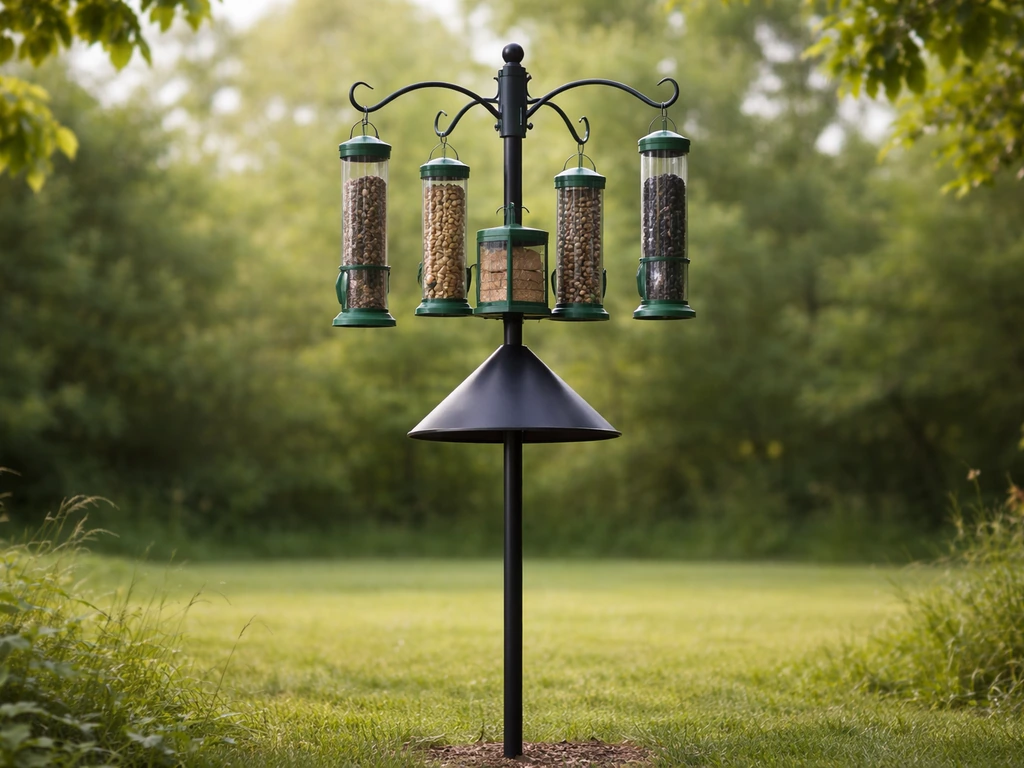
Even the best squirrel-proof feeder fails if the pole placement is wrong. Mount the station on a metal pole at least eight to ten feet from any tree branch, fence, or structure a squirrel can jump from. The baffle on the pole needs to be at least four feet off the ground so squirrels can't jump over it from below. This combination of physical barrier plus distance is more effective than relying on any feeder mechanism alone.
Hawk and raptor presence
Hawks targeting birds at your feeder are a different problem. The U.S. Fish and Wildlife Service is clear that raptors need to eat too, and removing a hawk isn't legal or realistic. The practical solution is placement: position your station within about ten to twelve feet of dense shrubs or cover so small birds can escape quickly, but keep the approach paths open enough that a hawk can't ambush from a hidden perch. If hawk pressure is heavy during winter, temporarily taking down feeders for a few days usually disperses the hunting pattern.
Best for different bird types
Different species need different feeder designs, seed types, and access styles. Here's how to tailor your station by target bird.
Cardinals
Cardinals are larger birds that need a real perch to sit on, not just a tiny peg. The Brome Squirrel Buster Plus addresses this directly with its Cardinal Ring System, a wider tray-style attachment that lets cardinals perch comfortably at the seed ports. Platform feeders also work well for cardinals since they like to feed in a natural, flat-surface position. Load either with sunflower seeds or safflower, which cardinals prefer and squirrels tend to avoid.
Woodpeckers
Woodpeckers are suet birds first. A caged suet feeder, essentially a metal cage structure that holds a standard suet brick while birds cling to the outside, is the most effective way to attract downy woodpeckers, hairy woodpeckers, and red-bellied woodpeckers. The cage design lets birds work at the suet without a squirrel or raccoon grabbing the whole brick. Mount the suet feeder on a separate arm off the same pole, and place it on the side closer to any nearby tree trunk, since woodpeckers are comfortable approaching from that direction.
Finches
Goldfinches, purple finches, and house finches are all drawn to nyjer (thistle) seed dispensed through a tube feeder with small holes. The small port size is intentional: it dispenses the tiny seed economically and keeps larger birds from hogging it. Some nyjer tubes include an angled seed baffle inside the tube to push seed toward the ports as levels drop. The Kaytee Finch Diffuser is a well-known example of this style. These feeders are lightweight and work fine hanging from a shepherd's hook arm on your main pole.
Hummingbirds
Hummingbird feeders don't integrate cleanly into a seed feeder station because they need to be placed somewhat separately (the activity around a busy seed station can spook hummingbirds) and they require much more frequent cleaning, every two to three days in warm weather to prevent fermentation and mold. Hang a dedicated hummingbird feeder on its own hook or bracket, ideally ten to fifteen feet away from the main station, in a spot that gets morning sun and afternoon shade to slow nectar spoilage.
| Bird | Best Feeder Type | Best Seed/Food | Key Feature to Look For |
|---|---|---|---|
| Cardinals | Tube with wide perch tray or platform feeder | Sunflower, safflower | Cardinal Ring System or wide tray perch |
| Woodpeckers | Caged suet feeder | Suet cakes | Metal cage, cling access, no full-brick removal |
| Finches (goldfinch, house finch) | Nyjer tube feeder | Nyjer/thistle seed | Small ports, angled internal baffle |
| Hummingbirds | Dedicated nectar feeder (separate) | Sugar water nectar | Easy disassembly for frequent cleaning |
| Chickadees, nuthatches, titmice | Tube or hopper feeder | Black-oil sunflower | Weight-activated or caged to exclude squirrels |
| Juncos, sparrows | Platform or tray feeder | Millet, mixed seed | Screened or grated floor for drainage |
Smart and AI bird feeder stations with cameras and alerts
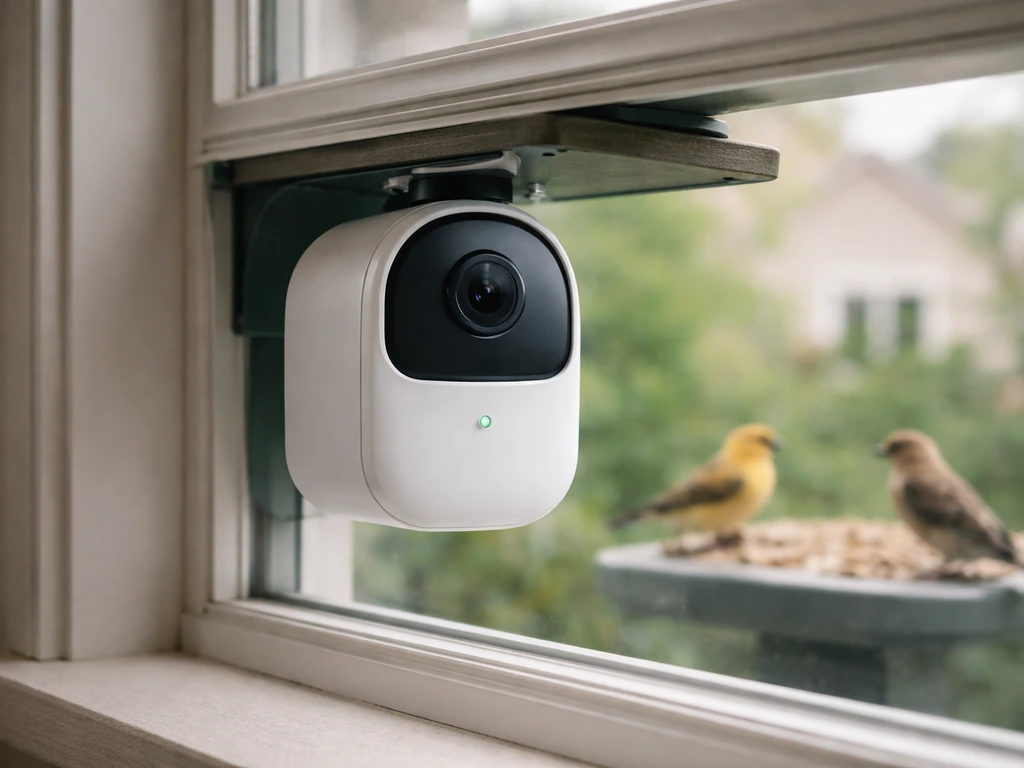
Smart bird feeders have gotten genuinely good in the last two years. If you want to know exactly which species are visiting while you're at work, or you just enjoy watching close-up footage without sitting outside, a camera-equipped feeder is worth considering. The trade-offs are real though: higher cost, power or battery management, Wi-Fi dependency, and in most cases a subscription for the best AI features.
Bird Buddy Smart Feeder Pro
The Bird Buddy Smart Feeder Pro is the most polished option on the market right now. It shoots 2K video and 5MP photos with HDR, runs on a 3,800 mAh rechargeable lithium-ion battery, and costs around $279. The big practical advantage is that you don't need a subscription to get AI bird identification, which Wired confirmed after testing. Bird Buddy announced its next-generation Birdbuddy 2 and Birdbuddy 2 Mini at CES 2026, with the 2 Mini using audio-based bird ID (birdsong recognition) in addition to visual AI, though the Mini won't ship until late 2026. If you're buying now, the current Pro is the one to get.
Birdfy Feeder 2 Duo
The Birdfy Feeder 2 Duo uses a dual-camera setup with a 2MP lens at 1080P on one side and a higher-resolution lens on the other. AI bird species recognition is available but requires a subscription. TechRadar reports the Birdfy Feeder 2 Duo can be purchased with or without a lifetime AI subscription, priced at $279.99/£249.99 without AI and $299.99/£279.99 with it. It's a competitive option if you want dual-angle coverage or prefer the Birdfy app ecosystem, but factor the subscription cost into the total price when comparing.
Netvue and Camouflage EZ BirdFeed
Netvue offers a budget-friendlier path to AI bird recognition. Its cloud-based bird ID service costs under $70 as a one-time lifetime payment, which is significantly cheaper than ongoing subscriptions. The Camouflage EZ BirdFeed goes a different direction entirely: it's IP65 water-resistant, uses a 5,200 mAh battery, supports up to a 32GB microSD card for local storage without cloud dependency, and includes solar charging. If you're in a location with unreliable Wi-Fi or don't want footage going to anyone's cloud, the Camouflage is worth a serious look.
| Smart Feeder | Camera Quality | AI ID | Power | Subscription Needed? | Price |
|---|---|---|---|---|---|
| Bird Buddy Smart Feeder Pro | 2K video, 5MP HDR photos | Yes, built-in | 3,800 mAh rechargeable battery | No (basic ID free) | ~$279 |
| Birdfy Feeder 2 Duo | 1080P + 2K dual camera | Yes, cloud-based | Plug-in/solar options | Yes for AI features | Mid-range |
| Netvue | Varies by model | Yes, Netvue Cloud | Varies by model | Lifetime plan under $70 | Budget-friendly |
| Camouflage EZ BirdFeed | Standard | Limited | 5,200 mAh + solar, IP65 | No (local microSD storage) | Mid-range |
One thing I'd caution: no smart feeder replaces the basics of a well-placed, squirrel-resistant station. A camera showing you a squirrel cleaning out your feeder is not an improvement over a setup that stops the squirrel in the first place. Think of the smart camera as an addition to a solid foundation, not a substitute for it.
Mounting, placement, and setup tips for a feeder station
Pole vs. hanging vs. deck mount
A freestanding metal pole is the best mounting choice for a multi-feeder station. It lets you position the station away from squirrel launch points, add a pole baffle, and hang multiple feeder arms at different heights. Michigan DNR specifically recommends metal poles over tree limbs for exactly this reason. Shepherd's hook poles work for lighter single-feeder setups, but for a full station with suet, tube, and nyjer feeders, look for a heavier gauge pole with a ground stake or auger base.
Distance from cover and structures
Project FeederWatch recommends placing feeders about ten feet from cover as a good balance: close enough that birds can dart to safety from a hawk but far enough that a predator can't hide right next to the feeder. The National Wildlife Federation puts the number at twelve feet. Either is fine. The non-negotiable distance is away from squirrel launch points: the station should be at least eight to ten feet from any tree, fence post, or structure a squirrel can jump from horizontally.
Window collision prevention
Place feeders either within three feet of a window (so birds can't build up dangerous speed before hitting it) or more than thirty feet away. The ten to twenty foot range is actually the most dangerous for window strikes because birds flush from the feeder with full velocity and hit the glass before they can change course.
Cleaning and maintenance routine
Clean tube and hopper feeders every one to two weeks during active use. A bottle brush, warm water, and a ten percent bleach solution or white vinegar rinse handles most mold and bacteria. Let feeders dry completely before refilling. Platform feeders with grated or screened floors need even more attention since wet seed accumulates on the floor surface. Suet cages are the lowest maintenance, but swap suet cakes before they go rancid, especially in summer heat when suet melts and spoils faster.
Managing grackles and other nuisance birds
Grackles are a real problem at open platform and hopper feeders. A caged feeder with openings sized for smaller birds physically excludes them. Switching from mixed seed to straight safflower or nyjer also helps, since grackles strongly prefer corn and cracked sunflower. If grackles dominate your station despite these measures, temporarily removing platform feeders and relying on caged tube feeders is usually enough to break the cycle without abandoning feeding entirely.
If you're thinking seriously about upgrading to a heavy-duty commercial-grade station with reinforced poles and larger capacity feeders, or you want to prioritize long-term build quality over everything else, those considerations point toward a different category of setup worth exploring separately. If you want something that holds up to intense squirrel pressure and frequent refills, focus on durability and a heavy-duty multi-feeder layout heavy-duty commercial-grade station with reinforced poles and larger capacity feeders. The fundamentals here, though, cover what the vast majority of backyard birders actually need to get a thriving, low-frustration feeding station running this season.
FAQ
Can I use one feeder type for everything, instead of a full multi-feeder station?
You can, but you will trade away bird variety. A single hopper or tube feeder mainly serves seed eaters, so you will miss woodpeckers and nuthatches that rely on suet. If you want a minimalist setup, consider two types at minimum (seed plus a caged suet feeder), because that pairing covers most backyard “high value” species without needing separate baffle heights.
What’s the best height for a pole-mounted best bird feeder station?
A common practical range is to keep the lowest feeding port about 5 to 6 feet off the ground and place the pole baffle at least 4 feet high, then adjust based on what squirrels are doing. If you notice squirrels jumping straight to the feeder, lower access points or re-check that there are no branches, fences, or rooflines aligning with the port height.
How far should the station be from a birdbath or ground feeding area?
Give squirrels an uninterrupted route. If you have a birdbath or ground feeder, place them so they are not aligned with the same squirrel launch point as the station, ideally separated by several feet laterally. Otherwise, squirrels can learn one safe approach path and quickly raid both feeding zones.
What should I do if squirrels still get in after I buy a squirrel-resistant setup?
First, re-check placement, then re-check fit. Make sure the pole baffle is the right size for your pole diameter and is mounted at the correct height, and ensure there is no gap squirrels can exploit between feeder arms and the pole. Also confirm you are using the correct feeder for the squirrel pressure level, for example adding a second deterrent layer like a cage suet feeder or a higher-level baffle.
Does seed type matter for squirrel control and bird mix?
Yes. Switching to safflower or using nyjer in dedicated tubes can reduce squirrel interest because some squirrels strongly prefer sunflower, corn, and cracked mixes. Keep nyjer in small-port tubes so larger birds cannot easily “mop up” the seed, and keep suet in a cage if grackles or squirrels are competing at the suet.
How do I prevent mold if I’m away for a week during peak feeding?
Use capacity and ventilation together. Choose a tube designed for seed breathing (vented systems help reduce clumping), and avoid overfilling so seed isn’t sitting damp for long. If you cannot clean on a schedule, prioritize feeders that disassemble easily and plan a thorough rinse and drying when you return, discarding any seed that looks swollen, dark, or smells stale.
Is bleach the best cleaner for feeders?
It works, but vinegar can be a safer routine choice for many setups. The key is using a consistent dilution, scrubbing all residue, and fully drying before refilling to stop re-growth. If you see persistent black spots or a sticky film, switch to a more intensive scrub-and-dry cycle rather than simply adding more solution.
How often should I clean a platform feeder compared with a tube feeder?
More often. Platform feeders trap wet seed and waste, so they usually need the tighter end of the schedule during active use, and faster cleanup after rain. If your platform has grated or screened flooring, still expect buildup under the grate, so rotate your cleaning focus to that area.
What’s the safest approach if I see a hawk at the feeder area?
Change the environment, not just the feeder. Keep dense shrubs or cover close enough for small birds to escape, but keep open approach lines for the hawk limited. If winter pressure is high, briefly taking feeders down for a few days can disrupt the pattern, then restart with placement tweaks instead of returning to the exact same siting.
Do smart feeders help with squirrels more than regular feeders?
Usually no, because identification does not stop access. A camera can tell you when and how squirrels are bypassing your system, which helps you adjust baffles, spacing, or feeder type. Think of smart features as troubleshooting tools, not the primary squirrel-proofing method.
Can I include hummingbirds in a station that is mainly seed feeders?
It’s better to separate them. Place a dedicated hummingbird feeder on its own bracket or hook, and keep it 10 to 15 feet away so the activity from seed birds does not chase hummingbirds off. Also plan for much more frequent cleaning, especially in warm weather where nectar spoils quickly.
What should I do about grackles taking over open feeders?
Start with physical exclusion, then adjust seed. A caged feeder with openings sized for smaller birds blocks grackles from taking the easy route, and changing from mixed seed to straight safflower or nyjer can reduce their motivation. If grackles still dominate, temporarily remove open platform feeders while keeping caged options running to break the raid routine.
Are there common mistakes that waste money on a best bird feeder station?
Yes. The biggest are buying multiple feeders that still share one weak squirrel access point, placing the station within easy jump distance of trees or fences, and choosing plastic parts that degrade under UV exposure. Another frequent issue is skipping cleaning because “it looks fine,” but mold and rancid suet can harm birds even if the feeder is otherwise intact.
Should I feed year-round or only seasonally?
Many people feed year-round, but adjust your mix with seasons. In cold weather, suet and energy-rich seed options can be more important, while in warm months you may need tighter cleaning and more frequent suet replacement to prevent spoilage. If you notice mold-prone conditions, scale back to what you can maintain on your cleaning schedule.
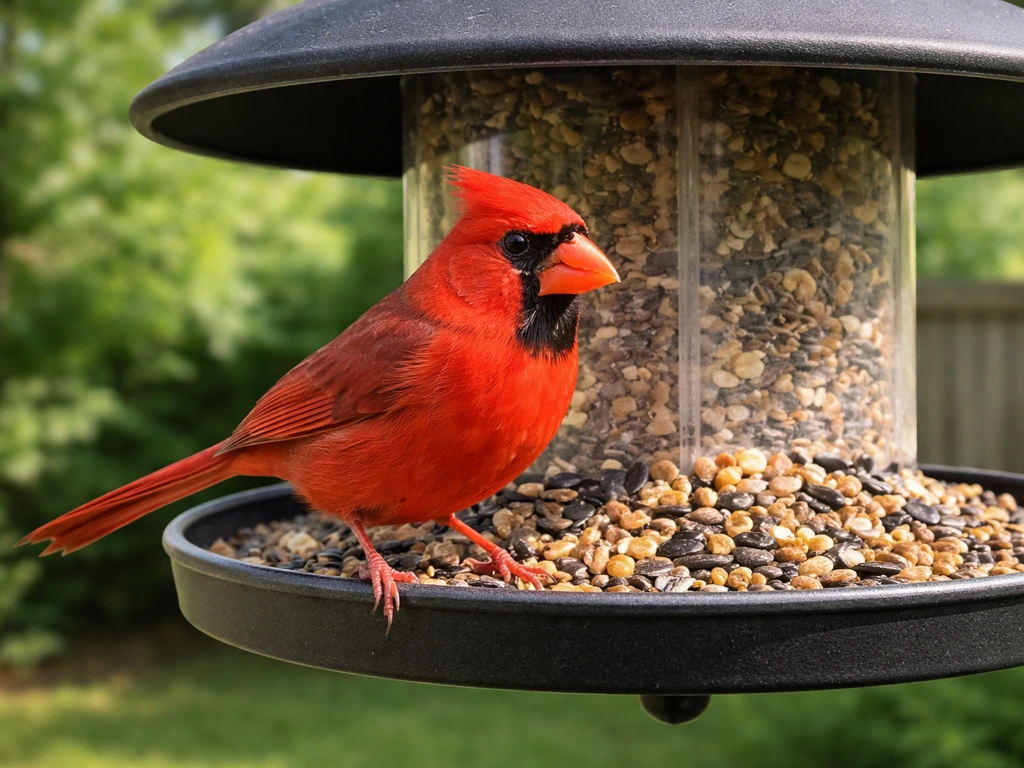
Top feeders and setup tips to attract cardinals and other red birds using the right seed, mounts, and squirrel-proofing.
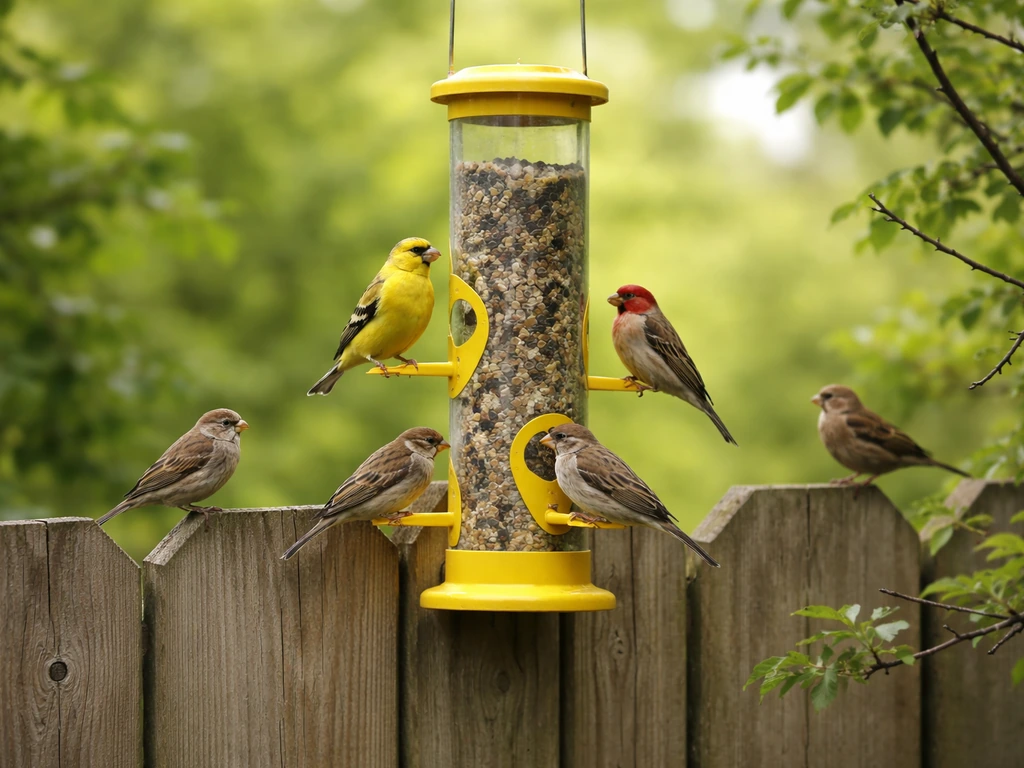
Discover which bird feeder color draws the most birds, plus setup tips for durability, placement, and reducing squirrels
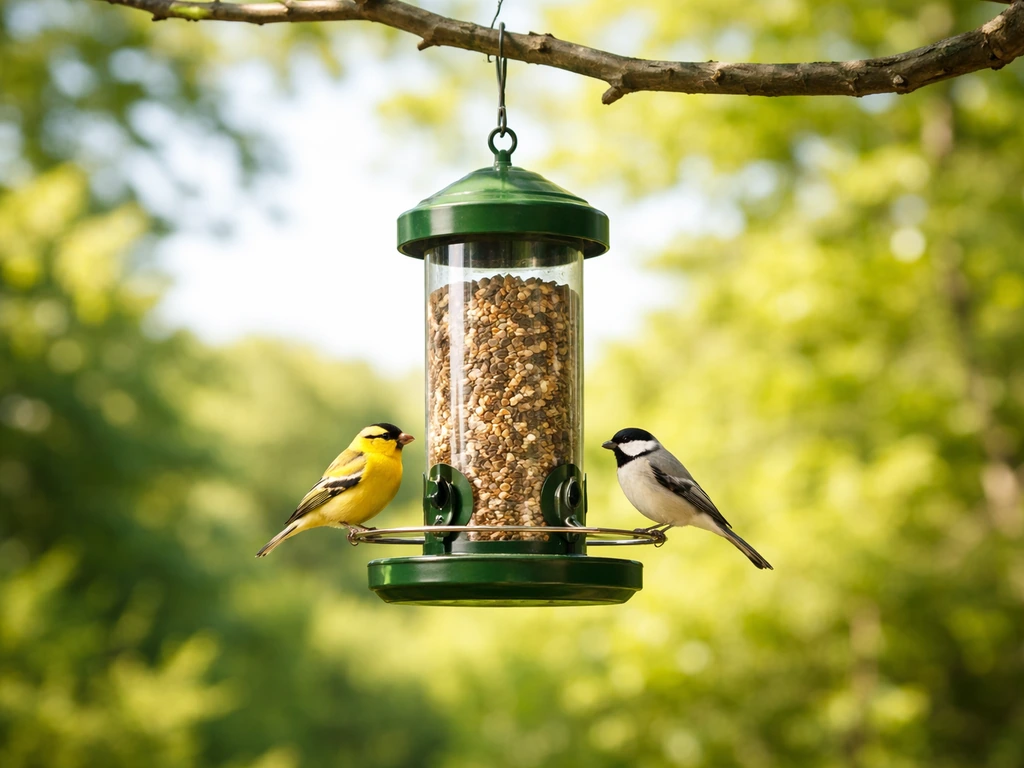
Find the best color for a bird feeder by species, bird vision tips, and setup guidance for shade, contrast, and access.