The best deck bird feeders are weight-activated tube or hopper feeders with a squirrel baffle on a pole-mounted bracket, filled with black oil sunflower seed. That combo handles the biggest deck-specific problems right out of the box: squirrel access, seed mess, and attracting the widest range of birds. From there, you layer in a suet cage for woodpeckers, a hummingbird feeder with a built-in ant moat, and if you want the fun tech angle, an AI-powered smart feeder camera. The rest of this guide walks through every decision you need to make for your specific setup.
Best Deck Bird Feeders: Buying Guide for Your Setup
Marcus Holloway
12 Jun 2026
How to choose the right feeder for your deck setup
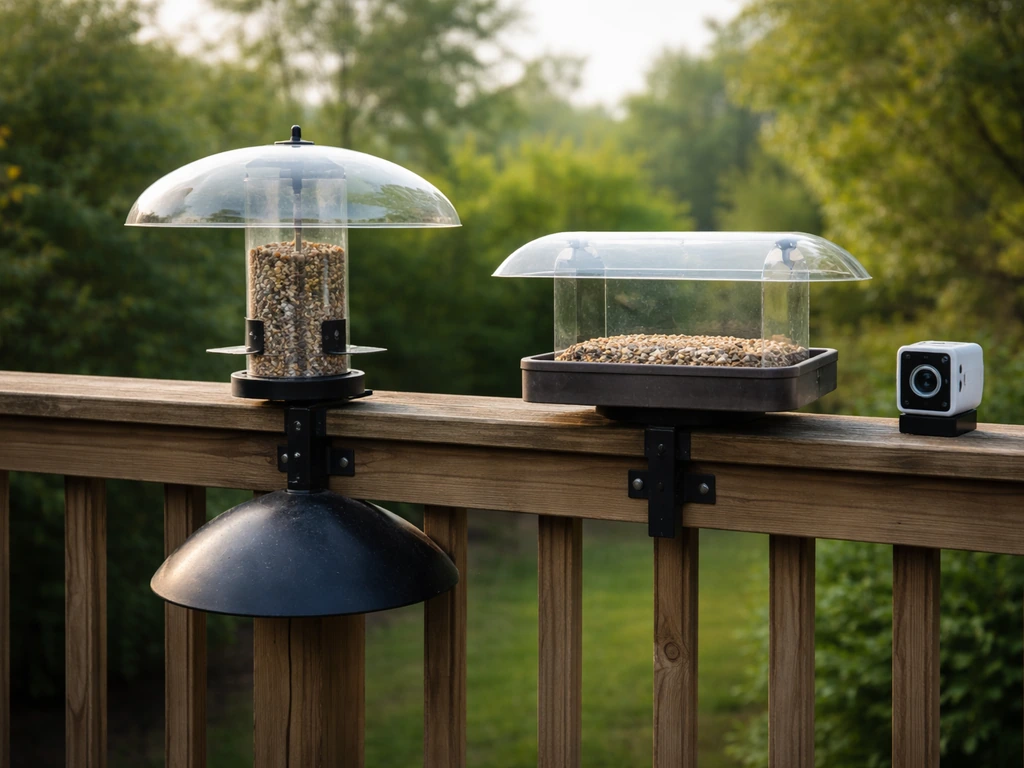
Deck feeding is different from yard feeding in a few important ways. You're working with limited real estate, you're much closer to the action (which is great for watching), and you have specific mounting constraints. Before you buy anything, think through three things: how you'll mount it, where you'll position it for visibility, and how exposed it is to weather.
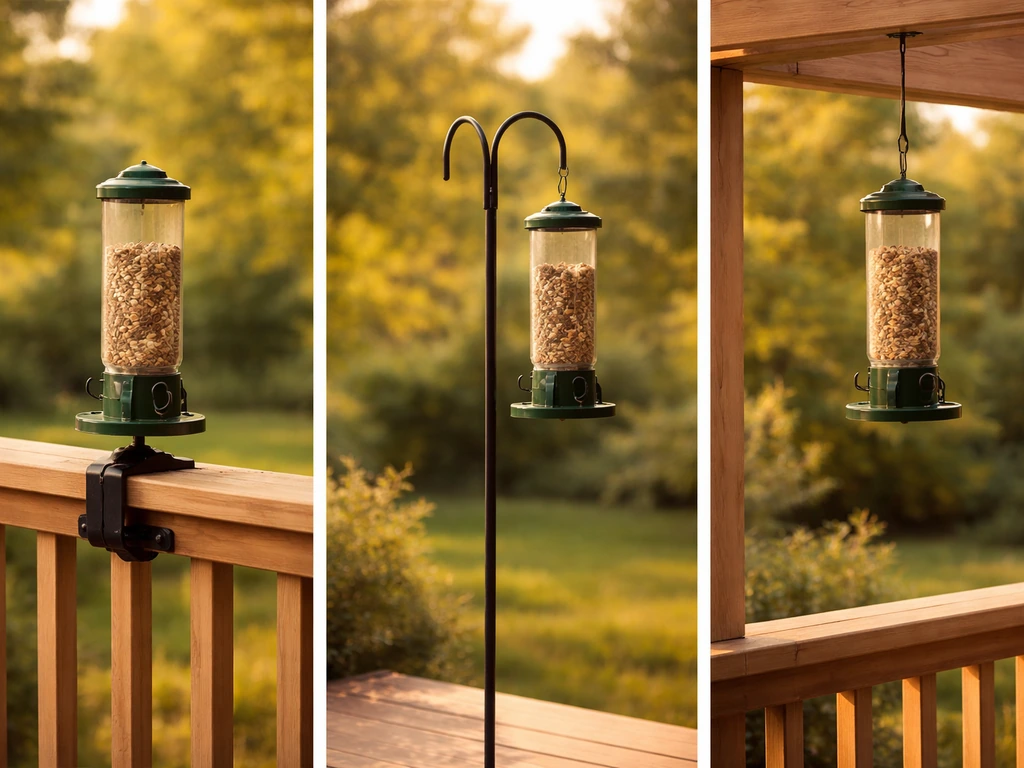
Mounting options on a deck break down to railing brackets, freestanding deck poles, and wall or post brackets. A deck railing bracket is the easiest starting point and works well for lighter feeders. For a railing-specific setup, many people end up choosing a weight-activated tube or hopper feeder designed to stay stable and deter squirrels best bird feeder for deck railing. The downside is that your railing becomes a squirrel highway, and we'll get into that in a minute.
A pole mounted in a ground socket or clamped to the railing gives you more clearance options and works better with baffles. If your deck is elevated, a hook mounted to the fascia or overhang can also work for hanging feeders. If you specifically want to hang a feeder from a tree, look for a sturdy hanging method and consider squirrel protection like a baffle or weight-activated design best bird feeder to hang from tree.
Placement for visibility is underrated. You want the feeder within a comfortable sightline from your main window or seating area, ideally no more than 10 to 15 feet away. Closer is better for ID'ing species and enjoying the action. Just avoid placing it so close to glass that birds get confused by reflections. Three feet or closer (so they can't build up flight speed) or more than 30 feet away are the safe zones for window collision prevention.
Weather exposure on a deck is real. Decks are usually more exposed than a backyard tree setup, which means more wind, more rain, and more sun beating down on feeders and seed. You want feeders with weather-resistant seed ports, drainage holes in platform trays, and materials that don't rust or warp. Powder-coated metal and UV-stabilized polycarbonate or recycled plastic hold up far better than cheap painted wood or basic plastic.
Feeder styles that actually work on decks
Each feeder style attracts a different mix of birds and has its own trade-offs for deck use. Here's how they stack up.
Tube feeders
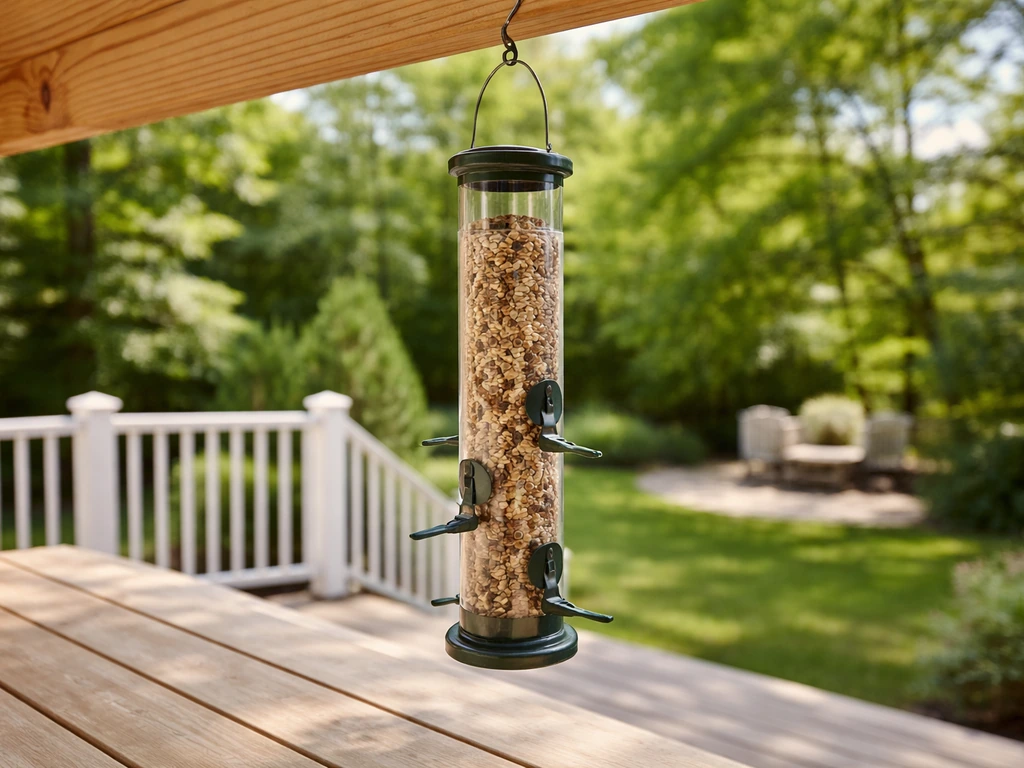
Tube feeders are the most versatile starting point for a deck. They're compact, they hang or pole-mount cleanly, and they keep seed relatively dry. For sunflower-eating birds like chickadees, nuthatches, and house finches, a standard tube feeder with metal ports works great. For goldfinches and other nyjer-loving finches, go with a dedicated nyjer tube feeder with smaller ports designed for thistle seed. Caged tube feeders add a wire mesh surround that lets small birds through but physically blocks squirrels and large nuisance birds, which is a real advantage on a deck where squirrels have easy access points.
Hopper feeders
Hopper feeders hold more seed and have a classic look that works well on deck posts. They attract a broader range of birds including cardinals, which prefer wider perch ledges over the narrow perches on tube feeders. The trade-off is that hoppers hold more surface area for moisture intrusion if the roof design isn't solid. Look for a tight-fitting roof, drainage holes in the tray, and metal or recycled plastic construction. A hopper with a 2 to 4 lb capacity is a reasonable deck size without becoming a maintenance burden.
Platform and tray feeders
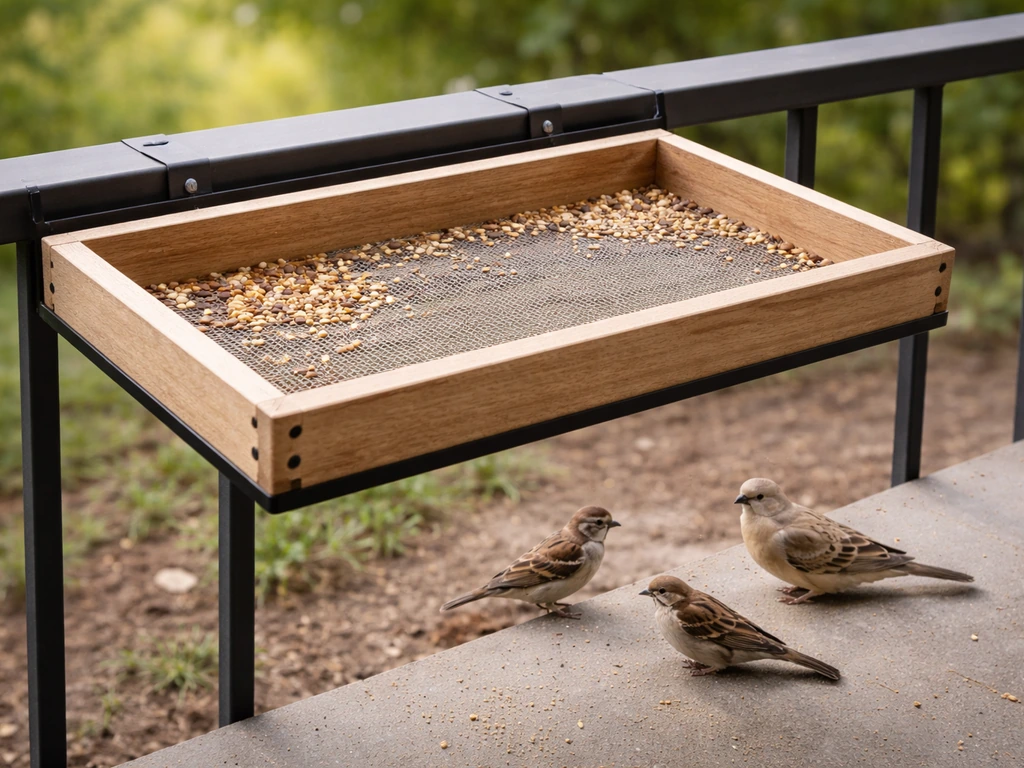
Platform feeders are open trays that sit on a railing or pole mount. They're great for cardinals, mourning doves, and ground-feeding birds that prefer to stand flat on their food source. The downside on a deck is exposure: open trays get wet, which means seed spoils faster. If you use one, get a platform with a screened bottom for drainage, and only fill it with as much seed as birds will eat in a day. Avoid mixed seed bags on open platforms because birds toss the stuff they don't like, and that mess lands right on your deck. Stick with straight black oil sunflower or safflower on a platform.
Suet feeders
Suet feeders are small, inexpensive, and incredibly effective for woodpeckers. A simple wire cage feeder holding a standard suet cake is all you need. The cage design lets woodpeckers cling and peck the way they naturally feed. Mount it on a post or hang it from a bracket at eye level and you'll get downy woodpeckers and hairy woodpeckers almost immediately in most regions. In hot summer weather, use a no-melt suet formulation or switch to suet dough to avoid a melted mess on your deck boards.
Hummingbird feeders
A deck is actually one of the best places for a hummingbird feeder because you can see it clearly and it's easy to refill. Decks come with two specific pest problems for nectar feeders though: ants and bees. Go with a feeder that has a built-in ant moat above the nectar reservoir, and choose one with slit-style or bee-guard ports that discourage bees from crawling in. The Aspects HummZinger Ultra is a well-regarded option with both features built in.
Deck rail clamp kits exist specifically for this setup, with a clamp that fits railings up to 3. 5 inches thick and an arm that extends about 24 inches above the rail. Fill the ant moat every 2 to 3 days and don't let it run dry or it loses its function.
Durability and weather resistance for deck use
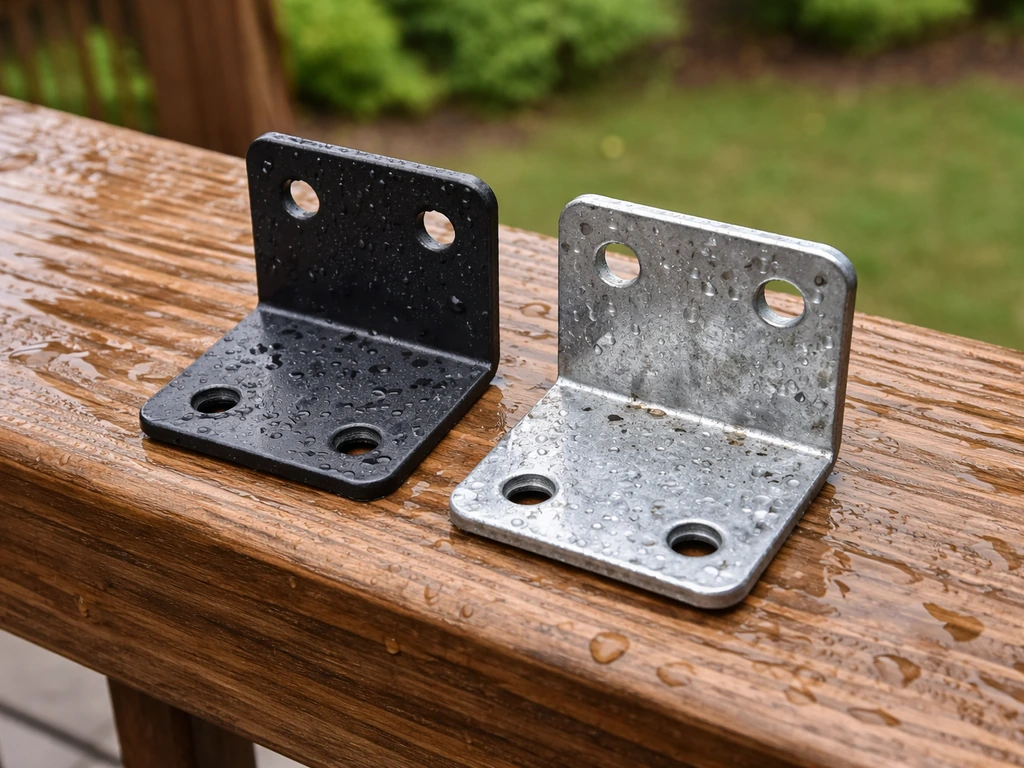
Decks punish cheap feeders quickly. Here's what to look for in materials and construction when you're buying for a deck environment.
- Powder-coated steel or aluminum for any metal components: resists rust and holds up through rain and humidity far better than bare metal or painted parts
- UV-stabilized polycarbonate or recycled plastic tubes and reservoirs: don't warp, crack, or fade in direct sun the way basic plastic does
- Metal seed ports: squirrels and chipmunks will chew right through plastic ports, so metal is non-negotiable if you have squirrel pressure
- Drainage holes or screened bottoms on any tray or platform design: standing water in a seed tray is a mold factory
- Tool-free disassembly for cleaning: if it's a pain to clean, you won't do it, and that's bad for birds; look for twist-off bases or pull-apart tubes
Cleaning cadence matters more on a deck than you might expect because the enclosed deck environment can get humid and warm. For seed feeders, give them a scrub with a 10% bleach solution every two to four weeks, or sooner if you see any mold or clumping. For hummingbird feeders, the rule of thumb is to clean and refresh nectar every three to five days in moderate temperatures. Once the weather tops 85°F, bump that to every two days; over 88°F, clean and refill daily. Spoiled nectar can harm hummingbirds, so this is one maintenance task worth taking seriously.
Handling squirrels, grackles, and other deck pests
This is where deck setups get tricky. Squirrels treat a deck like a buffet highway. Your railing is basically an on-ramp directly to your feeder. Here's how to actually deal with it.
Squirrels
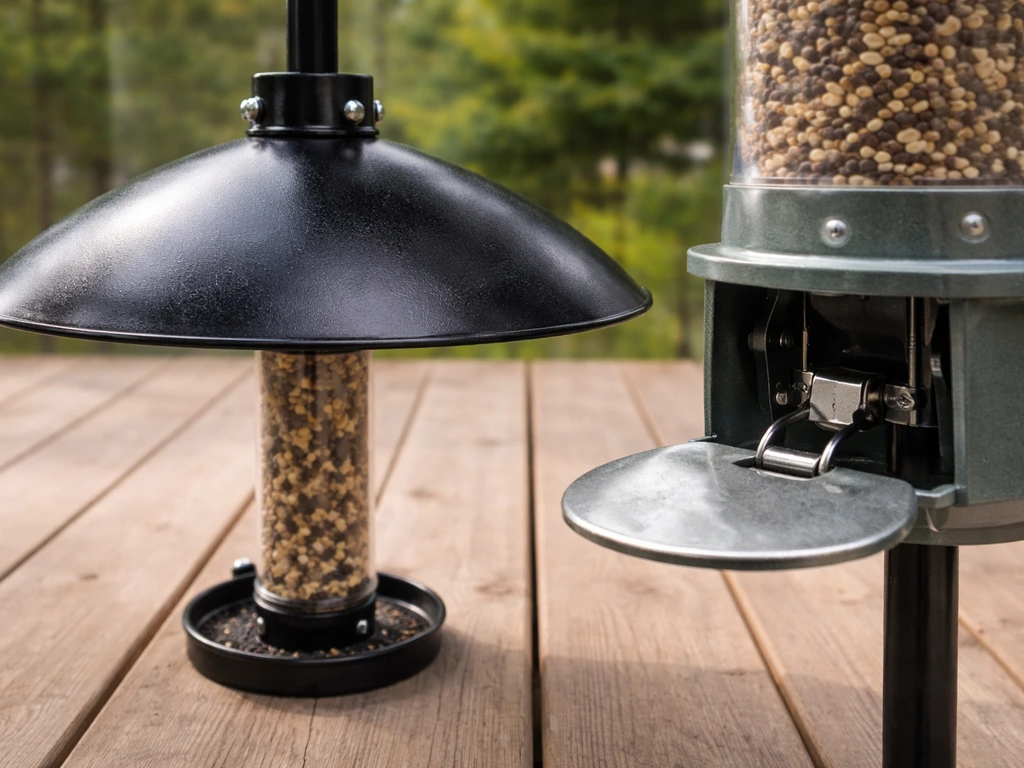
The two-part solution is a pole-mounted baffle plus a weight-activated feeder. Baffles work, but placement is everything. A squirrel can jump roughly four feet straight up and leap about eight feet horizontally. That means your baffle needs to be at least four feet off the ground, and the pole needs to be at least eight to ten feet away from any fence, tree, or structure a squirrel can launch from.
On many decks, that second requirement is the hard one because railings are right there. If your pole is within jumping range of the railing, baffles alone won't save you. In those cases, a weight-activated feeder becomes your primary defense. The Brome Squirrel Buster Plus uses a weight mechanism that closes the seed ports when anything heavier than a standard songbird lands on it.
Combined with a cage-style feeder design, you can usually keep squirrels out even when they have railing access.
Grackles and large nuisance birds
Grackles are opportunistic and persistent. The same weight-activated mechanism that stops squirrels also closes ports on large birds, which handles them on tube-style feeders. A caged tube feeder is even more direct: the wire spacing lets small songbirds through but physically blocks larger birds including starlings and grackles. Seed choice also plays a role. Grackles and starlings struggle more with safflower seeds because of the hard shell, and they tend to avoid nyjer entirely. Switching from mixed seed (especially mixes heavy in millet and cracked corn) to straight black oil sunflower or safflower reduces grackle interest noticeably. Skipping open platform feeders during grackle season also helps since they're the most exploitable style for ground-feeding flocks.
Ants and bees at nectar feeders
Ants find nectar feeders fast, especially on a deck where they can travel directly up a railing or wall. A filled ant moat above the nectar reservoir stops them reliably as long as you keep the water topped up. For bees, choose feeders with recessed ports or slit-style openings. Don't apply oil or petroleum products to feeder parts to deter insects as those can harm birds. If bee pressure is severe, temporarily moving the feeder a few feet can help since bees return to the exact location of a food source they've memorized and will give up if it's not exactly where they left it.
Species-focused feeder and seed recommendations
Matching your feeder type and seed to the birds you actually want to attract is the most efficient way to set up a deck feeding station. Here's a practical breakdown.
| Target Bird | Best Feeder Style | Best Seed or Food | Notes |
|---|---|---|---|
| Goldfinches, House Finches | Nyjer tube feeder | Nyjer (thistle) seed | Small ports designed for thistle; caged version deters squirrels |
| Chickadees, Nuthatches, Titmice | Tube or hopper feeder | Black oil sunflower | Most versatile combo; attracts the widest mix of small songbirds |
| Northern Cardinals | Hopper or platform feeder | Black oil sunflower, safflower | Cardinals prefer wider perches; safflower deters squirrels and grackles |
| Woodpeckers | Suet cage feeder | Suet cakes or no-melt suet dough | Cling-feeding design is essential; use no-melt suet in summer |
| Hummingbirds | Nectar feeder with ant moat and bee guards | Fresh homemade nectar (4:1 water to sugar) | Clean every 2-5 days; daily in heat over 88°F |
| Mourning Doves | Platform tray with drainage | Black oil sunflower, millet | Use sparingly; open trays invite pest birds too |
Black oil sunflower is the baseline seed to keep stocked. It has the thinnest shell (easier for small birds to crack), the highest fat content, and it attracts the greatest number of species of any single seed. Nyjer is the second-most useful seed specifically for finches. Avoid cheap mixed seed bags that are heavy in millet, milo, or cracked corn unless you specifically want to attract doves and sparrows. The birds toss what they don't want, it piles up on deck boards, and it draws in exactly the pest birds you're trying to avoid.
Smart and AI-powered feeder options for decks
Smart bird feeders with built-in cameras and AI species identification have gotten genuinely good over the last couple of years. For a deck setup, they're especially appealing because you're already close to the house, which helps with Wi-Fi and power. Here's what to know before buying one.
What the AI actually does
The AI component recognizes birds as they land on the feeder and sends a photo notification to your phone with a species ID. blank" rel="noopener noreferrer">The Netvue Birdfy claims up to 99% identification accuracy across 6,000-plus species and uses a 1080p camera with a 135-degree wide-angle lens, which is wide enough to capture the full feeder even from a railing mount. Bird Buddy uses a 5-megapixel sensor with a 120-degree field of view in a vertical orientation, which works well for feeders where birds approach from multiple angles. FeatherSnap goes a slightly different direction with a blank" rel="noopener noreferrer">4MP removable camera and a solar-powered roof, which is a real advantage if you don't have a power outlet on your deck.
Power and Wi-Fi realities
Most camera feeders need either an outlet or a solar panel to run continuously. If your deck doesn't have an outlet close by, a solar-powered option like the FeatherSnap is the path of least resistance. For Wi-Fi, 2. 4 GHz is the band you want for deck mounting.
It has better range and penetrates walls better than 5 GHz, which matters when the feeder is outside and the router is inside. Bird Buddy specifically uses 802. 11 b/g/n on 2. 4 GHz for this reason.
The Netvue Birdfy supports dual-band (2. 4 and 5 GHz), giving you more flexibility. Check the signal strength at your planned feeder location before committing to a camera feeder. A smart feeder that struggles to hold a Wi-Fi connection is frustrating fast.
Mounting angle for the best captures
Camera angle is where deck mounting can go wrong. You want the camera to see the perches and feeding ports clearly without being pointed into the sky. A railing-mounted feeder at eye level generally gives a good horizontal viewing angle. If you're pole-mounting, aim to have the camera at roughly the same height as the feeding ports. Wide-angle lenses (120 to 135 degrees) give you more flexibility, but a feeder mounted too high or at a sharp downward angle still produces awkward, unhelpful shots. Test the position with the app before finalizing the mount.
Mounting methods compared
| Mounting Method | Best For | Squirrel Control | Downsides |
|---|---|---|---|
| Railing bracket/clamp | Any deck with a railing; easiest install; good for hummingbird and light tube feeders | Limited unless feeder itself is squirrel-resistant | Railing is a squirrel highway; not ideal for baffles |
| Freestanding deck pole | Heavier hoppers and tube feeders; best squirrel control with a baffle | Excellent with proper baffle placement | Needs placement 8-10 ft from launch points; takes up floor space |
| Wall or fascia bracket | Hanging feeders where floor space is tight | Moderate if feeder is squirrel-resistant | Fixed position; harder to adjust height or angle |
| Deck post mount | Existing posts on railings or structural posts | Good if post is isolated from jumping range | Post finish can be damaged; limited flexibility |
If you're just starting out, a railing clamp with a weight-activated feeder is the lowest-friction setup. If you're serious about squirrel control or want multiple feeders, a pole system with a baffle gives you more control. The best bird feeder for deck railing and the best bird feeder hangers are worth looking into separately if railing mounting is your primary approach, since there are purpose-built products for each scenario. If you're considering a yard setup beyond the deck itself, freestanding pole options open up even more placement flexibility. A freestanding bird feeder can be a great option when you want flexible placement and strong squirrel protection without relying on deck railings.
Your buying checklist before you order
Run through this list before you hit buy. It'll save you from returning a feeder that doesn't fit your actual setup.
- Identify your mounting method: railing clamp, pole, bracket, or hook. Measure your railing thickness if clamping.
- Assess squirrel pressure honestly. If squirrels are on your deck daily, prioritize a weight-activated feeder or a caged tube feeder over looks.
- Choose your target birds first, then pick the feeder and seed to match. Don't buy a platform feeder if you want finches; don't buy a nyjer feeder if you want cardinals.
- Check seed capacity vs. your refill commitment. A 4 to 6 lb hopper is a reasonable size for most decks. Bigger isn't always better if seed sits too long.
- Confirm weather resistance: metal ports, UV-stable plastic or powder-coated metal, drainage in any tray.
- Check cleaning access. Does the feeder disassemble easily without tools? If not, skip it.
- For hummingbird feeders, confirm the presence of an ant moat and bee-guard ports, not just decorative flowers.
- For smart feeders, verify Wi-Fi signal strength at the feeder location and confirm whether power is available or if you need solar.
- Think about seed mess on your deck boards. Avoid mixed seed. Use a tray catch below your feeder or choose a no-waste seed blend (hulled sunflower or shelled peanuts) to keep cleanup manageable.
- Plan your cleaning supplies now: a bottle brush, a 10% bleach solution, and a small brush for ports. Set a calendar reminder for the first cleaning two weeks out.
One last thing: start with one or two feeders rather than building out a full station immediately. Get a tube feeder with black oil sunflower up first and see what shows up over a week or two. Then add a suet cage, then a hummingbird feeder in season. Layering feeders lets you calibrate for pest pressure, seed mess, and what species are actually in your area before you've committed to a full setup. It's a lot more satisfying than buying five feeders at once and spending a weekend troubleshooting all of them.
FAQ
What’s the biggest mistake people make when choosing the best deck bird feeders?
They buy for bird “type” first, then ignore clearance. On decks, squirrels and window collisions are usually what cause problems, so confirm you can mount a baffle far enough from jump-off points (railings, walls, nearby posts) and keep the feeder within the sightline that avoids reflection confusion.
How do I keep seed from piling up and rotting on my deck boards?
Use feeders designed to reduce “spillage” and control fill levels. Tube or caged tube feeders generally stay cleaner than open platforms, and with platforms specifically you should only fill enough for about a day. Also wipe the tray area and remove wet husks after rain or heavy dew.
Will a tube feeder alone attract cardinals and other large perching birds?
Usually not as well. Tube feeders have narrow perches, so cardinals and similar birds often prefer hopper or platform styles with wider landing space. If cardinals are your target, start with a hopper or add a platform feeder instead of relying only on a tube feeder.
Do I need both black oil sunflower and safflower, or can I pick one?
Pick based on your pest pressure. Black oil sunflower is the best general-purpose baseline because it attracts the widest range of birds, but safflower can be a useful “reduce nuisances” option when grackles or certain larger competitors are frequent. Many deck setups run mostly sunflower, then switch or supplement with safflower during high pest weeks.
What’s the correct way to handle mixed seed if I’m trying to reduce waste?
Avoid mixed seed on open trays, and be selective with mixes overall. Birds toss what they do not want, and the tossed portion becomes deck litter and can attract pests. If you do use mixes, consider using them in enclosed tube or hopper feeders with appropriate port sizes, not on platform feeders.
How often should I refill a deck feeder in hot weather?
It depends on nectar or seed type. For hummingbird nectar, the guide’s schedule is the key rule (more frequent cleaning as temperatures rise). For seed, refill based on consumption but check after storms and heat, because wet husks and moldy clumps can build even if it “looks full.”
Why are my hummingbirds not using the feeder even though it’s clean?
Check bee and ant access points and positioning. Even with a working ant moat, ants can sometimes bypass if the ant moat water level dries out. Also ensure the ports are bee-guarded, and place the feeder where you can observe it from your seating area, so you can catch early inactivity caused by heavy insect pressure.
Can I use oils or sprays to keep ants or squirrels away?
Avoid petroleum products on feeder parts. They can harm birds and contaminate nectar or seed surfaces. For ants, rely on an ant moat and keep it filled, and for squirrels rely on mechanical protection like baffles and weight-activated designs.
How high and how far should the baffle be for deck squirrel control?
Use the jump math as a planning tool, not just a rule of thumb. Since squirrels can jump upward and then launch horizontally, aim for the baffle to be at least about four feet above the ground and set the pole far enough (often eight to ten feet) from launch points like railings or nearby structures. If your pole is within that jump range, plan on a weight-activated feeder as the primary defense.
Will weight-activated feeders stop both squirrels and large nuisance birds?
Often, yes, but the exact behavior depends on feeder design and bird weight. A weight-activated mechanism that closes ports when heavier animals land can deter squirrels and also close to larger birds on tube feeders. If grackles and starlings are the main issue, a caged tube feeder plus port control is typically more effective than relying on mechanism alone.
What seed ports should I look for if I want finches?
Match port size to finch diets and avoid generic “one size fits all” designs. Nyjer works best with dedicated nyjer tube feeders that have smaller ports sized for finches. Standard sunflower tubes are great for chickadees, nuthatches, and similar birds but not as efficient for nyjer specialists.
Are camera smart feeders worth it on a deck if Wi-Fi signal is weak?
They can be frustrating if the signal is marginal. Before buying, test real signal strength at the mounting location, not just near the router. If your network struggles outdoors, a solar-powered model may still help power reliability, but weak Wi-Fi can still cause missed identifications and incomplete notifications.
What camera mounting angle prevents useless photos?
Aim for a view that captures the feeding ports and perches without pointing the camera at the sky. If the feeder is mounted too high or at a steep downward angle, the app may get “partial” bird views that make IDs less reliable. Test placement with the feeder in its final spot using the app before tightening the mount.
Should I start with one feeder or build a full station immediately?
Start small. Buying one quality tube feeder and calibrating based on what actually visits for one to two weeks prevents wasted spending and lets you adjust for pest patterns and seed mess. Then add targeted upgrades like suet for woodpeckers and nectar seasonally, rather than putting everything out at once.