If you want one feeder that works for most backyards right now, a hopper feeder filled with black-oil sunflower seed is the single most versatile choice. It attracts cardinals, finches, jays, grosbeaks, and even woodpeckers, it holds a decent amount of seed, and it keeps food drier than an open platform. But the honest answer is that 'best' depends entirely on which birds you want, what your yard looks like, and how much time you're willing to spend on upkeep. This guide breaks all of that down so you can pick with confidence.
Best Backyard Bird Feeders: Pick the Right One for Your Yard
Marcus Holloway
30 Apr 2026
What 'best' actually means for your yard
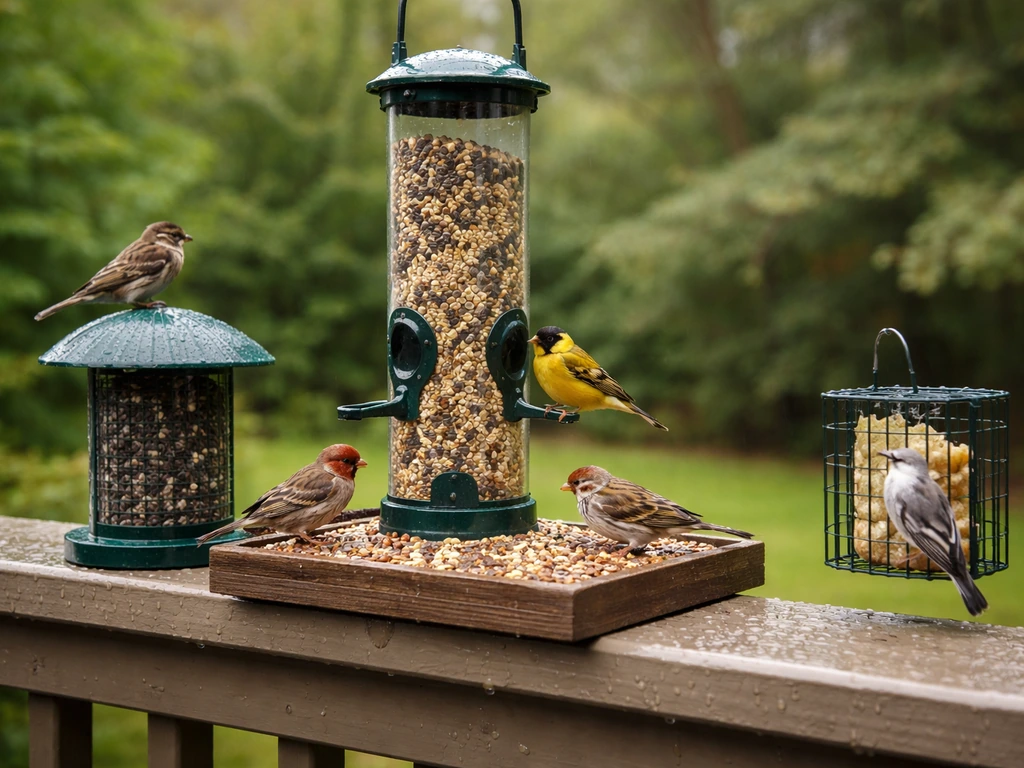
The best backyard bird feeder is the one that matches your target species, your preferred seed, and the real-world constraints of your setup. Those three things are almost never the same for any two yards. Someone in a wooded lot in Minnesota trying to attract chickadees and woodpeckers has completely different needs from someone in a suburban Florida yard hoping for goldfinches and painted buntings.
Before you buy anything, answer these three questions. First, which birds do you actually want to see? This drives everything from feeder style to seed choice. Second, what are your main headaches: squirrels, grackles, weather, or just too much mess? Third, how often are you willing to clean and refill? Some feeders need attention every few days; others can go two weeks between visits. Once you know these answers, picking the right feeder becomes a lot more straightforward.
Feeder types and which birds they actually attract
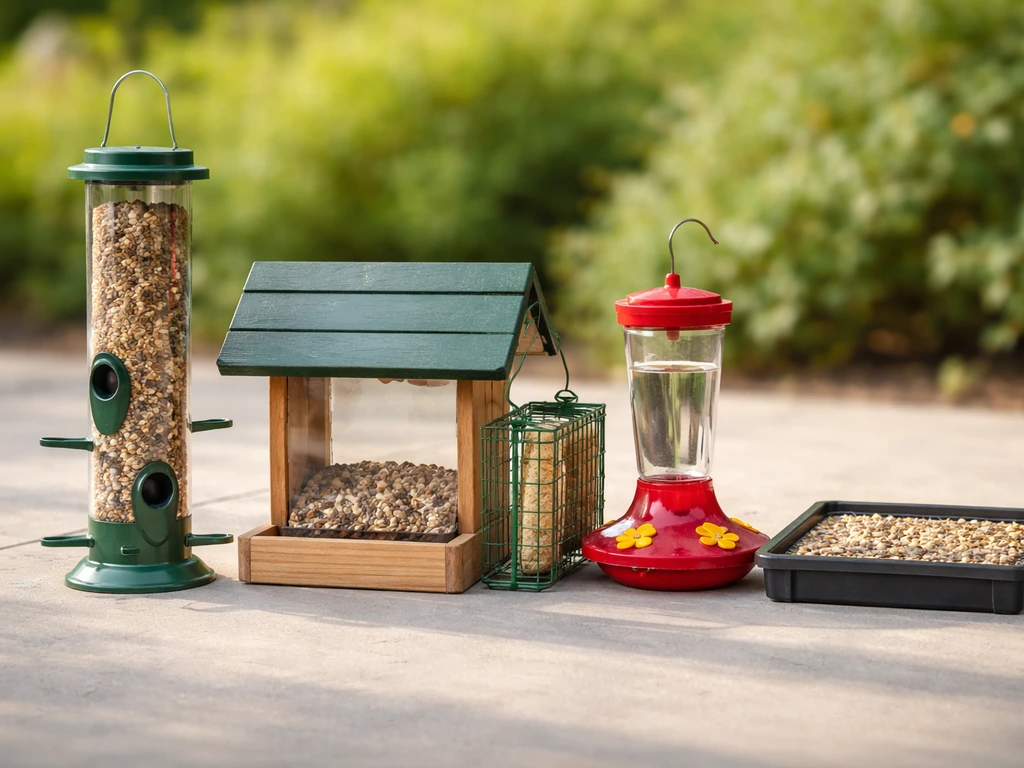
There are five feeder styles worth knowing. Each targets a different mix of species, and choosing the wrong style is the number one reason people end up frustrated with a feeder full of seed that nobody visits.
Tube feeders: best for finches and small seed-eaters
Tube feeders have multiple ports with short perches and work best with nyjer (thistle) or small sunflower chips. The small port openings are actually a feature, not a flaw: they physically limit access by larger birds like grackles and jays. American goldfinches are the classic tube feeder visitor, but pine siskins, redpolls, and house finches use them heavily too. If goldfinches are your goal, a dedicated nyjer tube is the most direct path.
Hopper feeders: best for variety and high traffic
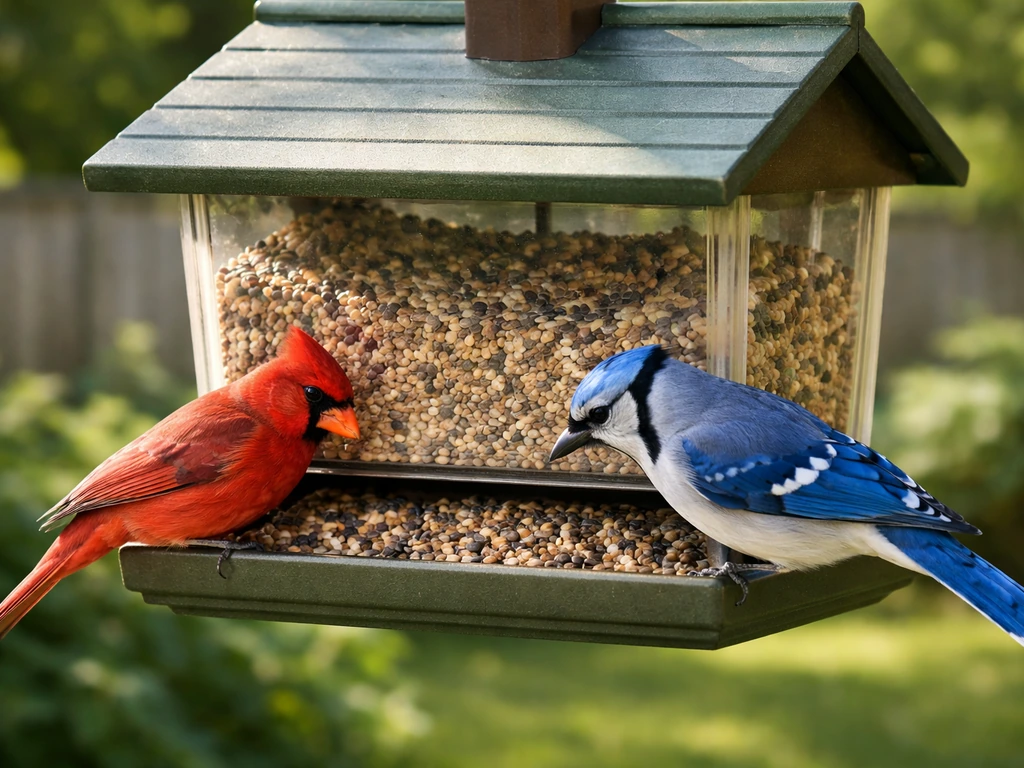
A hopper feeder is essentially a house-shaped bin that dispenses seed through a trough at the bottom. It attracts everything a tube feeder does, plus cardinals, blue jays, grosbeaks, and woodpeckers. According to Audubon's winter feeding guides, hopper feeders also tend to pull in larger birds like red-winged blackbirds and grackles, which is worth knowing if nuisance birds are already a problem in your yard. Hopper feeders hold more seed than tubes, which means less frequent refilling, but the roof design does a reasonable job of keeping seed dry compared to open tray styles.
Suet feeders: best for woodpeckers and insect-eating birds
If woodpeckers are what you're after, skip seed entirely and go straight to a suet feeder. Downy, hairy, and red-bellied woodpeckers are consistent suet visitors, and larger species like pileated woodpeckers will show up at suet setups too. Beyond woodpeckers, suet also draws nuthatches, titmice, and chickadees. The suet feeder itself is usually a simple wire cage that holds a standard suet cake. They're inexpensive, easy to clean, and highly effective. There's more detail on species-specific setups for woodpeckers if you want to go deeper on that particular bird.
Hummingbird feeders: nectar only, frequent cleaning required
Hummingbird feeders are a completely separate category. They dispense sugar-water nectar through small ports and attract hummingbirds and nothing else. The tradeoff is maintenance: nectar ferments quickly, especially in summer heat, which means cleaning every week to ten days is non-negotiable. The feeder style itself is relatively simple, but material quality matters because thin plastic cracks over seasons of sun exposure.
Platform and tray feeders: best for ground-feeding species
Platform feeders work best for species that naturally forage at or near ground level: mourning doves, juncos, native sparrows, and towhees. They offer no weather protection and attract every bird in the neighborhood, including squirrels, so they work best as a supplemental feeder rather than a primary one.
| Feeder Type | Best For | Common Visitors | Main Drawback |
|---|---|---|---|
| Tube (nyjer) | Finch specialists | Goldfinches, siskins, redpolls | Small capacity, clogs in wet weather |
| Hopper | Maximum variety | Cardinals, jays, grosbeaks, finches, woodpeckers | Attracts grackles and squirrels too |
| Suet cage | Woodpeckers and clinging birds | Woodpeckers, nuthatches, chickadees, titmice | Suet melts in summer heat |
| Hummingbird | Hummingbirds only | Ruby-throated, Anna's, Rufous hummingbirds | Nectar spoils fast, frequent cleaning |
| Platform/tray | Ground-feeding species | Doves, juncos, sparrows, towhees | Exposed to weather, attracts everything |
What to look for when buying: durability, materials, and capacity
I've replaced cheap feeders multiple times because I underestimated how brutal outdoor conditions can be. Sun, rain, ice, and squirrel abuse are all working against a feeder year-round. Here's what actually matters in terms of construction.
Materials: polycarbonate and metal beat standard plastic
UV-stabilized polycarbonate is the gold standard for transparent feeder tubes and hoppers. Regular plastic yellows and cracks within a season or two of direct sun exposure. Look for manufacturer specs that say 'UV-resistant' or 'UV-stabilized.' Metal components should be stainless steel or powder-coated steel to resist rust. Some feeders from brands like Nature's Way use break-resistant polycarbonate tubes with stainless steel hardware specifically to address these failure points. If you're interested in wooden feeder options, that's a different set of tradeoffs around weatherproofing and rot resistance worth exploring separately. If you want the best wooden bird feeders, focus on rot-resistant woods, solid joinery, and designs that drain well after rain wooden feeder options.
Capacity: match it to how often you want to refill
Bigger isn't always better. A large-capacity feeder sounds convenient, but if bird traffic in your yard is low, seed can sit long enough to get wet and mold, which is a health risk for birds. Match capacity to your actual traffic. A busy feeder in a well-established yard can handle a larger hopper; a new feeder in a yard still being discovered by birds should start smaller and scale up. Wet or moldy seed is one of the most common feeder problems, and a feeder that's not truly weatherproof makes it worse.
Weather resistance
Roofed hopper feeders and covered tube feeders handle rain better than open platform styles. Look for drainage holes in the seed tray and tight-fitting lids that don't warp. If you're in a climate with heavy rain or snow, this feature becomes even more critical. A feeder that lets seed get wet will have you cleaning out soggy clumps constantly.
Dealing with squirrels and nuisance birds
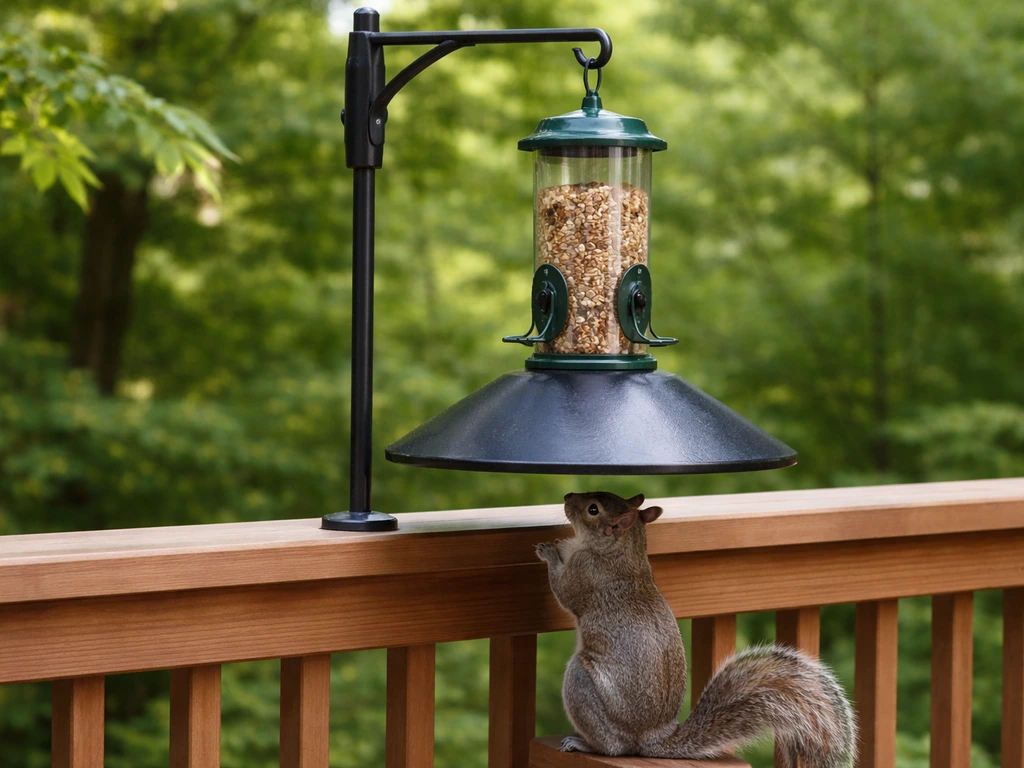
Squirrels can single-handedly ruin a feeder setup. They overrun feeders, intimidate birds, and can physically destroy cheap plastic equipment. Grackles are a different but equally frustrating problem: they arrive in flocks and empty seed trays in minutes while scaring off smaller birds you actually want to see.
Squirrel-proofing strategies
The two most effective approaches are weight-activated feeders and physical baffles. Weight-activated feeders close their seed ports when something heavy (like a squirrel) lands on the perch ring, but small birds can still access the seed. Baffles, either dome-shaped above a hanging feeder or cone/cylinder baffles on a pole, physically block climbing access. A baffle only works if the feeder pole is at least five feet from anything a squirrel can jump from (a fence, tree, or structure) and the feeder is high enough off the ground. Many people use both: a baffle on the pole and a weight-activated feeder as a backup.
Reducing grackle and large-bird access
Tube feeders with small ports are naturally less accessible to grackles than hopper or platform feeders. If grackles are your main problem but you want to attract cardinals (who also prefer hopper-style feeders), you're in a genuine tradeoff situation. One practical solution is using a caged feeder, which wraps the main feeder in a cage with openings large enough for small birds but too small for grackles, starlings, and large jays. Another option is switching your seed: nyjer seed in a tube feeder is largely ignored by grackles. Safflower seed in a hopper is also less attractive to them while remaining appealing to cardinals.
Placement and mounting: getting the location right
Where you put a feeder matters almost as much as which feeder you choose. Get placement wrong and you'll have low bird traffic, high squirrel access, or worse, birds hitting your windows.
Height and foraging level
Audubon's guidance matches feeder height to how birds naturally forage. Ground-feeding birds like doves and juncos do best with low platforms or seed scattered under a raised feeder. Finches, cardinals, and jays prefer mid-height tube and hopper feeders mounted at roughly 5 to 6 feet. Suet feeders for woodpeckers and nuthatches should be placed well off the ground, ideally against or near a tree trunk, which mimics natural foraging behavior and makes birds more comfortable using them.
Window collision prevention
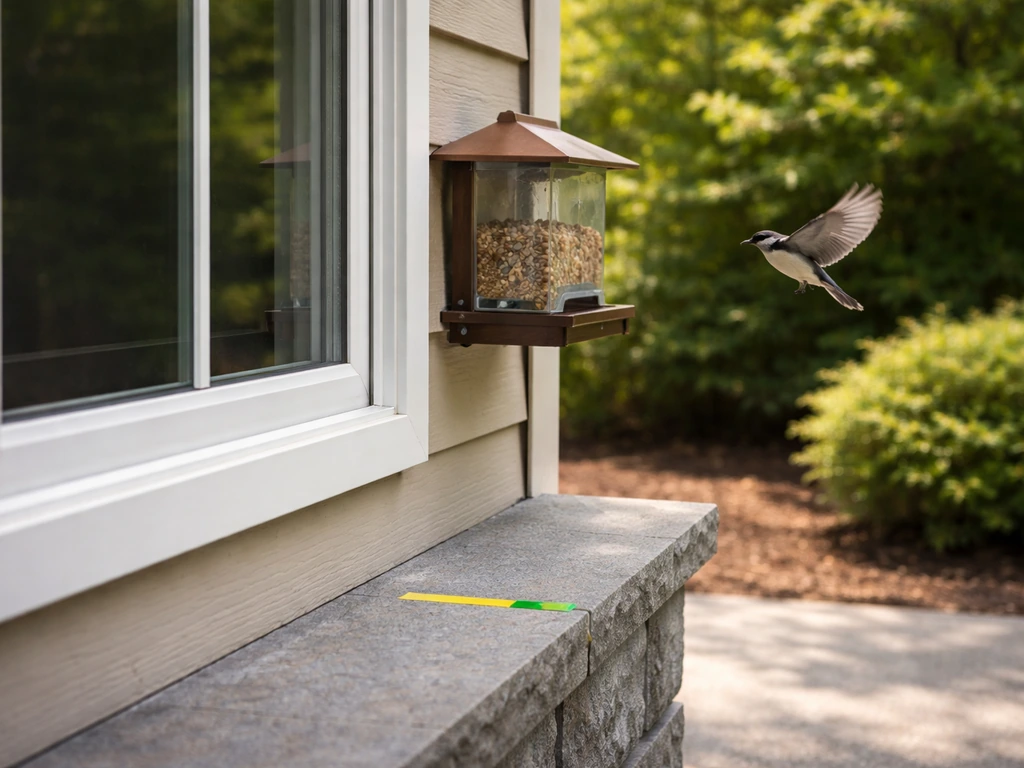
Window strikes are one of the leading causes of residential bird deaths. The rule is straightforward: place feeders either closer than 3 feet to a window or farther than 30 feet away. Within 3 feet, a bird leaving the feeder can't build enough speed to cause serious harm on impact. Beyond 30 feet, birds have enough space to see and avoid the glass. The danger zone is the middle range, roughly 3 to 30 feet, where birds can gain dangerous speed but may not recognize the glass as a barrier.
Spacing and shelter
Birds feel safer approaching feeders that have nearby cover. Placing a feeder within 10 to 15 feet of shrubs or a small tree gives birds a quick escape route from predators, which significantly increases feeder use. At the same time, keep feeders far enough from heavy tree branches that squirrels can't leap directly onto them. If you're running multiple feeders, space them far enough apart that dominant birds at one feeder aren't blocking access to another.
Cleaning and maintenance: what you actually need to do
This is the part most people underestimate when they buy a feeder. Dirty feeders spread disease among bird populations, and wet or moldy seed can make birds sick. The good news is that a simple cleaning routine keeps everything under control.
How often to clean
- Seed feeders (tube, hopper, platform): clean approximately every two weeks under normal conditions, and more often during wet weather, high traffic, or if disease is reported in your area
- Hummingbird feeders: clean every week to ten days during warm months; more often if the nectar looks cloudy or the feeder is in direct sun
- Suet feeders: rinse and scrub with each suet cake replacement, at minimum
How to clean properly
Empty the feeder completely first, then use a diluted bleach solution (no more than 1 part bleach to 9 parts water) and a bottle brush to scrub all surfaces, ports, and perches. Rinse thoroughly until there's no bleach smell, then let the feeder air-dry completely before refilling. Putting wet seed into a damp feeder is a fast route to mold. For regular between-deep-clean maintenance, hot water and a scrub brush work fine.
Seed compatibility and freshness
Seed mixes with lots of filler (milo, oats, wheat) often get ignored and sit long enough to spoil. Black-oil sunflower seed is the closest thing to a universal seed that most feeder birds will actually eat. Nyjer is specific to finches. Safflower works well for cardinals and is ignored by many nuisance birds. Match your seed to your target species and only buy what you'll use within a month or two to keep it fresh.
Are smart bird feeder cameras worth it?
Smart feeders with built-in cameras and AI species identification have gotten genuinely good in the last couple of years. Whether they're worth the extra cost depends entirely on how you use your feeder.
The current market leaders in this space, Birdfy being a prominent example, offer cameras with up to 4K resolution, IP66 water resistance ratings, and AI identification databases covering thousands of species. Birdfy's system, for instance, claims identification across 6,000+ species and supports both cloud and SD card storage. The Bird Buddy and SOLIOM systems work similarly but differ on AI accuracy, subscription requirements, and image quality at close feeder distances.
The honest limitations: AI identification accuracy drops in poor lighting and at awkward angles, Wi-Fi connectivity can be unreliable if your feeder is far from your router, and cloud storage access often requires a monthly subscription (some models start around $7 per month for a storage window). These aren't deal-breakers, but they're real friction points. Setup also takes more effort than a traditional feeder.
Who should buy a smart feeder camera: birders who want to identify every species that visits, people who travel and want remote monitoring, and anyone who gets genuine enjoyment from reviewing bird footage. Who should skip it: casual feeders who just want birds in the yard without managing an app, anyone with spotty Wi-Fi near the feeder location, and anyone on a tight budget where the money would be better spent on a quality traditional feeder plus good seed.
Top picks by backyard scenario
Rather than one universal recommendation, here's how I'd map feeder choices to the most common backyard situations.
| Scenario | Best Feeder Type | Seed Choice | Key Feature to Prioritize |
|---|---|---|---|
| You want maximum bird variety with minimal fuss | Hopper feeder | Black-oil sunflower | Weatherproof roof, large capacity, easy-clean design |
| Goldfinches and small finches are the goal | Nyjer tube feeder | Nyjer (thistle) | Small ports, UV-resistant tube, multiple perches |
| Woodpeckers are the priority | Suet cage feeder near a tree | Suet cake (no-melt in summer) | Tail-prop extension for large woodpeckers |
| Squirrels are destroying everything | Weight-activated squirrel-proof feeder + pole baffle | Black-oil sunflower or safflower | Weight sensitivity adjustment, durable metal construction |
| Grackles are taking over | Caged tube or hopper feeder | Nyjer or safflower | Cage opening size to exclude large birds |
| Cardinals are the target | Hopper feeder with wide tray perch | Safflower or black-oil sunflower | Wide perch space, bright location |
| Hummingbirds only | Red nectar feeder with ant moat | Fresh sugar-water (4:1 water to sugar) | Easy disassembly for frequent cleaning |
| You want ID every visitor automatically | Smart feeder with AI camera (e.g., Birdfy 4K) | Black-oil sunflower or mix | 4K resolution, IP66 weatherproofing, cloud + SD storage |
| Beginner, starting from scratch | Simple tube or small hopper feeder | Black-oil sunflower | Durable, easy to clean, affordable to replace |
If you're starting from zero, my genuine recommendation is a mid-size hopper feeder made from UV-stabilized polycarbonate with metal hardware, filled with black-oil sunflower seed, mounted on a pole with a baffle at roughly 5 to 6 feet. That single setup will attract more species than anything else, handle most weather conditions, and give you a realistic baseline for what visits your yard before you invest in specialty feeders. Once you know which birds are showing up consistently, you can add a suet cage for woodpeckers, a nyjer tube for finches, or a smart camera feeder if identification is what excites you. There's also a strong case for DIY options if you want to customize your setup on a budget, and the choice of feeder material, whether wood, metal, or polycarbonate, is worth thinking through carefully as you expand your setup.
FAQ
What’s the best feeder setup if I want to attract the widest variety of birds (not just one species)?
Start with the birds you want most, then match the seed and feeder type to their feeding style. As a simple baseline, black-oil sunflower on a UV-stabilized hopper will pull the widest variety, but if grackles dominate your area, you may need to swap to nyjer on a tube or use a covered setup plus baffles to reduce access.
Why do my birds ignore the seed, even though the feeder is full?
Avoid “mix-and-match” seed blends that include lots of filler grains if your goal is consistent visits. In practice, buy seed based on what the birds eat, then keep what you buy fresh (use what you can within about a month or two) so you do not end up feeding stale seed that birds ignore or that molds faster.
How do I choose the right feeder size if I’m not sure how many birds will visit?
Capacity matters only after birds are regularly using the feeder. If traffic is low, a smaller hopper or a feeder you can refill more often will prevent seed from sitting wet or stale. If traffic is high, a larger hopper can work well, but only if the lid and roof are actually weather-tight.
What’s the best feeder height and distance from windows?
Use a placement that matches the birds’ comfort zone, but also protects them from predators and windows. A common winning approach is to mount mid-height feeders (about 5 to 6 feet) with nearby cover 10 to 15 feet away, while keeping the feeder either within 3 feet of a window or beyond 30 feet to reduce strike risk.
Will a squirrel baffle alone work, or do I need weight-activated protection too?
If squirrels are active, you will usually get the best results by combining tools. Weight-activated feeders can stop heavy visitors at the ports, while a correctly installed baffle blocks climbing, but the baffle only works when the feeder pole is kept away from launch points like fences, tree limbs, and structures.
What should I do if I find wet or moldy seed in the feeder?
Moldy seed is a serious problem, so you should stop refilling immediately, dump and discard any wet or clumped seed, then clean and fully dry the feeder before restarting. Between deeper cleans, hot water and a scrub brush help, but the key is drying the feeder and keeping seed dry so spores and bacteria do not build up.
Can I keep cardinals or finches coming even if grackles are common in my area?
Yes, but do it selectively. For example, tube feeders with small ports generally limit access by larger nuisance birds compared with open tray or hopper designs. If grackles are emptying the feeder, switch seed type (nyjer in tubes or safflower in hoppers) or consider a caged feeder that still allows small birds to feed while blocking larger birds.
Where should I place a suet feeder for woodpeckers and nuthatches?
Treat suet differently from seed. Use suet for woodpeckers and related species, and place the suet feeder near a tree trunk or close to natural cover because it feels safer and more natural to the birds than a ground-adjacent location.
Is black-oil sunflower seed always better than seed mixes?
Don’t assume any “black seed” mixture is interchangeable. Black-oil sunflower is the closest thing to a universal option for many feeder birds, while nyjer is mainly for finches and safflower is often ignored by several nuisance birds but preferred by cardinals.
How often should I clean my feeder throughout the year?
Clean more often during hot weather or heavy use, especially for feeders that can trap moisture or ferment food. Nectar in hummingbird feeders typically requires cleaning about every week to ten days in summer heat, and seed feeders also need attention when storms or damp conditions make seed clump or sit wet.
Are smart bird feeder cameras worth it, and what are the common downsides?
Smart feeders can be useful, but their value depends on your setup and expectations. Identification accuracy can drop with poor lighting or odd angles, Wi-Fi reliability matters for cloud features, and many models require a subscription for storage access, so they are best for birders who really want photo-based identification.