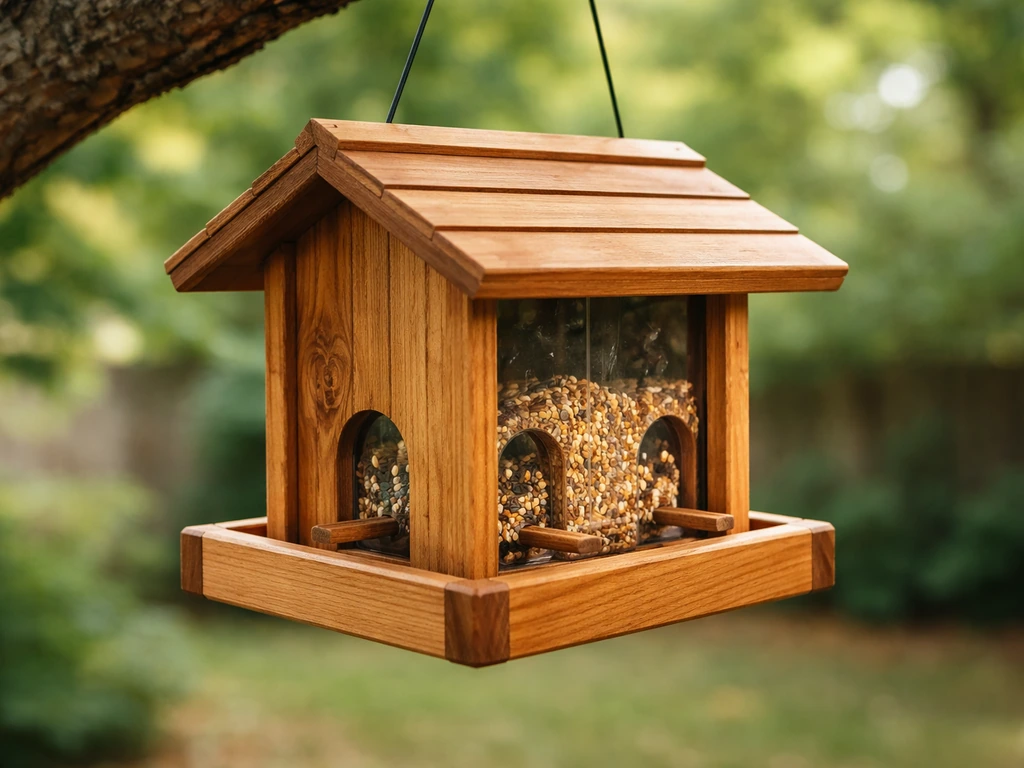
Cedar is the best wood for bird feeders, full stop. It resists rot naturally, handles UV and rain without warping badly, and doesn't splinter into sharp edges that can cut birds' feet. If you're buying a pre-made feeder, look for cedar or redwood construction with a roof overhang, drainage holes, and hot-dipped galvanized or stainless steel hardware. If you're building one yourself, western red cedar is the wood to reach for first, with pine as a workable budget option only if you seal it properly. Everything else in this guide is about getting the details right so your feeder lasts years instead of one rainy season.
Best Wooden Bird Feeders: Top Wood Picks and DIY Guide
Marcus Holloway
28 Apr 2026
Why wood actually matters for feeder performance
Plastic and metal feeders are easier to clean and tend to last longer without maintenance, so why bother with wood at all? A few good reasons. Wood feeders look more natural in a backyard setting, which matters to a lot of people. More practically, wood provides insulation and a familiar texture that certain birds actively prefer, especially cavity-nesters like chickadees and nuthatches that are drawn to wooden house-style feeders. Woodpeckers, in particular, seem more comfortable landing on wood than smooth plastic. Cardinals and juncos appreciate the wider, sturdier platforms that wooden tray feeders naturally lend themselves to. And a well-built cedar feeder, properly sealed and maintained, genuinely can outlast a cheap plastic one by a decade.
The flip side is real though: wood absorbs water, and water is the enemy. When cell walls in wood soak up moisture repeatedly and then dry out, the wood swells and shrinks, which leads to checking (small surface cracks), raised grain, and eventually structural failure at joints. UV from sunlight speeds up the surface degradation process, causing discoloration and roughening even before the wood gets visibly rotten. Research from the USDA Forest Products Laboratory confirms that UV and water work together as the primary weathering mechanism for outdoor wood, and bird feeders get both in abundance. The good news is that wood species vary enormously in how well they resist this, and construction details like roof overhangs and drainage holes make a measurable difference.
Best woods for wooden bird feeders
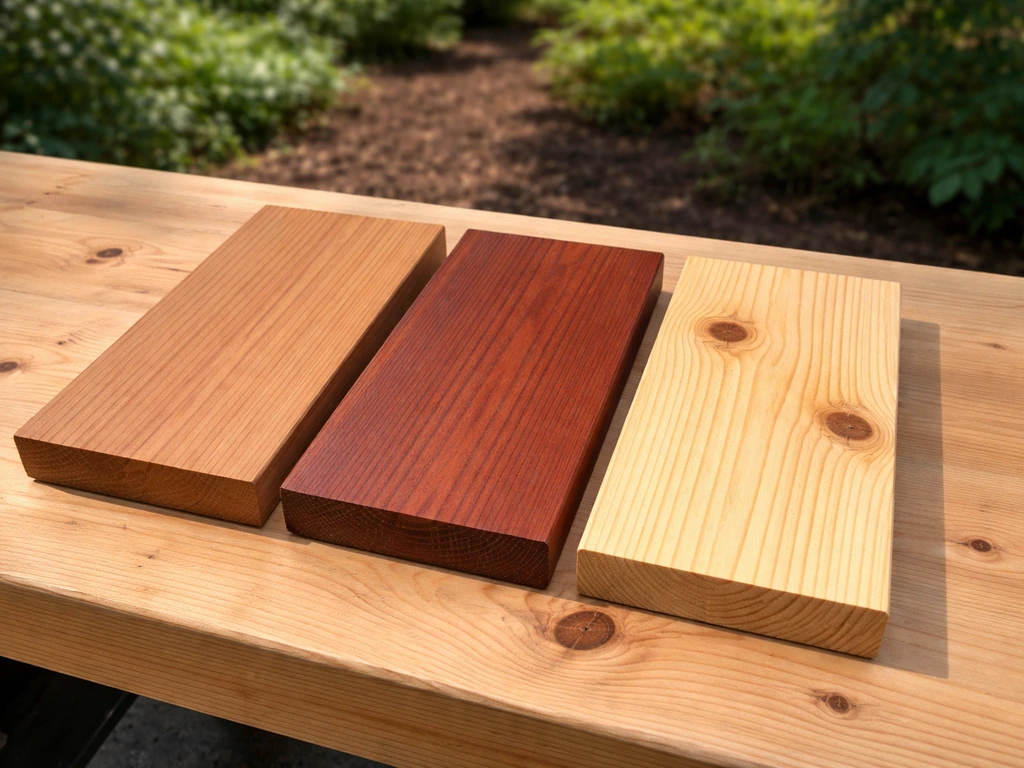
Not all wood is created equal outdoors. The key property you want is natural heartwood decay resistance, which varies dramatically by species. Sapwood from any tree is vulnerable, no matter how rot-resistant the species sounds on paper. You want heartwood, which is the denser inner portion of the log. Here's how the main options stack up.
| Wood Species | Rot Resistance | UV/Weather Stability | Splinter Risk | DIY Workability | Notes |
|---|---|---|---|---|---|
| Western Red Cedar | Excellent | Very Good | Low | Easy | Best all-around choice; widely available |
| Redwood (old-growth heartwood) | Excellent | Excellent | Very Low | Easy | Top tier but expensive and harder to source |
| Bald Cypress (heartwood) | Excellent | Good | Low | Moderate | Great where available; sapwood has no resistance |
| White Oak | Good | Good | Low-Moderate | Moderate | Heavier; good for platform feeders |
| Black Locust | Excellent | Good | Moderate | Harder | Very durable but dense and harder to work |
| Pine (treated or sealed) | Poor (untreated) | Fair | Moderate | Very Easy | Needs thorough sealing; fades over time |
| Plywood (exterior grade) | Fair | Fair | Low | Very Easy | Budget option; delaminate risk if not well sealed |
Western red cedar is the practical winner for most people building or buying a wooden bird feeder. It's lightweight, easy to cut and nail without splitting, naturally resistant to rot and insects, and widely stocked at home improvement stores. Redwood heartwood is arguably better in raw durability terms, but good old-growth redwood is increasingly hard to source and significantly more expensive. Bald cypress heartwood is a fantastic option in the Southeast where it's more common. Pine is the most common wood used in budget feeders you'll find at garden centers. It's not inherently rot-resistant, but Wild Birds Unlimited notes that pine feeders weather reasonably well and can hold up for years with proper sealing and periodic re-coating. Just know going in that pine will require more maintenance attention.
Buying guide: what to look for in a wooden feeder
When you're shopping for a pre-made wooden bird feeder rather than building one, the marketing descriptions can be vague. "Natural wood" tells you almost nothing useful. Here's what to actually check before buying.
- Wood species listed explicitly: Look for cedar or redwood called out by name. If the product just says "wood" or "natural pine," understand you're getting a lower-durability option that needs more maintenance.
- Roof overhang: A roof that extends at least an inch or two past the feeder body keeps rain off the seed and slows moisture penetration into the wood. Feeders without a roof or with a flush roof will degrade faster and grow mold in the seed tray faster.
- Drainage holes in the tray or floor: Sitting water is the fastest way to rot a wooden feeder from the inside. Good feeders have small drainage holes in the seed tray so rain passes through rather than pooling.
- Hardware quality: Zinc-plated screws rust quickly in outdoor conditions and will leave rust stains that accelerate wood decay around the joint. Look for hot-dipped galvanized or stainless steel hardware. If the listing doesn't mention it, it's probably cheap zinc-plated.
- Finish or sealant: Some feeders come pre-sealed or pre-stained; others are bare wood. Bare wood isn't necessarily bad (you can seal it yourself), but it does mean you need to do that before the first rain hits it.
- Ventilation: On enclosed or house-style feeders, check that there's airflow so seed doesn't clump and mold. Small vent holes near the top are a good sign.
- Seed port design: For tube-style wooden feeders or hopper feeders, make sure the seed access points are smooth and splinter-free. Rough or splintered edges around perches and ports can injure birds.
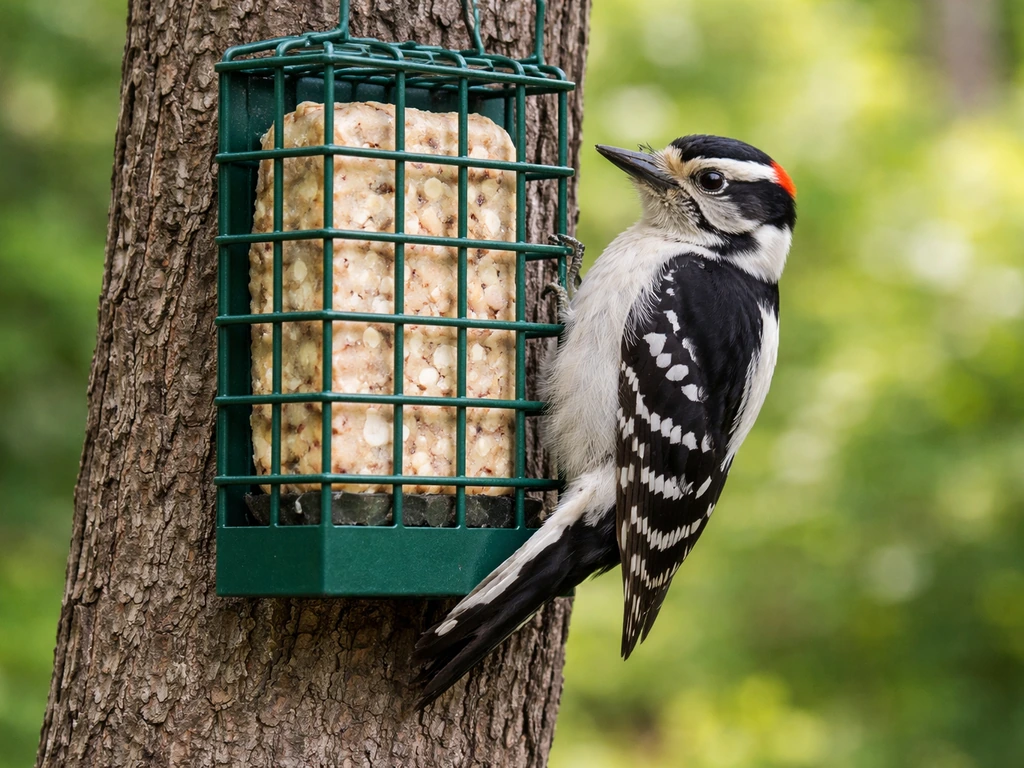
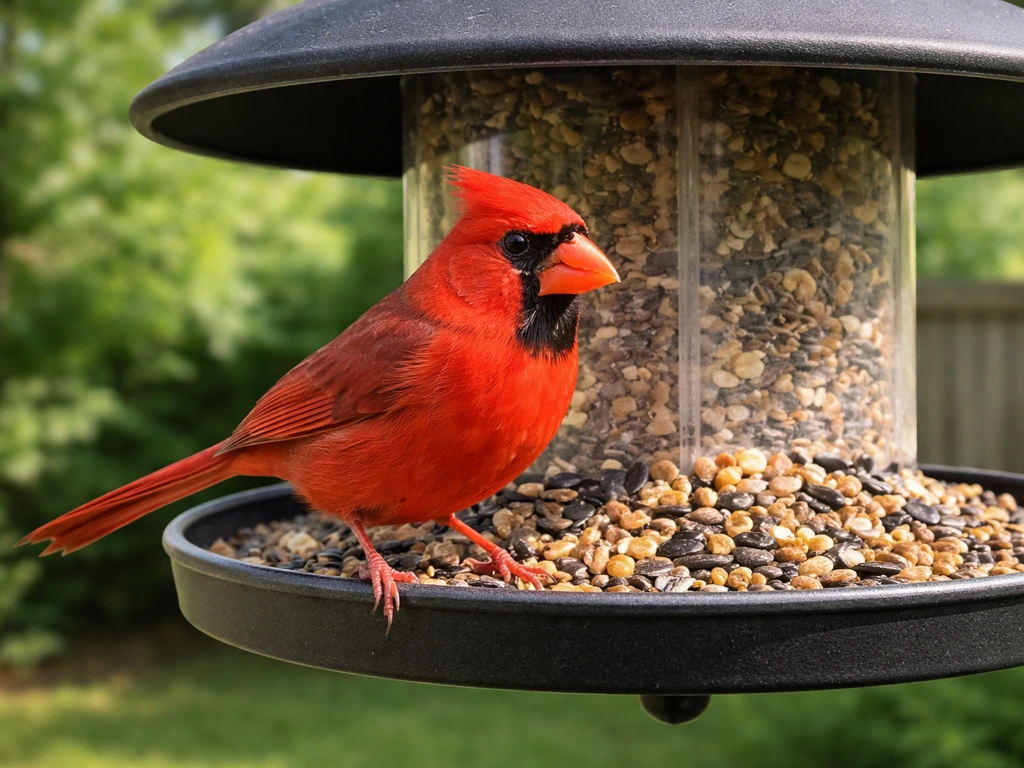
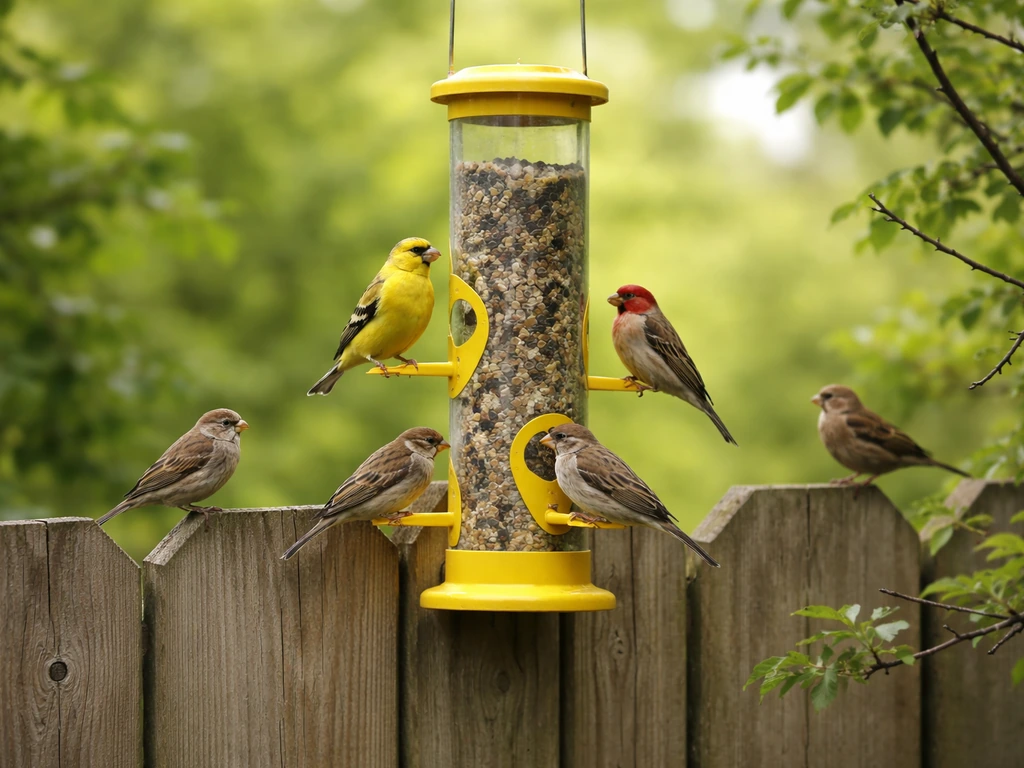
For species-specific shopping: cardinals do best with a wide platform or tray attached, since they don't cling well to small perches. Finches are happy with smaller ports and perches. Woodpeckers prefer feeders with a vertical surface they can brace against and do better on suet cage feeders that are mounted directly to a wooden post or tree, though a wooden hopper feeder with good perch space works too. Woodpeckers also benefit from suet-style openings and sturdy mounting surfaces that let them brace comfortably woodpeckers prefer feeders. If you're targeting multiple species, a cedar hopper feeder with a wide tray and generous roof is the most versatile wooden option available.
DIY guide: best wood and how to build for outdoor durability
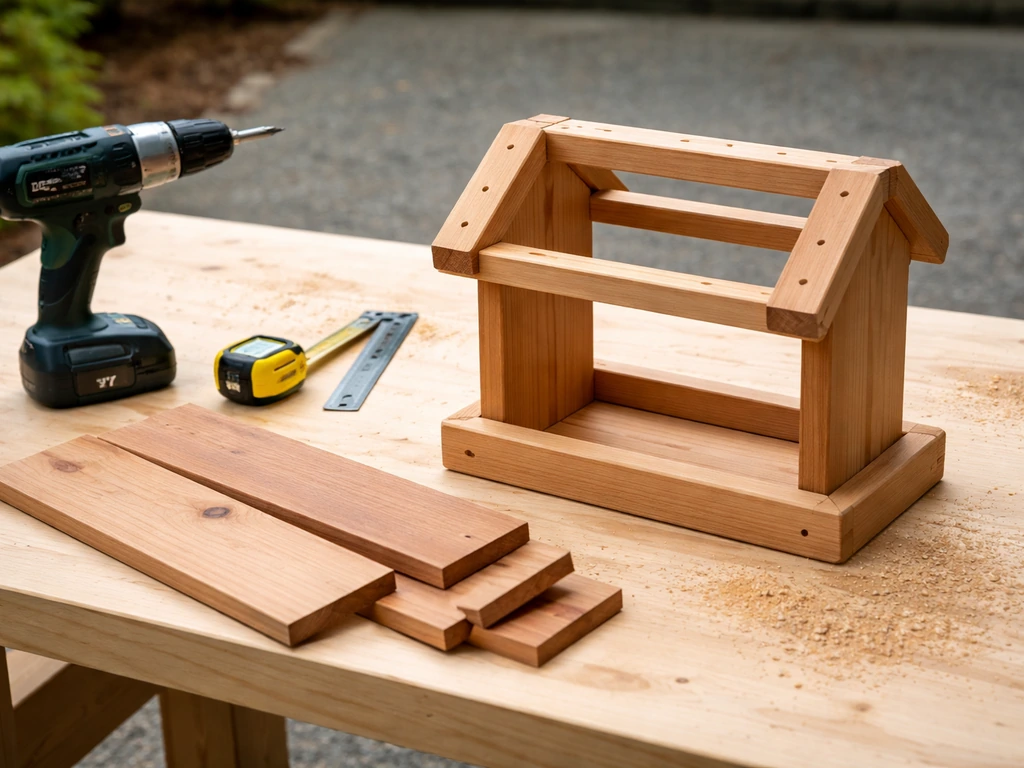
Building your own wooden bird feeder is genuinely satisfying and gives you control over wood quality, dimensions, and construction details that pre-made feeders often compromise on. To get the most out of your project, focus on the best diy bird feeders designs that protect seed and keep wood weathering under control. If you're going the DIY route, here's how to approach it so the thing actually lasts.
Best wood to use
Start with western red cedar. It's the most forgiving to work with, nails without pre-drilling in most cases, takes sealant well, and holds up outdoors without becoming a maintenance burden. Buy heartwood boards when you can, since sapwood from even a naturally resistant species like cedar offers much less protection against decay. For a basic hopper or platform feeder, 3/4-inch cedar boards are thick enough to be sturdy without being unnecessarily heavy. Avoid pressure-treated lumber. The preservatives used in modern pressure-treated wood are considered safer than older formulations, but they're still not something you want birds constantly landing on and potentially ingesting through contact with treated surfaces.
Construction details that extend feeder life
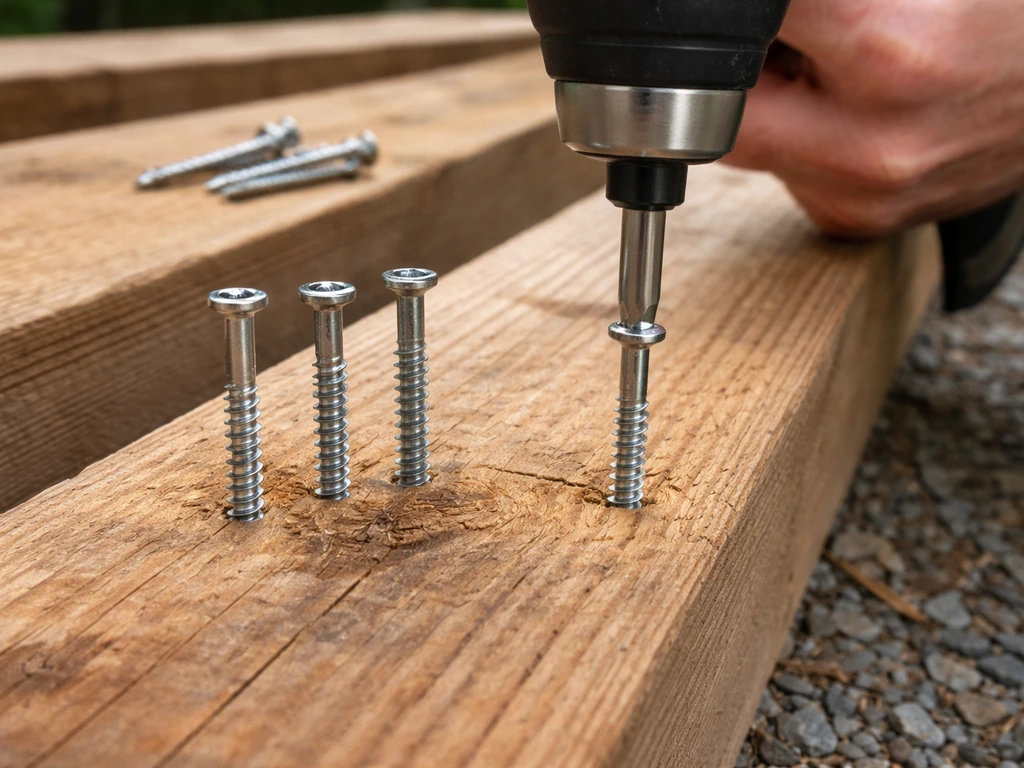
The USDA Forest Products Laboratory makes a point that applies directly to bird feeders: how well wood holds up outdoors depends not just on species choice but on moisture management through design. For a feeder, this means a few specific things. Build a roof with at least a 1.5-inch overhang on all sides to shed rain away from the seed platform and the joint where the roof meets the body. Cut drainage slots or drill 1/4-inch drainage holes in the floor of any seed tray so standing water has somewhere to go. Orient the wood grain vertically where possible on side panels so water runs off rather than wicking in along the grain. Avoid end-grain exposure where you can, since end grain soaks up water many times faster than face grain.
Fasteners matter more than you'd think
Use stainless steel or hot-dipped galvanized screws throughout. Pre-made guidance for fasteners in contact with preservative-treated wood recommends using corrosion-resistant materials such as hot-dipped zinc-coated galvanized steel and/or stainless steel blank" rel="noopener noreferrer">hot-dipped zinc-coated galvanized steel and stainless steel. Zinc-plated screws (the cheap ones that come in most hardware store boxes) will rust within a season or two, and the rust accelerates wood decay right at the joint where structural integrity matters most. For cedar specifically, which has natural oils that can react with some metal coatings, stainless steel is the cleanest choice. Pre-drill pilot holes in cedar near edges to prevent splitting, even though cedar is relatively forgiving compared to denser species like oak or locust. The Oregon State University wood properties tables show that blank" rel="noopener noreferrer">splitting resistance under fasteners varies considerably by species, and cedar is on the more favorable end, but edge splits can still happen if you're driving screws without pilots.
Finishes, sealing, and bird-safe coatings
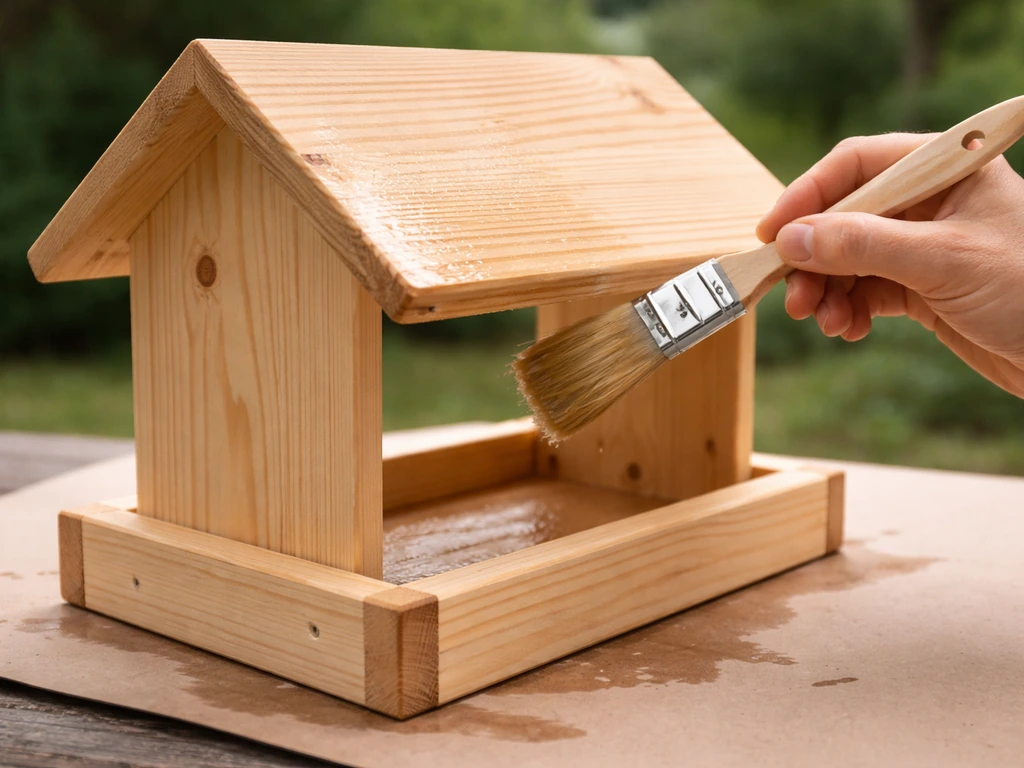
This is where a lot of DIY and maintenance advice gets either vague or dangerously wrong. You need a finish that protects the wood from moisture and UV, but that is also safe for birds once cured. Here's the practical breakdown.
What to use
- Exterior-grade water-based sealant: This is the safest and most practical option. Water-based finishes off-gas their solvents quickly, cure to a stable film, and don't leach petrochemicals once dry. Birdfy's official feeder maintenance guidance specifically recommends an exterior-grade, water-based sealant applied in one even coat with full dry time before use.
- Linseed oil (raw or boiled): A traditional option that penetrates the wood rather than forming a surface film. Wild Birds Unlimited recommends applying linseed oil every few years to maintain protection. Raw linseed oil is the safer choice around birds; boiled linseed oil contains metallic driers that are harder to evaluate for bird safety once fully cured. If you use boiled, let it cure for several weeks before birds make contact.
- Water-soluble exterior stain: WBU also recommends this as an alternative to linseed oil for periodic recoating. Choose a penetrating stain rather than a film-forming one, and let it cure completely.
- Tung oil: A natural plant-derived oil that offers decent water resistance. Generally considered safe once fully cured, though full cure takes longer than water-based products.
What to avoid
- Polyurethane and lacquer: These film-forming finishes peel and chip over time outdoors, and flaking finish in the seed tray is a contamination risk.
- Oil-based paints with VOC solvents: The solvents take a long time to off-gas completely, and some pigment formulations aren't bird-safe.
- Pressure-treated wood's built-in preservatives: Not a coating per se, but worth repeating: don't build feeders from pressure-treated lumber.
- Any finish still tacky or smelling strongly of solvents: Always let any finish cure completely before putting the feeder out. "Dry to the touch" is not the same as fully cured.
For application, the process is straightforward: sand any rough surfaces first, apply one even coat of your chosen sealant or oil, and let it dry fully, which depending on the product and weather conditions can range from 48 to 72 hours or longer. Don't rush it. A tacky finish on a seed tray is worse than no finish at all.
Weathering and maintenance to keep your feeder going
Even the best cedar feeder with a perfect finish will eventually need attention. The combination of UV and moisture that drives wood weathering doesn't stop working just because you sealed the wood once. Here's a realistic maintenance schedule based on how outdoor wood products actually behave.
Cleaning routine
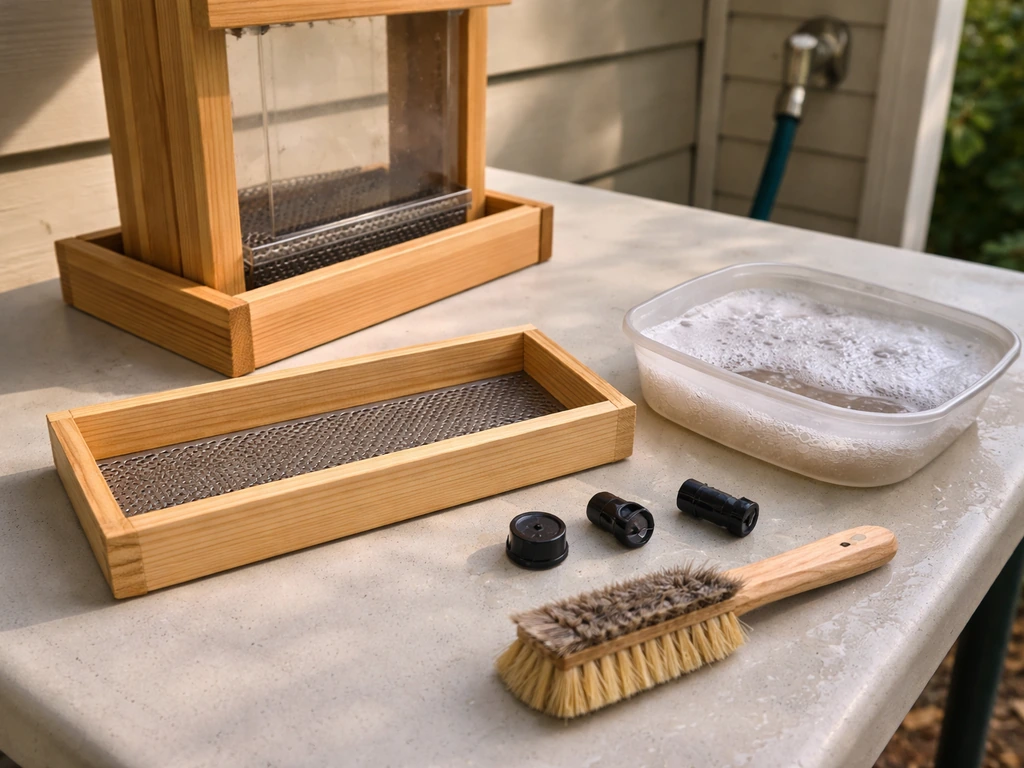
Clean the feeder thoroughly every one to two weeks during heavy use, or at a minimum monthly. Discard old or wet seed, scrub the seed tray and ports with soap and water, then disinfect with a diluted bleach solution (roughly one part bleach to nine parts water). Rinse thoroughly, since bleach residue left in the feeder is harmful to birds. Then, critically, let the feeder air dry completely before refilling and rehanging. Putting damp seed into a damp wooden feeder is a fast track to mold and accelerated wood decay.
Resealing schedule
For horizontal surfaces like seed trays that take the most direct sun and rain, plan to clean and recoat every two years or so. For vertical surfaces like side panels, every three to four years is a reasonable interval. Wild Birds Unlimited's guidance says every few years for linseed oil or stain re-application, which tracks with this. Before recoating, always clean the wood thoroughly and let it dry completely, otherwise you're sealing moisture into the wood. Watch for visible signs that the finish is failing: surface checking (small cracks), raised or fuzzy grain texture, or significant darkening and discoloration in areas that should be protected. Any of those signals mean it's time to sand lightly and recoat.
End-of-season storage
If you're in a climate with harsh winters and you take feeders down seasonally, store wooden feeders indoors or in a dry shed rather than leaving them exposed. Freeze-thaw cycling is particularly hard on any cracks or checks that have formed, since water expands as it freezes and widens any existing damage. Before storing, give the feeder a good cleaning and let it dry thoroughly.
Predator-proofing and mounting tips for wooden feeders
A wooden feeder that squirrels are actively raiding or that raccoons are pulling apart is a feeder you'll be replacing soon, because the damage accumulates fast. Wood gets scratched, gouged, and chewed in ways that plastic and metal resist better. The good news is that mounting and placement matter more than the feeder material when it comes to predator access.
Squirrel-proofing placement
The placement math for squirrel-proofing is well established: mount your feeder at least 8 to 10 feet away from any object a squirrel can jump from, including trees, fences, deck railings, and the sides of buildings. Squirrels are surprisingly athletic horizontal jumpers. If your feeder is closer than that to a launch point, a squirrel will reach it regardless of what baffle you use. Audubon's placement guidance puts the minimum clearance at 8 to 10 feet from solid objects when using a pole-and-baffle system.
Baffles on pole mounts
A pole-mounted wooden feeder with a properly positioned baffle is significantly more squirrel-resistant than a hanging feeder. Mount the baffle between 4 and 4.5 feet off the ground. Below that height and a squirrel can jump over it from the ground; above it and you lose the protection because the climbing distance above the baffle to the feeder becomes short enough for them to reach up. The baffle needs to be wide enough (at least 18 inches in diameter for a torpedo-style baffle) that a squirrel can't reach around it while clinging to the pole below.
Reinforcing wooden feeders against physical damage
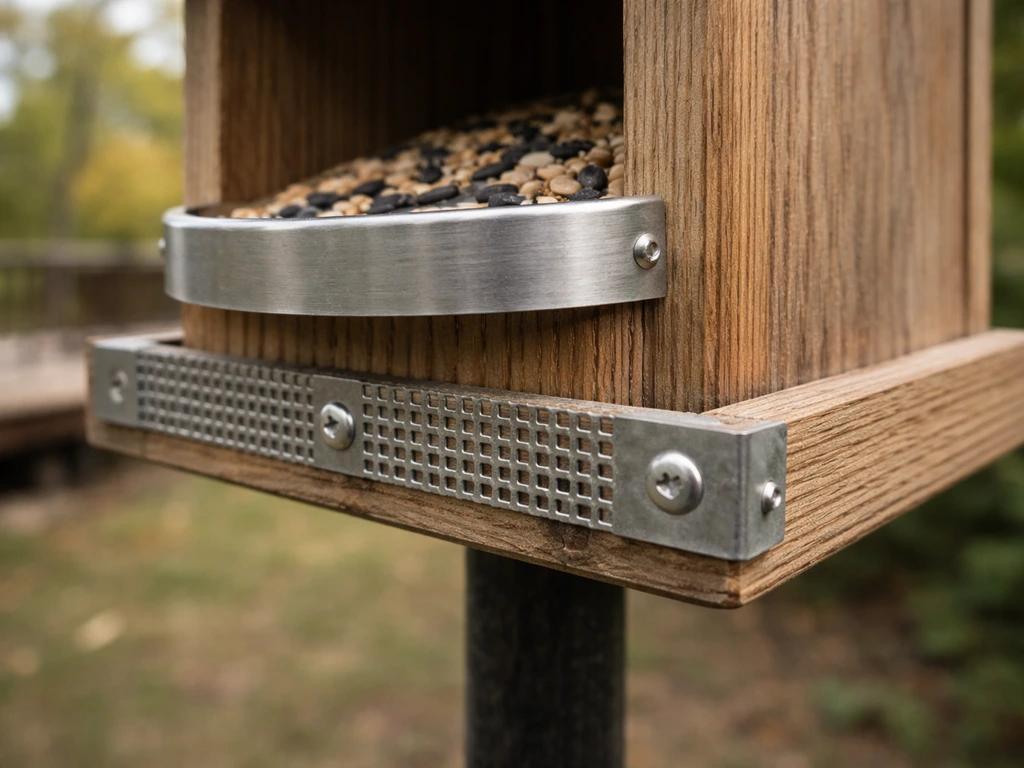
If squirrels or raccoons are physically chewing or prying at your wooden feeder, there are a few practical reinforcements. Metal-edging the seed ports and the rim of the seed tray with aluminum or steel flashing makes these high-contact areas resistant to gnawing. Hardware mesh (1/2-inch welded wire mesh) used as a seed tray liner or as a closure on open hopper sides keeps animals from reaching in and also improves drainage. Use stainless steel screws and hardware throughout, both for durability and because predators can lever out rusted or weakened fasteners over time.
Hanging vs pole mounting for wood feeders
Wooden hopper and platform feeders are generally heavier than plastic equivalents, so the mounting solution matters more. A hanging feeder needs a heavy-duty S-hook and a wire or chain rated for the weight, especially once the seed hopper is full. Pole mounting is usually the sturdier option for larger wooden feeders, and it gives you more control over baffle placement. If you're building a DIY feeder and plan to pole mount it, add a mounting block or keyhole bracket to the back during construction rather than trying to retrofit one later.
If you enjoy building feeders yourself, exploring different designs and wood combinations is part of the fun, and there's a whole range of DIY approaches worth considering alongside the bought options. For anyone primarily trying to serve specific species, woodpecker-focused feeders have their own design quirks worth looking at separately. And if you're curious about how wood compares to metal and plastic more broadly across all feeder types, that materials comparison is worth a deeper look on its own. And if you're curious about how what are bird feeders made of compares across wood, metal, and plastic, that materials comparison is worth a deeper look on its own. The core answer here stays the same regardless: cedar construction, good drainage and overhang design, bird-safe sealant, and smart placement will give you a wooden feeder that performs reliably for years. For more ideas that work well in real backyards, see our guide to the best backyard bird feeders.
FAQ
Can I use cedar boards with sapwood, will it still be the best wooden bird feeder option?
You can, but sapwood insulates less against decay. If you have to use mixed boards, prioritize heartwood on the seed tray floor, side joints, and any end-grain areas, since those spots get the most wetting and swelling over time.
What sealant or oil should I choose for the best wooden bird feeders so it is safe for birds?
Pick a finish designed for outdoor decks or outdoor wood that explicitly cures into a food-bird-safe condition, then keep the feeder out of service until it is fully cured (not just dry to the touch). A common mistake is refilling seed while the finish is still off-gassing or tacky, which can irritate birds and increase mold risk on wet seed.
How can I tell early that my wood feeder is failing even if it is not visibly rotten yet?
Watch for raised grain, small “checking” cracks around screw heads, and areas that stay darker than the rest after rain. If the finish looks patchy where the roof overhang protects less, that is a sign the topcoat is thinning and moisture is starting to reach the wood.
Do I need to disinfect my wooden bird feeder with bleach, and what is the safest way to do it?
Bleach is useful during outbreaks of mold or heavy contamination, but routine overuse can leave residue if you do not rinse and dry thoroughly. After scrubbing and disinfecting, rinse with clean water until there is no sharp bleach smell, then air-dry completely before refilling.
How often should I clean a feeder if I’m using it year-round or in mild weather?
In mild climates, mold and clumping can build up faster than you expect because seed stays damp longer. A practical approach is cleaning every 1 to 2 weeks during high use, and switching to every week if you notice seed bridging, dampness under ports, or frequent bird droppings collecting in one spot.
What mesh size or liner should I use if I install hardware mesh in a wooden feeder?
Use welded wire or hardware mesh sized so birds can access seed normally while blocking animals from reaching inside. Also confirm the mesh does not trap water, so the feeder still drains through the drilled holes, otherwise you undo your drainage design.
Is it better to make the roof overhang larger than the recommended amount?
Yes, in most backyards. A bigger overhang reduces wetting at the roof-to-body joint, which is usually the first failure point on DIY wooden feeders. The tradeoff is that very large roofs can hold more debris, so plan periodic brushing of the roof area.
Can I leave a wooden bird feeder outside during winter if it is sealed well?
It is better to bring it in if you see freeze-thaw damage or if the feeder has any existing cracks. Even well-sealed wood can expand and crack when water gets into checks, so indoor storage or a dry shed is the safer move for feeders that rely on tight joints and flat trays.
What is the most common mounting mistake that makes a wooden feeder easier to be raided by squirrels?
Placing it too close to a launch point, even if a baffle is included. The distance from trees, fences, deck rails, and building sides matters as much as baffle height, and many “squirrel-proof” setups fail because the jump distance is underestimated.
Do wooden feeders attract more woodpeckering damage, or is it just normal behavior?
Woodpeckers may peck more on rough surfaces or areas where they can brace. If you are getting repeated target-pecking, consider a design with a stable vertical bracing surface and durable hardware, and avoid finishes that leave sticky or overly rough texture that invites persistent digging.
What should I do if my cedar feeder develops rust stains at the joints?
Rust usually means the fasteners are not stainless or hot-dipped galvanized, or they are getting exposed. Replace affected hardware with stainless, and scrape and re-sand any rusted residue before recoating, otherwise the rust can wick moisture into the joint and speed up finish breakdown.