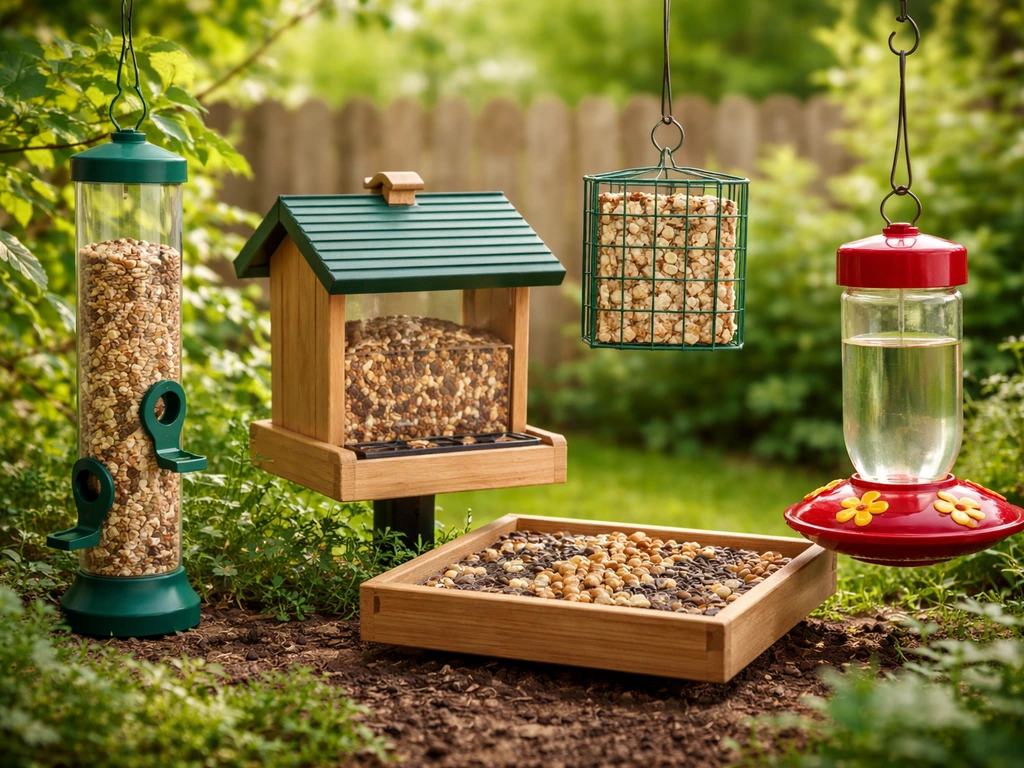
Green is the single best all-around color for a bird feeder if you want to attract the widest mix of backyard birds. Research backs this up: a Journal of Ornithology field study found green feeders received higher visit rates than yellow ones, and a large PLOS ONE study of UK garden birds found silver and green feeders outperformed red and yellow across multiple species. That said, color is only one piece of the puzzle.
Best Color for a Bird Feeder: What Birds Prefer
Marcus Holloway
24 Apr 2026
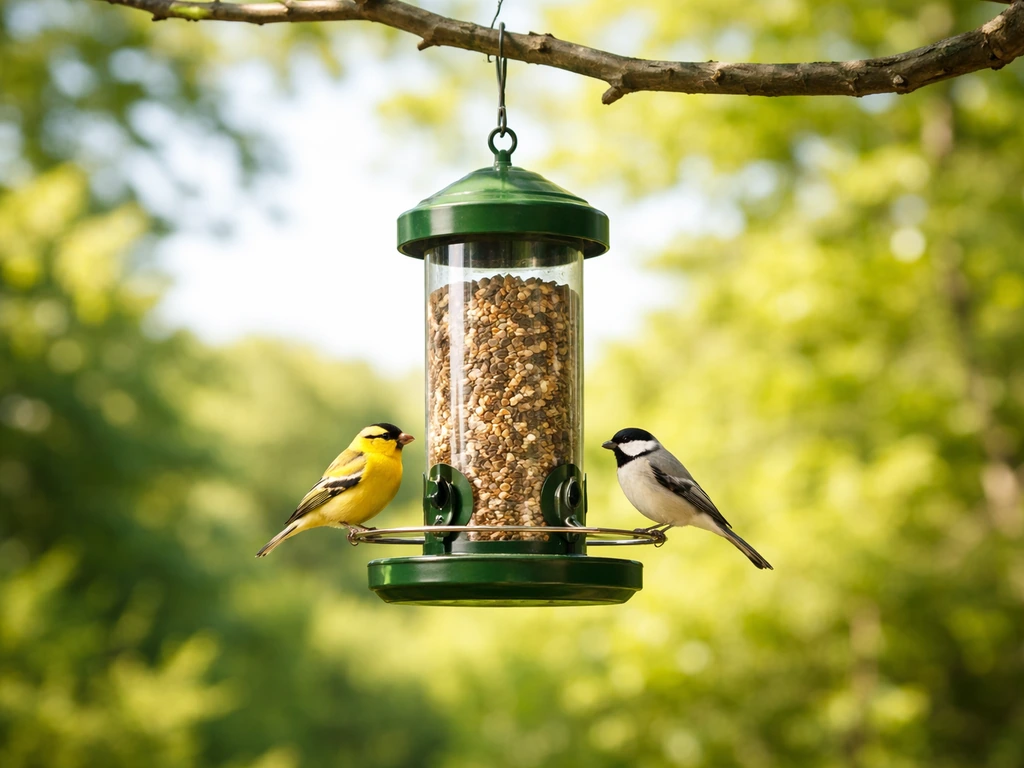
Hummingbirds want red or orange accents on the feeder. If you specifically want red birds in the yard, you should pay close attention to how different species respond to red accents on the feeder. Cardinals respond to red. And no color will save a feeder that's in the wrong spot, stocked with the wrong seed, or getting raided by squirrels every morning.
How birds actually see your feeder
Most birds have four types of color-sensitive cones in their eyes, compared to our three. Review notes that UV sensitivity varies across taxa, and that birds are generally described as having cone-based color vision with conserved photoreceptor classes across species studied [birds generally have cone-based color vision with conserved photoreceptor classes](https://pmc. ncbi. nlm.
nih. gov/articles/PMC2781856/). That fourth cone is sensitive to ultraviolet light, which sits outside the range of human vision entirely. This isn't just a fun fact: it means a feeder that looks vibrant red or bright yellow to you may appear very differently to a bird.
UV-reflective coatings or finishes could make a feeder stand out in ways you can't see, while certain paints that look bold to us might absorb UV and look dull or washed out to birds.
Hummingbirds push this even further. Research on wild hummingbirds found they perceive a broader color space than humans, including combined UV-plus-green and UV-plus-red combinations that we literally cannot imagine. This is part of why hummingbirds respond so strongly to red: it's not just the wavelength itself, but how red interacts with their UV-sensitive vision in natural light conditions. The practical takeaway is that you shouldn't rely entirely on how a feeder color looks to you. Context, species, and lighting all feed into what a bird actually perceives.
Best overall feeder colors at a glance
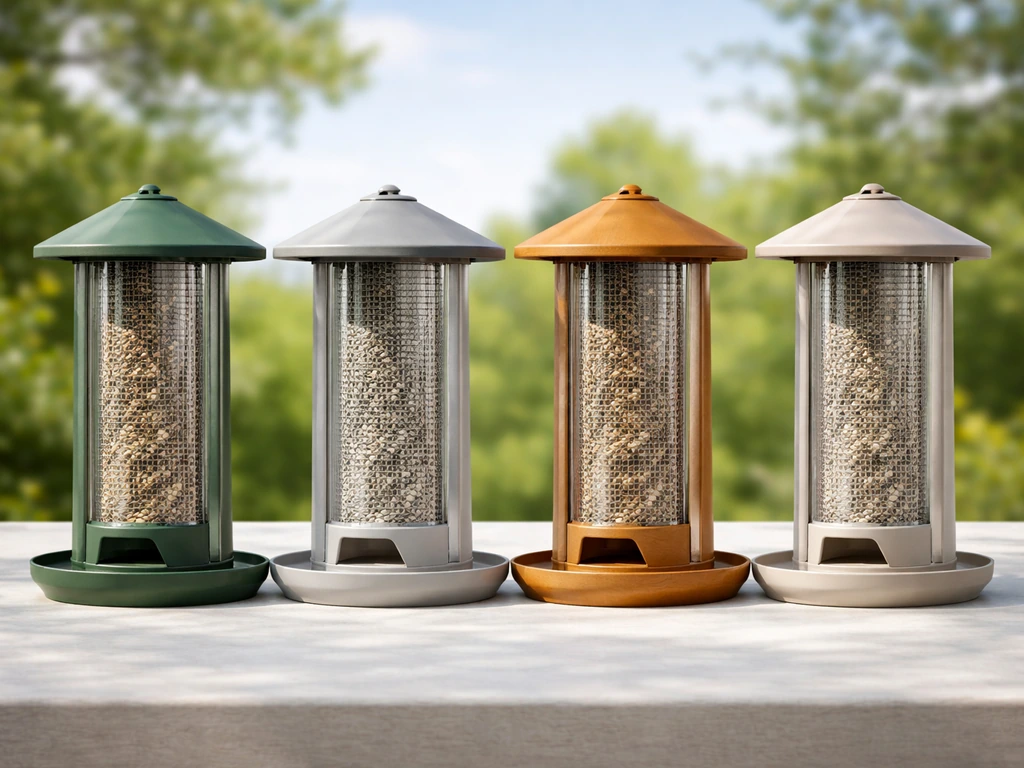
If you're shopping for a general-purpose feeder and want to cover the most ground, here's what the research and field experience point to.
- Green: The top performer for broad species appeal. Blends naturally into yard backgrounds, stands out against sky and bark, and field studies consistently show higher visitation rates compared to other colors.
- Silver/gray: Performs nearly as well as green in multi-species studies. Neutral, unobtrusive, and works well in both sunny and shaded yards.
- Red: Best for hummingbirds and cardinals specifically. Less effective as a general broad-mix color, but essential if those are your target birds.
- Natural wood tones: Unfinished or lightly stained wood feeders sit well in most yard backgrounds and don't carry the UV-absorption risk of some synthetic paints.
- Earth tones (brown, tan, bark tones): Similar logic to natural wood. Blends in and provides good contrast for the seed ports and perches, which birds focus on when approaching.
Which colors attract specific birds
Most color research treats 'birds' as a lump category, but the birds actually showing up in your yard have different visual priorities. Here's how to match color to your target species.
| Bird | Best Feeder Color | Notes |
|---|---|---|
| Hummingbirds | Red, orange, or pink accents | Strong red-orange response tied to flower recognition; full feeder body can be any color as long as ports and accents are red or orange |
| Cardinals | Red or deep green | Cardinals are strongly associated with red feeders; darker greens also work well and provide good contrast against their plumage |
| Goldfinches / finches | Yellow or bright green | Yellow mimics their natural color cues; bright green works well for nyjer tube feeders in open garden settings |
| Chickadees / nuthatches | Green, gray, or natural wood | Less color-driven; consistent placement and seed quality matter more, but neutral tones don't deter them |
| Woodpeckers | Natural wood tones or bark-brown | Woodpeckers associate feeding with tree bark; natural finishes on suet cages and log-style feeders fit that cue |
| Blue jays | Blue or green | Jays are visually bold birds but not heavily color-dependent at feeders; green and blue tones blend well and don't spook them |
| Sparrows / doves | Gray, green, or earth tones | Ground-feeding instinct means they respond more to low, open feeders than to any specific color |
One thing worth noting: the PLOS ONE and Journal of Ornithology studies both found that the 'best' color varied by habitat and which species were most common locally. If your yard is dominated by finches, yellow and green will likely outperform what you'd want for a cardinal-focused setup. Think of color choice as species-specific tuning rather than a universal fix.
Colors to avoid or use carefully
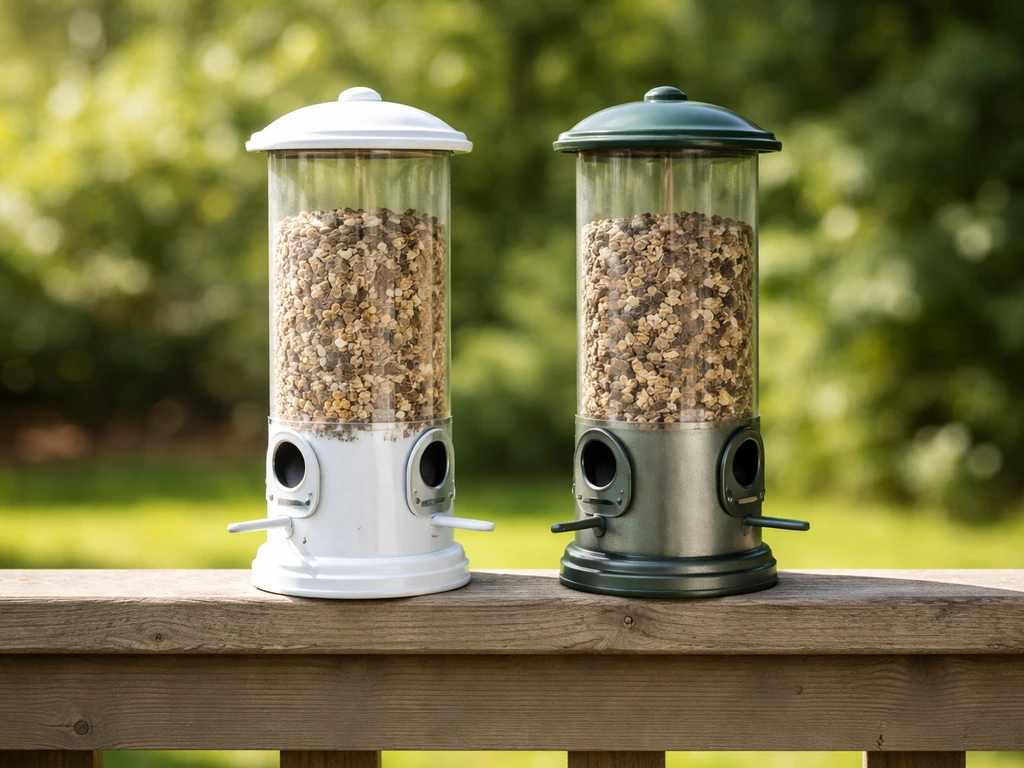
A few colors consistently underperform in research and practical experience, and some carry specific downsides worth knowing.
- Bright white: Reflects harshly in direct sun and can spook more cautious birds like warblers and thrushes. Also shows seed residue and mold quickly, which becomes a cleanliness issue.
- High-saturation red and yellow (as primary body colors): Both underperformed in the large PLOS ONE garden bird study for broad-species attraction. Fine for hummingbird and finch accents, but a fully red or yellow feeder body may deter other birds.
- Glossy black: Absorbs heat significantly, which can spoil seed faster in summer and may deter birds during warm months due to radiated heat near the ports.
- Neon or fluorescent tones: No field evidence these help and some reason to think UV-absorbing synthetic fluorescent dyes may actually make feeders less visible to birds in certain light conditions.
- Camouflage patterns near window feeders: Reducing feeder visibility to make it blend into the background sounds logical but actually increases window-strike risk because birds may not distinguish the feeder from open sky reflected in the glass.
Choosing feeder color for your specific yard
Color doesn't operate in a vacuum. The same green feeder will read very differently hanging in front of a dense evergreen hedge versus hanging against a brick wall or a pale vinyl fence. Before you settle on a color, spend a couple of minutes walking your yard and thinking about what the feeder will actually contrast against.
Sun vs. shade
In full sun, lighter neutrals like silver, gray, and pale green tend to work better because they don't absorb as much heat and they maintain consistent visual contrast throughout the day. In shaded spots, deeper greens and earth tones stand out more clearly because the reduced light makes high-contrast colors easier for birds to spot. Bright white and glossy finishes create glare in sunny positions that can actually obscure the feeder's ports and perches at certain angles.
Yard background and contrast
A green feeder hung in front of a green hedge disappears. A green feeder against a light sky or pale fence stands out well. The goal isn't to match your yard's color palette aesthetically: it's to give birds a clear visual target. Think contrast. If your yard is heavily wooded, consider silver or pale gray. If it's open and bright, green or natural wood tones will pop more than they would against foliage.
Predator and squirrel pressure
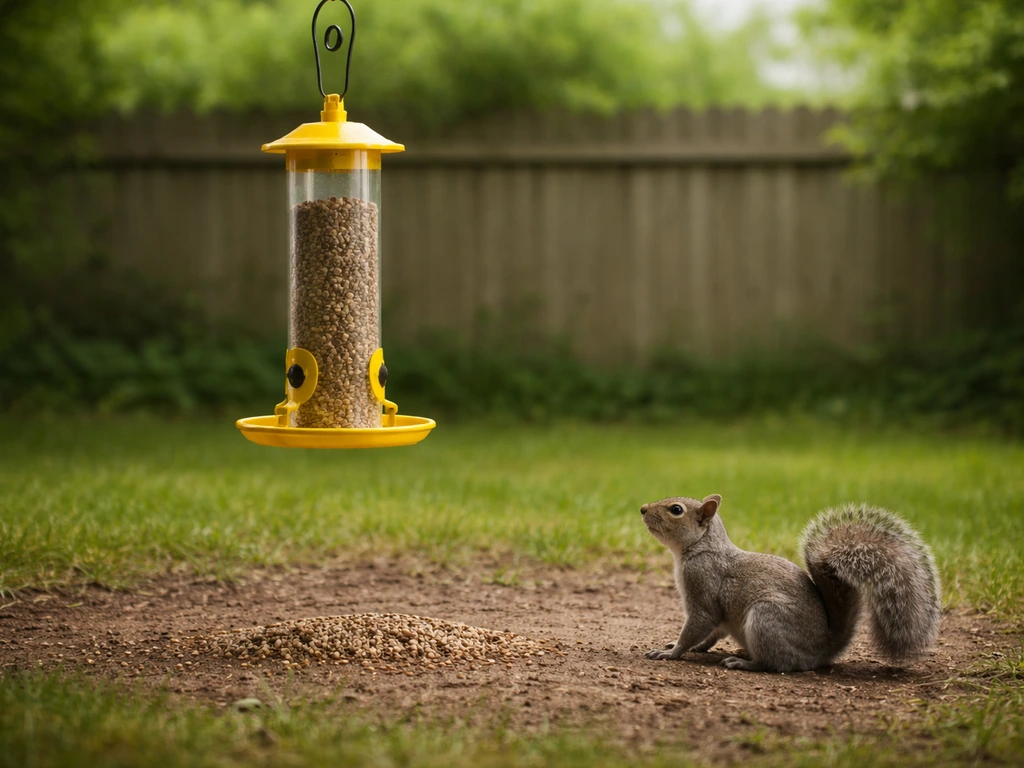
This one is indirect but real. Brightly colored feeders are more visible to birds, but they're also more visible to hawks and neighborhood cats. If you're in a yard with consistent raptor pressure, a more subdued feeder color (green, gray, natural wood) may keep visiting birds less exposed. Color won't solve a squirrel problem on its own: that requires baffles, correct mounting height (at least five feet off the ground), and keeping the feeder at least ten feet from any surface a squirrel can use as a jumping platform. But a visually exposed, brightly-colored feeder in an open yard with no cover nearby can make birds more hesitant to commit to a landing.
Placement tips that make color work harder
Color is only doing its job if birds can actually see and safely reach the feeder. Placement magnifies or undermines every color decision you make.
- Keep feeders within 3 feet of a window or more than 30 feet away. This is Audubon's window-strike rule and it's a real issue: a feeder that sits 10 to 20 feet from a large window is the most dangerous position because birds accelerate enough to get seriously hurt if they flush toward the glass. A brightly colored, highly visible feeder at that distance actually increases strike risk.
- Hang feeders at eye level for birds, not humans. Most seed feeders do best at five to six feet off the ground. Hummingbird feeders can go a little higher, four to six feet, as hummingbirds often approach from above.
- Use a natural background anchor when possible. Positioning a feeder near (but not directly against) a shrub, tree trunk, or dense planting gives birds a perching stage and makes the feeder easier to locate visually. It also gives a natural color backdrop that green and earth-tone feeders work well against.
- Don't cluster multiple brightly-colored feeders together. One or two dominant feeders in a zone work better than a crowded array. Too many competing visual signals can slow initial approach. If you're running multiple feeders, vary the types more than the colors.
- Check the feeder's visibility from bird flight paths, not just from your window. Walk to the edge of your yard and look back at where the feeder will hang. That's roughly the approach angle birds will use. If it blends into the background completely from 20 to 30 feet away, add a small contrasting element (a bright perch, a colored dome) rather than repainting the whole feeder.
Matching color to feeder type and material
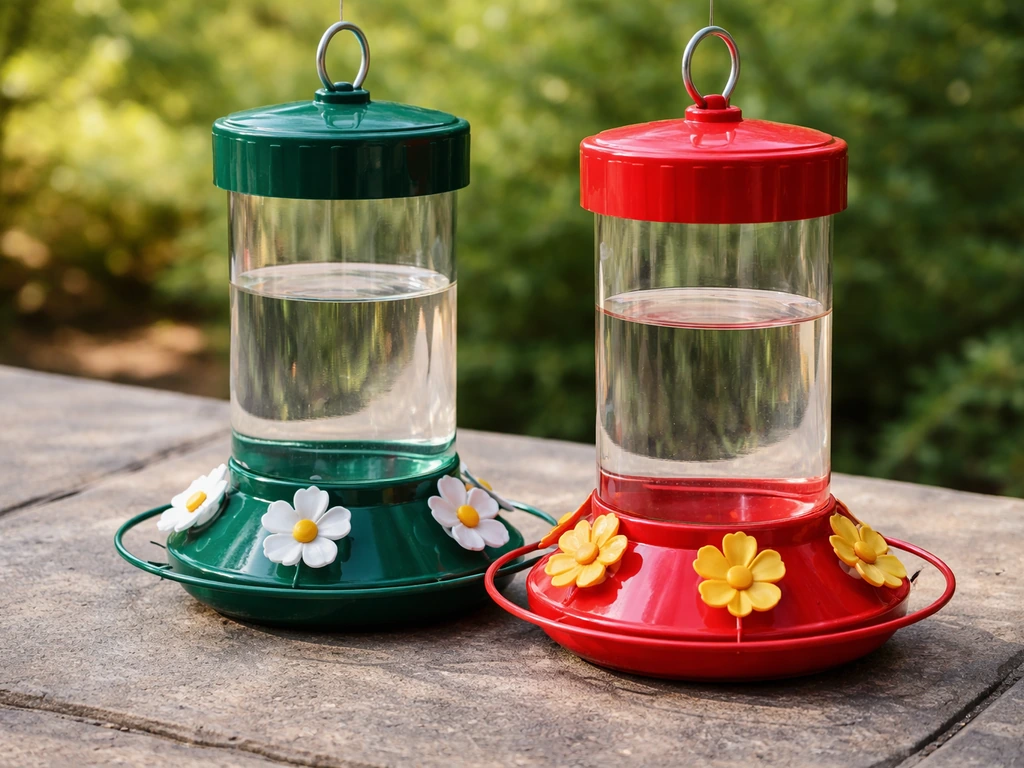
Different feeder types interact with color in different ways, so the guidance shifts depending on what style you're running.
Traditional tube and hopper feeders
These are where feeder body color matters most because the whole exterior is visible from a distance. Green, silver, or natural wood finishes are your best bets. For a finch tube specifically, yellow or bright green tends to perform well because it mimics the color environment goldfinches are already keyed into. If you're looking to paint or refinish a wooden hopper feeder, exterior-grade non-toxic paints in green or gray are the practical choice. There's a whole set of considerations around which paints are actually safe for birds, including lead-free and solvent-free formulas, which is worth looking into separately.
Hummingbird feeders
For hummingbird feeders, concentrate color on the ports, flowers, and accent rings rather than the reservoir. Red and orange on the ports are what actually trigger the hummingbird's feeding response, because those features mimic the tubular flowers they feed from naturally. Most manufacturer designs already do this correctly. A clear or green reservoir body is fine, and in fact beneficial because it lets you monitor nectar level and color without removing the feeder. Avoid adding red dye to the nectar itself: the feeder's red accents do the job without dye, and there's no reason to introduce unnecessary coloring to the food.
Suet feeders and log feeders for woodpeckers
Wire suet cages and log-style feeders typically come in natural metal or wood tones, and that's ideal. Woodpeckers are bark-and-trunk foragers by instinct. A natural wood or black wire cage fits visually into their foraging cues. Painting a suet cage a bright contrasting color doesn't help and may actually slow woodpecker acceptance.
Smart and AI camera feeders
This feeder category adds a wrinkle. Smart feeders with transparent seed containers and built-in cameras, like several of the AI-powered models on the market, often feature dark housings with clear viewing windows. For these, the seed visibility through the transparent container matters as much as exterior color, because birds key in on the seed itself as a visual cue. A clear reservoir that shows a full load of sunflower or nyjer seed can act as its own attractor regardless of what color the housing is. For smart feeders, prioritize placement and lighting angle (for the camera's benefit and the birds' visibility) over trying to optimize a specific exterior color.
Platform and ground feeders
For low, open platform feeders targeting sparrows, doves, and ground-feeding species, color is largely secondary to placement and seed load. These birds are not hunting a visual target in the same way a hummingbird hunts a flower. Natural wood tones or dull earth colors work well and don't attract predator attention the way bright red or yellow would at ground level.
The honest summary: green and silver are your safest broad-spectrum choices, red and orange are essential for hummingbirds and helpful for cardinals, and natural wood tones hold their own across almost every feeder style. Choosing the best red cardinal bird feeder often comes down to pairing a true red accent with the right placement and bird-appropriate design. Color sets the stage, but the right seed, a clean feeder, and smart placement are what actually keep birds coming back.
FAQ
Is green always the best color if I want more than one species in my yard?
Green is the safest broad choice, but if your yard is heavily shaded or you rely on a bright sky background, silver or pale gray often performs just as well or better because contrast stays stronger as light levels change.
Do birds notice the color of the feeder ports, or is body color enough?
Ports matter more for hummingbird feeders and less for most seed feeders. For hummingbirds, red or orange at the feeding ports, flowers, and accent rings is the key visual cue, while the reservoir color is secondary.
Should I use a red or orange feeder if I do not see cardinals yet?
It can help, but don’t assume a color change will override access and food. Cardinals also respond strongly to the right seed offerings, and they typically prefer feeders placed with nearby cover, so combine red accents with placement that gives quick escape routes.
Will UV-reflective finishes really make a difference, and how can I tell?
Birds can perceive ultraviolet, so a finish that looks “flat” or slightly different to you may reflect more UV to them. The practical approach is to test in your yard: observe which colors draw visits over several days in the same location and lighting, rather than relying on appearance alone.
Does feeder color matter during winter when the background is snow or bare branches?
Yes, but the effect often goes the other way than you expect. On snowy backgrounds, many darker colors stand out clearly, while in bare-branch winter light, lighter neutrals like silver or pale green can remain visible without becoming glare-prone in sun breaks.
I live in an area with lots of hawks. Should I switch to a darker feeder color even if birds seem to like bright colors?
Often, yes. Bright feeders increase visibility to predators too. Choosing subdued colors like green, gray, or natural wood can reduce exposure, but also focus on placement near cover and squirrel-proofing so birds can approach safely.
Is glossy white a good choice in full sun?
Glossy white can create glare that interferes with where birds land and feed, especially when the feeder’s ports or perches catch direct angles of light. If you want a light color, opt for matte silver, gray, or pale green and position it so birds face it without constant glare.
If I want finches, should I avoid green and go with yellow or bright green only?
For finch tube feeders, yellow or bright green often does well because it aligns with what goldfinches already key into. That said, if your yard background is dark evergreens, a greener feeder may disappear, so contrast (like pale green or silver against foliage) can be more important than the hue alone.
For smart feeders with clear seed windows, does feeder color still matter?
It matters less than seed visibility. With transparent containers, birds often respond to the visible fill level of seed, so the angle of the light and consistent placement can outperform swapping the exterior housing color.
Can I paint a feeder any color if I use “non-toxic” paint?
Non-toxic is the start, but also look for bird-safe, lead-free, solvent-free exterior-grade options and ensure the finish fully cures before use. If paint smell persists or the surface sheds, skip it and use products designed for outdoor food-contact or wildlife use.
Does feeder color change hummingbird behavior if I don’t add red dye?
In most cases, you do not need red dye. Red or orange accents on the ports and surrounding features are designed to mimic flower cues, and adding dye can be unnecessary and adds another variable to nectar quality and safety.
How long should I test a feeder color before concluding it is “not working”?
Give it several days at the same location and with the same seed or nectar recipe. Birds use consistent routes and timing, so a quick one-day result can reflect weather or movement patterns rather than true preference for color.
Next Article
Best DIY Bird Feeders: 7 Easy Homemade Designs
7 easy DIY bird feeders with materials, steps, and placement tips for finches, hummingbirds, cardinals, woodpeckers