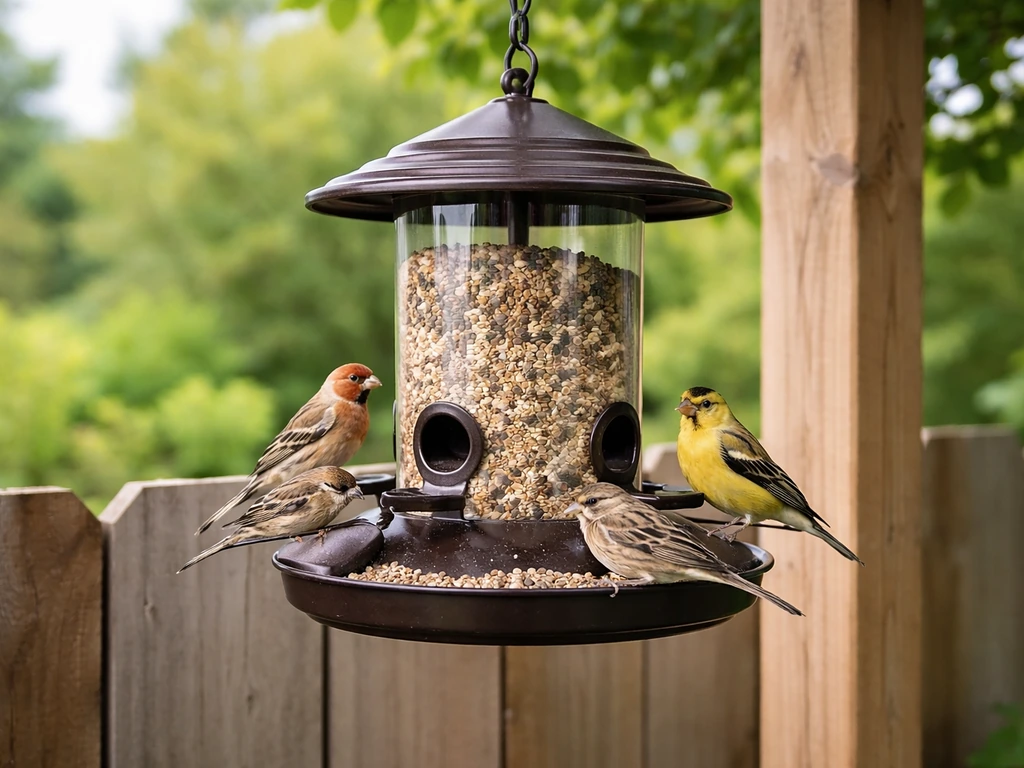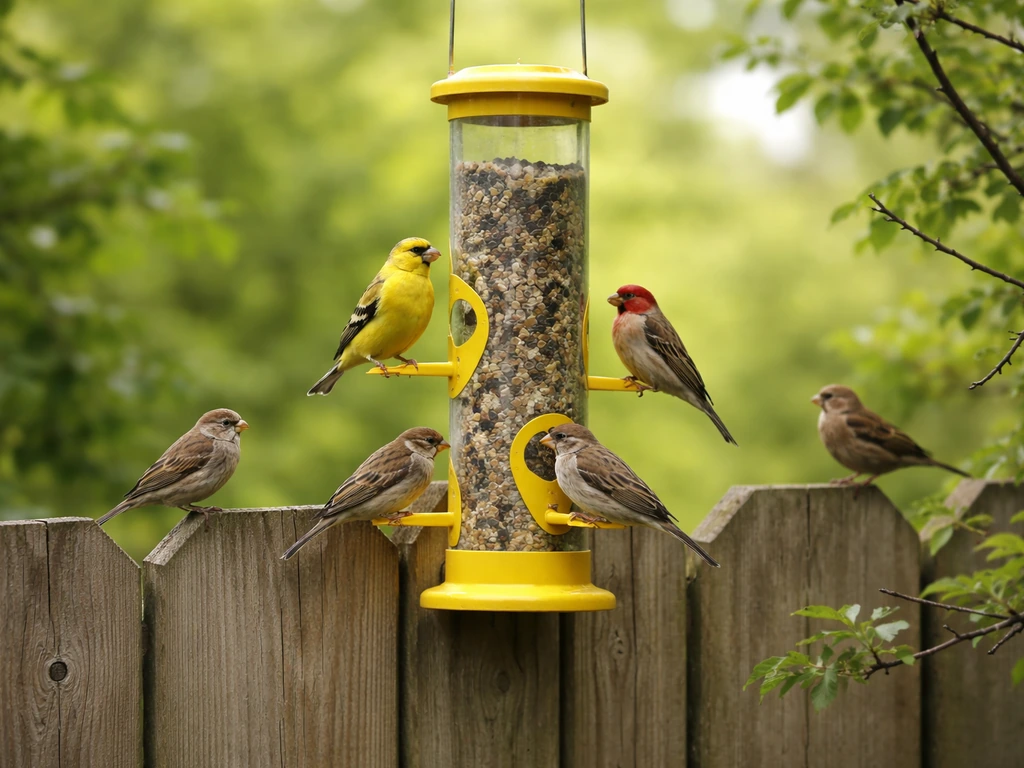
The best type of bird feeder for most backyard setups is a tube feeder for general seed and a dedicated suet cage if you want woodpeckers. Those two cover the widest range of species with the least mess and the easiest maintenance. Those two cover the widest range of species with the least mess and the easiest maintenance two types of bird feeders. If hummingbirds are your priority, add a nectar bottle feeder with bee guards.
Best Type of Bird Feeders: Choose by Species and Setup
Marcus Holloway
26 Apr 2026
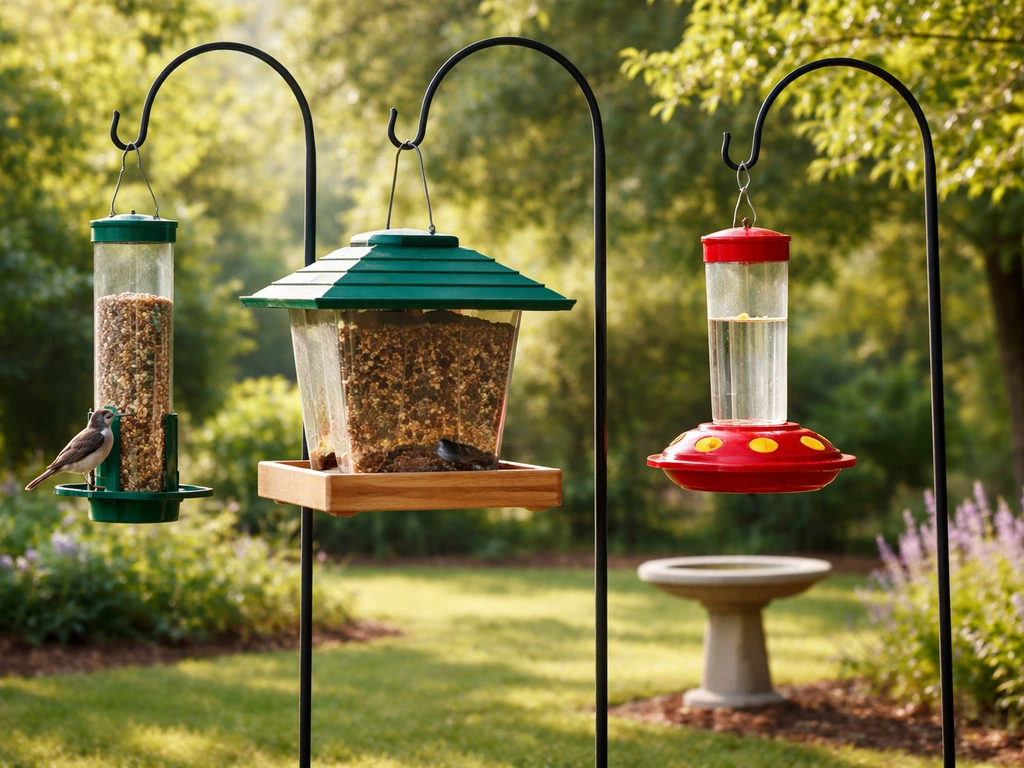
If you want to attract everything at once, a hopper or platform feeder works as a catch-all, though you'll deal with more waste and more squirrel pressure. The right answer depends on which birds you're targeting, how much upkeep you're willing to do, and what kind of backyard challenges (squirrels, weather, grackles) you're already dealing with.
Choosing good bird feeders also starts with matching the feeder type to the birds you want to attract and then planning for maintenance and common backyard challenges. To dial in the best style bird feeder, start by matching the feeder type to the species you want to attract and your tolerance for cleaning and refilling.
To dial in the best looking bird feeders, start by matching the feeder type to the species you want to attract and your tolerance for cleaning and refilling.
How to choose the best feeder type for your birds
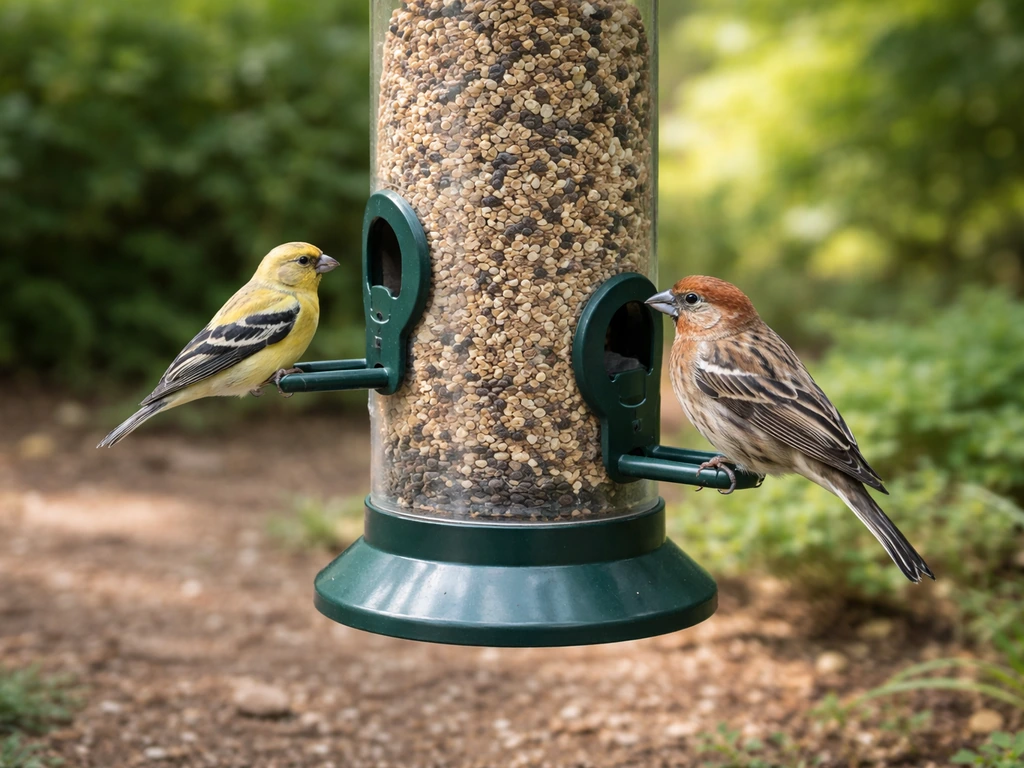
Start with the bird, not the feeder. That's the single best decision rule I can give you. Every feeder type evolved around a specific feeding behavior, and when you match the feeder to the bird's natural habits, you get more visitors, less waste, and fewer problems. A finch perching upside down to pick at nyjer is very different from a woodpecker clinging to a vertical surface to chisel out suet, and a hummingbird hovering at a port is different from both.
After species, consider your constraints. How much time do you have to clean and refill? How exposed is your yard to rain and direct sun? Do squirrels or large nuisance birds like starlings and grackles already raid your feeders? Are you placing the feeder near windows? These questions narrow your options quickly, and I'll walk through each of them in the sections below.
One practical rule worth memorizing: pair the right feeder with the right food. A hopper feeder full of nyjer is a mismatch. A tube feeder with tiny ports full of sunflower chips is too. Getting the feeder-food pairing right is as important as picking the style itself.
- Identify which 2 to 3 species you most want to attract before buying anything
- Match the feeder design to those birds' natural feeding posture (perching, clinging, hovering)
- Choose the food type those species prefer, then pick a feeder built for that food
- Factor in your local squirrel pressure, weather exposure, and how close you'll be to windows
- Plan for cleaning from day one: tube feeders need a bottle brush, suet cages rinse easily, hummingbird feeders need hot water and frequent attention
Feeder type showdown: tube, hopper, tray, suet, and nectar
Here's an honest comparison of the main feeder types. There's no single winner because each one is optimized for something different. What matters is knowing what each does well and where it falls short.
| Feeder Type | Best For | Seed/Food Used | Biggest Strength | Biggest Weakness |
|---|---|---|---|---|
| Tube (standard) | Chickadees, titmice, finches, small songbirds | Sunflower chips, safflower, mixed seed | Keeps seed dry, deters larger birds | Needs regular cleaning; ports can clog |
| Tube (nyjer/thistle) | Finches (goldfinch, siskin, redpoll) | Nyjer (thistle) seed | Highly targeted to finches, very little waste | Requires tiny ports; seed can mold if wet |
| Hopper | Cardinals, jays, grosbeaks, mixed species | Sunflower seeds, mixed seed | High capacity, less frequent refilling | More surface area for mold and bacteria |
| Tray/Platform | Ground-feeding species: sparrows, juncos, doves, cardinals | Any seed, fruit, mealworms | Accepts almost any food, very visible | No weather protection, most squirrel-prone |
| Suet Cage | Woodpeckers, nuthatches, wrens, starlings (downside) | Suet cakes, suet plugs | Targets clinging birds effectively | Starlings and grackles can dominate |
| Nectar/Hummingbird | Hummingbirds, occasionally orioles | 1:4 sugar-water solution | Only feeder that works for hummingbirds | Needs cleaning every 2 to 5 days; mold risk |
Tube feeders are my everyday workhorses. A standard tube with sunflower chips pulls in chickadees, titmice, nuthatches, and finches consistently. The nyjer-specific tube variant, with its smaller ports designed specifically to prevent the tiny seed from spilling out, is a must-have if goldfinches are common in your area. Hopper feeders hold more seed and work well for cardinals and jays, but the enclosed seed compartment can become a humidity trap, so build quality and drainage matter a lot.
Platform feeders are the most democratic option but also the most chaotic. Every bird can use one, every squirrel will use one, and rain hits the seed directly. I use a platform as a supplemental feeder for mealworms in spring rather than a primary seed station. Suet cages are simple, durable, and surprisingly effective at luring woodpeckers, but if starlings are a problem in your yard, a caged suet feeder with wire mesh that only smaller birds can reach through is worth the upgrade. Hummingbird feeders are their own category entirely and non-negotiable if you want hummingbirds, but the maintenance commitment is real.
Which feeder type works best for specific species
Finches
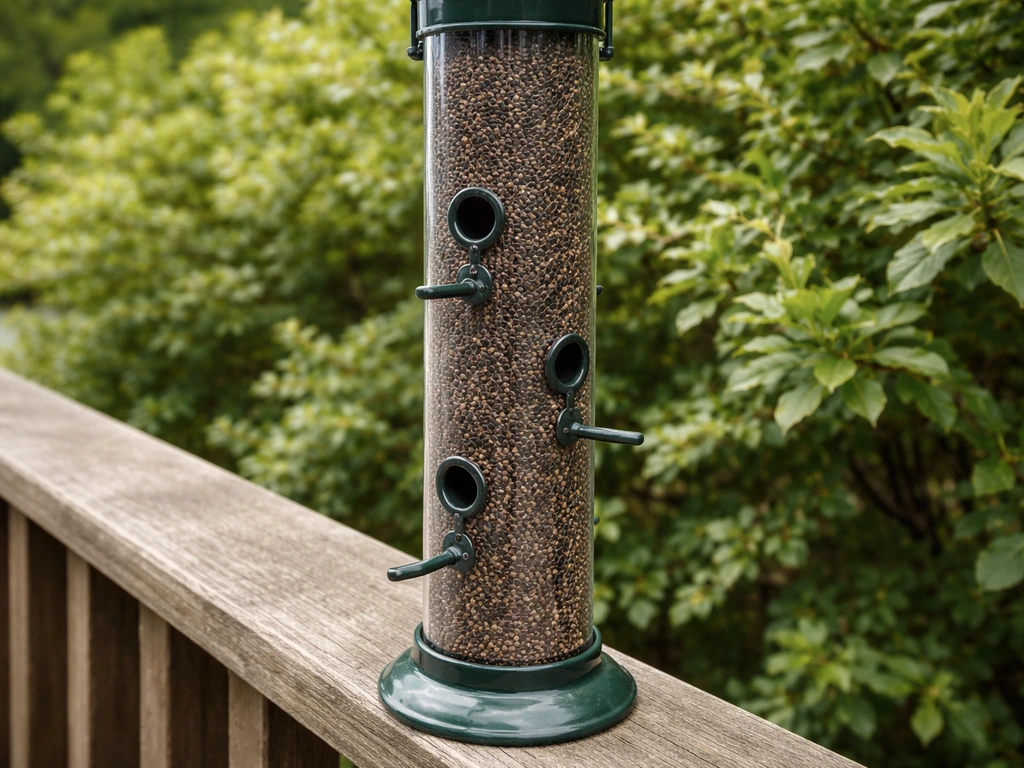
For goldfinches, house finches, siskins, and redpolls, a nyjer tube feeder is the clear answer. The key detail is port size: the openings need to be small enough to meter out nyjer seed without letting it pour out and go to waste. Models with ten or more perches, like some finch-specific diffuser tube designs, let more birds feed simultaneously without territorial standoffs. Short perches under the ports are fine for finches, which are comfortable perching in any position.
Hummingbirds
Nectar bottle feeders with red flower-shaped ports and built-in bee guards are the standard, and they work. The bee guards (small mesh screens over the ports) help keep insects away from the sugar water, which matters because once bees find a feeder they can take it over completely. Mix your nectar at a 1:4 ratio of plain white sugar to water, no red dye needed. The bigger maintenance issue is spoilage: in warm weather, nectar can go bad in as little as two days, so plan to clean and refill every two to five days depending on your temperatures. Hummingbirds are also territorial, so spacing multiple feeders out of sight of each other helps more birds feed without constant chasing.
Cardinals
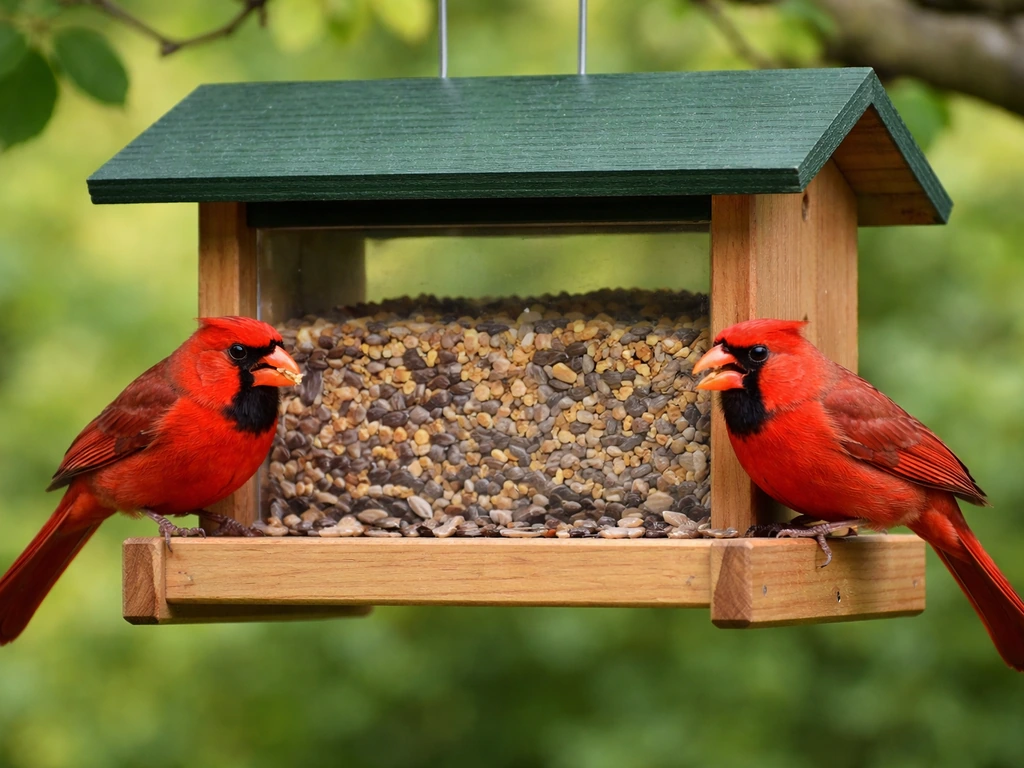
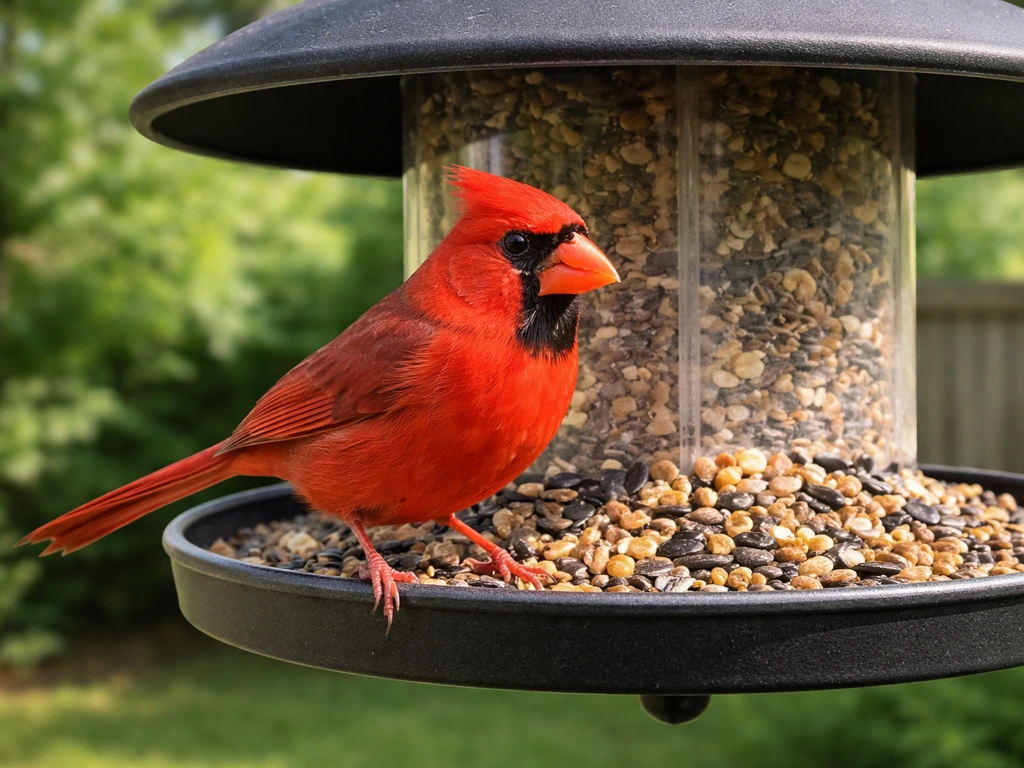
Cardinals are larger birds with heavy beaks, and they prefer to perch comfortably while eating rather than cling to a small port. A hopper feeder or a platform feeder loaded with sunflower seeds or safflower is ideal. Safflower is worth trying specifically for cardinals because squirrels and many nuisance birds (like grackles and starlings) tend to avoid it while cardinals eat it readily.
Woodpeckers
Suet cages are the go-to, and for good reason. Woodpeckers are natural clingers, and a vertical suet cage mimics how they feed on tree bark. Caged suet feeders with wire mesh around the exterior can allow woodpeckers to reach through with their long tongues while limiting starling access. A downward-facing suet cage (where the bird has to cling underneath to reach the suet) is even more effective at discouraging starlings, which can't feed in that position comfortably. Tube feeders with sunflower seeds also attract woodpeckers, particularly downy and hairy woodpeckers.
Sparrows, juncos, doves, and ground feeders
These birds naturally forage on the ground, so a low platform feeder or even a dedicated ground tray works better than a hanging tube. Millet is a top choice for sparrows and juncos. The trade-off is that ground-level feeding means more exposure to cats and other ground predators, so placement matters more here than with any other feeder type.
Smart bird feeder cameras and AI feeders: worth it or a gimmick?
Smart feeders with built-in cameras and AI species identification have gotten genuinely useful over the past couple of years, but they come with real trade-offs you should know about before spending the money. Models like the Birdfy and FeatherSnap offer 1080p video capture, motion-activated recording, Wi-Fi connectivity, and AI that can theoretically identify thousands of species. Birdfy markets recognition of over 6,000 bird species, though their own testing acknowledges that accuracy still needs improvement. FeatherSnap's motion detection typically works within a few feet of the lens, which is fine for a feeder but worth knowing if you expect wide-angle coverage.
The subscription question is the biggest practical issue. FeatherSnap requires a paid subscription for key features including species ID. Birdfy offers some free motion alerts and a limited cloud storage window, with SD card storage as an alternative. Before buying any smart feeder, figure out what features are free versus gated behind a monthly fee, and decide whether the ongoing cost is worth it for how you'll actually use the app.
So who should get a smart feeder? If you travel frequently and want remote alerts when birds visit, or if you're genuinely into learning species identification and want automatic logging of what shows up in your yard, a smart feeder adds real value. FeatherSnap even has a solar-powered roof option that reduces battery concerns. If you're mainly focused on attracting specific birds and don't care about video or identification, a traditional feeder of the right type will outperform any smart feeder on the fundamentals: capacity, cleaning ease, and species targeting.
Weather resistance and durability: what materials actually hold up
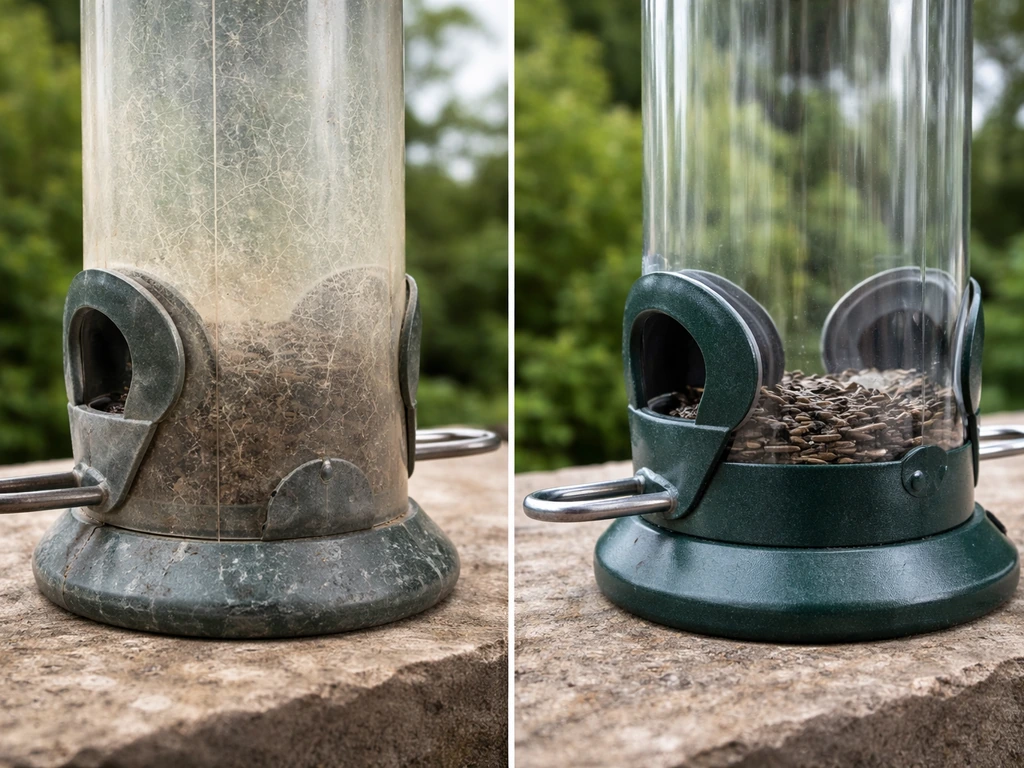
Weather is where cheap feeders fail fast. Thin plastic cracks after a winter or two, wooden hoppers absorb moisture and rot if the wood isn't treated or sealed, and feeders without drainage holes turn into petri dishes after rain. Here's how the main materials stack up in practice.
| Material | Durability | Weather Resistance | Cleaning Ease | Best For |
|---|---|---|---|---|
| Metal (powder-coated steel, aluminum) | Excellent (5+ years) | Very good; won't crack or warp | Easy to wipe down | Suet cages, squirrel-resistant feeders |
| Heavy-duty polycarbonate/acrylic | Good (3 to 5 years) | Good; UV-resistant grades last longer | Dishwasher-safe in many models | Tube feeders, hopper windows |
| Recycled plastic (HDPE) | Excellent (5 to 10 years) | Excellent; UV stable, won't rot | Easy; hose or dishwasher | Hoppers, platform feeders |
| Cedar/teak wood | Moderate (2 to 4 years with care) | Moderate; needs annual sealing | Harder; scrubbing required | Hopper-style, decorative feeders |
| Standard PVC/cheap plastic | Poor (1 to 2 years) | Poor; UV degrades quickly | OK short-term | Avoid for outdoor year-round use |
A roof or cover makes a significant difference for any feeder holding seed. Even a modest overhang keeps the top ports and seed chamber drier, which directly reduces mold growth and extends the time between refills. For hummingbird feeders, a shaded location (out of direct afternoon sun) slows nectar spoilage more than any design feature. Feeders hanging in full sun will need refreshing more frequently, sometimes every two days in summer heat.
Placement height also matters beyond just aesthetics. The general guidance is to hang feeders at least five feet off the ground to keep them out of easy reach of cats and other ground predators. Position them at least ten feet from trees or dense shrubs so birds have open space to spot and escape aerial predators, but not so far that there's no escape cover nearby at all.
Window collisions are a real concern tied directly to feeder placement. Placing a feeder closer than three feet to a window actually reduces fatal collision risk because birds don't have room to build up dangerous speed. The danger zone is feeders placed roughly four to thirty feet away, where birds can reach flight speed before hitting glass. If you can't get closer than three feet, use window decals or film on the glass to break up the reflection.
Squirrel-proofing and predator management built into feeder design
Squirrels will find your feeder. That's not pessimism, it's just what happens. The good news is that the feeder type and mounting setup you choose can make squirrel access genuinely difficult, if not close to impossible. There are two main hardware strategies: weight-activated feeders and pole-mounted baffles.
Weight-activated feeders have ports that close when a heavier animal (a squirrel, or a large bird like a grackle) lands on the perch ring. The threshold weight is set for small songbirds, so chickadees and finches can feed freely while a squirrel's weight triggers the closure. These work well and hold up over time, though they do cost more upfront. A pole with a baffle (a smooth dome or cylinder that squirrels can't grip around) is the other reliable approach, and it's effective for any feeder type you already own. Combine a pole, a quality baffle, and placement at least eight feet from any fence, tree, or launch point a squirrel can use, and you've dramatically reduced the problem.
For nuisance birds, wire caged feeders are the best built-in design solution. A cage surrounding a tube or suet feeder lets small birds slip through the mesh while physically blocking starlings, grackles, and other large species. For suet specifically, a downward-opening cage (where the suet is on the underside) exploits the fact that woodpeckers and nuthatches are comfortable clinging upside down while starlings generally aren't. It's a simple design tweak that makes a real difference.
Safflower seed in hoppers and tube feeders is another passive deterrent worth knowing about. Most squirrels dislike the bitter taste of safflower and will ignore a feeder stocked with it, while cardinals, chickadees, and house finches eat it without complaint. It won't solve every squirrel problem, but it's a useful layer in your overall strategy.
Your quick buying checklist and next steps
Before you buy, run through this checklist. It takes about two minutes and will save you from buying the wrong feeder for your situation.
- Pick your target species first: finches point you to nyjer tubes, hummingbirds to nectar feeders, woodpeckers to suet cages, cardinals to hoppers, mixed species to a combination of tube and hopper
- Assess your squirrel pressure: if squirrels are already a problem, budget for a weight-activated feeder or a pole-and-baffle setup from the start rather than retrofitting later
- Check your window situation: measure the distance from your planned feeder spot to the nearest window; aim for under three feet or over thirty feet to minimize collision risk
- Choose your material based on your climate: go recycled plastic or powder-coated metal for year-round outdoor exposure; avoid untreated wood or standard PVC if you're in a wet or high-UV environment
- Plan your cleaning routine before you commit: hummingbird feeders need attention every two to five days; seed feeders need a bleach-solution wash every two weeks; suet cages are the easiest to maintain
- Decide on smart features only if you'll actually use them: camera feeders with AI ID are genuinely useful for remote monitoring and species logging, but check subscription costs before buying
- Set your mounting height at five feet or above off the ground, at least ten feet from trees or large shrubs, and in a spot you can actually see from inside your home
If you want a single starter setup that covers the most ground: mount a quality tube feeder with sunflower chips on a pole with a squirrel baffle, add a suet cage on the same pole system for woodpeckers, and if hummingbirds are in your region, hang a nectar feeder with bee guards in a shaded spot nearby.
With the right setup, you can choose the best song bird feeders for the species you want while keeping mess, waste, and pests under control. That three-feeder combination attracts the widest variety of birds, manages squirrel pressure reasonably well, and keeps cleaning manageable. To help [reduce the spread of harmful bacteria, mold, and disease](https://www. petmd.
com/bird/how-clean-bird-feeder), PetMD recommends disinfecting bird feeders with a bleach solution made with 9 parts water to 1 part bleach. Choosing good bird feeders is about matching the design to the birds you want, then keeping up with clean refills and smart placement.
From there, you can add a nyjer tube if finches are heavy in your area or upgrade to a smart camera feeder once you know which species are regularly visiting and you want to track them more closely.
The feeder type question ties directly into how you think about feeder design overall. If you're comparing specific styles within a category, or want to go deeper on what makes one design better than another for aesthetics and function, that's worth exploring separately. If you want more concrete ideas on the specific products to buy, these best bird feeder designs are a helpful next comparison. These best style bird feeder picks help you choose a setup that looks right and supports the right species. The core takeaway here: get the species match right first, build in squirrel protection from the start, and don't underestimate how much placement and maintenance affect your results.
FAQ
What is the best type of bird feeders if I want one setup that attracts the most different birds?
For the widest “works for most people” coverage, choose one seed tube feeder plus one suet cage, then add nectar only if hummingbirds are likely in your area. This combination targets the most common feeder birds while keeping cleaning simple, and it avoids the extra waste you get with platform or hopper setups.
Which feeder type works best if squirrels are the biggest problem in my yard?
If your main issue is squirrels, start with a tube feeder mounted on a proper baffle or with a weight-activated design, then add suet in a caged version. Hopper and platform feeders are usually the hardest to “squirrel-proof” because seed is exposed and easy to grab from multiple angles.
Can I run a hummingbird feeder alongside my seed feeders without dealing with constant maintenance?
Yes, but only if you can keep up with spoilage. In hot weather, nectar can need refilling every two days, so either place the feeder in shade and commit to a tight cleaning schedule, or choose seed feeders for birds that tolerate cooler temperatures and rely on nectar only when you can maintain it.
What’s a common mistake when people buy feeders, even if they pick the right feeder type?
For spring and summer, avoid buying a feeder-food combination that forces you to dump and scrub often. A nyjer-specific tube for finches and a sunflower tube for generalists typically stay cleaner than hoppers or platforms because seed is metered and less exposed to rain.
How do I avoid wasting seed if I buy a finch or nyjer feeder? (Port size confusion)
Mix-ups happen when the port size and seed size do not match. Nyjer needs small ports to meter properly, and sunflower chips are usually too large for finch tubes designed for nyjer. Use nyjer tube feeders only for nyjer, and sunflower tube feeders only for sunflower chips to prevent mess and waste.
What feeder setup attracts more hummingbirds, one feeder or multiple feeders?
Use multiple feeders rather than one “big” one, but spacing matters for hummingbirds. Place nectar feeders far enough apart that territorial birds cannot defend the whole set, and keep each feeder shaded if possible so you can extend cleaning intervals.
What changes should I make if starlings or grackles keep dominating my feeders?
If you have nuisance starlings, prioritize caged suet with the correct orientation (downward-facing cages are especially effective) and consider a caged tube design if you also struggle with raiding seed tubes. Open platform and hopper feeders are more inviting because they offer easy access and direct takeoff opportunities.
Is a low platform or ground tray a good idea for sparrows and juncos if I have pets or cats nearby?
Avoid using ground trays unless you can place them in a spot that is difficult for cats to ambush. If you do use a low tray, put it near dense cover for birds’ escape but not so close to hiding spots for predators, and expect more frequent seed removal from rain and droppings.
My feeder is near a window, how do I choose the safest placement height and distance?
For indoor/outdoor window safety, the closest “safer” strategy is positioning the feeder within about three feet of the glass, then adding decals or film if you cannot reach that distance. If the feeder sits around four to thirty feet away, birds may build flight speed before impact, so relocation is often the highest-impact fix.
Do smart feeders reduce maintenance, or are they mostly about identification?
Plan for food-storage and cleaning time. If you travel or hate weekly scrubbing, choose feeders that meter seed and reduce soaking, like tubes and caged suet, and use modest quantities so you refill before spoilage. Smart feeders add convenience only when you already want alerts or identification, not for saving maintenance effort on their own.
If I buy a smart feeder, what feature should I verify before spending money?
Look for features that match your expected camera and access needs. Motion detection typically works best within a few feet of the lens, so if you expect wide-angle coverage, choose a model with coverage you can confirm. Also decide whether you are willing to pay ongoing subscription fees for species ID.
What feeder type is most forgiving in rainy or very sunny weather?
If you cannot provide consistent cleaning, prioritize deterrence and shelf-stable foods. Seed tubes and caged suet generally tolerate less frequent attention than nectar or open platforms after storms. For weather exposure, choose feeders with good drainage and a roof or overhang so rain does not turn the feeder into a mold source.