If you want Northern Cardinals visiting your yard reliably, the short answer is this: get a hopper or platform feeder, fill it with black-oil sunflower seeds, hang or mount it 5 to 8 feet off the ground in a spot with nearby shrub cover, and make sure squirrels can't reach it. That setup works. Everything below explains exactly why, and helps you fine-tune for your specific yard, budget, and pest situation.
Best Bird Feeders for Cardinals: Types, Setup, and Tips
Marcus Holloway
23 Mar 2026
Best feeder types for cardinals: tube vs platform vs hopper
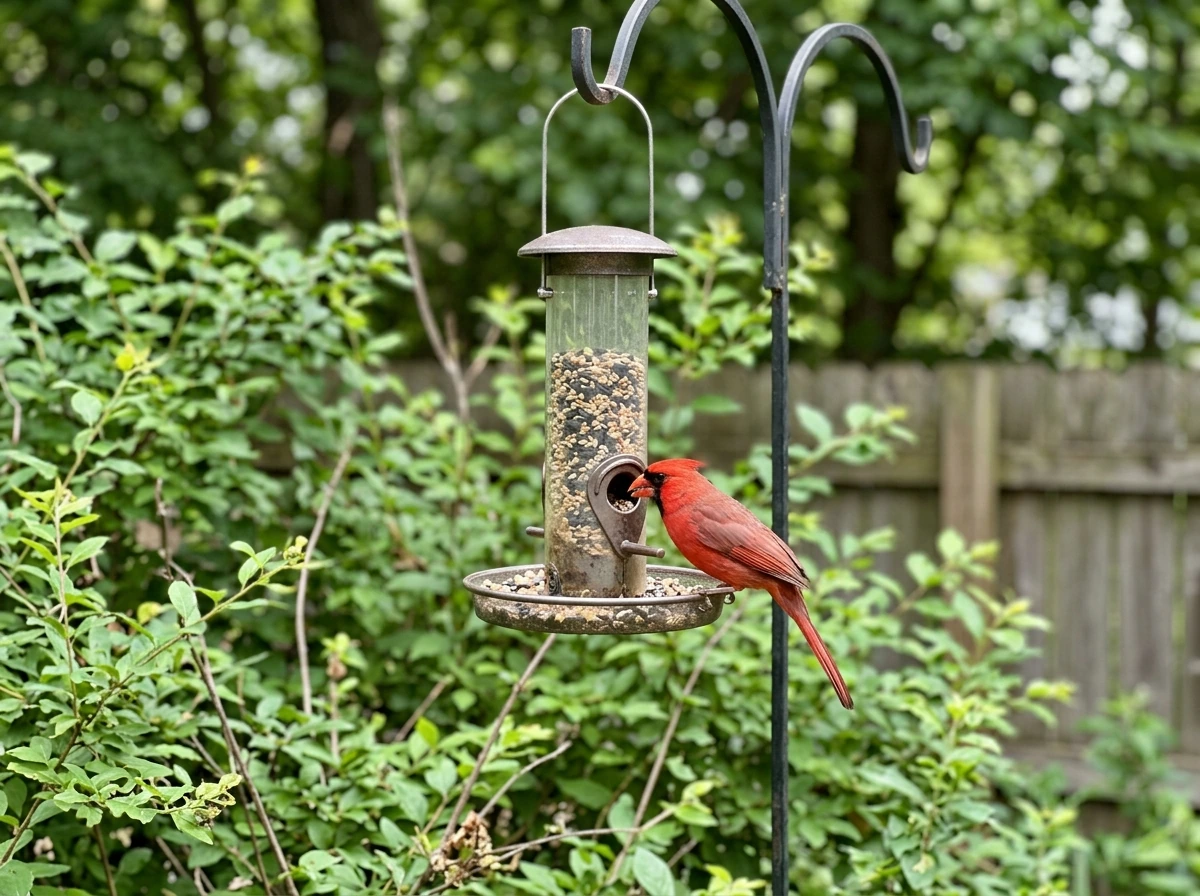
Cardinals are chunky birds with a wide body and a strong beak designed for cracking seeds. They need a stable perch and room to turn and face their food directly. That preference shapes everything about which feeder style works best for them.
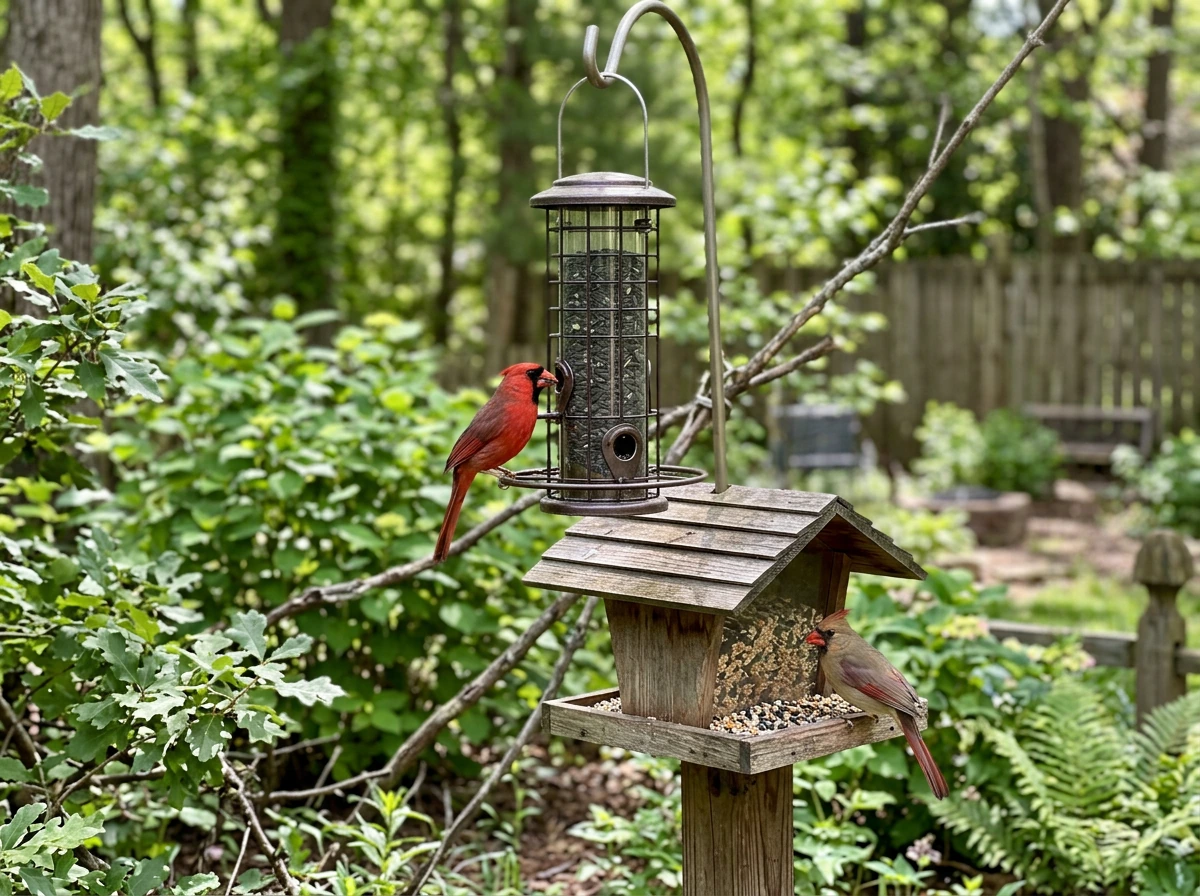
Hopper feeders are the classic choice and for good reason. They have a wide, flat tray at the base and a covered seed reservoir above it. Cardinals can land, settle in, and feed comfortably without awkward positioning. The roof protects seed from rain and snow, so the seed stays fresh longer. If you only buy one feeder for cardinals, a hopper is the most reliable pick.
Platform feeders (also called fly-through feeders) are flat, open trays, sometimes with a roof. Cardinals love the open space and the ability to approach from any direction. The downside is that seed gets wet fast without a roof, and there is no pest barrier built in. A covered platform, sometimes called a fly-through feeder, solves the moisture problem. Duncraft's Cardinal Fly Thru Feeder, for example, uses a clear roof to protect seed from snow, rain, and moisture while keeping the open feel cardinals prefer.
Tube feeders can work for cardinals, but only if you choose the right design. Standard tube feeders have small ports and short perches built for finches and chickadees. Cardinals will skip right past those. What you need is a tube feeder with large feeding ports and a tray or ring attachment at the bottom that gives cardinals a real perch. The Brome Squirrel Buster Plus is a strong example: it includes a patented Cardinal Ring System specifically designed so cardinals can perch comfortably and face the seed ports directly. Without that kind of tray or ring, tube feeders just don't fit how cardinals like to eat.
| Feeder Type | Cardinal Friendliness | Weather Protection | Squirrel Resistance | Best For |
|---|---|---|---|---|
| Hopper | Excellent | Good (roofed) | Moderate (add baffle) | Most yards, beginners |
| Platform / Fly-Through | Excellent | Poor (open) to Good (roofed) | Low | Open yards with natural cover |
| Tube with Cardinal Ring/Tray | Good | Moderate | High (squirrel-proof models) | Squirrel-heavy yards |
The recommendation: start with a hopper or covered platform feeder if squirrels aren't a serious problem, The recommendation: start with a hopper or covered platform feeder if squirrels aren't a serious problem, one of the best bird feeders for mealworms can also benefit from sturdy, squirrel-proof setups. If you want to attract more wildlife with the same setup, look for the best bird feeders for mealworms and offer them in a secure, well-placed station. If you are targeting bluebirds instead of cardinals, it helps to choose from the best bird feeders for bluebirds with the right opening size and placement best bird feeders for mealworms. best small bird feeders If squirrels are actively raiding your feeders, a tube feeder with a built-in squirrel-proof mechanism and a cardinal ring is worth the extra investment, this is often the best ground bird feeder setup for tough yards. best bird feeders for cats best small bird feeders If squirrels are actively raiding your feeders, a tube feeder with a built-in squirrel-proof mechanism and a cardinal ring is worth the extra investment, this is often the best ground bird feeder setup for tough yards. best bird feeders for cats
Top picks: best bird feeders for cardinals (outdoor)
Brome Squirrel Buster Plus (best overall tube feeder for cardinals)
This is the most cardinal-specific tube feeder on the market. The Cardinal Ring System gives cardinals a wide perch platform around the base so they can settle in and face each port naturally. The feeder holds about 5.1 pounds of seed (roughly 3 quarts), which means fewer refills. The body is UV-stabilized polycarbonate and green powder-coated aluminum, so it handles sun, rain, and cold without cracking or fading. The adjustable spring mechanism closes seed ports under a squirrel's weight, making it genuinely squirrel-proof rather than just squirrel-resistant, one of the reasons it’s considered one of the best bird feeders for hummingbirds. It also disassembles easily for cleaning, which matters a lot for feeder hygiene. Dimensions are approximately 5 by 5 by 12 inches, so it's compact enough for most pole or hook setups. best bird feeders for robins
WoodLink Audubon Squirrel-Resistant Caged Tube Feeder (best budget-friendly option)
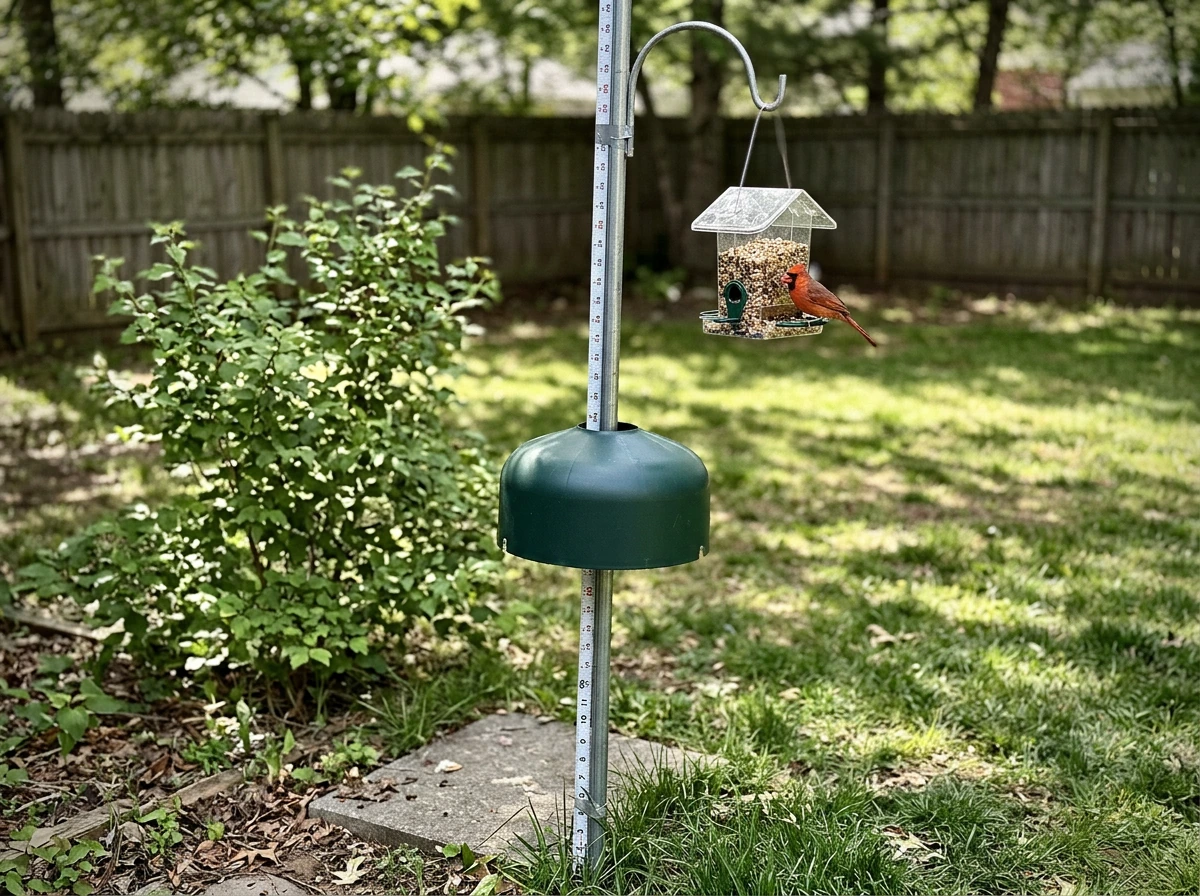
If you want squirrel resistance without spending a lot, the WoodLink caged tube feeder is a solid pick. A wire cage surrounds the clear plastic tube, which blocks adult gray squirrels and larger pest birds while letting cardinals reach in. The clear tube lets you see seed levels at a glance without opening the feeder. Capacity is 1.25 pounds of sunflower or mixed seed. It's a smaller feeder, so you'll refill it more often, but it works well hung from a hook on a balcony or shepherd's hook in a smaller yard.
Duncraft Cardinal Fly Thru Feeder (best platform-style option)
For people who want a platform-style feeder that doesn't drown seed in every rainstorm, the Duncraft Cardinal Fly Thru is a strong pick. The clear roof keeps seed dry while preserving the open, accessible feeding area cardinals prefer. The stable base prevents tipping, which is a real problem with basic open trays. This is the feeder to choose if you want something simple, visually appealing, and easy to clean.
Droll Yankees (best for long-term durability)
If you're buying a feeder you want to last a decade rather than a season, Droll Yankees feeders are worth the price. Their feeders use UV-stabilized polycarbonate and rust-proof materials specifically built to withstand sun, rain, snow, and squirrel abuse without cracking or fading. They make hopper and tube styles, so you can choose the format that fits your setup. They're a particular good investment if you live somewhere with harsh winters or intense summer heat.
What cardinals like: feed type, placement, and feeder height
The right seed
Black-oil sunflower seed is the single best thing you can put in a cardinal feeder. It's the seed cardinals prefer above everything else. After black-oil sunflower, the next best options are striped sunflower seeds and sunflower chips. Safflower is another solid choice, and it has one useful side benefit: its thicker shell is harder for some nuisance birds to crack, so it can passively reduce competition. Millet works in a pinch, and cardinals will eat cracked corn and suet, but those shouldn't be your first choice if your goal is specifically attracting cardinals.
The Minnesota DNR reports that roughly 80 to 90 percent of seed used by winter bird feeders in the region is black-oil sunflower or cardinal mixes. That's not a coincidence. It's just what works. Don't overthink the seed choice.
Feeder placement and height
Cardinals like cover. They don't typically fly out into the open, grab food, and head back in one confident pass the way some species do. They prefer to sit in nearby shrubs or low tree branches, scout the feeder, and then come in. Place your feeder within 10 to 15 feet of shrubs, dense bushes, or low tree branches. Evergreen shrubs are especially good because they provide year-round cover and windbreaks in winter, which is when cardinals need feeders most.
Height matters too. Cardinals feed at low to mid heights. A feeder mounted 5 to 8 feet off the ground is ideal. Ground feeding is also natural for cardinals, and they'll readily pick up seed that has fallen below your feeder. Some birders put a small platform directly on the ground for this reason, though ground feeders do attract more squirrels and other ground animals. If you're interested in ground feeding setups, that's worth exploring as a secondary option alongside your main elevated feeder.
Feeder color and visibility that attracts cardinals
Cardinals are visually oriented birds, and the male's bright red plumage is a signal of dominance and health. Research and practical experience both suggest that red and red-toned feeders attract cardinals more readily than neutral colors. If you're choosing between two similar feeders and one is red or has red accents, that one has an edge for cardinals.
That said, color isn't a hard rule. Cardinals will use a green, black, or brown feeder if it's in a good location and has the right seed. Visibility matters more than color in practice. A feeder that's visible from perching spots in nearby shrubs, not tucked behind dense vegetation or hidden in deep shade, is going to get found faster than a red feeder in a bad location.
If you want to maximize early visits, especially when you've just set up a new feeder, scatter a small handful of black-oil sunflower seeds on a nearby flat surface (a tree stump, a fence post, or even the ground) to create a visible seed trail that catches a cardinal's eye and draws them in. Once they've discovered the feeder, you can stop the scattered seed.
How to attract cardinals to your feeder: step-by-step setup
- Choose the right feeder. Pick a hopper, covered platform, or a tube feeder with a cardinal ring or large tray. Avoid tube feeders with tiny perches and small ports.
- Fill it with black-oil sunflower seed. This is non-negotiable if cardinals are your target. Safflower is a good secondary option, especially if you have competing birds cracking open seeds.
- Mount it at 5 to 8 feet. Use a shepherd's hook, a pole-mounted bracket, or a tree branch hook. Keep it stable so it doesn't swing wildly in wind.
- Place it near cover. Position the feeder within 10 to 15 feet of shrubs, dense bushes, or low tree branches. Cardinals want a staging area nearby.
- Mind the window distance. Place your feeder either within 3 feet of a window or more than 30 feet away. The 3 to 30 foot zone is where birds build enough speed to cause dangerous window collisions. If placing close to a window, within 3 feet is actually safer because birds don't gain enough speed to injure themselves. Research comparing 1 meter versus 5 and 10 meter distances from windows supports positioning feeders very close to windows as a collision-reduction strategy.
- Create visibility cues. Scatter a few seeds on a nearby flat surface for the first few days to help cardinals spot the feeding area.
- Be patient and consistent. Cardinals are creatures of habit. Once they find your feeder, they'll return regularly, but it can take days to weeks to get the first visit if cardinals aren't already active in your area.
- Clean the feeder regularly. Moldy or wet seed is a fast way to lose regular visitors. Wipe down feeders every 1 to 2 weeks and replace any clumped or discolored seed immediately.
- Add water nearby. A birdbath or shallow water dish placed near the feeder dramatically increases the attractiveness of your setup. Cardinals drink and bathe regularly.
If cardinals don't show up within two to three weeks, troubleshoot by checking your seed freshness first, then your feeder placement relative to cover. If there's no natural cover nearby, adding a small potted evergreen or a brush pile can make a real difference. Cardinals simply won't commit to a feeder that feels exposed.
Keeping squirrels and grackles out without chasing cardinals away
Squirrels and grackles are the two biggest threats to a cardinal feeder. Squirrels eat everything and drive cardinals off. Grackles dominate feeders in large noisy flocks and simply crowd out cardinals.
Squirrel-proofing
The most reliable squirrel solution is a weight-activated feeder like the Brome Squirrel Buster Plus. When a squirrel lands on it, the extra weight closes the seed ports automatically. Cardinals are light enough to feed without triggering the closure. This approach doesn't require any ongoing management once you've set it up.
If you have a hopper or platform feeder that isn't weight-activated, add a pole-mounted baffle below the feeder. A wide dome baffle (at least 15 to 18 inches in diameter) mounted on a smooth metal pole prevents squirrels from climbing up. The feeder also needs to be at least 10 feet away from any structure a squirrel can jump from, including fences, decks, tree branches, and rooflines. Both conditions need to be met. A baffle alone won't help if a squirrel can simply leap onto the feeder from a nearby branch.
Caged tube feeders like the WoodLink model are another good option. The cage physically blocks adult gray squirrels from reaching the seed ports while cardinals can still reach through the openings. Some caged designs also use a dome over the cage to block squirrels from landing on top.
Dealing with grackles
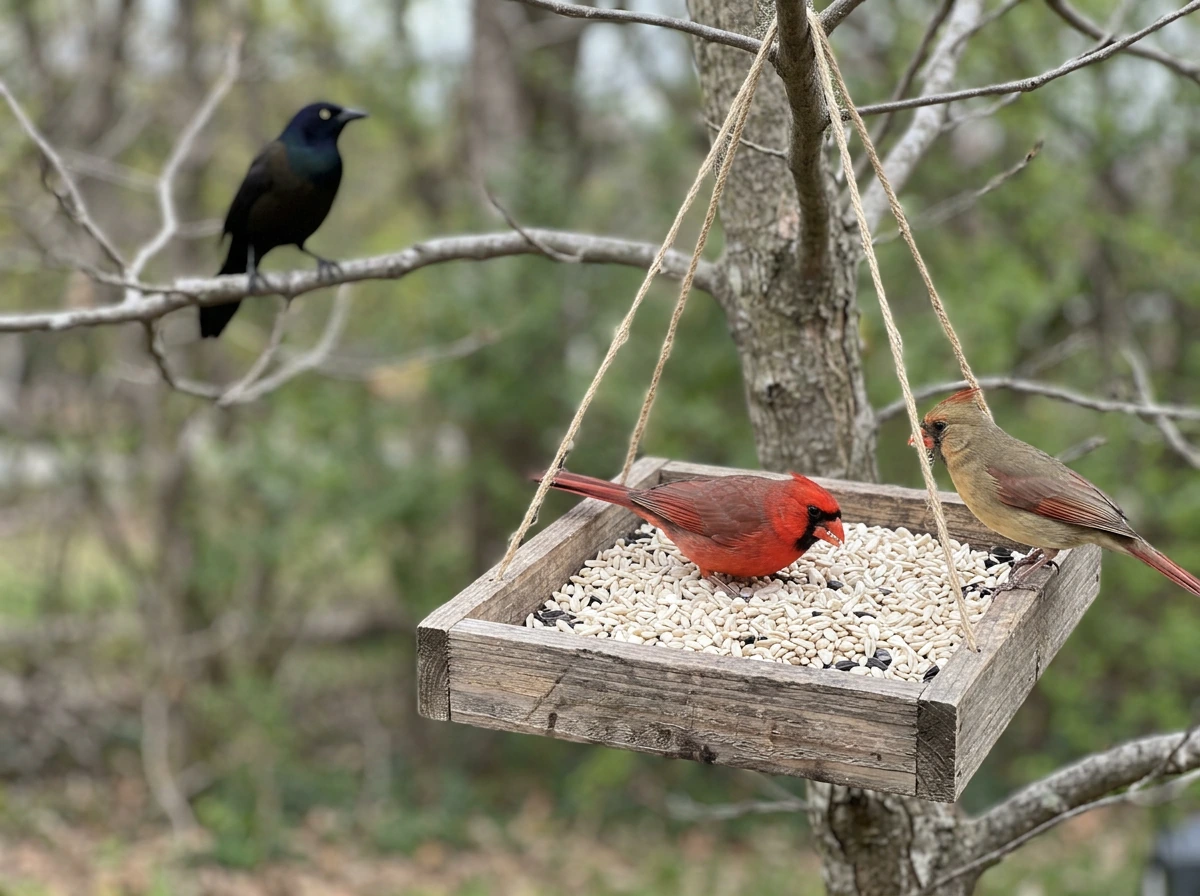
Grackles are a harder problem because they're smart and persistent. A few strategies that reduce grackle pressure without impacting cardinals: switch to safflower seed. Grackles generally avoid it, while cardinals eat it readily. The thicker shell that makes safflower less convenient for some birds to crack is particularly deterring to grackles. You can also switch from hopper and platform feeders to caged feeders. Grackles are too large to fit through the cage openings on most squirrel-resistant caged feeders. Cardinals, which are smaller, can still access the seed.
Reducing your feeding area's visibility and size during grackle migration seasons (spring and fall) can also help. Temporarily taking down open platform feeders and relying on caged feeders during those periods is a practical short-term fix. Grackles are highly seasonal and the pressure tends to ease once migration peaks pass.
Mounting options for every yard setup
How you mount your cardinal feeder matters as much as which feeder you pick. The goal is a stable, accessible setup at the right height, positioned away from collision risks and squirrel launch points.
Standard yards
A shepherd's hook or a dedicated feeder pole is the most flexible mounting option for most yards. Use a smooth metal pole (not wood, which squirrels climb easily) and add a baffle below the feeder. Place the pole in an open area but within 10 to 15 feet of shrubs or trees. Keep it at least 10 feet from any fence, deck, or overhanging branch so squirrels can't jump across.
Balconies and small spaces
For balcony setups, a railing clamp or tension-mounted hook works well. Choose a smaller feeder like the WoodLink caged tube (1.25 lb capacity) so it doesn't overwhelm the space. Make sure the feeder is secured against wind movement, because a swinging feeder discourages cardinals. Add a potted shrub or small evergreen on the balcony to give cardinals a staging perch nearby.
Near windows
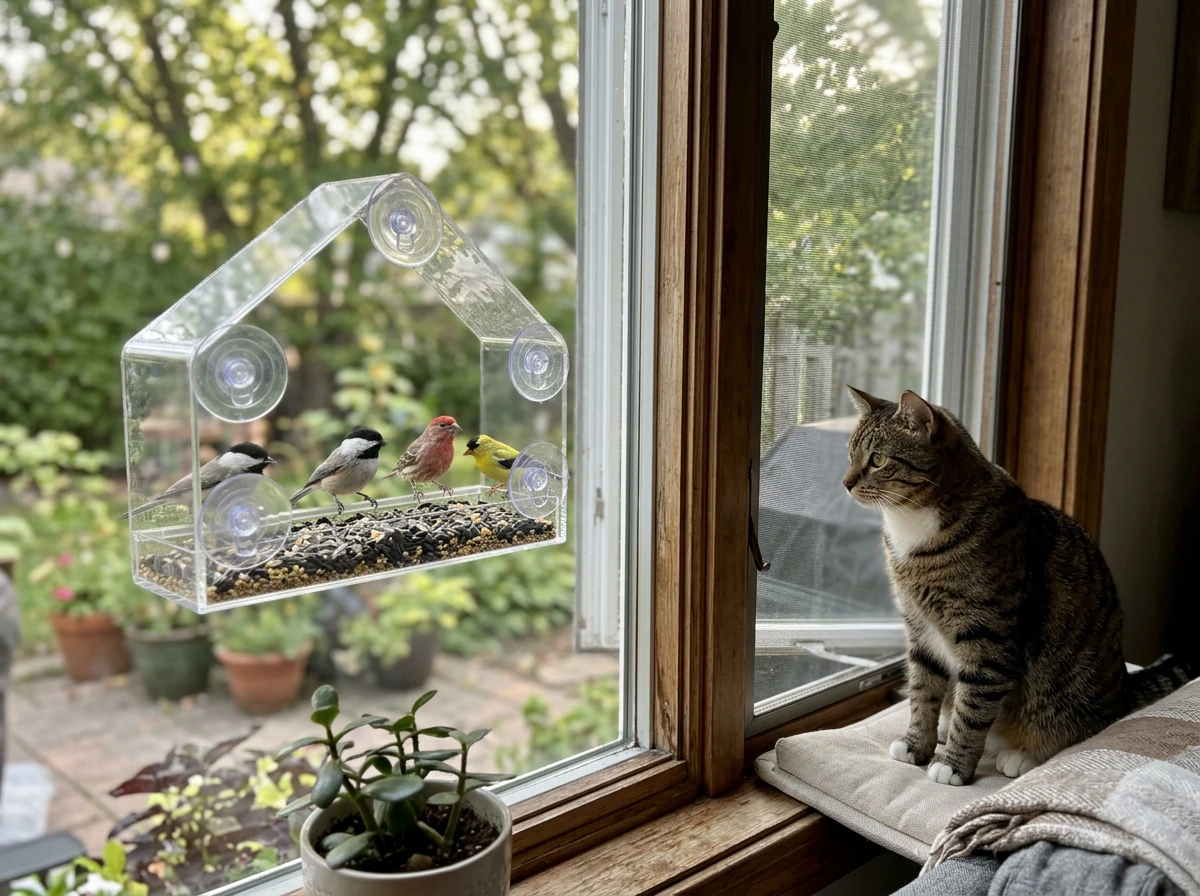
Window-mounted feeders can work, but placement distance is critical. The danger zone for window collisions is between 3 and 30 feet from the glass. Within that range, birds can build enough speed to cause fatal or injurious collisions. If you're mounting near a window, keep the feeder within 3 feet of the glass so cardinals can't build momentum. Research comparing feeder positions found fewer collisions at 1 meter from windows compared to 5 or 10 meters, supporting this close-placement strategy. If 3 feet isn't practical, move the feeder beyond 30 feet. Also add window decals or tape on the glass to break up the reflection, which is a separate but complementary collision-prevention step.
Trees and hanging spots
Hanging a feeder directly from a tree branch is easy and cardinals like the natural setting. The downside is that squirrels almost always have direct access from the trunk or nearby branches. If you go this route, add a dome squirrel baffle above the feeder (hanging style, not pole style) to block squirrels from sliding down the branch to the feeder. You can also pair this with a weight-activated feeder like the Squirrel Buster Plus for double protection.
Whatever mounting method you choose, check the setup for stability after the first windstorm. A feeder that swings and spins erratically will get abandoned by cardinals quickly. Stability and consistency are what keep them coming back.
FAQ
Can I put the best bird feeders for cardinals outside in heavy rain or snow?
Yes, but only if the feeder is protected from rain and cold winds and you use the right seed. In wet conditions, switch from uncovered platforms to a covered platform or hopper so black-oil sunflower stays dry. Also avoid mixing in lots of bread or soft scraps, it draws other birds and can foul the seed quickly.
Should I change seed types often to keep cardinals interested?
If you see cardinals feeding with no issues, keep it simple and keep the seed mostly consistent. A good rule is to do any seed changes in small steps (for example, mix 25 percent of the new seed with black-oil sunflower for a few days) so cardinals do not abandon the feeder while they sample. Sudden swaps can slow visits.
How often should I clean a cardinal feeder, especially hopper and tube types?
Clean the feeder on a schedule, not just when it looks dirty. Aim for every 1 to 2 weeks in winter and more often during wet, warm spells because mold can develop fast inside hopper reservoirs and around platform trays. Use hot water and a brush for seed residue, then let everything fully dry before refilling.
What if I want more than one feeder in my yard to attract cardinals?
Add feeders gradually. Place your main covered hopper or fly-through feeder where it gets staging cover (shrubs or low branches), then add a second option only if you notice heavy competition or gaps in access. More feeders can disperse grackles and reduce crowding, but too many open trays can also increase grackle takeovers.
Do cardinals need feeders all year, or only during winter?
In many yards, the best time is late fall through early spring, when natural food drops and cardinals commit to consistent stations. You can keep a feeder up year-round, but be ready for different pressure in summer (more other seed eaters and less urgency). If you store feeders, clean them before refilling in winter.
My feeder is stocked, but cardinals won’t stay. What’s the most common reason?
A lot of feeder issues feel like “they are not eating,” but it is often “they cannot comfortably perch.” If cardinals are landing and then leaving, prioritize a feeder with a larger, stable perch area (hopper base tray, or a tube with a real cardinal ring/tray). Also check that ports are not too small for their beaks, many standard finch tube feeders get ignored.
Can I reduce costs by using cheaper seed, or do I risk losing cardinals?
If you can choose only one, use black-oil sunflower as the primary seed and treat other seeds as supplements. Safflower can help specifically against grackles, while striped sunflower can add variety. Avoid relying on millet or cracked corn as your main seed if your goal is specifically “cardinals first.”
How long should I wait after putting up a feeder before giving up?
Cardinals often start slow after setup, but your goal is to reduce “exposure” and “foul seed.” Keep the feeder within 10 to 15 feet of shrub or evergreen cover and keep seed fresh. If you are using a tube feeder, ensure it has a perch/ring arrangement that lets them face the ports, then monitor for 2 to 3 weeks before changing everything.
Is it worth placing a ground feeder in addition to my elevated feeder?
Yes, and it can work well for cardinals if you do it carefully. Place small ground feed near cover and be prepared for increased squirrel activity. If squirrels start draining the ground pile, stop the ground scatter and rely on the elevated covered feeder plus baffles for better control.
Do weight-activated squirrel-proof feeders ever stop working properly?
If you have a weight-activated feeder, keep it level and follow the manufacturer instructions for calibration and cleaning. Waterlogged seed or loose debris can prevent smooth port closure. If cardinals seem to get blocked, remove the feeder from service briefly, clean thoroughly, and confirm the mechanism moves freely before refilling.
Will the same feeder attract cardinals and other birds like finches or hummingbirds?
For hummingbirds and other small birds, tube feeder holes often differ a lot in size and seed type, so do not assume one feeder will serve both. If you want both cardinals and smaller birds, use separate feeders and keep the cardinal feeder stocked with black-oil sunflower. This reduces seed waste and prevents seed mix-up.
What are practical ways to prevent window collisions while still feeding cardinals?
Yes, window collisions are avoidable with correct placement and visual cues. If you cannot keep the feeder within 3 feet of the glass, move it beyond 30 feet. Add decals or tape to break reflections, and keep the feeder steady so it does not swing and create unpredictable flight paths.
Next Article
Best Bird Feeders for Cats to Watch Birds Safely
Best bird feeders for cats: safe, predator-resistant options and smart feeders with mounting tips to watch birds from a