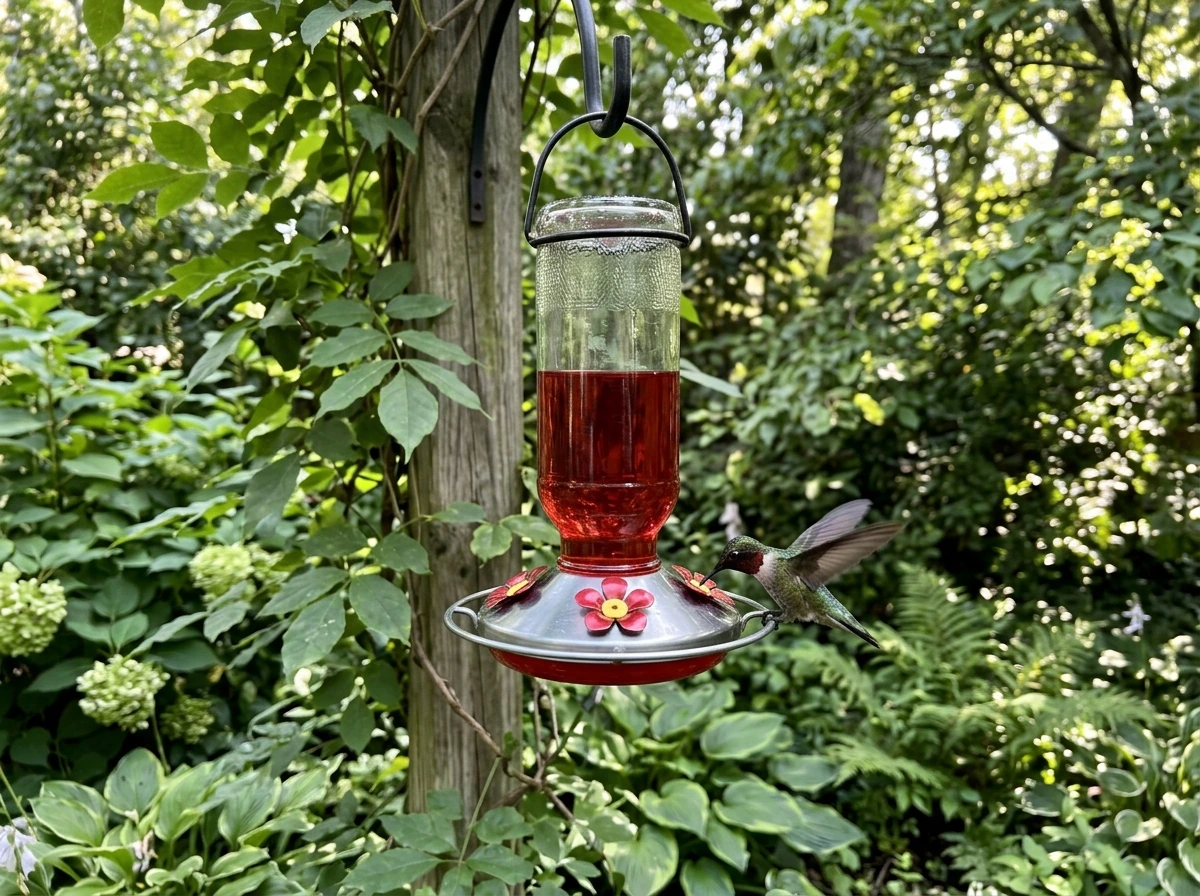
The best bird feeders for cats to watch are ones that bring birds in close and consistently, while being mounted and placed in a way that keeps cats from actually getting to them. Whether your cat is strictly indoors pressing its nose against the glass, or a supervised outdoor cat you want to keep away from the feeder zone, the goal is the same: maximum bird traffic and visibility, minimum ambush risk. The right feeder type, mounting setup, and placement strategy make all the difference. The right feeder type, mounting setup, and placement strategy make all the difference, and if you want a focused option for a specific species, you can also compare against the best bird feeders for cardinals.
Best Bird Feeders for Cats to Watch Birds Safely
Marcus Holloway
23 Mar 2026
How to choose a bird feeder that's cat-safe and cat-aware
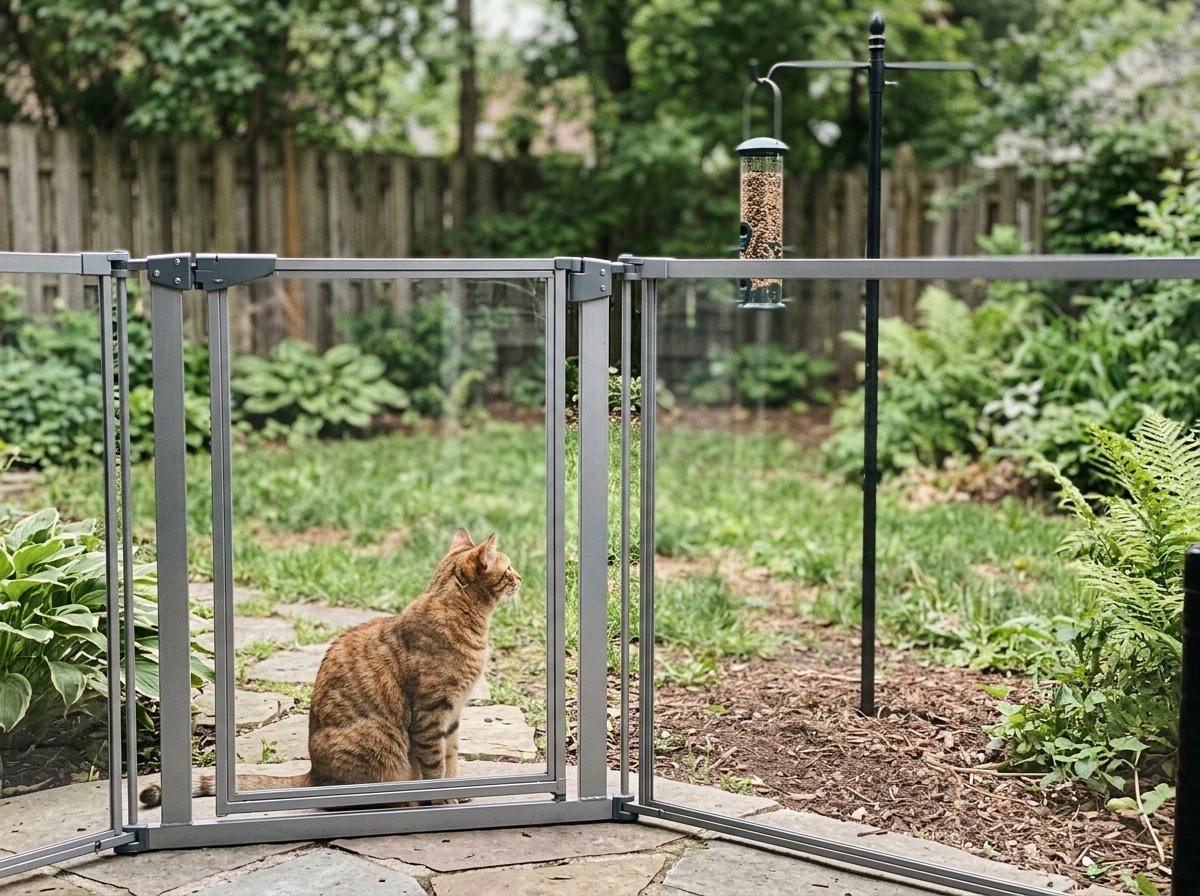
Cat-safe feeder design is less about the feeder itself and more about how you deploy it. That said, some feeder styles naturally attract more bird activity at more viewable angles, and some mounting configurations make it genuinely difficult for a cat to reach the food or ambush birds on approach. Here's what to think through before you buy.
First, decide where your cat is relative to the feeder. An indoor cat watching through a window needs a feeder placed close enough to the glass to give a good show, but positioned so birds aren't flying into the window at full speed. Audubon's guidance on window collisions recommends placing feeders either within 3 feet of a window (so birds don't build up fatal velocity if they do hit) or more than 30 feet away. For indoor cat entertainment, the within-3-feet zone is your sweet spot: window-mounted feeders or feeders on a pole just outside the glass work perfectly here.
If your cat spends time outdoors, the calculus shifts. Now you need the feeder to be physically inaccessible. The Humane Society recommends installing a predator guard on any pole-mounted feeder: a metal cone with the wide end facing down, which prevents cats (and squirrels) from shimmying up the pole. Wild Birds Unlimited's general rule is to keep feeders at least 10 feet from low shrubs and cover where a cat can stage an ambush. Some wildlife guidance pushes that to 12 feet from grass and shrubs. The reasoning is simple: cats are ambush hunters, and they need concealment to succeed. Remove the concealment buffer and you shift the odds back toward the birds.
Height matters too. The RSPB specifically advises placing feeders higher off the ground so they're out of a cat's reach. A standard pole height of 5 to 6 feet works well, but if your cat is an aggressive climber, the predator guard becomes non-negotiable rather than optional. Hanging feeders from a horizontal line or bracket mounted high on a wall or fence post are also good options, since they remove the climbable pole from the equation entirely.
Best feeder types for watching birds from near cats
Not all feeder styles are equally good for close-up bird watching. If your goal is the best bird feeders for flickers, tube and caged feeders can be especially good choices. Here's how the main types compare when your priority is viewing quality alongside cat safety. If you are specifically after hummingbird-friendly options, the best bird feeders for hummingbirds can help you pick the right style and placement.
| Feeder Type | Viewing Quality | Bird Variety | Cat Access Risk | Best Mounting Option |
|---|---|---|---|---|
| Platform / tray | Excellent (open, 360-degree view) | High (most species land here) | Higher if low to ground | Elevated pole with baffle |
| Tube feeder | Good (birds perch at ports) | Medium (finches, chickadees, nuthatches) | Low when hung high | Hanging bracket or shepherd's hook with baffle |
| Hopper / house feeder | Very good (birds land on wide tray) | High (cardinals, jays, sparrows) | Medium (stable platform attracts lingering birds) | Pole-mounted with cone guard |
| Window-mount suction cup | Outstanding (inches from glass) | Medium (chickadees, nuthatches, finches) | Very low (cat can't reach) | Suction directly to window |
| Enclosure / caged feeder | Good (birds visible inside cage) | Medium-small birds only | Very low (physical barrier) | Pole or hanging |
Platform feeders
Platform feeders are the showiest option for bird watching because they attract the widest range of species and give you an unobstructed view of birds from any angle. Cardinals, jays, mourning doves, sparrows, and even ground-feeding species like robins will use a well-placed platform. The downside is that their open design means birds spend more time exposed, so placement and mounting need to be tight. Pole-mount a platform at 5 to 6 feet with a metal cone baffle and keep it at least 12 feet from shrub lines.
Tube feeders
Tube feeders are the workhorses of backyard birding. They hold sunflower seeds, safflower, or nyjer (thistle) depending on the port size, and they attract a reliable stream of smaller birds like goldfinches, chickadees, titmice, and nuthatches. Because they hang freely and can be suspended from a bracket at height, they're naturally harder for cats to reach than ground-level or low platform feeders. If you're primarily feeding finches, a nyjer tube feeder is the go-to. For a broader mix, a standard black-oil sunflower tube feeder covers most of the common species.
Hopper feeders
Hopper feeders sit in the middle ground: they look like small houses, have a wide perching ledge that cardinals and larger birds love, and hold a good volume of seed so you're not refilling constantly. They're excellent for watching because birds tend to linger rather than grab and go. Mount them on a pole with a predator guard. If grackles or starlings are a problem at your hopper, look for models with weight-sensitive perches that close off the seed ports when a heavy bird lands.
Window-mount feeders
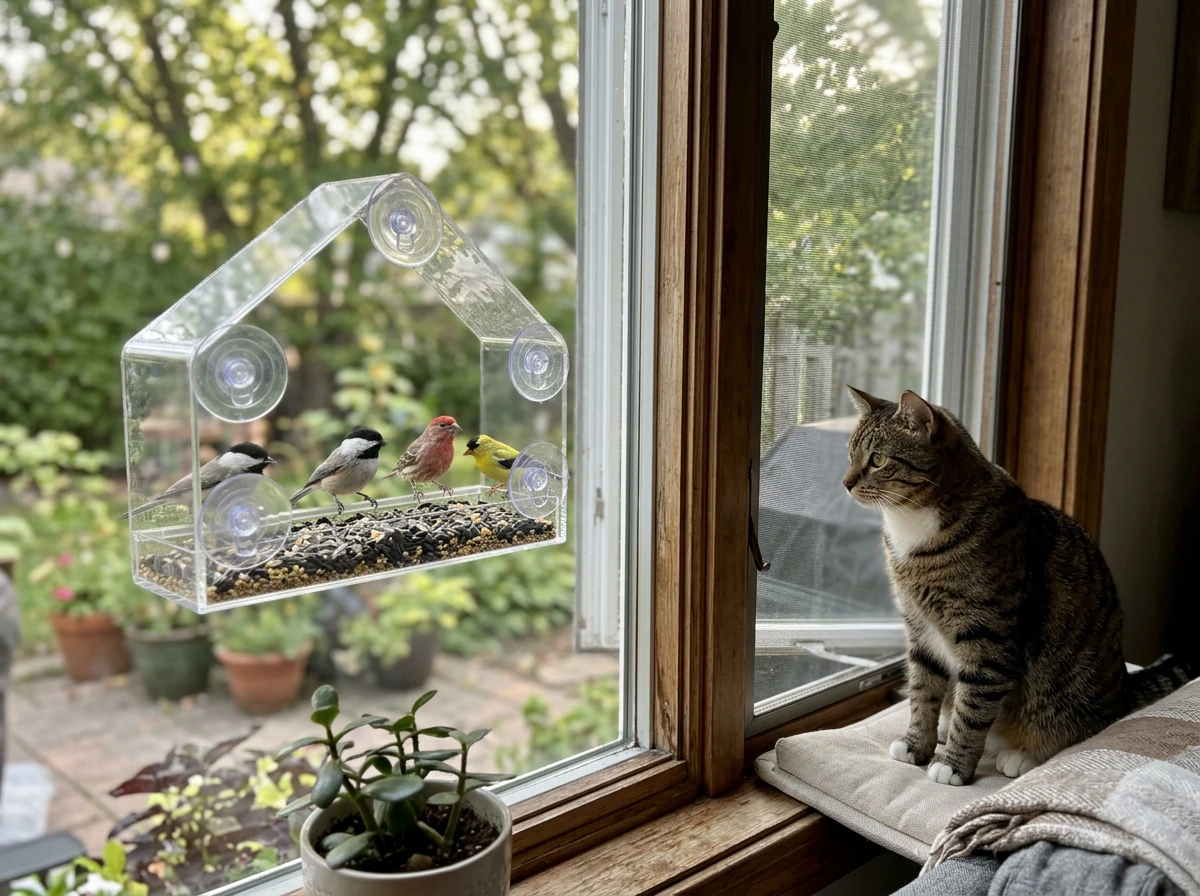
For indoor cats, window-mount feeders are the single best option available. They suction directly to the glass and position birds literally inches from your cat's face, separated only by the window pane. Because they're mounted on the window itself and there's no pole to climb, outdoor cat access is essentially zero. Chickadees and nuthatches are the bravest window feeder visitors and will usually start using one within a few days. These feeders tend to be small, making them ideal if you're looking for the best small bird feeders, so plan to refill them every couple of days.
Caged or enclosure feeders
Caged feeders surround a standard tube or small hopper with a wire enclosure that lets small birds pass through but physically blocks larger birds and most predators. They're primarily designed to exclude squirrels and large nuisance birds like grackles, but the cage also adds a layer of physical protection from cats. Birds feeding inside a caged feeder are visible but somewhat protected, which can help them feel comfortable visiting even if a cat is nearby. The trade-off is that the cage reduces viewing clarity a bit.
Top picks: best bird feeders for cats to watch
These recommendations are organized by viewing situation and bird type. Pick the one that matches your setup, then mount and place it using the guidelines in the next section.
Best overall for indoor cats: window-mount feeder with clear acrylic tray
A clear acrylic window-mount feeder with a wide tray and strong suction cups gives the most dramatic up-close experience for an indoor cat. Look for models with at least three suction cups (two-cup designs tend to fail in cold weather or heavy rain) and a drainage hole in the tray so seed doesn't rot. Fill it with black-oil sunflower seeds to attract chickadees, nuthatches, and finches fast. Place it on a window your cat already likes to sit near for the best effect.
Best for outdoor setups with cats present: pole-mounted hopper with predator guard
If you have an outdoor space where cats occasionally roam, If you have an outdoor space where cats occasionally roam, a pole-mounted hopper feeder with a metal cone predator guard is your most reliable setup. feeder with a metal cone predator guard is your most reliable setup. The hopper brings in a wide mix of birds including cardinals (if you're interested in maximizing species variety, check our guide on the <a data-article-id="34685998-13A3-4F8A-A36E-9ED1ABE7270E">best bird feeders for cardinals</a>), the pole keeps the feeder elevated, and the cone guard stops cats from climbing up. Choose a powder-coated steel or recycled plastic hopper for weather resistance, and place it at least 12 feet from any shrub line or fence corner where a cat could crouch.
Best for bird variety and viewing drama: elevated platform feeder
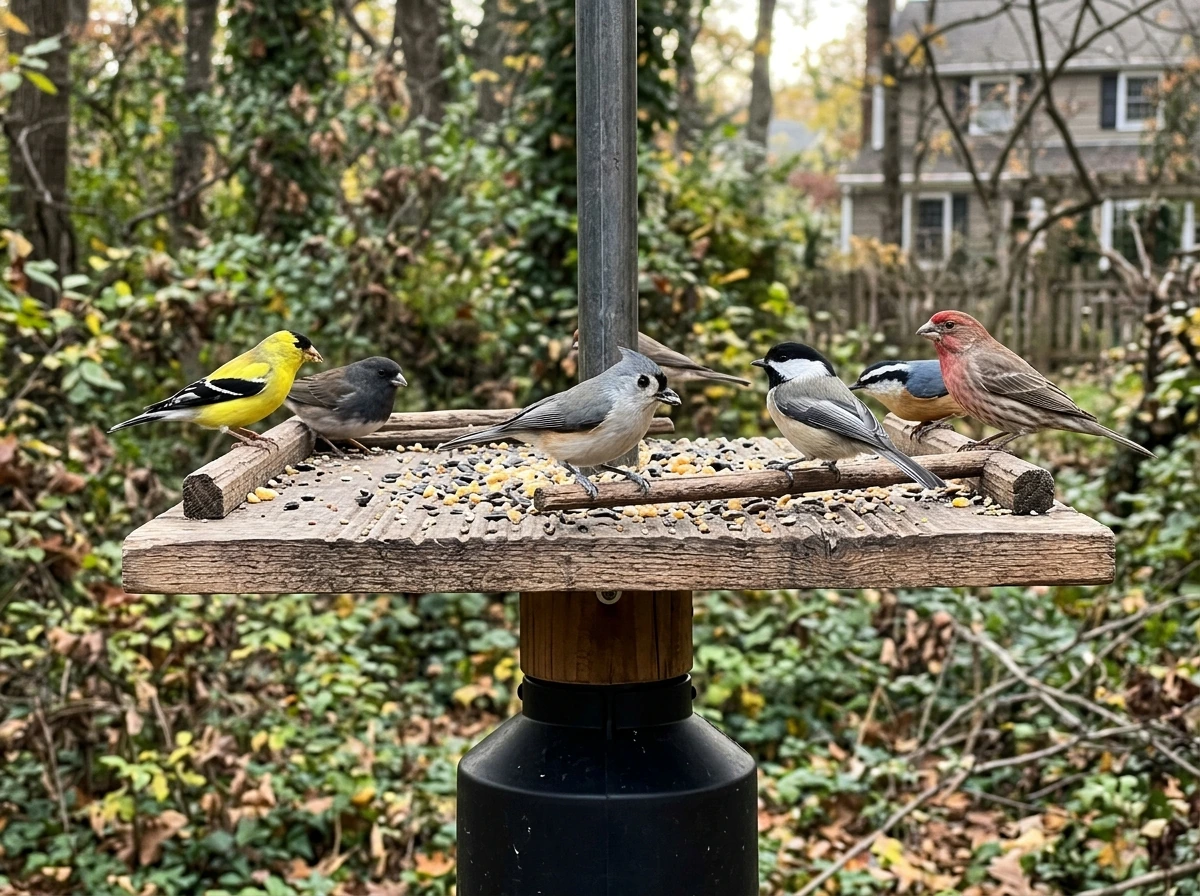
If you want the most species variety and the clearest views, a platform feeder mounted at 5 to 6 feet on a baffled pole delivers. Use it with a mix of black-oil sunflower seeds, millet, and some peanut pieces to pull in the widest range of birds. Robins, doves, jays, sparrows, and finches will all use a good platform. If robins are a priority species for you, an open tray style is ideal (our best bird feeders for robins guide covers this in depth). The open design is dramatic for watching but requires the most careful placement to keep birds safe.
Best for finch watching: nyjer tube feeder with sock or fine ports
Goldfinches are endlessly entertaining to watch and relatively calm feeders that will return repeatedly once they find a reliable nyjer source. A tube feeder with small nyjer ports or a mesh nyjer sock hung from a bracket 5 to 6 feet high is ideal. These feeders are light, easy to hang, and because they're swinging on a line, they're much harder for a cat to approach without birds noticing. Pair with a shepherd's hook pole and a squirrel baffle below the hanging point.
Best for discouraging grackles while keeping views clear: weight-sensitive tube feeder
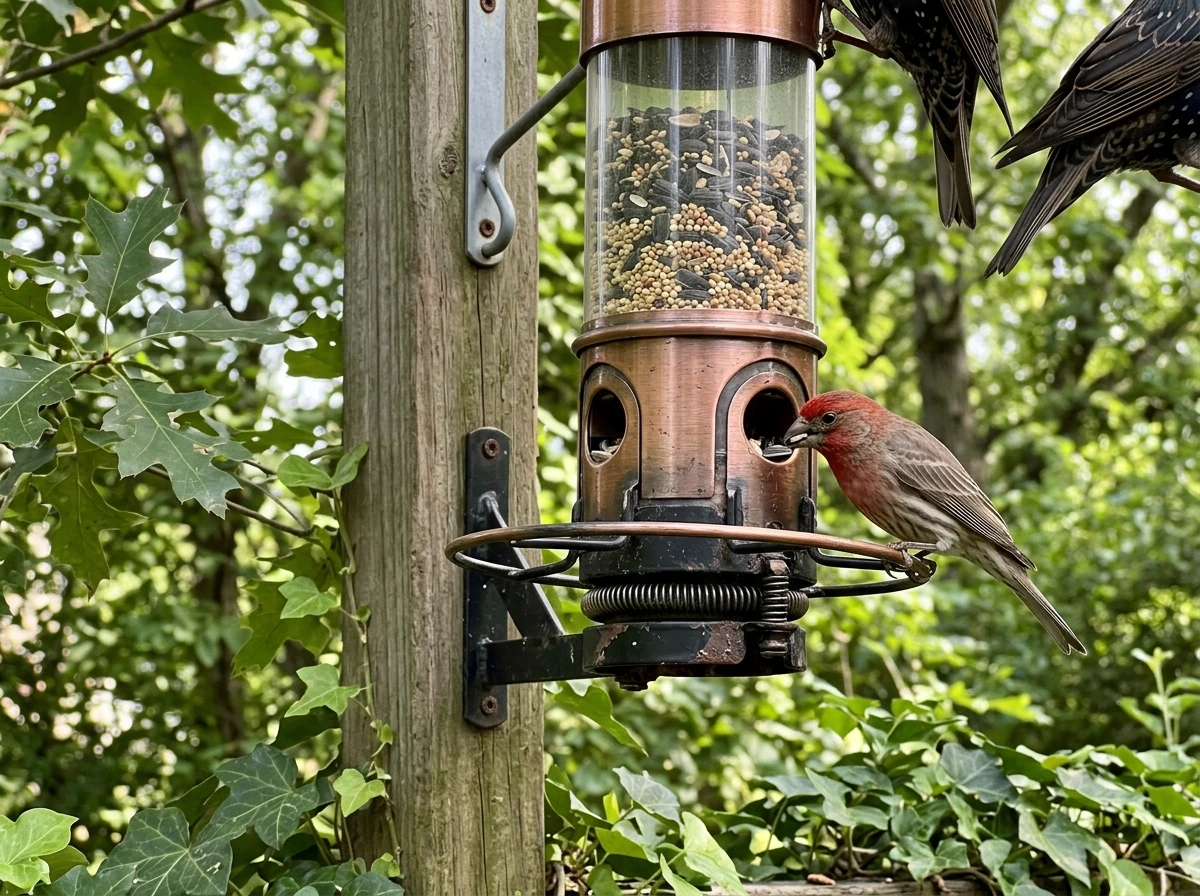
If grackles or starlings are mobbing your feeder and scaring off the smaller birds your cat is actually interested in watching, a weight-sensitive tube feeder solves both problems. These close their ports when a bird over a set weight (typically around 1.5 to 2 ounces) lands, which excludes grackles but lets chickadees, finches, and nuthatches feed freely. More bird activity at the feeder means more viewing time.
Predator-proofing and mounting to prevent cat access
Getting the mounting right is just as important as picking the right feeder. Here's the practical breakdown.
Pole-mounted feeders with cone baffles
A smooth steel pole at 5 to 6 feet, with a metal cone baffle (wide end facing down) positioned about 4 feet up the pole, is the most effective physical barrier against cats and squirrels climbing up. The cone needs to be smooth metal, not plastic, and wide enough (at least 17 inches in diameter) that a cat can't reach around it. Position the feeder so it's not within jumping distance of a fence, tree branch, or any elevated surface a cat could use to bypass the pole entirely. That typically means keeping the feeder at least 8 to 10 feet horizontally from any launch point.
Hanging feeders from brackets or lines
Hanging feeders from a wall-mounted bracket, a horizontal wire strung between two posts, or a shepherd's hook removes the climbable pole from the equation. For line-hung feeders, adding a cylindrical squirrel and cat baffle on the line itself (a smooth spinning tube that cats and squirrels can't grip) adds another layer of deterrence. Make sure the hanging height keeps the feeder at least 5 feet off the ground and that there's no nearby surface to jump from.
Clearing the approach zone
Cats rely on concealment. Keeping the area within 10 to 12 feet of your feeder clear of dense low shrubs, tall grass, stacked items, or anything else a cat can hide behind dramatically reduces the success rate of ambush attempts. Birds will also feel safer approaching an exposed, open feeder area and will visit more frequently. Keep the ground under the feeder tidy: spilled seed on the ground draws birds down to cat level, which is where the real danger lies.
Smart bird feeder cameras for watching while keeping distance
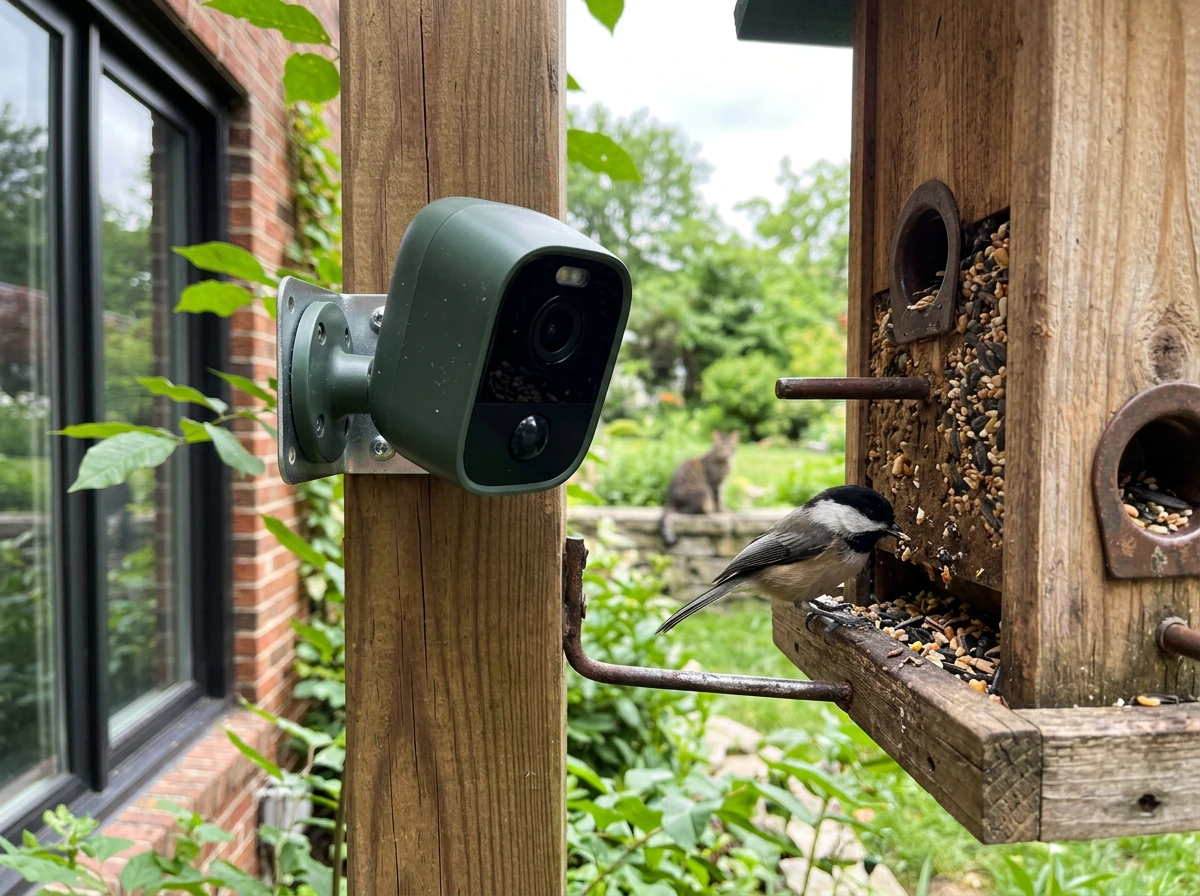
If you want to watch birds without a cat (indoor or outdoor) physically near the feeder at all, or if you want to maximize the entertainment value of your feeder setup, a smart bird feeder camera is a genuinely useful addition to the setup.
Smart feeders with integrated cameras (brands like Bird Buddy and Netvue Birdfy lead this category as of early 2026) use AI bird identification to recognize species and send you notifications when a specific bird lands. You watch on your phone or tablet from anywhere in the house, which means your indoor cat can watch on your lap while the birds feed in peace outside. These feeders mount on poles or hang from brackets the same way standard feeders do, so all the same mounting and placement rules apply.
The practical advantage from a cat-management perspective is significant: you get high-quality close-up footage of birds feeding without having a cat stationed directly at the window creating stress for the birds. Some birds are sensitive to movement behind glass and will avoid a feeder with an active cat visibly watching. Moving the viewing experience to a screen one room away can actually increase bird visit frequency.
Camera feeders also double as monitoring tools. If you're managing an outdoor cat and want to know whether it's approaching the feeder zone, the camera will capture that too. Motion alerts mean you can intervene before a cat gets close to the feeder area. For anyone serious about both backyard birding and responsible cat management, this combination of smart feeder plus correct mounting and placement is the most complete solution available.
Setup tips: placement, height, traffic flow, and keeping birds comfortable
Even a great feeder in the wrong spot won't perform well. These placement principles apply regardless of which feeder type you choose. For mealworms specifically, look for feeders designed to hold mealworms securely so they stay available to birds without spilling.
- Mount at 5 to 6 feet off the ground minimum. Higher is better if cats are a regular presence. This puts the feeder above a cat's jumping height from ground level and above the typical sight line of ground-dwelling predators.
- Position the feeder within 3 feet of a window or more than 30 feet away from it. This is Audubon's guidance for preventing window strikes. The within-3-feet zone is ideal for indoor cat watching; the 30-plus-feet zone works for camera-based setups.
- Keep at least 10 to 12 feet of open space between the feeder and any low shrubs, dense plantings, or structures where a cat could hide. Open ground in every direction gives birds a clear view of approaching threats.
- Make sure there's no jump-from surface within 8 to 10 feet horizontally. Fences, tree branches, patio furniture, and stacked planters can all serve as launch pads. Clear or block these before you install the feeder.
- Clean up spilled seed under the feeder regularly. Ground-level seed draws birds down to cat level. Use a seed tray attachment or a tidy feeder design to minimize scatter. This also reduces the risk of attracting rodents, which can in turn attract more predators.
- Give birds a landing perch nearby but not too close. A small shrub or branchy tree 10 to 15 feet away gives birds a place to wait, assess, and approach the feeder. It also gives them an escape route. This isn't a contradiction of the clear-zone rule: the difference is a visible open-branched shrub at distance versus dense low cover right at the feeder base.
- Consider bird species when positioning. Ground-feeding species like robins and doves will use low platform feeders, but those require especially careful cat-proofing. Finches and chickadees are comfortable using elevated tube feeders and window mounts, making them naturally safer species to attract in cat-heavy yards.
If you're starting fresh, the simplest actionable plan is this: pick a window-mount acrylic feeder for indoor cat watching, or a pole-mounted hopper with a cone baffle for outdoor setups. Fill it with black-oil sunflower seeds, place it using the spacing rules above, and keep the ground under it clean. Add a smart camera feeder when you want to step up the viewing experience or keep better tabs on what's visiting (and what cats are doing near the feeder). That combination covers the vast majority of backyard setups and gives both you and your cat the best possible bird-watching experience.
FAQ
Will putting the feeder higher (for example 6 feet) automatically keep my cat away?
If your cat is a jumper, height alone is not enough. Use a no-grip cone baffle (smooth metal), mount the feeder so there is no nearby perch (fence top, branch, planter), and keep the feeder at least several feet away from any launch point. For outdoor areas with frequent jumping, line-hung or wall-bracket setups usually outperform poles because there is nothing vertical to climb.
Do I need to worry about seed that falls on the ground under the feeder?
Seeds still matter because the safest feeder design can become unsafe if you attract predators to the ground. Use a tray or seed catch setup where possible, and sweep up dropped seed daily. Avoid mixing in attractants that increase ground fall, such as large chunks of peanut that get carried off and spilled.
Are window-mounted feeders safe for birds, or do they increase window collisions?
Window-mount feeders are generally the safest for cats, but they can still increase collisions if birds speed up toward the glass. Choose a window that you can place within the established safe distance bands, and keep the outside of the glass clear. Adding window decals or patterns nearby (even if you already use a close-up feeder) can further reduce impact risk.
What should I check to keep a suction-cup window feeder secure in winter or heavy rain?
At very cold temperatures, some suction cups and trays underperform, so check adhesion after freezes and heavy rain. Look for models with multiple suction points and a drainage path that prevents seed from getting soggy and slipping inside the tray. If your cat can paw the feeder, re-seat the cups and relocate to a different pane your cat cannot reach.
My cat feeder setup attracts grackles or starlings, how do I keep smaller birds coming?
If grackles or larger birds keep dominating the feeder, switch to a feeder designed to control access, like a caged tube or a weight-sensitive option. Even with weight-sensitive feeders, use appropriate seed types for the small birds you want, and avoid leaving backup open seed sources that let larger birds exploit alternative access points.
Do platform feeders always improve bird viewing without increasing cat risk?
Not always. If your feeder has a wide tray or open platform, birds may linger in exposed positions longer, which can raise risk if a cat can still access the area. For cats that patrol near the feeder zone, prioritize tube feeders with ports, caged designs, or window mounts, then tighten placement and keep the concealment buffer clear.
How can I tell if my cat is still approaching the feeder zone after I install a baffle?
Yes, because cats can learn patterns. Consider using a camera notification workflow (alerts for cat movement or approach) and review footage to identify the specific time of day your cat targets the feeder. Then adjust placement, height, and baffles based on what your camera reveals rather than relying only on general rules.
What if I have more than one cat, or a cat that repeatedly bypasses baffles?
If you have multiple cats or an especially determined climber, you may need redundant barriers. For pole feeders, that can mean a smooth, wide cone baffle plus a second deterrent like a spinning baffle on the line for hanging setups, and ensuring the feeder is not reachable from any nearby surface. When in doubt, choose wall-mounted or line-hung feeders.
Can I let my outdoor cat watch birds sometimes, as long as I supervise?
You can, but the training must match the risk. If you allow supervised outdoor cat time, keep sessions short and ensure the feeder zone is separated by at least a full cat jump distance, with no cover nearby. In most cases, it is safer to rely on physical inaccessibility (guards and placement) rather than supervision as the main deterrent.
Next Article
Best Bird Feeders for Hummingbirds: A Practical Buying Guide
Top hummingbird feeders ranked by leak resistance, cleaning, ant guards, nectar design, and placement tips for fast resu