The best hummingbird feeder for your backyard is one you will actually clean on schedule, that resists leaks in your local weather, and that has a built-in ant moat or accepts one as an add-on. Beyond those basics, the differences between a feeder that draws hummingbirds within a week and one that sits ignored usually come down to placement, nectar freshness, and a handful of design details that are easy to get right once you know what to look for.
Best Bird Feeders for Hummingbirds: A Practical Buying Guide

Marcus Holloway
23 Mar 2026
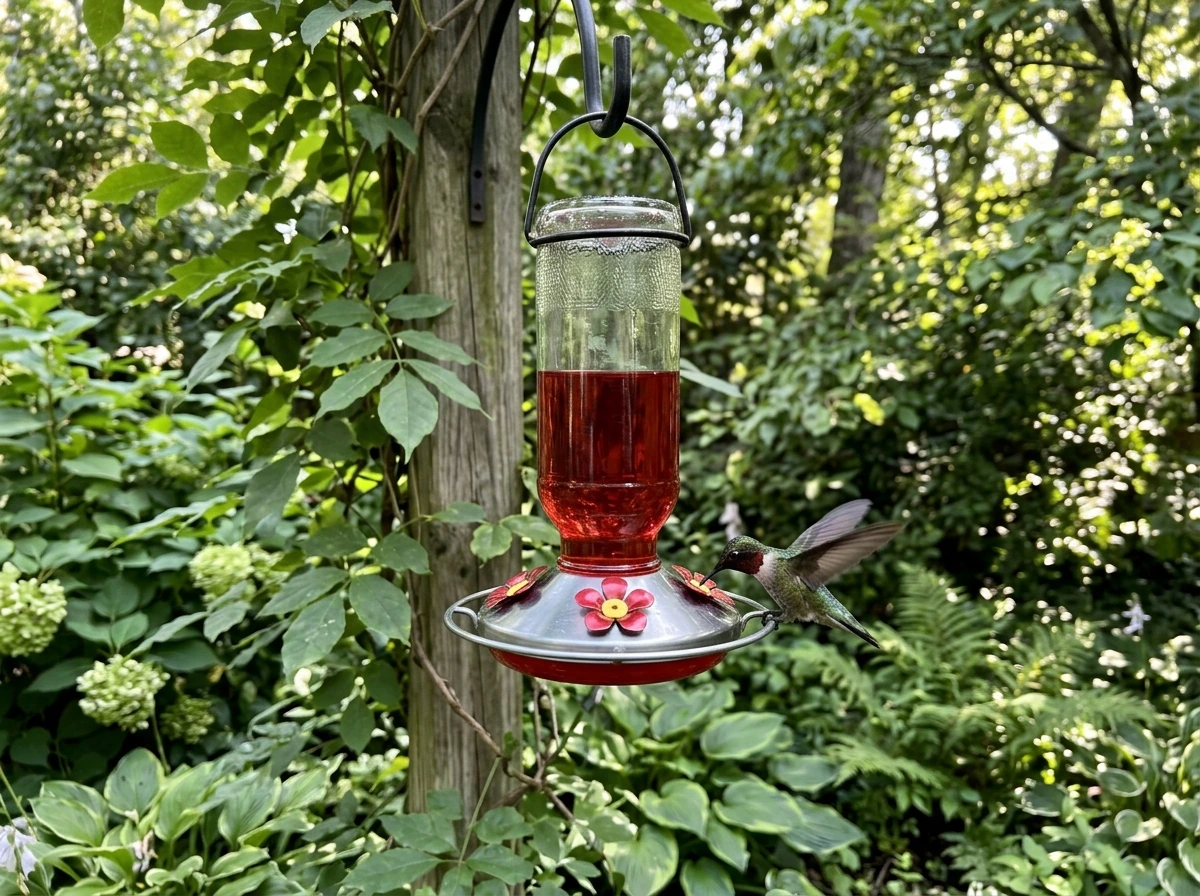
What makes a hummingbird feeder actually good
Not every feeder labeled for hummingbirds is worth buying. The features below are the ones that genuinely affect whether birds show up and stay, whether nectar stays safe, and whether you keep up with maintenance instead of abandoning the feeder by midsummer.
- Capacity matched to your traffic: A 16 oz feeder sounds generous, but if you only have two or three birds, nectar will spoil before it's consumed. In hot weather, a smaller 8 oz reservoir that you refill every couple of days is smarter than a large one with stale nectar sitting in it.
- Easy disassembly and cleaning: Feeders that come apart fully, have wide-mouth reservoirs, and have smooth interiors without tight crevices are dramatically easier to scrub. This matters more than almost any other feature because cleaning frequency directly affects bird health.
- Leak resistance: Bottle-style feeders can drip when temperature swings create pressure changes. Saucer-style feeders are inherently more leak-proof because nectar only sits in the shallow dish, not suspended in a pressurized column.
- Built-in ant moat or moat compatibility: An ant moat filled with water creates a physical barrier that ants cannot cross. This is far more effective than any sticky or chemical deterrent.
- Insect guards at ports: Some feeders include bee guards (small plastic mesh screens) over the nectar ports. These work well against bees and wasps while still allowing hummingbird tongues to reach the nectar.
- Red color on the feeder: Hummingbirds are strongly attracted to red. Feeders with red bases, red ports, or red accents get noticed faster. You do not need red-dyed nectar (which is unnecessary and potentially harmful); let the feeder itself do the color signaling.
- Port design and flower ergonomics: Ports should be sized so hummingbirds can feed comfortably without the feeder swinging or tipping. Molded flower shapes around ports are attractive to birds and also help deter bees.
- Material durability: Glass holds up better over multiple seasons and doesn't absorb odors or stains from nectar. Plastic is lighter and cheaper but can crack and discolor with UV exposure over time.
Glass vs. plastic, saucer vs. bottle: which design is right for you
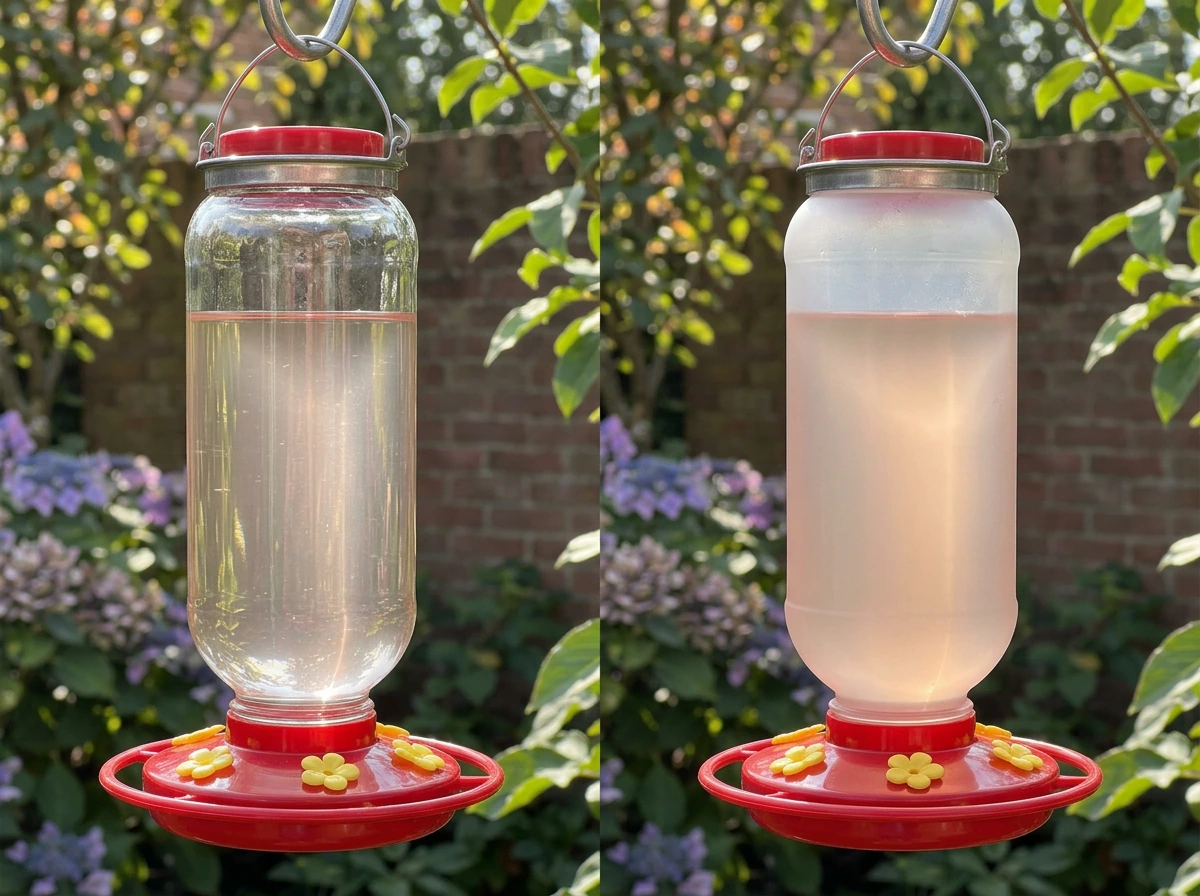
The two biggest design decisions are material (glass vs. plastic) and shape (saucer vs. bottle). Each combination has real trade-offs depending on your climate, how much you want to spend, and how often you're willing to clean.
| Feature | Glass Bottle-Style | Plastic Bottle-Style | Glass Saucer-Style | Plastic Saucer-Style |
|---|---|---|---|---|
| Leak resistance | Moderate (pressure-dependent) | Moderate (pressure-dependent) | Excellent | Excellent |
| Ease of cleaning | Moderate (brush needed for neck) | Moderate | Very easy (wide open dish) | Very easy |
| Durability | Long-lasting, UV-stable | Can yellow and crack over time | Long-lasting | Varies by quality |
| Weight | Heavier | Light | Moderate | Very light |
| Capacity | High (16–32 oz typical) | High | Lower (8–16 oz typical) | Lower |
| Hot weather performance | Slower heat transfer, nectar stays cooler | Heats faster | Nectar exposed, heats quickly | Heats quickly |
| Price range | $20–$40+ | $8–$25 | $15–$35 | $8–$20 |
| Best for | Moderate climates, higher traffic | Budget-conscious, beginners | Easy maintenance, low traffic | Beginners, apartments, balconies |
The short recommendation: if you live somewhere with consistent summer heat above 85°F, go with a glass bottle-style feeder in a shaded spot, or a smaller saucer-style feeder you refill very frequently. If easy cleaning is your top priority and you have light to moderate hummingbird traffic, a saucer-style feeder is the most hassle-free option on the market. If you want one feeder that balances capacity, durability, and longevity across seasons, a mid-size glass bottle-style feeder in the 12 to 16 oz range is the sweet spot.
Top hummingbird feeder picks by scenario
Rather than ranking feeders in a single list, it's more useful to match a feeder type to your specific situation. Here are the categories that matter most, with guidance on what to look for in each.
Best overall: glass bottle-style with wide-mouth base and built-in ant moat
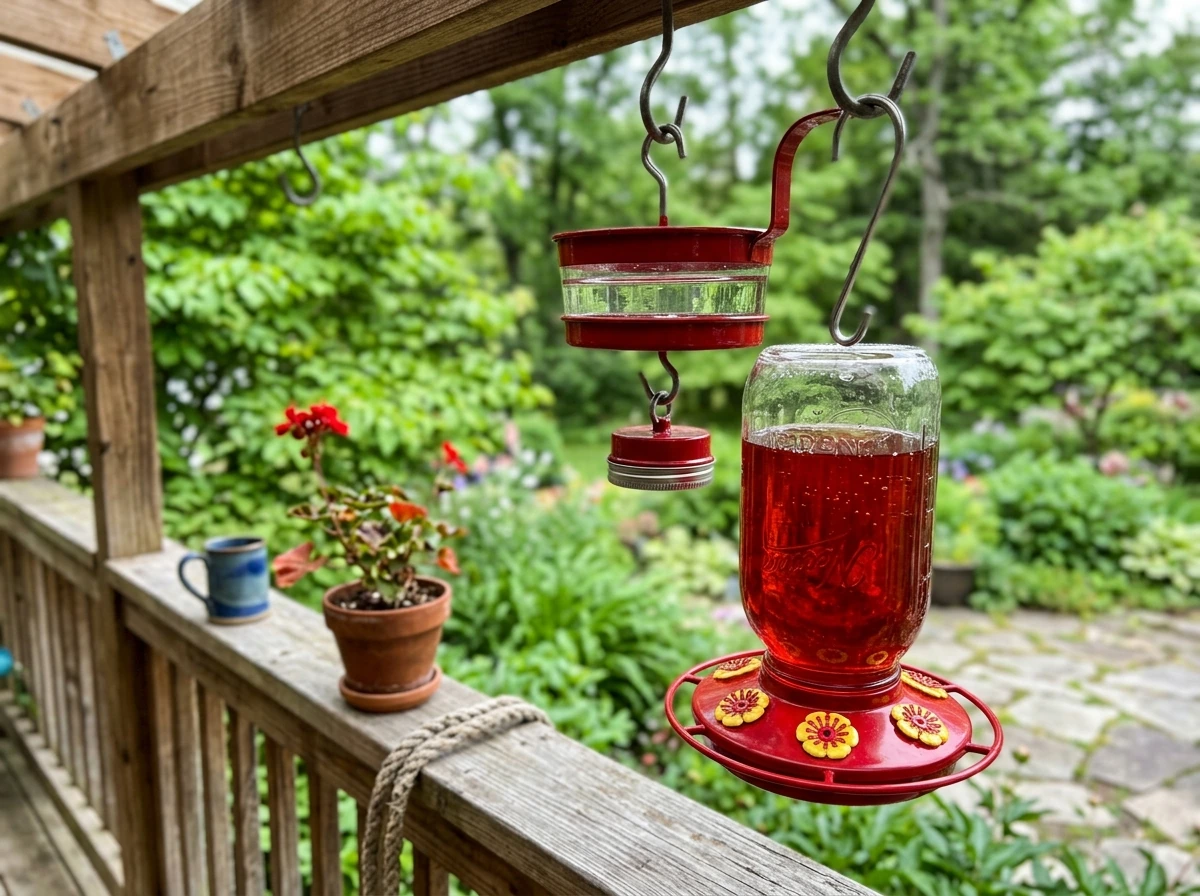
A glass bottle feeder in the 12 to 16 oz range, with a wide-mouth jar for easy cleaning, multiple feeding ports with flower-shaped guards, and a built-in hanging ant moat, covers most backyard situations. Look for one where the base unscrews fully and has no interior baffles or tight corners. This type of feeder works well in most North American climates, attracts birds quickly with its red base, and lasts for many seasons without yellowing or cracking.
Best for hot weather: small-capacity saucer feeder in a shaded spot
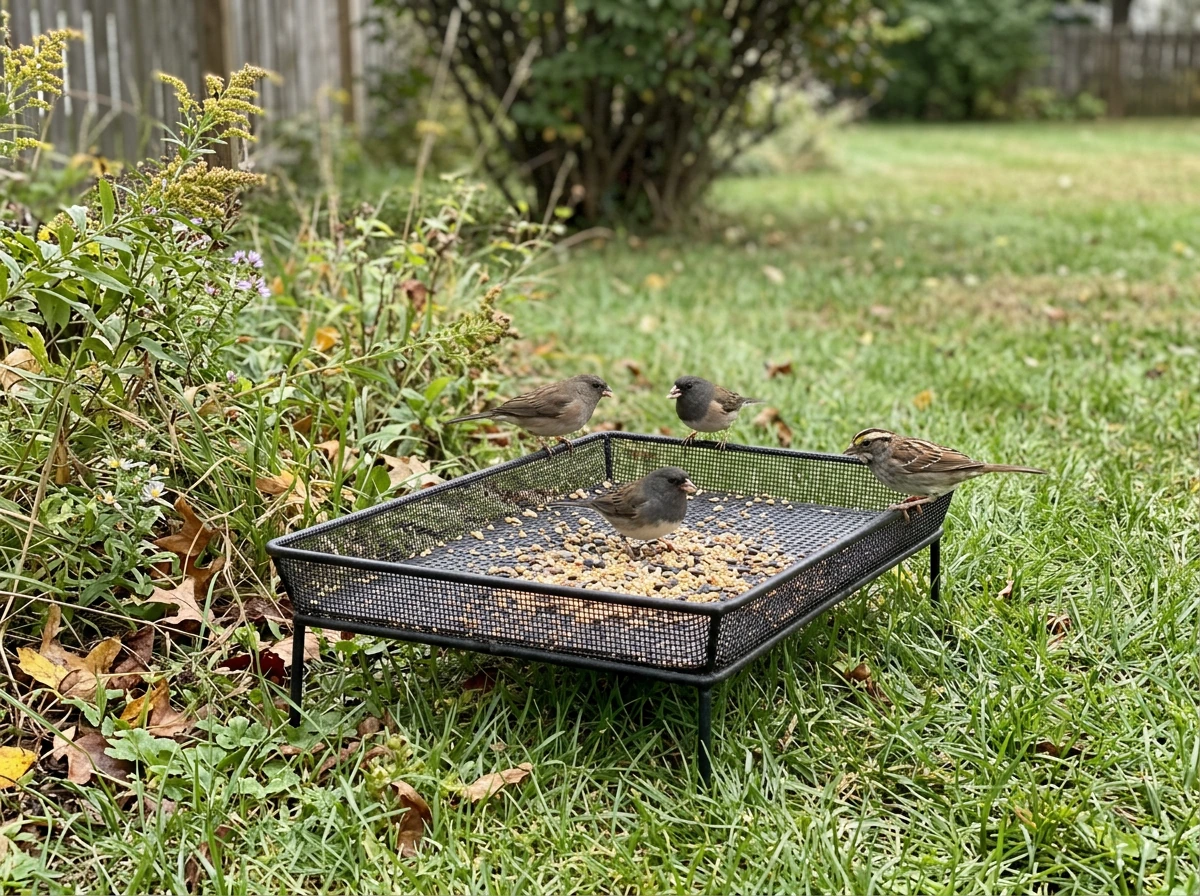
In climates where summer temperatures regularly exceed 85°F, nectar spoils fast regardless of feeder type. A best ground bird feeder -style small-capacity saucer feeder (8 oz or less) placed in full shade lets you do fast, daily refills without wasting much nectar. Saucer feeders are also the easiest to rinse quickly, which is exactly what you need when you're refreshing nectar every day or every other day in peak heat.
Easiest to clean: saucer-style or wide-mouth single-piece designs
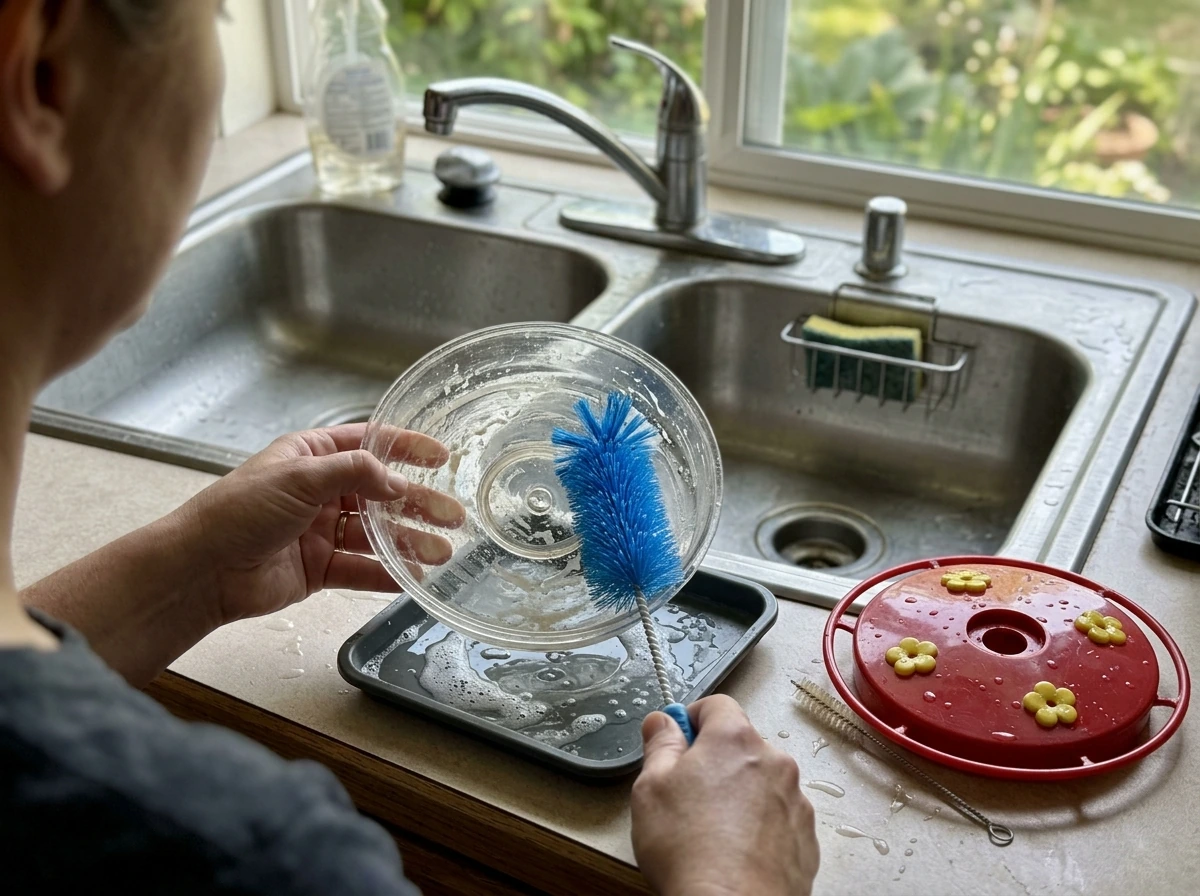
If cleaning is the chore that causes you to neglect a feeder, choose a saucer-style feeder with a two-piece design (lid plus base) that you can pop apart and rinse in seconds. No brushes needed, no narrow necks to scrub. These feeders have a smaller footprint and lower capacity, but for most backyard setups with a handful of hummingbirds, that's perfectly adequate.
Best for ant and wasp control: feeders with integrated moats and bee guards
Some feeders come with both a built-in ant moat at the top (fill it with water) and small bee guard inserts at each port. This combination handles the two most common insect problems simultaneously. If your feeder doesn't have a built-in moat, you can add a separate ant moat accessory to almost any hanging feeder. Look for moat designs that hold enough water to be effective and don't evaporate completely between your visits.
Best for apartments and balconies: window-mount or clamp-mount saucer feeders
If you don't have a yard or a place to hang a shepherd's hook, a window-mounted hummingbird feeder with suction cups, or a feeder designed to clamp onto a balcony railing, gives you the same experience in a smaller footprint. Saucer-style feeders work best here because they're lighter, less likely to swing in wind, and easier to access for refilling from inside. Keep capacity small since you can't hang an ant moat from a window-mount feeder, so keeping nectar fresh through frequent changes is your main line of defense against ants.
Best for windy areas: wider-base or pole-mounted feeders
Hanging bottle feeders swing significantly in wind, which can cause nectar to slosh out and may deter feeding. A pole-mounted feeder, or a wider-base saucer feeder with a lower center of gravity, stays far more stable. If you're in a consistently windy spot (exposed deck, open yard), prioritize stability over capacity.
Best entry-level pick for beginners
If you're just getting started and want to spend under $15 to see if hummingbirds visit your yard before committing to a premium feeder, a basic plastic saucer-style feeder with a red base and at least two or three ports is a perfectly reasonable starting point. It won't last as many seasons as glass, but it will tell you quickly whether your location attracts birds, and its simple design makes cleaning painless while you establish a routine.
Where to hang it: placement for fast results
Feeder placement affects how quickly hummingbirds find your feeder, how safe the nectar stays, and whether birds feel comfortable enough to return. Get these details right and you'll often see your first visitor within a few days of putting the feeder out.
Height and visibility
Hang your feeder at about 5 to 6 feet off the ground, which puts it in the natural foraging zone for hummingbirds and makes it easy for you to refill and check. More important than exact height is visibility: the feeder should be visible from multiple approach angles, ideally near flowering plants that already attract hummingbirds. Red salvia, bee balm, and trumpet vine near the feeder act as natural signposts.
Shade vs. sun
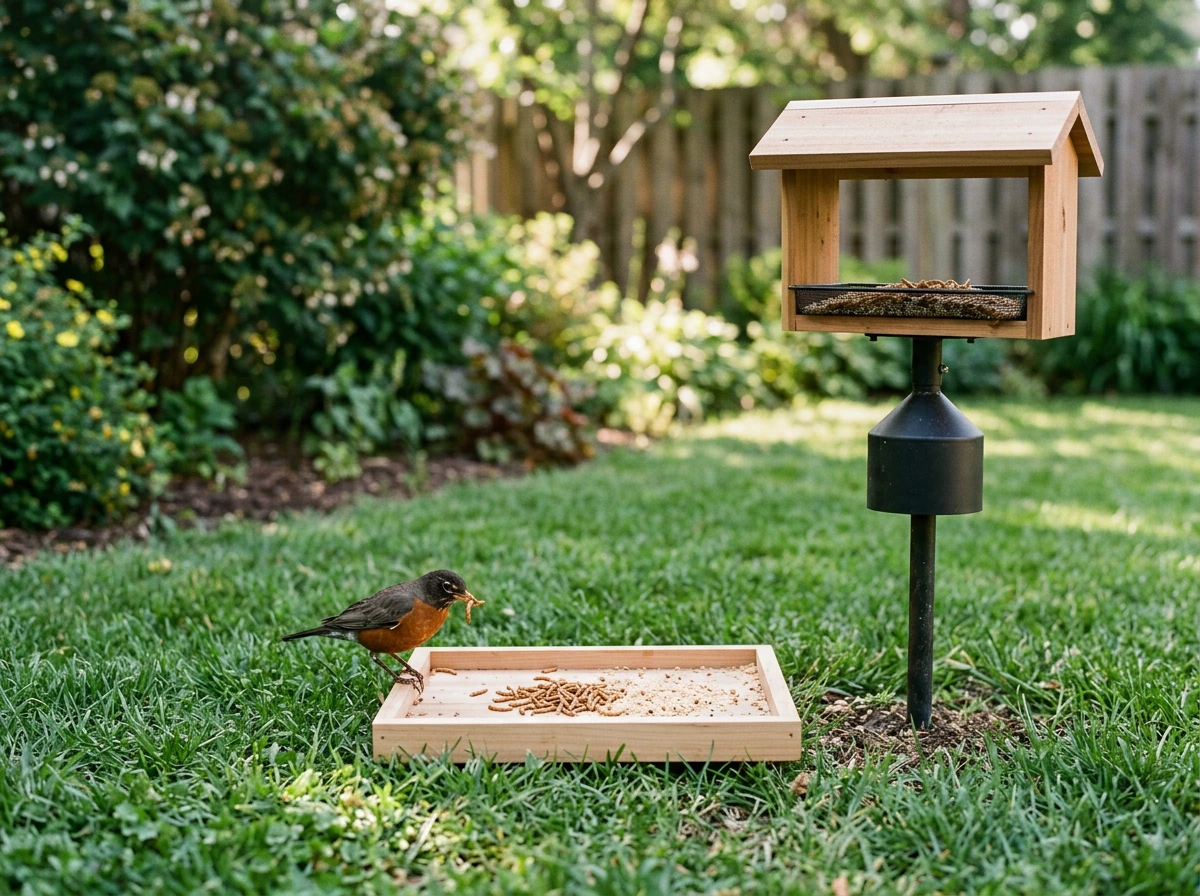
If you want the best bird feeders for flickers, partial to full shade is strongly preferable, especially in summer. For robins, focus on feeder designs that offer easy access and help keep seed or food clean and protected from pests best bird feeders for robins. best bird feeders for flickers Direct sun heats the nectar reservoir quickly, accelerating fermentation and bacterial growth. A spot that gets morning sun and afternoon shade is close to ideal: enough light for you to see the feeder easily and for birds to spot it, but protection from the afternoon heat that spoils nectar fastest. best bird feeders for mealworms. best bird feeders for cats
Distance from windows
Window collisions are a real risk when feeders are placed at an intermediate distance from glass. Audubon's guidance is clear: place feeders either within 3 feet of a window or more than 30 feet away. Feeders very close to windows (3 feet or less) mean that if a bird does startle and hit the glass, it hasn't built up enough speed to injure itself. Feeders more than 30 feet away give birds enough space to recognize the glass as a barrier. The dangerous middle ground of 5 to 25 feet gives birds just enough runway to reach fatal speed. If you're in that range, add window collision decals to break up the reflective surface.
Handling territorial behavior with multiple feeders
Male hummingbirds are aggressively territorial and will chase other birds away from a single feeder. If you want to support more than one or two birds, hang multiple feeders out of sight of each other, around different sides of your house or separated by tall shrubs. A dominant bird can only guard one feeder at a time, so spreading feeders out lets subordinate birds feed without constant harassment.
Nectar recipe, cleaning schedule, and keeping nectar fresh
The nectar itself is simple and cheap to make at home. The ratio endorsed by Audubon and widely used by ornithologists is 1 part refined white sugar to 4 parts water. Boil the water briefly to dissolve the sugar fully and help slow bacterial growth, then cool it completely before filling the feeder. Do not use honey (ferments rapidly), brown sugar, powdered sugar, or artificial sweeteners. Do not add red food dye: it's unnecessary and potentially harmful.
How often you change the nectar depends almost entirely on temperature. Here's a practical temperature-based schedule:
| Temperature Range | Change Nectar Every |
|---|---|
| Below 60°F | Every 5–7 days |
| 60°F to 84°F | Every 2–3 days |
| 85°F and above | Every 1–2 days (daily in extreme heat) |
These intervals align with guidance from Purdue Extension, Washington State University Extension, and the National Wildlife Federation. When in doubt, change sooner rather than later. Cloudy or slightly yellowish nectar is a sign fermentation has started and the feeder needs to be emptied, cleaned, and refilled immediately.
Cleaning the right way
Rinse the feeder every time you refill it. For deeper cleaning (at least once a week in summer), take the feeder fully apart and scrub all surfaces with a bottle brush and hot water. A mild vinegar solution works well for dissolving sugar residue and killing mold without leaving soap residue that can harm birds. Avoid dish soap if possible; if you use it, rinse extremely thoroughly. Let the feeder air dry completely before refilling. Black spots inside the reservoir or ports are mold and require immediate scrubbing before the feeder goes back into service.
Storing premixed nectar in the refrigerator for up to two weeks is fine and makes frequent refills much less of a chore. Mix a batch at the start of the week, keep it cold, and refilling takes less than a minute.
Fixing the most common hummingbird feeder problems
Ants invading the feeder
Ants follow the sugar scent and will find your feeder quickly. The only reliably effective solution is a water-filled ant moat between the hanging hook and the feeder itself. Ants cannot swim across the water barrier. Make sure the moat holds enough water and top it off regularly, especially in dry weather when evaporation is faster. Do not use oil-based deterrents on the hanger wire because they can contaminate the nectar and harm birds.
Bees and wasps at the ports
Bees and wasps are attracted to nectar but their tongues are shorter than a hummingbird's. Bee guard inserts at each port (small mesh or plastic screens that sit just inside the port opening) let hummingbird tongues through while physically blocking bees. If your feeder doesn't have bee guards, look for a feeder that accepts them, or switch to a saucer-style feeder where nectar is recessed below the port level. Reducing nectar concentration to the standard 1:4 ratio (rather than a sweeter 1:3 mix) also makes the feeder slightly less attractive to insects while still meeting hummingbirds' needs.
Feeder leaking
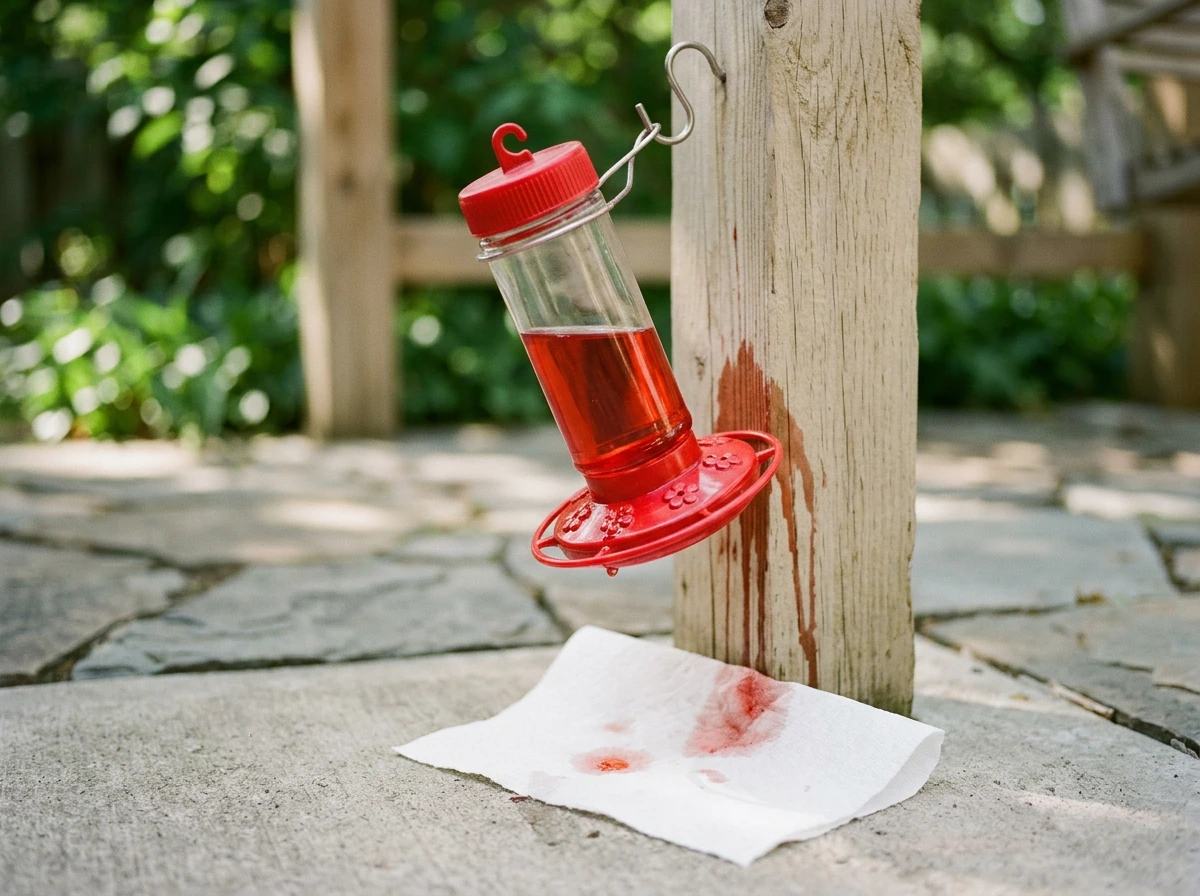
Bottle-style feeders drip when pressure changes inside the reservoir, usually caused by temperature swings. Overfilling a bottle feeder (especially right before a hot afternoon) is a common cause. Fill it to about 80 percent of capacity to leave an air gap that helps regulate pressure. Check that the gasket or O-ring at the base is seated properly and not cracked. If a plastic feeder is cracked or warped, it's time to replace it.
Nectar turning cloudy quickly
Cloudiness means bacterial or fungal growth, almost always accelerated by heat and a feeder that isn't being cleaned and changed often enough. Move the feeder to a shadier location, reduce the capacity so nectar turns over faster, and increase your cleaning frequency. If cloudiness appears within 24 hours of a fresh refill, suspect residual contamination in the feeder itself. Do a deep clean with a vinegar rinse, let it dry fully, and see if that resolves it.
No hummingbirds showing up
Patience is real here. Hummingbirds need to discover a new feeder, and this can take anywhere from a few days to a few weeks depending on whether birds are already in your area. Check that your region and timing align with local hummingbird migration patterns (in most of the US, ruby-throated hummingbirds arrive from late April through May, and western species have similar spring arrival windows). Make sure the feeder is visible from the air, has red coloring on it, and is placed near flowering plants if possible. Avoid hanging it somewhere surrounded by dense cover where birds can't spot it on approach. Keep the nectar fresh even if no birds have visited yet, because old nectar is a deterrent, not an attractant.
Squirrels reaching the feeder
Squirrels will occasionally raid hummingbird feeders, though they're more of a problem for seed feeders (which you can read about in related guides for cardinals and other species). For hummingbird feeders, hanging from a thin wire or slender shepherd's hook that squirrels can't easily grip, and keeping the feeder away from tree branches or deck railings that squirrels can launch from, is usually sufficient. A baffle above the feeder on a pole mount adds extra protection. For hummingbird feeders, hanging from a thin wire or slender shepherd's hook that squirrels can't easily grip, and keeping the feeder away from tree branches or deck railings that squirrels can launch from, is usually sufficient. A baffle above the feeder on a pole mount adds extra protection.
Buying checklist: how to pick the right feeder today
Run through these questions before you buy and you'll end up with a feeder that fits your actual situation rather than just the most popular option. Small bird feeders are similar in the sense that the best option is the one you can clean consistently and keep protected from spoilage and pests.
- How hot does it get in summer where you live? If regularly above 85°F, prioritize a small-capacity feeder you can refill daily over a large one that sits in the heat.
- How often are you realistically willing to clean a feeder? If the honest answer is 'not very', choose a saucer-style feeder. It takes about 30 seconds to rinse.
- Do you have a place to hang a feeder from? If not, do you need a window-mount or balcony-clamp design?
- Do you have an ant problem in your yard? If yes, make sure your feeder has a built-in ant moat or that you're buying a compatible add-on moat at the same time.
- Do bees or wasps regularly gather near sweet things in your yard? Look specifically for feeders with bee guard port inserts.
- How many hummingbirds do you expect? One or two birds: 8 to 12 oz capacity. A regular crowd: 12 to 16 oz. A heavily visited yard in migration season: 16 to 32 oz with multiple feeders spread around the yard.
- Is this your first feeder or a replacement? First timer: keep it simple and inexpensive until you confirm birds are using your space. Replacing a feeder: invest in glass and better design since you already know birds are there.
- Is the feeder fully disassemblable with no sharp interior crevices? If you can't easily brush every interior surface, mold will win.
If you're still uncertain after that checklist, the safest default is a 12 oz glass bottle-style feeder with a red base, at least four ports, a wide-mouth reservoir, and a built-in or compatible ant moat. Hang it in partial shade at 5 to 6 feet, fill it with fresh 1:4 sugar-water, and change the nectar every two to three days. That setup works reliably across almost every North American backyard scenario and gives you a strong foundation to adjust from once you see how your local birds use it.
FAQ
How long should I wait before assuming a hummingbird feeder will not work in my yard?
Not necessarily. If hummingbirds are already in your area, many will investigate within a few days, but territorial behavior and weather can delay visits. Keep nectar fresh on schedule, make sure the red elements are visible from multiple approach directions, and place the feeder near nectar plants rather than deep shade or enclosed spots with poor visibility.
If bees keep showing up, should I switch to sweeter nectar or a different mixture?
No. Hummingbirds need the same sugar-water recipe even if bees are present. To reduce bee activity without harming hummingbirds, keep nectar at the standard 1:4 ratio, use bee guard inserts on bottle feeders, or choose a saucer feeder where nectar sits below the port openings so bees have less access.
What if my nectar changes color faster than the schedule in the guide?
The temperature schedule in the guide is a starting point. Always shorten the interval if nectar looks cloudy, develops sediment, or smells fermented, because those signs mean growth has started and birds can also get sick. In hot weather, it is safer to change more often rather than waiting the maximum recommended time.
Is lightly cloudy nectar still safe to use, or should I dump it right away?
Usually not. Fine particles or a slight tint can indicate early fermentation, but true cloudiness or stringy residue suggests bacterial or fungal growth. When in doubt, discard and deep clean with a vinegar rinse, then fully air dry before refilling to prevent repeated contamination from leftover residue.
Can I just top off the feeder instead of emptying and refilling it every time?
For best results, use fresh nectar and do not top off an old reservoir. Add fresh solution after emptying and rinsing, because topping off can leave behind residue that accelerates mold and makes cloudiness return even if the new batch is correct.
What are the most common feeder setup mistakes that stop hummingbirds from using the feeder?
Yes, and this is a common mistake. If the feeder uses bee guards or ports, ensure the inserts sit fully in place and are clean, since blocked or misaligned ports can discourage hummingbirds. Also confirm the ant moat and base gasket are intact, because leaks can dilute nectar and attract insects.
Cloudiness comes back quickly after cleaning, what should I check?
Clean it more thoroughly. Bottle-style feeders can develop biofilm inside the ports and base gasket area, which makes cloudiness recur even after quick rinses. Use a bottle brush on all internal surfaces, check the gasket or O-ring for cracks, and let everything air dry completely before reassembly.
What is the best option if I cannot hang a feeder outside?
It depends on your situation. If you cannot hang a feeder, a window-mounted option can work, but you should expect to rely more on frequent nectar changes because you usually cannot add a hanging ant moat. To keep hummingbirds confident and reduce ant access, choose a model with a stable mount, small capacity, and easy access for quick rinsing from indoors.
Can I place a hummingbird feeder near a window if I do not want to mount it far away?
You can, but be careful with placement and glass. The 3-foot or 30-foot rule is meant to prevent window collisions, and if you are in the risky 5 to 25-foot range you should add collision decals on the window to break up reflections. Also ensure the feeder is visible from the air, since birds approach from multiple angles.
How do I keep an ant moat effective in dry or windy weather?
A separate ant moat should hold enough water to stay effective between checks, and it must not evaporate dry. If you live in a very dry climate or the weather is windy, plan to inspect and refill the moat more often, and avoid oil-based deterrents on the hanger because they can contaminate nectar.
What should I do if only one hummingbird uses the feeder and others keep getting chased away?
Sometimes, but in many cases the feeder is still fine. If you see hummingbirds chase off others, add additional feeders so subordinate birds have options, and separate them visually around different sides of the house or with tall shrubs in between. Stick to feeders that are easy to clean, because more units increase maintenance load.
Can I use honey or brown sugar to attract hummingbirds better?
Do not use it. Honey ferments faster than the standard sugar-water mix and increases the chance of microbial growth. Stick to refined white sugar and water at the 1:4 ratio, boil briefly to dissolve, and cool completely before filling.
Why is my bottle-style hummingbird feeder leaking or dripping?
Some bottle feeders can drip when the reservoir pressure changes, and overfilling makes it worse. Fill to around 80 percent to allow an air gap, ensure the base gasket or O-ring is seated correctly, and replace cracked or warped feeders, since leaks can also reduce nectar freshness and cleanliness.
If hummingbirds do not arrive, what is the fastest way to troubleshoot the problem?
If hummingbirds are not visiting after a couple of weeks, usually the issue is not the feeder design but the combination of location and nectar freshness. Move it to partial shade, near flowering plants, and in an open approach area where birds can spot it. Keep the nectar schedule strict even when there are no visitors, because old nectar can discourage feeding.