The best small bird feeders right now are tube feeders and mesh/sock feeders filled with nyjer or fine sunflower chips, ideally paired with a weight-activated squirrel guard. That combination does more work than any other setup to bring in <a data-uuid="11992DC6-3DF6-42A5-BF1F-93EC759B6418">goldfinches, chickadees, siskins</a> while pushing out starlings, grackles, squirrels, and other uninvited guests. If you want a single product recommendation to start with, the Brome Squirrel Buster Standard (4 ports, 1.3 lb capacity) is one of the most reliable all-around picks for the best ground bird feeder. But the right feeder really does depend on your yard, your target species, and the specific problems you are dealing with, so read on for the full breakdown.
Best Small Bird Feeders: Top Picks and Buying Guide
What counts as a 'small bird feeder' and who it's for
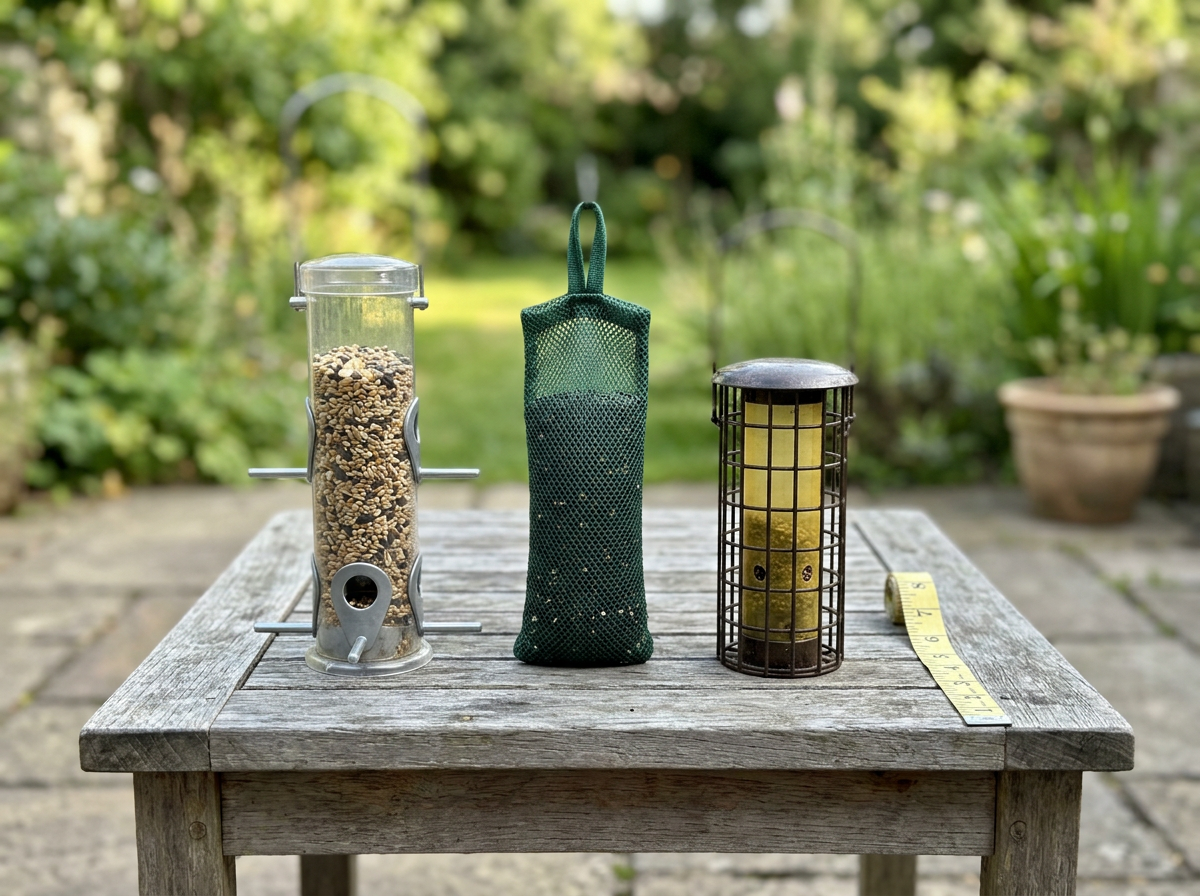
"Small bird feeder" means two different things depending on who is shopping. The first meaning is a feeder that is physically compact, meaning it holds less seed, takes up less space, and fits tighter spots like balconies, deck railings, or small yards. The second meaning, and arguably the more useful one, is a feeder designed to admit only small birds and block larger species from taking over. Most of this guide focuses on the second interpretation, because that is usually the real problem people are trying to solve. best bird feeders for cardinals
The small birds that backyard feeders are most commonly targeting include American Goldfinch, House Finch, Purple Finch, Pine Siskin, Black-capped Chickadee, Carolina Chickadee, Common Redpoll, and similar finch- and sparrow-sized birds. These birds weigh roughly 0.3 to 1 oz and can access ports, perches, and mesh openings that larger birds physically cannot use effectively. If you are primarily after <a href="/best-bird-feeders-for-bluebirds/" data-uuid="011239EB-BE41-4678-9CF1-0596D4C2CF9B">bluebirds</a>, robins/" data-uuid="47B2A1D5-C58F-4179-9EA4-CDDF4255303A">robins</a>, or hummingbirds, those species have their own feeder requirements covered in separate guides on this site. best bird feeders for bluebirds
This guide is useful for beginners who want a quick "best pick" answer and for more experienced birders who want to compare feeder types, port sizes, seed types, and squirrel-proofing mechanisms. Both groups will find what they need below.
Feeder types that work best for small birds
Not all feeder styles are equally good at attracting small birds or limiting large ones. The type you choose matters more than the brand, at least as a starting point.
Tube feeders
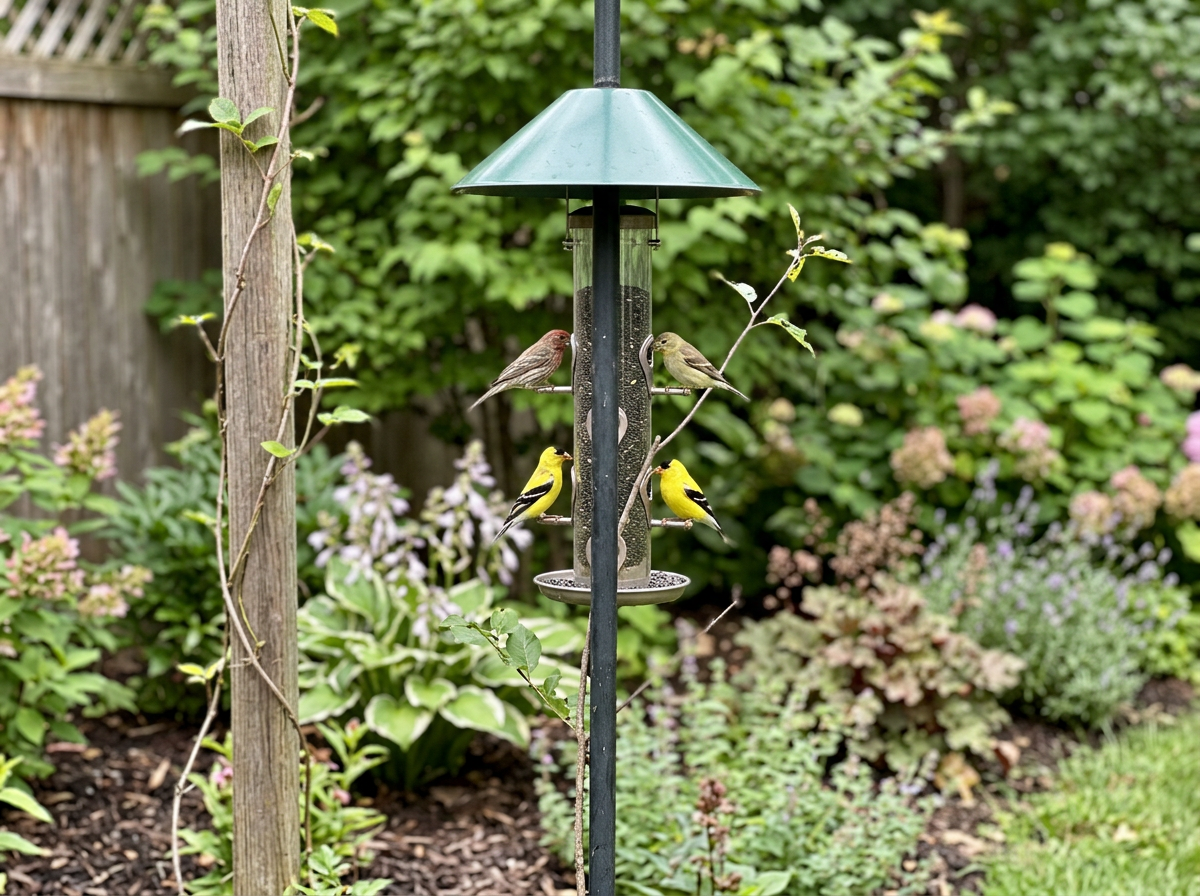
Tube feeders are the gold standard for small-bird-only feeding. The narrow tube shape and small ports naturally favor birds with small beaks. Audubon specifically calls out tube feeders as making seed available only to small-beaked finch-sized birds when the right seed is used. Starlings, grackles, and jays have a hard time with tube feeders both because the ports are narrow and because the perch geometry does not suit them well. Tube feeders work with nyjer, black-oil sunflower, and fine sunflower chips.
Mesh and sock feeders
Mesh feeders (also called finch socks or nyjer sacks) are soft or rigid mesh bags or cylinders filled with nyjer seed. Small birds cling to the mesh and pull seed through the tiny openings. Larger birds cannot grip or work the mesh effectively. These are some of the least expensive feeders you can buy and are excellent for attracting goldfinches in particular. The downside is that mesh feeders can get soggy in wet weather and need replacing more often than hard tube feeders.
Caged tube feeders
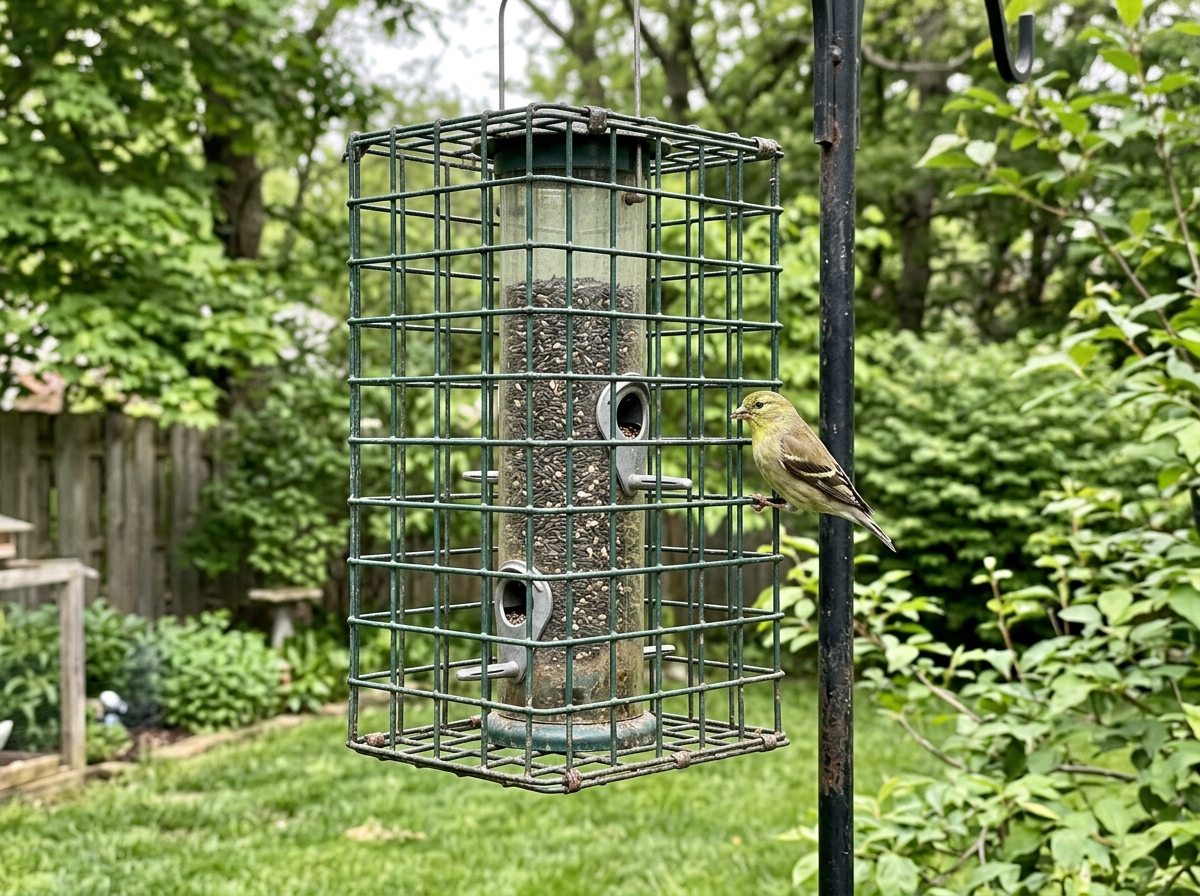
A caged feeder puts a wire cage around a standard tube feeder. The cage openings are sized so that small birds fly right through them to reach the seed, while larger birds like starlings and European Sparrows are physically blocked. University of Wyoming research on backyard feeding confirms that caged tube feeders are an effective strategy specifically for discouraging starlings from reaching food. This is one of the best options if you are dealing with a serious nuisance bird problem alongside squirrels.
Weight-activated tube feeders
These feeders have a mechanism (usually a spring-loaded shroud or perch system) that closes off the seed ports when a heavy animal lands on them. Squirrels, starlings, and larger birds typically trip the weight threshold; small birds like goldfinches and chickadees do not. This is the most effective single-feeder solution for yards with both squirrel and large-bird problems. The Brome Squirrel Buster line and the Perky-Pet Squirrel-Be-Gone are the most widely available examples.
What to avoid for small-bird-only feeding
Hopper feeders attract every bird that visits tube feeders, plus larger species like cardinals, blue jays, grackles, and red-winged blackbirds. According to Audubon Great Lakes, hopper feeders are essentially all-comers feeders. Platform or tray feeders are even more open. Neither is a good choice if your primary goal is limiting access to smaller birds. If you love cardinals and want to feed them too, keep a dedicated hopper or tray feeder separate from your small-bird setup.
How to choose the right size openings, ports, and feed type
Port and hole size
The physical size of the feeding port is the most direct mechanism for limiting access by species. Wild Birds Unlimited specifically describes finch feeder ports as "small holes for finch-sized beaks," making nyjer seed nearly impossible for starlings and blackbirds to extract while goldfinches, house finches, purple finches, pine siskins, and even black-capped chickadees can access it easily. When shopping, look for feeders that describe their ports as designed for finch-sized birds or specifically mention nyjer or thistle compatibility. Ports designed for larger sunflower seeds will also admit larger birds.
Seed type makes a big difference
The seed you put in a feeder is just as important as the feeder itself. Nyjer (also called thistle) is the top choice for finch-family birds and has the added advantage that starlings are notably uninterested in it. Wild Birds Unlimited notes that starlings "don't seem to care for" nyjer, and All About Birds advises temporarily switching to nyjer in a tube feeder as a specific tactic during nuisance-bird invasions. Black-oil sunflower seed is the other big winner for small birds, preferred by many species from chickadees to finches, but it also attracts more competition. Fine sunflower chips (hulled sunflower) split the difference: small birds love them, there is no shell waste, and the smaller particle size is harder for large-billed birds to scoop efficiently. Avoid cheap mixed seed with millet and milo in open feeders if you are trying to limit house sparrows and cowbirds.
Capacity and how often you want to refill
Small feeders with 1 to 1.5 lb capacities are fine for low-traffic yards or as a secondary feeder, but in peak season a busy goldfinch flock can empty a 1.3 lb tube feeder in a day or two. If you are attracting a lot of birds or do not want to refill constantly, look for feeders in the 2 to 3 lb range. The tradeoff is that larger feeders can become harder to keep clean, and nyjer in particular goes stale quickly if turnover is slow.
Material and weather resistance
Tube feeders come in plastic, metal, and glass. Plastic is the most common and lightest, but UV exposure and squirrel chewing degrade it over time. Metal-bodied or metal-reinforced feeders hold up far better in both weather and against squirrel damage. If you live somewhere with harsh winters or wet springs, look for feeders with UV-stabilized polycarbonate tubes or stainless steel components. Drainage holes at the bottom of the seed tube are a must for wet climates to prevent seed clumping and mold.
Ease of cleaning
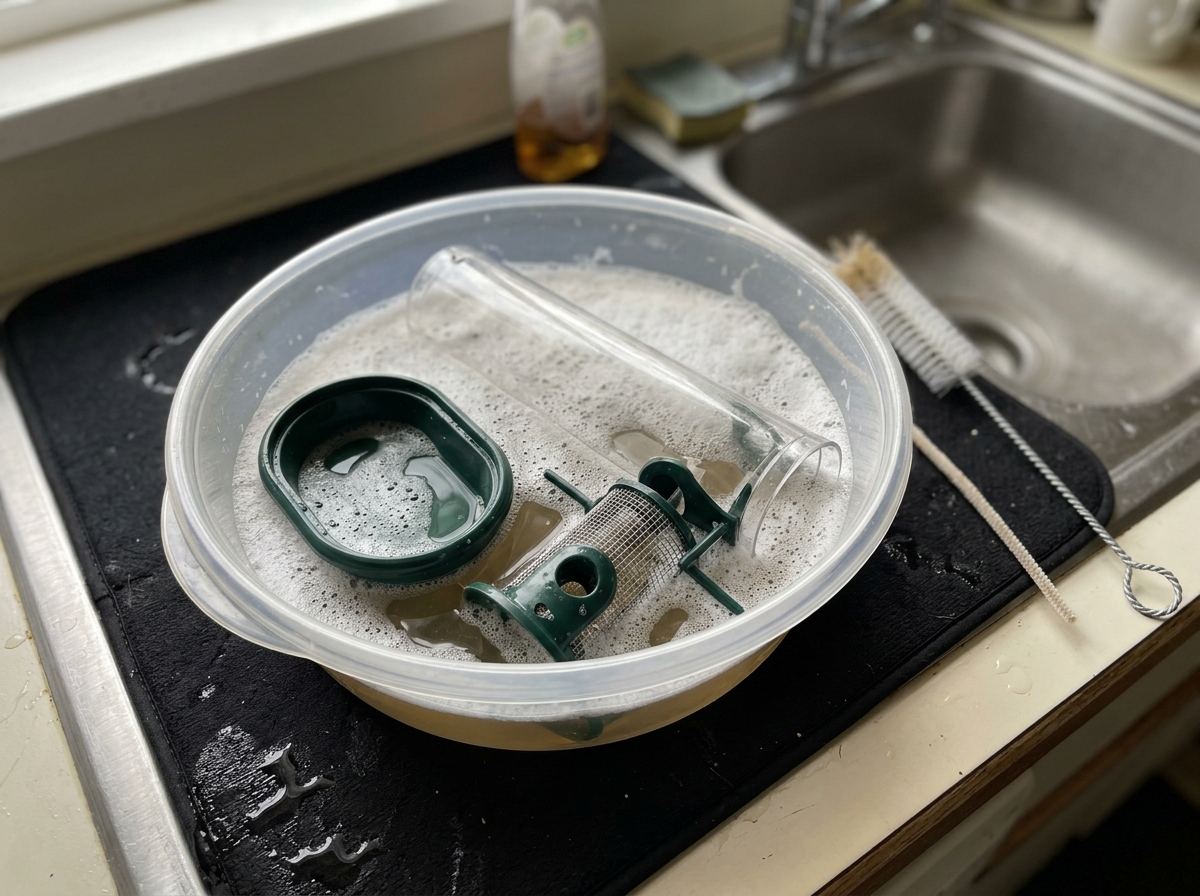
Feeders should be cleaned with hot soapy water every one to two weeks, more often in humid weather. Look for feeders that come apart easily without tools. Brome specifically highlights that you do not need to dismantle the seed tube or spring assembly to clean their Squirrel Buster feeders, which is a genuine practical advantage. Avoid feeders with narrow internal curves or complicated baffles that trap wet seed.
Top picks: best small bird feeders right now
Here are the feeders worth buying right now, organized by what each does best. These are not the only good options, but they cover the most common backyard situations.
| Feeder | Type | Capacity | Ports | Best For | Squirrel-Proof? |
|---|---|---|---|---|---|
| Brome Squirrel Buster Standard | Tube, weight-activated | 1.3 lb / 600 g | 4 | All-around small birds, squirrel-heavy yards | Yes, weight-activated shroud |
| Brome Squirrel Buster Plus | Tube, weight-activated | ~3 lb | 6 | High-traffic yards, multiple species | Yes, weight-activated shroud |
| Perky-Pet Squirrel-Be-Gone (Model 336) | Tube, weight-activated cage | Varies by model | Multiple | Budget-friendly squirrel proofing | Yes, metal weight-activated cage |
| Nature's Way Squirrel Shield Pro | Tube, weight-sensitive shield | Varies | Multiple | Clean aesthetic, deck/patio setups | Yes, collapsing seed shield |
| Caged Tube Feeder (generic) | Tube with wire cage | Varies | Multiple | Starling/large bird exclusion | Partial (cage blocks large birds) |
| Nyjer Mesh Sock Feeder | Mesh sock | 0.5–1 lb | Full mesh | Goldfinches, budget starter feeder | No |
Best overall: Brome Squirrel Buster Standard
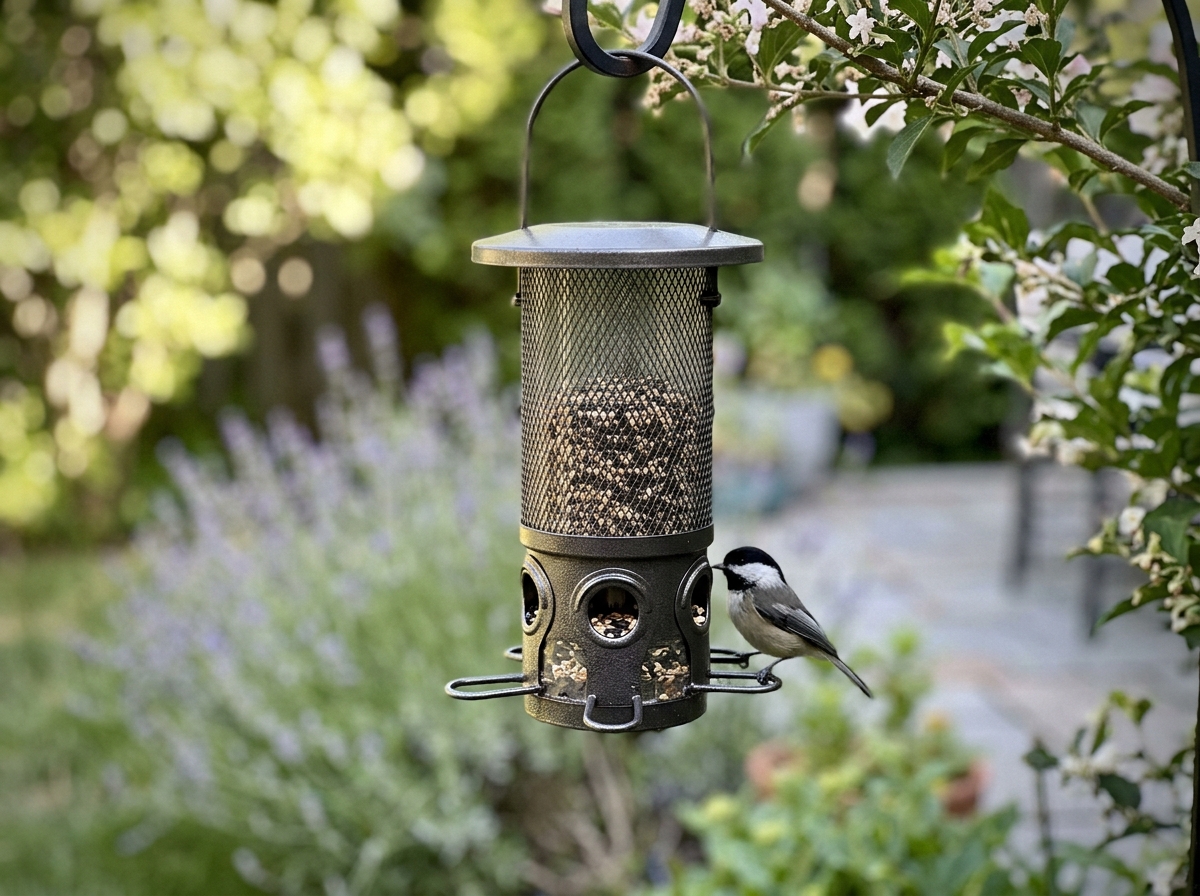
The Brome Squirrel Buster Standard is the feeder most people should start with. It holds 1.3 lb of seed (enough for a few days of moderate activity), has 4 ports sized for finch-family birds, and uses a weight-activated shroud that closes off ports when a squirrel climbs on. The cleaning design is practical: you do not need to take apart the spring mechanism to wash it. It works well with black-oil sunflower or sunflower chips. It is a bit of an investment upfront, but it outlasts cheaper plastic feeders significantly.
Best for high traffic: Brome Squirrel Buster Plus
If you are expecting heavy goldfinch or house finch activity, the Squirrel Buster Plus steps up with more ports and greater seed capacity. The same weight-activated shroud system works the same way: the squirrel's weight forces the shroud down and closes access to every port simultaneously. This is the better pick for established feeding stations or yards where you are drawing large flocks.
Best budget pick: Perky-Pet Squirrel-Be-Gone (Model 336)
The Perky-Pet Squirrel-Be-Gone uses an all-metal weight-activated cage that closes ports when triggered by a squirrel's weight. It is more affordable than the Brome models and widely available. The metal construction holds up well to squirrel chewing attempts. It is a good choice if you want squirrel protection without paying a premium price, though the mechanism is simpler than Brome's and the seed capacity is more limited.
Best for starling problems: caged tube feeder
If starlings are your primary problem rather than squirrels, a caged tube feeder is your best tool. The cage openings (typically around 1.5 inches) let small birds pass through freely while physically blocking starlings. Pair this with nyjer seed and you have a very effective double barrier against starling takeover. Many brands offer caged versions of their standard tube feeders, so look for this as an add-on feature.
Best starter/budget: nyjer mesh sock
A basic nyjer sock is the cheapest possible entry point and it genuinely works for goldfinches. You can hang one from a shepherd's hook or tree branch for under $5. The downside is durability: mesh socks wear out, get moldy in wet weather, and offer zero squirrel protection. Use one as a secondary feeder or while you decide on a longer-term setup.
Predator-proofing, squirrel control, and nuisance birds
How weight-activated feeders actually work
Weight-activated feeders rely on a calibrated spring or pivot system. When a squirrel (typically 10 to 20 oz) lands on the feeder, its weight compresses the spring or tips the cage, closing off seed ports. Small birds like goldfinches (0.4 oz) and chickadees (0.4 to 0.5 oz) are far below the threshold and feed normally. The key thing to understand is that these systems only work reliably if the feeder is installed correctly: a feeder hanging on a twisting branch or resting against a pole can interfere with the mechanism's range of motion. Follow the manufacturer's setup instructions carefully.
Squirrel baffles as a backup or standalone solution
Even the best weight-activated feeder can be defeated if a squirrel can drop onto it from above. A pole-mounted baffle below the feeder or a dome-shaped hanging baffle above it adds an extra layer of protection. University of Nebraska-Lincoln extension research on squirrel-proof feeders emphasizes that placement and installation matter as much as feeder design, and that many "squirrel-proof" claims can be bypassed without proper setup. A baffle plus a weight-activated feeder is a much more reliable system than either alone.
Dealing with starlings and blackbirds
The most effective actions against starlings and blackbirds, according to All About Birds, are: keep seed off the ground, use physical feeder access control like cages or weight-activated closures, and switch to nyjer in a tube feeder during peak nuisance periods. Starlings physically struggle with the narrow ports of tube feeders, and they are significantly less attracted to nyjer than to sunflower or mixed seed. If you are running a hopper or platform feeder alongside your tube feeders and seeing starling invasions, temporarily removing the open feeder while the flock moves through is one of the fastest solutions.
House sparrows
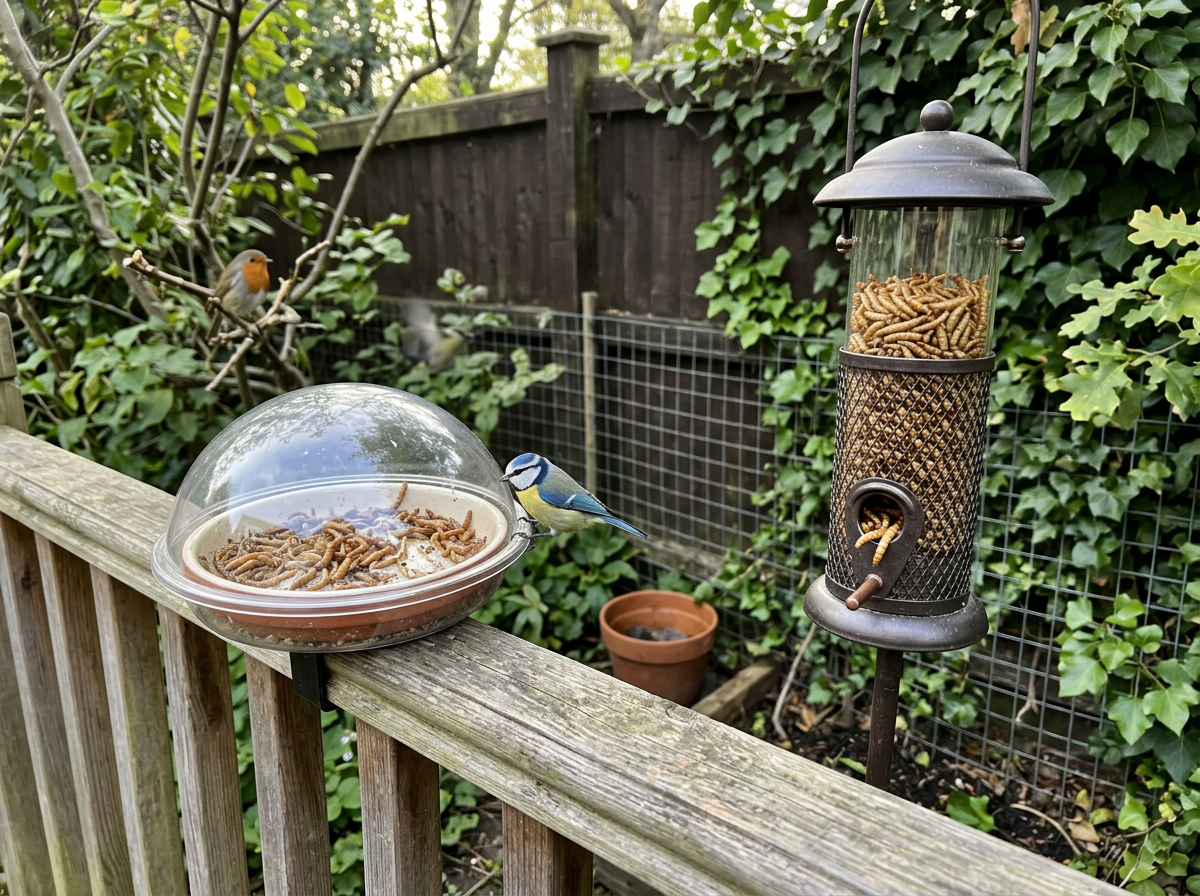
House sparrows are small enough to use most feeders designed for finches, which makes them harder to exclude by feeder design alone. Nyjer helps somewhat (they prefer millet and sunflower), and avoiding platform or ground feeding reduces their numbers. If house sparrows are a serious problem, focus on nyjer-only tube feeders and skip any open tray or ground feeding near your small-bird setup. Choose the best bird feeders for mealworms only after you’ve confirmed your setup fits the kind of food you want to offer.
Placement, mounting, and setup tips for small-bird success
Height and distance from structures
For squirrel resistance, placement matters as much as feeder design. The Internet Center for Wildlife Damage Management recommends mounting feeders at least 6 feet off the ground and at least 10 feet away from nearby branches, fences, rooftops, or other structures a squirrel could launch from. Perky-Pet's placement guidance adds that when hanging from a branch, the feeder should be at least 12 feet from the trunk and at least 4 feet below the branch. These numbers are not arbitrary: squirrels can jump up to 10 feet horizontally and drop from surprising heights accurately.
Distance from cover for bird safety
Small birds need nearby cover to escape from hawks and cats, but feeders placed too close to dense shrubs give predators an ambush spot. The general guidance from wildlife feeding research is to place feeders about 10 to 12 feet from cover like shrubs or brush piles. This gives small birds a quick escape route while keeping predators visible. If you have outdoor cats in your neighborhood, raising feeders higher (6 to 7 feet) and clearing the area below is particularly important.
Mounting options by setup type
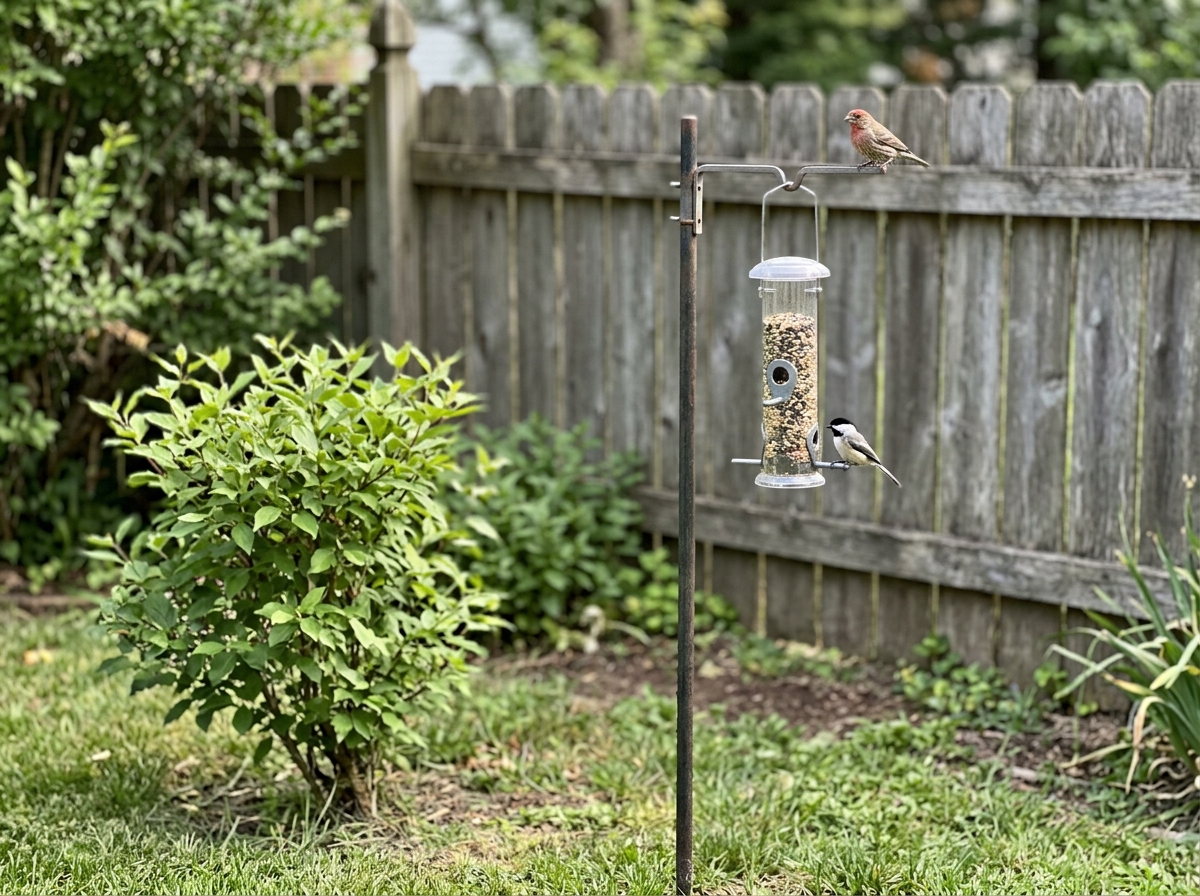
- Hanging from a shepherd's hook pole: the most flexible option; add a pole-mounted baffle below the feeder for squirrel protection; keep the pole at least 10 feet from any fence or structure
- Deck railing mount: works well for compact tube feeders; use a clamp-style rail mount rated for the feeder's weight; note that deck railings are often within squirrel-jumping distance of a house wall, so a weight-activated feeder is especially important here
- Window-mounted: suction-cup feeders designed for windows let you watch birds at close range; these attract smaller species readily but have very limited capacity and are hard to squirrel-proof
- Tree hanging: convenient but difficult to squirrel-proof without a dome baffle above; make sure the feeder hangs at least 12 feet from the trunk and is not reachable by dropping from above
- Freestanding pole systems: dedicated feeder poles with built-in baffles are the most squirrel-resistant mounting solution overall; worth the investment if squirrels are a persistent problem
How many feeders and how far apart
In a small yard, one well-placed tube feeder is often enough to start. In larger yards or where you want to attract multiple species, spacing feeders about 10 to 15 feet apart reduces competition and allows more birds to feed simultaneously. Do not place multiple feeders so close together that dominant birds (even small ones like house finches) can guard all of them at once. A nyjer tube in one spot and a sunflower tube in another gives you coverage for a wider range of small-bird species without a single feeder becoming a bottleneck.
What to do first if you are just getting started
- Buy one good weight-activated tube feeder (Brome Squirrel Buster Standard is the easiest starting point) and fill it with black-oil sunflower or nyjer depending on your target species
- Mount it on a shepherd's hook pole at least 6 feet high and 10 feet from any structure, with a baffle on the pole below the feeder
- Wait two to four weeks: new feeders in new locations take time for birds to discover
- Once you know which birds are visiting, add a second feeder with the complementary seed type to broaden your species mix
- Clean the feeder every one to two weeks with hot soapy water and let it dry fully before refilling
FAQ
Can I use the best small bird feeders on a balcony or deck without squirrels taking over?
Yes, but only if you control access. A finch-style tube feeder with nyjer usually works, but a feeder near a deck rail or balcony where squirrels cannot approach from above may still get intermittent bypass attempts. If squirrels are still active, add a baffle on the line or pole above the feeder, and avoid mesh socks if you want any squirrel resistance.
How do I choose a feeder type if I already bought a bag of seed?
Start with a feeder that matches the seed you want, not just the birds. If your goal is goldfinches and other finch-sized birds, choose a tube or finch-sock feeder and fill with nyjer. If you already have black-oil sunflower, a finch-port tube with sunflower chips is typically better than a plain hopper because port geometry limits larger-billed birds.
If starlings or grackles keep showing up, is switching to nyjer a long-term fix?
For tube feeders, a change to nyjer is most effective during nuisance-bird peaks, typically for a short window (days to a couple of weeks) until the flock pressure eases. If you switch back to sunflower too soon, starlings and grackles often return because they learned the food location. Keep other open feeders out of service during the switch if you are fighting a starling invasion.
What’s the best option if my weather is rainy and feeders get soggy?
Not usually. Many mesh feeders are great for finches but they can go from feeding to mess quickly in wet weather. If your area has frequent rain or humid springs, plan on replacing mesh socks more often, and consider a hard tube with drainage holes to reduce clumping and mold risk.
Is a larger seed capacity always better for small bird feeders?
A bigger capacity reduces refill frequency, but it can still go stale if turnover is slow, especially with nyjer. In low-traffic yards, consider a smaller feeder or refill more often to keep seed fresh. For peak-season flocks, a 2 to 3 lb tube usually prevents daily refills, but clean it on schedule because old residue attracts pests.
I’m seeing more unwanted birds after changing seed brands, what should I adjust first?
It can, because seed choice controls which birds can economically extract it. If you use fine sunflower chips, you may see more chickadees and fewer opportunists than with mixed seed. Avoid open mixed seed heavy in millet and milo if you are trying to reduce house sparrows and cowbirds.
How can I tell if my weight-activated feeder is installed incorrectly?
Yes, placement can make a weight-activated feeder fail even if it’s the right model. Make sure the feeder hangs freely and that any branch, pole, or chain is not twisting or holding it at an angle. If the shroud or cage does not return fully when unloaded, the mechanism may be out of its designed range.
Should I keep my hopper or platform feeder when I add a small-bird-only setup?
Use a cage or finch-ported tube as your primary small-bird setup, and keep hopper or platform feeders separate if you want to reduce large-bird pressure. Even if the small birds can reach the seed on a tube feeder, larger birds may dominate wherever open access exists nearby. If you are serious about starlings, temporarily remove the open feeder during peak activity.
What should I do if a squirrel defeats my squirrel guard?
Yes. If squirrels are still getting onto the feeder, think in layers: add a baffle to prevent dropping from above, then keep the weight-activated feature as the next line of defense. Placement rules matter, mount height and distance from launch points first, then tune the system with baffles.
How far from shrubs or brush should I place a small bird feeder?
Small birds still need cover, but too much nearby cover can help predators ambush. Aim for a balance, placing feeders about 10 to 12 feet from cover like shrubs or brush piles, and keep the area below clearer if neighborhood cats visit. If you only have dense hedges right next to the feeder, consider moving the feeder outward even if it slightly reduces foot traffic.
What’s the best small-bird feeder strategy when house sparrows are a problem?
House sparrows are not reliably blocked by finch-port sizing, and nyjer alone does not fully solve them. If sparrows become persistent, focus on nyjer-only tube feeders and remove or reduce open tray and ground-feeding options near the feeder. The key is eliminating easy, open access routes.
Best Bird Feeders for Mealworms: Live and Dried Picks
Top bird feeder picks for live and dried mealworms, with features, setup tips, and waste prevention for backyard birds.