The best bird feeders for mealworms are open tray or dish-style feeders with drainage holes, or domed feeders with mesh trays that keep worms contained and dry. The feeder type matters more with mealworms than almost any other food because mealworms behave differently depending on whether they're live or dried, and a feeder designed for seed will almost always fail you. Here's a practical breakdown of exactly what to buy, what to avoid, and how to set it all up. The best bird feeders for hummingbirds are different again, so it helps to match the feeder to hummingbird food and behavior.
Best Bird Feeders for Mealworms: Live and Dried Picks

Marcus Holloway
23 Mar 2026
Why mealworms need a specific kind of feeder
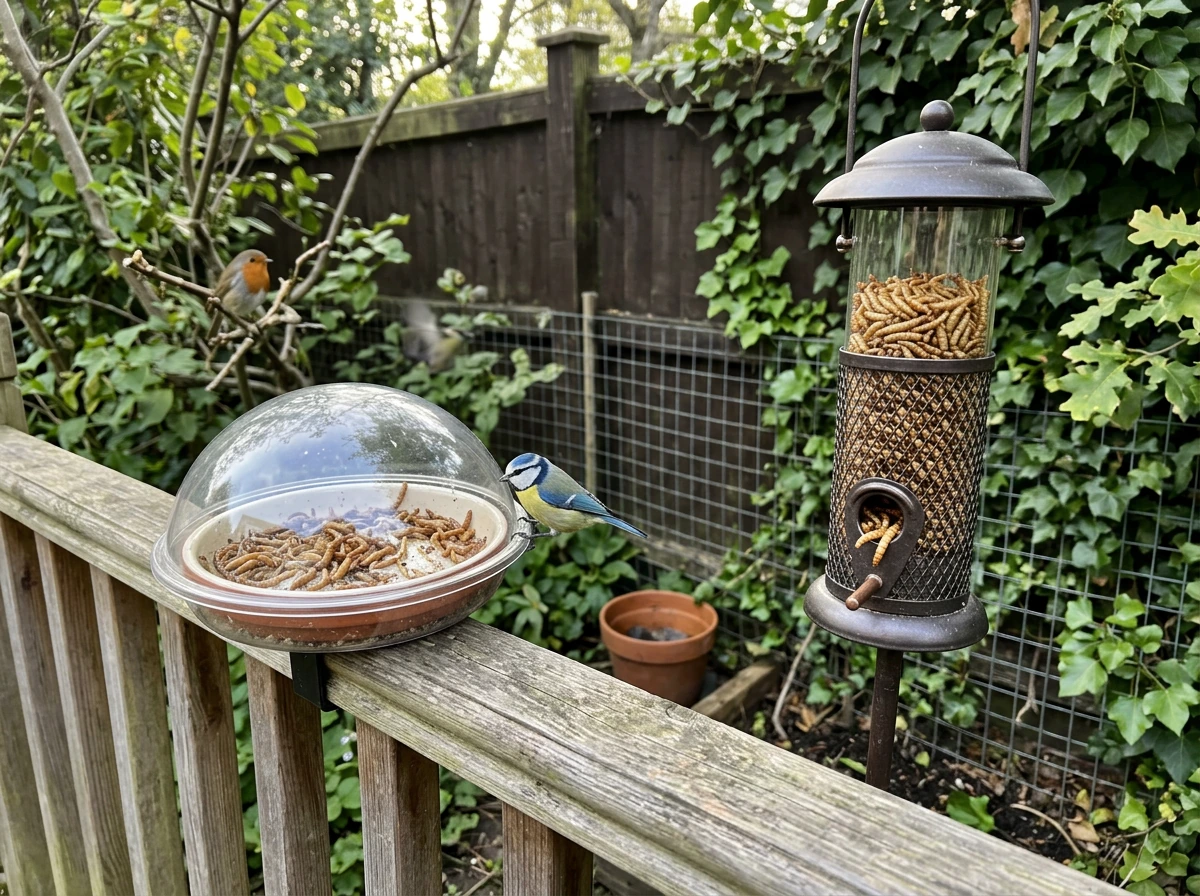
Mealworms aren't seeds. They don't flow through hoppers, they clog tube ports, and live ones will simply crawl out of any feeder without side walls or a lip. Dried mealworms are lighter and can blow away in wind if the feeder is too open. Both forms go bad fast when they get wet, which rules out the wide-open platform feeders that work great for sunflower seeds.
The features that actually matter for a mealworm feeder are: raised edges or walls that contain live worms, drainage holes so moisture doesn't pool and accelerate rot, some form of weather protection (a dome or roof) to keep rain off, and easy-access loading since you'll be refilling more frequently than you would with seed. If you're targeting bluebirds specifically, you also want some kind of <exclusion design>exclusion design</exclusion design> that limits access to smaller birds and keeps larger competitors out.
Best feeder types for live vs dried mealworms
Live and dried mealworms have genuinely different requirements, and the feeder that works best for one can underperform for the other. It's worth understanding the split before you buy.
Live mealworms
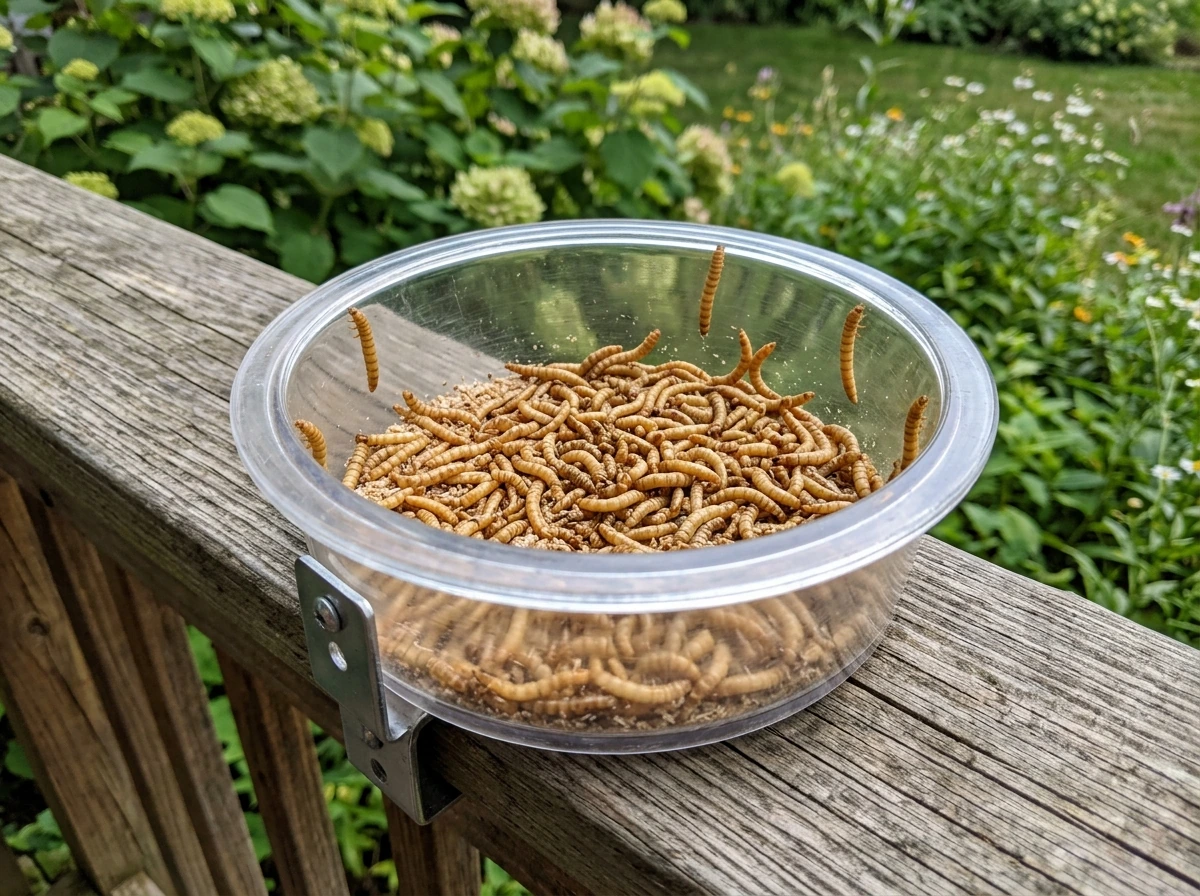
Live mealworms are active. They wriggle, they pile up, and they climb. The single most important feeder feature for live worms is a smooth-sided bowl or dish with walls high enough that the worms can't crawl over the edge. Many purpose-built bluebird feeders include a plastic guard specifically to prevent mealworm escape. Beyond containment, drainage is critical: live mealworms produce moisture as they move and die, and a feeder without drainage holes will turn into a soggy mess within a day or two, killing remaining worms and attracting bacteria. A dome or roof overhead is a big plus because direct rain will quickly contaminate live worms and accelerate die-off. For bluebirds especially, guidance from experienced bluebird monitors suggests keeping the mealworm feeder roughly 100 feet from the nestbox to train birds to a consistent feeding spot without creating a disturbance zone around the nest.
Dried mealworms
Dried mealworms (oven-dried, like Kaytee's wild bird variety) are shelf-stable and much easier to handle, but they come with their own feeder requirements. Because they're lightweight, they need some containment from wind, and because they'll reabsorb moisture, they need protection from rain just as much as live worms do. Dried mealworms can actually be used in some tube feeders designed specifically for them, like the Perky-Pet Dried Mealworm Bird Feeder with Flexports (model 388F), which uses flexible port openings because standard rigid ports make it hard for birds to extract dried worms cleanly. A micro-mesh tray with air circulation, like the one on the Premium Domed Mealworm Feeder from the Audubon Shop, works well for dried mealworms too because the airflow keeps moisture from building up around the food.
| Feature | Live Mealworms | Dried Mealworms |
|---|---|---|
| Containment walls needed | Yes, high smooth sides | Lower walls acceptable |
| Drainage holes | Essential | Helpful but less critical |
| Weather cover / dome | Very important | Very important |
| Port-style feeder | Does not work | Works if ports are flexible/wide |
| Cleaning frequency | Every 1-2 days | Every few days to weekly |
| Spoilage speed in rain | Very fast (hours) | Fast (absorbs moisture quickly) |
| Wind loss risk | Low (worms stay put) | Higher (light, can blow away) |
Top picks: best bird feeders for mealworms
There's no single feeder that's perfect for every setup, but these categories cover most backyard situations well. Here are the top types with specific models worth considering.
Best overall: domed dish feeder
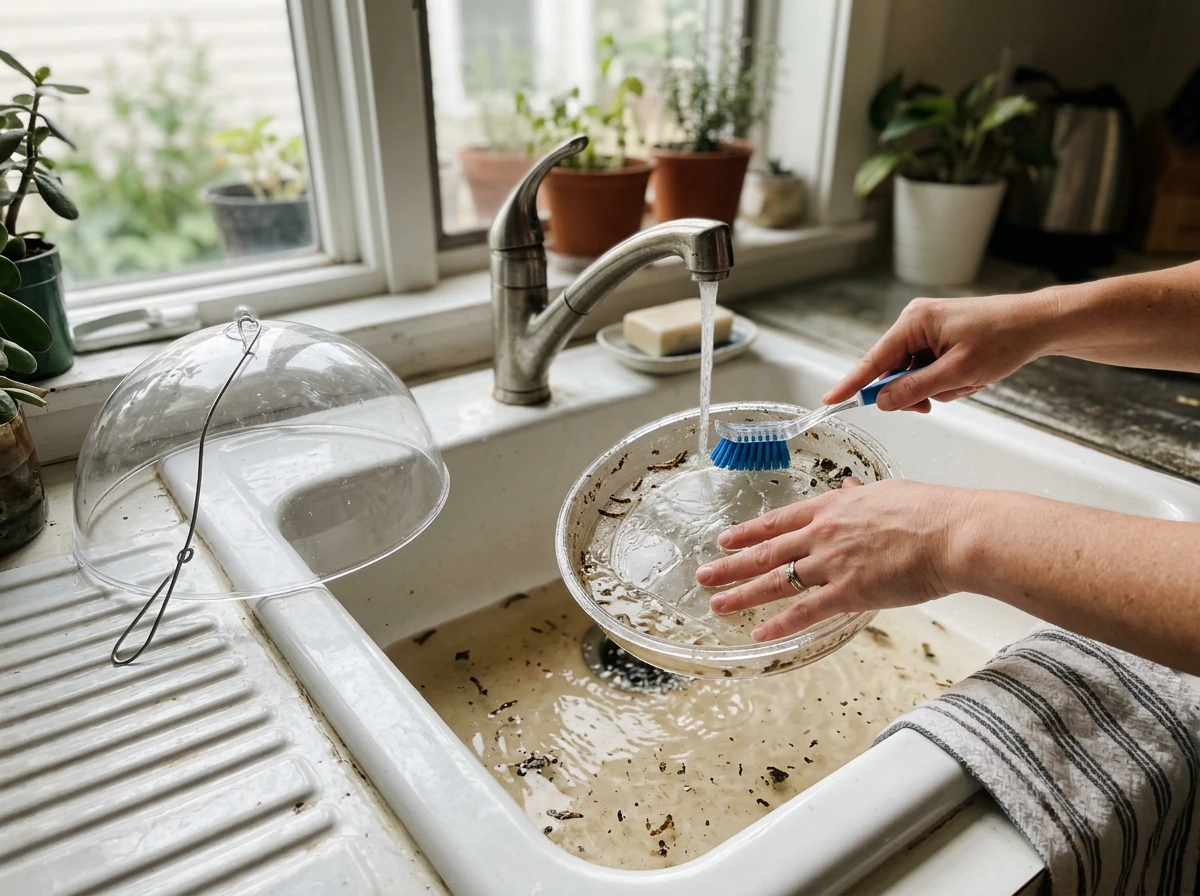
The Premium Domed Mealworm Feeder from the Audubon Shop is the closest thing to an all-in-one solution. It uses a micro-mesh tray that allows air to circulate around the worms, which keeps them fresher and drier than a solid-bottom dish. The dome overhead protects against rain and direct sun. The manufacturer explicitly recommends it for live mealworms in spring and dried mealworms in fall and winter, so one feeder handles both forms across the year. This is the pick if you want a low-maintenance option that handles weather well and doesn't require separate seasonal feeders.
Best budget/simple option: hanging dish feeder
The Songbird Essentials Hanging Mealworm Dish Feeder (model SE517) is a 6-inch by 6-inch plastic dish with drainage holes in the bottom and perches around the edge. It's simple, inexpensive, and easy to clean. The drainage holes are the key feature here, minimizing rot and spoilage from moisture buildup. It works best in covered locations (a porch overhang, under a tree canopy) where the dish itself isn't taking direct rain. Good for someone just starting out with mealworm feeding who wants to test bird interest before committing to a more complex setup.
Best for dried mealworms specifically: tube/port feeder
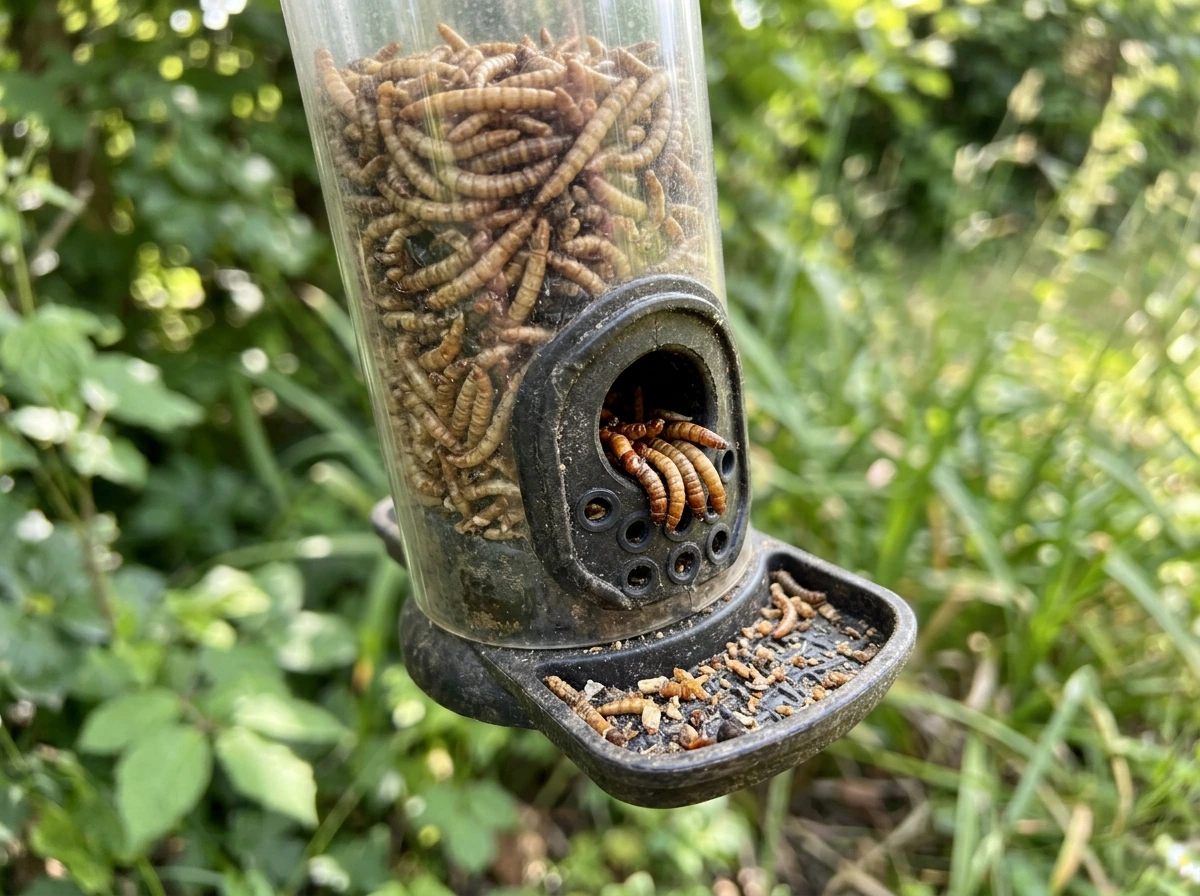
The Perky-Pet Dried Mealworm Bird Feeder with Flexports (model 388F) is designed specifically for dried mealworms and solves a real problem: standard rigid ports are genuinely difficult for birds to extract dried worms from, because the worms don't flow the way seeds do. The flexible port design makes it significantly easier for smaller birds to grab food. This is the best pick if you're exclusively using dried mealworms and want a hanging feeder with some capacity so you're not refilling constantly.
Best for bluebird exclusion: caged dish feeder
The Duncraft Blocker Bluebird Feeder pairs a mealworm dish with a caged, roofed design that controls which birds can get inside. This style is ideal if you're specifically targeting bluebirds and dealing with starlings, grackles, or house sparrows that would otherwise dominate an open dish. The cage openings allow small songbirds to enter while physically blocking larger birds. If bluebirds are your main goal, this is the right category of feeder to look for.
Best retrofit option: wire cage add-on
If you already own a dish or tray feeder you like, a retrofit wire cage like those from Bluebird Landing can convert it into a bully-resistant mealworm feeder. The 13.5-inch version uses 1.38 by 1.38 inch openings that allow small songbirds through while blocking squirrels, grackles, and starlings. This is a cost-effective way to upgrade a feeder you already have rather than replacing it entirely.
Species and situation matching
Mealworms attract a broader range of birds than most people expect. The obvious targets are bluebirds, robins, and wrens, but according to the Minnesota DNR, gray catbirds, Baltimore orioles, and northern cardinals are also reliably attracted to mealworms, and that’s why the best bird feeders for cardinals often include mealworm-friendly designs. Chickadees, titmice, nuthatches, warblers, and even jays will take them. The common thread is that these are all birds that eat insects as a significant part of their diet and that don't typically show up at seed-only feeders.
Placement should match the birds you're after. Robins and thrashers are ground-level feeders by nature, so a low dish on a short post or even a ground tray about a best ground bird feeder setup will suit them better than a hanging feeder at eye level. Bluebirds prefer an open sight line and will approach from a perch, so a pole-mounted dish at about 4 to 5 feet off the ground in an open area works well. Wrens and chickadees are comfortable with hanging feeders in shrubby, partially sheltered spots. If you're targeting multiple species, a pole-mounted domed dish at mid-height in a semi-open yard location is the most versatile starting point.
For balcony or small-space setups, a simple hanging dish like the Songbird Essentials model works well because it's compact and easy to hang from a hook or railing bracket. Just keep in mind that balcony feeders can be harder to predator-proof and may attract pigeons or house sparrows more aggressively than a yard setting.
Quick species-to-feeder guide
| Target Bird | Best Feeder Style | Placement |
|---|---|---|
| Bluebirds | Caged dish or domed dish | Pole-mounted, 4-5 ft high, open area, ~100 ft from nestbox |
| Robins / thrushes | Open dish or low tray | Near ground, partially shaded |
| Wrens / chickadees | Hanging dish or domed feeder | Shrubby area, 4-6 ft high |
| Nuthatches / titmice | Hanging dish or port feeder | Near trees, 5-6 ft high |
| Orioles / catbirds | Open platform or dish | Open yard, 4-5 ft high |
| Mixed small songbirds | Domed dish or caged tray | Semi-open, 4-6 ft high |
Weather, mess, and cleaning: keeping mealworms fresh and edible
Mealworm feeders get dirty faster than seed feeders. Live worms die, dried worms absorb moisture, and both leave behind residue that can harbor bacteria and mold. If you see sick or dying birds near your feeder, the Wyoming Game and Fish Department recommends removing the feeder entirely and waiting four weeks before putting it back up, because congregating birds at a contaminated spot spreads disease quickly.
For regular cleaning, the Bird Rescue Center recommends soaking feeders for 10 to 15 minutes in a warm 9:1 water-to-bleach solution, then rinsing thoroughly and letting the feeder dry completely before refilling. For live mealworm feeders, aim to clean every one to two days in warm weather. Dried mealworm feeders can go a bit longer, but if you see any clumping, discoloration, or strong odor, clean immediately. A feeder that's easy to disassemble into flat pieces will save you significant time here, which is one practical reason to favor simple dish-style feeders over complex multi-part designs.
In rain, protect the feeder as much as possible. Even a 20-minute downpour can ruin a full portion of live mealworms. Dome-style feeders handle this the best. If your dish feeder lacks a dome, position it under a natural or artificial overhang. Avoid filling more than you expect birds to consume in a few hours on rainy days, and use the drainage holes to your advantage by tipping the dish to drain standing water if needed.
Predator-proofing and pest control
Squirrels
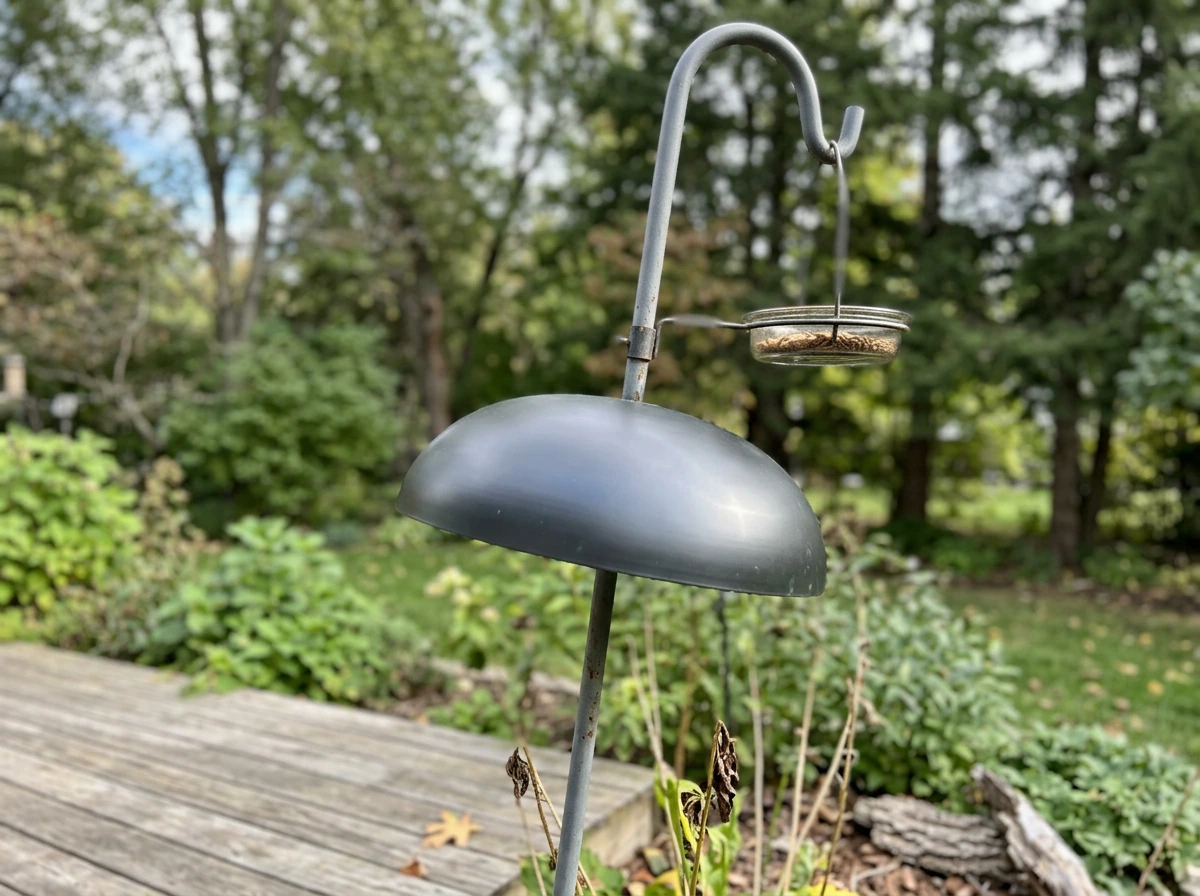
Squirrels will eat mealworms and will figure out your feeder faster than you'd expect. The most reliable defense is a squirrel baffle on the pole below the feeder. The Wild Bird Habitat Store recommends positioning the baffle so the bottom of the feeder sits at least 4 to 5 feet off the ground. Keep the feeder at least 10 feet horizontally from any tree limb, fence, or structure a squirrel could jump from. A dome-style feeder can also double as a squirrel deterrent if the dome is wide enough and slippery enough to prevent gripping.
Ants
Ants are drawn to mealworms quickly, especially in summer. The fix is an ant moat, either built into the feeder or added as an accessory. Wild Birds Unlimited describes ant moats as water-filled barriers placed between the hanger and the feeder body. Products like the Ant Guard from WildAboutBirds use the same principle. Fill the moat with water, check it regularly (it evaporates fast in heat), and ants can't cross. This is a simple, non-chemical solution that works very reliably.
Grackles, starlings, and other bully birds
Large bully birds are one of the most common frustrations with mealworm feeders, because an open dish is basically an all-you-can-eat buffet for any bird that shows up. The most effective solution is a caged feeder or a retrofit wire cage with openings sized for small songbirds. The Bluebird Landing retrofit cages use 1.38 by 1.38 inch openings that physically block grackles and starlings while letting bluebirds, wrens, and chickadees pass through. If you're not ready for a full cage setup, simply placing the feeder in a more enclosed spot (under a shrub canopy, near dense cover) will reduce grackle access because they prefer wide-open feeding areas. You can also limit portion size so there's less reward for large birds to linger.
Setup tips and your buying checklist
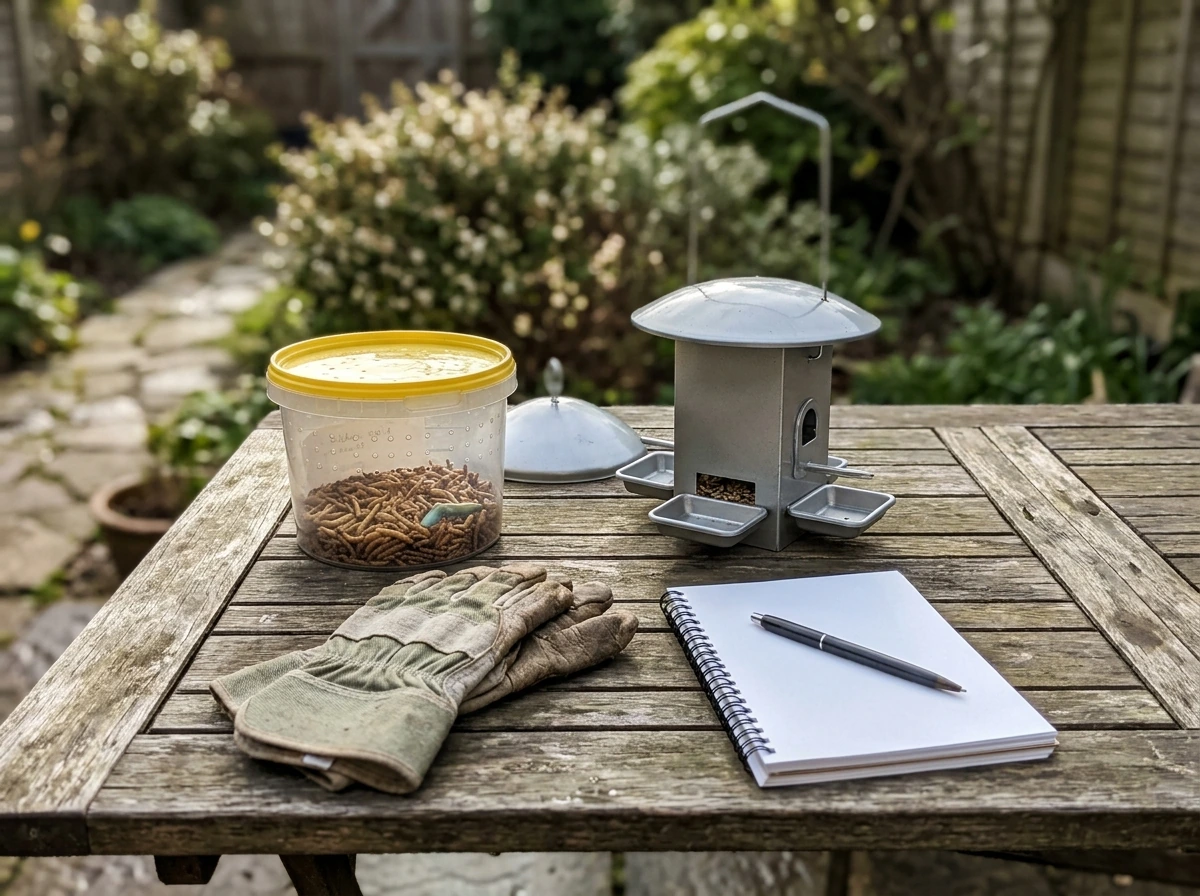
Before you buy, work through these questions to narrow your choice. Do you want live mealworms, dried, or both? Live worms require more frequent cleaning and a taller-walled feeder. Are you targeting a specific species like bluebirds, or just attracting a range of insect-eating songbirds? Bluebird-focused setups need exclusion features. Do you have a squirrel problem? Budget for a baffle alongside the feeder. Is your location exposed to rain? Prioritize a domed feeder. How much maintenance time do you have? Simple dish feeders are easiest to clean.
Here's a practical checklist to run through before finalizing your purchase:
- Choose feeder style: domed dish for all-around use, open dish for budget or sheltered spots, tube/port feeder for dried-only, caged feeder for bluebird exclusion
- Confirm the feeder has drainage holes or a mesh tray, not a solid sealed bottom
- Check that walls or edges are high enough to contain live worms (at least 1.5 inches) if you plan to use live mealworms
- Plan mounting height: 4 to 5 feet off the ground for most species, with a squirrel baffle on the pole
- Keep feeder at least 10 feet from any horizontal squirrel jump point (fence, tree, ledge)
- Add an ant moat if hanging the feeder, or buy a feeder with one built in
- Place within sight of a perch (tree branch, fence post) so birds can survey before approaching
- For bluebirds: position roughly 100 feet from any nestbox
- Start with small mealworm portions (a tablespoon or two) until you know bird traffic, to reduce waste and spoilage
- Set a cleaning schedule: every 1 to 2 days for live mealworms, every few days for dried, using a 9:1 water-bleach soak
If you can only buy one feeder today, the domed dish style with a micro-mesh or drilled-drainage tray is the most versatile starting point. It handles live and dried mealworms, protects from weather, and works for the widest range of species. Add a retrofit cage if bully birds show up, an ant moat from day one, and a squirrel baffle if you're on a pole mount. That combination covers the vast majority of backyard mealworm feeding situations without overcomplicating the setup.
If bluebirds are your main target, check out feeder guidance specific to bluebirds for more detail on nestbox proximity and exclusion feeder designs. And if you're building out a full feeding station, pairing a mealworm feeder with the best bird feeders for cats can turn your yard into a genuinely productive habitat for insect-eating birds across the whole season.
FAQ
Can I use a regular seed hopper or tube feeder for mealworms if I just add worms on top of the seed?
Usually no. Mealworms are too heavy to flow through ports, they clog tube openings, and live worms can crawl out of designs meant for seeds. If you want a tube-style option, use feeders made for dried mealworms with the right port mechanics and extraction access, not standard seed tubes.
How do I tell if my feeder is trapping moisture and killing live mealworms too fast?
Look for pooling under the dish, clumps, a wet or sour smell, and worms that stop moving quickly even in mild weather. If you see residue or standing water, switch to a tray with drainage and keep the feeder under cover, then wash and fully dry before refilling.
What’s the best way to start feeding mealworms without attracting the “wrong” birds immediately?
Begin with a smaller portion size and place the feeder where your target species can approach easily, like an open sightline for bluebirds or denser cover for wrens. If bully birds are already showing up, add a retrofit wire cage or move the dish under partial shrub canopy to reduce wide-open access.
How often should I replace live mealworms, not just refill?
Even with drainage, live worms lose viability after a short period, especially with heat or after repeated rain. In warm weather, plan to refresh frequently, and treat any feeder with dead worms, discoloration, or odor as overdue for cleaning and replacement.
Are dried mealworms safe to feed in the same feeder used for live mealworms?
Yes in most cases, but you must fully clean and dry the feeder first because dried worms reabsorb moisture and residue can speed spoilage. If you notice clumping or a film on the tray, do not simply add more dried worms, clean thoroughly and restart with a dry portion.
Do I need drainage holes for dried mealworms too?
Drainage is still helpful, because rain and condensation can cause damp clumping and mold growth. Even though dried mealworms are more stable, a feeder that sheds water and dries quickly will stay cleaner and keep birds eating rather than picking at damp food.
How much mealworm should I put out during rain or very windy days?
Use smaller portions so the food is consumed before it gets fully soaked. For wind exposure, prioritize domes or wind-resistant trays, and avoid filling a dish to the brim since dried worms can blow or scatter when they are uncovered and very light.
Will mealworms attract squirrels even if the feeder is domed or in a baffle setup?
Domes help with rain and sometimes grip, but squirrels can still learn the route. A baffle on a pole at the recommended height and keeping the feeder away from jump points like branches and fences are what usually prevents repeat visits. If squirrel activity continues, tighten placement distance and consider adding more physical distance or a cage design.
What should I do if I see sick or dead birds near the feeder?
Remove the mealworm feeder immediately and wait before restarting, then clean and disinfect anything that contacted the residue. If birds keep congregating at the same spot after cleaning, change the location or pause feeding until conditions improve, since disease can spread through repeated use of a contaminated feeding area.
How can I keep ants from taking mealworms without using pesticides?
Use an ant moat or an ant guard barrier with water as the separating layer. Refill and check it often because evaporation and heavy heat can break the barrier. Keep the hanger and feeder area clean so ants do not form trails around residue.
What’s the difference between a dish feeder and a caged feeder for bluebirds?
A dish feeder is open and draws many insects-eating birds, but it also makes it easier for larger “bully” birds to monopolize the food. A caged or retrofit wire design allows smaller birds through while physically blocking bigger competitors, which usually improves bluebird consistency if starlings or grackles are present.
Where should I place the feeder if I’m trying to feed multiple species at once?
Use a mid-height, semi-open location as a starting point, since it gives a practical compromise for different feeding styles. Then adjust based on actual visitors: move lower for ground feeders like robins, and move into denser cover for small birds that prefer sheltered access.
Next Articles
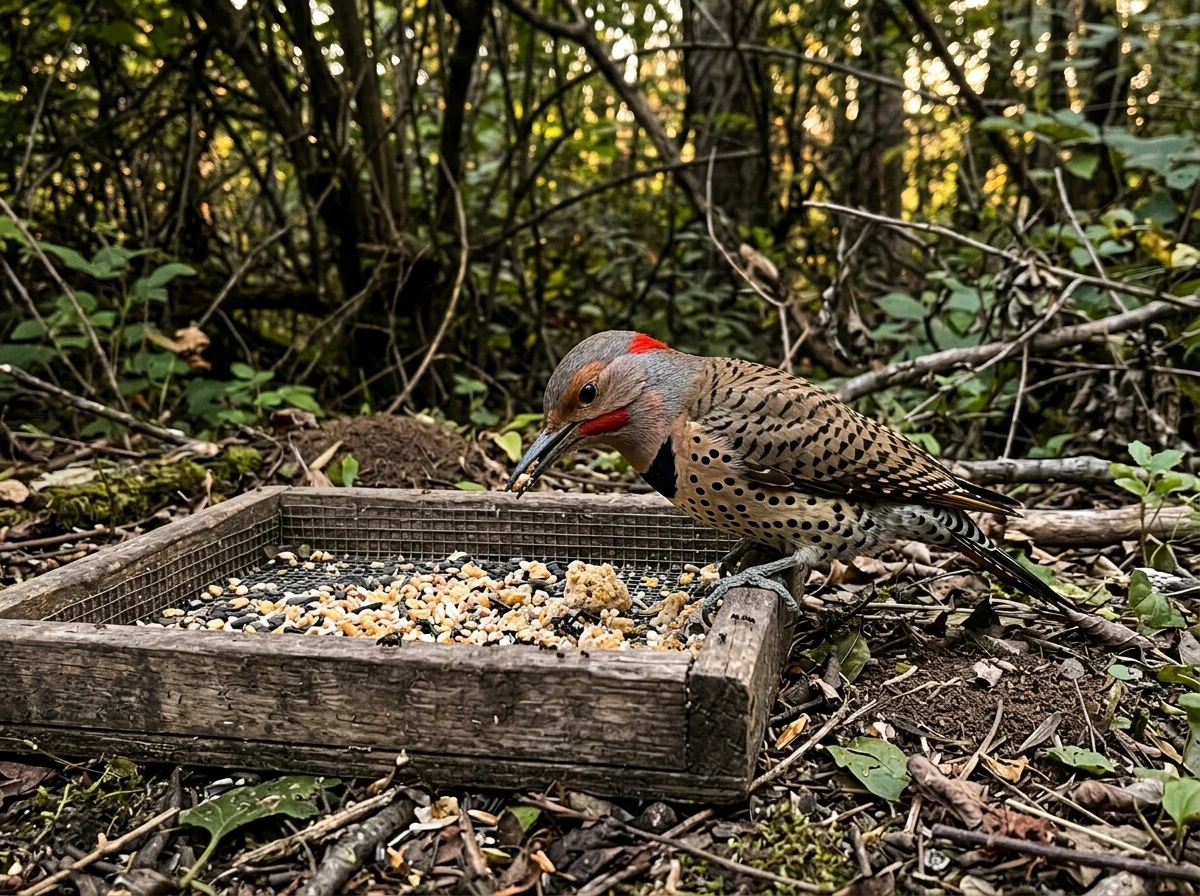
Best Bird Feeders for Flickers: Buying Guide and Setup Tips
Pick the best bird feeders for flickers: feeder styles, placement, squirrel-proofing, and setup tips to attract them fas
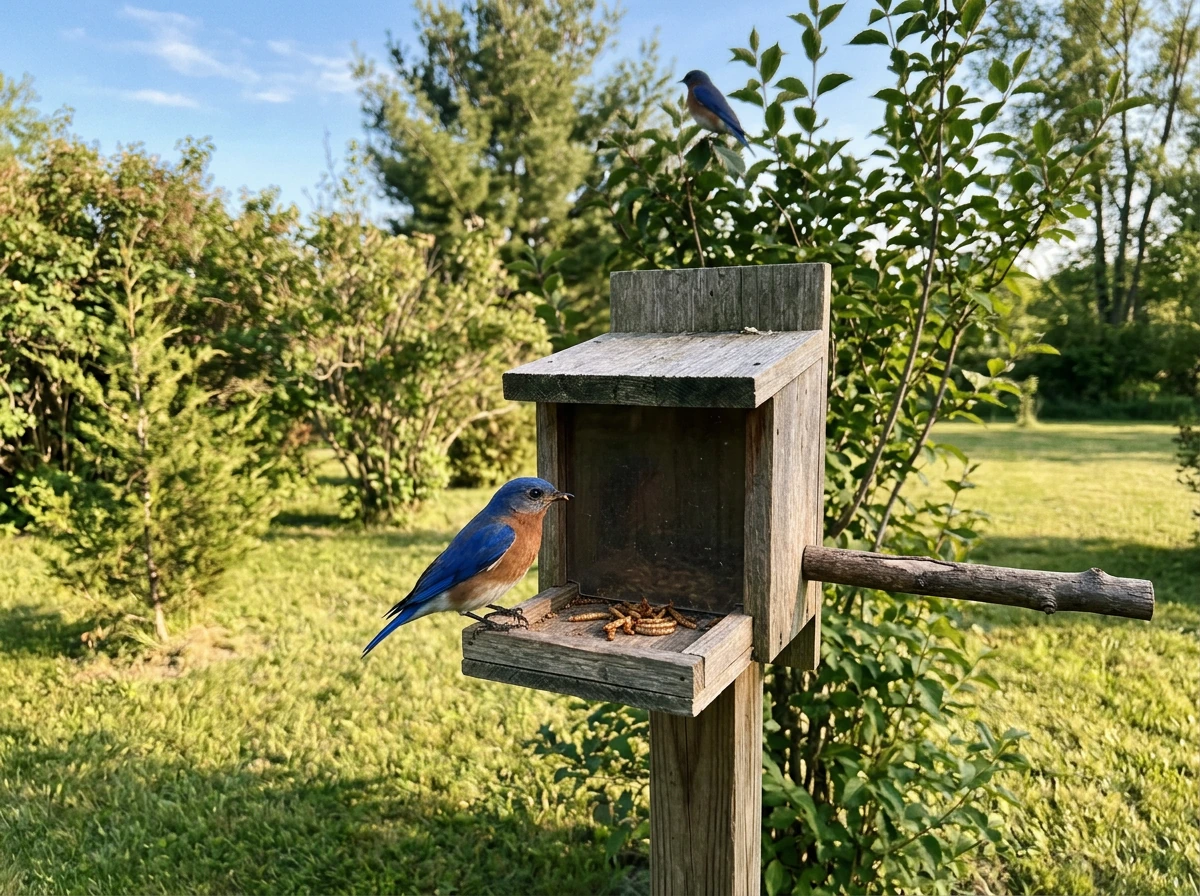
Best Bird Feeders for Bluebirds: What to Buy and Feed
Find the best bird feeders for bluebirds plus exact food and placement tips to attract and protect them.
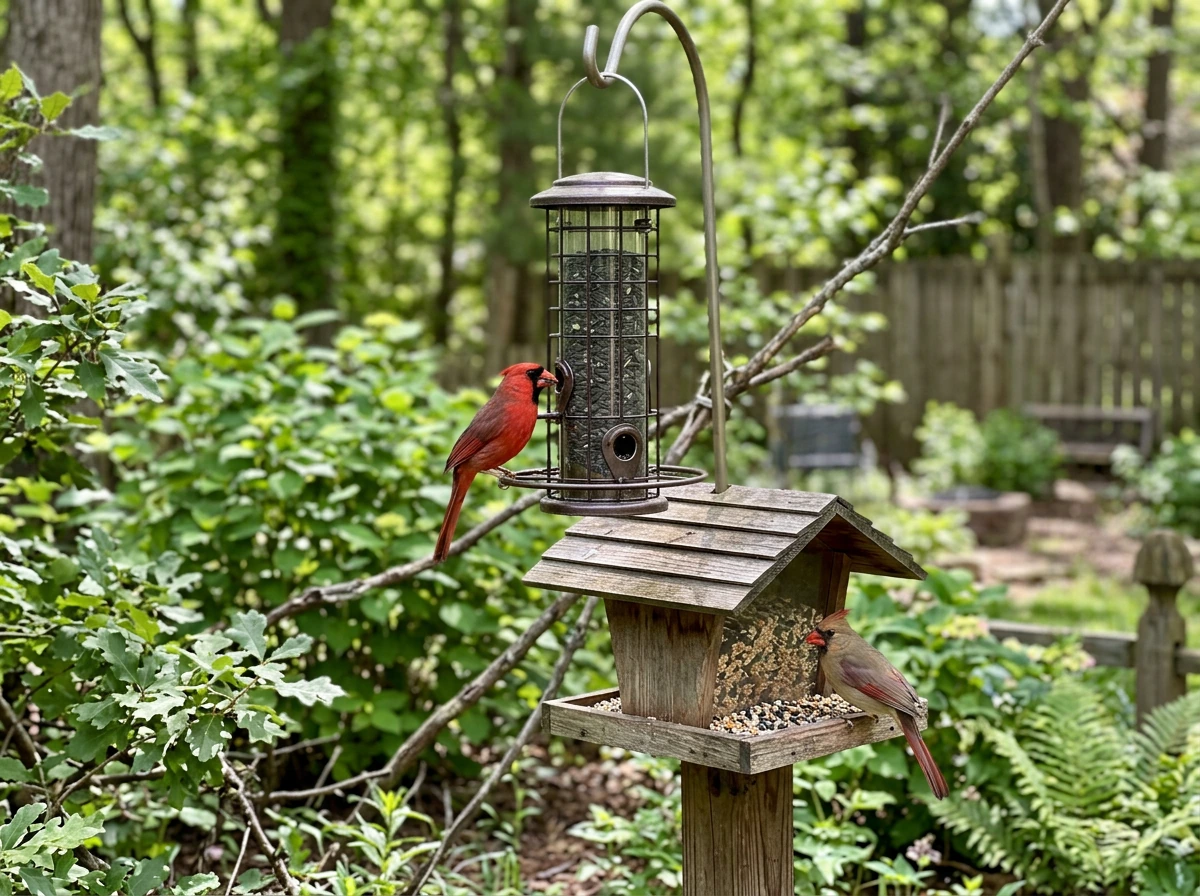
Best Bird Feeders for Cardinals: Types, Setup, and Tips
Best bird feeders for cardinals: tube and outdoor setups, ideal seed, placement, and squirrel and pest-proofing tips.