For most Colorado backyards, a UV-resistant tube feeder loaded with black-oil sunflower seed on a baffled pole is the single best starting point. It handles the wind, survives the temperature swings, and pulls in the widest variety of birds including finches, chickadees, nuthatches, and pine siskins. From there you layer in a suet cage for woodpeckers and flickers, and a nyjer feeder if you want to target American Goldfinches and Pine Siskins specifically. Colorado's conditions are harsher than most states, so the feeder you pick, how you mount it, and how often you clean it all matter more than they would somewhere milder.
Best Bird Feeders for Colorado: Picks for Winter and Wind
Marcus Holloway
18 May 2026
What Colorado's climate does to bird feeders
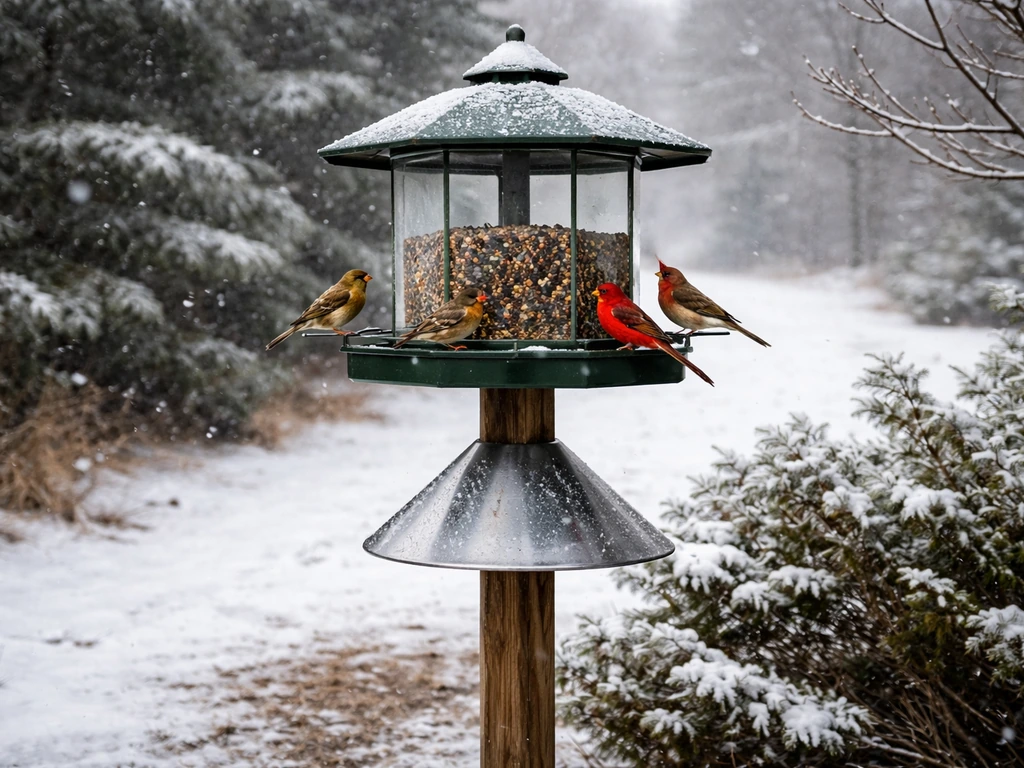
Colorado throws a lot at outdoor equipment. You get hard freezes from October through April at elevation, sudden warm spells that thaw and refreeze seed into solid blocks, intense UV at high altitude that degrades cheap plastics in a single season, and persistent wind on the Front Range and eastern plains that can flip a lightweight feeder right off its hook. Snow is the one that catches people off guard the most: a thick snow layer seals a fully stocked feeder shut so birds literally cannot reach the food inside. Cincinnati Parks makes this exact point, and after watching it happen in my own yard I started shaking feeders clear every morning after a storm.
Material choice matters a lot here. Clear polycarbonate and ASA plastic hold up far better than standard acrylic in UV-intense environments. Powder-coated metal ports and reinforced seed tubes resist warping from repeated freeze-thaw cycles. Wood hoppers look beautiful but need to be cedar or rot-resistant equivalents, and even then they require more maintenance in wet mountain springs. Whatever you buy, check the manufacturer's listed operating temperature range before committing, especially if you're in the mountains above 8,000 feet where -20°F nights are realistic.
Match your feeder to the birds you actually want
Colorado has a genuinely diverse winter bird population, and the feeder type you choose functions almost like a filter. A nyjer tube pulls in small finches and mostly excludes larger birds. A platform feeder welcomes practically everyone, including species you might not want. Before buying anything, spend a morning watching what shows up in your yard and decide who you're feeding.
| Target Bird(s) | Best Feeder Type | Best Seed/Food |
|---|---|---|
| American Goldfinch, Pine Siskin, House Finch | Nyjer tube or mesh sock | Nyjer (thistle) |
| Black-capped Chickadee, Nuthatch, Junco | Tube feeder or hopper | Black-oil sunflower |
| Northern Flicker, Downy/Hairy Woodpecker | Suet cage (tail-prop style) | Suet or suet dough |
| Blue Jay, Steller's Jay | Platform or hopper feeder | Black-oil sunflower, peanuts |
| House Sparrow, Dark-eyed Junco | Platform feeder or hopper | White millet, sunflower |
| Broad-tailed Hummingbird, Rufous Hummingbird | Nectar/hummingbird feeder | 1:4 sugar-to-water nectar |
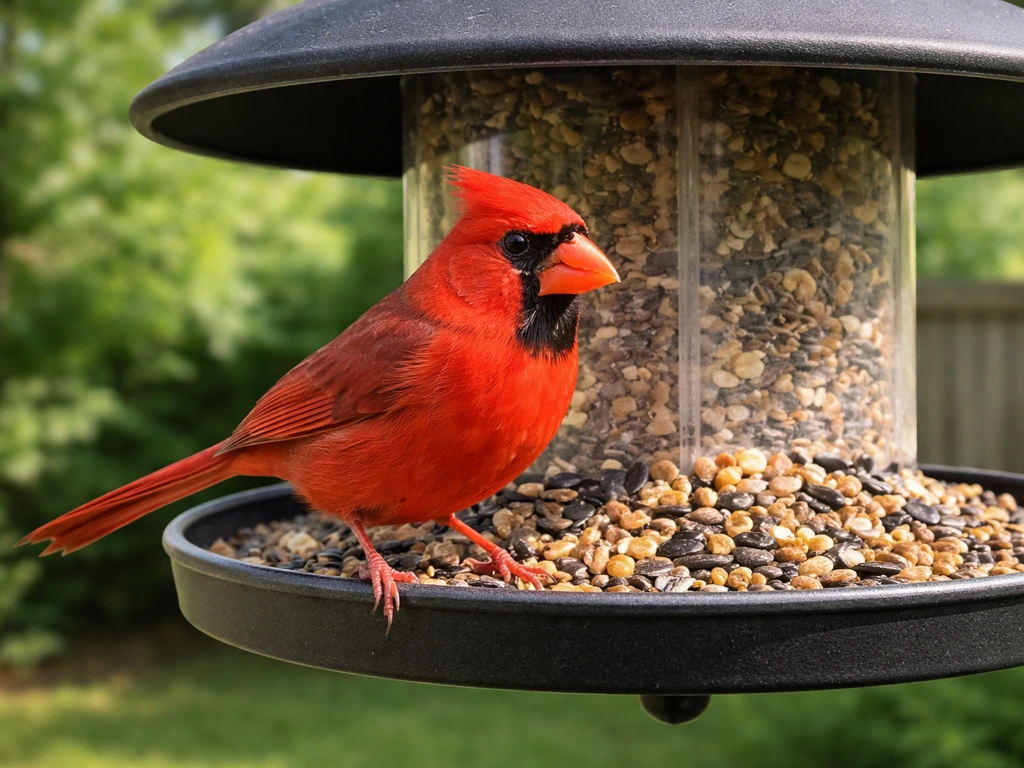
| Northern Cardinal (eastern foothills) | Hopper feeder with wide tray | Black-oil sunflower, safflower |
Black-oil sunflower is the anchor seed for Colorado. CSU Extension's Gilpin County office specifically calls it out as the go-to winter bird food, and Project FeederWatch backs that up, listing it as a favorite for cardinals, chickadees, finches, and sparrows. If you only stock one seed, make it black-oil sunflower. Nyjer is the add-on that dramatically boosts the number of small finches you see, but it needs its own feeder with small ports because the seeds fall straight through standard tube openings.
Tube feeders for finches and small songbirds
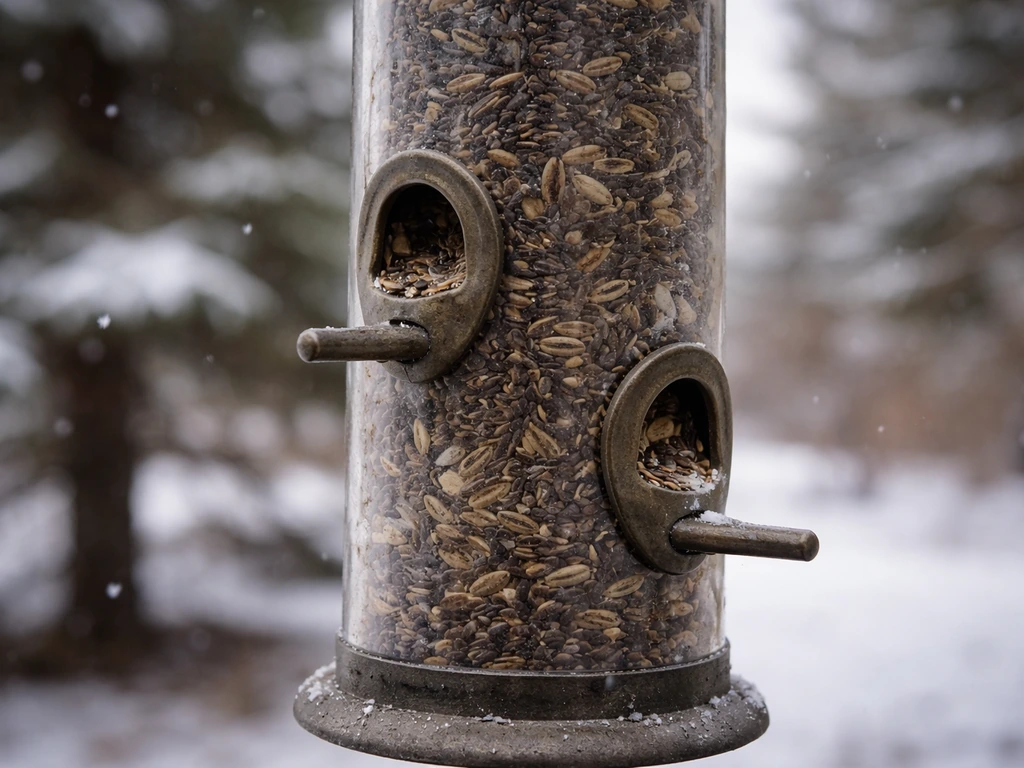
Tube feeders are the workhorses of a Colorado setup. A sunflower tube brings in the broadest mix of small to medium birds. A dedicated nyjer tube or mesh sock feeder targets goldfinches and pine siskins almost exclusively, since the tiny ports effectively exclude larger birds. Cornell Cooperative Extension confirms this: specialized tube feeders with small openings give small-billed birds an advantage that larger birds simply cannot overcome. Look for tubes with metal-reinforced ports because squirrels will chew through plastic ones in an afternoon. UV-stabilized polycarbonate on the tube itself is a must in Colorado's high-altitude sun.
Hopper feeders for jays, cardinals, and chickadees
A hopper feeder is essentially a weather-protected bin that dispenses seed as birds eat. It holds more volume than a tube, so you're refilling less often, which matters during a cold snap when you'd rather not be outside every day. Cornell Cooperative Extension notes hoppers attract most common feeder birds, including jays, cardinals, and finches. The downside is exactly that: they attract everyone, including House Sparrows and European Starlings in large numbers. Cedar hoppers are the traditional choice, but make sure any wood feeder has drainage holes in the tray to prevent wet seed rot, which is a real issue in Colorado's spring slush season.
Platform feeders for ground-feeding species
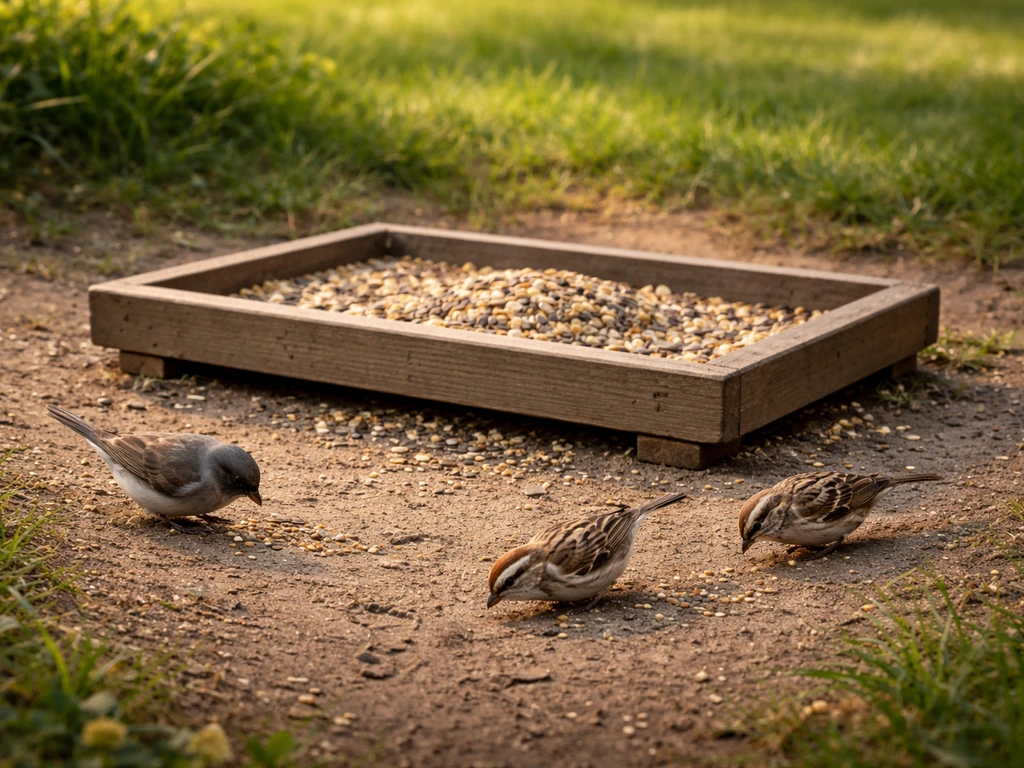
Dark-eyed Juncos, White-crowned Sparrows, and Mourning Doves all prefer to feed low or on the ground. A platform feeder mounted at about 18 to 24 inches or placed directly on a deck railing works well for these species. The open tray design means snow covers the seed fast after a storm, so you'll be clearing it more often than a hopper. A mesh or screened platform bottom helps wet seed drain rather than pool and rot underneath. These are the least squirrel-resistant feeder type by design, so pair them with a cage or accept that squirrels will use them freely.
Suet feeders for woodpeckers and flickers
Suet is one of those things that works almost embarrassingly well in Colorado winters. CSU Extension lists flickers, woodpeckers, chickadees, and nuthatches as suet regulars, and I've seen a Downy Woodpecker show up within 20 minutes of hanging a new suet cage.
The tail-prop style feeder from Nature's Way is worth specifically calling out: it positions the suet so a woodpecker can brace its tail against a lower extension the way it naturally would against a tree trunk, and visitation rates with this style are noticeably higher than with a flat cage. In cold Colorado winters, suet stays firm and fresh much longer than it would in a warm-climate state, so a standard suet cake can last a week or two easily.
In summer heat, no-melt suet dough is a better choice.
Hummingbirds in Colorado: what they need and when
Colorado gets Broad-tailed Hummingbirds from roughly May through August at mid-elevations, and Rufous Hummingbirds in late summer as they migrate through. That's a narrower window than you'd have in Arizona or Georgia, so the feeder you use needs to perform reliably during that specific stretch rather than year-round. If you are planning for Arizona, focus on feeders that can handle hot, dry conditions and still attract the birds you want year-round best bird feeders for arizona. The nectar ratio that works everywhere else works here too: 1 part plain white sugar to 4 parts water. The Smithsonian National Zoo and the International Hummingbird Society both use this same 4:1 formula. Do not use red dye, honey, or artificial sweetener.
The International Hummingbird Society suggests a slightly stronger 3:1 ratio (water to sugar) in cold conditions to make the nectar marginally more freeze-resistant. On shoulder-season nights in Colorado, that's actually useful advice. If you're at elevation where May nights regularly drop below 35°F, either bring the feeder inside overnight or use the stronger mix. Perky-Pet recommends replacing nectar every 3 to 5 days and cleaning the feeder at least weekly. In Colorado's intense summer sun, even at 4:1, nectar can ferment or cloud up within 2 to 3 days on a hot, sunny day, so check it more often than that default guideline.
For feeder style, a saucer-type hummingbird feeder is easier to clean than a bottle-style and less prone to leaking in wind. Avoid feeders with tiny crevices in the flower ports that are genuinely difficult to scrub. In Colorado wind, a feeder with a wider, lower center of gravity also spills less nectar than a tall bottle hung on a thin wire.
Squirrels, grackles, and other pest management
Squirrels are a relentless problem across Colorado, and Common Grackles show up on the Front Range in large, feeder-dominating flocks in spring and summer. These two pests require different strategies, and it's worth addressing both before you spend money on feeders.
Squirrel-proofing: the pole-and-baffle system wins
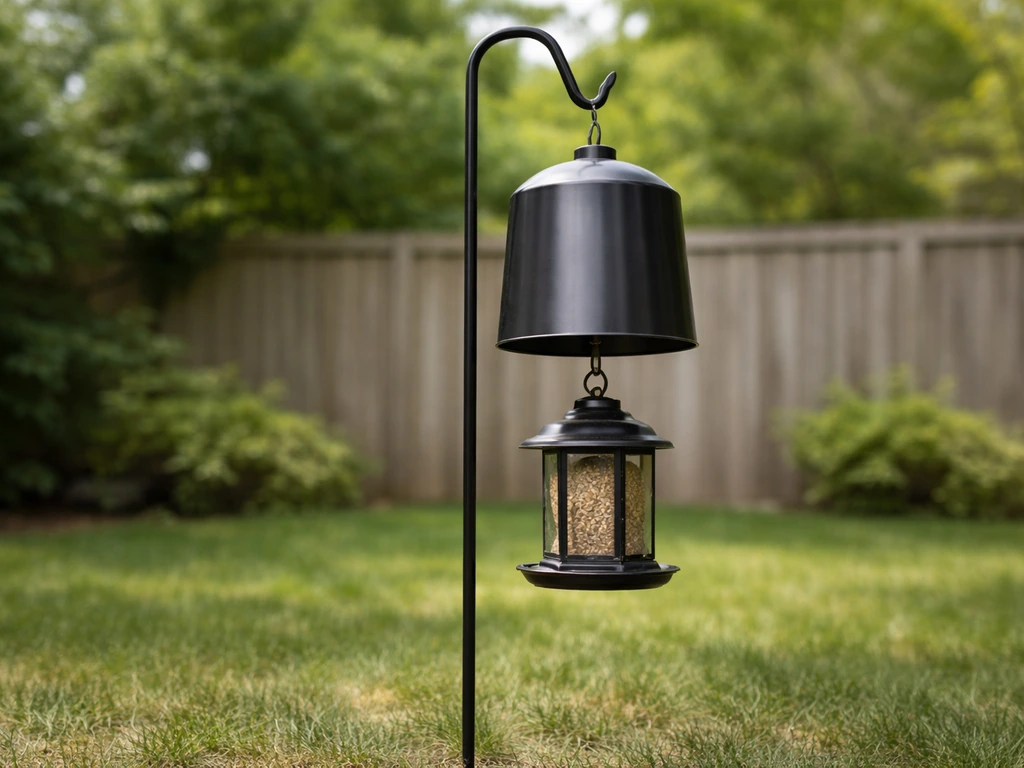
Audubon is direct about this: no feeder is truly squirrel-proof on its own, but a pole with a properly installed baffle gets you very close. The system design matters more than the feeder itself. The widely-used 5-7-9 placement rule is a good starting framework: mount the feeder 5 feet off the ground, position the pole at least 7 feet from any structure a squirrel can jump from (fences, trees, deck railings), and make sure there are no overhanging branches within 9 feet above the feeder. Stokes and Perky-Pet both specify that wrap-around baffles should be mounted 4 to 5 feet above the ground on the pole, not at the feeder itself. A baffle placed too high does almost nothing.
If you can't meet the spacing requirements because of your yard layout, a weight-activated feeder is the practical alternative. These close the seed ports when a squirrel's heavier body weight triggers the mechanism. Birds Choice makes a well-regarded UV-resistant polycarbonate option in this category with an integrated baffle pole system. The U.S. Fish & Wildlife Service frames a good baffle as the 'least aggravating' long-term solution, and after watching weight-activated feeders occasionally fail to trigger on smaller squirrels, I'd agree the pole-and-baffle approach is more consistently reliable when you can pull it off.
Dealing with grackles and starlings
Grackles and European Starlings can clear a hopper feeder in under an hour and intimidate smaller birds away from the area entirely. The most effective deterrent is a caged tube feeder: a wire cage surrounding the feeder allows small birds to pass through the openings while blocking larger-bodied birds. Switching from sunflower to safflower seed also helps because grackles tend to ignore safflower while cardinals, chickadees, and finches accept it readily. Removing platform feeders temporarily during peak grackle season (April through June on the Front Range) is sometimes the most practical answer.
Smart and AI-powered bird feeder cameras for Colorado
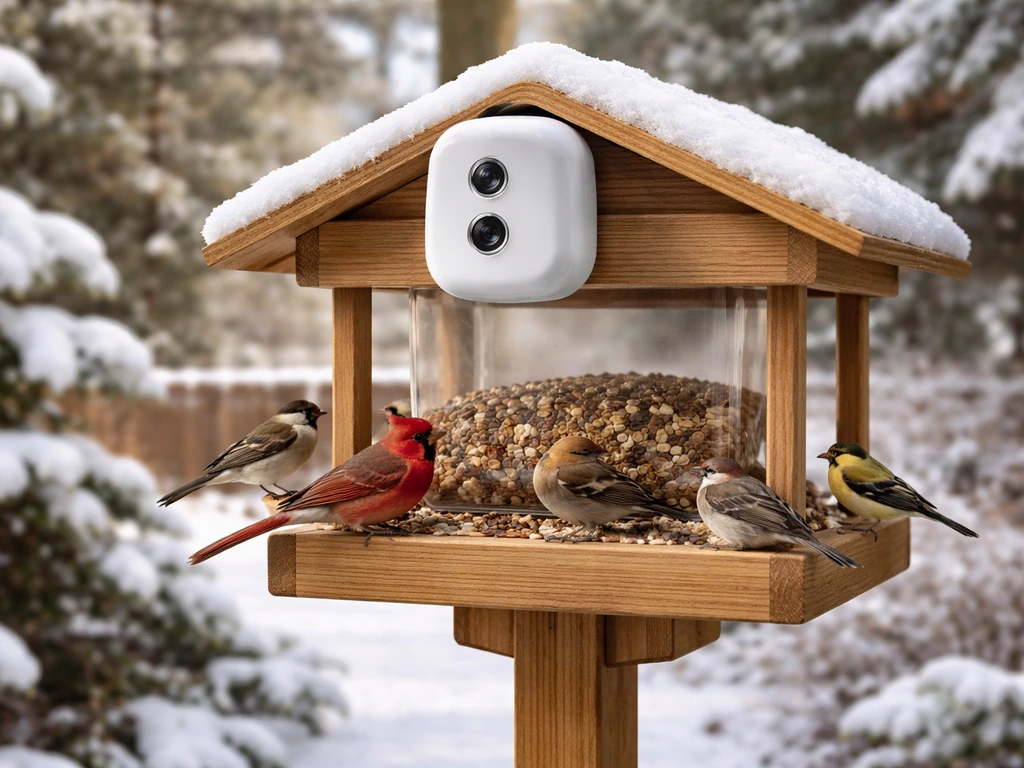
Smart feeders with built-in cameras and AI species identification have gotten genuinely good in the last couple of years, and Colorado is actually a compelling environment for them because you get an interesting mix of western species that the identification algorithms handle well. The key issue for Colorado buyers is cold-weather performance: not all smart feeders are built to handle mountain winters.
The FeatherSnap Scout is rated down to -20°F (-29°C) according to its spec sheet, making it one of the few camera feeders I'd feel comfortable leaving out during a Colorado mountain winter without worrying about the electronics. The Camouflage EZ BirdFeed is rated to -5°F (-20. TechRadar’s review of the Camouflage EZ BirdFeed notes an operating temperature range of -5°F to 120°F (-20. 5°C to 48.
5°C) and IP65 water resistance -5°F (-20. 5°C) with IP65 water resistance.
5°C) with IP65 water resistance, which covers most Front Range and foothills conditions. BirdFeederCo's smart feeder camera also claims a similar -5°F floor. Bird Buddy uses ASA plastic that the company says resists UV and extreme temperatures, though its cold-temperature floor is worth confirming before buying if you're above 8,000 feet.
| Smart Feeder | Min. Operating Temp | Water Resistance | Best For |
|---|---|---|---|
| FeatherSnap Scout | -20°F (-29°C) | Not specified | High-altitude Colorado winters |
| Camouflage EZ BirdFeed | -5°F (-20.5°C) | IP65 | Front Range/foothills year-round |
| BirdFeederCo Smart Feeder | -5°F (-20°C) | Not specified | Front Range, suburban yards |
| Bird Buddy | Not specified (ASA plastic) | Weather-resistant | Mild-climate Colorado zones, 3-season |
For Colorado specifically, I'd prioritize the FeatherSnap Scout or the Camouflage EZ BirdFeed if you're in the mountains or anywhere that regularly sees single-digit overnight temps. The IP65 rating on the Camouflage matters too: spring snowmelt and blowing rain are real, and a water-resistant rating gives you much more confidence leaving the unit out through the wet season. All of these feeders require a Wi-Fi connection, so if your yard setup is at the edge of your router range, add a Wi-Fi extender before deciding the feeder isn't working.
Mounting, placement, and keeping feeders working all season
Height and window clearance
Audubon recommends hanging feeders at least 5 feet off the ground and placing them either within 3 feet of a window or more than 30 feet away to reduce bird collision risk. This sounds counterintuitive, but a feeder very close to glass means a bird that startles off doesn't build up enough speed to injure itself on impact. Both Audubon and All About Birds make this same point, and it's one of those guidelines that actually holds up in practice. If neither distance works in your yard, 10 feet from a window is a reasonable compromise that most people use.
Pole vs. hanging vs. tree mounting
A dedicated feeder pole with a baffle is the most flexible and most squirrel-resistant setup for most Colorado yards. You can position it in open lawn at the distances required by the 5-7-9 rule. Hanging from a tree branch is convenient but makes squirrel-proofing nearly impossible. Eave mounting works for hummingbird feeders and small suet cages where squirrel pressure is lower, but a tube feeder hung from an eave bracket on a house is almost always accessible to squirrels from the roof. Deck railing mounts are popular and work fine if the railing itself isn't a squirrel highway, which it usually is.
Cleaning schedules for Colorado conditions
Audubon's baseline cleaning interval is every other week for seed and suet feeders, with more frequent cleaning in warm or humid weather. In Colorado, cold dry winters actually mean you can sometimes stretch that interval a bit because mold and bacteria grow more slowly. But once spring arrives and you get those warm, wet days, compress your cleaning schedule to weekly. Always let feeders dry completely before refilling, and dump any clumped or wet seed rather than topping off on top of it. After a heavy snow, clear snow from open feeders before it compacts and seals the ports shut.
Metal perches in freezing temps
One concern I hear from new Colorado birders is whether birds' feet will stick to metal perches in hard freezes. Audubon addresses this directly: birds' feet are covered in dry scales, not moist skin, so sticking to frozen metal is much less of a risk than it would be for a human hand. You don't need to avoid metal perches for this reason, and metal holds up better than plastic in UV and temperature cycling anyway.
How to start: one feeder first, then build
The mistake most people make is buying four feeders at once, ending up with a cluttered setup that's hard to maintain and impossible to troubleshoot. Start with one UV-resistant tube feeder filled with black-oil sunflower seed, mounted on a baffled pole using the 5-7-9 spacing. If you're wondering which feeders work best for Georgia, look for models that match your target birds and the typical warm, humid weather best bird feeders for georgia. Give it two to three weeks.
Note which birds are showing up and which ones you're still missing. Then add a suet cage on a nearby tree or shepherd's hook if you want woodpeckers and flickers. If you're seeing goldfinches hanging around the sunflower tube but not really using it, add a nyjer mesh sock as your third feeder. Hummingbirds and smart camera feeders can layer in after that foundation is solid.
If you're comparing approaches across western states, Colorado sits somewhere between the extreme dryness of Arizona and the milder winters of Utah, though all three share a need for UV-resistant materials and squirrel management. The specific bird species mix in Colorado, particularly the mountain chickadees, pine siskins, flickers, and Broad-tailed Hummingbirds, rewards having that suet feeder and a nyjer option in addition to your primary sunflower tube. That three-feeder core setup will cover the majority of what visits a Colorado backyard across most of the year.
- Start with one UV-resistant sunflower tube feeder on a baffled pole positioned by the 5-7-9 rule
- Add a tail-prop suet cage to bring in woodpeckers, flickers, and nuthatches
- Add a nyjer tube or mesh sock feeder if you want to specifically target goldfinches and pine siskins
- Use a saucer-style hummingbird feeder from May through August with 4: 1 water-to-sugar nectar; switch to 3:1 on cold nights
- Choose a smart feeder rated to at least -5°F for Front Range use, or the FeatherSnap Scout (rated to -20°F) for mountain elevations
- Clear snow from open feeders after every storm so birds can actually reach the food
- Clean seed feeders every two weeks minimum, weekly in spring and summer
FAQ
What’s the best “single feeder” choice if I only want to buy one feeder for Colorado winter birds?
Start with a UV-resistant tube feeder filled with black-oil sunflower seed on a baffled pole. This combination pulls in the widest winter variety of small to medium birds, and the baffling helps reduce squirrel access without needing separate devices.
How do I stop seed from freezing into solid blocks during warm spells and refreeze cycles?
Avoid overfilling and topping off, let wet or clumped seed get dumped, and clear stuck seed after a thaw. Using a feeder with weather-protected construction (and materials rated for subzero temps) reduces the amount of moisture the seed picks up during the warm phase.
If I buy a nyjer feeder, how do I prevent bigger birds from taking over?
Use nyjer in a dedicated feeder with very small ports (tube or mesh sock), and don’t combine it with sunflower in the same feeder. Small openings give small-billed birds an advantage, while larger birds can’t reach the seed as effectively.
What seed should I switch to if grackles or European starlings dominate my feeder?
Try safflower in a feeder that small birds can still use. Grackles often ignore safflower more than sunflower, while cardinals, chickadees, and finches typically keep feeding, which helps you rebalance the species mix.
How often should I clear snow from feeders in winter, even if it looks mostly covered?
After any snow event, clear it promptly from open trays and exposed ports. Thick snow can seal access and effectively “shut off” the feeder, so birds may not feed until you clear it.
Do birds really get hurt or stuck on frozen metal perches?
It’s generally not a major risk because bird feet are covered in dry scales rather than moist skin. Metal perches also hold up better than plastic through UV and temperature cycling, so you don’t need to avoid metal solely for the freeze-sticking concern.
What’s the best way to mount a tube feeder to reduce squirrels, and what should I avoid?
Use a dedicated pole with a properly installed baffle, follow the spacing idea (mount height and distance from jump points), and avoid tree-branch hanging. Branch setups make baffle placement and enforcement much harder because squirrels can gain access from multiple angles.
If I can’t meet the spacing rules for a baffle setup, what’s the practical alternative?
Choose a weight-activated feeder that closes ports when a heavier squirrel triggers the mechanism. These can reduce squirrel access where yard layout limits the baffle distances, though smaller squirrels may occasionally still find ways around some designs, so test and monitor after setup.
Do smart bird feeders work in Colorado winters, and what should I check before buying?
Verify the manufacturer’s cold-temperature rating and water resistance, then consider your elevation and overnight lows. Many models assume mild conditions, and at higher elevations electronics can fail even if the feeder still looks intact.
My Wi-Fi is weak in the yard. Will a smart feeder still work reliably?
It might not, even if the feeder powers on. Check your router signal at the feeder height, and if it’s weak, use a Wi-Fi extender before you decide it’s “not working,” since disconnections can prevent uploads and sometimes species ID.
Where should I place feeders relative to windows to reduce bird collisions?
Either keep them very close to the glass (within a few feet) or place them far enough away (more than about 30 feet). If your yard can’t do either, around 10 feet is often used as a compromise, but the exact best distance depends on how busy the glass reflection is and how often birds approach quickly.
How many feeders should I add at first so I can actually manage them?
Don’t buy a full lineup at once. Build a simple core: one UV-resistant sunflower tube on a baffled pole, then add suet and nyjer only if you see you’re missing those birds. This keeps cleaning, refilling, and troubleshooting manageable in winter.
What’s the most common cleaning mistake in Colorado spring and early summer?
Topping off on top of old, damp, or clumped seed. In warm wet conditions, that can trap moisture and speed spoilage, so dump and replace when seed looks wet or packed, and clean more frequently once spring weather arrives.
How do I feed hummingbirds in Colorado if the season is shorter than other states?
Plan for May to August only, then match the feeder’s performance to Colorado conditions. Also avoid red dye, honey, and artificial sweeteners, and clean on a tight schedule because nectar can cloud or ferment faster under intense sun.
What nectar strength should I use, and when should I switch from the standard mix?
Use 4 parts water to 1 part plain white sugar for typical conditions, then consider the stronger 3-to-1 water-to-sugar mix when nights run cold enough that nectar is prone to freezing. If your nights are often below about 35°F at your elevation, take the colder mix seriously or bring the feeder in overnight.
Are platform feeders a good choice in Colorado, or do snow and squirrels make them a bad idea?
They can work well for ground-feeding birds, but expect you’ll clear snow more often because seed is exposed. They also tend to be less squirrel-resistant by design, so pair them with a cage-style setup if squirrels are heavy in your yard.
Next Articles
Best Red Cardinal Bird Feeder: Top Picks & Buying Guide
Best red cardinal bird feeder guide: top picks, painting tips, seed & placement advice to attract Northern Cardinals.
Best Bird Feeder for Red Birds: Top Picks and Setup Guide
Top feeders and setup tips to attract cardinals and other red birds using the right seed, mounts, and squirrel-proofing.
What Color Bird Feeder Attracts Birds Most: Quick Guide
Discover which bird feeder color draws the most birds, plus setup tips for durability, placement, and reducing squirrels