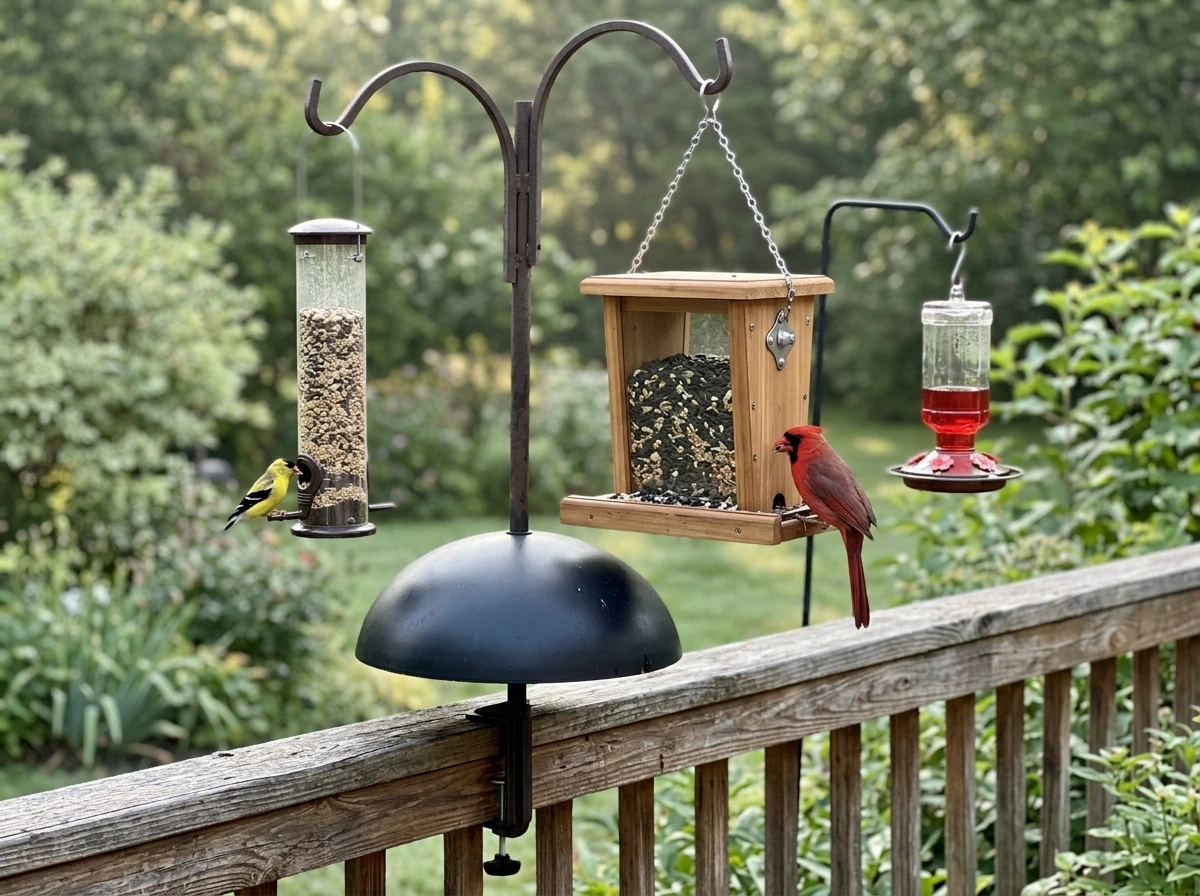
The best bird feeder on Amazon for your backyard depends on three things: which birds you want to attract, what pest problems you're dealing with, and how much maintenance you're willing to do. If you just want a quick answer: a weight-activated squirrel-proof tube feeder handles the most common setup, but if you're chasing hummingbirds, finches, or woodpeckers specifically, you'll do better with a feeder built for that species. This guide walks through every major feeder type available on Amazon, matches them to the birds that actually use them, and helps you avoid the common mistakes that leave feeders empty and birders frustrated.
Best Bird Feeders on Amazon: Complete Buying Guide
Marcus Holloway
13 Apr 2026
How to choose the best Amazon bird feeder for your backyard
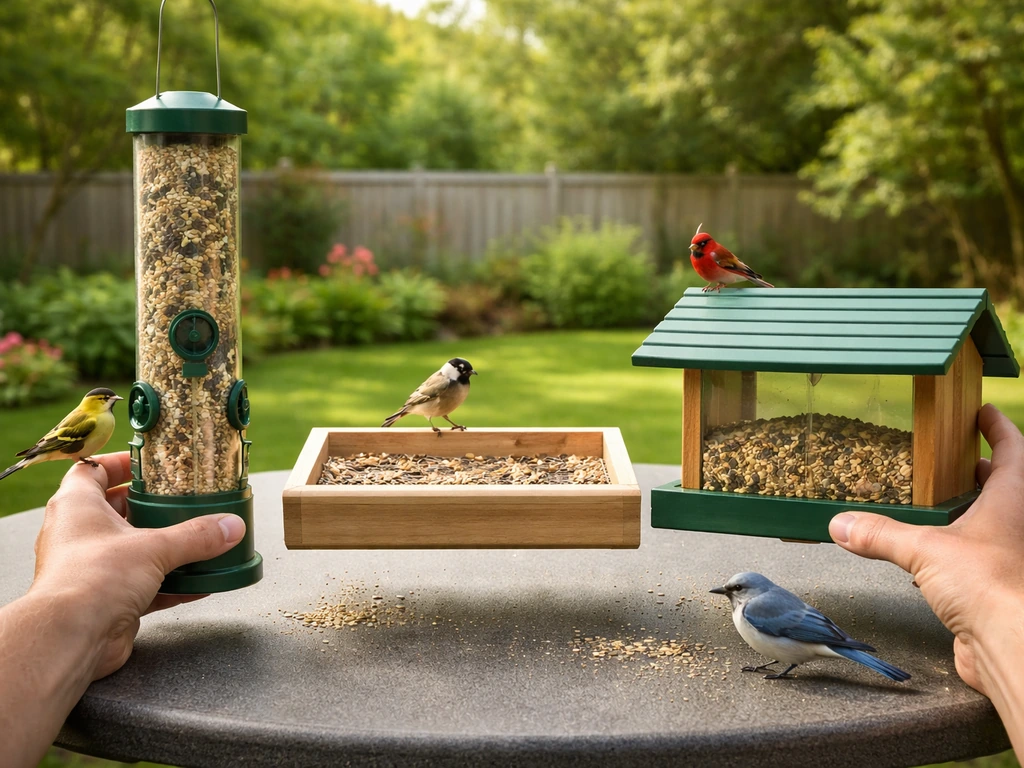
Before you start scrolling through Amazon listings, narrow your decision with four questions. First, which birds are already in your area? Tube feeders with small ports work brilliantly for finches and chickadees but will frustrate cardinals, who prefer a wider perch and platform-style access. Second, how bad is your squirrel problem? If squirrels have already destroyed one of your feeders (they destroyed two of mine before I got serious about this), a weight-activated design isn't optional, it's the starting point. Third, how often do you want to clean and refill? Large-capacity hoppers need less frequent refilling but can trap wet seed if you're not proactive. Smaller tube feeders dry out faster and are easier to disassemble. Fourth, are you buying for aesthetics or function? Both matter, but a beautiful feeder that birds never use because it lacks the right perch configuration isn't worth the money.
Once you've answered those questions, focus on two practical specs on Amazon listings: seed capacity (measured in quarts or pounds) and the materials used for the body and ports. Powder-coated steel and UV-stabilized polycarbonate hold up far better than basic plastic after a couple of winters. Metal seed ports resist squirrel chewing, which basic plastic ports do not. Look for feeders with removable bases or trays because those are the sections that collect wet seed and grow mold fastest. When you're comparing options, the top bird feeder brands tend to back their products with real warranties and replacement parts, which matters more than you'd think after the first harsh winter.
Top feeder types on Amazon
Platform feeders
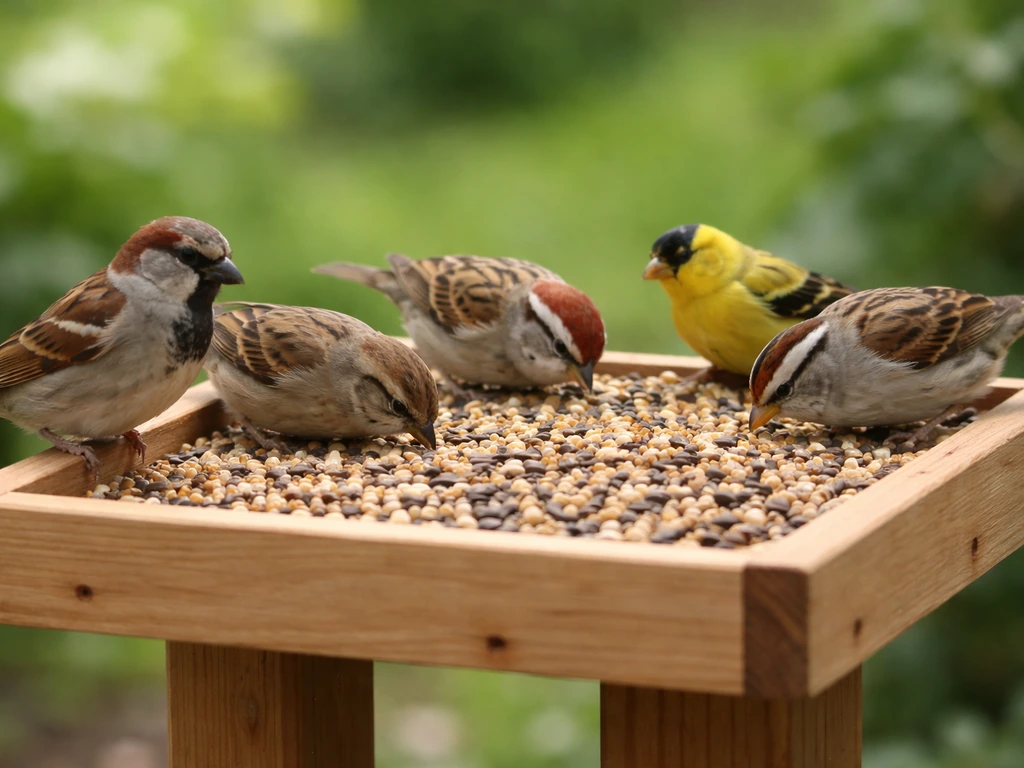
Platform (or tray) feeders are the most versatile option on Amazon because almost every bird species will use them. Cardinals, jays, mourning doves, sparrows, and grosbeaks all feed comfortably on an open platform. The downside is exposure: seed gets wet fast in rain, and platforms attract squirrels easily unless you're using a baffle or pole system. Look for mesh-bottom platforms that let water drain rather than pool. If you're in a rainy climate, a roofed fly-through feeder is the platform version that keeps seed the driest, and it's the style Minnesota DNR specifically recommends for wet weather conditions.
Tube feeders
Tube feeders are probably the most popular feeder type on Amazon, and for good reason. They hold a moderate amount of seed, work well for sunflower, safflower, and mixed seed, and can be configured with different port sizes for different species. A tube feeder with small ports and short perches selects for smaller birds like chickadees, nuthatches, and finches. Adding a removable tray at the bottom opens it up to cardinals. The key quality differences on Amazon come down to port material (metal vs. plastic) and how easily the feeder disassembles for cleaning. A tube that requires a screwdriver to open will rarely get cleaned as often as it should.
Hopper feeders
Hopper feeders look like little barn houses and hold the most seed of any standard feeder style, often 3 to 6 pounds at a time. They attract the widest variety of songbirds and are popular for people who don't want to refill every two days. The risk is that seed in the lower chamber can get damp and clump without obvious signs from the outside. Penn State Extension specifically calls out hopper and fly-through feeders as the better designs for keeping feed dry, but that only holds if you're actively scraping out old seed before refilling. The best Amazon hopper feeders have removable bottom trays and drainage holes built in.
Suet feeders
Suet feeders are wire cage feeders designed to hold blocks of suet, which is rendered beef fat mixed with seeds, nuts, or berries. They're the number-one feeder for woodpeckers, and nuthatches, wrens, and starlings will also use them. On Amazon, the quality difference is simple: look for a cage that opens fully for easy suet block replacement and has a tail-prop extension below the cage. That tail-prop accommodates downward-clinging birds like woodpeckers, who feed more naturally when they can brace their tail against something below the food source.
Finch (nyjer) feeders
Finch feeders, also called thistle or nyjer feeders, are tube feeders with very small ports designed to dispense tiny nyjer (thistle) seed. They're purpose-built for goldfinches, pine siskins, and redpolls. The best designs on Amazon are either standard tube with tiny ports and short perches, or sock-style mesh feeders that allow multiple finches to cling and feed at once. Sock feeders are cheap, extremely popular with goldfinches, and easy to replace, but they do absorb moisture and need more frequent inspection for mold.
Hummingbird feeders
Hummingbird feeders on Amazon range from simple bottle-and-base designs to glass feeders with wide moats and built-in ant guards. The most important practical features are: a wide base that's easy to disassemble completely for cleaning, red color to attract hummingbirds without red dye in the nectar, and either a built-in ant moat or compatibility with an inline ant guard. Nectar ferments fast in warm weather, so a feeder you can take apart, rinse, and dry in two minutes is worth paying more for.
Best bird feeders on Amazon by species
Matching feeder to species makes a bigger difference than most people realize. I've watched cardinal pairs ignore a tube feeder for three weeks, then start visiting the same day I added a tray attachment at the bottom. Here's a practical breakdown of what works for each bird type.
| Bird | Best Feeder Type | Best Seed/Food | Key Features to Look For |
|---|---|---|---|
| Goldfinches | Nyjer tube or mesh sock feeder | Nyjer (thistle) seed | Small ports, short or no perches, mesh design |
| Hummingbirds | Nectar feeder with wide base | Fresh sugar-water nectar (4:1 ratio) | Easy disassembly, ant moat or guard, red coloring |
| Cardinals | Platform, hopper, or tube with tray | Sunflower seeds, safflower | Wide perch, open access, lower tray |
| Woodpeckers | Suet cage with tail-prop extension | Suet cakes, peanuts | Full-open door, downward-clinging tail prop |
| Chickadees / Nuthatches | Tube feeder or peanut feeder | Sunflower, safflower, peanuts | Multiple ports, easy perch access |
| Mourning Doves | Platform or ground feeder | Mixed seed, millet | Low or ground-level access, mesh drainage |
| Purple Finches / House Finches | Tube feeder with perches | Sunflower chips, nyjer | Multiple ports, easy cleaning |
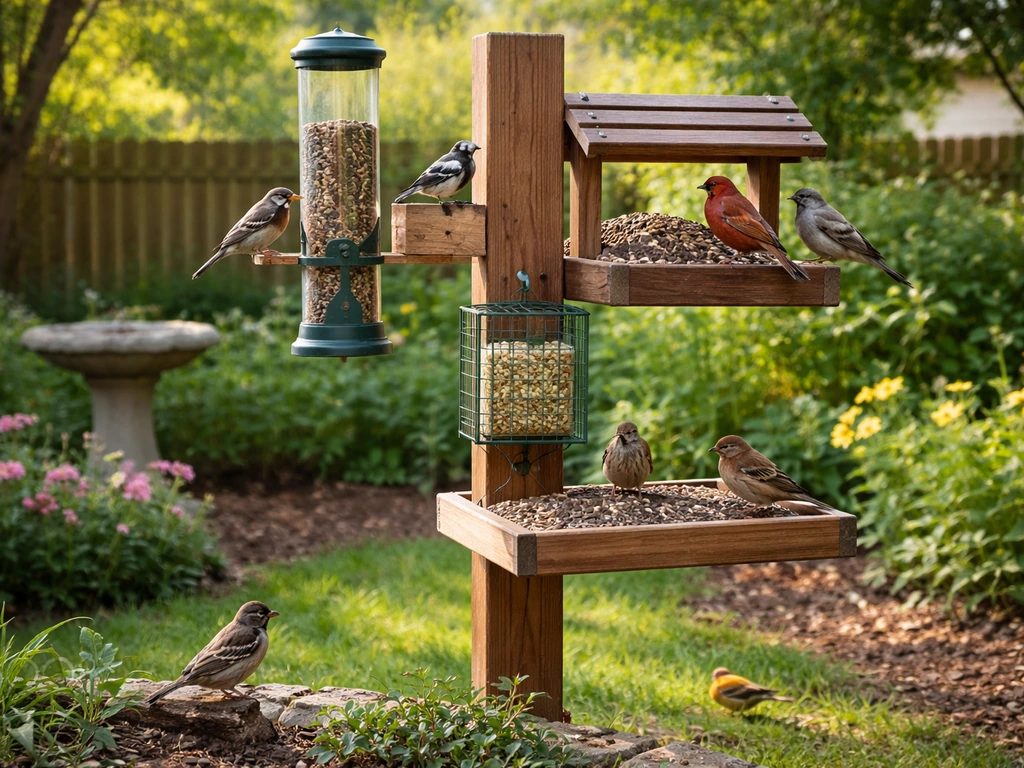
A few notes beyond the table: if you're trying to attract multiple species at once, a combination setup works better than a single feeder. A suet cage plus a tube feeder on the same pole system covers woodpeckers, chickadees, nuthatches, and finches all at once. When you're researching your options, looking at a curated list of the 10 best bird feeders can shortcut the comparison process if you're not sure where to start.
Weather durability, build materials, and keeping things clean
Amazon listings don't always make it obvious which feeders will survive a winter and which will crack and fade by spring. Here's what to actually look for in the materials section of any listing. Powder-coated steel is the most durable option for hoppers and platform feeders and handles freeze-thaw cycles without warping. UV-stabilized polycarbonate tubes stay clear and don't yellow the way standard plastic does. Copper and recycled plastic feeders are attractive but tend to cost more for similar durability. Avoid feeders where the only construction material listed is just generic "plastic" with no mention of UV treatment or coating.
Maintenance is where a lot of people underestimate the commitment involved. Project FeederWatch recommends cleaning seed feeders about once every two weeks, and more often during warm or damp weather and high-use periods. Project FeederWatch uses two-day counts each week during the season, which is one reason keeping feeders clean and monitored on a regular schedule matters for accurately tracking what birds visit cleaning seed feeders about once every two weeks. I've found that's about right as a baseline, but during a wet spring or summer heat wave, weekly cleaning is more realistic if you want to avoid mold. The cleaning standard recommended by Pennsylvania birding authorities is a diluted bleach solution: 1 part chlorine bleach to 9 parts water, scrub thoroughly, rinse completely, and then air-dry fully before refilling. Audubon is specific about this last step: completely drying the feeder before adding fresh seed is non-negotiable, because even a thin film of moisture can accelerate mold growth.
Moldy seed is a real health risk for birds. Audubon notes that moldy seed can transmit aspergillosis, a respiratory fungal infection, so this isn't just a cleanliness preference. If seed has gotten wet, don't just top it off. Discard the wet seed, clean the feeder, and start fresh. Birdnet's guidance is the same: if the contents are wet, throw them out and clean before refilling. The feeders that make this easiest are the ones worth buying. Look for wide access openings, removable ports, and twist-off or snap-off bases. A feeder that requires significant disassembly will simply be cleaned less often.
Don't forget what's under the feeder either. Project FeederWatch explicitly recommends raking and cleaning under feeders to remove hulls, waste seed, and droppings. That ground layer is where mold and bacteria concentrate and where you'll attract rodents if you're not managing it. Audubon makes the same point about removing scattered hulls and moldy seed to keep rodents away.
Predator-proofing: dealing with squirrels and grackles
Weight-activated feeders: how they actually work
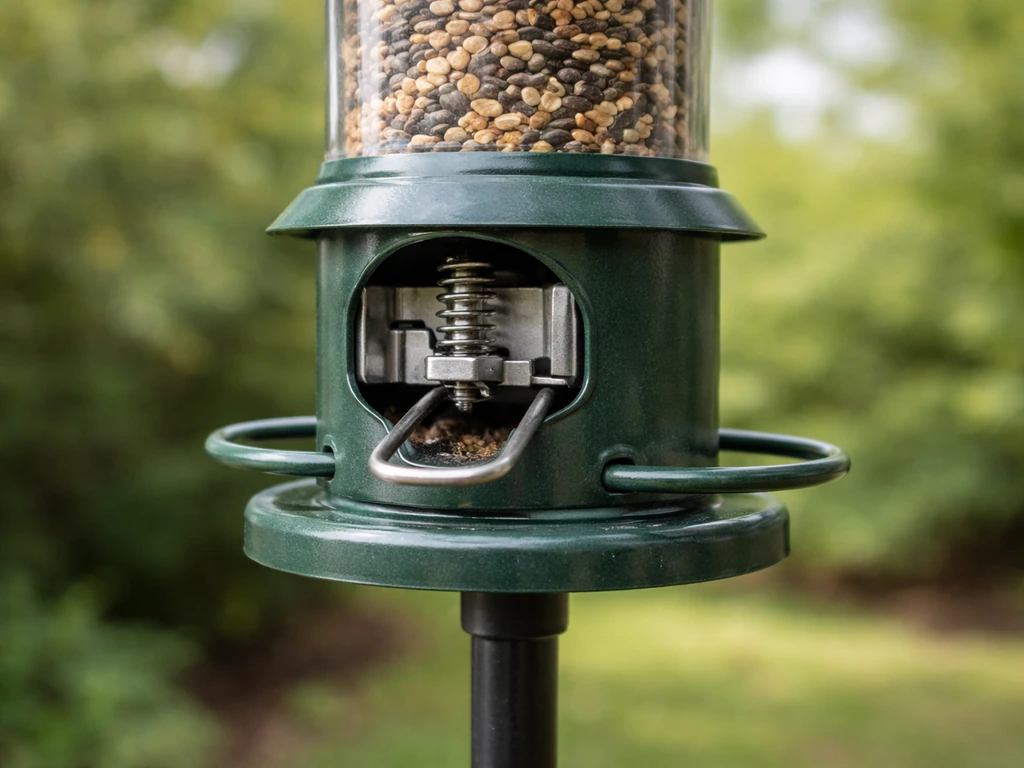
The most reliable squirrel-proofing mechanism on Amazon is the weight-activated port closure. When a squirrel (or any heavy animal) lands on the feeder, its weight triggers a mechanism that physically closes off access to the seed. Two of the best-known systems on Amazon use this approach. The Perky-Pet Squirrel Slammer uses weight-activated ports that "slam shut under a squirrel's weight," blocking heavier animals from accessing seed while lighter birds feed normally. The Brome Squirrel Buster Plus uses a weight-activated shroud that drops down over the feeding ports when a squirrel's weight is detected, described in the product manual as "truly squirrel-proof." The Woodlink Absolute II uses a similar closure mechanism. In my experience, all three of these work as advertised, but they need to be adjusted correctly out of the box. Most of them allow you to tune the weight threshold, which matters if you want to exclude large birds like grackles or starlings while still letting cardinals feed.
Dealing with grackles and starlings
Grackles are a different problem from squirrels because they're birds, so a lot of standard squirrel-proofing won't deter them. The most effective strategies combine weight-activated feeders (set to a lower threshold to exclude heavier birds) with seed selection. Switching to safflower seed is one of the most underrated moves you can make: grackles and starlings typically ignore it, while cardinals, chickadees, and house finches eat it readily. For tube feeders, removing or shortening the perches selects against larger birds that need a stable landing spot. Caged feeders with outer wire cages allow only smaller birds to pass through and are worth considering if grackle invasions are a consistent problem.
Mounting for squirrel control
Even the best squirrel-proof feeder will get raided if it's mounted wrong. The "10-4 rule" is widely cited among backyard birders: mount feeders at least 10 feet away from any structure a squirrel can jump from (fences, trees, decks, walls) and at least 4 feet off the ground. A baffle on the pole below the feeder adds another layer of protection. Torpedo baffles and wrap-around baffles both work; the key is that the baffle needs to be large enough and smooth enough that a squirrel can't grip it. Amazon has both integrated pole-and-baffle systems and standalone baffles that work with most standard poles. If you're comparing feeder setups and want to see how the most popular options stack up, checking the best-selling bird feeders can help you identify which models actually move in volume, which tends to reflect real-world satisfaction.
Ant control for hummingbird feeders
Ants are the pest problem specific to hummingbird feeders, and they contaminate nectar fast. The fix is either a built-in ant moat (a small water-filled cup above the feeder that ants can't cross) or an inline ant guard. The Perky-Pet AntGuard (Model 245L) is designed to mount inline with hanging hummingbird feeders and is a reliable, low-cost solution if your feeder doesn't have a built-in moat. Keep the moat filled with water and it will handle the ant problem without any chemicals.
Smart and AI bird feeder cameras on Amazon
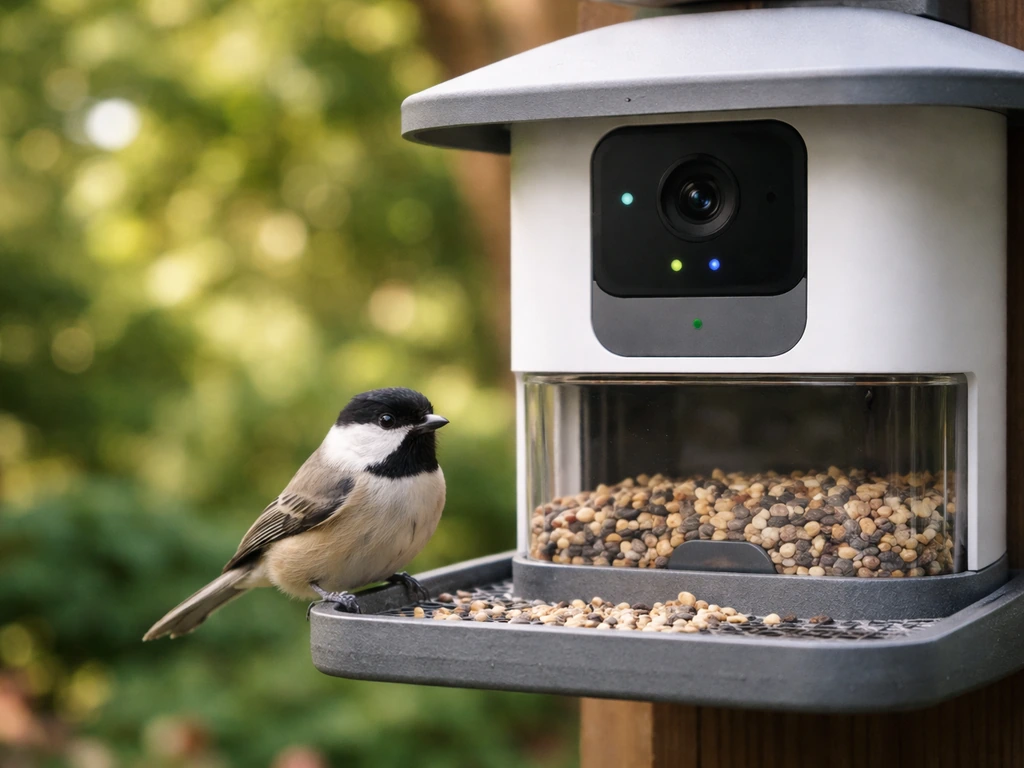
Smart bird feeders with built-in cameras and AI identification have gotten genuinely good in the last couple of years, and Amazon now carries several solid options. The basic concept is a feeder with a camera that activates when a bird lands, captures a photo or video, and then uses AI to identify the species. It sounds like a gimmick until you've actually used one and had it correctly identify a rose-breasted grosbeak you'd never seen in your yard before.
Which smart feeder to buy
Three models come up most often in Amazon searches. The Bird Buddy is probably the most recognized name: its battery lasts roughly 5 to 15 days without the solar roof accessory, and the solar roof reduces how often you need to charge via USB-C, though actual battery life depends heavily on your sun exposure and notification settings. The PerchMe uses AI image recognition to identify 10,000+ bird species and includes an integrated solar panel plus a 5200mAh rechargeable battery with free cloud storage built in. The Birdfy feeder offers AI recognition on its AI-enabled models, though the recognition feature is device-specific and not available across all Birdfy variants, so read the listing carefully before buying. The Kiwibit Beako also includes AI identification, with an optional subscription that unlocks cloud storage and extended smart notifications.
| Model | AI Species ID | Solar Option | Cloud Storage | Subscription Required |
|---|---|---|---|---|
| Bird Buddy | Yes | Optional solar roof add-on | Via app (limited free tier) | Optional paid tier |
| PerchMe | Yes, 10,000+ species | Built-in solar panel | Free cloud storage included | No |
| Birdfy (AI models) | Yes (AI-enabled models only) | Available on select models | Via app | Optional |
| Kiwibit Beako | Yes | Not listed | Optional via subscription | Yes, for extended features |
For most people getting started with smart feeders, the PerchMe's all-in-one solar and free storage approach removes the most friction. The Bird Buddy has a larger community and a polished app, which matters if you want a social bird-logging experience. The Birdfy is a solid middle ground but confirm you're buying the AI-enabled version before checkout. If you want a broader view of how these smart models compare to traditional feeders, the best rated bird feeders covers both categories with side-by-side comparisons.
Placement tips for smart feeders
Smart feeders need to be positioned where the camera gets good light on the bird. Direct backlight (sun behind the bird) produces dark, silhouetted images that make AI identification less accurate. Ideally, face the feeder so birds are lit from the front or side, and place it somewhere you can run a USB-C cable to if you're not relying on solar. Most smart feeders also send motion alerts to your phone, so be thoughtful about placement near a window: Project FeederWatch notes that feeders placed too close to windows create collision risk, and this applies equally to smart feeders hung where birds might flush directly into glass.
Your Amazon buying checklist before you add to cart
Before finalizing any feeder purchase on Amazon, run through this checklist. It covers the details that are easy to overlook in a product listing but matter a lot once the feeder is actually in your yard.
- Confirm seed compatibility: Check the feeder's port size and opening against the seed type you plan to use. Nyjer seed requires tiny ports; mixed seed and sunflower need larger openings. A mismatch means wasted seed or no bird activity.
- Check capacity versus how often you want to refill: A 1-quart tube feeder will need refilling every 2-3 days in an active yard. A 6-pound hopper can go a week or more. Be honest about how often you'll actually go outside.
- Verify mounting method and buy hardware together: Amazon feeders typically hang (hook, chain, or wire), pole-mount, window-mount, or deck-clamp. Make sure you have the right mounting hardware before the feeder arrives. Buying a feeder and then waiting a week for a pole is a frustrating experience.
- Look at how the feeder opens for cleaning: Can you reach all surfaces with a bottle brush or cleaning rod? Is there a removable base? Feeders that don't fully disassemble create mold problems you can't fix without the right access.
- Plan your placement before mounting: Use the 10-4 rule for squirrel-proofing (10 feet from jumping surfaces, 4 feet off the ground). Keep feeders at least 10 feet from windows or less than 3 feet to reduce collision risk (Project FeederWatch guidance).
- Buy your first round of seed at the same time: Don't set up a feeder and then wait days for seed. Birds take 1-4 weeks to discover a new feeder in most yards, and the clock starts when it's filled.
- Schedule your first cleaning before you need it: Add a biweekly reminder now. Cleaning every two weeks is the baseline recommended by Project FeederWatch and Perky-Pet. In summer heat, plan to go weekly and inspect for wet or clumped seed every few days.
- Check if you need an ant guard or baffle separately: Many hummingbird feeders don't include an ant moat, and most tube feeders don't come with a squirrel baffle. Add these to your order if needed.
One last thing worth saying directly: the "best" bird feeder on Amazon is the one that fits your specific situation. If you have relentless squirrels, the Brome Squirrel Buster Plus or Perky-Pet Squirrel Slammer will serve you better than any beautiful but unprotected feeder. If you want goldfinches, a mesh nyjer sock costs under ten dollars and outperforms feeders ten times its price for that species. And if you're the kind of person who wants to know exactly what just visited your yard, a smart AI feeder will change how you think about backyard birding. Start with one feeder matched to your most-wanted bird, get the mounting and cleaning routine dialed in, and then expand from there.
FAQ
What seed should I use first when I do not know which birds are already visiting my yard?
Start with mixed seed or sunflower for a general setup, but plan to adjust within a week based on who shows up. If large birds like grackles take over or empty the feeder fast, switch to safflower for more selective feeding (cardinals and many small songbirds still use it, while grackles and starlings usually ignore it).
How do I prevent mold if I cannot clean my feeder every two weeks?
Choose designs that drain well and are easy to open fast, like feeders with removable bottom trays and mesh or drainage points. Also avoid “topping off” damp seed, instead discard wet contents, scrub, rinse, and fully air-dry before refilling. For heat or rainy stretches, treat weekly cleaning as the default plan even if your normal schedule is longer.
Do I need a squirrel-proof feeder if I also use a baffle?
You can get strong protection with the “baffle plus correct mounting,” but if squirrels already know your yard, a weight-activated feeder adds an extra layer because it physically blocks access when weight is detected. Use the baffle anyway, since a feeder without it can still be reached if a squirrel jumps or climbs a structure near the mounting pole.
What is the best mounting height and placement for reducing both squirrels and bird collisions?
For squirrels, follow the 10-4 rule (at least 10 feet from jump-off points like trees or fences, and at least 4 feet off the ground). For window collision risk, avoid positioning any feeder so birds have a clear direct route into glass, and relocate if you see repeated collisions or sudden emptying after startled wing-flapping.
Can one feeder attract both cardinals and small finches without buying multiple feeders?
Yes, but not with a single fixed-port design. A common approach is using a tube feeder that allows you to add a bottom tray for larger birds, and then keep the ports configured for smaller birds. If your cardinal pressure is high, you may still need to fine-tune perch access or consider a platform/roofed platform for them while keeping finch ports small.
What should I do if ants are getting into my hummingbird nectar even with a feeder?
First check whether the feeder has an ant moat or whether you need an inline ant guard. Keep the moat filled and clean the moat area regularly, because dried nectar residue can reduce the barrier effectiveness. Also ensure the nectar container is fully seated and not leaving gaps for ants to access the nectar surface.
How often should I replace nectar in hummingbird feeders during warm weather?
In hot conditions, expect fermentation to start quickly, often within a couple of days. Plan on more frequent changes when temperatures are high or when the feeder gets heavy sun exposure, and always rinse thoroughly and let it dry before refilling so residue does not accelerate spoilage.
Are smart bird feeders worth it if I only want species identification?
They are most worth it when you want passive monitoring and photos without manual note-taking. If your main goal is just feeding, traditional feeders are usually simpler and cheaper. Also consider practical placement, direct backlighting (sun behind the bird) can reduce AI accuracy, and you may need to run power if your solar setup has limited sun.
Why do some tube feeders stay dirty or get infested faster than others?
Most problems come from hard-to-clean openings and seed that stays trapped in areas that do not drain. Prioritize feeders with wide access, removable parts like bases and trays, and materials that resist UV and cracking. If the feeder requires tools to disassemble, it is more likely you will delay cleaning, and that leads to mold and waste buildup.
What is the safest cleaning routine for seed feeders between refills?
Clean at a frequency that matches your weather and usage, and do not just remove visible seed. Use a diluted bleach solution, scrub all surfaces, rinse completely, and let the feeder fully air-dry before adding fresh seed. Fully drying matters because even a thin moisture film can increase mold risk.
How do I handle grackles showing up and dominating the feeder?
Treat grackles as a different challenge from squirrels. Lower-threshold squirrel-proof feeders can still help by excluding heavier birds, but seed choice is often the bigger lever. Switch to safflower and consider removing or shortening perches on tube feeders, or using caged designs that physically limit which birds can access the seed.
Do I need to clean under the feeder too, and what happens if I do not?
Yes, because hulls, waste seed, and droppings collect beneath feeders and become a mold and bacteria hotspot. It also increases the chance of rodents sticking around. Rake or sweep regularly under platforms and trays, especially after rainy days or when seed is being spilled.
Next Article
Best Rated Bird Feeders: Top Picks Plus Buying Guide
Top rated bird feeders for finches, cardinals, hummingbirds plus video models, with squirrel-proof tips and placement gu