The best-rated bird feeders in 2026 are not a single model or brand. The right feeder depends on which birds you want, what your yard looks like, whether squirrels are a problem, and whether you want a camera built in. This guide cuts through all of that and gives you a direct answer for your specific situation, whether you want a simple traditional feeder, a squirrel-proof setup, or one of the smart video feeders with AI bird identification.
Best Rated Bird Feeders: Top Picks Plus Buying Guide
Marcus Holloway
23 Mar 2026
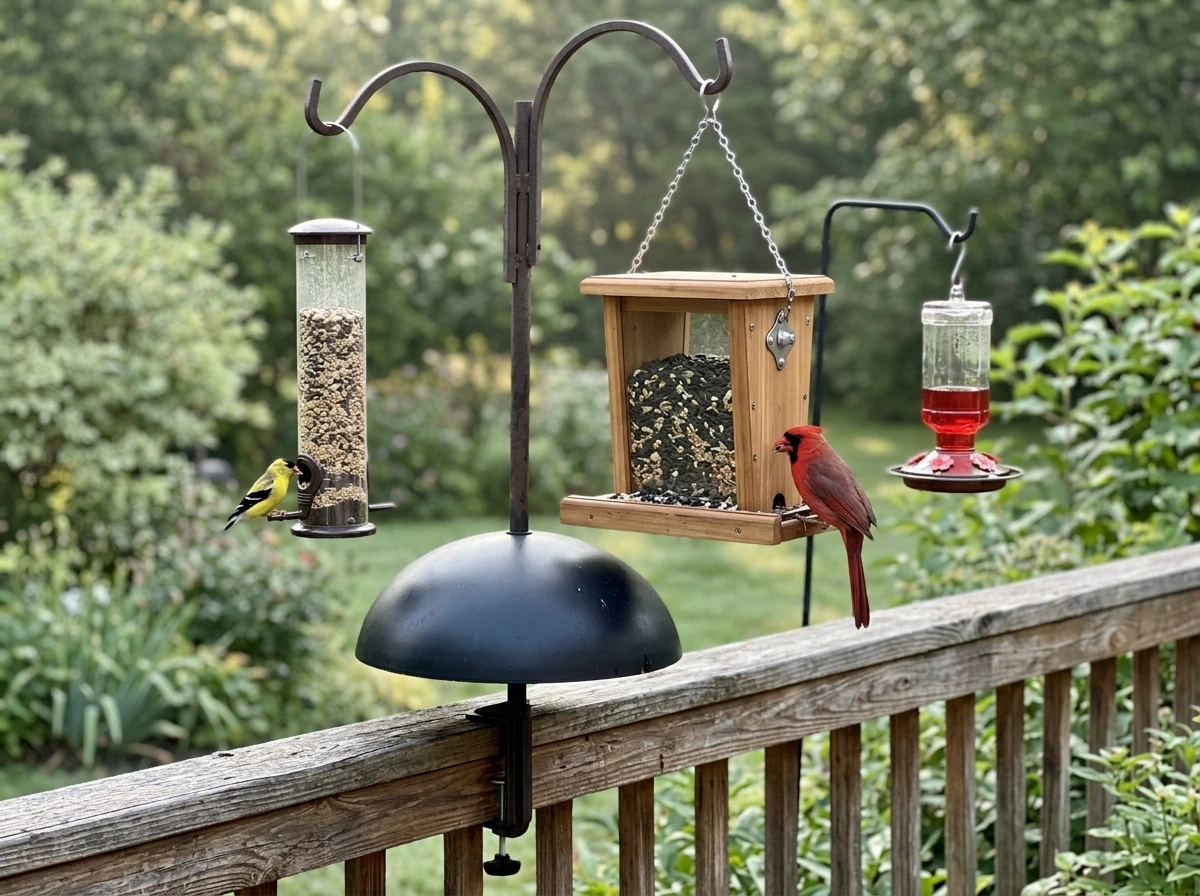
How to choose the best-rated bird feeder for your yard
Start with three questions before you look at any product page: What birds do you actually want to attract? How bad is your squirrel problem? And do you want to watch birds live or just feed them? Those three answers will narrow your options faster than any star rating.
Bird feeders fall into a few core categories: tube feeders, hopper feeders, suet cage feeders, nyjer/thistle feeders, platform feeders, and hummingbird nectar feeders. Each type attracts a different mix of species. Top-rated roundups from sources like Reviewed.com consistently evaluate feeders on squirrel resistance, ease of filling and cleaning, durability, and how well they actually deliver seed to the birds you want. A feeder that scores well across all those factors for your target species is the one worth buying.
Ease of maintenance is a bigger deal than most people expect. Look for feeders with lift-and-unlatch roofs, wide-mouth ports, and removable trays. A feeder you dread cleaning is a feeder you will let go moldy, and wet seed is genuinely dangerous to birds. The best-rated models earn those stars partly because filling and cleaning them takes under five minutes.
Best bird feeder video features and what to look for
A video bird feeder, sometimes called a smart feeder or feeder cam, combines a traditional seed feeder with a built-in camera, motion detection, and usually an app for viewing clips on your phone. The Birdfy Cam and Bird Buddy are the two most-discussed models in this category right now, and they work quite differently.
When comparing video feeder options, the specs that actually matter in real-world use are resolution, field of view, night vision range, motion sensitivity controls, app quality, and ongoing subscription costs. Here is what to prioritize:
- Resolution: 1080p is the practical standard. The Birdfy Cam records at 1080p HD with a wide-angle view, which is enough to clearly identify most backyard species. The Bird Buddy 2 captures 5-megapixel still photos alongside HD video. Both are solid, but if you want crisp freeze-frames for ID purposes, the Bird Buddy's still-photo quality has an edge.
- Night vision: Infrared night vision lets you capture early-morning and late-evening visits, which are often when more secretive species show up. Check the effective IR range in the spec sheet before buying. Birdfy's camera hardware includes night vision mode explicitly designed for reliable day-or-night capture.
- Field of view: A wide-angle lens captures more of the feeder and the birds approaching it. Narrow FOV misses approach behavior and makes it harder to see multiple birds at once.
- Motion detection and alerts: All major video feeders use motion to trigger recording. The sensitivity settings matter a lot. Too sensitive and you get hundreds of wind-triggered clips; too low and you miss fast visitors. Look for adjustable sensitivity in the app.
- App quality and connectivity: The app is where you actually experience the feeder. Birdfy's app supports clip sharing and review. Bird Buddy's app has a strong community element. Both require Wi-Fi connectivity at the feeder location, so check your router range before buying.
- AI bird identification: This is the marquee feature for both Birdfy and Bird Buddy. Birdfy's AI Bird Recognition is subscription-based at $4.99/month (or purchasable as a lifetime bundle with certain hardware packages). Bird Buddy uses a similar app-based subscription model. The AI works well for common species but has real-world reliability limits on fast-moving or partially obscured birds, as noted in third-party reviews from outlets like Wired and Digital Camera World.
- Privacy: Because these cameras face your yard and potentially your neighbors', check whether footage is stored locally, in the cloud, or both, and what the data retention policy is.
If you want video but want to keep ongoing costs minimal, the Feit Electric Smart Solar Camera Bird Feeder is worth considering. It pairs with the Feit Electric app, records 1080p HD video and images, and runs on solar, which eliminates battery hassle. It lacks the AI bird ID of Birdfy or Bird Buddy, but it also lacks their subscription fees.
Top-rated feeder types by target species
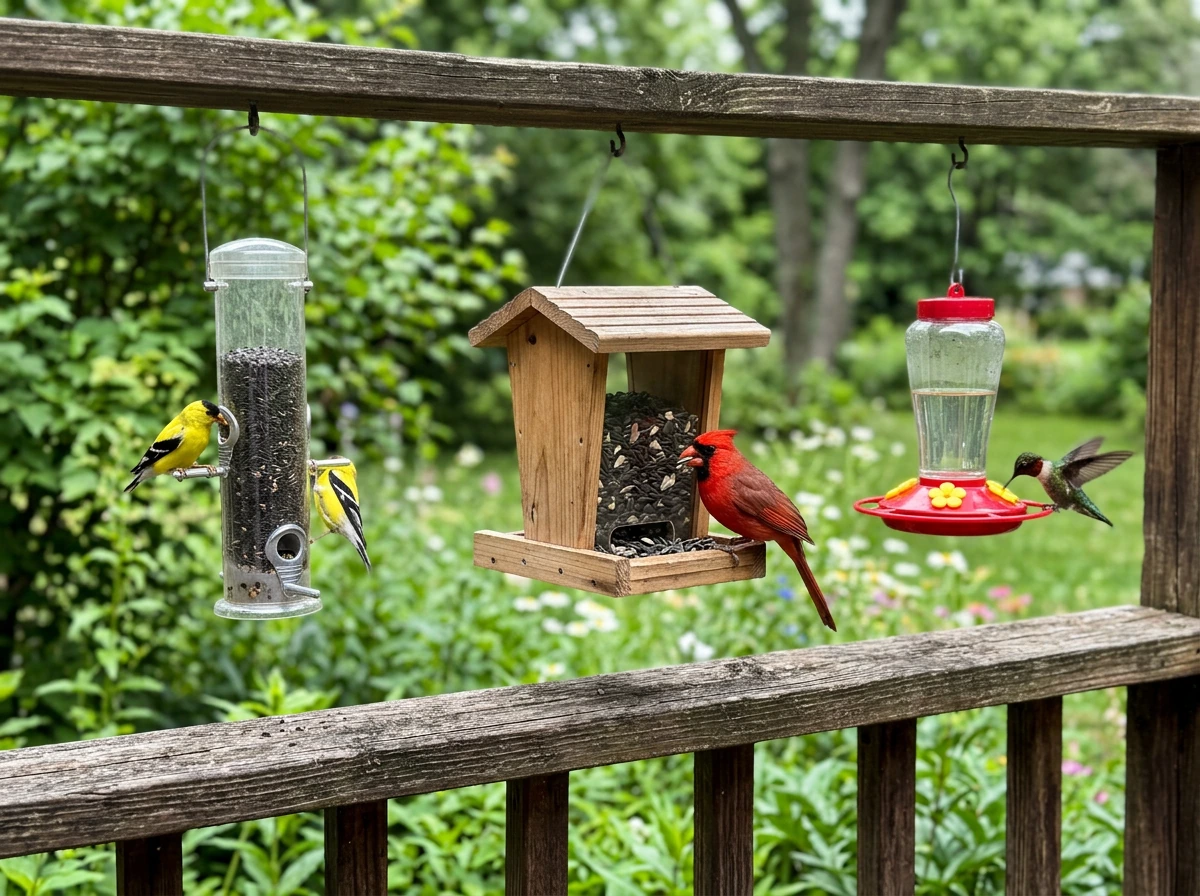
Matching the feeder to the bird is the single most important factor in whether your setup actually works. Here is a direct breakdown by species:
| Target Bird(s) | Best Feeder Type | Best Seed/Food | Notes |
|---|---|---|---|
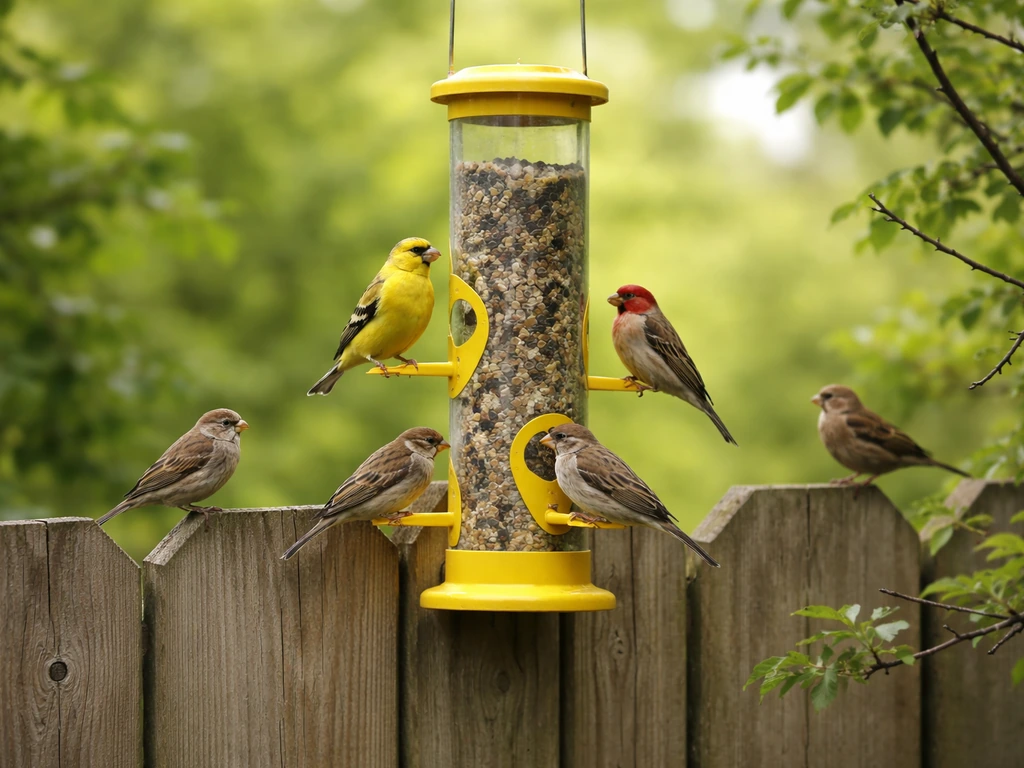
| Finches (goldfinch, house finch, purple finch) | Nyjer/thistle tube feeder with small ports | Nyjer (thistle) seed | Small ports exclude larger bully birds naturally |
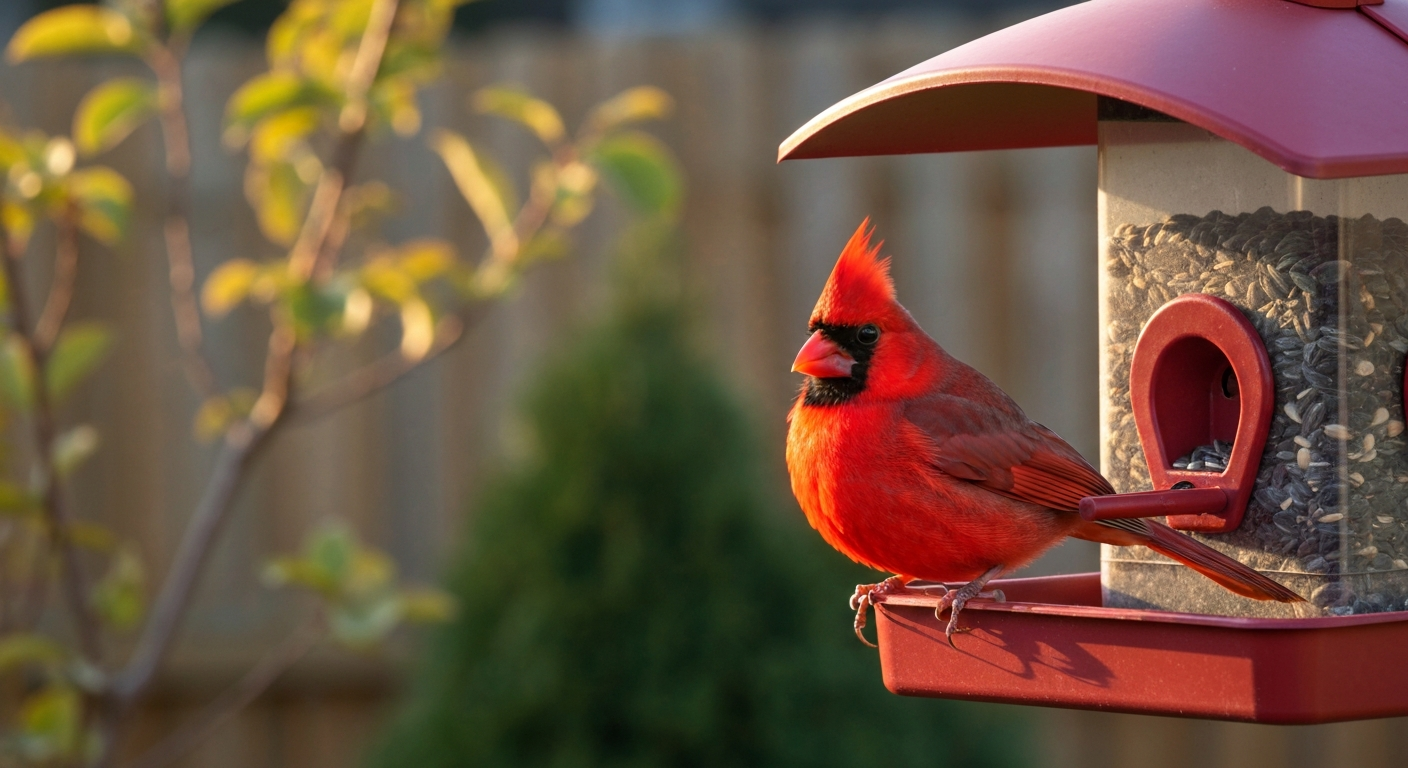
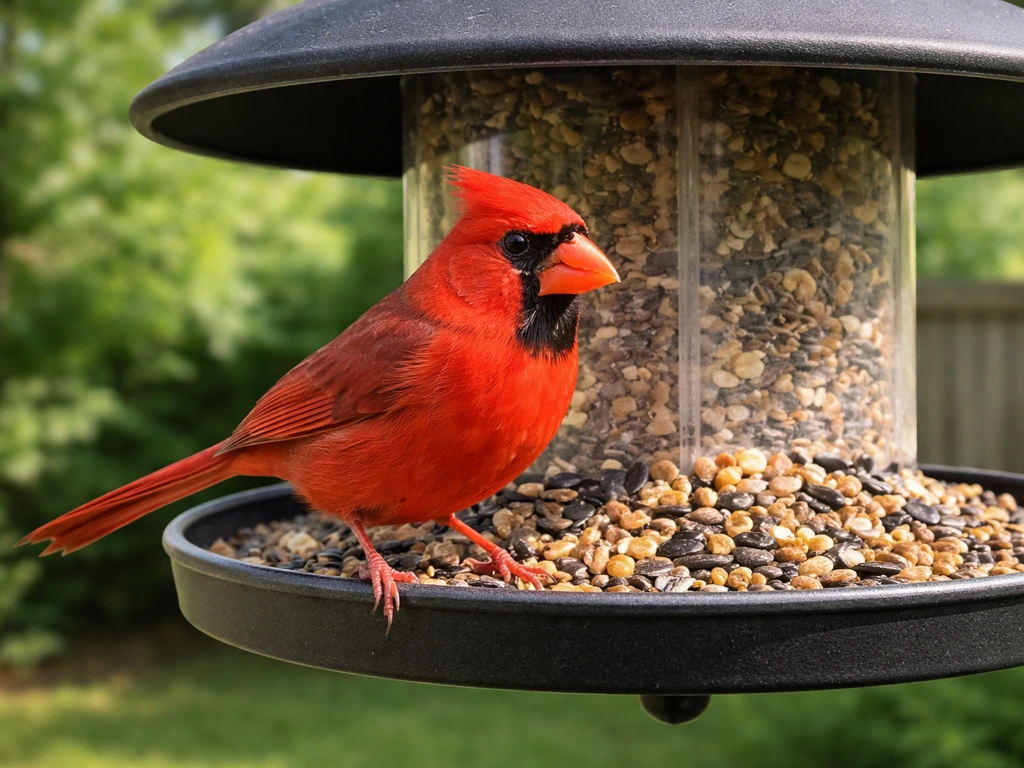
| Cardinals | Tube feeder with large perches or platform feeder | Sunflower seeds (black oil) | Cardinals prefer to perch and are too large for nyjer feeders |
| Woodpeckers (downy, hairy, red-bellied) | Suet cage or mesh suet feeder | Suet cakes | Clinging feeders work best; suet is the primary draw |
| Chickadees, nuthatches, titmice | Tube feeder or suet cage | Black oil sunflower or suet | Versatile; also attracted to caged feeders that exclude larger birds |
| Hummingbirds | Nectar/hummingbird feeder (red, wide ports) | 4:1 sugar-water solution | Clean every 2-3 days in warm weather to prevent fermentation |
| Mixed small songbirds | Tube feeder with short perches, no catch basin | Black oil sunflower or mixed seed | Short perches and no catch basin naturally discourage grackles and starlings |
| Ground-feeding birds (doves, juncos, sparrows) | Platform or tray feeder at low height | Millet, mixed seed | Place near brush cover for safety; expect squirrel pressure |
The Audubon Society's feeder-to-species guidance consistently confirms these pairings. Suet in a mesh or cage feeder is the top draw for woodpeckers, titmice, nuthatches, and chickadees. Tube feeders with nyjer seed are the go-to for finches. If you are trying to attract cardinals specifically, platform feeders and tube feeders with wide perches outperform narrow-ported tube feeders because cardinals are too large and too cautious to cling to small perches.
Durability, weather resistance, and build materials
Material quality is where cheap feeders fail and where top-rated feeders earn their reputation. You will encounter three main material categories: polycarbonate/plastic, powder-coated steel or aluminum, and wood. Each has real tradeoffs.
| Material | Durability | Weather Resistance | Squirrel Resistance | Best For |
|---|---|---|---|---|
| Polycarbonate/Clear Plastic | Moderate. Screw holes and ports can crack under repeated stress or squirrel chewing. | Good in mild climates; UV degradation over time in hot/sunny yards | Poor on its own; squirrels chew through thin polycarbonate | Budget feeders, sheltered locations |
| Powder-coated Steel | Excellent. Resists bending, chewing, and impact. | Very good; coating prevents rust but check welds for rust over time | Strong; steel ports and springs resist squirrel force | Squirrel-proof designs, exposed/open yard setups |
| Aluminum | Very good. Lightweight but rigid. | Excellent; won't rust | Good; harder to chew than plastic | Long-term use in wet climates |
| Recycled Plastic (HDPE) | Excellent; doesn't crack or splinter | Outstanding; unaffected by rain, snow, UV | Good; thicker than standard plastic | All-weather setups, low-maintenance yards |
| Cedar/Wood | Moderate; needs sealing and periodic maintenance | Poor without treatment; swells, warps, rots in wet conditions | Poor; squirrels chew wood readily | Aesthetic hopper feeders in drier climates |
A real-world failure mode worth knowing: polycarbonate tube feeders with metal screw hardware can crack at the screw holes when squirrels repeatedly jump on and hang from them. The combined weight stress plus chewing pressure splits the tube over time. If squirrels are active in your yard, prioritize steel or heavy-gauge aluminum frames over clear polycarbonate, regardless of how well-reviewed the feeder is overall.
For video/smart feeders specifically, look at the housing material around the camera module. It needs to handle rain, UV exposure, and freezing temperatures without warping, since a warped housing will misalign the lens and ruin clip quality. Both Birdfy and Bird Buddy use weather-resistant housings, but placement under a porch roof or tree canopy still extends camera lifespan noticeably.
Mounting, setup, and spacing to attract the right birds
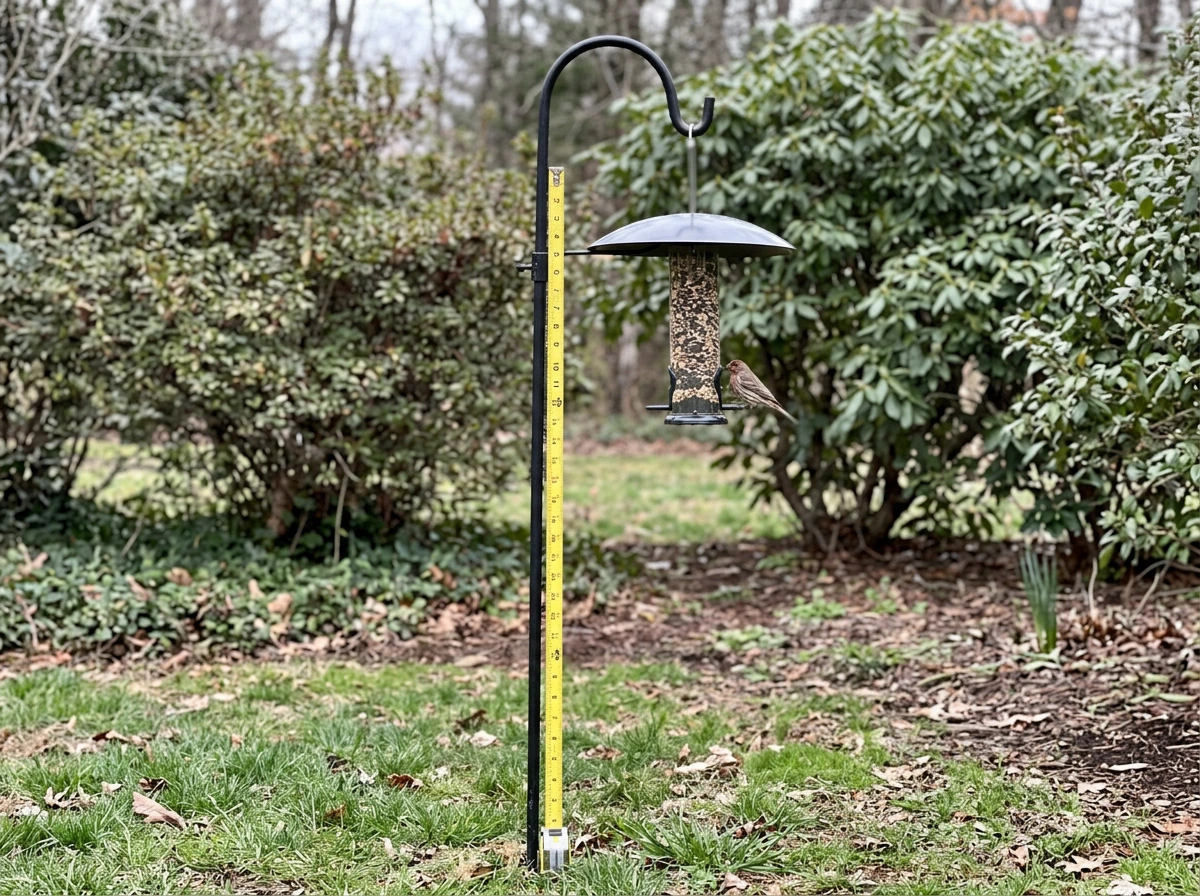
Where you mount your feeder matters as much as which feeder you buy. Michigan Audubon recommends placing feeders either less than 3 feet or more than 30 feet away from windows to reduce the risk of bird-window collisions. The core placement rules come from consistent guidance across Wild Birds Unlimited, Perky-Pet, and Cornell Lab's FeederWatch program, and they are worth following precisely.
- Height: Mount feeders at least 5 feet off the ground. This keeps them out of easy reach for cats and reduces ground-predator pressure. For pole-mounted setups, the feeder itself should sit above a baffle that is placed 4 to 5 feet high on the pole.
- Distance from structures: Place your feeder pole at least 10 feet away from trees, fences, shrubs, rooflines, and any surface a squirrel could launch from. Squirrels can jump several feet both vertically and horizontally, and they can cling to almost any surface, so distance is your first line of defense.
- Distance from windows: Place feeders either very close to windows (within 3 feet) so birds cannot build enough speed to be hurt in a collision, or far away (more than 10 feet) so birds have time to redirect. The middle range of 3 to 10 feet from glass is the danger zone for window strikes.
- Feeder spacing: If you are running multiple feeders, space them several feet apart to reduce competition and territorial aggression. Ground-level platform feeders can sit 10 to 15 feet from pole feeders to serve a completely different set of species simultaneously.
- Shelter proximity: Birds, especially smaller species, prefer feeders that are within 10 to 15 feet of shrubs or tree cover where they can retreat quickly if a hawk appears. But cover too close to the feeder pole gives squirrels a launch point, so balance is key.
- Camera feeder placement: For video feeders, also factor in Wi-Fi signal strength and sun angle. You want the camera facing away from direct morning or afternoon sun to avoid glare washing out your footage. North or east-facing orientation generally works best.
Predator-proofing and squirrel/grackle management
Squirrels and large bully birds like grackles, starlings, and house sparrows are the two most common reasons people end up replacing their feeders within a year. Here is how to handle both.
Dealing with squirrels
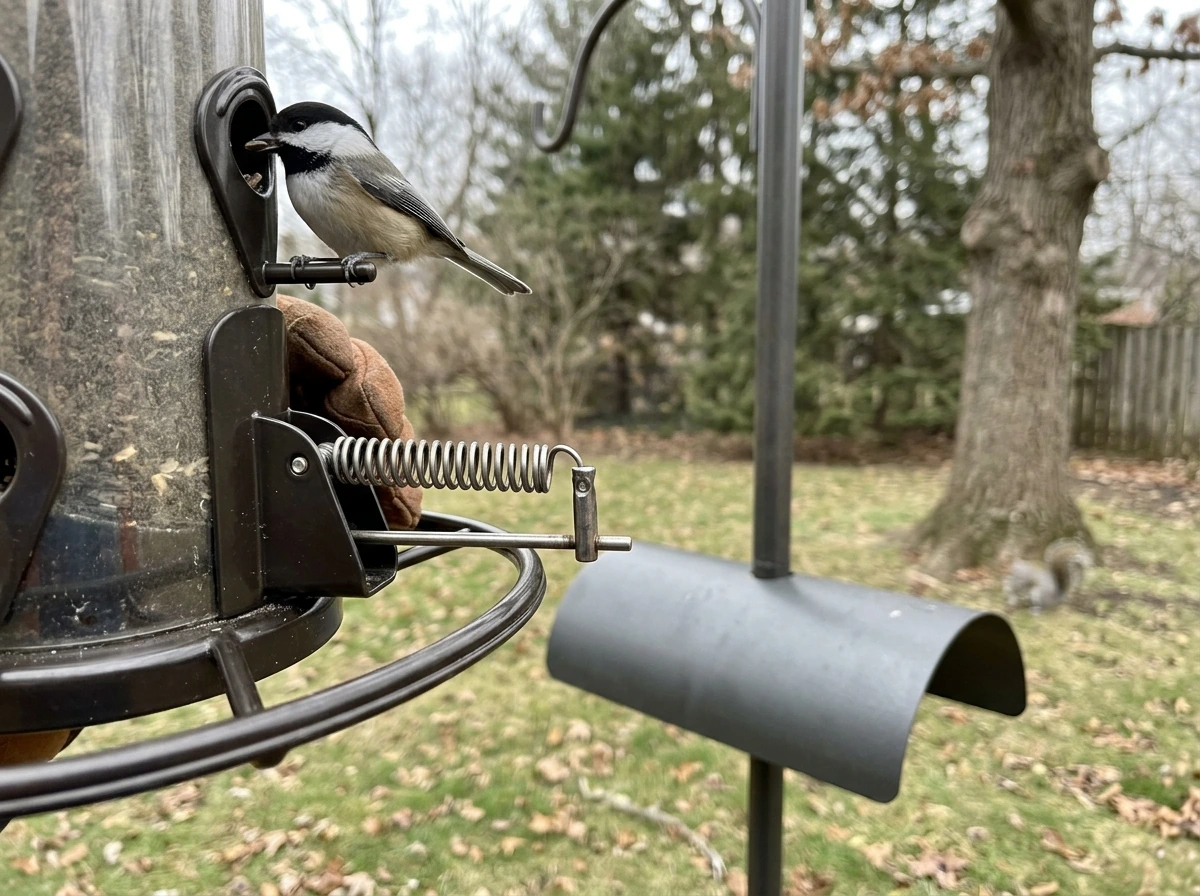
The most effective squirrel-resistant feeders use a tension-spring or weight-activated mechanism. When an animal heavier than a songbird lands on the perch, the mechanism closes off access to the seed ports. Brome's Squirrel Buster line, highlighted in squirrel-proof feeder guides from Bob Vila and others, is one of the most-tested designs using this approach. The weight threshold is typically adjustable, which lets you exclude squirrels while still allowing heavier birds like cardinals.
The pole-and-baffle combination is the other essential tool. Wild Birds Unlimited recommends a smooth metal cylinder baffle mounted on the pole at least 5 feet above ground, with the pole positioned at least 10 feet from any surface a squirrel can jump from. This geometry is about as close to a truly squirrel-proof setup as you can get in a real backyard. A tube feeder on a pole more than 10 feet from cover is the configuration most often described as the most reliably squirrel-resistant arrangement available.
If you use a hanging feeder from a tree or shepherd's hook, add a dome baffle above the feeder. Squirrels approach from above as often as from below. A dome positioned above the feeder prevents them from reaching down and around to the ports.
Managing grackles, starlings, and other bully birds
Cornell Lab's FeederWatch program gives practical guidance here: tube feeders with short perches and no catch basin at the bottom are the most effective design for excluding larger bully birds while still serving smaller songbirds. Grackles and starlings need a platform to stand on. Remove that platform and they struggle to feed long enough to dominate the feeder.
Caged feeders take this further. A wire cage around the feeder allows smaller birds to pass through while physically blocking larger birds. These work especially well for suet feeders, where woodpeckers and chickadees can access the suet but grackles cannot fit through the cage openings. The Chewy-listed More Birds Squirrel-Proof Double Suet Feeder is one example of a design that combines cage-style exclusion for larger bully birds with suet-specific access for the target species.
- Switch to nyjer seed in tube feeders with small ports: grackles and starlings have no interest in thistle, so this instantly eliminates them from that feeder
- Avoid loose mixed seed on open platforms: millet and cracked corn attract exactly the species most people want to exclude
- Use weight-activated perches even if squirrels aren't the main concern: the same mechanism that closes on a squirrel will close on a heavy grackle
- Remove catch trays and seed catchers below tube feeders: these give large birds a landing zone they would not otherwise have
Picking the right feeder (and camera) for your budget and tech comfort
Here is a straightforward shortlist based on situation, not just star ratings. Use this to make your final call.
| Your Situation | Best Feeder Type | Video/Smart Option? | Budget Range |
|---|---|---|---|
| You want to feed birds, full stop, no squirrel drama | Tube feeder (powder-coated steel or aluminum) with black oil sunflower seed | No, skip the camera | $20 to $50 |
| Squirrels are destroying your current setup | Weight-activated squirrel-proof feeder (Brome-style spring mechanism) on a baffled pole 10+ feet from cover | Optional but helpful for monitoring | $50 to $120 for feeder + baffle |
| You want to attract specific species (finches, woodpeckers) | Nyjer tube feeder for finches, suet cage feeder for woodpeckers — run both | No, or add a standalone camera later | $30 to $80 total for both |
| You want a video feeder with AI bird ID and don't mind a subscription | Birdfy Cam 2 Pro (1080p, night vision, motion alerts, AI ID at $4.99/month or lifetime bundle) | Yes, primary focus | $100 to $200+ hardware, plus subscription |
| You want video with one-time cost and no monthly fees | Birdfy hardware with AI Lifetime bundle, or Feit Electric Smart Solar Camera Bird Feeder (1080p, no AI subscription) | Yes, app-based without recurring fee | $100 to $180 hardware |
| You want best photo/video quality and a social/community app experience | Bird Buddy 2 (5MP photos, HD video, solar roof option, app community) | Yes, app-focused experience | $150 to $220 |
| You are new to bird feeding and want to start simple | Basic tube or hopper feeder in recycled plastic or powder-coated steel, easy-fill roof | No, add video later if you get hooked | $20 to $40 |
On subscriptions: if you are buying a video feeder primarily for AI bird identification, understand that the feature costs money beyond the hardware. Birdfy charges $4.99/month for AI Bird Recognition, with separate plans for all birds versus hummingbirds specifically. Some hardware bundles include a lifetime AI subscription, which makes the total cost of ownership much more predictable. Bird Buddy uses a similar model. If you just want video clips of your feeder without ID features, you can often use the app in free tier and skip the subscription entirely, though feature access varies.
If you are choosing between a traditional top-rated feeder and a smart camera model, the honest answer is that a well-placed, squirrel-proofed traditional feeder will attract more birds more reliably than a smart feeder in a poor location with no baffle. Get the placement and predator-proofing right first. Then add a camera feeder or separate camera if you want the video experience. The best-rated bird feeder for your yard is the one that is correctly matched to your birds, properly mounted, and maintained consistently, with or without a screen. If you are specifically looking for the best bird feeders Amazon sells, start by filtering for the feeder type that matches your target species and your squirrel risk.
For deeper dives into specific brands and where to buy, this site also covers the best bird feeder brands overall and For deeper dives into specific brands and where to buy, this site also covers the best bird feeder brands overall and the top-selling models across major retailers, which can help you compare pricing and availability once you have narrowed down your feeder type from this guide., which can help you compare pricing and availability once you have narrowed down your feeder type from this guide. best bird feeders amazon
FAQ
What does “best rated” actually mean for bird feeders, and why do star ratings sometimes mislead?
Star ratings often weight general durability and ease of use, but they may not reflect your yard’s key variables, like squirrel pressure, available mounting height, and the specific seed type your target birds prefer. A model that performs well in lab-style reviews can underperform if it is undersized for your bully birds or positioned within jump distance of cover.
How high should I mount a feeder to reduce squirrels and keep birds safe?
For squirrel resistance, the common rule is to keep the feeder setup far from jump-off points and elevated enough that squirrels cannot easily access it. When using a pole and baffle, aim for at least around 5 feet above ground for the baffle and around 10 feet of clearance from nearby surfaces a squirrel can use as a launch point.
Can I use one feeder to attract multiple species, or do I need multiple feeders?
You can attract multiple species with the right feed and placement, but most yards do better with at least two feeder types. Seed specialists like finches typically respond best to nyjer, while woodpeckers and chickadees are better served with suet cages. Mixing everything into one feeder often leads to seed waste and more bully-bird dominance.
What’s the quickest way to tell if my feeder match is wrong?
If birds avoid the ports after the feeder is refilled, you may have a mismatch in seed type, perch size, or access design. For example, cardinals usually need wider, more secure landing options, while bully birds often exploit narrow perches. Also watch for consistent over-visit by one species, which can indicate you need a different exclusion method (baffle, weight-activated ports, or a cage).
How often should I clean a bird feeder, and what’s the biggest cleaning mistake to avoid?
Clean frequently enough to prevent wet seed and mold, especially during humid or rainy periods. A common mistake is refilling before fully drying or scrubbing residue. Residual oils and damp seed can contaminate subsequent batches, reducing bird traffic even if the feeder is “new.”
Do smart bird feeders require a subscription for basic viewing?
Not always. Some models allow viewing clips in a free tier, but AI identification, advanced detection, and longer clip retention often require a plan. Before buying, check whether the subscription is optional for your exact use case, video-only versus AI ID, and note that hardware bundles may shift costs over time.
Which matters more for video feeder cams, AI bird ID or recording quality?
For most people, recording quality and reliable motion detection come first, because poor clips reduce your ability to confirm species even with AI. Prioritize resolution, field of view, night performance, and adjustable sensitivity, then evaluate AI ID as a secondary feature, especially if you frequently get partial or distant visitors.
Will polycarbonate feeders last if squirrels keep jumping on them?
Polycarbonate can fail sooner when squirrels repeatedly apply weight and chewing pressure, particularly around screw hardware where stress concentrates. If squirrels are active, choose a steel or heavy-gauge aluminum frame, even if the clear tube looks “high quality” in photos.
How do I prevent bully birds like grackles and starlings from taking over?
Use feeder designs that remove their advantage. Platform feeders can enable grackles and starlings, so you may need to switch to a tube setup with a design that limits access, or use a cage-style feeder that allows smaller birds through while physically blocking larger ones. Pairing the correct feeder with a properly placed baffle is usually the most effective combo.
If I use a hanging feeder, do I still need baffles?
Yes, hanging setups still benefit from exclusion accessories. Add a dome baffle above the feeder because squirrels often approach from above and try to reach around the sides. Without that top barrier, a hanging feeder can become easy access even if the bottom is protected.
What’s the safest approach when switching seed types to attract new birds?
Change gradually when possible. Sudden switches can reduce visits while birds learn the new food source. In warm, wet climates, old seed left in the tray can go stale quickly, so clean before refilling with a new seed or nectar formulation to avoid contamination.
Where should I place a camera feeder to get useful clips?
Avoid placing it where harsh glare, direct sun, or constant shade will cause frequent false motion and poor nighttime clarity. Even if the housing is weather-rated, placing under a porch roof or tree canopy can extend camera alignment and sensor lifespan by reducing rain impact and UV exposure.