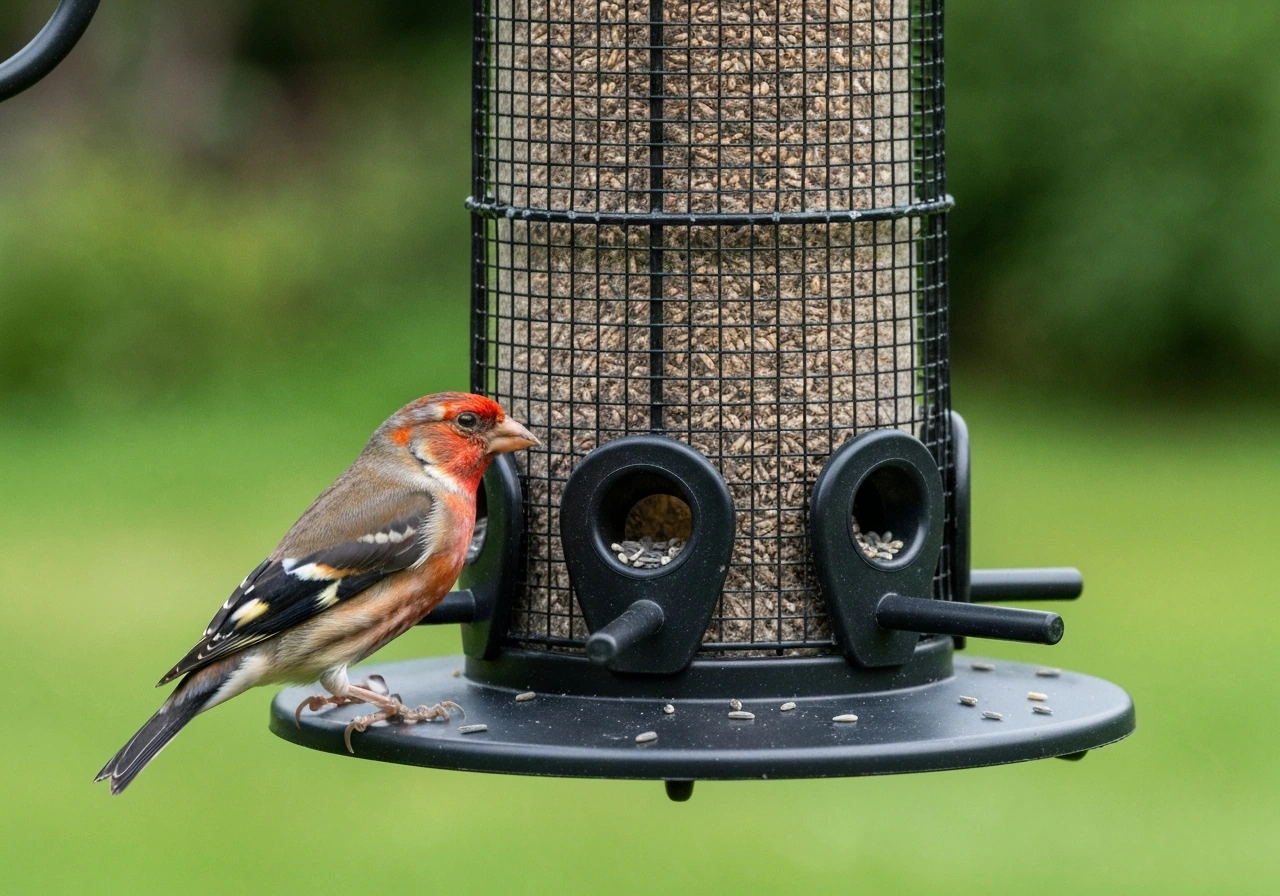
For most apartment balconies, a compact tube feeder or a window-mounted suction-cup feeder is the smartest starting point. Tube feeders hold black-oil sunflower seed, attract a wide range of birds, stay relatively tidy, and can hang from a simple balcony rail hook. If your railing situation is awkward or you want birds right up close, a suction-cup window feeder works surprisingly well and requires zero hardware. That said, the "best" feeder really depends on your specific balcony, the birds in your area, and whether your lease even allows it. Here's how to figure all of that out before you spend a dollar.
Best Bird Feeders for Apartment Balconies: Top Picks
Marcus Holloway
25 Apr 2026
Before You Buy: Balcony Constraints You Need to Think Through
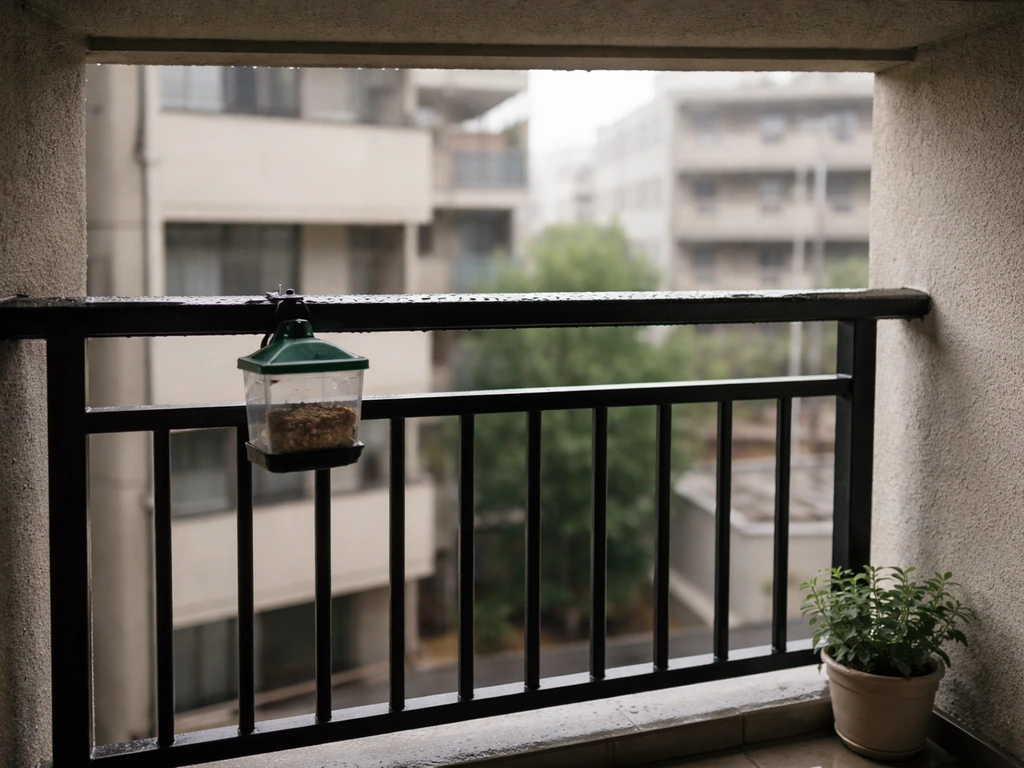
Balcony birding has real limitations that backyard setups don't. Space is usually tight, exposure to wind and rain is higher, and you often have neighbors directly above, below, or beside you. The biggest issue most people skip over, though, is whether they're actually allowed to have a feeder at all.
Check your lease and HOA rules first. Bird feeders are frequently caught under general pest-prevention or nuisance clauses even when they're not called out by name. Some municipalities, including cities like Milwaukee, explicitly include bird feeding in their nuisance or animal-control ordinances. The rules and local conditions can also vary in New York City, so make sure your plan fits the neighborhood cities like Milwaukee. Before you mount anything, read your lease and, if you're in a condo or managed building, ask your HOA in writing. A quick email protects you if a neighbor complains later.
Beyond the rules, take stock of what you're actually working with. How wide is your railing, and is it round, flat, or glass? Is there an overhang above you, or are you fully exposed to rain? How much direct sunlight do you get, and from which direction? A north-facing balcony in a shaded urban canyon is a very different setup from a south-facing terrace with hours of afternoon sun. These details will shape every choice you make about feeder type, mounting, and seed.
- Check your lease and local ordinances before installing anything
- Measure your railing type and width so you know which clamp mounts will fit
- Note your sun exposure: heavy afternoon sun means seed spoils faster and you'll clean more often
- Consider neighbors directly below: dropped seed and husks are a real friction point
- Think about wind: high balconies above the 5th or 6th floor can turn a lightweight feeder into a pendulum
The Feeder Types That Actually Work on a Balcony
Not every feeder style translates well to a balcony environment. Here's an honest rundown of what works and why.
Tube Feeders
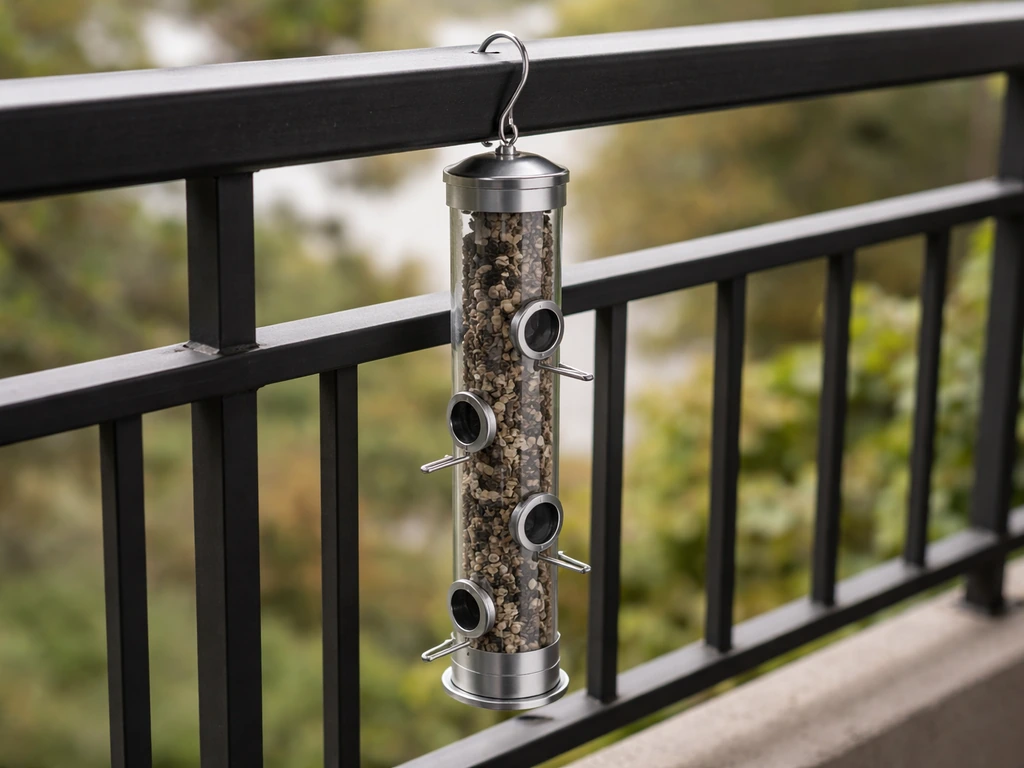
Tube feeders are the workhorse of balcony birding. They're narrow, hang easily from a hook or rail mount, and keep seed relatively dry because the ports are small and positioned along the side rather than at the top. They're ideal for black-oil sunflower seed (which attracts chickadees, finches, nuthatches, and sparrows) or nyjer seed for goldfinches and siskins, though nyjer needs a feeder with very small ports specifically designed for it. One thing to avoid: sunflower hearts or chips in a tube feeder. Shelled seed collects moisture inside the tube and turns into a moldy clump faster than you'd expect, especially if your balcony gets afternoon rain.
Platform and Tray Feeders
Platform feeders are open trays that attract the widest variety of species, including cardinals and grosbeaks that often won't use a tube. The downside on a balcony is mess: seed husks and debris scatter freely, which matters a lot when you have downstairs neighbors. A covered platform feeder, or a tray with a dome above it like the Droll Yankees Seed Saver, cuts down on both mess and weather exposure. Brome's Seed Buster Seed Catcher Tray takes the XL platform approach and doubles as a mess catcher, though it requires their BirdsUP pole kit.
Hopper Feeders
Hoppers have a seed reservoir that gravity-feeds into a small tray at the bottom. They look like little houses, hold a lot of seed, and are great for cardinals and sparrows. They're bulkier than tubes, though, so they need a sturdier mount and take up more room. If your balcony has generous floor space and a solid rail or hook point, a small hopper is excellent. In tight spaces, skip it.
Suet Feeders
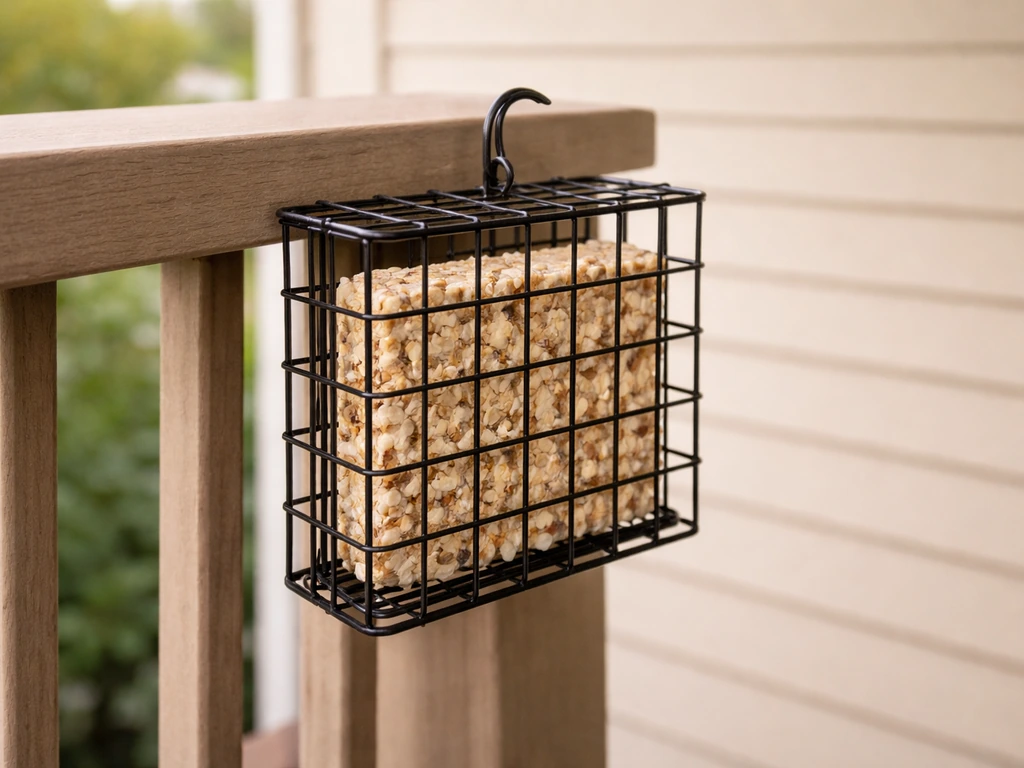
Suet feeders are flat wire cages that hold a block of suet (rendered fat with seeds or fruit mixed in). They're compact, cheap, and surprisingly effective at pulling in woodpeckers, nuthatches, chickadees, and titmice. One practical note: standard suet stays firm only up to about 90°F, so a south-facing balcony in summer will turn your suet cake into a greasy mess. Look for no-melt or summer suet formulations if you're in a warm climate or a hot-sun exposure.
Window and Suction-Cup Feeders
Window feeders mount directly to the glass using suction cups, which makes them the only truly zero-hardware option. The Droll Yankees Observer Window Bird Feeder, for example, uses three strong suction cups and holds about half a pound of seed. They're small, which means more frequent refilling, but they give you an incredibly close view of birds. They also sidestep the railing clamp question entirely. One caveat about window placement: a feeder within a few feet of the glass is actually safer for birds than one positioned 10 to 30 feet away, because a bird flushing from a close-mounted feeder doesn't build up enough speed to injure itself on impact.
Smart Feeder Cameras
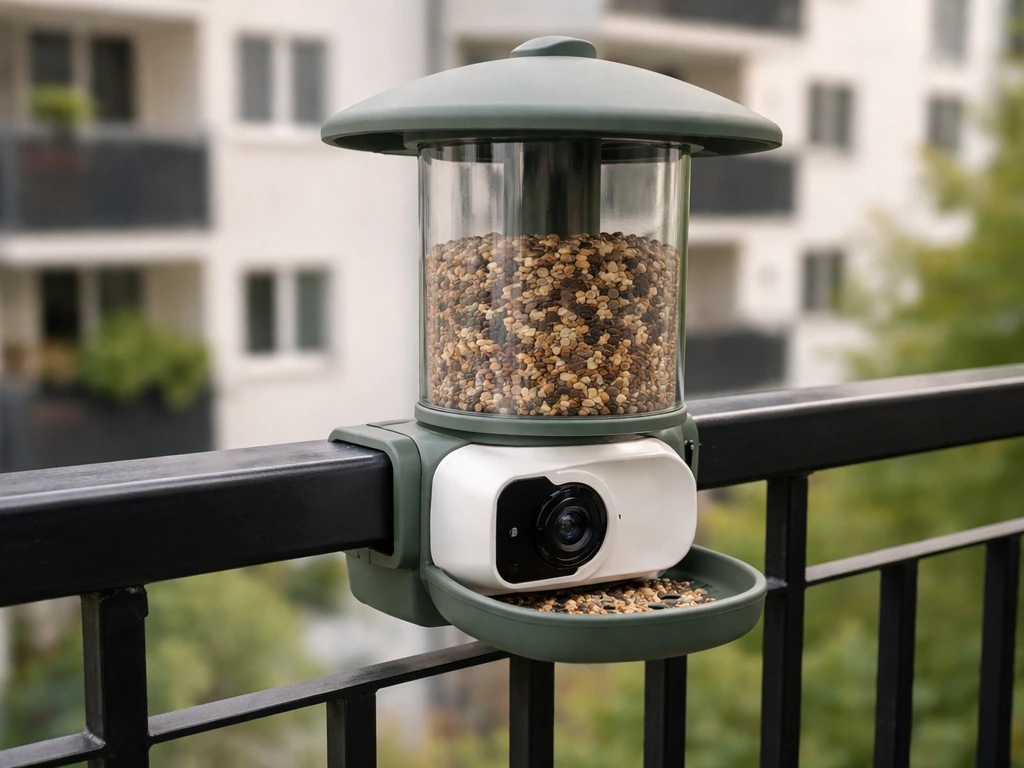
Smart bird feeders combine a seed feeder with a built-in camera and AI species identification, and they've gotten genuinely good in the last couple of years. For an apartment setup, they're appealing because the camera replaces the need to sit outside watching. The Netvue Birdfy (and its AI+Solar variant) is one of the most popular options: it has an IP65 waterproof body, a 5000mAh rechargeable battery, and smart drainage in the seed container. The solar version rarely needs manual charging according to Netvue's own support documentation. Bird ID AI runs on the Netvue Cloud, and full AI recognition is a subscription feature running about $4. Birdfy states that its AI bird recognition process can identify thousands of bird types, using the Netvue Cloud approach Bird ID AI runs on the Netvue Cloud. 99 per month or $49.99 per year. The Birdfy Lite version requires that subscription for bird ID to function. The Kiwibit Beako takes a different approach, advertising no subscription fees for its AI features. It shoots 4K footage, has a 4.4W solar roof, and was reported to last about a week between charges in independent testing. FeatherSnap's Scout is another solar-powered option that includes solar as standard and positions AI bird ID as part of the core experience, with a premium tier for added features. Bird Buddy's Pro tier adds remote feeder unlock, unlimited cloud storage, and care alerts. These are all solid options, but compare the subscription terms carefully before buying since the hardware price is only part of the total cost.
Matching Feeder Type to the Birds You Want to Attract
Seed type and feeder style together determine which birds show up. Here's a practical breakdown by species group.
| Target Birds | Best Feeder Type | Best Seed/Food | Notes |
|---|---|---|---|
| Chickadees, sparrows, nuthatches | Tube feeder | Black-oil sunflower | Most versatile combo; works on almost any balcony |
| Goldfinches, siskins, Pine Siskins | Nyjer/thistle tube feeder | Nyjer (thistle) seed | Needs small-port feeder; finches may take weeks to find it |
| Cardinals, grosbeaks | Platform tray or hopper feeder | Sunflower, safflower | Safflower also deters squirrels; cardinals prefer open tray |
| Woodpeckers, titmice, nuthatches | Suet cage feeder | Suet block (no-melt in summer) | Even small balconies can host a suet cage on a hook |
| Multiple species, mixed flock | Platform/tray with dome | Sunflower mix | Dome reduces weather mess; tray width matters for cardinals |
| Any species, hands-off viewing | Smart camera feeder | Sunflower or mix | AI ID works best with sunflower to draw variety |
blank" rel="noopener noreferrer">Black-oil sunflower seed is the single best all-purpose choice. It attracts more species than any other seed type, including cardinals, chickadees, finches, and sparrows. If you want to target goldfinches specifically, you'll need a dedicated nyjer feeder with small ports, since nyjer seed falls straight through the larger openings on a standard tube feeder. For cardinals, go with a tray or hopper and try safflower seed as a partial substitute for sunflower: squirrels and many pest birds tend to avoid safflower, which makes it especially useful on a balcony where you can't physically distance the feeder from jumping points.
Mounting and Placement Solutions for Apartment Balconies
Getting a feeder securely mounted on a balcony without drilling or damaging the structure takes a little creativity. Fortunately, there are several solid options depending on your railing style.
Rail Clamp Mounts
A rail clamp or rail hook is the most common balcony solution. These grip the top of a flat or round railing and extend an arm outward to hang the feeder. They work well for most tubular metal or flat wood railings. Measure your railing width before ordering because clamps are sized. A feeder hanging outward from the rail also keeps seed debris falling over the edge rather than onto your balcony floor.
Freestanding Poles
If you have a balcony with floor space and a deck that can hold a freestanding base, a weighted pole or deck-clamp pole gives you the most flexibility. You can add multiple feeders at different heights and attach baffles more easily. Some poles, like Brome's BirdsUP kit, are designed specifically with feeder trays that stabilize the setup. The trade-off is that poles need either a base weight (harder to hide on a small balcony) or a deck clamp that fits your railing thickness.
Suction Cup and Window Mounts
As mentioned above, suction-cup feeders need no hardware at all. Make sure the glass is clean and grease-free before attaching them for the strongest hold. On sliding glass doors or large windows adjacent to the balcony, suction-cup feeders are an especially tidy option because seed shells fall to a specific spot that's easy to sweep.
Hanging from Overhead Structure
Many balconies have a ceiling overhang or ceiling hooks already installed for plants. A simple S-hook and a short length of chain is often all you need to hang a tube or suet feeder. This is arguably the most stable setup in wind because the feeder swings rather than getting blown sideways, and it gives you easy access for filling and cleaning.
On placement, the two things that matter most are visibility (so you can actually enjoy the birds) and safety. Keep the feeder where you can see it clearly from inside. And since balconies rarely have shrubs or trees nearby, you generally don't need to worry as much about predator-cover placement, though you should still avoid positioning a feeder directly in a wind tunnel between buildings.
Durability and Weather: What Holds Up on an Exposed Balcony
High-floor balconies get hammered by wind, rain, and UV in ways that backyard feeders on a sheltered pole never do. Material quality matters a lot more here.
Material Comparison
| Material | Weather Resistance | Durability | Ease of Cleaning | Best For |
|---|---|---|---|---|
| Powder-coated steel | High | Very high | Easy to wipe down | Suet cages, hopper frames, rail mounts |
| UV-stabilized polycarbonate/plastic | Medium-high | High if UV-stabilized | Easy, dishwasher-safe some models | Tube feeders, window feeders |
| Recycled plastic (poly lumber) | Very high | Very high | Easy | Platform feeders in full-exposure balconies |
| Wood | Low unless treated | Medium | Harder, absorbs moisture | Avoid on exposed balconies |
| Glass tubes | High | High but fragile | Easy, see-through for monitoring | Tube feeders where durability of tube matters |
For covered or semi-covered balconies, standard polycarbonate tube feeders hold up fine. For fully exposed setups, look for powder-coated metal frames and UV-stabilized plastic reservoirs. Avoid raw wood feeders unless they're well-sealed, since they warp, crack, and harbor bacteria faster in wet conditions. Covered or domed feeders are worth the extra cost on a windy balcony: a dome above a platform feeder prevents seed from getting waterlogged and reduces how often you need to change it.
On cleaning: all feeders on a balcony need to be cleaned at least once a week, more often in hot or wet weather. Use hot water and a bottle brush for routine cleaning. For disinfection, a 10% bleach solution (1 part bleach to 9 parts water) is the standard recommended by Cornell Lab's All About Birds and the Ornithological Council. Rinse thoroughly and dry completely before refilling. Always wash your hands after handling feeders, and wear gloves if you can. Scattered or dropped seed beneath the feeder attracts rodents, which is a real problem on a balcony that opens to a shared space.
Keeping Squirrels, Raccoons, and Pest Birds Under Control
Balconies can feel like they're pest-proof by default since they're elevated, but squirrels are excellent climbers and jumpers, raccoons are bold enough to raid mid-rise balconies at night, and aggressive birds like grackles and starlings can take over a feeder and drive away everything else.
Squirrels
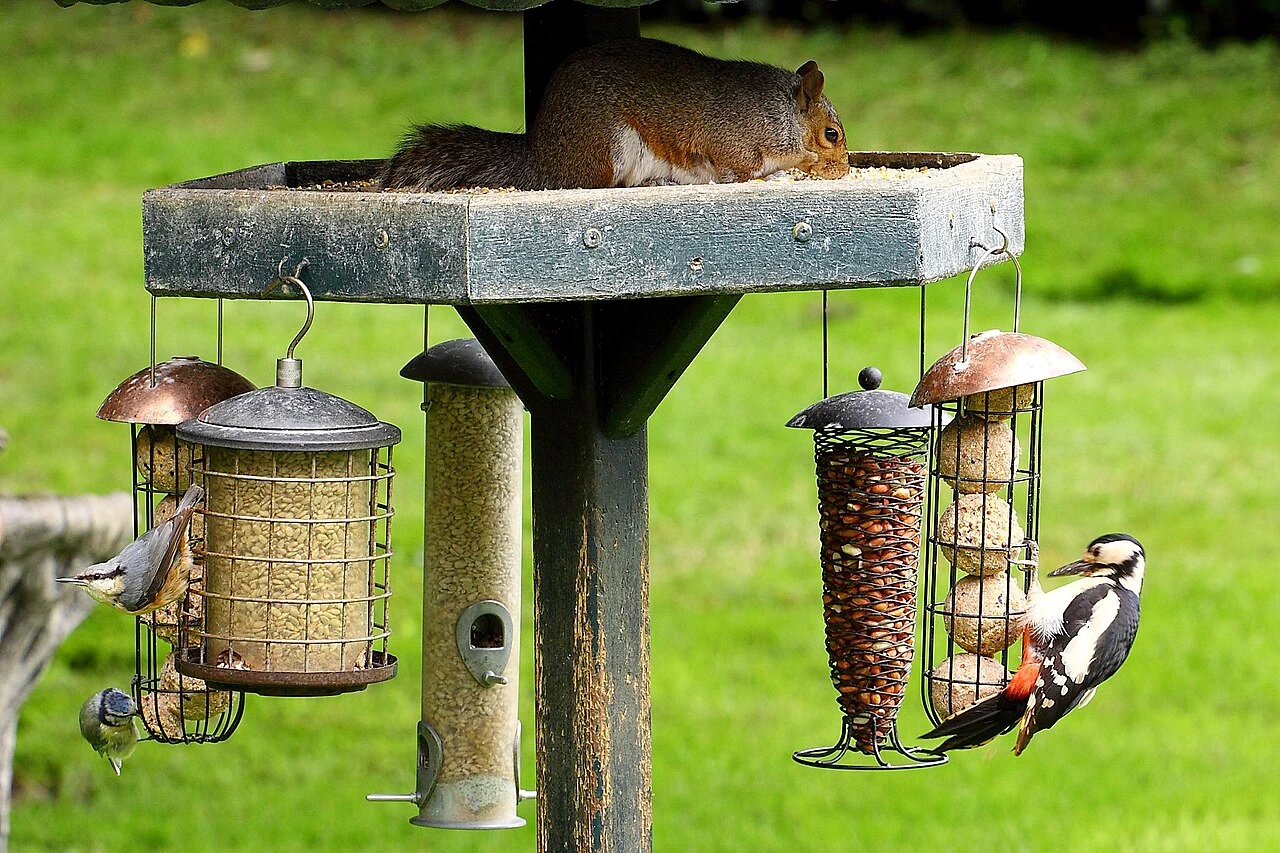
The honest reality is you can't completely guarantee squirrel-proofing, as Audubon freely admits. But you can make it very hard. The most effective approach on a balcony is distance: keep feeders at least 10 feet horizontally from any surface a squirrel can jump from, and at least 4 to 5 feet vertically from anything it can climb up. If you're using a freestanding pole, a baffle mounted between 4 and 4.5 feet high on the pole is the standard effective placement. For rail-mounted or hanging feeders, a cage-style squirrel guard around the feeder body slows them down significantly. Switching to safflower seed in open-tray feeders is a useful secondary deterrent since most squirrels and many pest birds dislike it.
Raccoons
If raccoons are an issue on your balcony (common in urban and suburban high-rises more than you'd expect), bring feeders in at night. Raccoons are primarily nocturnal foragers, so removing the food source after dark eliminates most of the problem without any hardware investment.
Grackles, Starlings, and House Sparrows
These species are the pest birds of apartment birding. Grackles in particular are big, aggressive, and can empty a platform feeder in minutes. The most effective countermeasures are feeder design and seed choice. Caged tube feeders with wire guards around the perimeter let small songbirds through while blocking larger birds. Nyjer feeders are inherently grackle-resistant because grackles don't bother with the small ports and don't eat nyjer. Swapping sunflower for safflower on your tray or hopper feeder also deters most starlings and many sparrows, while still attracting cardinals and chickadees.
Your Balcony Bird Feeder Buying Checklist and Top Picks
Use this checklist to narrow your options before you buy, then match your situation to the specific recommendations below.
- Check your lease and local ordinances before buying anything
- Measure your railing type and width (round, flat, square, glass) to confirm mount compatibility
- Decide on your primary target birds: finches and small songbirds, cardinals and grosbeaks, woodpeckers, or mixed variety
- Choose your mounting method: rail clamp, overhead hang, window suction cup, or freestanding pole
- Consider your weather exposure: if fully exposed to rain and wind, prioritize covered or domed designs and powder-coated or poly materials
- Decide whether you want a smart camera feeder (higher cost, subscription possible, minimal manual bird-watching needed) or a traditional feeder
- Plan your hygiene routine: commit to weekly cleaning with hot water, monthly disinfection with a 10% bleach solution, and daily seed checks in hot weather
Top Picks by Situation
| Your Situation | Best Pick Type | Key Features to Look For | Seed Recommendation |
|---|---|---|---|
| Tight balcony, first feeder | Tube feeder with rail hook | UV-stabilized plastic, 6-8 ports, easy-fill top | Black-oil sunflower |
| Targeting finches/goldfinches | Nyjer tube feeder | Small mesh ports, lightweight, weather cap | Nyjer (thistle) seed |
| Want cardinals and variety | Domed platform feeder (e.g., Droll Yankees Seed Saver) | Adjustable dome, spill-resistant bowl, powder-coated | Sunflower or safflower mix |
| Lowest mess possible | Suet cage feeder | Wire cage, no loose seed, simple hook mount | No-melt suet block |
| No railing/no hardware allowed | Suction-cup window feeder (e.g., Droll Yankees Observer) | Three suction cups, clear viewing panel, easy cleaning | Sunflower hearts or chips |
| Want bird ID and video | Smart camera feeder (Netvue Birdfy AI+Solar or Kiwibit Beako) | IP65 waterproof, solar charging, AI ID (check subscription terms) | Black-oil sunflower mix |
| Budget setup | Basic tube feeder plus suet cage | Metal ports, tight-fitting lid, simple wire cage | Sunflower + suet block |
| Pest bird problems (grackles) | Caged tube feeder or nyjer feeder | Wire cage guard, small ports, no open tray | Nyjer or safflower |
If you're in a city and dealing with the specific challenges of urban birding (noise, limited species variety, aggressive pest birds), the considerations here overlap significantly with what works for city birding setups in places like New York or Chicago, where species range and pest pressure are both higher than in suburban yards. For Chicago, those same urban birding pressures make it even more important to choose feeders that handle pests and weather well city birding setups in places like New York or Chicago. The core principle is the same: start with one good feeder, get the mounting right, and add variety once you know what birds are actually visiting your balcony. If you're looking for the best bird feeders for Chicago, focus on compact, weather-resistant designs and mess control that works in high-rise conditions. If you're looking for the best urban bird feeders, focus on compact, weather-resistant designs and mess control that works in high-rise conditions. For many people trying to choose the best bird feeder for city living, compact, weather-resistant designs with good mess control are the safest bet in high-rise conditions.
Simple Setup Steps to Start Today
- Confirm your lease allows it and check local bird-feeding ordinances for your city
- Pick one feeder type from the chart above that matches your mounting situation and target birds
- Buy a small amount of seed to start (5 lb bag) so you can adjust if the seed type isn't attracting birds
- Mount the feeder securely using a rail clamp, ceiling hook, or suction cups; check that it can't swing into the window or railing in wind
- Fill it two-thirds full to start, so you're not throwing away seed if birds don't find it right away
- Put a reminder on your phone for weekly cleaning with hot water and a brush, and monthly disinfection with a 10% bleach solution (1 part bleach to 9 parts water), rinsed and dried completely
- Wash your hands after every refill or cleaning, and wear gloves if possible
- Give birds one to three weeks to discover the feeder before switching seed types
That's genuinely all there is to it. The feeders that work best on balconies are the same ones that prioritize easy mounting, weather resistance, and low mess, which also happen to be the easiest to maintain long-term. If you're looking for the best urban bird feeders, focus on compact styles that mount easily and handle mess, rain, and heavier pest pressure. Start simple, stay consistent with cleaning, and you'll have birds visiting within a few weeks.
FAQ
How do I choose between a tube feeder and a platform feeder if I’m worried about mess on a lower balcony level?
Start with a covered tube feeder or a domed covered platform. Tube feeders confine husks better because ports are small and seed sits lower in the body. If you choose a platform, add a dome or use a tray with a built-in seed catcher so shells land in one area you can sweep, not across your balcony and neighbor’s view.
What’s the safest placement distance from glass for a window-mounted feeder?
For the safest setup, mount it close enough that birds can see and react before they build up speed. A practical rule is placing the feeder within a few feet of the glass, rather than on the far side of the window where a bird may not be able to stop in time.
How often should I refill and clean a balcony feeder if it’s hot, windy, or rainy?
Plan on weekly cleaning as a baseline, then increase frequency to every few days during heat or heavy moisture. Wet seed inside a feeder can mold quickly, especially in tube feeders if rain gets in. Refill in smaller amounts so old seed does not sit for long periods.
Is it ever okay to use sunflower hearts or mixes in a tube feeder?
Avoid hearts and chips in tube feeders. They clump when exposed to humidity because the seed does not shed moisture the same way as intact black-oil sunflower. If you want variety, switch to a feeder type designed for mixed seed, or use a tray/hopper with a way to keep precipitation out.
What should I do if I attract squirrels immediately, but I want to keep feeding birds?
Use distance and a guard strategy together. Keep the feeder at least 10 feet from climbable surfaces and at least 4 to 5 feet vertically from anything squirrels can reach. For rail-mounted setups, add a cage-style squirrel guard around the feeder, and consider safflower for open tray feeders as a secondary deterrent.
Do smart bird feeders work well on balconies with limited Wi-Fi or cloudy weather?
They can, but you should check power and connectivity expectations. Many models rely on Wi-Fi for live viewing, and AI recognition can be subscription-based through the cloud. If you will have weak signal, test your router coverage on the balcony beforehand, and confirm whether the camera can record locally or depends entirely on cloud sync.
How do I reduce pest birds like grackles taking over a feeder?
Choose feeder designs and seed that limit access. Caged tube feeders let small birds feed while blocking larger birds. For seed, nyjer often reduces grackle pressure because grackles typically ignore it and smaller finches use it well. If you’re using trays, swap part or all of sunflower to safflower to deter many starlings and some sparrows.
Can I hang a feeder from an overhang or ceiling hook if my building has strict rules?
You can, but verify lease or HOA rules first, especially for anything involving permanent hardware. Many balconies allow temporary hanging, yet nuisance and pest-control clauses can still apply. If you ask permission, do it in writing, and be ready to remove the feeder quickly if they require it.
What’s a good “first feeder” setup when I don’t know what birds will show up?
Start with black-oil sunflower in a covered or weather-resistant tube feeder mounted securely at a visible, safe location. This seed is an all-purpose draw, and the feeder style supports easy cleanup and less mess. After you see who visits over a couple of weeks, add a second feeder type (for example, nyjer or suet) only if it matches the birds you’re actually getting.
How can I prevent rodents from being attracted under my balcony feeder?
Keep the feeding area tidy. Scattered seed is the main draw, so sweep beneath the feeder regularly and clean spilled seed in the corners of the railing mount. If your feeder has a catch tray or dome, use it and empty it often, because seed trapped in the catcher can still turn into an attractant.
Next Article
Best Nyjer Bird Feeder: How to Choose for Finches
Buy the best nyjer bird feeder for finches: ports, seed retention, easy cleaning, weatherproof and predator deterrence t