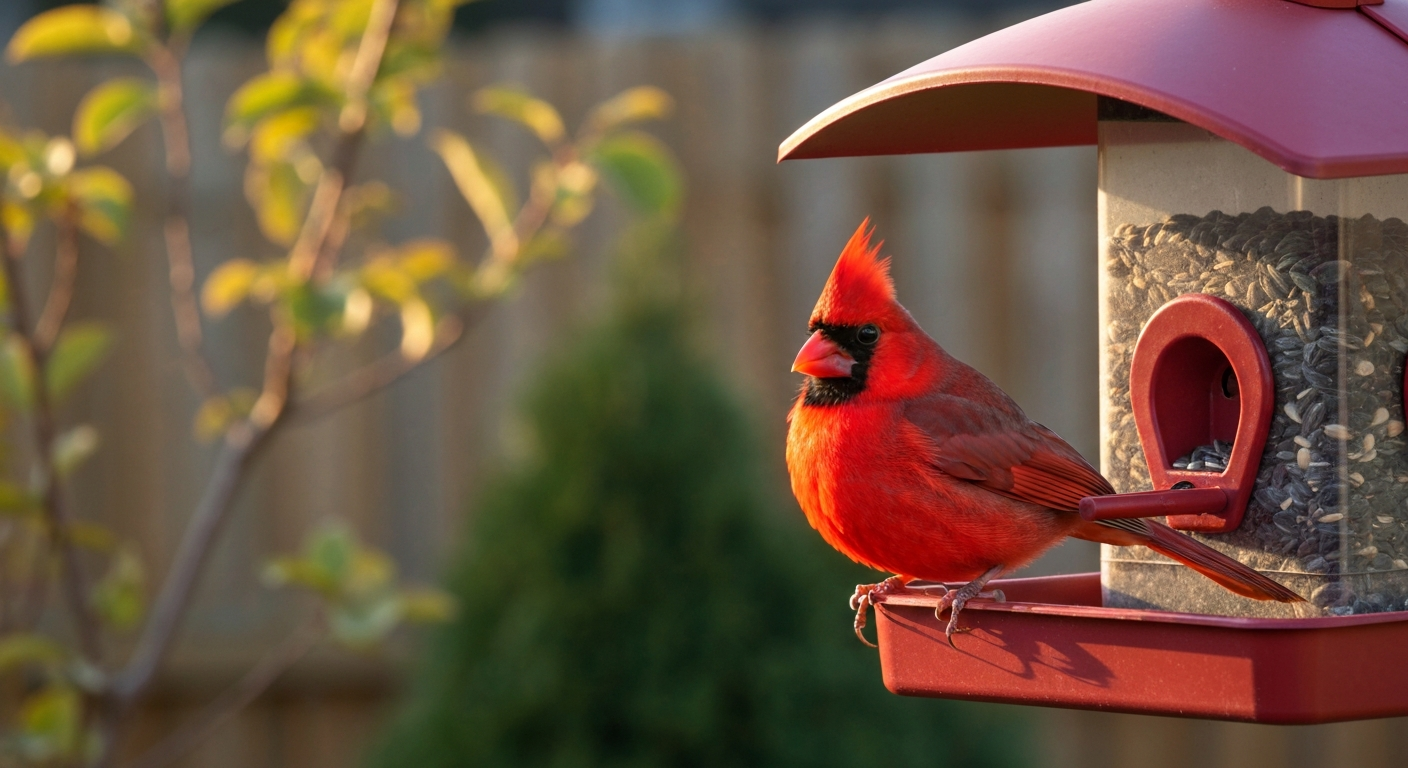
If you want to feed multiple bird species at once, the most practical single setup is a large hopper or platform feeder filled with black-oil sunflower seed, paired with a squirrel-resistant tube feeder for smaller birds and a suet cage on the side. Choosing the best multi bird feeder for your yard setup helps you feed multiple species at once without constant conflict or mess. That trio covers the widest range of feeding behaviors, from ground-level doves and cardinals to clinging chickadees and woodpeckers, without forcing every species to compete at one spot. If you can only pick one feeder, a weight-activated tube feeder like the Brome Squirrel Buster Plus (5.1 lb capacity) handles the most common backyard species while blocking squirrels and cutting down on grackle dominance.
Best Bird Feeder for Multiple Birds: A Practical Guide
What 'multiple birds' actually looks like in a real backyard
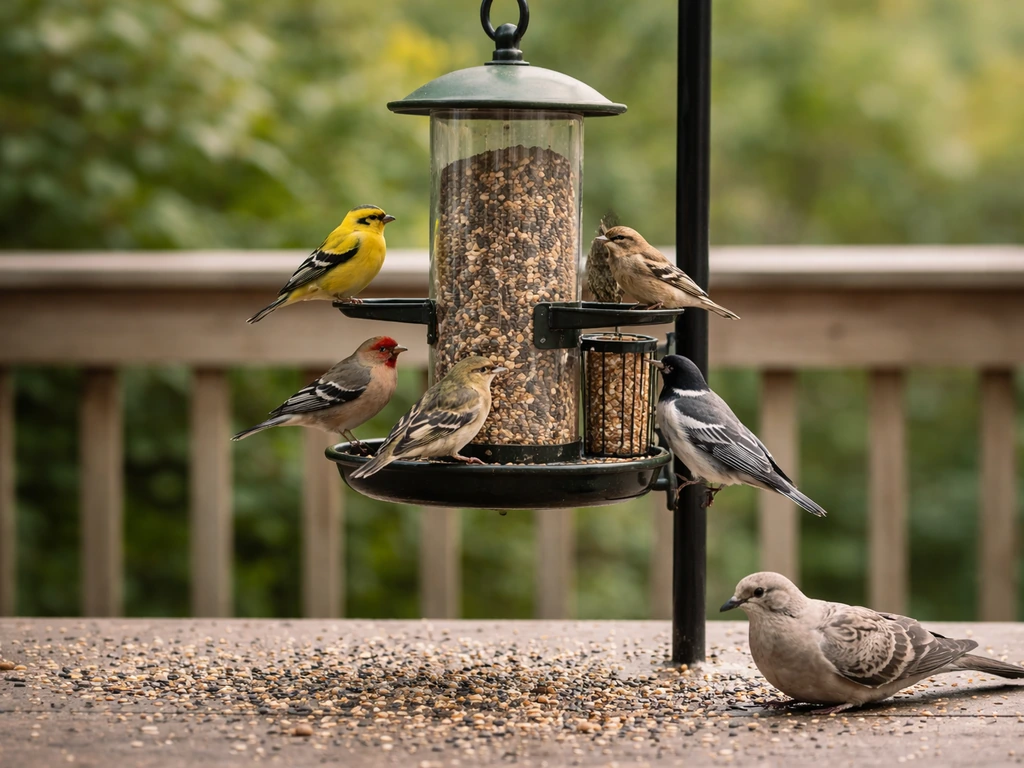
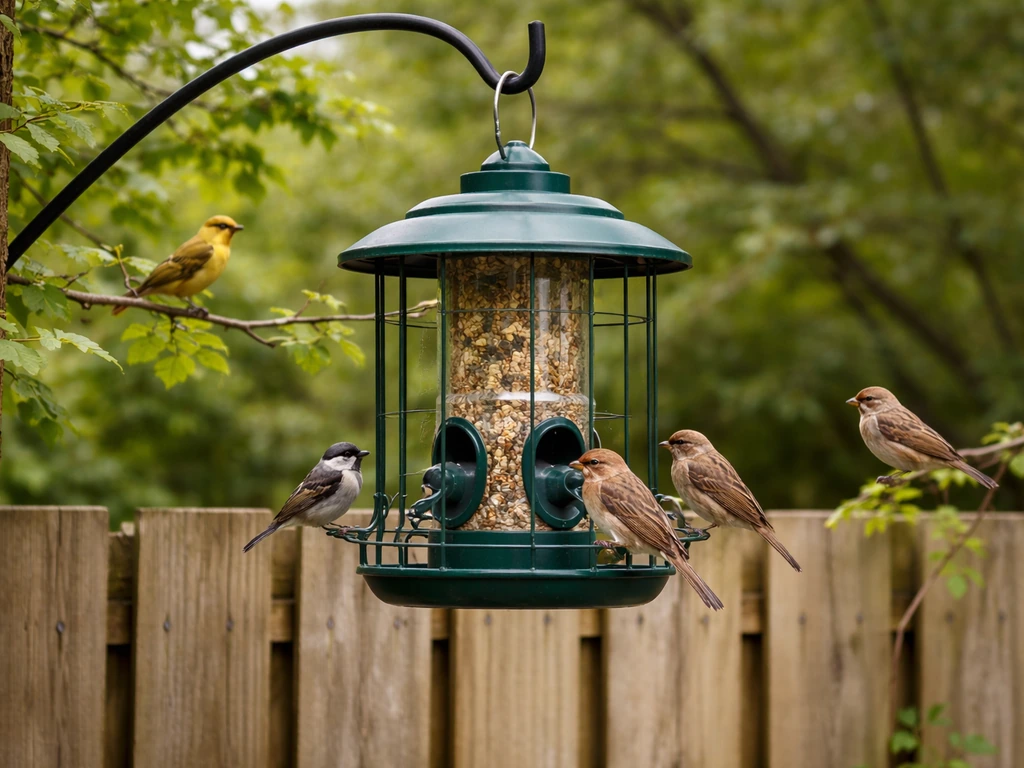
When people say they want to feed multiple birds, they usually mean a mixed-species yard: cardinals, chickadees, house finches, nuthatches, mourning doves, and woodpeckers all showing up within the same hour. The challenge is that these birds don't feed the same way. Chickadees and nuthatches cling to tube ports. Cardinals and doves prefer a wide platform or tray with room to stand. Woodpeckers want vertical surfaces and suet. Goldfinches need small ports and nyjer seed. That's four different feeding behaviors, and trying to satisfy all of them with one feeder usually means compromising for everyone and thrilling no one.
The other half of the equation is your feeding goal. Are you trying to attract the widest variety possible, or are you specifically trying to bring in cardinals and chickadees while keeping grackles and starlings out? Those goals call for different feeder designs and seed choices. Being honest about what you actually want before you buy saves you a lot of frustration later.
Best feeder types for handling different birds at once
No single feeder design is perfect for every species, but some come much closer than others. Here's how the main types stack up for a mixed-species yard.
| Feeder Type | Best For | Weakness | Multi-Bird Rating |
|---|---|---|---|
| Hopper/House Feeder | Cardinals, doves, jays, grosbeaks | Grackles dominate; hard to clean thoroughly | Good |
| Tube Feeder (large ports) | Chickadees, nuthatches, finches, cardinals | Doves can't use it; needs regular cleaning | Very Good |
| Platform/Tray Feeder | Almost every species including ground feeders | Fully exposed to squirrels, rain, and waste | Excellent variety, high maintenance |
| Suet Cage | Woodpeckers, nuthatches, chickadees | One food type only; starlings can raid it | Good as a supplement |
| Nyjer/Thistle Tube | Goldfinches, siskins, redpolls | Very species-specific | Specialist use only |
| Weight-Activated Tube (e.g., Squirrel Buster Plus) | Chickadees, finches, cardinals, nuthatches | Doves still can't use it well | Best single-feeder choice |
In practice, a large hopper feeder does a decent job of pulling in a variety of birds because it has a big seed reservoir and a wide enough ledge for bigger species to land. The downside is that hoppers also invite every grackle, starling, and squirrel in the neighborhood. Tube feeders are more selective by design since the small perches and ports naturally favor lighter, more agile birds, though larger-port tubes can still accommodate cardinals. The weight-activated tube feeder is the sweet spot for most multi-bird yards because the spring-loaded shroud mechanism blocks squirrels and heavier birds while still leaving ports open for the species you actually want.
If your yard has the space and budget, the best multi-bird setup is a combination: a weight-activated tube feeder as the primary station, a hopper or platform feeder for doves and ground-feeding birds, and a suet cage hung nearby for woodpeckers. This spreads birds across stations and reduces crowding and competition at any single point.
Getting the seed and food setup right
Black-oil sunflower seed is the single best choice for a multi-bird feeder. It attracts cardinals, chickadees, house finches, goldfinches, nuthatches, tufted titmice, woodpeckers, and jays, basically the core of what most backyard birders want. The thin shell is easy for small birds to crack, and the high fat content makes it nutritionally worthwhile. If you stock one seed, make it this one.
Mixed seed sounds like the obvious choice for attracting variety, but it often backfires. Most commercial mixes contain millet, cracked corn, wheat, and filler grains that many species simply ignore. That uneaten seed piles up under the feeder, gets wet, molds, and attracts rodents. If you use a mix, look for blends that are heavy on sunflower, safflower, and nyjer, and light on the filler grains. Straight sunflower in your primary feeder is honestly cleaner and more effective.
Suet is worth adding as a second food type because it pulls in insect-eating birds (woodpeckers, nuthatches, brown creepers) that won't visit a seed feeder at all. Plain suet cakes without added corn or fruit draw less attention from starlings than flavored varieties. In warm months, look for no-melt suet formulas to avoid the mess. For goldfinches, a separate nyjer sock or narrow-port tube hung away from the main station keeps them from competing with larger birds.
Capacity: how much seed do you actually need?
For a busy mixed-species yard, you want a feeder that holds at least 3 to 5 lbs of seed so you're not refilling every day. The Brome Squirrel Buster Plus holds 5.1 lbs, which is a practical size for moderate to heavy traffic. Larger hoppers can hold 6 to 10 lbs, but more seed capacity also means seed sits longer and can spoil if bird traffic is lower than expected. In warmer months, smaller, more frequent fills are actually healthier than loading up a giant feeder and forgetting it for two weeks.
Keeping squirrels and grackles from taking over
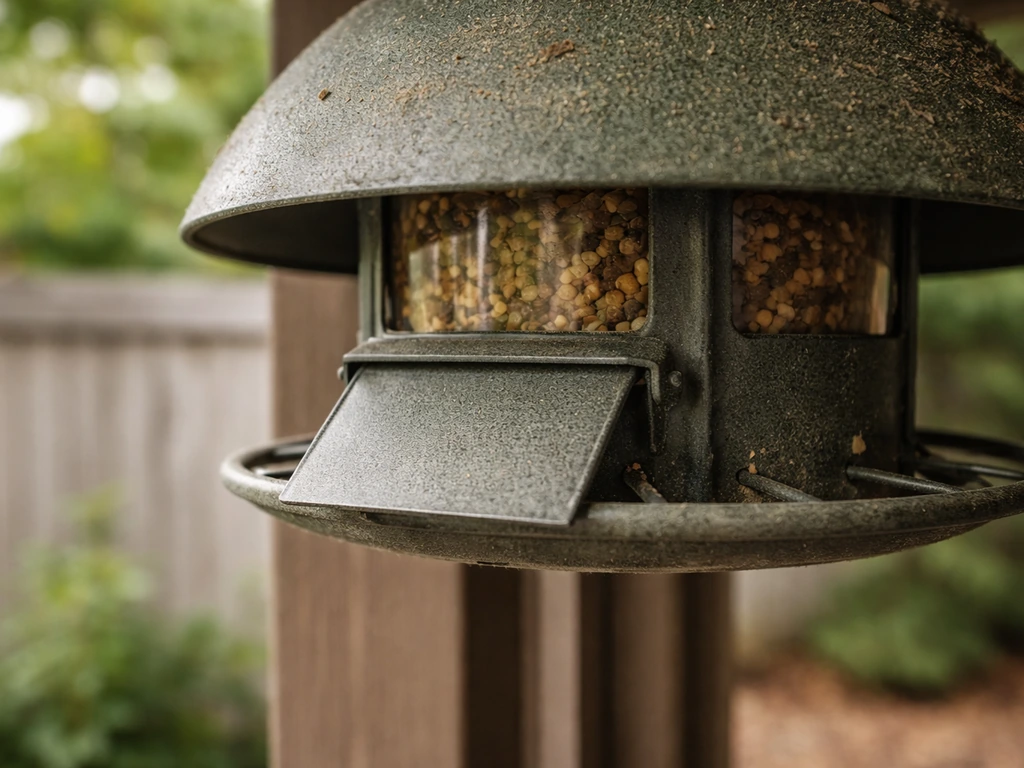
Squirrels and dominant nuisance birds like grackles, European starlings, and house sparrows are the most common complaints from people feeding multiple species. They don't just eat the food; they chase away the smaller birds you actually want to see. Solving both problems at once requires thinking about feeder design, placement, and food choice together.
Squirrel resistance
Weight-activated feeders are the most reliable mechanical solution. The Brome Squirrel Buster Plus uses a shroud that drops over the feeding ports when a heavier animal lands on it, closing off access without needing batteries or electricity. You can adjust the sensitivity to block different weight thresholds. Beyond the feeder itself, placement matters: mount the feeder on a smooth metal pole at least 5 feet high, at least 8 to 10 feet away from any tree branch, fence, or structure a squirrel can launch from. A baffle (cone or cylinder style) below the feeder on the pole adds another layer. No single method is foolproof, but the combination of a weight-activated feeder plus a baffled pole is as close as it gets.
Grackle and bully-bird resistance
Grackles are a trickier problem than squirrels because they're birds, and most deterrents that block them also risk blocking larger desirable birds like red-bellied woodpeckers or cardinals. The most practical approach is a combination of feeder design and food selection. Tube feeders with short perches naturally disadvantage grackles because their body size makes it awkward to feed from small ports. Switching from mixed seed to straight safflower is also effective: grackles and starlings generally dislike safflower, while cardinals, chickadees, and nuthatches accept it readily. Caged feeders (tube feeders surrounded by a wire cage with large enough openings for small birds but not large ones) are another option, though they do exclude woodpeckers and larger desirable visitors.
Project FeederWatch specifically flags grackles, starlings, crows, and house sparrows as species that can overrun feeders depending on setup. If grackles are a serious problem in your yard, a caged tube feeder filled with safflower is your most reliable solution for protecting smaller birds.
Cleaning, hygiene, and keeping a busy feeder healthy
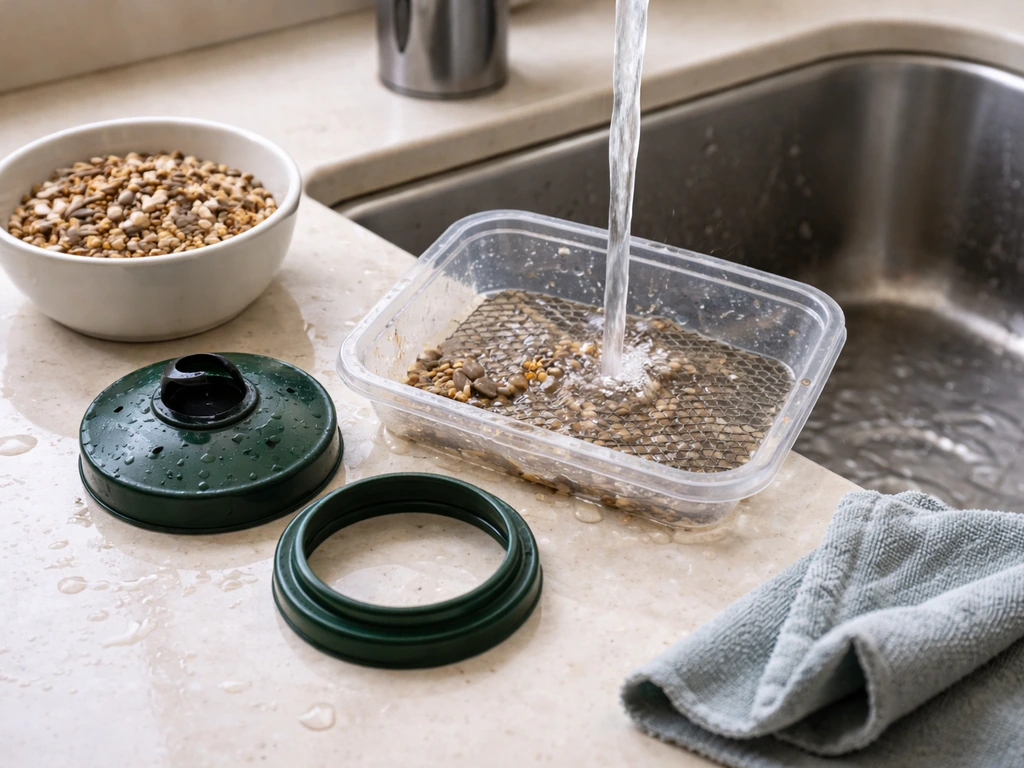
The more birds using a feeder, the faster disease can spread. Salmonellosis, aspergillosis, and avian pox are all documented in backyard feeders, and most cases trace back to dirty feeders with moldy or wet seed. When you're running a multi-bird operation, cleaning is non-negotiable.
Both Project FeederWatch and Birds Canada recommend cleaning seed feeders at least once every two weeks. Birds Canada also advises cleaning feeder and birdbath surfaces at least every two weeks to help prevent illness cleaning seed feeders at least once every two weeks. In warm, humid weather or during periods of heavy traffic, clean weekly. The standard method is to disassemble the feeder, scrub off debris and seed husks, then soak all parts in a 9:1 water-to-bleach solution (nine parts water to one part bleach) for a few minutes, rinse thoroughly with clean water, and let everything dry completely before refilling. Bleach residue is toxic to birds, so the rinse step is important. Vinegar solution is a gentler option and works for routine cleaning, though bleach is better for disinfecting when you suspect illness.
Also keep the area below the feeder clean. Seed hulls and dropped food accumulate fast under a busy feeder, and that debris attracts rodents and can harbor mold and disease. Rake or sweep under the feeder weekly, and consider placing a seed tray or catcher under the feeder to make cleanup easier.
If you notice sick birds at your feeder (lethargy, fluffed feathers, unusual eye discharge), take the feeder down immediately, clean it with the bleach solution, and wait a week or two before putting it back up. Continuing to feed when birds are sick concentrates them and accelerates disease spread.
Materials and weather durability
For a feeder that handles year-round multi-bird traffic, material choice matters more than most buyers realize. UV-stabilized polycarbonate (used in feeders like the Squirrel Buster line) holds up well in sun and cold without becoming brittle. Powder-coated steel components resist rust. Avoid cheap painted wood hoppers as primary feeders since they absorb moisture, warp, and become breeding grounds for mold. If you prefer a wood aesthetic, look for cedar or recycled composite wood, which are more moisture-resistant. For tube feeders, check that the ports and perches are metal or high-quality polycarbonate rather than painted pot metal, which corrodes and creates rough edges that can injure birds.
The Brome Squirrel Buster Plus includes a Seed Tube Ventilation system that circulates air through the seed tube to reduce moisture buildup and slow spoilage, which is a thoughtful design detail for a feeder that sees heavy, continuous use.
Mounting your feeder where multiple birds will actually use it
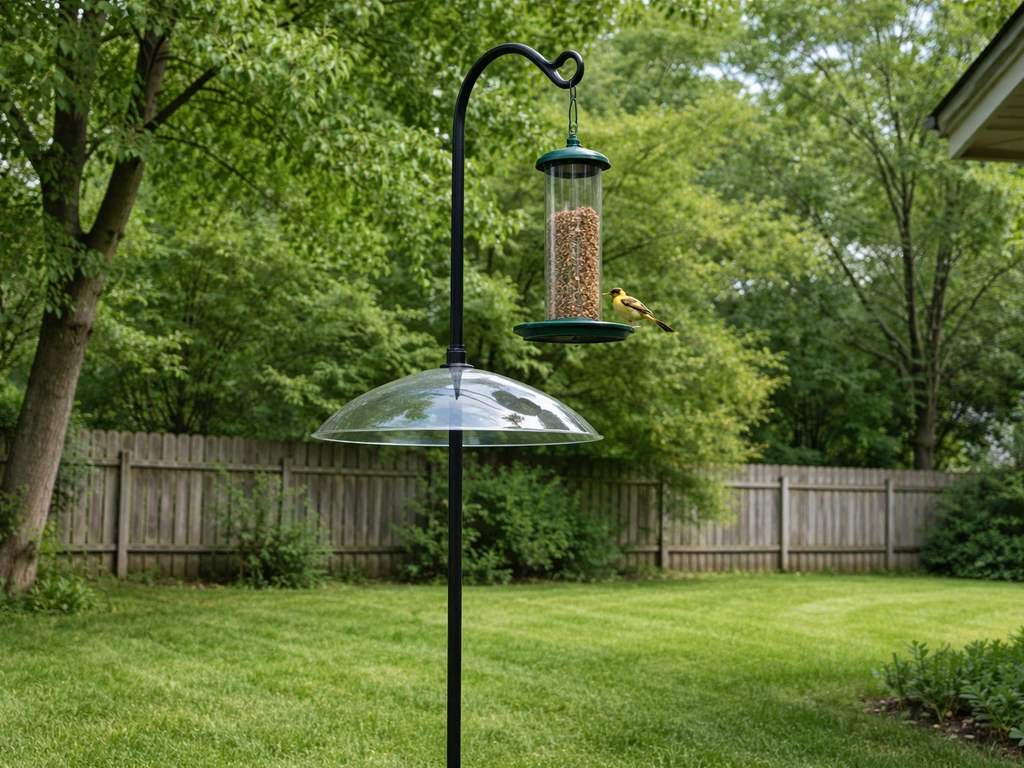
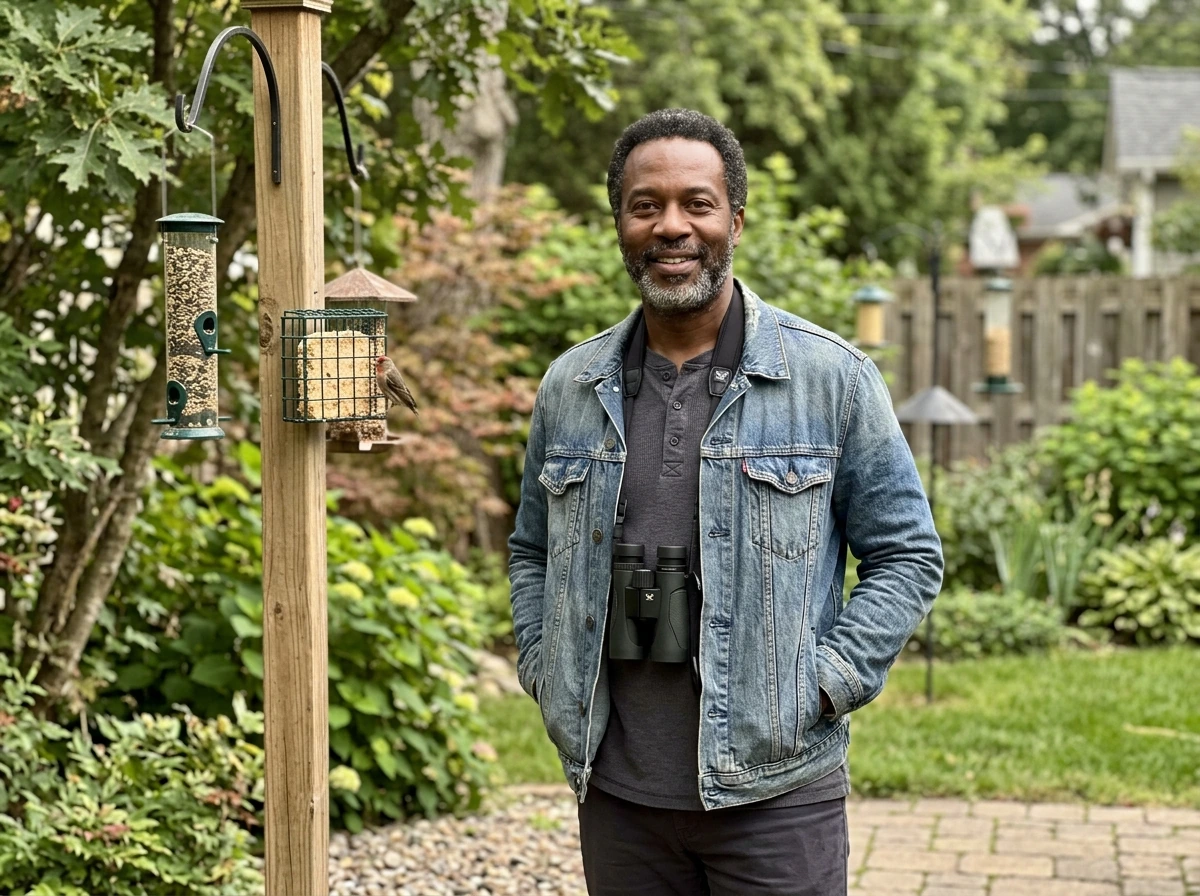
Placement determines whether birds feel safe enough to visit and whether squirrels can reach the feeder. For a busy multi-species yard, a dedicated feeder pole system is the most flexible and secure option. A shepherds hook or multi-arm pole system lets you hang several feeders (tube feeder, suet cage, nyjer sock) from a single post, spreading activity across styles while keeping everything in one manageable area. Baffles mounted on the pole shaft block squirrels from climbing up.
Position the pole 8 to 10 feet away from trees, fences, and roof edges to prevent squirrel jumping access. Place it within view of escape cover (shrubs or trees within 10 to 15 feet) so birds can dash to safety if a hawk appears, but not so close that squirrels can launch in. NC Wildlife advises placing feeders within view of escape cover so birds can quickly dash to safety, and it also recommends closing feeders if disease or predation spikes. Open lawn placement with no canopy above is generally safer from hawk ambush than feeders tucked under trees.
Hanging vs. pole-mounted vs. window feeders
- Hanging from a wire or tree branch: Convenient but gives squirrels easy access from above; best paired with a dome baffle above the feeder
- Pole-mounted with baffle: The gold standard for multi-bird setups; most squirrel-resistant and easy to position in the open
- Window-mounted: Great for close-up viewing and works well for chickadees and smaller birds, but limits feeder size and capacity; less practical as your primary multi-bird station
- Deck-mounted clamp or rail feeder: Useful when pole installation isn't possible; keep in mind squirrels can walk along rails and fences directly to the feeder
For most backyards, a dedicated pole system in an open area is worth the one-time installation effort. It gives you flexibility to add or swap feeders, keeps everything accessible for cleaning, and makes squirrel-proofing much more effective.
The best picks for common multi-bird mixes and yard setups
Rather than a single universal answer, the right feeder depends on which bird mix you're working with and what constraints your yard has. Here are the most common scenarios and what actually works.
The typical mixed yard (cardinals, chickadees, finches, doves, nuthatches)
This is the most common setup, and the best solution is a weight-activated tube feeder as the anchor (Brome Squirrel Buster Plus is the benchmark for this category), paired with a hopper or platform feeder nearby for doves and cardinals that prefer a wider landing surface. Fill both with black-oil sunflower seed. Add a suet cage for woodpeckers and nuthatches. Mount everything on a baffled pole system. This trio covers essentially every common backyard species without needing a dozen specialized feeders.
Grackle-heavy or bully-bird yards
If grackles or starlings dominate your yard, switch your main feeder to a caged tube feeder (a tube feeder surrounded by a metal cage with openings large enough for small birds) filled with safflower seed. Skip the open platform feeder entirely since it's a grackle magnet. Keep a suet cage with plain suet for woodpeckers, and choose an upside-down suet feeder style where birds have to hang to access it, which naturally deters starlings. You'll attract fewer total species, but the birds you do get won't be bullied away.
Small yards, apartment balconies, or window setups
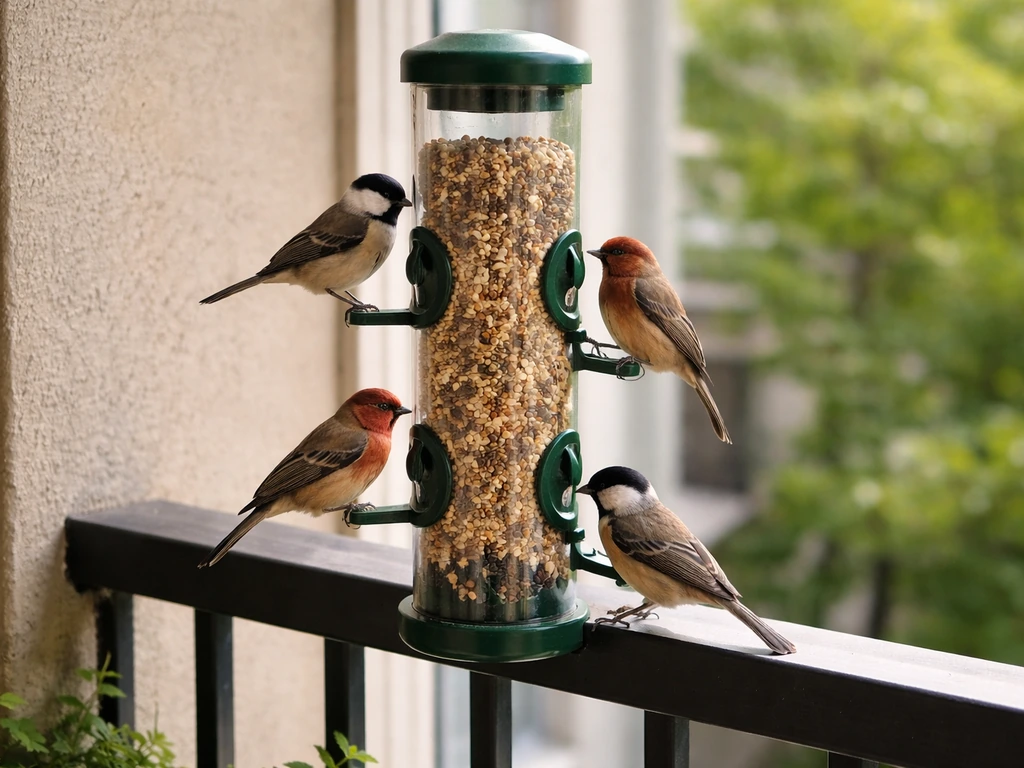
Space-limited situations call for a single, versatile feeder rather than a station system. A tube feeder with multiple ports handles chickadees, finches, and nuthatches reliably. A window-mounted tube or tray feeder with strong suction cups works surprisingly well for close-up access, though you'll need to clean and refill it more often due to the smaller capacity. Skip the suet cage in this setup unless you have a window mount designed for it.
Yards with lots of larger birds (woodpeckers, jays, flickers)
If you're attracting or want to attract larger woodpeckers, jays, and flickers alongside smaller birds, a hopper feeder with a wide tray plus large suet cages (the kind that accommodate a whole suet block plus a tail-prop extension for large woodpeckers) works better than a tube-only setup. Weight-activated tube feeders sometimes close off for larger birds like red-bellied woodpeckers, so adjust the spring tension if that's happening.
Tech-forward setups: smart and AI-powered feeders
If you want to know exactly which species are visiting (useful for a multi-bird yard where activity is constant), AI-powered camera feeders that photograph and identify birds automatically have become genuinely practical. They don't replace a dedicated feeder for capacity or squirrel resistance, but as an add-on or second station, they're a great way to track which species you're drawing and which you're missing. This is especially useful when you're dialing in your seed and feeder setup for a specific bird mix.
If you're comparing this guide to related setups like the best all-around bird feeder or the best multi-bird feeder configurations, the key difference here is the emphasis on species coexistence rather than pure attraction. The goal isn't just to bring in the most birds but to set things up so multiple species can actually share the space without constant conflict or disease risk. Getting the feeder type, seed choice, placement, and cleaning schedule right together is what makes a multi-bird yard work long-term.
Quick setup checklist to get started
- Pick your anchor feeder: a weight-activated tube feeder (like the Brome Squirrel Buster Plus) handles the most species and blocks squirrels out of the box
- Fill it with black-oil sunflower seed as your default; add safflower if grackles are a problem
- Add a suet cage with plain no-melt suet hung within a few feet of the main feeder for woodpeckers and nuthatches
- Mount everything on a smooth metal pole with a squirrel baffle, positioned at least 8 to 10 feet from trees or fences
- Rake or clean under the feeder weekly to remove dropped seed and hulls
- Disassemble and soak all feeder parts in a 9: 1 water-to-bleach solution every two weeks; rinse thoroughly and dry before refilling
- Watch for sick birds and pull the feeder temporarily if you see signs of illness
- Adjust spring tension on weight-activated feeders if desirable larger birds (like red-bellied woodpeckers) are being blocked
FAQ
Can I feed multiple birds with one feeder if I do not have space for several stations?
Yes, but only if you plan for faster refills and tighter cleaning. A typical “multiple birds, one feeder” setup should still have at least 3 to 5 lb of capacity, and in heat you should switch to shorter fill intervals (for example, refilling before seed starts to look clumpy or smell stale). Smaller feeders also increase competition at the ports, which can raise aggression even if the feeder is squirrel-resistant.
How do I know if my seed choice for a multi-bird feeder is working (and not creating waste)?
Start by watching what gets eaten and what gets ignored. If you see a lot of hulls and leftover seed, reduce how much you load and consider switching the primary seed toward black-oil sunflower or, for problem yards, safflower. Do not rely on mixed seed as a “set it and forget it” option because filler grains often become wet, moldy waste that also attracts rodents.
My weight-activated tube feeder still gets squirrels, what should I change first?
Yes, and it is safer than guessing. If your feeder has an adjustable weight mechanism, dial it so only lighter birds can access the ports, then do a few test checks at different times of day. If you cannot adjust, place the feeder on the correct pole height and add a baffle below it, because even a great weight-activated design can be bypassed if squirrels have a launch route from a nearby branch or fence.
What is the best way to handle grackles without scaring off cardinals and chickadees?
Safflower is often the quickest targeted fix for grackles and starlings because those birds generally dislike it, while many desirable small birds will still take it. If you switch to safflower and your desired birds drop off, you may need a second station (an open hopper for sunflower-loving species) rather than trying to force everything through one food.
Will a caged tube feeder limit the species I can attract, and is it worth it?
Expect a trade-off. A caged tube feeder and safflower can protect smaller birds from grackle dominance, but it will also exclude larger birds like some woodpeckers and jays. If you want both small-bird protection and larger visitors, use a protected secondary station (for example, a separate suet or hopper station) instead of relying on the caged tube as the only feeder.
What should I do if birds look sick even after I clean the feeder?
If the feeder is clean but birds are still acting sick, stop feeding temporarily and remove the feeder until you have fully corrected the moisture problem. Wet seed and damp hulls can trigger outbreaks even when the feeder is disinfected. Also check for spillover, because spilled seed under the feeder can re-contaminate the area and keep bringing birds back repeatedly.
How can I attract goldfinches to a multi-bird setup without them dominating the main feeder?
Yes, and it matters for success. For tube feeders, use black-oil sunflower as the “primary” and keep nyjer (for goldfinches) on a separate narrow-port tube or sock, ideally hung away from the main station. This reduces bullying at the ports because goldfinches tend to be less pushy, and separating the food reduces aggressive takeovers.
Is it better to refill a large hopper less often, or smaller amounts more frequently?
Do not start with a single mega-feeder holding for two weeks during warm weather. For multi-bird yards, frequent smaller fills are usually healthier because seed starts to spoil faster in humidity and heat, and spoiled seed increases mold and disease risk. A good rule is to increase refill frequency when traffic is light or temperatures are high, then slow down only when you know the seed is being consumed quickly.
How do I reduce competition at the ports so small birds can actually feed?
Test it using bird behavior, not just availability. If you frequently see chickadees or nuthatches unable to access ports, or you see larger birds consistently preventing smaller ones from feeding, adjust either the port size or the feeder design (for example, switch from a wide tray to a tube with appropriate ports). For tube feeders, also verify the spring tension settings to match the bird sizes you want to prioritize.
How often should I clean the feeder when lots of different birds are feeding at once?
Use a stricter schedule during heavy traffic and warm humid weather, even if you normally clean every two weeks. When many birds are using the same feeder, mold forms faster and debris buildup under the feeder becomes a contamination source. A practical approach is weekly cleaning plus weekly sweeping under the feeder when the yard is busy, and returning to the two-week interval only after traffic calms and seed consumption is steady.
Best Red Cardinal Bird Feeder: Top Picks & Buying Guide
Best red cardinal bird feeder guide: top picks, painting tips, seed & placement advice to attract Northern Cardinals.