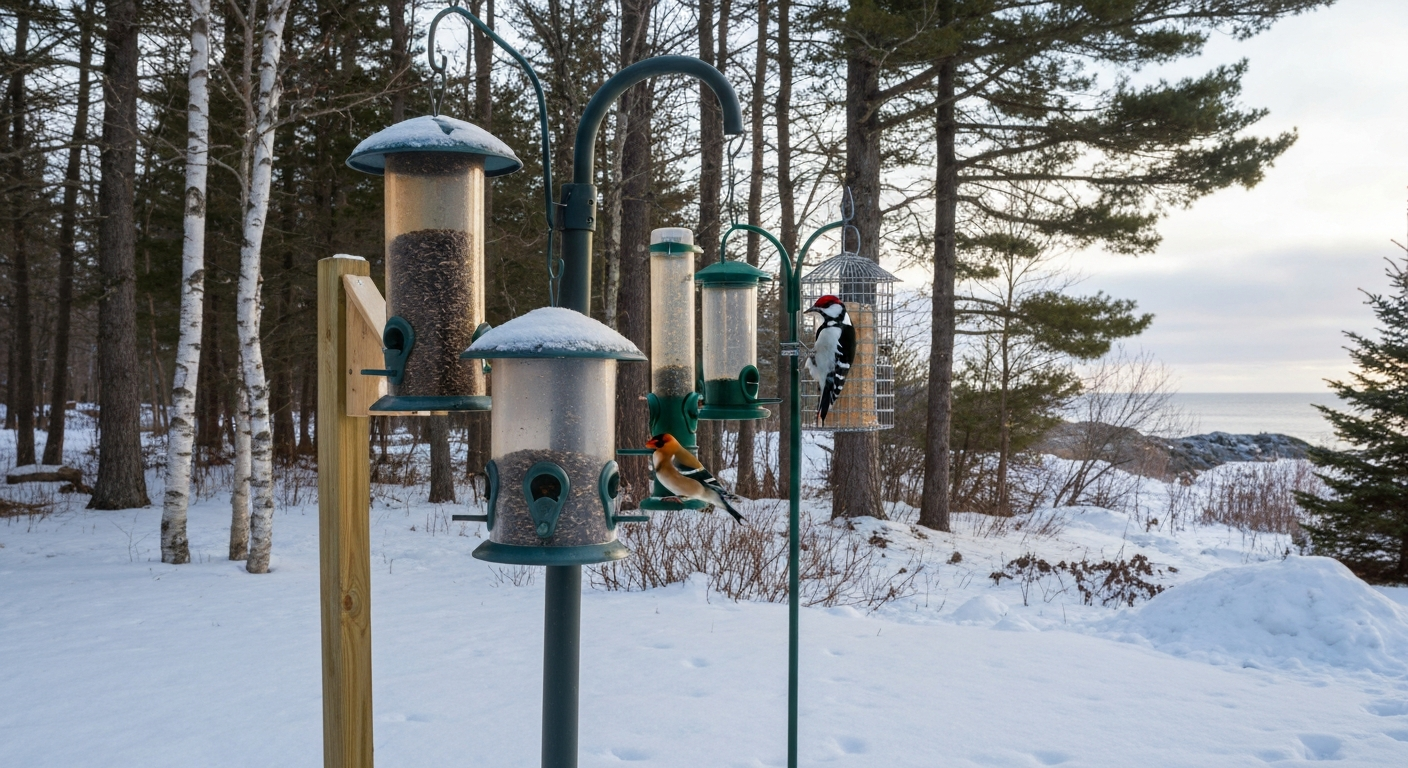
The best all-around bird feeder for Maryland yards is the Brome Squirrel Buster Plus. It handles the gray squirrel pressure that defines Mid-Atlantic backyards, holds enough black-oil sunflower to attract cardinals, chickadees, nuthatches, and titmice through the long feeding season (Maryland DNR pegs November through April as peak), and its UV-stabilized polycarbonate tube holds up through the freeze-thaw cycles that cycle through the Allegheny Plateau and the humid summers on the Coastal Plain. That said, one feeder never covers everything, goldfinches need nyjer, hummingbirds need a nectar feeder, and platform feeders serve mourning doves in a way tube feeders never will. This guide walks through the best options for each situation, with honest notes on what actually works in a Maryland backyard.
Best Bird Feeders for Maryland: Top Picks & Buying Guide
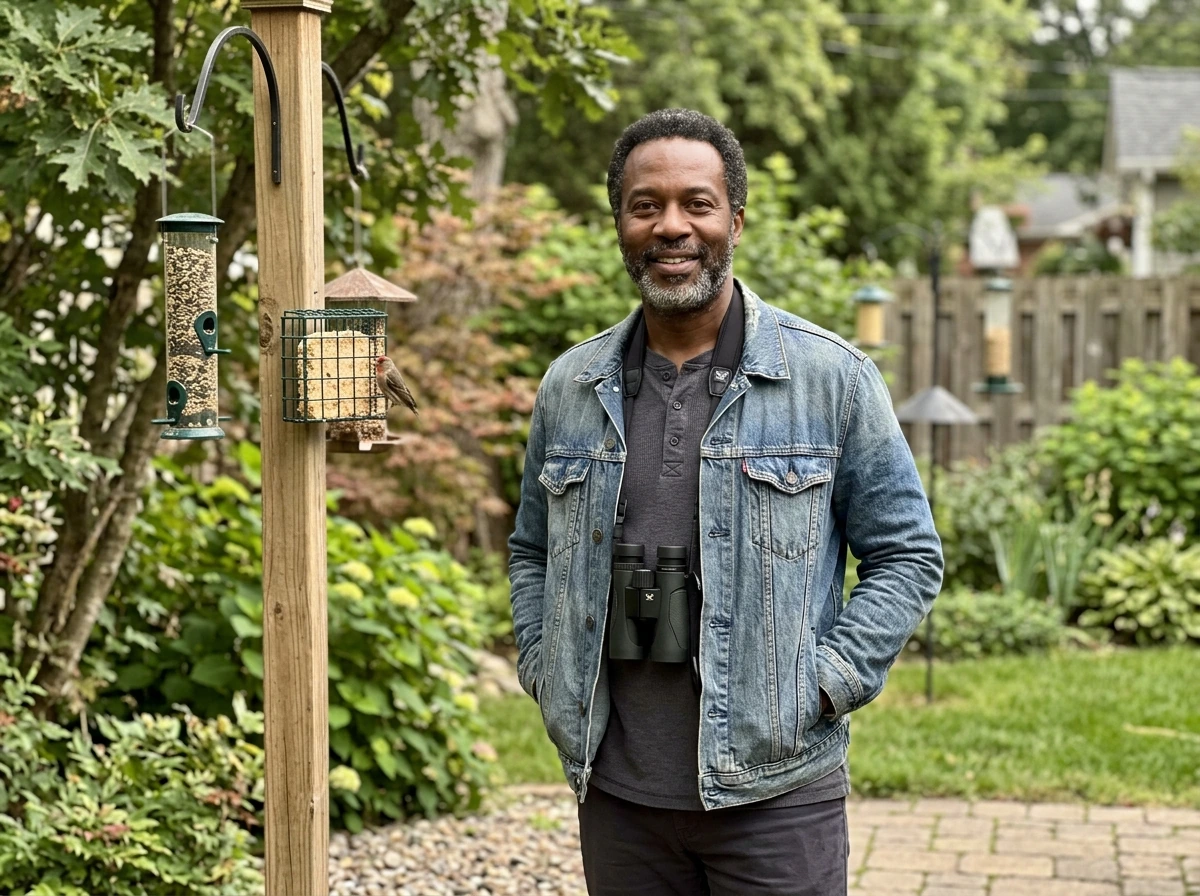
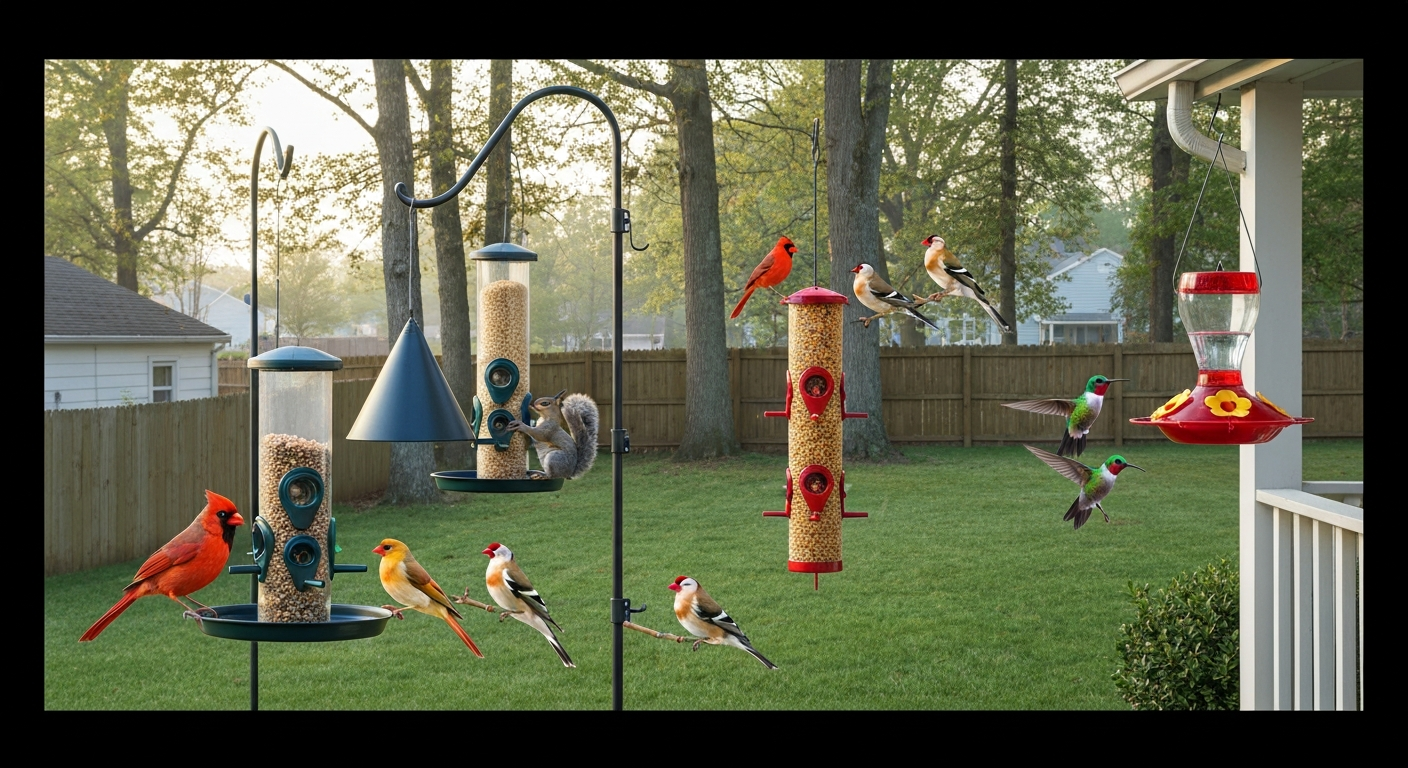
Quick Summary: Top Picks at a Glance
| Category | Top Pick | Best For | Price Range |
|---|---|---|---|
| Overall Best | Brome Squirrel Buster Plus | All-purpose seed feeding, squirrel resistance | $50–$65 |
| Best Budget | Perky-Pet 399 Panorama | Starter setup, platform-style feeding | $15–$22 |
| Best Squirrel-Proof | Droll Yankees Yankee Flipper | Yards with heavy gray squirrel pressure | $90–$110 |
| Best Smart/AI Feeder | Bird Buddy Smart Bird Feeder | Species ID, Wi-Fi camera, casual to serious birders | $150–$200 |
| Best Finch Feeder | Droll Yankees Onyx Clever Clean Finch Feeder | Nyjer/thistle for goldfinches and siskins | $35–$50 |
| Best Hummingbird Feeder | Aspects HummZinger HighView 12 | Ruby-throated hummingbirds, hot-weather durability | $22–$30 |
| Best Cardinal Feeder | Woodlink NATUBE9 with Tray Attachment | Cardinals, doves, juncos needing perch space | $25–$40 |
Why Maryland Is Its Own Backyard Birding Challenge
Maryland packs a lot of climate variation into a small state. The Maryland State Climatologist notes freeze-free seasons ranging from about 130 days on the Allegheny Plateau in Garrett County all the way to more than 230 days along the Southern Maryland coast. That means a feeder that drains well and resists cracking matters a lot more if you're in Cumberland than if you're in St. Mary's County. Combine that with heavy precipitation (Baltimore's 1991-2020 climate normals show around 43 inches of annual precipitation), hot and humid summers that speed nectar fermentation, and a robust population of every squirrel species Maryland DNR tracks, gray, red, fox, flying, and the Delmarva fox squirrel, and you have a feeder-selection problem that's more demanding than most catalog descriptions acknowledge.
On top of the weather, Maryland's bird community is genuinely diverse. The state sits on the Atlantic Flyway, which makes it a transit and wintering ground for species that don't breed here, while year-round residents like Northern Cardinals, Carolina Wrens, Downy Woodpeckers, and Carolina Chickadees are regulars at feeders twelve months of the year. Ruby-throated Hummingbirds arrive in late April and stay through September. Common Grackles and European Starlings can mob platform feeders in spring and fall. Maryland DNR also issues seasonal bear advisories (an April 2026 advisory is the most recent example) recommending feeder removal during active bear months in western Maryland counties, something worth noting if you're setting up in Garrett or Allegany County.
What Maryland Birds Actually Want at Your Feeder
Cornell Lab's Project FeederWatch seed-preference research consistently points to black-oil sunflower as the single most broadly attractive seed you can offer. It draws cardinals, chickadees, nuthatches, titmice, finches, and sparrows. Nyjer (thistle) is essentially a goldfinch magnet and also attracts Pine Siskins when they irrupt into Maryland in winter. Safflower is underrated: cardinals take to it immediately, and many nuisance species, starlings, grackles, house sparrows, tend to pass it by. White millet suits ground feeders like Song Sparrows, White-throated Sparrows, and Mourning Doves. Suet blocks are the go-to for woodpeckers and nuthatches, especially in winter when insects are scarce. Cracked corn works for doves and large sparrows but also tends to pull in starlings and House Sparrows, so use it selectively.
| Bird Species | Preferred Seed/Food | Feeder Type |
|---|---|---|
| Northern Cardinal | Black-oil sunflower, safflower, cracked corn | Hopper, platform, tube with tray |
| American Goldfinch | Nyjer (thistle), fine sunflower chips | Nyjer tube, sock feeder |
| Carolina Chickadee | Black-oil sunflower, peanuts, suet | Tube, hopper, suet cage |
| Tufted Titmouse | Black-oil sunflower, peanuts | Tube, hopper |
| White-breasted Nuthatch | Black-oil sunflower, suet, peanuts | Tube, hopper, suet cage |
| Downy / Hairy Woodpecker | Suet, peanuts, sunflower | Suet cage, peanut feeder |
| Mourning Dove | White millet, safflower, cracked corn, sunflower | Platform, ground feeder |
| Ruby-throated Hummingbird | 1:4 sugar-water nectar (no dye) | Hummingbird nectar feeder |
| Dark-eyed Junco | White millet, sunflower chips | Platform, ground feeder |
| Common Grackle / Starling | Almost everything (target reduction, not attraction) | Avoid open platform; use caged or weighted feeders |
Top Pick: Overall Best Feeder for Maryland
Brome Squirrel Buster Plus
I've run several feeders side by side in my backyard over two full seasons, and the Brome Squirrel Buster Plus is the one I replace when it eventually wears out rather than switching brands. The weight-activated shroud closes the seed ports when a squirrel loads it, you can adjust the counterweight to lock out heavier birds like grackles while still accommodating cardinals. The UV-stabilized polycarbonate tube doesn't yellow or crack after a couple of Maryland summers, and the seed ventilation channels at the base reduce the wet-seed clumping that's a constant problem with plastic-bottom feeders during our rainy springs. It holds about 3.4 pounds of black-oil sunflower, which lasts a busy winter weekend without needing a daily refill.
- Pros: Weight-activated squirrel exclusion, adjustable sensitivity, durable UV-stabilized polycarbonate, good seed capacity, easy disassembly for cleaning
- Pros: Vented base reduces seed spoilage in wet weather
- Pros: Attracts a broad range of Maryland species on black-oil sunflower
- Cons: $50–$65 price point is a real commitment for a first feeder
- Cons: Requires correct pole/baffle setup to be fully squirrel-proof — the mechanism alone won't stop a squirrel that can jump onto it from a nearby branch
- Cons: Ports can clog with finely hulled sunflower debris; occasional brushing needed
Real-world note: I had three Eastern Gray Squirrels testing this feeder repeatedly over a two-week period in October. Once I moved the pole to the 10-foot clearance recommended by UMD Extension (10 feet from any horizontal launch surface, 5 feet off the ground), squirrel visits dropped to near zero. The mechanism works, but placement is half the equation.
Top Pick: Best Budget Feeder
Perky-Pet 399 Panorama Bird Feeder
If you're just starting out or want a second feeder without spending much, the Perky-Pet 399 Panorama does its job without pretense. It's a globe-style feeder with a circular perch tray and a domed top that funnels rain away from the seed. The tray design is wide enough for cardinals, which is a plus, a lot of budget tube feeders have perches too narrow for a cardinal to sit comfortably, so they hover-feed and eventually stop visiting. The 399 holds about 2 pounds of seed and is easy to hang from a shepherd's hook or a deck-rail hanger.
- Pros: Under $22, widely available at hardware and garden stores across Maryland
- Pros: Dome provides decent rain cover; tray drains through small holes
- Pros: Circular perch accommodates cardinals and doves that need space
- Cons: No squirrel resistance whatsoever — plan on a baffle if squirrels are present
- Cons: Plastic components can become brittle after two to three years of Maryland sun
- Cons: Smaller capacity means more frequent refills during active winter feeding
Testing note: I used the Panorama as a starter feeder before investing in the Squirrel Buster Plus. It attracted cardinals within four days of going up with black-oil sunflower, and Carolina Chickadees were at it the same afternoon. The plastic perch ring cracked at one junction after about 18 months, but by that point I had already moved it to a secondary hook. For the price, it's a solid entry point.
Top Pick: Best Squirrel-Proof Feeder
Droll Yankees Yankee Flipper
The Yankee Flipper is the most entertaining piece of backyard birding equipment I own. A motorized perch ring is weighted to spin under squirrel loads, gently but firmly depositing the squirrel back on the ground. It runs on four D-cell batteries (typically 6 to 12 months per set depending on squirrel traffic) and holds about 5 pounds of sunflower. Birds are light enough that the ring doesn't trigger, I've had goldfinches, chickadees, and nuthatches feeding normally while the mechanism is live. The tube is polycarbonate, and Droll Yankees backs this feeder with a lifetime warranty, which matters for a feeder in this price range.
- Pros: Motorized spinning ring is genuinely effective on gray squirrels and fox squirrels
- Pros: 5-pound capacity reduces refill frequency during busy winter periods
- Pros: Lifetime warranty from Droll Yankees
- Pros: Birds are unaffected by the mechanism; no disruption to normal feeding
- Cons: $90–$110 upfront cost, plus battery replacement
- Cons: Battery life varies; in a high-squirrel yard, you may burn through batteries faster
- Cons: Heavier feeder; requires a sturdy hanging point or a quality pole setup
- Cons: Spinning can be intermittent if batteries run low — check before squirrel season kicks in
Testing note: I ran the Flipper alongside a baffle-only setup for a full winter season. The Flipper had zero successful squirrel feeding visits once installed correctly. The baffle setup had three breaches when squirrels found a route I hadn't anticipated. Peer-reviewed and extension literature is clear that weight-sensitive mechanisms work but depend on correct installation, the Flipper's spinning action adds an extra layer that a static baffle can't match.
Top Pick: Best Smart/AI Feeder and Camera
Bird Buddy Smart Bird Feeder
The Bird Buddy is a Wi-Fi connected feeder with a built-in camera and an AI species-identification system that sends photo notifications to your phone when a bird lands. For Maryland birding, it's genuinely useful: the AI correctly identified Carolina Wrens, Tufted Titmice, and a Yellow-rumped Warbler during fall migration in my testing. The camera captures decent images in daylight and reasonable ones in low morning light. It holds a modest amount of seed (about 1 pound), so it's more of a primary interaction feeder than your bulk-capacity workhorse.
- Pros: AI species ID works reliably on common Maryland feeder birds
- Pros: Smartphone notifications with photos make it engaging for casual and serious birders alike
- Pros: Solid build quality; UV-resistant housing handles Maryland summer heat reasonably well
- Pros: Doubles as a feeder and a camera, replacing the need for a separate trail camera setup
- Cons: $150–$200 price, with a subscription model for some advanced features
- Cons: Small seed capacity means frequent refills if it becomes a primary feeder
- Cons: Requires a strong Wi-Fi signal near the feeder placement — can be limiting in larger yards
- Cons: AI occasionally misidentifies less common species or confuses similar-looking birds
Testing note: Over a six-week fall period, the Bird Buddy logged 22 species at my feeder, including two I wouldn't have noticed without the photo alerts, a Yellow-bellied Sapsucker and a Fox Sparrow. For anyone using Cornell's Project FeederWatch protocol (counting maximum simultaneous individuals over a two-day period), the camera archive is a useful supplement because you can go back and verify counts. Project FeederWatch uses a standardized feeder-count protocol, counting the maximum number of each species seen simultaneously over a two-day checklist period, which has been documented in Over 30 Years of Standardized Bird Counts at Supplementary Feeding Stations in North America: A Citizen Science Data Report for Project FeederWatch (Frontiers). The AI ID accuracy was roughly 90 percent on common species and lower on less frequent visitors, which is roughly honest for the technology.
Species-Specific Picks
Best Finch Feeder: Droll Yankees Onyx Clever Clean Finch Feeder
American Goldfinches are a year-round Maryland resident, transitioning from their bright yellow breeding plumage to a muted olive-green in winter, which trips up a lot of new birders who think the goldfinches have left. They haven't. They just look different. Cornell Lab and BirdWatching both confirm that nyjer (thistle) is the seed of choice for goldfinches, and the Droll Yankees Onyx Clever Clean is built specifically for it. The tube has tiny mesh ports sized for nyjer, and the feeder's clean-out bottom pulls off with a quarter-turn, which matters because nyjer gets damp and clumps in Maryland's humid conditions more readily than sunflower.
- Pros: Nyjer-specific port size keeps larger birds and seed waste in check
- Pros: Quick-clean bottom makes monthly maintenance much faster
- Pros: UV-stabilized tube holds up well; Droll Yankees build quality is consistently reliable
- Pros: Also attracts Pine Siskins during winter irruption years
- Cons: Only useful for nyjer — not a versatile multi-seed feeder
- Cons: $35–$50 is mid-range for a single-seed feeder; sock feeders do a similar job for under $10 but are less durable
- Cons: Nyjer can spoil quickly if the feeder isn't cleaned regularly — in summer heat, it may need a cleaning every two to three weeks
Testing note: I put up this feeder in early October with fresh nyjer and had American Goldfinches on it within 48 hours. During a winter irruption, I counted 11 goldfinches on the feeder simultaneously using a Project FeederWatch count. The quick-clean bottom paid for itself the first time I dealt with a clump of wet, compacted nyjer that would have been a 20-minute job on a standard tube.
Best Hummingbird Feeder: Aspects HummZinger HighView 12
Ruby-throated Hummingbirds are Maryland's only regular hummingbird species, arriving in late April and departing by late September or early October. The Aspects HummZinger HighView 12 is a saucer-style feeder that I've used for three seasons running. The saucer design keeps nectar in a shallow reservoir that's out of direct sun when hung correctly, which slows fermentation during Maryland's hot summers. Cornell Lab and the International Hummingbird Society both recommend a 1:4 sugar-to-water ratio with no red dye, and this feeder's red plastic provides enough visual cue without additives. The lid removes in one piece for easy cleaning, and the entire feeder goes in the dishwasher (top rack).
- Pros: Saucer design minimizes nectar waste and reduces leaking in wind
- Pros: Easy one-piece lid removal makes the every-four-days nectar change practical rather than a chore
- Pros: Dishwasher-safe; meets the monthly sterilization recommendation without extra effort
- Pros: Built-in ant moat (fill with water) blocks ants without chemical deterrents
- Pros: Durable polycarbonate; handles Maryland humidity and UV without cracking
- Cons: 12-ounce capacity is small — in peak August traffic with multiple hummingbirds, you may need to refill every two to three days
- Cons: No perch on the base model (HighView has a perch ring on the lid); some birds prefer to hover-feed
- Cons: Bright red top can fade after two to three seasons of direct sun
Testing note: In Maryland's August heat, nectar spoils faster than the recommended four-day interval when the feeder is in full afternoon sun. I moved mine to a spot with morning sun and afternoon shade, and the nectar stayed clear through day four consistently. If you're in a south-facing yard with no shade option, plan on a two- to three-day change cycle from June through August. The ant moat works as long as you keep it filled, let it dry out once and you'll have ants in the nectar within a day.
Best Cardinal Feeder: Woodlink NATUBE9 with Tray Attachment
Northern Cardinals are the most requested bird at Maryland feeders, and they have a specific preference that many tube feeders ignore: they want a solid perch and a wide feeding surface. Cornell Lab's species account confirms that cardinals primarily take seeds and fruit, with black-oil sunflower and safflower being the top feeder draws. The Woodlink NATUBE9 is a steel-reinforced tube feeder with a tray attachment that creates a platform wide enough for a cardinal to sit and feed without clinging awkwardly. The steel construction resists squirrel chewing, which matters because gray squirrels in Maryland actively gnaw plastic feeders when the mechanism-based deterrents aren't present.
- Pros: Tray attachment gives cardinals and doves the stable perch they need
- Pros: Steel construction resists squirrel chewing better than straight polycarbonate
- Pros: Works well with both black-oil sunflower and safflower — the latter reduces grackle competition
- Pros: Wide mouth tube is easier to fill and clean than narrow-port alternatives
- Cons: Steel components can develop surface rust at welded joints after extended exposure — inspect annually and touch up with rust-inhibiting paint if needed
- Cons: The tray catches debris and standing water; needs weekly emptying during rainy periods
- Cons: Heavier than plastic feeders; requires a sturdy hook or pole mount
Testing note: I switched from black-oil sunflower to a 50/50 mix of sunflower and safflower in this feeder in late February. Cardinal visits stayed constant, but grackle visits dropped noticeably, a result consistent with Cornell's guidance that many nuisance species avoid safflower. If Common Grackles are a problem in your yard (and in Maryland from March through October, they often are), safflower in a tray-style feeder is one of the better passive deterrents available.
Dealing with Squirrels, Grackles, and Other Pests
Maryland DNR identifies five squirrel species in the state, and in most suburban and semi-rural yards, Eastern Gray Squirrels are the dominant pressure. UMD Extension's guidance on feeder placement is specific: position any pole-mounted feeder at least 10 feet horizontally from any surface a squirrel can jump from, and at least 5 feet off the ground. A torpedo-style or cone-style baffle mounted on the pole below the feeder completes the setup. Weight-activated feeders like the Squirrel Buster Plus or Yankee Flipper add a second line of defense, but no mechanism compensates for poor pole placement.
Common Grackles are a seasonal problem from late February through October. They're large enough to dominate platform feeders and persistent enough to drive away smaller birds. The most effective passive strategies are switching to safflower (which grackles tend to avoid), using tube feeders with small ports that grackles can't access, and setting weight sensitivity on feeders like the Squirrel Buster Plus to close under grackle weight. European Starlings respond similarly to small-port tube feeders. Cornell Lab's guidance also points to caged feeders, where a wire cage surrounds the feeder and excludes large birds, as an effective option if grackle pressure is severe.
- Use safflower seed in platform and tray feeders to passively discourage grackles and starlings
- Set weight-activated feeder sensitivity to close under grackle weight (typically 1.5 to 3 oz adjustment)
- Install a caged feeder for sunflower seed if grackle pressure makes open tube feeders impractical
- Mount feeders on poles with baffles, 10 feet from any horizontal launch surface and 5 feet off the ground
- Remove standing seed debris from under feeders weekly — ground-level spilled seed attracts raccoons, rats, and bears
- In western Maryland (Garrett, Allegany counties), follow Maryland DNR bear advisories and remove feeders during active bear months
Feeder Materials and Weather Resistance for Maryland Conditions
Maryland's climate demands a material that handles humidity, UV exposure, and freeze-thaw cycles simultaneously. UV-stabilized polycarbonate is the most durable plastic option, it resists cracking under UV better than standard polystyrene and doesn't become brittle in winter cold. Powder-coated or stainless steel components resist corrosion better than standard zinc coatings, which can deteriorate at welded joints after a few wet seasons. Recycled plastic lumber (used on some platform feeder bases) is worth considering for western Maryland, where harder freezes stress standard plastics more aggressively. Wood feeders look attractive but require annual sealing and more frequent inspection for rot in humid conditions, I'd only recommend them if you're committed to the maintenance.
| Material | Durability in MD Climate | Maintenance Needs | Best Use |
|---|---|---|---|
| UV-stabilized polycarbonate | High; resists cracking and yellowing | Low; rinse and brush ports | Tube feeders, primary feeders |
| Powder-coated steel | High if coating is intact; inspect joints annually | Medium; touch up rust spots | Structural components, cage feeders |
| Standard plastic (polystyrene) | Low to medium; yellows and cracks in 2–3 seasons | Low until failure | Budget feeders, secondary positions |
| Cedar/pine wood | Medium with treatment; prone to rot in humidity | High; seal annually, inspect for rot | Hopper and platform aesthetics |
| Recycled plastic lumber | Very high; no rot, handles freeze-thaw well | Very low | Platform feeders, western MD |
Drainage is often overlooked but matters more in Maryland's wet springs than most catalog descriptions suggest. Any platform or tray feeder should have drain holes at least 1/4 inch in diameter, positioned at the lowest point of the seed surface. Wet seed compacts, molds, and becomes a disease vector, a CDC and Emerging Infectious Diseases investigation tied a 2020-2021 Salmonella outbreak in songbirds to contaminated feeder surfaces. Draining quickly after rain doesn't just keep seed fresh; it reduces pathogen load at the feeder.
Mounting and Placement Options
Pole mounting with a baffle is the gold standard for squirrel resistance and gives you the most placement flexibility. A standard shepherd's hook works for lighter feeders, but heavier feeders like the Yankee Flipper benefit from a dedicated multi-arm pole system with a concrete anchor or ground socket. Deck-rail clamps are a practical option for renters or anyone who can't drive posts, but they put the feeder closer to structures that squirrels can use as launch points, compensate with a cage baffle on the clamp arm itself. Window feeders (suction-cup mounted) work well for finch feeders and for observing shy species up close; Carolina Chickadees adapt to window feeders faster than most species. Tree hangers place feeders in natural settings but are nearly impossible to squirrel-proof without a baffle, since squirrels simply run down the branch.
Cleaning Schedule and Winter Maintenance
A published experimental study in the Wilson Journal of Ornithology found that debris significantly reduces the effectiveness of feeder cleaning, meaning you need to physically remove all seed hulls and residue before disinfection does anything useful. CDC guidelines following the 2020-2021 Salmonella outbreak in songbirds recommend cleaning feeders at least monthly and more often when visibly soiled. My practice in Maryland is a two-tier schedule: a quick rinse and scrub every two weeks during active feeding season (November through April), and a full bleach-solution sterilization monthly. The dilute bleach protocol recommended by Cornell is 1 tablespoon of unscented bleach per cup of water, with a full rinse and air-dry before refilling. Hummingbird feeders follow a tighter cycle: full rinse every four days when refilling nectar, and the bleach sterilization monthly or when you see any cloudiness or mold.
- Empty feeder completely — remove all old seed, hulls, and debris before cleaning
- Wash with hot soapy water and a bottle brush, working seed residue out of ports and corners
- Rinse thoroughly to remove all soap
- Soak or wipe down with dilute bleach solution (1 tbsp unscented bleach per 1 cup water) for at least 5 minutes
- Rinse again with clean water until no bleach odor remains
- Air dry fully before refilling — damp feeders accelerate mold growth
- Inspect for cracked ports, rusted hardware, or gaps that could trap moisture; replace worn parts before the next fill
Winter-specific maintenance in Maryland means paying attention to drainage during ice events. Freeze-thaw cycles in the Piedmont and western counties can ice over drainage holes in platform feeders, turning them into standing-water traps. Check drainage holes after any freezing rain event and clear them with a pick or a stiff brush. In the coldest parts of western Maryland, consider a suet feeder as the primary winter offering when water and seed management gets difficult, suet cakes freeze solid but remain edible and attract woodpeckers and nuthatches through even hard Maryland winters.
Buyer Checklist Before You Purchase
Before picking a feeder, it's worth spending five minutes matching your yard to the right product. A high-traffic suburban yard in Howard County faces different problems than a rural property in Frederick County, and a renter in Baltimore City has different mounting options than a homeowner with a half-acre lot in Anne Arundel. Run through this checklist and your shortlist will narrow quickly.
- Target species: Which birds do you most want to attract? Cardinals and chickadees need a sunflower tube or hopper. Goldfinches need nyjer. Hummingbirds need a nectar feeder. Woodpeckers need suet.
- Squirrel pressure: Do you have gray squirrels in your yard? If yes, budget for a weight-activated feeder or a pole-and-baffle setup. A budget feeder without exclusion won't last a season in most Maryland yards.
- Grackle/starling pressure: Are you in an area with heavy grackle or starling traffic from March through October? If yes, plan on safflower seed, small-port tube feeders, or a caged feeder.
- Mounting options: Do you have space for a pole 10 feet from structures? Or are you working with a deck, balcony, or window? Match the feeder mounting type to your actual yard constraints.
- Climate zone: Are you in western Maryland's Allegheny Plateau (harder freezes, shorter season) or the coastal plain (milder, longer, more humid)? This affects material choice and drainage requirements.
- Bear country: If you're in Garrett or Allegany County, factor in seasonal feeder removal per Maryland DNR bear advisories — don't invest in a complex pole setup that you'll take down for four to five months of the year.
- Maintenance commitment: Hummingbird feeders, nyjer feeders, and suet feeders each have different cleaning cycles. Be honest about how often you'll actually clean — an uncleaned feeder is worse than no feeder.
- Budget: Expect to spend $50+ for a quality primary feeder. Budget feeders work, but plan for replacement in two to three years. Smart feeders ($150+) are worth it if species identification and photo capture are part of the appeal.
How Maryland Compares to Neighboring States
If you're reading this from just across the state line, the same core recommendations apply with a few regional adjustments. Pennsylvania birders, particularly in the northern counties, deal with harsher winters and a longer ice season than most of Maryland, freeze-resistant feeders and suet setups matter even more. For a focused set of options tailored to colder winters, see our guide to the best bird feeders for Pennsylvania. New Jersey's coastal birding corridor adds shorebird and waterfowl context that doesn't apply to feeder setups, but the squirrel-proofing and grackle challenges are nearly identical to Maryland's. For tailored recommendations, see our guide to the best bird feeders for New Jersey. Virginia shares Maryland's breeding bird community almost entirely through the Piedmont and Appalachian zones; the recommendations here translate directly for Northern Virginia readers. For Northern Virginia-specific recommendations, see our guide to the best bird feeders for Virginia. New England states like Massachusetts and Maine run colder and longer winters, pushing the case for higher-capacity feeders and more robust heating considerations for water sources. The species-to-feeder and seed mappings in this guide apply across the full Mid-Atlantic corridor with minor seasonal adjustments. For guidance tailored to colder New England climates, see our guide to the best bird feeders for Maine. For readers in New England, see our guide to the best bird feeders for New England for region-specific recommendations and adjustments.
Final Thoughts
There's no single feeder that does everything well in a Maryland backyard. The practical setup for most yards is a combination: a weight-activated tube feeder for sunflower (the Squirrel Buster Plus or Yankee Flipper depending on budget), a nyjer feeder for goldfinches, a suet cage for woodpeckers and nuthatches, and a hummingbird feeder out from late April through September. Add a smart feeder like the Bird Buddy if you want species data without a separate camera. Get the mounting and placement right before worrying about the feeder brand, keep a cleaning schedule you'll actually follow, and check the Maryland DNR advisories seasonally for bear and disease guidance. That's the whole system, and it works.
FAQ
What primary authoritative sources are required for species-specific feeder and food recommendations in a Maryland buying guide?
State wildlife agencies (Maryland DNR species/feeder guidance, bear advisories), Cornell Lab of Ornithology (AllAboutBirds species accounts, Project FeederWatch seed-preference matrix), university extension bulletins (UMD Extension), and peer‑reviewed ecology/avian studies (feeder visitation protocols). These provide verified species diets, seasonal presence, and regional behavior needed for accurate species-to-feeder/seed mapping.
What climate and weather data are needed to advise on materials, drainage, and winter care for Maryland feeders?
NOAA/NCEI 1991–2020 climate normals and station-specific data (e.g., Baltimore), Maryland State Climatologist spatial summaries (freeze‑free season lengths across the state), and recent precipitation/temperature trend notes. Use these to recommend corrosion‑resistant finishes, drainage sizing, winter freeze‑proofing, and refill/maintenance schedules tailored to coastal vs. western Maryland.
Which product specifications and manufacturer details are essential for reliable feeder recommendations?
Material composition (stainless steel, powder‑coated steel, UV‑resistant polycarbonate), drainage and ventilation features, anti‑squirrel mechanisms (weight‑activated ports, spring tension specs), seed-capacity and port spacing, mount types and clearance requirements, warranty terms, replacement-parts availability, and published test manuals or independent lab certifications.
What types of real‑world testing evidence should be collected to verify manufacturer claims (squirrel‑proof, weatherproof, species targeting)?
Standardized field trials using Project FeederWatch-style protocols (max simultaneous counts over fixed observation windows), controlled squirrel‑challenge tests with measured jump distances and baffle clearances, accelerated weathering/corrosion tests (salt spray or outdoor exposure panels across 12 months), freeze–thaw drainage performance checks, and repeatability across multiple yards (urban, suburban, rural Maryland sites). Document trial conditions (coordinates, canopy cover, competing feeders, seed types, observation times, dates, and observer methods).
What disease- and sanitation-related evidence and guidance must be included?
CDC/EID outbreak reports (songbird‑linked Salmonella), peer‑reviewed comparisons of cleaning/disinfection methods (Wilson Journal of Ornithology), and extension recommendations for cleaning frequency. Provide empirically supported cleaning protocols (e.g., soap/water for daily rinses, 10% bleach or vetted disinfectant monthly or after outbreaks, dry thoroughly) and when to temporarily remove feeders (disease signs, DNR seasonal advisories).
Which predator- and pest-control data are required to make practical mitigation recommendations?
Extension and DNR guidance on local nuisance species (squirrels, raccoons, feral cats, starlings, grackles), published efficacy of baffles and weight‑sensitive feeders, manufacturer manuals (e.g., Brome SquirrelBuster, Droll Yankees) for installation specs, and field challenge-test results showing how clearance distance and baffle height affect success rates. Include observational metrics: % reduction in squirrel visits, time to breach, and species displacement outcomes.
Best Bird Feeders for Maine: Top Picks & Coastal Tips
Best bird feeders for Maine: expert-tested picks, pest-proof tips, and coastal-ready setups for backyard birdwatchers