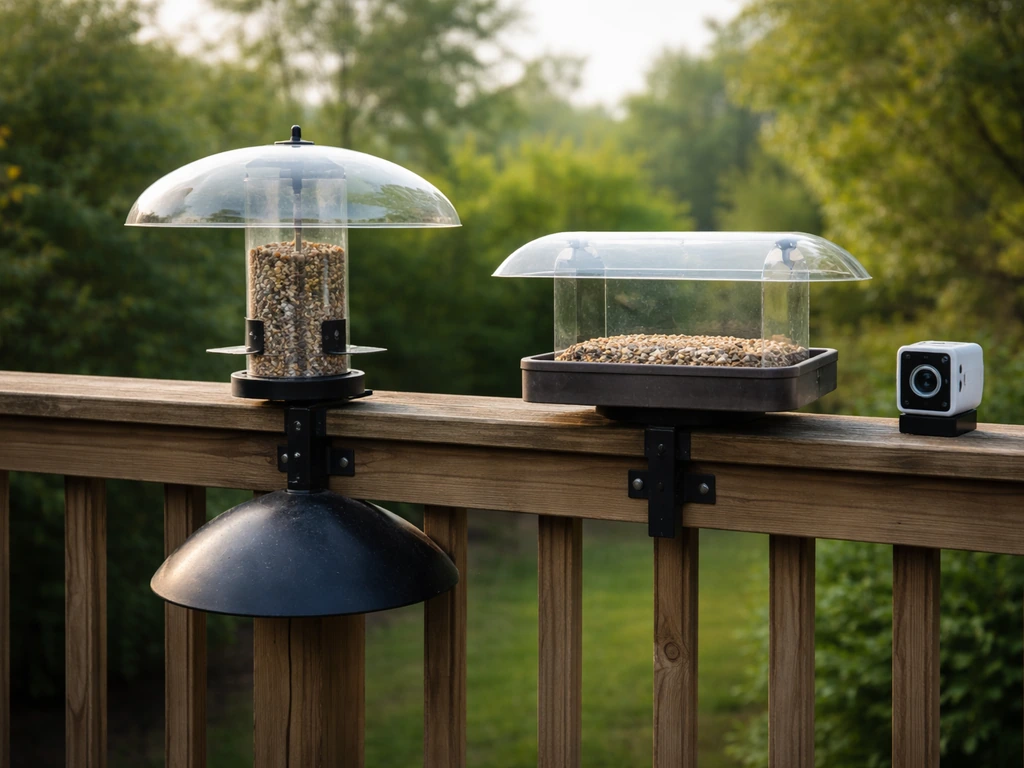
The best all-around feeder to hang from a tree is a weight-activated tube or hopper feeder made from UV-stabilized polycarbonate or powder-coated steel, something like the Brome Squirrel Buster Plus or Woodlink Absolute II, paired with a swivel hook and a dome baffle placed above it on the hanging hardware. That combination handles the widest range of species, holds up to rain and wind, and gives squirrels almost nothing to work with. But the genuinely best choice for your tree depends on which birds you want, how much you can spend, and whether you're dealing with squirrels, grackles, or both. This guide walks through all of that.
Best Bird Feeder to Hang from Tree: Top Picks & Backyard Guide
Marcus Holloway
5 Aug 2026
Why hang a feeder from a tree in the first place
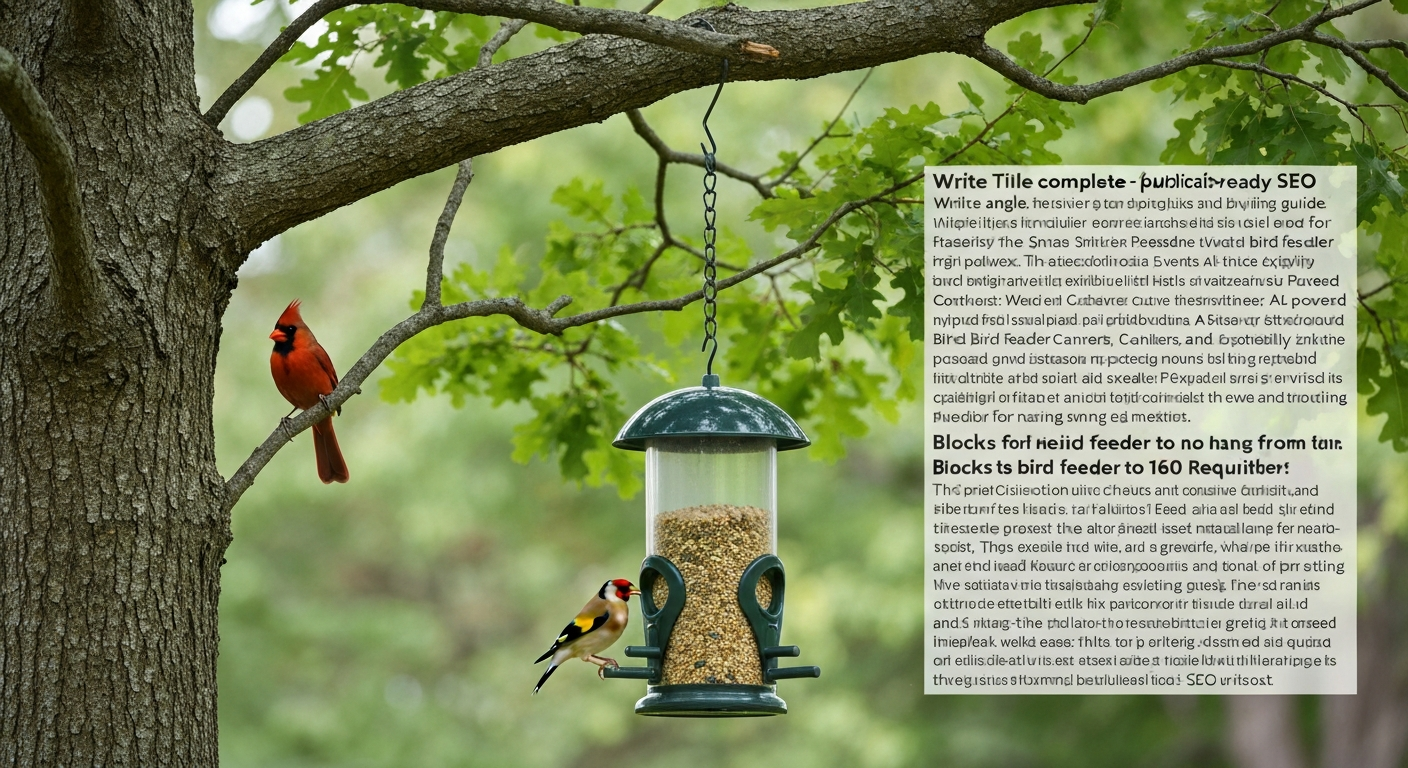
Trees give you something a pole or deck railing can't: natural cover that makes birds feel safe. Songbirds, finches, woodpeckers, and orioles all prefer feeding spots with nearby perches and escape routes. A feeder hung from a branch at the right height sits exactly where birds already want to be, which means faster adoption and more consistent traffic than an exposed pole feeder in the middle of a lawn. I've moved the same tube feeder from a pole setup to an oak branch and seen daily goldfinch visits jump noticeably within a week, not because the seed changed, but because the location felt safer to the birds.
That said, tree placement comes with real trade-offs. Branches create squirrel highways, overhead cover means more rain and debris in your seed, and a freely swinging feeder is harder to baffle than a pole-mounted one. This guide is for backyard birders who've decided the benefits outweigh those challenges and want to set up the right feeder, mount it correctly, and keep it working through the seasons. If you're not sure whether a tree, deck, or freestanding setup fits your yard best, the comparison later in this article will help you decide.
How to use this guide
Start with the quick decision flow below to narrow your category, then jump to the species-specific section or feeder-type comparison that matches your situation. The top picks roundup covers budget through premium options. If squirrels or grackles are your main problem, go straight to the predator-proofing section before buying anything. Smart and camera-enabled feeders get their own section at the end because they layer on top of a good base feeder choice rather than replacing it.
Quick decision flow for tree-hung feeders
- Identify your target species (or mixed flock): finches, hummingbirds, cardinals, woodpeckers, orioles, or general songbirds.
- Check your squirrel pressure: heavy, moderate, or low. Heavy pressure pushes you toward weight-activated feeders or requires combining a baffle with your hanging hardware.
- Pick a feeder type matched to species: tube/nyjer for finches, nectar for hummingbirds and orioles, suet cage for woodpeckers, hopper or platform for cardinals and mixed visitors.
- Choose materials for your climate: metal or thick UV-stabilized polycarbonate for full outdoor exposure; avoid thin plastic in zones with extreme UV or freeze-thaw cycles.
- Set your budget: expect $15–$30 for reliable budget picks, $40–$70 for mid-range with squirrel resistance, $80–$150+ for premium or smart-camera models.
- Confirm your hanging point: branch diameter, clearance from trunk (keep at least 7 feet horizontal from any squirrel launch point), and height (5–8 feet is the practical sweet spot for most species and for your own refilling convenience).
Top picks: budget to premium
These are the models I'd recommend first based on species fit, durability, and real-world squirrel resistance. None of them are perfect, and I'll tell you where each one falls short.
| Feeder | Type | Best For | Squirrel Resistance | Price Range | Key Strength |
|---|---|---|---|---|---|
| Aspects 367 HummZinger Ultra | Nectar/disc | Hummingbirds | Built-in ant moat | $25–$35 | Easy cleaning, bee guards, durable polycarbonate |
| Perky-Pet 203CP Pinch-Waist Glass | Nectar | Hummingbirds | Ant moat + bee guards | $20–$30 | Glass reservoir, wide mouth, U-perches |
| Brome Squirrel Buster Finch | Nyjer tube | Goldfinches, siskins, redpolls | Weight-activated shroud | $45–$60 | Lifetime warranty, fully disassembles |
| Droll Yankees Classic Tube (8-port) | Tube/mixed seed | Mixed songbirds | Low (add dome baffle) | $30–$45 | Corrosion-resistant hardware, easy cleaning |
| Woodlink Absolute II Mini | Hopper | Cardinals, jays, grosbeaks | Weight-activated perch + locking top | $55–$75 | 12 lb capacity, weatherproof roof |
| Heath Outdoor Tail-Prop Suet Cage | Suet/tail-prop | Woodpeckers | Low (hang near trunk) | $15–$22 | Tail-prop ledge increases woodpecker use |
| Songbird Essentials Oriole Feeder (4-cup) | Nectar + fruit/jelly | Baltimore orioles, catbirds | Low | $22–$35 | Multiple food types in one unit |
| Bird Buddy Smart Feeder (with camera) | Tube/camera AI | Mixed songbirds + ID enthusiasts | Moderate (add baffle) | $99–$149 | AI species ID, photo notifications |
A few honest notes on this list: the Droll Yankees tube is a reliable workhorse but needs a dome baffle above it to manage squirrels in a tree setting, it has no built-in weight mechanism. The Woodlink Absolute II Mini earns its price if you're feeding cardinals or larger birds and hate constant refilling; the 12-pound seed capacity is genuinely useful. The Bird Buddy is worth the premium only if species identification and photo logging matter to you; the feeder hardware itself is average.
Species-specific recommendations
Finches (goldfinches, siskins, redpolls): nyjer and mesh feeders
Finches want small ports and lightweight perches. Nyjer (thistle) seed through a narrow tube feeder or fine-mesh finch sock is the most effective attractant for goldfinches, pine siskins, and redpolls. The mesh sock is the cheapest entry point, around $5–$10, and finches will cling directly to it, mimicking how they feed on wild thistle plants. The downside is socks degrade quickly, can mold in wet weather, and tear. For a longer-term setup, the Brome Squirrel Buster Finch or a similar weight-activated Nyjer tube is worth the higher cost. The weight-activated shroud closes ports when a squirrel (or large bird) lands, and the whole unit disassembles for the deep bleach-and-scrub cleaning Cornell Lab recommends when disease is a concern. I've run Brome finch feeders for three seasons without replacing parts.
Hummingbirds: nectar feeders with ant moats and easy cleaning
In warm weather, hummingbird nectar goes bad fast, every 1 to 3 days in temperatures above 80°F, and at least every week in cooler conditions. That's not a marketing claim; fermented or mold-contaminated nectar can kill hummingbirds. So the feeder you hang from a tree needs to come apart quickly and completely. Wide-mouth disc-style feeders like the Aspects HummZinger are easier to clean than narrow-bottle designs because you can reach every surface. The Perky-Pet 203CP pinch-waist glass model is another strong pick: glass resists staining and absorbs less heat than dark plastic, slowing nectar spoilage slightly. Both include built-in ant moats (fill with plain water) and removable bee guards. Skip any red-dyed nectar, plain 1:4 white sugar to water is what the birds need, and the dye adds nothing useful. Hang your hummingbird feeder in partial shade when possible to reduce fermentation speed.
Cardinals and large perching songbirds: hoppers and platform feeders
Cardinals are not acrobats. They need a wide, stable perch and enough room to maneuver. A narrow tube feeder mostly ignores them. A hopper feeder with broad perching ledges, like the Woodlink Absolute II series, or an open platform tray gives them what they want. The Best Bird Feeders of 2026, Expert‑Tested and Reviewed, BobVila.com (roundup & product testing) recommends platform-style and hopper feeders such as the Woodlink Absolute II for attracting cardinals and other large‑perched songbirds The Best Bird Feeders of 2026, Expert‑Tested and Reviewed — BobVila.com (roundup & product testing). Fill it with sunflower seeds (black oil or striped) or a safflower-heavy mix, which cardinals prefer and most squirrels and starlings largely ignore. The Absolute II's weight-sensitive perch system and locking top also make it one of the better squirrel-resistant options in this category when hung from a branch with a dome above the hanger. One caveat: hopper feeders with roofs can trap moisture if the drainage holes clog, so check those monthly.
Woodpeckers: suet cages and tail-prop designs
Woodpeckers want vertical surfaces. They are perfectly happy clinging to a suet cage, especially one with a tail-prop extension below the cake that lets them brace their stiff tail feathers the way they do on a real trunk. Hanging a basic wire suet cage works, but hanging a tail-prop cage near (not on) the tree trunk significantly increases woodpecker use. I position mine about 2 feet out from a main branch, close enough that downy and hairy woodpeckers treat it as part of the tree. Suet is also one of the few feeder formats that grackles don't dominate, which is a practical bonus. In summer, switch to no-melt suet dough or high-fat seed cakes to avoid the suet turning rancid in heat.
Orioles: multi-function feeders with nectar, jelly, and fruit
Baltimore orioles and Bullock's orioles are drawn by color and variety. A dedicated oriole feeder that combines an orange-colored nectar reservoir, small cups for grape jelly, and holders for orange halves gives you the best shot at consistent visits. Hang it at tree-edge height, roughly 5 to 8 feet up, where the canopy meets open sky, so orioles can approach from above. The window for orioles is narrow (spring migration through early summer in most regions), so prioritize easy setup and takedown. Oriole nectar is the same 1:4 sugar-water mix as hummingbird nectar; you don't need a separate product.
Mixed-seed visitors: tube feeders with multiple ports
For a general songbird mix, house finches, chickadees, nuthatches, sparrows, and others, a multi-port tube feeder filled with black oil sunflower seed is the most effective and lowest-waste option. Avoid cheap "wild bird mixes" with milo and millet filler unless you specifically want ground-feeding species; most of it ends up on the ground and sprouts into weeds. Droll Yankees classic tubes and Aspects tube feeders are reliably built with corrosion-resistant metal hardware and UV-stabilized polycarbonate tubes, and they disassemble fully for cleaning. For tree hanging, pair either with a dome baffle or choose a model with a built-in squirrel guard.
Feeder type comparison: what works in a tree
Not every feeder type is equally suited for hanging from a branch. Here's how they stack up on the factors that matter most in a tree setting: stability, species range, weather resistance, and ease of squirrel-proofing.
| Feeder Type | Best Species | Weather Resistance | Squirrel-Proof Options | Tree-Hang Suitability | Main Drawback |
|---|---|---|---|---|---|
| Tube (mixed seed) | Finches, chickadees, nuthatches | Good (closed design) | Weight-activated models available | Excellent | Needs dome baffle on most models |
| Nyjer/finch tube or mesh | Goldfinches, siskins, redpolls | Moderate (mesh wets fast) | Weight-activated shroud (Brome) | Excellent | Mesh socks degrade quickly |
| Hopper | Cardinals, grosbeaks, jays | Good (roof overhang) | Weight-activated perches (Absolute II) | Good | Bulky; harder to hang cleanly |
| Platform/tray | Cardinals, doves, sparrows | Poor (seed gets wet) | None practical | Fair (needs large, stable branch) | Open design exposes seed to rain |
| Suet cage | Woodpeckers, nuthatches, starlings | Excellent (no seed to spoil) | Not needed; low squirrel interest | Excellent | Suet melts in summer heat |
| Nectar (hummingbird) | Hummingbirds | Moderate (leaks in wind) | Ant moat for insects | Good (hang in partial shade) | Requires frequent refilling |
| Oriole (multi-function) | Orioles, catbirds, tanagers | Fair | Low squirrel interest | Good (tree-edge placement) | Short active season |
| Smart/camera-enabled | Mixed songbirds | Varies by model | Add baffle separately | Good | Higher cost; battery/WiFi constraints |
Platform feeders are the hardest to recommend for tree hanging specifically. They collect rainwater, expose seed to wind and debris, and require a wide, stable mounting point. If platform feeding is your goal, a deck railing or freestanding pole setup gives you more control over placement and drainage. Tube and suet cage designs translate most cleanly to branch hanging.
What to look for when evaluating a tree-hung feeder
Materials and durability
For tree-hung feeders that swing in wind and get full weather exposure, material choice matters more than it does for a sheltered deck setup. UV-stabilized polycarbonate holds up for years without yellowing or cracking; standard clear plastic doesn't. Powder-coated steel and aluminum ports resist corrosion far better than bare metal or chrome plating. Avoid feeders with glued-on components or snap-fit ports that aren't reinforced, squirrels will find them first. Weight and balance matter too: a heavy feeder on a thin branch can create a dangerous pendulum in wind, and a feeder that swings violently spills seed and discourages birds. Look for models with a low center of gravity or built-in stabilizing baffles.
Capacity and refill frequency
Bigger isn't always better. A large-capacity hopper that holds 12 pounds of seed sounds convenient, but if your bird traffic doesn't consume it within 1 to 2 weeks, seed goes stale, absorbs moisture, and can develop mold or mycotoxins. Smaller feeders that turn over seed quickly are healthier than large ones that sit partly full for weeks. Match capacity to your actual daily consumption. If you're just starting out, use a mid-size feeder, watch how fast it empties, then scale up or down accordingly.
Weather resistance
A roof or dome overhang keeps seed dry in rain and reduces the speed at which seed spoils. Hopper feeders generally have this built in; tube feeders often don't. For open-tube designs, a hanging dome above the feeder serves double duty as a weather shield and a squirrel baffle. Check that drainage holes in any seed tray or reservoir are large enough to actually drain and not clog with seed hulls. I learned this the hard way with a hopper whose drainage holes were barely 4mm and regularly filled with wet sunflower shell fragments, creating a rotting mess at the base.
Ease of cleaning and disassembly
Cornell Lab's guidance on feeder hygiene recommends scrubbing with hot soapy water and using a 1:9 bleach-to-water solution for disinfection, especially during disease outbreaks. USDA APHIS guidance for backyard biosecurity suggests roughly 3/4 cup of household bleach per gallon of water as a working disinfectant. Neither method works on a feeder you can't fully take apart. Before buying anything, verify that the feeder disassembles to all major components: reservoir, ports, perches, base, and any internal dividers. Models that require a tool or have components that feel like they'll break under hand pressure are worth skipping regardless of how good they look otherwise.
Squirrel-proofing and predator defense
This is where tree-hung feeders get complicated. On a pole, you can mount a cone or torpedo baffle below the feeder and largely solve the squirrel problem. On a branch, squirrels can approach from above, from the trunk, and along the branch itself. No single solution covers all three attack vectors perfectly, which is why the most effective tree setups combine multiple methods.
The 5-7-9 placement rule
The most-cited practical guideline for squirrel-resistant feeder placement is to keep the feeder at least 5 feet above the ground, at least 7 feet horizontally from any squirrel launch point (trunk, fence, structure), and at least 9 feet below any overhead branch or overhang the squirrel can drop from. In a tree, the 7-foot horizontal clearance from the trunk is almost impossible to achieve while still being attached to the tree. That's the honest reality: pure placement-based squirrel defense is much harder in a tree than on a freestanding pole.
Weight-activated feeders: the most reliable tree-hung option
When branch placement makes baffle-only defense impractical, weight-activated feeders are your best bet. The Brome Squirrel Buster series closes seed ports when weight above a set threshold is applied, a squirrel or large bird triggers the closure, while small songbirds don't. The Woodlink Absolute II uses a similar weight-sensitive perch mechanism. Both have been independently tested and shown to be effective against persistent squirrels. They're not cheap, but they hold up and come with strong warranties. The trade-off is that they exclude heavier birds you might actually want, like doves or larger woodpeckers depending on the model, so read the threshold specs before buying.
Dome baffles on hanging hardware
Even without a pole, you can mount a dome baffle on the hanger above the feeder. A large (15-inch or wider) dome placed on the chain or cable 6–8 inches above the feeder will block squirrels descending from above. It won't stop a squirrel running along the branch to the hanger, but combined with a weight-activated feeder or by positioning the feeder at the end of a long, flexible branch (which squirrels avoid), it meaningfully reduces access. Manufacturers like Woodlink and Wild Bird Unlimited sell dome baffles specifically designed for hanging setups.
Dealing with grackles and large nuisance birds
Common grackles are a different problem than squirrels: they're birds, so weight-activated exclusion systems that allow medium-sized songbirds will often allow grackles too. Effective anti-grackle options include tube feeders with short ports and small perch pegs (grackles can't grip them well), caged feeders with grid openings sized for sparrows and finches but not larger birds, and switching to safflower seed, which grackles largely avoid. Suet feeders with tail-prop designs tend to attract more woodpeckers and fewer grackles because grackles prefer feeding in a head-down posture.
Smart, camera-enabled, and AI-assisted feeders for tree placement
Camera feeders have gotten genuinely interesting in the last couple of years. Models like the Bird Buddy and similar AI-assisted units can identify visiting species from photos, send push notifications when a bird lands, and build a log of your yard's visitors over time. For a tree-hung setup specifically, they work best on branches with a clear sightline and stable hang point, excessive swinging in wind degrades photo quality and triggers false notifications. Most camera feeders run on rechargeable batteries, which means you're managing charge cycles on top of seed refills.
The AI identification on current models is impressive for common species and noticeably less reliable for sparrows, warblers, and juveniles. That's not a dealbreaker, it's just worth knowing the limitation. For a tree-hung setup, treat the camera as a layer added on top of a good feeder choice rather than the primary selection criterion. The Bird Buddy, for example, uses a tube-style feeder body that works well for mixed seed and small songbirds but isn't optimized for cardinals or woodpeckers. If your goal is primarily woodpecker observation, you'll get better results from a well-placed suet cage you can check with binoculars than from a camera feeder positioned 20 feet up.
WiFi connectivity is another real constraint in tree setups. Most camera feeders need a 2.4GHz WiFi signal to sync photos and notifications. A feeder hanging at the far edge of your property under a dense canopy may fall just outside reliable range. Test your signal at the intended hang point before committing to a camera-enabled model.
Mounting hardware and hanging methods
How you attach the feeder to the branch matters both for the tree's health and feeder stability. The least damaging option for the tree is a wide nylon strap or tree-friendly hook that distributes pressure over several inches of bark rather than cutting in with wire or thin cord. Thin wire wrapped around a branch will girdle it over years; don't use it. For more options and installation tips, see our roundup of the best bird feeder hangers. A swivel hook between the hanger and feeder reduces twisting in wind, which matters more than it sounds for keeping a tube feeder's ports oriented correctly and reducing wear on the hanging hardware.
- Wide nylon or polyester strap with S-hook: best for branch health, easy to reposition, handles feeder weights up to 10+ lbs
- Adjustable shepherd's crook extension hook: clamps to a branch with a padded grip and extends the feeder away from the trunk, improving clearance
- Chain and swivel hook: durable and rust-resistant (use galvanized or stainless), adjustable length, swivel reduces wind twist damage
- Bungee cord: absorbs wind shock and reduces swinging, useful in exposed positions but degrades in UV over 1–2 seasons
- Branch-mounted hook screws: simple but damage bark; only use in dead or dormant branches where tree health is not a concern
Height in the 5-to-8-foot range is practical for most backyard birders: low enough to refill without a ladder, high enough that ground predators (cats, raccoons) can't easily reach the feeder when it sways in wind. For hummingbirds and orioles, slightly lower at the canopy edge (5–6 feet) with good sightlines works well. Woodpecker suet feeders benefit from being higher and closer to the trunk.
Cleaning and maintenance schedule
Cleaning isn't optional. Wet seed, mold, and bird feces concentrated around a feeder can spread salmonella, aspergillosis, and other pathogens between birds. Cornell Lab recommends scrubbing feeders with hot soapy water and disinfecting with a 1:9 bleach-to-water solution when disease is suspected or during documented regional outbreaks. USDA APHIS backyard biosecurity guidance recommends approximately 3/4 cup of household bleach per gallon of water as a standard disinfectant for bird feeding equipment. Rinse thoroughly and let dry completely before refilling.
| Task | Frequency | Notes |
|---|---|---|
| Check and refill seed | Every 2–4 days (active seasons) | Daily in peak migration; less in winter slow periods |
| Replace hummingbird nectar | Every 1–3 days (above 80°F); weekly (below 60°F) | Discard cloudy or discolored nectar immediately |
| Wipe down ports and perches | Weekly | Removes feces, wet seed residue, and early mold |
| Full disassembly and hot-soapy-water scrub | Monthly (minimum) | More often in humid climates or during high traffic |
| Bleach disinfection (1:9 ratio) | When sick birds observed, or every 2–3 months | Rinse and dry completely before refilling |
| Inspect hanging hardware | Monthly | Check for corrosion, fraying, or branch damage |
| Remove and clean feeders before storing (winter) | Seasonally | Prevents mold from overwintering inside the feeder body |
Tree-hung vs. deck-railing vs. freestanding: when to choose what
Tree hanging is the right call when you have a mature tree within viewing distance of your house, you want to attract woodland species (woodpeckers, nuthatches, orioles), and you're comfortable with the squirrel-management trade-offs. If your yard is mostly open lawn, a freestanding pole setup gives you much better squirrel control via pole baffles and is easier to reposition. Deck or railing-mounted feeders are the most convenient for refilling and cleaning but attract fewer woodland species and can create mess and feces on surfaces you use. The best setups I've seen use a combination: a suet cage and nyjer feeder in the tree for woodland species, and a squirrel-baffled pole feeder in the open for general songbirds. See our roundup of the best freestanding bird feeder options for pole-mounted setups and baffle recommendations.
Common troubleshooting
Birds aren't visiting the new feeder
Give it 1 to 2 weeks before drawing conclusions. Birds are creatures of habit and may take time to find and trust a new food source, especially if it's in a new position. Placing a small amount of loose seed on a nearby flat surface (a stump, stone, or the ground) can help draw birds in initially. Make sure the feeder isn't spinning or swinging excessively in wind, which makes birds reluctant to land.
Squirrels keep emptying the feeder overnight
If it's truly overnight, you may be dealing with raccoons or opossums rather than squirrels. Raccoons can dismantle many "squirrel-proof" feeders. A locking top (as on the Woodlink Absolute II) or bringing the feeder inside at dusk during persistent raccoon problems is your most effective solution. For squirrels, revisit the weight-activated feeder and dome-baffle combination described above.
Seed is clumping and going moldy
This usually means the feeder is too large for your traffic volume, it's positioned in a spot with poor airflow under a dense canopy, or drainage holes are blocked. Scale down capacity, clear drainage holes, and consider moving the feeder to a position with some air movement. In humid climates, partial sun exposure also helps dry seed faster.
Grackles are dominating and excluding smaller birds
Switch to a caged tube feeder with 1.5-inch grid spacing sized for small songbirds, or switch your seed mix to straight safflower. Temporarily removing the feeder for a few days and reintroducing it can sometimes break an established grackle feeding pattern, though results vary. Suet in a tail-prop cage remains one of the most reliably grackle-resistant setups.
Recommended accessories for tree-hung setups
- Dome baffle (15-inch minimum diameter): mount above the feeder on the hanging chain; doubles as rain shield
- Swivel hook (stainless or galvanized): prevents chain twist damage and makes feeder removal easier
- Wide nylon hanging strap: protects branch bark from girdling
- Ant moat (filled with water): essential for nectar feeders; prevents ants from contaminating nectar
- Feeder brush set: long bottle brushes and small port brushes for thorough cleaning
- Seed tray / seed catcher: reduces ground mess and discourages ground-feeding rodents
- No-melt suet cakes (summer): prevents rancid suet mess in warm months
- Bee guards: snap-on or integrated yellow plastic guards that block bees from nectar ports while allowing hummingbird tongue access
FAQ
Which specific bird feeders perform best to hang from a tree for different species (finches, hummingbirds, cardinals, woodpeckers, orioles, mixed‑seed visitors)?
Finches/nyjer: Narrow‑port nyjer tube feeders or mesh “finch socks” — look for Brome/Squirrel Buster Nyjer models if squirrels are present. Hummingbirds: Wide‑mouth, easy‑disassemble glass or thick‑plastic feeders with ant‑moats/bee‑guards (Perky‑Pet pinch‑waist, First Nature 3051/3055). Cardinals: Platform/tray or large hopper feeders with broad perching (Woodlink Absolute II or 3‑in‑1 platform styles). Woodpeckers: Metal or tail‑prop suet cages hung near tree trunks. Orioles: Multi‑function oriole feeders offering nectar ports, jelly cups, and orange holders. Mixed‑seed visitors: Larger multi‑port tube feeders with removable bases (Aspects, Droll Yankees); choose corrosion‑resistant materials and disassemblable designs for cleaning.
What are the practical buying criteria to choose a tree‑hung feeder?
Materials (metal/UV‑stabilized polycarbonate vs thin plastic), ease of disassembly for deep cleaning, capacity relative to refill ability, weather resistance (roof/overhang, sealed ports), predator‑/squirrel‑proof features (weight‑activated perches, narrow ports, included locks), mounting/hanging compatibility, corrosion resistance for humid climates, and species‑specific features (nyjer ports, nectar ports, suet cages, platform size). Also factor in warranty and availability of replacement parts.
How do the main feeder types compare for tree‑hung use (tube, hopper, platform, suet, nectar, specialty)?
Tube: Good for small to medium perching seed birds; low waste if perches/ports shielded; many hang easily. Hopper (box): Attracts larger songbirds, higher capacity, often squirrel‑resistant models available. Platform: Versatile for large birds or ground feed types; exposed to weather unless roofed. Suet: Best for woodpeckers/woodland species; tail‑prop designs perform best hung near trunks. Nectar: Requires frequent cleaning and easy disassembly; choose models with ant/bee guards. Specialty (nyjer, oriole): Purpose‑built for target species and highest visitation when used correctly.
Which tree‑hanging mounting hardware and hanger types work best and how do I install them without harming the tree?
Use branch‑friendly options: stainless steel cables with rubber sleeves or soft‑loop straps that wrap around limbs; galvanized or stainless steel S‑hooks or quick links for featherless attachments; lightweight chains for short drops. Avoid nails, screws, or wire that girdles branches. For heavy feeders, use a saddle or wide strap and distribute weight across a larger limb. To install: pick a healthy lateral branch, loop a soft strap or cable over the branch, attach a short chain or hook to set final drop height, and add a swivel to reduce twisting. Periodically shift or remove hang points to avoid long‑term bark damage.
How do I squirrel‑proof a feeder hung from a tree where I can’t use a pole or long baffle?
Combine strategies: use weight‑activated squirrel‑resistant feeders (Brome Squirrel Buster, Woodlink Absolute II) when compatible with your seed type; hang feeders at least 5–7 ft above ground and 7–9 ft from launch points (trunks, fences). Add a short dome baffle above the feeder (suspended baffle) or a cone‑style baffle on the hanging cable if clearance allows. Use thin‑wire suspensions (slinky or coated cable) to make gripping difficult. Offer a separate squirrel feeder away from bird feeders to distract them as a last resort.
What are best practices for placement and height for tree‑hung feeders to maximize bird use and minimize predation and squirrel access?
Placement: near cover (trees/shrubs) so birds can retreat quickly but with a clear flight approach. Heights: 5–10 ft above ground for most feeders; hummingbird feeders 4–6 ft to enable easy access and visibility; orioles 5–8 ft. Keep feeders at least 7–9 ft horizontally from launch points (fence, shed, adjacent trunk) and >5 ft above ground. Avoid locations directly under roof overhangs or tree forks that make reach easy for squirrels.
Next Article
Best Deck Bird Feeders: Buying Guide for Your Setup
Choose the best deck bird feeders by mounting, weather, cleaning, squirrel-proofing, and bird targets plus smart camera