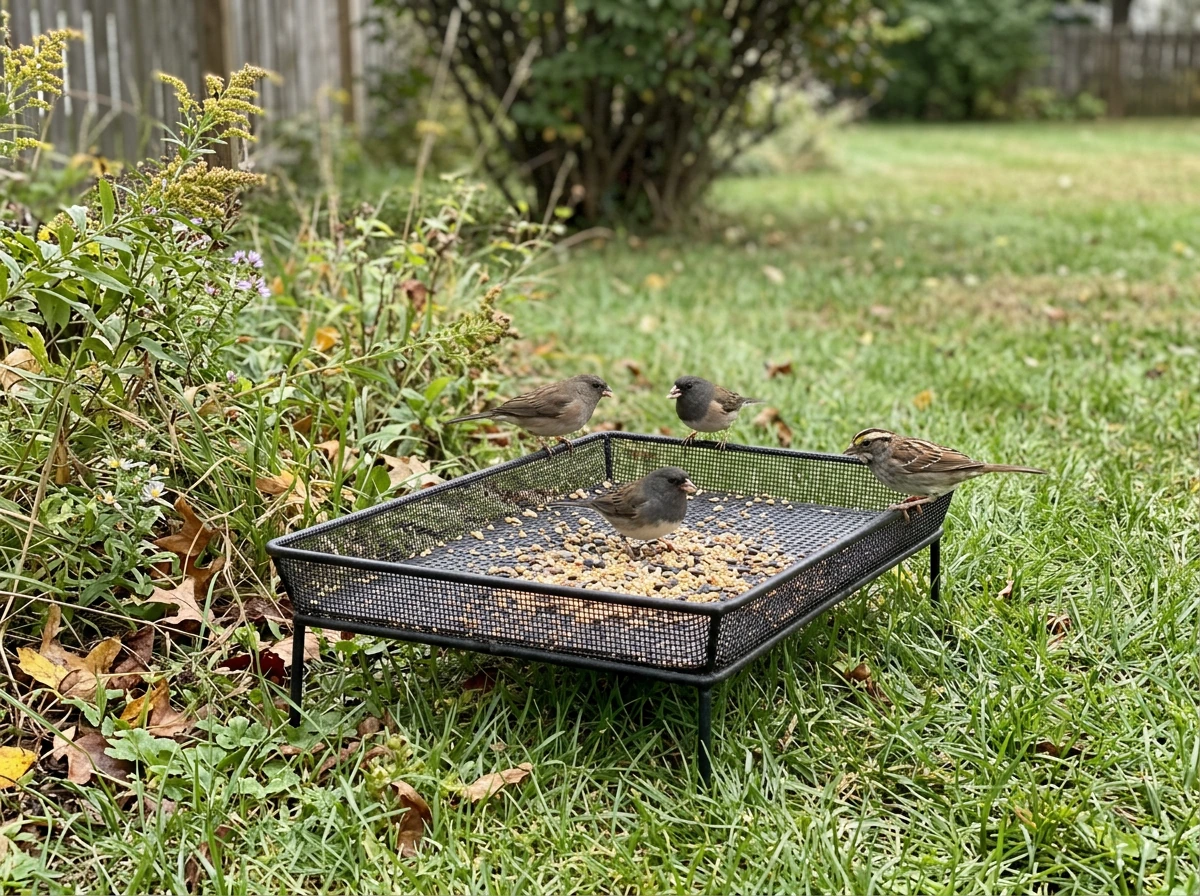
The best ground bird feeder for most backyards is a metal mesh platform tray with good drainage, placed at least 8 to 10 feet from any fence, shrub, or structure. That single setup will attract more sparrows, doves, juncos, and towhees than almost any other feeder type, and it handles rain, squirrels, and seed waste better than cheap plastic alternatives. Everything below will help you narrow it down to exactly what your yard needs.
Best Ground Bird Feeder Guide: Types, Setup, and Top Picks
Marcus Holloway
23 Mar 2026
What a ground feeder actually is (and how it differs from other feeders)
A ground bird feeder is any feeding station designed to present seed at or near ground level on a flat, open surface. The defining feature is that birds can stand on or right beside it and feed naturally, the way they would forage on bare ground. That makes it fundamentally different from tube feeders, hopper feeders, or hanging platform feeders. Those designs restrict access through ports or elevated mounting, which is fine for chickadees and finches but a dealbreaker for birds that simply don't perch on narrow dowels.
Hopper feeders, for context, are basically a platform with walls and a roof built on top to protect seed from weather. They can work well for some ground-feeding species, but the enclosed design discourages the natural scanning behavior that birds like doves and juncos rely on. A true ground platform keeps the feeding surface open, low, and accessible from all sides, which is exactly what ground-foraging birds want.
Project FeederWatch puts it plainly: many species including sparrows and mourning doves prefer feeding on large, flat surfaces and may simply never visit an elevated hanging feeder. If you've been puzzled by why certain birds work the grass under your other feeders but ignore the feeders themselves, a ground platform is your answer.
The features that actually matter when picking one
Tray style: open platform vs. covered platform vs. hopper on the ground
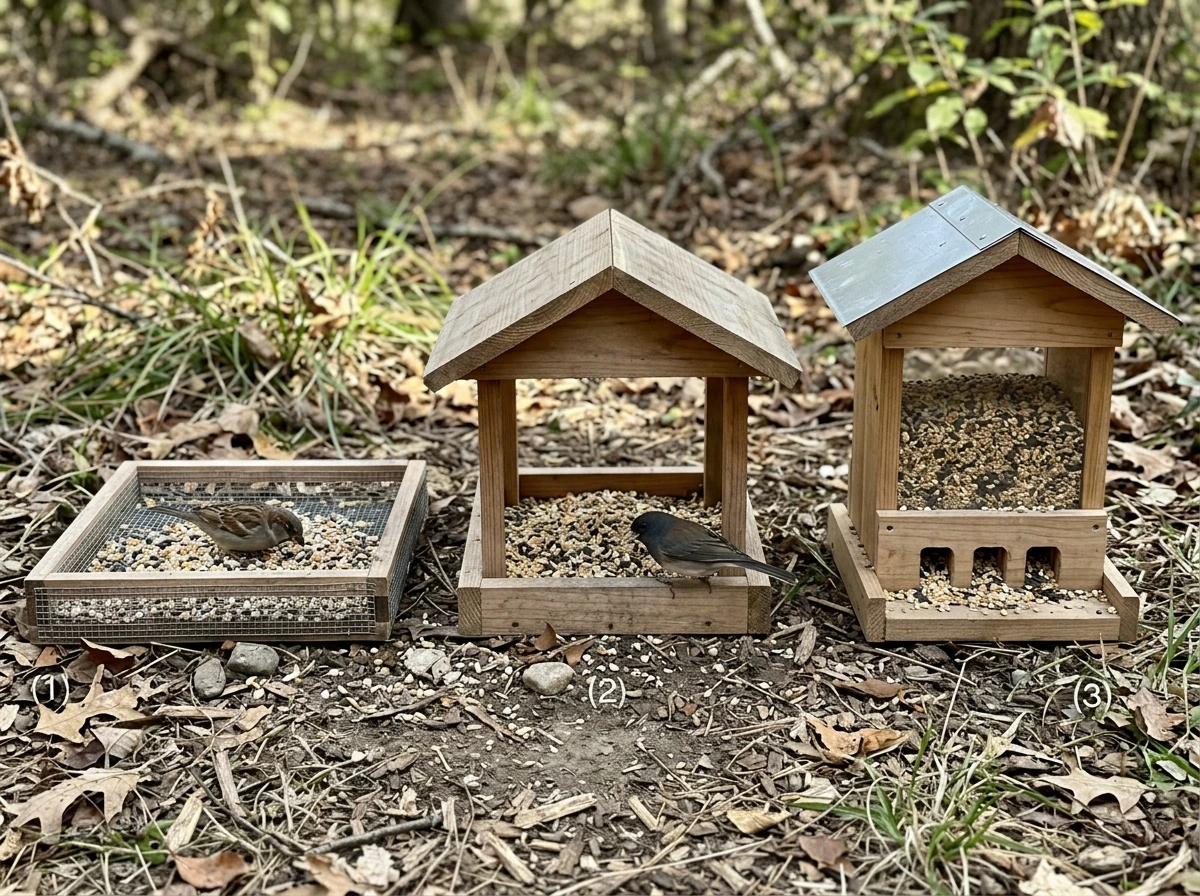
For pure ground-foraging bird appeal, go with an open platform tray as your primary feeder. You can always add a hopper-style feeder nearby as a supplemental option for species that prefer a bit more structure. Covered platform trays add a roof overhead, which protects seed from rain but can feel enclosed to shyer species. Hopper feeders placed on a ground stand are a reasonable middle ground: they hold more seed, protect it better from weather, and work for species like cardinals and juncos, though they don't have the same wide-open appeal as a flat tray.
For pure ground-foraging bird appeal, go with an open platform tray as your primary feeder. You can always add a hopper-style feeder nearby as a supplemental option for species that prefer a bit more structure.
Drainage: the most underrated feature
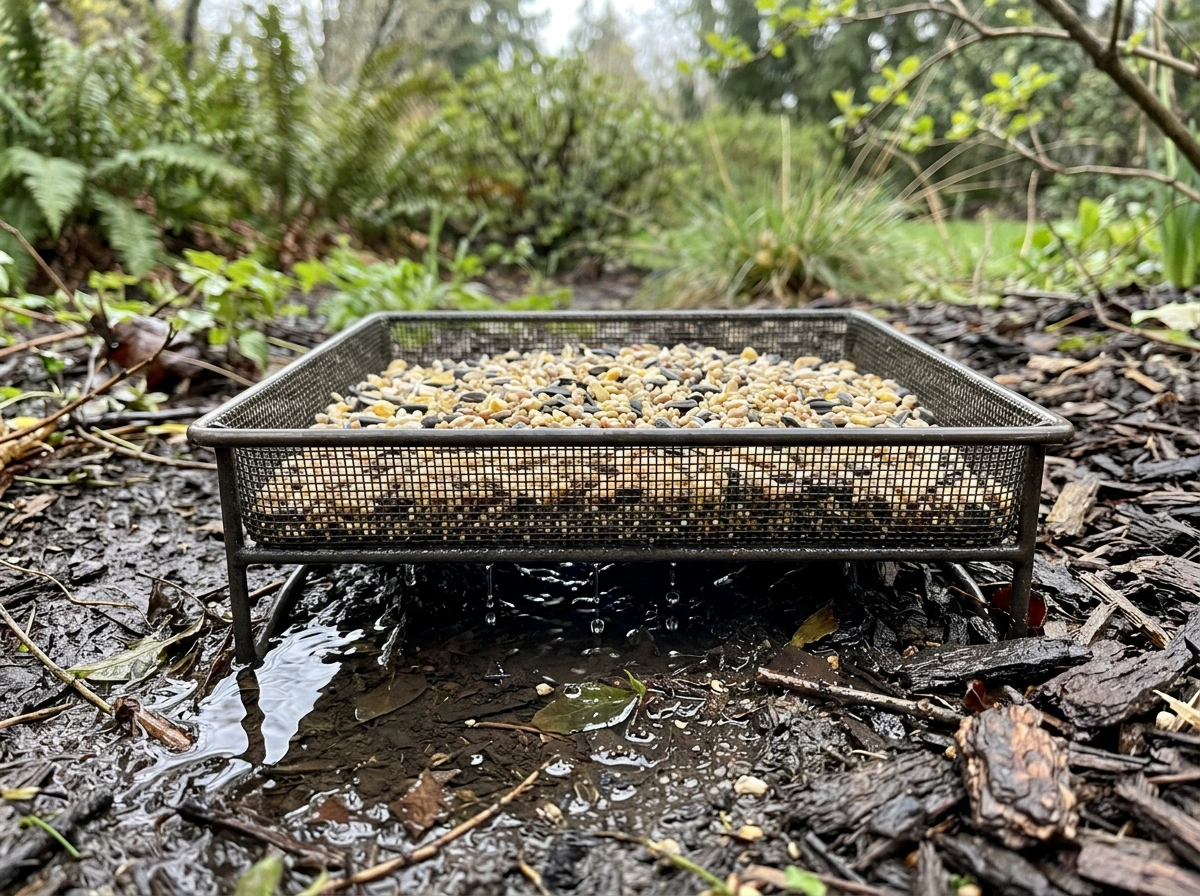
Wet seed is the number-one problem with ground and platform feeders. Rain pools, seed clumps, mold grows, and birds stop coming. A mesh-bottom tray solves this almost entirely. Steel mesh flooring lets water drain through immediately, allows air to circulate from underneath (which keeps seed from sitting in moisture), and is far easier to rinse clean than a solid plastic tray. Feeders like the Duncraft Eco-Strong Ground Tray Platform specifically use metal mesh flooring for drainage with fly-through openings on the sides for airflow. The Bluebird Landing deck/ground mesh tray feeder advertises 360-degree air circulation alongside water drainage for the same reason. This is the spec to look for first.
Materials: metal beats plastic for almost everything
Powder-coated steel mesh is the gold standard for ground feeder construction. It resists rust, handles squirrel chewing, and cleans up easily with a brush and bleach solution. Cheap plastic trays crack in UV exposure, warp in heat, and are easy for squirrels to gnaw through. Recycled plastic bodies with powder-coated steel screen inserts (like the Songbird Essentials ground platform) are a solid compromise: the plastic body won't rot, and the steel mesh does the drainage and durability work. Cedar hopper-style feeders can look beautiful and last years if they have a proper drainage system (Nature's Way uses a patented Fresh Seed Tray with a drainage channel), but bare wood sitting on the ground or near wet soil will eventually rot without that kind of protection. Whatever you buy, prioritize the drainage design and material durability in that order.
Cleanability
A feeder you can't clean easily is a feeder you won't clean often enough. Look for removable trays, smooth surfaces without deep crevices, and mesh screens that can be scrubbed and rinsed without disassembly. Some cedar hopper feeders include removable seed trays specifically to make cleaning and drying practical. Avoid designs with hard-to-reach corners where droppings accumulate.
Which birds you'll attract (and which ones you'd rather not)
Birds that love ground feeders
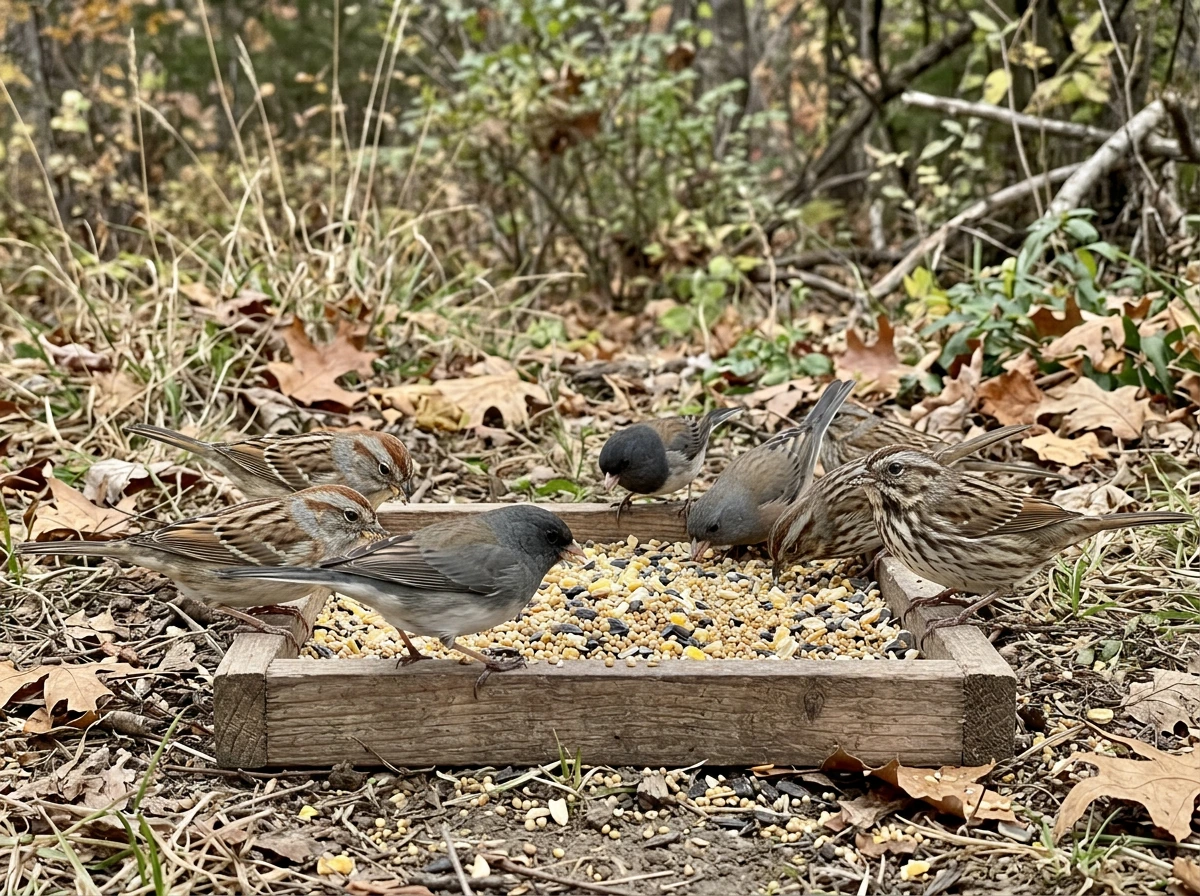
Ground and platform feeders consistently attract the species that most birders find hardest to pull in with hanging feeders. Dark-eyed juncos are ground feeders by nature and will flock to a low platform, especially in winter. Mourning doves prefer ground feeding and can become regulars quickly. Native sparrows (song sparrows, white-throated sparrows, fox sparrows) strongly favor flat open surfaces. Eastern and spotted towhees scratch and forage at ground level. If you're in quail country, California quail and bobwhite are also reliable visitors. Eastern and spotted towhees scratch and forage at ground level. If you're in quail country, California quail and bobwhite are also reliable visitors. In yards with the right habitat, robins and even <a data-article-id="011239EB-BE41-4678-9CF1-0596D4C2CF9B"><a data-article-id="011239EB-BE41-4678-9CF1-0596D4C2CF9B">bluebirds will use a low tray for mealworms</a></a> (worth checking our guide to best bird feeders for robins if those are priority species for you). In yards with the right habitat, bluebirds will use a low tray for mealworms, so if you're specifically targeting them, see the best bird feeders for bluebirds for feeder and seed options.
Unwanted visitors and how to think about them
Open ground feeders are also attractive to birds you may not want: grackles, European starlings, and house sparrows can dominate a tray and keep smaller species away. Squirrels treat ground-level feeders as a free lunch with no effort required. Rats and mice are attracted to any spilled or scattered seed that accumulates on the ground, especially overnight. These aren't reasons to skip a ground feeder, but they are reasons to manage placement and design choices carefully.
| Species | Feeder Style Preference | Notes |
|---|---|---|
| Mourning dove | Open ground platform | Strongly prefers ground level; will scatter seed |
| Dark-eyed junco | Ground or very low raised platform | Winter visitor; prefers millet and fine seed mixes |
| Song/white-throated sparrow | Large flat open surface | May not use elevated feeders at all |
| Eastern towhee | Ground platform | Scratches seed; needs open space around feeder |
| Northern cardinal | Low platform or hopper | Also uses ground level; prefers safflower or sunflower |
| American robin | Open low tray with mealworms | Not a seed eater; needs live or dried mealworms |
| Common grackle | Open platform (unwanted) | Dominant and messy; can deter smaller birds |
| European starling | Open platform (unwanted) | Aggressive; responds to feeder design changes |
| Squirrel | Any accessible ground feeder | Requires proofing tactics; see section below |
Squirrel and predator-proofing: what actually works
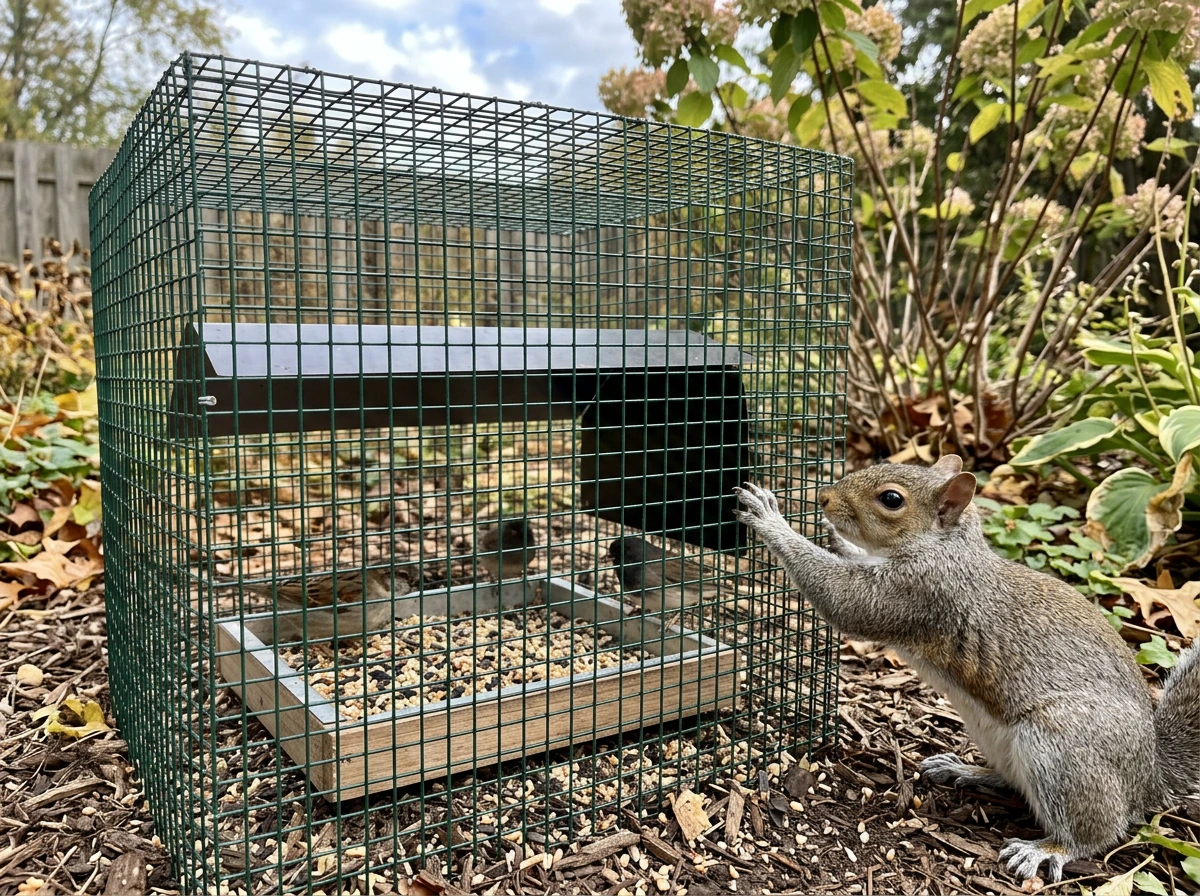
Ground feeders are inherently more accessible to squirrels, cats, and ground-level predators than elevated hanging feeders. That doesn't mean you're defenseless, but it does mean you have to be deliberate about a few things.
Placement is your first and most effective tool. Audubon recommends keeping feeders at least 8 to 10 feet from anything a squirrel can jump from: trees, fences, buildings, shrubs, anything. Squirrels can jump horizontally up to 10 feet, so this clearance matters. On a ground feeder, you obviously can't use the classic baffle-on-a-pole trick the same way you would with a hanging feeder, but you can still create a physical obstacle. A wide dome baffle mounted over a low feeder on a short post (4 to 5 feet high) can still deter approach from above.
Caged feeder designs are another strong option, especially if squirrel pressure is relentless. A wire cage surrounding the seed area lets small birds pass through the openings while physically blocking larger animals. This approach also helps with bully birds like grackles and starlings, since the cage openings can be sized to exclude them while admitting sparrows and juncos. The tradeoff is that doves, which are larger, won't fit through a small-mesh cage.
For grackle and starling management specifically, switching your seed mix helps. These species love corn and cheap filler mixes. Switching to straight safflower or white millet significantly reduces their interest (grackles especially dislike safflower), while still attracting cardinals, doves, and native sparrows. You can also try temporarily closing or removing the ground feeder for a week or two: all-about-birds guidance notes that bully birds often move on if the food source disappears for a short period.
For cats and ground predators, the best strategy is placement in the open. Don't put a ground feeder right next to dense shrubs or tall grass that gives predators a hidden approach. Birds need enough open space around the feeder (about 10 feet of clear ground in all directions) to spot danger and flush before a cat or hawk can close the distance.
Rodents are attracted to spilled and accumulated seed on the ground beneath the feeder. The practical solution is a mesh-bottom feeder (less spillage, dries faster), cleaning up hulls and waste regularly, and bringing the feeder in overnight if rodents are a serious local problem.
Where to put it and how to set it up right
Choose a spot that's open, visible to birds from above (so they can spot it from a perch), and at least 8 to 10 feet from any structure or tree. That open placement serves double duty: it limits squirrel launch angles and gives feeding birds a clear view of approaching threats. If you have shrubs or trees nearby, place those at the 15 to 20 foot mark so birds have somewhere to retreat to after feeding, but predators can't use them as a launching pad.
Window collision risk is worth thinking about if your open area is near a window. Research-backed guidance suggests keeping any feeder either within 3 feet of a window (too close for a bird to build dangerous speed) or more than 10 feet away. Ground feeders naturally tend to be in the yard and away from the house, but it's worth checking your specific sightlines.
If you're running multiple feeders, a ground platform pairs well with a tube feeder for finches and a hanging platform or hopper for mixed seed at mid-height. The ground platform handles doves, sparrows, and juncos; the other feeders handle the rest. Space them apart so bird traffic at one feeder doesn't crowd the other.
To reduce wasted seed, match your seed to the species visiting. White proso millet is the single best seed for ground-feeding birds: doves, sparrows, and juncos all love it, and it's cheap. Black-oil sunflower seed in the shell is also excellent and attracts a wider range including cardinals. Avoid cheap mixed bags loaded with milo or red millet, which many birds toss out of the way, creating a mess on the ground and attracting rodents. Offering just one or two targeted seed types in your ground feeder dramatically reduces the mess and waste.
Keeping it clean and preventing moldy seed
Ground and platform feeders need more frequent cleaning than tube or hopper feeders because bird droppings fall directly onto the seed surface, and rain wets everything. Audubon recommends cleaning feeders every other week as a baseline, and more often in humid or hot weather, or after any extended rain. In practice, a mesh-bottom platform feeder should be emptied, rinsed, and dried after any significant rainfall before you refill it.
For a full clean, the National Wildlife Health Center (via Audubon) recommends scrubbing with a solution of 9 parts water to 1 part bleach. The South Carolina DNR also recommends hot water with vinegar or hot water with bleach for regular cleaning, with a minimum of once a month for ground feeding areas, including clearing accumulated hulls and waste from the ground beneath the feeder. A stiff brush makes scrubbing mesh screens much easier. Always rinse thoroughly and let the feeder dry completely before refilling, since damp seed molds fast.
Horticulture magazine's practical recommendation is to empty and rinse the tray at least once a week regardless of weather, since droppings accumulate quickly in an open platform. In a wet climate or during rainy seasons, you may need to do a quick rinse every two or three days. It sounds like a lot, but mesh-bottom trays make this fast: tip it out, spray it with a hose, and let it air dry for an hour before refilling.
One important note from Wild Birds Unlimited: open tray and platform feeders where droppings and seed are constantly in contact present a real disease transmission risk for birds. This isn't a reason to avoid them entirely, but it is a strong argument for the frequent cleaning schedule above and for choosing a feeder with a mesh floor that at least lets droppings fall through rather than pooling on top of the seed.
The right feeder for your specific backyard situation
Not every yard is the same. Here's a direct recommendation by common scenario:
| Backyard Scenario | Best Feeder Type | Key Features to Prioritize | Seed Recommendation |
|---|---|---|---|
| Budget setup | Basic powder-coated steel mesh tray | Mesh bottom for drainage, no-frills design | White proso millet; black-oil sunflower |
| Wet climate / frequent rain | Metal mesh platform with fly-through openings and deep drainage | 360-degree airflow, mesh floor, easy to tip and rinse | White millet; no seed mixes with fillers that clump |
| Heavy squirrel pressure | Caged ground platform or open tray with wide clearance placement | Metal construction (chew-resistant), placement 8-10 ft from structures | Safflower (squirrels usually avoid it) |
| Bully bird problems (grackles/starlings) | Caged ground platform sized for small birds | Cage openings that exclude large birds | Safflower or nyjer; avoid corn and cheap filler mixes |
| Multi-species yard | Open metal mesh platform (primary) + covered hopper feeder on ground stand (secondary) | Separate stations spaced apart, both with drainage | Millet on the platform; sunflower in the hopper |
| Small yard / limited space | Compact deck-style mesh tray (can double as ground or railing mount) | Compact footprint, easy to move, powder-coated steel mesh | White millet or single-seed choice |
| Target: quail or doves specifically | Large open platform tray, low to ground (2-4 inches max) | Wide feeding surface, no cage, open approach from all sides | Cracked corn plus white millet |
Your quick selection checklist
Before you buy, run through these five questions:
- Does it have a mesh or perforated bottom for drainage? If not, skip it.
- Is the frame and mesh made of powder-coated steel or another rust-resistant metal? Avoid bare plastic as the primary structural material.
- Can you clean it easily with a brush and hose without major disassembly?
- Do you have a placement spot that's at least 8 to 10 feet from trees, fences, and structures?
- Does the design match your biggest challenge: open tray for species variety, caged for squirrels and bully birds, or large open platform for doves and quail?
Troubleshooting common problems
If seed is getting wasted fast: you're likely offering a cheap mix with filler seeds birds don't want. Switch to single-seed offerings (white millet or black-oil sunflower) and you'll see waste drop immediately. Also check that your mesh bottom isn't clogged, preventing wet seed from draining.
If one species is dominating: grackles and doves can both crowd out smaller birds. For grackles, switch to safflower and consider a caged platform. For doves, they're generally harmless but can be numerous; adding a second, smaller tray nearby gives other birds an alternative spot. For species guidance on other types of dominant birds, it's worth cross-referencing species-specific feeder guides for best bird feeders for flickers, since seed choice and feeder design both play a role.
If you're getting rodents: this almost always means spilled seed is accumulating on the ground overnight. Use a mesh-bottom feeder to reduce spillage, clean the ground beneath the feeder daily, and bring the feeder indoors at dusk if the problem is serious. Don't scatter seed directly on the bare ground.
If birds aren't finding the feeder: give it one to two weeks. New feeders take time for local birds to discover, especially ground feeders that aren't in the birds' existing flight path. Placing the feeder near your existing feeders (rather than in an isolated corner) speeds up discovery significantly. A handful of white millet scattered in a ring around the tray for the first few days also acts as a visual cue.
FAQ
How deep should a ground feeder tray be to reduce wet seed and spillage?
Aim for a shallow deck (low sides) and rely on the mesh bottom for drainage, deeper trays tend to hold more pooled water and get heavier to rinse. If you see seed building up into clumps after rain, switch to a mesh-bottom model and refill with a smaller daily amount instead of topping off.
Can I place a best ground bird feeder in a partially shaded spot?
Yes, but keep airflow in mind. In heavy shade, seed can stay damp longer, so choose a tray with fly-through side openings and plan for more frequent rinsing during humid weather. If mold starts forming, move the feeder to a drier microclimate or shorten the time between cleanings.
What seed amount should I put out so rodents do not learn the routine?
Start with a light daily portion, then adjust based on how quickly birds finish it. A common mistake is refilling after birds leave, leaving excess hulls and spilled bits overnight. If rodents are active, only replenish in the morning and remove any remaining seed at dusk.
Do I need to scatter seed around a ground platform to attract birds faster?
It can help as a temporary visual cue, but avoid turning it into a permanent buffet. Scatter a small amount in a ring for the first few days, then stop once birds are regularly visiting. Persistent scattering increases hull buildup and attracts rodents.
How do I prevent grackles and starlings from taking over without excluding smaller birds?
Use a feeder with openings sized for sparrows and juncos (a caged design can work), and switch seed to safflower or white millet rather than corn-based mixes. If dominance continues, try removing the feeder briefly for a week or two to break the learned food source pattern.
Are ground feeders safe for birds if droppings fall into the tray or onto the seed surface?
It depends on how quickly you clean and how the tray handles debris. Mesh floors that let droppings fall through are safer than solid decks that let waste accumulate on top, but you still need a strict rinse-and-dry schedule (especially after rain) to reduce disease transmission risk.
What’s the best way to clean a ground mesh feeder if I’m concerned about bleach residue?
After scrubbing with a diluted bleach solution, rinse thoroughly until there is no chemical smell, then dry completely (mesh dries faster with good sun and airflow). Refill only when fully dry, damp surfaces speed up mold growth.
My ground feeder gets covered with hulls. Should I choose a different seed or feeder design?
Usually both. Hull-heavy behavior often improves with targeted seeds like white proso millet or black-oil sunflower in-shell, and with choosing a mesh-bottom tray that drains and allows easier cleanout. Also check that the tray isn’t overfilled, overfilling increases scatter and hull piles.
Can cats use a ground feeder area differently than squirrels do?
Yes, cats rely on hidden approach routes, even if squirrels cannot launch easily. Keep the feeder away from dense shrubs and tall grass, and aim for clear “escape and sight” space around the tray so birds can detect danger and flush before a cat closes in.
What height should the dome baffle be if I’m using one on a ground platform?
A dome baffle works best when the feeder is low and the baffle is mounted on a short post, about 4 to 5 feet high. The goal is to block top-down access without making it impossible for ground feeders to enter from the sides.
How long does it take for birds to start using a new ground feeder?
Often 1 to 2 weeks, because ground-feeding species must notice it and fit it into their daily foraging routes. If your feeder is in a new or isolated spot, discovery slows, placing it near your existing feeders (while maintaining the same distance-from-structures rule) usually speeds up consistent visits.
Next Articles
Best Bird Feeders for Robins: Top Picks and Placement Tips
Find the best bird feeders for robins: tray and ground options, weatherproof picks, placement tips, and fixes to attract
What Color Bird Feeder Attracts Birds Most: Quick Guide
Discover which bird feeder color draws the most birds, plus setup tips for durability, placement, and reducing squirrels
Best Color for a Bird Feeder: What Birds Prefer
Find the best color for a bird feeder by species, bird vision tips, and setup guidance for shade, contrast, and access.