A tube feeder with small, nyjer-sized ports is the best all-around choice for feeding thistle seed to finches. Specifically, you want a cylindrical tube or fine-mesh tube feeder with ports no larger than 3/32 of an inch, multiple perches sized for small birds, and a drainage system at the base to keep seed from going moldy. If you want the simplest possible option, a fine-mesh "thistle sock" works too, but it has real limitations in wet weather. The tube feeder wins for most backyards because it handles rain better, lasts longer, and gives you more control over seed freshness.
Best Bird Feeder for Thistle Seed: Buy and Setup Guide
Marcus Holloway
8 Jul 2026
What thistle feeders actually need to get right
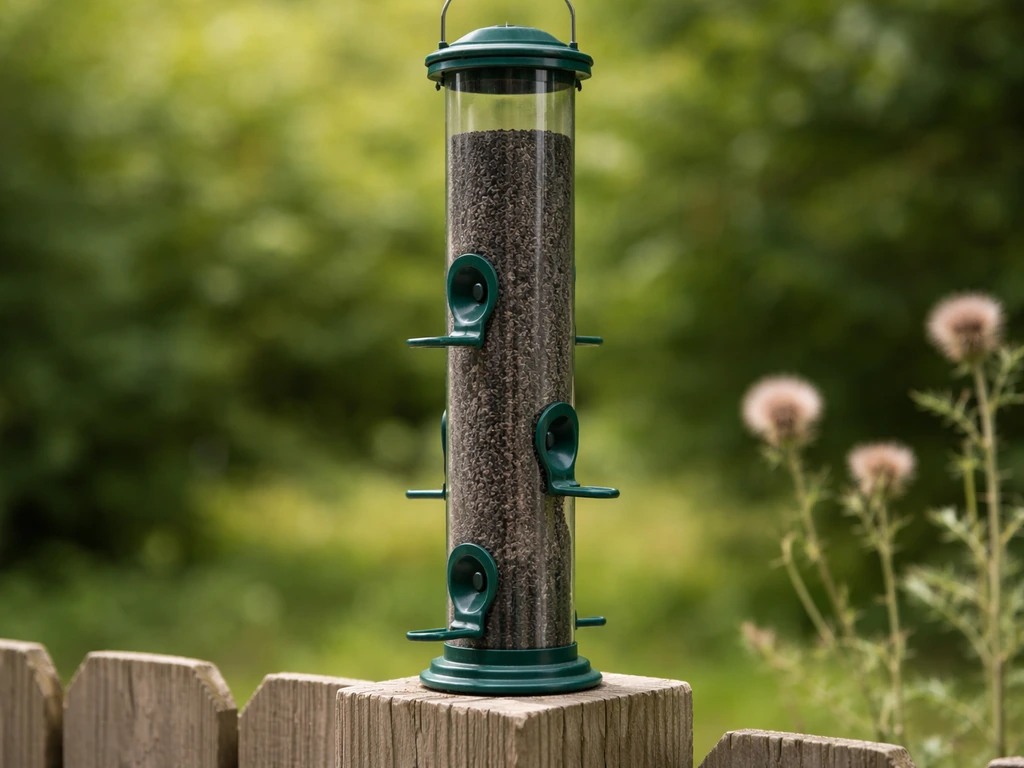
Nyjer seed (also sold as niger or thistle seed) is genuinely tiny. It's so small that if you drop a standard sunflower tube feeder and try to use it for nyjer, the seed just pours straight out and piles up on the ground. That's not a hypothetical: I tried it once when I ran out of my regular nyjer feeder. The mess was impressive, the waste was expensive, and the squirrels were thrilled.
This means port size is the single most critical spec on any thistle feeder. The blank" rel="noopener noreferrer">ports need to be very small, around 3/32 of an inch, tight enough to meter the tiny seeds but still accessible for finches with their narrow beaks. Tube feeders designed specifically for nyjer have these narrow slots or pinhole-style ports built in. Project FeederWatch also notes that nyjer requires special small feeding ports to prevent spillage blank" rel="noopener noreferrer">special small feeding ports to prevent spillage for nyjer. General-purpose tube feeders almost never do, so buying a dedicated nyjer feeder is not optional, it's the whole ballgame.
Beyond port size, finch-specific feeders also need perches scaled for small birds. American goldfinches, house finches, and purple finches are all lightweight and agile. They'll use short perches or even cling to mesh directly. Larger birds like grackles or starlings struggle to get purchase on small perches, which is a natural (if imperfect) form of access control.
- Port diameter of 3/32 inch or smaller to prevent seed spillage
- Short or no perches to discourage larger bully birds
- Drainage holes or a vented base to stop seed from clumping and molding
- A design that allows seed flow to slow down as the feeder empties (prevents the bottom layer going stale and ignored)
The feeder styles worth considering (and when each makes sense)
There are really three distinct styles of thistle feeder, and each has a genuine use case. Choosing the wrong one is usually why people complain that finches "won't come" or that seed keeps going bad.
Standard nyjer tube feeders
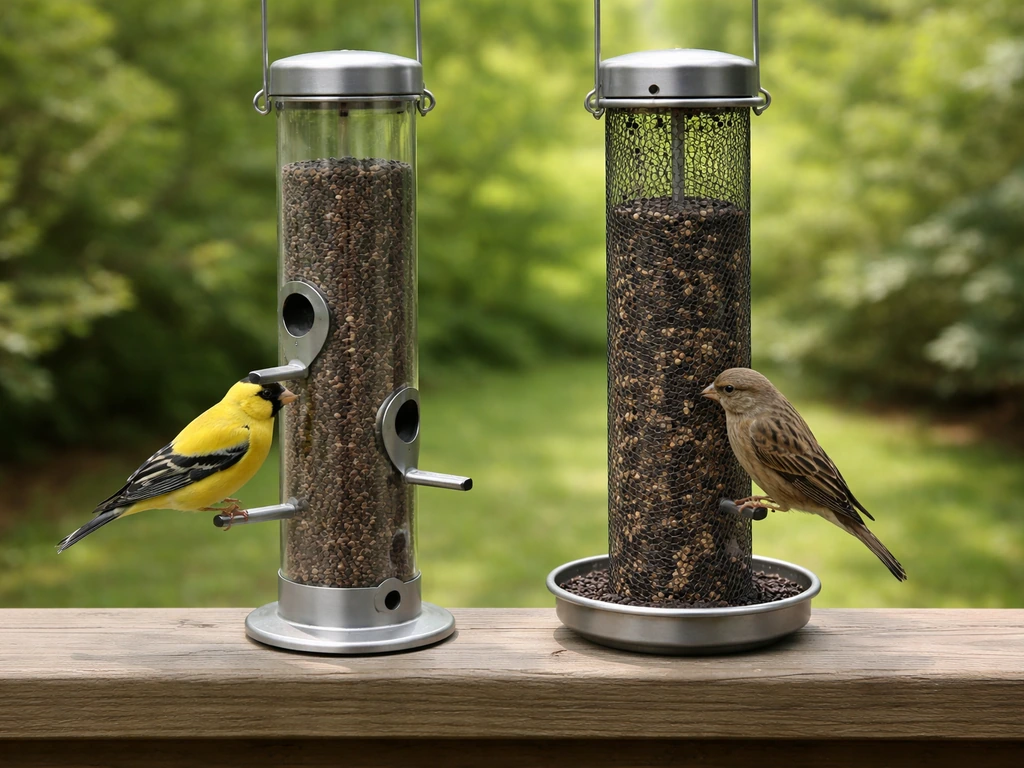
This is the workhorse of thistle feeding and what I'd recommend to most people. A plastic or metal cylindrical tube with pinhole-sized ports and small perches below each port. They hold anywhere from half a pound to several pounds of seed, they're easy to find, and the better models have metal port rings that resist cracking when finches tap and pull at them over time. Look for ones with a base that unscrews completely for cleaning, because the tube gets a biofilm of seed dust and oil that turns into a mold trap if you ignore it.
Fine-mesh tube feeders
Instead of individual ports, these feeders have a metal mesh cylinder where finches can cling anywhere along the surface and pick seed through the mesh. Goldfinches especially love these because they naturally feed upside-down in the wild on thistle plants, and the mesh lets them do that. The trade-off is that mesh feeders expose more seed surface to air and humidity, which means seed can go stale or clump faster than in a standard tube. They're excellent in dry climates and for high-traffic yards where seed turns over quickly. In humid or rainy areas, keep them filled only halfway and plan to empty and refill every four to five days.
Thistle socks (mesh bags)
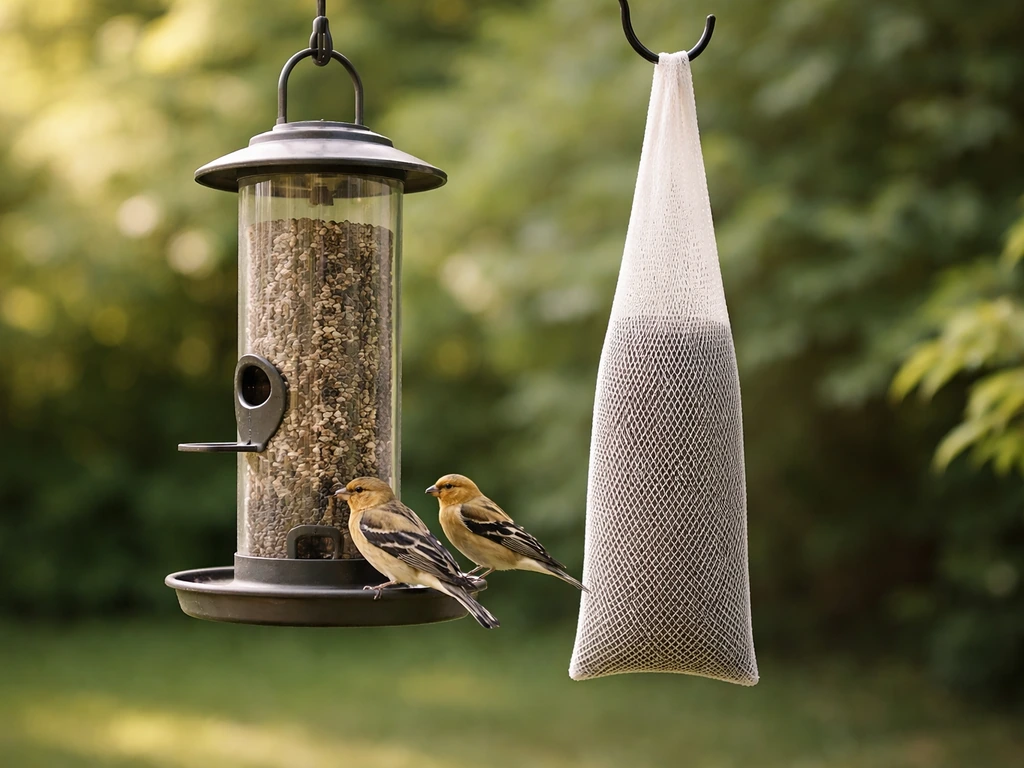
A thistle sock is a disposable or reusable fine-mesh bag that you fill with nyjer seed and hang from a branch or hook. They're cheap, they work, and finches find them fast because they mimic the natural texture of a thistle plant. The serious downside is exactly what AllAboutBirds points out: they get soaked in rain, and wet nyjer seed goes bad within a day or two. I treat thistle socks as a short-term or supplemental option, great for early spring when you want to attract your first goldfinches of the season, but not something you want to rely on through summer thunderstorms or fall rains.
| Feeder Style | Best Climate | Seed Freshness Control | Durability | Ease of Cleaning |
|---|---|---|---|---|
| Standard nyjer tube | Any | Good (enclosed seed) | High (metal/quality plastic) | Easy (unscrew base) |
| Fine-mesh tube | Dry or low-humidity | Moderate (more exposure) | High (metal mesh) | Moderate (mesh traps dust) |
| Thistle sock (bag) | Dry weather only | Poor (fully exposed) | Low (disposable) | N/A (replace often) |
What to look for when you're buying
Once you've settled on a tube-style feeder, here's how to separate the good ones from the ones that crack after a season and leave you starting over.
Port design and count
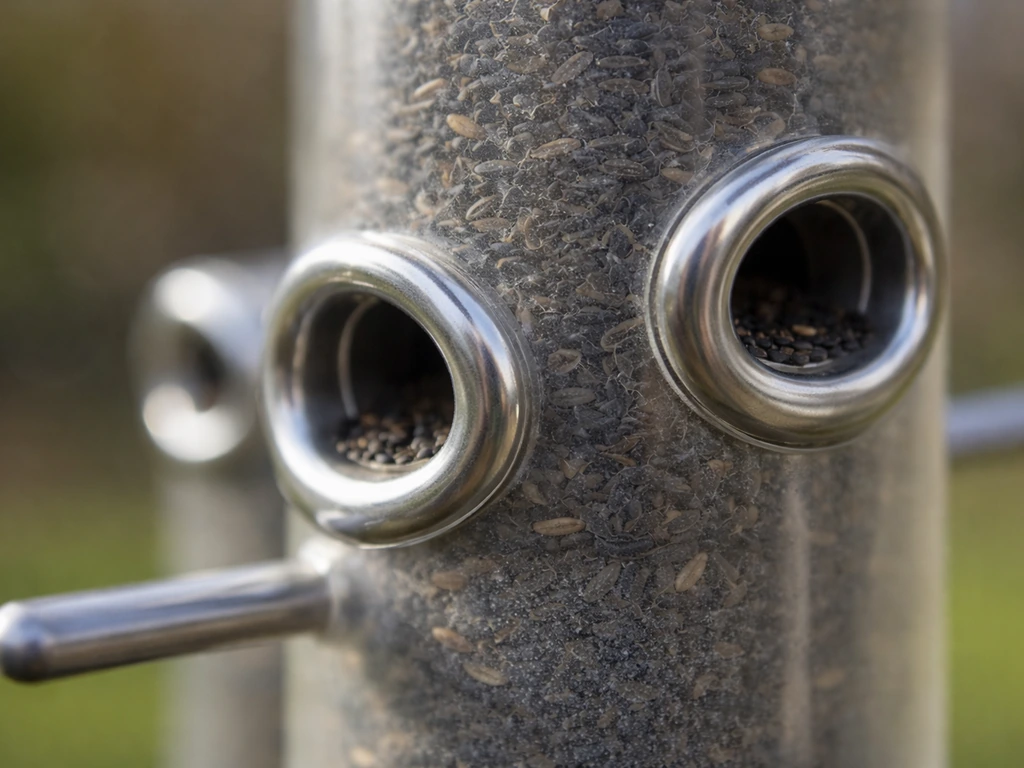
More ports mean more birds feeding simultaneously, which matters if you have a busy yard. Look for metal port rings embedded in the plastic, not just molded plastic holes. Plain plastic ports crack and widen over time, and wider ports mean wasted seed. Six to eight ports is a solid range for a medium-sized feeder. If you're just starting out, four ports on a smaller feeder is fine.
Seed capacity
Bigger isn't always better with nyjer. Because the seed goes stale and loses its oils (the part finches actually want) within two to four weeks of opening the bag, a massive feeder that you refill only once a month can actually be counterproductive. I find one to one-and-a-half pounds of seed capacity is the sweet spot for most yards. It keeps refills frequent enough that you're always putting in fresh seed.
Durability and weather resistance
UV-stabilized polycarbonate or powder-coated metal are the materials to look for. Standard clear plastic yellows and becomes brittle within a season or two of sun exposure. Metal feeders last much longer but can rust if the coating chips, so look for stainless hardware and sealed seams. If you live somewhere with harsh winters, a feeder that can handle freeze-thaw cycles without cracking at the ports is worth paying extra for.
Drainage and ventilation
This is underrated. A feeder without drainage holes at the base will collect condensation inside the tube, and wet nyjer clumps into a solid mass that blocks ports and grows mold fast. Look for small weep holes in the base cap or a vented base design. Some feeders even have a weather shield or roof that overhangs the ports, which reduces direct rain entry significantly.
Cleaning access
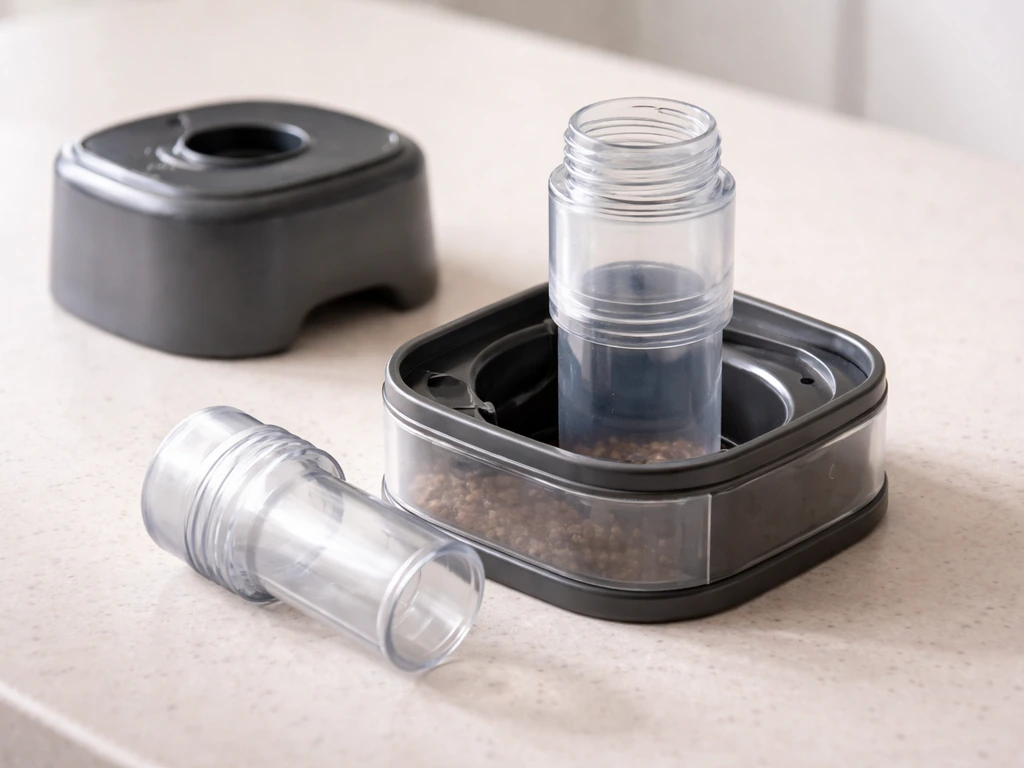
You should be able to completely disassemble the feeder for cleaning. A tube that unscrews from both the top cap and the base is ideal. Avoid feeders where the only access point is a small top opening, because getting a bottle brush down into the tube and scrubbing the interior properly is nearly impossible. I clean my nyjer feeders every two to three weeks with hot soapy water, rinse thoroughly, and let them air dry completely before refilling.
Squirrel-proofing and keeping bully birds out
Here's something that surprises a lot of people: squirrels don't actually love nyjer seed the way they love sunflower seeds or peanuts. Most squirrels will ignore a thistle feeder entirely. That said, some squirrels in seed-scarce yards will still chew into plastic feeders out of curiosity or frustration, so it pays to plan ahead.
Squirrel deterrents that actually work
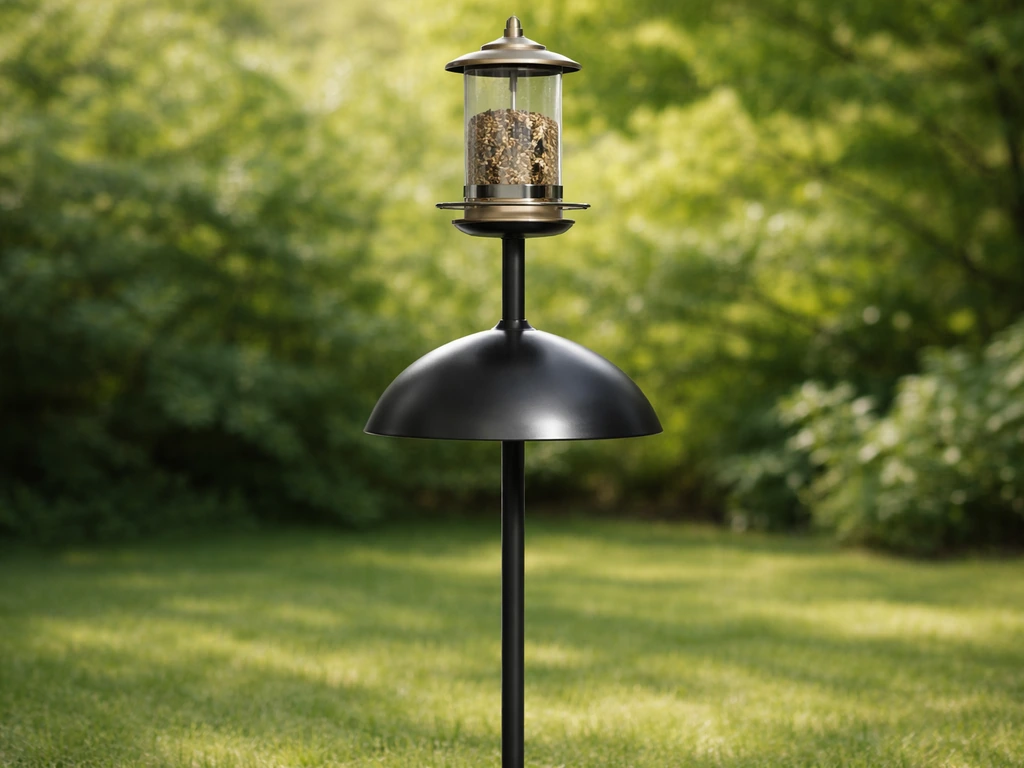
Mounting your feeder on a smooth metal pole with a baffle (a dome-shaped barrier below the feeder) is the most reliable squirrel deterrent. The baffle needs to be at least 16 to 18 inches in diameter and positioned about 4 to 5 feet above the ground. If the feeder is within about 10 feet of a tree, fence, or roofline, squirrels will jump to it regardless of the pole setup, so distance from launch points matters as much as the baffle itself.
Common failure points
- Feeder hung from a tree branch: squirrels walk right down the branch or drop onto it from above
- Pole too close to a fence, deck railing, or shrub: squirrels use these as jump platforms
- No baffle, or baffle installed too high on the pole: defeats the whole purpose
- Plastic feeder body within reach: even squirrels that can't get to the ports will gnaw the tube and enlarge openings over time
Keeping larger birds away
House sparrows, grackles, and starlings can crowd out finches at thistle feeders. Short or absent perches help here, since these larger birds need something substantial to grip. Upside-down nyjer feeders are a clever solution: the ports are positioned below the perches, which forces birds to hang upside-down to feed. Goldfinches do this naturally. Most bully birds won't bother. It's one of the more elegant species-selection tools in backyard birding.
Where and how to hang your thistle feeder
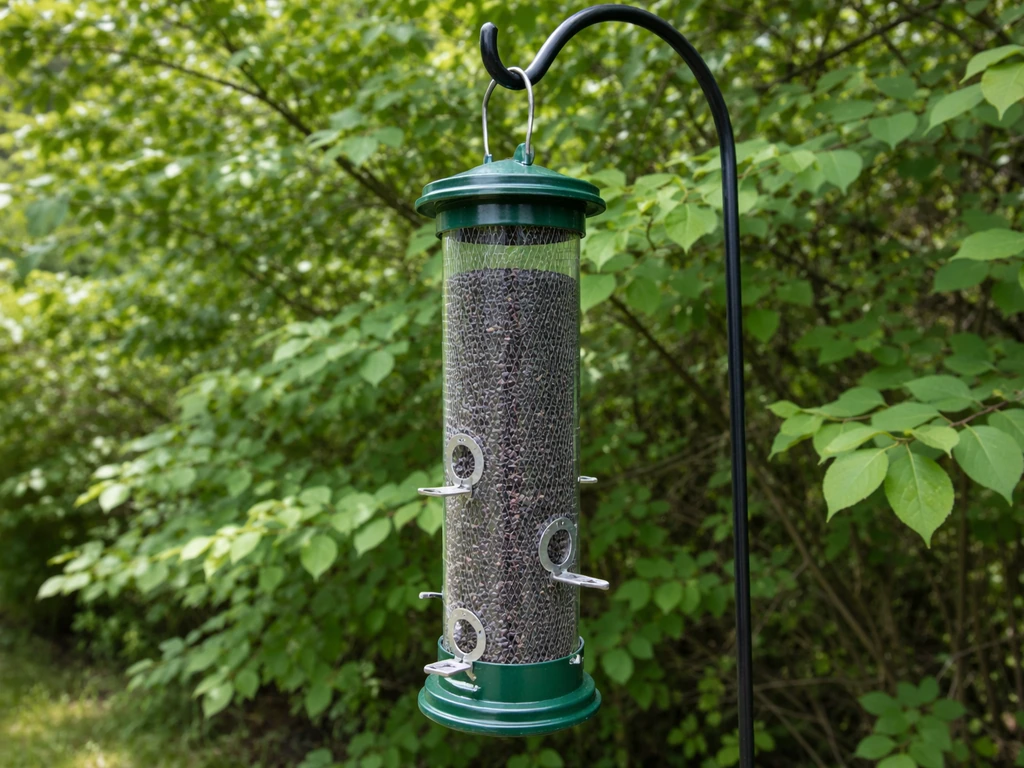
Placement is where a lot of people leave finch visits on the table. You can have a perfect feeder with fresh seed and still wait months if the location is wrong.
Height and positioning
Hang nyjer feeders at four to six feet off the ground. Finches aren't as skittish as some birds, but they do prefer feeders that feel elevated and exposed enough that they can spot predators approaching. Too low (under three feet) and cats become a real problem. Too high (over eight feet) and you'll struggle with refilling and monitoring.
Distance from cover
Position the feeder within 10 to 15 feet of shrubs, trees, or dense plantings. Finches like to stage in cover before flying to the feeder and retreat there quickly if they're spooked. But keep the immediate landing zone clear, meaning the feeder itself shouldn't be tucked inside a bush where cats or hawks can ambush birds on the perch.
Timing your setup
In most of North America, goldfinches start showing up at feeders in late summer through fall as they move around in flocks. Spring migration (March through May) is another high-traffic window. If you put your feeder out in the dead of winter with no established feeder presence, you may wait a while. Set it up at least two to three weeks before you expect peak bird activity in your area, and leave it in the same spot. Finches are creatures of habit once they find a reliable food source.
Why finches aren't coming (and how to fix it)
If you've had your feeder up for a few weeks and it's sitting untouched, run through these checks before concluding finches just don't live in your area.
Check your seed freshness first
Nyjer seed loses its oils and appeal surprisingly fast. A bag that's been sitting open in your garage through a humid summer is probably already stale before you fill the feeder. Buy nyjer in smaller quantities (two to five pound bags) from a store with high turnover, ideally one that keeps it refrigerated or in a cool dry space. Rub a pinch of seed between your fingers: fresh nyjer has a faint oily smell. Old, stale nyjer smells like nothing or slightly dusty. Birds notice this immediately.
Check for clogged ports
Nyjer's fine texture means it can pack into ports and create a blockage that looks full from the outside but won't flow when a bird tries to pull seed. Tap the feeder gently and look for seed moving inside. If the ports are blocked, use a toothpick or small brush to clear them, then plan to clean the feeder sooner than you otherwise would.
Give it more time, and consider a thistle sock as a bridge
Finches can take two to six weeks to discover a new feeder location, especially if there's no existing feeding station nearby. One trick that works well: hang a thistle sock right next to your tube feeder for the first two weeks. The open mesh is easier for birds to find visually and smell from a distance. Once they're visiting the sock, they'll discover the tube feeder right next to it and transition. Then remove the sock.
Adjust location if visits stay low after six weeks
If you've had the feeder up through a peak season with fresh seed and zero visits, the problem is almost certainly location. Move it closer to existing cover, try a different part of the yard, or temporarily hang it from a tree branch to test a spot before committing to a pole setup. Sometimes moving the feeder just ten feet changes everything.
Smart feeders and bird cameras: worth it for thistle?
Smart feeders with built-in cameras and AI species identification are genuinely useful for thistle setups, though maybe not for the reasons you'd first think. The obvious benefit is confirmation: instead of guessing whether those small birds at your feeder are house finches, goldfinches, or pine siskins, an AI-powered camera feeder tells you exactly what's visiting and logs it over time. For someone trying to attract a specific species like American goldfinches, that kind of verification is actually meaningful.
The practical limitation is that most smart feeders on the market are designed for standard seed mixes or sunflower seeds, not nyjer. The hoppers and port sizes don't work for thistle. The better approach is to mount a camera-equipped smart feeder nearby with a complementary seed mix, and run a dedicated nyjer tube feeder right next to it. You get the species data from the camera feeder and the finch-specific feeding action at the nyjer feeder. Some setups also use a separate trail camera or clip-on camera pointed at the nyjer tube, which is a simpler and cheaper way to get the same species confirmation benefit.
The quick setup checklist
If you want to cut straight to action, here's the practical sequence for getting a thistle feeder producing finch visits as quickly as possible.
- Buy a dedicated nyjer tube feeder with metal port rings, four to eight ports, and a removable base cap for cleaning
- Fill it with fresh nyjer seed from a bag purchased within the last few weeks
- Mount it on a smooth metal pole with a dome baffle, at least five feet off the ground and ten or more feet from any tree or fence
- Position it within 10 to 15 feet of shrubs or trees for staging cover, but keep the feeder itself in the open
- Hang a thistle sock nearby for the first two weeks to help birds discover the location faster
- Check ports weekly for clogs, and empty and clean the feeder completely every two to three weeks
- Replace seed if it hasn't been touched in four weeks, starting with a completely fresh batch
FAQ
Can I use any bird feeder I already own for thistle seed (nyjer)?
Usually no. Nyjer is so small that standard tube ports and most hopper feeders meter poorly, often letting seed pour straight out. If the feeder does not have nyjer-sized ports (about 3/32 inch) or a purpose-built fine mesh tube design, expect waste on the ground and fewer finch visits.
How do I stop nyjer from molding if the weather stays humid?
Drying and airflow matter as much as drainage. Empty and refill on a tighter schedule (every 4 to 5 days in humid conditions), and make sure the base vents or weep holes are clear so condensation does not build up inside the tube. Also fully air-dry the feeder between cleanings, not just rinsing.
What’s the best way to clean a tube feeder so the ports do not stay clogged?
Disassemble the tube and base, then clean the interior with hot soapy water and use a small bottle brush. For port buildup, clear each port opening with a toothpick or fine brush after rinsing, before the feeder dries, so you are not leaving seed dust that hardens into a plug.
How often should I refill nyjer, and what refill size is safest?
For most yards, refilling every 1 to 2 weeks helps keep nyjer fresh, since oils fade within a couple of weeks after opening. A 1 to 1.5 pound capacity is often easier to manage because you are less likely to keep the same old seed sitting in the feeder for a month.
If birds aren’t using the feeder yet, how long should I wait before moving it?
Give it 2 to 6 weeks, especially if there is no established feeding station nearby. If the ports are clear and the seed is fresh, then make incremental location tests, such as moving 10 feet closer to cover or temporarily hanging it from a tree branch to confirm the yard is attractive before buying new hardware.
Do thistle sock feeders work long-term, or are they just a seasonal trick?
They are best treated as short-term or supplemental. Wet nyjer can go bad within a day or two, so in areas with frequent rain or heavy dew, a tube feeder will outperform a sock. If you use socks, rotate or replace more often during damp stretches.
Will nyjer feeders attract squirrels, and what’s the simplest deterrent?
Many squirrels ignore nyjer, but some will chew when food is scarce or out of curiosity. The simplest reliable prevention is mounting on a smooth metal pole with a properly sized baffle, placed high enough and kept away from nearby “launch” points like trees or fences within about 10 feet.
How can I reduce visits from house sparrows, grackles, or starlings at a nyjer feeder?
Use short perches or a design that does not provide easy gripping for larger birds, and consider an upside-down nyjer tube approach. Upside-down ports located below perches tend to favor goldfinches, while bully species often cannot feed comfortably in that orientation.
Is it better to place the feeder under shade, in full sun, or somewhere sheltered?
Prioritize correct height and a clear landing zone, then manage moisture. Direct rain can be reduced with a weather shield or overhang, but full sun is not automatically ideal if it accelerates port cracking or seed drying inconsistently. If your feeder is in a windy spot, check ports more frequently for debris and clumping.
What should I do if the feeder looks full, but finches can’t seem to feed?
A blocked port is a common cause with nyjer. Tap the feeder to see if seed moves internally, then clear the affected ports with a toothpick or small brush. Afterward, clean the feeder a bit sooner than usual because the blockage often means seed dust has started to build up.