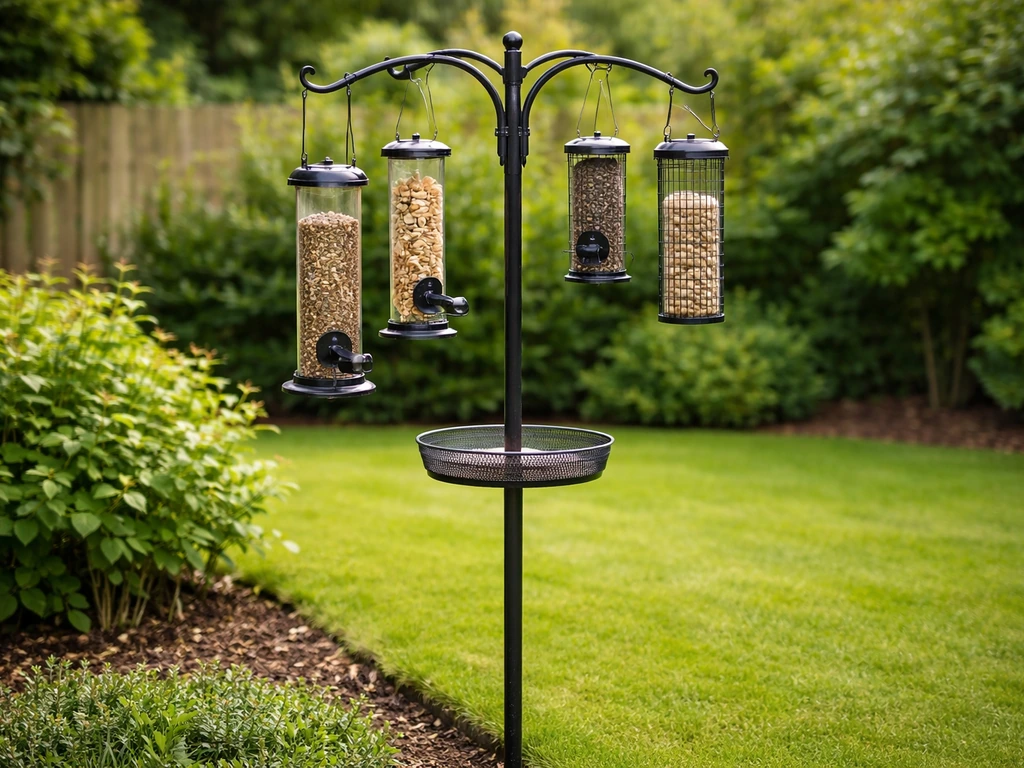
If you want to attract blue tits, great tits, goldfinches, siskins, and coal tits without constantly fighting off pigeons, collared doves, and magpies, the answer comes down to two things: feeder design and seed choice. Caged tube feeders with small perches, short port spacing, and nyjer or fine sunflower hearts will do most of the heavy lifting. Add a good squirrel baffle and the right mounting position, and you can run a genuinely small-bird-focused setup in almost any UK garden.
Best Bird Feeders for Small Birds Only in the UK
Marcus Holloway
16 Jun 2026
Which birds count as 'small' in a UK garden?
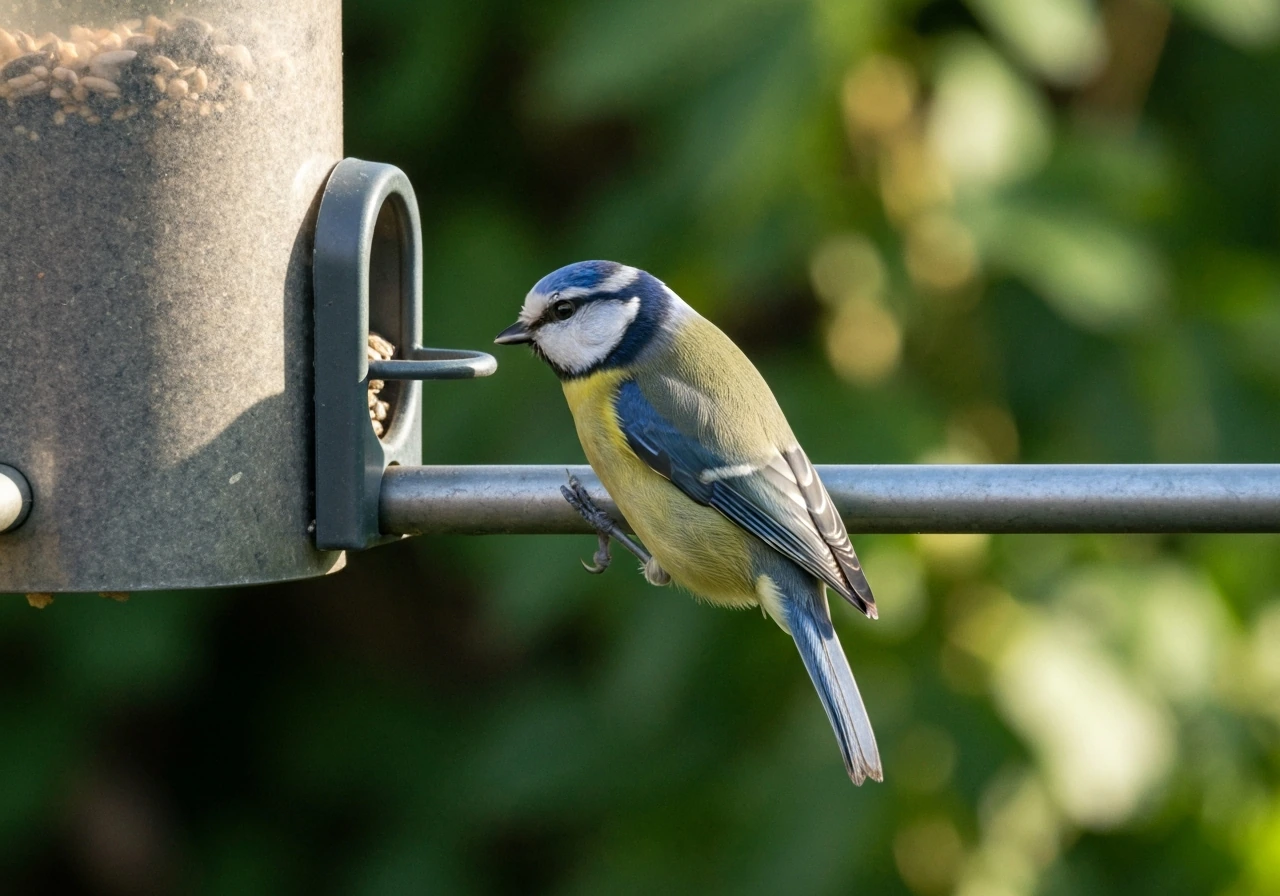
In a typical UK garden, the small birds you're most likely trying to attract and protect are: blue tit, great tit, coal tit, long-tailed tit, goldfinch, siskin, chaffinch, house sparrow, dunnock, nuthatch, and treecreeper. These birds generally weigh between 8g and 35g and have short, fine beaks suited to small seeds and thin wire perches. They're agile enough to cling to tube feeders and mesh-sided feeders.
The problem birds in a small-bird-only setup are wood pigeons (550g), collared doves, jackdaws, magpies, greater spotted woodpeckers, and starlings. In terms of finches, greenfinches can be hit-or-miss: they're technically finches but are large enough to dominate a feeder and bully smaller birds off. If you're also dealing with grey squirrels or rats, that's a different problem but needs solving alongside feeder selection.
What 'small birds only' actually means in practice
There's no single feeder design that is physically impossible for all larger birds to use, but you can stack the odds heavily in favour of small species. The two main levers are feeder structure and food type.
Feeder structure
Caged feeders (sometimes called guardian feeders) have an outer wire cage with gaps of around 60-65mm. Blue tits and goldfinches pass through easily; wood pigeons and starlings can't get in. Short perches or no perches at all also disadvantage larger birds, since they need something to grip while they feed. Tube feeders with small, narrow feeding ports are harder for big-beaked birds to use efficiently, so they tend to give up and move on.
Food type
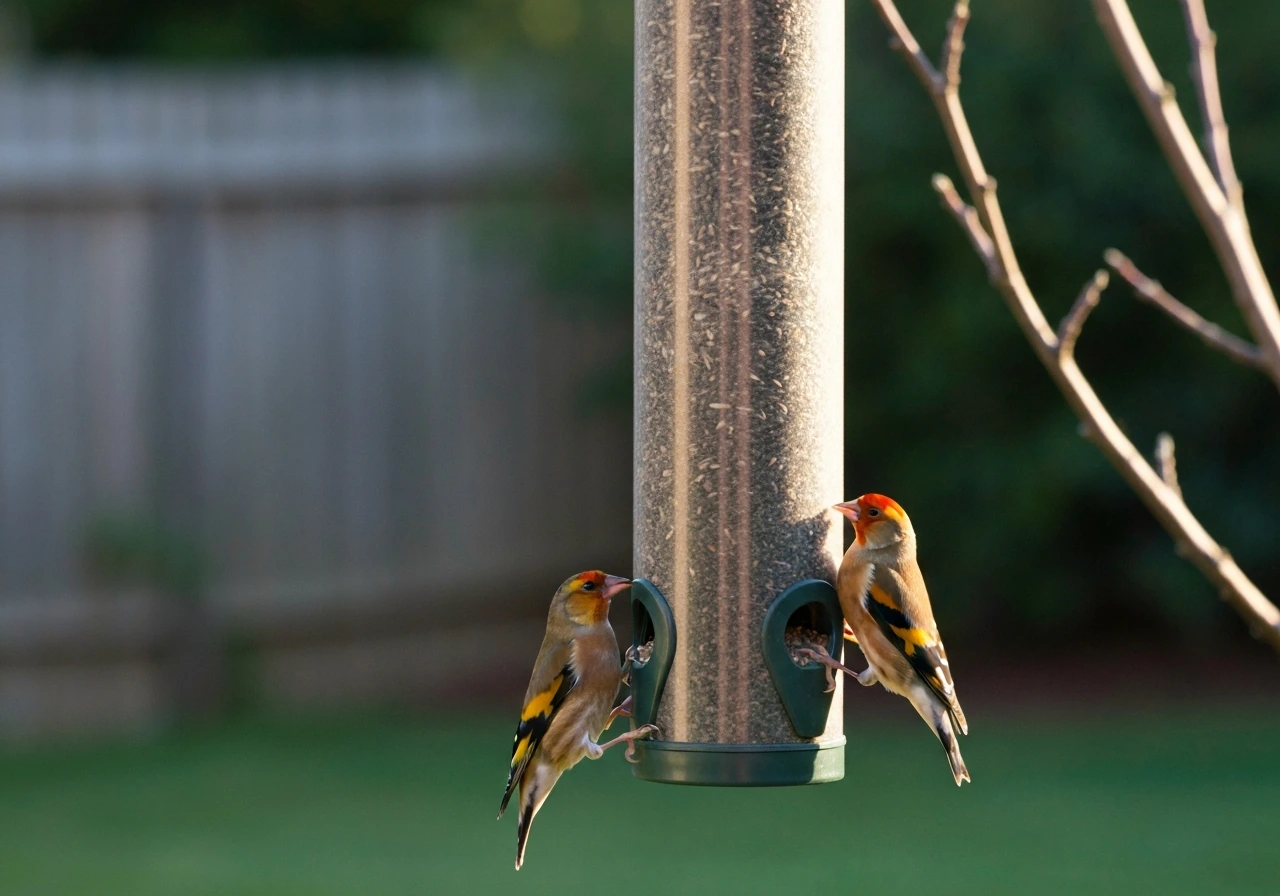
Nyjer (niger) seed is arguably the single best food for restricting feeding to small finches. It only works in specialist nyjer feeders with tiny ports, and pigeons almost never bother with it. Sunflower hearts in a caged tube feeder attract the widest range of small tits and finches. Avoid loose peanuts on a tray or platform, fat balls without a cage guard, and definitely avoid mixed seed with cereals: these are open invitations for larger birds and pigeons.
| Food type | Best for | Attracts large birds? | Notes |
|---|---|---|---|
| Nyjer seed | Goldfinch, siskin, lesser redpoll | Rarely | Needs dedicated nyjer feeder with tiny ports |
| Sunflower hearts | Blue tit, great tit, chaffinch, goldfinch | Sometimes | Use in caged feeder to block larger birds |
| Mixed seed (with cereals) | Non-selective | Yes, strongly | Avoid if you want small birds only |
| Peanuts (mesh feeder) | Tits, nuthatch | Starlings, woodpeckers | Cage guard helps; mesh stops large pieces being grabbed |
| Fat balls/suet | Tits, starlings, woodpeckers | Yes, strongly | Only use in caged fat ball feeder |
Best feeder types for small UK birds
Caged tube feeders
This is the format I'd recommend to almost anyone starting out. An inner tube feeder sits inside a heavy-gauge wire cage (typically powder-coated steel). The cage gap size is crucial: 65mm lets blue tits in but stops starlings and collared doves. Look for a cage that wraps all the way around including the base, so pigeons can't sit on the bottom tray and reach in from below. Brands like Gardman, Chapelwood, and Nature's Feast make solid budget-to-mid-range versions. The CJ Wildlife Guardian feeder range and the RSPB-branded caged feeders are reliable and widely available in the UK.
Nyjer seed feeders
These are narrow tube feeders with tiny, slit-style ports designed exclusively for nyjer seed. The design is almost self-selecting: goldfinches and siskins cling to them easily, and larger birds lack the beak size and patience to extract any seed. You don't necessarily need a caged nyjer feeder, though adding one means even less competition. The Jacobi Jayne Original Nyjer Feeder and the RSPB nyjer feeder are both good, weatherproof options available in the UK.
Small-perch seed tube feeders
Standard tube feeders without a cage can still favour small birds if the perches are short (under 40mm) and positioned below the feeding port. Blue tits and goldfinches are excellent at clinging and feeding in awkward positions; wood pigeons and collared doves aren't. This is less effective than a caged design but works well in low-pressure gardens where you're mainly dealing with doves rather than starling flocks.
Caged fat ball and suet feeders
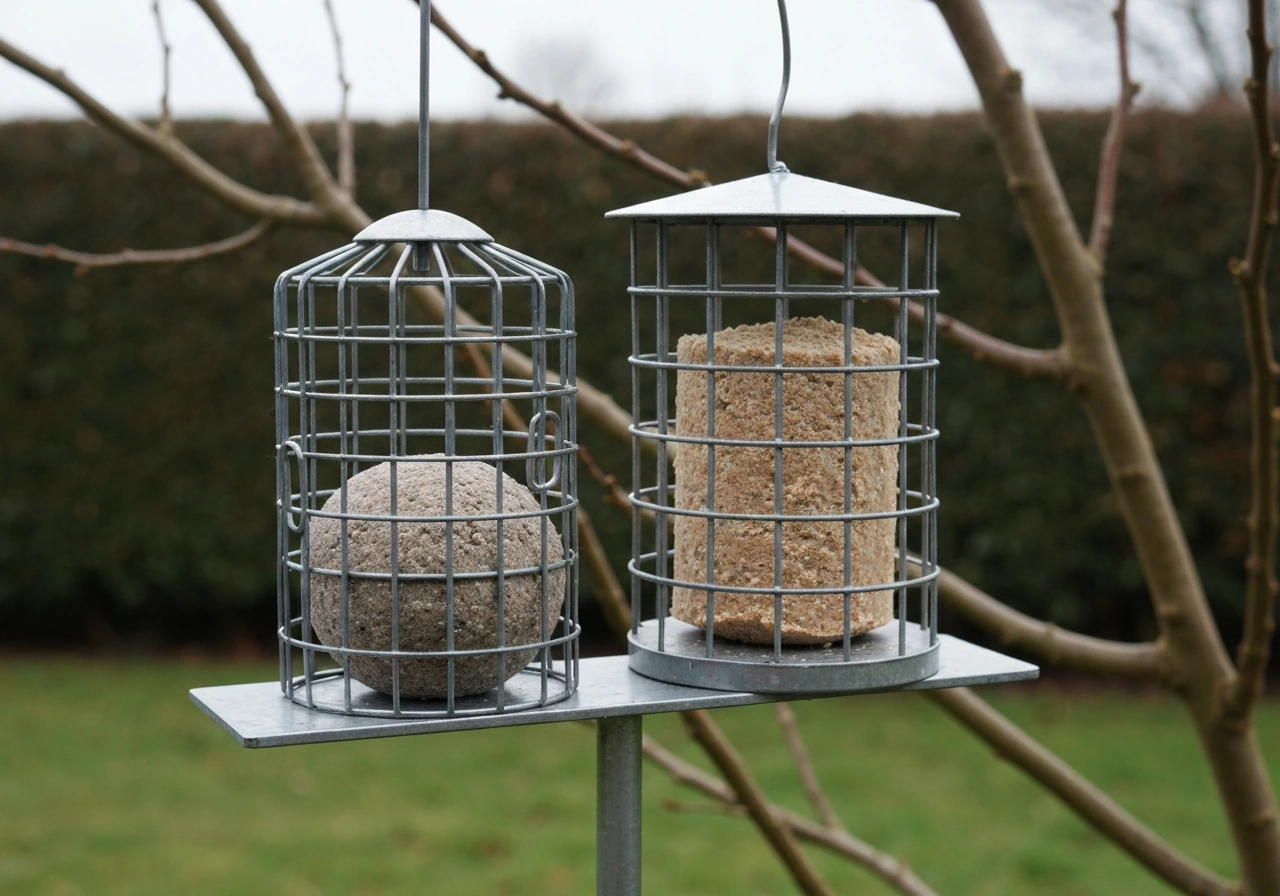
Fat balls are enormously popular with blue tits, coal tits, and long-tailed tits but also with starlings, which can strip a standard fat ball holder in minutes. A caged fat ball feeder (metal cage around a standard fat ball holder) solves this. Make sure the cage fits snugly or starlings will tip it to access the ball from the top. The Chapelwood Guardian Fat Ball Feeder is a good example of what to look for.
Peanut mesh feeders with cage guards
A standard peanut feeder is a steel mesh tube that forces birds to extract small pieces of nut through the mesh, which prevents whole peanuts being grabbed and reduces choking risk for young birds. Adding a cage guard transforms it into a small-bird-priority feeder. For the best peanut bird feeder in the UK, look for a peanut mesh feeder with a cage guard so larger birds cannot dominate the ports Adding a cage guard. Blue tits, coal tits, and nuthatches are particularly good at using these. Without the cage, starlings and woodpeckers will dominate.
Top UK picks: specific feeders worth buying
I've focused on feeders that are readily available through UK retailers (including the RSPB shop, CJ Wildlife, Amazon UK, and garden centres) as of mid-2026. Durability matters a lot here: cheap feeders warp, crack, and grow mould faster, which creates disease risk as well as wasted money.
| Feeder | Type | Best for | Key strength | Watch out for |
|---|---|---|---|---|
| CJ Wildlife Squirrel Buster Plus | Caged tube (weight-activated) | Tits, finches, sparrows | Adjustable weight threshold; truly squirrel-proof | Higher price; ports can clog with wet seed |
| RSPB Guardian Seed Feeder | Caged tube | Blue tit, great tit, goldfinch | RSPB-endorsed; cage gap sized for UK small birds | Smaller seed capacity than some alternatives |
| Gardman Ultimate Easy-Clean Cage Feeder | Caged tube | Tits, finches | Dismantles fully for cleaning; robust steel cage | Can be fiddly to reassemble first time |
| Jacobi Jayne Original Nyjer Feeder | Nyjer tube | Goldfinch, siskin, lesser redpoll | Tiny ports are self-selecting; UV-stable plastic | Nyjer seed can clump in wet UK weather; needs regular clearing |
| Chapelwood Guardian Fat Ball Feeder | Caged fat ball | Blue tit, coal tit, long-tailed tit | Stops starlings accessing fat balls | Only fits standard-size fat balls |
| CJ Wildlife Classic Peanut Feeder + Cage | Caged mesh peanut | Tits, nuthatch, treecreeper | Stainless mesh resists corrosion; cage included | Cage adds bulk; not ideal for very tight spaces |
If you want one feeder to start with, I'd go straight for a caged seed tube feeder filled with sunflower hearts. It gives you the broadest range of small birds (blue tits, great tits, coal tits, goldfinches, chaffinches) while blocking the most common problem species. If goldfinches are your priority, add a nyjer feeder alongside it.
Squirrel-proofing and keeping larger animals away
Grey squirrels are the biggest single frustration for most UK garden birders. They'll chew through plastic feeders, topple pole-mounted setups, and eat through a full feeder in an afternoon. Rats are also a growing problem, particularly where seed drops on the ground. Here's what actually works.
Weight-activated feeders
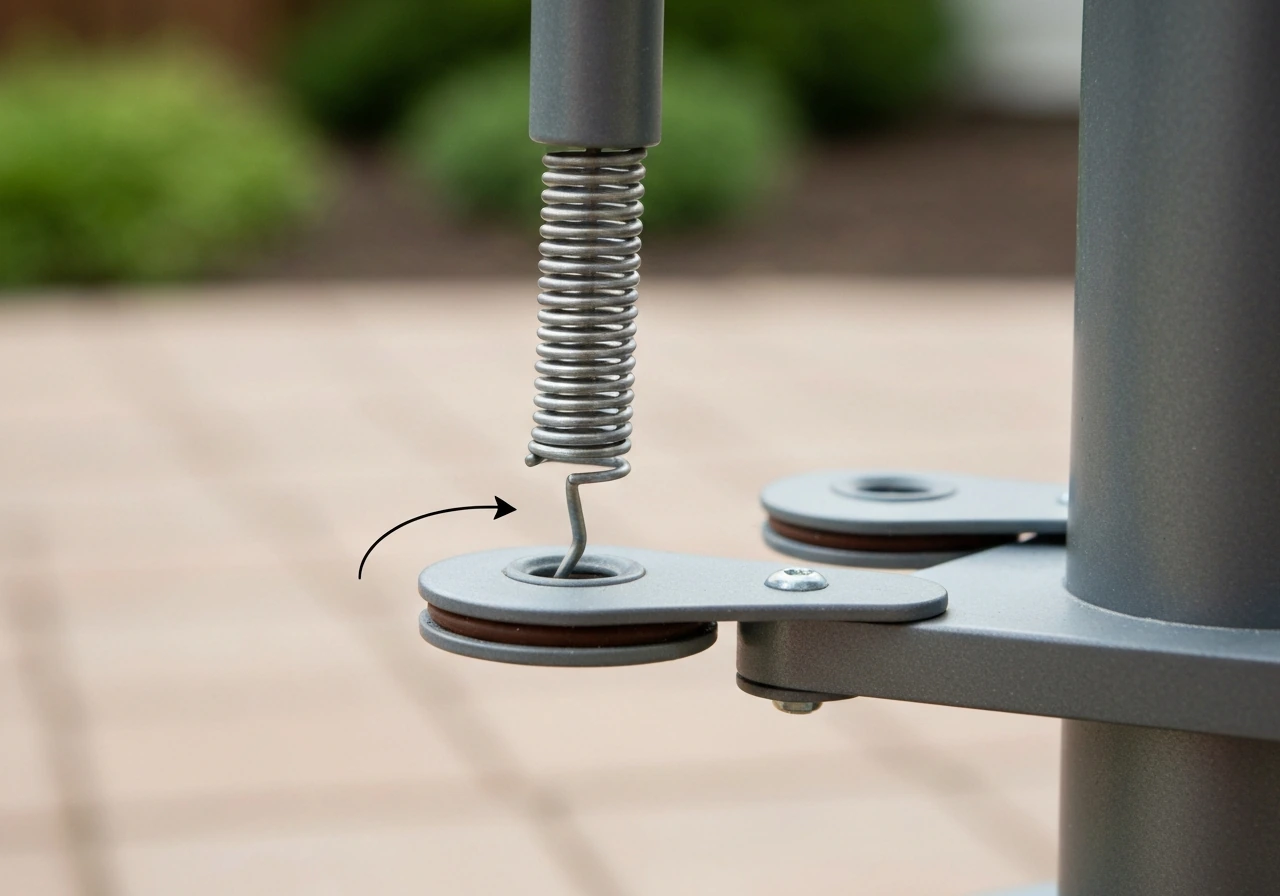
The Squirrel Buster range (by Brome) is the UK benchmark here. A spring mechanism closes off the feeding ports when a squirrel's weight is applied. Most small birds, even the heavier great tit at around 18-20g, are light enough to feed freely. You can adjust the sensitivity on most models. They're expensive (the Squirrel Buster Plus is around £50-60), but they pay for themselves quickly compared to replacing cheaper feeders that squirrels destroy.
Squirrel baffles
If you're pole-mounting feeders, a dome or wrap-around baffle fitted below the feeder station is essential. The baffle needs to be at least 45cm wide and positioned so the top is at least 1.2m from the ground. Squirrels can jump up to around 1.5m vertically and 2.5m horizontally, so also keep feeders well away from trees, fences, and sheds. The Gardman Squirrel Baffle and the Jacobi Jayne pole baffle are widely available in the UK.
Cage feeders as a deterrent to larger birds
The cage on a caged feeder doesn't stop squirrels directly (they can grip the cage and shake it), but it does stop pigeons, jackdaws, and starlings from landing on the feeder itself. If you're combining a squirrel baffle on your pole with a caged feeder on top, you've addressed most of the common problems in one setup.
Managing ground feeding and rats
If seed falls to the ground from your feeders, it will attract rats, wood mice, and more pigeons. Use a seed catcher tray fitted below the feeder to intercept fallen seed, or simply sweep up regularly. Avoid putting seed directly on the ground if rats are a known local issue. Some keepers remove their feeders for a week or two periodically to let the area clear and discourage rodents from establishing routes to your garden.
Where to place and how to mount your feeders
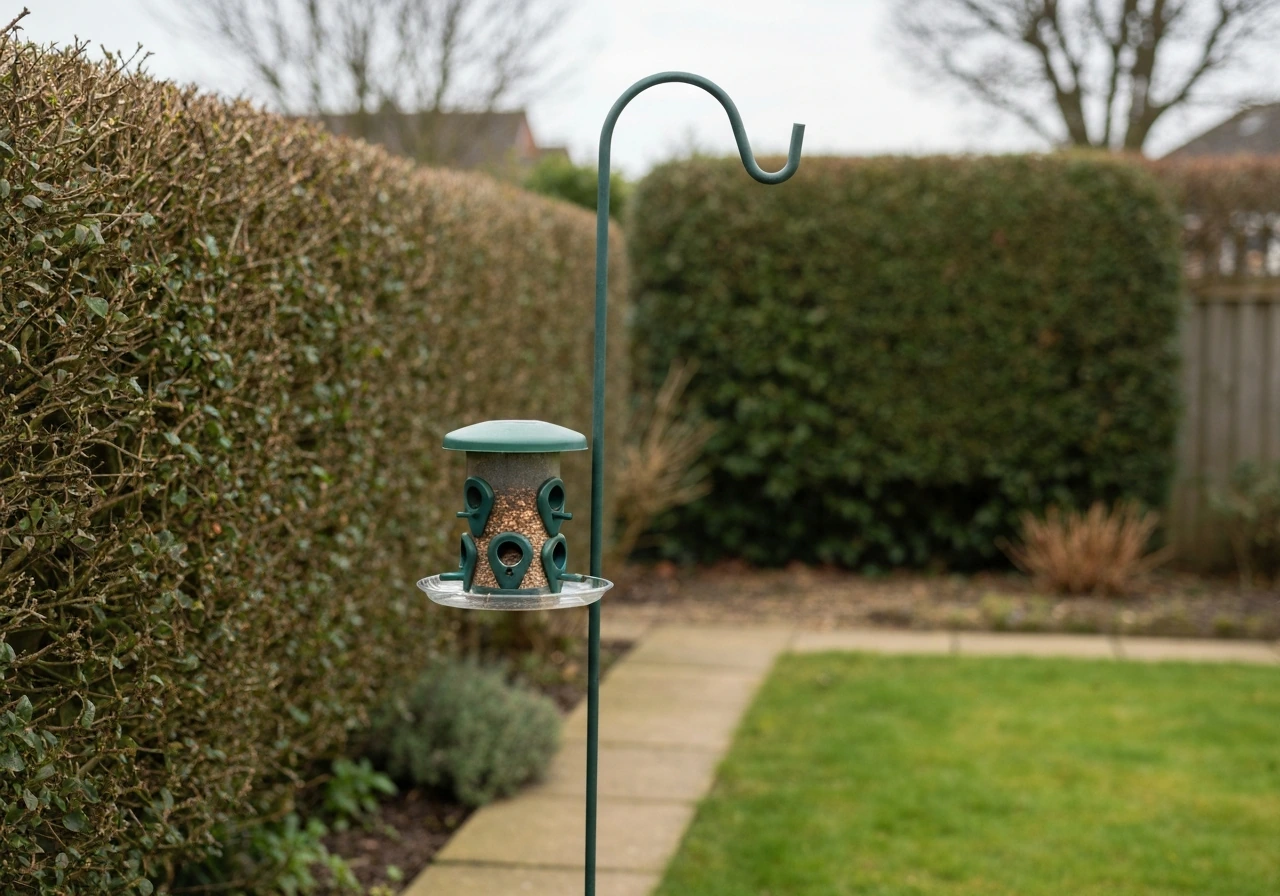
Placement affects both which birds use your feeder and how safe they feel doing it. Small birds like blue tits and goldfinches prefer feeders that are sheltered but not completely enclosed, ideally 1.5-2m off the ground, within 2-3m of cover (a hedge or shrub they can retreat to), but not so close to a fence that squirrels can jump across.
- Hang feeders at least 1.5m from the ground to keep them out of easy reach of cats
- Position within 2-3m of a hedge, shrub, or tree so small birds have an escape route, but not directly overhanging so squirrels can drop down
- Keep feeders at least 2.5m horizontally from any fence, wall, or tree that squirrels could jump from
- Avoid placing feeders directly in front of windows to prevent bird strike, or use a window feeder with a close-proximity mount (birds are less likely to collide when very close to glass)
- Rotate feeder positions every few weeks to prevent droppings and contaminated seed building up in one spot, as the RSPB specifically advises this to reduce disease transmission risk
Pole vs. hanging: which is better?
Hanging feeders (from a branch or bracket) are simpler to set up and let the feeder swing, which can deter heavier birds and squirrels somewhat. Pole-mounted setups let you add a squirrel baffle and run multiple feeders at different heights, which is better for attracting a range of small bird species. A good feeder station with a central pole, horizontal arms, and a base baffle is often the tidiest and most effective solution for a dedicated small-bird setup. The RSPB and CJ Wildlife both sell feeder stations suited to UK gardens.
Weather-proofing in the UK
UK weather means your feeder will spend a lot of time in rain. Nyjer seed in particular clumps and blocks ports when wet. Look for feeders with drainage holes in the base and weather guards (dome covers that sit above the feeder). A dome also gives small birds a dry feeding spot and deters pigeons from hovering above. Powder-coated steel and UV-stable polycarbonate hold up far better than cheap painted metal or thin plastic.
Cleaning, maintenance, and keeping seed fresh
This is the part most people underestimate and it really matters. Dirty feeders are a direct disease risk. blank" rel="noopener noreferrer">Trichomonosis (a parasitic disease that's devastated UK greenfinch and chaffinch populations) spreads at contaminated feeding stations, particularly via wet, mouldy food on surfaces. The BTO has studied this extensively, and blank" rel="noopener noreferrer">the RSPB's current guidance is to clean feeders and water baths at least once a week.
Weekly cleaning routine
- Empty any remaining seed from the feeder completely
- Disassemble the feeder as fully as possible (this is where easy-clean designs earn their keep)
- Scrub all parts with a bottle brush in hot water with a mild disinfectant (diluted bleach at 1:10 works, or a purpose-made bird feeder disinfectant like Battles Garden Bird Feeder Cleaner)
- Rinse thoroughly and allow to dry completely before refilling: wet feeders with seed introduced immediately are where mould starts
- Clean the area beneath the feeder too, sweeping up husks and seed debris
If you notice birds looking lethargic, sitting fluffed up, or struggling to swallow, the RSPB advises stopping feeding entirely for at least two weeks and emptying water baths. This is the right call even though it feels counterintuitive. Continuing to feed at an infected station spreads disease to healthy birds.
Keeping seed fresh and reducing waste
Only fill feeders with as much seed as birds will eat in two to three days, especially in wet weather. Sunflower hearts go rancid faster than whole seeds with husks. Buy seed in smaller quantities more frequently rather than huge sacks that sit in a garage for months: freshness matters more than bulk savings. Store seed in a sealed container, off the ground, in a cool dry place. The RSPB specifically flags that feeders should drain easily and must not allow old food to accumulate at the base: if you're seeing a compacted mass of wet seed at the bottom of a tube feeder, it's time to clean it out immediately regardless of where you are in your weekly routine.
Rotating feeder positions around your garden every few weeks is also genuinely useful, not just for hygiene but because it reduces the build-up of droppings and old seed in any one spot under the feeder. The RSPB recommends this specifically in the context of wet-weather contamination risk.
Putting it all together: the practical small-bird setup
For most UK gardens, a solid small-bird-only setup looks like this: a pole-mounted feeder station with a squirrel baffle, holding a caged sunflower heart feeder, a caged fat ball feeder, and a nyjer tube. This covers blue tits, great tits, coal tits, goldfinches, siskins, chaffinches, and house sparrows, while physically excluding wood pigeons, jackdaws, and starlings. Add a seed catcher tray to reduce ground mess and rotate positions monthly. Clean everything weekly. That's genuinely it.
If you're choosing where to spend money, prioritise feeder quality and squirrel-proofing over seed variety. A good feeder filled with sunflower hearts will outperform a cheap feeder filled with an expensive seed mix every time. For further reading, it's worth looking into what food types work best in UK feeders and how feeder stations compare for multi-feeder setups, both of which tie closely into getting the most from this kind of arrangement.
FAQ
Can I keep squirrels away without buying a Squirrel Buster, for a smaller budget?
Yes, start with a proper wrap-around or dome baffle sized for your pole height, and avoid placing feeders near branches or fences that squirrels can use as a launch point. However, baffles alone often fail in high squirrel pressure areas, so consider budgeting for a spring-activated port closer if you see squirrels repeatedly testing the feeder or chewing through plastic parts.
What should I do if my caged feeder still gets bullied by larger birds?
First check the cage gap is correct for the feeder design, then confirm the cage wraps down to the base with no gaps that birds can reach into from below. Also look for mounting height and angling, if the feeder can be accessed from a nearby ledge or branch, larger birds can exploit the reach even when the cage is “right”.
Is nyjer the best choice if I want goldfinches but don’t want constant refilling?
Nyjer is selective, but specialist nyjer feeders can clog when wet and may require more frequent cleaning. Use small top-up amounts, choose a feeder with good drainage and weather guards, and plan to refill more often rather than leaving a partially wet block of seed in place.
How can I tell whether seed is going bad in rainy UK weather, before birds avoid it?
Look for clumping and a compact mass at the bottom or around ports, a musty smell, and visible mould on accessible surfaces. If you see wet seed packed inside a tube base, clean it immediately even if you have not reached your usual weekly schedule.
Do I need separate feeders for each seed type, or can one feeder hold multiple seeds?
In most small-bird-focused setups, one feeder per seed type is safer for control. Mixed seed with cereals increases the odds that larger birds find an easy route to “their” preferred foods. If you must combine, use different caged feeders so the access rules and port sizes stay specific.
Will hanging feeders work as well as pole-mounted ones for small birds only?
Often yes for small birds, but hanging setups are harder to protect from squirrels and harder to manage with baffles. If you notice larger birds dominating, the advantage of a feeder station with a fixed baffle and adjustable placement becomes much clearer.
How high should I mount feeders to favour small birds but still keep them safe?
Aim for roughly 1.5 to 2m when birds are using nearby cover, and keep feeders well away from fences, trees, and sheds that give squirrels a route. If bigger birds are still managing access, raise the feeder slightly and increase clearance from any “landing” points.
Should I stop feeding immediately if I notice one sick-looking bird?
If you see signs consistent with disease risk, such as lethargy, fluffed-up posture, or trouble swallowing, stop feeding and empty water baths for at least a couple of weeks, then clean thoroughly before restarting. Don’t assume it’s one-off, contaminated stations can affect other birds quickly.
Is it okay to leave leftover seed in place between cleanings?
For most small-bird-only setups, no. Use enough seed to last about two to three days, then refill. Leaving seed longer increases mould and bacteria risk, especially when ports get wet and seed bridges or compacts inside the feeder.
What’s the best way to reduce mess on the ground if rats are a problem?
Use a seed catcher tray under the feeder, remove fallen seed promptly, and avoid ever putting seed directly on bare ground. If rats are established, temporarily removing feeders for a week or two can help break their routines while you keep the area clean.
Do I still need to rotate feeder positions if I’m cleaning weekly?
Rotation still helps. Even with weekly cleaning, droppings and old seed can accumulate in one specific spot, so moving feeders every few weeks reduces localized contamination and improves hygiene around high-traffic areas.
Can I attract house sparrows and dunnocks with the same “small birds only” feeders?
Often yes, house sparrows can use caged seed tubes with sunflower hearts, but dunnocks may prefer ground-level or low shrubs for foraging safety. To support dunnocks without increasing risk from larger birds, pair your feeder setup with cover and avoid tray-feeding that opens access to bigger species.
Why are my tube feeders clogging, especially with nyjer?
Nyjer and similar fine seeds can clump when repeatedly wet and then dry. Choose feeders with drainage holes and weather guards, empty and clean promptly when you see port blockage, and avoid filling during heavy rain periods.
How do I know whether a “caged” feeder is actually stopping access from below?
Check for a cage that wraps around and covers the base area, not just the sides. If there are open gaps near the bottom tray, larger birds may reach seed from below or perch on the feeder frame to access ports indirectly.
Next Article
Best Bird Feeder Station UK: Buying Guide for Your Garden
Choose the best UK bird feeder station: types for your target species, anti-squirrel tips, weatherproofing and setup, pl