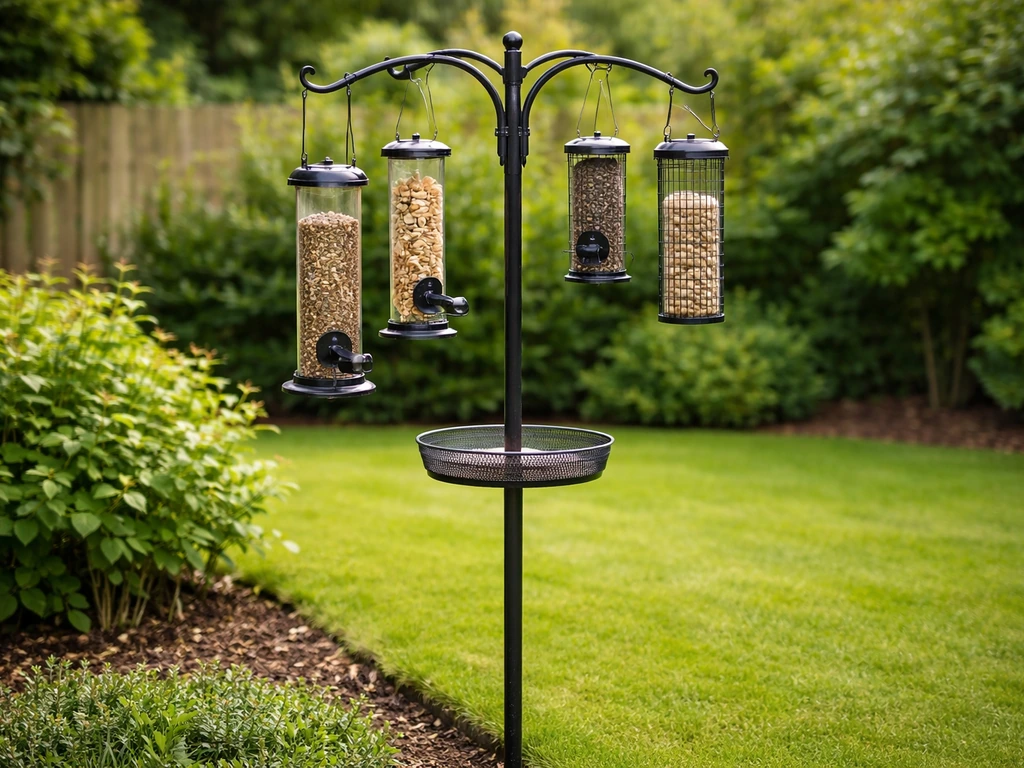
The best bird feeder station for a UK garden is a multi-armed metal pole system loaded with a mix of feeder types: a seed tube, a peanut mesh feeder, a suet cage, and ideally a nyjer feeder if you want goldfinches. A weight-activated squirrel-proof feeder on at least one port makes a huge difference if you have grey squirrels, which most UK gardens do. Place it in open lawn, at least 2 metres from fences or hedges, and you'll have tits, finches, sparrows, and nuthatches visiting within days.
Best Bird Feeder Station UK: Buying Guide for Your Garden
Marcus Holloway
5 Jun 2026
What 'best bird feeder station' actually means in a UK garden
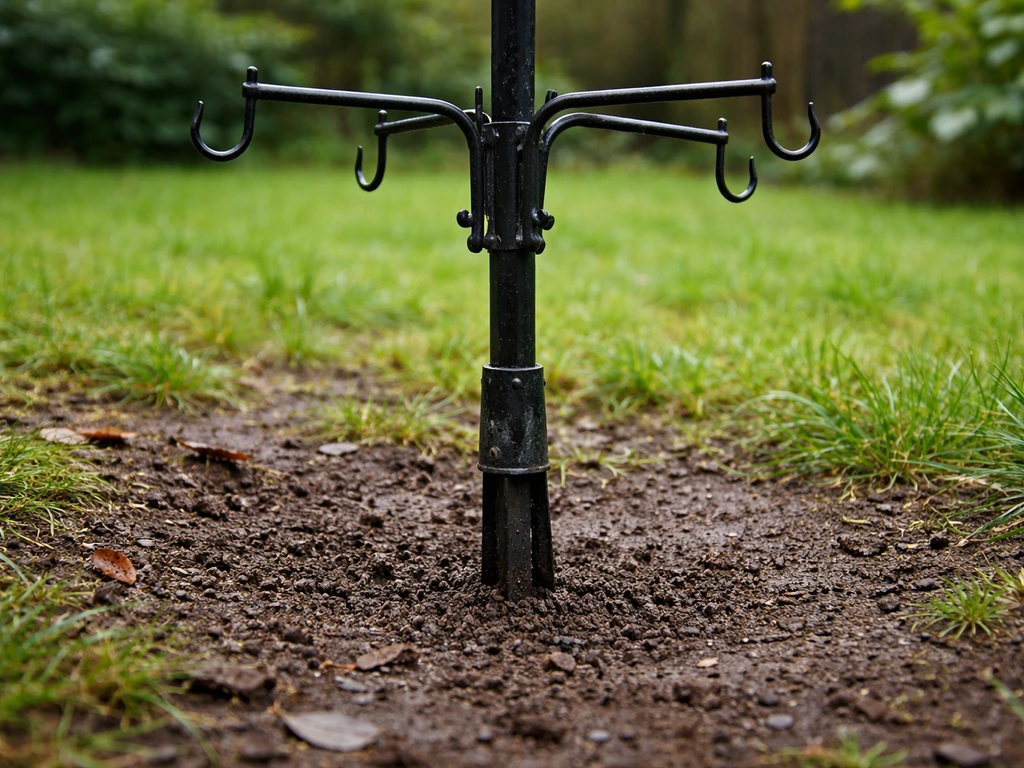
A bird feeder station in the UK context is a freestanding pole system, usually spiked into the ground or weighted at the base, with multiple arms or hooks that hold several individual feeders at once. It's not a single feeder. That distinction matters because the 'best' station is rarely just the most expensive or the most feature-packed. It's the one that matches your garden size, the species you want to attract, and the pests you're dealing with every morning.
In the UK, 'best' specifically means it has to handle weather. Rain is the main enemy of bird food. Sunflower hearts clump into a solid mass in a leaky feeder. Suet pellets dissolve. Nyjer seed molds. A good UK feeder station uses powder-coated or galvanised steel poles, feeders with drainage ports, and feeders made from UV-stable polycarbonate or metal rather than cheap transparent plastic that yellows and cracks after one winter. Beyond weather, the real-world 'best' also means easy cleaning (because hygiene is genuinely important, not just nice to have), sensible capacity, and at least one mechanism to deal with squirrels.
Matching your feeder station to the birds you want
The feeder types you hang on your station determine which birds show up. This is the most important decision most people skip when they buy a station kit and just fill everything with generic wild bird mix.
Seed feeders (tube feeders)
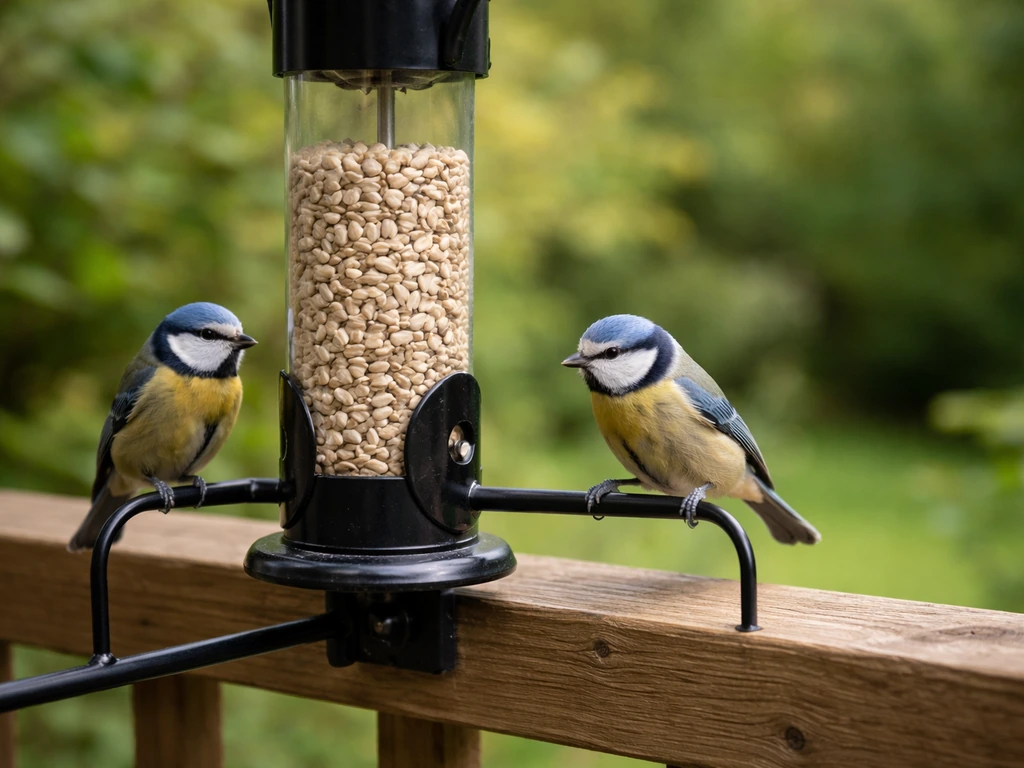
A standard tube feeder filled with sunflower hearts is your biggest draw. Blue tits, great tits, coal tits, house sparrows, chaffinches, and greenfinches all use them. Sunflower hearts are hulled, so there's no mess of shells under the feeder, and the RSPB specifically names finches like chaffinches and greenfinches as enthusiastic sunflower heart feeders. The RSPB also connects sunflower hearts and feeder choice to finches, naming chaffinches and greenfinches as enthusiastic sunflower heart feeders sunflower hearts as enthusiastic sunflower heart feeders. Avoid cheap mixed seed in tube feeders because birds will throw out everything they don't want, which creates a pile of waste beneath the station that attracts rodents.
Peanut feeders (rigid mesh)
Peanuts should only ever go in a rigid metal mesh feeder, not a tube feeder. The RSPB is clear on this: the mesh must prevent large pieces from being pulled free, because whole or large chunks of peanut are a choking hazard to nestlings if adult birds carry them off. Fine mesh feeders let birds peck out small fragments safely. Nuthatches, woodpeckers, and tits love peanut feeders and will visit repeatedly.
Nyjer (niger) feeders
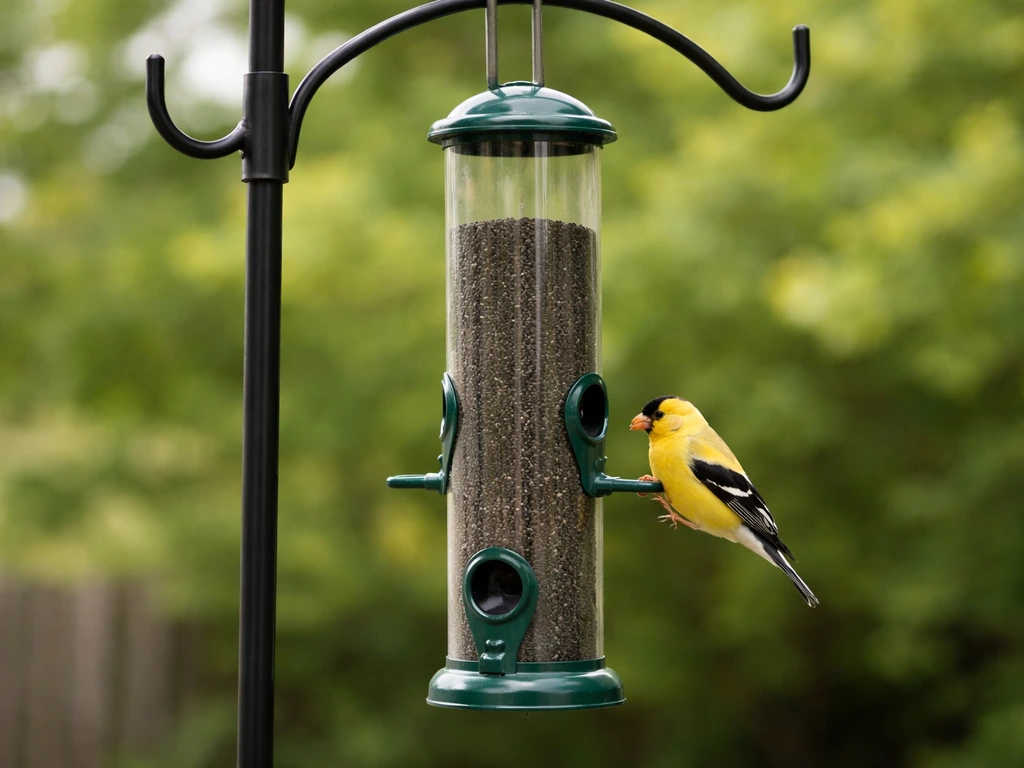
If goldfinches are your target, a dedicated nyjer feeder is non-negotiable. The Woodland Trust describes goldfinches as 'particularly attracted' to niger seeds, and I've seen this play out repeatedly: a nyjer feeder with the right fine ports will have goldfinches within two or three days in most UK gardens where the species is present. Greenfinches and redpolls also visit nyjer feeders. The key is the tiny port size; standard seed feeder ports are too large for nyjer and the seed falls straight out.
Suet feeders and fat ball cages
Suet feeders (caged feeders holding suet blocks or fat balls) are high-calorie options that attract robins, starlings, woodpeckers, and tits, especially in autumn and winter. Suet is the most weather-sensitive food at a station: cheap fat balls go rancid in warm weather and fall apart in heavy rain. Use suet cakes in a covered cage feeder or look for stations that include a covered suet feeder specifically designed for UK weather.
Bird tables as part of a station
Some feeder stations include a small platform or tray at the base for ground-feeding species like dunnocks, robins, and blackbirds. This is worth having, but the RSPB and BTO both flag flat surfaces as the highest-risk format for disease transmission because contaminated food and droppings accumulate and are accessible to multiple birds. If your station includes a tray, clean it every two to three days and never let food sit in standing water on it.
UK-specific features worth paying for
UK weather puts feeder stations through a lot. Here's what actually matters when you're reading product listings:
- Powder-coated or galvanised steel poles: bare steel rusts within a season. Powder coating or galvanising is the minimum standard for a UK garden pole.
- Drainage holes in feeders: a seed tube with no drainage holes at the base will turn sunflower hearts into a damp, compacted block after a day of rain. Look for small drainage ports at the base of seed tubes.
- UV-stable polycarbonate or metal tubes: cheap clear plastic yellows, becomes brittle, and cracks. Quality polycarbonate stays clear and flexible through temperature swings.
- Tight-fitting lids and ports: rain gets in through loose ports and lids. Good feeders have a snug but accessible fit so refilling is easy but rain can't pool inside.
- Wide feeder spacing on the pole arms: arms that are too close together mean feeders swing and collide in wind, which puts birds off and damages feeders.
- Easy-clean design: the RSPB recommends cleaning with non-toxic disinfectant like Ark-Klens or a mild 5% bleach solution. Feeders with smooth internal surfaces, removable bases, and no sharp internal edges are dramatically easier to clean properly.
On the cleaning point: this is not optional. Unhygienic feeding stations spread disease quickly between birds, as the RSPB explicitly warns. Greenfinch trichomonosis is the most visible example in UK gardens. A station you can't clean efficiently is a station you won't clean often enough, so design for cleanability before you buy.
Dealing with squirrels, rats, and bully birds
This is where most UK gardeners lose patience with feeder stations. Grey squirrels will destroy a cheap plastic tube feeder in under an hour. Rats are attracted by spilled seed beneath the station. Wood pigeons and starlings can monopolise feeders and drive smaller birds away. None of these problems are unsolvable, but each needs a different approach.
Squirrel-proofing
Weight-activated feeders are the most reliable squirrel deterrent available in the UK. The Squirrel Buster range uses a weight-sensitive outer cage: when a squirrel lands (typically over 100g), the outer cage drops and closes the feeding ports. It's genuinely chew-proof too, unlike plastic feeders that squirrels simply bite through. The same mechanism also shuts out heavier birds like wood pigeons. The Roamwild PestOff uses a similar approach with weight-activated shutters that close instantly when a pest lands and reopen automatically when it leaves. Both designs work without batteries or electricity.
For a full station rather than a single feeder, a pole-mounted squirrel baffle below the feeder arms is an effective secondary defence. A smooth metal cone baffle positioned about 1.5 metres up the pole stops squirrels climbing from below. Combined with weight-activated feeders, this gives you two layers of deterrence.
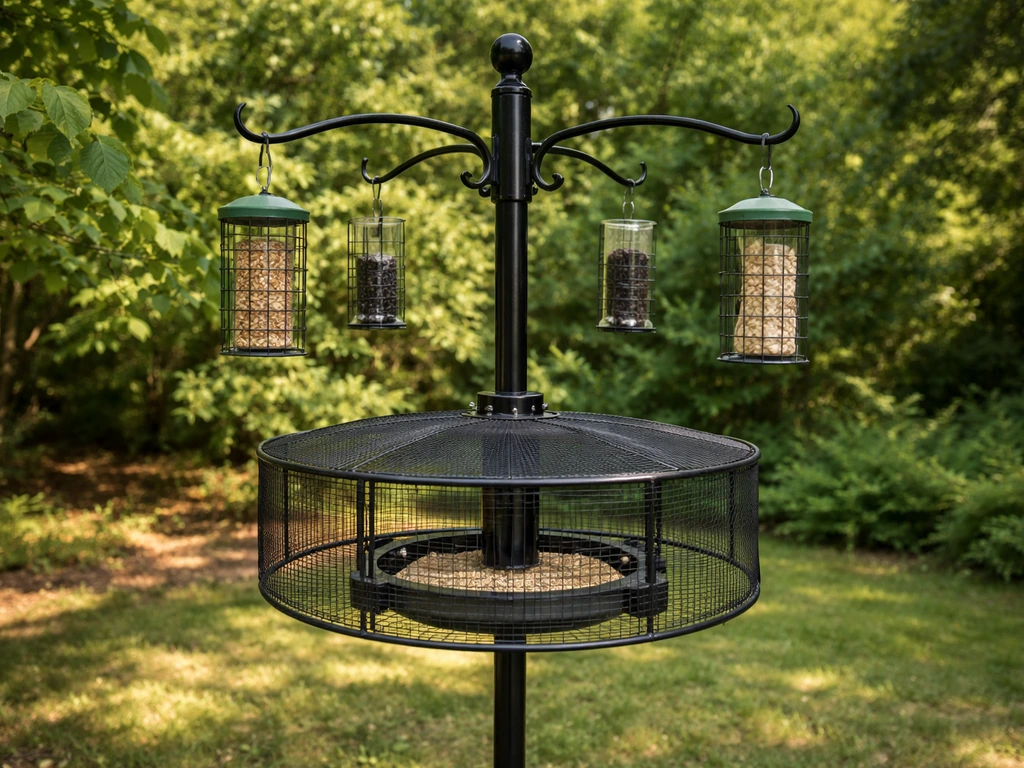
Cage-style feeder stations, like those in the Nuttery range, take a different approach: a tough steel cage surrounds the feeders entirely. Squirrels can't reach through the cage apertures, but small birds pass through freely. These work well for tits and sparrows but exclude larger desirable species like woodpeckers, so they suit small-bird-focused setups.
Rat prevention
Rats come for spilled food beneath the station, not usually for the feeders themselves. The single best prevention is using feeders with tray catchers underneath and switching to no-mess food: sunflower hearts, suet pellets, and peanuts in rigid mesh leave very little waste. Clearing dropped food and droppings daily from beneath the station is part of the RSPB's core hygiene guidance, and it also eliminates the ground-level food source that draws rodents in.
Bully birds (starlings, wood pigeons)
Starlings are the UK's most disruptive feeder visitors. They arrive in groups and empty suet and fat ball feeders in minutes. The most practical solution is caged suet feeders, where the cage aperture is too small for a starling but accessible to smaller birds. For seed feeders, weight-activated designs block wood pigeons (which typically weigh 300 to 500g, well above the closure threshold on a Squirrel Buster or PestOff). You won't stop determined starlings at seed feeders easily, but reducing the suet offering via cage protection makes a significant difference.
Where and how high to mount your station
Placement is underrated. I've seen well-equipped feeder stations that barely get any visitors simply because they were put in the wrong spot.
The RSPB's guidance is to place feeders where birds can see predators approaching but can also quickly reach cover. That means open lawn or open ground, not squeezed against a fence or hedge. Aim for at least 2 metres from any fence, wall, or dense shrub. The reason is partly safety (cats can launch from cover), and partly that squirrels jump from these surfaces onto your feeders. At the same time, don't place a station in the middle of a completely exposed garden far from any trees or shrubs: birds want the option to dash to safety, so having a tree or dense hedge within 3 to 5 metres is ideal.
Height matters more than people think. Most pole systems position feeders at 1.5 to 2 metres high, which is the practical sweet spot: high enough to reduce cat reach, low enough for you to refill without a stepladder. If you're using a baffle to prevent squirrels climbing the pole, position the baffle at around 1.5 metres up, before the first feeder arm, so squirrels can't get past it.
For small UK gardens, a compact station with two or three feeders positioned in a corner with clear sightlines works better than a large station crammed into a tight space. For larger gardens, a full four to six arm station in an open lawn position will attract more species and allow multiple birds to feed simultaneously without too much competition.
| Garden type | Recommended position | Minimum distance from cover | Pole height |
|---|---|---|---|
| Small urban garden | Open patio edge or lawn centre | 1.5m from fences | 1.5 to 1.8m feeders |
| Medium suburban garden | Open lawn, visible from a window | 2m from hedges/fences | 1.8 to 2m feeders |
| Large rural garden | Open lawn, near but not under trees | 2 to 3m from dense cover | 2m+ feeders |
| Garden with squirrel pressure | Open ground, baffle at 1.5m on pole | 2m+ from all jump surfaces | 1.8 to 2m feeders |
Top bird feeder station picks for different UK setups
There's no single 'best' station for every UK garden. Here's how I'd break it down by situation, based on the combination of features that actually make a difference:
| Situation | Best station type | Key features to prioritise | Feeders to hang |
|---|---|---|---|
| Small garden, lots of squirrels | Single or dual arm pole with Squirrel Buster feeder | Weight-activated mechanism, chew-proof build, pole baffle | Squirrel Buster seed feeder + small peanut mesh |
| Medium garden, mixed species target | 4-arm galvanised steel station | Powder-coated pole, drainage feeders, easy-clean design | Seed tube, peanut mesh, nyjer feeder, suet cage |
| Small-birds-only focus | Cage-style station (e.g., Nuttery) | Steel cage enclosure, tight aperture, anti-squirrel by design | Seed mix and peanut feeders inside cage |
| Large garden, goldfinch/finch focus | 4 to 6 arm station with dedicated nyjer port | Multiple arms, stable base, fine-port nyjer feeder included | Nyjer feeder, sunflower heart tube, suet cage |
| High starling/bully bird pressure | Standard pole station with caged suet feeder | Caged suet feeder with small apertures, weight-activated seed feeder | Caged suet, Squirrel Buster or PestOff seed feeder |
| Tech-forward birder | Standard station plus smart camera feeder | AI species ID, app connectivity, weatherproof camera | Smart camera seed feeder + supplementary suet/peanut |
The smart feeder camera option is worth mentioning for those who want to know exactly which species are visiting and when. Several camera-enabled feeders are now available in the UK that identify birds via AI and log visits to an app. They attach to standard feeder hooks, so you can add one to any existing station setup without replacing the whole pole.
If you're focused specifically on what food to put in each feeder type once your station is up, that topic is covered in detail in our guide to the best food for bird feeders in the UK. And if attracting only smaller species is the priority, our guide to the best bird feeders for small birds only in the UK covers cage and aperture-based exclusion approaches in depth. If you want to keep larger birds out while encouraging species like finches and tits, the best bird feeders for small birds only in the UK are designed around small ports and tight-access designs.
Keeping your station clean, full, and working well
Cleaning routine
The RSPB recommends cleaning feeders with a non-toxic disinfectant such as Ark-Klens or a mild 5% bleach solution, followed by a thorough rinse and air dry before refilling. For a multi-feeder station, the practical approach is to rotate through feeders: clean one or two feeders each week rather than trying to do them all at once. The RSPB also suggests moving your station slightly each week to prevent a buildup of contaminated droppings and debris on the ground beneath it. Use a long-handled brush to reach the inside of tube feeders properly. Don't shortcut the rinse step: bleach residue on feeder surfaces is harmful to birds.
Clean the ground beneath the station every few days. Dropped food and droppings accumulate quickly and are the most direct disease-transmission route between visiting birds, especially at busy stations. If you see sick or lethargic birds at your station, the RSPB's guidance is to stop feeding entirely for at least three weeks, empty all feeders, and clean everything including any bird baths nearby.
Seasonal feeding adjustments
The RSPB's current guidance frames garden bird feeding as 'feed safely, feed seasonally'. For seeds and peanuts specifically, their advice is to pause these between the start of May and the end of October. This is linked to reducing finch trichomonosis risk during the breeding season, when adult birds may carry food to chicks. Suet, fat, and live or dried mealworms can continue year-round. Adjust what you're offering by season, and only put out what birds are consuming in a day or two to avoid food sitting and going stale or mouldy.
Troubleshooting: why birds aren't visiting
If you've set up a station and birds aren't visiting within a week or two, run through these checks:
- Location: is the station too close to a fence, hedge, or wall? Move it to more open ground at least 2 metres from cover.
- Food type: generic mixed seed is often rejected by most garden birds. Switch to sunflower hearts in seed tubes and proper nyjer for finches.
- Feeder condition: old, stale, or damp food puts birds off. Empty, clean, and refill with fresh food.
- Predator presence: a local cat patrolling near the station will suppress visits for days. Reposition if you've seen cats nearby.
- Season: it can take longer for birds to discover a new station in summer when natural food is abundant. Autumn and winter bring the fastest uptake.
- Disturbance: stations near frequently-used doors, windows, or children's play areas take longer to become trusted by birds.
Attracting more species over time
The best way to increase species diversity at your station is to increase the diversity of feeder types and food. A station with only one type of feeder will only reliably draw species that use that format. Adding a nyjer feeder specifically drew goldfinches to my garden within three days of installation. Adding a suet cage in autumn brought a great spotted woodpecker that had never visited before. Each feeder type opens the door to a different set of species, so building out your station over time is a realistic strategy for experienced birders who want to expand their garden list.
For peanut feeders specifically, the RSPB recommends sticking to proper peanut feeder designs from reputable sources, as quality and safety standards vary. Our guide to the best peanut bird feeders in the UK goes into detail on which designs are safest and most durable for UK conditions. If you want to match your choices to the RSPB's approach, look for feeders designed for UK conditions and safety first best bird feeders uk rspb. If you're comparing options, see our guide to the best peanut bird feeder UK for the safest rigid mesh designs best peanut bird feeders in the UK.
FAQ
Can I use a bird feeder station in winter if I can’t clean it every day?
Yes, but only if you manage hygiene and waste. Put the station on an easy-to-clean surface, sweep up dropped seed daily if possible, and clean feeder ports weekly. If you cannot commit to regular cleaning, switch to no-mess options like hulled sunflower hearts and covered suet cages, and skip ground trays entirely.
How do I choose the best bird feeder station UK if my garden gets a lot of rain?
Aim for a station that includes drainage and UV-stable feeder parts, then add covered feeders for the most weather-sensitive foods (suet cages, suet cakes). If your station has exposed open-mesh feeding, use foods that won’t dissolve in rain, and empty and dry feeders before refilling after heavy downpours.
Can I mix sunflower hearts, peanuts, and suet in the same feeder station arms?
You usually won’t. Most tube feeders are designed for sunflower hearts or similar hulled seeds, while peanuts must be in a rigid metal mesh design. Mixing foods in the wrong feeder type increases waste under the station and can create safety risks, especially with peanuts and small birds.
Why is there so much mess and spilled seed under my feeder station?
If you see lots of shells or seed husks under tube feeders, you are likely using unsuitable seed. Switch to hulled sunflower hearts for tube feeders, and use a rigid mesh peanut feeder only for peanuts. This reduces waste that attracts rodents and helps keep the area cleaner.
What’s the best way to stop grey squirrels without giving up on feeding?
Squirrel deterrence works better as a layered system. Use weight-activated feeders on the highest-risk ports, then add a pole baffle below the arms (about 1.5 metres up). If you rely on just one defence, squirrels often find a new route quickly.
How much should I put out so the food doesn’t spoil?
Refill with a smaller quantity more often rather than topping up once. In warm weather, suet and fat can spoil quickly, and in humid weather seeds can mould. A practical rule is to add only what you expect birds to clear in 24 to 48 hours.
Is it safe to use the tray or platform on the base of a feeder station?
Use drainage-friendly feeders and avoid letting standing water collect in trays or under feeder ports. If you must use a base tray, clean it every two to three days and ensure there are no puddles. Standing water increases the chance of disease transfer between birds.
How do I stop starlings from dominating my feeder station?
It depends on the bird mix you want. Caged or small-aperture suet feeders can significantly reduce starling takeovers, while seed feeders with weight-activated shutters can help with heavier birds. For starlings specifically, prioritise cage-protected suet over uncovered fat balls.
Should I change the food in my feeder station during the summer?
No, you should usually plan for ongoing seasonal changes. Pause seeds and peanuts in the breeding season window (roughly start of May to end of October) to reduce trichomonosis risk concerns, but keep suet and mealworms available year-round. Always adjust what you offer to what birds consume quickly.
What’s the easiest cleaning routine for a multi-feeder station?
Rotate cleaning tasks. Instead of attempting every feeder in one session, clean one or two feeders per week, and keep the ground beneath the station clear on a consistent schedule. Also air-dry fully after disinfecting so you don’t trap moisture inside feeder tubes.
My station isn’t attracting birds, what should I check first?
Try relocating within the same season, not just changing food. Move the station by a few metres and choose a spot where birds can see cover nearby, while still keeping at least 2 metres from fences or dense hedges to reduce both predator ambush and squirrel jumping.
Can I add a smart feeder camera to an existing feeder station?
Yes, you can add a camera feeder to an existing pole setup, but ensure it fits the station arm height and is positioned so it won’t be blocked by other feeder parts. Prefer models that record clearly in low light and store or transmit data reliably in your garden signal conditions.
Will a larger, multi-arm station attract more species in a small UK garden?
Many people overestimate. If your garden is small, a compact two to three feeder setup in a corner with clear sightlines can outperform a large station. Too many feeders in a tight space increases competition and can reduce visits from smaller birds.