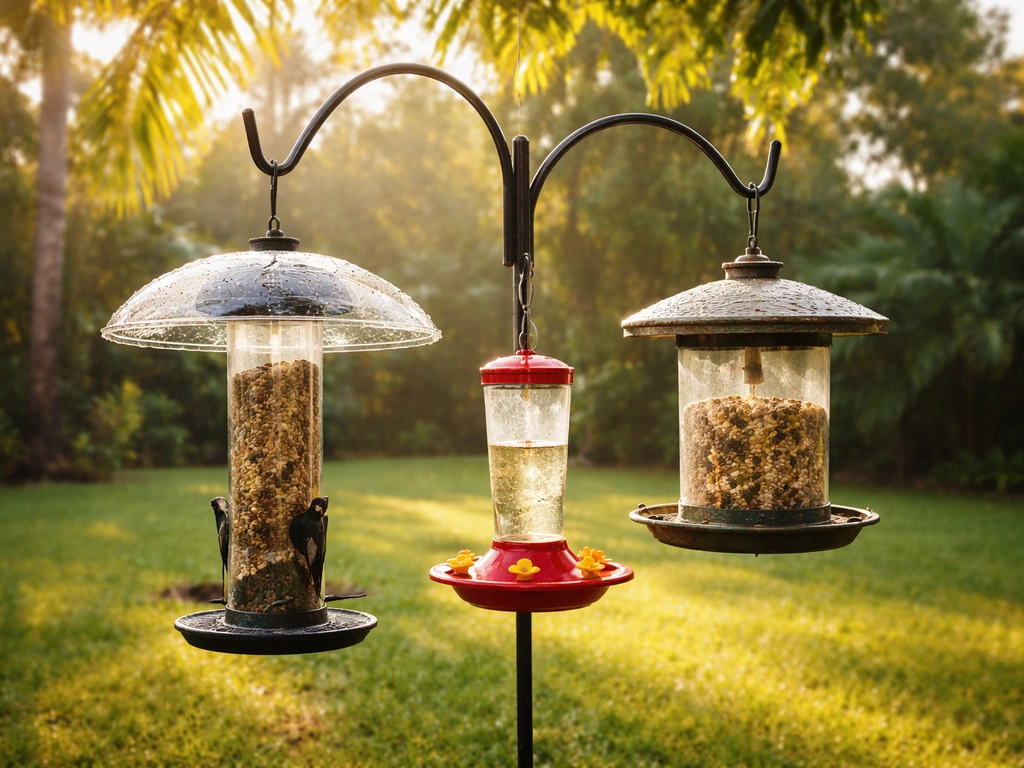
For most North Texas backyards, the Brome Squirrel Buster Standard is the single best all-around bird feeder to start with. It handles squirrels mechanically (no batteries needed), its Seed Tube Ventilation system vents heat and humidity out of the seed reservoir, it comes with a lifetime warranty, and it attracts the widest mix of songbirds you'll actually see in the DFW to Waco corridor. If your top priority is cardinals, add a hopper or platform feeder alongside it.
Best Bird Feeder for North Texas: Pick the Right One
Marcus Holloway
7 Jun 2026
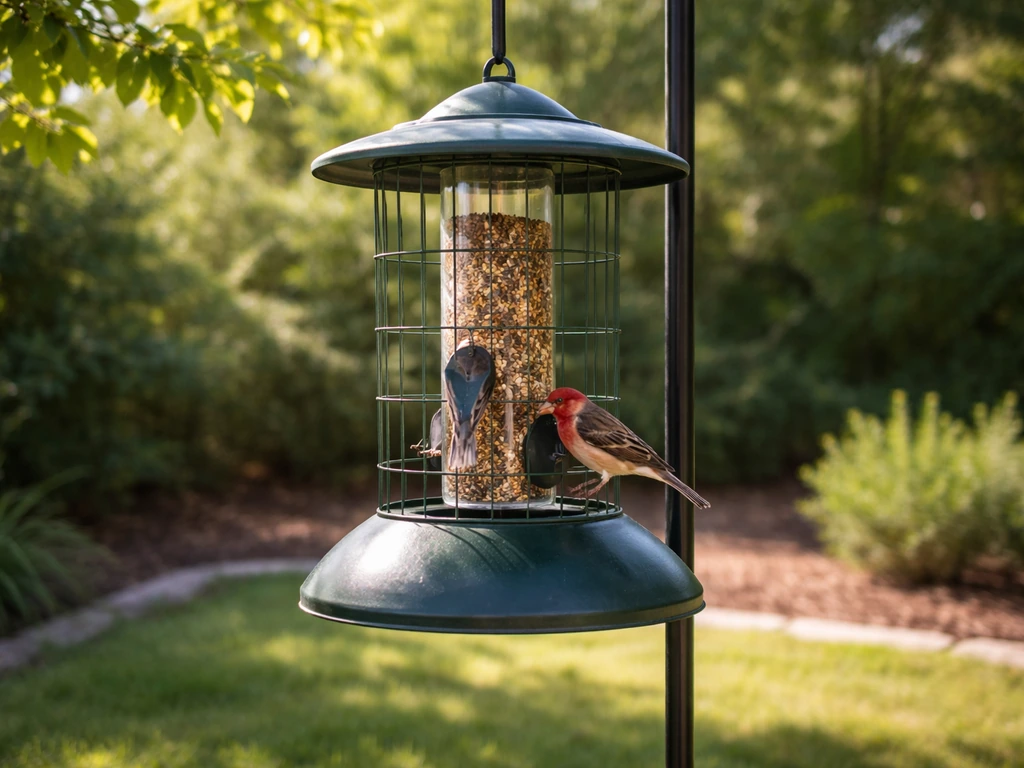
If hummingbirds are your goal, you need a separate nectar feeder entirely, cleaned every two to three days in Texas summer heat. The sections below walk through every major feeder type, the Texas conditions that will beat up cheaper gear fast, and how to stop squirrels and grackles from taking over.
For Central Florida backyards, the best bird feeders are the ones that hold up to heat, humidity, and heavy bird traffic while making it harder for squirrels to steal seed best bird feeders for central Florida.
Texas conditions that affect feeder performance
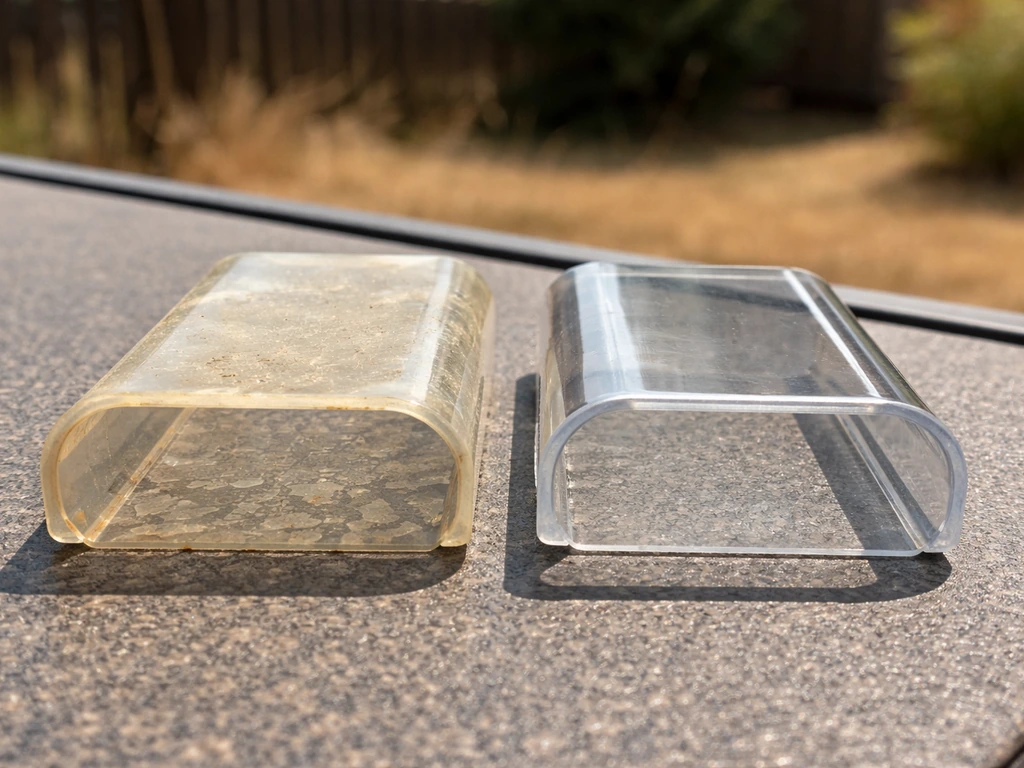
North Texas is genuinely hard on bird feeders. You're dealing with summers where temps regularly exceed 100°F, intense UV that cracks and yellows cheap plastic within a single season, wind that blows seed out of open trays and knocks lightweight feeders off hooks, occasional ice storms in winter, and humidity spikes after rain that can turn seed into a moldy brick inside a poorly ventilated tube.
Austin and central Texas share most of these same stressors, so recommendations for North Texas translate well south to the Austin area too, with minor differences in bird mix and rainfall patterns. The differences between North Texas, central Texas, and the coastal climates you'd find in Florida or the Carolinas are significant enough that feeders that work well in those regions won't always hold up the same way here.
If you're trying to translate these ideas to warmer coastal zones, also check the best bird feeders for south florida to match the local bird mix and wear patterns.
The main material failures I've seen in Texas: flimsy polycarbonate that cracks at the ports from UV exposure, wood hoppers that warp and trap moisture (inviting mold), and rubber gaskets that harden and leak in heat. What survives: UV-stabilized polycarbonate (Droll Yankees markets this specifically on their tube feeder line), powder-coated steel cages, and heavy recycled-plastic construction. Metal hardware throughout is better than plastic clips, especially on the hanging mechanisms that see daily wind stress.
Seed spoilage is the other big Texas-specific problem. Heat accelerates fermentation and mold growth inside feeders faster than most packaging suggests. Texas Parks and Wildlife biologists recommend cleaning feeders at least once every two weeks under normal conditions, and more often if there's been heavy rain or disease reports in your area. The U.S. Fish and Wildlife Service echoes this guidance and specifically calls out sweeping up old seed under feeders, because decomposing hulls on the ground are a disease and rodent magnet. In Texas summer, I clean my feeders closer to weekly when birds are hammering them every day.
Choose the right feeder type for your target birds
The feeder type matters more than the brand when it comes to which birds actually show up. Pick your feeder based on the birds you want, then filter by durability and squirrel resistance from there. If you want the best bird feeders for South Carolina, focus on weatherproofing, cleaning schedules, and feeder styles that match the birds common to coastal and inland areas.
| Feeder Type | Best For | North Texas Birds Attracted | Main Trade-off |
|---|---|---|---|
| Tube feeder (squirrel-resistant) | Seed-eaters, general mix | House finches, chickadees, titmice, nuthatches | Cardinals struggle with small perches |
| Hopper feeder | Wider species mix | Cardinals, jays, titmice, sparrows, grackles | Open to squirrels and large pest birds unless caged |
| Platform/tray feeder | Ground-feeding species | Mourning doves, white-winged doves, cardinals, sparrows | Fast seed spoilage in rain and heat; no squirrel protection |
| Suet cage | Woodpeckers and clinging birds | Downy, hairy, red-bellied woodpeckers, nuthatches | Suet melts above 90°F; need suet cakes rated for summer heat |
| Nyjer/thistle tube | Finches | American goldfinch, lesser goldfinch, pine siskin | Very small ports; need thorough cleaning to prevent mold |
| Hummingbird nectar feeder | Hummingbirds | Ruby-throated (migration), black-chinned, buff-bellied | Must clean every 2-3 days in summer; nectar ferments fast |
| Smart/AI camera feeder | Birders who want ID and video | Any species depending on seed type | Requires 2.4GHz Wi-Fi outdoors; ongoing app dependency |
Cardinals: what they actually need
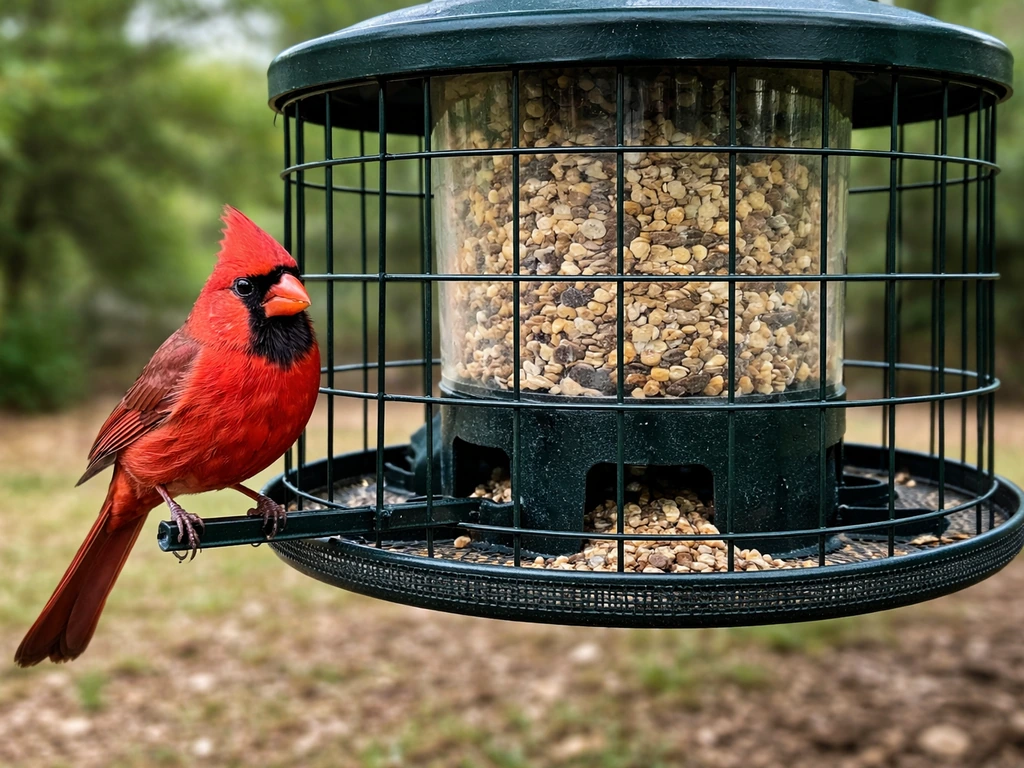
Cardinals are one of the most-wanted birds in North Texas, and they have a specific problem with standard tube feeders: the perches are too short and the ports too small for a bird that large to feed comfortably. If cardinals are your priority, a hopper feeder with a wide ledge or a tray feeder is a much better choice than a tube. Pair it with safflower seed, which cardinals love but squirrels and grackles tend to avoid. A caged hopper, with a wire mesh surround that lets cardinals in but blocks larger birds and squirrels, is the cleanest solution if pest pressure is high.
Woodpeckers: suet in Texas summer
Downy, hairy, and red-bellied woodpeckers are regulars in North Texas yards with mature trees. They want suet, but standard suet cakes go rancid fast when temps are over 90°F, which in Texas is most of late spring through early fall. Use no-melt or summer-blend suet cakes specifically formulated for high temperatures, and hang the suet cage in a shaded spot. A simple wire suet cage (the cheap double-cake style) works fine; you don't need anything fancy here.
Finches: nyjer seed and small-port tube feeders
Lesser goldfinches are the finch you're most likely to see in North Texas year-round, with American goldfinches more common in winter. Both want nyjer (thistle) seed in a small-port tube feeder. The ports on nyjer feeders are intentionally tiny, which helps exclude larger birds, but it also means seed can clump and mold inside if you're not cleaning thoroughly. Project FeederWatch specifically flags tube feeders as higher risk for disease transmission because eye discharge from sick birds can contaminate the ports. Clean nyjer feeders weekly in summer, and tap the tube to check for clumped seed before refilling.
Hummingbirds: nectar, schedule, and feeder choice
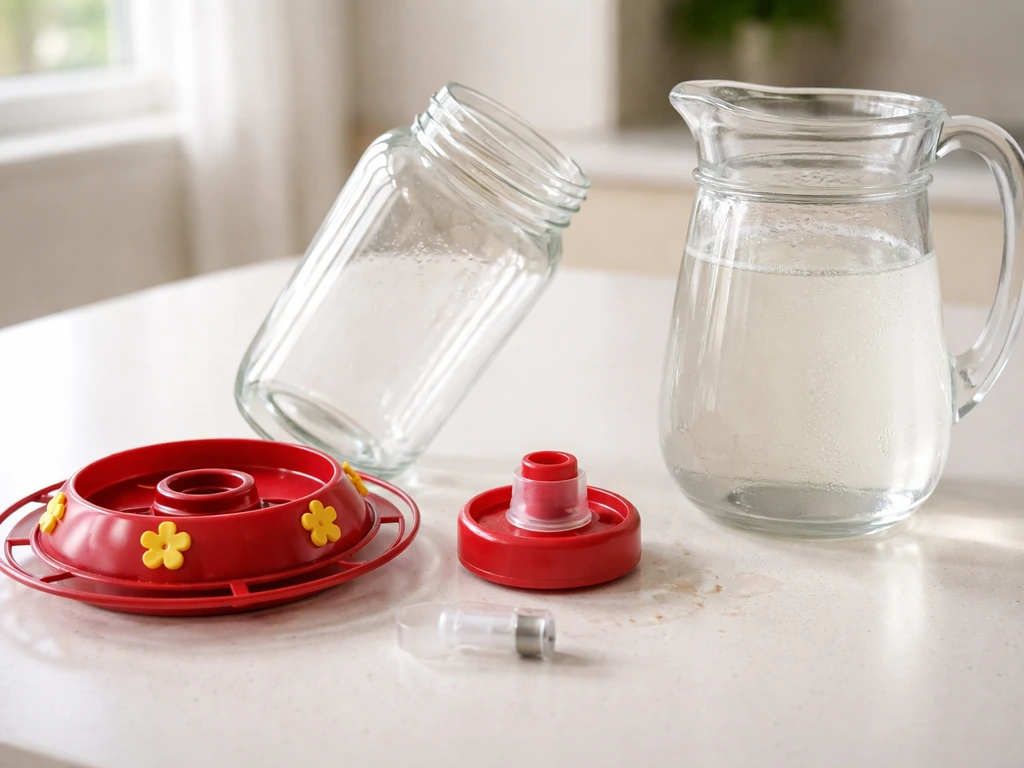
North Texas gets ruby-throated hummingbirds during spring and fall migration, and black-chinned hummingbirds nest in parts of the region through summer. blank" rel="noopener noreferrer">Make nectar at a ratio of 1 part white granulated sugar to 4 parts water. Boiling the water helps slow fermentation, and extra nectar stores in the refrigerator for up to one week. In Texas summer heat, change the nectar every two to three days, not weekly. Fermenting nectar can harm hummingbirds, and mold builds up in feeders that sit too long in the heat. A feeder with a wide mouth or removable parts is much easier to scrub than a sealed glass bottle style. Hang it in partial shade to extend nectar life.
Top feeder recommendations for North and Central Texas by use case
These picks are based on what actually holds up in Texas conditions and what matches the bird species you're most likely to attract. Prices and availability shift, but the models and categories below are the ones I'd put in my own yard today.
Best overall: Brome Squirrel Buster Standard
This is the feeder I recommend first to almost everyone in North Texas. If you're shopping beyond Texas, these same feeder types and features are the foundation for the best bird feeders for North Carolina. The squirrel-proofing is mechanical: the weight of a squirrel closes the seed ports, no batteries or electronics involved. It holds 1.
3 pounds of seed across four ports, which is enough capacity for a busy feeder without seed sitting long enough to spoil. The Seed Tube Ventilation system (top vents that let hot air and humidity escape) is a real advantage in Texas summers, where a sealed tube feeder can turn seed into a damp, clumped mess after a hot week.
Brome backs it with a lifetime warranty against manufacturing defects. The main limitation is that cardinals can find the perches awkward. If you want cardinals too, add a separate platform or hopper.
Best for cardinals and jays: caged hopper feeder
A caged hopper, where a wire mesh surrounds a seed reservoir with a wide feeding ledge, is the best all-rounder for attracting cardinals, jays, and titmice while still blocking squirrels. Look for powder-coated steel cages and a metal roof, not wood. Wood roofs warp and hold moisture in Texas. Perky-Pet and Woodlink both make caged hopper options at reasonable prices. Fill with safflower seed to passively discourage grackles while still pulling in cardinals. The downside is you'll need to clean a hopper more carefully than a tube, since the flat seed tray at the bottom is where spoiled seed accumulates.
Best for finches: Droll Yankees tube feeder with nyjer
Droll Yankees builds their tube feeders from UV-stabilized polycarbonate, which genuinely holds up better in Texas sun than the standard clear acrylic you'll find on budget options. Their tube feeders come with a lifetime warranty on defective parts. For finches, fill with nyjer seed. The ports stay cleaner than on cheaper feeders, and the UV-stabilized tube doesn't yellow and become brittle after one summer. Lesser goldfinches will find it within a few days if they're in your area.
Best hummingbird feeder: wide-mouth glass or easy-clean plastic
For hummingbirds, prioritize ease of cleaning over aesthetics. A feeder you can fully disassemble and scrub in under five minutes is one you'll actually clean every two to three days, which is what North Texas summer demands. First Nature and Aspects HummZinger are both good picks: wide-mouth openings, dishwasher-safe parts, no hard-to-reach crevices. Avoid the bottle-style feeders with tiny openings at the base, they're a cleaning nightmare and mold builds up fast in Texas heat.
Best for woodpeckers: basic wire suet cage with summer suet
Don't overthink the suet cage. A standard coated wire double-cake cage works fine. The variable that matters is the suet itself: buy no-melt suet rated for high temperatures, available at most Wild Birds Unlimited locations and online. Hang it in shade. If you see the suet going soft and greasy, it's time to switch to a harder no-melt formula or stop offering suet until fall.
Weatherproofing, durability, and cleaning for hot, windy, sunny climates
The single most important thing you can do to protect any feeder in Texas is clean it consistently. Texas Parks and Wildlife biologists specifically call out the risk of salmonella from moldy or decomposing seed, and recommend cleaning every two weeks at a minimum. In summer, with high bird traffic and heat accelerating spoilage, once a week is more realistic. The cleaning process is straightforward: disassemble the feeder, soak in a diluted bleach solution (one part bleach to nine parts water) for a few minutes, scrub with a dedicated feeder brush, rinse thoroughly, and let it dry completely before refilling. Wet seed in a feeder is a fast path to mold.
On materials: UV-stabilized polycarbonate outlasts standard clear acrylic or untreated plastic by several seasons in Texas sun. Metal components (steel cages, powder-coated frames, metal roofs on hoppers) hold up much better than wood in the heat-and-humidity cycles of North Texas summers and the occasional ice event in winter. Avoid feeders with rubber or silicone gaskets as primary structural components; they harden and crack in extreme heat. For hanging hardware, use powder-coated steel hooks or actual chain, not the plastic S-hooks that come with many budget feeders.
Wind is an underrated problem in North Texas. A full tube feeder can swing hard enough in a sustained wind gust to dump seed or pop off a poorly designed bottom cap. Weight matters here: heavier feeders on shorter, sturdier hooks are more stable than lightweight feeders on long chains. A pole-mount is generally more stable than a hanging hook in windy yards.
Mounting and placement for best visits and fewer problems
Placement is one of the most overlooked parts of backyard birding. You can have the right feeder, the right seed, and still get almost no activity because the location is wrong. Here are the things that matter most:
- Height: aim for feeders between five and six feet off the ground. This puts them in a comfortable range for most songbirds, gives you easy access for cleaning and refilling, and is the right zone for pole-mounted baffles to work effectively.
- Distance from cover: birds want nearby shrubs or trees to retreat to quickly, but feeders right against a dense shrub give squirrels easy access and ambush cover for cats. A placement about 10 feet from heavy cover is a reasonable middle ground.
- Distance from jump points: squirrels can jump roughly 10 feet horizontally from a tree, fence, or structure. Wild Birds Unlimited's placement guidance puts the ideal feeder location at least 10 feet from any surface a squirrel can launch from.
- Sun and shade: partial shade extends seed and nectar life in Texas summer. Full-sun placement accelerates spoilage and makes hummingbird nectar ferment in days rather than a week. Morning sun with afternoon shade is ideal.
- Window distance: place feeders either very close to windows (within three feet, so birds can't build up dangerous flight speed) or more than 10 feet away. The mid-range distance is where most window strikes happen.
- Visibility to you: you want to actually see your feeders from inside. Pick a location with a sightline from a regular sitting spot or kitchen window, or you'll stop monitoring them.
Predator-proofing: squirrels, grackles, and seed mess solutions
Grackles are a specifically North Texas problem that birders in Florida or the Carolinas don't deal with at the same scale. Because Florida has its own heat, humidity, and pest pressure, the best bird feeder for Florida is often one built for durability plus easy cleaning. Great-tailed grackles travel in flocks and can empty a feeder in minutes. Squirrels are universal. Both problems have solutions, but they require different approaches.
Stopping squirrels
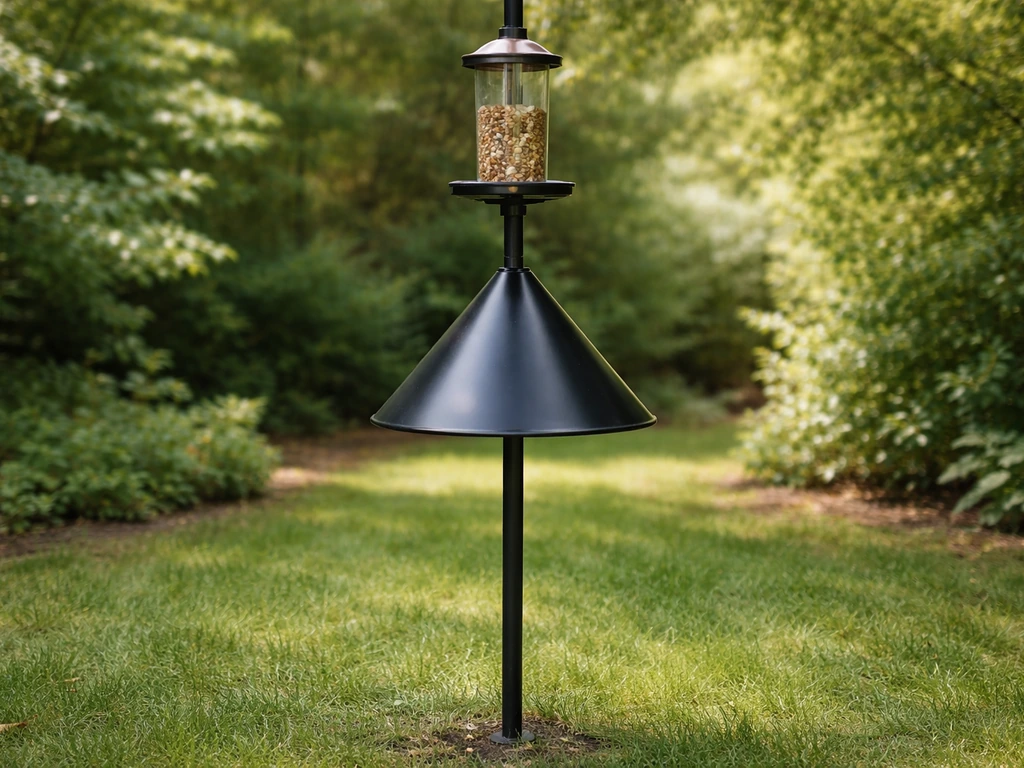
The most reliable squirrel solution is a pole-mounted feeder with a baffle below it. Audubon recommends a cone-shaped baffle at least 17 inches in diameter, mounted so the top of the baffle is about five feet high, with the feeder above it. The station should be at least 10 feet from any fence, tree, or structure a squirrel can jump from. This combination (weight-closing tube feeder plus baffled pole) is essentially squirrel-proof in practice. The Brome Squirrel Buster on a properly baffled pole gives you two independent layers of protection.
If a pole isn't an option, a weight-sensitive feeder like the Brome Squirrel Buster is your next best bet. Cage-style feeders with mesh sized to exclude squirrels but admit songbirds also work, though in my experience a determined squirrel will eventually figure out how to work around any cage that isn't fully enclosed.
Managing grackles
Grackles are large birds, so feeders designed to exclude large birds by physical size work well against them. Caged hopper feeders with mesh openings sized for smaller songbirds will let cardinals and titmice through while blocking grackles. Switching from millet-heavy mixes to safflower seed also helps significantly: grackles don't particularly like safflower. Nyjer feeders are naturally grackle-resistant because the ports are too small. If you want to keep an open platform feeder for doves, accept that you may get some grackle visits, and manage by only putting out what birds can eat in a day rather than filling it to the top.
Seed mess and ground accumulation
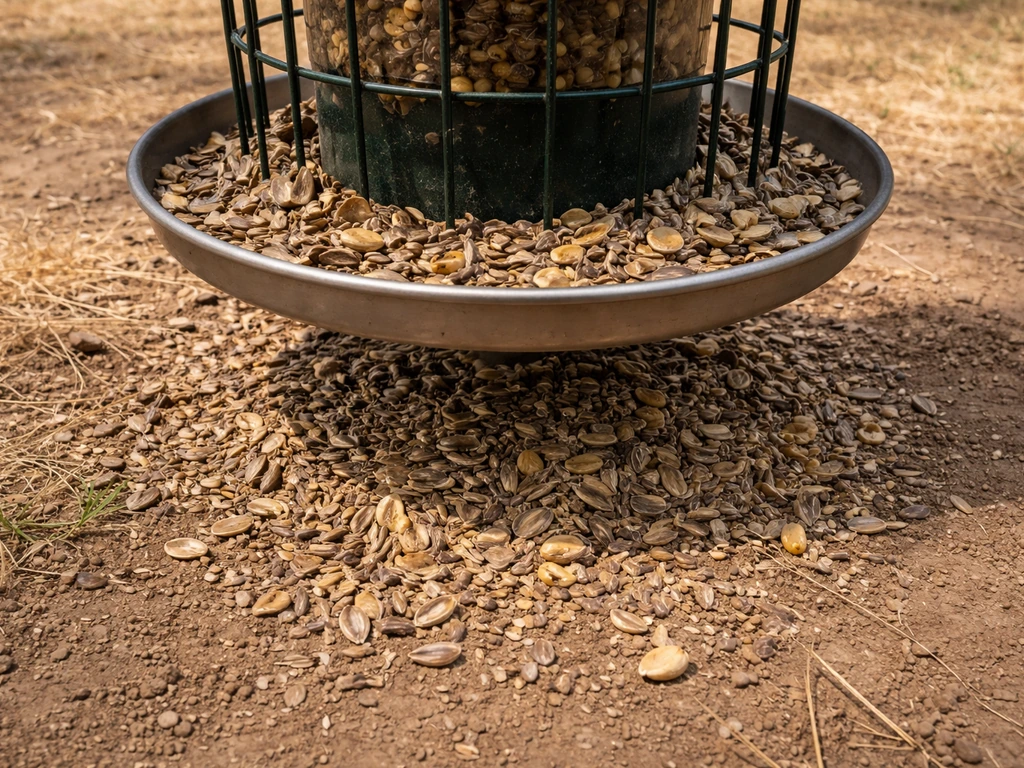
Hulls and discarded seed under feeders go moldy fast in Texas summer, and accumulations attract rodents. Both TPWD and the U.S. Fish and Wildlife Service specifically call out ground seed cleanup as an important disease-prevention step. A seed tray that catches debris and keeps it off the ground is useful, but it needs to drain and be cleaned as often as the feeder itself. Alternatively, use no-waste seed mixes (hulled sunflower, sunflower chips) that produce minimal shell debris. The initial cost is higher per pound but you're not paying for hulls you'll just have to sweep up.
Smart and AI bird feeder cameras: when they're worth buying
Smart feeders with built-in cameras and AI bird identification have gotten genuinely good. Bird Buddy and Birdfy are the two main players. Both use AI to identify visiting species from photos or video, send you alerts when birds arrive, and store footage to the cloud. Birdfy's 4K model carries an IP66 water-resistance rating and works on both 2.4GHz and 5GHz Wi-Fi; their standard Feeder model is IP65 and 2.4GHz only. Bird Buddy requires 2.4GHz Wi-Fi and has no local storage, so it needs an active internet connection and relies on cloud processing for the AI identification feature.
The honest case for buying one: if you're genuinely curious about what's visiting your yard when you're not watching, or you want to document species for a list, a smart feeder camera pays off quickly. North Texas has a genuinely interesting mix of migrants passing through in spring and fall, and the AI ID makes it easy to catch species you'd otherwise miss. The honest case against: they add complexity, require stable outdoor Wi-Fi coverage (check your signal at the mounting location before buying), and the ongoing app and cloud dependency means the product experience can degrade if the company changes its service. They also don't solve the mechanical problems of heat, squirrels, or cleaning, so think of them as an add-on to a well-chosen traditional feeder rather than a replacement.
If you decide to buy one, the Birdfy 4K is the more weather-capable option for North Texas conditions given its higher IP66 rating and dual-band Wi-Fi. For most casual backyard birders just getting started, I'd spend the money on a quality squirrel-proof tube feeder and a good baffled pole first, then add a smart camera once the setup is working reliably.
What to do if birds aren't showing up
If you've set up a feeder and birds aren't using it within a week or two, run through this checklist before assuming something is wrong with the feeder itself.
- Check the seed: old or stale seed has less smell and appeal than fresh seed. If you bought a big bag months ago and it sat in a hot garage, toss it and start fresh.
- Check for mold or clumping inside the feeder: tube feeders in particular can trap moist clumped seed that blocks ports and smells off-putting to birds. Disassemble and clean even if the feeder looks clean from outside.
- Reconsider placement: if the feeder is too far from cover, in a high-traffic area, or in full afternoon sun with no shade, birds may be avoiding it. Try moving it closer to a tree line.
- Give it more time during migration: late spring and early fall bring the highest species diversity through North Texas. If you set up a feeder mid-summer, you may simply be waiting for the fall migration wave.
- Add a water source nearby: a shallow birdbath close to the feeder dramatically increases yard attractiveness, especially in summer when natural water sources dry up.
- Check for predator pressure: if a neighborhood cat is hunting near the feeder, birds will avoid the area entirely until the threat is gone.
FAQ
Can I use one seed type in the best bird feeder for north texas to attract all my desired birds?
Yes, but only for specific situations. Use safflower for cardinals and consider nyjer only for finches with tiny ports, because nyjer ports help block larger birds. For general mixes, stick to what matches your target species, avoid large open-platform mixes that encourage grackles, and plan to change seed types seasonally as your visitor mix changes.
If I buy the best squirrel-proof tube feeder for North Texas, will it also bring cardinals by itself?
Not usually. Most tube feeders are built for small-port birds, and those ports can be too small or awkward for cardinals even if the seed type is right. If cardinals are a priority, add a hopper or tray style with a wide ledge in parallel, rather than expecting a tube feeder to work well.
How do I know when it is time to stop using a nyjer tube feeder in Texas?
Set your expectation based on cleaning and feeder type. Nyjer and tube-style feeders foul faster when seed clumps, and Texas summer heat can turn eye-discharge contamination into a higher-risk scenario. If you notice blackened seed, caked residue, or birds with crusty discharge, switch to more frequent cleaning (often weekly in summer) and consider pausing that feeder for a couple of days.
Can I just top off hummingbird nectar instead of fully cleaning and refilling?
For hummingbird feeders, don’t “top off” nectar. Dump, rinse, and refill on the schedule (every 2 to 3 days in North Texas summer), and wash with a brush that reaches the nectar ports. Topping off leaves fermented nectar behind, which shortens the life of fresh nectar.
Why do birds ignore a feeder even though it is the right model, seed, and fresh refill?
It depends on placement and setup. In windy backyards, hanging a light feeder from long chains can dump seed or loosen caps, making birds less likely to feed. Prefer heavier feeders on shorter, sturdier supports, or use a pole mount with the proper height and baffle setup.
Will a squirrel baffle guarantee squirrel-proof feeding if my yard has nearby trees or fences?
Yes, especially if you use a baffle but mount it too close to launch points. If squirrels can jump from fences, tree limbs, or nearby structures, they can reach over the baffle. A practical rule is to keep the station well away from climbable edges and position the baffle so the feeder is above the baffle top by several feet.
After I clean the feeder, how important is it that it dries completely in North Texas?
If you are using an anti-squirrel tube or a caged hopper, make sure the feeder can drain completely. Seed that stays damp in the base or tray, or moisture that remains in ventilation areas, increases spoilage and mold. After soaking, rinse thoroughly and dry fully before refilling, and check the tray for standing water after rain.
Does using a seed tray prevent mold and rodents, or do I still need to clean the area under the feeder?
Yes, and it can be a big difference-maker. A seed tray that catches hulls is useful, but it must be emptied and cleaned regularly, because the hulls themselves become the waste that molds and attracts rodents. If you want less cleanup, consider hull-reduced seed options like sunflower chips and accept the higher per-pound cost.
What is the best strategy if I want both finches and cardinals in the same North Texas yard?
Start with the target birds and add a second feeder rather than switching the same feeder. For example, pair the squirrel-proof tube for finches with a separate caged hopper for cardinals, because their needs conflict (tube ports and perches vs hopper ledges). Keeping feeders separate also makes troubleshooting easier when one bird type shows up and another does not.
What parts usually fail first on bird feeders in North Texas, besides the body or reservoir?
Most manufacturers rely on UV-stabilized plastics and metal, but hardware can still fail. Check the hanging system and any caps or port covers for cracking, ensure gaskets are not becoming brittle, and replace S-hooks or plastic clips with powder-coated steel hooks or chain before the next hot season.
What should I check before buying a smart bird feeder camera for my North Texas yard?
If you have a smart feeder camera, the main “gotcha” is network reliability outdoors. Before purchasing, test your Wi-Fi signal at the exact mounting location, because intermittent coverage can prevent alerts and can make video history inconsistent. Also plan for app updates and account dependencies, since you are relying on cloud processing for AI ID.
How can I manage grackles without giving up the birds I actually want?
If you want to reduce grackles without eliminating all other birds, use safflower, favor feeders with small ports like nyjer tubes (for finch-focused setups), and avoid leaving extra food out on platforms. Manage quantities so only what can be eaten in a day is available, and keep the ground below the feeder clean to reduce repeat visits.
Next Article
Best Bird Feeder for Florida: Top Picks by Bird Type
Top Florida bird feeder picks by species, with weatherproofing, anti-squirrel tips, and setup to stop moldy seed waste