For South Florida specifically, you want feeders made from UV-stabilized polycarbonate, powder-coated steel, or recycled plastic, not wood, and not cheap painted metal. The heat, near-daily summer rain, and year-round humidity will rot untreated wood within a season, rust uncoated metal hardware, and turn a poorly drained feeder into a petri dish. The feeders that consistently hold up down here are tube feeders with drainage ports, all-metal or polycarbonate hoppers, glass or BPA-free nectar feeders with wide mouths for easy cleaning, and platform feeders built with slatted or mesh bottoms. If you lock those materials and designs in first, the rest of the decisions get much easier.
Best Bird Feeders for South Florida: Top Picks and Buying Guide
Marcus Holloway
25 Jun 2026
South Florida's Setup Realities and What They Mean for Feeder Choice
South Florida is not a forgiving environment for bird feeders. Miami-Dade, Broward, Palm Beach, and the Gulf Coast counties from Naples down through Fort Myers (what most people call Southwest Florida) share the same brutal combination: summer heat regularly above 90°F, relative humidity in the 80–90% range for months at a time, and afternoon thunderstorms that dump an inch of rain in thirty minutes. That combination destroys the wrong feeder fast.
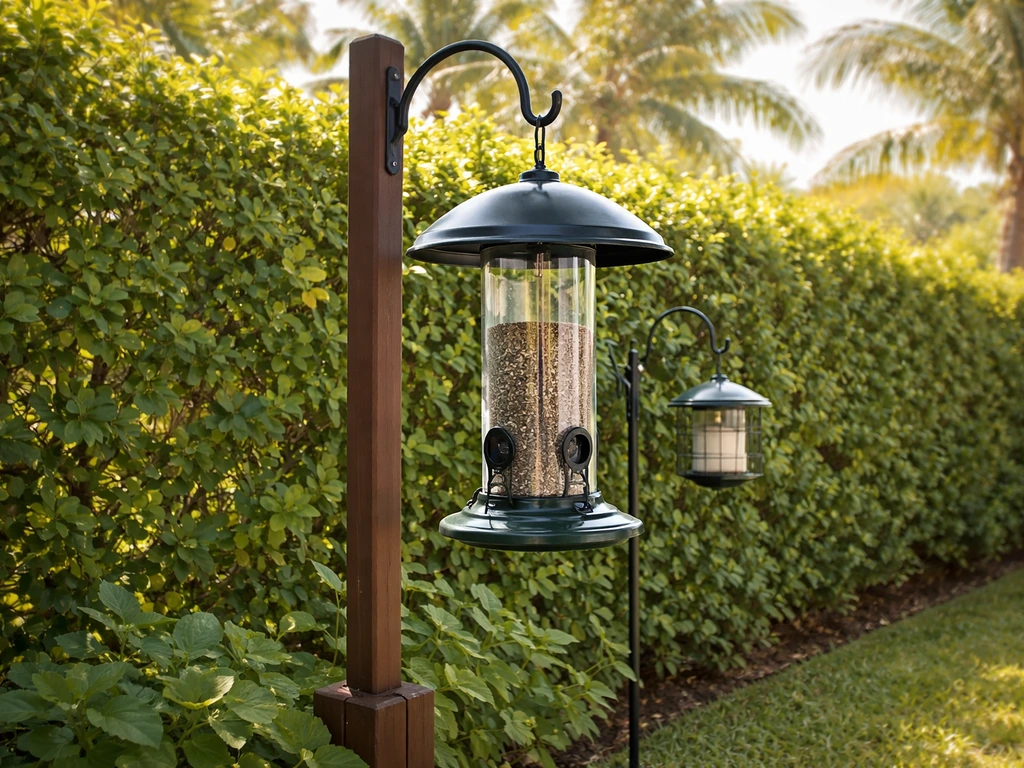
Wood feeders are the first casualty. Even cedar, which holds up well in the Pacific Northwest, swells, warps, and develops mold on interior surfaces within a few months of South Florida summers. Painted wood is even worse because moisture gets under the finish and accelerates rot from the inside. Powder-coated steel and UV-stabilized polycarbonate are the materials that actually survive here. Stainless steel hardware (screws, perch rods, and hanging hooks) is non-negotiable, anything else rusts within a season.
Beyond materials, drainage is everything. Feeders that let water pool in the seed tray will turn a $20 bag of sunflower seeds into mold in 48 hours after a rainstorm. Look for tube feeders with drainage holes at the base of each port, platform feeders with mesh or slatted bottoms, and hoppers with angled floors that drain outward. A weather baffle or roof overhang over the feeder buys you extra time between cleanings, and in Florida, every bit helps.
One more thing specific to South Florida: you're feeding birds year-round. There's no winter break where the feeder sits idle and dries out. That continuous use means mold and bacterial growth are a persistent threat, not a seasonal one. Your cleaning schedule and your feeder material choices both need to reflect that.
Which Birds Are You Actually Feeding Down Here?
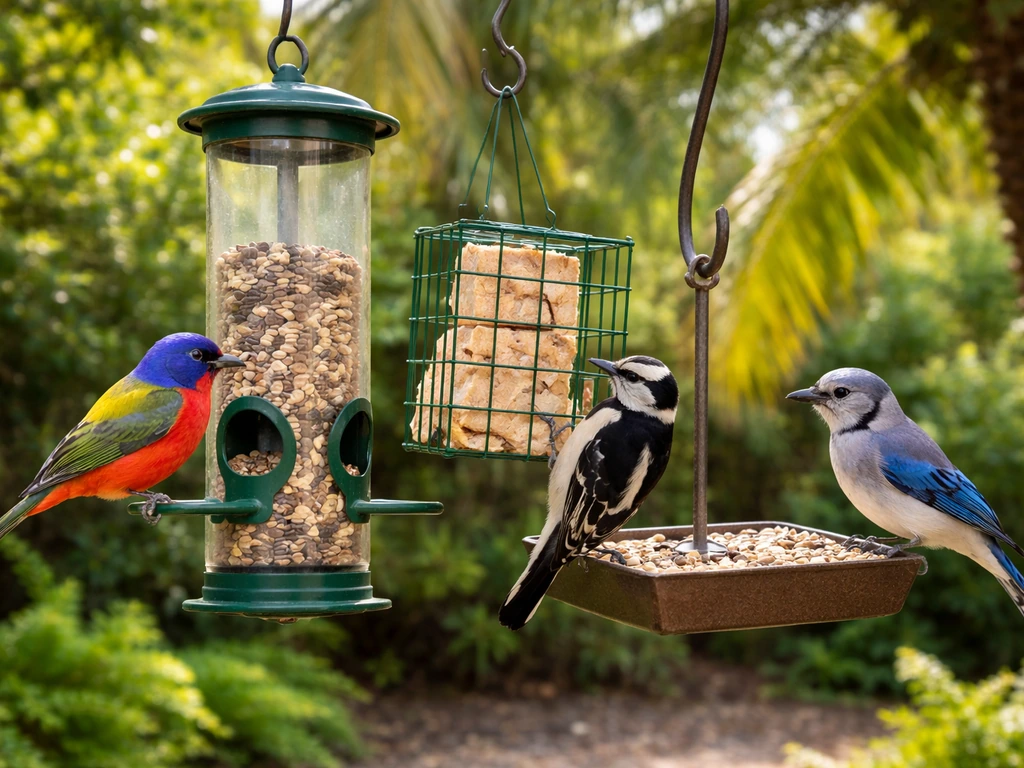
South Florida's bird community is genuinely different from the rest of the country, and that shapes which feeder types are worth your money. You're not running a cardinal-and-chickadee setup like someone in the Carolinas. The regulars in South Florida yards tend to be northern cardinals, blue jays, mourning doves, red-bellied woodpeckers, Carolina wrens, painted buntings (especially along the coasts during migration and winter), common grackles, and a range of wintering warblers. On the nectar side, ruby-throated hummingbirds pass through during migration and some winter over, while Cuban emerald hummingbirds appear in extreme South Florida. Monk parakeets and nanday parakeets have established wild populations and will absolutely raid your feeders.
Best Feeder Types by Target Species
Cardinals and Blue Jays
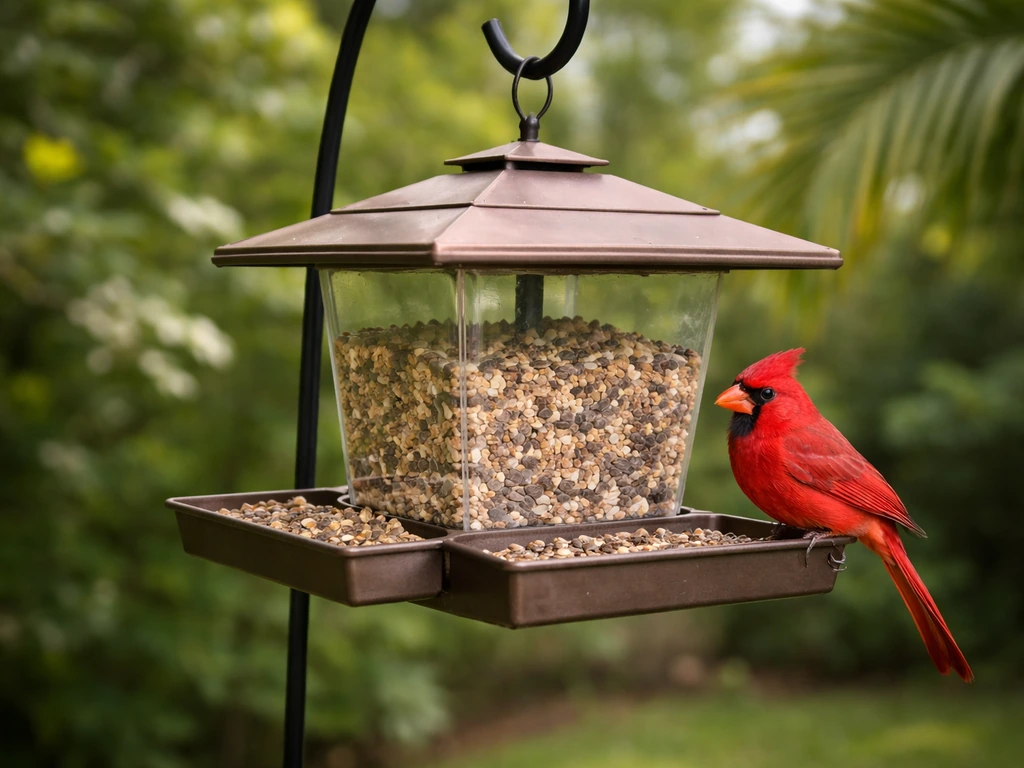
Cardinals need a real perch and a wide feeding tray, they won't cling to a small port like a finch. A hopper feeder with wide side trays or a dedicated platform feeder loaded with black-oil sunflower seeds is your best bet. If you are looking for the best bird feeders for North Carolina, focus on durable materials, good drainage, and a feeder style that matches the species you want to attract. Blue jays will use the same setup and actually prefer platform feeders where they can land flat and grab peanuts in the shell. For both species, look for a hopper with a polycarbonate or steel body, a roof overhang of at least 4 inches to keep rain off the seed, and drainage ports in the tray floor.
Painted Buntings
If you're in coastal South Florida between October and April, painted buntings are a real possibility and one of the most spectacular birds you can attract. They strongly prefer white millet, and the best way to serve it is in a tube feeder with small ports and short perches, or a low platform feeder placed in a sheltered, slightly shaded spot near shrubs. They're skittish and won't approach busy, exposed feeding stations. Keeping a dedicated millet tube separate from your main sunflower station dramatically increases your chances.
Woodpeckers
Red-bellied woodpeckers are the most common in South Florida yards, with downy woodpeckers also appearing regularly. Both need something they can cling to, a suet cage, a peanut feeder with metal mesh, or a log-style feeder packed with suet dough or peanut butter. The challenge in South Florida is suet. Standard suet blocks go rancid fast in heat above 80°F, which is basically every day here. Use no-melt suet cakes (they're formulated with a higher melting point) or skip blocks entirely and use suet dough packed into a wooden feeder or a dedicated log feeder. An upside-down suet cage is worth considering too, it forces birds to cling and hang, which starlings can't do, so you lose less suet to pest birds.
Hummingbirds
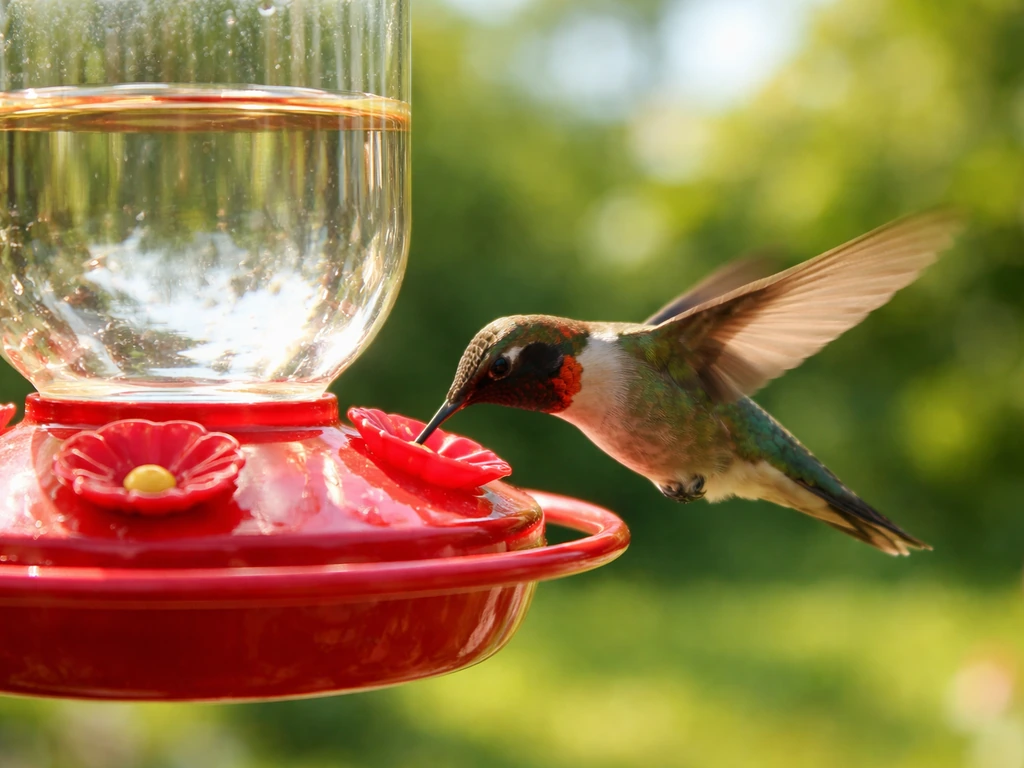
Glass nectar feeders outlast plastic in Florida's UV environment, the sun yellows and cracks cheap plastic feeders in a single season. Wide-mouth designs are worth paying extra for because cleaning is a constant task here. A 1:4 ratio of plain white granulated sugar to water is the correct nectar formula; never use red dye, honey, or artificial sweeteners. In South Florida's heat, nectar ferments and grows mold fast, UF/IFAS recommends changing sugar water at least every 3 to 5 days to prevent fermentation and mold growth, and in peak summer you may need to change it every 2 days. Clean the feeder with hot water and a bottle brush each time you refill.
Finches and Small Seed-Eaters
American goldfinches winter in South Florida in good numbers, and house finches are year-round residents. Both love nyjer (thistle) seed served in a tube feeder with tiny mesh ports. The Droll Yankees or Aspects brand finch tubes hold up well in Florida conditions. One tip: don't stock nyjer in bulk during summer, it goes stale and oily in heat and humidity. Buy smaller bags more frequently and empty the tube completely before refilling.
Top Feeder Picks for South Florida by Category
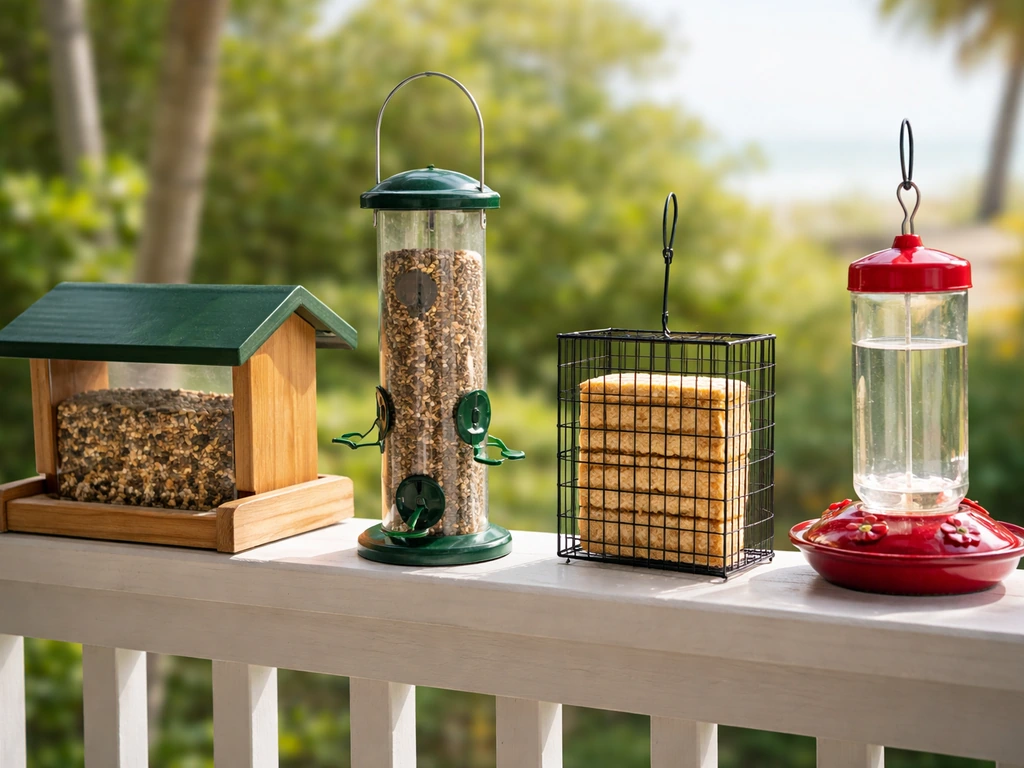
These are the feeder types and specific models worth considering for South Florida conditions, chosen for material durability, drainage design, and ease of cleaning, not just what's popular nationally. If you are looking for the best bird feeders for South Carolina, focus on feeders built for heat, heavy rain, and easy weekly cleaning feeder types and specific models worth considering for South Florida conditions.
| Category | Top Pick | Why It Works in South Florida | Best For |
|---|---|---|---|
| Hopper/Cardinal Feeder | Squirrel Buster Plus (Brome) | All-plastic, no metal to rust; weight-sensitive pest exclusion; wide tray for cardinals | Cardinals, blue jays, chickadees |
| Tube Feeder (Seed) | Droll Yankees Yankee Flipper or Classic Tube | UV-stable polycarbonate; stainless ports; drainage holes at base | Finches, chickadees, titmice |
| Nyjer/Finch Feeder | Aspects HummZinger or Droll Yankees Finch Flocker | Small-port mesh; easy to disassemble for cleaning | Goldfinches, house finches |
| Nectar/Hummingbird | Aspects HummZinger Ultra (glass or poly) or Perky-Pet glass bottle style | Wide mouth for brush cleaning; UV-resistant; ant moat built in | Ruby-throated hummingbirds, Cuban emerald |
| Suet Feeder | Kettle Moraine Recycled Plastic Log or standard powder-coated steel cage (upside-down style) | No-rot material; upside-down cage excludes starlings | Red-bellied woodpeckers, downy woodpeckers |
| Platform Feeder | Woodlink Going Green Platform or Aspects Tube Top platform | Mesh or slatted floor drains immediately after rain; no trapped moisture | Doves, blue jays, painted buntings (millet) |
| Peanut Feeder | Woodlink Steel Peanut Feeder | All-steel mesh; no rust-prone hardware; easy to shake clean | Blue jays, woodpeckers, Carolina wrens |
| Smart/Camera Feeder | Bird Buddy Pro or Netvue Birdfy | AI species ID; weatherproof housing; remote monitoring | Any species; best for engaged hobbyists |
If you only buy one feeder to start, make it a quality polycarbonate tube or hopper feeder stocked with black-oil sunflower seeds. It covers the widest range of South Florida species, it holds up in the weather, and it's easy to clean. If you’re shopping for the best bird feeder for Florida, prioritize durable, UV-stabilized materials and drainage that prevents mold after storms. Add a nectar feeder as a close second if hummingbirds are a priority for you.
Dealing with Squirrels, Grackles, and Florida's Other Feeder Pests
South Florida's pest pressure at feeders is real and persistent. Squirrels are the obvious problem, but grackles are arguably more disruptive, a flock of common grackles can drain a hopper feeder in under an hour and intimidate smaller birds away entirely. Parakeet flocks (monk and nanday) will do the same. Here's how to handle each one.
Squirrels
Weight-activated feeders are the most reliable solution. The Brome Squirrel Buster line works by closing seed ports when a weight above a set threshold lands on the perch ring. You can calibrate the tension to exclude squirrels while allowing birds. Mounting on a smooth metal pole with a baffle (more on placement below) combined with a weight-activated feeder is the most effective two-layer defense. Hanging feeders from a wire between two poles works too, as long as the wire is at least 5 feet off the ground and the feeder hangs at least 18 inches from any jump point.
Grackles and Large Pest Birds
Grackles are harder to exclude than squirrels because they're birds, and most feeder exclusion mechanisms don't discriminate between species by default. The most effective strategies are feeder design and food selection. Tube feeders with short perches (under 1 inch) physically can't accommodate a grackle's larger body. Upside-down suet cages exclude starlings and reduce grackle access. Switching from mixed seed (which grackles love) to straight black-oil sunflower or nyjer gives grackles less incentive to hang around. Caged feeders, tube or hopper feeders surrounded by a wire cage with 1.5-inch openings, physically block larger birds while letting smaller birds pass through. The Brome Squirrel Buster Plus with the optional cage accessory is one of the cleaner implementations of this.
Monk and Nanday Parakeets
If you're in Miami-Dade or Broward and you have monk parakeets raiding your feeders, a caged feeder is your only practical option. They're too smart and too persistent for most other deterrents. A cage with openings small enough to exclude a parakeet (roughly 1.25 to 1.5 inches) will also keep out most grackles, which is a bonus.
Raccoons and Other Nocturnal Raiders
Raccoons are widespread in South Florida and will absolutely tear apart a poorly mounted feeder at night. Bringing feeders in at dusk is the simplest solution if you have a mounting setup that makes that easy. Otherwise, a metal pole with a quality stovepipe or cone baffle makes climbing nearly impossible. Don't use shepherd's hooks driven into soft ground, raccoons topple them easily. A concrete-set pole is worth the extra effort.
Mounting, Placement, and Spacing
Placement in South Florida is about balancing sun exposure, drainage, air circulation, and bird safety. Here's what actually works:
- Place feeders either within 3 feet of a window or more than 30 feet away. This reduces window strike risk — birds hitting glass at close range don't build up enough speed to be seriously injured, while distant feeders give them enough flight path to avoid the reflection.
- Partial shade is better than full sun for feeders in South Florida. Morning sun, afternoon shade keeps seed from heating up as fast and slows nectar fermentation. The east or southeast side of your yard is often ideal.
- Air circulation around the feeder extends seed life. Don't mount a feeder tight against a fence or wall where there's no airflow — mold grows faster in stagnant humid air.
- For pole mounting, use a smooth steel or PVC pole at least 5 feet tall, set in concrete if possible. Add a stovepipe or dome baffle 4 feet off the ground to stop climbing squirrels and raccoons.
- Spacing multiple feeders at least 10 to 15 feet apart reduces competition and territorial disputes between species. Cardinals and finches, for example, will both feed more comfortably when they're not crowding the same station.
- Place a brush pile or dense shrubs within 10 to 15 feet of your feeder — not right next to it — to give smaller birds a safe retreat from hawks or sudden disturbances. Native Florida plants like beautyberry, firebush, or Walter's viburnum work perfectly for this.
- Keep the area below feeders clear. Fallen seed that sits on damp ground in Florida heat turns into a mold and bacteria source fast, and it also attracts rats. Rake or sweep below feeders every few days.
Cleaning and Maintenance in Florida's Humidity
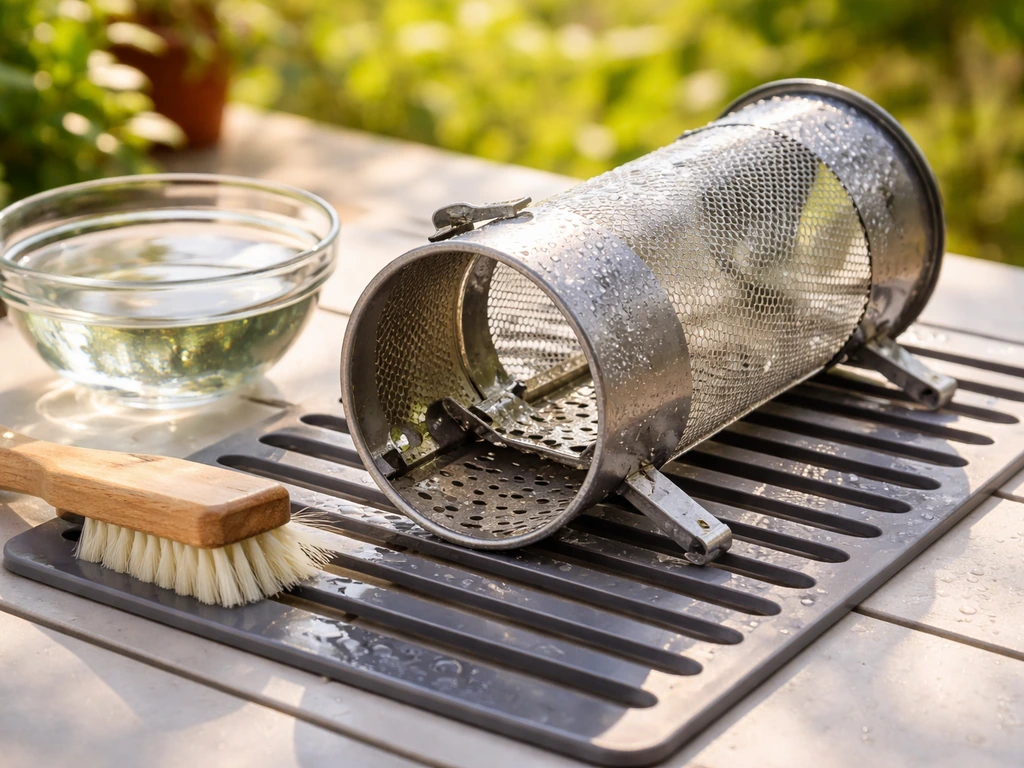
This is where most South Florida birders fall short. The general recommendation from Audubon is to clean seed feeders every two weeks, but in Florida's heat and humidity, every week is more realistic, and after a heavy rain you should check and potentially clean immediately. Audubon recommends cleaning seed and suet feeders about every other week as a starting point, and cleaning more frequently in humid or hotter weather clean seed feeders every two weeks. Nectar feeders need changing every 3 to 5 days at minimum per UF/IFAS guidance, and in peak summer heat, every 2 days is not excessive.
For seed and suet feeders, the process is: empty all old seed, scrub with a stiff brush and hot soapy water, then soak in a 50-50 vinegar-and-water solution for about 10 minutes to kill mold and bacteria. Rinse thoroughly and let air dry completely before refilling. Putting wet seed back into a damp feeder defeats the whole exercise. For hummingbird feeders, use hot water and a bottle brush every time you change the nectar, soap residue can harm birds, so rinse multiple times.
Sweep or rake the ground below feeders every few days. Project FeederWatch specifically recommends this to prevent accumulation of waste, moldy food, and disease-harboring debris. In Florida, that advice applies year-round, not just winter.
What Seed to Use (and What to Avoid)
Black-oil sunflower seed is your workhorse for South Florida, it attracts the widest range of species and has a tougher shell that resists moisture slightly better than hulled seed. Avoid mixed 'wild bird' blends that contain milo, millet fillers, and oats, most South Florida birds won't eat it, it sits in the tray, absorbs moisture, and molds. White millet is the exception if you're specifically targeting painted buntings or doves on a platform feeder. Nyjer (thistle) is good for finches but goes stale fast in heat, buy it in smaller quantities. Peanuts (in-shell or halved) are excellent for jays and woodpeckers. Avoid any seed blends with corn in South Florida, corn draws grackles, rats, and parakeets disproportionately.
Smart and AI Camera Feeders: Are They Worth It in South Florida?
Smart feeders with built-in cameras and AI species identification have gotten genuinely good in the last two years, and they're particularly appealing in South Florida where you're getting a more varied and sometimes surprising mix of birds year-round. The Bird Buddy Pro and the Netvue Birdfy are the two most practical options right now. Both use on-device or cloud AI to identify species from photos taken when a bird lands, send alerts to your phone, and let you build a life list of your backyard visitors without sitting at a window all day.
For South Florida specifically, the weatherproofing on these cameras matters a lot. The Netvue Birdfy uses an IP55-rated camera housing, which handles South Florida rain reasonably well. The Bird Buddy's solar-powered lid helps reduce battery anxiety, which is real if your feeder is far from an outlet. Neither unit is fully impervious to extended direct sun and heat, mounting them on the shaded side of your yard extends their lifespan. Both work with tube-style seed feeders and won't interfere with your existing setup much.
The main trade-off is cost and maintenance complexity. A smart feeder adds $80 to $200 to your setup and gives you one more electronic component to keep clean, dry, and charged. If you're primarily a casual feeder who just wants birds in the yard, a quality conventional feeder with a baffle is money better spent. If you're genuinely into identification, photography, or building a backyard bird log, especially during painted bunting season or fall migration when unusual species show up, a camera feeder pays for itself in enjoyment quickly.
One practical tip: pair a camera feeder with a separate feeding station rather than relying on it as your only feeder. Camera feeders tend to be smaller capacity, and running out of seed during a migration wave is frustrating when you're trying to capture photos.
If Birds Aren't Showing Up Yet
New feeders in South Florida can take one to four weeks to get regular visitors, sometimes longer if you're in a heavily developed area with little bird activity nearby. A few things that help: add a moving water source like a dripper or small fountain bath near the feeder, the sound of moving water attracts birds faster than almost anything else. Native plantings around the yard draw birds in naturally and make them comfortable enough to approach the feeder. If grackles or parakeets have already taken over the space, try temporarily stopping feeding for a week or two, then restart with a caged feeder and a different food. The pest birds often move on faster than the desirable species do.
South Florida's feeding conditions are more demanding than most of the country, but they're workable once you've chosen the right materials and committed to a cleaning routine. If you're also comparing notes on what works slightly further north in the state, the dynamics shift a bit, species mix changes, suet holds up slightly better, and pest pressure from parakeets drops off significantly above the I-4 corridor. The core feeder quality and drainage principles stay the same whether you're in Fort Lauderdale or anywhere else in the state.
FAQ
What’s the single best feeder type for South Florida if I want to attract the widest variety of birds?
Start with a quality polycarbonate tube or hopper feeder for black-oil sunflower seed. It’s your broadest “all-season” choice, and the tube or hopper design with drainage ports helps prevent the seed from sitting in pooled water after fast thunderstorms.
Do I really need to clean seed feeders every week in South Florida?
In most yards, yes. Heat and humidity make “every two weeks” unrealistic, especially right after heavy rain. A practical rule is weekly cleaning, plus a quick inspection (and spot-cleaning if needed) immediately after storms.
Can I leave nectar out for longer than 3 to 5 days during mild winter weather?
You should still plan on changing sugar water at least every 3 to 5 days year-round. If your feeder is in full sun, receives heavy bird traffic, or sits under a leaky roof, shorten it to every 2 days even in cooler months.
Why do my seed feeders smell moldy even when I’m emptying and refilling often?
The usual cause is water pooling somewhere you do not notice, such as under a port tray, in a lower drip cup, or in a feeder that is slightly tilted. Confirm the feeder drains outward, check drainage holes stay clear, and make sure it’s not sitting in a splash zone from nearby sprinklers.
Is it okay to use painted metal feeders if I’m careful with rust spots?
Usually no for South Florida. Even if the outside looks fine, interior hardware and seams can rust quickly in humidity, and the feeder can develop “hidden” corrosion that contaminates seed trays. Powder-coated steel with stainless hardware is the safer standard.
What should I do about suet in summer when birds stop visiting?
Standard suet blocks can go rancid quickly once temperatures stay above about 80°F. Switch to no-melt suet cakes or use suet dough packed into a log-style or caged feeder, and keep the setup shaded to slow spoilage.
How can I reduce grackles without giving up bird feeding entirely?
Use both food and design changes. Prefer straight black-oil sunflower (or nyjer if finches are your goal), avoid mixed blends with fillers, and use tube feeders with short perches or a cage-style feeder (with small openings) to physically block larger birds while letting smaller species feed.
Will a squirrel baffle alone solve squirrel raids in South Florida?
Often it helps, but it’s not always enough by itself. Weight-activated feeders plus a quality pole baffle is more reliable, because it adds a second layer of exclusion when squirrels can’t access the feeding ports.
Are camera bird feeders worth it if I already have a conventional feeder?
They’re worth it if you mainly care about identification and you can tolerate smaller capacity. Pairing a camera feeder with a separate conventional feeder prevents “missed photos” when the camera unit runs out during migration surges.
How do I keep white millet dedicated to painted buntings without attracting unwanted birds?
Use a separate millet station, ideally a tube feeder with small ports and short perches, or a low platform feeder placed in a slightly shaded, sheltered spot. Keep it away from your main sunflower setup so grackles and parakeets have fewer opportunities to switch to millet.
What’s the best way to prevent staleness in nyjer during humid summers?
Don’t buy in bulk. Nyjer can turn oily and go stale faster in heat and humidity, even if the seed looks fine. Use smaller bags, empty the tube completely before refilling, and store unopened seed cool and dry.
Should I stop feeding if pests take over, or will they just come back?
Temporarily stopping can work, especially if grackles or parakeets dominate a feeding station. Give it about a week or two, then restart with the corrected setup (often a caged feeder and a different seed type) so the more desirable birds regain access first.