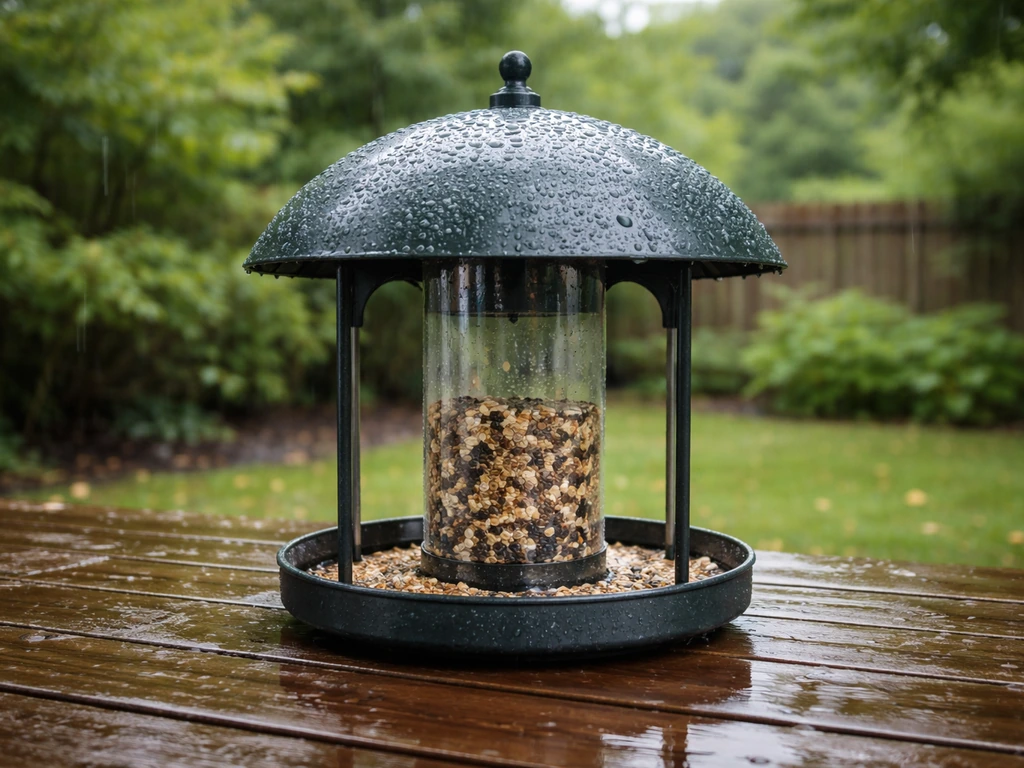
The best bird feeders for rainy weather are covered hopper feeders and tube feeders, because they actually protect seed from falling rain. A good hopper with a wide, overhanging roof keeps seed dry even during prolonged downpours, while a tube feeder's enclosed reservoir limits moisture exposure to just the port openings. Platform feeders, on the other hand, are basically open trays that turn into soup the moment it starts raining, and if you're relying on one as your main feeder, soggy seed and mold will be a constant fight. Material matters too: powder-coated steel and stainless hardware outlast cheaper plastic hardware by years in wet conditions. Get those two things right and rain stops being a real problem.
Best Bird Feeders for Rainy Weather: Top Picks and Setup Tips
Marcus Holloway
1 May 2026
Rainproof feeder features worth prioritizing
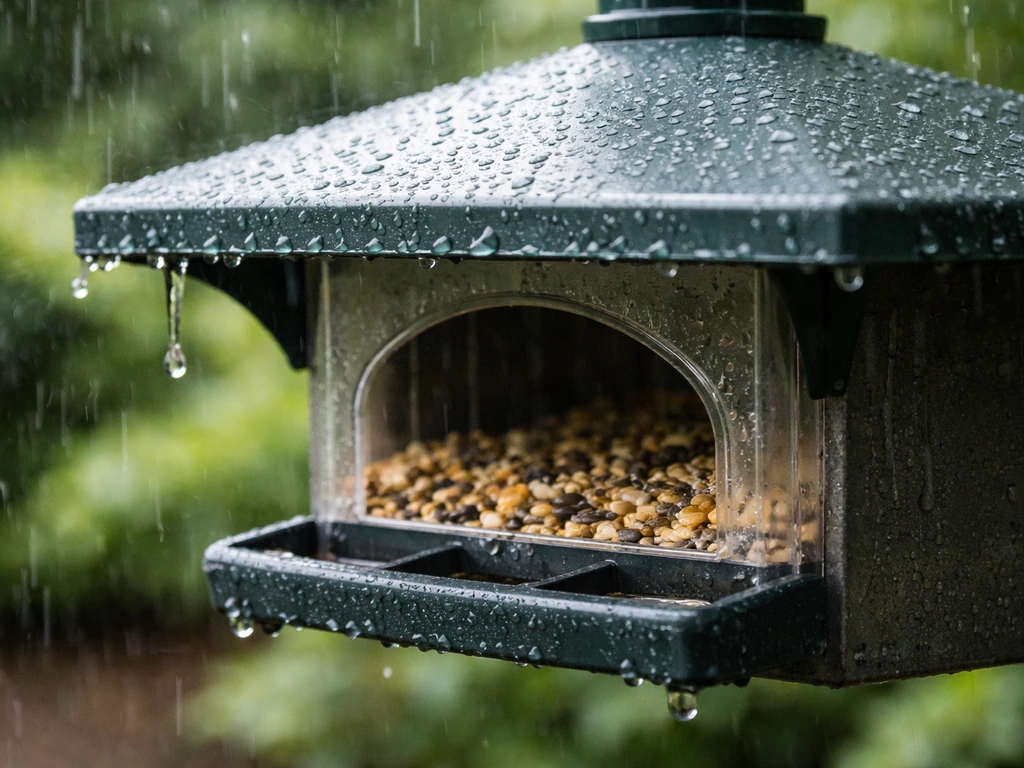
Not every feeder marketed as 'weather resistant' actually does a good job in rain. Here's what to look for when you're shopping specifically for wet-weather performance.
- Wide, overhanging roof: A roof that extends at least 3 to 4 inches beyond the feeder body blocks rain at an angle, not just directly overhead. Anything narrower and wind-driven rain still soaks the seed ports.
- Drainage holes in the seed tray or base: Even a well-roofed feeder will collect some water. Drainage ports at the lowest point of the tray prevent standing water from turning seed into a moldy paste.
- Enclosed seed reservoir: Hoppers and tubes keep the bulk of your seed behind a wall. The less seed that's exposed to open air, the less moisture can get in.
- Sealed or gasketed seams: Cheap feeders let water wick in through poorly fitted joints. Look for tight-fitted acrylic or polycarbonate panels on hoppers, or seamless tube construction.
- Corrosion-resistant hardware: Every hanger hook, screw, and port ring will rust eventually. Stainless steel or solid brass hardware holds up in rain and humidity; zinc-plated or bare steel starts corroding within a season.
- Easy-access cleaning design: You'll need to clean more often in wet weather, so a feeder with removable trays, a wide-mouth opening, or a split body that comes apart fully is worth its weight in convenience.
- UV-stable materials: Prolonged rain paired with sun between storms degrades cheap plastics quickly, causing cracking that lets water in and makes thorough cleaning impossible.
Best feeder types for wet weather
Rain affects each feeder style very differently. Here's how they stack up in practice.
Hopper feeders: the reliable all-weather workhorse
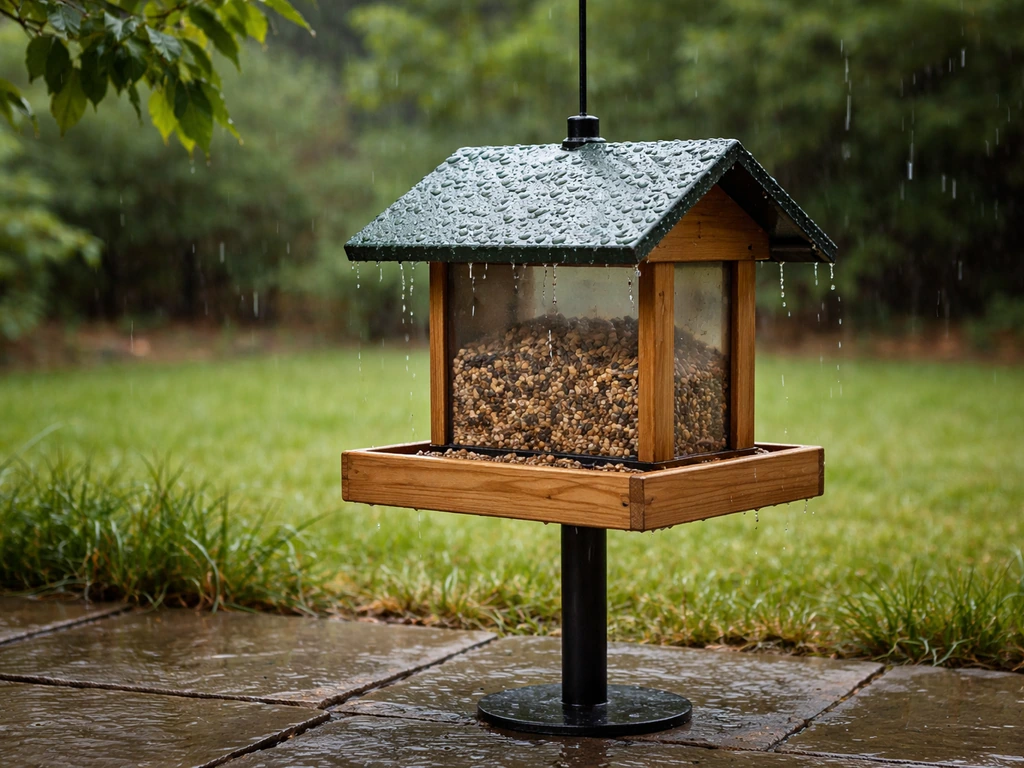
A well-built hopper feeder is my top pick for most backyards in rainy climates. The house-shaped design with a peaked roof does most of the work, and the seed is enclosed until it gravity-feeds down to the tray. The key is choosing one with a roof that actually overhangs generously and a tray with drainage slots. I've seen hoppers where the roof barely extends past the tray edge, and they perform no better than a platform in anything beyond a light drizzle. Go for metal or high-quality polycarbonate panel construction over thin painted wood, which absorbs moisture, warps, and grows mold inside the seed channel.
Tube feeders: solid seed protection with a caveat
Tube feeders keep seed fairly dry because most of the reservoir is enclosed. The vulnerability is the ports and the base: if the base doesn't have drainage or is shaped to collect water, the bottom layer of seed will stay wet and clump. Look for tubes with removable or perforated bases and ports that have small overhanging 'eyebrow' shields. Tube feeders are especially good for nyjer seed used by finches, where keeping fine seeds dry is critical since they mold fast once damp.
Platform feeders: use them only with a weather baffle or covered design
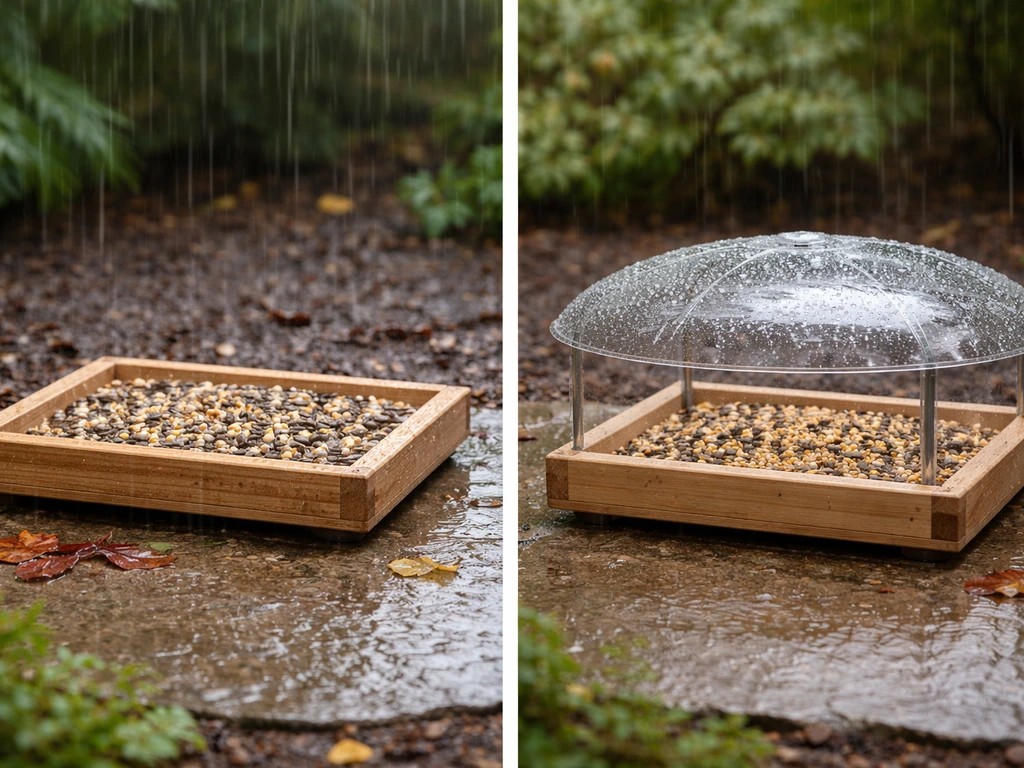
Open platform feeders don't protect against rain or snow at all, and seeds can get wet, sprout, and spoil quickly. If you like platform feeders for the variety of birds they attract, look specifically for covered or roofed platform designs, sometimes called fly-through feeders with a roof. These give you the open access birds love while actually blocking rainfall. Skip any fully open tray as a standalone solution in a rainy yard; the cleanup alone will wear you down.
Suet feeders: naturally better in rain, but placement still matters
Suet cages are inherently less vulnerable to rain than seed feeders. A hard suet cake doesn't absorb water the way loose seed does, and the wire cage construction lets water drain right through. The real rain concern with suet is that warmer, damp weather accelerates rancidity, especially with rendered suet. In rainy seasons with mild temperatures, switch to no-melt or weather-resistant suet formulations and mount the feeder under an overhang if possible.
Window feeders: keep them small and easy to refill in wet weather
Window feeders are a mixed bag in rain. Most are small with minimal roofing, so seed soaks quickly during heavy rain. Their advantage is accessibility: you can refill and clean them from inside without going out in the weather. If you run a window feeder, treat it as a supplemental station, keep it small so seed turns over fast, and use a seed mix that handles brief moisture exposure better (black oil sunflower shells off water faster than finer seeds). Also, placing feeders very close to windows, within about 3 feet, keeps any collision risk low since birds can't build dangerous flight speed in that short distance.
Smart and AI camera feeders: rain performance varies by design
Smart bird feeders with built-in cameras have become genuinely good at species ID, but their rain performance depends almost entirely on the physical feeder design, not the tech. Look for smart feeders that have a hopper or tube style body rather than an open tray, and check that any camera lens housing is sealed and angled to shed water. The electronics add a vulnerability: if seams around the camera mount aren't properly sealed, water ingress can kill the unit. Some smart feeders are designed with covered roofs and do fine in rain; others are open-concept and just not suitable for wet climates without additional shelter.
| Feeder Type | Rain Protection | Seed/Food Safety | Cleaning Ease | Best For |
|---|---|---|---|---|
| Hopper (covered) | Excellent | Good (enclosed reservoir) | Moderate (depends on design) | Seed variety, cardinals, jays |
| Tube (with drainage base) | Good | Good (enclosed body) | Good (removable base) | Finches, chickadees, small birds |
| Covered platform / fly-through | Good (with roof) | Moderate (open tray drains) | Easy (open access) | Ground-feeding species, doves |
| Open platform | Poor | Poor (seed soaks immediately) | Easy but frequent needed | Not recommended in rain |
| Suet cage | Very Good | Good (drains naturally) | Easy | Woodpeckers, nuthatches, wrens |
| Window feeder | Poor to Moderate | Moderate (small capacity helps) | Very Easy | Supplemental; casual birders |
| Smart/AI camera feeder | Varies by design | Varies by design | Moderate | Tech-minded birders; check build quality |
Material and construction: what actually holds up in wet conditions
This is where cheap feeders lose to quality ones fast. Materials make a bigger difference in rainy climates than anywhere else.
Powder-coated steel
Powder-coated steel frames and roofs are durable and rust-resistant as long as the coating stays intact. The weakness is chipping: once the coating chips from impact or UV degradation, bare steel rusts quickly at that spot. Inspect powder-coated feeders annually and touch up chips with a rust-inhibiting primer before they spread. Overall, powder-coated steel is a solid choice for frames, roofs, and hangers.
Stainless steel
Stainless steel hardware and mesh panels are the most rain-durable option available. They won't rust, won't chip, and can be scrubbed repeatedly without degrading. The cost is higher, but if you're in a genuinely rainy climate, the investment pays off over multiple seasons. Stainless mesh suet cages in particular outlast powder-coated versions by years.
Recycled plastic and UV-stabilized polycarbonate
High-quality recycled plastic and polycarbonate (like the clear panels on many hoppers) resist moisture, don't rot, and clean easily. The key is UV stabilization: cheap clear plastic yellows and cracks within a year or two, while quality polycarbonate stays clear and strong. Recycled plastic bodies are nearly maintenance-free in rain and are often used in feeders designed specifically for all-weather use.
Wood: use with caution
Cedar and redwood are naturally weather-resistant and fine for feeder construction if the design allows drying out between rains. The problem is enclosed seed channels in wooden hoppers: wood absorbs moisture even when sealed, and the interior where seed contacts wood can harbor mold. If you love a wooden feeder, choose ones with removable seed trays and clean them more aggressively than you would a metal or plastic feeder. Painted pine or MDF-based feeders are the worst choice for rainy climates and should be avoided entirely.
Setting up your feeder to fight the rain: placement, mounting, drainage, and wind
Even the best rain-resistant feeder fails if it's mounted in a spot that works against it. Placement does as much work as construction.
Height and pole mounting
Mount seed feeders at least 5 feet off the ground on a dedicated pole. Pole-mounted feeders are easier to fit with baffles (more on that below), more stable in wind than hanging feeders, and can be positioned precisely to maximize overhead shelter. Hanging feeders swing in wind-driven rain, which opens seed ports to moisture and can spill seed onto the ground.
Use natural and structural shelter
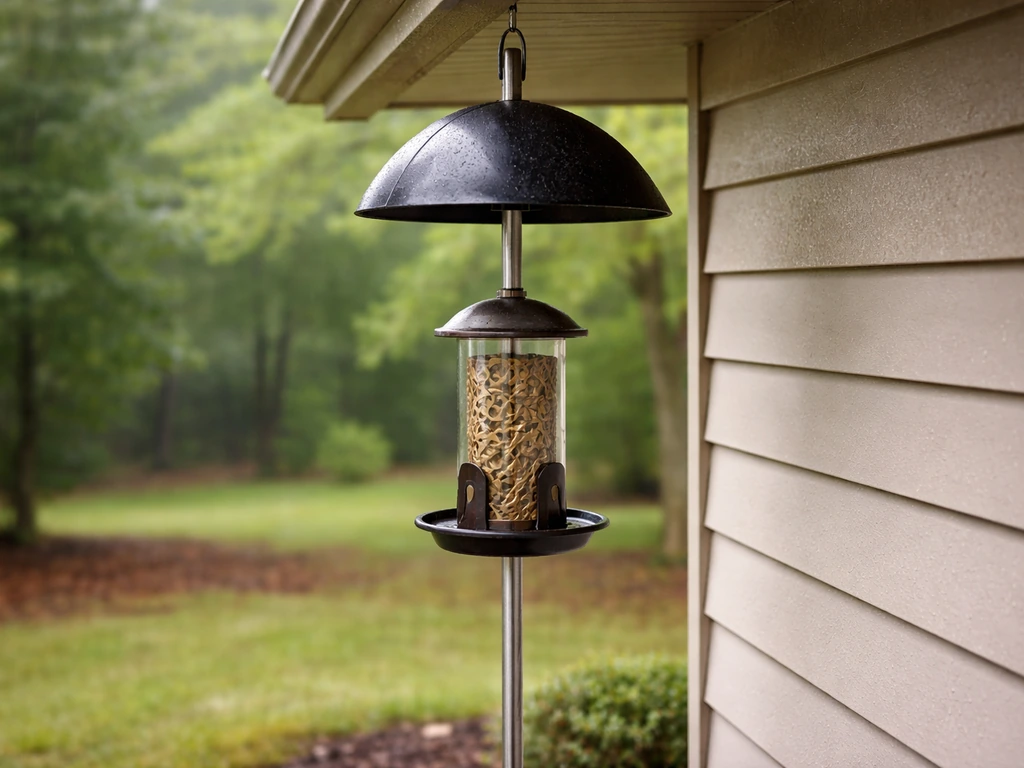
Positioning feeders under a roof overhang, pergola, or large evergreen cuts down dramatically on direct rainfall reaching the feeder. Even a 2-foot overhang above a pole-mounted feeder keeps the worst of the rain off. If you hang feeders from a tree, a thick conifer canopy acts as a natural umbrella. The trade-off is visibility for bird watching from inside, so it's worth finding a spot that's sheltered but still visible from your window.
Distance from windows
Keep feeders either within 3 feet of a window or beyond 30 feet away to reduce bird collision risk. The 3-to-30-foot middle range is where birds have enough speed built up to injure themselves on glass but not enough room to see and avoid it. In practice, a covered feeder right outside a window works well in rain because you can monitor it easily and refill quickly when needed.
Improving drainage
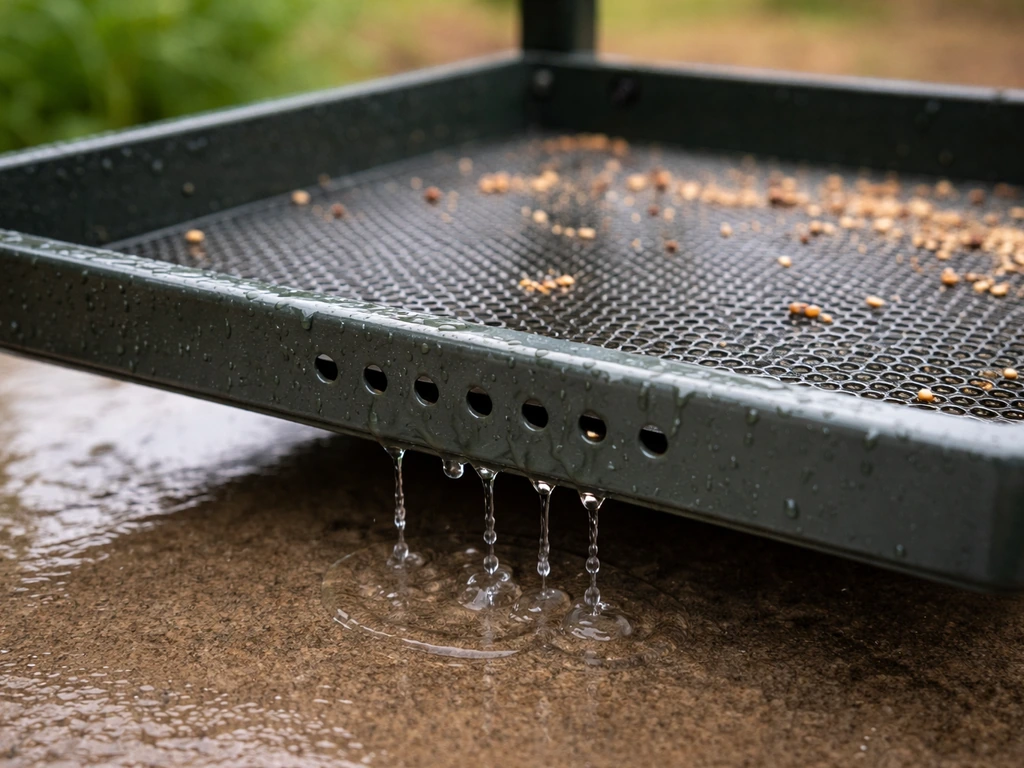
If your feeder tray doesn't have drainage holes, drill some: four to six small holes in the lowest point of the tray will clear standing water fast. For platform feeders, small mesh-bottom trays drain naturally and are worth seeking out. Make sure the ground beneath the feeder also drains well; standing water under a feeder attracts pests and creates a contamination zone for any fallen seed.
Reducing wind-driven rain
Wind is what defeats even a well-roofed feeder in a heavy storm. If wind is your main concern, use the same rainproofing logic but also compare designs in our best bird feeders for windy areas guide so the feeder stays stable and sheltered. A weather guard, which is a dome-shaped baffle mounted above the feeder, blocks both squirrels and wind-driven rain from reaching the seed ports. These are sold separately and fit most pole and hanging setups. Combined with a natural windbreak like a fence or shrub row on the prevailing storm side, you can dramatically reduce how much water reaches the feeder during a storm. Keeping feeders positioned on the lee side of structures (the side away from the prevailing wind) is one of the simplest and most effective upgrades you can make.
Species-specific picks for rainy weather
Rain affects birds differently depending on their feeding style and preferred food. Matching your feeder to the birds you're targeting makes a bigger difference in wet conditions than in dry weather.
Finches
House finches and goldfinches prefer nyjer (thistle) and fine seeds that mold extremely fast once wet. A tube feeder with small ports and a tight, draining base is the right choice. The enclosed reservoir protects the bulk of the seed, and high turnover from an active finch flock means seed doesn't sit long enough to spoil even in damp weather. Mesh tube feeders work well too, since the seed dries faster when airflow can pass through, though they're less rain-protective than a solid-body tube.
Cardinals
Cardinals love open tray-style feeding but are also perfectly comfortable at a hopper feeder with a wide perch bar. In rainy weather, a roofed hopper is the best compromise: it gives them the visible, easy-access seed tray they prefer while keeping the seed dry. Cardinals aren't shy about feeding in rain if the food is there, so keeping a covered hopper consistently stocked pays off.
Woodpeckers
Woodpeckers are suet birds first. A stainless or powder-coated wire suet cage mounted under an overhang or fitted with a tail-prop design (a longer wooden backer board that woodpeckers brace against) is ideal. Suet holds up better than seed in rain, and woodpeckers actively feed during and after rain. No-melt suet is worth using in any season with warm, wet weather since regular suet goes rancid fast in those conditions.
Hummingbirds
Hummingbird nectar feeders are actually quite vulnerable in rainy weather, not from the rain itself diluting the nectar (though that happens), but because the warm, damp conditions accelerate bacterial and mold growth in sugar water. The Ornithological Council recommends replacing nectar every 2 to 3 days in normal conditions, daily in hot weather. During warm rain spells, treat those as hot-weather conditions and change the nectar every day. Glass feeders with wide-mouth openings are easier to clean thoroughly than plastic ones, and that matters more in rainy seasons. Mount hummingbird feeders under an overhang to limit dilution and reduce cleaning frequency.
Chickadees, nuthatches, and titmice
These small birds are agile and will use tube feeders, hoppers, and suet cages comfortably. They're among the more rain-tolerant species behaviorally, often feeding through light rain. A tube feeder with sunflower chips or black oil sunflower seed serves them well in wet weather, and the enclosed design keeps their preferred seeds in the best condition.
Mourning doves and ground-feeding birds
Mourning doves forage on the ground and are particularly exposed to the hazards of wet conditions: soaked seed on the ground molds fast and can carry bacteria. If you want to support ground-feeding birds in rainy weather, use a roofed platform feeder set low rather than scattering seed on the ground. This gets seed off wet soil and keeps it in better shape. Clean ground-level feeding areas regularly since any fallen seed under the feeder becomes a contamination zone quickly in rain.
Feeding strategy for rainy days: seed vs. suet vs. nectar and mold prevention
What you put in the feeder matters as much as the feeder itself during rain. Different foods have very different rain tolerance.
Seed: stick with larger, oil-rich types
Black oil sunflower seed handles brief moisture exposure much better than fine seeds like millet or nyjer. The oil content and harder shell resist quick moisture absorption. In rainy weather, lean toward black oil sunflower or safflower seed in your main feeder, and reduce mixes with finer seeds unless you have high bird traffic that turns seed over fast. If seed in your feeder gets wet from a storm, the advice from the Ornithological Council is clear: empty wet seed into the trash, clean the feeder, let it dry completely, then refill. Refilling a dirty wet feeder just accelerates mold growth.
Suet: your most rain-reliable option
Suet is the best all-weather food because it doesn't absorb water the way loose seed does and holds its nutritional value even when briefly wet. In cooler rainy weather, any quality suet cake works. In warm, humid rain, switch to no-melt formulations specifically because regular rendered suet can go rancid within days in warm, damp conditions. Check suet cakes more frequently during warm rainy spells: if it smells off, replace it.
Nectar: the highest-maintenance option in rain
Nectar feeders require the most active management in rainy weather. Warm, wet conditions are ideal for bacterial and mold growth in sugar water. Change nectar every 1 to 2 days during warm, rainy spells, every 3 to 4 days in cooler rain. Use a 4:1 water-to-sugar ratio and never add red dye. When you change nectar, clean the feeder fully with hot water, paying attention to ports and the inside of the reservoir. A bottle brush makes this realistic to do frequently.
Mold prevention routine
blank" rel="noopener noreferrer">Clean seed feeders every two weeks minimum, more often in humid and warm conditions. Project FeederWatch recommends this baseline, and in rainy climates, I'd push to weekly cleaning for hoppers and tubes during wet seasons. The process: empty remaining seed (discard any wet or clumped seed into the trash, not back into the bag), scrub with a 9:1 water-to-bleach solution or hot soapy water, rinse thoroughly, and let dry completely before refilling. blank" rel="noopener noreferrer">Audubon stresses that complete drying before refilling is essential: a damp feeder you refill immediately just creates ideal mold conditions. Remove seed and droppings from the ground beneath the feeder regularly too, since that debris draws pests and harbors bacteria.
Keeping pests and predators at bay during storms
Rain actually works in squirrels' favor more than you'd expect. Wet weather keeps more humans inside and reduces how often we check feeders, and squirrels are persistent enough to exploit that. Storms also change the pest dynamic with birds like grackles, which can dominate feeders and bully smaller species.
Squirrel-proofing in wet conditions
The fundamentals don't change in rain, but they matter more. Mount feeders on a smooth metal pole at least 5 feet high, with a dome or torpedo baffle positioned about 4 feet up the pole. Audubon's guidance is to keep feeders farther from a tree trunk, fence, or structure than a squirrel can jump: roughly 8 to 10 feet horizontally and at least 4 to 5 feet below any overhanging branch. Wet conditions don't make squirrels less motivated; if anything, reduced natural food sources in heavy rain can push them to try harder. A dome weather guard above a hanging feeder serves double duty as both a squirrel baffle and a rain shield, which makes it one of the best value accessories you can buy.
Managing grackles and large birds in storms
Grackles and starlings tend to be more aggressive at feeders during and after storms when their own foraging is limited. The most effective tools against them are feeders with weight-sensitive closing mechanisms (which shut ports when a heavy bird lands), smaller port openings that grackles can't access, and caged feeders where a wire cage around the body lets small birds in but excludes larger ones. A caged tube feeder is one of the best storm-season investments if grackles are a problem in your yard. In rainy weather, also clean up spilled seed and debris under feeders promptly because a scattered seed pile on the ground attracts exactly the dominant species you're trying to limit.
Water-logged access points and feeder vulnerabilities
Heavy rain can float or shift seed in hopper feeders, temporarily exposing seed to moisture through gaps or loosened panels. Check feeders after major storms rather than waiting for your regular schedule. Any cracked or warped seam that wasn't a problem in dry weather can become a water entry point in heavy rain. Feeders with clamped or screwed panels stay tighter than those with simple friction-fit construction.
A quick checklist before you buy
If you're standing in front of a feeder selection trying to decide quickly, run through these in order. A feeder that checks most of these is a solid choice for rainy weather, and one that fails more than two or three of them will give you problems.
- Does the roof overhang extend at least 3 to 4 inches beyond the seed tray or ports on all sides?
- Is there a drainage system: holes, mesh, or slots at the base to clear standing water?
- Is the seed reservoir enclosed rather than open to the sky?
- Are all metal components stainless steel or powder-coated, with no exposed bare metal hardware?
- Can the feeder be fully disassembled for cleaning, including the base and interior?
- Is the feeder compatible with a dome baffle or weather guard for wind-driven rain?
- Is the construction material UV-stable (polycarbonate, recycled plastic, treated metal) rather than bare wood or thin painted plastic?
Rain-proofing your feeder setup isn't complicated once you know what you're looking for. If you're also planning for winter, the same rain-protected, enclosed feeder designs often become the best bird feeder for winter picks because they keep seed dry and accessible. A covered hopper or enclosed tube feeder with solid materials, a baffle above it, and a sheltered mounting position handles the vast majority of rainy-weather challenges. The maintenance side, cleaning more frequently and swapping out wet seed immediately, is more about habit than effort. Get the feeder design right first, build the cleaning routine second, and your birds will keep showing up through whatever the weather throws at them.
FAQ
How can I tell if a feeder will handle heavy downpours, not just light drizzle?
Not always. A feeder can be marketed as “weather resistant” but still drain poorly. For real rain performance, prioritize an overhanging roof that extends past the tray edge plus drainage in the seed tray or base. If the tray traps water (no holes) or the reservoir bottom collects water, the lowest seed layer will clump and mold after a heavy storm.
Can I use my current seed mix in rainy weather, or should I change it?
Yes, but you need to manage moisture and waste. In rainy weather, switch to black oil sunflower or safflower for the main mix, keep mixes with fine seeds smaller, and turn over seed faster by refilling with smaller quantities more often. If you see clumping or persistent dampness after rain, empty the feeder, clean, dry completely, then refill rather than “topping off.”
How often should I clean feeders during extended rainy weeks?
Follow the feeder type. For hoppers, tube reservoirs, and suet, aim to clean on a schedule that matches how fast your yard stays humid. In wet climates, a weekly clean during rainy stretches is a practical baseline, but if you notice dampness, mold smell, or heavy graying of seed, clean immediately. Also check the ground beneath the feeder, because fallen seed becomes a contamination spot quickly in rain.
Is it okay to place the feeder on a deck or patio during rainy weather?
You can, but only if the feeder is designed to drain and the food choice supports it. Tube and hopper feeders generally cope better because most seed is enclosed, and suet typically holds up even when wet. Avoid relying on open trays as a primary solution because rain turns spilled seed into a mold source. If you must use a platform, choose a roofed or fly-through design and clean daily during heavy rain.
What should I do with seed that got wet during a storm?
For seed feeders, definitely treat the “wet seed” as contaminated. Empty wet or clumped seed into the trash, scrub the parts that contacted damp seed, then let the feeder fully dry before refilling. Reusing wet seed from the same storm without cleaning can restart mold growth even if the feeder looks dry on the outside.
If I add a squirrel baffle, will that also protect the feeder from rain?
Usually, no. The right baffle helps, but wet conditions add another risk, wind-driven rain. If your feeder is in the path of prevailing storms or can swing, wind can force water to reach ports and spill seed. Use a weather guard when wind and rain hit together, position on the sheltered side of structures, and check the feeder after major storms for warped seams or loosened panels.
Are window feeders a good option for rainy weather?
Sometimes, but placement constraints matter. Window feeding can work in rain because you can refill and clean quickly from indoors, but many window feeders have limited roofing. Keep window feeders small so seed turns over fast, use a seed that resists brief moisture better (like black oil sunflower shells), and mount close to the window so you reduce collision risk and can monitor buildup of wet debris.
What feeder setup is best for finches like goldfinches during rain?
For finches, use a tube feeder with small ports and a base that drains rather than holds water. The goal is to keep fine seed dry where it matters, the port zone and the bottom layer. Avoid port designs that allow direct splash paths, and after a heavy storm, inspect the base for pooled water and clean if any seed has clumped.
How do I manage hummingbird nectar when it rains for days?
If warm, damp conditions persist, nectar is the main thing that changes. Instead of “every few days,” switch to daily replacement during warm rainy spells, and every 1 to 2 days at minimum. Clean thoroughly with hot water each time, focus on ports and reservoir walls, and mount under an overhang to limit both dilution and how fast sugar water grows bacteria.
Do suet cages last longer than seed feeders in wet weather, and are there any caveats?
Yes, and it’s often a better fit than a seed feeder in rain. However, watch the formulation and temperature. In warm, humid rainy weather, use no-melt suet formulations and replace cakes when they smell rancid. For best results, mount under an overhang and keep the cage where it can drain quickly through the wire mesh.
What’s the best way to prevent pests in rainy weather without giving up bird access?
Do it strategically, because squirrels become more persistent when humans are less attentive during storms. Ensure you have proper spacing and a smooth metal pole, then fit a weather guard dome above the feeder to block both wind-driven rain and climbing access. Also remove spilled seed quickly under the feeder, since scattered seed attracts grackles and other dominant birds that can crowd out smaller species.