The best bird feeder for winter is one that keeps seed dry, holds up to snow and ice without warping or cracking, and doesn't hand your lunch money over to squirrels. If I had to pick a single type: a covered hopper feeder with good drainage, a metal or recycled-plastic build, and a pole-mounted baffle underneath it. But the honest answer depends on your climate, your yard setup, and which birds you're trying to feed. This guide walks you through all of it.
Best Bird Feeder for Winter: Choose What Works in Snow
Marcus Holloway
11 Apr 2026
What actually makes a feeder "best" in winter
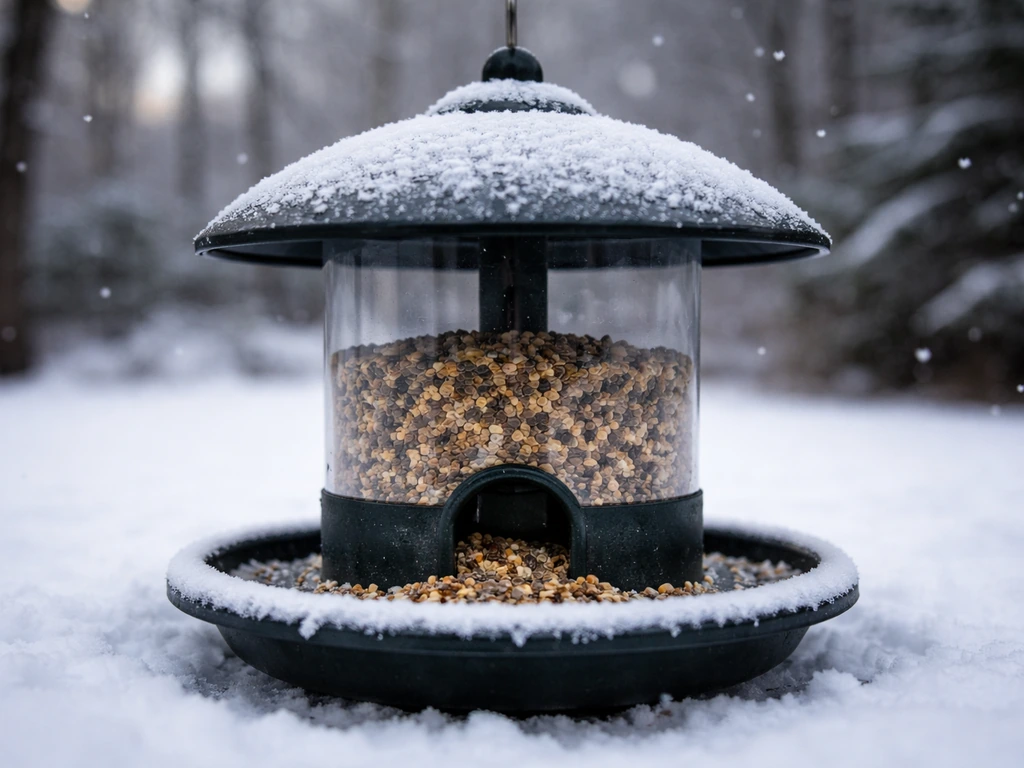
A feeder that works great in July can be a disaster by February. In winter, the feeder has two jobs it didn't have before: keep seed dry in rain, sleet, and snow, and stay functional when temperatures drop below freezing. Those two requirements eliminate a lot of cheap plastic feeders right away.
Moisture is the main enemy. When snow packs into seed ports or rain soaks the bottom of a tube feeder, you end up with moldy clumps that birds won't touch and that can actually make them sick. Audubon explicitly advises drying a feeder before refilling it, because leftover moisture in the reservoir sets up exactly that problem. Nyjer (thistle) seed is especially vulnerable. As Brome points out, Nyjer will spoil quickly if moisture gets into the tube, which is why ventilation and drainage matter so much for thistle feeders.
Wind is the second issue. A light feeder swinging violently on a hook in a January gale will spill seed constantly and may eventually fall. Capacity matters too: in deep winter you want a feeder that holds enough seed that you're not refilling every single day in below-freezing temperatures. Weight, stability, and a protected port design all play into this.
The main feeder types and how they handle winter
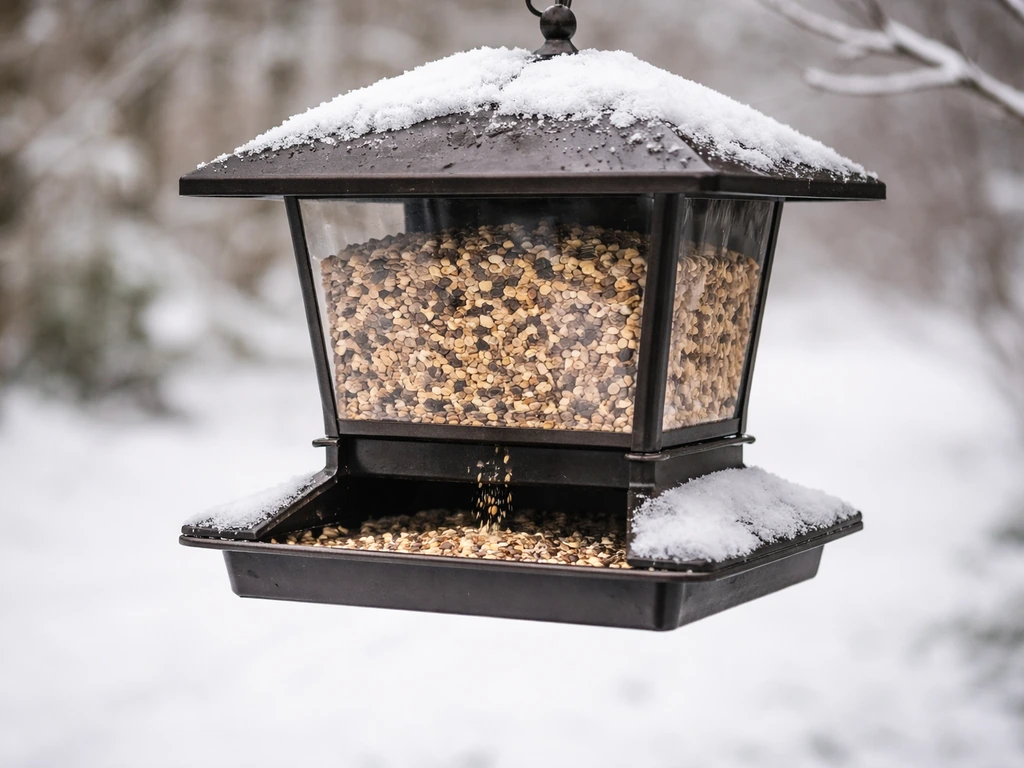
Not every feeder type is equally suited to cold-weather use. Here's how the major categories perform when the temperature drops.
Hopper feeders
Hoppers are my go-to recommendation for most winter setups. The seed is stored inside a protected reservoir and falls down to the tray only as birds eat it, which limits direct exposure to weather. A good hopper like the Birds Choice recycled-plastic 7-quart model has an extended roof that protects both birds and the seed port area, plus removable trays with solid drainage so standing water doesn't collect. The large capacity (7 quarts and up is common) means fewer cold-morning refills. The main downside: if the drainage isn't great or the lid seal is loose, moisture can still get in from below or above. Always check that a hopper has actual drain holes in the floor, not just a shallow tray.
Tube feeders
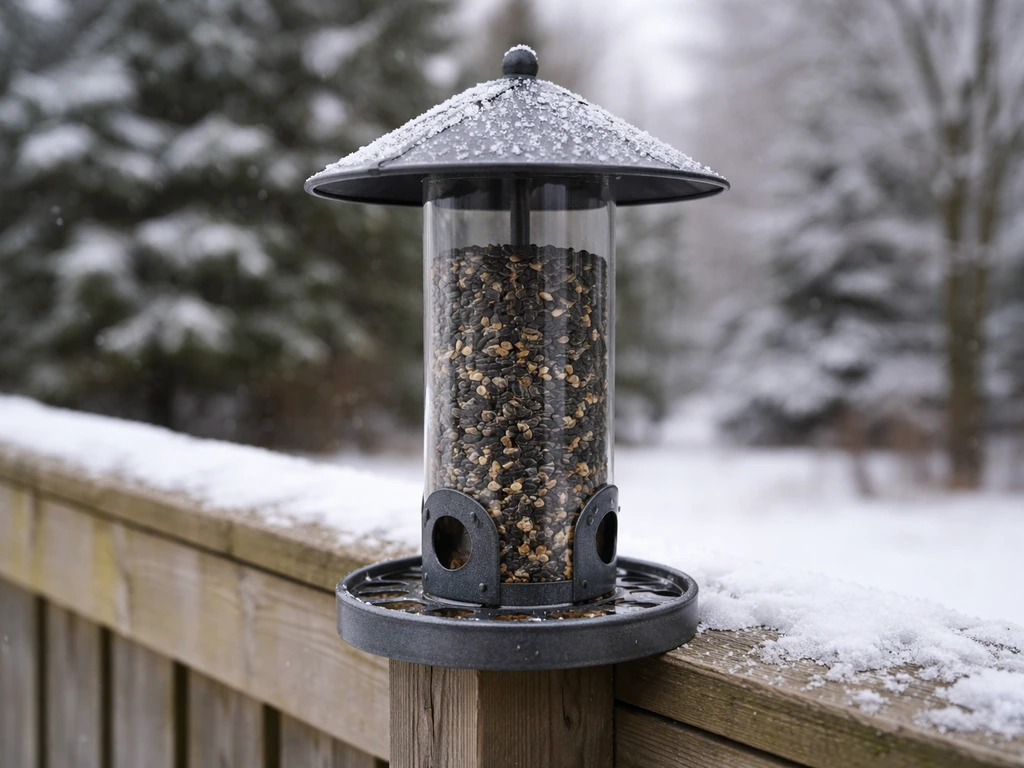
Tube feeders work well in winter if they're built for it. The key features to look for are drainage holes at the base (so water that gets in can escape), a peaked metal roof that sheds snow, and protected ports. Perky-Pet makes tube feeders with an attached baffle plus drain holes specifically designed to deflect and clear water on rainy and snowy days. Brome takes it further with their Seed Tube Ventilation system, which lets humidity and warm air escape through vents at the top and draws in fresh air from below, keeping the seed environment drier and more stable. For Nyjer feeders specifically, look for a finch screen tube design with drainage holes in the base and a twist-lock top and bottom for easy cleaning, like the Stokes Select finch screen tube feeder.
Suet feeders
Suet is one of the best winter foods you can offer, and suet feeders are refreshingly low-maintenance. A basic wire cage suet feeder costs next to nothing, doesn't clog, and handles freezing temperatures better than any seed feeder because suet is fat-based and doesn't absorb moisture the same way seed does. Cold weather actually helps: suet stays firm and fresh much longer in winter than in summer, when it goes rancid fast. If you're only going to add one feeder this winter, a suet cage is the easiest win.
Platform and tray feeders
Open platform feeders are the worst choice for wet winter weather on their own, but a covered platform feeder is a different story. Purdue Extension specifically recommends covered platform feeders as an effective way to protect seeds from moisture while still attracting a wide variety of species. Penn State Extension also emphasizes the need to put out only as much seed as birds can consume in a day to reduce disease risk from unconsumed food accumulating covered platform feeder. The cover does the heavy lifting. An uncovered tray in a snowstorm just fills up with snow. If you use a platform feeder, Penn State Extension advises putting out only as much seed as birds can eat in a day to prevent soggy, wasted seed from accumulating.
All-weather and specialty feeders
Some feeders are engineered specifically for harsh weather. Duncraft's all-weather feeder design, for example, positions a wide circular baffle directly under the seed ports so birds feed in a protected zone while driving rain, sleet, and snow are deflected away. Perky-Pet's Flexports are another clever approach: soft rubber port covers that flex as needed and act as a weather-resistant seal, keeping seed and even dried mealworms drier and fresher between visits. These specialty designs cost more but are worth it if you're dealing with particularly brutal winters.
Materials and design features that survive a real winter
Material choice is where a lot of buyers go wrong. A feeder might look solid in the store but crack after one freeze-thaw cycle or warp after a season of UV exposure and cold.
| Material | Winter durability | Weight | Best for |
|---|---|---|---|
| Recycled plastic (HDPE) | Excellent — won't crack, rot, or warp | Medium | Hopper and platform feeders |
| Powder-coated steel/metal | Excellent — handles ice and squirrels | Heavy | Tube feeders, suet cages, mounts |
| Wood (cedar/cypress) | Good if sealed, needs maintenance | Medium | Hopper feeders in dry climates |
| Standard plastic (ABS/PS) | Poor — cracks in freezing temps | Light | Avoid for winter use |
| Glass/acrylic | Moderate — heavy, can crack if dropped | Heavy | Window feeders, mild climates |
Recycled plastic (HDPE) is probably the best all-around material for winter feeders. It doesn't absorb moisture, won't rot, and handles temperature swings without cracking. Powder-coated steel is the right call for any part of the feeder that squirrels are going to chew on or that needs to bear weight. Heath's winter-oriented feeder line highlights both durable steel construction and drainage holes as core features, and that combination is exactly right.
Beyond material, look for these specific design details in any feeder you're considering for winter use:
- Drainage holes in the seed tray or tube base (not optional — this is the single most important design feature for keeping seed dry)
- An extended or peaked roof that overhangs the ports and tray by at least a few inches
- Protected or recessed seed ports that birds access from underneath or inside a shroud
- Easy-open design (twist-lock, lift-off roof, or quick-release) so you can clean and refill without a fight in gloves
- Ventilation at the top of tube feeders to let humidity escape
- Weather-resistant finish or UV-stabilized material that won't fade and crack after one season
Wind resistance is worth thinking about separately. If you're in an exposed yard or open field, a heavier hopper on a sturdy pole is going to outperform a light tube feeder on a hook. For anyone dealing with consistently gusty conditions, it's worth reading up on the best bird feeders for windy areas before buying, because wind stress affects feeder longevity and seed retention more than most people expect.
On the waterproofing side, winter rain and ice are just as damaging as snow. A feeder that handles snow but lets rain soak through the ports is still going to cause mold problems. If you want to dig into which specific models are built to handle both, the guides on the best waterproof bird feeder options and the best weatherproof bird feeder designs are worth cross-referencing with whatever's on your shortlist.
Keeping seed dry is a bigger deal than most people think
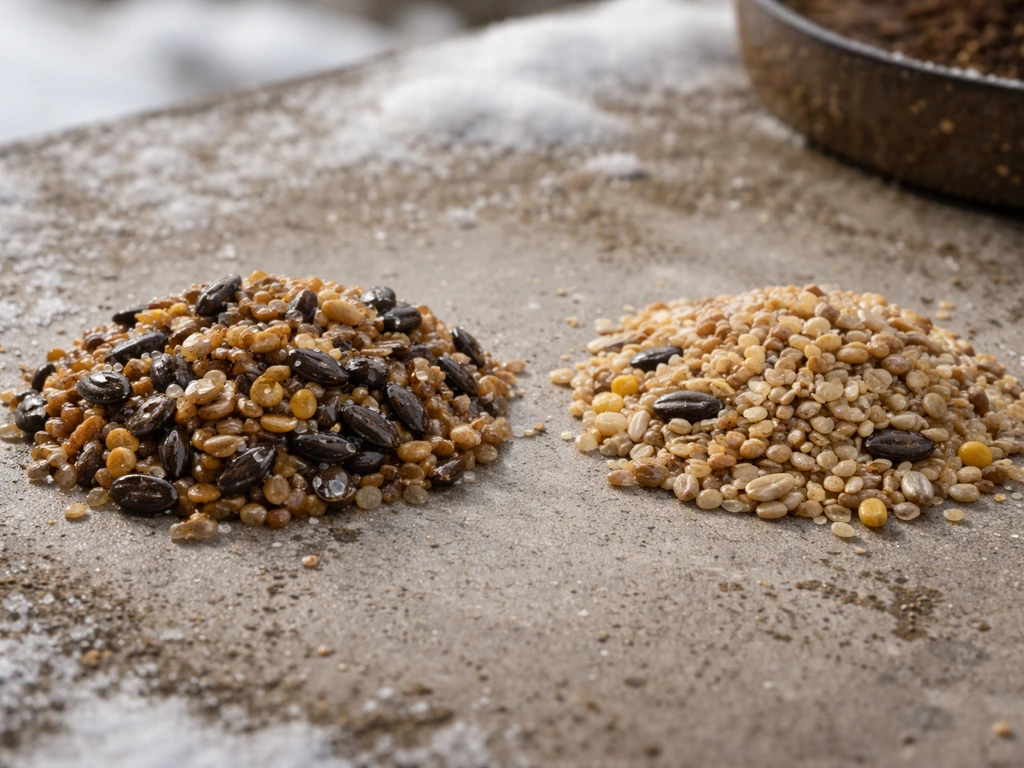
I've thrown out more soggy seed than I'd like to admit. The problem sneaks up on you: you fill the feeder, it looks fine, then two days of wet weather go by and you reach in to find a solid clump of fermenting black-oil sunflower seeds. Birds stop coming not because they've found somewhere else to eat, but because the food is genuinely bad.
The fixes are mostly about feeder design and placement. Perky-Pet recommends moving feeders to a sheltered spot during heavy rain if you can, and using a baffle or rain guard as a backup if you can't move the feeder. Brome's approach is to keep the ventilation holes clear through regular washing so that air can circulate and humidity can escape. If you're choosing between two feeders and one has drainage holes and one doesn't, always go with the drainage holes. The article on the best bird feeder to keep seed dry goes deep on this specific problem if you want more detail.
For anyone in a particularly rainy winter climate (Pacific Northwest, Southeast, or anywhere that sees more rain than snow), feeder choice gets even more critical. The best bird feeders for rainy weather guide covers the overlap between rain-resistant design and winter durability if you're dealing with both at once.
Squirrel and predator-proofing for winter
Winter is prime squirrel season. When natural food is scarce, squirrels get aggressive and persistent in ways you might not see in warmer months. I've had feeders emptied overnight and ports chewed out within a week. Getting this right requires both the right feeder and the right setup.
The right feeder design
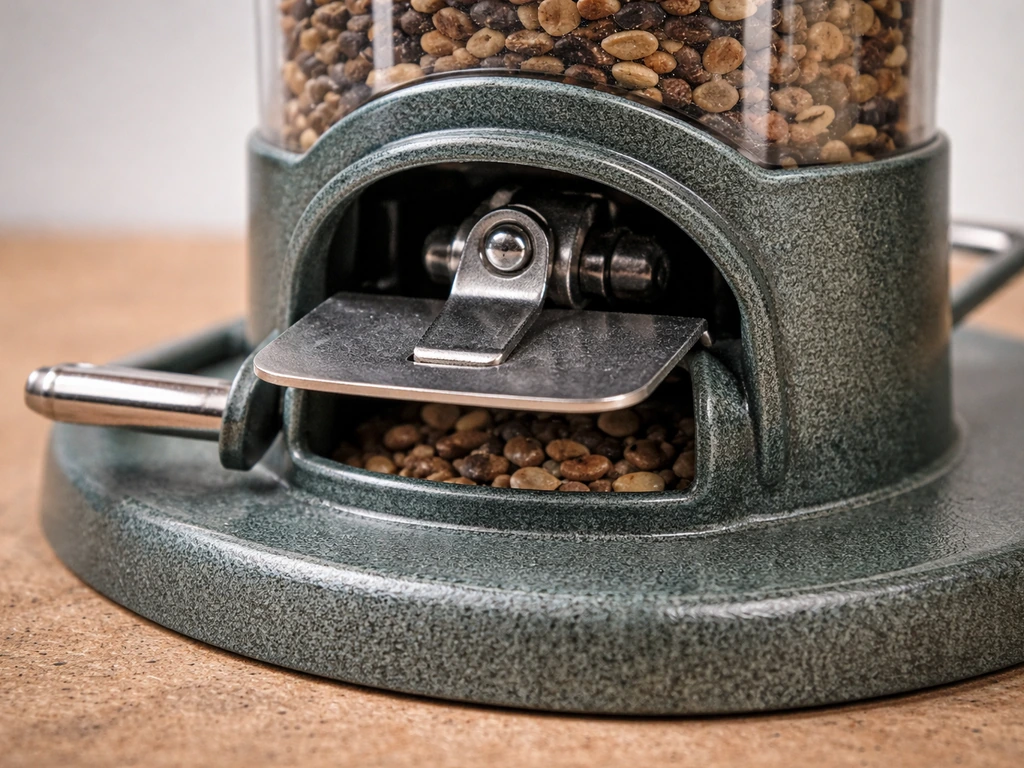
Weight-activated feeders like the Brome Squirrel Buster Plus close off the seed ports when a squirrel's weight is applied, while birds (which are much lighter) can feed normally. Perky-Pet's Squirrel Resistant Easy Feeder uses a wire barrier and port-protection design that physically blocks squirrels from reaching the seed or chewing out the ports. Either approach works, but weight-activated designs have the advantage of being passive: you don't have to do anything differently, the feeder just handles it.
Placement and baffles
Even the best squirrel-resistant feeder can be defeated by bad placement. Squirrels are capable jumpers, and they'll launch themselves from fences, trees, or structures if the feeder is close enough. The consensus from multiple wildlife extension sources is clear on the distances: place feeders at least 10 feet from any structure or branch a squirrel could jump from. For the pole baffle, mount it so the bottom of the baffle is about 4 to 5 feet off the ground. Audubon also advises mounting the baffle between four and five feet off the ground. Wild Birds Unlimited recommends a pole height of around 5 feet with the feeder at least 10 feet from jumping-off points. JCS Wildlife's spring-loaded Squirrel Stopper Baffle adds a mechanical element: the spring causes the baffle to move when a squirrel grabs onto it, which makes climbing it much harder.
The key numbers to remember for a squirrel-proof setup:
- Baffle mounted so its base is 4 to 5 feet above the ground
- Feeder at least 10 feet horizontally from any fence, tree trunk, deck railing, or structure
- If you're hanging the feeder (rather than pole-mounting), an overhead baffle or shepherd's hook with a wrap-around baffle is your best option
- Check that squirrels can't approach from above via overhanging branches
Cats and hawks are the other winter predators worth thinking about. Placing feeders within 10 to 12 feet of dense shrubs gives small birds an escape route without giving cats a hiding spot right next to the feeder. Window placement matters too: Maine Audubon notes that feeder accessibility for cleaning should be a placement consideration, and feeders too close to windows can be a collision hazard, especially in low winter light.
Which birds use which feeders in winter
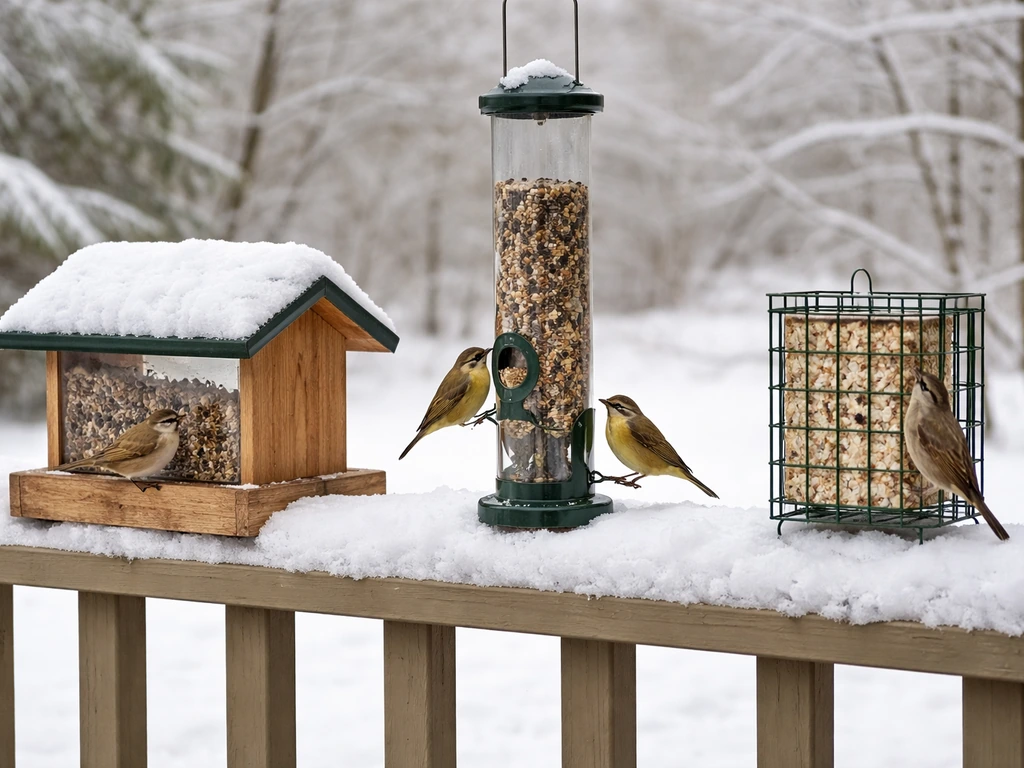
Winter narrows your bird list down to the hardy year-round residents and the species that move into your region from farther north. Knowing which birds you're likely to see shapes which feeder types make sense to put out.
| Bird | Feeder type | Best seed/food | Notes |
|---|---|---|---|
| Northern Cardinal | Hopper, platform | Black-oil sunflower | Prefers feeding at roughly eye level, 5-6 feet high |
| Downy Woodpecker | Suet cage | Suet, suet cakes | Most frequent woodpecker visitor to suet feeders per Audubon |
| Hairy Woodpecker | Suet cage | Suet | Less common than Downy but same setup works |
| Black-capped Chickadee | Tube, hopper | Black-oil sunflower, suet | Readily uses suet feeders in winter |
| White-breasted Nuthatch | Suet, tube | Suet, sunflower | Often feeds head-down on suet cages |
| Tufted Titmouse | Tube, hopper, suet | Sunflower, suet | Attracted by suet feeders in winter per Audubon |
| American Goldfinch | Tube (Nyjer) | Nyjer/thistle | Keep tube feeder dry; Nyjer spoils fast with moisture |
| Dark-eyed Junco | Platform (covered), ground | Millet, sunflower chips | Ground and low platform feeders work best |
| House Finch / Purple Finch | Tube, hopper | Sunflower, Nyjer | Feeding at roughly eye level per Perky-Pet guidance |
Suet is the winter workhorse for attracting woodpeckers, chickadees, nuthatches, and titmice. Audubon Great Lakes specifically calls out suet as the go-to food for drawing in all of these species during cold months, with the Downy Woodpecker being probably the most consistent visitor. If you only set up one specialty feeder for winter, a suet cage is it. For cardinals and finches, a hopper or tube feeder with black-oil sunflower seed at around 5 to 6 feet high covers most of what you need.
How to choose the right setup for your yard and climate
Before you buy anything, spend two minutes thinking through these questions. Your answers will narrow the field considerably.
- What's your winter weather actually like? Heavy snow and ice need a different feeder than a wet but mild winter. If you're in a true cold-and-snowy climate, prioritize capacity, drainage, and a hopper or covered platform design. If you're in a rainy mild-winter region, weather-resistant port design and drainage matter more than snow-shedding capacity.
- Do you have squirrel pressure? If yes, plan for a pole mount with a baffle from the start. Don't buy a hanging feeder and add a baffle later as an afterthought; design the whole system together. Budget an extra $20 to $40 for a quality spring-loaded or wrap-around baffle.
- Which birds do you want to attract? If woodpeckers and nuthatches are the goal, add a suet cage. If you want cardinals and finches, a hopper with black-oil sunflower is the priority. If goldfinches are the draw, get a ventilated tube feeder with drainage holes specifically designed for Nyjer.
- How often can you realistically refill and clean? If the answer is 'not often in the middle of winter,' prioritize a larger-capacity hopper (7 quarts or more) and avoid platform feeders where seed can sit and rot. Also look for feeders with easy-access cleaning (twist-lock or lift-off roof designs).
- Where will you mount it? Pole mounting is more squirrel-resistant and more stable in wind. Hanging works but requires an overhead baffle and careful distance from trees and structures. Window feeders are low-capacity but great for close-up viewing in winter.
Winter feeder buying checklist
- Drainage holes in the seed tray or tube base
- Extended or peaked roof with meaningful overhang (at least 2 to 3 inches past the ports)
- Metal or recycled-plastic build (no standard ABS plastic in freezing climates)
- Easy-clean design: twist-lock, lift-off lid, or quick-release components
- Capacity of at least 4 to 7 quarts for a primary hopper feeder
- Weight-activated port closure or wire cage if squirrels are a known problem
- Pole mounting plan with a baffle at 4 to 5 feet height and feeder 10 feet from structures
- Suet cage added as a secondary feeder if woodpeckers, chickadees, or nuthatches are in your area
- Ventilated tube design if you're feeding Nyjer to goldfinches or finches
One last thing: whatever feeder you choose, commit to cleaning it regularly through winter. Brome's guidance is to wash the feeder so ventilation holes stay clear and airflow keeps seed conditions stable. That's easy to let slide when it's 20 degrees outside, but a dirty feeder in winter is actually more of a problem than a dirty feeder in summer, because cold-stressed birds are more susceptible to disease from contaminated food sources. A quick rinse and dry every week or two makes a real difference.
FAQ
What’s the best bird feeder for winter if my yard gets a lot of rain but not much snow?
Choose a covered hopper or a tube feeder with true drainage holes plus a roof that sheds rain, not just snow. In heavy-rain climates, prioritize ventilation or moisture escape features, and plan on refilling less often but with more frequent checks for wet clumps near the ports.
How do I tell if a feeder I bought is actually winter-ready or just “advertised” as such?
Look for drain holes in the lowest point of the seed compartment, a lid that seals tightly, and a roof or baffle that keeps precipitation off the port area. If the design only has a shallow drip tray with no through-drain holes, water can still sit and grow mold after freeze-thaw cycles.
Should I bring the feeder inside during freezing weather?
Usually no, since birds will keep coming as long as ports are open and seed is dry, but you should prevent blockage. If you have repeat freezing where ports crust over, switch to a feeder with better drainage and protected ports, and do shorter check-ins after storms rather than fully removing it for days.
Can I use the same seed all winter, or should I change what I put in the feeder?
You can, but some seeds are more sensitive to moisture than others. Nyjer (thistle) is especially vulnerable to humid, wet conditions, so if you’re using thistle in winter, stick to designs with ventilation and dry-out features, and clean more often to avoid spoilage.
What’s the easiest way to prevent soggy seed when I can’t move the feeder during storms?
Use a sheltered placement plus a backup baffle or rain guard so water is deflected away from the ports. Also keep ventilation-related openings clear through regular washing, because trapped humidity can make seed go bad even when the roof looks intact.
How often should I clean a winter bird feeder?
If you’re in freeze-thaw conditions or the weather turns wet, aim for a quick wash and dry every one to two weeks, and check more frequently after rain or snow melt. Focus on clearing ventilation passages and removing any caked seed from port edges where moisture collects.
Do I need a baffle even if I already bought a covered feeder?
Yes in many yards. A covered feeder protects from precipitation, but it does not stop squirrels from reaching and chewing ports. If you’re dealing with squirrels, use a pole-mounted baffle (or a squirrel-resistant/weight-activated feeder) and avoid placing the feeder near launch points.
How high should I mount the best bird feeder for winter to reduce squirrel and cat problems?
A common target is mounting the feeder about 10 feet from any branch or structure squirrels could jump from, and setting the baffle so its bottom is roughly 4 to 5 feet off the ground. For cat safety, place feeders so there’s an escape cover for small birds (for example, dense shrubs) without giving cats a clear ambush line right next to the feeder.
What seed amount should I put in a covered platform feeder during winter?
Use a smaller daily quantity so leftover seed does not accumulate moisture and turn into a soggy mess. After a wet day, do a quick check and remove any damp or clumped seed rather than refilling on top of it.
Are suet feeders really low-maintenance in winter, or do they still need cleaning?
They are generally lower-maintenance than seed feeders, but they still benefit from routine checks. Replace suet that looks greasy or smells off, and clean the cage or tray so old crumbs do not attract pests or contaminate fresh suet.
Why do birds stop coming even though the feeder isn’t empty?
Most commonly, the seed has become wet and spoiled, especially after a couple days of rain, sleet, or snow melt. Also check for port blockage from ice or caked seed, then empty, clean, fully dry, and refill rather than trying to “top off.”
Which feeder type is best if I want finches and also need winter reliability?
Use a finch-screen or thistle-focused tube design with drainage holes and a twist-lock top and bottom for easy cleaning. Add more attention to ventilation and dryness, since thistle spoils quickly when moisture gets trapped in the seed.