The best bird watching feeder for most backyard setups is a tube feeder with a built-in squirrel-resistant cage for small songbirds, paired with a hopper or platform feeder if you also want cardinals, doves, or jays. If you want the top bird feeder for your yard, choose a style that matches the birds you’re trying to attract and the pests you need to block best bird watching feeder. That combo covers the widest range of species, holds up to weather, and keeps the seed away from squirrels without requiring you to babysit it every day. If you're targeting one specific species like goldfinches or woodpeckers, a specialty feeder (nyjer sock or suet cage) is the smarter move. Read on and you'll know exactly which direction to go for your yard.
Best Bird Watching Feeder: Choose, Setup, and Buy Guide
Marcus Holloway
16 May 2026
How to choose the right feeder for your target birds
The single biggest mistake people make is buying a feeder before thinking about which birds they actually want to attract. The feeder style and the seed type are a package deal, and getting one wrong means the birds you want will keep flying past.
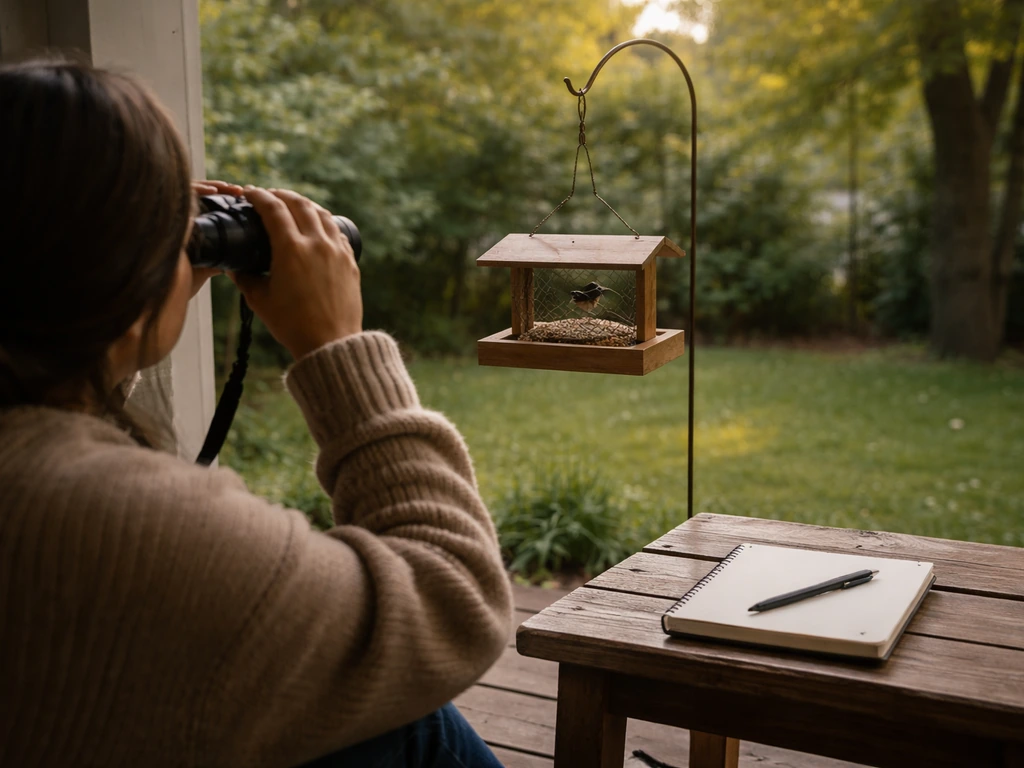
Start by watching your yard for a few days. Are you seeing small sparrows and chickadees hopping around? Medium-sized cardinals sitting in shrubs? Woodpeckers hammering nearby trees? Ground-feeding doves and jays? Each of those birds has strong preferences about feeder height, port size, perch style, and seed type. A finch tube feeder loaded with nyjer seed will attract goldfinches reliably but leave cardinals completely uninterested. A platform feeder piled with sunflower seeds will pull in cardinals and jays but also every grackle in the neighborhood.
Here's a quick species-to-feeder map to orient you before we go deeper into each style:
| Bird | Best Feeder Style | Best Seed or Food |
|---|---|---|
| Goldfinches, siskins | Nyjer/finch tube feeder | Nyjer (thistle) seed |
| Chickadees, nuthatches, titmice | Tube feeder (small ports) | Black oil sunflower |
| Cardinals | Platform/tray or hopper | Black oil sunflower, safflower |
| Mourning doves | Hopper or ground tray | Millet, sunflower |
| Blue jays | Platform/tray feeder | Whole peanuts, sunflower |
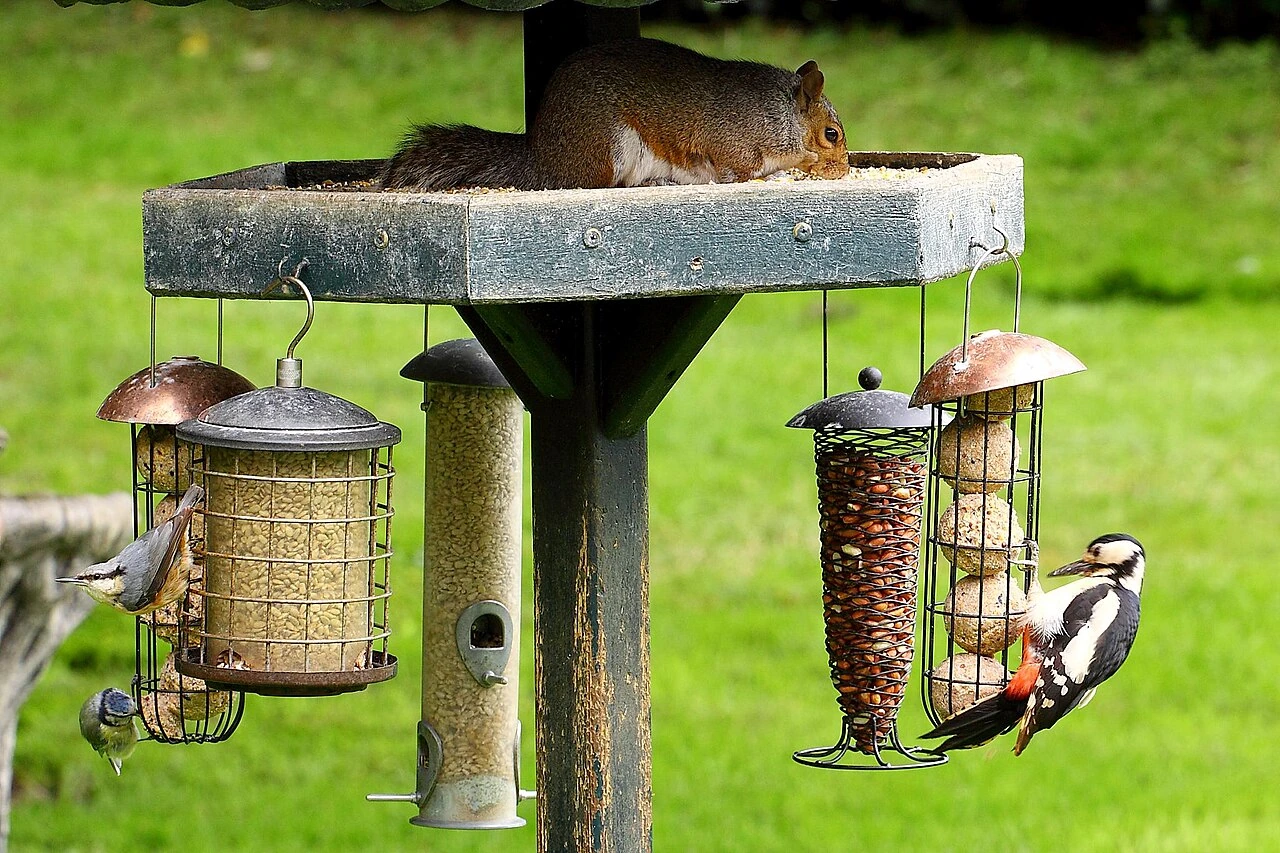
| Woodpeckers | Suet cage or peanut feeder | Suet cakes, peanuts |
| Hummingbirds | Nectar/hummingbird feeder | Sugar water (4:1 ratio) |
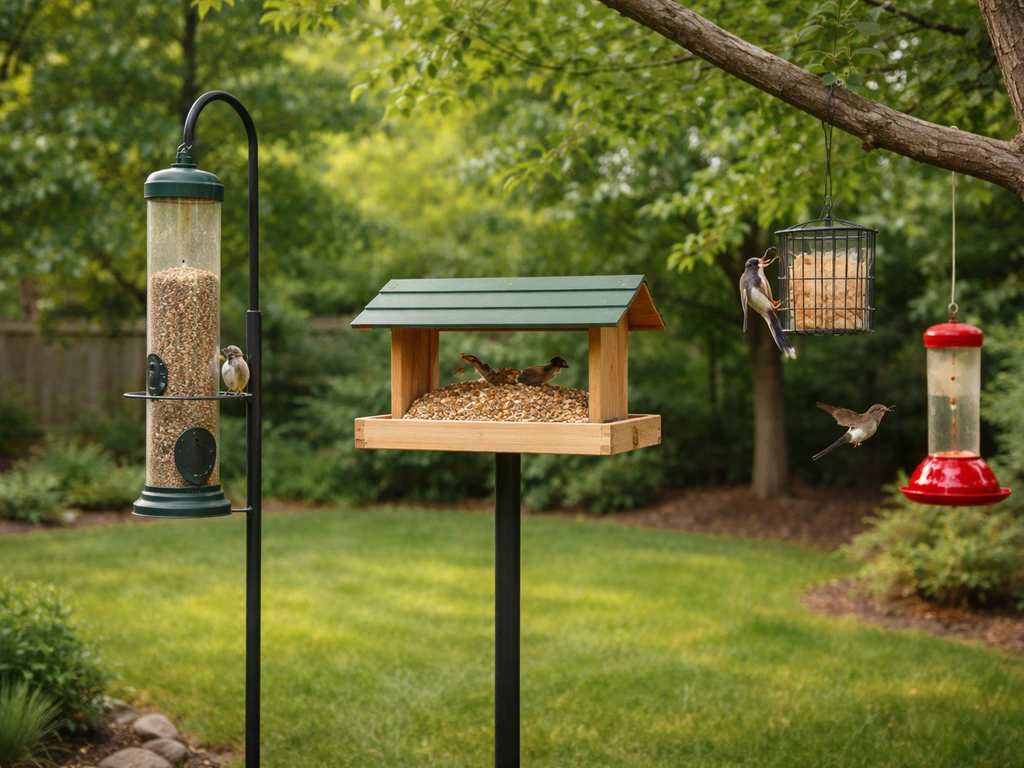
| Mixed small songbirds | Caged tube feeder | Black oil sunflower mix |
One thing worth noting: if you want to attract larger birds like doves or jays alongside smaller songbirds, you'll likely need two feeder styles. A single tube feeder won't satisfy them both. If you're specifically chasing larger species, it's worth looking at dedicated options designed with that in mind, since port size, perch length, and seed capacity all change significantly.
Feeder types compared: tube, hopper, platform, suet, and specialty
There are six main feeder categories, and each has a genuinely different use case. Here's what they do well and where they fall short.
Tube feeders
Tube feeders are the workhorse of backyard birding. They hold seed in a cylindrical chamber and dispense it through small ports, usually with short perches. The narrow ports naturally limit access to smaller birds, which is a real advantage if you're trying to keep jays and grackles from monopolizing the feeder. Standard tube feeders work well with black oil sunflower seeds. Finch-specific tube feeders (sometimes called nyjer feeders) have even smaller ports sized for tiny nyjer seed, and they're the go-to choice for goldfinches and pine siskins. The main downside of tube feeders is capacity: they hold less seed than a hopper, so you'll refill more often if you have a busy yard.
Hopper feeders
Hopper feeders look like little houses or barns. Seed sits in a covered reservoir and flows down to a tray or ledge at the bottom as birds eat. The roof keeps rain off the seed, which matters a lot for preventing mold. They work well for medium and larger birds like mourning doves, cardinals, and even some woodpeckers, and they hold more seed than a tube so you're not refilling every other day. If you’re specifically shopping for the best bird feeder for larger birds, look for designs with ports and perches sized for bigger species, like a hopper or a cage feeder. The trade-off is that their open perch design also invites bully birds. A hopper with an integrated squirrel cage solves most of that problem.
Platform and tray feeders
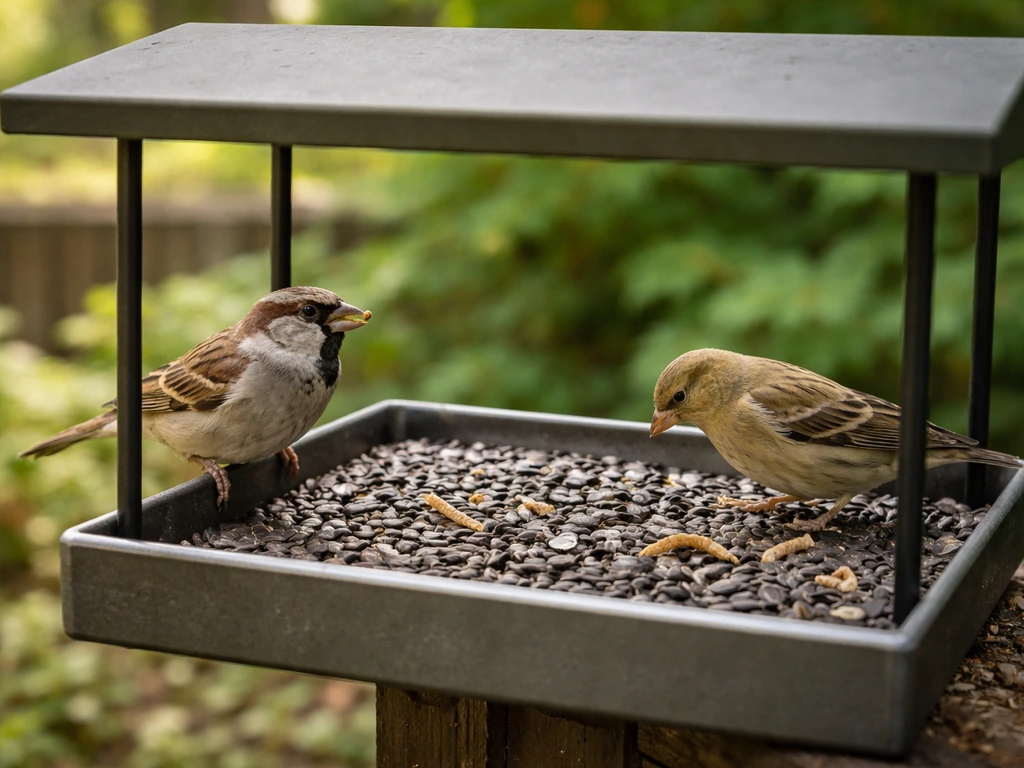
Platform feeders are flat trays, sometimes with a roof, sometimes completely open. They attract the widest variety of birds because the feeding posture feels natural to almost every species, including ground feeders like cardinals, jays, doves, and starlings. The downside is that open platform feeders are basically a buffet for every pest in the area. Rain soaks the seed, squirrels walk right on, and spoilage happens fast. If you like the platform style, look for one with mesh drainage and a roof. They're genuinely useful in a multi-feeder setup but I wouldn't use one alone if squirrels or grackles are already an issue in your yard.
Suet feeders
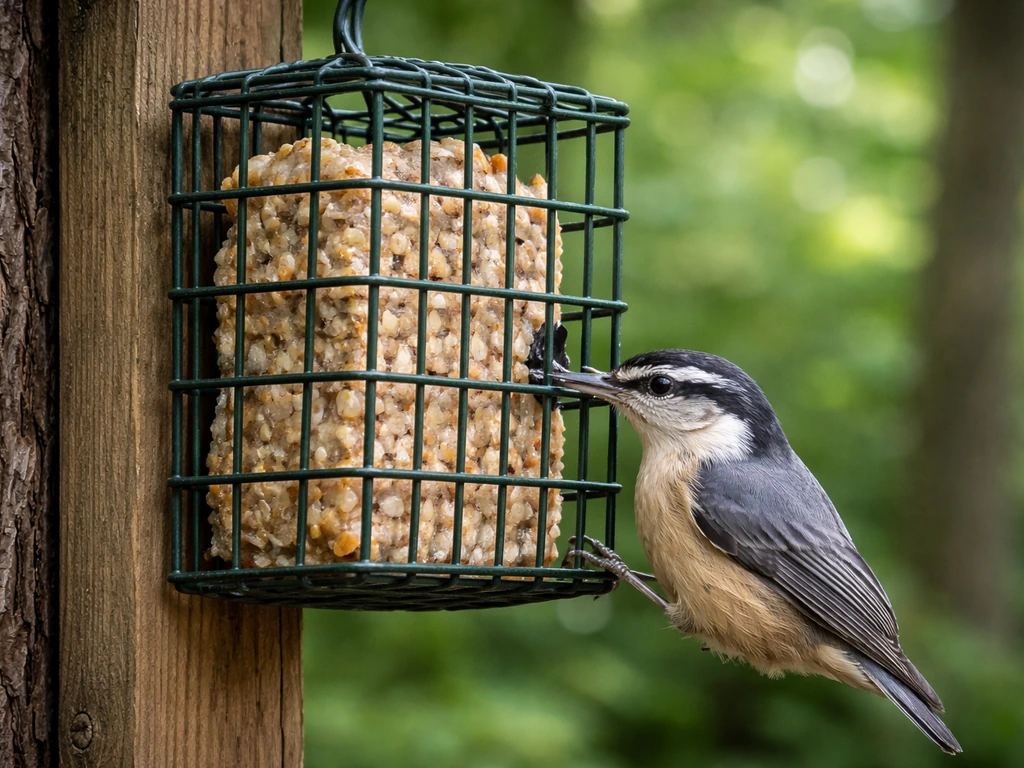
Suet feeders are simple wire cages that hold a suet cake (rendered fat mixed with seeds or insects). They're the best way to attract woodpeckers, nuthatches, and brown creepers, and they're inexpensive to buy and easy to maintain. Suet goes rancid faster in summer heat, so in warm months you'll want to switch to no-melt suet formulas or reduce how much you put out. Most suet cages are under $15 and work reliably for years.
Specialty feeders: hummingbird, peanut, and oriole
Hummingbird feeders hold sugar water and are worth having if you're in a hummingbird range (roughly spring through fall in most of the US). They need more frequent cleaning than any other feeder type because sugar water grows bacteria quickly, especially in heat. Peanut feeders (often wire mesh cylinders) are great for jays, woodpeckers, and nuthatches. Oriole feeders usually offer nectar and fruit. Each of these is a targeted investment: great if you're chasing that specific bird, pointless if you're not.
Caged feeders
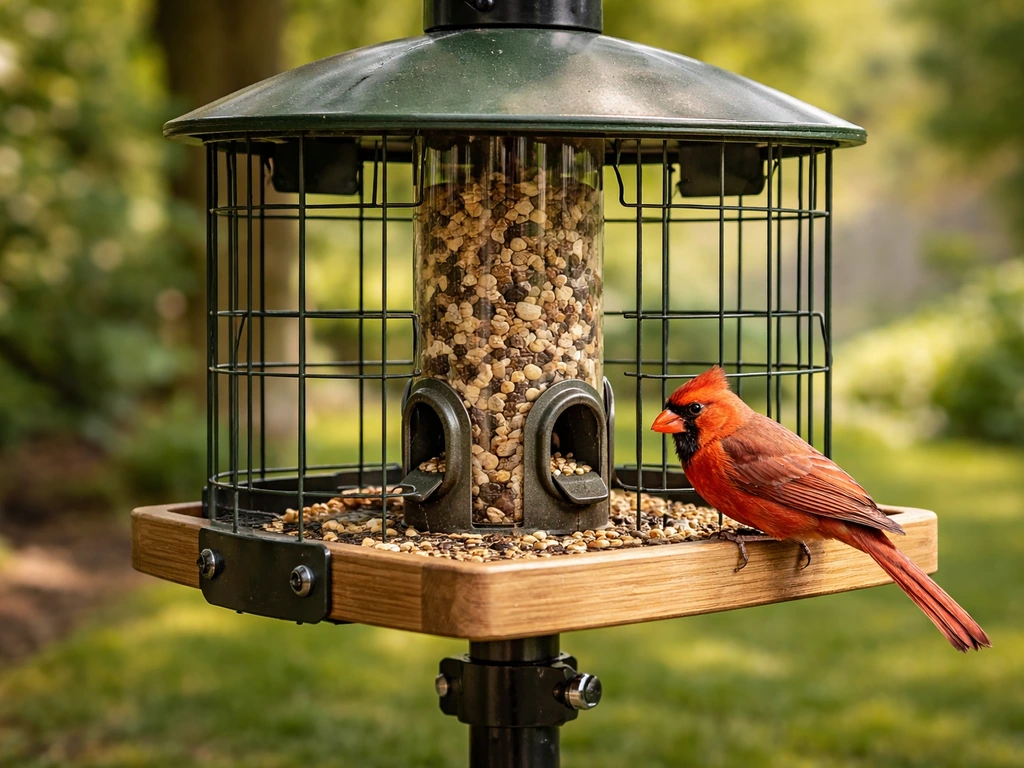
Caged feeders put a wire mesh enclosure around a standard tube or hopper. The cage openings are sized to let small songbirds through while physically blocking larger birds and reducing squirrel reach. They're one of the most practical all-in-one solutions if you have a pest problem and don't want to think too hard about it. You give up a little visual elegance but gain real peace of mind.
Material, durability, and weather resistance
Feeder material determines how long it lasts and how much maintenance you'll be doing. Here's the honest breakdown:
| Material | Durability | Weather Resistance | Maintenance | Best For |
|---|---|---|---|---|
| Metal (powder-coated steel) | Excellent (5-10+ years) | High, resists UV and moisture | Easy to clean, wipe down | Squirrel-proof designs, long-term use |
| Recycled/UV-stable plastic | Good (3-7 years) | Good if UV-stabilized, can crack in extreme cold | Dishwasher safe models available | Budget feeders, tube feeders |
| Wood (cedar, pine) | Moderate (2-5 years) | Moderate, needs sealing or painting | Harder to sanitize, can harbor mold | Hopper and platform styles, aesthetics |
| Glass | High (won't crack, UV-proof) | Excellent | Easy, smooth surface | Premium tube and hummingbird feeders |
| Copper | Very high | Excellent, ages to patina | Low | Decorative and long-lasting designs |
My personal preference after testing several options is powder-coated metal or UV-stable polycarbonate for the structural parts, with metal mesh or cage elements for squirrel resistance. Wood hoppers look beautiful but they absorb moisture, develop mold in the seed tray, and are genuinely hard to sanitize. If you live somewhere with wet winters or humid summers, a wood feeder is going to need replacement sooner than you'd like.
Pay attention to drainage too. Any feeder that can pool water (especially platform trays) should have drainage holes or mesh bottoms. Wet seed gets moldy fast and moldy seed can make birds sick. The Brome Squirrel Buster Plus goes a step further with a patented seed tube ventilation system that vents humidity and hot air through the top of the feeder to keep seed drier. It's a small feature that makes a real difference over a full season.
Predator- and pest-proofing your setup
Squirrels, raccoons, and bully birds like grackles are the most common reasons people give up on bird feeders entirely. The good news is that all three problems have practical solutions, and you don't have to spend a fortune.
Squirrels
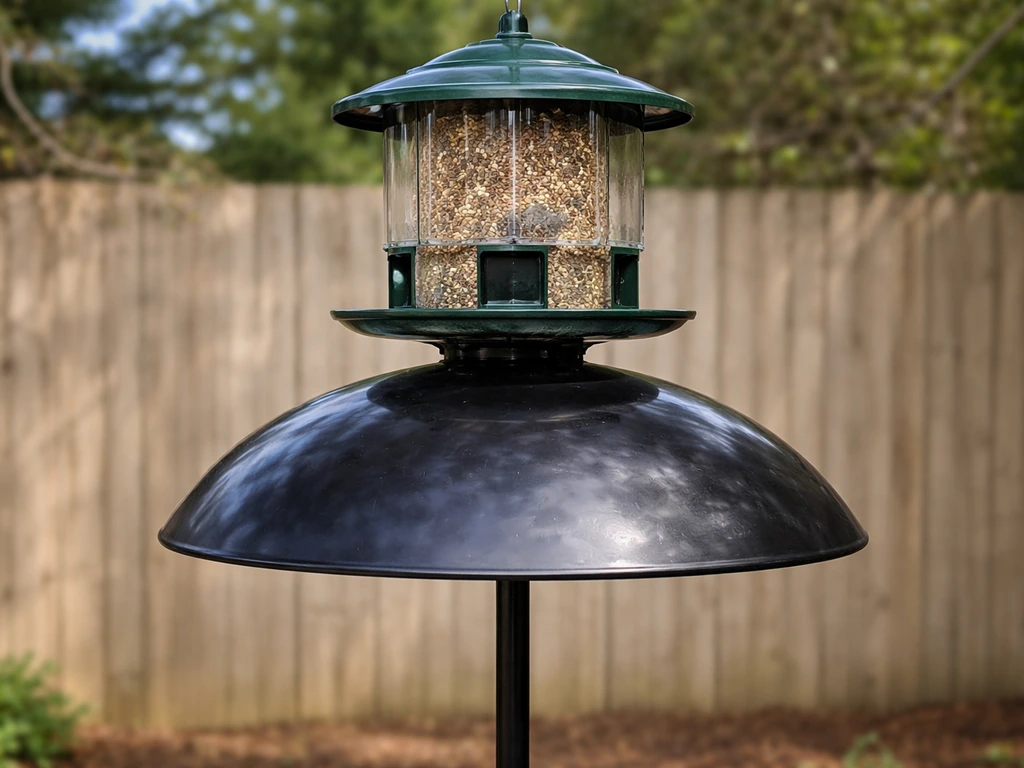
The most reliable squirrel deterrence combines feeder design with pole-and-baffle placement. On the feeder itself, weight-activated mechanisms (like the Droll Yankees Yankee Flipper, which spins its perch ring when a squirrel's weight triggers it) physically remove squirrels from the feeder. The Brome Squirrel Buster Plus uses a different approach: a weight-activated shroud closes off the seed ports when anything heavier than a small songbird sits on it. Bob Vila's 2026 round-up named it the best overall squirrel-proof feeder, and in my experience it earns that. The metal cap is too tight for squirrels to pry off, and the smooth tube body gives them nothing to hold onto.
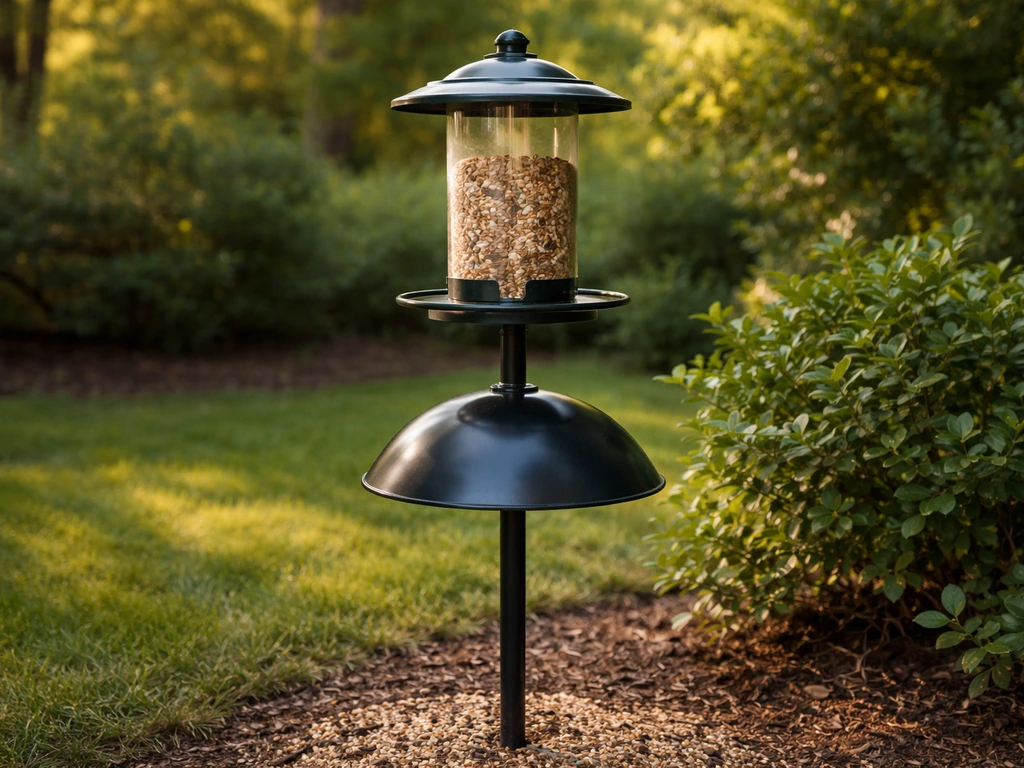
If you're mounting on a pole (which I recommend), a baffle is non-negotiable. A dome baffle mounted on the pole below the feeder blocks climbing. The baffle needs to be at least 4 feet off the ground to be effective, since squirrels can leap from lower surfaces. Wild Birds Unlimited and other specialty retailers sell baffles sized to specific pole diameters, so measure your pole before ordering. Without a baffle, even the best feeder design can be overcome by a determined squirrel that climbs the pole instead of accessing the feeder directly.
Raccoons
Raccoons are mostly a nighttime problem. The simplest fix is bringing feeders in after dark, but if that's not practical, a pole-mounted baffle works for raccoons too, and a tightly sealed hopper with a metal cap (rather than a plastic or wooden lid) limits their ability to pry it open. Weight-activated feeders can also close under raccoon weight.
Grackles and bully birds
Grackles are harder to exclude than squirrels because they're birds, so you can't use weight triggers without blocking large target birds like cardinals too. The most effective strategies are: switching to a caged feeder that physically blocks larger birds by size, switching your seed to safflower (grackles dislike it, cardinals love it), or using a tube feeder with short perches that favor smaller birds. If grackles are overwhelming your platform feeder, removing the platform and switching to a caged tube feeder with safflower will cut their visits dramatically.
Mounting and placement: where you put the feeder matters as much as which feeder you buy
Placement is something most guides gloss over, but it's genuinely one of the biggest factors in whether birds actually use a feeder. Here's what I've learned works consistently:
- Hang feeders at least 5 feet off the ground. Lower than that and ground predators (cats, raccoons) become a real threat, and birds feel exposed.
- Place feeders within 3 feet of a window OR at least 30 feet away. The goal is to prevent bird-window collisions. At close range, birds don't build up enough speed to be injured. At 30+ feet, they have enough visual clearance to navigate safely. The dangerous middle zone (4 to 29 feet) is where most strike casualties happen.
- Position feeders near cover. Birds feel safer feeding when shrubs, trees, or a brush pile are within 10 to 15 feet for a quick escape. Completely open placement in the middle of a lawn will see fewer visits.
- Avoid placing feeders directly over garden beds if you want to control mess. Seed hulls and droppings accumulate underneath every feeder.
- For hummingbirds, shaded placement keeps nectar cooler and slows bacterial growth between cleanings.
- Keep feeders away from known squirrel launch pads: tree branches, fences, and deck railings within 10 feet are all jumping-off points.
If birds aren't visiting a new feeder within a week or two, try moving it closer to existing cover before assuming there's a problem with the feeder itself. Location is almost always the issue, not the feeder.
Smart and AI bird feeder cameras: when they're actually worth it
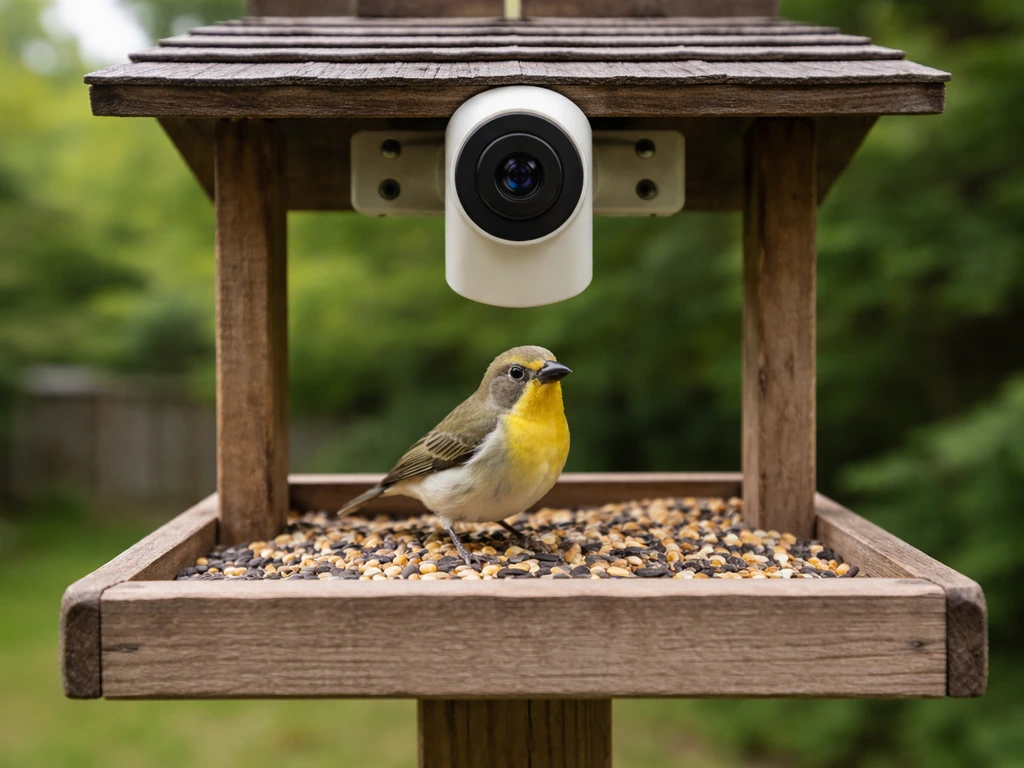
Smart feeders with built-in cameras and AI bird identification have gotten genuinely good in the last couple of years. Bird Buddy, Netvue Birdfy, and FeatherSnap Scout are the names you'll see most often. They send you a notification when a bird lands, snap a photo, and use AI to tell you what species it is. For someone who wants to keep a life list or learn bird identification, this is legitimately useful and fun.
That said, they're a specific tool for a specific kind of birder. Bird Buddy's AI (as reviewed by Tom's Guide) correctly identifies most common backyard species and even flags squirrel visits. Netvue Birdfy runs on a 5000mAh rechargeable battery and offers up to 30 days of cloud storage or local TF card storage, which is practical if your yard doesn't have a convenient power outlet. FeatherSnap Scout stores 5GB locally and also supports a Micro SD card, but real-world reviews note that AI identification can stumble when lighting is poor or the photo isn't sharp enough.
Here's the honest take on smart feeders: they cost $100 to $200+ compared to $20 to $60 for a quality traditional feeder. If you're a casual birder who just wants more birds in the yard, the extra money doesn't improve the experience much. But if you're actively trying to identify species, track visits, or share photos with others in your household, the AI camera pays for itself in enjoyment pretty quickly. They also make a great gift for someone who's new to birding and needs a low-effort entry point into species ID.
One thing to check before buying: whether the AI identification requires a subscription after an initial free period. Some models (Birdfy included) offer free AI features but push cloud storage upgrades. Read the fine print before committing.
Top picks by backyard scenario
Rather than a ranked list of random products, here are the setups I'd actually recommend based on what you're dealing with:
Best for most backyards (all-around starter setup)
A caged tube feeder filled with black oil sunflower seed, mounted on a pole with a baffle, placed near some shrub cover. This handles the majority of common songbirds, keeps squirrels frustrated, and doesn't demand much maintenance. If your budget allows, add a basic suet cage nearby and you'll also pull in woodpeckers and nuthatches.
Best if squirrels are a serious problem
The Brome Squirrel Buster Plus is the feeder I'd go to first. The weight-activated shroud closes ports when squirrels load the perch ring, the metal cap can't be pried off, and the ventilated seed tube keeps seed fresh. Pair it with a pole-mounted baffle (at least 4 feet high) and you're covering both the feeder-access and pole-climbing angles simultaneously.
Best for small or urban yards
Go smaller and more targeted. If you are looking for the best large bird feeders for your yard, focus on hopper or platform styles with the right access and cleanup needs. A nyjer tube feeder for finches and a compact suet cage covers a lot of species without taking over a small space. Avoid large platform feeders in small yards because the seed mess and pest traffic scale up fast with open tray designs.
Best for cardinals specifically
Cardinals want a comfortable perch, good sightlines, and sunflower or safflower seed. A hopper feeder or a tray feeder with some cover nearby is the setup they prefer. Loading it with safflower instead of sunflower also cuts down on grackle competition, since grackles tend to pass on safflower while cardinals eat it happily.
Best for woodpeckers
A suet cage mounted on a tree trunk or a vertical pole-mount is the most natural feeding position for woodpeckers. Larger woodpecker species (like pileated or red-bellied) may need a feeder with a longer tail-prop section below the cage, which some specialty suet cages include. Peanut feeders (wire mesh cylinders) are a strong second option.
Best for the tech-curious birder
Netvue Birdfy or Bird Buddy are both solid choices if you want AI identification without a complicated setup. Birdfy's long battery life makes it more practical for yards where running a power cable is awkward. Bird Buddy has a strong community app that lets you share sightings, which is a nice bonus if you enjoy that social element.
Best budget option
A basic plastic tube feeder (under $20) filled with black oil sunflower seed will attract a solid range of small songbirds with no fuss. Add a basic squirrel baffle ($10 to $15) and you have a functional, low-cost setup. You won't get the seed ventilation or lifetime durability of premium models, but as a starting point it works fine. Upgrade later if you decide you want to go deeper into backyard birding.
Setup, maintenance, and what to do when birds don't show up
Getting started
When you put up a new feeder, give it one to two weeks before worrying. Birds are cautious about new objects and often need time to discover and trust a feeder. Make sure you've placed it near cover (not in the middle of open lawn), hung it at the right height, and loaded it with fresh seed appropriate to the species in your area. If nothing is visiting after two weeks, try moving it closer to a shrub line or a tree.
Cleaning schedule
Cleaning is where most people fall short, and it genuinely matters for bird health. Mold and bacteria in a dirty feeder can make birds sick. Audubon recommends cleaning seed and suet feeders every two weeks as a baseline, and more often in hot or humid weather when mold grows faster. For the cleaning itself, a dilute bleach solution (1 part bleach to 9 parts water) is effective: soak the feeder for 10 minutes, scrub off residue, then rinse very thoroughly and let it dry completely before refilling. The Iowa DNR recommends at least a monthly bleach cleaning as a minimum. Alternatively, many plastic feeders are dishwasher-safe on a hot cycle.
Hummingbird feeders need more attention than any other type. Sugar water goes bad within a few days in warm weather, and a cloudy or fermented nectar feeder is harmful. In summer, rinse and refill every two to three days. In cooler spring or fall weather, every four to five days is usually fine.
Feeding schedules and seed freshness
You don't need a rigid feeding schedule. Top off feeders when they get to about one-third full rather than waiting for them to empty completely. Old seed at the bottom of a tube feeder can get damp and clump, which blocks the ports and wastes a lot of seed. Every refill is a good moment to shake out any clumped or wet seed from the bottom. In summer, buy smaller quantities of seed more often rather than bulk-buying and storing it for months, since seed goes stale and can grow mold in storage too.
If birds stop visiting
Seasonal lulls are normal. In late summer and early fall, natural food is abundant and birds may ignore feeders for weeks. In spring and summer, some birds shift to insects and fruit. Don't panic and don't assume the feeder is the problem. Keep the feeder clean and stocked, and activity will pick back up when the season shifts. If you see birds visiting but then suddenly stopping, check whether the seed has gotten wet or moldy, whether a predator (cat or hawk) has been hunting near the feeder, or whether the water source nearby has dried up. A bird bath close to the feeder setup is one of the most reliable ways to increase overall yard activity year-round.
FAQ
What feeder size should I buy for a small yard or balcony so seed mess stays under control?
For limited space, choose a tube or caged tube with a small seed reservoir, and avoid open platform designs. Smaller hoppers still help, but prioritize shorter perches and seed formats that birds you want can access quickly, since open layouts increase scatter, mold risk, and nuisance bird traffic.
How close should a “best bird watching feeder” be to trees or shrubs, and what distance is too close?
Place feeders near cover, typically within a few feet of shrubs or the edge of tree canopy, so birds feel safe. Avoid putting it directly against thick cover where predators can ambush from point-blank range, and keep it far enough that squirrels cannot use nearby branches to reach the feeder.
If I only want one feeder, what seed should I choose to attract the most birds without also inviting every pest?
Black oil sunflower seed in a squirrel-resistant tube or caged tube is a strong one-feeder approach because it supports many small songbirds. If grackles are a recurring problem, consider safflower instead, but note that safflower generally reduces visits from some finches compared to nyjer-focused feeders.
Can I mix multiple seed types in the same feeder?
Usually, don’t mix seed types in tube or hopper feeders designed for one format. Different seed sizes flow differently, and mixing can block ports (especially with finch nyjer) or leave certain seeds to spoil faster. Use separate feeders for finch seed, sunflower, safflower, and suet to keep access consistent and maintenance easier.
How do I prevent squirrels from learning the feeder’s routine?
Rotate strategies, not just locations. Use a proper pole baffle at least 4 feet high, keep the feeder area clear of climbing aids (no stacked wood or low fences nearby), and consider weight-activated mechanisms or a caged feeder. Squirrels adapt quickly, so consistent physical barriers matter more than occasional deterrents.
Do raccoons ever eat from tube feeders, and what’s the best way to stop nighttime visits?
Yes, raccoons can access many feeders at night by climbing poles or knocking at hangers. If bringing feeders in is not practical, use a pole-mounted baffle and favor tightly sealed designs like a capped hopper. Also secure the mount hardware, since raccoons can exploit loose fasteners even when the feeder itself is squirrel-resistant.
What’s the safest cleaning approach if I have birds actively visiting and I want to minimize disruption?
Take a feeder down briefly and clean it on a schedule that still meets bird health needs. Use the same cleaning method you choose, but rinse very thoroughly and let it dry completely before refilling, since leftover bleach or moisture can deter birds and promote residue buildup. If you run multiple feeders, keep at least one stocked to reduce sudden feeding gaps.
How can I tell whether a feeder problem is seed spoilage versus placement?
If birds ignore a new feeder, placement is usually the issue, especially if it isn’t near cover. If birds stop visiting a feeder that previously worked, check for wet seed, clumping, and mold, then look for nearby predation activity. Also verify weather exposure, since rain and dampness can ruin seed quickly even when squirrels are blocked.
What height should I hang or mount the best bird watching feeder at?
Mount height varies by species and local landscaping, but a practical rule is to avoid ground level and place feeders at a comfortable access height for small songbirds while still keeping the feeding area near cover. If squirrels can reach the feeder from nearby surfaces, raise it or add a baffle. If larger birds like cardinals are your goal, ensure perches are comfortable and visible, not tucked behind brush.
Is it okay to keep feeders running during winter storms or heavy rain?
In severe weather, prioritize feeders that protect seed from getting wet, like hopper designs with covered reservoirs or platforms with roofs and drainage. If seed gets damp, remove, clean, and fully dry before refilling, since mold can persist even after brief downtime. For suet, watch for melting and re-freeze cycles that can degrade quality.
How often should I refill a tube feeder to avoid clogs and wasted seed?
Top off when seed drops to about one-third full rather than waiting for it to empty. Old seed at the bottom can absorb moisture, clump, and block ports, so each refill is a good time to shake out damp material and confirm ports are clear.
Do smart bird feeders need subscriptions, and what should I check before buying?
Some models provide limited AI identification or storage for free, then require a subscription for continued cloud features or extended recording. Before purchasing, confirm whether bird identification and photo saving are available without recurring fees, and check whether the device can store images locally if you prefer not to pay ongoing costs.