The top bird feeder for your backyard comes down to two things: which birds you actually want to attract, and what problems you need to prevent (usually squirrels, grackles, or both). There is no single best feeder for everyone, but there is absolutely a best feeder for your specific setup. This guide walks you through picking one or building a short shortlist, so you leave here with a real answer, not a wall of vague options.
Top Bird Feeder Guide: Pick the Right Feeder for Your Yard
Marcus Holloway
18 Apr 2026
Match your feeder type to the birds you want
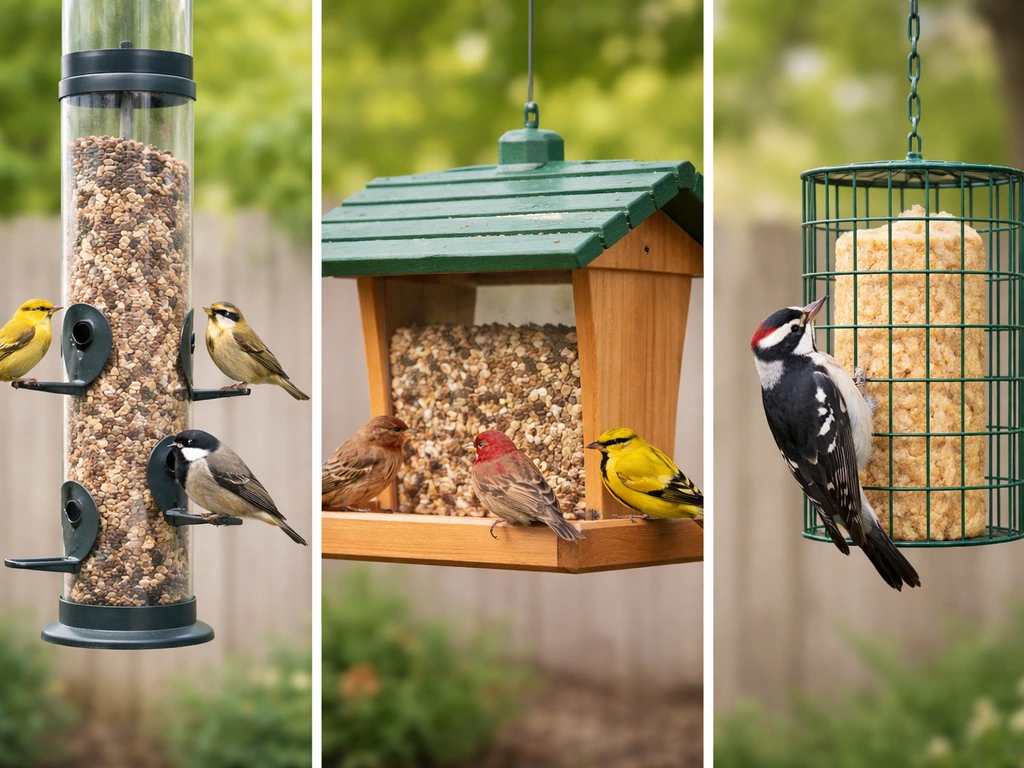
Different birds feed in completely different ways, and buying the wrong feeder means your target species simply will not use it. Cardinals, for example, need a wide perching ledge because they are ground-foraging birds by instinct. Finches are acrobatic and will cling to a tube feeder's tiny ports without any perch at all. Woodpeckers need something they can brace against vertically. Hummingbirds need nectar dispensers, full stop. If you get one thing right before buying, get this.
| Target Bird | Best Feeder Type | Best Seed or Food | Key Design Feature |
|---|---|---|---|
| Finches (goldfinch, house finch) | Tube feeder or nyjer/thistle sock | Nyjer seed or fine sunflower chips | Small ports, clinging perches or no perches |
| Cardinals | Hopper or platform tray feeder | Safflower or striped sunflower | Wide perching ledge, low or ground-level placement |
| Woodpeckers | Suet cage or upside-down suet feeder | Suet cakes (beef fat with seed) | Vertical wire mesh, tail prop support |
| Hummingbirds | Nectar tube feeder (glass or BPA-free plastic) | 4:1 water-to-sugar solution (no dye) | Multiple feeding ports, red accents, easy disassembly for cleaning |
| Chickadees, nuthatches, titmice | Tube feeder or small hopper | Black-oil sunflower seed | Smaller port size, any perch style |
| Mixed species | Hopper feeder or large platform tray | Mixed seed blend (black-oil sunflower base) | Roof for weather protection, multiple feeding positions |
| Larger birds (jays, doves, grackles) | Open platform or large hopper | Corn, millet, mixed blends | Open design, weight-bearing perch |
A quick note on suet: Cornell's backyard bird feeding research specifically highlights suet in a wire-mesh cage as close to a guaranteed woodpecker attractor. Downy, hairy, and red-bellied woodpeckers all go for suet regularly, and you will also pull in nuthatches and chickadees as bonuses. If woodpeckers are your goal, a simple $8 suet cage is honestly the most reliable investment you can make. An upside-down suet feeder (where birds have to hang to reach the cake) adds a useful extra step because starlings struggle with that position.
If you want to attract multiple species with one feeder, a hopper feeder filled with a quality black-oil sunflower blend covers the most ground. Audubon's feeding guides consistently recommend black-oil sunflower as the closest thing to a universal seed because its thin shell is easy for small and large birds alike to crack. Avoid cheap mixes heavy on milo or red millet, which most songbirds ignore and which pile up as waste.
Top-rated feeder picks for right now
Here is a practical shortlist organized by use case. These are the feeders I would recommend to a friend asking today, based on real-world performance, not just spec sheets.
Best overall: Squirrel Buster Plus (Brome)
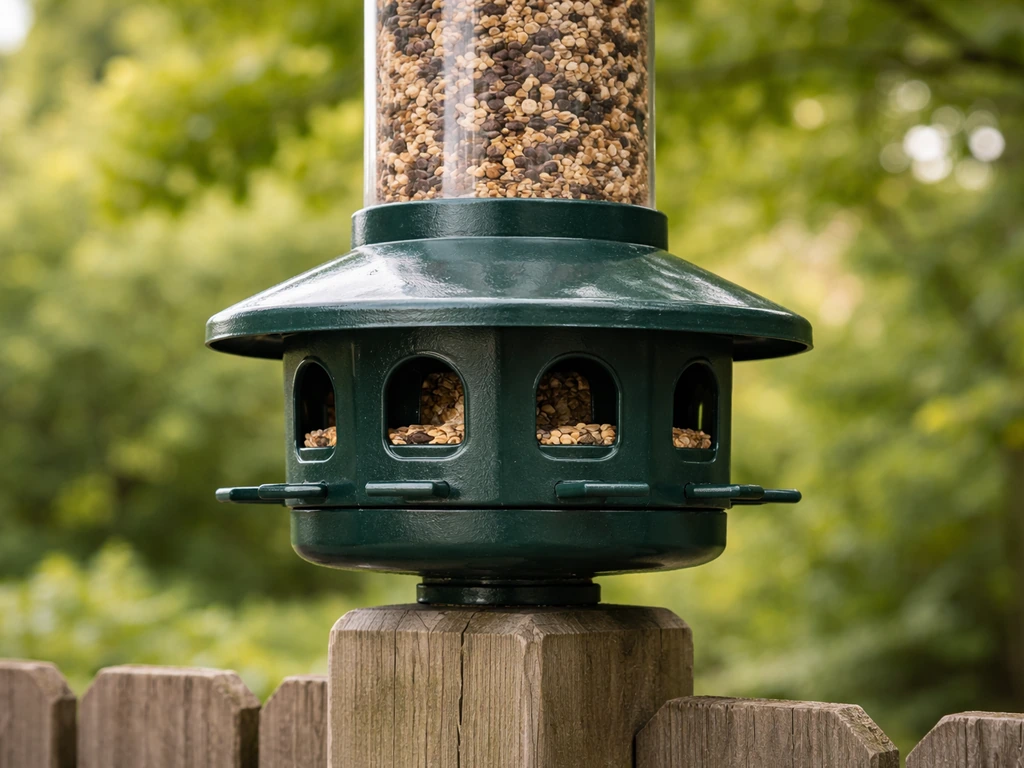
This is the feeder I point most backyard birders to first. It is a tube feeder with a weight-activated shroud that closes seed ports when anything heavier than a songbird lands on it. Cardinals, chickadees, finches, and nuthatches use it happily. Squirrels trigger the shutoff mechanism and give up. The tube is polycarbonate with stainless steel ports, so it holds up to UV exposure and season changes without cracking. It costs around $60, which sounds steep until you factor in that you stop losing a pound of seed a day to squirrels. Capacity is about 5.1 pounds of seed.
Best for finches: Droll Yankees Finch Flocker or Stokes Select Nyjer Feeder
For goldfinches specifically, a dedicated nyjer tube feeder with multiple small ports beats almost everything else. The Droll Yankees Finch Flocker has eight feeding ports and a removable base for cleaning, and it is made from UV-stabilized polycarbonate that does not yellow after a season in the sun. If you want a budget-friendly alternative, a basic nyjer mesh sock feeder works surprisingly well and costs under $10, though you will replace it a couple of times a year.
Best for cardinals: Perky-Pet Panorama or Woodlink Going Green Platform
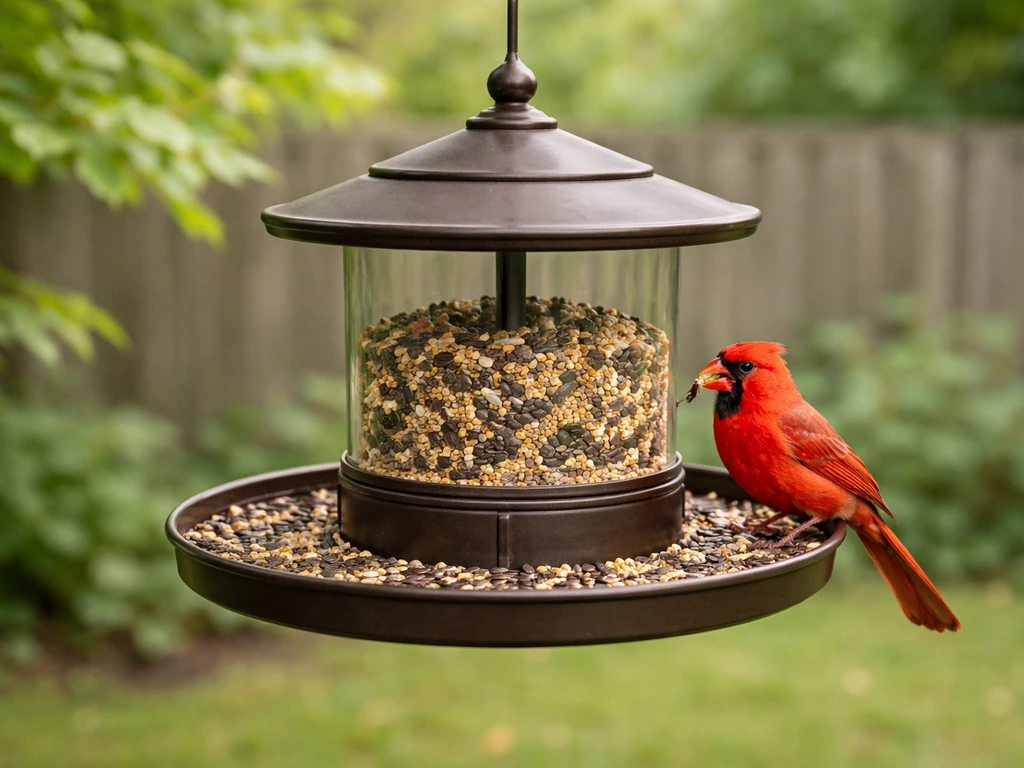
Cardinals need a wide perch and ideally a 360-degree feeding position. The Perky-Pet Panorama hopper feeder has a circular tray around a central seed reservoir, which gives cardinals and other medium-sized birds room to land and feed comfortably. The Woodlink Going Green Platform is a recycled plastic open tray that can be pole-mounted or hung and works brilliantly for ground-feeding species like cardinals, doves, and juncos. Platform feeders do accumulate moisture faster, but that is manageable with regular cleaning (more on that below).
Best for woodpeckers: Heath Outdoor Products Eco-Strong Suet Cage
A simple vinyl-coated steel suet cage is all you need for woodpeckers. The Heath Eco-Strong model has a tail prop extension at the bottom that supports larger woodpeckers (like the northern flicker or red-bellied) while they work the cake. It fits standard suet cakes and costs around $12. If starlings are a problem at your suet, switch to an upside-down suet feeder like the Stokes Select Upside-Down feeder, which forces birds to hang below the cake. Woodpeckers and nuthatches do this effortlessly. European starlings mostly cannot.
Best for hummingbirds: First Nature 3055 or Perky-Pet Pinch-Waist
The First Nature 3055 is a 32-ounce red plastic feeder with 10 ports and a wide basin base that is genuinely easy to clean. That matters a lot with hummingbird feeders because nectar ferments fast in warm weather and you need to rinse and refill every two to three days in summer. The Perky-Pet Pinch-Waist glass model is a step up in durability and aesthetics if budget allows. Avoid feeders with yellow plastic flowers on the ports because yellow attracts wasps and bees.
Best smart feeder: Bird Buddy Smart Bird Feeder
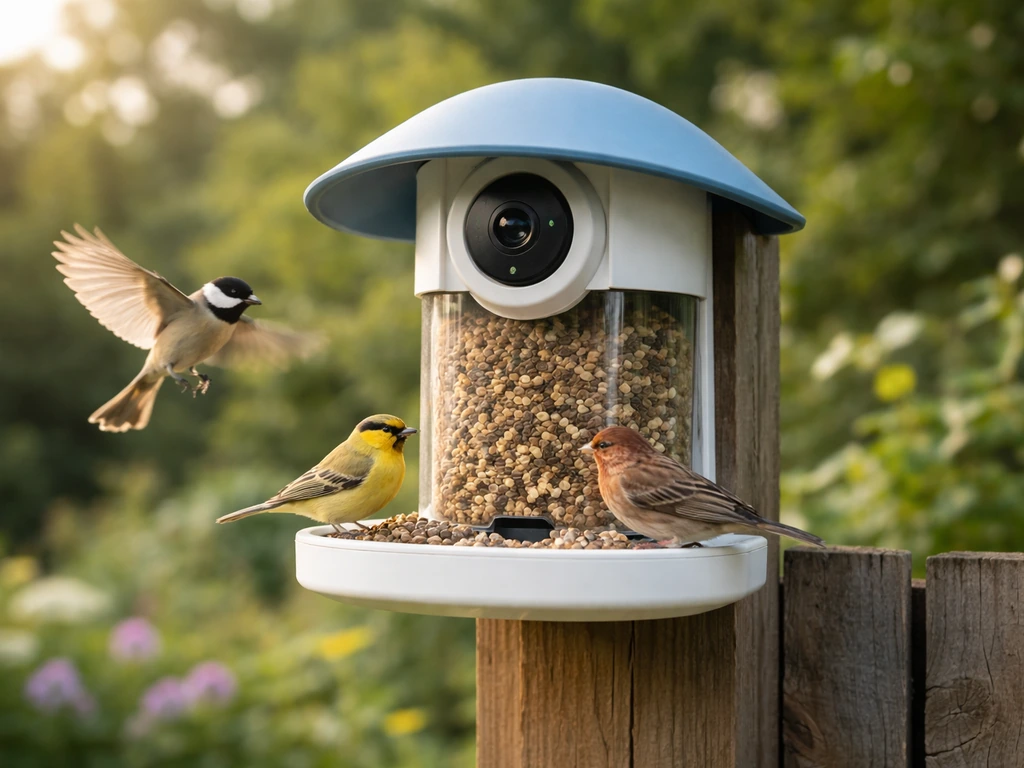
If you want notifications, photos, and AI species ID every time a bird lands, the Bird Buddy is the current frontrunner in the consumer smart feeder space. It connects to Wi-Fi, has a built-in camera, and uses AI to identify visiting species. It costs around $200 and uses standard seed. More on smart feeders in the dedicated section below.
Squirrel-proofing and keeping grackles out
Squirrels destroyed the first three feeders I hung. I am not exaggerating. A gray squirrel can chew through a thin plastic hopper in under a week and will figure out most DIY deterrents within days. The only approaches that actually work long-term are weight-activated feeders, pole-mounted baffles, or true caged feeders.
Weight-activated feeders
The Brome Squirrel Buster series and the Droll Yankees Flipper (a motor-powered spinning feeder) both use a squirrel's own weight against it. The Buster closes off seed ports under squirrel weight. The Flipper spins its perch ring when a squirrel grabs on, tossing them off (it is battery-powered and admittedly a bit theatrical, but it works). Both are genuinely effective as long as the feeder is properly hung away from jump-off points.
Pole mounting with baffles
A pole-mounted feeder with a squirrel baffle below it is the most reliable setup for any feeder type. The baffle needs to be at least 18 inches in diameter and positioned so the bottom of the baffle is at least 4 to 5 feet off the ground. The pole should be at least 10 feet away from any tree, fence, roof, or structure a squirrel can leap from. That 10-foot rule is critical and the one most people underestimate. Squirrels can jump roughly 8 to 10 feet horizontally from a running start, so distance plus baffle is the combination that works.
Caged feeders for small birds only
A caged tube or hopper feeder surrounds the feeding ports with a wire cage that lets small birds pass through but blocks squirrels and large birds. These work exceptionally well if grackles are your main problem. Grackles are smart, aggressive, and will dominate an open feeder and drive off every other species. A caged feeder instantly solves that because grackles cannot fit through the cage openings. The Woodlink Caged Feeder and Perky-Pet Squirrel-Be-Gone models are reliable options in the $25 to $40 range.
Safflower seed is also worth mentioning here as a deterrent strategy. Squirrels tend to dislike it, and so do grackles and starlings, while cardinals, chickadees, and house finches eat it readily. Switching your seed blend to a safflower-heavy mix in an otherwise open feeder cuts squirrel and grackle interest significantly without requiring any hardware changes.
Durability, weather resistance, and keeping your feeder clean
A cheap feeder that you have to replace every season costs more in the long run than a quality feeder that lasts a decade. Material matters most here, and the differences are real.
| Material | Weather Resistance | Durability | Ease of Cleaning | Notes |
|---|---|---|---|---|
| Polycarbonate plastic | High (UV-stabilized versions) | Good (5-10 years) | Easy, dishwasher-safe in some models | Avoid non-UV-stabilized versions that yellow and crack |
| Recycled plastic (HDPE) | Very high | Excellent (10+ years) | Easy, non-porous surface | Heavier, more expensive upfront but extremely long-lasting |
| Powder-coated steel/metal | Good with quality coating | Very good | Moderate (watch for rust at seams) | Best for hoppers and suet cages; check coating quality |
| Wood (cedar, pine) | Moderate (needs annual sealing) | Fair (5-7 years with care) | Moderate, must dry completely | Attractive but requires more maintenance; avoid particle board |
| Standard thin plastic | Low | Poor (1-3 years) | Easy but often irrelevant | Avoid for anything long-term; cracks in cold, warps in heat |
| Glass (hummingbird feeders) | High | Very good if borosilicate | Easiest to sanitize thoroughly | Heavier, can break if dropped; best for nectar clarity |
Cleaning is the maintenance step most backyard birders skip until something goes wrong. Wet seed mold in tube feeders can cause aspergillosis, a fatal respiratory fungal infection in birds. The rule I follow: every two weeks minimum for a standard seed feeder, every two to three days for a hummingbird nectar feeder in summer (more often when temperatures exceed 85F). Disassemble completely, scrub with a 9:1 water-to-bleach solution, rinse thoroughly, and let air dry completely before refilling. Feeders that do not disassemble easily are feeders you will not clean often enough, so prioritize removable bases and accessible tubes when you shop.
In winter, watch for wet seed clumping at tube feeder ports. A tube feeder with drainage holes at the base (some models include this, some do not) prevents seed from sitting in pooled water after rain or snow. In very cold climates, heated birdbaths pair well with feeders to create a complete winter station, since open water is often scarcer than food in freezing temperatures.
Where and how to mount your feeder
Placement affects which birds visit, how safe they are from predators, and whether your squirrel-proofing actually works. There is a lot of conflicting advice out there, so here is what the research and my own experience consistently support.
Window collision safety
Place feeders either within 3 feet of a window or more than 30 feet away from one. Anything in between creates a fatal window-strike risk. Birds startled from a feeder 5 to 20 feet from a window gain enough speed before impact to kill themselves. Under 3 feet, they cannot build enough momentum to be seriously injured if startled into the glass. Window feeders (suction-cup mounted directly on glass) are actually safer than mid-distance hanging feeders for this reason, and they provide an unbeatable close-up view.
Height and pole setup
A pole-mounted feeder should put the feeder itself at roughly 5 to 6 feet off the ground. That is comfortable for you to fill and gives birds an elevated position with clear sightlines for predator awareness. Use a shepherd's hook or dedicated feeder pole rather than improvised mounts for stability, especially in areas with wind or heavy birds like jays. If you are setting up multiple feeders (which I recommend once you are hooked), space them at least 5 feet apart to reduce competition and minimize seed contamination on the ground below.
Cover and open sightlines
Birds want nearby cover to dart to if alarmed, but they do not want to feed directly in dense brush where cats can hide. A feeder positioned 8 to 12 feet from a shrub or small tree gives birds a perch-and-wait staging area and a quick escape route without putting them at ambush risk. Ground-feeding platform trays should be in an open area with at least 6 feet of clear space on all sides. If outdoor cats visit your yard, switch to pole-mounted feeders with baffles exclusively and remove any low-to-ground platform feeders.
Multiple feeder setups
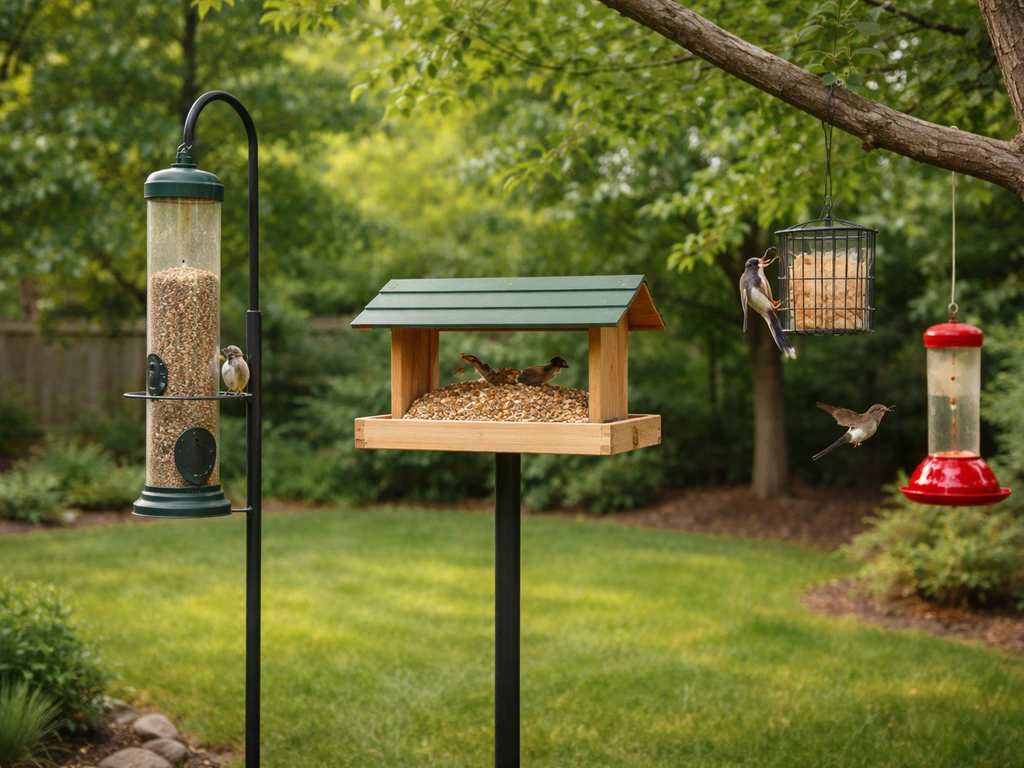
If you want to attract the widest range of species, a three-feeder station covering different ecological niches beats any single feeder. A practical combination: one tube feeder with nyjer for finches, one hopper with sunflower blend for chickadees and cardinals, and one suet cage for woodpeckers. UF/IFAS EDIS also recommends suet feeders, including wire-cage styles, as a suitable feeder choice for attracting woodpeckers and other birds blank" rel="noopener noreferrer">suet cage. Mount them on separate poles or use a multi-arm shepherd's hook to keep feeding zones distinct and reduce crowding. Dedicated feeder birds like cardinals and doves that prefer larger bird feeders or open platforms can be added as a fourth station once your core setup is working. For a deeper list of top options, see our guide to the best large bird feeders. If you’re targeting larger backyard birds, look for a feeder designed for their size—this is often the best bird feeder for larger birds choice.
Traditional feeder vs smart bird feeder camera: which one should you buy
Smart feeders with built-in cameras and AI species identification have gotten genuinely good in the last couple of years. The Bird Buddy, Netvue Birdfy, and similar models use on-device or cloud AI to identify visiting birds and send you a notification with a photo every time something lands. That is a real capability, not vaporware, and for certain users it is completely worth the extra cost.
When a traditional feeder is the right call
If your main goal is attracting and feeding birds rather than photographing or identifying them, a traditional feeder beats a smart feeder on every practical metric. Traditional feeders are cheaper (often by $100 to $150), have no Wi-Fi dependency, need no app setup, and have no camera lens to keep clean. If your yard already gets consistent species you recognize, there is no identification problem to solve. A Squirrel Buster Plus or a Droll Yankees hopper will serve you better than any smart feeder at attracting and sustaining a diverse bird population.
When a smart feeder camera earns its price
A smart feeder is worth the investment if you want to learn which species are visiting when you are not watching, want to photograph birds without sitting outside with a camera, or want to build a personal log of your yard's bird activity over time. The AI identification on current models is accurate enough for common species and improving steadily. For a birder who travels or works from home and wants passive monitoring, the Bird Buddy or Netvue Birdfy genuinely delivers on that promise. Both have solar-powered versions that reduce battery maintenance.
The honest trade-offs
- Smart feeders cost $150 to $250 vs $20 to $80 for a quality traditional feeder
- Camera lenses get dirty fast and need regular wiping to keep image quality sharp
- Wi-Fi connectivity can be unreliable at the far end of a yard
- Smart feeder designs prioritize camera angle over optimal feeding port placement in some models
- AI identification still misidentifies uncommon species or similar-looking birds fairly regularly
- Traditional feeders have no moving electronic parts to fail and no subscription costs
My honest take: start with a great traditional feeder and get your yard's bird community established first. Once you know what is visiting and want to document it or share it, add a smart camera feeder as a second station. Trying to optimize identification before you have consistent visitors is putting the cart before the horse. That said, if the photography and AI appeal is what is going to keep you engaged in backyard birding, get the smart feeder first, because the hobby only works if you actually enjoy it.
How to make your final pick and set up today
Here is the fastest decision path. Answer these three questions: What birds do I specifically want? Do I have a squirrel or grackle problem? Do I want photos and AI ID, or just birds? Match the first answer to the feeder type table at the top. If squirrels or grackles are a factor, add either a weight-activated tube feeder or a caged feeder to your shortlist automatically. If you want smart features, layer in a Bird Buddy or Netvue Birdfy as a second station after your primary feeding setup is running.
- Pick your feeder type based on target species (tube for finches, hopper or platform for cardinals, suet cage for woodpeckers, nectar feeder for hummingbirds)
- Choose squirrel-proof construction if squirrels are present: weight-activated shroud, caged design, or pole-mount with baffle
- Select UV-stabilized polycarbonate, recycled plastic, or powder-coated metal for multi-season durability
- Position the feeder either under 3 feet or over 30 feet from windows, 10 feet minimum from jump-off points for squirrels
- Mount at 5 to 6 feet high, 8 to 12 feet from shrub cover, with an open approach for bird safety
- Set a biweekly cleaning schedule from day one; build it into your calendar so it actually happens
- If adding a smart feeder camera, position the camera-side facing north or east to avoid direct sun glare on the lens
One last thing: do not overthink the first purchase. A $30 tube feeder filled with black-oil sunflower seed, hung 5 feet high on a shepherd's hook with a baffle, will attract birds within a few days in almost any suburban or rural yard. If you want the easiest way to narrow it down, start with the best bird watching feeder for your yard and the birds you’re trying to attract. Once you pick the right feeder type for your birds, you can also choose from the best bird water feeder options to keep drinking sources as well as food consistent. The goal right now is to start. You can refine from there once you see what species are actually showing up, add dedicated feeders for your favorites, and expand your setup as the hobby takes hold. Which, fair warning, it absolutely will.
FAQ
How long should I wait before deciding my new top bird feeder is not working?
If you cannot see consistent visits within 7 to 14 days, the issue is usually placement or seed type, not the feeder. Move it closer to the safety zone you already have (within about 8 to 12 feet of shrub or small tree cover) and verify the seed blend matches the target birds. For finches, switch to nyjer or nyjer-rich mix; for broad songbird coverage, use black-oil sunflower. Keep the feeder filled and avoid frequent changes to more than one variable at a time.
Should I replace my old feeder all at once, or transition slowly?
Seasoned birds can also learn to avoid certain feeding setups. If you change feeders, set the new one up near the old feeder location and run both for a week, then remove the old feeder. This reduces “dead time” where birds are searching for food and can prevent you from mistakenly thinking the new feeder is ineffective.
Can I combine foods like suet, seed, and nectar in one feeder setup?
Mixing suet with seed or nectar in the same feeder usually leads to cross-contamination, spoilage, and attracts the wrong species. Use a dedicated suet cage for woodpeckers, a dedicated nectar feeder for hummingbirds, and seed feeders for everything else. It is fine to run multiple feeders in the same yard, but keep food types separated.
What’s the most common cleaning mistake that causes bird illness or feeder mold?
For most seed feeders, the biggest contamination risk is wet, moldy seed getting into cracks and around feeding ports. Use a feeder that fully disassembles (removable base or tube section), scrub on schedule, and make sure it can drain or dry completely. If you live in heavy rain areas, prioritize drainage features or sheltered placement rather than only relying on “cleaning later.”
I have conflicting advice about feeder distance from windows, what’s the practical way to reduce window strikes?
Window placement is not just about distance, it is about controlling the flight path. If you place a feeder within the risky middle range, use window strike prevention options like visual markers and keep feeders positioned so birds do not have a clear high-speed approach. If you want an easy rule, use either very close (within a few feet) or far (beyond 30 feet), or switch to a suction-cup window feeder.
How do I squirrel-proof a setup if I’m using multiple feeder types?
Use a baffle strategy that matches the feeder type. For open platforms and many hoppers, a pole-mounted baffle is critical, and the gap matters. For tube feeders, weight-activated shrouds help, but squirrels can still sometimes access through jumping, so keep the 10-foot distance from jump points and maintain clearance under the baffle so they cannot grab from the side.
Will adding a birdbath near my top bird feeder make things better or create new problems?
Yes, but only if you do it intelligently. Keep seed and water separate, and do not let wet seed accumulate under platforms. If you add a birdbath near your feeders, ensure the area is cleaned regularly and that you have enough open escape space for birds. A heated birdbath in winter helps, but it should not drip onto seed trays.
What’s the best way to choose between one feeder vs a small feeder station?
It depends on your goal. If you want to attract more species, a single “universal” setup works better with a black-oil sunflower hopper plus one niche feeder (nyjer for finches, suet cage for woodpeckers). If you want to avoid aggression from grackles, switch priority to caged feeders and avoid open, easily dominated feeders in the same spot.
My birds aren’t using the feeder ports. What should I troubleshoot first?
Check three things before blaming the feeder: (1) port size for your target birds, (2) seed freshness, and (3) whether insects or wasps are being drawn by exposed nectar or bright colored accents. In nectar setups, keep to the rinse and refill schedule, and avoid yellow decorative flowers near ports because they can increase stinging insects.
If I buy a smart top bird feeder, what can cause AI bird ID to be inaccurate?
Most smart feeders require network reliability and adequate bird size/lighting to get consistent IDs. Place the feeder where it has stable Wi-Fi or use a model that supports strong cellular or local processing depending on your region, and expect occasional missed IDs in low light. Also, keep cameras and lens covers clean, because dirty optics reduce identification quality over time.
What DIY deterrents tend to fail quickly, and what should I inspect instead?
A squirrel can chew through many DIY materials, and even small access points (loose screws, gaps at the mounting bracket, exposed seed ports) can become the weak link. Treat hardware as part of the system: use a secure mounting, keep the feeder out from beneath structures the squirrel can use as launch pads, and inspect the setup weekly until it proves squirrel-resistant.