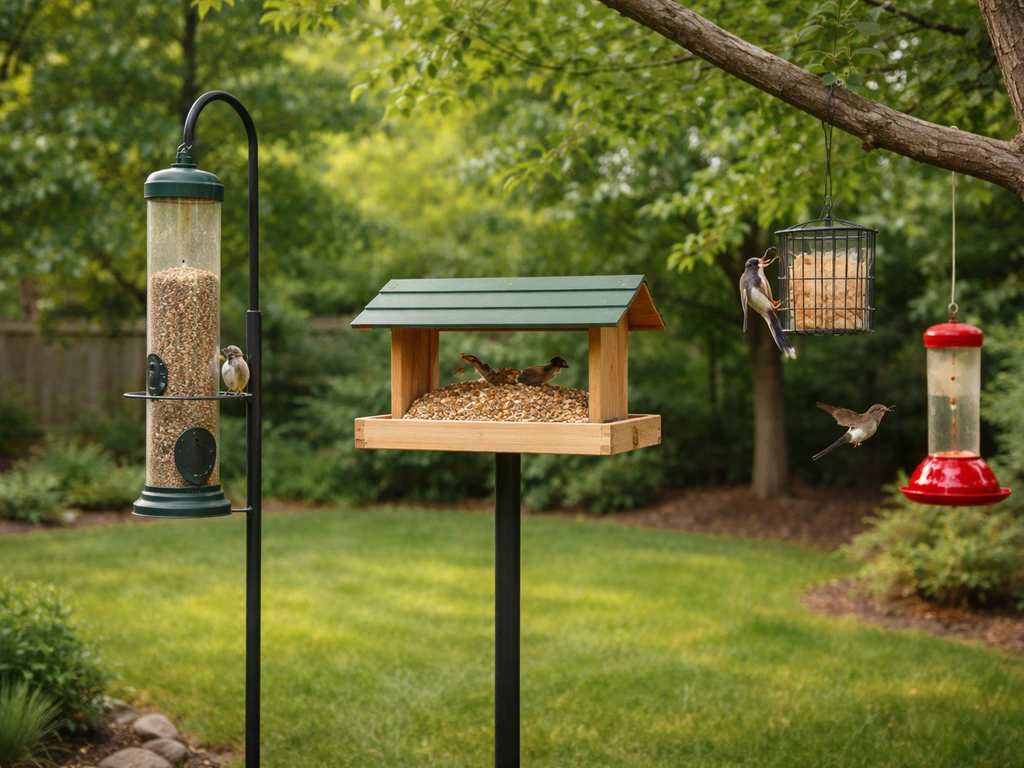
If you want to feed larger backyard birds, a standard tube feeder with tiny ports is not going to cut it. Bigger birds need more space to perch, wider seed access, and feeders built from materials that can actually handle their weight and grip strength. The good news is that once you match the feeder type to the bird, things click into place fast. Here is a straightforward breakdown of what to look for, which feeder types actually work, and what to buy for your exact setup. If you want the best bird water feeder for backyard birds, look for a setup that stays fresh, drains well, and doesn’t turn into a mess.
Best Bird Feeder for Larger Birds: Buying Guide
Marcus Holloway
20 Apr 2026
What counts as a "larger bird" and why it changes everything
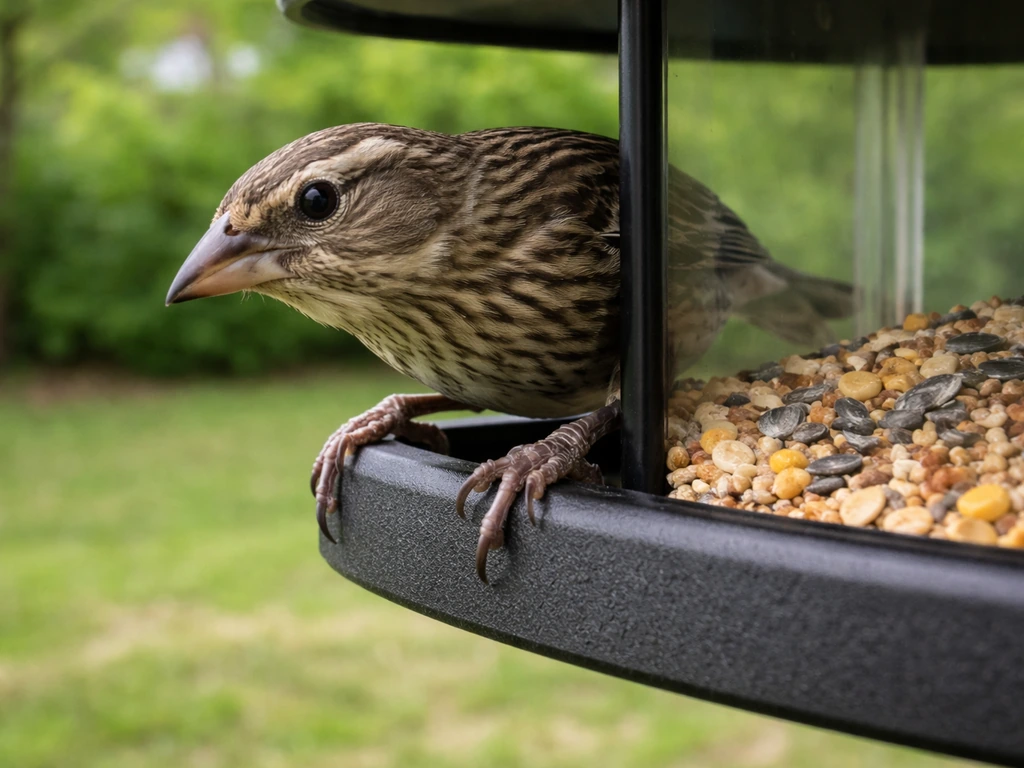
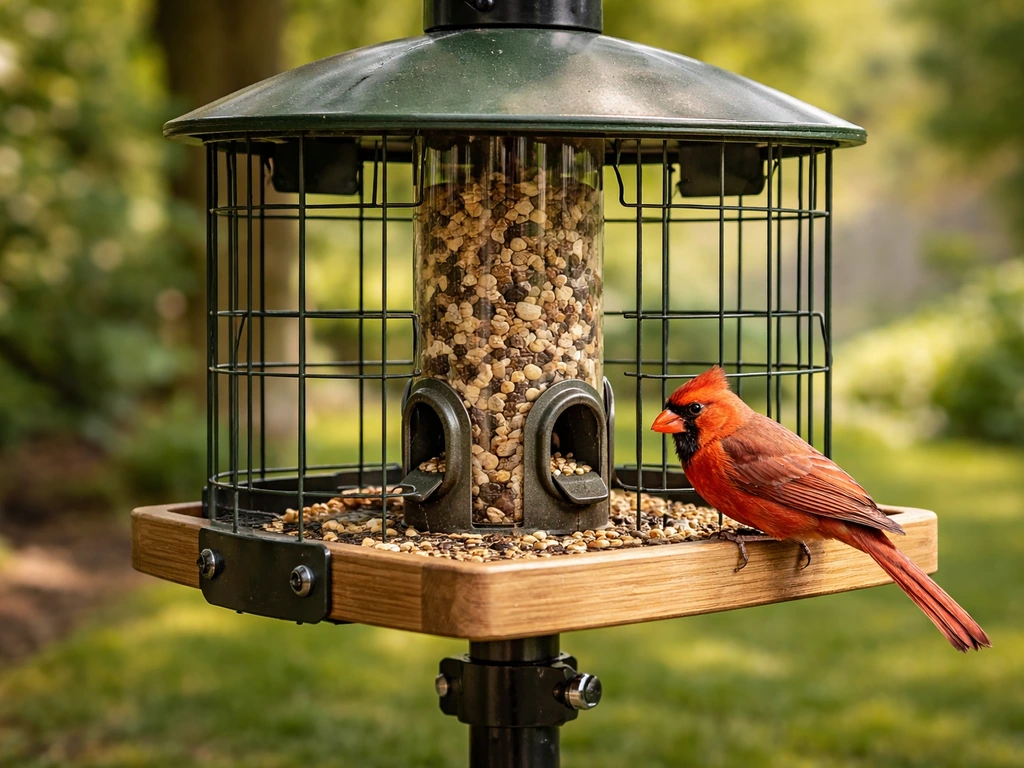
For practical feeder-buying purposes, a "larger bird" is anything that cannot comfortably cling to a standard tube feeder port or that weighs enough to tip a lightweight tray. Think mourning doves, blue jays, northern flickers, red-bellied woodpeckers, grackles, European starlings, rose-breasted grosbeaks, towhees, and cardinals on the bigger end. These birds range roughly from 1.5 ounces (cardinal) up to 5 or 6 ounces (grackle, flicker), and that weight difference matters for every part of the feeder: the perch size, the port opening, the structural material, and especially the weight-activated squirrel-proofing mechanism.
The main things that change when you are feeding larger birds: you need a wider feeding platform or bigger ports so they can actually reach seed, you need sturdier construction because heavier birds land hard and pull at feeder components, and you need to think carefully about which "larger bird" problem you are trying to solve. A platform feeder that welcomes mourning doves will also welcome grackles and starlings, which can take over completely. Seed choice and feeder access design work together to tip the balance toward the birds you actually want.
The feeder types that actually work for big birds
Not every feeder style accommodates larger birds equally. Here is how the main categories stack up.
Platform feeders
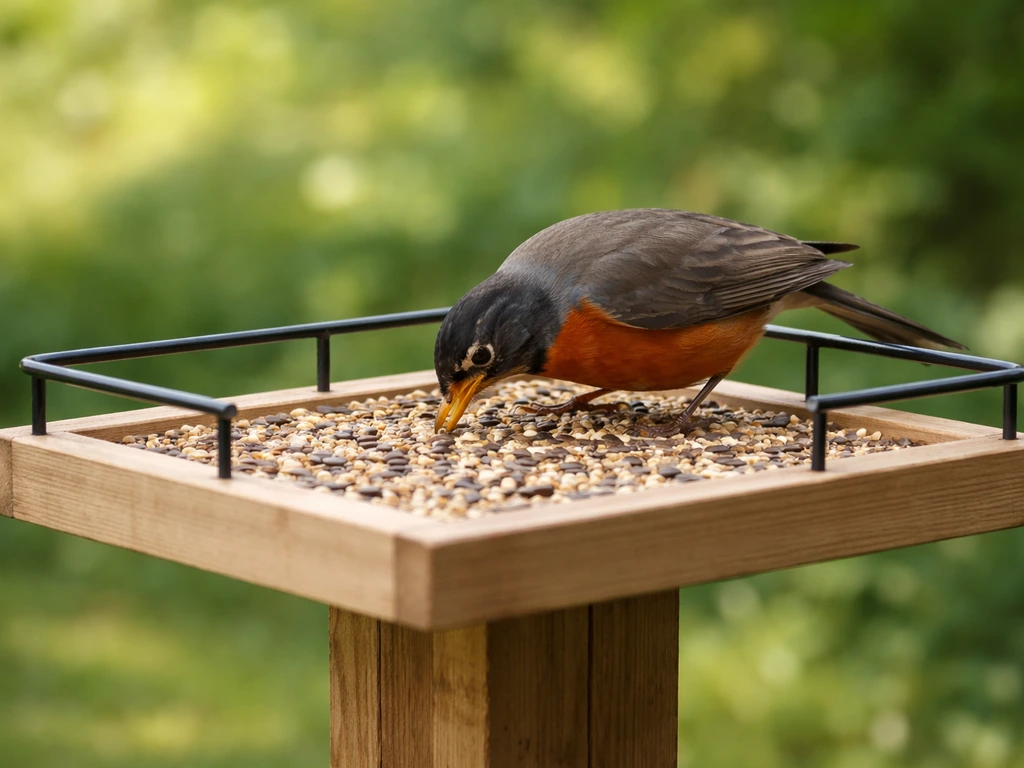
Platform feeders are the most universally accessible option for larger birds. There is no perch-size restriction and no port to squeeze through, so doves, jays, grosbeaks, and even flickers can land and feed without any awkwardness. The tradeoff is that open platforms expose seed to rain and bird droppings quickly, and every bird in the neighborhood will find it, including the species you might not want dominating the yard. A roofed or covered platform solves most of the weather problem. UF/IFAS extension research confirms that low platform feeders are ideal for ground-feeding species, while blank" rel="noopener noreferrer">raised platform feeders (mounted on a pole at 4 to 6 feet) attract a broader range of shrub and canopy birds.
Hopper feeders
A hopper feeder is the classic house-shaped feeder with a seed reservoir that gravity-feeds seed down to a tray or ledge at the bottom. These are excellent for larger birds because the feeding ledge is wide and sturdy, and the hopper design means you are not refilling every day. Cardinals, blue jays, and grosbeaks all use hoppers comfortably. Look for hoppers made from powder-coated metal or thick recycled plastic with metal reinforcements at the feeding edges, because jays and grackles will chew or pry at anything flimsy over time.
Tube feeders (larger-port versions)
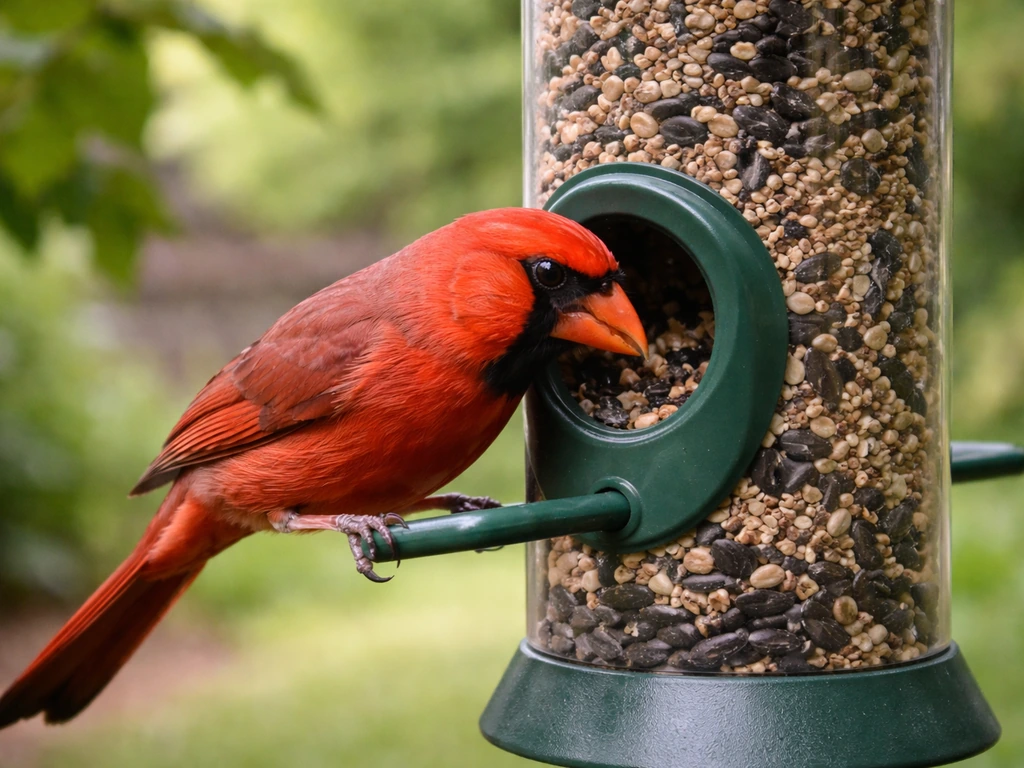
Standard tube feeders with small ports are designed for finches and chickadees, but manufacturers do make large-port tube feeders specifically for cardinals, grosbeaks, and nuthatches. If you go with a tube feeder, look for ports that are at least 3/4 inch wide and come with extended perches that give a bigger bird something to grip. The Brome Squirrel Buster Classic, for example, has four large ports with a polycarbonate tube body inside a metal wire cage, and that open-cage design actually gives larger perching birds better access than a solid-walled tube.
Tray feeders
Tray feeders are essentially open platforms, sometimes on legs, sometimes hanging. They are perfect for large birds that prefer to feed while standing flat, like towhees and doves. Drainage holes in the tray floor are non-negotiable because standing water turns seed to mush fast. Some tray feeders come with a mesh floor that drains and air-dries naturally, which is the version worth buying. The downside is the same as open platforms: full exposure to squirrels, rain, and every bird species in the area.
Cage-style feeders
Cage feeders flip the exclusion concept: instead of keeping squirrels out of a feeder, they use a wire cage around an inner feeder to control which size bird can access the seed. In a related Reddit thread, bird feeders discussed cage-style approaches where the cage size and openings determine which species can access the seed control which size bird can access the seed. A cage with 1-inch openings lets medium songbirds in while blocking larger nuisance birds like starlings and larger doves, and keeps squirrels out at the same time. If your problem is grackles or starlings dominating a feeder meant for cardinals or chickadees, a cage feeder is one of the most effective tools available. Just be aware that it cuts off your larger target birds too, so it only works if your goal is to feed mid-sized birds while excluding the biggest ones.
Features that matter when you are comparing models
Once you have settled on a feeder type, you still need to cut through the marketing copy and look at specific specs. Here is what actually determines whether a feeder works for larger birds long-term.
| Feature | What to look for | Why it matters for larger birds |
|---|---|---|
| Port/access size | Ports at least 3/4 inch wide; open tray or ledge for the biggest birds | Small ports force larger birds to awkwardly peck and waste seed |
| Perch size and strength | Perches at least 3 inches long, metal-reinforced or solid wood | Larger birds land hard and will snap plastic perches quickly |
| Seed capacity | At least 2 to 3 lbs minimum; up to 5 lbs for active yards | Large birds eat more; constant refilling is a maintenance headache |
| Material strength | Powder-coated steel, polycarbonate tube, or solid cedar/recycled poly lumber | Jays and grackles will pry or chew soft plastic and lightweight wood |
| Weight-activated mechanism | Closes ports when a squirrel's weight is detected | Blocks squirrels without blocking your target birds by weight calibration |
| Drainage and ventilation | Mesh floor or drainage holes; ventilated seed tube | Wet seed spoils fast; larger feeders hold more seed that can go bad |
| Cleaning access | Removable base, twist-off top, or split-open body | You need to clean every 2 weeks minimum; complicated feeders skip cleaning |
Seed capacity is one of the most overlooked specs. The Brome Squirrel Buster Classic holds 2.4 lbs, which is a reasonable starting point for a busy yard. If you are attracting multiple blue jays or a flock of mourning doves, you will want something larger, like a hopper with a 4 to 5 lb capacity. Pay attention to whether the feeder lists seed capacity by weight or volume, because volume measurements can be misleading depending on the seed type you use.
Dealing with weather, mess, and seed spoilage
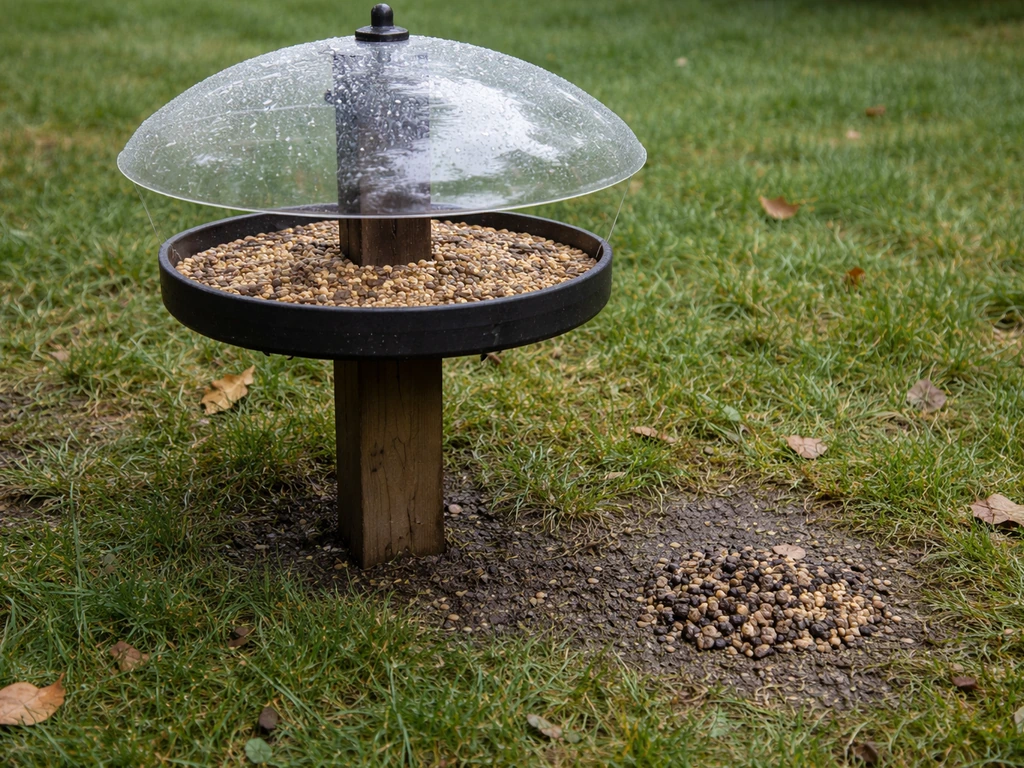
Larger feeders hold more seed, which sounds like a benefit until that seed gets rained on and you are scooping out a pound of moldy mush. A roof or dome cover over a platform or hopper feeder makes a significant difference, and a mesh or slotted floor on any open tray allows rain to drain through rather than pool. Brome's feeders include a Seed Tube Ventilation system designed to keep seed dry and flowing, and that kind of built-in airflow feature is worth prioritizing when you compare models.
Larger birds also scatter more seed than small birds do. A blue jay will toss seeds looking for sunflower chips, and doves spread seed off a tray with their sweeping feeding motion. A tray or catch basin underneath the main feeder catches fallen seed and reduces waste significantly. Some hopper and platform feeders include these built-in; others you can add as an accessory. Either way, it keeps your ground cleaner and reduces the rodent attractant problem.
For cleaning, the guidance from Audubon and multiple wildlife organizations lines up around the same protocol: clean seed feeders approximately every two weeks during active use, or more frequently in wet or warm weather. The standard solution is a 1:9 ratio of bleach to water (one part bleach to nine parts water). All About Birds (Cornell Lab) recommends cleaning seed feeders about once every two weeks during active use, and it notes using a dilute bleach solution no more than 1 part bleach to 9 parts water A standard solution is a 1:9 ratio of bleach to water (one part bleach to nine parts water).. Madrone Audubon recommends a slightly more dilute 1:32 solution with a 10-minute soak, thorough scrubbing, complete rinsing, and full drying before refilling. Either approach works. The critical part is making sure the feeder is fully dry before you add seed back, because moisture left inside a sealed feeder creates mold faster than anything else.
Squirrel-proofing and predator deterrence that actually holds up
Squirrel-proofing a feeder for larger birds has a specific challenge: weight-activated feeders that close access when a heavier animal lands on them need to be calibrated correctly. The Brome Squirrel Buster Classic uses a spring-loaded weight mechanism that closes ports when a squirrel lands, while still allowing birds within the target weight range to feed normally. That calibration is why the Squirrel Buster line works better than most cheap imitations: the sensitivity is adjustable, so you can fine-tune it based on what birds you are getting.
Placement is the other half of the equation, and it is where a lot of people go wrong. Squirrels can jump horizontally up to 8 to 10 feet from a tree branch or fence, and they can drop down from above with surprising accuracy. The consistent guidance across multiple sources is: place any pole-mounted feeder at least 8 to 10 feet away from any structure, tree branch, fence line, or rooftop edge. Mount a baffle on the pole between 4 and 4.5 feet off the ground. Perky-Pet's installation guidance pushes that horizontal clearance even further to 15 feet for reliable protection in yards with a lot of nearby trees.
If placement alone cannot solve it because your yard is small or you are working with a balcony setup, a caged feeder or a feeder with a full enclosure cage is your best backup. The cage physically prevents squirrels from reaching the seed regardless of where they jump from. For larger birds you want to attract, just make sure the cage opening is wide enough to admit them (typically 2 to 3 inch openings for cardinals and doves, versus 1-inch openings that block everything bigger than a chickadee).
- Mount your pole at least 8 to 10 feet from any jump-off point (tree, fence, wall, roof edge)
- Attach a pole baffle at 4 to 4.5 feet off the ground, not higher
- Use a weight-activated feeder like the Squirrel Buster Classic and adjust the spring sensitivity to your target birds
- If you cannot clear the 8-foot buffer, use a caged feeder with openings sized for your target birds
- Keep the area below the feeder clean to avoid attracting rats and ground squirrels to spilled seed
Best feeder pick for your specific backyard situation
Different yards call for different setups. Here is a scenario-by-scenario breakdown of what to actually buy.
You have squirrels and want to feed jays, cardinals, and grosbeaks
Go with a weight-activated feeder like the Brome Squirrel Buster Classic mounted on a pole with a baffle. The four large ports and adjustable spring mechanism allow larger songbirds to feed while shutting out squirrels by their heavier weight. At 2.4 lbs capacity, it is not huge, so if you have a busy feeder station you may want to pair it with a pole-mounted hopper feeder (also baffled) to handle the volume. Fill with black-oil sunflower seeds, which jays, cardinals, and grosbeaks all prefer.
You want to feed mourning doves and larger ground-feeding birds
A low, covered platform feeder or a wide tray feeder is the right call. Mourning doves do not perch on tube feeders well and prefer flat surfaces where they can move around while eating. Look for a platform with a roof (to keep seed dry) and a mesh or slatted floor (for drainage). Place it lower, around 2 to 3 feet off the ground, on a baffled pole if squirrels are present. Load it with safflower seed or a mixed blend with milo and cracked corn, which doves prefer.
Grackles and starlings are taking over and you want to reclaim the feeder for other large birds
This is the trickiest scenario. Starlings and grackles are both large birds, so you cannot simply use a size-exclusion cage that keeps out all large birds. Your best tools here are seed selection and feeder design. Safflower seed is strongly disliked by grackles and starlings but accepted by cardinals, chickadees, and doves. Avoid millet and mixed seed blends, which attract starlings and house sparrows heavily. A tube feeder with smaller ports physically slows down grackles even if it does not stop them entirely. Weight-activated feeders can be calibrated to exclude the heavier grackle while letting smaller target birds through.
You have no pole or mounting spot (apartment balcony or rental)
A railing-mount or window-clamp platform feeder is the most practical option. Look for models with clamp-style attachments rated for at least 10 to 15 lbs of load, since larger birds plus seed weight add up quickly. Balcony setups usually mean squirrels are not the primary concern (depending on your floor), but raccoons can be if you are on a lower level. Keep the feeder away from balcony edges that connect to nearby trees. A smaller hopper with a clamp mount works well and holds enough seed that you are not refilling daily.
You want to add a camera or AI bird identification
Smart feeders and camera add-ons have gotten genuinely good in the last couple of years, and they pair well with platform or hopper feeder setups where larger birds land and linger long enough for the camera to get a clean look. The Birdfy Cam is a standalone backyard camera with motion detection, night vision, and AI-powered species identification (via subscription). It can be positioned to cover any feeder you already own. Bird Buddy integrates the camera directly into a dedicated feeder unit with a paired app. Both require a subscription for the full AI identification feature. The TechRadar review of the Kiwibit Beako also highlights that subscription tiers unlock cloud storage and smart notifications, so factor that ongoing cost into your decision. One realistic note from Bird Buddy's own documentation: give birds a few days to get used to a new feeder before expecting regular visits, which applies to any new setup.
If you want a camera without the subscription overhead, a basic motion-activated wildlife camera pointed at your existing feeder does the job for identification purposes, though without the AI species recognition. It is worth comparing the ongoing subscription cost against what you actually want out of the feature before committing to a smart feeder platform.
Seed pairing: getting the right birds without inviting the wrong ones
The feeder you buy matters, but what you put in it does at least as much to determine which larger birds show up. Black-oil sunflower seeds are the single best all-around choice for larger birds: jays, cardinals, grosbeaks, doves, and woodpeckers all eat them, and they have a thinner shell than striped sunflower that makes them easier for most birds to crack. Safflower is a strong second choice, particularly useful because starlings and grackles generally avoid it while cardinals and chickadees will take it readily. Avoid generic mixed seed in large quantities because the millet and milo filler brings in starlings, house sparrows, and house finches in large numbers while the birds you actually want pick around it.
For woodpeckers specifically, suet cages or a hopper feeder that includes a suet cage attachment on the side is worth adding to the mix. Flickers and red-bellied woodpeckers visit platform feeders too, especially for shelled peanuts or sunflower chips. Peanuts in the shell work well on a platform or tray feeder and bring in jays quickly since they actively cache peanuts and will make multiple trips.
A quick comparison of the main feeder types
| Feeder Type | Best larger birds | Squirrel resistance | Weather protection | Cleaning ease | Seed capacity |
|---|---|---|---|---|---|
| Platform (covered) | Doves, jays, towhees, flickers | Low (needs baffle) | Moderate (roof helps) | Easy (open design) | Medium to high |
| Hopper | Jays, cardinals, grosbeaks, doves | Low to moderate (needs baffle) | Good (enclosed seed) | Moderate (disassembly needed) | High |
| Tube (large port) | Cardinals, grosbeaks, nuthatches | Moderate to high (weight-activated) | Good (enclosed) | Easy to moderate | Low to medium |
| Tray | Doves, towhees, sparrows | Low (fully exposed) | Poor (drainage only) | Very easy | Low |
| Cage-style | Mid-sized songbirds; excludes largest birds | High | Moderate | Moderate | Low to medium |
If you are also exploring feeders designed for specific species like woodpeckers or finches, or looking at how to attract a broader mix of birds with multiple feeder stations, there is a lot of overlap with what makes a large-bird-friendly setup work well as a general best large bird feeder strategy. If you want a broader baseline before choosing the exact feeder type, use this as a general best large bird feeders strategy and then narrow it by the bird species you are targeting. The core principles are the same: match the feeder form to the bird's feeding posture, build in squirrel deterrence from the start, and choose materials that hold up to repeated cleaning.
What to do next
Start by identifying the one or two larger bird species you most want to attract, then match the feeder type to how those birds naturally feed. Ground feeders like doves need a low platform. Canopy birds like blue jays do well on a hopper or raised platform. Seed-cracking birds like cardinals and grosbeaks work with large-port tube feeders. From there, layer in squirrel protection based on your yard layout: pole plus baffle if you have space, caged feeder if you do not. Add a camera if you want the identification feature, but make sure the feeder itself is well-positioned first since the camera is only as useful as the bird traffic it captures. If you want the best bird water feeder, focus on capacity, placement, and how easy it is to keep the water clean for visiting birds. If you are also shopping for the best bird watching feeder, follow the same capacity and placement logic, then prioritize easy access and staying power for larger birds.
FAQ
Can I use a tube feeder for larger birds if I buy one with bigger ports?
For larger birds, look for either an accessible platform with a roof (often 2 to 4 feet off the ground) or a hopper with a wide, reinforced ledge. “Large-port” tubes help only if the ports are truly wide (around 3/4 inch or more) and the perch is long enough for a stable grip, otherwise bigger birds hesitate or shove seeds unevenly.
What’s the best feeder if I want to attract cardinals but stop starlings and grackles?
No single feeder type guarantees “only the birds I want,” because larger nuisance birds can still access wide platforms and open trays. The closest way is combining (1) feeder style, (2) seed choice, and (3) access control, for example a cage feeder to exclude certain species, plus safflower to reduce grackles and starlings.
How do I know my weight-activated feeder is calibrated correctly for larger birds?
Many weight-activated squirrel-proof feeders can misread a bird if you have incorrect setup. Make sure the feeder is level, the mechanism is clean and moves freely, and the sensor pads (or contact points) are not obstructed by seed hulls or ice. If squirrels still open it, you may need to lower the sensitivity setting, but do so gradually to avoid closing during normal bird landings.
Why do bigger birds stop visiting even after I buy the right feeder?
Underfeeding and feeder choice both matter, but the common culprit is “too much open exposure” on windy or rainy days. Switch from fully open trays to covered platforms or covered hoppers, add a slotted or mesh drainage floor if available, and consider a seed you can crack easily (like black-oil sunflower) so birds finish faster and linger less.
How should I choose seed when several larger species might visit at once?
Start with the target seed for your preferred species, then adjust based on which birds show up first. For example, if cardinals and doves are your goal, black-oil sunflower or safflower works well, then if starlings appear heavily, move toward safflower and reduce mixed-seed blends rather than changing feeder type again.
What’s the fastest way to prevent seed from getting wet and molding with larger birds?
If the feeder is open to the elements, bigger birds can trigger faster spoilage because they tip and spread seed. Prioritize feeders with drainage (mesh or slotted floors), use a catch tray to prevent pooled hulls, and refill with smaller batches during wet spells to avoid leaving damp seed inside the station.
Do I need to clean under the feeder, or is draining enough?
If you use a mesh or slotted draining tray, you still need regular cleanup of the catch basin. Larger birds scatter more, and damp hull piles can attract rodents even when the feeding area is covered, so treat the under-tray as part of the feeding system, not an afterthought.
My yard is small. What should I do if I can’t place a feeder far from trees or fences?
If you have a small yard, aim for a feeder that solves squirrel access without requiring a long mounting clearance. A caged feeder with wide openings can work indoors of shorter distances, but ensure the opening is sized so target birds fit, usually around 2 to 3 inches for cardinals and doves, not 1-inch openings that block them.
How long should I wait before deciding the feeder is “not working”?
After installing a new feeder, bird traffic often ramps up over several days. Place it in the same general line of sight as your previous feeding spot if possible, avoid moving it repeatedly, and keep initial fills modest so birds get quick, consistent access without attracting long delays from intense competition.
What feeder setup makes smart cameras or wildlife cameras actually useful for identifying birds?
Begin with the feeder first, then choose the camera angle. Cameras are most useful when the bird pauses on a perch or ledge long enough for a clear face view, which usually means a covered platform or hopper with a stable landing zone, positioned at a consistent viewing height and protected from direct glare.
What are the most common placement mistakes that still let squirrels get to the seed?
Yes. Even if your main feeder is squirrel-resistant, you can still reduce secondary problems by trimming nearby cover and checking vertical access points. Squirrels can use fences and overhangs to reach a drop point, so verify there are no “launch” routes directly above the feeder.
Next Article
Top Bird Feeder Guide: Pick the Right Feeder for Your Yard
Choose the top bird feeder for your yard by species, durability, cleaning, predator control, and smart camera tips.