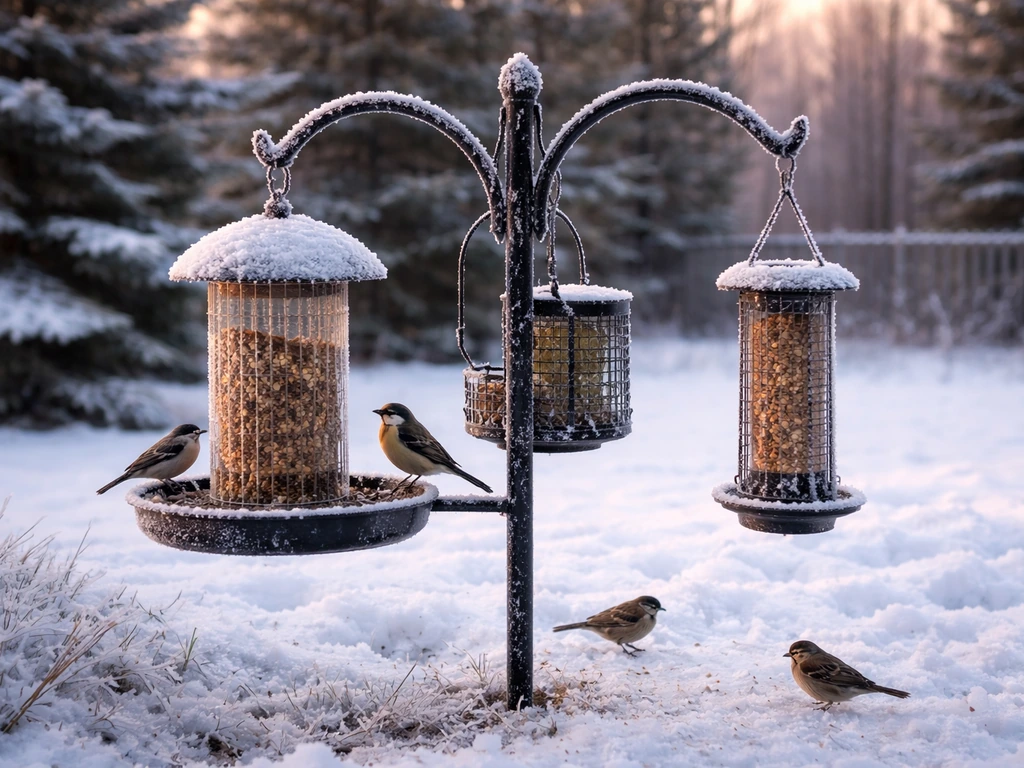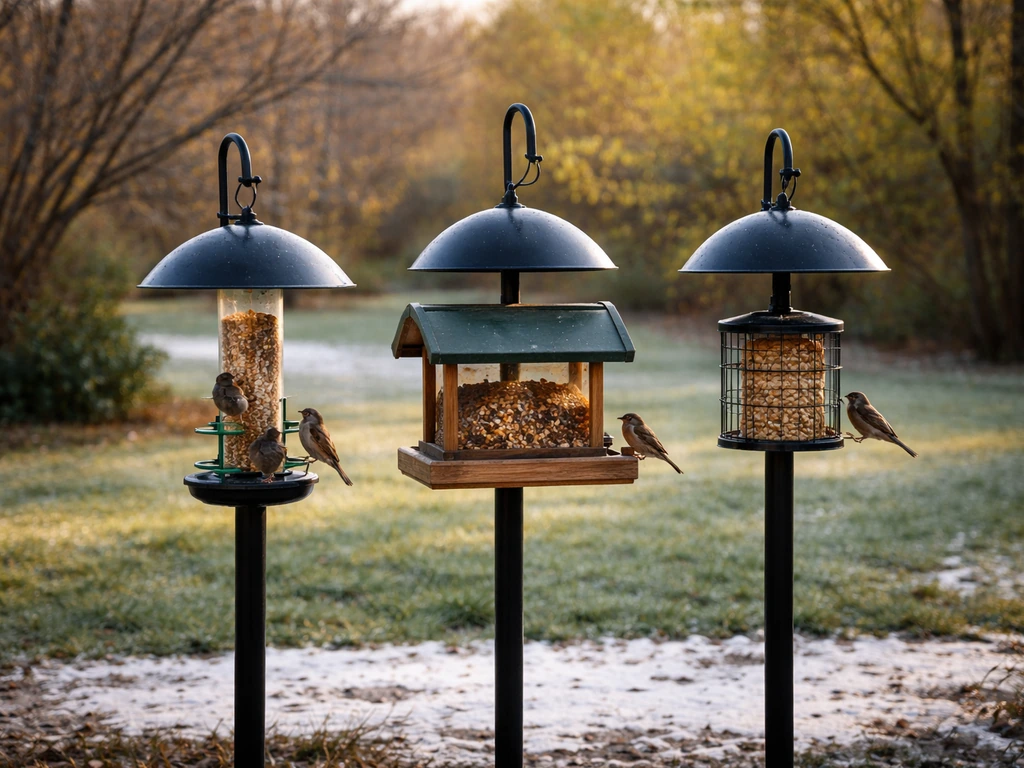
For Iowa backyards, a hopper or tube feeder made of powder-coated metal or UV-stabilized polycarbonate, paired with a baffled pole mount, will handle the widest range of Iowa birds and survive the state's brutal freeze-thaw winters without rusting out or cracking. If you only buy one feeder, a squirrel-resistant hopper with a weight-sensitive perch closing system (like the Squirrel Buster Plus or Brome models) covers cardinals, chickadees, nuthatches, finches, and most other common Iowa visitors in one shot. Add a suet cage for woodpeckers and a nyjer sock or tube for goldfinches, and you've covered the main bases.
Best Bird Feeders for Iowa: Species Guide and Buying Tips
Marcus Holloway
30 Jun 2026
What Iowa's Climate Actually Does to Your Feeders
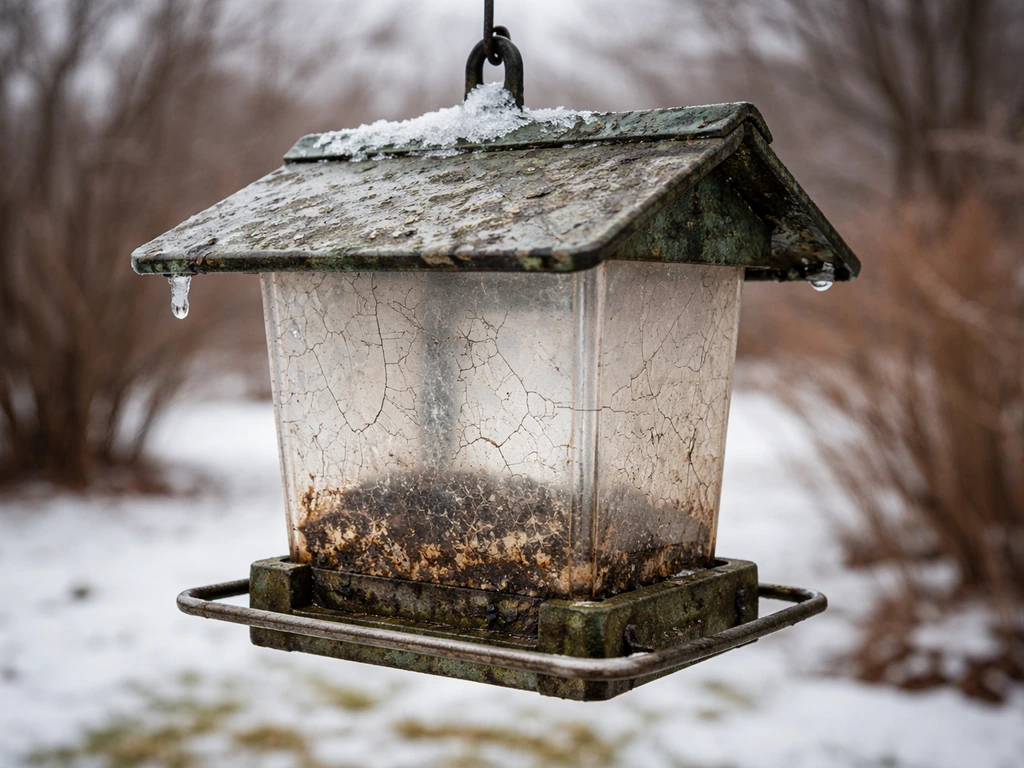
Iowa winters are genuinely punishing for feeders. You're dealing with sustained cold from November through March, frequent freeze-thaw cycles that crack plastic and pop apart poorly sealed joints, sleet and ice that glaze over seed ports and perches, and persistent northwest wind that can knock lightweight feeders sideways and dump seed. In summer, the humidity spikes and baking heat accelerates seed spoilage and mold inside enclosed hoppers. Spring brings heavy rain and mud. Basically, Iowa runs every feeder through a stress test every single year.
The specific problems I've seen most often: plastic hoppers that get brittle and crack by year three, wire suet cages that rust out at the hanging points, and low-quality tube feeders with metal ports that corrode and jam. Seed also freezes solid inside tube feeders during extended cold snaps, especially millet and safflower, which absorb moisture and clump. Wind is an underrated issue too. A feeder swinging violently on a shepherd's hook will spook birds and waste seed. Iowa is not the place for lightweight decorative feeders.
The good news is that the right feeder materials genuinely solve most of these problems. Powder-coated steel, anodized aluminum, and thick UV-stabilized polycarbonate all hold up well. Look for feeders with drainage holes in the seed tray, weather guards (domed baffles that also block rain), and removable parts for cleaning. If a feeder doesn't come apart easily, you'll stop cleaning it, and that becomes a disease vector. Neighboring states with similar climates, including Wisconsin and Minnesota to the north, deal with even harsher conditions, so feeder reviews from those regions translate well to Iowa.
Best Feeder Types for Iowa Backyards
There's no single best feeder type because different birds feed differently. Here's how the main types perform in Iowa conditions and which birds they serve. To narrow it down further, you can compare these Iowa feeder types with the best bird feeders for indiana recommendations and choose the closest match for your yard.
Hopper Feeders
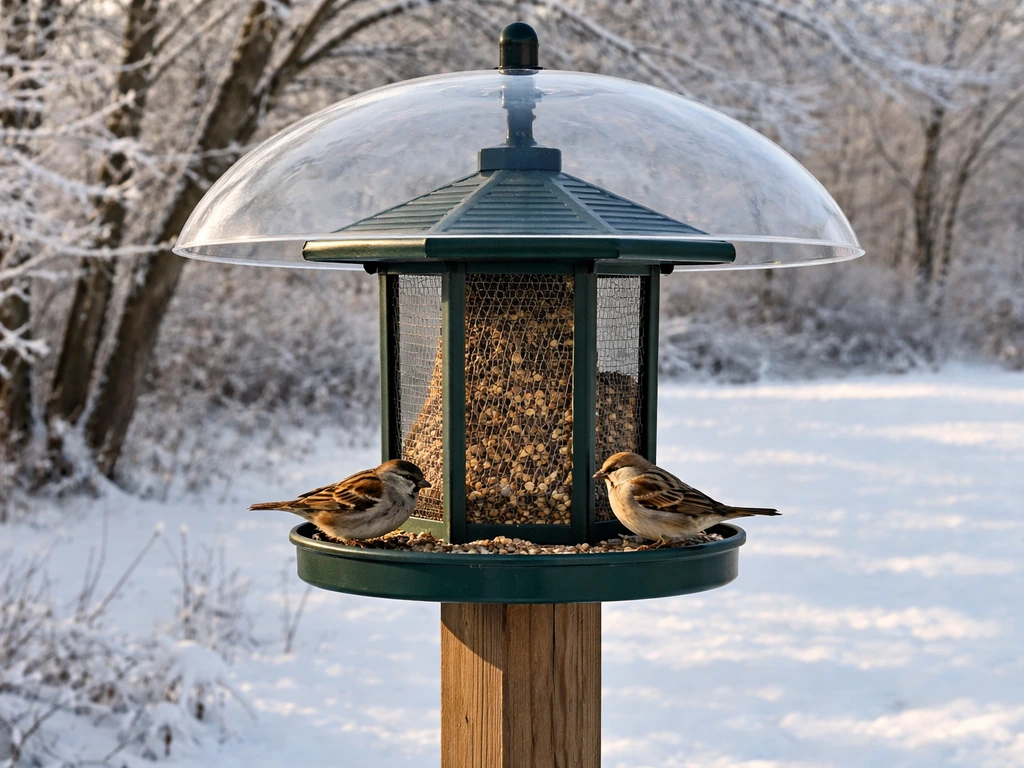
Hopper feeders are the most versatile option for Iowa. They hold a large volume of mixed seed or sunflower, dispense it slowly as birds eat, and a good roof design sheds rain and snow reasonably well. Cardinals love the wide perches. Chickadees, nuthatches, and house finches all use them. The main durability concern is the roof joint and the seed tray drainage. Metal or thick acrylic hoppers outlast thin plastic barn-style models by years. A weather guard dome mounted above the feeder adds significant protection in Iowa's wet springs.
Tube Feeders
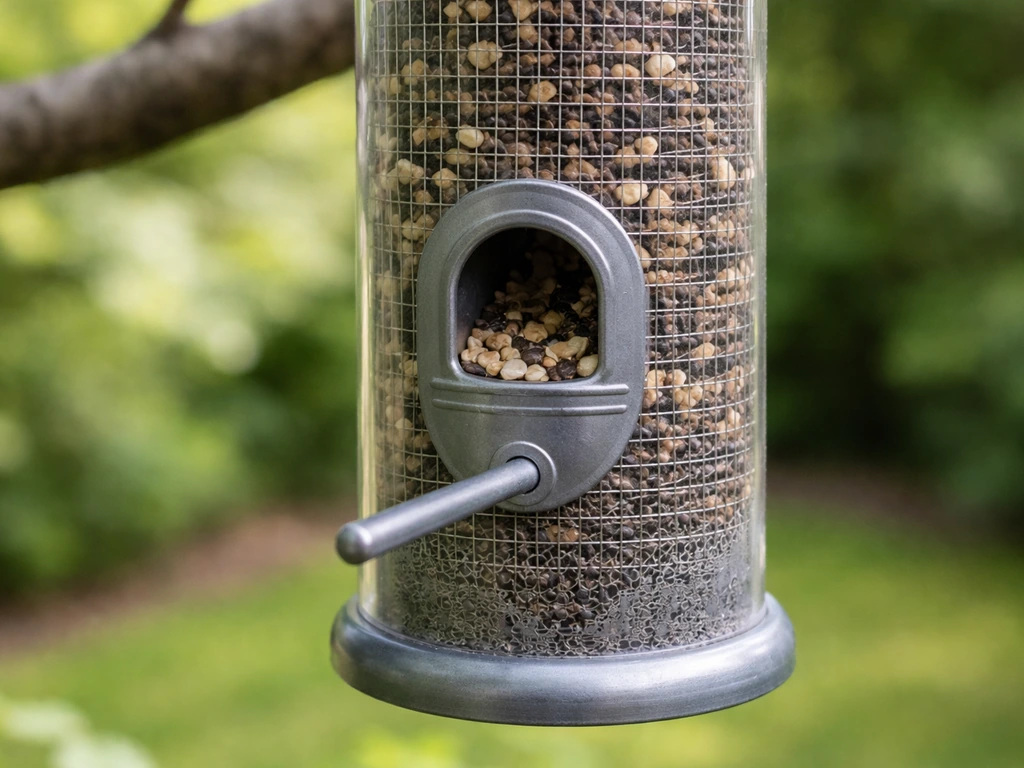
Tube feeders work especially well for sunflower chips, safflower, and nyjer. They limit access to smaller birds like chickadees, finches, and nuthatches, which naturally reduces grackle and starling use. The key spec to check for Iowa use is port construction: metal-reinforced ports resist squirrel chewing and don't corrode as fast as raw aluminum. Look for tubes with a removable base for cleaning, since seeds can compact and mold at the bottom during Iowa's humid summers.
Platform and Tray Feeders
Platform feeders attract the broadest range of seed-eating birds, including mourning doves and juncos that prefer ground-level feeding. The honest downside: they're the most exposed to weather and the most vulnerable to squirrel and raccoon raids. In Iowa, a platform feeder without a baffle below it will be emptied by squirrels within a day. Mesh-bottom platforms drain rain quickly and reduce mold, which matters a lot in Iowa. Use them as a secondary feeder on a baffled pole, not as your only setup.
Suet Feeders
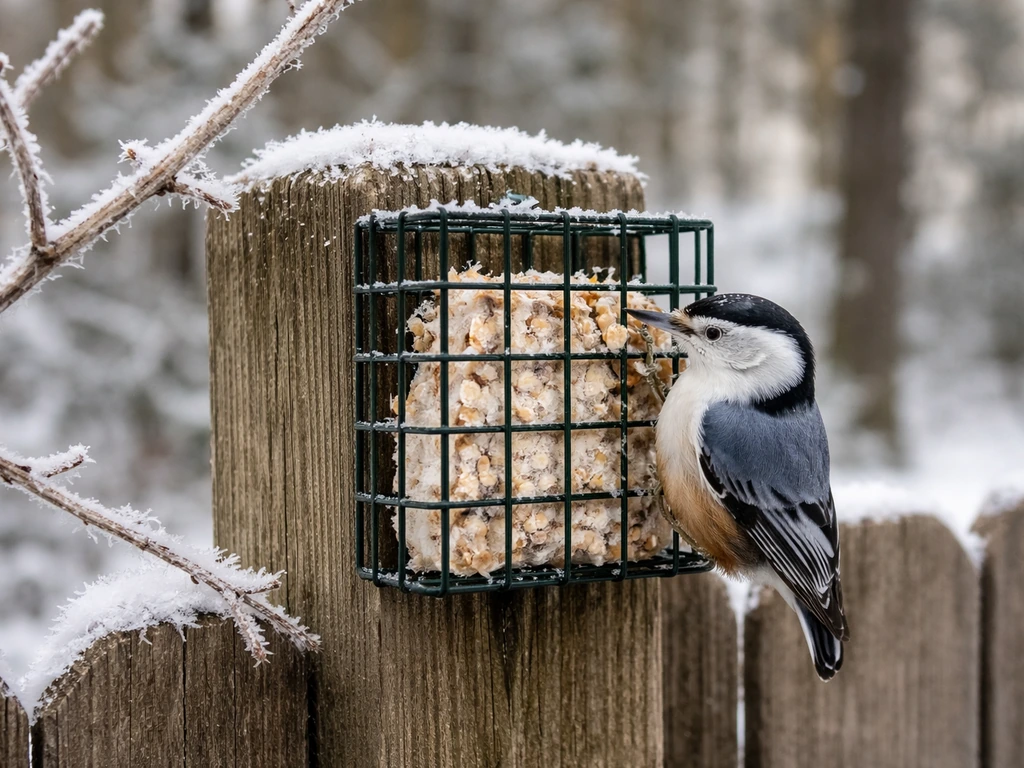
Suet cages are essential for Iowa woodpeckers, nuthatches, and winter wrens. Simple coated wire cages work fine but do rust at the twist joints within a couple of seasons. Coated or vinyl-covered wire cages last longer. Upside-down suet feeders are worth the small extra cost: woodpeckers and nuthatches handle them easily, while starlings (who are belly-down feeders by preference) struggle and often give up. That alone makes upside-down cages worth it in Iowa where European starlings can mob standard suet cages.
Nyjer and Finch Feeders
For American goldfinches and house finches, a dedicated nyjer (thistle) tube or mesh sock is the right tool. Nyjer feeders have tiny ports that basically only dispense nyjer seed, which limits waste and access to non-target birds. The tradeoff is that nyjer clogs in wet conditions. During Iowa's ice storms and wet spring weather, check these feeders more often. Mesh sock feeders are cheap and easy to replace when they get dirty or torn. Rigid nyjer tubes with multiple small ports and a removable base are easier to keep clean year-round.
Hummingbird Feeders
Ruby-throated hummingbirds are the only hummingbird species that reliably passes through Iowa, arriving roughly in late April and departing by mid-October. For hummingbirds, a glass nectar feeder with a tight-sealing base and wide mouth for cleaning wins over plastic every time in Iowa's summer heat. Nectar ferments fast above 80 degrees Fahrenheit, which Iowa hits routinely in July and August. Swap nectar every two to three days in peak summer and clean the feeder thoroughly each time. Ant moats above the feeder and bee guards on ports solve the main pest problems.
Species-Specific Feeder Picks for Iowa
| Bird | Best Feeder Type | Best Seed/Food | Key Feature to Look For |
|---|---|---|---|
| Northern Cardinal | Hopper or large platform | Black oil sunflower, safflower | Wide tray perch, weight-rated ports |
| American Goldfinch | Nyjer tube or mesh sock | Nyjer (thistle) seed | Tiny ports, removable base for cleaning |
| House Finch | Tube or hopper | Black oil sunflower, nyjer | Multiple perch positions |
| Downy/Hairy Woodpecker | Suet cage (upside-down preferred) | Suet cake, peanuts | Tail prop below cage, upside-down design |
| Red-bellied Woodpecker | Large suet cage or peanut feeder | Suet, whole peanuts | Sturdy mounting, large cage size |
| White-breasted Nuthatch | Suet cage or tube feeder | Suet, sunflower chips | Can access upside-down suet feeders |
| Black-capped Chickadee | Tube or hopper feeder | Sunflower chips, safflower | Small perch size, weather guard |
| Mourning Dove | Ground platform or low tray | Millet, cracked corn, sunflower | Mesh drainage bottom, low or ground mount |
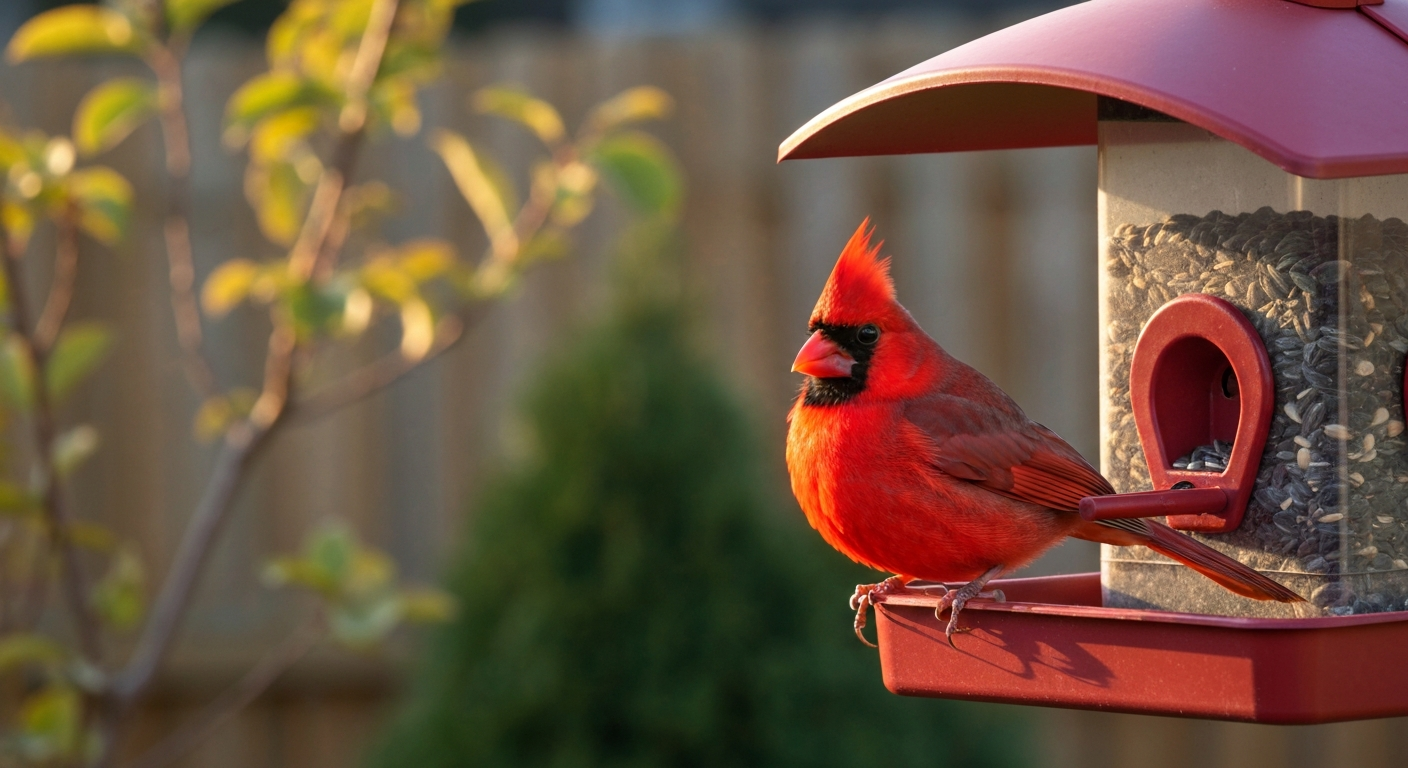
Cardinals are the bird most Iowa backyard birders are specifically trying to attract, and they have one real requirement: a wide perch. They're large birds and won't balance on tiny tube feeder ports. A hopper feeder with a broad seed tray or a dedicated cardinal-style tube with extended perch trays is what they need. Safflower seed is worth knowing about here. Cardinals readily eat it, but most squirrels, grackles, and starlings don't like the bitter taste. Switching to safflower in a hopper feeder cuts pest pressure noticeably without sacrificing your cardinals.
Downy and hairy woodpeckers are present in Iowa year-round and will work a suet feeder throughout winter when insects are scarce. Red-bellied woodpeckers are increasingly common in Iowa and appreciate a larger suet cage or a peanut feeder with wide mesh that lets them extract whole peanuts. Mounting suet feeders on the side of a tree or post rather than hanging freely reduces swinging and makes them easier for woodpeckers to brace against.
Mourning doves are ground or low-level feeders. They'll use a hopper feeder if the tray is wide enough, but they're most comfortable on a low platform or scattered seed on the ground. In Iowa's wet springs, ground feeding creates a mold problem fast, so a mesh platform feeder set just 12 to 18 inches off the ground on a short post is a cleaner option.
Dealing with Squirrels, Grackles, Raccoons, and Other Pests
Squirrels
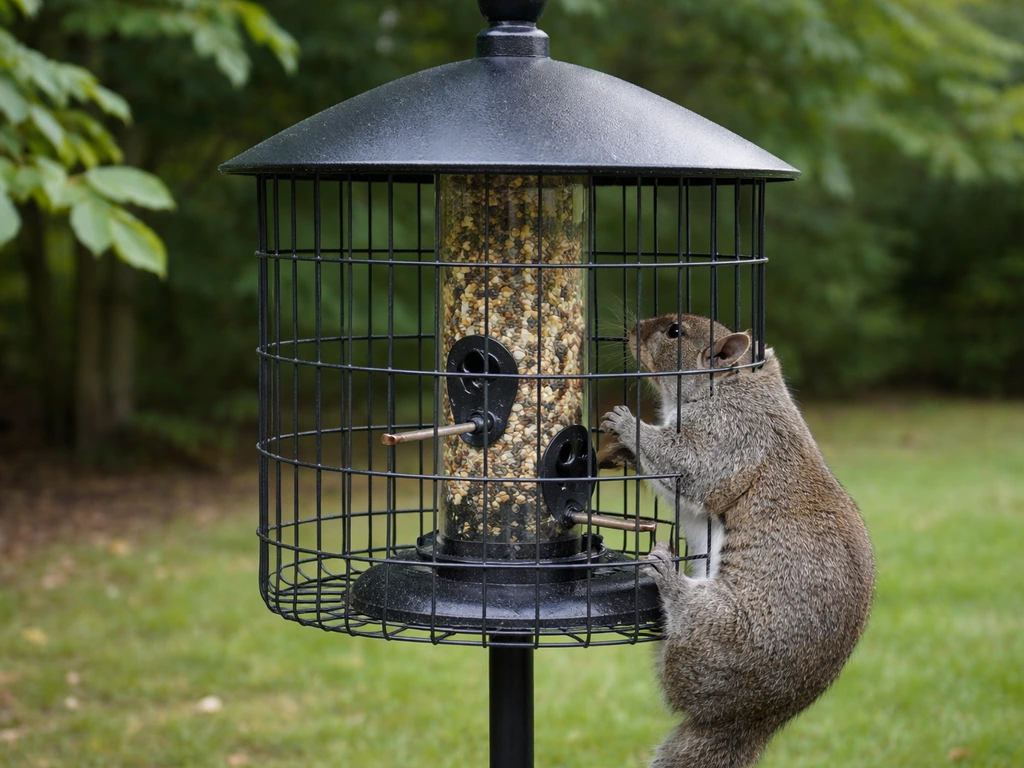
Iowa has both gray squirrels and fox squirrels, and both are persistent. The only real solutions are physical barriers or weight-sensitive mechanisms. A torpedo-style baffle (at least 17 inches wide) mounted on a smooth metal pole at around 5 feet high stops most squirrels from climbing. Weight-sensitive feeders like the Squirrel Buster Plus close seed ports when anything heavier than a small songbird sits on the perch ring. These actually work, but only if the feeder isn't within jumping range (about 5 feet horizontally, 7 feet from above) of a tree, fence, or deck rail. Placement discipline matters as much as feeder design.
Cage-style feeders (a tube feeder surrounded by a wire cage with openings sized for small birds) are another effective option. They physically block squirrels and large birds while letting chickadees, nuthatches, and smaller finches pass through. Cage feeders don't work for cardinals since cardinals can't fit through the cage opening, so run them in parallel with a separate cardinal hopper.
Grackles and Starlings
Common grackles and European starlings can take over a feeder and drive off every other bird, and Iowa gets both. The most effective counter-strategies are feeder design and seed choice, not just placement. Cage feeders with openings sized around 1.5 inches exclude grackles, which are too large to fit. Upside-down suet feeders as mentioned above deter starlings. Switching seed to safflower or nyjer removes most of the food grackles actually want. Tube feeders with short perches also make it harder for large birds to get purchase, while smaller birds manage just fine.
If grackles are overwhelming your platform or hopper, temporarily taking those feeders down during peak spring migration (April and May) and using only cage feeders and nyjer tubes can break the flock's routine. Grackles are highly social and follow each other to food sources. If a flock doesn't find reliable food at your yard for a week or two, they tend to move on to easier spots.
Raccoons and Bears
Raccoons are a consistent problem across Iowa, especially in areas near wooded corridors or creek bottoms. They can defeat most squirrel baffles by sheer persistence and body weight, and they'll pull tube feeders apart overnight. The best deterrent is bringing feeders inside at night or using a raccoon-rated baffle (wider and heavier duty than squirrel baffles). Hanging feeders on a horizontal wire strung between two poles with conical baffles on each pole is one of the most raccoon-resistant setups you can build without going electric.
Black bears are not a widespread issue across most of Iowa, but they do appear in some northeastern Iowa counties near the Upper Iowa River corridor and along the Mississippi. If you're in that region and have had bear activity, the only reliable solution is bringing feeders in from dusk to dawn or stopping feeding during periods of known bear activity. No feeder mount or baffle stops a determined bear.
Mounting, Placement, and Keeping Feeders Useful in Iowa Weather
Pole mounting beats hanging in Iowa for most setups. A shepherd's hook or dedicated feeder pole in open ground gives you control over height, distance from cover, and baffle placement. For squirrel resistance, the pole should be smooth metal and the feeder should be at least 5 feet off the ground with a baffle below it. Keep the feeder at least 10 feet away from any structure a squirrel can launch from, and ideally 15 feet or more.
Window proximity is a real safety issue. Feeders placed between 3 and 30 feet from a window put birds at risk of fatal window strikes when they're flushed from the feeder. Audubon also notes that bird-window collisions are especially dangerous when feeders are placed [about 3 to 30 feet from windows](https://www. audubon.
org/magazine/how-deal-backyard-mishaps) because flushed birds can build enough momentum for fatal impacts. The safe zones are within 3 feet (birds don't build enough speed) or beyond 30 feet (birds can see and avoid the glass). I keep my main feeder cluster about 8 to 10 feet from the house at a window, which is exactly the dangerous range, so I added window collision tape to those panes.
If you're setting up for the first time, just locate feeders at 3 feet or less, or push them out past 30 feet.
Place feeders within reasonable viewing distance of brush, shrubs, or trees (within 10 to 15 feet), so birds have escape cover when a hawk comes through. But don't place them directly under a dense shrub where cats can hide and ambush. Open ground with nearby escape cover about 10 feet away is the ideal balance. In Iowa's open suburban yards, a small shrub planted specifically for feeder cover is worth doing.
For Iowa winters specifically, a weather guard dome above the feeder dramatically extends seed life during ice storms and wet snow events. Feeders without weather guards can get their seed frozen solid after a wet snow followed by a hard freeze. A dome keeps the seed loose and accessible when birds need it most. Also check feeders after every ice storm to break up any seed crust at the ports.
Feeder Materials and Durability in the Midwest Climate
This is where it's worth being direct with readers who've had feeders fall apart after one winter: cheap feeders cost more in the long run. The material spec that matters most in Iowa is how the feeder handles repeated freeze-thaw cycles and UV exposure. Thin injection-molded plastic (the kind most bargain feeders use) becomes brittle after one or two Iowa winters. The seed ports crack, the roof warps, and the whole thing usually ends up in the trash by spring.
| Material | Iowa Durability | Weight | Cleaning Ease | Best For |
|---|---|---|---|---|
| Powder-coated steel | Excellent (5-10+ years) | Heavy | Good if coated inside | Hoppers, cage feeders, pole mounts |
| Anodized aluminum | Very good (5-8 years) | Light | Very easy | Tube feeders, nyjer feeders |
| UV-stabilized polycarbonate | Good (3-6 years) | Light-medium | Easy (removable parts) | Tube feeders, hopper windows |
| Standard acrylic/plastic | Poor (1-3 years) | Light | Easy but warps | Budget feeders, temporary use |
| Recycled plastic lumber | Excellent (10+ years) | Heavy | Easy (wipe down) | Hopper bodies, platform frames |
| Coated wire | Fair (2-4 years) | Light | Easy | Suet cages, cage-style feeders |
| Vinyl-coated wire | Good (4-6 years) | Light-medium | Easy | Suet cages, squirrel-proof cages |
Seed hull buildup under feeders is a real issue in Iowa, especially with black oil sunflower. The hulls create a wet, decomposing pile that can harbor mold and attract rats. Raking or sweeping under feeders weekly keeps this manageable. Switching to no-mess or shelled sunflower chips eliminates most hull debris at a higher cost per pound, but it's genuinely worth it in tight spaces or on patios where cleanup is difficult.
Cleaning frequency matters for bird health and feeder longevity. The recommended standard is cleaning most feeders once a week, which is realistic for simple tube or hopper feeders with removable parts. For cleaning, soap and water handles surface debris, followed by a soak in a 50-50 vinegar-and-water solution for about 15 minutes to sanitize. The critical step is drying completely before refilling. Refilling a damp feeder is how mold gets started, and in Iowa's humid summers, a damp feeder can go moldy in 48 hours. If you notice seed clumping, smelling off, or showing any discoloration, discard it immediately and clean before refilling.
Your Iowa Feeder Buying Checklist and Quick Picks
Before buying, run through this checklist to match the feeder to your actual setup and goals. If you are shopping specifically for Minnesota, the best bird feeders for Minnesota are typically the same kinds of materials and designs that stand up to harsh freeze-thaw winters.
- What birds are already in your yard? Cardinals need wide perches. Goldfinches need nyjer ports. Woodpeckers need suet. Identify your target species first.
- Do you have squirrel pressure? If yes, budget for a weight-sensitive feeder or cage feeder, plus a baffle. A cheap feeder plus a good baffle setup beats an expensive feeder on a weak mount.
- Do you get grackle flocks in spring? Plan for cage feeders or safflower/nyjer seed as your primary offering to exclude them.
- Where will you mount it? Open pole mount is most flexible and squirrel-resistant. Window mount is fine for small tube feeders close to the glass (within 3 feet).
- How often will you realistically clean it? If the answer is monthly, choose a feeder with very easy disassembly or a simpler design. A feeder you won't clean is a health hazard.
- What's your budget per feeder, not per season? A $60 feeder that lasts 8 years is cheaper than a $15 feeder replaced annually.
Quick Picks by Setup and Budget
| Your Situation | Best Feeder Choice | Why It Works |
|---|---|---|
| Beginner, one feeder, mixed birds | Weight-sensitive hopper (e.g., Squirrel Buster Plus) | Handles cardinals, chickadees, finches; squirrel-resistant out of the box |
| Want cardinals specifically | Large hopper with wide tray or cardinal tube feeder with safflower seed | Wide perch + safflower deters grackles without losing cardinals |
| Goldfinch focus | Nyjer tube feeder with multiple small ports | Nyjer-only keeps access limited to finches and small birds |
| Heavy woodpecker activity | Upside-down suet cage on a post or tree | Excludes starlings, works year-round through Iowa winters |
| Squirrel problem, limited budget | Cage-style tube feeder + torpedo baffle on metal pole | Physical exclusion without spending on premium weight-sensitive feeder |
| Grackle invasion each spring | Cage feeder + safflower in hopper + upside-down suet cage | Three-feeder approach covers songbirds while excluding grackles |
| Patio or small yard, no pole | Window-mount tube feeder within 3 feet of glass | Safe window placement, easy to monitor and clean |
| Large yard, serious setup | Pole system with hopper + suet cage + nyjer tube + platform on separate poles | Covers all Iowa species with dedicated station per bird group |
If you're just getting started and want one honest recommendation: get a quality squirrel-resistant hopper feeder, mount it on a smooth metal pole with a torpedo baffle at 5 feet, fill it with black oil sunflower or safflower, and place it 10 to 15 feet from natural cover with a birdbath nearby. That single setup will attract more Iowa birds than any complicated multi-feeder arrangement that's poorly located or rarely cleaned. Once you see what's showing up, you can add a suet cage for woodpeckers and a nyjer feeder for goldfinches and dial it in from there. Neighbors in similar climates, from Ohio to the east and Wisconsin and Minnesota to the north, are running nearly identical setups for the same reasons, which is a good sign that this approach is proven across the Midwest.
FAQ
What’s the quickest way to reduce grackles and starlings at Iowa feeders?
If your yard has lots of grackles or European starlings, start by limiting access rather than just changing where the feeder sits. Use cage feeders with openings sized for small birds and add a separate nyjer tube or safflower hopper, then keep your main feeder cluster consistent (don’t swap seed types daily), because flocks learn quickly when a reliable food source is stable.
Can I safely offer seed on the ground in Iowa without creating a mold problem?
In Iowa’s wet springs, avoid setting any platform or seed tray directly on the ground. If you want ground-level feeding, use a low height (12 to 18 inches) with a mesh platform for drainage and still rake hulls weekly. If you notice clumping, sour odor, or damp seed, remove the feeder, discard seed, and sanitize it before refilling.
Will a squirrel-resistant feeder also stop raccoons in Iowa?
Yes, but it depends on the feeder type and the birds you’re targeting. If you use mixed seed in a hopper, squirrels will usually still learn to exploit the perch unless the feeder has weight-sensitive closures or a true squirrel-resistant baffle. For more squirrel control, switch part of your plan to sunflower chips or safflower in a squirrel-resistant hopper, and keep suet in an upside-down feeder or protected mount.
How often should I clean feeders during Iowa winters and spring rain events?
If you’re getting consistent mold or freezing issues, your cleaning routine needs to be paired with placement and weather management. Clean weekly, but also do a quick midweek check after heavy rain, sleet, or humid heat spells. After ice storms, scrape seed crust off ports and ports should be able to drain, if your feeder design includes a tray drainage point.
What feeder materials are most likely to fail first in Iowa, and where do they fail?
For perch materials, powder-coated metal and thick UV-stabilized polycarbonate handle Iowa weather well, but “what you should avoid” is thin molded plastic perches. They get brittle from freeze-thaw cycles and then crack right where birds land. Also look for removable trays or bases, if the feeder doesn’t come apart easily, you’ll likely skip sanitation and mold becomes more likely.
My nyjer feeder clogs in Iowa rain. What should I do differently?
Nyjer can be especially frustrating in Iowa’s wet weather because it clogs when seeds absorb moisture. The fix is operational: check nyjer feeders more often during ice storms and wet spring weeks, and choose rigid nyjer tubes with multiple small ports plus a removable base so you can clear and thoroughly dry the tube regularly.
How do I keep hummingbird nectar from spoiling fast in Iowa summers?
For hummingbirds, the key is preventing fermentation without overcomplicating equipment. Use a tight-sealing glass feeder with a wide mouth for cleaning, then swap nectar every two to three days when Iowa temperatures are consistently above 80°F. If you see darkening, cloudiness, or a strong odor, discard immediately and scrub the bottle and base even if it’s before your next scheduled change.
How do I place a baffle so squirrels cannot jump onto the feeder?
If feeders are close to trees, fences, or deck rails, squirrel baffles may be bypassed by “launching” jumps. A practical rule is to measure from potential launch points, not just from the feeder mount. Keep the feeder at least 10 feet from any structure squirrels can use as a springboard, and if possible go to 15 feet or more.
Is hanging a feeder worse than using a pole in Iowa?
Hanging versus pole mounting changes how wind and access behave in Iowa. In most cases, pole mounts give better control and reduce swinging. Use a smooth metal pole, mount the feeder high enough for your baffle design (about 5 feet with a torpedo baffle), and avoid lightweight decorative feeders, wind can dump seed and make birds stop visiting.
If I only buy one feeder, what should I choose and how should I start adding others?
In most Iowa backyards, “best results” come from a small set of correctly matched feeders rather than many options. A good starter approach is one squirrel-resistant hopper mounted correctly, filled with black oil sunflower or safflower, then add suet and nyjer only after you see which birds are actually showing up. Avoid moving feeders constantly, because birds do best when the food source is reliable and predictable.