For a Minnesota backyard, you want at least one hopper or tube feeder stocked with black-oil sunflower seed as your anchor, a suet cage for woodpeckers and nuthatches, and a nyjer tube feeder if you want finches. Mount everything on a pole with a baffle, keep feeders at least 10 feet from any fence or tree branch a squirrel can launch from, and choose feeders built from UV-stabilized polycarbonate or powder-coated metal so they survive freeze-thaw cycles without cracking or rusting. That combination covers probably 80 percent of Minnesota feeder birds and handles the state's worst winter conditions without constant frustration.
Best Bird Feeders for Minnesota: Top Picks for Your Yard
Marcus Holloway
29 Jun 2026
What Minnesota's climate and bird mix actually demand
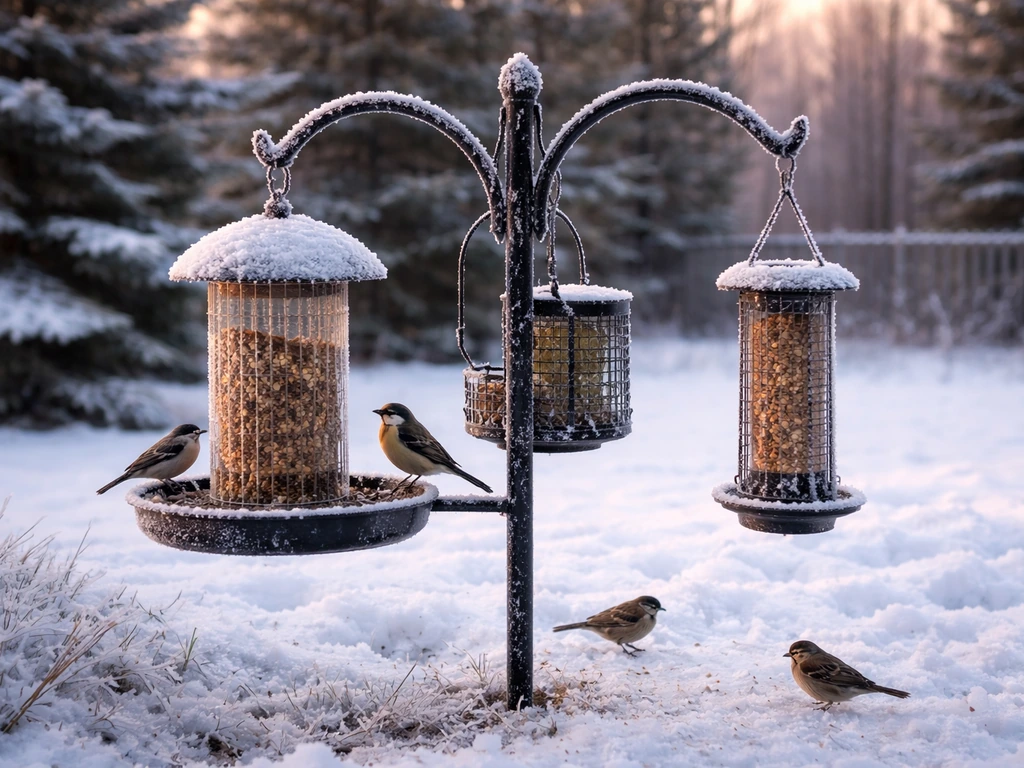
Minnesota winters are genuinely brutal for feeders. You're dealing with prolonged sub-zero cold, heavy snow loading, ice buildup in ports and perches, and then the freeze-thaw cycles that crack cheaper plastics and seize metal hardware. The Minnesota DNR documents regular January thaw events where temps swing from well below zero to nearly 60°F in a matter of days, which means wet seed, mold risk, and nectar freezing and then going bad in the same week. Summer brings humidity and heat that speeds up seed spoilage and forces more frequent cleaning. Any feeder you buy needs to handle both extremes.
The bird mix in Minnesota is one of the richest in the Midwest. Year-round regulars include black-capped chickadees, white-breasted nuthatches, downy and hairy woodpeckers, dark-eyed juncos, house finches, and northern cardinals. Blue jays show up constantly. Mourning doves graze underneath. American goldfinches and purple finches are common. In summer you get ruby-throated hummingbirds passing through. The Minnesota DNR notes that about 80 to 90 percent of the seed used at Minnesota feeders is black-oil sunflower seed and cardinal mixes, which tells you a lot about where to focus. Peanuts and peanut pickouts are highly effective for chickadees, nuthatches, and woodpeckers. Nyjer (thistle) is the go-to for goldfinches. Millet and mixed seed brings in mourning doves and juncos. Build your feeder setup around those four food categories and you'll cover nearly every species that visits a typical Minnesota yard.
Matching feeders to the birds you actually want
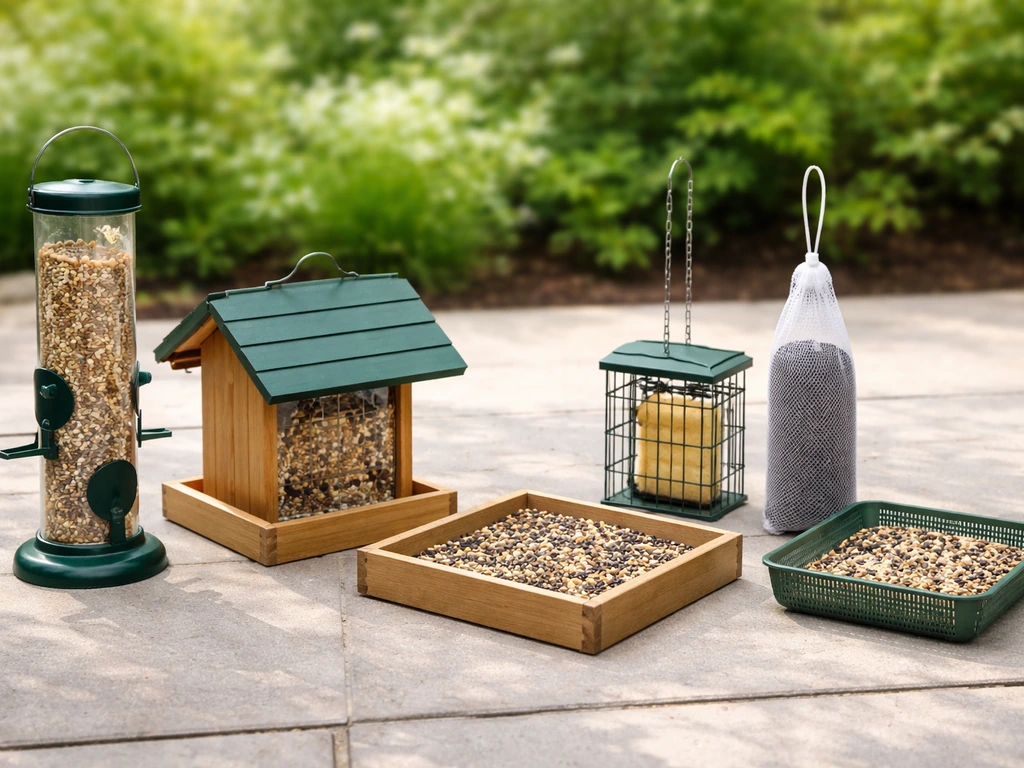
Different birds need different feeder styles, and if you put the wrong food in the wrong feeder you either attract nothing or attract the wrong thing. Here's how to think about it by species group. Project FeederWatch provides an interactive list of “common feeder birds” and links each species to its preferred food types to help with feeder planning.
Chickadees, nuthatches, and small clinging birds
Tube feeders with short perches or no perches at all are ideal here. Small birds like chickadees and nuthatches can cling to almost anything, so you don't need long perches, and shorter perches actively discourage larger bully birds from hogging the ports. A 6-port tube feeder loaded with black-oil sunflower or hulled sunflower is the most productive single feeder you can put up for these species. Droll Yankees makes a 6-port finch-style tube feeder with UV-stabilized polycarbonate and powder-coated metal that holds up well through Minnesota winters, and the internal baffle design keeps seed flowing even when cold causes bridging near the ports.
Cardinals and blue jays
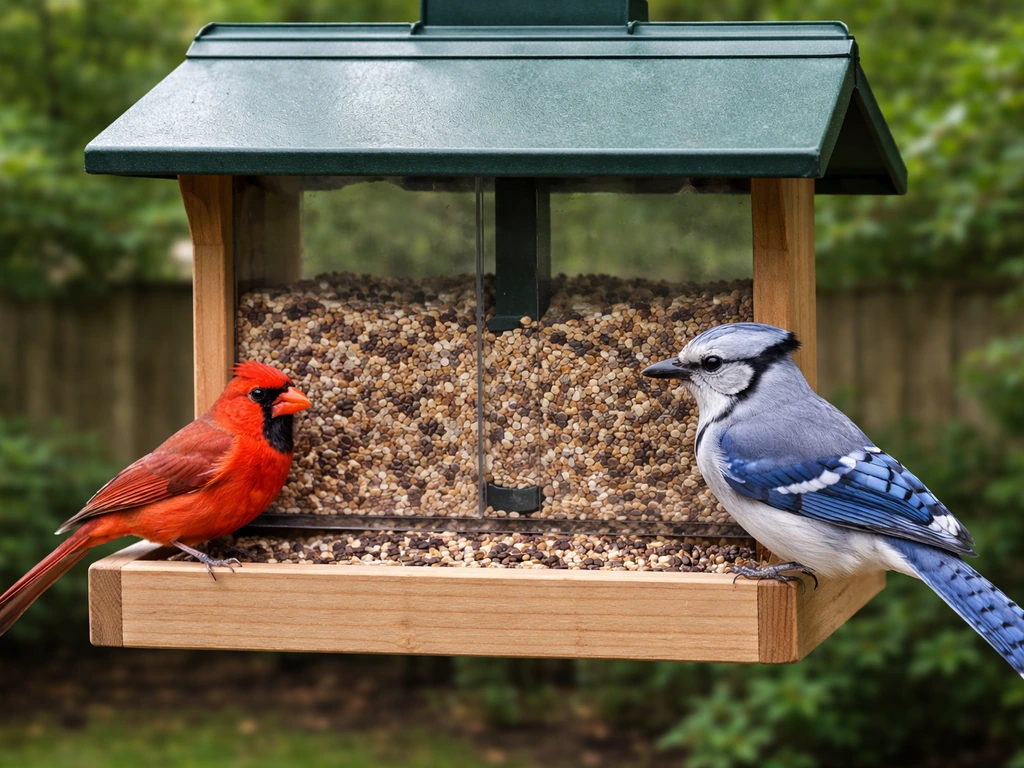
Cardinals are bigger birds with wide bills, and they prefer to feed from a stable platform rather than clinging to a narrow tube port. A hopper feeder with a wide tray, or a dedicated tray/platform feeder, is the right call. Cardinals are commonly found at kitchen-window feeders according to the Minnesota DNR, so a hopper mounted on a pole close to the house where you can actually watch them works well. If you also want a state-specific shortlist, check best bird feeders for indiana for feeder styles that match Indiana winters and bird activity. Blue jays also hit hoppers and platform feeders hard, especially when you add peanuts or sunflower.
Woodpeckers
Suet cages are the go-to for downy woodpeckers, hairy woodpeckers, and even occasional pileated sightings in wooded Minnesota yards. A simple wire suet cage works, but a tail-prop suet feeder (one with an extended lower board that supports the bird's tail while it feeds) is noticeably more effective at drawing larger woodpecker species. Peanut feeders, especially tube feeders with large mesh ports, also pull in woodpeckers reliably. The Minnesota DNR recommends placing woodpecker feeding setups 10 to 15 feet high in a visible location, which also happens to reduce raccoon access.
Finches (goldfinches and house finches)
Nyjer (thistle) tube feeders or mesh sock feeders are where American goldfinches concentrate in Minnesota. These feeders have tiny ports sized for small seeds, which passively excludes larger birds. House finches also use these, but they're more flexible and will hit a standard sunflower tube feeder just as readily. If you want to focus specifically on goldfinches, an upside-down nyjer feeder (where birds feed through ports below the perch) is a useful option because goldfinches can handle it easily while most other birds can't.
Mourning doves and juncos
These are ground-feeders by instinct. They'll use a low tray feeder or simply clean up spillage from other feeders underneath. The Minnesota DNR specifically suggests tray feeders and fly-through feeders placed on deck railings during winter because they're easier to access when snow accumulates. If you want to deliberately feed doves and juncos, a platform tray about 12 to 18 inches off the ground loaded with millet works very well.
Hummingbirds
Ruby-throated hummingbirds arrive in Minnesota roughly mid-May and leave by early September. A standard nectar feeder with red ports works fine, but choose one with a built-in ant moat and UV-resistant plastic or glass. The standard nectar recipe is 1 part white sugar to 4 parts water, boiled and cooled. In Minnesota's summer heat, change nectar every two to three days minimum. In cooler spring and fall weather you can stretch it to five days, but never longer. Because hummingbird feeders are seasonal and need very frequent cleaning, prioritize a design that disassembles easily for scrubbing.
Weather resistance and durability in a Minnesota climate
Cheap plastic feeders typically crack within one or two Minnesota winters. The freeze-thaw cycles stress any plastic that isn't UV-stabilized and impact-resistant, and once cracks form, water gets in, seed rots, and the whole thing becomes a mold incubator. Look for feeders explicitly built with UV-stabilized polycarbonate rather than standard clear plastic. Powder-coated steel or aluminum hardware is important for rust resistance, because standard galvanized wire and uncoated screws will rust and stain your posts within a season.
Moisture and seed clogging inside ports is a real issue in Minnesota's wet snow and freeze-thaw weather. The Brome Squirrel Buster line uses a patented seed tube ventilation system that allows warm air and humidity to escape through vents at the top of the feeder, which reduces seed bridging and port icing compared to sealed tube designs. This is not just marketing: ventilated tube feeders genuinely perform better through the wet, icy phases of a Minnesota winter.
For suet feeders, the hardware cloth or powder-coated wire cage style is the most durable option. Avoid plastic-frame suet feeders because the frames become brittle and snap when temps drop into negative territory. A simple all-metal cage with a hinged door is what you want to be opening with cold hands in January.
Hopper feeders need a good roof overhang to keep seed dry. Look for a roof pitch that actually sheds snow rather than accumulating it. Models with a removable seed tray make it much easier to dump wet or frozen seed quickly without having to disassemble the whole feeder. Drainage holes in the tray bottom are a must, not a nice-to-have.
Keeping squirrels, grackles, and other pests out
Squirrels: placement first, hardware second
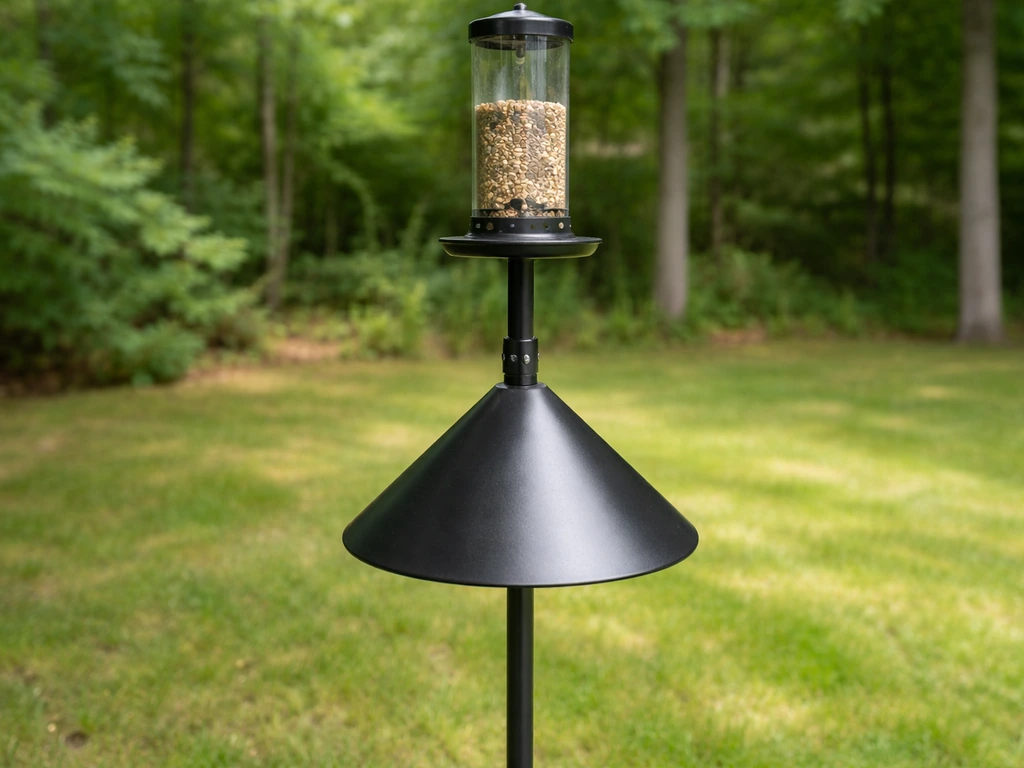
No feeder is truly squirrel-proof if the placement is wrong. Squirrels can jump roughly 10 feet horizontally from a running start and about 5 feet straight up. The practical rule I follow is a version of the 5-7-9 setup: keep feeders at least 5 feet off the ground, 7 feet from any fence or shrub, and 9 feet from any overhead branch or overhang. Audubon emphasizes that distance from structures is actually more important than the feeder design itself. Get placement wrong and no baffle or feeder design will compensate.
On top of correct placement, a pole-mounted torpedo or wrap-around baffle makes the setup much more effective. Perky-Pet's baffle instructions recommend placing the pole at least 15 feet from any structure a squirrel could launch from, which confirms the need to think about your yard geometry before you buy a pole. A baffle installed too low (under 4.5 to 5 feet) doesn't give enough vertical clearance between the baffle and the feeder ports for squirrels to give up.
If you want a weight-activated feeder as your second line of defense, the Brome Squirrel Buster Classic is the most reliable design I've tested. The weight-activated shroud closes the seed ports when a squirrel (or any animal over a certain weight threshold) lands on it. At 32 inches tall with a 2.4-pound seed capacity, it's practical for a Minnesota yard and doesn't need a separate squirrel-proof pole to work. That said, I still recommend mounting it with a baffle because a squirrel dropping from above will land directly on the feeder before triggering the weight mechanism.
Grackles and starlings
Common grackles can overwhelm a feeder station fast in spring and early summer in Minnesota. The most effective deterrents are feeder design choices rather than anything you spray or scatter. A caged tube feeder (a standard tube surrounded by a wire cage with openings sized for small birds) physically blocks grackles from reaching the ports. The Minnesota DNR also recommends starling-proof feeders that force birds to feed upside down, which grackles and starlings won't do. Combining a caged feeder for sunflower seed with an upside-down nyjer feeder for finches handles most bully-bird problems without removing your feeders entirely.
Raccoons and bears
Raccoons are statewide in Minnesota outside a few northeast counties, and they will absolutely knock over a pole-mounted feeder at night if you haven't secured it. A sturdy torpedo baffle on the pole is your best deterrent, and choosing a feeder with a locking seed port or heavy-weight shroud helps. In northern Minnesota and any wooded or semi-rural area, black bears are a real concern during spring through fall. The Minnesota DNR advises removing seed feeders, suet feeders, and hummingbird feeders overnight if bears are active in your area, rather than trying to build a bear-proof setup. A bear can destroy virtually any feeder. The simplest solution is to bring feeders in at night from late April through October if you're in bear country.
Setting up a feeder station in your Minnesota yard
A single feeder on a pole works, but the Minnesota DNR recommends clustering three to four feeders per station and building toward 12 to 15 feeders total across multiple clusters for the most successful feeding setups. That might sound like a lot, but even two clusters of three feeders (one sunflower tube, one suet cage, one nyjer tube per cluster) dramatically increases the number of species and individuals you'll attract compared to one lonely hopper on a shepherd's hook.
For pole height, most tube and hopper feeders hang best at 5 to 6 feet, which keeps them visible from a window and gives enough clearance for the baffle below. Suet cages for woodpeckers can go higher, 10 to 15 feet up or mounted directly on a tree or post, and that height also reduces raccoon access. Platform feeders for doves and juncos should sit low, around 12 to 18 inches off the ground, placed away from the main cluster so they don't create competition between ground-feeders and perching birds.
Spacing between your clusters matters too. Minnesota DNR guidance supports spreading clusters far enough apart that dominant birds (jays, grackles, squirrels) can't monopolize two stations at once. A rough rule is 15 to 20 feet between clusters. If your yard is small, even separating clusters by 10 feet on opposite sides of the yard helps break up the bullying dynamic.
If you're just starting out, a single 4-foot steel pole with a torpedo baffle, a hopper feeder, and a suet cage is the right beginner setup. Add a nyjer tube feeder once you've got the pole-and-baffle system dialed in. If you're comparing notes with birders in neighboring states, the setup priorities for Minnesota are broadly similar to those for Wisconsin and Iowa, with the main difference being Minnesota's longer and more severe winters demanding higher emphasis on freeze-resistant materials and winter-accessible feeder placement. If you’re planning for Iowa specifically, the best bird feeders for Iowa are the ones that match the local winter conditions and the species you want to attract.
Top feeder picks by use case
Here's how I'd build a Minnesota feeder shortlist from scratch, organized by what you're trying to accomplish.
| Use Case | Feeder Type | Top Pick / What to Look For | Key Feature for MN |
|---|---|---|---|
| All-around sunflower feeder | Hopper or tube | Brome Squirrel Buster Classic | Weight-activated shroud, ventilated seed tube, UV polycarbonate |
| Cardinals and jays | Hopper with wide tray | Wide-tray hopper feeder with roof overhang | Stable platform, drainage holes, snow-shedding roof |
| Finches (goldfinch, house finch) | Nyjer tube or mesh sock | Droll Yankees 6-port finch tube | UV-stabilized polycarbonate, internal baffle, small ports |
| Woodpeckers | Suet cage with tail prop | All-metal tail-prop suet cage | Powder-coated metal, hinged door, mount high on post |
| Chickadees and nuthatches | Tube feeder with short perches | Droll Yankees tube or Brome Squirrel Buster | Short perches, weight-activated shroud, ventilation |
| Mourning doves and juncos | Platform/tray feeder | Low platform tray on pole or deck railing | Open tray, easy snow clearing, millet-compatible |
| Hummingbirds (seasonal) | Nectar feeder | Glass or UV-resistant plastic with ant moat | Easy disassembly for cleaning, red ports, no yellow dye |
| Bully bird (grackle/starling) deterrent | Caged tube feeder | Cage-enclosed tube feeder | Cage openings sized for small birds only |
| Squirrel-proof setup | Pole + baffle + weight-activated feeder | Steel torpedo baffle + Brome Squirrel Buster | 15-ft clearance from structures, 5-ft pole height |
If I had to pick a single feeder to start with, it's the Brome Squirrel Buster Classic on a pole with a torpedo baffle, loaded with black-oil sunflower. It covers the most species, handles the squirrel problem mechanically, and the ventilated seed tube is genuinely useful for Minnesota's wet winters. If you’re planning a similar setup for an Ohio backyard, choose feeders that handle freezing weather, moisture, and local bird preferences best bird feeders for ohio. Add a suet cage as your second purchase and you've covered woodpeckers, nuthatches, and chickadees simultaneously.
What about smart feeders and camera feeders?
Smart bird feeders with cameras and AI species identification (like Bird Buddy and similar models) are worth considering if you want to know exactly what's visiting and when. For Minnesota use, the main caveat is cold-weather battery performance. Most smart feeders use lithium batteries that degrade noticeably below 20°F, and some models lose connectivity in extreme cold. If you're in Minneapolis or a comparable metro area with moderate winters, a camera feeder works well from roughly October through April if you keep it charged. In northern Minnesota where temps regularly hit minus 20°F or colder, I'd keep the smart feeder as a supplemental setup rather than your primary station.
Cleaning, maintenance, and winterizing
Cleaning is not optional in Minnesota. Mold can cause fatal avian diseases, and the freeze-thaw cycles the state sees regularly create ideal conditions for wet seed to go bad inside feeders. The Minnesota DNR recommends cleaning feeders with 2 ounces of bleach per gallon of water, scrubbing all surfaces, rinsing thoroughly, and drying completely before refilling. Cornell Lab's All About Birds guidance aligns with this, recommending no stronger than a 1 part bleach to 9 parts water solution to avoid residue that could harm birds.
How often? Tube and hopper feeders should be cleaned at minimum once a month in winter and every two weeks in summer. After any heavy rain, wet snow event, or January thaw period, inspect feeders immediately and discard any wet or clumped seed before it molds. Platform feeders need checking after every snow because they have no roof protection. Suet cages can go longer between full scrubs, but check the suet itself for mold, especially during warm spells.
Hummingbird feeders need cleaning every week to ten days during Minnesota's summer, and more frequently during hot stretches. The nectar goes bad fast in heat, and dried sugar residue builds up quickly in ports. Use hot water and a bottle brush for routine cleaning, and bring out the dilute bleach solution for a deeper clean once a month.
Don't forget the ground under your feeders. The Minnesota DNR warns that old seed hulls and spilled millet accumulate below feeders and become a mold and disease source on their own. Rake or scoop up the waste every couple of weeks, especially after a thaw when everything that was frozen in snow suddenly decomposes at once.
Winterizing your feeder setup
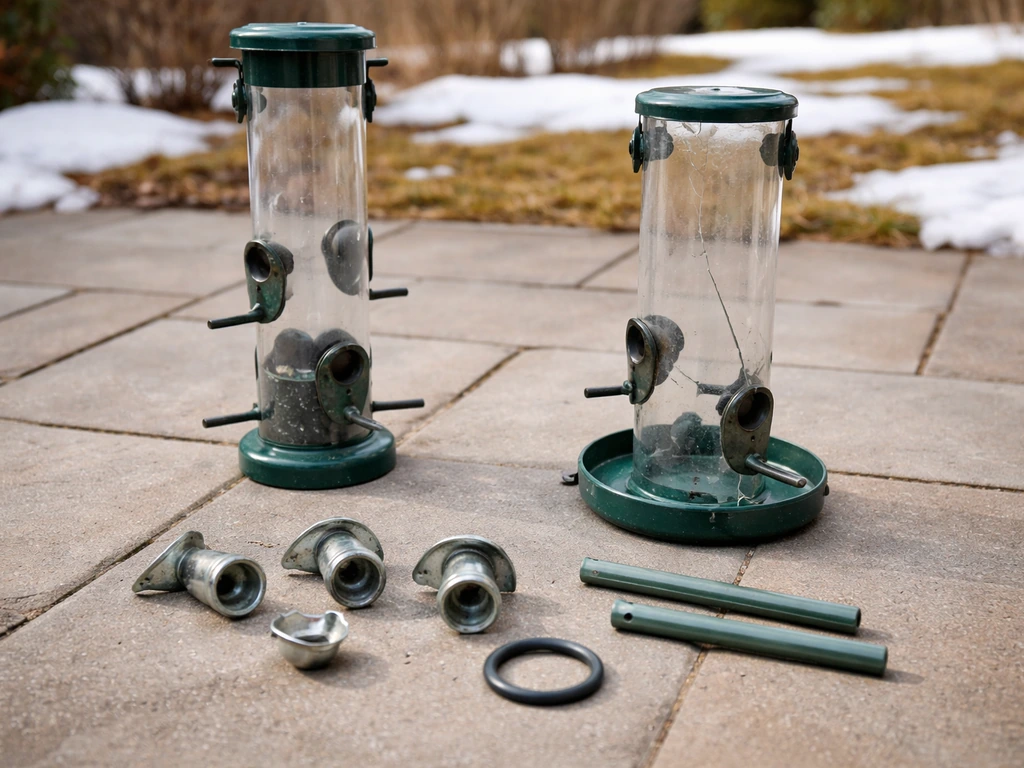
Before the first hard freeze, inspect every feeder for cracks, rust, and worn perches. Replace cheap plastic feeders now rather than waiting for them to fail mid-January. Apply a thin coat of food-safe petroleum jelly to metal hardware threads so lids and ports don't seize up when temps drop. If you have hummingbird feeders, bring them in and store them after the first frost, usually early October in most of Minnesota.
During winter, switch to no-waste seed blends (hulled sunflower, hulled millet) when possible, because hulls accumulate under feeders and become a frozen, mold-prone mat that's hard to clean in sub-zero weather. Keep a small brush near your feeders to clear ice from ports and perches without scratching the feeder surface. If a port ices over, warm water poured slowly over it is more effective and less damaging than prying with a tool.
Budget vs premium: what to buy first
Minnesota is one of the states where spending more on feeder quality actually pays off, because cheap feeders get destroyed by weather and squirrels within a season or two. That said, you don't need to buy everything at once.
| Tier | What to Buy | Approximate Budget | Best For |
|---|---|---|---|
| Beginner (start here) | Steel pole + torpedo baffle + 1 hopper or tube feeder + 1 suet cage | $50–$90 total | Getting the core setup right before adding complexity |
| Intermediate (add on) | Nyjer tube feeder + caged tube feeder for bully-bird control + platform tray | $80–$130 additional | Expanding species coverage and solving the grackle problem |
| Advanced (full station) | Multiple poles/clusters + Brome Squirrel Buster models + smart/camera feeder + tail-prop suet cage | $200–$400+ total | Serious backyard birders who want variety and monitoring |
The biggest mistake beginners make in Minnesota is buying a cheap plastic hopper on a shepherd's hook with no baffle. It gets hit by squirrels within days, the plastic cracks by February, and they give up. Spend the first $50 to $60 on a good steel pole-and-baffle combination before you even think about the feeder itself. With the right mounting, even a mid-range $25 tube feeder will outperform a $60 premium feeder hanging on a cheap hook with no squirrel protection.
If you're comfortable spending on one premium feeder right away, the Brome Squirrel Buster Classic is worth the price specifically for Minnesota use because of the weight-activated shroud and the ventilated seed tube design. It's the one feeder in this category that actually handles both the squirrel problem and the moisture-in-winter problem in a single package. After that, build out your station feeder by feeder as your yard and budget allow.
FAQ
What is the single best bird feeder for a Minnesota beginner yard setup?
Start with a quality pole-and-baffle system paired with one feeder that covers the widest range, a ventilated black-oil sunflower tube feeder works best. Add a hopper or platform later for cardinals and a suet cage for woodpeckers, since no one style reliably covers all Minnesota bird groups.
How high should I mount feeders in Minnesota if I have a lot of squirrels?
Aim for 5 to 6 feet for tube and hopper feeders so birds can access them easily, then raise suet cages to 10 to 15 feet or mount them on a post. Also ensure your baffle is high enough above ports (roughly 4.5 to 5 feet and up) so squirrels cannot reach under it from below.
Do I really need a squirrel baffle if I buy a weight-activated feeder?
Yes. Weight-activated designs reduce port access when an animal lands on the shroud, but a squirrel dropping from above can hit the feeder before the mechanism triggers. A torpedo or wrap-around baffle still provides the primary barrier and reduces “first contact” failures.
What feeder materials last longest through Minnesota freeze-thaw cycles?
Choose UV-stabilized polycarbonate or powder-coated metal, and prioritize powder-coated hardware over uncoated screws or wire. Sealed or cheap clear plastics often crack after repeated thawing, and rusted parts can also stain seed trays and make cleaning harder.
What should I feed in winter if my seed keeps getting wet and clumping?
Prefer hulled sunflower, hulled millet, and blends designed to reduce bridging. If seed still clumps after thaws, dump it and restart, because wet seed can mold quickly. Also inspect after every thaw week, not just after snowstorms.
How often should I clean feeders in Minnesota beyond the general monthly routine?
Do a quick check after every heavy rain, wet snow event, or January thaw, and discard any wet or clumped seed immediately. Then follow your schedule, tube and hopper monthly in winter and more often in summer, platform feeders after every snow, and hummingbird feeders weekly to every 10 days.
Can I use standard nectar feeders for hummingbirds in Minnesota, and how do I prevent ant issues?
You can, but choose a model with an ant moat and UV-resistant ports, and use a nectar mix of 1 part sugar to 4 parts water. In the summer, change nectar every two to three days minimum, and plan for weekly disassembly if you want the feeder to stay functional for weeks, not days.
Why do I sometimes see fewer birds even when I have feeders up?
The most common causes are food and feeder mismatch (for example, nyjer in a feeder with large ports), poor placement that allows dominant birds or squirrels to monopolize the station, and dirty or moldy seed. If birds “arrive then disappear,” check for wet seed bridges and clean immediately.
What feeder should I choose to reduce grackles and bully birds?
Use design barriers, caged tube feeders for sunflower seed help prevent grackles from reaching ports. If available, consider starling-resistant or upside-down styles for finch seed, and avoid relying on sprays, since design-based blocking works longer and more predictably.
How do I handle raccoons that knock over feeders at night?
Use a sturdy pole with a torpedo or wrap-around baffle and choose feeders with heavier-weight shrouds or locking ports where possible. Secure poles so the base cannot tip, because raccoons often target reach-and-pull behavior rather than only port access.
Are there any winter practices that make cleaning easier and reduce mold?
Use roofed hoppers with drainage holes and removeable trays so you can dump wet seed quickly without full disassembly. Switch to no-waste blends when possible, and keep a small brush for clearing ports so you do not damage feeder surfaces with tools.
How many feeder stations do I need for a good variety in Minnesota?
Plan on clusters rather than a single feeder, three to four feeders per station with multiple clusters is typically more effective. Even two clusters of three different feeder types can dramatically increase variety compared to one hopper on a shepherd’s hook.
What should I do if a feeder port ices over during a Minnesota cold snap?
Warm water poured slowly over the iced area is usually safer than prying with a tool, and it reduces the chance of scratching or cracking the feeder. After it thaws, remove any swollen or partially frozen seed so you do not restart bridging that will fail again quickly.
Do smart bird feeders work in northern Minnesota?
They can, but cold is the biggest limitation, many units perform poorly below about 20°F due to battery and connectivity issues. Treat smart feeders as supplemental in areas that commonly hit minus 20°F or colder, and keep your primary feeder station traditional and highly freeze-tolerant.
When should I stop feeding hummingbirds and take the feeders down?
In most of Minnesota, bring hummingbird feeders in after the first frost, often around early October, and do not leave them out when temperatures regularly drop below freezing. After removal, store the feeder dry and clean so you are ready for spring without a deep scrub at the start of the season.
What is the biggest mistake to avoid when buying feeders for Minnesota?
Buying a cheap plastic feeder with no baffle, especially a hanging shepherd’s hook setup, tends to fail quickly from squirrel damage and cracking. Invest first in a good steel pole and baffle, then add one mid-range feeder that matches your key food, sunflower for most birds.
Next Articles
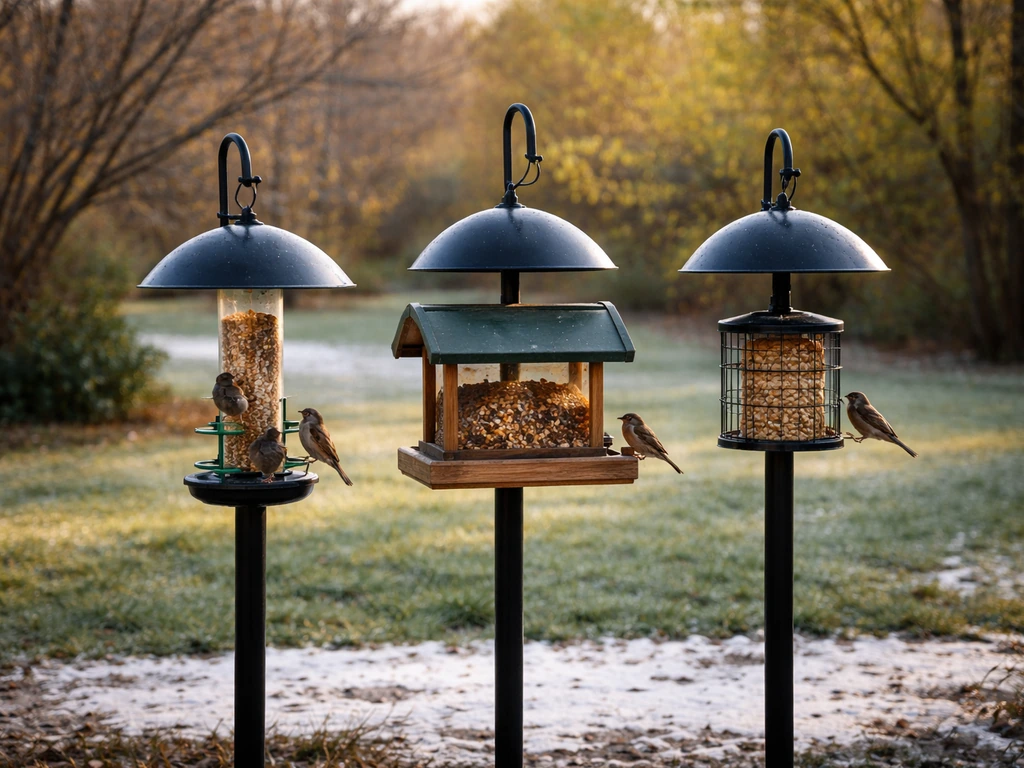
Best Bird Feeders for Ohio: Top Picks by Species and Season
Best bird feeders for Ohio by species and season, with squirrel-proofing, weatherproofing, placement tips, and smart cam
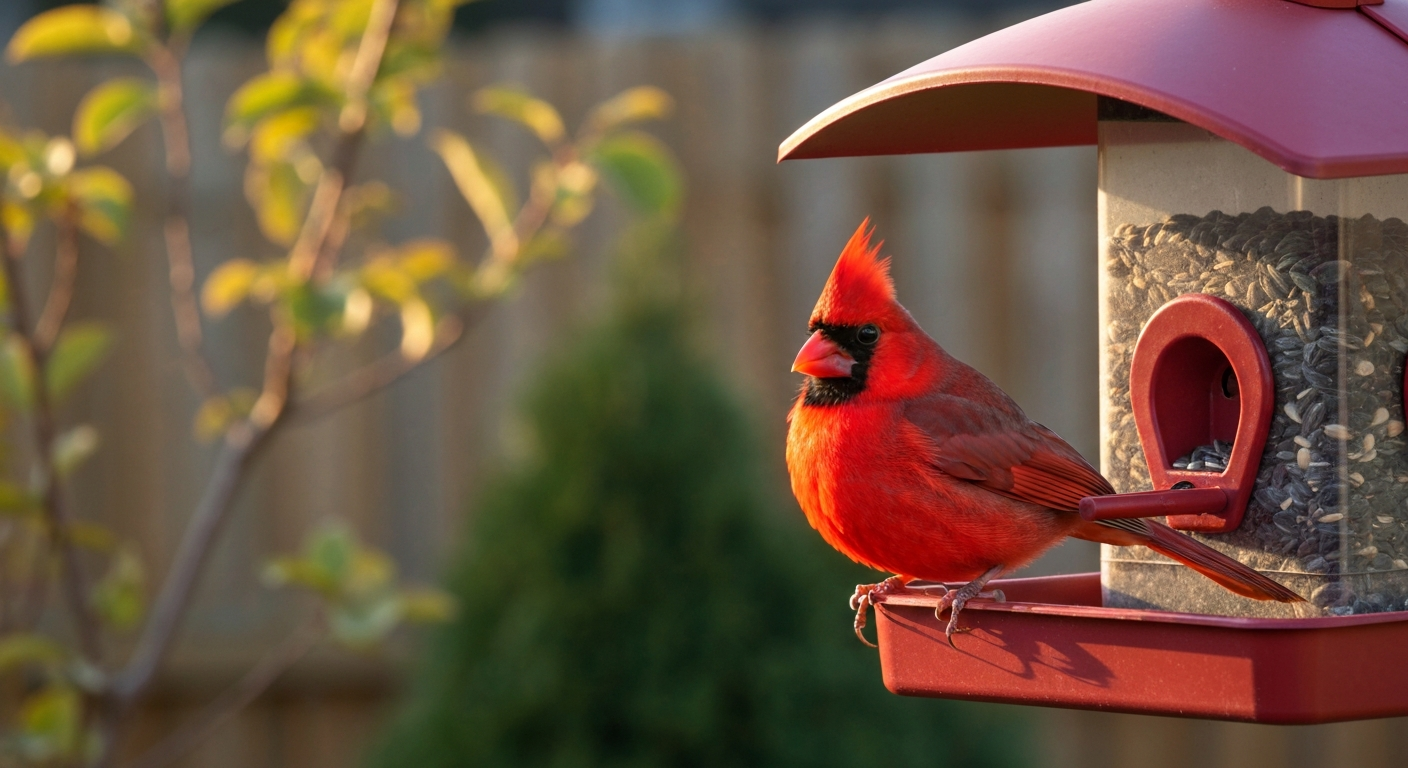
Best Red Cardinal Bird Feeder: Top Picks & Buying Guide
Best red cardinal bird feeder guide: top picks, painting tips, seed & placement advice to attract Northern Cardinals.
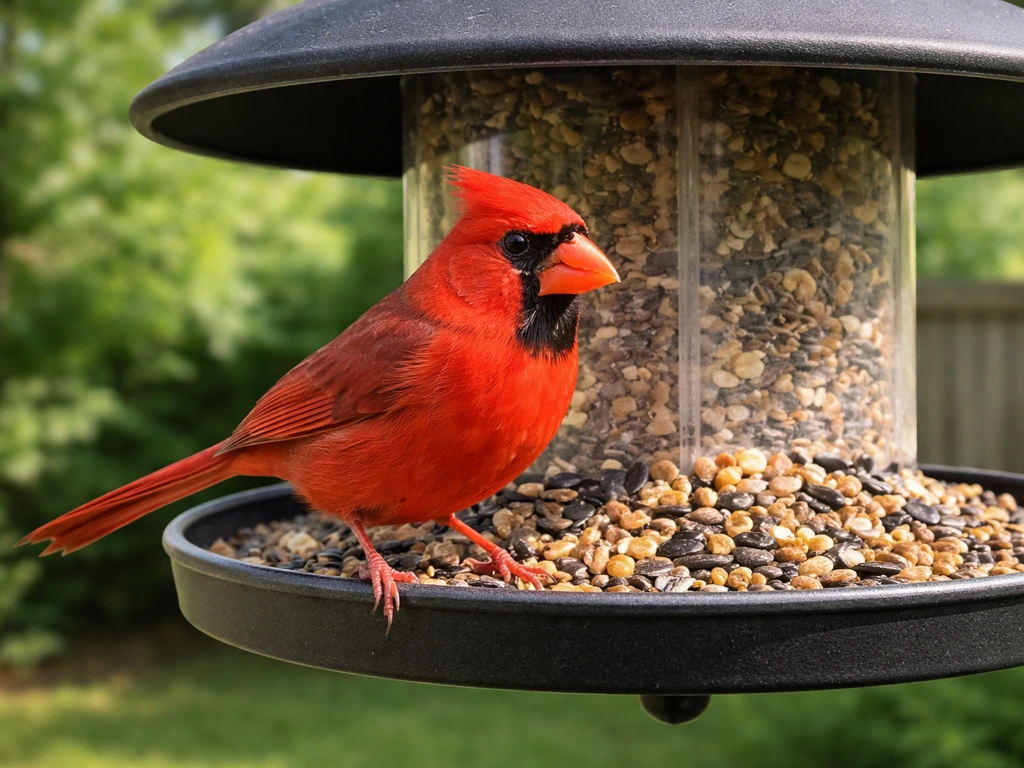
Best Bird Feeder for Red Birds: Top Picks and Setup Guide
Top feeders and setup tips to attract cardinals and other red birds using the right seed, mounts, and squirrel-proofing.