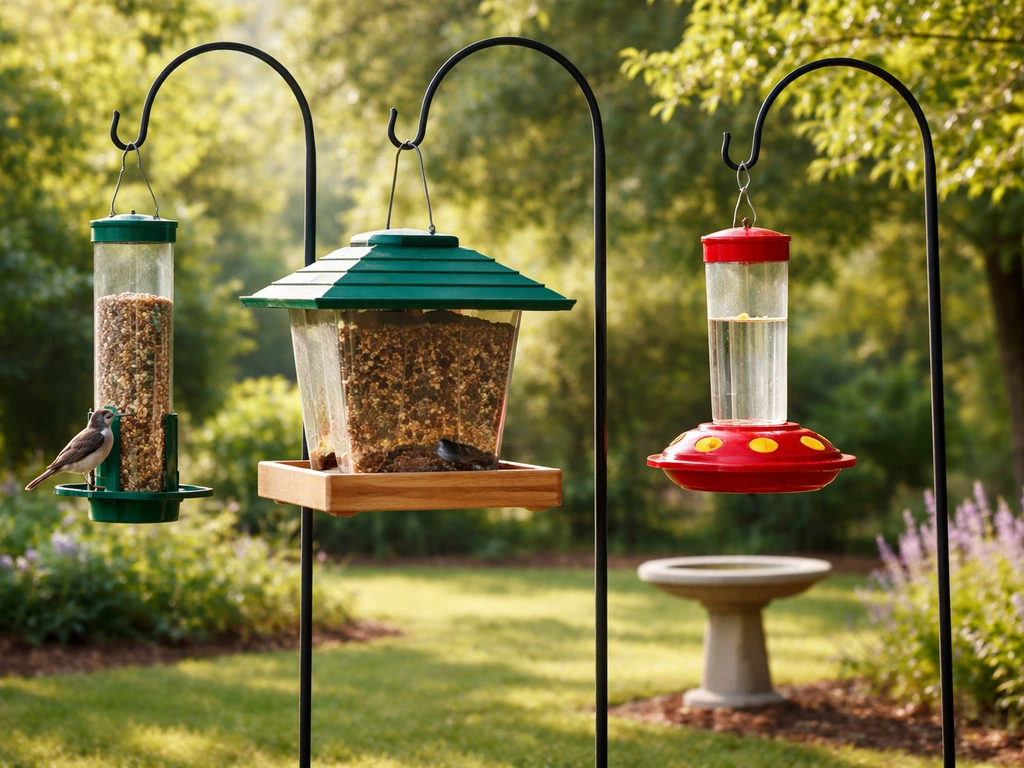
The best bird feeder design for your yard is the one that matches three things at once: the birds you want to attract, the conditions you're dealing with (weather, squirrels, yard size), and how much time you're willing to spend on maintenance. There's no single winner. A tube feeder with small ports is perfect for goldfinches but useless for cardinals. A hopper feeder loaded with sunflower seeds will bring in cardinals, jays, and chickadees, but it'll also invite every grackle in the neighborhood. Get those three variables right first, and the rest of the decisions become a lot easier. If you want a quick starting point, look for the best style bird feeder options that match your target birds and your yard conditions best feeder designs.
Best Bird Feeder Designs: Plans, Placement, and Fixes
Marcus Holloway
15 May 2026
What 'best' actually means for your backyard
Before you buy anything or pull up any plans, spend five minutes thinking about your specific situation. What birds are already visiting or passing through your yard? Are you in a suburban lot with squirrel pressure, or a more rural setting where raccoons and deer are the bigger threat? Do you want low maintenance, or are you willing to clean and refill weekly in exchange for heavy bird traffic? Audubon’s feeder basics similarly emphasize that keeping the feeding entrance and feeder clean helps reduce mess and helps maintain seed quality, such as by keeping seed dry clean and refill weekly. Those answers change everything about which design is right.
Your goals matter too. Some people want sheer variety, pulling in as many species as possible with multiple feeder types. Others want a focused setup, like a hummingbird garden with nectar feeders and native plantings, or a woodpecker station loaded with suet and peanuts. And some folks just want something that looks good on the deck without becoming a squirrel obstacle course. When you're aiming for the best looking bird feeders, choose designs that also match your birds' needs and your yard conditions. All of those are valid goals, they just point to different design choices. The feeders that show up on 'best style' lists or 'best looking' roundups aren't always the ones that perform best for a specific bird or yard situation, so keep your priorities front and center. After you figure out what works in your specific yard, it's also helpful to compare bird feeders side by side so you can pick designs that fit your goals and visitors.
Yard conditions are the third piece. If you get heavy rain or snow, open tray designs will turn your seed into mush. If you live somewhere windy, lightweight plastic feeders will swing and spill constantly. Hot, humid climates speed up mold growth in both seed and nectar feeders, which means more frequent cleaning no matter what design you pick. Match the design to the environment, not just the bird.
Design features that actually make a difference
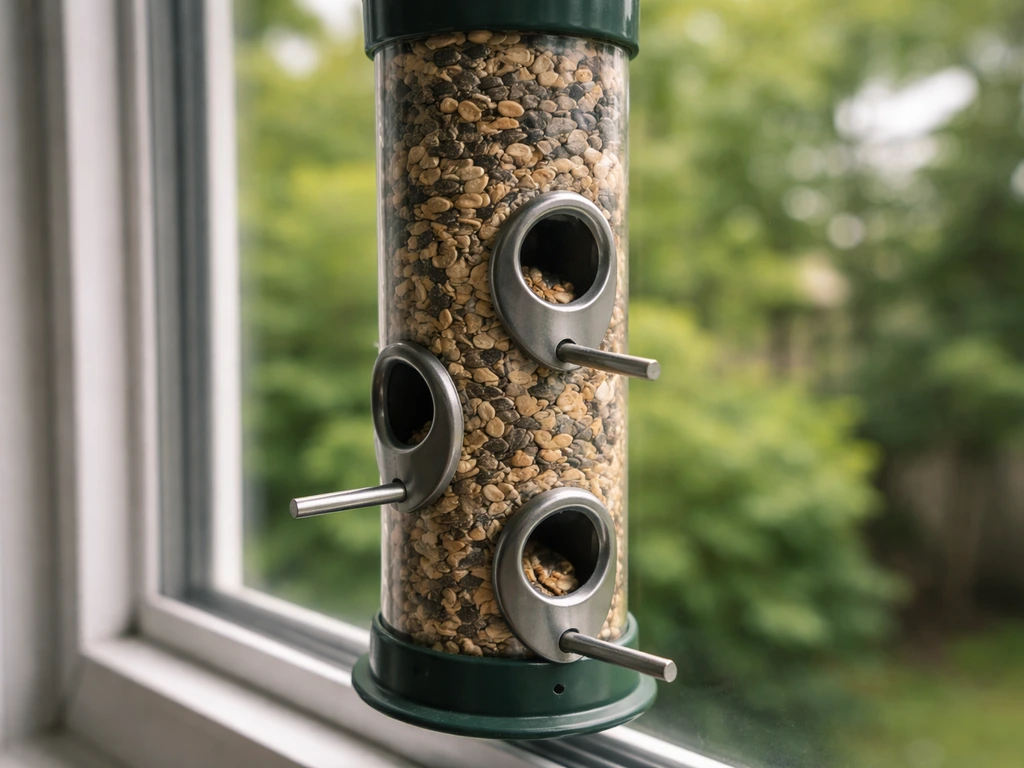
Not all feeders are built equally, and a few specific design details separate the ones that work well from the ones that frustrate both you and the birds. Here's what to look for.
Ports, openings, and seed access
Port size controls which birds can feed and which can't. Small round ports (about 3/8 inch diameter) on tube feeders work well for nyjer and small sunflower chips, attracting finches and chickadees while making it harder for larger birds to dominate. Wider ports or elongated slots accommodate larger seeds like whole sunflower or safflower, which opens things up to cardinals and nuthatches. Tray and hopper feeders have open or wide-access designs by nature, which is great for variety but also means no size filtering at all.
Perch style and positioning
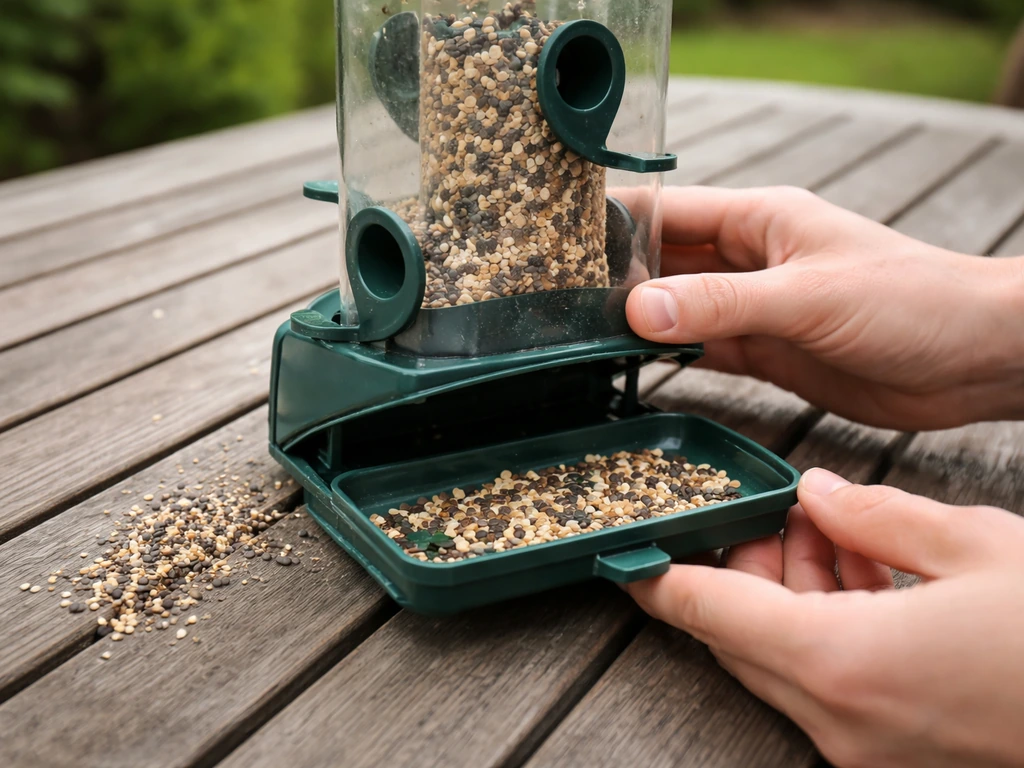
Perch placement is underrated. Tube feeders with perches below the ports (rather than above) favor clinging birds like finches and chickadees while making it harder for non-clinging species like house sparrows to feed comfortably. Clamp-style or short perches also reduce the "standing room" that lets larger birds park and monopolize a port. For cardinals specifically, you want a wider tray or a feeder with a broader perch shelf, since they're bigger birds and need more room to land and turn.
Cleaning access and seed flow
This is where a lot of feeders fall short. A feeder you can't easily take apart and clean thoroughly is a feeder that will eventually make birds sick. Look for removable bases, wide-mouth openings, and smooth interior surfaces without corners where wet seed can clump and mold. Project FeederWatch recommends cleaning seed feeders about every two weeks under normal conditions, and more often during warm, humid weather or heavy use. If your feeder takes 20 minutes to disassemble and clean, you're going to skip it, and that's a problem. Dishwasher-safe parts are a genuine advantage here.
Weather protection for the seed
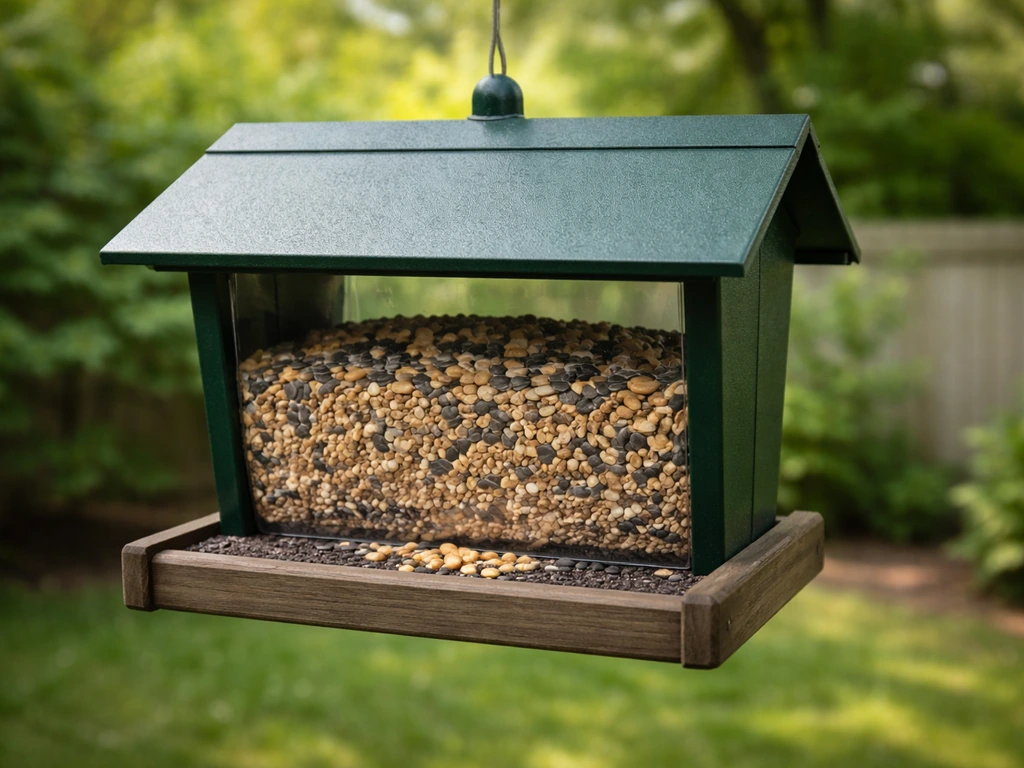
A roof or weather guard over the seed reservoir keeps rain and snow out and dramatically reduces how often you're throwing out wet, spoiled seed. Hopper feeders with peaked roofs handle this well. Tube feeders with tight-fitting ports do reasonably well in light rain. Open tray feeders are the worst for moisture but can work fine in dry climates or under a patio cover. If you're in a wet climate, prioritize a design with a covered seed chamber above everything else.
Best feeder designs by bird type
Different birds have evolved different feeding habits, and the best feeder design is almost always the one that matches those habits. Here's how to match design to species.
Finches (goldfinches, house finches, purple finches)
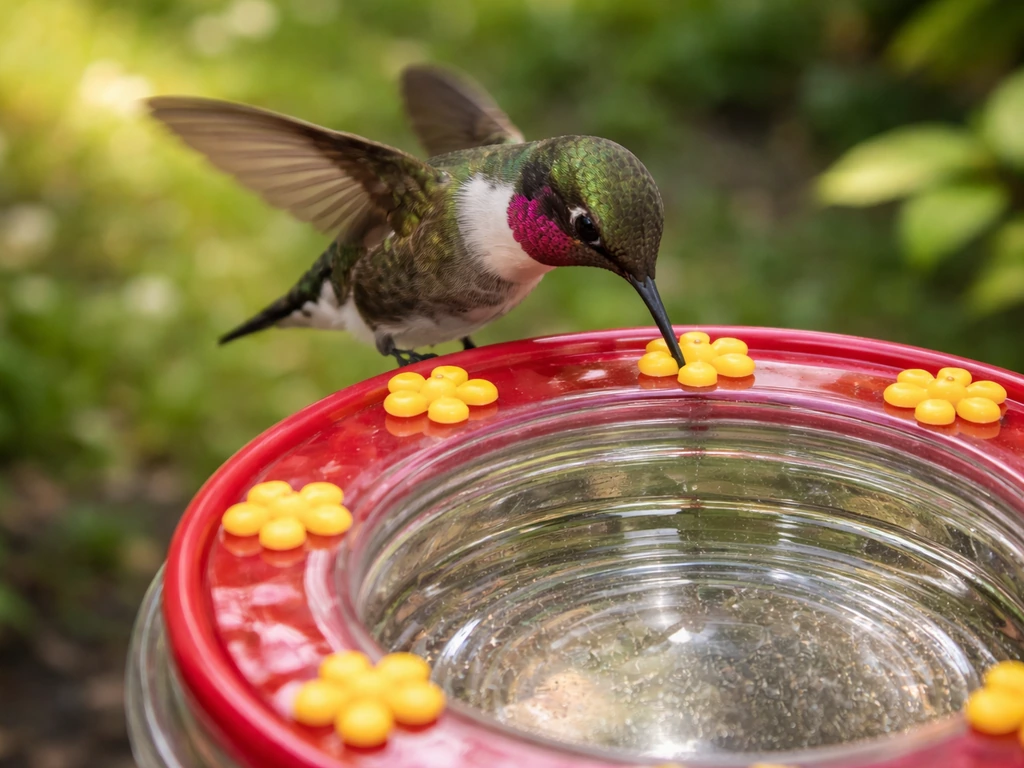
Tube feeders with small nyjer (thistle) ports are the gold standard for goldfinches. The Finch or "nyjer sock" style, essentially a mesh bag, also works and costs almost nothing. Finches are acrobatic and can cling to mesh easily. If you want to attract multiple finch species, a tube feeder with 6 to 10 ports and a mix of nyjer and hulled sunflower chips tends to outperform a simple sock design. Look for feeders where the ports are slightly recessed to keep seed dry during light rain.
Hummingbirds
Nectar feeders are the only real option here, and the design details matter a lot for maintenance. Saucer-style feeders (shallow dish with ports on top) are dramatically easier to clean than the classic inverted bottle design, and they're less prone to leaking in heat. Red is the color that attracts hummingbirds, so stick with feeders that have red ports or accents, there's no need to add red dye to the nectar itself. In hot climates, choose a feeder with a smaller reservoir so you're forced to refresh the nectar every 2 to 3 days before it ferments. Larger reservoirs look impressive but often mean you're leaving spoiled nectar out longer.
Cardinals
Cardinals are bigger birds that don't cling well, so they need a proper perch with some surface area. Hopper feeders and platform/tray feeders both work well. Load them with safflower seed (which most squirrels don't like) or black oil sunflower, and you'll get consistent cardinal activity. As Audubon notes, hopper feeders attract cardinals alongside jays and other larger birds, so if you want to reduce competition, a dedicated platform feeder placed lower to the ground (cardinals often prefer feeding at or near ground level) can help separate them from the tube feeder crowd.
Woodpeckers (downy, hairy, red-bellied, pileated)
Suet cage feeders are the classic choice, and they work. A simple wire cage that holds a standard suet block is inexpensive and effective. For larger woodpeckers like the pileated, look for a feeder with a long "tail prop" extension below the cage that lets the bird brace itself like it would on a real tree. Peanut feeders (tube-style with large mesh) also pull in woodpeckers and are a nice complement to suet. In very hot weather, switch to no-melt suet formulations or the suet will go rancid fast.
Mixed species and general songbirds
If you want to attract a wide variety of songbirds, a hopper feeder with black oil sunflower seed is the single most effective design you can put up. It'll bring in chickadees, nuthatches, titmice, sparrows, finches, cardinals, and more. Pair it with a suet feeder and a small tube feeder with nyjer, and you've covered the core feeding niches for most North American backyard birds. That three-feeder combination is where most backyard birders should start before they start optimizing for specific species.
Materials and weatherproofing: what holds up and what doesn't
The material your feeder is made from affects how long it lasts, how easy it is to clean, and how well it handles your local climate. Here's the honest rundown.
| Material | Durability | Weather Resistance | Ease of Cleaning | Best For |
|---|---|---|---|---|
| Polycarbonate / hard plastic | Good (3-5+ years) | Good, UV-resistant versions last longer | Excellent, dishwasher-safe | Tube feeders, most climates |
| Recycled plastic / poly lumber | Excellent (10+ years) | Excellent, won't rot or warp | Easy | Hopper and platform feeders, wet climates |
| Cedar / treated wood | Good (3-7 years) | Moderate, needs seasonal treatment | Moderate, rough surfaces trap debris | Hopper feeders, aesthetic setups |
| Metal (powder-coated steel) | Excellent | Excellent, rust-resistant if coated | Easy | Squirrel-resistant housings, suet cages |
| Glass | Good if thick | Excellent | Very easy | Nectar feeders, window feeders |
| Cheap thin plastic | Poor (1-2 years) | Poor, cracks in UV and cold | Moderate | Budget/temporary use only |
If you're building your own feeder, cedar is the traditional choice because it naturally resists rot and insects. It looks great and holds up reasonably well, but it does need occasional treatment (a light coat of linseed oil or exterior sealant) to extend its life, especially in wet climates. Recycled plastic lumber has become my personal recommendation for DIY builds in the last few years because it doesn't warp, crack, or rot, it's just harder to find at local hardware stores. For bought feeders, polycarbonate tube feeders from established brands like Droll Yankees or Aspects hold up far longer than the cheap plastic versions you find at discount stores.
Mounting and placement: getting the location right
Where you put your feeder matters as much as which feeder you buy. A well-designed feeder in a bad location will see little activity, while a basic hopper in the right spot will be busy all day.
Height and shelter
Most seed feeders work best at 5 to 6 feet off the ground, high enough to give birds a clear view of approaching predators but low enough for easy refilling. Cardinals and sparrows will also use ground-level or low platform feeders, so don't be afraid to place a tray feeder at 2 to 3 feet. Hummingbird feeders should be hung at eye level or slightly above in a spot with some morning shade, since direct afternoon sun speeds up nectar spoilage. Suet feeders for woodpeckers can go higher, 6 to 10 feet, mounted on or near a tree trunk to mimic natural foraging conditions.
Distance from cover and windows
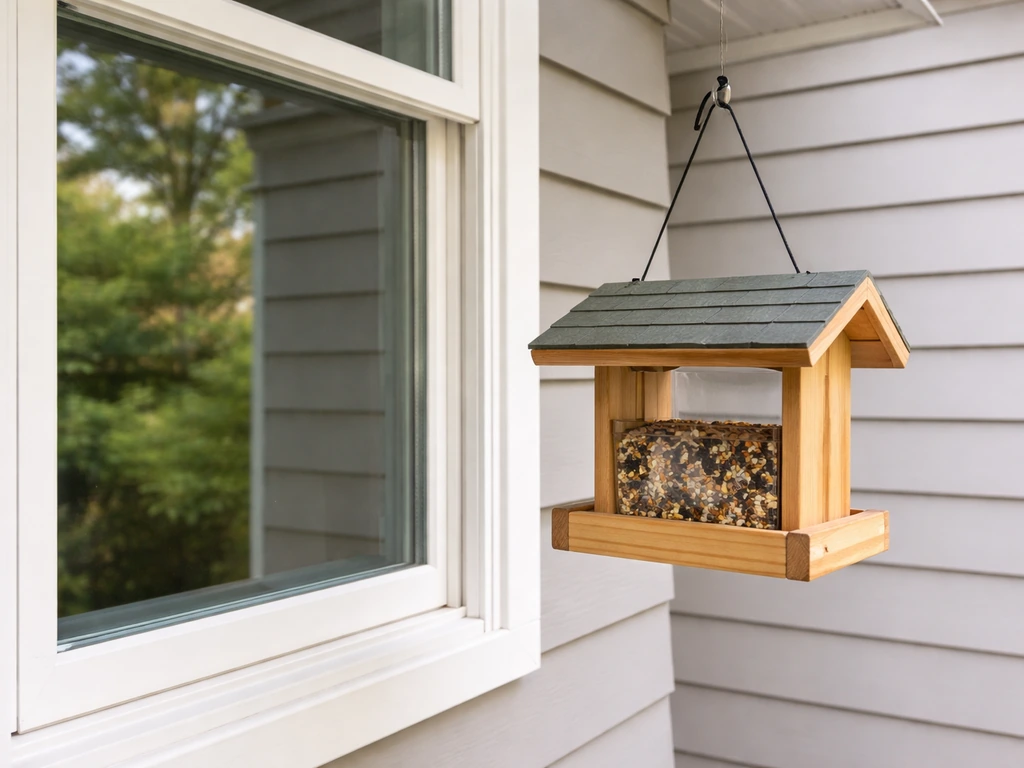
Place feeders either very close to windows (within 3 feet) or more than 10 feet away. This is the single most important window collision prevention tip: birds hit windows when they're startled at medium distances (4 to 9 feet) and have enough room to build speed. At under 3 feet, a startled bird just flutters back without enough room to hit hard. Also place feeders near shrubs or trees that give birds a staging area, somewhere to wait their turn and retreat quickly from predators. A totally open placement looks clean but makes birds nervous and reduces visits.
Spacing multiple feeders
If you're running multiple feeders, spread them out by at least 5 to 10 feet so dominant birds can't guard all the food at once. Putting a finch tube feeder and a cardinal hopper feeder in different areas of the yard also helps separate feeding niches so you get more activity overall. I like to run a front-yard setup and a back-yard setup so birds that get pushed off one area naturally move to the other rather than leaving the yard entirely.
Squirrel and grackle deterrence built into the design
Squirrels destroyed my first three feeders. I'm not exaggerating. After going through a plastic hopper, a cheap tube feeder, and a wooden platform, I finally started thinking about deterrence at the design level rather than trying to fix the problem after the fact. Here's what actually works.
Squirrel-proofing strategies
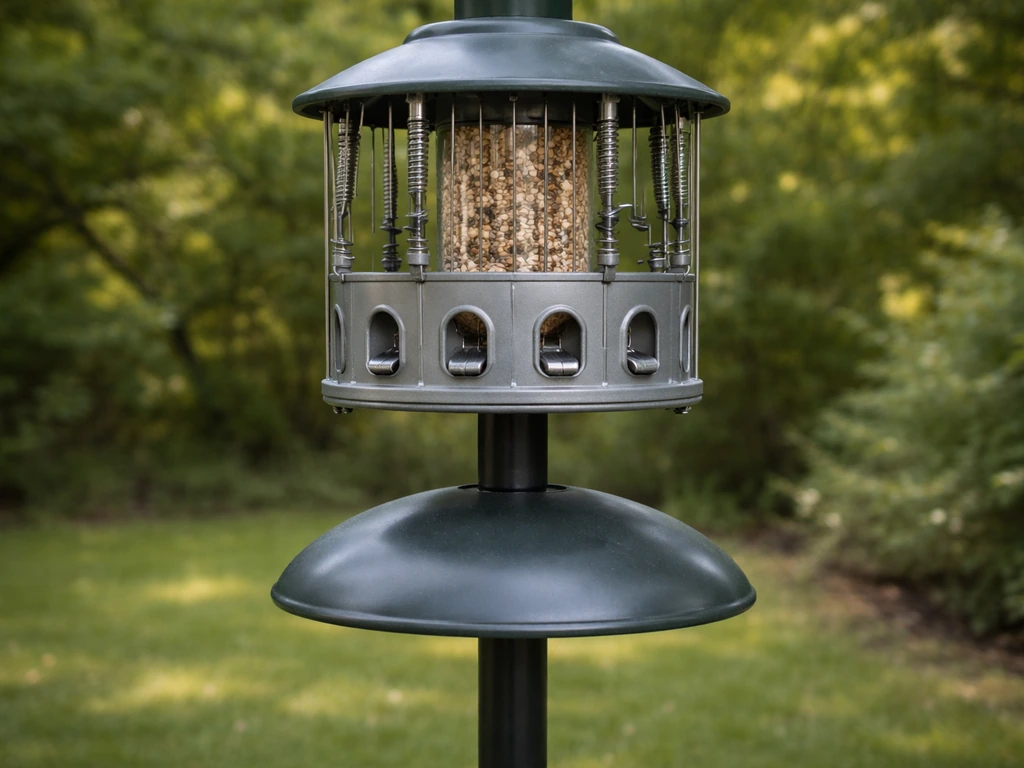
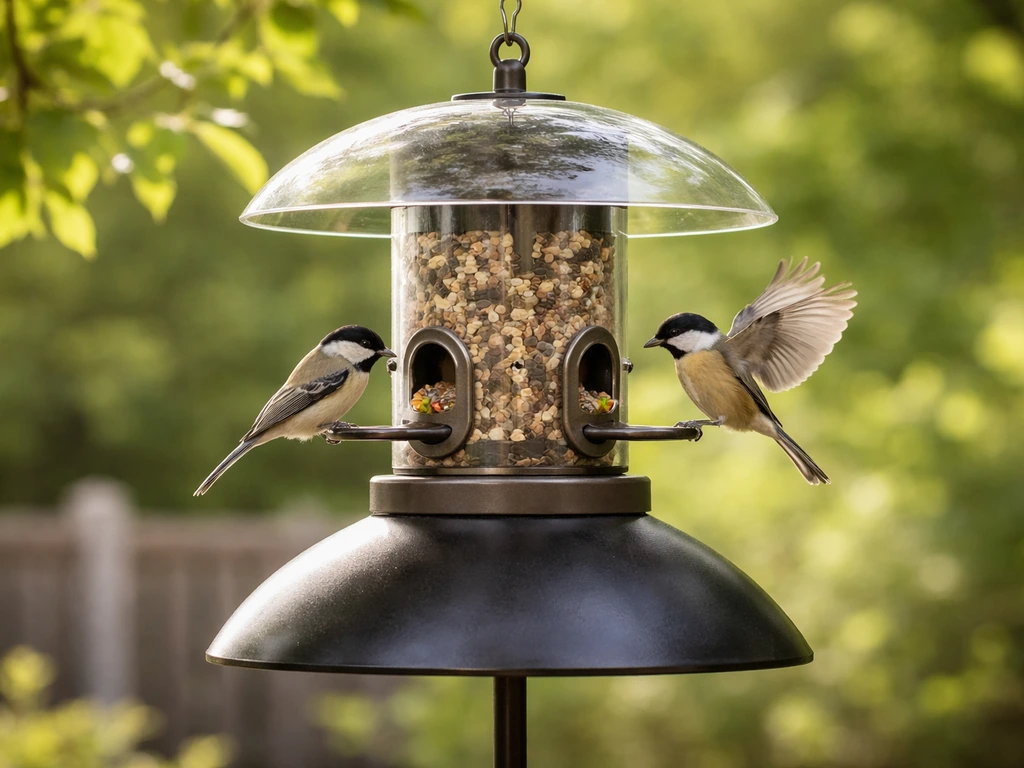
The most effective squirrel-resistant feeder designs use a weight-activated closing mechanism: a spring-loaded shroud or cage that closes over the ports when anything heavier than a small bird lands. Brands like Squirrel Buster and Brome have made this mechanism reliable and adjustable. The key is that the design physically prevents access rather than just making it harder. Caged tube feeders (a wire cage surrounding a standard tube) let small birds in while excluding squirrels and larger bully birds, and they work well for finch and chickadee setups.
For pole-mounted feeders, a baffle is essential. A smooth, domed baffle mounted below the feeder on the pole (at least 5 feet off the ground, with the feeder at least 10 feet from any tree or structure a squirrel can jump from) stops the vast majority of squirrel access. Baffles work better than greased poles, spicy seed additives, or any number of other home remedies I've tried over the years. Design the whole mounting system, not just the feeder itself.
Dealing with grackles and other bully birds
Grackles are a tougher design challenge because they're birds and most caging setups designed for small birds don't deter them. The most effective approach is selecting seeds and feeder styles they don't prefer. Safflower seed is genuinely disliked by most grackles but loved by cardinals, chickadees, and nuthatches. Nyjer feeders attract finches but grackles rarely bother with them. Tube feeders with short perches or upward-angled perches make it uncomfortable for large-bodied grackles to feed. You won't eliminate them entirely, but you can make your setup much less rewarding for them while keeping it productive for the birds you want.
Caged feeders with about 1.5-inch wire spacing let small and medium birds in (including cardinals) while excluding grackles, starlings, and other large species. This is one of the more elegant design solutions for mixed yards where grackle pressure is constant. Audubon notes that hopper feeders are particularly attractive to grackles and red-winged blackbirds, so if you're dealing with a grackle problem, switching away from open hopper designs is often the first practical step.
Traditional feeders vs smart bird feeder cameras: when each is worth it
Smart bird feeder cameras with AI-powered bird identification have gotten genuinely good over the last couple of years. Products like the Bird Buddy and Netvue Birdfy use built-in cameras and on-device or cloud AI to identify visiting species and send you phone notifications with photos. If you're someone who wants to know exactly what's visiting, keep a life list, or share sightings with family or friends, these are legitimately fun and useful. They also make great gifts for new birders who need help with identification.
That said, smart feeders have real tradeoffs. They cost significantly more than traditional feeders (typically $80 to $200 versus $15 to $60 for a solid traditional feeder), they require charging or battery management, and the AI identification, while impressive, still makes mistakes on uncommon species or poor lighting conditions. The camera and electronics also add cleaning complexity and failure points. If you're primarily focused on feeding birds rather than monitoring them, a high-quality traditional feeder will outperform a smart feeder for the same budget, and it'll last longer with simpler maintenance.
My practical recommendation: start with a traditional setup and add a smart camera feeder once you're consistently getting good bird activity and want to take the hobby further. The smart feeders work best as a supplement to an already-active feeding station, not as a first feeder. If budget isn't a concern, there's no reason not to start with one, but don't expect the camera to replace the fundamentals of good seed selection, correct placement, and regular cleaning.
| Feature | Traditional Feeder | Smart/AI Camera Feeder |
|---|---|---|
| Cost | $15-$60 for quality models | $80-$200+ |
| Bird ID capability | None (manual ID) | AI-powered, 95%+ accuracy on common species |
| Maintenance complexity | Low to moderate | Moderate (cleaning around electronics) |
| Durability | High with good materials | Moderate (electronics are a weak point) |
| Best for | Feeding focus, any budget | Monitoring, ID, sharing sightings |
| Power required | No | Yes (battery or USB) |
| Activity notifications | No | Yes (smartphone app) |
Choosing a plan, building your own, or buying ready-made
Building your own feeder is genuinely rewarding and not as complicated as it sounds. A basic platform tray feeder is just a shallow box with drainage holes and a few roof supports, something most people can build in an afternoon with basic tools. A cedar hopper feeder is a weekend project but produces a feeder that will look great and last years. If you're looking for plans, sources like the Cornell Lab, Audubon, and various woodworking sites offer free downloadable plans for most standard types. For beginners, I'd start with a platform feeder plan (minimal complexity, works for many species) before tackling a hopper.
If you're buying instead of building, the same design logic applies: prioritize feeders with easy cleaning access, good weather protection for the seed, and appropriate port or perch sizing for your target birds. Don't get distracted by decorative features that add complexity without adding function. A plain green polycarbonate tube feeder that comes apart easily and has tight-fitting ports will outperform an ornate cottage-style feeder that's hard to clean and lets in moisture.
Feeder maintenance checklist
Consistent maintenance is what separates a healthy feeding station from a disease vector. Project FeederWatch recommends cleaning seed feeders every two weeks under normal conditions, and immediately if you see mold, clumping, or sick birds at the feeder. Here's a quick checklist to keep things running well:
- Every 1-2 weeks: Disassemble the feeder, empty any remaining seed, and wash all parts with hot soapy water or a 10% bleach solution (1 part bleach to 9 parts water). Rinse thoroughly and let dry completely before refilling.
- Every refill: Check the seed for clumping, mold, or foul smell. Discard any wet or musty seed; don't just top off over bad seed.
- Monthly: Inspect the feeder structure for cracks, warping, broken ports, or loose hardware. Replace worn parts before they fail completely.
- Every 2-3 days in summer (nectar feeders): Change hummingbird nectar and clean the feeder, especially in temperatures above 80°F. Discard nectar that looks cloudy or has mold visible at the ports.
- Seasonally: Move feeders as needed for seasonal bird activity changes, and treat any wooden parts with a light coat of exterior sealant if they're showing wear.
- After sick bird sightings: Clean and disinfect all feeders immediately and remove feeders for 1-2 weeks to allow the area to clear.
A practical starter setup recommendation
If you're starting from scratch or rebuilding your yard setup today, here's what I'd put up: a weight-activated squirrel-resistant tube feeder with black oil sunflower or a sunflower-safflower mix (covers the broadest range of songbirds), a suet cage on or near a tree for woodpeckers, and a small saucer-style hummingbird feeder if you're in the right region and season. Once you have that starter setup, choosing good bird feeders for your specific visitors will help you get reliable, low-maintenance results. Mount everything on poles with baffles, keep the feeders at least 5 feet off the ground, and place them within 10 feet of some natural cover. That setup will be active within a few days, easy to maintain, and gives you a clear baseline before you start adding specialty feeders for specific species. If you want a quick way to choose the best song bird feeders for your yard, start by matching feeder type to the species you actually see visiting.
From there, you can refine based on what you see showing up. If cardinals are visiting but struggling to perch on the tube feeder, add a hopper or platform feeder with safflower. If goldfinches appear but can't access the sunflower ports easily, add a dedicated nyjer tube. Every yard is different, and the birds will tell you what's working and what's missing if you pay attention to the first few weeks of activity.
FAQ
How do I choose among the “best bird feeder designs” if multiple species are showing up?
If you can, start by counting which species are actually landing, not just what you hope to attract. Then pick one feeder type that fits their feeding style, and only add a second feeder after you see at least a week of consistent visits. This prevents buying a “best overall” design that doesn’t match your yard’s dominant birds and maintenance reality.
What’s the safest way to change seed without losing birds at the feeder?
Don’t switch seeds right away if your birds are feeding normally. Instead, make one small change at a time, such as swapping to a seed mix that reduces the main bully (for example, add safflower if cardinals are competing with grackles). After 3 to 7 days, reassess, because sudden changes can temporarily reduce traffic while birds relearn the new food.
How often should I clean my feeder if the weather is unpredictable?
For seed feeders, a good rule is to clean when you see clumps, odor, blackened patches, or wet seed. In hot or humid weather, clean sooner than your usual schedule, because mold can grow quickly even if the feeder looks okay. Also remove and dry any removable tray or base parts, corners are where seed turns.
Can a covered feeder eliminate the need for frequent cleaning?
Yes, but only if you manage the moisture and still do real cleaning. Use a feeder design that protects the seed chamber (roofed or covered reservoir) and choose seed that matches your target birds. Even with covered feeders, wet seed can spoil and attract more problem birds, so you still need periodic disassembly.
What should I do if I see target birds approaching but they cannot access the food?
Tube feeders can be too “closed off” for some larger birds if the ports are very small or recessed. If you’re seeing big birds that hover but cannot feed, try widening the port set, lowering the perch style for clingers only, or adding a hopper or platform feeder that provides more landing surface.
How should I space multiple feeders to reduce bullying by dominant birds?
In many yards, multiple feeders work best when they are not in a direct line of sight. Spreading them 5 to 10 feet apart reduces monopolizing, and placing one closer to natural cover helps birds feel safe enough to use it consistently. Avoid putting all feeders along the same “guarding line” from a favorite perch area.
What’s the best way to prevent bird-window collisions for feeders on a deck or patio?
Window distance matters, but so does the approach path birds use. Put feeders within 3 feet of the window, or place them more than 10 feet away, and add visual blockers like shrubs or window film on the glass side. If you have a feeder at mid-range (roughly 4 to 9 feet), collisions are more likely because birds build speed.
Which hummingbird feeder design is easiest to keep sanitary in heat?
Choose a hummingbird feeder design you can fully clean every time you refresh nectar. Saucer-style feeders generally reduce leaking and make scrubbing easier than inverted bottle styles. Also keep a small reservoir in hot climates, because nectar fermentation can turn a “good” design into a bad feeding station within a few days.
What are common squirrel deterrent mistakes that defeat otherwise good feeder designs?
If you’re dealing with squirrels, verify that your baffle or weight mechanism is positioned correctly before adding other deterrents. For pole-mounted setups, the baffle has to block jump access from nearby branches or structures, and it must be mounted at the recommended height relative to the feeder. For weight-activated designs, make sure small birds can trigger it without getting stuck inside.
How do I handle grackles without giving up on the birds I want?
A good starting approach is to reduce what grackles like and increase what your desired birds like. Safflower tends to lower grackle interest while supporting cardinals and many small birds. Also consider shifting away from highly open hopper designs if grackles dominate, and use tube or feeder styles with perch geometry that makes feeding less comfortable for large birds.
What design features matter most for feeder cleaning time?
If a feeder is hard to disassemble, it will eventually fail the “health and consistency” test. Prioritize wide-mouth openings, smooth interiors without hard-to-reach corners, and parts that come apart quickly. Dishwasher-safe components are especially helpful if your schedule is tight or you have to clean more often during warm, humid spells.
Can feeder placement at ground level work, and when should I use it?
For birds that prefer feeding near the ground, a tray or platform feeder at about 2 to 3 feet can increase activity, especially for cardinals and sparrows. Just keep it away from easy predator access and use a layout that lets birds retreat to shrubs or trees. Ground-level feeding increases mess, so choose designs with drainage or easy-emptying parts.
Is it worth buying a smart bird feeder as my first feeder?
A smart feeder can help you identify visitors, but it cannot replace core feeding fundamentals. If the feeder uses removable, cleanable parts, treat it like a normal feeder for hygiene, because cameras and electronics add failure points and extra complexity. Many people get the best results by adding smart monitoring only after a traditional setup has proven reliable visits.
What’s a practical “starter set” of feeder designs for a typical backyard?
Start with a baseline set that covers the biggest feeding niches: one seed feeder with broad appeal (often hopper with black oil sunflower), one suet option for woodpeckers, and one specialty feeder if your yard has a clear match (like nyjer for finches). After the first few weeks, add specialty designs only when you see consistent demand from the birds you want.
Next Article
Best Type of Bird Feeders: Choose by Species and Setup
Best type of bird feeders by species and yard setup, with clear picks for finches, hummingbirds, cardinals and more.